PSEB 12th Class Biology Important Questions Chapter 1 Reproduction in Organisms

Punjab State Board PSEB 12th Class Biology Important Questions Chapter 1 Reproduction in Organisms Important Questions and Answers.

PSEB 12th Class Biology Important Questions Chapter 1 Reproduction in Organisms

Very short answer type questions

Question 1.
What is life span?
Answer:
The period between birth and the natural death of an organism represents its life span.

Question 2.
On what factors does the type of reproduction adopted by an organism depend on? [NCERT Exemplar]
Answer:
The organism’s habitat, physiology and genetic make-up determines the type of reproduction adopted by it.

PSEB 12th Class Biology Important Questions Chapter 1 Reproduction in Organisms

Question 3.
Name an organism where cell division is itself a mode of reproduction.
Answer:
Protists/Monerans/Amoeba/Paramecium.

Question 4.
Mention two inherent characteristics of Amoeba and Yeast that enable them to reproduce asexually. [NCERT Exemplar]
Answer:

  1. They are unicellular organisms.
  2. They have a very simple body structure.

Question 5.
What is conidia?
Answer:
The asexual, non-motile spores produced externally/exogenously in some fungi are called conidia, e.g., Penicillium.

Question 6.
Define gemmules.
Answer:
Internal asexual reproductive units or buds in sponges are called gemmules.

Question 7.
Name the vegetative propagules in the following
(a) Agave
(b) Bryophyllum
Answer:
(a) Agave – Bulbil
(b) Bryophyllum – Leaf buds/adventitious buds.

PSEB 12th Class Biology Important Questions Chapter 1 Reproduction in Organisms

Question 8.
Mention the unique feature with respect to flowering and fruiting in bamboo species.
Answer:
Bamboo flowers once in its life time generally after 50-100 yrs of vegetative growth. It produces large number of fruits and dies.

Question 9.
Is Marchantia monoecious or dioecious? Where are the sex 1 organs borne in this plant? [NCERT Exemplar]
Answer:
Marchantia is dioecious. The male sex organs, antheridia, are borne on j the antheridiophores and female sex organs called archegonia are borne on archegoniophores.

Question 10.
Suggest a possible explanation why the seeds in a pea are arranged in a row, whereas those in tomato are scattered in the juicy pulp. [NCERT Exemplar]
Answer:
The ovary of pea plant is monocarpellary and the ovules are arranged along one margin whereas in tomato the ovary is tricarpellary with axile placentation.

Question 11.
In a developing embryo, analyse the consequences if cell divisions are not followed by cell differentiation.
[NCERT Exemplar]
Answer:
If differentiation does not follow division, embryo will not develop and this will not develop into a new organism.

Question 12.
Name the phenomenon and one bird where the female gamete directly develops into a new organism.
Answer:
The phenomenon is called parthenogenesis. Turkey.

PSEB 12th Class Biology Important Questions Chapter 1 Reproduction in Organisms

Question 13.
Mention the site where syngamy occurs in amphibians and reptiles, respectively.
Answer:
In amphibians, external fertilisation occurs hence, syngamy occurs in the medium of water. In reptiles, internal fertilisation occurs hence, syngamy occurs within the body of female parent.

Question 14.
Name the group of organisms that produce non-motile gametes. How do they reach the female gamete for fertilisation?
Answer:
Angiosperms produce non-moule gametes. They reach the female gamete with the help of air or water.

Question 15.
The number of taxa exhibiting asexual reproduction is drastically reduced in the higher plants (angiosperms) and higher animals (vertebrates) as compared with lower groups of plants and animals. Analyse the possible reasons for this situation. [NCERT Exemplar]
Answer:
Both angiosperms and vertebrates have a more complex structural organisation. They have evolved very efficient mechanism of sexual reproduction. Since asexual reproduction does not create new genetic pools in the offspring and consequently hampers their adaptability to external conditions, these groups have resorted to reproduction by the sexual method.

Short answer type questions

Question 1.
The cell division involved in gamete formation is not of the same type in different organisms. Justify.
Answer:
The parents may be haploid or diploid but the gametes always have to be haploid, biploid parents undergo meiosis to produce haploid gametes, whereas haploid parents undergo mitosis to produce haploid gametes.

Question 2.
Although sexual reproduction is a long drawn, energy-intensive complex form of reproduction, many groups of organisms in Kingdom Animalia and Plantae prefer this mode of reproduction. Give at least three reasons for this. [NCERT Exemplar]
Answer:

  • Sexual reproduction brings about variation in the offspring.
  • Since gamete formation is preceded by meiosis, genetic recombination occurring during crossing over (meiosis-I), leads to a great deal of variation in the DNA of gametes.
  • The organism has better chance of survival in a changing environment.

PSEB 12th Class Biology Important Questions Chapter 1 Reproduction in Organisms

Question 3.
Explain the importance of syngamy and meiosis in a sexual life cycle of an organism.
Answer:
Syngamy and meiosis play an important role in sexual life cycle of any diploid organisms, may be a plant or animal syngamy, i.e. fusion of haploid gametes/sex cells (n) (fertilisation) to form diploid egg cell/zygote (2n). Zygote divides repeatedly by mitotic divisons to form an embryo which develop into a new diploid organisms. After attaining sexual maturity, the organisms undergo special type of meiotic divisions – spermatogenesis/ microsporogenesis and megasporogenesis/ oogenesis to form haploid male sex cells and female sex cells. These sex cells (n) again fuse to form diploid zygote.

Question 4.
Why are mosses and liverworts unable to complete their sexual mode of reproduction in dry conditions? Give reasons.
Answer:
For sexual reproduction to take place in mosses and liverworts the motile male gametophytes, antherozoids, have to swim on the water surface to fertilise the immotile female gametophytes, egg. In dry conditions, the antherozoids do not reach the egg and hence fertilisation cannot occur.

Question 5.
Why do algae and fungi shift to sexual mode of reproduction just before the onset of adverse conditions?
Answer:
Algae and fungi shift to sexual mode of reproduction for survival during unfavourable conditions. Fusion of gametes helps to pool their resources for survival. The zygote develops a thick wall that is resistant to dessication and damage which undergoes a period of rest before germination.

Long answer type questions

Question 1.
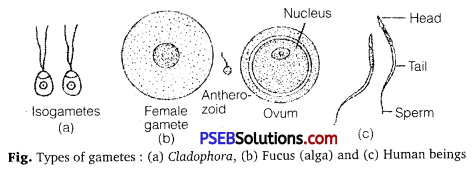
What is gametogenesis? Describe the different types of gametes and draw labelled diagrams. ,
Answer:
The process of formation of two types of gametes – male and female inside the gametangia is called gametogenesis.

Depending upon the size and motility, the gametes are of following types :
1. Isogametes or Homogamets: The gametes are similar in shape, size, structure arid function. Their fusion is called isogamy e.g., Cladophora. However, when the isogametes are physiologically different and the gametes produced by one parent do not fuse with each other, the gametes belonging to different mating types can only fuse and their fusion is called physiological anisogamy, e.g., Ulothrvc.
PSEB 12th Class Biology Important Questions Chapter 1 Reproduction in Organisms 1
2. Anisogametes or Heterogametes: The fusing gametes are different in form, size, structure and behaviour. The larger, non-motile, food-laden gamete is called ovum/egg/oosphere/ macrogamete. The smaller, motile, active gamete is called sperm/male gamete/antherozoid. Such gametes are called anisogametes or heterogametes and their fusion is termed as anisogamy or heterogamy e.g., Cladophora.

PSEB 12th Class Biology Important Questions Chapter 1 Reproduction in Organisms

Question 2.
Write a note on sexuality in organisms.
Answer:
Sexuality in Organisms: Sexual reproduction in organisms generally involves the fusion of gametes from two different individuals. But this is not always true.

Sexuality in Plants: Plants may have both male and female reproductive structures in the same plant (bisexual) e.g., rose or on different plants (unisexual) e.g., papaya. In several fungi and plants, terms such as homothallic and monoecious are used to denote the bisexual condition and heterothallic and dioecious are the terms used to describe unisexual condition.

In flowering plants, the unisexual male flower is staminate i.e., bearing stamens, while the female is pistillate or bearing pistils. In some flowering plants, both male and female flowers may be present on the same individual (monoecious) or on separate individuals (dioecious). Some examples of monoecious plants are cucurbits and coconuts and of dioecious plants are papaya, mulberry and date palm.

Sexuality in Animals: There are species which possess both the reproductive organs (bisexual). Earthworms, sponge, tapeworm and leech are typical examples of bisexual animals that possess both male and female reproductive organs i.e., they are hermaphrodites. There are large number of animal species which are either male or female and are called as unisexual organisms, e.g., frog, lizard, crow, dog, cat, rabbit, human beings etc.
PSEB 12th Class Biology Solutions Chapter 1 Reproduction in Organisms

Punjab State Board PSEB 12th Class Biology Book Solutions Chapter 1 Reproduction in Organisms Textbook Exercise Questions and Answers.

PSEB Solutions for Class 12 Biology Chapter 1 Reproduction in Organisms

PSEB 12th Class Biology Guide Reproduction in Organisms Textbook Questions and Answers

Question 1.
Why is reproduction essential for organisms?
Answer:
Reproduction is a fundamental feature of all living organisms. It is a biological process through which living organisms produce offsprings (young ones) similar to them. Reproduction ensures the continuance of various species on the Earth. In the absence of reproduction, the species will not be able to exist for a long time and may soon get extinct.

Question 2.
Which is a better mode of reproduction sexual or asexual? Why?
Answer:
Sexual reproduction is a better mode of reproduction. It allows the formation of new variants by the combination of the DNA from two different individuals, typically one of each sex. It involves the fusion of the male and the female gamete to produce variants, which are not identical to their parents and to themselves. This variation allows the individual to adapt constantly changing and challenging environment. Also, it leads to the evolution of better suited organisms which ensures greater survival of a species. On the contrary, asexual reproduction allows very little or no variation at all. As a result, the individuals produced are exact copies of their parents and themselves.

PSEB 12th Class Biology Solutions Chapter 1 Reproduction in Organisms

Question 3.
Why is the offspring formed by asexual reproduction referred to as clone?
Answer:
A clone is a group of morphologically and genetically identical individuals. In the process of asexual reproduction, only one parent is involved and there is no fusion of the male and the female gamete. As a result, the offsprings so produced are morphologically and genetically similar to their parents and are thus, called clones.

Question 4.
Offspring formed due to sexual reproduction have better chances of survival. Why? Is this statement always true?
Answer:
Sexual reproduction involves the fusion of the male and the female gamete. This fusion allows the formation of new variants by the combination of the DNA from two (usually) different members of the species. The variations allow the individuals to adapt under varied environmental conditions for better chances of survival.

However, it is not always necessary that the offspring produced due to sexual reproduction has better chances of survival. Under some circumstances, asexual reproduction is more advantageous for certain organisms. For example, some individuals who do not move from one place to another and are well settled in their environment. Also, asexual reproduction is a fast and’ a quick mode of reproduction which does not consume much time and energy as compared to sexual reproduction.

Question 5.
How does the progeny formed from asexual reproduction differ from those formed by sexual reproduction?
Answer:

Progeny formed from asexual reproduction Progeny formed from sexual reproduction
1. Asexual reproduction does not involve the fusion of the male and the female gamete. Organisms undergoing this kind ofreproduction produce offsprings that are morphologically and genetically identical to them. Sexual reproduction involves the fusion of the male and the female gamete of two individuals, typically one of each sex. Organisms undergoing this kind of reproduction produce offsprings that are not identical to them.
2. Offsprings thus produced do not show variations and are called clones. Offsprings thus produced show variations from each other and their parents.

PSEB 12th Class Biology Solutions Chapter 1 Reproduction in Organisms

Question 6.
Distinguish between asexual and sexual reproduction. Why is
vegetative reproduction also considered as a type of asexual reproduction?
Answer:

Sexual reproduction Asexual reproduction
1. It involves the fusion of the male and the female gamete. It does not involves the fusion of the male and the female gamete.
2. It requires two (usually) different individuals. It requires only one individual.
3. The individuals produced are not identical to their parents and show variations from each other and also, from their parents. The individuals produced are identical to the parent and are hence, called clones.
4. Most animals reproduce sexually. Both sexual and asexual modes of reproduction are found in plants. Asexual modes of reproduction are common in organisms having simple organisations such as algae and fungi.
5. It is a slow process. It is a fast process.

Vegetative reproduction is a process in which new plants are obtained without the production of seeds or spores. It involves the propagation of plants through certain vegetative parts such as the rhizome, sucker, tuber, bulb, etc. It does not involve the fusion of the male and the female gamete and requires only one parent. Hence, vegetative reproduction is considered as a type of asexual reproduction.

Question 7.
What is vegetative propagation? Give two suitable examples.
Answer:
Vegetative propagation is a mode of asexual reproduction in which new plants are obtained from the vegetative parts of plants. It does not involve the production of seeds or spores for the propagation of new plants. Vegetative parts of plants such as runners, rhizomes, suckers, tubers, etc. can be used as propagules for raising new plants.

Examples of vegetative reproduction are given below:
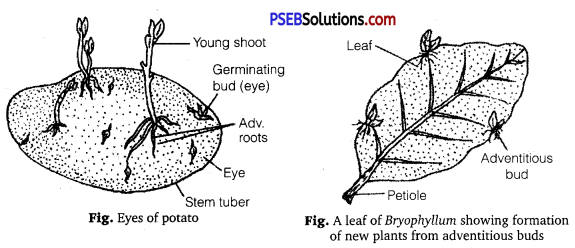
1. Eyes of potato: The surface of a potato has several buds called eyes. Each of these buds when buried in soil develops into a new plant, which is identical to the parent plant.
PSEB 12th Class Biology Solutions Chapter 1 Reproduction in Organisms 1

2. Leaf buds of Bryophyllum: The leaves of Bryophyllum plants bear several adventitious buds on their margins. These leaf buds have the ability to grow and develop into tiny plants when the leaves get detached from the plant and come in contact with moist soil.

Question 8.
Define:
(a) Juvenile phase,
(b) Reproductive phase,
(c) Senescent phase.
Answer:
(a) Juvenile Phase: All organisms have to reach a certain stage of growth and maturity in their life, before they can be reproduce sexually. This phase of growth is called the juvenile phase or vegetative phase in plants.

(b) Reproductive Phase: When the juvenile phase is over the organisms enter the period of reproductive phase or sexual maturity. It is indicated by showing various morphological and physiological changes such as development of secondary sexual characters in animals and by flowering in plants. This is the actual period of the life span of any organism when it is capable of producing offsprings. This phase is of variable duration in different organisms.

(c) Senescent Phase : This is the final and third stage of growth cycle. It can be considered as the end of reproductive phase. It is accompanied by reduction in functional capacity and increase in cellular break down and metabolic failures. It ultimately leads to death.

PSEB 12th Class Biology Solutions Chapter 1 Reproduction in Organisms

Question 9.
Higher organisms have resorted to sexual reproduction in spite of its complexity. Why?
Answer:
Although sexual reproduction involves more time and energy, higher organisms have resorted to sexual reproduction in spite of its complexity. This is because this mode of reproduction helps introduce new variations in progenies through the combination of the DNA from two (usually) different individuals. These variations allow the individual to cope with various environmental conditions and thus, make the organism better suited for the environment. Variations also lead to the evolution of better organisms and therefore, provide better chances of survival. On the other hand, asexual reproduction does not provide genetic differences in the individuals produced.

Question 10.
Explain why meiosis and gametogenesis are always interlinked?
Answer:
Meiosis is a process of reductional division in which the amount of genetic material is reduced. Gametogenesis is the process of the formation of gametes. Gametes produced by organisms are haploids (containing only one set of chromosomes), while the body of an organism is diploid. Therefore, for producing haploid gametes (gametogenesis), the germ cells of an organism undergo meiosis. During the process, the meiocytes of an organism undergo two successive nuclear and cell divisions with a single cycle of DNA replication to form the haploid gametes.

Question 11.
Identify each part in a flowering plant and write whether it is haploid (n) or diploid (2n).
(a) Ovary …………………………
(b) Anther ……………………..
(c) Egg ………………………….
(d) Pollen ……………………..
(e) Male gamete ……………….
(f) Zygote ………………..
Answer:
(a) diploid (2n)
(b) diploid (2n)
(c) haploid (n)
(d) haploid (n)
(e) haploid (n)
(f) diploid (2n)

Question 12.
Define external fertilisation. Mention its disadvantages.
Answer:
External fertilisation is the process in which the fusion of the male and the female gamete takes place outside the female body in an external medium, generally water. Fish, frog, starfish are some organisms that exhibit external fertilisation.

Disadvantages of external fertilisation
In external fertilisation, eggs have less chances of fertilisation. This can lead to the wastage of a large number of eggs produced during the process.
Further, there is an absence of proper parental care to the offspring, which results in a low rate of survival in the progenies.

PSEB 12th Class Biology Solutions Chapter 1 Reproduction in Organisms

Question 13.
Differentiate between a zoospore and a zygote.
Answer:

Zoospore Zygote
1. A zoospore is a motile asexual spore that utilises the flagella for movement. A zygote is a noh-motile diploid cell formed as a result of fertilisation.
2. It is an asexual reproductive structure. It is formed as a result of sexual reproduction.
3. Zoospores are formed in simple plants like, algae or fungi. Zygote is formed in complex organism.

Question 14.
Differentiate between gametogenesis from embryogenesis.
Answer:

Gametogenesis Embryogenesis
1. It is the process of the formation of haploid male and female gametes from diploid meiocytes (gamete mother cell) through the process of meiosis. It is the process of the development of the embryo from the repeated mitotic divisions of the diploid zygote.
2. Gametes may be either homogametes or heterogametes. Animals may be either oviparous or viviparous.

Question 15.
Describe the post-fertilisation changes in a flower.
Answer:
As a result of double fertilisation in flowering plants, zygote (2n) and the primary endosperm nucleus (3n) is produced. The calyx, corolla, stamens and style wither away. The calyx may persist or even show growth in certain cases. The post fertilisation changes which take place are

  • Endosperm formation
  • Embryo formation
  • Seed formation and
  • Fruit formation.

The primary endosperm nucleus becomes active and forms a nutritive vegetative tissue. The endosperm at the expense of food present in the nucellus, Endosperm may be completely used up by the developing embryo (non-endospermic seeds e.g., pea) or may persist in the seed (endospermic seed e.g., castor). The zygote, waits for sometime till the formation of endosperm and then develops into embryo, by withdrawing nutrition from the endosperm. Ultimately the ovules are transformed into seeds and the ovary becomes a fruit. The formation of fruit helps in the nourishment and protection to the developing seeds and later helps in seed dispersal. Under favourable conditions the seeds germinate to form new plants.

PSEB 12th Class Biology Solutions Chapter 1 Reproduction in Organisms

Question 16.
What is a bisexual flower? Collect five bisexual flowers from your neighbourhood and with the help of your teacher find out their common and scientific names.
Answer:
A flower that contains both the male and female reproductive structure (stamen and pistil) is called a bisexual flower.
Examples of plants bearing bisexual flowers are:

  1. Water lily {Nymphaea odorata)
  2. Rose (Rosa multiflora)
  3. Hibiscus (Hibiscus Rosa-sinensis)
  4. Mustard (Brassica nigra)
  5. Petunia (Petunia hybrida)

Question 17.
Examine a few flowers of any cucurbit plant and try to identify the staminate and pistillate flowers. Do you know any other plant that hears unisexual flowers?
Answer:
Cucurbit plant bears unisexual flowers as these flowers have either the stamen or the pistil. The staminate flowers bear bright, yellow coloured petals along with stamens that represent the male reproductive structure. On the other hand, the pistillate flowers bear only the pistil that represents the female reproductive structure.
Other examples of plants that bear unisexual flowers are corn, papaya, cucumber, etc.

Question 18.
Why are offspring of oviparous animals at a greater risk as compared to offspring of viviparous animals?
Answer:
Oviparous animals lay eggs outside their body. As a result, the eggs of these animals are under continuous threat from various environmental factors. On the other hand, in viviparous animals, the development of the egg takes place inside the body of the female. Hence, the offspring of an egg-laying or oviparous animal is at greater risk as compared to the offspring of a viviparous animal, which gives birth to its young ones.

PSEB 11th Class Biology Solutions Chapter 9 Biomolecules

Punjab State Board PSEB 11th Class Biology Book Solutions Chapter 9 Biomolecules Textbook Exercise Questions and Answers.

PSEB Solutions for Class 11 Biology Chapter 9 Biomolecules

PSEB 11th Class Biology Guide Biomolecules Textbook Questions and Answers

Question 1.
What are macromolecules? Give examples.
Answer:
Chemical compounds, which are found in the acid insoluble fraction are called macromolecules or biomacromolecules. For example, proteins, lipids and carbohydrate, etc.

Question 2.
Illustrate a glycosidic, peptide and a phosphodiester bond.
Answer:
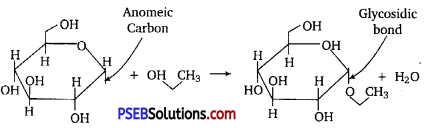
Glycosidic Bond: A glycosidic bond is a type of functional group that joins a carbohydrate (sugar) molecule to another group, which may or may not be another carbohydrate.
PSEB 11th Class Biology Solutions Chapter 9 Biomolecules 1
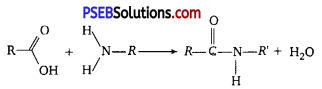
Peptide Bond: A peptide bond (amide bond) is a chemical bond formed between two molecules when the carboxyl group of one molecule reacts with the amine group of the other molecule, thereby releasing a molecule of water (H20).
H2O.
PSEB 11th Class Biology Solutions Chapter 9 Biomolecules 2
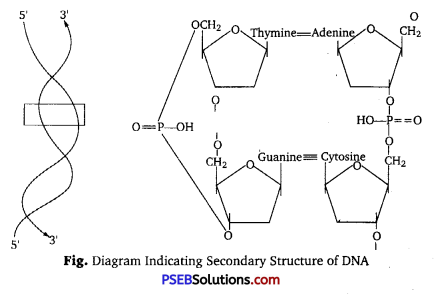
Phosphodiester Bond: A phosphodiester bond is a group of strong covalent bonds between a phosphate group and two other molecules over two ester bonds. In DNA and RNA, the phosphodiester bond is the linkage between the 3′ carbon atom of one sugar molecule and the 5’carbon of another, deoxyribose in DNA and ribose in RNA.
PSEB 11th Class Biology Solutions Chapter 9 Biomolecules 3
PSEB 11th Class Biology Solutions Chapter 9 Biomolecules

Question 3.
What is meant by tertiary structure of proteins?
Answer:
Tertiary Structure of Protein; The overall shape of a single protein molecule; the spatial relationship of the secondary structures to one another. Tertiary structure is generally stabilized by non-local interactions, most commonly the formation of a hydrophobic core, but also through salt bridges, hydrogen bonds, disulfide bonds,1 and even post-translational modifications. The term “tertiary structure” is often used as synonymous with the term fold. The tertiary structure is what controls the basic function of the protein.

Question 4.
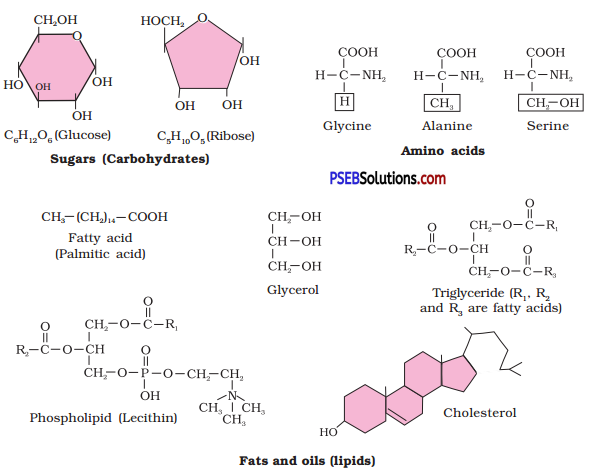
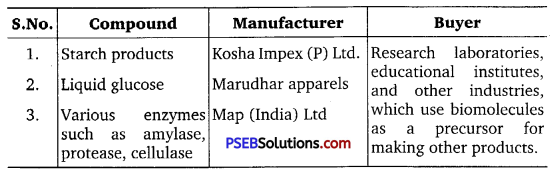
Find and write down structures of 10 interesting small molecular weight biomolecules. Find if there is any industry which manufactures the compounds by isolation. Find out who are the buyers?
Answer:
PSEB 11th Class Biology Solutions Chapter 9 Biomolecules 4
PSEB 11th Class Biology Solutions Chapter 9 Biomolecules 5

Question 5.
Proteins have primary structure. If you are given a method to know which amino acid is at either of the two termini (ends) of a protein, can you connect this information to purity or homogeneity of a protein?
Answer:
The sequence of amino acids, i.e., the positional information in a protein which is the first amino acid, which is second and so on is called the primary structure of a protein. The first amino acid is also called as N-terminal amino acid. The last amino acid is called the C-terminal amino acid. Yes, we can connect this information to purity or homogeneity of a protein. Based on number of amino and carboxyl groups, there are acidic (e.g., glutamic acid), basic (lysine) and neutral (valine) amino acids, proteins may be acidic, basic and neutral.

PSEB 11th Class Biology Solutions Chapter 9 Biomolecules

Question 6.
Find out and make a list of proteins used as therapeutic agents. Find other applications of proteins (e. g, cosmetics etc.)
Answer:
Some proteins and their functions are as follows:

Proteins Functions
1. Collagen Intercellular ground substance
2. Trypsin Enzyme
3. Insulin Hormone
4. Antibody Fights against infections
5. Receptors Sensory reception (example-taste)
6. Glut-4 Enables glucose transport in cells
7. Keratolytic protein Used to soften hard skin
8. Egg protein Used for skin tightening

Question 7.
Explain the composition of triglyceride.
Answer:
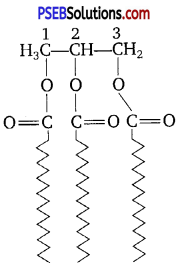
Triglycerides are composed of two types of molecules, i.e., glycerol i (3 carbon molecules) and fatty acids which attach to the glycerol at the alcohol unit. The following is a structural representation of a triglyceride at the molecular level.
PSEB 11th Class Biology Solutions Chapter 9 Biomolecules 6
Fatty acids are chains of hydrocarbons 4-22 (or more) carbons a long with a carboxyl group at one end. If each carbon has two hydrogen atoms, the fatty acid is saturated. If two carbon atoms are double-bonded, so that there is less hydrogen in the fatty acid, it is unsaturated (monounsaturated). If more than two carbon atoms are unsaturated, the fatty acid is polyunsaturated.

Question 8.
Can you describe what happens when milk is converted into curd or yoghurt, from your understanding of proteins.
Answer:
Milk contains a protein called casein. This protein gives milk its characteristic white colour. It is of high nutritional value because it contains all the essential amino acids required by man’s body. The curd forms because of the chemical reaction between lactic acid bacteria and casein. When curd is added to milk, the lactic acid bacteria present in it cause coagulation of casein and thus, convert it into curd.

Question 9.
Can you attempt building models of biomolecules using commercially available atomic models (Ball and Stick models).
Answer:
Yes, we can make models of biomolecules using commercially available atomic models.

PSEB 11th Class Biology Solutions Chapter 9 Biomolecules

Question 10.
Attempt titrating an amino acid against a weak base and discover the number of dissociating (ionisable) functional groups in the amino acid.
Answer:
When an amino acid is titrated against a weak base, it dissociates and gives two functional groups:
(i) -COOH group (carboxylic group)
(ii) Amino group (NH2/sub>)

Question 11.
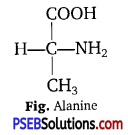
Draw the structure of the amino acid, alanine.
Answer:
PSEB 11th Class Biology Solutions Chapter 9 Biomolecules 7

Question 12.
What are gums made of? Is fevicol different?
Answer:
Gums are made of carbohydrates, i. e., L-rhamnose, D-galactose and D-galacturonic acid, etc. Fevicol is different from natural gums. It is a synthetic product.

Question 13.
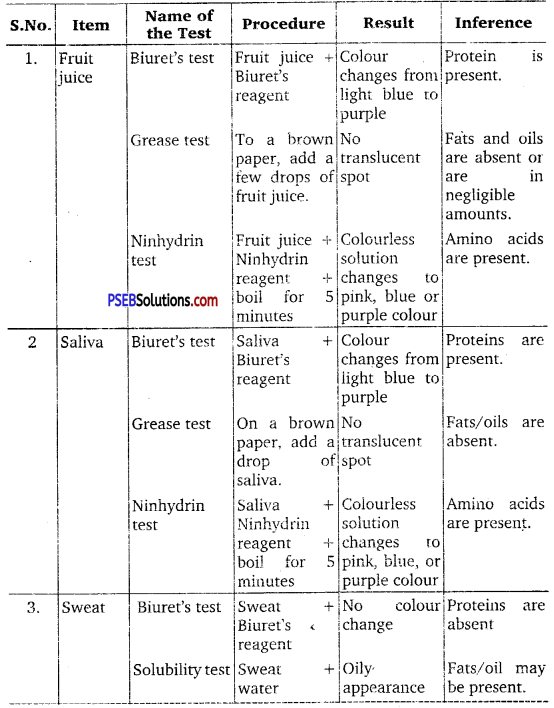
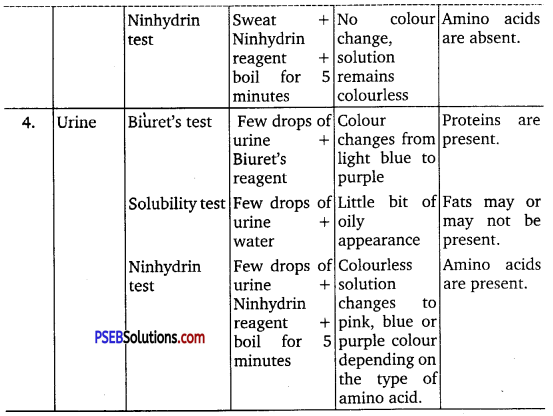
Find out a qualitative test for proteins, fats and oils, amino acids and test any Fruit juice, saliva, sweat and urine for them.
Answer:

  • Test for Proteins: Biuret test if Biuret’s reagent added to protein, then the colour of the reagent changes light blue to purple.
  • Test for Fats and Oils: Grease or test.
  • Test for Amino Acids: Ninhydrin test. If Ninhydrin reagent is added to the solution, then the colourless solution changes to pink, blue or purple depending upon the amino acid.

PSEB 11th Class Biology Solutions Chapter 9 Biomolecules 8
PSEB 11th Class Biology Solutions Chapter 9 Biomolecules 9

PSEB 11th Class Biology Solutions Chapter 9 Biomolecules

Question 14.
Find out how much cellulose is made by all the plants in the biosphere and compare it with how much of paper is manufactured by man and hence what is the consumption of plant material by man annually. What a loss of vegetation!
Answer:
Approximately, 100 billion tonnes of cellulose are made per year by all the plants in the biosphere and it takes 17 full grown trees to make one ton of paper. Trees are also used to fulfil the other requirements of man such as for timber, food, medicines, etc. Hence, it is difficult to calculate the annual consumption of plant material by man.

Question 15.
Describe the important properties of enzymes.
Answer:
Important properties of enzymes are given below :

  • Enzymes are proteins which catalyse biochemical reactions in the cells.
  • They are denatured at high temperatures.
  • Enzymes generally function in a narrow range of temperature and pH. Each enzyme shows its highest activity at a particular temperature and pH called the optimum temperature and optimum pH.
  • With the increase in substrate concentration, the velocity of the eyzymatic reaction rises at first. The reaction ultimately reaches a maximum velocity (Vmax) which is not exceeded by any further rise in concentration of the
    substrate.
  • The activity of an enzyme is also sensitive to the presence of specific chemicals that bind to the enzyme.
  • Enzymes are substrate specific in their action.

PSEB 12th Class Biology Solutions Chapter 5 Principles of Inheritance and Variation

Punjab State Board PSEB 12th Class Biology Book Solutions Chapter 5 Principles of Inheritance and Variation Textbook Exercise Questions and Answers.

PSEB Solutions for Class 12 Biology Chapter 5 Principles of Inheritance and Variation

PSEB 12th Class Biology Guide Principles of Inheritance and Variation Textbook Questions and Answers

Question 1.
Mention the advantages of selecting pea plant for experiment by Mendel.
Answer:
Mendel selected pea plants to carry out his study on the inheritance of characters from parents to offspring. He selected a pea plant because of the following features:

  • Peas have many visible contrasting characters such as tall/dwarf plants, round/wrinkled seeds, green/yellow pod, purple/white flowers, etc.
  • Peas have bisexual flowers and therefore undergo self pollination easily. Thus, pea plants produce offsprings with same traits generation after generation.
  • In pea plants, cross pollination can be easily achieved by emasculation in which the stamen of the flower is removed without affecting the pistil.
  • Pea plants have a short life span and produce many seeds in one generation.

Question 2.
Differentiate between the following:
Dominance and Recessive Homozygous and Heterozygous
(a) Dominance and Recessive
(b) Homozygous and Heterozygous
(c) Monohybrid and Dihybrid.
Answer:
(a) Dominance and Recessive

Dominance Recessive
1. A dominant trait expresses itself in the presence or absence of a recessive trait. A recessive trait is able to express itself only in the absence of a dominant trait.
2. For example, tall plant, round seed, violet flower, etc. are dominant traits in a pea plant. For example, dwarf plant, wrinkled seed, white flower, etc. are recessive traits in a pea plant.

(b) Homozygous and Heterozygous

Homozygous Heterozygous
1. It contains two similar alleles for a particular trait. It contains two different alleles for a particular trait.
2. Genotype for homozygous possess either dominant or recessive, but never both the alleles. For example, RR or rr Genotype for heterozygous possess both dominant and recessive alleles. For example, Rr
3. It produces only one type of gamete. It produces two different types of gametes.

(c) Monohybrid and Dihybrid

Monohybrid Dihybrid
1. Monohybrid involves cross between parents’, which differs in only one pair of contrasting characters. Dihybrid involves cross between parents, which differs in two pairs of contrasting characters.
2. For example, the cross between tall and dwarf pea plant is a monohybrid cross. For example, the cross between pea plants having yellow wrinkled seed with those having green round seeds is a dihybrid cross.

PSEB 12th Class Biology Solutions Chapter 5 Principles of Inheritance and Variation

Question 3.
A diploid organism is heterozygous for 4 loci, how many types of gametes can be produced?
Answer:
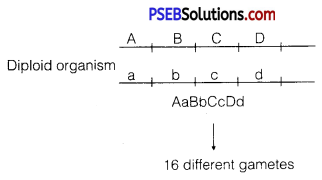
Locus is a fixed position on a chromosome, which is occupied by a single or more genes. Heterozygous organisms contain different alleles for an allelic pair. Hence, a diploid organism, which is heterozygous at four loci, will have four different contrasting characters at four different loci.

For example, if an organism is heterozygous at four loci with four characters, say Aa, Bb, Cc, Dd, then during meiosis, it will segregate to form 8 separate gametes.
PSEB 12th Class Biology Solutions Chapter 5 Principles of Inheritance and Variation 1
If the genes are not linked, then the diploid organism will produce 16 different gametes. However, if the genes are linked, the gametes will reduce their number as the genes might be linked and the linked genes will be inherited together during the process of meiosis.

Question 4.
Explain the Law of Dominance using a monohybrid cross.
Answer:
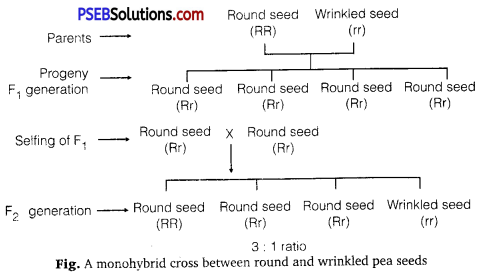
Mendel’s law of dominance states that a dominant allele expresses itself in a monohybrid cross and suppresses the expression of recessive allele. However, this recessive allele for a character is not lost and remains hidden or masked in the progenies of F1 generation and reappears in the next generation.

For example, when pea plants with round seeds (RR) are crossed with plants with wrinkled seeds (rr), all seeds in F1 generation were found to be round (Rr). When these round seeds were self fertilised, both the round and wrinkled seeds appeared in F2 generation in 3 : 1 ratio. Hence, in F2 generation, the dominant character (round seeds) appeared and the recessive character (wrinkled seeds) got suppressed, which reappeared in F2 generation.
PSEB 12th Class Biology Solutions Chapter 5 Principles of Inheritance and Variation 2

Question 5.
Define and design a test-cross.
Answer:
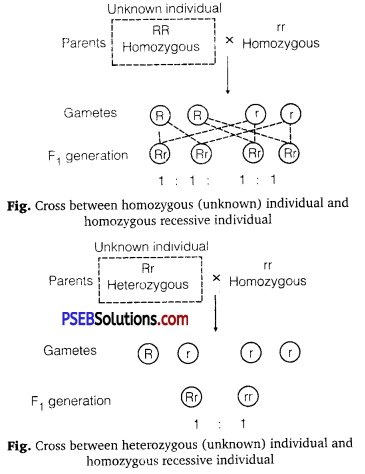
Test cross is a cross between an organism with unknown genotype and a recessive parent. It is used to determine whether the individual is homozygous or heterozygous for a trait.
If the progenies produced by a test cross show 50% dominant trait and 50% recessive trait, then the unknown individual is heterozygous for a trait. On the other hand, if the progeny produced shows dominant trait, then the unknown individual is homozygous for a trait.
PSEB 12th Class Biology Solutions Chapter 5 Principles of Inheritance and Variation 3

PSEB 12th Class Biology Solutions Chapter 5 Principles of Inheritance and Variation

Question 6.
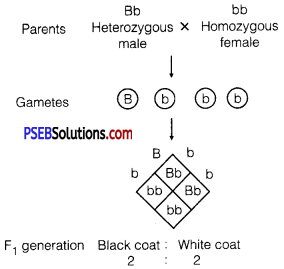
Using a Punnett Square, workout the distribution of phenotypic features in the first filial generation after a cross between a homozygous female and a heterozygous male for a single locus.
Answer:
In guinea pigs, heterozygous male with black coat colour (Bb) is crossed with the homozygous female having white coat colour (bb). The male will produce two types of gametes, B and b, while the female will produce only one kind of gamete, b. The genotypic and phenotypic ratio in the progenies of Fx generation will be same i.e., 1:1.
PSEB 12th Class Biology Solutions Chapter 5 Principles of Inheritance and Variation 4

Question 7.
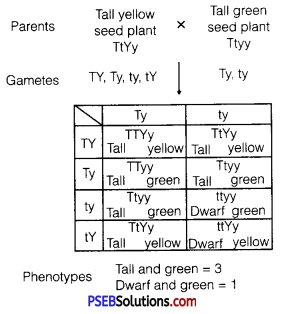
When a cross is made between tall plant with yellow seeds (TtYy) and tall plant with green seed (Ttyy), what proportions of phenotype in the offspring could be expected to he
(a) tall and green.
(b) dwarf and green.
Answer:
A cross between tall plant with yellow seeds and tall plant with green seeds will produce
(a) three tall and green plants
(b) one dwarf and green plant
PSEB 12th Class Biology Solutions Chapter 5 Principles of Inheritance and Variation 5

Question 8.
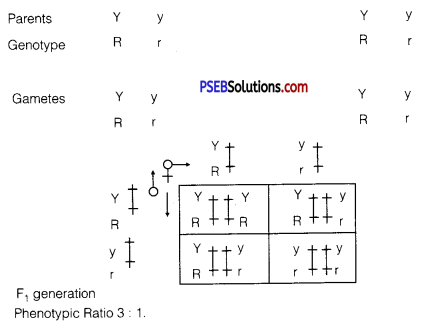
Two heterozygous parents are crossed. If the two loci are linked what would be the distribution of phenotypic features in F1 generation for a dihybrid cross?
Answer:
When two individual heterozygous for two loci (Yy Rr) are crossed and the two loci are linked, the distribution of the phenotypic feature of F1 generation will be in the ratio of 3:1 \(\frac{3}{4}\) of the individuals will show
both the dominant traits and \(\frac{1}{4}\) of the individuals will show both the
recessive traits. It is because the genes for both the traits are present on the same chro
PSEB 12th Class Biology Solutions Chapter 5 Principles of Inheritance and Variation 6

PSEB 12th Class Biology Solutions Chapter 5 Principles of Inheritance and Variation

Question 9.
Briefly mention the contribution of T.H. Morgan in genetics.
Answer:
Morgan’s work is based on fruit flies (Drosophila melanogaster). He formulated the chromosomal theory of linkage. He defined linkage as the co-existence of two or more genes in the same chromosome and performed dihybrid crosses in Drosophila to show that linked genes are inherited together and are located on X-chromosome. His experiments have also proved that tightly linked genes show very low recombination while loosely linked genes show higher recombination.

Question 10.
What is pedigree analysis? Suggest how such an analysis, can be useful.
Answer:
Pedigree analysis is a record of occurrence of a trait in several generations of a family. It is based on the fact that certain characteristic features are heritable in a family, for example, eye colour, skin colour, hair form and colour, and other facial characteristics. Along with these features, there are other genetic disorders such as Mendelian disorders that are inherited in a family, generation after generation. Hence, by using pedigree analysis for the study of specific traits or disorders, generation after generation, it is possible to trace the pattern of inheritance. In this analysis, the inheritance of a trait is represented as a tree, called family tree. Genetic counselors use pedigree chart for analysis of various traits and diseases in a family and predict their inheritance patterns. It is useful in preventing haemophilia, sickle cell anaemia, and other genetic disorders in the future generations.

Question 11.
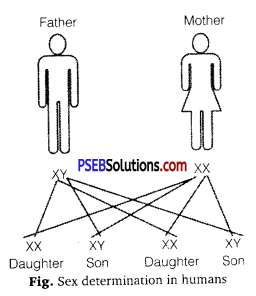
How is sex determined in human beings?
Answer:
Human beings exhibit male heterogamy. In humans, males (XY) produce two different types of gametes, X and Y. The human female (XX) produces only one type of gametes containing X chromosomes. The sex of the baby is determined by the type of male gamete that fuses with the female gamete. If the fertilising sperm contains X chromosome, then the baby produced will be a girl and if the fertilising sperm contains Y chromosome, then the baby produced will be a boy. Hence, it is a matter of chance that determines the sex of a baby. There is an equal probability of the fertilising sperm being an X or Y chromosome. Thus, it is the genetic make up of the sperm that determines the sex of the baby.
PSEB 12th Class Biology Solutions Chapter 5 Principles of Inheritance and Variation 7

PSEB 12th Class Biology Solutions Chapter 5 Principles of Inheritance and Variation

Question 12.
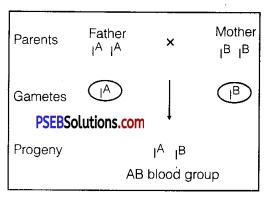
A child has hlood group O. If the father has hlood group A and mother blood group B, work out the genotypes of the parents and the possible genotypes of the other offsprings.
Answer:
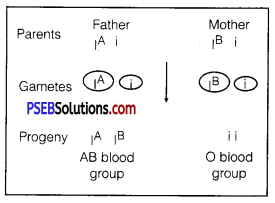
The blood group characteristic in humans is controlled by three set of alleles, namely, IA,IB and i. The alleles, IA and IB, are equally dominant whereas allele, i, is recessive to the other alleles. The individuals with genotype, IA IA and IA i, have blood group A whereas the individuals with genotype, IB IB and IB i, have blood group B. The persons with genotype IA IB have blood group AB while those with blood group O have genotype ii.
Hence, if the father has blood group A and mother has blood group B, then the possible genotype of the parents will be
Father
IAI or AIAi

Mother
IBIB or IBi
A cross between homozygous parents will produce progeny with AB blood group.
PSEB 12th Class Biology Solutions Chapter 5 Principles of Inheritance and Variation 8
A cross between heterozygous parents will produce progenies with AB blood group (IA IB) and O blood group (ii).
PSEB 12th Class Biology Solutions Chapter 5 Principles of Inheritance and Variation 9

Question 13.
Explain the following terms with example
(a) Co-dominance
(b) Incomplete dominance
Answer:
(a) Co-dominance: Co-dominance is the phenomenon in which both the alleles of a contrasting character are expressed in heterozygous condition. Both the alleles of a gene are equally dominant. ABO blood group in human beings is an example of co-dominance. The blood group character is controlled by three sets of alleles, namely, IA, IB, and i. The alleles, IA and IB, are equally dominant and are said to be co-dominant as they are expressed in AB blood group. Both these alleles do not interfere with the expression of each other and produce their respective antigens. Hence, AB blood group is an example of co-dominance.

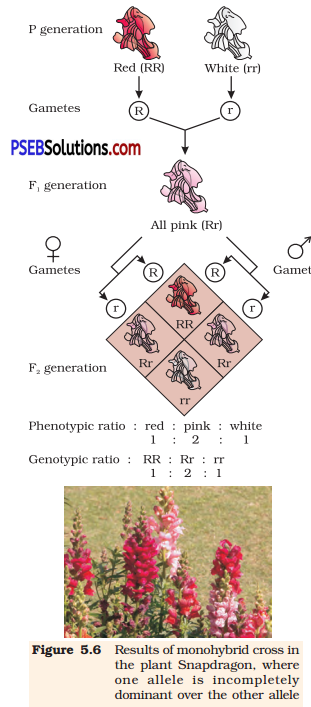
(b) Incomplete Dominance: Incomplete dominance is a phenomenon in which one allele shows incomplete dominance over the other member of the allelic pair for a character. For example, a monohybrid cross between the plants having red flowers and white flowers in Antirrhinum species will result in all pink flower plants in Fj generation. The progeny obtained in Fx generation does not resemble either of the parents and exhibits intermediate characteristics. This is because the dominant allele, R, is partially dominant over the other allele, r. Therefore, the recessive allele, r, also gets expressed in the generation resulting in the production of intermediate pink flowering progenies with Rr genotype.
PSEB 12th Class Biology Solutions Chapter 5 Principles of Inheritance and Variation 10

What is point mutation? Give one example.
Answer:
Point mutation is a change in a single base pair of DNA by substitution, deletion, or insertion of a single nitrogenous base. An example of point mutation is sickle cell anaemia. It involves mutation in a single base pair in the beta-globin chain of haemoglobin pigment of the blood. Glutamic acid in short arm of chromosome II gets replaced with valine at the sixth position.

PSEB 12th Class Biology Solutions Chapter 5 Principles of Inheritance and Variation

Question 15.
Who had proposed the chromosomal theory of the inheritance?
Answer:
Sutton and Boveri proposed the chromosomal theory of inheritance in 1902. They linked die inheritance of traits to the chromosomes.

Question 16.
Mention any two autosomal genetic disorders with their symptoms.
Answer:
Two autosomal genetic disorders are as follows:
1. Sickle Cell Anaemia: It is an autosomal linked recessive disorder, which is caused by point mutation in the beta-globin chain of haemoglobin pigment of the blood. The disease is characterised by sickle shaped red blood cells, which are formed due to the mutant haemoglobin molecule. The disease is controlled by HbA and HbS allele. The homozygous individuals with genotype, HbSHbS, show the symptoms of this disease while the heterozygous individuals with genotype, HbA HbS, are not affected. However, they act as carriers of the disease.

Symptoms: Rapid heart rate, breathlessness, delayed growth and puberty, jaundice, weakness, fever, excessive thirst, chest pain, and decreased fertility are the major symptoms of sickle cell anaemia disease.

(b) Down’s Syndrome: It is an autosomal disorder that is caused by the trisomy of chromosome 21.
Symptoms : The individual is short statured with round head, open mouth, protruding tongue, short neck, slanting eyes, and broad short hands. The individual also shows retarded mental and physical growth.

PSEB 11th Class Biology Important Questions Chapter 13 Photosynthesis in Higher Plants

Punjab State Board PSEB 11th Class Biology Important Questions Chapter 13 Photosynthesis in Higher Plants Important Questions and Answers.

PSEB 11th Class Biology Important Questions Chapter 13 Photosynthesis in Higher Plants

Very short answer type questions

Question 1.
Photosynthetic pigments are located in which part of the chloroplast? ‘
Answer:
Photosynthetic pigments are located in the lipid part of thylakoid membrane.

Question 2.
Does moonlight support photosynthesis? Find out. [NCERT Exemplar]
Answer:
No, because the intensity of moonlight is several thousand times less than that of direct sunlight, insufficient for the light-dependent phase of photosynthesis.

Question 3.
Oxygen evolved during photosynthesis comes from H2O or CO2?
Answer:
Oxygen in photosynthesis evolves from H2O (i. e., by splitting of water).

PSEB 11th Class Biology Important Questions Chapter 13 Photosynthesis in Higher Plants

Question 4.
Mention conditions under which PS-I functions.
Answer:
Conditions necessary under which PS-I function are as follows :

  • When the wavelength of light is higher than 680 nm.
  • When NADPH accumulates and CO2 fixation is retarded.

Question 5.
Succulents are known to keep their stomata closed during the day to check transpiration. How do they meet their photosynthetic CO2 requirements? [NCERT Exemplar]
Answer:
Succulents (water-storing) plants such as cacti, fix CO2 into organic compound using PEP carboxylase at night when the stomata are open.

Question 6.
Which compound is meant for donating hydrogen to carbohydrate in Calvin cycle?
Answer:
NADPH is responsible for donating hydrogen to carbohydrate in Calvin cycle.

Question 7.
Indicate the main steps during Calvin cycle.
Answer:
The main steps during Calvin cycle are Carboxylation, Reduction, Regenaration.

Question 8.
Which of the mechanism of photosynthesis is responsible for trapping of light energy, splitting of water, oxygen release and formation of ATP and NADPH?
Answer:
Light reaction is responsible for all the above-mentioned conditions.

PSEB 11th Class Biology Important Questions Chapter 13 Photosynthesis in Higher Plants

Question 9.
How many molecules of carbon dioxide, ATP and NADPH are required to make one molecule of glucose?
Answer:

  1. Carbon dioxide 6 molecules
  2. ATP 18 molecules
  3. NADPH 12 molecules

Question 10.
What would happen to the rate of photosynthesis in C3 -plants if CO2 concentration level almost doubles from its present level in the atmosphere.
Answer:
If the CO2 concentration in C3 -plants almost get doubles from its present level in the atmosphere plants will grow much faster and leads to higher productivity due to higher rate of photosynthesis.

Question 11.
Why photosynthesis is an oxidation-reduction process?
Answer:
Photosynthesis is an oxidation-reduction process because water is oxidised to oxygen and carbon is reduced to carbohydrates.

Question 12.
The type of anatomy of leaves possessed by C4-plant is different from those C3-plant. Explain.
Answer:
C4 -plant possess a special anatomy of leaves called Kranz anatomy, which means that the mesophyll tissue is undifferentiated in leaves

Short answer type questions

Question 1.
Give a brief explanation of photosynthesis.
Answer:

  • Carbon dioxide is converted into sugars in a process called carbon fixation.
  • Carbon fixation is a redox reaction, so photosynthesis needs to supply both a source of energy to drive this process and also the electrons needed to convert carbon dioxide into carbohydrate, which is a reduction reaction.
  • In general outline, photosynthesis is the opposite of cellular respiration, where glucose and other compounds are oxidised to produce carbon dioxide, water, and release chemical energy.

Question 2.
Explain some early experiments that led to a gradual development in our understanding of photosynthesis?
Answer:
Early Experiments
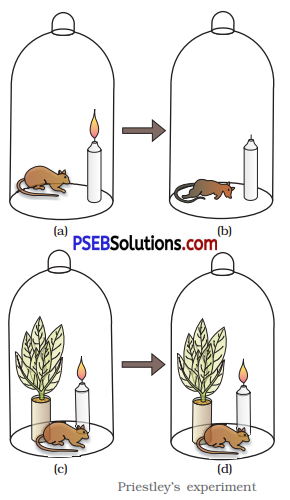
(i) Joseph Priestley (1733-1804):
Priestley hypothesised that plants restore to the air whatever breathing animals and burning candles remove.
PSEB 11th Class Biology Important Questions Chapter 13 Photosynthesis in Higher Plants 1
(ii) Jan Ingenhousz (1730-1799)
He showed that only the green parts of the plants could release oxygen.

(iii) Julius von Sachs

  • He showed that the green substance (chlorophyll) is located in special bodies (chloroplasts).
  • He provided evidence (1854) for the production of glucose in the green parts of plants and stored in the form of starch.

(iv) Engelmann (1843-1909):

  • He split the light using a prism into its component parts and illuminated a green alga, Cladophora placed in a suspension of aerobic bacteria.
  • The bacteria were used to detect the sites of oxygen evolution.
  • He observed that the bacteria accumulated mainly in the region of blue and red light of the spectrum.
  • He first described the action spectrum of photosynthesis; the action spectrum resembles roughly the absorption spectrum of chlorophyll a and b.

(v) Cornelius van Niel (1897-1985):

  • He conducted experiments with purple and green sulphur bacteria, he demonstrated that photosynthesis is essentially a light-dependent reaction in which hydrogen from a hydrogen-donor reduces carbon dioxide to carbohydrates.
  • He gave the present-day equation of photosynthesis.

PSEB 11th Class Biology Important Questions Chapter 13 Photosynthesis in Higher Plants 2

  • In green plants water (H2O) is the hydrogen donor and it is oxidised to oxygen.
  • Purple and green sulphur bacteria use H2S as the hydrogen donor and so the oxidation product is sulphur and no oxygen is produced.
  • Thus, he inferred that the oxygen evolved by green plants during photosynthesis comes from water (H2O) and not from carbon dioxide (CO2).
  • This was later proved by using radioactive isotopes of oxygen(H7180).
  • The overall correct equation for photosynthesis is as follows :

PSEB 11th Class Biology Important Questions Chapter 13 Photosynthesis in Higher Plants 3

PSEB 11th Class Biology Important Questions Chapter 13 Photosynthesis in Higher Plants

Question 3.
In chloroplast what are sites for light reactions and dark reactions?
Answer:
There is a clear division of labour in chloroplasts. The membrane system is responsible for Light reactions. Light energy is trapped by the membrane system and synthesis of ATP and NADPH takes place over there. The stroma utilises CO2 to synthesize sugar; ATP and NADPH from light reaction are also utilized by stroma.

Question 4.
Give a brief account of light reaction.
Answer:
Light reactions or the ‘Photochemical’ phase include following steps :

  • light absorption,
  • water splitting,
  • oxygen release, and
  • the formation of high-energy chemical intermediates, ATP and NADPH.

Several complexes are involved in the process. The pigments are organised into two discrete photochemical light harvesting complexes (LHC) within the Photosystem I (PS I) and Photosystem II (PS II). These are named in the sequence of their discovery, and not in the sequence in which they function during the light reaction.

The LHC are made up of hundreds of pigment molecules bound to proteins. Each photosystem has all the pigments (except one molecule of chlorophyll a) forming a light-harvesting system also called antennae. These pigments help to make photosynthesis more efficient by absorbing different wavelengths of light.

The single chlorophyll a molecule forms the reaction centre. The reaction centre is different in both the photosystems. In PS I the reaction centre chlorophyll a has an absorption peak at 700 nm, hence is called P700, while in PS II it has absorption maxima at 680 nm, and is called P680.

Question 5.
Explain the electron transport system in photosynthesis.
Answer:
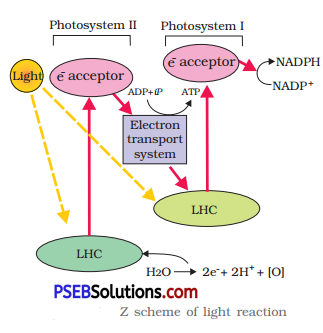
Electron Transport: The whole scheme of electron transport starting from PS II, uphill to primary electron acceptor, downhill to cytochrome complex and PS I, excitation of PS I, transfer of electrons uphill to another acceptor and finally downhill to NADP+, is called Z-scheme, because of the characteristic shape, Z, formed when all the carriers are placed in a sequence according to their redox potential values.
PSEB 11th Class Biology Important Questions Chapter 13 Photosynthesis in Higher Plants 4

Question 6.
What do you understand by splitting of water and its importance in photosynthesis?
Answer:
The splitting of water is associated with the PS II; water is split into H+, [0] and electrons. This creates oxygen, one of the net products of photosynthesis. The electrons needed to replace those removed from photosystem I are provided by photosystem II.
2H2O → 4H+ +O2 + 4e
2H2O → 4H+ +O2 + 4e.

Question 7.
Write a short note on chemiosmotic hypothesis.
Answer:
Chemiosmotic Hypothesis
ATP synthesis is linked to the development of a proton gradient across the membranes of thylakoids; it results due to the following reasons:

  1. Since the splitting of the water molecules or photolysis takes place on the inner side of the thylakoid membrane, the protons -produced accumulate within the lumen of the thylakoids.
  2. The primary electron acceptor is located towards the outer side of the membrane and transfers its electrons to the H carrier; so this molecule removes a proton from the stroma while transporting an electron and releases it into the lumen or inner side of the thylakoid membrane.
  3. The enzyme NADP reductase is located on the stroma side of the membrane; along with the electrons coming from PS I, protons are also needed to reduce NADP and so these protons are also removed from the stroma.

The gradient is broken down due to the movement of protons across the membrane through transmembrane channel of the Fo of the ATP synthetase; the other portion of ATP synthetase, called Fi undergoes conformational changes with the energy provided by the breakdown of proton gradient and synthesises several molecules of ATP.

PSEB 11th Class Biology Important Questions Chapter 13 Photosynthesis in Higher Plants

Question 8.
What do you understand by biosynthetic phase of photosynthesis?
Answer:
Synthesis of food (sugar) takes place during dark reaction. Since sugar is synthesised in this phase, it is also called as biosynthetic phase.

Long answer type questions

Question 1.
Is it correct to say that photosynthesis occurs only in leaves of a plant? Besides leaves, what are the other parts that may be capable of carrying out photosynthesis? Justify.
Answer:
Although all cells in the green parts of a plant have chloroplasts, most of the energy is captured in the leaves. The cells in the interior tissues of a leaf, called the mesophyll, can contain between 450000 and 800000 chloroplasts for every square millimetre of leaf.

The surface of the leaf is uniformly coated with a water-resistant waxy cuticle that protects the leaf from excessive evaporation of water and decreases the absorption of ultraviolet or blue light to reduce heating. The transparent epidermis layer allows light to pass through to the palisade mesophyll cells, where most of the photosynthesis takes place. The green stems are also capable of performing photosynthesis.

Question 2.
The entire process of photosynthesis consists of a number of reactions. Where in the cell do each of these take place?
(i) Synthesis of ATP and NADPH ……………………………………. .
(ii) Photolysis of water …………………………….. .
(iii) Fixation of CO2 …………………………… .
(iv) Synthesis of sugar molecule ……………………………….. .
(v) Synthesis of starch ……………………………………… .
Answer:
(i) Synthesis of ATP and NADPH in thylakoids.
(ii) Photolysis of water occurs in inner side of thylakoid membrane.
(iii) Fixation of CO2 occurs in stroma of chloroplast.
(iv) Synthesis of sugar molecule occurs in chloroplast.
(v) Synthesis of starch occurs in cytoplasm.

Question 3.
Which factors affect the process of photosynthesis? Explain in detail.
Answer:
Factors Affecting Photosynthesis
Photosynthesis is affected by both internal/plant factors and extemal/environmental factors.
The internal or plant factors that affect the rate of photosynthesis include
(i) the number, size, age and orientation of leaves,
(ii) mesophyll cells,
(iii) chloroplasts,
(iv) the amount of chlorophyll and
(v) the internal CO2 concentration.

Blackman’s Law of Limiting Factors:
When a physiological process is controlled by a number of factors, the rate of the reaction depends on the slowest factor. This means that at a given time, only the factor which is the least (limiting) among all the factors, will determine the rate of the reaction.

(i) Light
Light quality and light intensity influence photosynthesis.
Light of wavelength between 400 nm and 700 nm is effective for photosynthesis and this light is known as photosynthetically active radiation (PAR).
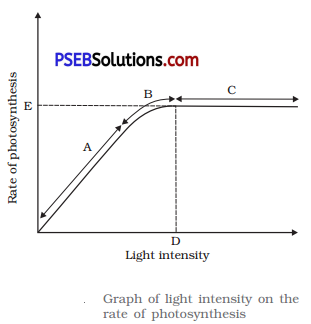
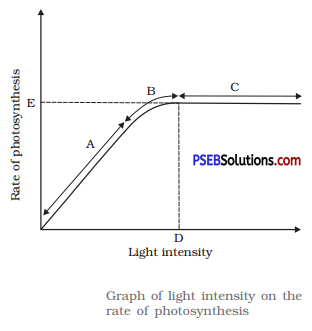
PSEB 11th Class Biology Important Questions Chapter 13 Photosynthesis in Higher Plants 5
As the intensity of light increases the rate of photosynthesis increases. But at higher light intensities, the rate of photosynthesis does not increase; it may be due to two reasons :
(a) Other factors needed for photosynthesis may be limiting.
(b) Destruction (photooxidation) of chlorophyll.

(ii) Temperature

  • The photochemical phase is less affected by temperature.
  • But the biosynthetic phase that involves enzyme-catalysed reactions, is more sensitive to temperature.
  • The C4 plants have a higher temperature optimum, while C3 plants have a lower temperature optimum.

(iii) Carbon dioxide concentration

  • In C3 plants, the rate of photosynthesis increases with increase in CO2 concentration, and saturation occurs beyond 450 μ/L-1.
  • In C4 plants, the saturation is reached at a concentration of about 360 μ/L-1.

PSEB 11th Class Biology Important Questions Chapter 13 Photosynthesis in Higher Plants

(iv) Water
Water influences photosynthesis in two ways :

  1. If available water decreases and plants show water stress, the stomata close; hence there will be a decreased supply of carbon dioxide for photosynthesis.
  2. The leaves become wilted and the surface area for activities decreases.

PSEB 11th Class Biology Important Questions Chapter 12 Mineral Nutrition

Punjab State Board PSEB 11th Class Biology Important Questions Chapter 12 Mineral Nutrition Important Questions and Answers.

PSEB 11th Class Biology Important Questions Chapter 12 Mineral Nutrition

Very short answer type questions

Question 1.
Write the criteria for essentiality of an element.
Answer:
Criteria for Essentiality of an Element

  • The element must be absolutely necessary for supporting normal growth and reproduction; in the absence of the element, the plants do not complete their life cycle.
  • The requirement of the element must be specific and not replaceable by another element, i.e., deficiency of any one element cannot be met by supplying some other element.
  • The element must be directly involved in the metabolism of the plant.

Question 2.
Name two imrhobile elements in plants.
Answer:
Calcium and sulphur are two immobile elements.

PSEB 11th Class Biology Important Questions Chapter 12 Mineral Nutrition

Question 3.
The deficiency of which element causes the death of stem and root apices?
Answer:
Boron.

Question 4.
The deficiency of this particular element causes the con dition of little leaf or mottle leaf in the plants. Name the element.
Answer:
Deficiency of element zinc.

Question 5.
Deficiency of mineral nutrition is not responsible for etiolation. Yes or No. If no then explain why?
Answer:
No, mineral deficiency is not responsible for etiolation because it is related to absence of light.

Question 6.
Where do the symptoms of deficiency of phosphorus appear first in the plant? And why?
Answer:
The deficiency of phosphorus appears first in older leaves. Because it is a mobile element.

Question 7.
A particular macroelement is obtained by the plants from both mineral and non-mineral sources. Identify the element.
Answer:
Nitrogen is the element which is obtained from both mineral and non-mineral sources.

PSEB 11th Class Biology Important Questions Chapter 12 Mineral Nutrition

Question 8.
Yellowish edges appear in leaves deficient in. [NCERT Exemplar]
Answer:
Magnesium.

Question 9.
Name the macronutrient which is a component of all organic compounds but is not obtained from soil. [NCERT Exemplar]
Answer:
Nitrogen.

Question 10.
Ammonification of nitrogen during nitrogen cycle is bring about by a special process. Identify the process.
Answer:
It is done by decomposition.

Question 11.
Organisms like Pseudomonas and Thiobacillus are of great significance in nitrogen cycle. How? [NCERT Exemplar]
Answer:
These organisms carry out denitrification. They help to maintain the constant level of nitrogen in the atmosphere.

PSEB 11th Class Biology Important Questions Chapter 12 Mineral Nutrition

Question 12.
A farmer adds Azotobacter culture to soil before sowing maize. Which mineral element is being replenished? [NCERT Exemplar]
Answer:
Nitrogen.

Short answer type questions

Question 1.
What are two macronutrients which are not obtained through soil as mineral nutrition? What is their importance?
Answer:
Oxygen and carbon are not obtained through soil as mineral nutrition. Oxygen is necessary for respiration and carbon dioxide is necessary for photosynthesis.

Question 2.
A fanner adds/supplies Na, Ca, Mg and Fe regularly to his field and yet he observes that the plants show deficiency of Ca, Mg and Fe. Give a valid reason and suggest a way to help the farmer improve the growth of plants.
Answer:
Calcium deficiency can be due to shortage of water so proper irrigation should be done. Iron deficiency can be due to high alkalinity of soil. And excessive use of potassium can result in poor absorption of magnesium. The farmer should take corrective actions.

Question 3.
Which enzyme is found in root nodules of leguminous plants? What role does it play?
Answer:
Nitrogenase is found in root nodules of leguminous plants. The enzyme binds with nitrogen and helps it in getting transported to the plant.

PSEB 11th Class Biology Important Questions Chapter 12 Mineral Nutrition

Question 4.
Write short notes on – Reductive animation and Transamination.
Answer:
(i) Reductive Animation: In these processes, ammonia reacts with α-Ketoglutaric acid and forms glutamic acid as indicated in the equation given below :
Glutamate
PSEB 11th Class Biology Important Questions Chapter 12 Mineral Nutrition 1
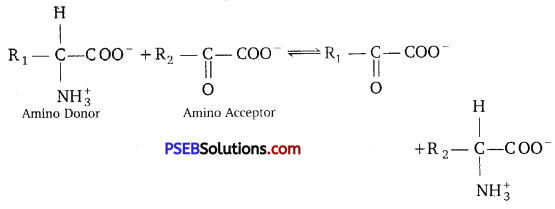
(ii) Transamination: It involves the transfer of amino group from one amino acid to the keto group of a keto acid. Glutamic acid is the main amino acid from which the transfer of NH2, the amino group takes place and other amino acids are formed through transamination. The enzyme transaminase catalyses all such reactions. For example,
PSEB 11th Class Biology Important Questions Chapter 12 Mineral Nutrition 2

Long answer type questions

Question 1.
Hydroponics have been shown to be a successful technique for growing of plants, yet most of the crops are still grown on land. Why?
Answer:
The technique of growing plants in a nutrient solution is known as hydroponics.
This method requires purified water and mineral nutrient salts. After a series of experiments, in which the roots of the plants were immersed in nutrient solutions and an element was added/removed or given in varied concentration, a mineral solution suitable for the plant growth was obtained.

By this method, essential elements were identified and their deficiency symptoms discovered. Hydroponics has been successfully employed as a technique for the commercial production of vegetables such as tomato, seedless cucumber and lettuce.

Yet, most of the crops are still grown on land because the nutrient solutions must be adequately aerated to obtain the optimum growth in hydroponis. Moreover, the minerals must be continuously added in the solution. No, such activity is required in the soil.

PSEB 11th Class Biology Important Questions Chapter 12 Mineral Nutrition

Question 2.
We find that Rhizobium forms nodules on the roots of leguminous plants. Also Frankia, another microbe forms nitrogen fixing nodules on the roots of non-leguminous plant Alnus.
(i) Can we artificially induce the property of nitrogen fixation in a plant, leguminous or non-leguminous?
(ii) What kind of relationship is observed between mycorrhiza and pine trees?
(iii) Is it necessary for a microbe to be in close association with a plant to provide mineral nutrition? Explain with the help of one example. [NCERT Exemplar]
Answer:
(i) Yes, we can artificially induce the property of nitrogen fixation in a plant, leguminous or non-leguminous by genetic engineering. It involves the introduction of nif genes that cause the synthesis of nitrogenase enzyme by some vector in the plant in which we have to induce symbiosis.

(ii) Symbiotic association.

(iii) Yes, it is necessary for a-microbe to be in close association with a plant to provide mineral nutrition. For example, plants that contribute to nitrogen fixation include the legume family-Fabaceae or Leguminosae, such as clover, soyabeans, alfalfa, lupines and peanuts. They contain symbiotic bacteria called Rhizobia within nodules in their root systems, producing nitrogen compounds that help the plant to grow and compete with other plants.

PSEB 11th Class Biology Solutions Chapter 12 Mineral Nutrition

Punjab State Board PSEB 11th Class Biology Book Solutions Chapter 12 Mineral Nutrition Textbook Exercise Questions and Answers.

PSEB Solutions for Class 11 Biology Chapter 12 Mineral Nutrition

PSEB 11th Class Biology Guide Mineral Nutrition Textbook Questions and Answers

Question 1.
‘All elements that are present in a plant need not be essential to its survival’. Comment.
Answer:
All elements that are present in a plant need not be essential to its survival because they do not directly involved in the composition of their body. However, if the concentration of micronutrients such as Fe, Mn, Cu, Zn, Cl, etc., rise above their critical values, they appear to be toxic for the plant.

Question 2.
Why is purification of water and nutrient salts so important in studies involving mineral nutrition using hydroponics?
Answer:
It is to know the essentiality of a mineral element in the life cycle of a plant. Further, it helps in improving the deficiency symptoms of the plants. The nutrient solution must be adequetly aerated to obtain the optimal growth.

PSEB 11th Class Biology Solutions Chapter 12 Mineral Nutrition

Question 3.
Explain with examples : macronutrients, micronutrients, beneficial nutrients, toxic elements and essential elements.
Answer:
(i) Macronutrients: These are generally present in plant tissues in large amount (in excess 10 m mole kg’1 of dry matter). The macronutrients include carbon, hydrogen, oxygen, nitrogen, phosphorus, sulphur, potassium, calcium and magnesium.

(ii) Micronutrients: Micronutrients or trace elements, are needed in very small amount (less than 10m mole kg~: of dry matter). These include iron, manganese, copper, molybdenum, zinc, boron, chlorine and nickel.

(iii) Beneficial Nutrients: The elements which are not essential for plants, but their presence are beneficial for the growth and development. Such, elements are called beneficial elements.

(iv) Toxic Elements: Any mineral ion concentration in tissues, that reduces the dry weight of tissues by about 10 % is considered toxic. For example, Mn inhibit the absorption of other elements.

(v) Essential Elements: The macronutrients including carbon, hydrogen, oxygen, nitrogen, phosphorus, sulphur, potassium, calcium and magnesium, which are require directly for the growth and metabolism of the plants and whose deficiency produces certain symptoms in the plants are known as essential elements.

Question 4.
Name at least five different deficiency symptoms in plants. Describe them and correlate them with the concerned mineral deficiency.
Answer:
The kind of deficiency symptoms shown in plants include chlorosis, necrosis, stunted plant growth, premature fall of leaves and buds, and inhibition of cell division.

  • Chlorosis is the loss of chlorophyll leading to yellowing in leaves. This symptom is caused by the deficiency of elements N, K, Mg, S, Fe, Mn, Zn and Mo.
  • Necrosis or death of tissue, particularly leaf tissue, is due to the deficiency of Ca, Mg, Cu, K.
  • Lack or low level of N, K, S, Mo causes an inhibition of cell division.
  • Some elements like N, S, Mo delay flowering if their concentration in plants is low.

Question 5.
If a plant shows a symptom which could develop due to deficiency of more than one nutrient, how would you find out experimentally, the real deficient mineral element?
Answer:
Every element shows certain characteristic deficiency symptoms in the plants. The deficiency of any one element cannot be met by supplying some other element. So, by absorbing the type of deficiency symptom, we can determine the real deficient mineral element.

PSEB 11th Class Biology Solutions Chapter 12 Mineral Nutrition

Question 6.
Why is that in certain plants deficiency symptoms appear first in younger parts of the plant, while in others they do so in mature organs?
Answer:
For elements that are actively mobilised within the plants and exported to young developing tissues, the deficiency symptoms tend to appear first in the older tissues. For example, the deficiency symptoms of nitrogen, potassium and magnesium are visible first in the senescent leaves. In the older leaves, biomolecules containing these elements are broken down, making these elements available for mobilising to younger leaves.

The deficiency symptoms tend to appear first in the young tissues, whenever the elements are relatively immobile and are not transported out of the mature organs. For example, elements like sulphur and calcium are a part of the structural component of the cell and hence are not easily released.

Question 7.
How are the minerals absorbed by the plants?
Answer:
Mechanism of Absorption of Minerals: The process of absorption can occur into following two main phases :
(i) In the first phase, an initial rapid uptake of ions into the ‘free space’ or ‘outer space’ of cells the apoplast is passive.

(ii) In the second phase of uptake, the ions are taken in slowly into the ‘inner space’ the symplast of the cells. The passive movement of ions into the apoplast usually occurs through ion-channels, the trans-membrane proteins that function as selective pores. On the other hand, the entry or exit of ions to and from the symplast requires the expenditure of metabolic energies. The movement of ions is usually called the inward movement into the cells is influx and the outward movement, efflux.

Question 8.
What are the conditions necessary for fixation of atmospheric nitrogen by Rhizobium ? What is their role in Nitrogen-fixation?
Answer:
The first essential condition for nitrogen fixation is legume-bacteria relationship. Rhizobium bacteria cause nodule formation for this association. The enzyme nitrogenase is highly sensitive to the molecular oxygen. The nodules protect these enzymes by an oxygen scavenger called leghaerrloglobin.
Rhizobium bacteria are free living in soil. They are symbionts, which can fix atmospheric nitrogen for plants.

Question 9.
What are the steps involved in formation of a root nodule?
Answer:
Steps in Nodule Formation: Nodule formation involves a sequence of multiple interactions between Rhizobium and roots of the host plant. Principal stages in the nodule formation are given below:

  • Rhizobia multiply and colonise the surroundings of roots and get attached to epidermal and root hair cells.
  • The root-hairs curl and the bacteria invade the root-hair.
  • An infection thread is produced carrying the bacteria into the cortex of the root, where they initiate the nodule formation in the cortex of the root. Then the bacteria are released from the thread into the cells which leads to the differentiation of specialised nitrogen fixing cells.
  • The nodule thus formed, establishes a direct vascular connection with the host for exchange of nutrients.

PSEB 11th Class Biology Solutions Chapter 12 Mineral Nutrition

Question 10.
Which of the following statements are true? If false, correct them:
(a) Boron deficiency leads to stout axis.
(b) Every mineral element that is present in a cell is needed by the cell.
(c) Nitrogen as a nutrient element, is highly immobile in the plants.
(d) It is very easy to establish the essentiality of micronutrients because they are required only in trace quantities.
Answer:
(a) True
(b) All the mineral elements present in a cell are not needed by the cell. For example, plants growing near radioactive mining sites tend to accumulate large amounts of radioactive compounds. These compounds are not essential for the plants.

(c) Nitrogen as a nutrient element is highly mobile in plants. It can be mobilised from the old and mature parts of a plant to its younger parts.
(d) True

PSEB 11th Class Biology Solutions Chapter 13 Photosynthesis in Higher Plants

Punjab State Board PSEB 11th Class Biology Book Solutions Chapter 13 Photosynthesis in Higher Plants Textbook Exercise Questions and Answers.

PSEB Solutions for Class 11 Biology Chapter 13 Photosynthesis in Higher Plants

PSEB 11th Class Biology Guide Photosynthesis in Higher Plants Textbook Questions and Answers

Question 1.
By looking at a plant externally can you tell whether a plant is C3 or C4? Why and how?
Answer:
Usually plants growing in dry conditions use C4-pathways. It cannot be said conclusively, if the plant is a C3 or C4 by looking at external appearance.

Question 2.
By looking at which internal structure of a plant can you tell whether a plant is C3 or C4? Explain.
Answer:
The particularly large cells around the vascular bundles of the C4– pathway plants are called bundle sheath cells and the leaves, which have such anatomy are said to have ‘Kranz’ anatomy.
‘Kranz’ means ‘wreath’ and is a reflection of the arrangement of cells.
The bundle sheath cells may form several layers around the vascular bundles they are characterised by having a large number of chloroplasts, thick walls impervious to gaseous exchange and no intercellular spaces.

Question 3.
Even though a very few cells in a C4 plant carry out the biosynthetic-Calvin pathway, yet they are highly productive. Can you discuss why?
Answer:
The productivity of a plant is measured by the rate at which it photosynthesizes. The amount of carbon dioxide present in a plant is directly proportional to the rate of photosynthesis. C4 plants have a mechanism for increasing the concentration of carbon dioxide. In C4 plants, the Calvin cycle occurs in the bundle-sheath cells.

The C4 compound (malic acid) from the mesophyll cells is broken down in the bundle sheath cells. As a result, CO2 is released. The increase in CO2 ensures that the enzyme RuBisCo does not act as an oxygenase, but as a carboxylase.
This prevents photorespiration and increases the rate of photosynthesis. Thus, C4 plants are highly productive.

PSEB 11th Class Biology Solutions Chapter 13 Photosynthesis in Higher Plants

Question 4.
RuBisCO is an enzyme that acts both as a carboxylase and oxygenase. Why do you think RuBisCO carries out more carboxylation in C4 -plants?
Answer:
RuBisCO has a much greater affinity for CO2 than for O2. It is the relative concentration of O2 and CO2 that determines which of the two will bind to the enzyme. In C4 -plants some O2 does bind to RuBisCO and hence, CO2 fixation is decreased. Here the RuBP instead of being converted to two molecules of PGA binds with O2 to form one molecule and phosphoglycolate in a pathway called photorespiration.

In the photorespiratory pathway, there is neither synthesis of sugars, nor of ATP. Rather it results in the release of CO2 with the utilization of ATP. in the photorespiratory pathway, there is no synthesis of ATP or NADPH. Therefore, photorespiration is a wasteful process.

In C4-plants, photorespiration does not occur. This is because they have a mechanism that increases the concentration of CO2 at the enzyme site. This takes place when the C4 acid from the mesophyll is broken down in the bundle cells to release CO2, this results in increasing the intracellular concentration of CO2. In turn, this ensures that the RuBisCO functions as a carboxylase minimizing the oxygenase activity.

Question 5.
Suppose there were plants that had a high concentration of chlorophyll-b but lacked chlorophyll a, would it carry out
photosynthesis? Then why do plants have chlorophyll-b and other accessory pigments?
Answer:
‘Though chlorophyll is the major pigment responsible for trapping light, other thylakoid pigments like chlorophyll-b, xanthophylls and carotenoids, which are called accessory pigments, also absorb light and transfer the energy to chlorophyll-a. Indeed, they not only enable a wider range of wavelengths of incoming light to be utilized for photosynthesis but also protect chlorophyll-a from photo-oxidation.

Question 6.
Why is the colour ola leaf kept n the dark frequently yellow or pale green? Which pigment do you think is more stable?
Answer:
This is due to the interconversion of pigments, i.e., change of green chlorophyll pigment into yellow-colored carotenoids. The carotene pigment is more stable.

PSEB 11th Class Biology Solutions Chapter 13 Photosynthesis in Higher Plants

Question 7.
Look at leaves of the same plant on the shady side and compare it with the leaves on the sunny side. Or, compare the potted plants kept in the sunlight with those in the shade. Which of them has leaves that are darker green? Why?
Answer:
The leaves of the same plant on the sunny side are dark green as compare it with the leaves on the sunny side due to more chlorophyll pigment.

Question 8.
Figure shows the effect of light on the rate of photosynthesis. Based on the graph, answer the following questions:
(a) At which point/s (A, B or C) in the curve is light a limiting factor?
(b) What could be the limiting factor/s in region A?
(c) What do C and D represent on the curve?
PSEB 11th Class Biology Solutions Chapter 13 Photosynthesis in Higher Plants 1
Answer:
(a) Points K-C of the curve, the rate did not increase with an increase in its concentration because under these conditions, light becomes limiting factor.

(b) The rate of photosynthesis shows proportionate increase upto a certain CO2 concentration (In region A of the curve), beyond which the rate again hcomes constant, not showing any increase by increasing CO2 concentration.

(c) lithe light inrensiry is doubled, i.e., the plants are exposed to 2 units of light, CO2 concentration again becomes limiting factor beyond this concentration (Points C and D represent on the curve.)

PSEB 11th Class Biology Solutions Chapter 13 Photosynthesis in Higher Plants

Question 9.
Give comparison between the following:
(a) C3 and C4 pathways
(b) Cyclic and non-cyclic photophosphorylation
(c) Anatomy of leaf in C3 and C4 plants
Answer:
(a) Comparison between C3 and C4 pathways

C3 Pathway C4 Pathway
The primary acceptor of CO2 is RuBP, a 5 carbon compound. The primary acceptor of CO2 is PEP, a 3 carbon compound.
It operated under low concentration of CO2 in mesophyll cells. It can operate under very low CO2 concentration in mesophyll cells.
CO2 once fixed is not released back. CO2 once fixed is released back in bundle sheath cells.
Fixation of one molecule of CO2 needs 3ATP and 2 NADPH2 molecules.
It requires 18ATP for the synthesis of one molecule of glucose.
C4 pathway requires 30 ATP for the synthesis of one molecule of glucose.
C3 -cycle operates in all categories of plants. It operates in only C4-plants.

(b) Comparison between cyclic and non-cyclic photophosphorylation

Cyclic Photophosphorylation Non-cyclic Photophosphorylation
It occurs in photosystem-I in stromal or intergranal thylakoids. It is carried out by both PS-I and PS-II in the granal thylakoids.
It is not connected to photolysis of water so no oxygen is evolved. It is connected with photolysis of water, so oxygen is evolved in it.
It is activated by light of 700 nm wavelength. It occurs in 680 nm as well as 700 nm wavelength.
It generates ATP only there is no formation of NADPH2. It produces both ATP as well as NADPH2.
Chlorophyll does not receive any electrons from donor. The source of electrons is photolysis of water.
This system does not take part in photosynthesis except in bacteria. This system is connected with CO2 fixation and is dominant in green plants.

PSEB 11th Class Biology Solutions Chapter 13 Photosynthesis in Higher Plants

(C) Comparison between C3 and C4 leaves.

C3 Leaves C4 Leaves
Bundle-sheath cells are absent. Bundle-sheath cells are present.
RuBisCo is present in the mesophyll cells. RuBisCo is present in the bundle sheath cells.
The first stable compound produced is 3-phosphoglycerate, a three-carbon compound. The first stable compound produced is oxaloacetic acid; a four-carbon compound.
‘ Photorespiration occurs. ‘ Photorespirarion does not occur.

PSEB 11th Class Biology Important Questions Chapter 11 Transport in Plants

Punjab State Board PSEB 11th Class Biology Important Questions Chapter 11 Transport in Plants Important Questions and Answers.

PSEB 11th Class Biology Important Questions Chapter 11 Transport in Plants

Very short answer type questions

Question 1.
Define translocation.
Answer:
Transport over longer distances proceeds through the vascular system (the xylem and the phloem) and known as translocation.

Question 2.
Osmosis is a special kind of diffusion, in which water diffuses across the cell membrane. The rate and direction of osmosis depends upon both. [NCERT Exemplar]
Answer:
Pressure and concentration gradient.

PSEB 11th Class Biology Important Questions Chapter 11 Transport in Plants

Question 3.
The plant cell cytoplasm is surrounded by both cell wall and cell membrane. The specificity of transport of substances are mostly across the cell membrane, because. [NCERT Exemplar]
Answer:
The cell wall is freely permeable to water and other substances in the solution but the plasma membrane is selectively permeable.

Question 4.
Why does rate of transport reach maximum or becomes saturated in facilitated diffusion?
Answer:
The transport rate reach a maximum because all the transport proteins are occupied/saturated.

Question 5.
Imbibition is considered a method of diffusion. Comment.
Answer:
Imbibition is considered as a method of diffusion because the movement of water occurs along the concentration gradient during this process.

Question 6.
Give one basic difference between antiport and uniport.
Answer:
In antiport both the molecules cross the membrane in opposite directions whereas, in uniport molecules moves across a membrane independent of any other passing molecule.

Question 7.
Mention two .factors on which net direction of molecules and rate of osmosis depends.
Answer:
The two factors responsible are:

  1. Pressure gradient
  2. Concentration gradient.

PSEB 11th Class Biology Important Questions Chapter 11 Transport in Plants

Question 8.
A flowering plant is planted in an earthen pot and irrigated. Urea is added to make the plant grow faster, but after sometime the plant dies. This may be due to which factor? [NCERT Exemplar]
Answer:
As urea content make the soil hypertonic in nature, therefore, the plant dies due to exosmosis.

Question 9.
The endodermis is impervious to water. Comment.
Answer:
The inner boundary of the cortex, i.e., endodermis is impervious to water because of a band of suberised matrix called the casparian strip.

Question 10.
Identify the vascular tissue responsible for translocation of organic and inorganic substances from leaves to other parts of the plant.
Answer:
Phloem is responsible for this type of translocation.

Question 11.
How do root hairs increase the absorption of water by plants?
Answer:
Root hairs increase the surface area of roots. This helps in making contact with larger volume of water. Thus, the presence of root hairs helps in absorption by plants.

PSEB 11th Class Biology Important Questions Chapter 11 Transport in Plants

Question 12.
It is seen that the number of stomata are greater on the lower surface of the leaf than the upper surface. Why is it so ?
Answer:
Stomata are present in greater number on the lower surface because if more number of stomata will be present on the upper surface, it would lead to great amount of water loss through transpiration. Thus, to avoid the excessive transpiration, stomata are present in greater number on lower surface of the leaf.

Question 13.
Elucidate the channels of food transport in plants.
Answer:
The channels of food transport are sieve tubes and sieve cells of phloem.

Question 14.
How are companion cells helpful to sieve tubes?
Answer:
The companion cells are connected to the sieve tubes by plasmodesmata and provide them with proteins, ATP and other nutrients.

Short answer type questions

Question 1.
Define facilitated diffusion.
Answer:
Membrane proteins provide sites at which movement of certain molecules takes place. These molecules have hydrophilic moiety and hence it is difficult for them to cross a membrane. They- need assistance of membrane proteins to cross the membrane. This is called facilitated diffusion.

PSEB 11th Class Biology Important Questions Chapter 11 Transport in Plants

Question 2.
Give a comparison table of different transport mechanisms.
Answer:
Comparison of Different Transport Mechanisms
PSEB 11th Class Biology Important Questions Chapter 11 Transport in Plants 1

Question 3.
Photosynthesis needs constant supply of water. But transpiration can hamper this supply. How do plants of desert area manage to get sufficient water in spite of faster transpiration?
Answer:
Desert plants have a different mechanism of photosynthesis and it is called C4 pathways. The evolution of the C4 photosynthetic system is probably one of the strategies for maximising the availability of CO2 while minimising water loss. C4 plants are twice as efficient as C3 plants in terms of fixing carbon (making sugar). However, a C 4 plant loses only half as much water as a C3 plant for the same amount of CO2 fixed.

Question 4.
What is the significance of transpiration?
Ans. Significance of Transpiration

  • Transpiration pull facilitates movement of water from roots.
  • Transpiration supplies water for photosynthesis.
  • It pulls minerals from soil.
  • Helps in cooling of plants.
  • Maintains shape of plant cells.

Question 5.
Describe the movement of water in leaves.
Answer:
Evaporation from the leaf sets up a pressure gradient between the outside air and the air spaces of the leaf. The gradient is transmitted into the photosynthetic cells and on the water-filled xylem in the leaf vein. This facilitates movement of water from xylem to the guard cells of stomata.

Long answer type questions

Question 1.
Observe the given figure and answer the following questions:
PSEB 11th Class Biology Important Questions Chapter 11 Transport in Plants 2
(i) State the nature of solution marked (1).
(ii) What process has been depicted in figures C to D?
(iii) In which figures turgor pressure will be zero?
(iv) In which figures wall pressure will he positive?
Answer:
(i) The solution marked as (1) will he hypertonic (more concentrated) due to which cell shrinks.
(ii) From C to D, figure is showing the process of deplasmolysis as shrinked cell has again regained its original shape.
(iii) Turgor pressure will be zero in figure B and C because cell is in a flaccid condition.
(iv) Wall pressure will be positive in figure A and D because in these figure cell wall is exerting ‘equal and opposite pressure against the expanding protoplasm.

PSEB 11th Class Biology Important Questions Chapter 11 Transport in Plants

Question 2.
Minerals are present in the soil in sufficient amount. [NCERT Exemplar]
(i) Do plants need to adjust the types of solute that reach xylem.
(ii) Which molecules help to adjust this?
Answer:
(i) An analysis of the xylem exudates shows that though some of the nitrogen travels as inorganic ions, much of it is carried in the organic form as amino acids and related compounds. Similarly, small amount of P and | S are carried as organic compounds. In addition, small amount of exchange of materials does take place between xylem and phloem.

(ii) Mineral ions are frequently remobilised, particularly from older, sensecing parts. Older dying leaves export much of their mineral content to younger leaves. Similarly, before leaf fall in deciduous plants, minerals are removed to other parts. Elements most readily mobilised are phosphorus, sulphur, nitrogen and potassium. Some elements that are structural components like calcium are not remobilised.

PSEB 11th Class Biology Important Questions Chapter 19 Excretory Products and their Elimination

Punjab State Board PSEB 11th Class Biology Important Questions Chapter 19 Excretory Products and their Elimination Important Questions and Answers.

PSEB 11th Class Biology Important Questions Chapter 19 Excretory Products and their Elimination

Very short answer type questions

Question 1.
Write the mode of excretion performed by Xenopus.
Answer:
Dual excretion (mainly ammonotelism and partly ureotelism).

Question 2.
In which of the organism antennary glands are found as excretory organ?
Answer:
Crustaceans.

Question 3.
What is the excretory product from the kidney of reptiles? [NCERT Exemplar]
Answer:
Uric acid.

Question 4.
Give the name of vessel of peritubular capillaries that runs parallel to the loop of Henle.
Answer:
Vasa recta.

PSEB 11th Class Biology Important Questions Chapter 19 Excretory Products and their Elimination

Question 5.
Give the name of the reservoir of urine in the body.
Answer:
Urinary bladder.

Question 6.
Give the name of cells that are responsible for the formation of filtration slits or slit pores.
Answer:
Podocytes (epithelial cells of Bowman’s capsule).

Question 7.
In which part of excretory system of mammals you can first use the term urine?
Answer:
The filtrate formed by the process of ultrafiltration in the Bowman’s capsule is called glomerular filtrate or primary urine.

Question 8.
What is the ratio of the concentrated filtrate to that of the initial filtrate?
Answer:
The concentrated urine (filtrate) is nearly four times concentrated than the initial filtrate formed.

Question 9.
What will be the effect on the amount of urine released when water is abundant in the body tissues in case of vertebrates?
Answer:
Vertebrates excrete large quantities of dilute urine when water is abundant in the body tissues and vice-versa.

Question 10.
What is the pH of urine? [NCERT Exemplar]
Answer:
It ranges from 4.5-8.2, average pH is 6.0.

Question 11.
What are the two substances responsible for causing the gradient for increasing hyperosmolarity of medullary interstitium?
Answer:
NaCl and urea.

Question 12.
Give the name of the main component that play an important role in the counter-current mechanism.
Answer:
Henle’s loop and vasa recta.

PSEB 11th Class Biology Important Questions Chapter 19 Excretory Products and their Elimination

Short answer type questions

Question 1.
Describe the structure of human kidney.
Answer:

  • Shape and Size of Kidney: Each kidney of an adult human measures 10-12 cm in length, 5-7 cm in width, 2-3 cm in thickness with an average weight of 120-170 g.
  • Structure of Kidney: Towards the centre of the inner concave surface of the kidney is a notch called hilum through which ureter, blood vessels and nerves enter.
  • Inner Structure: Inner to the hilum is a broad funnel-shaped space called the renal pelvis with projections called calyces. The outer layer of kidney is a tough capsule. Inside the kidney, there are two zones, an outer cortex and
  • an inner medulla. The medulla is divided into a few conical masses (medullary pyramids) projecting into the calyces. The cortex extends in between the medullary pyramids as renal columns called Columns of Bertini.

Question 2.
What is the function of proximal convoluted tubules in the kidney?
Answer:
Function of Proximal Convoluted Tubule (PCT): PCT is lined by simple cuboidal brush border epithelium which increases the surface area for reabsorption. Nearly all of the essential nutrients, and 70-80 percent of electrolytes and water are reabsorbed by this segment. PCT also helps to maintain the pH and ionic balance of the body fluids by selective secretion of hydrogen ions, ammonia and potassium ions into the filtrate and by absorption of HCO from it.

Question 3.
What is the function of Henle’s loop?
Answer:
Function of Henle’s Loop: Reabsorption in this segment is minimum. However, this region plays a significant role in the maintenance of high osmolarity of medullary interstitial fluid. The descending limb of loop of Henle is permeable to water but almost impermeable to electrolytes. This concentrates the filtrate as it moves down. The ascending limb is impermeable to water but allows transport of electrolytes actively or passively. Therefore, as the concentrated filtrate pass upward, it gets diluted due to the passage of electrolytes to the medullary fluid.

Question 4.
What is the function of distal convoluted tubule?
Answer:
Function of Distal Convoluted Tubule (DCT): Conditional reabsorption of Na+ and water takes place in this segment. DCT is also capable of reabsorption of HCO and selective secretion of hydrogen and potassium ions and NH3 to maintain the pH and sodium-potassium balance in blood.

PSEB 11th Class Biology Important Questions Chapter 19 Excretory Products and their Elimination

Question 5.
What is the function of collecting duct?
Answer:
Collecting Duct

  • Large amounts of water could be reabsorbed from this region.
  • This segment also allows the transport of small amounts of urea into the medullary interstitium, to maintain the osmolarity.
  • It also plays a role in maintaining pH and ionic balance of the body fluids by selective section of K+ and H+ ions.

Question 6.
How does reabsorption take place in the excretory system in human?
Answer:
Reabsorption: A comparison of the volume of the filtrate formed per day (180 litres per day) with that of the urine released (1.5 litres), suggest that nearly 99 per cent of the filtrate has to be reabsorbed by the renal tubules. This process is called reabsorption. The tubular epithelial cells in different segments of nephron perform this either by active or passive mechanisms. For example, substances like glucose, amino acids, Na+, etc., in the filtrate are reabsorbed actively whereas the nitrogenous wastes are absorbed by passive transport. Reabsorption of water also occurs passively in the initial segments of the nephron. During urine formation, the tubular cells secrete substances like H+, K+ and ammonia into the filtrate. Tubular secretion is also an important step in urine formation as it helps in the maintenance of ionic and acid base balance of body fluids.

Question 7.
Which gland releases ADH? What is the role of ADH in excretion?
Answer:
Hypothalamus releases ADH. ADH facilitates water reabsorption from latter part of tubules. This prevents diuresis. Excess fluid loss, through urine is called diuresis.

Question 8.
Write a short note on-disorders of the excretory system.
Answer:
Disorders of the Excretory System
The disorders related to kidneys are :

  • Uremia
  • Renal calculi and
  • Glomerulonephritis

Hemodialysis is the process of removal of nitrogenous wastes from the blood of a uremia patient.
Kidney transplantation is the ultimate method of correcting urinary failure, in which a functioning kidney from a suitable donor is transplanted.

Hemodialysis

  • Blood from the artery of an uremia patient is taken, cooled to 0°C and mixed with an anticoagulant like heparin.
  • It is put into the cellophane tubes of the artificial kidney, where cellophane is permeable to micromolecules, but not to macromolecules like plasma protein.
  • Outside the cellophane tube is the dialysing fluid, which has the same composition as that of plasma except the nitrogenous molecules like urea, uric acid, creatine, etc.
  • Hence, the nitrogenous molecules from within the cellophane tubes flow into the dialysing fluid, following concentration gradient, (dialysis)
  • The blood coming out of the artificial kidney is warmed to body temperature, mixed with antiheparin and restored to a vein of the patient.

Long answer type questions

Question 1.
The glomerular filtrate in the loop of Henle gets concentrated in the descending and then gets diluted in the ascending limbs. Explain. [NCERT Exemplar]
Answer:

  • The gradient of increasing hyperosmolarity of medullary interstitium is maintained by a counter current mechanism and the proximity between the Henle’s loop and vasa recta.
  • This gradient is mainly caused by NaCl and urea. The transport of these substances facilitated by the special arrangement of Henle’s loop and vasa recta is called the counter current mechanism.
  • NaCl is transported by the ascending limb of Henle’s loop, which is exchanged with the descending limb of vasa-recta. NaCl is returned to the medullary interstitium by the ascending part of vasa recta.
  • But, contrarily, the water diffuses into the blood of ascending limb of vasa recta and is carried away into the general blood circulation.
  • Permeability to urea is found only in the deeper parts of thin ascending limbs of Henle’s loops and collecting ducts. Urea diffuses out of the collective ducts and enters into the thin ascending limb.
  • A certain amount of urea recycled in this way is trapped in medullary interstitium by the collecting tubule. This mechanism helps in the maintenance of a concentration gradient in the medullary interstitium.
  • Presence of such gradient helps in an easy passage of water from the collecting tubule, resulting in the formation of concentrated urine (filtrate) i.e., nearly four times concentrated than the initial filtrate formed.