
PSEB 9th Class SST Notes History Chapter 5 The French Revolution

This PSEB 9th Class Social Science Notes History Chapter 5 The French Revolution will help you in revision during exams.

The French Revolution PSEB 9th Class SST Notes

→ The French Revolution:

  • The French Revolution took place in 1789 A.D.
  • Common people lived a miserable life but Nobles lived a luxurious life.
  • That’s why the French people rose against Louis XVI (King of France) and brought the revolution.

→ The Tennis Court Oath:

  • Louis XVI did not accept the demands laid down by the representatives of the people.
  • So, the people collected at the Tennis Court and declared to form the new Constitution.

→ The Fall of Bastille:

  • On 14 July 1789, the fortress prison of Bastille was captured bj the revolutionaries and this led to its fall.
  • Even today, 14th July is celebrated as Bastille Day or National Day in France.

PSEB 9th Class SST Notes History Chapter 5 The French Revolution

→ The Declaration of Rights of Men and Citizens:

  • This declaration is related to the French Revolution.
  • It specified the equality of all men before the law and without reason, no one will be captivated.
  • In this declaration, freedom of speech and press was also accepted.
  • Most importantly, it gave stress on the concepts of Liberty, Equality, and Fraternity.

→ Louis XVI:

  • Louis XVI became the French Emperor in 1774 A.D.
  • He was only 20 years of age.
  • He was incapable and worked under the influence of his wife.
  • He had no interest in administrative functions.
  • He had left all the administrative functions in the hands of corrupt officials who did not care about the public welfare.
  • Consequently, there was growing dissatisfaction among the people and finally, they revolted against the King.

→ Voltaire:

  • Voltaire was a famous Satirist writer of his time.
  • He strongly opposed the social superstitions and the evils prevailing in the Church.
  • He called Church the ‘infamous thing’.
  • He encouraged the people to demand reforms.

→ Montesquieu:

  • Montesquieu was a famous writer of his time.
  • He opposed the divine right theory of the Kings.
  • He liked the British system of administration.
  • His famous book was ‘The Spirit of Laws’.
  • His ideas gave great impetus to the revolutionary ideas.

→ Rousseau:

  • Rousseau was a great philosopher of the 18th century.
  • He gave his views in his book ‘The Social Contract’.
  • According to him, social composition and people must be based on mutual contracts.

PSEB 9th Class SST Notes History Chapter 5 The French Revolution

→ Napoleon:

  • Napoleon was one of those great men who was born in a simple family and reached the highest post.
  • He progressed from a post of a soldier to the French King.
  • He was born at Korsika island and by 1812 A.D., he established his supremacy on almost the whole of Europe.
  • Finally, many European powers collectively defeated him.
  • He died in 1821 due to abdominal cancer at St. Helena island.

→ Clergy: A group of people working in the Church.

→ Tithe and Taille: Tithe was a religious tax paid by the people to the Church and Taille was a direct tax paid to the government.

→ Manor: An Estate where was situated the land and palace of the Feudal Lord.

→ 1774 – Louis XVI became King of France.

→ 1789 – Convocation of Estates General, Third Estate forms National Assembly, the Bastille was stormed, peasants revolt in the countryside.

→ 1791 – New Constitution is framed to limit the powers of the king and to guarantee basic rights to all human beings.

→ 1792 – 93 – France becomes a republic, and the king was beheaded. With the overthrow of the Jacobic Republic, a Directory rules France.

PSEB 9th Class SST Notes History Chapter 5 The French Revolution

→ 1804 – Napoleon becomes emperor of France, and annexes large parts of Europe.

→ 1815 – Napoleon is defeated at Waterloo.

फ्रांसीसी क्रांति PSEB 9th Class SST Notes

→ फ्रांसीसी क्रांति – फ्रांसीसी क्रांति 1789 ई० में हुई। साधारण जनता दुःखी थी, परंतु कुलीन वर्ग ऐश्वर्य का जीवन व्यतीत करता था। अतः जनता ने सम्राट् लुई 16वें के विरुद्ध क्रांति का बिगुल बजा दिया।

→ टैनिस कोर्ट की शपथ – लुई सोलहवें ने जनता के प्रतिनिधियों की बात नहीं मानी। वे टैनिस कोर्ट में एकत्र हो गए और उन्होंने नवीन संविधान बनाने की घोषणा कर दी।

→ बास्तील का पतन – 14 जुलाई, 1789 ई० को बेस्टील कारागृह का पतन हुआ। यहीं से क्रांति का नाद बजा था। आज भी 14 जुलाई का दिन फ्रांस में राष्ट्रीय दिवस के रूप में मनाया जाता है।

→ मानव तथा नागरिक अधिकारों की घोषणा – इस घोषणा का संबंध फ्रांस की क्रांति से है। इसमें यह स्वीकार किया गया था कि कानून की दृष्टि में सभी व्यक्ति समान हैं और बिना कारण किसी को भी बंदी नहीं बनाया जा सकता।

→ इस घोषणा में भाषण तथा प्रेस की स्वतंत्रता के सिद्धांत को भी स्वीकार किया गया। सबसे बड़ी बात यह थी कि इसमें स्वतंत्रता, समानता तथा बंधुत्व के सिद्धांत पर बड़ा बल दिया गया था।

→ लुई सोलहवां – लुई सोहलवां 1774 ई० में फ्रांस का सम्राट् बना। उस समय उसकी आयु केवल 20 वर्ष थी। वह अयोग्य, अदूरदर्शी तथा पत्नी का गुलाम था।

→ शासन कार्यों में उसकी कोई रुचि नहीं थी। उसने राज्य का सारा काम ऐसे भ्रष्ट एवं स्वार्थी कर्मचारियों पर छोड़ रखा था जिन्होंने जनता की भलाई की तरफ कभी ध्यान नहीं दिया। परिणामस्वरूप जनता में दिन-प्रतिदिन असंतोष बढ़ता गया और उसने शासन के विरुद्ध विद्रोह कर दिया।

→ वाल्तेयर – वाल्तेयर अपने समय का सुप्रसिद्ध व्यंग्य लेखक था। उसने सामाजिक अंधविश्वासों और चर्च की बुराइयों पर कड़ा प्रहार किया। उसने चर्च को बदनाम वस्तु’ (infamous thing) के नाम से पुकारा। उसने लोगों को सुधारों की मांग करने के लिए प्रोत्साहित किया।

→ रूसो – रूसो अठारहवीं शताब्दी का एक महान् दार्शनिक था। उसने अपने विचारों का संग्रह अपनी पुस्तक ‘The Social Contract’ (सामाजिक समझौता) में किया है। उसके मतानुसार समाज की रचना उसमें रहने वाले व्यक्तियों के पारस्परिक समझौते के आधार पर होनी चाहिए।

→ मांतेस्क्यू – मांतेस्क्यू अपने समय का प्रसिद्ध विद्वान और उच्चकोटि का लेखक था। वह राजा के दैवी अधिकारों के सिद्धांत का कट्टर विरोधी था। उसे इंग्लैंड की शासन पद्धति बड़ी प्रिय थी। वह फ्रांस में भी वैसी ही शासन प्रणाली स्थापित करना चाहता था।

→ उसकी प्रसिद्ध पुस्तक ‘The Spirit of the Laws’ है। उसके क्रांतिकारी विचारों से क्रांति की भावना को बड़ा बल मिला।

नेपोलियन – नेपोलियन उन महान् व्यक्तियों में से था जिन्होंने साधारण कुल में जन्म लेकर उच्चतम पद प्राप्त किया। वह सेना के साधारण पद से उन्नति करता हुआ फ्रांस का सम्राट बन गया।

→ कोर्सिका द्वीप में पैदा होने वाले इस व्यक्ति ने 1812 ई० तक पूरे यूरोप पर अपनी सत्ता जमा ली। अंत में यूरोपीय शक्तियों ने मिलकर उसे पराजित किया। बंदी के रूप में पेट के रोग के कारण उसकी मृत्यु हो गई।

→ पादरी वर्ग – चर्च में विशेष कार्य करने वाले लोगों का समूह।

→ टाइद तथा टाइल – टाइद चर्च द्वारा वसूला जाने वाला एक धार्मिक कर था, जबकि टाइल एक प्रत्यक्ष कर था।

→ मेनर – एक एस्टेट जिसमें सामंत की भूमि और उसका महल होता था।

→ 1774 – लुई 16वां फ्रांस का राजा बना। उसे खाली खज़ाना मिला और पुरातन व्यवस्था के समाज में असंतोष।

→ 1789 – एस्टेट्स जेनराल बुलाई गई, तृतीय एस्टेट ने राष्ट्रीय सभा बनाई, बेस्टील का पतन हुआ, ग्रामीण क्षेत्रों में किसानों के विद्रोह हुए।

→ 1791 – नया संविधान बना जिसने राजा की शक्तियों को सीमित किया, मूल मानव अधिकारों को गारंटी मिली।

→ 1792 – फ्रांस को गणराज्य मिला, राजा का सिर काट दिया गया।

→ 1793 – जैकोबिन के गणराज्य का पतन हुआ और फ्रांस में डायरेक्टरी का शासन स्थापित हुआ।

→ 1804 – नेपोलियन फ्रांस का सम्राट् बना।

→ 1815 – वाटरलू के स्थान पर नेपोलियन की पराजय।

ਫ਼ਰਾਂਸ ਦੀ ਕ੍ਰਾਂਤੀ PSEB 9th Class SST Notes

→ 1774 ਈ: – ਲੂਈ 16ਵਾਂ ਫ਼ਰਾਂਸ ਦਾ ਰਾਜਾ ਬਣਿਆ ਉਸਨੂੰ ਖ਼ਾਲੀ ਖਜ਼ਾਨਾ ਮਿਲਿਆ ਅਤੇ ਪੁਰਾਤਨ ਨੂੰ ਵਿਵਸਥਾ ਦੇ ਸਮਾਜ ਵਿਚ ਅਸੰਤੋਖ ।

→ 1789 ਈ: – ਸਟੇਟਸ ਜਨਰਲ ਬੁਲਾਈ ਗਈ, ਤੀਜੇ ਸਟੇਟ ਨੇ ਰਾਸ਼ਟਰੀ ਸਭਾ ਬਣਾਈ, ਬੈਸਟੀਲ ਦਾ ਪਤਨ ! ਹੋਇਆ, ਪੇਂਡੂ ਖੇਤਰਾਂ ਵਿਚ ਕਿਸਾਨਾਂ ਦੇ ਵਿਦਰੋਹ ਹੋਏ ।

→ 1791 ਈ: – ਨਵਾਂ ਸੰਵਿਧਾਨ ਬਣਿਆ, ਜਿਸਨੇ ਰਾਜਾ ਦੀਆਂ ਸ਼ਕਤੀਆਂ ਨੂੰ ਸੀਮਿਤ ਕੀਤਾ, ਮੂਲ ਮਨੁੱਖੀ ਅਧਿਕਾਰਾਂ ਨੂੰ ਗਰੰਟੀ ਮਿਲੀ ।

→ 1792-93 ਈ: – ਫ਼ਰਾਂਸ ਨੂੰ ਗਣਰਾਜ ਮਿਲਿਆ, ਰਾਜਾ ਦਾ ਸਿਰ ਕੱਟ ਦਿੱਤਾ ਗਿਆ ਜੈਕੋਬਿਨ ਦੇ ਗਣਰਾਜ ਦਾ ਪਤਨ ਹੋਇਆ ਅਤੇ ਫ਼ਰਾਂਸ ਵਿਚ ਡਾਇਰੈਕਟਰੀ ਦਾ ਸ਼ਾਸਨ ਕਾਇਮ ਹੋਇਆ ।

→ 1804 ਈ: – ਨੈਪੋਲੀਅਨ ਫ਼ਰਾਂਸ ਦਾ ਸਮਰਾਟ ਬਣਿਆ ।

→ 1815 ਈ: – ਵਾਟਰਲੂ ਦੇ ਸਥਾਨ ਤੇ ਨੈਪੋਲੀਅਨ ਦੀ ਹਾਰ ।
PSEB 9th Class SST Notes History Chapter 4 Sri Guru Arjan Dev Ji: Contribution in the Development of Sikhism and his Martyrdom

This PSEB 9th Class Social Science Notes History Chapter 4 Sri Guru Arjan Dev Ji: Contribution in the Development of Sikhism and his Martyrdom will help you in revision during exams.

Sri Guru Arjan Dev Ji: Contribution in the Development of Sikhism and his Martyrdom PSEB 9th Class SST Notes

Guru Arjan Dev Ji:

  • Guru Arjan Dev Ji was the fifth Sikh Guru.
  • Guru Sahib completed the construction of Sri Harmandir Sahib at Amritsar.
  • Guru Sahib also founded the cities of Taran Taran and Kartarpur.
  • The fifth Guru Sahib also wrote the first Divine book of the Sikhs, ‘Adi Granth Sahib Ji’, and placed it in Sri Harmandir Sahib.
  • Baba Buddha Ji was appointed as the Head Granthi at Sri Harmandir Sahib.
  • Guru Arjan Dev Ji consolidated the Sikh religion by sacrificing his life for the protection of Sikhism.

Masand System:

  • Masand is a Persian word.
  • The meaning of the word Masand is a higher place or raised status.
  • It was established by Guru Ram Dass Ji and Guru Arjan Dev Ji gave the system an organized form.
  • As a result, Guru Sahib started receiving regular donations from his Sikh followers for his religious activities.

PSEB 9th Class SST Notes History Chapter 4 Sri Guru Arjan Dev Ji: Contribution in the Development of Sikhism and his Martyrdom

Compilation of the Adi Granth Sahib:

  • The Adi Granth Sahib was compiled and written by Guru Arjan Dev Ji.
  • Guru Arjan Dev Ji dictated the contents of Adi Granth Sahib and his devoted follower Bhai Gurdas noted it down.
  • The Adi Granth Sahib was completed in 1604 A.D.

Foundation of Tarn Taran:

  • Except for Amritsar, Guru Arjan Dev Ji founded and built many Cities and sarovars.
  • Tarn Taran was one of them.
  • It was founded in the middle of an area like Amritsar, Tarn Taran also became one of the famous pilgrimage centres of the Sikhs.

Foundation of Kartarpur:

  • In 1593 A.D., Guru Ji founded a new city in Jalandhar Doab, which was given the name of Kartarpur.
  • Here Guru Ji constructed a pond that became famous with the name of Gangsar.

Reforms in Masand System:

  • Guru Arjan Dev Ji felt the need to bring reforms in the Masand System.
  • Guru Ji instructed his Sikhs to give one-tenth of their income to Masands.
  • On the day of Baisakhi, Masands deposited the collection in the treasury of Guru Sahib.
  • The Masands had appointed their representatives who were called the Sangrias, to collect the Daswandh.

Construction of a Baoli in Lahore:

  • Guru Arjan Dev Ji had constructed a large well (Baoli) in Dubbi Bazaar in Lahore.
  • It became a place of pilgrimage for his Sikh followers.

Construction of Hargobindpura and Chheratta:

  • In order to celebrate the birth of his son Hargobind Ji, Guru Arjan Dev Ji founded a city on the banks of the river Beas and called it Hargobindpur.
  • In addition to that Guru Sahib got dug a well near Amritsar to overcome the shortage of water in the region.
  • Guru Sahib got manufactured six pulleys (rehats) to draw water from the well.
  • Therefore the city became popular as Chheratta while referring to the six pulleys.

PSEB 9th Class SST Notes History Chapter 4 Sri Guru Arjan Dev Ji: Contribution in the Development of Sikhism and his Martyrdom

Guru Hargobind Ji:

  • Guru Hargobind Ji was the sixth Guru of the Sikhs.
  • Guru Sahib adopted the New Policy.
  • According to this policy, Guru Sahib became the religious as well as the political leader of the Sikhs.
  • Guru Sahib constructed Akal Takht, which stands before Sri Harmandir Sahib.
  • Guru Sahib also gave to the Sikhs training in the use of arms.

Miri and Piri:

  • Guru Hargobind Sahib put on two swords which he called one of Miri and the other of Piri.
  • His sword of Miri symbolized his leadership of the Sikh followers in worldly affairs.
  • The Piri sword represented his leadership of the Sikhs in spiritual affairs.

PSEB 9th Class SST Notes History Chapter 4 Sri Guru Arjan Dev Ji: Contribution in the Development of Sikhism and his Martyrdom

श्री गुरु अर्जन देव जी : सिक्ख धर्म के विकास में योगदान और उनकी शहीदी PSEB 9th Class SST Notes

→ गुरु अर्जन देव जी – गुरु अर्जन देव जी सिक्खों के पांचवें गुरु थे। उन्होंने अमृतसर में हरिमंदर साहिब का निर्माण कार्य पूरा करवाया, श्री गुरु ग्रंथ साहिब की बीड़ तैयार की और उसे हरिमंदर साहिब में स्थापित किया।

→ बाबा बुड्डा जी को वहां का प्रथम ग्रंथी नियुक्त किया गया। गुरु साहिब ने धर्म की रक्षा के लिए अपनी शहीदी देकर सिक्ख धर्म को सुदृढ़ बनाया। गुरु साहिब ने तरनतारन तथा करतारपुर नामक नगरों की नींव भी रखी।

→ मसंद प्रथा – ‘मसंद’ फ़ारसी भाषा के शब्द मसनद से लिया गया है। इसका अर्थ है-‘उच्च स्थान’। गुरु रामदास जी द्वारा स्थापित इस संस्था को गुरु अर्जन देव जी ने संगठित रूप दिया। परिणामस्वरूप उन्हें सिक्खों से निश्चित धन-राशि प्राप्त होने लगी।

→ आदि ग्रंथ का संकलन – आदि ग्रंथ साहिब का संकलन कार्य गुरु अर्जन देव जी ने किया। गुरु अर्जन देव जी लिखवाते जाते थे और उनके प्रिय शिष्य भाई गुरदास जी लिखते जाते थे। आदि ग्रंथ साहिब का संकलन कार्य 1604 ई० में संपूर्ण हुआ।

→ तरनतारन की स्थापना – गुरु अर्जन देव जी ने अमृतसर के अतिरिक्त अन्य अनेक नगरों, सरोवरों तथा स्मारकों का निर्माण करवाया। तरनतारन भी इनमें से एक था। उन्होंने इसका निर्माण प्रदेश के ठीक मध्य में करवाया। अमृतसर की भांति तरनतारन भी सिक्खों का प्रसिद्ध तीर्थ स्थान बन गया।

→ करतारपुर की नींव रखना – गुरु जी ने 1593 ई० में जालंधर दोआब में एक नगर की स्थापना की जिसका नाम करतारपुर रखा गया। यहां उन्होंने एक तालाब का निर्माण करवाया जो गंगसर के नाम से प्रसिद्ध है।

→ मसंद प्रथा में सुधार – गुरु अर्जन देव जी ने मसंद प्रथा में सुधार लाने की आवश्यकता अनुभव की। उन्होंने सिक्खों को आदेश दिया कि वह अपनी आय का 1/10 भाग आवश्यक रूप से मसंदों को जमा कराएं।

→ मसंद वैसाखी के दिन इस राशि को अमृतसर के केंद्रीय कोष में जमा करवा देते थे। राशि को एकत्रित करने के लिए वे अपने प्रतिनिधि नियुक्त करने लगे। इन्हें ‘संगती’ कहते थे। दशांश इकट्ठा करने के अतिरिक्त मसंद उस क्षेत्र में सिक्ख धर्म का प्रचार भी करते थे।

→ लाहौर में बावली का निर्माण – गुरु अर्जन देव जी ने अपनी लाहौर यात्रा के दौरान डब्बी बाज़ार में एक बावली का निर्माण करवाया। इसके निर्माण से बावली के निकटवर्ती प्रदेशों के सिक्खों को एक तीर्थ स्थान की प्राप्ति हई।

→ हरगोबिंदपुर तथा छहरटा की स्थापना – गुरु जी ने अपने पुत्र हरगोबिंद के जन्म की खुशी में ब्यास नदी के तट पर हरगोबिंदपुर नामक नगर की स्थापना की।

→ इसके अतिरिक्त उन्होंने अमृतसर के निकट पानी की कमी को दूर करने के लिए एक कुएं का निर्माण करवाया। इस कुएं पर छः रहट चलते थे। इसलिए इसको छरहरटा के नाम से पुकारा जाने लगा।

→ मीरी तथा पीरी – गुरु हरगोबिंद साहिब ने ‘मीरी’ और ‘पीरी’ नामक दो तलवारें धारण की। उनके द्वारा धारण की गई ‘मीरी’ तलवार सांसारिक विषयों में नेतृत्व का प्रतीक थी। पीरी’ तलवार आध्यात्मिक विषयों में नेतृत्व का प्रतीक थी।

→ अकाल तख्त साहिब – गुरु अर्जन देव जी की शहीदी के पश्चात् गुरु हरगोबिन्द जी ने 1606 ई० में अमृतसर में अकाल तख्त साहिब का निर्माण करवाया।

→ 1581 ई० – श्री गुरु अर्जन देव जी गुरुगद्दी पर विराजमान हुए।

→ 1588 ई० -हरिमंदर साहिब की नींव प्रसिद्ध सूफी फकीर मियां मीर जी ने रखी।

→ 1590 ई० -गुरु अर्जन देव जी ने माझे के खारा गांव में तरनतारन नामक सरोवर बनवाया।

→ 1593 ई० -करतारपुर की स्थापना की और गंगसर सरोवर का निर्माण।

→ 1595 ई० -व्यास नदी के किनारे हरगोबिंदपुर नगर बसाया।

→ 1604 ई० -आदि ग्रंथ साहिब जी का संपादन कार्य पूर्ण हुआ।

→ 1606 ई० – श्री गुरु अर्जन देव जी ने गुरु हरिगोबिंद जी को सिक्खों का छठा गुरु नियुक्त किया।

→ 30 मई, 1606 ई० – श्री गुरु अर्जन देव जी की शहीदी।

ਸ੍ਰੀ ਗੁਰੂ ਅਰਜਨ ਦੇਵ ਜੀ : ਸਿੱਖ ਧਰਮ ਦੇ ਵਿਕਾਸ ਵਿੱਚ ਯੋਗਦਾਨ ਅਤੇ ਉਹਨਾਂ ਦੀ ਸ਼ਹੀਦੀ PSEB 9th Class SST Notes

→ 1581 ਈ: – ਸ੍ਰੀ ਗੁਰੂ ਅਰਜਨ ਦੇਵ ਜੀ ਗੁਰਗੱਦੀ ‘ਤੇ ਬਿਰਾਜਮਾਨ ਹੋਏ ।

→ 1588 ਈ: – ਹਰਿਮੰਦਰ ਸਾਹਿਬ ਦੀ ਨੀਂਹ ਪ੍ਰਸਿੱਧ ਸੂਫ਼ੀ ਫ਼ਕੀਰ ਮੀਆਂ ਮੀਰ ਜੀ ਨੇ ਰੱਖੀ ।

→ 1590 ਈ: – ਗੁਰੂ ਅਰਜਨ ਦੇਵ ਜੀ ਨੇ ਮਾਝੇ ਦੇ ਖਾਰਾ ਪਿੰਡ ਵਿਚ ਤਰਨਤਾਰਨ ਨਾਂ ਦਾ ਸਰੋਵਰ ਬਣਵਾਇਆ ।

→ 1593 ਈ: – ਕਰਤਾਰਪੁਰ ਦੀ ਸਥਾਪਨਾ ਕੀਤੀ ਅਤੇ ਗੰਗਸਰ ਸਰੋਵਰ ਦਾ ਨਿਰਮਾਣ ਕਰਵਾਇਆ ।

→ 1595 ਈ: – ਬਿਆਸ ਨਦੀ ਦੇ ਕੰਢੇ ਹਰਿਗੋਬਿੰਦਪੁਰ ਨਗਰ ਵਸਾਇਆ ।

→ 1604 ਈ: – ਆਦਿ ਗ੍ਰੰਥ ਸਾਹਿਬ ਦਾ ਸੰਪਾਦਨ ਕਾਰਜ ਸੰਪੂਰਨ ਹੋਇਆ ।

→ 1606 ਈ: – ਸ੍ਰੀ ਗੁਰੂ ਅਰਜਨ ਦੇਵ ਜੀ ਨੇ ਗੁਰੂ ਹਰਿਗੋਬਿੰਦ ਜੀ ਨੂੰ ਸਿੱਖਾਂ ਦਾ ਛੇਵਾਂ ਗੁਰੂ ਨਿਯੁਕਤ ਕੀਤਾ

→ 30 ਮਈ, 1606 ਈ: – ਸ੍ਰੀ ਗੁਰੂ ਅਰਜਨ ਦੇਵ ਜੀ ਦੀ ਸ਼ਹੀਦੀ ।

PSEB 9th Class SST Notes History Chapter 1 Punjab: Physical Features and its Impact

This PSEB 9th Class Social Science Notes History Chapter 1 Punjab: Physical Features and its Impact will help you in revision during exams.

Punjab: Physical Features and its Impact PSEB 9th Class SST Notes

→ Punjab (Meaning): The word Punjab is derived from two Persian words, Panj and Aab. The meaning of Panj is five and the meaning of Aab is water, which is a symbol of the river. Thus Punjab is the region of five glasses of water.

→ Changing Names of Punjab: Punjab was known by different names during different periods of history. The ancient names of Punjab were Sapt Sindhu, Panchnand, Pentapotamia, Tseh-Kia, Lahore Suba, Punjab, etc.

→ The Geographical Divisions: From the geographical point of view, Punjab can be divided into three divisions:

  • The Himalayas and its North-Western mountain ranges
  • The foothills or Terai region (the sub-Mountainous Region)
  • The Plains

PSEB 9th Class SST Notes History Chapter 1 Punjab: Physical Features and its Impact

→ The Malwa Region: The Malwa region is surrounded by the rivers Sutlej and Ghagghar. During ancient times, the ‘Malava’ tribe lived here. The region is named Malwa after the name of the Malava tribe.

→ The effects of the Himalayas on the history of Punjab: Punjab was the ‘Gateway of India’ due to the existence of a number of passes in the North-West ranges of the Himalayas. During the medieval period, all the invaders came through these passes to invade India.

→ The plains of Punjab: The plains of Punjab are very fertile. The prosperity of Punjab encouraged foreign invaders to attack India.

→ The influence of the rivers of Punjab on its history: The rivers of Punjab were a hurdle in the path of the invaders.

→ They also played a role in providing natural boundaries. The Mughal rulers adopted river boundaries as the administrative divisions like Parganas, Sarkars, and Subas.

→ Terai Region: The Terai region is covered with dense forests. The Sikhs took shelter in these forests during their hard times.

→ They organized themselves, increased their military strength, and effectively faced the oppressive rulers.

→ The different Castes and Tribes of Punjab: The people of different castes and tribes lived in Punjab.

→ The prominent were the Jats, Sikhs, Rajputs, Khatris, Aroras, Gujjars, Ariansetc.

→ Punjab was annexed into the British Empire in – 1849 A.D.

→ The areas of Punjab and Hissar were included in Punjab in – 1857

→ North-Western Frontier Province was made out of Punjab in – 1901

PSEB 9th Class SST Notes History Chapter 1 Punjab: Physical Features and its Impact

→ Delhi was separated from Punjab in – 1911

→ At the time of Indian Independence, Punjab was divided into Western Punjab and Eastern Punjab in -1947

→ Punjab was divided into two states – Punjab and Haryana on a Linguistic basis on – 1st Nov. 1966.

पंजाब : भौगोलिक विशेषताएं तथा प्रभाव PSEB 9th Class SST Notes

→ जन्म – गुरु नानक देव जी सिक्ख धर्म के प्रवर्तक थे। भाई मेहरबान तथा भाई मनी सिंह की पुरातन साखी के अनुसार उनका जन्म 15 अप्रैल, 1469 ई० को तलवंडी नामक स्थान पर हुआ। आजकल इस स्थान को श्री ननकाना साहिब कहते हैं।

→ माता-पिता – गुरु नानक देव जी की माता का नाम तृप्ता जी तथा पिता का नाम मेहता कालू जी था। मेहता कालू जी एक पटवारी थे।

→ जनेऊ की रसम – गुरु नानक देव जी व्यर्थ के कर्मकांडों तथा आडंबरों के विरोधी थे। इसलिए उन्होंने सूत के धागे से बना जनेऊ पहनने से इंकार कर दिया।

→ सच्चा सौदा – गुरु नानक देव जी को उनके पिता जी ने व्यापार करने के लिए 20 रुपए दिए थे। गुरु नानक देव जी ने इन रुपयों से संतों को भोजन कराकर ‘सच्चा सौदा’ किया।

→ ज्ञान-प्राप्ति ( 1499 ई.) – सुलतानपुर में गुरु नानक देव जी प्रतिदिन प्रातःकाल ‘काली वेईं’ नदी पर स्नान करने जाया करते थे। वहां वह कुछ समय प्रभु चिंतन भी करते थे।

→ 1499 ई० में एक प्रातः जब वह स्नान करने गए तो निरंतर तीन दिन तक अदृश्य रहे। इसी चिंतन की मस्ती में उन्हें सच्चे ज्ञान की प्राप्ति हुई। आजकल इस स्थान पर गुरुद्वारा तप-स्थान बना हुआ है।

→ उदासियां (1499-1521 ई०) – गुरु नानक देव जी की उदासियों से अभिप्राय उन यात्राओं से है जो उन्होंने एक उदासी के वेश में कीं। इन उदासियों का उद्देश्य अंध-विश्वासों को दूर करना तथा लोगों को धर्म का उचित मार्ग दिखाना था। उन्होंने विभिन्न दिशाओं में चार महत्त्वपूर्ण उदासियां कीं।

→ करतारपुर में निवास – 1522 ई० में गुरु नानक साहिब परिवार सहित करतारपुर में बस गए। यहां रह कर उन्होंने ‘वार मल्हार’, ‘मार माझ’, ‘वार आसा’, ‘जपुजी साहिब’, ‘पट्टी’, ‘बारह माहा’ आदि वाणियों की रचना की। उन्होंने संगत तथा पंगत (लंगर) की प्रथाओं का विकास भी किया

→ गुरु साहिब का ज्योति-जोत समाना – गुरु जी के अंतिम वर्ष करतारपुर (पाकिस्तान)में धर्म प्रचार करते हुए व्यतीत हुए। 22 सितंबर, 1539 ई० को वह ज्योति-जोत समा गए। इससे पूर्व उन्होंने भाई लहना जी को अपना उत्तराधिकारी नियुक्त किया।

→ ईश्वर संबंधी विचार – गुरु नानक देव जी के अनुसार ईश्वर एक है और वह निराकार, स्वयंभू, सर्वव्यापी, सर्वशक्तिमान्, दयालू तथा महान् है। उसे आत्म-त्याग तथा सच्चे गुरु की सहायता से प्राप्त किया जा सकता है।

→ संगत तथा पंगत – ‘संगत’ से अभिप्राय गुरु के शिष्यों के उस समूह से है जो एक साथ बैठ कर गुरु जी के उपदेशों पर विचार करते थे। ‘पंगत’ के अनुसार शिष्य इकट्ठे मिलकर एक पंगत में बैठकर भोजन खाते थे।

→ लोधी शासक – पंजाब लोधी वंश के अधीन तथा। इस राजवंश के महत्त्वपूर्ण शासक बहलोल लोधी, सिकंदर लोधी तथा इब्राहिम लोधी थे।

→ लोधी शासकों के अधीन पंजाब – लोधी वंश के समय में पंजाब षड्यंत्रों का अखाड़ा बना हुआ था। समाज में जाति प्रथा तथा अन्य कई कुरीतियां फैली हुई थीं। लोग अंधविश्वास, अज्ञानता तथा भ्रमों में फंसे हुए थे।

→ दौलत खां लोधी तथा बाबर – बाबर द्वारा भारत पर पांचवें आक्रमण के समय पंजाब के सूबेदार दौलत खां लोधी ने उसका सामना किया। इस लड़ाई में दौलत खां लोधी पराजित हुआ।

→ राजनीतिक अवस्था – गुरु नानक देव जी के जीवन-काल से पहले पंजाब की राजनीतिक अवस्था बहुत अच्छी नहीं थी। यहां के शासक कमज़ोर तथा परस्पर फूट के शिकार थे। पंजाब पर विदेशी आक्रमण हो रहे थे।

→ सामाजिक अवस्था – इस काल में पंजाब की सामाजिक अवस्था प्रशंसा योग्य नहीं थी। हिंदू समाज कई जातियों व उप-जातियों में बंटा हुआ था।

→ महिलाओं की दशा बहुत दयनीय थी। लोग सदाचार को भूल चुके थे तथा व्यर्थ के भ्रमों में फंसे हुए थे।

→ बाबर की पंजाब विजय – 1526 ई० में पानीपत की पहली लड़ाई हुई। इस लड़ाई में इब्राहिम लोधी पराजित हुआ और पंजाब पर बाबर का अधिकार हो गया।

→ मुस्लिम समाज – मुस्लिम समाज तीन वर्गों-उच्च वर्ग, मध्य वर्ग तथा निम्न वर्ग में बंटा हुआ था। उच्च वर्ग में बड़े-बड़े सरदार, इक्तादार, उलेमा तथा सैय्यद; मध्य वर्ग में व्यापारी, कृषक, सैनिक तथा छोटे सरकारी कर्मचारी सम्मिलित थे। निम्न वर्ग में शिल्पकार, निजी सेवक तथा दास-दासियां शामिल थीं।

→ हिंदू समाज – 16वीं शताब्दी के आरंभ में पंजाब का हिंदू समाज चार मुख्य जातियों में बंटा हुआ था-ब्राह्मण, क्षत्रिय, वैश्य तथा शूद्र सुनार, बुनकर, लुहार, कुम्हार, दर्जी, बढ़ई आदि उस समय की कुछ अन्य जातियां तथा उप-जातियां थीं।

→ 15 अप्रैल, 1469 ई० – श्री गुरु नानक देव जी का जन्म।

→ 1499 ई० – सुलतानपुर में ज्ञान की प्राप्ति।

→ 1499 ई०-1510 ई० – पहली उदासी

→ 1510 ई०-1515 ई० – दूसरी उदासी

1515 ई०-1517 ई० – तीसरी उदासी

→ 1517 ई०-1521 ई० – चौथी उदासी

→ 1522 ई० – श्री गुरु नानक देव जी ने रावी नदी के किनारे करतारपुर बसाया।

→ 1526 ई० – पानीपत की पहली लड़ाई।

→ 22 सितंबर, 1539 ई० – श्री गुरु नानक देव जी करतारपुर (पाकिस्तान) में ज्योति-जोत समाए।

→ 1451-1489 ई० – बहलोल लोधी का शासन

→ 1489-1517 ई० – सिकंदर लोधी का शासन

→ 1517-1526 ई० – इब्राहिम लोधी का शासन

→ 1500-1525 ई० – दौलत खां लोधी का लाहौर पर शासन।

ਪੰਜਾਬ: ਭੂਗੋਲਿਕ ਵਿਸ਼ੇਸ਼ਤਾਵਾਂ ਅਤੇ ਪ੍ਰਭਾਵ PSEB 9th Class SST Notes

→ 1849 ਈ: – ਪੰਜਾਬ ਨੂੰ ਬ੍ਰਿਟਿਸ਼ ਸਾਮਰਾਜ ਵਿਚ ਮਿਲਾਇਆ ਗਿਆ ।

→ 1857 ਈ: – ਦਿੱਲੀ ਅਤੇ ਹਿਸਾਰ ਦੇ ਖੇਤਰ ਪੰਜਾਬ ਵਿਚ ਸ਼ਾਮਿਲ ਹੋਏ ।

→ 1901 ਈ: – ਪੰਜਾਬ ਪ੍ਰਦੇਸ਼ ਵਿੱਚੋਂ ਉੱਤਰ-ਪੱਛਮੀ ਸੀਮਾ ਦੇਸ਼ ਬਣਾਇਆ ਗਿਆ ।

→ 1911 ਈ: – ਦਿੱਲੀ ਨੂੰ ਪੰਜਾਬ ਤੋਂ ਅਲੱਗ ਕੀਤਾ ਗਿਆ ।

→ 1947 ਈ: – ਭਾਰਤ ਦੀ ਵੰਡ ਦੇ ਸਮੇਂ ਪੰਜਾਬ ਦੋ ਭਾਗਾਂ ਪੱਛਮੀ ਪੰਜਾਬ ਅਤੇ ਪੂਰਬੀ ਪੰਜਾਬ ਵਿਚ ਵੰਡਿਆ ਗਿਆ !

→ 1 ਨਵੰਬਰ, 1966 ਈ: – ਪੰਜਾਬ ਨੂੰ ਭਾਸ਼ਾ ਦੇ ਆਧਾਰ ‘ਤੇ ਪੰਜਾਬ ਅਤੇ ਹਰਿਆਣਾ ਦੇ ਪ੍ਰਾਂਤਾਂ ਵਿੱਚ ਵੰਡਿਆ । ਗਿਆ ਅਤੇ ਕੁੱਝ ਇਲਾਕਾ ਹਿਮਾਚਲ ਪ੍ਰਦੇਸ਼ ਵਿਚ ਸ਼ਾਮਿਲ ਕਰ ਦਿੱਤਾ ਗਿਆ ।

PSEB 9th Class SST Notes Economics Chapter 4 Food Security in India

This PSEB 9th Class Social Science Notes Economics Chapter 4 Food Security in India will help you in revision during exams.

Food Security in India PSEB 9th Class SST Notes

→ Food security: It is as essential for living as air is for breathing. It mainly means something more than getting two square meals.

→ Dimensions of Food Security:

  • Availability of food
  • Accessibility of food
  • Affordability of food.

→ Availability: Availability of food means there should be food production within the country.

→ Accessibility: Accessibility of food means that a sufficient quantity of food should be within the reach of people.

PSEB 9th Class SST Notes Economics Chapter 4 Food Security in India

→ Affordability of Food: It means that a person has enough money to buy sufficient .food.

→ Buffer Stock: It is the stock of foodgrains, namely wheat and rice, procured by the government through the Food Corporation of India. (FCI)

→ Calamity: A greater misfortune or. disaster, like a flood or serious injury, grievous affliction, adversity, misery; the calamity of war.

→ Green Revolution: A large increase in crop production in developing countries was achieved by the use of artificial fertilizers, pesticides, and HYV.

→ Self Sufficiency: It is the state of not requiring any aid, support or interaction for survival, It is a type of personal or collective autonomy.

→ Fair Price Shops: Fair price stops are distribution channels of Govt, making available essential commodities like rice, kerosene, wheat, etc to the common man at controlled prices.

→ Public Distribution System: It is a govt, sponsored chain of shops, entrusted with the work of distributing basic food and non-food commodities to the needy sections of the society at very cheap prices.

→ Natural Disasters: A natural event such as flood, earthquake, or hurricane that causes great damage or loss of life.

→ Ration Card: An official document entitling the holder to a ration of food, clothes, or other goods.

→ Revamped Public Distribution System: It is govt, programme that started in 1992.

→ Minimum Support Price: It is a form of market intervention by the Govt, to agricultural producers against any shortfall in farm prices.

PSEB 9th Class SST Notes Economics Chapter 4 Food Security in India

→ Issue Price: The price at which the procured buffer stock foodgrains are sold through the PPS.

→ Chronic Hunger: It is a consequence of having a persistently inadequate diet in terms of quantity and quality.

→ Seasonal Hunger: It is related to cycles of food production.

→ Need for Food Security: It is due to poverty and higher prices, qualitative factor, and quantitative factor.

→ Cooperative: It is a form of business organization in which members voluntarily form a society for producing, procuring, and marketing goods and services at rib profit no loss basis to their members.

भारत में अन्न सुरक्षा PSEB 9th Class SST Notes

→ अन्न सुरक्षा – अन्न सुरक्षा का अर्थ है, सभी लोगों के लिए सदैव भोजन की उपलब्धता, पहुंच और उसे प्राप्त करने का सामर्थ्य।

→ अन्न सुरक्षा के आयाम-

  • उपलब्धता
  • पहुंच
  • सामर्थ्य

→ उपलब्धता – अन्न उपलब्धता का अर्थ है देश में अन्न उत्पादन, अन्न आयात और सरकारी अनाज भंडारों में संचित पिछले वर्षों का स्टॉक।

→ पहुंच – पहुंच का अर्थ है कि अन्न प्रत्येक व्यक्ति को मिलता रहे।

→ सामर्थ्य – सामर्थ्य का अर्थ है कि लोगों के पास अपनी भोजन आवश्यकताओं को पूरा करने के लिए, पर्याप्त व पौष्टिक भोजन खरीदने के लिए धन उपलब्ध हो।

→ बफर स्टॉक – बफर स्टॉक भारतीय अन्न नियम (FCI) के माध्यम से सरकार द्वारा अधिप्राप्त अनाज, गेहूं व चावल का भंडार है।

→ आपदा – कोई प्राकृतिक समस्या जो सूखे या बाढ़ आदि के रूप में आती है।

→ हरित क्रांति – हरित क्रांति खाद्यान्न में होने वाली वह कुल वृद्धि है जो वर्ष 1966-67 में कृषि की नई तकनीकें अपनाने के द्वारा संभव हुई थी।

→ आत्म निर्भरता – इसका अर्थ जीवन जीने के लिए किसी भी प्रकार की सहायता, आवश्यकता, सहायिकी के अभाव से है जिसमें दूसरों पर निर्भर नहीं रहा जाता।

→ उचित मूल्य दुकानें – यह वितरण प्रणाली है जो सरकार के माध्यम से आवश्यक वस्तुओं को निर्धन व्यक्तियों तक पहुंचाने के लिए खोली गई हैं।

→ सार्वजनिक वितरण प्रणाली – भारतीय खाद्य निगम द्वारा अधिप्राप्त अनाज को सरकार विनियमित राशन दुकानों के माध्यम से समाज के ग़रीब वर्गों में वितरण करना सार्वजनिक वितरण प्रणाली है।

→ प्राकृतिक आपदा – कोई प्राकृतिक विपत्ति जैसे बाढ़, अकाल, भूकंप जिससे जान-माल का भारी नुकसान होता है।

→ राशन कार्ड – एक सरकारी दस्तावेज जो धारक को राशन प्राप्त करने के लिए प्रदान किया जाता है।

→ संशोधित सार्वजनिक वितरण प्रणाली – यह सरकारी कार्यक्रम है जो 1992 को शुरू किया गया।

→ न्यूनतम समर्थन मूल्य – यह एक ऐसी कीमत है जो सरकार द्वारा किसानों को उन्हें हतोत्साहित होने से बचाने के लिए निर्धारित की जाती है।

→ अधिकतम मूल्य – वह मूल्य जिस पर बफर स्टॉक में रखे गए उत्पादन को सार्वजनिक वितरण प्रणाली में बेचा जाता है।

→ दीर्घकालिक भुखमरी – गुण व मात्रा के रूप में भोजन में होने वाली लगातार अपर्याप्तता।

→ मौसमी भुखमरी – यह खाद्यान्न उत्पादन में होने वाली कमी है।

→ खाद्य सुरक्षा की आवश्यकता – यह ग़रीबी व भुखमरी के कारण होती है जो अधिक कीमत गुणात्मक व मात्रात्मक उपायों से उत्पन्न होती है।

→ संस्थाएं – यह बाज़ार संगठनों का एक प्रकार है जिसमें कुछ लोग मिलकर वस्तुओं का विक्रय करते हैं।

PSEB 9th Class SST Notes Economics Chapter 3 Poverty: Challenge Facing India

This PSEB 9th Class Social Science Notes Economics Chapter 3 Poverty: Challenge Facing India will help you in revision during exams.

Poverty: Challenge Facing India PSEB 9th Class SST Notes

→ Poverty: Poverty has been defined as a situation in which a person fails to earn sufficient income to buy bare means of subsistence.

→ Social Exclusion: The poor have to live only in poor surroundings with other poor people.

→ Vulnerability: Poverty is a measure that describes the greater probability of certain communities becoming or remaining poor in the coming years.

PSEB 9th Class SST Notes Economics Chapter 3 Poverty: Challenge Facing India

→ Measurement of Poverty:

  • Relative Poverty
  • Absolute Poverty

→ Relative Poverty: It refers to the distribution of national income across different individuals and households in the country.

→ Absolute Poverty: It refers to the measure of poverty, keeping in view the per capita intake of calories and minimum level of consumption.

→ Poverty line: It is the method to measure the minimum income required to satisfy the basic needs of life.

→ Calorie: It is the energy given to a person by a full day’s food.

→ Causes of poverty:

  • Low economic growth
  • Heavy population pressure
  • Rural Economy.

→ Anti-poverty measures:

  • Promotion of economic growth
  • Poverty alleviation programmes

→ Worldwide estimates of poverty: More than one-fifth of the world’s poor people live in India.

→ Calories measure: The accepted average calorie requirement in India is 2400 calories per person per day in rural areas and 2100 calories per person per day in urban areas.

→ Daily wages labourers: A worker who is paid for work on a daily basis.

→ Consumption: Destruction of utility is called consumption.

PSEB 9th Class SST Notes Economics Chapter 3 Poverty: Challenge Facing India

→ Income: Money is received, especially on a regular basis, for work or through investment.

→ Investment: Expenditure for further production is called investment.

→ Inequalities: An instance of being unequal.

→ Gender Discrimination: Discrimination in terms of gender, caste, or any other respect.

→ Poorest: States of India Odisha and Bihar.

निर्धनता : भारत के सम्मुख एक चुनौती PSEB 9th Class SST Notes

→ निर्धनता – निर्धनता एक ऐसी स्थिति है जिसमें किसी मानव को अपने जीवनयापन के लिए भोजन वस्त्र और मकान जैसी न्यूनतम आवश्यकताएं पूरी करने में भी कठिनाई होती है।

→ सामाजिक अपवर्जन – सामाजिक अपवर्जन निर्धनता का एक कारण और परिणाम दोनों हो सकता है। यह वह प्रक्रिया है जिसके माध्यम से व्यक्ति या समूह उन सुविधाओं लाभों और अवसरों से अपवर्तित करते हैं, जिनका उपभोग दूसरे करते हैं।

→ असुरक्षा – निर्धनता के प्रति असुरक्षा एक माप है जो कछ विशेष समुदाओं या व्यक्तियों के भावी वर्गों से निर्धनता या निर्धन वने रहने की अधिक समानता जताना है।

→ निर्धनता के माप –

  • निरपेक्ष निर्धनता
  • सापेक्ष निर्धनता।

→ सापेक्ष निर्धनता – इससे अभिप्राय विभिन्न देशों की प्रति व्यक्ति आय की तुलना के आधार पर निर्धनता से है।

→ निरपेक्ष निर्धनता – इससे अभिप्राय किसी देश की आर्थिक अवस्था को ध्यान में रखते हुए निर्धनता के माप से है।

→ निर्धनता रेखा – निर्धनता रेखा वह रेखा है जो उस क्रय शक्ति को प्रकट करती है जिसके द्वारा लोग अपनी न्यूनतम आवश्यकताओं को संतुष्ट कर सकते हैं।

→ कैलोरी – यह एक व्यक्ति को एक दिन के खाने से मिलने वाली ऊर्जा है।

→ निर्धनता के कारण –

  • निम्न आर्थिक समृद्धि
  • भारी जनसंख्या दबाव
  • ग्रामीण अर्थव्यवस्था

→ निर्धनता उन्मूलन माप –

  • आर्थिक समृद्धि का विकास
  • निर्धनता उन्मूलन कार्यक्रम

→ निर्धनता के वैश्विक माप – विश्व के लगभग 1/5 भाग के निर्धन भारत में रहते हैं।

→ कैलोरी मापदंड – इस विचारधारा के अनुसार भारत में ग्रामीण क्षेत्र के प्रति व्यक्ति 2400 कैलोरी प्रतिदिन तथा शहरी क्षेत्र में 2100 कैलोरी प्रतिदिन प्राप्त होनी चाहिए।

→ दैनिक भोगीश्रम – वह श्रमिक जो दैनिक आधार पर मज़दूरी प्राप्त करता है।

→ उपभोग – उपयोगिता का भक्षण उपभोग है।

→ आय – निवेश या कार्य के नियमित तौर पर किए जाने पर प्राप्त होने वाली मुद्रा आय है।

→ निवेश – आगे उत्पादन करने के लिए किया जाने वाला व्यय निवेश है।

→ असमानता – असमानता से अभिप्राय धन व आय के असमान वितरण से है।

→ लिंग विभेद – लिंग, जाति या अन्य आधारों पर होने वाला विभेद लिंग विभेद है।

→ भारत के निर्धन राज्य – ओडिशा व बिहार।

PSEB 9th Class SST Notes History Chapter 3 Development of Sikh Religion (1539-1581)

This PSEB 9th Class Social Science Notes History Chapter 3 Development of Sikh Religion (1539-1581) will help you in revision during exams.

Development of Sikh Religion (1539-1581) PSEB 9th Class SST Notes

Guru Angad Dev Ji:

  • The second Sikh Guru, Guru Angad Dev Ji collected the teachings of Guru Nanak Dev Ji and wrote them in Gurmukhi script.
  • This contribution of Guru Angad Dev Ji proved to be the first step towards the writing of ‘Adi Granth Sahib’ by Guru Arjan Dev Ji.
  • Guru Angad Dev Ji also wrote ‘Vani’ in the name of Guru Nanak Dev Ji.
  • The institutions of Sangat and Pangat were well maintained during the period of Guru Angad Dev Ji.

Guru Amar Das Ji:

  • Guru Amar Das Ji was the third Sikh Guru who remained on Guru gaddi for twenty-two years.
  • Guru ‘Sahib shifted his headquarters from Khadoor Sahib to Goindwal.
  • At Goindwal, Guru Sahib constructed a large well (Baoli) where his followers (Sikhs) took a bath on religious festivals.
  • Guru Amar Das Ji introduced a simple marriage ceremony which is called ‘Anand Karaj’.
  • The number of his Sikh followers increased rapidly during his period.

PSEB 9th Class SST Notes History Chapter 3 Development of Sikh Religion (1539-1581)

Guru Ram Das Ji:

  • The fourth Guru, Guru Ram Das Ji started the work of preaching his faith from Ramdaspur (present Amritsar).
  • The foundation of Amritsar was laid during the last years of Guru Amar Das Ji.
  • Guru Ram Das Ji got dug a large pond called Amritsar or Amrit Sarovar.
  • The Guru Sahib needed a large sum of money to construct the Sarovar at Amritsar and Santokhsar.
  • For this purpose, Guru Sahib started Masand System.
  • Guru Sahib also made Guru-gaddi hereditary.

Improvement in Gurmukhi Script:

  • Guru Angad Dev Ji made certain improvements in Gurmukhi Script.
  • It is said that to spread Gurmukhi, Guru Ji wrote ‘Balbodh’ for children in Gurmukhi.
  • Because it was the language of the common masses, it helped in the spreading of Sikhism.
  • Presently, all the religious books of the Sikhs are in this language.

Manji System:

  • During the times of Guru Amar Das Ji, the number of devotee Sikhs was increasing.
  • But due to his old age, it was not possible for Guru Ji to move from one place to another to spread his teachings.
  • So, he divided his spiritual empire into 22 parts and each part was called ‘Manji’.
  • Each Manji was a centre for spreading Sikhism and it was kept under a scholar devout follower.

Creation of Anand Sahib:

  • Guru Amar Das Ji composed a new Bani called ‘Anand Sahib’.
  • With its creation, the importance of Vedic hymns completely came to an end among the Sikhs.

Foundation of Goindwal:

  • Guru Angad Dev Ji laid the foundation of a new city called Goindwal.
  • During the times of Guru Amar Das Ji, it became one of the famous religious places.
  • Even today, it is one of the religious places of Sikhs.

Langar System:

  • Guru Angad Dev Ji continued the Langar system.
  • In the Langar system, everyone took food without any discrimination.
  • It discouraged the caste system and helped in the expansion of Sikhism.

PSEB 9th Class SST Notes History Chapter 3 Development of Sikh Religion (1539-1581)

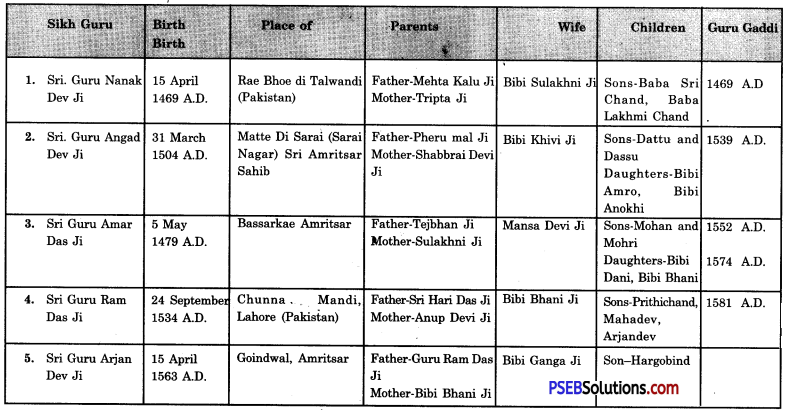
→ 31 March 1504-Birth of Guru Angad Dev Ji.

→ 1539-1552 – Guru Angad Dev Ji remained on Guru-gaddi.

→ 1546 – Foundation of Goindwal

→ 1552 – Guru Angad Dev Ji left the world.

→ 1552 – Guru Amar Das ji became the third Guru.

→ 1559 – The work of the construction of Baoli at Goindwal was completed.

→ 1574 – Amar Das Ji left the world.

सिक्ख धर्म का विकास (1539 ई०-1581 ई०) PSEB 9th Class SST Notes

→ गुरु अंगद देव जी – दूसरे सिक्ख गुरु अंगद देव जी ने गुरु नानक साहिब की बाणी एकत्रित की और इसे गुरुमुखी लिपि में लिखा। उनका यह कार्य गुरु अर्जन साहिब द्वारा संकलित ‘ग्रंथ साहिब’ की तैयारी का पहला चरण सिद्ध हुआ।

→ गुरु अंगद देव जी ने स्वयं भी गुरु नानक देव जी के नाम से बाणी की रचना की। इस प्रकार उन्होंने गुरु पद की एकता को दृढ़ किया। संगत और पंगत की संस्थाएं गुरु अंगद साहिब के अधीन भी जारी रहीं।

→ गुरु अमरदास जी – गुरु अमरदास जी सिक्खों के तीसरे गुरु थे। वह 22 वर्ष तक गुरुगद्दी पर रहे। वह खडूर साहिब से गोइंदवाल साहिब चले गए। वहां उन्होंने एक बाउली बनवाई जिसमें उनके सिक्ख (शिष्य) धार्मिक अवसरों पर स्नान करते थे।

→ गुरु अमरदास जी. ने विवाह की एक सरल विधि प्रचलित की और उसे आनंद-कारज का नाम दिया। उनके समय में सिक्खों की संख्या काफ़ी बढ़ गई।

→ गुरु रामदास जी – चौथे गुरु रामदास जी ने रामदासपुर (आधुनिक अमृतसर) में रह कर प्रचार कार्य आरंभ किया। इसकी नींव गुरु अमरदास जी के जीवन-काल के अंतिम वर्षों में रखी गई थी।

→ श्री रामदास जी ने रामदासपुर में एक बहुत बड़ा सरोवर बनवाया जो अमृतसर अर्थात् अमृत के सरोवर के नाम से प्रसिद्ध हुआ। उन्हें अमृतसर तथा संतोखसर नामक तालाबों की खुदाई के लिए काफ़ी धन की आवश्यकता थी। इसलिए उन्होंने मसंद प्रथा का श्रीगणेश किया। उन्होंने गुरुगद्दी को पैतृक रूप भी प्रदान किया।

→ गुरुमुखी लिपि को मानकीकरण – गुरु अंगद देव जी ने गुरुमुखी लिपि का मानकीकरण किया। कहते हैं कि गुरु अंगद देव जी ने गुरुमुखी के प्रचार के लिए गुरुमुखी वर्णमाला में बच्चों के लिए ‘बाल बोध’ की रचना की।

→ आम लोगों की बोली होने के कारण इससे सिक्ख धर्म के प्रचार के कार्य को बढ़ावा मिला। आज सिक्खों के सभी धार्मिक ग्रंथ इसी भाषा में हैं।

→ मंजी प्रथा-गुरु अमरदास जी के समय में सिक्खों की संख्या काफी बढ़ चुकी थी। परंतु वृद्धावस्था के कारण गुरु साहिब जी के लिए एक स्थान से दूसरे स्थान पर जाकर अपनी शिक्षाओं का प्रचार करना कठिन हो गया था।

→ अत: उन्होंने अपने सारे आध्यात्मिक साम्राज्य को 22 प्रांतों में बांट दिया। इनमें से प्रत्येक प्रांत को ‘मंजी’ कहा जाता था। प्रत्येक मंजी सिक्ख धर्म के प्रचार का एक केंद्र थी जिसके संचालन का कार्यभार गुरु जी ने अपने किसी विद्वान् श्रद्धालु शिष्य को सौंप रखा था।

→ अनंदु साहिब की रचना – गुरु अमरदास जी ने एक नई बाणी की रचना की जिसे ‘अनंदु साहिब’ कहा जाता है। इस बाणी से सिक्खों में वेद-मंत्रों के उच्चारण का महत्त्व बिल्कुल समाप्त हो गया।

→ गोइंदवाल साहिब का निर्माण – गुरु अंगद देव जी ने गोइंदवाल साहिब नामक नगर की स्थापना की। गुरु अमरदास जी के समय में यह नगर एक प्रसिद्ध धार्मिक केंद्र बन गया। आज भी यह सिक्खों का एक पवित्र धार्मिक स्थान है।

→ लंगर प्रथा का विस्तार – श्री गुरु अंगद देव जी ने श्री गुरु नानक देव जी द्वारा आरम्भ की गई लंगर प्रथा का विस्तार किया। उन्होंने यह आज्ञा दी कि जो कोई उनके दर्शन को आए, वह पहले लंगर में भोजन करे।

→ यहां प्रत्येक व्यक्ति बिना किसी भेद-भाव के भोजन करता था। इससे जाति-पाति की भावनाओं को धक्का लगा और सिक्ख धर्म के प्रसार में सहायता मिली।

→ 31 मार्च, 1504-श्री गुरु अंगद देव जी का जन्म।

→ 2 सितंबर, 1539 ई० से 29 मार्च 1552 ई०-गुरु अंगद देव जी गुरुगद्दी पर विराजमान रहे।

→ 1546 ई०-श्री गुरु अंगद देव जी द्वारा गोइंदवाल साहिब नगर की स्थापना।

→ 29 मार्च, 1552-श्री गुरु अंगद देव जी ज्योति-जोत समाए।

→ 5 मई, 1479 ई०-श्री गुरु अमरदास जी का जन्म।

→ मार्च 1552 ई०-श्री गुरु अमरदास जी गुरुगद्दी पर विराजमान।

→ मार्च 1559 ई०- श्री गुरु अमरदास जी ने गोइंदवाल साहिब में बाउली का निर्माण कार्य पूरा किया।

→ 1574 ई०- श्री गुरु अमरदास जी ज्योति-जोत समाए।

→ 24 सितंबर, 1534 ई०-श्री गुरु रामदास जी का जन्म।

→ 1574 ई० से 1581 ई०-श्री गुरु रामदास जी गुरुगद्दी पर विराजमान रहे।

→ 1 सितंबर, 1581 ई०-श्री गुरु रामदास जी ज्योति-जोत समाए।

ਸਿੱਖ ਧਰਮ ਦਾ ਵਿਕਾਸ (1539 ਈ:- 1581 ਈ:) PSEB 9th Class SST Notes

→ 2 ਸਤੰਬਰ, 1539 ਈ: ਤੋਂ 29 ਮਾਰਚ, 1552 ਈ:-ਸ੍ਰੀ ਗੁਰੂ ਅੰਗਦ ਦੇਵ ਜੀ ਗੁਰਗੱਦੀ ‘ਤੇ ਬਿਰਾਜਮਾਨ ਰਹੇ ।

→ 1546 ਈ:-ਸ੍ਰੀ ਗੁਰੂ ਅੰਗਦ ਦੇਵ ਜੀ ਦੁਆਰਾ ਗੋਇੰਦਵਾਲ ਸ਼ਹਿਰ ਦੀ ਸਥਾਪਨਾ ।

→ 29 ਮਾਰਚ, 1552 ਈ:-ਸ੍ਰੀ ਗੁਰੂ ਅੰਗਦ ਦੇਵ ਜੀ ਜੋਤੀ ਜੋਤ ਸਮਾਏ ।

→ 5 ਮਈ, 1479 ਈ:-ਸ੍ਰੀ ਗੁਰੂ ਅਮਰਦਾਸ ਜੀ ਦਾ ਜਨਮ ।

→ ਮਾਰਚ, 1552 ਈ: -ਸ੍ਰੀ ਗੁਰੂ ਅਮਰਦਾਸ ਜੀ ਗੁਰਗੱਦੀ ‘ਤੇ ਬਿਰਾਂਜਮਾਨ ॥

→ ਮਾਰਚ, 1559 ਈ:-ਸ੍ਰੀ ਗੁਰੂ ਅਮਰਦਾਸ ਜੀ ਦੁਆਰਾ ਗੋਇੰਦਵਾਲ ਸਾਹਿਬ ਵਿਚ ਬਾਉਲੀ ਦਾ ਨਿਰਮਾਣ ਕਾਰਜ ਸੰਪੂਰਨ ।

→ 1574 ਈ:-ਸ੍ਰੀ ਗੁਰੂ ਅਮਰਦਾਸ ਜੀ ਜੋਤੀ ਜੋਤ ਸਮਾਏ ।

→ 24 ਸਤੰਬਰ, 1534 ਈ:-ਸ੍ਰੀ ਗੁਰੂ ਰਾਮਦਾਸ ਜੀ ਦਾ ਜਨਮ ।

→ 1574 ਈ: ਤੋਂ 1581 ਈ:-ਸ੍ਰੀ ਗੁਰੂ ਰਾਮਦਾਸ ਜੀ ਗੁਰਗੱਦੀ ‘ਤੇ ਬਿਰਾਜਮਾਨ ਰਹੇ ।

→ 1 ਸਤੰਬਰ, 1581 ਈ:-ਸ੍ਰੀ ਗੁਰੂ ਰਾਮਦਾਸ ਜੀ ਜੋਤੀ ਜੋਤ ਸਮਾਏ ।

PSEB 9th Class SST Notes Economics Chapter 2 Human Resources

This PSEB 9th Class Social Science Notes Economics Chapter 2 Human Resources will help you in revision during exams.

Human Resources PSEB 9th Class SST Notes

→ Resources: Efforts made by a nation, an organization, or an individual to raise their incomes are known as resources.

→ Natural Resources: Air, minerals, soil, water which are used to satisfy human needs are called natural resources.

→ Human Resources: The size of the population of a country along with its efficiency, educational qualities, productivity, etc. is known as human resources.

PSEB 9th Class SST Notes Economics Chapter 2 Human Resources

→ Cause of Japan & Germany’s Economic Development: They have made investments in human resources, especially in the fields of education and health.

→ Causes of underdevelopment of countries like India, Bangla Desh, Pakistan, etc: It is due to their vast uneducated, unhealthy and unskilled population.

→ Economic Activities: All those activities which are performed to earn money are called economic activities.

→ Non-Economic Activities: All those activities which do not give income in return are called non¬economic activities.

→ Primary Sector: Primary sector is that sector that produces goods by using natural resources.

→ Examples of Primary Sector Activities: Agriculture, animal husbandry, dairy, poultry farming, fishing, mining, forestry, grazing, hunting, etc.

→ Secondary Sector: Secondary sector is that sector that produces finished goods by using the products of the primary sector as raw materials.

→ Tertiary Sector: This sector consists of all services and occupations which are needed to support the activities of primary and secondary sectors.

→ Population as an Asset or Liability for the economy: Illiterate and unhealthy populations are liable for the economy whereas literate and healthy populations are an asset.

→ Unemployment: It refers to a situation in which people are willing to work at the current wages but cannot find work.

PSEB 9th Class SST Notes Economics Chapter 2 Human Resources

→ Seasonal Unemployment: It means when people find jobs during some months and during the remaining months they are unemployed.

→ Disguised, Unemployment: It means more people are engaged in a particular work than required.

मानव-संसाधन PSEB 9th Class SST Notes

→ संसाधन – अपनी क्षमता को बढ़ाने के लिए व्यक्ति, संगठन या राष्ट्र द्वारा किए गए प्रयास संसाधन हैं।

→ प्राकृतिक संसाधन – वायु, खनिज, भूमि, जल आदि का प्रयोग मनुष्य की आवश्यकताओं की पूर्ति के लिए किया जाता है इन्हें ही प्राकृतिक संसाधन कहते हैं।

→ मानवीय संसाधन – किसी राष्ट्र की जनसंख्या का वह भाग जो कार्यकुशलता, शिक्षा प्रशिक्षण व स्वास्थ्य से संपन्न है।

→ जापान व जर्मनी के आर्थिक विकास के कारण – इनका मानव पूंजी निर्माण में निवेश खासकर स्वास्थ्य व शिक्षा में।

→ भारत, बांग्लादेश व पाकिस्तान में अल्पविकास के कारण – उनकी अशिक्षित, अस्वस्थ व अकार्यकुशल बड़ी जनसंख्या।

→ आर्थिक क्रियाएं – वे सभी कार्य जो धन कमाने के उद्देश्य से किए जाते हैं।

→ गैर आर्थिक क्रियाएं – वे सभी कार्य जो धन कमाने के उद्देश्य से नहीं किए जाते हैं।

→ प्राथमिक क्षेत्र – प्राथमिक क्षेत्र वह क्षेत्र है जो प्राकृतिक संसाधनों के प्रयोग द्वारा वस्तुएं निर्मित करता है।

→ प्राथमिक क्षेत्र की किस्मों के उदाहरण – कृषि, पशु-पालन, डेयरी, मुर्गीपालन, मत्सय पालन, खनन, वानिकी आदि।

→ द्वितीयक क्षेत्र – द्वितीयक क्षेत्र वे क्षेत्र हैं जो प्राथमिक क्षेत्र के उत्पाद का कच्चे माल के रूप में प्रयोग करके अंतिम उत्पाद तैयार करता है।

→ तृतीयक क्षेत्र – वह क्षेत्र जो सेवाओं का निर्माण करता है।

→ जनसंख्या, संपत्ति या दायित्व के रूप में – अशिक्षित व अस्वस्थ जनसंख्या किसी देश के लिए दायित्व है जबकि शिक्षित व स्वस्थ जनसंख्या किसी देश के लिए संपत्ति है।

→ बेरोजगारी – जब कोई व्यक्ति मज़दूरी की प्रचलित दर पर काम करने को तैयार हो पर उसे काम न मिले।

→ मौसमी बेरोजगारी – इसका अर्थ है जब लोग पूरे वर्ष में कुछ महीने काम न करें व रोजगार के लिए भटकते रहें।

→ अदृश्य बेरोज़गारी। – यह बेरोज़गारी का वह रूप है जिसमें श्रमिक कार्य करते हुए प्रतीत होते हैं पर वे वास्तव में होते नहीं हैं।

PSEB 9th Class SST Notes Economics Chapter 1 Story of a Village

This PSEB 9th Class Social Science Notes Economics Chapter 1 Story of a Village will help you in revision during exams.

Story of a Village PSEB 9th Class SST Notes

→ Economics: Economics is the study of unlimited human wants and the activities carried out to satisfy these wants through limited means.

→ Goods: Goods are those visible things that satisfy human wants e.g., books, chairs, mobile phones, etc.

→ Services: Services do not have a physical existence but they satisfy human wants e.g., teaching by a teacher.

→ Utility: Want satisfying power of a good or service is called utility.

→Price: The value of goods and services which can be expressed in terms of money is called price.

PSEB 9th Class SST Notes Economics Chapter 1 Story of a Village

→ Wealth: All those goods and services for which we have to pay a price for their consumption are called wealth.

→ Money: Money can be defined as anything that is recognized by the government and is widely accepted as a medium of exchange in the transfer of goods.

→ Demand: Other things being equal, demand refers to the quantities of a commodity that the consumers are able and willing to buy at each possible price during a given period of time.

→ Supply: The quantities of a commodity that a seller is prepared to sell at given prices in a given period of time is called supply.

→ Market: Market means an arrangement where buyers and sellers of a commodity are in close contact with each other to buy and sell goods.

→ Cost: Cost is the amount spent in terms of money right from the production of goods to their sale.

→ Revenue: Revenue is the money earned by a person by selling goods or services.

→ Economic Activities: Economic activities are those activities that are concerned with consumption, production, exchange, and distribution of wealth.

→ Non-Economic Activities: Non-Economic activities are those activities that are not economically profitable.

→ Production: The creation of utility is called production.

→ Factors of Production: Land, labour, capital, and entrepreneur are called factors of production.

→ Land: Land is the free gift of nature-and its supply is fixed.

PSEB 9th Class SST Notes Economics Chapter 1 Story of a Village

→ Labour: All human efforts made for the sake of monetary gain are called labour.

→ Multiple Cropping: To grow more than one crop on a piece of land during a year is known as multiple cropping.

→ Capital: Capital means all those man-made goods which are used in the further production of goods.

→ Entrepreneur: A human factor of production that takes economic decisions and bears risks is called an entrepreneur.

एक गांव की कहानी PSEB 9th Class SST Notes

→ अर्थशास्त्र – अर्थशास्त्र मनुष्य के उन कार्यों का अध्ययन है जो हमें यह बताता है कि किस प्रकार दुर्लभ साधनों का प्रयोग करके अधिकतम संतुष्टि प्राप्त की जा सकती है।

→ वस्तुएं – वस्तुएं वे दृश्य मदें हैं जो मनुष्य की आवश्यकताएं पूरी करती हैं जैसे किताब, कुर्सी, मोबाइल आदि।

→ सेवाएं – सेवाएं अदृश्य मदें हैं परंतु मनुष्य की आवश्यकताएं संतुष्ट करती हैं जैसे अध्यापन।

→ उपयोगिता – आवश्यकताओं को संतुष्ट करने की शक्ति उपयोगिता है।

→ कीमत – वस्तुओं और सेवाओं का वह मूल्य जो मुद्रा में व्यक्त किया जाता है।

→ धन – वे सभी वस्तुएं तथा सेवाएं जो हम उपभोग करने के लिए कीमत देकर खरीदते हैं।

→ मुद्रा – मुद्रा वह पदार्थ है जो सरकार द्वारा जारी किया जाता है तथा जिसे विनिमय के माध्यम के रूप में स्वीकार किया जाता है।

→ मांग – अन्य बातें समान रहने पर, मांग किसी वस्तु की वह मात्रा है जिसे एक उपभोक्ता निश्चित कीमत तथा निश्चित समय पर खरीदने के लिए तैयार होता है।

→ पूर्ति – पूर्ति किसी पदार्थ की वह मात्रा है जिसे एक उत्पादक निश्चित कीमत तथा निश्चित समय पर बेचने के लिए तैयार होता है।

→ बाज़ार – बाज़ार एक स्थान है जहां क्रेता व विक्रेता एक साथ पाए जाते हैं।

→ लागत – लागत मुद्रा के रूप में व्यय की गई वह मात्रा है जो वस्तु को बनाने से लेकर विक्री तक के बीच लगाई जाती है।

→ आगम – आगम मुद्रा की वह मात्रा है जो किसी वस्तु की विक्री से प्राप्त होता है।

→ आर्थिक क्रियाएं – आर्थिक क्रियाएं वे क्रियाएं हैं जो धन कमाने के उद्देश्य से की जाती हैं।

→ गैर आर्थिक क्रियाएं – वे क्रियाएं जो धन कमाने के उद्देश्य से नहीं की जाती हैं।।

→ उत्पादन – उपयोगिता का सृजन उत्पादन है।

→ उत्पादन के साधन – भूमि, पूंजी, श्रम, उद्यमी उत्पादन के साधन हैं।

→ भूमि – भूमि प्रकृति का निःशुल्क उपहार है जिसकी पूर्ति स्थिर है।

→ श्रम – धन कमाने के उद्देश्य से किए गए सभी मानवीय प्रयास श्रम है।

→ बहुविविध कृषि – भूमि के एक टुकड़े पर एक वर्ष में एक साथ एक से अधिक फसलें एक साथ उगाना बहु विविध कृषि कहलाती हैं।

→ पूंजी – पूंजी का अर्थ उन सभी मानव निर्मित पदार्थों से है जो आगे उत्पादन करने के उद्देश्य से बनाए जाते हैं।

→ उद्यमी – वह मानवीय तत्व जो उत्पादन संबंधी निर्णय तथा जोखिम उठाता है।

PSEB 9th Class SST Notes Geography Chapter 3b Punjab: Drainage

This PSEB 9th Class Social Science Notes Geography Chapter 3b Punjab: Drainage will help you in revision during exams.

Punjab: Drainage PSEB 9th Class SST Notes

→ Punjab: Punjab is known as the land of five rivers.

→ Punjab was divided along the course of time and presently there are only three rivers over here i.e. Ravi, Beas, and Sutlej. These are perennial rivers.

→ Drainage of Punjab: There are three types of rivers in Punjab and are Perennial rivers, Seasonal rivers, and Relict rivers.

→ River Ravi: River Ravi originates in the north of Rohtang Pass at the height of 4116 metre.

→ On this river, Madhopur headworks have been made for Ranjit Sagar Dam and Theen Dam.

→ It has many tributaries out of which the Ujh river is quite important.

PSEB 9th Class SST Notes Geography Chapter 3b Punjab: Drainage

→ River Beas: River Beas originates from Beas Kund at the height of 4060 metres in Himachal Pradesh.

→ It flows for 160 km. in Punjab and then enters river Sutlej.

→ Another river Rajasthan Feeder was made out of Beas which fulfills the water needs of a large area of Rajasthan.

→ Sutlej: River Sutlej originates from Rakshtal near Mansarovar lake.

→ Bhakhra Dam has been made on this river. From the Firozpur district, it enters Pakistan.

→ Ghaggar: Ghaggar is a seasonal river that starts from the hills of Sirmour and while going through Patiala, Ghanour and Haryana finally ends in the Desert of Rajasthan.

→ Canal System of Punjab: Punjab has quite a developed canal system which includes 5 headworks and 14500 km. long canals.

पंजाब : जलतन्त्र PSEB 9th Class SST Notes

→ पंजाब-पंजाब को पाँच दरियाओं की धरती कहा जाता है। समय के साथ-साथ पंजाब का कई बार विभाजन हुआ तथा अब इसमें केवल तीन दरिया रावी, ब्यास तथा सतलुज ही रह गए हैं। यह तीनों दरिया सम्पूर्ण वर्ष पानी से भरे रहते हैं।

→ पंजाब का जलतन्त्र-पंजाब में तीन प्रकार के दरिया हैं-बारहमासी दरिया, मौसमी दरिया तथा अवशेषी दरिया।

→ रावी दरिया-रावी दरिया रोहतांग दर्रे के उत्तर की तरफ 4116 मीटर की ऊंचाई पर शुरू होता है।

→ इसके ऊपर रणजीत सागर डैम तथा थीन डैम के लिए माधोपुर हैड वर्कस को बनाया गया है। इसकी कई सहायक नदियां भी हैं जिनमें ऊज नदी सबसे महत्त्वपूर्ण है।

→ ब्यास नदी-ब्यास दरिया हिमाचल प्रदेश के नज़दीक 4060 मीटर की ऊंचाई पर ब्यास कुण्ड से शुरू होता है। यह पंजाब में 160 किलोमीटर का फासला तय करके सतलुज में मिल जाता है।

→ इससे ही राजस्थान फीडर नहर निकाली गई है जो राजस्थान के एक बड़े हिस्से की पानी की आवश्यकताएं पूर्ण करती है।

→ सतलुज-सतलुज मानसरोवर झील के नज़दीक रक्षताल से निकलता है।

→ इस पर भाखड़ा डैम बनाया गया है। यह फिरोजपुर जिले में से पाकिस्तान में चला जाता है।

→ घग्गर-घग्गर एक मौसमी नदी है जो सिरमौर की पहाड़ियों में से निकल कर पटियाला, घनौर तथा हरियाणा में से होते हुए राजस्थान के रेगिस्तान में खत्म हो जाती है।

→ पंजाब की नहरी व्यवस्था-पंजाब में काफी विकसित नहरी व्यवस्था है जिसमें 5 हैडवर्क्स तथा 14500 किलोमीटर लंबी नहरें हैं।

ਪੰਜਾਬ: ਜਲ-ਤੰਤਰ PSEB 9th Class SST Notes

→ ਪੰਜਾਬ ਨੂੰ ਪੰਜ ਦਰਿਆਵਾਂ ਦੀ ਧਰਤੀ ਕਿਹਾ ਜਾਂਦਾ ਹੈ । ਸਮੇਂ ਦੇ ਨਾਲ ਪੰਜਾਬ ਦੀ ਕਈ ਵਾਰੀ ਵੰਡ ਹੋਈ ਅਤੇ ਹੁਣ ਇਸ ਵਿੱਚ ਸਿਰਫ ਤਿੰਨ ਦਰਿਆ ਰਾਵੀ, ਬਿਆਸ ਅਤੇ ਸਤਲੁਜ ਹੀ ਰਹਿ ਗਏ ਹਨ । ਇਹ ਤਿੰਨੋ ਦਰਿਆ ਸਾਰਾ ਸਾਲ ਪਾਣੀ ਨਾਲ ਭਰੇ ਰਹਿੰਦੇ ਹਨ ।

→ ਪੰਜਾਬ ਵਿੱਚ ਤਿੰਨ ਤਰ੍ਹਾਂ ਦੇ ਦਰਿਆ ਹਨ-ਬਾਰਾਂਮਾਸੀ ਦਰਿਆ, ਮੌਸਮੀ ਦਰਿਆ ਅਤੇ ਅਵਸ਼ੇਸ਼ੀ ਦਰਿਆ !

→ ਰਾਵੀ ਦਰਿਆ ਰੋਹਤਾਂਗ ਦੱਰੇ ਦੇ ਉੱਤਰ ਵੱਲ 4116 ਮੀਟਰ ਦੀ ਉੱਚਾਈ ਤੋਂ ਸ਼ੁਰੂ ਹੁੰਦਾ ਹੈ । ਇਸ ਉੱਤੇ ਰਣਜੀਤ ਸਾਗਰ ਡੈਮ ਅਤੇ ਥੀਨ ਡੈਮ ਲਈ ਮਾਧੋਪੁਰ ਹੈਡ ਵਰਕਸ ਨੂੰ ਬਣਾਇਆ ਗਿਆ ਹੈ । ਇਸ ਦੀਆਂ ਕਈ ਸਹਾਇਕ । ਨਦੀਆਂ ਵੀ ਹਨ ਜਿਨ੍ਹਾਂ ਵਿੱਚ ਉੱਚ ਨਦੀ ਸਭ ਤੋਂ ਮਹੱਤਵਪੂਰਨ ਹੈ ।

→ ਬਿਆਸ ਦਰਿਆ ਹਿਮਾਚਲ ਪ੍ਰਦੇਸ਼ ਦੇ ਕੋਲ 4060 ਮੀਟਰ ਦੀ ਉੱਚਾਈ ਉੱਤੇ ਬਿਆਸ ਕੁੰਡ ਤੋਂ ਸ਼ੁਰੂ ਹੁੰਦਾ ਹੈ ।

→ ਇਹ ਪੰਜਾਬ ਵਿੱਚ 160 ਕਿਲੋਮੀਟਰ ਦਾ ਫਾਸਲਾ ਤੈਅ ਕਰਕੇ ਸਤਲੁਜ ਵਿੱਚ ਮਿਲ ਜਾਂਦਾ ਹੈ । ਇਸ ਤੋਂ ਹੀ ਰਾਜਸਥਾਨ ਫੀਡਰ ਨਹਿਰ ਕੱਢੀ ਗਈ ਹੈ ਜੋ ਰਾਜਸਥਾਨ ਦੇ ਇੱਕ ਵੱਡੇ ਹਿੱਸੇ ਦੀਆਂ ਪਾਣੀ ਦੀਆਂ ਜ਼ਰੂਰਤਾਂ ਪੂਰੀ ਕਰਦੀ ਹੈ ।

→ ਸਤਲੁਜ ਮਾਨਸਰੋਵਰ ਝੀਲ ਦੇ ਨਜ਼ਦੀਕ ਰਕਸ਼ਤਾਲ ਤੋਂ ਨਿਕਲਦਾ ਹੈ । ਇਸ ਉੱਤੇ ਭਾਖੜਾ ਡੈਮ ਬਣਿਆ ਹੋਇਆ ਹੈ । ਇਹ ਫਿਰੋਜ਼ਪੁਰ ਜ਼ਿਲੇ ਵਿੱਚੋਂ ਹੋ ਕੇ ਪਾਕਿਸਤਾਨ ਵਿੱਚ ਚਲਾ ਜਾਂਦਾ ਹੈ ।

→ ਘੱਗਰ ਇੱਕ ਮੌਸਮੀ ਨਦੀ ਹੈ ਜਿਹੜੀ ਸਿਰਮੌਰ ਦੀਆਂ ਪਹਾੜੀਆਂ ਵਿੱਚੋਂ ਨਿਕਲ ਕੇ ਪਟਿਆਲਾ, ਘਨੋਰ ਅਤੇ । ਹਰਿਆਣਾਂ ਵਿੱਚੋਂ ਹੁੰਦੇ ਹੋਏ ਰਾਜਸਥਾਨ ਦੇ ਰੇਗਿਸਤਾਨ ਵਿੱਚ ਖ਼ਤਮ ਹੋ ਜਾਂਦੀ ਹੈ ।

→ ਪੰਜਾਬ ਵਿੱਚ ਕਾਫੀ ਵਿਕਸਿਤ ਨਹਿਰੀ ਪ੍ਰਬੰਧ ਹੈ ਜਿਸ ਵਿਚ 5 ਹੈੱਡ ਵਰਕਸ ਅਤੇ 14500 ਕਿਲੋਮੀਟਰ ਲੰਬੀਆਂ ਨਹਿਰਾਂ ਹਨ ।

PSEB 9th Class SST Notes Geography Chapter 6 Population

This PSEB 9th Class Social Science Notes Geography Chapter 6 Population will help you in revision during exams.

Population PSEB 9th Class SST Notes

→ Human Resource:

  • Humans are considered as resources because they are the ones who actually create natural resources into usable resources.
  • But now humans have the capability even to change their surroundings according to their needs.
  • That’s why it is necessary for us to educate and develop human resources so that they can be used for national development.

→ Census Survey 2011: According to the census survey of 2011, the Indian population was 121 crore which accounted for 16.7% of the world’s population.

→ The density of Population:

  • Most of the Indian population lives in the plains.
  • The density of population in India is 382 persons per sq. km. Punjab’s density of population was 551 in 2011.

PSEB 9th Class SST Notes Geography Chapter 6 Population

→ Population Growth:

  • The population of an area never remains the same.
  • It keeps on changing. When this change comes in a positive manner it is called population growth.
  • Birth rate and death rate play a very important role in changing the population of an area.

→ Sex Ratio:

  • The ratio of males and females in the population is called the sex ratio.
  • It is explained in a way that a number of females are shown in an area behind every 1000 males.

→ Age-structure: Population can be divided into three parts on the basis of age and these are:

  • The age group of 15 years or less
  • The age group of 15-65 years
  • The age group of 65 years and above.

→ This division of population is called age structure.

→ Immigration and Emigration:

  • Immigration and emigration also play an important role in changing the population of a region.
  • The meaning of immigration is when people migrate to other regions or countries to live and emigration is the process when people come to any region or country to live.

→ Migrant Labour in Punjab:

  • Many industries have been established in many cities of Punjab and there is always a need for temporary workers to do work in such industries.
  • In the same way, workers are also required to do work in agricultural fields.
  • That’s why many migrants come to Punjab from the states like Uttar Pradesh, Bihar, etc.

→ Working Population and Dependent Population: India’s 41.6% is dependent population and 58.4% population is working for the population.

→ Increasing population:

  • The growth of the population depends upon birth rate and death rate.
  • India’s death rate has come down very quickly but the birth rate is coming down quite slowly.
  • The major reason for decreasing death rate is the spread of health services.

PSEB 9th Class SST Notes Geography Chapter 6 Population

→ Literacy: At the time of Indian Independence, India’s literacy rate was 14%. But in 2011, the literacy rate increased upto 74.01%.

→ Health:

  • To know about the level of population, it is must to look into the health of people.
  • During the last few decades, the government has greatly stressed increasing health services in the country and has established many hospitals, dispensaries, and even an increased number of doctors.

→ Occupational Population structure:

  • 53% of India’s population is still engaged in the primary sector i.e. agriculture.
  • 13% of people are engaged in the secondary sector and 20% are in the tertiary sector.

→ Population Distribution of Punjab:

  • There are 12,581 villages and 217 small big cities in Punjab.
  • There is a great difference in their population.
  • Few areas have a density of population around 400 persons per sq. km. and few regions have more than 900 persons per sq. km.

→ Female Foeticide:

  • Female foeticide leads to an imbalance in the population.
  • That’s why the sex ratio in India is 1000 : 943 and in Punjab, it is 1000 : 895.

जनसंख्या PSEB 9th Class SST Notes

→ मानव संसाधन – मनुष्य अपने परितंत्र का मात्र एक अंग ही नहीं रह गया, अब वह अपने लाभ के लिए पर्यावरण में परिवर्तन भी कर सकता है। अब उसकी शक्ति उसकी गुणवत्ता में समझी जाती है।

→ राष्ट्र को ऊंचा उठाने के लिए हमें अपने मानवीय संसाधनों को विकसित, शिक्षित एवं प्रशिक्षित करना अनिवार्य है। तभी प्राकृतिक संसाधनों का विकास संभव हो सकेगा।

→ 2011 की जनगणना – 2011 की जनगणना के अनुसार भारत की जनसंख्या 121 करोड़ थी। यह संसार की कुल जनसंख्या का 17.2% भाग है।

→ जनसंख्या घनत्व – देश की अधिकतर जनसंख्या मैदानी भागों में निवास करती | है। देश में जनसंख्या का घनत्व 382 व्यक्ति प्रति वर्ग किलोमीटर है।

→ जनसंख्या बढ़ौतरी – किसी भी क्षेत्र की जनसंख्या एक समान नहीं रहती बल्कि उसमें परिवर्तन आते रहते हैं। जब यह परिवर्तन सकारात्मक होता है तो इसे जनसंख्या बढ़ौतरी कहते हैं। किसी भी क्षेत्र की जनसंख्या बढ़ने या कम होने में जन्म दर व मृत्यु दर काफी महत्त्वपूर्ण भूमिका निभाते हैं।

→ स्त्री-पुरुष अनुपात – स्त्री-पुरुष के सांख्यिकी अनुपात को स्त्री-पुरुष अनुपात | कहते हैं। इसे प्रति हजार पुरुषों पर स्त्रियों की संख्या के रूप में व्यक्त किया जाता है।

→ आयु संरचना – जनसंख्या को सामान्यतः तीन वर्गों में विभाजित किया जाता है-

  • 15 वर्ष से कम आयु-वर्ग
  • 15 से 65 वर्ष का आयु वर्ग तथा
  • 65 वर्ष से अधिक का आयु वर्ग।
    इस विभाजन को जनसंख्या का पिरामिड कहा जाता है।

→ आवास तथा प्रवास – किसी भी क्षेत्र की जनसंख्या में परिवर्तन में आवास तथा प्रवास की भी महत्त्वपूर्ण भूमिका होती है। आवास का अर्थ होता है बाहर से आकर बस जाना तथा प्रवास का अर्थ है बाहर जाकर बस जाना।

→ प्रवास के कई कारण हो सकते हैं जैसे कि, रोजगार की तलाश, आय की आशा, बढ़िया सुविधाओं की आवश्यकता इत्यादि।

→ पंजाब में प्रवासी मजदूर – पंजाब के कई नगरों में बहुत से उद्योग स्थापित हैं जिनमें कार्य करने के लिए अस्थायी मजदूरों की आवश्यकता होती है।

→ इस प्रकार कृषि का कार्य करने के लिए मज़दूरों की आवश्यकता होती है। इस कारण पंजाब में उत्तर प्रदेश, बिहार इत्यादि प्रदेशों से प्रवासी मज़दूर आकर कार्य करते है।

→ अर्जक तथा आश्रित जनसंख्या – भारत में जनसंख्या का 41.6% भाग आश्रित है। शेष 58.4% अर्जक जनसंख्या को आश्रित जनसंख्या का निर्वाह करना पड़ता है।

→ बढ़ती जनसंख्या – जनसंख्या की वृद्धि दर, जन्म-दर तथा मृत्यु-दर के अन्तर पर निर्भर करती है। भारत की मृत्यु दर तो काफ़ी नीचे आ गई है परंतु जन्म-दर बहुत धीमे से घटी है। मृत्यु-दर के घटने का मुख्य कारण स्वास्थ्य सेवाओं का विस्तार रहा है।

→ साक्षरता – स्वतंत्रता के समय हमारे देश में केवल 14% लोग ही साक्षर थे। 2011 में यह प्रतिशत बढ़कर 74.01% हो गया।

→ स्वास्थ्य – जनसंख्या का स्तर पता करने के लिए लोगों का स्वास्थ्य देखने की आवश्यकता होती है।

→ पिछले कुछ दशकों में स्वास्थ्य सुविधाएं विशेषतया अस्पताल, डिस्पैंसरी तथा डॉक्टरों की संख्या में काफी बढ़ौतरी हुई है।

→ पेशे के अनुसार जनसंख्या संरचना – हमारे देश की 53% जनसंख्या आज भी प्राथमिक क्षेत्र में कार्यरत है। द्वितीय क्षेत्र 13% लोग तथा तृतीय क्षेत्र में लगभग 20% लोग कार्यरत हैं।

→ पंजाब का जनसंख्या विभाजन – पंजाब में 12,581 गांव हैं तथा 217 छोटे बड़े नगर हैं। इन सभी की जनसंख्या में काफी अंतर है।

→ कई क्षेत्रों का घनत्व 400 व्यक्ति प्रति वर्ग किलोमीटर से भी कम है तथा कई क्षेत्रों में यह 900 व्यक्ति प्रति वर्ग किलोमीटर से भी अधिक है।

→ मादा भ्रूण हत्या – मादा भ्रूण हत्या से जनसंख्या में असंतुलन आ जाता है। इस कारण भारत का लिंग अनुपात 1000 : 943 है तथा पंजाब में यह 1000 : 895 है।

ਕੁਦਰਤੀ ਬਨਸਪਤੀ ਅਤੇ ਜੰਗਲੀ ਜੀਵਨ PSEB 9th Class SST Notes

→ ਮਨੁੱਖ ਆਪਣੇ ਸਮਾਜ ਦਾ ਇੱਕ ਮਾਤਰ ਅੰਗ ਹੀ ਨਹੀਂ ਰਹਿ ਗਿਆ; ਹੁਣ ਉਹ ਆਪਣੇ ਲਾਭ ਦੇ ਲਈ ਵਾਤਾਵਰਨ ਵਿੱਚ ਤਬਦੀਲੀ ਵੀ ਕਰ ਸਕਦਾ ਹੈ । ਹੁਣ ਉਸ ਦੀ ਸ਼ਕਤੀ ਉਸ ਦੀ ਗੁਣਵੱਤਾ ਵਿੱਚ ਸਮਝੀ ਜਾਂਦੀ ਹੈ ।

→ ਦੇਸ਼ ਨੂੰ ਉੱਚਾ ਚੁੱਕਣ ਲਈ ਸਾਨੂੰ ਆਪਣੇ ਮਨੁੱਖੀ ਸਾਧਨਾਂ ਨੂੰ ਵਿਕਸਿਤ, ਸਿੱਖਿਅਤ ਅਤੇ ਸਿਖਲਾਈ ਦੇਣਾ ਜ਼ਰੂਰੀ ਹੈ ਤਾਂ ਹੀ ਕੁਦਰਤੀ ਸਾਧਨਾਂ ਦਾ ਵਿਕਾਸ ਸੰਭਵ ਹੋ ਸਕੇਗਾ ।

→ 2011 ਦੀ ਜਨਗਣਨਾ ਦੇ ਅਨੁਸਾਰ ਭਾਰਤ ਦੀ ਜਨਸੰਖਿਆ 121 ਕਰੋੜ ਸੀ । ਇਹ ਸੰਸਾਰ ਦੀ ਕੁੱਲ ਜਨਸੰਖਿਆ ਦਾ ਲਗਪਗ 17.2% ਭਾਗ ਹੈ ।

→ ਦੇਸ਼ ਦੀ ਵਧੇਰੇ ਜਨਸੰਖਿਆ ਮੈਦਾਨੀ ਭਾਗਾਂ ਵਿੱਚ ਵਸਦੀ ਹੈ । ਦੇਸ਼ ਵਿੱਚ ਜਨਸੰਖਿਆ ਦੀ ਘਣਤਾ 382 ਵਿਅਕਤੀ ਪ੍ਰਤੀ ਵਰਗ ਕਿਲੋਮੀਟਰ ਸੀ । ਪੰਜਾਬ ਦੀ ਜਨਸੰਖਿਆ ਘਣਤਾ 2011 ਵਿੱਚ 551 ਸੀ ।

→ ਕਿਸੇ ਵੀ ਖੇਤਰ ਦੀ ਵਸੋਂ ਇੱਕ ਸਮਾਨ ਨਹੀਂ ਰਹਿੰਦੀ ਬਲਕਿ ਇਸ ਵਿੱਚ ਪਰਿਵਰਤਨ ਆਉਂਦੇ ਰਹਿੰਦੇ ਹਨ । ਜਦੋਂ ਇਹ ਪਰਿਵਰਤਨ ਸਕਾਰਾਤਮਕ ਹੁੰਦਾ ਹੈ, ਤਾਂ ਇਸ ਨੂੰ ਵਸੋਂ ਵਾਧਾ ਕਹਿੰਦੇ ਹਨ । ਕਿਸੇ ਵੀ ਖੇਤਰ ਦੀ ਜਨਸੰਖਿਆ ਵਧਣ ਜਾਂ ਘਟਣ ਵਿੱਚ ਜਨਮ ਦਰ ਅਤੇ ਮੌਤ ਦਰ ਬਹੁਤ ਮਹੱਤਵਪੂਰਨ ਭੂਮਿਕਾ ਨਿਭਾਉਂਦੇ ਹਨ ।

→ ਔਰਤ-ਮਰਦ ਦੀ ਸੰਖਿਆ ਅਨੁਪਾਤ ਨੂੰ ਔਰਤ-ਮਰਦ ਅਨੁਪਾਤ ਆਖਦੇ ਹਨ । ਇਸ ਨੂੰ ਪ੍ਰਤੀ ਹਜ਼ਾਰ ਮਰਦਾਂ ਪਿੱਛੇ ਔਰਤਾਂ ਦੀ ਸੰਖਿਆ ਦੇ ਰੂਪ ਵਿੱਚ ਵਰਣਨ ਕੀਤਾ ਜਾਂਦਾ ਹੈ ।

→ ਜਨਸੰਖਿਆ ਨੂੰ ਬਰਾਬਰ ਤਿੰਨ ਵਰਗਾਂ ਵਿੱਚ ਵੰਡ ਦਿੱਤਾ ਜਾਂਦਾ ਹੈ-

  • 15 ਸਾਲ ਤੋਂ ਘੱਟ ਉਮਰ-ਵਰਗ
  • 15 ਤੋਂ 65 ਸਾਲ ਦੀ ਉਮਰ ਵਰਗ ਅਤੇ
  • 65 ਸਾਲ ਤੋਂ ਵੱਧ ਦਾ ਉਮਰ-ਵਰਗ ।
    ਇਸ ਵੰਡ ਨੂੰ ਜਨਸੰਖਿਆ ਦਾ ਉਮਰ-ਢਾਂਚਾ ਕਿਹਾ ਜਾਂਦਾ ਹੈ ।

→ ਕਿਸੇ ਵੀ ਖੇਤਰ ਦੀ ਜਨਸੰਖਿਆ ਵਿੱਚ ਪਰਿਵਰਤਨ ਵਿੱਚ ਆਵਾਸ ਅਤੇ ਪ੍ਰਵਾਸ ਦੀ ਵੀ ਮਹੱਤਵਪੂਰਨ ਭੂਮਿਕਾ ਹੁੰਦੀ ਹੈ । ਆਵਾਸ ਦਾ ਅਰਥ ਹੁੰਦਾ ਹੈ ਬਾਹਰੋਂ ਆ ਕੇ ਵਸਣਾ ਅਤੇ ਪ੍ਰਵਾਸ ਦਾ ਅਰਥ ਹੁੰਦਾ ਹੈ ਬਾਹਰ ਜਾ ਕੇ ਵਸਣਾ । ਪ੍ਰਵਾਸ ਦੇ ਕਈ ਕਾਰਨ ਹੋ ਸਕਦੇ ਹਨ ਜਿਵੇਂ ਕਿ ਰੋਜ਼ਗਾਰ ਦੀ ਭਾਲ, ਕਮਾਈ ਦੀ ਆਸ, ਵਧੀਆ ਸਹੂਲਤਾਂ ਦੀ ਜ਼ਰੂਰਤ ਆਦਿ ।

→ ਪੰਜਾਬ ਦੇ ਕਈ ਸ਼ਹਿਰਾਂ ਵਿੱਚ ਬਹੁਤ ਸਾਰੇ ਉਦਯੋਗ ਸਥਾਪਿਤ ਹਨ ਜਿਨ੍ਹਾਂ ਵਿੱਚ ਕੰਮ ਕਰਨ ਲਈ ਅਸਥਾਈ ਮਜ਼ਦੂਰਾਂ ਦੀ ਲੋੜ ਹੁੰਦੀ ਹੈ । ਇਸੇ ਤਰ੍ਹਾਂ ਖੇਤੀ ਦੇ ਕੰਮ ਵਿੱਚ ਵੀ ਮਜ਼ਦੂਰਾਂ ਦੀ ਲੋੜ ਹੁੰਦੀ ਹੈ । ਇਸ ਲਈ ਪੰਜਾਬ ਵਿੱਚ ਉੱਤਰ-ਪਦੇਸ਼, ਬਿਹਾਰ ਆਦਿ ਵਰਗੇ ਦੇਸ਼ ਤੋਂ ਪਰਵਾਸੀ ਮਜ਼ਦੂਰ ਆ ਕੇ ਕੰਮ ਕਰਦੇ ਹਨ ।

→ ਭਾਰਤ ਵਿੱਚ ਜਨਸੰਖਿਆ ਦਾ 41.6% ਭਾਗ ਨਿਰਭਰ ਹੈ ਅਤੇ 58.4% ਕਮਾਊ ਜਨਸੰਖਿਆ ਨੂੰ ਨਿਰਭਰ ਜਨਸੰਖਿਆ ਦਾ ਨਿਰਬਾਹ ਕਰਨਾ ਪੈਂਦਾ ਹੈ ।

→ ਜਨਸੰਖਿਆ ਦੀ ਵਾਧਾ-ਦਰ, ਜਨਮ-ਦਰ ਅਤੇ ਮੌਤ-ਦਰ ਦੇ ਅੰਤਰ ‘ਤੇ ਨਿਰਭਰ ਕਰਦੀ ਹੈ । ਭਾਰਤ ਦੀ ਮੌਤ| ਦਰ ਤਾਂ ਕਾਫ਼ੀ ਹੇਠਾਂ ਆ ਗਈ ਹੈ । ਪਰੰਤੂ ਜਨਮ-ਦਰ ਬਹੁਤ ਹੌਲੀ ਦਰ ਨਾਲ ਘਟੀ ਹੈ । ਮੌਤ-ਦਰ ਦੇ ਘਟਣ ਦਾ ਮੁੱਖ ਕਾਰਨ ਸਿਹਤ ਸੇਵਾਵਾਂ ਦਾ ਵਿਸਥਾਰ ਰਿਹਾ ਹੈ ।

→ ਆਜ਼ਾਦੀ ਦੇ ਸਮੇਂ ਸਾਡੇ ਦੇਸ਼ ਵਿੱਚ ਕੇਵਲ 14% ਲੋਕ ਹੀ ਪੜ੍ਹੇ-ਲਿਖੇ ਸਨ।। 2011 ਵਿੱਚ ਇਹ ਪ੍ਰਤੀਸ਼ਤ ਵੱਧ ਕੇ 74.01% ਹੋ ਗਿਆ ਸੀ ।

→ ਜਨਸੰਖਿਆ ਦਾ ਪੱਧਰ ਪਤਾ ਕਰਨ ਲਈ ਲੋਕਾਂ ਦੀ ਸਿਹਤ ਨੂੰ ਦੇਖਣ ਦੀ ਜ਼ਰੂਰਤ ਹੁੰਦੀ ਹੈ । ਪਿਛਲੇ ਕੁੱਝ ਦਹਾਕਿਆਂ ਵਿੱਚ ਦੇਸ਼ ਵਿੱਚ ਸਿਹਤ ਸੁਵਿਧਾਵਾਂ ਖ਼ਾਸ ਕਰ, ਹਸਪਤਾਲ, ਡਿਸਪੈਂਸਰੀਆਂ ਅਤੇ ਡਾਕਟਰਾਂ ਦੀ ਗਿਣਤੀ ਵਿੱਚ ਕਾਫ਼ੀ ਵਾਧਾ ਹੋਇਆ ਹੈ ।

→ ਸਾਡੇ ਦੇਸ਼ ਦੀ 53% ਜਨਸੰਖਿਆ ਅੱਜ ਵੀ ਪ੍ਰਾਥਮਿਕ ਖੇਤਰ ਜਾਂ ਖੇਤੀ ਵਿੱਚ ਲੱਗੀ ਹੋਈ ਹੈ । ਸੈਕੰਡਰੀ ਖੇਤਰ ਵਿੱਚ 13% ਲੋਕ ਅਤੇ ਤੀਜੇ ਖੇਤਰ (Tertiary Sector) ਵਿੱਚ ਲਗਭਗ 20% ਲੋਕ ਲੱਗੇ ਹੋਏ ਹਨ ।

→ ਪੰਜਾਬ ਵਿੱਚ 12,581 ਪਿੰਡ ਅਤੇ 217 ਛੋਟੇ-ਵੱਡੇ ਸ਼ਹਿਰ ਹਨ । ਇਹਨਾਂ ਸਾਰਿਆਂ ਦੀ ਜਨਸੰਖਿਆ ਵਿੱਚ ਕਾਫ਼ੀ ਅੰਤਰ ਹੈ । ਕਈ ਖੇਤਰਾਂ ਦੀ ਘਣਤਾ 400 ਵਿਅਕਤੀ ਪ੍ਰਤੀ ਵਰਗ ਕਿਲੋਮੀਟਰ ਤੋਂ ਵੀ ਘੱਟ ਹੈ ਅਤੇ ਕਈ ਖੇਤਰਾਂ ਵਿੱਚ ਇਹ 900 ਵਿਅਕਤੀ ਪ੍ਰਤੀ ਵਰਗ ਕਿਲੋਮੀਟਰ ਤੋਂ ਵੀ ਵੱਧ ਹੈ ।

→ ਮਾਦਾ ਭਰੂਣ ਹੱਤਿਆ ਨਾਲ ਜਨਸੰਖਿਆ ਵਿੱਚ ਅਸੰਤੁਲਨ ਆ ਜਾਂਦਾ ਹੈ । ਇਸ ਕਰਕੇ ਭਾਰਤ ਦਾ ਲਿੰਗ ਅਨੁਪਾਤ 1000 : 943 ਹੈ ਅਤੇ ਪੰਜਾਬ ਵਿੱਚ ਇਹ 1000 : 895 ਹੈ ।