PSEB 9th Class SST Solutions History Chapter 5 The French Revolution

Punjab State Board PSEB 9th Class Social Science Book Solutions History Chapter 5 The French Revolution Textbook Exercise Questions and Answers.

PSEB Solutions for Class 9 Social Science History Chapter 5 The French Revolution

SST Guide for Class 9 PSEB The French Revolution Textbook Questions and Answers

I. Multiple Choice Questions :

Question 1.
The burden of financial activities of the state during the old Regime was borne by the :
(a) Church
(b) Nobles
(c) Third Estate
(d) The King.
Answer:
(c) Third Estate.

Question 2.
Austrian Princess Marie Antoinnette was the Queen of which ruler of France?
(a) Louis III
(b) Louis XIV
(c) Louis XV
(d) Louis XVI.
Answer:
(d) Louis XVI.

Question 3.
Napoleon crowned himself the Emperor of France in :
(a) 1805
(b) 1804
(c) 1803
(d) 1806.
Answer:
(b) 1804.

PSEB 9th Class SST Solutions History Chapter 5 The French Revolution

Question 4.
When was ‘Tennis Court Oath’ taken in France?
(a) 14th July, 1789
(b) 20th June, 1789
(c) 4th August, 1789
(d) 5th May, 1789.
Answer:
(b) 20th June, 1789.

Question 5.
In context of France what was the ‘Convention’?
(a) A French School
(b) Newly Elected Assembly
(c) The Club
(d) A women Organization.
Answer:
(b) Newly Elected Assembly.

Question 6.
Which was the idea promoted by Montesquieu?
(a) Divine Right
(b) Decentralisation of Power
(c) The Social Contract
(d) Balance of Power.
Answer:
(b) Decentralisation of Power.

Question 7.
In the history of France which period is known as Reign of Great Terror?
(a) 1792-93
(b) 1774-76
(c) 1793-1794
(d) 1804-1815.
Answer:
(c) 1793-1794.

II. Fill in the blanks :

Question 1.
The device used by French for beheading a person was known as __________
Answer:
guillotine

Question 2.
Bastille was stormed in the year __________ A.D.
Answer:
1789

Question 3.
In 1815 A.D. Napoleon was defeated in the battle of __________
Answer:
Waterloo

PSEB 9th Class SST Solutions History Chapter 5 The French Revolution

Question 4.
__________ was the leader of Jacobin Club.
Answer:
Robespierre

Question 5.
The book ‘Social Contract’ was written by __________
Answer:
Rousseau

Question 6.
Marseillaise was composed by __________
Answer:
Roger de L’lsle.

III. Match the Columns :

Question 1.

A

B

1. Fortress Prison (i) Guillotine
2. Tax levied by Church (ii) Jacobin
3. To behead a person (iii) Rousseau
4. A club of French middle class (iv) Bastille
5. The Social Contract (v) Tithe

Answer:

A

B

1. Fortress Prison (iv) Bastille
2. Tax levied by Church (v) Tithe
3. To behead a person (i) Guillotine
4. A club of French middle class (ii) Jacobin
5. The Social Contract (iii) Rousseau

IV. Differentiate between :

Question 1.
First estate and Third estate
Answer:
(a) First estate. The first estate included two types of clergy i.e. the higher clergy and the lower clergy. The higher clergy included Archbishops, Bishops and Abbots. They were powerful, wealthy and did not pay any taxes. The lower clergy lived in the monasteries and conducted the spiritual services. They had quite a low income.

(b) Third estate. Common people were included in third estate and constituted around 97% of the total population. They paid all the taxes. Major businessmen, merchants, court officials, lawyers, peasants, artisans, landless labourers, servants etc. were included in this.

PSEB 9th Class SST Solutions History Chapter 5 The French Revolution

Question 2.
Tithe and Taille.
Answer:
Tithe and Taille. Tithe was a tax collected by the Church. It was one tenth of the total income. Taille was a tax paid by the people directly to the state. Its percentage changed from year to year.

V. Very Short Answer Type Questions

Question 1.
When did the French Revolution occur?
Answer:
In 1789 A.D.

Question 2.
Who was the leader of Jacobin Clubs?
Answer:
M. Robespierre.

Question 3.
What was Directory?
Answer:
Directory was the Council of five members.

Question 4.
Which Estate used to pay taxes in the French Society?
Answer:
The Third Estate.

Question 5.
What was the tax paid directly to the state?
Answer:
Taille was the tax paid directly to the state.

PSEB 9th Class SST Solutions History Chapter 5 The French Revolution

Question 6.
Which classes were exempted from paying taxes?
Answer:
First estate i.e. the Clergy and the second estate i.e. the Nobility.

Question 7.
How many types of taxes were paid by peasants?
Answer:
Peasants had to pay two types of taxes, Tithe and Taille.

Question 8.
Name the National Anthem of France.
Answer:
Marseillaise.

VI. Short Answer Type Questions

Question 1.
How was the French society divided before the French Revolution?
Answer:
Before the French Revolution, French Society was divided into three classes- First Estate i.e. the Clergy, Second Estate i.e. Mobility and Third Estate i.e. the General Public :

  1. The First Estate included the Clergy. They did not pay any taxes. They were on the higher posts even without having the ability.
  2. The Second Estate included major Nobles who had large pieces of land.
  3. The Third Estate included lawyers, doctors, teachers etc. They did not get any of the higher posts even if they had the ability to do so.
  4. Common public was also included in this. They had to pay taxes to the state as well as to the Church. They had to do begar and were exploited from many years.

Question 2.
Describe the role of Women in the French Revolution.
Answer:
At the time of French Revolution, no government considered women as active citizens but they played a very important role in the revolution.

Most of the women of the third estate worked as flower-sellers, fruit and vegetable venders, seamstresses for their livelihood. Many females worked as servants in the houses of the rich people. Most of the women had no access to education or professional training. They started many movement for their rights. At the time of revolution, Olympe de Gouges was one of the politically active women. She protested against the Constitution and the Declaration of Rights of Man and Citizen. That’s why she was executed. During the Reign of Terror, many female representatives were executed.

Almost after 150 years, in 1940 A.D. many laws were made for bringing reforms in their lives. According to a law, government schools were opened up and schooling was made compulsory for women.

Question 3.
Describe in brief about the famous writers philosophers who influenced the French’Revolution.
Answer:

  1. In his work Two Treatises of Government’, John Locke critisized the divine rights of kings.
  2. Rousseau continued the same ideas. He asserted the doctrine of popular sovereignty. He wrote a book called ‘The Social Contract’.
  3. Montesquieu in his book, ‘The Spirit of Laws’ proposed a division of power within the government between legislature, executive and judiciary.

PSEB 9th Class SST Solutions History Chapter 5 The French Revolution

Question 4.
What do you mean by Monarchy?
Answer:
Monarchy is the system of government in which king has all the rights and he acts as a dictator who believes in divine rights of the king. There was monarchy in France and its ruler Louis XVI had all the rights which were not opposed by any one. He did not care about the Constitution and public welfare. Even for years, he did not call the country’s Parliament. When he called the Parliament, that was only to impose taxes. This incident became the reason of the revolution.

Question 5.
What is National Constitutional Assembly?
Answer:
The French King got afraid after observing the rebellious power of his subjects. He gave sanction to the National Assembly arid also accepted the control of Constitution on his power. In 1791, the National Assembly prepared the sketch of the Constitution. Its major objective was to limit the powers of king. Now powers were divided among the Legislature, Executive and Judiciary. So, powers were not concentrated in few hands. Consequently, the Constitutional Monarchy was established in France.

VII. Long Answer Type Questions

Question 1.
Describe the circumstances leading to the outbreak of the French Revolution.
Answer:
France was a strong and powerful state in the 18th century. She had vast territories in North America and islands in the West Indies. But the French Revolution was brewing while the war of American independence was going on. The conditions in France on the eve of revolution presented a dismal picture.

The following were the chief causes of the French Revolution :
1. Social Causes. The French Revolution was an uprising of the French people against autocracy and aristocracy. The French society was a feudal one ridden with inequalities. The clergy and the nobles belonged to the privileged class. They led a life of luxury and exploited the common people. The peasants and workers, which consisted of the vast population, were compelled to live a wretched life. They were forced to pay heavy taxes and to do forced labour. The middle class comprising lawyers, doctors, teachers, traders and petty government officers were wealthy and wise. But they were deprived of the political rights. They had to suffer humiliation at the hands of clergy and nobles.
The social inequalities and luxurious life of the clergy and nobles created discontentment and restlessness among the common people.

2. Political Causes. The kings of France were absolute rulers. They believed in the Theory of Divine rights of Kingship. They claimed themselves to be the representatives of God on earth. On the eve of the revolution, Louis XVI was the king of France. He was an empty headed despot. He and his queen Marie Antoinette were extravagant in nature. They squandered the state revenue on luxuries and wasteful festivities. The high government posts were auctioned. Corruption, maladministration and inefficiency reigned supreme. There were different laws in different areas and absence of any uniform system made the confusion worse confounded. People were really fed up with such a rotten system of government.

3. Economic Causes. The shattered economy of France proved a major cause of the revolution. Due to the prolonged wars and extravagant habits of the Royal Family, the French Government reached a state of bankruptcy. The clergy and nobility were able to pay taxes, but they were completely exempted from all the taxes. The common people were too poor to pay taxes. The corrupt system of taxes made the people unhappy.

4. Psychological Causes. In the second part of the 18th century, there was an intellectual “Renaissance in France. The Great French philosophers like Montesquieu, Rousseau and Voltaire exploited the social shortcomings. They fanned the flame of revolution. The American Revolution and Declaration of Independence by the American revolutionaries roused the people of France to overthrow the oppressive king and his nobility.

5. Immediate Cause. In 1788 A.D. there spread a severe famine in many parts of France. People suffering from hunger assembled in streets of Paris. The state treasury had fallen empty. Emperor Louis XVI was compelled to summon a meeting of the Estate General in 1789 after a lapse of 175 years. The First Estate and Second Estate i.e. the clergy and nobility refused to have a common meeting with the Third Estate. It generated much excitement and common people lost their temper. With the meeting of Estate General on the 5th May, 1789 the French Revolution began.

PSEB 9th Class SST Solutions History Chapter 5 The French Revolution

Question 2.
Explain the phases of the French Revolution.
Answer:
The French Revolution was the greatest event of the modern age. It was not only an internal event of France but also an international revolution. It not only affected the French society but the whole humanity was affected by this. After centuries, there came a respect for human values, medieval feudal system was shaken up and democracy started replacing the monarchy. The concept of liberty, equality and fraternity was spread everywhere.

The French Revolution started in 1789 A.D. and lasted till the decline of Napoleon.

Its different phases are given ahead :
1. Tennis Court and the Fall of Bastille. On 14th July 1789, angry mob attacked the Bastille prison at Paris. This prison was the symbol of the autocratic powers of monarchy. On the same day, the king ordered the army to enter the city. A rumour spread that the king was about to order the army to fire the people. So, around 7000 men and women assembled in front of the town hall. They organised a public army. In search of arms, they forcibly entered the public buildings. So, hundreds of people stormed into the prison of Bastille where they expected lot of arms and ammunition. In this conflict, the commander of Bastille died. Political prisoners were released although they were only seven in number. Fortress of Bastille was destroyed.

2. Constitutional Monarchy in France (National Assembly). The French king Louis XVI got afraid on seeing the power of his subjects. So, he gave sanction to the National Assembly and accepted to limit his powers by the Constitution. In 1791, the National Assembly prepared the sketch of Constitution. It major objective was to limit the powers of king. Now powers were divided among the Legislature, Executive and Judiciary. So, powers were not concentrated in few hands. Consequently, the Constitutional Monarchy was established in France.

3. Reign of Terror-Jacob in Clubs. The members of the Jacobin Clubs belonged mainly to the less prosperous sections of society. They included small shopkeepers, pastry cooks, shoemakers, printers, daily wage workers etc. Their leader was Maximilian Robespierre. The period from 1793 to 1794 is known as the Reign of Terror. Robespierre followed a policy of severe control and punishment. All those who were seen as the enemies of Republic eg nobles and clergy, members of other political parties, even members of his own party who did not agree with his methods, they were arrested, imprisoned and then tried by a revolutionary tribunal. If they were found guilty, they were guillotined. Robespierre pursued his policies so relentlessly that even his supporters began to demand moderation. That’s why his reign is known as the Reign of Terror.

4. The Directory Rules France. After the fall of Jacobin’s government, National Assembly, in 1795 A.D., formed a Constitution for France. Under this Constitution, the rule of France was given in the hands of Directory. On 26 October, 1795, the first meeting of the Directory was called and with this, the National Convention got dissolved. Directory ruled on France for four years. During these four years, it faced a number of problems. The political failure of Directory paved way for the emergence of military dictator Napoleon Bonaparte.

5. The Period of Napoleon. In 1799, Napoleon overthrew the government of Directory and became the First Council. He got dictatorial powers. Then he conducted plebiscite and 99.9% voters voted in his favour. He won a number of wars and was able to do peaceful treaties with his enemies.

All this proved that he was an able dictator. From 1799 to 1804, he implemented many reforms.

  • He abolished all the privileges based on birth. He established equality before law and secured the right to property.
  • He simplified the administrative divisions, abolished the feudal system and freed peasants from serfdom and manorial dues.
  • He removed guild restrictions in the towns.
  • He introduced uniform laws, standardised weights and measures and a common national currency.
  • He made Napoleonic code of conduct.

6. Napoleon Became King. By 1804, Napoleon was seemingly not satisfied with the post of First Council. So, he again conducted plebiscite and got the right to do what he wanted. In December, 1804, he declared himself as the king of France.

Question 3.
What was the impact of the French Revolution?
Answer:
The French Revolution produced effects not only on France, but also on the whole of Europe. It gave new ideas of liberty, equality and fraternity to the world. It put an end to the old regime and the existing social order and laid the foundations of democracy, nationalism and socialism. Let us see how it affected France itself and also other countries of the world. The French Revolution was significant not only in context of France but also it left its impact on the whole world.

The revolution was a powerful reaction against anomalies, deformities and fundamental faults inherent in old system of France.

Its effects on France are given below :

  • Establishment of democracy. Monarchial system came to an end and democratic system was established in its place.
  • Feudalism ended forever. The land of the nobles was sold at cheap rates to the peasants.
  • End of discrimination. The social, economic and political discrimination came to an end forever.
  • Organization of a new society. A new society was organized in France. This society was organized on the basis of liberty, fraternity and equality.
  • Reforms in National Assembly. The powers of the National Assembly were increased. The new laws and taxes were passed by this assembly. Now, similar laws applied to everyone.
  • Rights of Clergy. The Rights of the clergy were reduced. Their authority was now only confined to the Church.

PSEB 9th Class SST Solutions History Chapter 5 The French Revolution

Question 4.
What was the condition of women of the Third Estate before 1789 A.D.?
Answer:
Most of the women of the Third Estate worked as flower sellers, fruit and vegetable vendors, seamstresses etc. for their livelihood. Many females worked as servants in the houses of the rich people. Most of the women had no access to education or professional training. Only girls of Noble families or the girls of rich families of the third estate studied in convent. Later on they got married. Working women had to care for their families.

During the early years, the revolutionary government passed many laws to improve their condition. According to one law, government schools were established and school education was made compulsory for all the girls.

PSEB 9th Class Social Science Guide The French Revolution Important Questions and Answers

Multiple Choice Questions :

Question 1.
What is Bastille?
(a) Fort
(b) Palace
(c) Jail
(d) None of these
Answer:
(c) Jail.

Question 2.
Give the date of the French Revolution
(a) 14 July 1789
(b) 16 July 1756
(c) 15 August 1947
(d) 14 July 1776.
Answer:
(a) 14 July 1789.

Question 3.
Who was Louis XVI?
(a) King of France
(b) King of Britain
(c) A Baron,
(d) An artist of France.
Answer:
(b) King of France.

Question 4.
What was the Tithe?
(a) Farmer
(b) Tax
(c) Artist
(d) None of these.
Answer:
(b) Tax.

PSEB 9th Class SST Solutions History Chapter 5 The French Revolution

Question 5.
What was the Taille?
(a) Tax paid to the church
(b) Tax paid to the state
(c) Tax paid for the use of land
(d) Unit of currency.
Answer:
(b) Tax paid to the state.

Question 6.
What was the population of France in 1789?
(a) 123 million
(b) 225 million
(c) 28 million
(d) 30 million.
Answer:
(c) 28 million.

Question 7.
Who was J.J. Rousseau?
(a) King
(b) Philosopher
(c) An aristocrat
(d) Clergy.
Answer:
(b) Philosopher.

Question 8.
Who wrote the “Two Treatises of Government”?
(a) Rousseau
(b) John Locke
(c) Montesquieu
(d) None of these.
Answer:
(b) John Locke.

Question 9.
Who wrote “The Spirit of Laws?”
(a) Rousseau
(b) John Locke
(c) Montesquieu
(d) Adam Smith.
Answer:
(c) Montesquieu.

Question 10.
Who was the queen of France on the eve of French Revolution?
(a) Marie Antoinnette
(b) Maria Theressa.
(c) Marie Belchant
(d) Aquiva Monessert.
Answer:
(a) Marie Antoinnette.

Question 11.
Who was the king of France at the time of its revolution?
(a) Louis Philip
(b) Louis XIV
(c) Louis XVI
(d) Louis XVIII.
Answer:
(c) Louis XVI.

PSEB 9th Class SST Solutions History Chapter 5 The French Revolution

Question 12.
Who said, “Man is born free yet he is everywhere in chains.”?
(a) Montesquieu
(b) Rousseau
(c) John Locke
(d) Adam Smith
Answer:
(b) Rousseau.

Question 13.
When and where was Estates-General convened?
(a) 14 June 1789, Paris
(b) 14 July 1789, Paris
(c) 17 May 1789, Versailles
(d) 17 Sept. 1789, Versailles.
Answer:
(c) 17 May 1789, Versailles.

Question 14.
Who said, “I am France, my will is Law”?
(a) Marie Antoinnette
(b) Louis XIV
(c) Louis XVIII
(d) Louis XVI.
Answer:
(d) Louis XVI.

Question 15.
Which was the period of Reign of Terror?
(a) 1793-94 A.D.
(6) 1789-90 A.D.
(c) 1790-91 A.D.
(d) 1791-92 A.D.
Answer:
(a) 1793-1794 A.D.

Question 16.
Who opposed the Divine Right Theory of Kingship?
(a) Voltaire
(b) Montesquieu
(c) Jacobins
(d) Louis XVI.
Answer:
(b) Montesquieu.

Fill in the blanks:

Question 1.
Before the French Revolution, the________family ruled France.
Answer:
Bourbon

Question 2.
__________ is a form of government in which the country is ruled by the king.
Answer:
Monarchy

Question 3.
Archbishops, Bishops and Abbots were the  __________ part of the estate.
Answer:
First

Question 4.
The second estate controlled __________% of the total land.
Answer:
30

PSEB 9th Class SST Solutions History Chapter 5 The French Revolution

Question 5.
__________raised voice against arbitrary and tyrannical rule and propounded the concept of democracy.
Answer:
Rousseau

Question 6 .
__________was a kind of tax paid to the church.
Answer:
Tithe.

True/False:

Question 1.
Montesquieu challenged the Divine Right of the Kings.
Answer:
True

Question 2.
On 20th June 1788, the third estate met at an indoor Tennis Court.
Answer:
False

Question 3.
The drafting of a written Constitution was completed in 1791.
Answer:
True.

Question 4.
The song ‘Marseillaise’ was composed by Roger de L’lsle.
Answer:
True.

Question 5.
Voltaire was the leader of Jacobins.
Answer:
False

PSEB 9th Class SST Solutions History Chapter 5 The French Revolution

Question 6.
16,000 to 40,000 people were killed during the Reign of Terror.
Answer:
True.

Very Short Answer Type Questions

Question 1.
When did the French Revolution take place?
Answer:
In 1789 A.D.

Question 2.
Which group had special privileges in France before the French Revolution?
Answer:
Feudal Lords.

Question 3.
Who was the ruler of France at the time of French Revolution? To which dynasty did he belong?
Answer:
Louis XVI of*the Bourbon dynasty.

Question 4.
Who were the most powerful groups in the French Society?
Answer:
Nobility and the Clergy.

Question 5.
Who had the highest authority in the Roman Catholic Church?
Answer:
The Pope.

Question 6.
What was the name of the French Parliament?
Answer:
Estate General.

PSEB 9th Class SST Solutions History Chapter 5 The French Revolution

Question 7.
Where did Louis XVI live? ‘
Answer:
At Versailles.

Question 8.
Which type of administrative system France had at the time of French Revolution?
Answer:
Autocratic Monarchy.

Question 9.
Name two philosophers who gave birth to the French Revolution.
Answer:
Rousseau and Montesquieu.

Question 10.
On which thing Rousseau gave lot of stress?
Answer:
He gave stress on equality among humans.

Question 11.
Name the book written by Rousseau.
Answer:
The Social Contract.

Question 12.
Name the book written by Montesquieu.
Answer:
The Spirit of Laws.

Question 13.
Who was Marie Antoinnette?
Answer:
Wife of Louis XVI.

PSEB 9th Class SST Solutions History Chapter 5 The French Revolution

Question 14.
How much of the total land of France was under the control of Church?
Answer:
One fifth of the total land.

Question 15.
Who occupied the most important positions in army and in the state before the French Revolution?
Answer:
Nobles.

Question 16.
Who is known as the King of Philosophers?
Answer:
Voltaire.

Question 17.
Give one effect of the French Revolution on France.
Answer:
The fall of autocratic monarchy.

Question 18.
Name three concepts of the French Revolution.
Answer:
Liberty, Equality, Fraternity.

Question 19.
When was the name of National Assembly kept as the Constituent Assembly?
Answer:
9th July, 1789.

Question 20.
What was the motive of calling National Assembly?
Answer:
To impose taxes.

Question 21.
Name one financial reform done by Turgot.
Answer:
Reducing the number of government officials.

PSEB 9th Class SST Solutions History Chapter 5 The French Revolution

Question 22.
Which meeting was called by Louis XVI before calling the meeting of Estate General?
Answer:
Parliament of Paris.

Question 23.
Why was the Parliament of Paris called?
Answer:
To impose taxes.

Question 24.
When was the meeting of Estate General called?
Answer:
17 July, 1789.

Question 25.
Which oath was taken by the representatives of the third estate at Tennis Court?
Answer:
To form the Constitution.

Question 26.
Who made the Declaration of Men and Citizens in France?
Answer:
National Assembly.

Question 27.
Give the date of the fall of Bastille.
Answer:
14 July, 1789.

Question 28.
Which event is known as the beginning of the French Revolution?
Answer:
The fall of Bastille.

Question 29.
Who was the commander-in-chief of the National Guard?
Answer:
Lafayette.

Question 30.
Who brought the king from the Versailles to Paris?
Answer:
A mob of women.

PSEB 9th Class SST Solutions History Chapter 5 The French Revolution

Question 31.
When was the draft of the Constitution of National Assembly completed?
Answer:
In 1791 A.D.

Question 32.
Which ideology did the members of Jacobin Clubs follow?
Answer:
Republican ideology.

Question 33.
When did the people of Paris surround the King’s palace first time?
Answer:
On 20th June 1792 A.D.

Question 34.
When did the people of Paris second time surround the King’s palace?
Answer:
10th August, 1792 A.D.

Question 35.
Under whose rule the King was arrested?
Answer:
Under the rule of Convention.

Question 36.
What was the major work of the Convention in France?
Answer:
Abolition of Monarchy.

Question 37.
With which name the incident of the killing of king and others is known as?
Answer:
September Massacre.

Question 38.
Which type of system was established in France by the National Convention?
Answer:
Republican System.

Question 39.
What punishment was given to Louis XVI by the National Convention?
Answer:
Death Sentence.

Question 40.
When was Louis XVI sentenced to death?
Answer:
In 1793 A.D.

PSEB 9th Class SST Solutions History Chapter 5 The French Revolution

Question 41.
Name the two major political clubs during the times of National Convention.
Answer:
Breton Club and Jocobin Club.

Question 42.
Which Committee was formed by the National Convention to face the internal enemies?
Answer:
Public Defence Committee.

Question 43.
Which new method of measurement was adopted by the National Convention?
Answer:
Decimal system.

Question 44.
For how many years the ‘Reign of Terror’ remained in France?
Answer:
One year.

Question 45.
Which political party established the ‘Reign of Terror’ in France?
Answer:
Jacobin Party.

Question 46.
When was Revolutionary court established?
Answer:
In 1793 A.D.

Question 47.
Which political party had a great impact on the Paris Commune?
Answer:
Jacobin Party.

Question 48.
Who was the leader of the Jacobins?
Answer:
Robespierre was the leader of the Jacobins.

Question 49.
Who said, “May my blood assure the happiness of French people!”
Answer:
Louis XVI.

PSEB 9th Class SST Solutions History Chapter 5 The French Revolution

Question 50.
Which was the tax levied on peasants and collected by the Churches?
Answer:
In the was the tax levied on peasants and collected by the Churches.

Question 51.
Who wrote ‘The Spirit of Laws’?
Answer:
Monstesquieu wrote ‘The Spirit of Laws’.

Question 52.
Who was Olympe de Gouges?
Answer:
She was a brave lady who laid down her life while fighting for the rights of women in France.

Short Answer Type Questions

Question 1.
Which groups got advantages of the French Revolution? Which groups were forced to abdicate the power and which groups were discouraged by its results?
Answer:
(i) Labour class and the peasant class was greatly advantaged by the revolution. Its reason was that it was the most exploited class. People who favoured liberty and equality were also happy.
(ii) Nobility had to abdicate the power. Monarchy came to an end. Feudal Lords and the Church officials also had to abdicate their privileges.
(iii) Upper Class or the Elites and the followers of Monarchy were discouraged with the revolution.

Question 2.
Explain the economic condition of France at the time of French Revolution.
Answer:
1. Heavy debt on treasury. The rulers of France were very spendthrift. Louis XV spent money lavishly. As a result, the treasury became empty and France came under heavy debt. During the period of Louis XVI, the situation further deteriorated. As a result, France was gripped by revolution. Someone had remarked aptly, “The fiscal causes lay at the root of the revolution.”

2. Tax collection poorly administered. Not only the taxes were levied unfairly, they were also not collected in a proper manner. Anybody who bade to give the highest amount of money to king was given the right to collect taxes. The tax collectors collected maximum taxes from the people and transferred a very little amount to the government. This system of collection of the revenue was a source of great trouble for the peasants.

3. Taxes distributed unfairly. The common people of the country were poor but they had to bear the entire burden of taxes. On the other-hand, the nobles were a rich class and could pay taxes but they were free from taxes. This unfair distribution of taxes had made the people very unhappy.

4. Extravagance in the court. The rulers of France were extravagant and sensual. They were given to luxury and comfort. Louis XTV emptied the treasury because of his extravagant habits. After him, Louis XV involved himself in wars. He was followed by Louis XVI who did not lag behind in living a life of luxury. As a result of this, the French government was rendered penniless.

PSEB 9th Class SST Solutions History Chapter 5 The French Revolution

Question 3.
Who was Robespierre? Why is his time period known as the Reign of Terror?
Answer:
Robespierre ruled France from 1793 to 1794. He followed a policy of severe control and punishment. All those whom he saw being enemies of the Republic-ex nobles and clergy, members of other political parties, even members of his party who did not agree with his methods-were arrested, imprisoned and tried by a revolutionary tribunal. If the court found them guilty they were guillotined. He pursued his policies so relentlessly that even his supporters began to demand moderation. That’s why his time period is known as the ‘Reign of Terror’.

Question 4.
What were the political causes of the French Revolution?
Answer:
1. Arbitrary rulers. The kings of France were absolute rulers. They believed in the theory of Divine Right of Kingship. They claimed to be the representatives of God on the earth. Therefore, they did not consider that they had any duty towards the people. Their courtiers had signed and stamped but unfilled papers. They had just to write down the name of the person to be sent to jail. Thus, innumerable people were passing through miserable time in the French government. The people were really fed up with this form of government.

2. Inefficiency and corruption in the administration. The country was in the grip of corruption. The government offices were sold. The rulers were unintelligent and incompetent. The people of France wanted to end this corrupt rule.

3. Centralization of powers. All the political powers were in the hands of the king. All the representative bodies in the country had either ended or were a tool in the hands of the king. The king imposed taxes on the people at his own will. He also spent the money collected through taxes as he liked. Because of this centralisation of powers, there was a great resentment among the people.

4. No uniform system of law and order. The laws of the country were not uniform. There were different laws working in different parts of the country. In all, there were about 400 laws in operation in France. There were separate laws for the rich and the poor. The revolution could hardly be prevented in the country where no regard was shown to the law or the legal system.

Question 5.
Give reasons of the fall of Bastille and what were its results.
Answer:
As the National Assembly was busy at Versailles drafting the Constitution, the rest of France seethed with turmoil. A severe winter led to bad harvest, the price of bread rose and bakers exploited the situation and hoarded supplies.
After spending many hours in long queues at the bakery, crowds of angry women attacked the bakery shops. At the same time, the king ordered troops to move into Paris.
On 14th July, the agitated crowd stormed and destroyed the Bastille. Guards of fort opened doors after the battle of 5 hours. Crowds entered the fort and made free all the captives.
It destroyed the autocracy of king and people emerged victorious. This event is famous as the Fall of Bastille in the history of France. This historical event is known as first blow to French ancient system.

Question 6.
How did the revolution spread in the whole France with the advent of National Assembly?
Answer:
While the National Assembly was busy at Versailles drafting a Constitution, the rest of France seethed with turmoil. A severe winter led to a bad harvest, the price of bread rose, most of the times bakers exploited the situation and hoarded supplies. People had to spend hours in long queues at the bakery. Finally angry women entered the shops and took away whatever they wanted. At the same time, the king ordered the army to move into Paris. Finally, the angry mob, on 14th July, stormed and destroyed the Bastille.

In villages, rumours spread that the lords of the manor had hired bands of brigands who were on their way to destroy the ripe crops. Fear spread among the peasants and they seized hoes and pitchforks in many districts and even attacked chateaux. They looted hoarded grain and burnt down documents containing records of manorial dues. Many nobles fled from their homes and many migrated to neighbouring countries.

Question 7.
A decree was passed by French National Assembly on the night of 4th August, 1789. What were its three main points?
Answer:
After the French Revolution, National Assembly was constituted and it gave a decree on the night of 4th August, 1789. Main points of this decree were :

  • This decree abolished the feudal system of obligations from the France.
  • Before revolution, members of clergy enjoyed many privileges. But with the decree, members of clergy were forced to give up their privileges.
  • Tax collected by the church, Tithe, was abolished and the land owned by the church*was taken away by government.

PSEB 9th Class SST Solutions History Chapter 5 The French Revolution

Question 8.
What was the condition of slavery in France during 18th and 19th centuries? Explain any three conditions.
Answer:
1. There was not much opposition to slavery in France during 18th century.
There had been a long discussion in the National Assembly that the basic rights of citizens should be given to the French people and the people living in their colony or not. But due to the fear of opposition by the traders engaged in slave trade, National Assembly did not pass any law. ’

2. It was finally the Convention which in 1794 made a law to free all slaves in the French colonies. But it was a short term measure as ten years later, Napoleon re-introduced slavery. Plantation owners were given freedom to make negroes as slaves in pursuation of their economic interests.

3. Finally slavery was abolished in French Colonies in 1848 A.D.

Question 9.
Who was Napoleon Bonaparte? Which reforms did he introduce?
Answer:
Napoleon Bonaparte was the king of France. He declared himself as the French King in 1804 A.D. Before this, he was the First Council of Directory.

Reforms: Napoleon considered himself as a moderniser of Europe. So, he brought many reforms :

  • He introduced many laws for the protection of property.
  • He introduced a uniform gystem of weights and measures provided by the decimal system.

Question 10.
Why were the females disappointed with the French Constitution of 1791 A.D.? Which reforms were introduced by the revolutionary government to bring reforms in their lives?
Answer:
Women were disappointed with the French Constitution of 1791 A.D. because they were reduced to a status of passive citizens. But they continued with their demands of right to vote, to be elected to the Assembly and to hold political office. Only then, their interests would be represented in the new government.

Laws made by the Revolutionary Government. For bringing change in the lives of females, revolutionary government brought many reforms :

  • Schooling was made compulsory for all girls.
  • Now their fathers could no longer force them to marry against their will. Marriage was made a contract entered into freely and registered under civil law.
  • Divorce was made legal and could be applied for by both women and men.
  • Women could now train for jobs, could become artists or run small business.

PSEB 9th Class SST Solutions History Chapter 5 The French Revolution

Question 11.
Who were Jacobins? Why were they called Sans-Culottes?
Answer:
The members of the Jacobin clubs mainly belonged to the best prosperous classes of society. They included small shopkeepers, shoemakers, watchmakers, pastry makers, printers, servants and daily wage workers. Their leader was Maximilion Robespierre. A large group among the Jacobins decided to start wearing long striped trousers similar to those worn by dock workers. This was to set themselves different from other sections of society especially nobles, who wore knee breeches. It was a •method of proclaiming the end of the power wielded by the wearers of knee breeches. Such Jacobins were called as Sans-Culottes which literally means those without knee breeches. Such men wore red cap in addition which symbolised victory. However, women were not allowed to do the same.

Question 12.
How was Republic System established in France in place of Constitutional Monarchy?
Answer:
During the summer of 1792, the Jacobins planned an armed rebellion of a large number of Paris people who were angry with the short supplies and high prices of food. On August 10, they stormed the palace of the Tuileries, killed the king’s guards and kept the king as hostage for many hours. Later the Assembly voted to imprison the King’s family. New elections were held. From now on all men of 21 years and above, regardless of wealth, got the right to vote.

The newly elected assembly was called the Convention. On 21st September 1792, it abolished the monarchy and declared France a Republic.

Question 13.
What were the effects of revolution on France?
Answer:

  1. New Society organized. A new society was organized in France. This society was organized on the basis of liberty, fraternity and equality.
  2. Discrimination ended forever. The social, economic and political discrimination came to an end forever.
  3. Reforms made by National Assembly. The powers of the National Assembly were increased. The new laws and taxes were passed by this assembly. Now, similar laws applied to everyone.
  4. Democratic system established. Monarchial system came to an end and democratic system was established in its place.
  5. End of Feudalism. The land of the nobles was sold at cheap rates to the peasants.
  6. Reduction in the rights of Clergy. The rights of the clergy were reduced. Their authority was now only confined to the Church.

Question 14.
Discuss some of the basic rights of women set forth in ‘Olympe de Gouges’.
Answer:

  1. Woman is born free and remains equal to man in rights.
  2. The goal of all political associations is the preservation of the natural rights of woman and man. These rights are liberty, property, security and above all resistance to oppression.
  3. The source of all sovereignty resides in the nation, which is nothing but the union of woman and man.
  4. The law should be the expression of the general will, all-female and male citizens should have a say either personally or by their representatives in its formulation.
  5. No woman is an exception if she is accused, arrested and detained in cases determined by law. Women, like men, should obey this rigorous law.

Long Answer Type Questions

Question 1.
Draw up a list of democratic rights we enjoy’today whose origins could be traced to the French Revolution.
Answer:
The National Assembly drafted a Constitution. The Constitution began with a Declaration of the Rights of Man and Citizen. Rights such as the right to life, freedom of speech, freedom of opinion, equality before law, were established as ‘natural and inalienable’ rights. That is, they belonged to each human being by birth and could not be taken away. Still the rights which were provided by the French Revolution, are present in different forms in the Constitution of India.

The Declaration of Rights of Man and Citizen :

  • Men are born and remain free and equal in rights.
  • The aim of every political association is the preservation of the natural and inalienable rights of man; these are liberty, property, security and resistance of oppression.
  • The source of all sovereignty resides in the nation; no group or individual may exercise authority that does not come from the people.
  • Liberty consists of the power to do whatever is not injurious to others.
  • The law has the right to forbid only actions that are injurious to society.
  • Law is the expression of the general will. All citizens have the right to participate in its formation, personally or through their representatives. All citizens are equal before it.
  • No man may be accused, arrested or detained, except in cases determined by the law.
  • Every citizen may speak, write and print freely; he must take responsibility for the abuse of such liberty in cases determined by the law.
  • For the maintenance of the public force and for the expenses of administration a common tax is indispensable; it must be assessed equally on all citizens in proportion to their means.
  • Since property is a sacred and inviolable right, no one may be deprived of it, unless a legally established public necessity requires. In that case, a just compensation must be given in advance.

PSEB 9th Class SST Solutions History Chapter 5 The French Revolution

Question 2.
Would you agree with the view that the message of universal rights was beset with contradictions? Explain.
Answer:
The Constitution of 1791 vested the power to make laws in the National Assembly, which was indirectly elected. That is, citizens voted for a group of electors, who in turn chose the Assembly. Not all citizens, however, had the right to vote. Only men above 25 years of age who paid taxes equal to at least 3 days of the labourer’s wage were given the status of active citizens, and they were entitled to vote. The remaining men and all women were classed as passive citizens. To qualify as an elector and then as a member of the Assembly, a man had to belong to the highest bracket of taxpayers.

The revolutionaries issued a Declaration of Human Rights to make people conscious of their rights and duties. The Declaration had 17 sections. It said that all men are free and equal. The people are sovereign and law is the expression of theft will. Administrators can use only the authority legally invested in them. The Declaration granted personal freedom as well as freedom of expression and speech. In the later years, this Declaration became a charter of liberalism. Whenever people talk about human rights, they are reminded of this Declaration.

But this Declaration does not guarantee universal adult franchise. Women too did not have voting rights and they were considered inferior in every aspect. The classification between active and passive citizens was also against the spirit of humanity. The fate of the common people did not change much; they remained at the subsistence level of existence.

Question 3.
How would you explain the rise of Napoleon?
Answer:
The revolution was thrown into oblivion within five years and the French citizens easily accepted Napoleon as their sovereign ruler. From a close study of contemporary events, it seems that at that crucial moment, perhaps, France had no alternative except Napoleon.

Prices of commodities were escalating, currency was devaluating and economic condition was deteriorating. The public of France had become so frustrated due to economic misery that it was willing to forsake lofty ideals and values for the sake of redemption from this pitiable condition.

The Constitution implemented by the National Convention was contrary to the spirit of revolution. Members of the Convention were selfish. They were interested in remaining glued to power. The formation of Directory was a stupendous mistake in the Constitution. All directors brawled with one another. War was the only remedy to cure the fog of dejection. During the reign of Directory, Napoleon spearheaded the wars against Italy and Austria in which he reaped marvellous success. By the time he established peace in Paris, people began to treat him as an epitome of order and discipline. He earned the reputation of a competent ruler and was considered invincible. He was averse to the extremities committed during revolution but he did not overlook its achievements. Hence he endeared himself to everyone by his achievements.

The bourgeoisie (middle class) in France wanted stability and permanancy which only Napoleon could give. He was considered to be the only alternative because all efficient people were killed during the period of revolution.
The Monarchists relied on Napoleon for the revival of age-old system. Neutral persons saw in Napoleon the possibility of peace and order. Intellectual republicans envisaged danger for the republic; but they preferred the rule by an intelligent individual to that of a gang of conspirators.

Incidents which occurred afterward proved that he rapidly brought adverse circumstances under control and made France a centre of glory and power in Europe and all these achievements bear testimony to the inevitability of his reign in France.

Question 4.
How did National Assembly in France come into existence?
Answer:
National Assembly in France came into existence with the Tennis Court Oath. The representatives of Third Estate considered themselves as spokesmen for the whole nation. On 20th June, they assembled in the hall of an indoor tennis court in the grounds of Versailles. They decleared themselves as National Assembly and swore not to disperse till they had drafted a Constitution for France that would limit the powers of the king. They were led by Mirabeau and Abbe Sieyes. Mirabeau was born in a noble family but believed that there is a need to do away the special privileges of few classes. He brought out a journal and delivered powerful speeches to the crowds assembled at Versailles. Abbe Sieyes, originally a priest, wrote an influential pamphlet called “What is the Third Estate?’

Faced with the power of his revolting subjects, Louis XVI finally accorded recognition to the National Assembly and accepted the principle that his powers would from now on be checked by a Constitution.

PSEB 9th Class SST Solutions History Chapter 5 The French Revolution

Question 5.
How did Robespierre try to bring equality in the French society?
Answer:
Robespierre tried to bring equality in the French society through following reforms :

  1. Robespierre’s government issued laws placing a maximum ceiling on wages and price.
  2. Meat and bread were rationed.
  3. Peasants were forced to transport their grains to cities and sell it at the price fixed by the government.
  4. The use of more expensive white flour was forbidden. All citizens were required to eat the equality bread, a loaf made of whole wheat.
  5. Efforts were made to bring equality through forms of speech and addresses. Instead of traditional Monsieur (Sir) and Madame (Madam), all French men and women were henceforth Citoyen and Citoyenna (citizen).
  6. Churches were shut down and their buildings were converted into barracks or offices.

Question 6.
What were the main features of French Constitution of 1791?
Answer:

  1. The Constitution gave powers to National Assembly to make laws and the National Assembly was indirectly elected.
  2. Citizens were given the right to vote and choose the Assembly. But all the citizens were not given the right. Only men of age of more than 25 years who paid taxes equal to minimum 3 days of a labourer’s wage were given this right. Rest of the men and all women were classed as passive .citizens.
  3. If anyone wanted to become the member of Assembly, then he must belong to the highest bracket of tax payers.
  4. The Constitution declared the rights of men and citizens. Rights like right to life, freedom of speech, freedom of opinion, equality before law were made as natural rights of person and they could not be taken away. State should protect all such rights.

Question 7.
Which important law was passed in France after the fall of Bastille? What is its importance?
Answer:
After the storming of Bastille, during the summer of 1789 A.D., one important law came into effect and that was the abolition of censorship. In the old regime i.e. under the rule of kings, all written material and cultural activities-books, news, papers, plays could be published and performed only with the approval of the king. Now under the Declaration of the Rights of Men and Citizens, it was proclaimed that freedom of speech and expression is a natural right. Newspapers, pamphlets, books and printed pictures flooded the towns of France from where they travelled quickly into the rural areas. They all described and discussed the events and changes taking place in France. Freedom of the press also meant that opposing views of events could be expressed. Each side tried to convince the other about its position through newspapers. Plays, songs and festive processions attracted many people. This was one of the way, they could grasp and identify with ideas such as liberty or justice that political philosophers wrote about at length in texts which only a few educated people could read.

Question 8.
Why did the French King Louis XVI call the meeting of Estate General? What was the position of different Estates?
Answer:
There was growing debt on France and that is why the French king needed money. So he decided to impose new taxes on the people. Under the old Regime, French King was not allowed to impose taxes on its own. He had to call the meeting of Estate General to take its permission to impose new taxes. Estate General was a political body in which all the three estates used to send their representatives. But the king decided to call the meeting. Its last meeting was called in 1614 A.D.

On 5th May, 1789, Louis XVI called the meeting of the Estate General to pass the proposals for new taxes. A resplendent hall in Versailles was prepared to host the delegates. The first and second estates sent 300 representatives each who were seated in rows facing each other on two sides, while the 600 members of the third estate had to stand at the back. The third estate was represented by the educated and prosperous members. Peasants, artisans and women were not allowed to enter the assembly. But their problems and demands were written in around 40,000 letters which the representatives had brought with them.

Question 9.
Describe the role of philosophers in the French Revolution.
Answer:
1. Montesquieu (1689-1755). Montesquieu was a famous and great philosopher of his time. He was vehementely opposed to the Divine Right Theory of Kingship and was in favour of the blemishes of the monarchial system. His ideas gave impetus to the revolutionary sentiments.

Montesquieu initiated a philosophic movement, a chain of criticism which were to strike at the root of ancient regime in France. He stood for the constitutional form of government. He believed in the supremacy of law and the separation of the three organs of the government. His book “The Spirit of Laws” awakened the French society and created the atmosphere for the revolution.

2. Voltaire (1694-1778). Voltaire attacked the vices of. the society, the church and the blind faith. He gave the church the name of an ‘Infamous Thing’. He instigated the people to ask for reform.

Voltaire attacked the traditions, beliefs and abuses in verse, prose, history, drama and romance. The church in France was the main target of his attack. He declared, “Since we are all steeped in errors and follies we must forgive each other, worship God and be a good man.”

3. Rousseau (1712-1778). Rousseau gave his ideas in his book ‘The Social Contract’. He propounded that the people are the real masters of the state and the king rules with their consent. Thus under the influence of the writings of Rousseau, the people of France began to agitate for a revolution. Somebody has rightly said, “But for Rousseau, there had been no French Revolution.”

He declared that all political organizations were tyrannical and open to abuses. “Man was born free but he was everywhere in chains.” He propounded the idea of the sovereignty of the people.

4. Other Philosophers. Besides these, there were other philosophers such as Diderot, Quesnay, etc. who fanned flames of new ideas.

PSEB 9th Class SST Solutions History Chapter 5 The French Revolution

Map Activity:

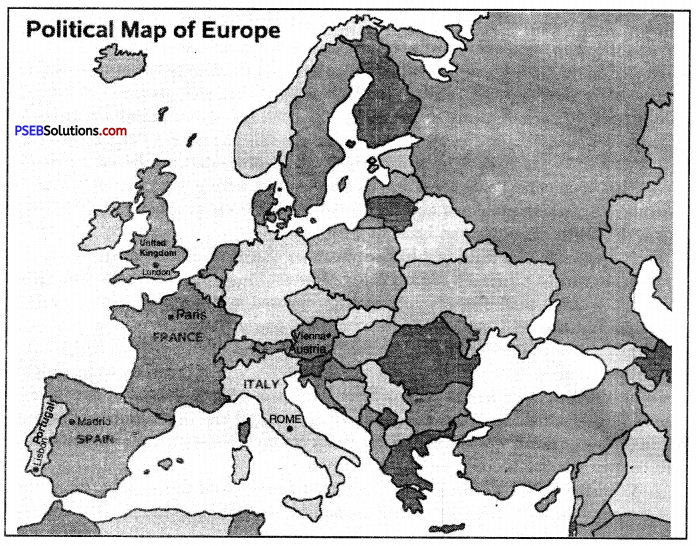
On the following map of Europe mark the following countries and their capitals
(i) Portugal
(ii) France
(iii) Italy
(iv) Spain
(v) Austria
(vi) England.
Answer:
PSEB 9th Class SST Solutions History Chapter 5 The French Revolution 1

PSEB 8th Class Social Science Solutions Chapter 9 When, Where and How

Punjab State Board PSEB 8th Class Social Science Book Solutions History Chapter 9 When, Where and How Textbook Exercise Questions and Answers.

PSEB Solutions for Class 8 Social Science History Chapter 9 When, Where and How

SST Guide for Class 8 PSEB When, Where and How Textbook Questions and Answers

I. Write down the answer of the following questions:

Question 1.
In which three periods the Historians have divided the Indian History?
Answer:
Historians have divided the Indian History in three periods and these are:
(a) Ancient period
(b) Medieval period
(c) Modern period.

Question 2.
When modern period started in India?
Answer:
It has been considered that modern period, in India, was started in 18th century after the death of Aurangzeb.

Question 3.
When independent state of Hyderabad was founded and who founded it?
Answer:
Independent state of Hyderabad was founded by Nizam-ul-Mulk in 1724 A.D.

PSEB 8th Class Social Science Solutions Chapter 9 When, Where and How

Question 4.
Write down the names of the European powers who came to India during the modern period.
Answer:
Portuguese, Dutch, French and the British.

Question 5.
When and by whom the independent state of Avadh was founded?
Answer:
Avadh was declared as an independent state by Saadat Khan in 1739 A.D.

Question 6.
How books as historical sources help us?
Answer:
A number of books were printed in modern age in English and in Indian languages due to the invention of printing press. With these books, we come to know about human development in different fields such as literature, art, history, science and music. These books are very helpful in increasing our knowledge about history and science. We can take inspiration from these books to do progress in our lives.

Question 7.
Write down in brief about the historical buildings.
Answer:
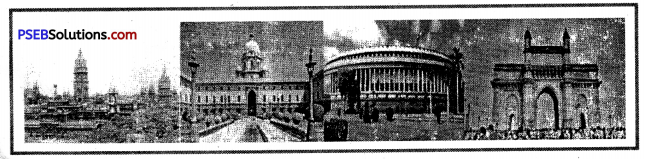
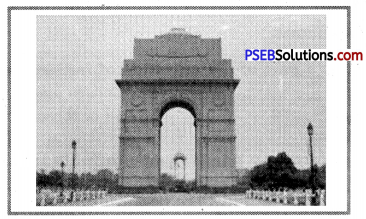
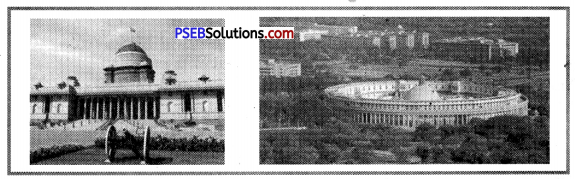
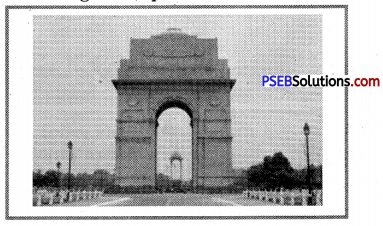
Historical monuments, built in the modern age, are the living examples of History. A number of historical monuments still exist is our country and still are in very good condition. India Gate, Parliament House, President House, Birla House and other buildings are included in it. These monuments tell us about different aspects of Indian art and architecture.

PSEB 8th Class Social Science Solutions Chapter 9 When, Where and How

Question 8.
How Newspapers, Magazines and Pamphlets are helpful in writing history?
Answer:
A number of newspapers, magazines and pamphlets, in different Indian languages, were printed in modern age in India. Out of them ‘The Tribune’, ‘The Times of India’ and many other newspapers are still printing. Ah these newspapers and magazines give us information of many important events of modern age. Even they print any particular news of that age in today’s newspaper. In this way they are helpful in writing history.

Question 9.
Write a note on Govt. Documents.
Answer:
Government documents are a very important source of history of modern India. We can get information about activities of foreign powers, the British conquest of India and the British administration in India through these documents. These documents also tell us that how India was economically exploited by the British. In other words Government documents are one of the important sources of writing history of modern India.

II. Fill in the Blanks:

Question 1.
In Europe Modern Period began in the __________ century.
Answer:
16th

Question 2.
There was __________ period in India in the 16th century.
Answer:
medieval

Question 3.
__________, __________, __________ Pathans and Rajputs etc. new powers emerged in the 18th century.
Answer:
Marathas, Sikhs, Rohillas

PSEB 8th Class Social Science Solutions Chapter 9 When, Where and How

Question 4.
In 1724 A.D., Nizam-Ul-Mulk founded an independent state of __________
Answer:
Hyderabad

Question 5.
In 1739 A.D., Sadaat Khan made an independent state.
Answer:
Avadh

Question 6.
Three carnatic curves were fought between the and Britishers during the period 1744 to 1763 A.D. which British got victorious?
Answer:
French

Question 7.
__________, newspapers, magazines, pamphlets and historical buildings are main sources of Modern Indian History.
Answer:
Books, government documents.

III. Write True or ‘False’ in the brackets given after each statement:

Question 1.
There were many social evils prevalent in India in the 18th century.
Answer:
True

PSEB 8th Class Social Science Solutions Chapter 9 When, Where and How

Question 2.
Western ideas enlightened the Indians along with western education and literature.
Answer:
True

Question 3.
In India Mughal Empire was more powerful in the 18th century.
Answer:
False

IV. Something To Do:

Question 1.
Write main sources of Modern Indian history on a chart with a picture of each source and paste it on the wall of your class room.
Answer:
Do it yourself with the help of your teacher.

PSEB 8th Class Social Science Guide When, Where and How Important Questions and Answers

Multiple Choice Questions:

Question 1.
Which of these is a part of periodization of Indian history?
(a) Ancient age
(b) Modern age
(c) Medieval age
(d) All of these.
Answer:
(d) All of these.

PSEB 8th Class Social Science Solutions Chapter 9 When, Where and How

Question 2.
Which of these European powers came to India in modern age?
(a) British
(b) Dutch
(c) French
(d) All of these.
Answer:
(d) All of these.

Question 3.
Who among the following was the first Governor-General of India?
(a) Lord Dalhousie
(b) Warren Hastings
(c) Lord Wellesley
(d) Lord Canning.
Answer:
(b) Warren Hastings.

Question 4.
Which of these is a source of history of modern India?
(a) Books
(b) Historical Monuments
(c) Official Documents
(d) All of these.
Answer:
(d) All of these.

Question 5.
Who founded the independent state of Awadh?
(a) Nizam-ul-mulk
(b) Ali Vardi Khan
(c) Tipu Sultan
(d) Murshid Quli Khan.
Answer:
(a) Nizam-ul-mulk.

PSEB 8th Class Social Science Solutions Chapter 9 When, Where and How

Question 6.
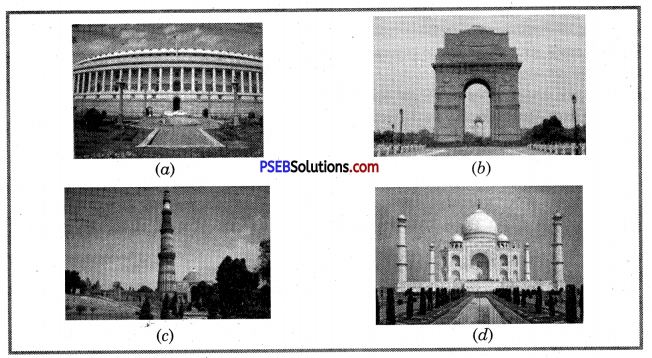
Identify the following pictures and tell with which period do these buildings belong?
PSEB 8th Class Social Science Solutions Chapter 9 When, Where and How 1
(a) Ancient period
(b) Gupta Period
(c) Medieval period
(d) Modern period.
Answer:
(d) Modern period.

Question 7.
__________ Carnatic wars were fought between the French and the British.
(a) Two
(b) Three
(c) Four
(d) Five.
Answer:
(c) Four.

Question 8.
__________ period began in the 16th century in Europe.
(a) Medieval
(b) Modern
(c) Gupta
(d) Ancient.
Answer:
(b) Modern.

PSEB 8th Class Social Science Solutions Chapter 9 When, Where and How

Question 9.
The given picture is of one of the famous historical building in India. Name the building.
PSEB 8th Class Social Science Solutions Chapter 9 When, Where and How 2
(a) India Gate
(b) Qutub Minar
(c) President House
(d) None of these.
Answer:
(a) India Gate.

Question 10.
With which age the buildings given below are associated?
PSEB 8th Class Social Science Solutions Chapter 9 When, Where and How 3
(a) Modern age
(b) Ancient age
(c) Medieval age
(d) None of these.
Answer:
(a) Modern age.

Question 11.
Identify the building in the picture.
PSEB 8th Class Social Science Solutions Chapter 9 When, Where and How 4
(a) India Gate
(b) Qutub Minar
(e) President House
(d) None of these.
Answer:
(a) India Gate.

PSEB 8th Class Social Science Solutions Chapter 9 When, Where and How

Question 12.
Which building of the following buildings is not situated in Delhi, the Capital of the country?
PSEB 8th Class Social Science Solutions Chapter 9 When, Where and How 5
Answer:
(d) Taj Mahal

Fill in the Blanks:

Question 1.
Modern age in Europe started in __________ century.
Answer:
16th

Question 2.
There was __________ age in 16th century India.
Answer:
medieval

PSEB 8th Class Social Science Solutions Chapter 9 When, Where and How

Question 3.
In 18th century India, many new regional powers puch as____________, __________, __________ Pathan and Rajputs.
Answer:
Marathas, Sikhs, Rohillas.

Tick the Right (✓) or Wrong (✗) Answer:

Question 1.
Many social evils prevailed in Indian society during 18th century.
Answer:
(✓)

Question 2.
Western education and literature along with western ideas motivated Indians against the British.
Answer:
(✓)

PSEB 8th Class Social Science Solutions Chapter 9 When, Where and How

Question 3.
Mughal empire was quite powerful during 18th century.
Answer:
(✗).

Match the Following:

Question 1.

A B
1. Saadat Khan (i) Europeans
2. Nizam-ul-Mulk (ii) Avadh
3. Babur (iii) Hyderabad
4. Dutch (iv) Mughals

Answer:

A B
1. Saadat Khan (ii) Avadh
2. Nizam-ul-Mulk (iii) Hyderabad
3. Babur (iv) Mughals
4. Dutch (i) Europeans

Very Short Answer Type Questions

Question 1.
In how many periods, history of the world has been divided?
Answer:
World history has been divided in three periods and these are ancient period, medieval period and modern period.

PSEB 8th Class Social Science Solutions Chapter 9 When, Where and How

Question 2.
In which century, medieval period was started in Europe?
Answer:
In 16th century.

Question 3.
Name any four new powers which emerged on political scene of India in the 18th century.
Answer:
Marathas, Sikhs, Ruhelas and Pathans.

Question 4.
When India became Independent?
Answer:
In 1947 A.D.

Question 5.
Why modern period in Europe started earlier than India?
Answer:
Modern period started very early in Europe, as compared to other countries, which developed very quickly. European countries also progressed very quickly.

Question 6.
Which step was taken by the Indian rulers of modern period to strengthen Indian economy?
Answer:
They gave encouragement to agriculture, trade and industries.

Question 7.
When and between whom were Carnatic wars fought? Who emerged victorious out of these wars?
Answer:
Carnatic wars were fought between the British and the French during the period of 1746-1763 A.D. The British emerged victorious out of these wars.

PSEB 8th Class Social Science Solutions Chapter 9 When, Where and How

Question 8.
On what history is based and how historians reconstruct history?
Answer:
History is based on facts and historians use many sources to reconstruct history.These sources include books, government documents, newspapers, magazines, historical buildings, paintings etc.

Question 9.
Who founded Mysore State and under whom it progressed?
Answer:
Hyder Ali founded Mysore State and it progressed under the son of Hyder Ali, Tipu Sultan.

Short Answer Type Questions

Question 1.
How western education and literature in modern India paved way for Indian independence?
Answer:
A number of schools and colleges were established in the modern period in India where education was given in Indian languages as well as in English language. Western ideas also spread in country through western education and literature. Sense of liberty, equality and fraternity developed among such Indians who received education of philosophy, history and western civilization. They were not able to tolerate the British rule in India and were unable to tolerate the economic exploitation of the country. That’s why they started national movement against the British rule. They gave great sacrifices and suffered a lot and brought freedom for the country in 1947 A.D.

Question 2.
Write a note on the advent of independent states in India in modern period.
Answer:
Many provinces of the Mughal empire took advantage of its weakness and declared themselves independent. First of all Nizam-ul-Mulk founded Hyderabad state in 1724 A.D. After this, Murshid Quli Khan and Alivardi Khan made Bengal a free state. Saadat Khan founded the Avadh state in 1739 A.D. In the same way Hyder Ali founded the state of Mysore in the south. State of Mysore developed to a great deal under Hyder Ah and his son Tipu Sultan. The Marathas also took advantage of this situation. They started to attack Mughal provinces under the leadership of Peshwas.

Long Answer Type Questions

Question 1.
Explain the important sources of history of modern India.
Answer:
History depends upon facts. That’s why historians are dependent upon different sources for the creation of history. A number of sources are there to get information of history of modern India.

Some of these main sources are given below:
1. Books. A number of books were printed in the modern period in English language and in Indian languages due to the invention of printing press. With these books, we came to know about human development in different fields such as literature, art, history, science and music. We can take inspiration from these books to do progress in our lives.

2. Historical Monuments. Historical monuments, built in modern age, are the living examples of history. A number of historical monuments still exist in our country and still are in very good condition. India Gate, Parliament House, President House, Birla House and other buildings are included in it. These monuments tell us about different aspects of art and architecture of India.

3. Newspapers and Magazines. A number of newspapers, magazines and novels, in different Indian languages, were printed in modern age in India. Out of them ‘The Tribune’, “The Times of India’ and many other newpapers are still printing. All these newspapers and magazines give us information of many important events of modern age.

4. Government Documents. Government documents are very important source of the history of modern India. We can get information about the activities of foreign powers, the British conquest of India and the British administration in India through these documents. These documents also tell us that how India was exploited economically by the British.

5. Art and Sculptures. A number of pictures and sculptures are also there which are important sources of modern history. These sources give us information of important historical persons and national leaders.

6. Other Sources. Except given sources, some other important sources of modern Indian history are also there. Most important source out of these sources are films which throw some light on the life and lifestyle of contemporary people. Except this, we can come to know about personality and views of Gandhiji and Pt. Nehru from their own hand written letters and correspondence.

PSEB 8th Class Social Science Solutions Chapter 9 When, Where and How

Question 2.
Write down in detail over “An overview of the modern Indian history.”
Answer:
Modern age in India started in 18th century after the death of Aurangzeb. Some of the features can be seen from the different events of this age and these are given below:
1. Advent of New Powers. Many of the old powers weakened during this age and they were replaced by the new powers. Marathas, Sikhs, Ruhelas, Pathans and Rajputs were emerged as new powers.

2. Arrival of Foreign Powers. Mutual conflict of these Indian powers motivated foreign powers to establish their authority and supremacy in India. Portuguese, the British, Dutch and the French were included among these powers. Modern period in India started with the arrival of European powers.

3. Social and Economic Reforms. A number of social evils were there in Indian society as compared to foreign societies of this time. Many social reformers tried to remove these social evils from society. A number of defects were also there in the economic sector of country. That’s why Indian rulers, i.e. the British, gave special attention to agriculture, trade and industries. They also tried to remove such defects of economy from Indian society.

4. Beginning of National Movement and Independence of country. A sense of liberty, equality and fraternity aroused among those enlightened Indians who got education of history, philosophy and western civilization. They were not able to tolerate the British rule in India and were unable to tolerate economic exploitation of the country. That’s why they started national movement against the British rule. They gave many sacrifices and suffered a lot and brought freedom for the country in 1947 A.D.

5. Reorganization of Economy. Work of reorganization of the economy of country started after the achievement of independence. That’s why just within 69 years of freedom, Indian economy has been emerged as one of the fastest growing economy of the world.

Question 3.
Explain the main developments during modern period of Indian history.
Answer:
The age of 18th century or the beginning of modern age of Indian history is known as the Black age. It was so because country was weakened due to the decline of Mughal Empire. Conflict between local powers and foreign powers started in the country.

The advent of Independent States. Many small states or different provinces of the Mughal Empire took advantage of its weakness and declared themselves independent.

  • First of all, Nizam-ul-Mulk founded the independent state of Hyderabad in 1-724 A.D.
  • After this, Bengal was made an independent state by Murshid Quli Khan and Alivardi Khan.
  • Saadat Khan made an independent state of Avadh in 1739 A.D.
  • In the same way, Mysore state was founded in the South under the leadership of Hyder Ah.
  • The state of Mysore was greatly developed under the leadership of Hyder Ali and his son Tipu Sultan.
  • Marathas also took advantage of this situation and started invading Mughal states under the leadership of Peshwas.

Struggle among the Foreign Powers. European powers such as the Portuguese, Dutch, French, and British also took advantage of the weakness of Mughals and tried to establish their rule in the country. Three Carnatic wars were fought between the British and the French during 1746-1763 A.D. The British emerged victorious which paved the way for the establishment of British rule in India.

The British control over the Indian Economy. The Indian economy was severely damaged by the chaos which prevailed in the Indian politics of that time. The British took control of Indian trade. Handicraft work and artisan work both were destroyed by the British policies.

PSEB 8th Class Social Science Solutions Chapter 23 India after Independence

Punjab State Board PSEB 8th Class Social Science Book Solutions History Chapter 23 India after Independence Textbook Exercise Questions and Answers.

PSEB Solutions for Class 8 Social Science History Chapter 23 India after Independence

SST Guide for Class 8 PSEB India after Independence Textbook Questions and Answers

I. Answer the following questions :

Question 1.
When Constituent Assembly was constituted and how many members it has?
Answer:
The Constituent Assembly was constituted in 1946 A.D. It has 389 members.

Question 2.
When the Constitution of India was passed and implemented?
Answer:
The Indian Constitution was passed on 26th November 1949 A.D. and implemented on 26th January 1950.

Question 3.
Who is given the credit for the unification of the Indian princely states?
Answer:
Sardar Vallabh Bhai Patel was instrumental in the unification of Princely States.

Question 4.
How Hyderabad state was merged with India?
Answer:
The state of Hyderabad was included in India with the help of the police. Indian police were sent over there on 13th September 1948 A.D. and this state was merged in Indian Union on 17th September 1948 A.D.

Question 5.
How Junagarh state was merged with India?
Answer:
Nawab of the Junagarh state wanted to be included in Pakistan. But Plebiscite (Public survey) took place over there on 20th February 1948 A.D. in which people wished to be included in Indian Union. That’s why Junagarh state was included in Indian Union.

PSEB 8th Class Social Science Solutions Chapter 23 India after Independence

Question 6.
How many members were in the state reorganization commission?
Answer:
This commission had three members.

Question 7.
Write down any two principles of Panchsheel.
Answer:

  1. Peaceful Co-existence
  2. Not to attack each other.

Question 8.
Where and when the first conference of Non-alignment was held?
Answer:
First conference of Non-Aligned movement was held at Belgrade in 1961 A.D.

Question 9.
Write down a note on Non-Aligned Movement.
Answer:
After the Second World War, the entire world was divided into two opposite alliances. America was the leader of one alliance which was known as Western Bloc. U.S.S.R. was the leader of second alliance which was known as Eastern Bloc. Serious Cold War started between them. Military treaties and pacts like Nato and Warsah Pact have made situation more tense. India wanted to keep its own sovereignty and didn’t become the member of any group. That’s why India started Non-Aligned Movement with the help of other countries. Founders of this movement were Pt. Jawahar Lai Nehru, Tito of Ugoslavia and Nasir of Egypt.

Non-Aligned Movement started in 1961 A.D. It was based on principles of Panchsheel. All the members of this movement didn’t want to include themselves in any of the alliance. Its first conference held at Belgrade in 1961 A.D. It was started with 25 members but now it has more than 100 members.

Question 10.
Write down a note on the foreign policy.
Answer:
India, after independence, adopted the foreign policy based on the concept of peaceful co-existence. Its main features are given below:

  1. India respects the sovereignty and freedom of all the countries of the world.
  2. India believed that people of all the religions, nations and races are equal.
  3. India strongly oppose those countries which discriminate the people on the basis of colour, race or class. For example, India had opposed the racial policy of South African Government and its discriminational policy with Asian people and original inhabitants of Africa.
  4. India believes that all international disputes should be resolved through peaceful methods.

Question 11.
Write down a note on Communalism.
Answer:
India is a secular country. People of different religions live over in India whose religious beliefs are different. Communal riots broke out in country at many occasions due to religious fundamentalism. Incident occurred at Gujarat in 2002 A.D. was one of the serious incident of such type. Many people are of the view that government should give special care to the interests of minorities.

Question 12.
Explain in brief the relation between India and Pakistan.
Answer:
India likes to keep friendly relations with all the countries, especially our neighbouring countries. Pakistan and China are the most important neighbouring countries of India.

Brief description of India’s relations with them is given below :
India and Pakistan. India has always tried to keep friendly relations with Pakistan. Pakistan didn’t give its sanction to Kashmir’s inclusion with India. That’s why Kashmir became the main reason of conflict between India and Pakistan. India and Pakistan have fought three wars with each other due to Kashmir problem. Kargil war of 1999 A.D. was one of them.

After the Indo-Pak war of 1971 A.D. Shimla Agreement was signed between Indian Prime Minister Indira Gandhi and Pakistani Prime Minister, Zulfikar Ali Bhutto. The main objective of this agreement was to peacefully resolve all the problems of Indo-Pak. That’s why Lahore Agreement was also signed between Indian Prime Minister Atal Behari Vajpai and Pakistani Prime Minister Nawaz Sharif. Bus service and Railway service was also started between both the countries. People of both the countries came closer to each other due to these services. Indian and Pakistani writers and social servers are free to move from one country to another. So the railway and bus services started between both the countries which could give strength to these friendly relations. We believe that the areas of disputes would be resolved in near future.

India and China. Indian relations with China remained friendly right from ancient times. Both countries were associated with each other due to trade and Buddhism. When Communist revolution came in China in 1949 A.D. then India was the first country to give sanction to new government of China. India also supported China as a member of U.N.O. An agreement took place between India and China in 1954 A.D. on the basis of Panchsheel. But both countries also fought war with each other due to border disputes. Very tense relations remained between both the countries for several years. These relations improved after 1980 A.D. Indian and Chinese Prime Ministers met each other on several occasions and discussed their areas of dispute. Today, both the countries are busy in solving their border disputes.

PSEB 8th Class Social Science Solutions Chapter 23 India after Independence

Question 13.
Write down details of the unification of the princely states.
Answer:
India had to face many problems after getting independence. One of these problems was of local kingdoms. They were 562 jp number and were ruled by Indian kings or rulers. According to Act of 1947 A.D., these kingdoms were free to keep their own freedom or were free to be included in the countries of either India or Pakistan. That’s why many local kingdoms liked to remain free. But first Home Minister of free India Sardar Vallabh Bhai Patel handled the matter with great intelligence and asked the rulers of local kingdoms to become a part of Indian union. Small kingdoms were included into provinces.

Some kingdoms were sharing cultural values and even they were sharing common boundries. They were joined and made state. For example kingdoms of Kathiawar were included in Saurashtra and the kingdoms of Patiala, Nabha, Faridkot, Jind and Malerkotla were joined to make Pepsu state. Now only three kingdoms remained which were not ready to be included in India and these were Hyderabad, Junagarh and Kashmir.

Hyderabad: Nizam of the kingdom of Hyderabad Usman Ah Khan refused to merge his kingdom into union of India. So Indian police was sent to Hyderabad on 13th September 1948 A.D. and on 17th September 1948 A.D. kingdom of Hyderabad was merged into union of India.

Junagarh. Nawab of Junagarh wanted to go with Pakistan. But plebiscite (Public Survey) took place in Junagarh on 20th February 1948 A.D. and public wished to be merged in Union of India. Therefore Junagarh was merged into union of India.

Kashmir. Ruler of Kashmir Maharaja Hari Singh also wanted to remain free. But Pakistan wanted to control kingdom of kashmir. So ruler of Kashmir called for Indian help and proposed to merge his state into Indian Union. Indian government accepted the request of ruler of Kashmir and send its army to Kashmir. War started between India and Pakistan but a large part of Kashmir was occupied by Pakistan.

Other Kingdoms. Except these kingdoms, there were certain other small kingdoms which were included in the nearby states. Baroda was included in the province of Bombay. Unified state was founded by joining few small states. For example one union was made in March, 1948 by joining Bharatpur, Dholpur, Alwar and Karavli. After this Rajasthan union was formed in which kingdoms of Boondi, Talwara, Pratapgarh, Shahpur, Banswara, Kota, Kishangarh, etc. were included in it.

Question 14.
Write down the development of India in economic and industrial fields after the independence.
Answer:
Many economic problems occurred in India due to division of the countries. Large part of wheat and rice producing areas of India went to Pakistan. Large part of irrigated land also went to Pakistan. So there was a shortfall of grains in India. In the same way large part of jute and cotton producing areas went over to India. There was a short fall of raw material for jute and textile industries. So Indian government started to find solution of these problems to improve economic condition of the country. That’s why Planning Commission was established in 1950 to achieve this objective. In this way the process of economic development started in the country which is still going on. This shadow can be seen in agricultural and industrial sectors as well.

Agriculture. India is a agriculture based country. Foodgrains are produced on 75% agricultural land of the country. Rice, wheat, peanut, sugarcane, maize, sunflower, etc. are important foodgrain crops. India made dams on all the important rivers for the development of country. These dams give water to agricultural land and stop floods to a great extent. These dams are helpful in producing electricity. These are known as river valleys. Nangal Dam, Damodar Valley Dam, Harikud Dam, Tungabhadra Dam and , Nagaijuna Sagar Dam are some of the important dams of the country.

Special steps were taken by the government to increase agricultural production. Farmers were told new methods of farming. Government gives good seeds and fertilizers to farmers. Poor farmers are given loans from Banks to improve agriculture. In this way government is trying to improve condition of agriculture.

Industry: Industrial development started in India even during British rule. Many Textile, Iron, Sugar, Matchstick, Cement industries were established in that age. But these industries were unable to develop fully because British hardly took care in development of Indian industry. But after independence, India started to spread industrial sector in the country. Engineering tools, Electrical goods, computers and related goods, medicine and industries of agricultural tools were established in the country. Many Multinational companies established their industries in the country. These industries have given employment to lakhs of skilled and semi-skilled labourers.

Indian government took special interest in Scientific and Industrial inventions. Many universities were set up to invent new tools, seeds, fertilizers, etc.

Question 15.
Explain the relationship of India and America.
Answer:
The United States of America is supreme among the great powers of the world. India’s relations with the USA never remained simple. These relations have been changed from time to time. After Indian independence, strained relations remained between both the countries over the issue of Kashmir and several other issues.

Following are the main reasons of strained relations between both the countries.

  1. the United States of America started to give more and more military help to Pakistan. India strongly opposed it but America hardly cared about it.
  2. Pakistan become the member of military alliances made by America but India refused to become member of these alliances.
  3. Bangladesh come into existence as a result of the Indo-Pakistan war in 1971 A.D. America tried to interfere in war in favour of Pakistan but India strongly opposed it.
  4. America established military bases in Pakistan. America has made military cantonments at Digo-Garcia island in Indian ocean. India also opposed it because c’ its security concerns.
  5. There are some basic differences among India and America on the issue of Nuclear Power. India is developing Nuclear power but America has strongly opposed it. Even America has stopped supply of nuclear fuel to India.
  6. India has not signed Nuclear Prolification Treaty (NPT) because it is not based on moral values. This treaty is partial. This treaty restricts those countries to make nuclear weapons who don’t have nuclear power. On the other side there is no such restrictions on Nuclear powers.

Actually Indian relations with America are strained due to these given reasons. But still they are not much strained. Both the countries are cooperating each other in economic, technological, scientific and cultural fields. In 1993 A.D. Bill Clinton become the President of USA and from then these relations are improving day by day. America helps India in economic sector as well. The USA and its economic institutions are playing a very important role in economic system of India in present age. We can expect better relations in near future as well.

II. Fill in the Blanks :

Question 1.
_______ was made the President of the Committee.
Answer:
Dr. Ambedkar

PSEB 8th Class Social Science Solutions Chapter 23 India after Independence

Question 2.
Dr. Rajinder Prasad was the first _______ of India.
Answer:
President

Question 3.
In 1954 A.D _______ hand over Pondicherry, Chandernagar and Mahi Indian territories to India.
Answer:
French.

III. Write True or False in brackets given after each statement:

Question 1.
After getting independence, India constituted a committee of seven members for the drafting of Constitution.
Answer:
True

Question 2.
In the end of 1948 A.D. India occupied the French and Portugueses settlements which were situated in India.
Answer:
False

PSEB 8th Class Social Science Solutions Chapter 23 India after Independence

Question 3.
After the independence, Indian government did not pay any attention towards her industrial development.
Answer:
False.

IV. Match the Words :

Question 1.

A B
1. The first Home Minister of India (i) Seven members
2. Members of Indian Constitution (ii) In 1999 A.D. Committee
3. Dispute of Kargil (iii) Sardar Vallabh Bhai Patel.

Answer:

A B
1. The first Home Minister of India (iii) Sardar Vallabh Bhai Patel.
2. Members of Indian Constitution (i) Seven members
3. Dispute of Kargil (ii) In 1999 A.D. Committee

V. Things To Do :

Question 1.
To know about the cultural similarities of India and her neighbour countries.
Answer:
Do it yourself.

PSEB 8th Class Social Science Guide India after Independence Important Questions and Answers

Multiple Choice Questions :

Question 1.
The Constituent Assembly of India started preparing the new Constitution in
(a) July 1946
(b) Dec. 1946
(c) Aug. 1947
(d) Jan. 1950
Answer:
(b) Dec. 1946.

Question 2.
When did India become Republic?
(a) 26 Aug, 1947
(b) 26 Jan, 1950
(c) 15 Aug, 1947
(id) 26 Nov, 1949
Answer:
(b) 26 Jan, 1950.

PSEB 8th Class Social Science Solutions Chapter 23 India after Independence

Question 3.
When were the Indian states reorganised?
(a) 1950
(b) 1953
(c) 1956
(d) 1959.
Answer:
(c) 1956.

Question 4.
On what basis, Indian states were reorganised in 1956?
(a) Wealth
(b) Population
(c) Natural resources
(d) Linguistic.
Answer:
(d) Linguistic.

Question 5.
Till today, _______ five year plans have been made.
(a) Ten
(b) Eight
(c) Twelve
(d) Nine
Answer:
(c) Twelve

Question 6.
Franchise is people’s right to _______
(a) Property
(b) Vote.
(c) Freedom
(d) Religion.
Answer:
(b) Vote.

Question 7.
Which of these problems was faced by the newly independent India?
(a) Problem of refugees
(b) Problem of division of Society
(c) Problem of development
(d) All of these.
Answer:
(d) All of these.

Question 8.
Which of these subjects was kept in Union List?
(a) Taxes
(b) Defence
(c) Foreign affairs
(d) All of these.
Answer:
(d) All of these.

PSEB 8th Class Social Science Solutions Chapter 23 India after Independence

Question 9.
Which of these subjects was in the State List?
(a) Medical
(b) Police
(c) Local bodies
(d) All of these.
Answer:
(d) All of these.

Question 10.
At the time of independence, the majority of Indians lived in
(a) Villages
(b) Towns
(c) Cities
(d) Metropolitans.
Answer:
(a) Villages.

Question 11.
Who said that, “In politics we have equality, and in social and economic life we will have inequality.”
(a) Jawaharlal Nehru
(b) Dr. B.R. Ambedkar
(c) Mahatma Gandhi
(d) Lai Bahadur Shastri.
Answer:
(b) Dr. B.R. Ambedkar.

Question 12.
_______ refugees come in India after independence?
(a) 5 million
(b) 6 million
(c) 8 million
(d) 10 million.
Answer:
(c) 8 million.

Question 13.
_______ princely states were there in India in 1947.
(a) 570
(b) 560
(c) 550
(d) 565.
Answer:
(d) 565.

Question 14.
India’s population in 1947 was _______
(a) 345
(b) 325
(c) 355
(d) 395.
Answer:
(a) 345.

PSEB 8th Class Social Science Solutions Chapter 23 India after Independence

Question 15.
Who was the permanent chairman of the Constituent Assembly?
(a) B.R. Ambedkar
(b) Dr. Rajendra Prasad
(c) Mahatma Gandhi
(d) Rajgopalchari.
Answer:
(b) Dr. Rajendra Prasad.

Fill in the Blanks :

Question 1.
_______ was made the Chairman of Drafting Committee.
Answer:
Dr. Ambedkar

Question 2.
Dr. Rajendra Prasad was the first _______ of India.
Answer:
President

Question 3.
In 1954 A.D gave Pondicherry, Chandranagar and Mahi to India
Answer:
France.

Tick the Right (✓) or Wrong (✗) Answer :

Question 1.
After Indian Independence, a drafting Committee was Constituted.
Answer:
(✓)

PSEB 8th Class Social Science Solutions Chapter 23 India after Independence

Question 2.
At the end of 1948 A.D. India took control of all the areas which were under the Portugueese and French occupation.
Answer:
(✗),

Question 3.
After independence, India did not care about its industrial development.
Answer:
(✓).

Match the Following :

Question 1.

A B
1. First Home Minister of India (i) 1999
2. Members of Drafting Committee (ii) Sardar Patel
3. Kargil War (iii) Seven

Answer:

A B
1. First Home Minister of India (ii) Sardar Patel
2. Members of Drafting Committee (iii) Seven
3. Kargil War (i) 1999

Very Short Answer Type Questions

Question 1.
How many members were there of Drafting Committee of Indian Constitution? Who was its Chairman?
Answer:
There were seven members of Drafting Committee of Indian Constitution. The Chariman of this committee was Dr. B.R. Ambedkar.

Question 2.
Who was the first President of India?
Answer:
Dr. Rajendra Prasad was the first President of India.

Question 3.
Why small kingdoms were included in the nearby states in India?
Answer:
Indian government felt that small kingdoms would not be able to develop properly. That’s why they were included in the nearby states.

Question 4.
Which areas of India were under Portuguese possession at the time of Independence? When they were included in Union of India?
Answer:
Areas of Goa, Daman and Deu were under Portuguese possession at the time of Indian independence. On 20th December 1961 A.D. they were included in Union of India.

PSEB 8th Class Social Science Solutions Chapter 23 India after Independence

Question 5.
How many States and Union Territories are there in India?
Answer:
There are 28 States and 7 Union Territories in India.

Question 6.
When states were reorganized and how many States and Union Territories were formed?
Answer:
States were reorganized in November 1956 A.D. 14 States and 6 Union Territories were formed at that time.

Question 7.
Who were the first Governor-Generals of India and Pakistan?
Answer:
Lord Mountbetten and Mohammad Ali Jinnah respectively.

Question 8.
What was the impact of division of India on the people of Bengal and Punjab?
Answer:
Lakhs of people of Bengal and Punjab died due to division of India and lakhs had to leave their homes. Around 80 lakh people of eastern and western Punjab had to leave their lands, shops and other properties.

Question 9.
What is the main base of foreign policy of India?
Answer:
Peaceful co-operation.

Question 10.
Where Afro-Asian Conference of 1955 held in Indonesia? Name three Asian leaders participated in it.
Answer:
Afro-Asian Conference of 1955 was held at Bandug in Indonesia. Indian Prime Minister Pt. Jawahar Lai Nehru, Chau-in-lai of China and Sukarno of Indonesia took part in it.

PSEB 8th Class Social Science Solutions Chapter 23 India after Independence

Question 11.
Who were the founders of Non-Aligned Movement?
Answer:
Pt. Jawahar Lai Nehru of India, President of Ugoslavia Tito and President of Egypt Nasir were the founders of Non-Aligned Movement.

Question 12.
When Non-Aligned Movement was started? On which values it is based?
Answer:
Non-Aligned Movement started in 1961 A.D. It was based upon the principles of Panchsheel.

Question 13.
Give brief description of SAARC.
Answer:
‘SAARC was founded in 1985 A.D. Its full form is ‘SOUTH ASIAN ASSOCIATION OF REGIONAL COOPERATION’. Its objective was to produce economic cooperatio’n and mutual peace among South Asian countries.

Question 14.
What are the main social and economic problems of India?
Answer:
Communalism, casteism, linguism, poverty, unemployment, illiteracy, population explosion, etc.

Question 15.
What is the problem of Linguism?
Answer:
Peopje speaking different languages live over here in India. Problem in this relation is that some people consider their language as superior than the other languages.

Question 16.
Give two evil consequences of increasing population.
Answer:

  1. Increasing population is the basic reason of poverty and unemployment.
  2. Development plans of government either fail or they move on a slow pace.

PSEB 8th Class Social Science Solutions Chapter 23 India after Independence

Question 17.
When and why war started between India and China?.
Answer:
War between India and China started in 1962 A.D. due to border dispute.

Question 18.
Between whom Lahore agreement took place? What was its objective?
Answer:
Lahore agreement took place between Indian Prime Minister Atal Behari Vajpai and Pakistani Prime Minister, Nawaz Sharif. Its objective was to resolve mutual disputes of India and Pakistan peacefully.

Short Answer Type Questions

Question 1.
How was the Indian Constitution framed?
Answer:
After independence, India made a committee of 7 members to frame the Constitution. It was assigned the work of drafting the Constitution. Dr. B.R. Ambedkar was made its chairman. This committee made the draft and produced in front of constituent assembly on 21st February, 1948 A.D. Discussion on this draft was started from 4th Nov. 1948. Assembly had to go through 11 meetings for this. Around 2473 amendments were produced during this discussion age and some of them were accepted. This Constitution was passed on 26th November, 1949 A.D. and was implemented on 26th January 1950 A.D.

Question 2.
Write a note on ‘Panchsheel’.
Answer:
India made an agreement with the Chinese Prime Minister Chau-in-lai in 1954 A.D. This agreement was based on five principles. These principles are given below :

  1. To accept peaceful co-existence.
  2. Not to attack each other.
  3. Not to interfere in each other’s matter.
  4. To obey the concept of equality and cooperation for mutual interests.
  5. To respect mutual sovereignty and regional integrity.

Question 3.
How India made free its areas from the possession of French and Portuguese after independence?
Answer:
Indian areas of Goa, Daman and Diu were under Portuguese possession. In the same way Pondicherrey, Chandranagar and Mahi were under French rule. French gave back Indian areas to India in 1954 A.D. but Portuguese refused to do so. In the end Indian government was forced to use military to take -possession of its areas. On 20th December 1961 A.D., Portuguese establishments of Goa, Daman and Diu were included in the Union of India. Goa was made a state on 30th May, 1987 A.D. and Damap and Diu were made Union territories.

PSEB 8th Class Social Science Solutions Chapter 23 India after Independence

Question 4.
Why and how states were reorganized after independence?
Answer:
Indians started to demand reorganize states on the basis of language and culture even during British rule. After independence, one Telugu person Ramulu demanded to reorganize states on linguistic basis, kept indefinite fast as and was died. So constitutional amendment took place and Telugu spoken areas were separated from Madras and was given the name of Andhra Pradesh. One commission with three members was appointed to reorganize other states. States were reorganized in Nov. 1956 on the basis of recommendations of commission. 14 states and 6 union territories were formed.

Question 5.
Describe the role of India in U.N.O.
Answer:
India is an active member of the U.N.O. (United Nations Organisation). India has sent its forces with peace keeping forces of U.N.O. in many disturbed areas of the world.

India has also contributed a lot in many institutions and agencies of U.N.O. For example Vijay Laxmi Pandit became the member of General Assembly of U.N.O. in 1963 A.D. Shashi Tharoor is the Under Secretary of Communication and Public Information of U.N.O. India is also a member of Security Council. India gets aid of U.N.O. every year as well.

Question 6.
Write a note on problem of Casteism and Poverty.
Answer:
Problem of Casteism. Problem of casteism is one of the main obstacles in the way of our national unity. Some people always hate the people of other castes. Even politicians and political parties take the help of caste to get support of the people. But it is required from us that all the people should be equally treated. According to Article 17 of Constitution, untouchability is restricted in any form.

Problem of Poverty. The Problem of poverty is one of the largest obstacles in the way of progress of the country. Indian people are so poor that they are unable to get proper food of one day. Main reasons of poverty are increasing population, less agricultural production and unemployment. Government has tried a lot to reduce poverty.

Question 7.
Briefly describe the problem of unemployment in India.
Answer:
Problem of unemployment is increasing day by day because number of unemployed persons is increasing. Most of the unemployment exists among literate people. Government is trying a lot to resolve this problem. Retired servicemen, literate unemployed are given loans from government so that they could start their own business. Retirement age of job is reducing so that more and more people could get employment. Additional occupations like rearing of cattle, pigs, honey bees, etc. are being encouraged, Training and loan facilities are also provided to them.

PSEB 8th Class Social Science Solutions Chapter 23 India after Independence

Question 8.
Write a note on problem of Inflation in India.
Answer:
Inflation is a world-wide problem in today’s age. But this problem has taken serious form in India. Today everything available in the market is expensive. Prices of goods are increasing day by day. As a result most number of people are unable to fulfil their basic needs of daily life. That’s why the government should take some concrete steps to control increasing inflation. Government should implement such plans in the country with which Inflation could be reduced.

Long Answer Type Question

Question 1.
Describe in detail about problems of illiteracy and the increasing population.
Answer:
1. Illiteracy. More than 23 crore people of India are illiterate. Around 60 women out of 100 are illiterate. Illiteracy gives rise to unemployment which becomes a reason for poverty. An illiterate person hardly knows about the progression opportunities available in the country. Except this democratic system will become successful if people would be literate.

An illiterate person is unaware of his rights and duties as well.
Governmental Efforts: Indian Government is taking certain steps to remove illiteracy from the country :

  • There is a provision in our Constitution to give free and compulsory education to children upto the age of 14 years.
  • Indian government gives scholarships to poor and intelligent students.
  • The Indian government has also started adult education in the country. National Adult Education Programme was started on 2nd October 1978 A.D. National Literacy Mission was started in 1988 A.D. Many Adult education centres were established under this mission.
  • Many educational programmes, related to illiterate adults, are being broadcast on All India Radio and Doordarshan. Their main objective is to literate every person in the country.

2. Increasing Population. India is facing a problem of the increasing population these days. The speed of the increasing population in India is too much that it is very difficult to stop this speed by the government. According to the census of 2011 A.D., India’s population was 121.02 crores. Our population is increasing by lakhs every year.

Causes: There are certain reasons for increasing population in the country:

  • The death rate is decreasing due to the improvement of medical facilities. About 25 years ago this death rate was 33 per thousand. But now it has been reduced to 9 per thousand. In earlier times, many diseases were there like the plague, malaria, etc. because of which thousands of people used to die. But now these diseases have been controlled to a great extent.
  • Marriage is less age is one of the reasons for the increasing population. Many rural families used to prefer child marriages which result in the growth of the population.
  • People don’t like to use family planning due to ignorance and religious reasons.
  • Many poor people think that more children will help in an increase in the income of the family. That’s why parents like to give birth to more children.

Losses and solution. The increasing population is the basic reason for many problems like poverty, unemployment, etc. All the developmental plans become useless with the increasing population. These problems could be solved at a government level. People could be told about the losses of increasing population and government can propagate in favour of small family.

PSEB 9th Class SST Solutions Economics Chapter 1 Story of a Village

Punjab State Board PSEB 9th Class Social Science Book Solutions Economics Chapter 1 Story of a Village Textbook Exercise Questions and Answers.

PSEB Solutions for Class 9 Social Science Economics Chapter 1 Story of a Village

SST Guide for Class 9 PSEB Story of a Village Textbook Questions and Answers

I. Fill in the Blanks :

Question 1.
Human wants are ___________
Answer:
Unlimited

Question 2.
___________ bears risk.
Answer:
Entrepreneur

Question 3.
___________ is a natural factor of production.
Answer:
Land

Question 4.
To grow more than one crop on a piece of land during a year is known as ___________
Answer:
Multiple cropping

Question 5.
Some labourers who migrate from one state to other state for work are called ___________
Answer:
Migrant Labourers

PSEB 9th Class SST Solutions Economics Chapter 1 Story of a Village

Question 6.
Punjab is known as ___________ of country.
Answer:
Food Basket.

II. Multiple Choice Questions :

Question 1.
Which factor of production is immobile?
(a) Land
(b) Labour
(c) Capital
(d) Entrepreneur.
Answer:
(a) Land

Question 2.
Economic activity which is concerned with increasing utility or value of the goods and services is called :
(a) Production
(b) Consumption
(c) Distribution
(d) Labour.
Answer:
(a) Production

Question 3.
Extraordinary increase in agriculture production especially in wheat and rice is called
(a) Green Revolution
(b) Wheat Revolution
(c) Rice Revolution
(d) White Revolution.
Answer:
Green Revolution

PSEB 9th Class SST Solutions Economics Chapter 1 Story of a Village

Question 4.
What is the currency of England known ___________ as?
(a) Rupees
(b) Dollar
(c) Yen
(d) Pound.
Answer:
Pound.

III. True/False :

Question 1.
Supply of land is limited.
Answer:
True

Question 2.
Limited wants of human beings are satisfied by unlimited resources.
Answer:
False.

Question 3.
Supply of labour cannot be increased or decreased.
Answer:
False.

Question 4.
Entrepreneur bears risks.
Answer:
True

Question 5.
Work done by machines and animals is called labour.
Answer:
False.

PSEB 9th Class SST Solutions Economics Chapter 1 Story of a Village

Question 6.
When price of goods in the market is high then the demand for these goods is also high.
Answer:
False.

IV. Very Short Answer Type Questions :

Question 1.
What is the meaning of economics?
Answer:
Economics is the study of unlimited human wants and the activities done to satisfy these wants through limited resources.

Question 2.
Which is the main productive activity of the villages of India?
Answer:
Farming is the main productive activity of the villages of India.

Question 3.
Name two sources of irrigation in the villages.
Answer:

  1. Tubewells,
  2. Canals.

Question 4.
What is the meaning of labour in Economics?
Answer:
In economics labour means all human efforts, physical as well as mental, done for the sake of monetary gain.

Question 5.
The activity done by a mother while teaching her son is considered labour or not.
Answer:
This activity is not considered as labour because it is not done for the sake of monetary gain.

Question 6.
In what form do the labourers get their wages?
Answer:
The labourers get their wages in form of cash or kind such as rice or wheat.

PSEB 9th Class SST Solutions Economics Chapter 1 Story of a Village

Question 7.
Give two non-farm activities done by the villagers of a village.
Answer:
Following are the two non-farm activities :

  1. Dairy,
  2. Poultry farming.

Question 8.
From where do the large and small scale farmers get capital needed for farming?
Answer:
The large farmers get capital needed for farming out of their own savings from farming while small farmers have to take loans on high ratess of interest from the large farmers.

Question 9.
Write any one feature of land.
Answer:
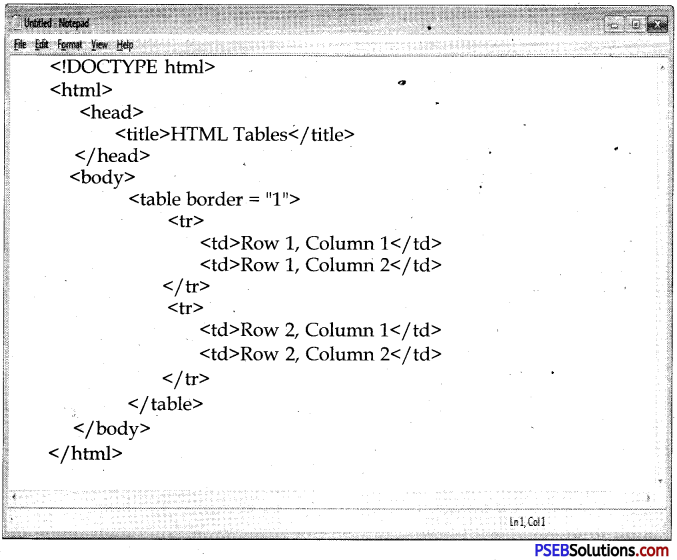
Land is a free gift of nature.

Question 10.
Why do labourers migrate from one state to other state?
Answer:
Labourers migrate from one state to other state in search of work for their livelihood.

Question 11.
Why do farmers burn Stubble?
Answer:
Formers burned stubble after harvest to dispose of the left over straw and to control disease and past problems of the field. They used to improve the health of the field.

V. Short Answer Type Questions:

Question 1.
Why do we study Economics?
Answer:
We study economics because it is a science concerned with the allocation of scarce means of resources in such a manner that consumers can maximize their satisfaction, producers can maximize their profits and society can maximize its social welfare. So by studying economics we can satisfy our unlimited wants with limited and scarce resources.

PSEB 9th Class SST Solutions Economics Chapter 1 Story of a Village

Question 2.
What is an economic activity? Give one example.
Answer:
An activity which is carried out by a person to satisfy his unlimited wants by using limited and scarce resources is known as economic activity. This activity is undertaken to earn wealth.
Example : A teacher is teaching in a school.

Question 3.
Explain the difference between economic and non-economic activities.
Answer:
Economic activities are those activities which are concerned with consumption, production, exchange and distribution of wealth.

Non-Economic activities are undertaken for the welfare of a country, family well being, social cause, health, entertainment etc. Economic activities are undertaken to earn wealth but the non-economic activities are undertaken not for earning wealth.

Question 4.
Explain two different ways of increasing production on the same piece of land.
Answer:
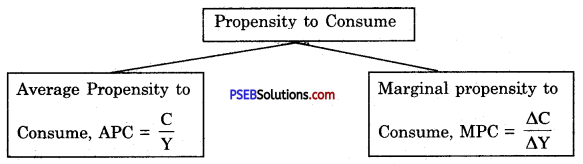
To grow more than one crop on a piece of land during a year is known as multiple cropping. It is the most common way of increasing production on a given piece of land. This is possible by electric tubewells and continuous power supply being provided to the farmers.

The other way of increasing production from the same piece of land is by using modem farming methods such as use of high-yielding varieties of seeds, adequate amount of chemical or bio fertilizers, pesticides, improved agricultural implements etc.

Question 5.
What is Multiple cropping? Explain it.
Answer:
To grow more than one crop on a piece of land during a year is known as mulitple cropping. It is the most common way of increasing production on a given piece of land. This is possible by electric tubewells aifd continuous power supply being provided to the farmers. A small water cannal also passes by the fields which provides water for agriculture. With the help of multiple cropping system, the farmers are able to grow three crops in a year. Due to developed irrigation system and good electricity supply, no land is left idle.

PSEB 9th Class SST Solutions Economics Chapter 1 Story of a Village

Question 6.
What is Green Revolution? How was it possible?
Answer:
An extraordinary increase in agricultural production especially in wheat and rice is known as Green Revolution. The year 1966-67 was the initial year of Green Revolution. This was made possible due to the adoption of new techniques of HYV seeds, more use of chemical fertilizers, more irrigations facilities etc. Farmers of Punjab, Haryana and Western Uttar Pradesh were the first to try out the modern farming methods.

Question 7.
What are the adverse effects of modern farming methods and tube- well irrigation on land?
Answer:
Land being a natural resource, the modern farming methods have reduced its soil fertility. By the use of modern farming methods total crop yield may increase in the initial stage but it will gradually decrease with increased use of chemical fertilizers.

The water level below the ground is reducing by the continuous use of water for irrigation by tubewells. Every year the farmers of Punjab have to dig their tubewells deeper. In these conditions there is a fear of complete loss of water in the next 20 years.

Question 8.
Why do the quality of soil deteriorate due to fuming of agricultural waste in the fields?
Answer:
There is no denying the fact that the quality of soil deteriorate with the burning of agricultural waste in the fields. Actually soil contains many practicles, nutrients and living organisms which are required for the continuity of productivity of soil. If farmers with burn agricultural waste in the fields, all those nutrients, living organisms etc. will also remain no more. It will reduce the feltility of soil and there is a danger of becoming that land into a barren land. So, agricultural waste must not be burnt. Some other way out should be devised you its disposal.

Question 9.
In what way is the land distributed amongst the farmers of a village?
Answer:
In this village, unfortunately not all the people engaged in agriculture have sufficient land for cultivation. Only about 20 families own majority of the land in the village and 100 families own medium size agriculture fields. Some families own very small size fields. There are 50 such families who own no agriculture land at all. They earn their living by working in the fields of other families.

Question 10.
Give two sources of labour for farming in the village.
Answer:
Farmers themselves provide the labour required for farming. Besides this, some landless families work as labourers in the fields of big landlords to earn their living.

Some farm labourers of other states such as Bihar and Uttar Pradesh have also migrated to this village to work in the fields of landlords. These are called migrant labourers.

PSEB 9th Class SST Solutions Economics Chapter 1 Story of a Village

Question 11.
What are the main features of labour?
Answer:
The main features of labour are :

  • Labour is the only active factor of production.
  • Supply of labour can be increased or decreased.
  • Labour is available in abundance in India.
  • Labour means all human efforts done for the sake of monetary gain.
  • Labour can be bought or sold.
  • Labour is mobile.

Question 12.
How do the small farmers arrange capital needed for farming?
Answer:
The small farmers arrange capital needed for farming by taking loans on high rates of interest from the large scale farmers or the village money lenders or the traders. Sometimes they have to mortgage their houses or small land holdings to repay the loans. If they are unable to repay the loans, their property is seized. Sometimes they also arrange capital needed for farming from institutional sources.

Question 13.
What do the large-scale farmers do with the surplus farm products?
Answer:
The large-scale farmers sell the surplus farm products in a near by Mandi (market). The large-scale farmers supply crops to the market. They earn a lot by selling a part of these products and use the savings for lending to small farmers who are in need of loan. They also use a part of the savings to arrange for working capital for farming in the next season which increases their fixed capital.

Question 14.
What are the different non-farm activities being carried out in the rural areas of India?
Answer:
The different non-farm activities being carried out in the rural areas of India are dairy, poultry farming, keeping of bees, some families work as carpenters, weavers and some are even running small general stores in their houses. Some families are producing jaggery and sell them to the traders. Some very poor families earn their livelihood by ferrying people and goods from one place to another through rickshaws, tongas, bullock carts etc. At present, the non-farm sector in the village is not very large. Out of every 100 workers in the rural areas in India, only 24 are engaged in non-farm activities.

PSEB 9th Class SST Solutions Economics Chapter 1 Story of a Village

Question 15.
What can be done so that non-farm production activities can be started in villages?
Answer:
Non-farm production activities require little land. At present, the non-farm sector in the village is not very large. Out of every 100 workers in the rural areas in India, only 24 are engaged in non-farm activities. People can set up non-farm activities either from their savings or by taking loans. As more villages get connected to towns and cities through good roads, transport and telecommunication, it is possible that the opportunities for non-farm activities in the village would increase in the coming years.

VI. Intext Questions and Answers:

Question 1.
Visit your nearby fields, talk to some farmers and try to find out.
The kind of farming methods that the farmers are using i.e., traditional or modern or both and the reasons for using these methods.
Answer:
In my nearby fields some farmers having low small holding were using traditional methods of farming but some farmers with larger size of holding were also using modern farming methods. Farmers with smaller size of holding were not able to adopt modern methods of farming due to their low income level. On the other hand, farmers with larger size of holding were able to adopt modern methods of farming due to their high level of income.

Question 2.
What are the main sources of irrigation being used in the village?
Answer:
In my village most of the farmers are dependent on rain for irrigating their fields. But some big farmers are using tubewells and pump sets for irrigation.

Question 3.
Kinds of crops sown by the farmers and also the time of sowing and harvesting of these crops.
Answer:
The farmers of my village sow both Kharif and Rabi crops. In Kharif season crops of maize, sunflower and rice are sown and harvested before winter. They sow wheat, barley, gram, mustard in winter and harvest in the month of April.

Question 4.
Name the fertilizers and pesticides used by the farmers.
Answer:
Fertilizers

  • Urea
  • Vermicompost
  • Gypsum

Pesticides

  • Emanectin Benzoate
  • RDX Bio Pesticide
  • Bifenthrin 2.5% EC
  • Star one.

PSEB 9th Class SST Solutions Economics Chapter 1 Story of a Village

Question 5.
Visit your village’s field or a near by village’s field and find out whether the farmers are burning the stubble in the filed and if they are doing so then explain to them about the bad consequences of doing so.
Answer:
I visited my near by village’s field and found that farmers were in hury to prepare the field for next crop, specially after harvesting rice crop and before sowing of wheat crop. The farmers were forced to burn the stubble due to non-availability of any quick solution for the management of solid waste. I explained them about the bad consequences of doing so, as burning of stubble leads to serious environment pollution as well as ecological imbalance. Due to increase in temperature of top soil, different kinds of bacteria, fungi, friendly beasts die and important minerals of the soil are destroyed.

Question 6.
Why do farmers with small land holdings have to work in the fields of big landlords as labourers?
Answer:
The farmers with small land holdings have to work in the fields of big land¬lords as labourers because they have to give up their land to big landlords for repayment of their loans taken from the big landlords. So they have to work as labourers in the fields of big landlords to earn their living.

Question 7.
Do the farm labourers get employment for the whole year?
Answer:
No, the farm labourers do not get employment for the whole year. They are employed on a daily basis or for one particular farm activity like harvesting, sowing etc. Thus they are seasonally employed.

Question 8.
In what form do the farm labourers get their wages?
Answer:
The farm labourers get their wages in cash or in kind. For example rice, wheat etc.

Question 9.
Who are migrant labourers?
Answer:
Some farm labourers of other states migrate to the village to work in the fields of landlords. These are called mirgant labourers.

PSEB 9th Class SST Solutions Economics Chapter 1 Story of a Village

Question 10.
Why do labourers migrate? Discuss with your teachers.
Answer:
Labourers migrate due to the non-availability of work at their own place of living. We often see some people from other states to come to our place of living in search of work. They are called migrant labourers.

PSEB 9th Class Social Science Guide Story of a Village Important Questions and Answers

Multiple Choice Questions:

Question 1.
Which one is the function of money?
(a) Medium of Exchange
(b) Measure of Value
(c) Store of Wealth
(d) All of the above.
Answer:
(d) All of the above.

Question 2.
Which one is not a part of goods?
(a) Physical
(b) Equilibrium
(c) Perishable
(d) Durable.
Answer:
(b) Equilibrium.

Question 3.
Which one is a reward of Entrepreneur?
(a) Profit
(b) Reject
(e) Wages
(d) Interest.
Answer:
(a) Profit.

PSEB 9th Class SST Solutions Economics Chapter 1 Story of a Village

Question 4.
Interest is given for:
(a) Land
(b) Entrepreneurship
(c) Capital
(d) Labour.
Answer:
(c) Capital,

Question 5.
The income received by a firm from selling its product is known as the ___________ of the firm.
(a) Revenue
(b) Utility
(c) Demand
(d) Cost.
Answer:
(a) Revenue.

Question 6.
Scarcity signifies the __________________ of supply relative to demand.
(a) Shortage
(b) More
(c) Equal
(d) None of these.
Answer:
(a) Shortage.

Question 7.
State the formula to calculate Average Income.
(a) \(\frac{\text { Output }}{\text { Total Income }}\)
(b) \(\frac{\text { Total Income}}{\text { Output }}\)
(c) Total Income × Output
(d) None of these.
Answer:
(b) \(\frac{\text { Total Income}}{\text { Output }}\)

Question 8.
Which one is the feature of Perfect Competition?
(a) Homogeneous product
(b) Same price
(c) Perfect knowledge
(d) All of the above.
Answer:
(b) Same price.

Fill in the Blanks:

Question 1.
All those items which fulfill the human wants are called ___________
Answer:
Goods

Question 2.
___________ cost is the overall cost per unit of output.
Answer:
Average

Question 3.
Under Perfect Competition, AR and MR happen to be ___________ to each other.
Answer:
Equal

Question 4.
Factors of production are of types.
Answer:
Four

Question 5.
___________ signifies a market situation in which there is a large number of sellers of a homogeneous product.
Answer:
Perfect Competition

Question 6.
Economic rent is the price paid for the use of ___________
Answer:
Land

Question 7.
___________ signifies the shortage of supply relative to demand.
Answer:
Scarcity

PSEB 9th Class SST Solutions Economics Chapter 1 Story of a Village

Question 8.
___________ is a basic unit of production which utilizes Various means of production to produce.
Answer:
Firm

Question 9.
___________ is a market in which there is a single seller.
Answer:
Monopol

Question 10.
___________ is that power of a commodity which statisfies human wants.
Answer:
Utility.

True/False:

Question 1.
Currency of USA is Dollar.
Answer:
True

Question 2.
Teacher teaching his son at home is an economic activity.
Answer:
False

Question 3.
Supply of land is unlimited.
Answer:
False

Question 4.
One acre is equal to 8 kanals.
Answer:
True

PSEB 9th Class SST Solutions Economics Chapter 1 Story of a Village

Question 5.
Only 40% of the total cultivated area is irrigated in our country.
Answer:
True

Question 6.
Punjab is a land of five rivers.
Answer:
True

Question 7.
Underground water level in Punjab is increasing.
Answer:
False

Question 8.
In India about 70% of the farms are even less than 2 hectares.
Answer:
True

Question 9.
Labour cannot be bought or sold.
Answer:
False

Question 10.
Capital involves depreciation.
Answer:
True

Very Short Answer Type Questions

Question 1.
Define Utility.
Answer:
Utility may be defined as the want-satisfying power of a commodity.

Question 2.
Define Marginal Utility.
Answer:
Marginal utility is the addition in total utility when one more unit of the commodity is consumed.

PSEB 9th Class SST Solutions Economics Chapter 1 Story of a Village

Question 3.
Define Goods.
Answer:
In the words of Marshall, “All those items which fulfil human wants are called Goods in Economics.”

Question 4.
Explain Intermediate Goods and Final Goods.
Answer:
Intermediate goods are those goods which are used in the production of other goods. Final goods are used for consumption.

Question 5.
Define Capital Goods.
Answer:
Those goods which help in the production of other goods are called capital goods e.g., raw material, machinery, etc.

Question 6.
Distinguish between Goods and Services.
Answer:
Those items which can be seen, touched and transferred from one place to another are called goods whereas services cannot be seen, touched and transferred.

Question 7.
Define Wealth.
Answer:
All those goods and services which possess the qualities of utility, scarcity and transferability are called wealth.

Question 8.
Explain the term Scarcity.
Answer:
Scarcity signifies the shortage of supply relative to demand.

PSEB 9th Class SST Solutions Economics Chapter 1 Story of a Village

Question 9.
Are BA, degree and Business Goodwill, Wealth?
Answer:

  1. The degree of BA is not wealth because it lacks the attribute of transferability.
  2. Credibility (goodwill) of business is wealth because it possesses all the three attributes of wealth i.e., utility, scarcity and transferability.

Question 10.
Define Money.
Answer:
Money is anything which is generally acceptable as a medium of exchange and acts as a store of value.

Question 11.
What do you mean by the term demand?
Answer:
Demand for anything is the amount of it which a consumer is willing and able to buy at a given price during some specified period of time.

Question 12.
What do you mean by the term Supply?
Answer:
Supply of a commodity is that amount of it which a seller is willing to sell at a given price during some specified period of time.

Question 13.
Define Monetary Cost.
Answer:
Monetary cost signifies that aggregate money expenditure which is incurred on the production of a specified quantity of commodity.

Question 14.
Define Marginal Cost.
Answer:
Marginal cost is the addition in total cost when one more unit of the commodity is produced.

Question 15.
What do you mean by Average Cost?
Answer:
Average cost is the overall cost per unit of output. It can be obtained by dividing the total cost by the corresponding output.

Question 16.
Define Revenue.
Answer:
The income received by a firm from selling its product is known as the revenue of the firm.

PSEB 9th Class SST Solutions Economics Chapter 1 Story of a Village

Question 17.
Define Marginal Revenue.
Answer:
Marginal revenue is the addition in total revenue when one more unit of the output is sold.

Question 18.
Define Price.
Answer:
The amount of money paid for a unit of a commodity is called its price.

Question 19.
Explain the relationship between Marginal Revenue and Average Revenue under perfect competition.
Answer:
Under perfect competition, AR and MR happen to be equal to each other.

Question 20.
Explain the relationship between Marginal Revenue and Average Revenue under Monopoly.
Answer:
Under monopoly, AR slopes downward from left to right and MR also slopes downward from left to right and lies below AR.

Question 21.
Define Perfect Competition.
Answer:
Perfect competition signifies a market situation in which there is a large number of sellers of a homogeneous product and price is determined by the industry.

Question 22.
Define Monopoly.
Answer:
It is a market situation in which there is a single seller selling a commodity which has no close substitutes.

PSEB 9th Class SST Solutions Economics Chapter 1 Story of a Village

Question 23.
Define Market.
Answer:
By the term ‘market’, we mean the whole of any region in which buyers and sellers are in such a free intercourse with one another that the prices of the same goods tend to equalise, easily and quickly.

Question 24.
What do you understand by factors of production?
Answer:
Those goods or services which help in the production of wealth are called agents or factors of production.

Question 25.
Define Land.
Answer:
By the term land is meant not only land in the strict sense but whole of the material or the other forces which nature gives freely for man’s aid in land and water, in air, light and heat.

Question 26.
What do you mean by Labour?
Answer:
In Economics labour implies all such physical or mental exertion which is undertaken in order to earn income.

Question 27.
Define Capital.
Answer:
In the words of Marshall, “Capital consists of those kinds of wealth, other than the free gifts of nature, which yield income.”

Question 28.
What do you mean by Entrepreneur?
Answer:
An entrepreneur is one who combines other factors of production (Land, Labour and Capital), makes economic decisions and bears risks of business.

PSEB 9th Class SST Solutions Economics Chapter 1 Story of a Village

Question 29.
Give traditional definition of Rent.
Answer:
According to the classical economists, rent is the price paid for the use of land.

Question 30.
Give modern definition of Rent.
Answer:
Economic rent is a surplus return to any factor of production whose supply is less than perfectly elastic.

Question 31.
Define Wages.
Answer:
In Economics, wage means the payment or reward to the workers in return for all mental or physical exertions.

Question 32.
What do you mean by Real Wages?
Answer:
Real wage includes money wage and other tangible as well as intangible benefits that accrue to a worker for his services.

Question 33.
What do you mean by Money Wages?
Answer:
Money wages are those which are paid to the workers in terms of money.

Question 34.
Define Interest.
Answer:
Interest is the payment by the borrower to the lender for the use of a sum of money over a specified period of time.

Question 35.
Distinguish between Gross Interest and Net Interest.
Answer:
Gross interest is the total amount received by the owner of capital by way of interest. Net interest, on the other hand, is the payment made to the capitalist purely for the use of capital.

PSEB 9th Class SST Solutions Economics Chapter 1 Story of a Village

Question 36.
What do you mean by the term Profit?
Answer:
Profit is the residual payment which is left as the producer’s income after all other payments have been met.

Question 37.
Distinguish between Gross Profit and Net Profit.
Answer:
Gross Profit = Total Revenue – Total Explicit Costs
Net Profit = Total Revenue – Total Costs (Explicit Costs + Implicit Costs)

Question 38.
Define Gross Profit.
Answer:
Gross profit is the amount which an entrepreneur receives when all the expenses of production like rent, wages, interest, expenses on raw material, cost of fuel and power, etc. are deducted out of the total revenues of the firm.

Question 39.
What do you mean by Net Profit?
Answer:
Net profit is the reward or payment purely for the services of an entrepreneur.
Net Profit = Gross Profit – Implicit Cost – Insurance and Depreciation.

Short Answer Type Questions
Answer the following questions within 50-60 words :

Question 1.
Define Utility. Explain its features.
Answer:
Definition of Utility. Utility is that power of a commodity which satisfies human wants.

Features of Utility: Utility has the following features:

  • Utility is Subjective. Utility is subjective because it deals with the mental satisfaction of a man.
  • Utility is Relative. Utility of a commodity is not always consistent. It changes with time, place and individual.
  • Utility differs from usefulness.
  • Utility is not concerned with Good and Bad.

Question 2.
Explain Total Utility and Average Utility with the help of the examples.
Answer:
The total utility is derived from the consumption of different quantities of a commodity. For example, you consume 6 Bananas at one sitting. The sum of the utilities you got from the consumption of these 6 Bananas will be called the total utility.

Average utility is derived by dividing total utility with number of units consumed.
For example, by the consumption of 10 Rasgullas at one sitting a person gets 50 units of utility. Then the average utility will be 5 units.
Average utility = \(\frac{\text { Total utility }}{\text { No. of units consumed }}\)
A.U. = \(\frac{50}{10}\) = 5 units.

Question 3.
Define Goods and give its classification.
Answer:
Definition of Goods. In the words of Dr. Marshall, “Goods are desirable things. All things that satisfy human wants are called goods.”

Classification of Goods. The goods can be classified in the following ways :

  • Public Goods: All those goods which are owned by the government are called public goods such as Roads, Parks, etc.
  • Private Goods: All those goods which are owned by an individual privately are called private goods such as a pen, a shirt, etc.
  • Economic Goods: Economic goods are’ those which are in limited supply, so they command prices.
  • Non-Economic or Free Goods: Free goods are those which are unlimited in supply and which don’t have any price.
  • Consumer Goods: Consumer goods are those which satisfy the consumer’s wants directly.
  • Producer Goods: Producer goods are those goods which help in the production of other goods.
  • Perishable Goods; These are the goods which perish in a short time and can be used only once.
  • Durable Goods: These are the goods which can be used for a long period of time.
  • Intermediate Goods: These goods are purchased for resale.
  • Final Goods: These goods are purchased for final consumption and not for resale.
  • Natural Goods: All those goods which are produced by nature are called natural goods such as land, forest, minerals etc.
  • Man Made Goods: All those goods which are produced by man are called man made goods such as furniture, cloth etc.

PSEB 9th Class SST Solutions Economics Chapter 1 Story of a Village

Question 4.
Define Money. What are the main functions of money?
Answer:
Definition of Money. In the words of Crowther, “Anything that is generally accepted as a means of exchange and at the same time acts as a measure and a store of value.”

Functions of Money. The main functions of money are as below :

  1. Medium of Exchange: Every commodity is bought and sold with money.
  2. Measure of value: To measure the value of all goods and services, money is used.
  3. Standard of Deferred Payments: Money also facilitates borrowing and lending.
  4. Store of Value: It is very convenient to store wealth in terms of money.
  5. Transfer of Value: With the help of money it is very easy to transfer wealth from one place to another.

Question 5.
What do you mean by demand? Explain the term demand with the help of a table and a diagram.
Answer:
Meaning of Demand. In the words of Benham, “The demand for anything at a given price is the amount of it which will be bought per unit of time at that price.”

Explanation: The term demand can be explaind with the help of following :
Demand Schedule: Demand schedule is a schedule which establishes a relationship between price and quantity bought.

Demand Schedule

Price (₹)

Quantity Demanded (kg.)

1 40
2 30
3 20
4 10

It is clear from the above table that as the price of the commodity rises, its quantity demanded falls.

Demand Curve is the graphic presentation of demand schedule.
Clearly, when price is Re. 1, quantity demanded is 40 kg. and when price rises to Rs. 4, quantity demanded falls to 10 kg. The demand curve DD slopes downward from left to right which indicates that with the fall in price, quantity demanded rises and with rise in price, quantity demanded decreases.
PSEB 9th Class SST Solutions Economics Chapter 1 Story of a Village 1

PSEB 9th Class SST Solutions Economics Chapter 1 Story of a Village

Question 6.
Define Supply. Explain the term diagram.
Answer:
Definition of Supply. Supply of a commodity is the amount of it which a seller is willing to sell at a given price during some specified period of time.

In the words of Thomas, “The supply of good is the quantity offered for sale in a given market at a given time at various prices.”

Explanation. The term supply can be explained in the following way :
Supply Schedule. Supply schedule is a schedule which establishes a relationship between price and quantity supplied.

Supply Schedule

Price of X per unit(₹) Quantity Supplied of X (kgs.)
1 0
2 10
3 20
4 30

Clearly with the increase in price of X, quantity supplied of X rises and with the decrease in price, quantity supplied decreases.
PSEB 9th Class SST Solutions Economics Chapter 1 Story of a Village 2
Supply Curve. Supply curve is the graphic presentation of supply schedule. In the figure, SS is the supply curve which is positively sloped indicating thereby that when price rises, supply rises and vice-versa.

Question 7.
Define Cost. Explain the concepts of Total Cost, Marginal Cost and Average Cost.
Answer:
Definition of Cost: Cost signifies that aggregate money expenditure which is incurred on the production of a specified quantity of a commodity.

Total Cost: Total cost signifies the total expenditure incurred on the production of a specified quantity of commodity.

Average Cost: Average cost is the overall cost per unit of output.
Average Cost = \(\frac{\text { Total cost }}{\text { No. of units of output }}\)

Marginal Cost. Marginal cost is the addition in total cost when one more unit of the commodity is produced. Thus MCn = TCn – TCn-1
MCn = Marginal cost of nth unit
TCn = Total cost of n units
TCn-1 = Total cost of (n – 1)th unit.

PSEB 9th Class SST Solutions Economics Chapter 1 Story of a Village

Question 8.
Define Revenue. Explain Total Revenue, Marginal Revenue, and Average Revenue.
Answer:
Definition of Revenue. In the words of Dooley, “The revenue of a firm is its sales, receipts or income.”
Total Revenue. The whole income received by the seller from selling a given amount of the product is called total revenue.
Marginal Revenue. Marginal revenue is the addition in total revenue when one more unit of the product is sold. In other words :
MRn = TRn – TRn-1
MRn = Marginal revenue of nth unit
TRn = Total revenue of n units
TRn-1 = Total revenue of (n – 1) units.

Average Revenue: Average revenue is nothing but the per unit revenue.
Average Revenue = \(\frac{\text { Total revenue }}{\text { Total output sold }}\)

Question 9.
Define Firm. Explain the functions of a firm as a Producer.
Answer:
Definition of Firm. In the words of Watson, “A firm is a unit engaged in the production for sale at a profit and with the objective of maximizing the profit.”

Functions of Firm as a Producer. As a producer, firm produces and sells goods and services. A firm tries to minimise its production cost and hence intends to get maximum profits. As a producer, firm and entrepreneur may be used interchangeably. All the major decisions are taken by the entrepreneur.

Question 10.
Define Market. What are the main features of Market?
Answer:
Definition of Market. According to Cournot, “Economists understand by the term ‘Market’ not any particular market place in which things are bought and sold, but the whole of any region in which buyers and sellers are in such a free intercourse with one another that the prices of the same goods tend to equalise easily and quickly.”

Features of Market: The main features of market are as follow :

  1. Region. Market, in Economics, does not refer to a particular place, rather it refers to the whole of the region where buyers and sellers are in contact with one another and exchange the goods and the services.
  2. One Commodity. There is a certain commodity which has to be transacted between the buyers and sellers.
  3. Buyers and Sellers. Both buyers and sellers are important and integral parts of a market.
  4. Free Competition. There should be free competition among the buyers and sellers in a market.
  5. Tendency towards the same price. As the buyers and sellers are in free competition with one another, the price of a commodity tends to be the same over the whole of the region.

PSEB 9th Class SST Solutions Economics Chapter 1 Story of a Village

Question 11.
What do you understand by the term Equilibrium? Explain its features.
Answer:
Meaning of Equilibrium. Equilibrium is a state in which forces making for change in opposing directions are perfectly in balance so that there is no tendency to change.

Features: State of equilibrium is marked by the following features :

  1. The opposing forces e.g., demand and supply are equal to each other.
  2. No tendency towards change.
  3. Economic units are either getting maximum profits or incurring minimum losses.
  4. Equilibrium is a tendency.
  5. Equilibrium has nothing to do with morality.

Question 12.
Define perfect competition. Explain its features.
Answer:
Definition of Perfect Competition. Perfect competition signifies a market situation in which there is a large number of buyers and sellers of a homogeneous product. Firm under perfect competition is a price-taker and not a price-maker.

Features of Perfect Competition: Perfect competition is characterised by the following features :

  • Large number of buyers and sellers.
  • Homogeneous Product.
  • Perfect knowledge.
  • Freedom of entry and exit of firms.
  • Same price.
  • Perfect mobility of factors of production.
  • Absence of selling and transport costs.
  • Same Average and Marginal Revenue.

Question 13.
Define Monopoly. Explain its features.
Answer:
Definition of Monopoly. Monopoly signifies a market situation in which there is a single seller of a particular product.

Features of Monopoly: The monopoly market has the following main features :

  • Single seller and large number of buyers.
  • Restriction upon entry of new firms.
  • No close substitutes.
  • Control over price.
  • Different Average and Marginal Revenue curves.

Question 14.
What are the economic activities? What are their major types?
Answer:
Meaning of Economic Activities. Economic activities are those activities which are related with the consumption, production, exchange and distribution of wealth. Earning of money income is the basic objective of all economic activities.

Kinds or Types of Economic Activities: Prof. Boulding has divided economic activities into following parts :

  1. Consumption. Consumption is one of the basic economic activities. Consumption is the direct and final use of goods and services in satisfying the wants of human beings.
  2. Production. The process of creating utility or increase in utility is called as production.
  3. Exchange. Exchange is that economic activity which is related with the sale and purchase of commodities.
  4. Distribution. Distribution is concerned with the determination of the prices of factors of production.

PSEB 9th Class SST Solutions Economics Chapter 1 Story of a Village

Question 15.
Distinguish between economic activities and non-economic activities.
Answer:
Any activity undertaken with a view to earn income is called economic activity. On the contrary, if the same activity is undertaken for the sake of entertainment or from religious point of view or with a view to serve the nation or on account of affection, love, sacrifice or sympathy then it will be called non-economic activity.

Question 16.
Define Land. What are its main features?
Answer:
Definition of Land. Land is a factor which is freely available from nature. Main Features of Land.

The main features of land are as follow :

  1. Supply of land is fixed.
  2. Land is a primary factor of production.
  3. Land is immobile.
  4. Land differs infertility.
  5. Land is limited.
  6. Value of land depends upon its fertility.
  7. Land is a free gift of nature.

Question 17.
Define Labour. What are its main features?
Answer:
Meaning of Labour. In Economics, labour implies all such physical or mental exertion which is undertaken in order to earn income.

Features of Labour:
Labour has the following features :

  • Labour differs inefficiency.
  • Labour is mobile.
  • Labour is human factor which is an active factor.
  • Labourer sells his labour and himself.
  • Labour is perishable.

Question 18.
Define Capital. What are its main features?
Answer:
Definition of Capital. Capital is that part of wealth which yields income and is helpful in production e.g. Machines, fertilizers, seeds and tractors, etc.

Characteristics of Capital: Main features of capital are as follow :

  1. Capital is a passive factor of production.
  2. Capital is productive.
  3. Capital is highly mobile.
  4. Capital is man-made.
  5. Capital is depreciated with use.
  6. Capital is stored up labour.
  7. Supply of capital can be varied.

PSEB 9th Class SST Solutions Economics Chapter 1 Story of a Village

Question 19.
Explain the term entrepreneur. Discuss its functions.
Answer:
An entrepreneur is a person who starts a business, exercises control over it, makes innovations, undertakes risk and takes upon himself the responsibility of profit or loss. That is why he is rightly called as the captain of industry.

Functions of an entrepreneur :

  1. To prepare a plan of production.
  2. Scale of production.
  3. Ideal proportion of factors of production.
  4. Decision regarding the location of production unit.
  5. Selection of item.
  6. Distribution of reward.
  7. Risk-bearing.

Question 20.
What do you mean by Rent?
Answer:
Meaning of Rent. According to Prof. Caver, “Rent is the price paid for the use of land only.” However, according to the modern economists, rent is not associated with land a/one.According to the them, rent is the difference between the actual earning and transfer earning of a factor. In other words,
Rent = Actual Earning – Transfer Earning.

Question 21.
Define Wages. Distinguish between Real wages and Nominal wages.
Answer:
Definition of Wages. In Economics, wages mean the payment or reward given to the workers in return for all mental or physical exertions.

Nominal or Money wages. Money wages refer to the amount of wages paid in terms of money. Money wages may be given daily, weekly, fortnightly or monthly.

Real wages. Wages received by a worker in the form of goods and services can be regarded as real wages. In other words,
Real wages = Money wages + other facilities

Question 22.
Define Interest. Distinguish between Gross Interest and Net Interest.
Answer:
Definition of Interest. Interest is the payment by the borrower to the lender for the use of a sum of money over a specified period of time.

Gross Interest. Gross interest is the total amount received by the owner of capital by way of interest.
Net Interest. Net interest is the payment made to the capitalist purely for the use of capital (or money). In the words of Chapman, “Net interest is the payment for the loan of capital, when no risk, no inconvenience and no work is entailed on lender.”

PSEB 9th Class SST Solutions Economics Chapter 1 Story of a Village

Question 23.
What do you mean by Profit? Distinguish between Gross Profit and Net Profit.
Answer:
Meaning of Profit. Profit is the reward which an entrepreneur gets for bearing the risk of business.

Distinction Between Gross Profit and Net Profit:
The surplus, which we get after deducting explicit costs out of total revenues of the firm, is called gross profit. Similarly, the surplus left after deducting both explicit and implicit costs out of total revenues of the firm is called net profit. In other words,
Gross Profit = Total Revenue – Explicit Costs
Net Profit = Total Revenue – (Explicit Costs + Implicit Costs)
Or
Net Profit = Gross Profit – Implicit Cost – Insurance and depreciation.

Question 24.
Explain the standard unit of measuring land in Punjab.
Answer:
In Punjab the standard unit of measuring land is hectare. One hectare is equal to the area of half acre. One acre is equal to 8 kanals, one kanal is equal to 20 marlas and one maria is equal to 25 sq. yards. In other Indian villages, local units such a bigha, guintha etc. area also in use.

Question 25.
What is the situtation of irrigation in India and Punjab? Explain in brief.
Answer:
Not all villages in India have such high levels of irrigation. Coastal regions in our country are well irrigated due to heavy rains. Plateau regions have low levels of irrigation. Only 40 per cent of the total cultivated area is irrigated in our country. Even today, farming is largely dependent on rainfall. Punjab, being a land of five rivers, irrigation through canals, tubewells and pumping sets is commonly being used.

Long Answer Type Questions

Question 1.
What is market? Give main bases of distribution of market.
Answer:
Market. Market is that whole area where buyers arid sellers come in close contact. Basis of classification of market. Market can be divided in following parts :

  1. Perfect competitive
  2. Monopoly
  3. Monopolistic competition.

Following are the basis of this distribution :
1. Number of buyers and sellers in Market. If number of purchasers and sellers is very high in the market then it is market of perfect competition or monopolistic competition. But in monopolistic competition number of sellers remains less than perfect competition. If there is only sellers of commodity in market and number of buyers is high then it will monopolistic market. If there are little (some) sellers of commodity then it will oligopolistic market.

2. Nature of Commodity. If commodity selling in market is same or homogeneous then it will be position of perfect competitive market, and product differentiation in its opposition is considered the base of monopolistic competition.

3. Degree of Price control. If a firm has full control on the price of selling commodity in market then it will be monopolistic. If control is partial then it will be monopolistic competition and its control is zero then it will be perfect competition.

4. Knowledge of the Market. If sellers and purchasers have full knowledge of situation of market then it will be perfect competition. In its opposite imperfect knowledge is speciality of monopoly and monopolistic competition.

5. Mobility of Factors. Production factors have full mobility in situation of perfect competition. But mobility of factors is general in other forms of market.

PSEB 9th Class SST Solutions Economics Chapter 1 Story of a Village

Question 2.
Define money. Explain its main functions.
Answer:
Money is any commodity a metal or even piece of paper which is generally acceptable by people as a medium of exchange, a measure of value, store of value, and transfer of value.

The function of money: The following are the functions of money:

  1. Money as a medium of exchange. Goods and services are exchanged with money. So money acts as a medium of exchange.
  2. Measurement of value. The price of the goods and services is fixed in terms of money. So money measures the value of any commodity and service.
  3. Store of wealth. Money acts as a store of wealth. In the barter system, it was very difficult to store perishable goods. But now money has solved this problem.
  4. Standard of deferred payment. If we want to repay our loan we can return it in money term. So money acts as a standard of deferred payment.
  5. Transfer of value. Money can transfer value from one place to another.
  6. Money also acts as a unit of account, basis of credit, measurement of productivity, measurement of utility, basis of the income distribution, and as a liquid form of wealth.

PSEB 9th Class Science Important Questions Chapter 3 Atoms and Molecules

Punjab State Board PSEB 9th Class Science Important Questions Chapter 3 Atoms and Molecules Important Questions and Answers.

PSEB 9th Class Science Important Questions Chapter 3 Atoms and Molecules

Long Answer Type Questions:

Question 1.
(a) Write the important postulates of the Dalton’s Atomic Theory.
(b) Give four drawbacks of Dalton’s Atomic Theory.
Answer:
(a) Dalton’s atomic theory was given by John Dalton in 1808 to e×plain the nature of an atom and the chemical combination in the atoms. The main points of the theory are:

  1. All matter is made up of a large number of e×tremely small particles called atoms.
  2. An atom cannot be further divided.
  3. Atoms are of different kinds. There are as many kinds of atoms as are of elements.
  4. Atoms of a particular element are identical in all respects i.e. they have same mass and similar properties.
  5. Atoms of the different elements are different i.e. they have different masses and properties.
  6. Two or more atoms of the same or different elements combine to form compound atoms or molecules of compounds.
  7. The number and the nature of atoms in a molecule always remains the same.
  8. Atoms of the different elements combine in a simple whole number but fi×ed ratios to form compound atoms (now called molecules).
  9. Atoms of the same element can combine to form two or more compounds.
  10. Atom can neither be created nor be destroyed.

(b) Drawbacks of Dalton’s Atomic Theory:

  1. Atom is no longer indivisible.
  2. Atoms of the same element may not be always identical.
  3. Atoms of different elements may have same atomic masses.
  4. It does not e×plain the cause of chemical combination.

PSEB 9th Class Science Important Questions Chapter 3 Atoms and Molecules

Question 2.
How to write a chemical formula of an ionic compound from its radicals?
Answer:
While writing the formula of an ionic compound, the following steps are used :

  1. Write down the symbol or formula of positive ion to the left and the symbol or formula of the negative ion to the right.
  2. Shift the valency of positive ion to the lower right of the negative ion and the valency of negative ion to the lower right of the positive ion.
  3. Take out the common factor if any.
  4. The formula compound radical is enclosed in small brackets and subscript is put outside the bracket. The subscript 1 is omitted.

Example
PSEB 9th Class Science Important Questions Chapter 3 Atoms and Molecules 1

Question 3.
How will you write the name of a binary molecular compound?
Answer:
A covalent compound made up of two elements is called a binary molecular compound, e.g. water (H20).
While writing the name of a binary molecular compound, first write the name of the element whose symbol appears on the left hand side in the molecular formula and write down the name of other element. The name of the other element should end with ‘ide’. The prefi×es di, tri, tetra, penta etc. are used to indicate 2, 3, 4, 5…. atoms of an element.

Some examples are:

  • Compound – Name
  • CO – Carbon mono×ide
  • CO2 – Carbon dio×ide
  • ZnO – Zinc O×ide
  • SO2 – Sulphur dio×ide
  • PCl3 – Phosphorus trichloride
  • PCl5 – Phosphorus pentachloride

PSEB 9th Class Science Important Questions Chapter 3 Atoms and Molecules

Question 4.
Give one experiment to prove the truth of law of conservation of mass.
Answer:
1. Prepare 5% solution of barium chloride and sodium sulphate in separate beaker.
2. Take a small amount of solution of barium chloride in a conical flask and a small amount of solution of sodium sulphate in an ignition tube.
PSEB 9th Class Science Important Questions Chapter 3 Atoms and Molecules 2
3. Suspend the ignition tube carefully in the conical flask with a thread and cork it.
4. Weigh the flask carefully. To prove the law of conservation of mass
5. Tilt and swirl the flask such that the two solutions get mi×ed and react.
6. Cool the flask to room temperature and again weigh it. The weight remains unchanged showing the truth of the law.

Short Answer Type Questions

Question 1.
Differentiate between an atom and a molecule.
Answer:

Atom Molecule
1. It is the smallest particle of an element which takes part in chemical reactions. It may or may not exist freely. 1. It is the smallest particle of a substance which can exist freely.
2. Generally it is highly reactive. 2. It is less reactive.
3. It is less stable. 3. It is more stable.
4. It can’t be sub-divided. 4. It can be sub-divided.

Question 2.
(a) What do you understand by the term chemical formula?
(b) What qualitative information is given by the formula NH3?
Answer:
(a) Chemical formula. The symbolic representation of a molecule of a substance is called its chemical formula. It indicates the actual number of atoms of various elements present in one molecule of a substance.
(b) NH3 represents ammonia.

Question 3.
Write down the formulae of:
(a) Aluminium oxide
(b) Aluminium chloride
(c) Hydrogen sulphide
Answer:
PSEB 9th Class Science Important Questions Chapter 3 Atoms and Molecules 3

Question 4.
Calculate the relative molecular masses of:
(a) Water (H2O)
(b) Nitric Acid (HNO3).
Answer:
(a) Molecular mass of water (H2O) = 2 × 1 + 16 = 2 +16 = 18u.
(b) Molecular mass of nitric acid (HNO3) = 1 + 14 + 3 × 16 =1 + 14 + 48 = 63u.

PSEB 9th Class Science Important Questions Chapter 3 Atoms and Molecules

Question 5.
Write down the names of the compounds represented by the following formulae:

  1. Na2CO3
  2. MgCl2
  3. Al2 (SO4)2
  4. K2 S04
  5. NiS04
  6. KN03
  7. CaC03

Answer:

  1. Sodium Carbonate
  2. Magnesium Chloride
  3. Aluminium Sulphate
  4. Potassium Sulphate
  5. Nickel Sulphate
  6. Potassium Nitrate
  7. Calcium Carbonate.

Question 6.
Work out the formula of:
1. Ammonia
2. Carbon dio×ide
3. Carbon tetrachloride.
Answer:
PSEB 9th Class Science Important Questions Chapter 3 Atoms and Molecules 4

Question 7.
Calculate the number of moles in:
1. 52 g of He
2. 12.044 × 10²³ atoms of He
Answer:
PSEB 9th Class Science Important Questions Chapter 3 Atoms and Molecules 5

PSEB 9th Class Science Important Questions Chapter 3 Atoms and Molecules

Question 8.
Give one e×ample in each case;
(a) Diatomic molecule
(b) Triatomic molecule
(c) Monoatomic molecule
Answer:
(a) Dihydrogen (H2)
(b) Ozone (03)
(c) Helium (He).

Question 9.
An element A has a charge of 3+. Write down the formulae of its:
(a) Chloride
(b) Sulphate
(c) Nitrate and
(d) Phosphate
Answer:
PSEB 9th Class Science Important Questions Chapter 3 Atoms and Molecules 6

Question 10.
Write the formulae and names of the compounds between:
1. Sodium and sulphate ions
2. Aluminium and chloride ions
Answer:
PSEB 9th Class Science Important Questions Chapter 3 Atoms and Molecules 7

Question 11.
Write the formulae of the compounds formed by:

  1. Cr3+ and F
  2. Pb2+ and \(\mathrm{SO}_{4}^{2-}\)
  3. Mg2+ and S2-
  4. \(\mathrm{NH}_{4}^{+}\) and \(\mathrm{Cr2O}_{7}^{2-}\)
  5. K+ and \(\mathrm{CrO}_{4}^{2-}\)

Answer:
PSEB 9th Class Science Important Questions Chapter 3 Atoms and Molecules 8

Question 12.
Calculate the formula mass of Na2CO3.10H2O.
Answer:
Formula mass of Na2,CO3.10H2O = 2 × 23 + 12 + 3 × 16 + 10 (2 × 1 + 16)
= 46 + 12 + 48 + 10 (2 + 16)
= 46 + 12 + 48 + 180
= 286 a.m.u.

PSEB 9th Class Science Important Questions Chapter 3 Atoms and Molecules

Question 13.
(a) What do you understand by trivial names of compounds?
(b) Give the chemical names of five such compounds and give their trivial names.
Answer:
(a) The names of the compounds which do not follow any systematic rules are called trivial names or common names.
(b)

Compound Chemical name Trivial name
NH3 Nitrogen trihydride (AZANE) Ammonia
NaCl Sodium chloride Common salt or Table salt
H2O Hydrogen hydroxide (OXIDANE) Water
NaOH Sodium hydroxide Caustic soda
PH3 Phosphorous trihydride (PHOSPHANE) . Phosphine.

Question 14.
Calculate:
1. The number of atoms in 46 g of Na
2. No. of molecules in 8 g of O2
Answer:
PSEB 9th Class Science Important Questions Chapter 3 Atoms and Molecules 9

Question 15.
An element × shows two valencies i.e. 2 and 4. Write the formulae of its o×ides.
Answer:
PSEB 9th Class Science Important Questions Chapter 3 Atoms and Molecules 10
∴ Formula of oxide – xO

Question 16.
Write the formulae of the following salts:

  • Zinc carbonate
  • Ammonium sulphate
  • Barium chloride
  • Sodium nitrate
  • Lead hydro×ide
  • Potassium permanganate

Answer:

  • Name of the compound – Formula
  • Zinc carbonate – ZnCO3
  • Ammonium sulphate – (NH4)2SO4
  • Barium chloride – BaCl2
  • Sodium nitrate – NaN03
  • Lead hydro×ide – Pb(OH)2
  • Potassium permangante – KMnO4

PSEB 9th Class Science Important Questions Chapter 3 Atoms and Molecules

Question 17.
Write the names of the following compounds:

  1. Al2(S04)3
  2. Mg(HCO3)2
  3. (NH4)2S
  4. KMnO4
  5. KClO3

Answer:
Formula of the Compound Name

  1. Al2(S04)3 – Aluminium sulphate
  2. Mg(HC03)2 – Magnesium bicarbonate
  3. (NH4)2 S – Ammonium sulphide
  4. KMnO4 – Potassium permanganate
  5. KClO3 – Potassium chlorate

Numerical Problems (Solved)

Question 1.
Weight of copper o×ide obtained by treating 2.16 g metallic copper with nitric acid and subsequent ignition was 2.70 g. In another e×periment, 1.15 g of copper o×ide on reduction yielded 0.92 g of copper. Show that these results illustrate the law of definite proportions.
Solution:
First experiment

  • Weight of copper = 2.16 g
  • Weight of copper o×ide = 2.70 g
  • Percentage of copper in copper o×ide = \(\frac{2.16}{2.70}\) × 100 = 80
  • Percentage of o×ygen in copper o×ide = 100

Second Experiment

  • Weight of copper o×ide = 1.15 g
  • Weight of copper = 0.92 g
  • Percentage of copper in copper o×ide = \(\frac{0.92}{1.15}\) × 100 = 80
  • Percentage of O in CuO = 100 – 80 = 20
  • Since the percentage composition of copper o×ide in the two e×periments is the same. The above results illustrate the law of definite proportions.

Question 2.
Carbon and oxygen combine in the ratio 3 : 8 by mass to form carbon dio×ide. What mass of o×ygen would be required to react completely with 6 g of carbon?
Solution:
3 g of carbon gas reacts with o×ygen = 8 g
∴ 6g of carbon gas will react with o×ygen = 8/3 × 6 = 16 g

PSEB 9th Class Science Important Questions Chapter 3 Atoms and Molecules

Question 3.
In water molecule the ratio by mass in which hydrogen and o×ygen react is 1 : 8. Calculate the ratio by number of atoms in water molecules.
Solution:

Element Ratio by mass Atomic mass Relative no. of atoms Simplest Atomic ratio
H 1 1 1/1 = 1 2
O 8 16 8/16 = 1/2 = 0.5 1

∴ Ratio by atoms in water molecule is H : O
2 : 1

Question 4.
Calculate the formula masses of the compounds whose formulae are given below:

  1. MgO
  2. CaCl2
  3. CaC03

Solution:
Formula mass of

  1. MgO – 24 + 16 – 40 amu
  2. CaCl2 = 40 + 2 × 35.5 = 40 + 71 = 111 amu
  3. CaC03 = 40 + 12 + 3 × 16 – 100 amu

Question 5.
What is the weight of 01 mole of HCl?
Solution:
Molecular weight of HCl = 1 + 35.5 = 36.5
Therefore, according to the mole-concept,
Weight of 1 mole of HCl = 36.5 g
∴ Weight of 0.1 mole of HCl = 36.5 × 01 g = 3.65 g

Question 6.
How many g of H2O are present in 0.2 mole of it?
Solution:
Molecular weight of H2O = 2 × 1 + 16 = 18
Therefore according to the mole-concept,
Number of grams present in 1 mole of H2O = 18
∴ Number of grams present in 0-2 mole of H2O = 0.2 × 18 = 3.6.

Question 7.
What is the mass of 0.1 mole of CO2 in g?
Solution:
Molecular weight of CO2 = 12 + 2 × 16 = 44
Therefore according to the mole concept
Mass of 1 mole of CO2 = 44 g
∴ Mass of 0.1 mole of CO2 = 44 × 0.1 g = 4.4 g

Question 8.
Calculate the number of moles of phosphorus atoms (P) in 100 g of phosphorus (Atomic mass of P = 31).
Solution:
The gram atomic mass of phosphorus (P) = 31 g
31 g of phosphorus atoms = 1 mole
100 g of phosphorus atoms = 100/31 =3.2 moles.

PSEB 9th Class Science Important Questions Chapter 3 Atoms and Molecules

Question 9.
How many grams of o×ygen gas contain the same number of molecules as are present in 16 grams of sulphur dioxide? (Atomic masses : S = 32, O = 16).
Solution:
Gram molecular mass of sulphur dio×ide (S02) = 32 + 2 × 16 = 64 g
64 g of S02 contains = 6.022 × 10²³molecules
∴ 16 g of S02 contains = \(\frac{6.022 × 10²³}{64}\) × 16 = 1.5 × 10²³ molecules
Gram molecular mass of o×ygen (O2) = 32 g
Gram Molecular mass of O2 contain = 6.022 × 10²³molecules
Now 6.022 × 10²³ molecules of O2 = 32 g
∴ 1.5 × 10²³ molecules of O2 = \(\frac{32 × 1.5 × 1023}{6.022 × 10²³}\) = 7.97 g

Question 10.
What is the mass in grams of each of the following:
(a) 1.0 mole of Ag
(b) 0.5 mole of Mg
(c) 6.023 × 10²³ atoms of P?
(Atomic mass : Ag = 108, Mg = 24, P = 31).
Solution:
(a) Atomic mass of Ag = 108
Gram atomic mass of Ag = 108 g
Gram atomic mass of Ag is the mass of 1.0 mole of Ag atoms.
∴ Mass of 1.0 mole of Ag atoms in grams = 108 g

(b) Atomic mass of Mg = 24
Gram atomic mass of Mg = 24 g
Gram atomic mass of Mg is the mass of 1.0 mole of Mg atoms
∴ Mass of 1 mole of Mg atoms in grams = 24 g
Mass of 0.5 mole of Mg atoms in grams = 24 × 0.5 = 12 g

(c) Atomic mass of P = 31
Gram atomic mass of P = 31 g
Gram atomic mass of P contains 6.023 × 10²³ atoms of P
6.023 × 10²³ atoms of P weigh = 31 g.

Question 11.
Calculate the number of o×ygen atoms in 010 mole of Na2CO3 . 10H2O.
Solution:
Number of oxygen atoms in one molecule of Na2CO3.10H2O
= 3 + 10 = 13
∴ Number of oxygen atoms in 1 mole of Na2CO3.10H2O
= 13 moles
= 12 × 6.022 × 1023
= 78.286 × 1023
= 7.8 × 1024

PSEB 9th Class Science Important Questions Chapter 3 Atoms and Molecules

Question 12.
Calculate the actual weight of:
(a) an atom of oxygen
(b) a molecule of NH3.
Solution:
(a) Atomic weight of oxygen = 16
∴ 1 gram atom of oxygen = 16 g
According to the mole concept,
Number of atoms in 16 g of oxygen = 6.023 × 10²³
i.e. Actual weight of 6.022 × 10²³ atoms of oxygen = 16 g
∴ Actual weight of 1 atom of oxygen = \(\frac{16}{6.022 × 10²³}\) g
= 2.651 × 10²³ g

(b) Molecular weight of ammonia (NH3) = 14 + 3 × 1 = 17
∴ 1 mole of ammonia = 17 g

Question 13.
Find the number of molecules in 1.8 g of H2O.
Solution:
Molecular weight of H2O = 2 × 1 + 16 = 18
∴ According to mole-concept,
Number of molecules in 18 g of H2O = 6.022 × 1023
= 6.022 × 10²³
∴ Number of molecules in 1.8 g of H2O =
\(\frac{6.022 × 10²³}{18}\) × 18
= 6.022 × 10²²

Question 14.
Which of the following would weigh most?
(a) 1 Mole of H2O
(b) 1 Mole of CO2
(c) 1 Mole of NH3
(d) 1 Mole of CO
Answer:
1 Mole of H2O = (2 × 1 + 16) g = 18 g
1 Mole of CO2 = (12 + 2 × 16) g = 44 g
1 Mole of NH3 = (14 + 3 × 1) g = 17 g
1 Mole of CO = (12 + 16) g = 28 g
∴ 1 Mole of CO2 weighs most.

Question 15.
Calculate the number of moles of phosphorus atoms in 100 g of phosphorus. If phosphorus is considered to contain P4 molecules, then how many moles it has?
Solution:
Atomic mass of phosphorus = 31
∴ According to mole-concept,
Number of moles of phosphorus in 31 g = 1
Number of moles of phosphorus in 100g = 1/31 × 100 = 3.22
If phosphorus is considered to contain P4 molecules, then according to mole-concept, Number of moles in 4 × 31 i.e. 124 g = 1
∴ Number of moles in 100 g = 1/124 × 100 = 0.805

PSEB 9th Class Science Important Questions Chapter 3 Atoms and Molecules

Question 16.
Find the number of hydrogen atoms in 0.1 mole of H2SO4.
Solution:
Number of hydrogen atoms in 1 mole of H2SO4 = 2 × 6.022 × 1023
Number of hydrogen atoms in 0-1 mole of H2SO4 = 0.1 × 2 × 6.022 × 1023
= 1.2044 × 1023 = 1.2 × 10²³

Question 17.
Calculate the number of atoms in each of the following:
(a) 52 moles of He
(b) 52 amu of He
(c) 52 g of He
Solution:
PSEB 9th Class Science Important Questions Chapter 3 Atoms and Molecules 11

Very Short Answer Type Questions:

Question 1.
When did Indian philosophers thought of division of matter?
Answer:
Around 500 B.C.

Question 2.
What was the view of Maharishi Kanad regarding the division of matter?
Answer:
The smallest particle of matter will be indivisible.

PSEB 9th Class Science Important Questions Chapter 3 Atoms and Molecules

Question 3.
What was the name of smallest indivisible particle by Kanad?
Answer:
Atom.

Question 4.
Which two Greek philosophers considered smallest particle as indivisible?
Answer:
Democritus and Leucippus.

Question 5.
What is the ratio by mass of H and O in water?
Answer:
1 : 8.

Question 6.
What is the ratio by mass of N and H in NH3?
Answer:
14 : 3,

Question 7.
What is Prout’s law of constant composition?
Answer:
A pure chemical compound is always made up of same elements combined together in the same fixed ratio by mass.

Question 8.
Who gave Atomic theory?
Answer:
John Dalton.

Question 9.
When did John Dalton gave atomic theory?
Answer:
In 1808.

Question 10.
What are the units used to e×press the atomic radius?
Answer:
Nanometre (nm).

PSEB 9th Class Science Important Questions Chapter 3 Atoms and Molecules

Question 11.
What is the relationship between m and nm?
Answer:
1 nm = 10-9m.

Question 12.
What is the building block of all matter?
Answer:
Atom.

Question 13.
Who was the first scientist which used symbols for elements?
Answer:
Dalton.

Question 14.
What was special about symbols of elements given by Berzelius?
Answer:
The symbols of elements were represented by one or two letters of the name of the element.

Question 15.
What were the units used for e×pressing atomic masses of elements initially?
Answer:
Initially 1 /16th of mass of an atom of naturally occuring oxygen (016-isotope) was taken as unit.

Question 16.
When was C12 isotope universally accepted as standard reference for expressed atomic masses?
Answer:
In 1961.

Question 17.
Which unit is used now-a-days to e×press atomic masses?
Answer:
It is 1 /12th of mass of an atom of carbon (C12 – isotope).

Question 18.
Name the smallest particle of an element or compound which can exist freely?
Answer:
Molecule.

PSEB 9th Class Science Important Questions Chapter 3 Atoms and Molecules

Question 19.
What is obtained when the atoms of the same element combine?
Answer:
Molecule.

Question 20.
How many atoms are present in oxygen molecule.
Answer:
Two, hence, it is called diatomic molecule (O2).

Question 21.
Give four examples of diatomic molecules.
Answer:
H2, O2, N2 and Cl2.

Question 22.
Give one example of tetra-atomic molecule.
Answer:
Phosphorous, (P4).

Question 23.
Give one example sample of octa-atomic molecule.
Answer:
Sulphur, (S8).

Question 24.
What is produced when three atoms of oxygen combine.
Answer:
Ozone (O3).

Question 25.
Name isotopes of carbon.
Answer:
C12, C13 and C14.

PSEB 9th Class Science Important Questions Chapter 3 Atoms and Molecules

Question 26.
What is the ratio by mass of C and O in carbon dioxide?
Answer:
3 : 8

Question 27.
What is the ratio by number between the atoms of H and O in water?
Answer:
2 : 1

Question 28.
Define an ion.
Answer:
It is an atom or group of atoms having charge (positive or negative).

Question 29.
What is a cation?
Answer:
It is an ion having positive charge.

Question 30.
What is an anion?
Answer:
It is an ion having negative charge.

Question 31.
What is the ratio by mass of Ca nd O in calcium oxide (CaO)?
Answer:
5 : 2

PSEB 9th Class Science Important Questions Chapter 3 Atoms and Molecules

Question 32.
What is the ratio by mass of Mg and S in magnesium sulphate?
Answer:
3 : 4

Question 33.
What is the ratio by mass of Na and Cl in sodium chloride (NaCl)?
Answer:
23 : 35.5

Question 34.
Define chemical formula?
Answer:
It is the symbolic representation of a molecule of a substance.

Question 35.
Define valency.
Answer:
It is the combining capacity of an atom of the element.

Question 36.
What are diatomic molecules?
Answer:
These are made up of two atoms made up of same or different elements.

Question 37.
Define molecular mass of a subtance?
Answer:
It is the average relative mass of one molecule of substance as compared to the mass of one atom of carbon, (C12-isotope).

PSEB 9th Class Science Important Questions Chapter 3 Atoms and Molecules

Question 38.
Which unit is used for expressing molecular masses?
Answer:
a.m.u.

Question 39.
What is the new name given to a.m.u. by IUPAC?
Answer:
U (Unified).

Question 40.
Name the elements present in water (H2O).
Answer:
Hydrogen and oxygen.

Question 41.
What is one mole of an element?
Answer:
It is the number of an element whose mass in grams is numerically equal to its atomic mass e×pressed in a.m.u. or 1 gram atom of an element represents one mole.

Question 42.
What is Avogardro’s number?
Answer:
Avogardro’s number contains 6.022 × 10²³ particles.

Question 43.
How is Avogadro’s number denoted?
Answer:
By No or NA.

PSEB 9th Class Science Important Questions Chapter 3 Atoms and Molecules

Question 44.
In what ratio elements combine to form a compound?
Answer:
In a fixed ratio by mass.

Question 45.
Which scientist gave law of conservation of mass?
Answer:
Russian scientist Lavoisier in 1756.

Question 46.
Which scientist gave law of constant composition?
Answer:
French scientist Joseph L. Proust in 1799.

Question 47.
What does a.m.u. represent?
Answer:
It is the unit used to express atomic masses.

Question 48.
Which isotope of carbon is used as a standard reference to express atomic masses?
Answer:
C12 – isotope.

Question 49.
Most of the elements have fractional atomic masses, what does it show?
Answer:
This indicates the existence of isotopes of an element.

Question 50.
What is molar mass?
Answer:
It is the mass of 1 mole of a substance in grams.

Question 51.
Define gram atomic mass.
Answer:
It is the mass of 1 mole of atoms (6.022 × 10²³) in grams.

PSEB 9th Class Science Important Questions Chapter 3 Atoms and Molecules

Question 52.
How many atoms are present in 1 gram atom of an element?
Answer:
6.022 × 10²³.

Question 53.
Do 1 mole of sodium and calcium have different number of atoms?
Answer:
No, they have same number of atoms.

Question 54.
Lead nitrate solution and sodium chloride solution taken in separate beakers. The beakers were weighed and mixed in one beaker and the beaker was weighed again. Does weight remains unchanged or not? On what principle, the answer is based upon?
Answer:
The weight remains unchanged. It is based upon law of conservation of mass.

Question 55.
28 g of magnesium oxide is produced by the combination of 12 g of magnesium and 16 g of oxygen. Which law is illustrated by this data?
Answer:
Law of conservation of mass.

Question 56.
Do 1 mole of Na and 02 have same mass?
Answer:
No, 1 mole of Na has mass = 23 g
1 mole of O2 has mass = 32 g

Question 57.
1 mole represents particles …………. .
Answer:
6.022 × 10²³.

Question 58.
The molar mass of NH3 is
Answer:
17 g.

PSEB 9th Class Science Important Questions Chapter 3 Atoms and Molecules

Question 59.
An element Z has a valency of 3. Write down the formula of its oxide?
Answer:
Z2O3.

Question 60.
How many atoms are present in 0.012 kg of C12 – isotope? What is this number called?
Answer:
6.022 × 10²³ atoms. This number is called Avogadro’s number.

Question 61.
Write down the formula of compound made up of Al3+ and [latetx]\mathrm{SO}_{4}^{2-}[/latex].
Answer:
Al2 (SO4)3

Question 62.
How many molecules are present in 9 g of water?
Answer:
9/18 × 6.0222 × 1023 = 3.011 × 10²³ molecules.

Question 63.
What is the molecular mass of HN03. (Atomic masses, H = lu, N = 14u, 0 = 16u)
Answer:
1 + 14 + 3 × 16 = 1 + 14 + 48 = 63u.

Question 64.
What are polyatomic ions?
Answer:
It is a group of atoms having net charge, e.g. NH+4, CO32- etc.

PSEB 9th Class Science Important Questions Chapter 3 Atoms and Molecules

Question 65.
The molecular formula of aluminium sulphate is ……….. .
Answer:
Al2(SO4)3

PSEB 10th Class Computer Notes Chapter 2 HTML Fundamentals

This PSEB 10th Class Computer Notes Chapter 2 HTML Fundamentals will help you in revision during exams.

PSEB 10th Class Computer Notes Chapter 2 HTML Fundamentals

HTML stands for Hypertext Markup Language, and it is the most widely used language to write Web Pages.

  • Hypertext refers to the way in which Web pages (HTML documents) are linked together. Thus, the link available on a webpage is called Hypertext.
  • As its name suggests, HTML is a Markup Language which means you use HTML to simply “mark-up” a text document with tags that tell a Web browser how to structure it to display.

PSEB 10th Class Computer Notes Chapter 2 HTML Fundamentals

HTML:

Originally, HTML was developed with the intent of defining the structure of documents like headings, paragraphs, lists, and so forth to facilitate the sharing of scientific information between researchers.

Web page has many elements as page style, paragraph, list, table and picture etc. Each section is written in the form of tag. The tags indicate that the element viz. heading, list, paragraph etc to which the section of web page relates. Picture, sound and movie can be included in addition to the text in a web page.

Structure of Document:

It is easier to understand the structure of a HTML document. The complete document is written between <HTML> and </HTML> tags. The tags <Head>, <Body>, <Title>etc are written between these. The structure of HTML document is explained in detail below:
PSEB 10th Class Computer Notes Chapter 2 HTML Fundamentals Notes 1

Creating A Web Page or Html Document:

Web page is the first page of a website. This gives an introduction about whole website. This page contains many types of the links which are related with other web pages.
The whole of work regarding creation of web document is done in notepad. The steps to be followed to open a notepad are:
1. Start → Programs → Accessories → Notepad
Or
2. Notepad can also be opened by typing notepad in Run dialog box.
The notepad windows will be displayed. Create the document in the notepad as under :
<HTML>
<HEAD>
<TITLE> First Web Page</TITLE>
</HEAD>
<BODY>
This is my first Web page in HTML document.
</BODY>
</HTML>

PSEB 10th Class Computer Notes Chapter 2 HTML Fundamentals

Viewing HTML Document

Save this document as .html extension. For example, you can name this document as MyWebpage.html.
To look at web page we use some web browser. Internet explorer is a commonly used browser. The steps to look a webpage with the help of internet explorer are as under:

  1. Click on Start → Programs → Internet Explorer Internet explorer windows will be displayed.
  2. Click on File → Open Menu
  3. Go to MyWebpage.html file with the help of browse button and click on open button.
  4. Click OK. The internet explorer will show the Page.

Types of Web Browsers:

Web Browsers are software installed on your PC. To access the Web, you need a web browser, such as Netscape Navigator, Microsoft Internet Explorer or Mozilla Firefox.
There are four leading web browsers – Explorer, Firefox, Netscape, and Safari, but there are many other browsers available. You might be interested in knowing complete browser statistics. Now we will see these browsers in a bit more detail.

1. Internet Explorer. Internet Explorer (IE) is a product from software giant Microsoft. This is the most commonly used browser in the universe. This was introduced in 1995 along with Windows 95 launch and it has passed Netscape popularity in 1998.

2. Google Chrome. This web browser is developed by Google and its beta version was first released on September 2, 2008 for Microsoft Windows. Today, chrome is known to be one of the most popular web browser with its global share of more than 50%.

3. Mozilla Firefox. Firefox is a new browser derived from Mozilla. It was released in 2004 and has grown to be the second most popular browser on the Internet.

4. Safari. Safari is a web browser developed by Apple Inc. and included in Mac OS X. It was first released as a public beta in January 2003. Safari has very good support for latest teclinologies like XHTML, CSS2 etc.

5. Opera. Opera is smaller and faster than most other browsers, yet it is full- featured. Fast, user-friendly, with keyboard interface, multiple windows, zoom functions, and more. Java and non Java-enabled versions available. Ideal for newcomers to the Internet, school children, handicap and as a front-end for CD- Rom and kiosks.

PSEB 10th Class Computer Notes Chapter 2 HTML Fundamentals

HTML Tags:

HTML is made up of different tags and attributes. The tag is an HTML command that shows the layout or displays the desired output of a whole or part of the web page. HTML tag is bound by angular brackets ( <> ) that always opens with a < (less than) sign and closes with a > (greater than) sign. It controls the appearance, layout and flow of the web page.
A tag contains three parts: element (identification of tag), attribute and value.
HTML tags can be of two types:
1. Container/Paired Tags
2. Empty/Singular Tags

1. Container/Paired Tags. It is also called container tag. A tag is said to be a paired tag if it along with a companion tag or closing tag appears at the end. For example, the tag is paired tag. The tag with its closing tag is used to render in Bold Text. In paired tag, first tag is called the opening tag and the second tag is called the closing tag.

2. Empty/Singular Tags. The second type of tag is the singular tag, which is also known as a stand-alone tag or empty tag. The stand-alone tag does not have companion tag or closing tag.
For example: Other singular tags are:
Tags Description
<BR> Insert a link break
<HR> Defines a horizontal rule
<!–> Defines a comment

HTML Attributes:

An attribute defines a property for an element, consists of an attribute/value pair, and appears within the element’s start tag. An element’s start tag may contain any number of space separated attribute/value pairs.
An attribute is used to define the characteristics of an HTML element and is placed inside the element’s opening tag. All attributes are made up of two parts – a name and a value:
1. The name is the property you want to set. For example, the paragraph <p> element in the example carries an attribute whose name is align, which you can use to indicate the alignment of paragraph on the page.
2. The valuers what you want the value of the property to be set and always put within quotations.

Tags Attributes

PSEB 10th Class Computer Notes Chapter 2 HTML Fundamentals

Body Tags:

It is main tag of HTML. It contains all other tags. Everything written in this tag is displayed.

Background Attributes:

It defines background image of HTML document <Body Background = “Image.JPG”>

Bg Color attribute:

It defines background color of HTML document <Body bgcolor = ” green” >

Difference between Background and BGCOLOR:

The difference between background and BGCOLOR is as ahead:

Background BGCOLOR
1. Background attribute is used in body as well as in table tag ,to add background image in the given webpage or a table. 1. BGCOLOR attribute is used in body as well as in table tag, to change the background color of the webpage or a table.
2 Syntax <body background= “Red”> 2. Syntax is <table bgcolor=”Green” >
3. Example : <BQDY background-‘image.jpg”> 3. Example : <body bgcolor-‘green”>

Text Attribute:

It defines Text Color in HTML document <Body Text = “Read”>

Formatting In Html Documents:

HTML Headings

The heading tag is used to fix the heading. There are 6 levels of heading in all. The levels are numbered as heading 1 to heading 6. All the letters of the heading in a given level have same font. The font size goes on decreasing as we move from heading 1 to heading 6. The heading in level 1 is expressed by tags <H1> and </Hl>. Similarly in the heading in level 2 we use the tags <H2> and </H2>. <H6> is the lowest level. The font size in it is the smallest.

Tags – Description
<H1 >…</HI> – A first-level heading.
<H2>…</H2> – A second-level heading.
<H3>…</H3> – A third-level heading.
<H4>…</H4> – A fourth-level heading (seldom used).
<H5>…</H5> – A fifth-level heading (seldom used).
<H6>…</H6> – A sixth-level heading (seldom used).

Font Tag

Fonts play a very important role in making a website more, user friendly and increasing content readability. Font face and color depends entirely on the computer and browser that is being used to view your page but you can use HTML <font> tag to add style, size, and color to the text on your website. You can use a <basefont> tag to set all of your text to the same size, face, and color.

The font tag is having three attributes called size, color, and face to customize your fonts. To change any of the font attributes at any time within your webpage, simply use the <font> tag. The text that follows will remain changed until you close with the </font> tag. You can change one or all of the font attributes within one <font> tag.

PSEB 10th Class Computer Notes Chapter 2 HTML Fundamentals

Set Font Size

You can set content font size using size attribute. The range of accepted values is from 1 (smallest) to 7(largest). The default size of a font is 3.

Setting Font Face

You can set font face using face attribute but be aware that if the user viewing the page doesn’t have the font installed, they will not be able to see it. Instead user will see the default font face applicable to the user’s computer.

Specify Alternate Font Faces

A visitor will only be able to see your font if they have that font installed on their computer. So, it is possible to specify two or more font face alternatives by listing the font face names, separated by a comma.
<font face = “drial,helvetica”>
When your page is loaded, their browser will display the first font face available. If none of the given fonts are installed, then it will display the default font face, Times New Roman.

Setting Font Color

You can set any font color you like using color attribute. You can specify the color that you want by either the color name or hexadecimal code for that color.

Paragraph Tag:

Paragraph is the basic composition of HTML, Paragraph is started with <P> tag and closes with </P> tag. Whenever one has to get to next line leaving one line blank, <P> tag is used. The tag <P> leave a space equivalent to one line between previous line and the following line.

Paragraph Tag Attributes

The paragraph tag has a few basic attributes you should learn about to start with.

  • id – this has to be unique to the page. An id can be used on multiple pages but only once on a single page.
    An id can be used in the stylesheet to set specific formatting to the paragraphs with this id.
  • class – A class is used to apply styling to the paragraph. It can be applied to many paragraphs on the page or across the whole website.
  • lang – defines the language used in the paragraph. You would use this if the contents of the paragraph is different from the base language of the web page. e.g. French when the rest of the page is in English.
  • style – The style attribute is used when you want to apply specific styling to a paragraph.

Novice web page coders and some HTML editors do this when using the design view of the HTML editor like a word processing program. This adds unnecessary coding to the web page as this is a typical styling it can be applied using the stylesheet.

Using the style attribute of the paragraph tag makes it hard to manage the editing of the website because in the future if you want to change the styling you have to hunt down every instance of that inline style in all the pages. This can be quite a bit of work if you have a large site. We would recommend that you try and avoid using this paragraph tag attribute all together but if you absolutely have to use it, use it very few times.

PSEB 10th Class Computer Notes Chapter 2 HTML Fundamentals

The Line Break:

The line break tag is used to start the text from the new line. This tag does not leave a blank line space as the paragraph tag does. The text jumps to new line on using line break tag. The tag <BR> is a symbol for line break.

Difference between <P> and <BR> tags.

The difference between <P> and <BR> tag is as follows:

Paragraph <P> Tag Break <BR>Tag
1. <P> tag is a container element which marks a block of text as a paragraph in a webpage and tlxl web browser leaves a line between two paragraphs. This tag has an attribute ALIGN, which can take three values – left, right and center. 1. The <P> tag denotes a paragraph and ends with a </P> and is a container tag. t < BR> tag b an empty element that is used to break a line and display the proceeding text from the next line, without giving any spare between two lines. It has no attribute. The <BR> is a line break and is an empty tag.
2. This tag is used to define paragraphs with in your text. 2. This tag is simply a line break. It just jumps to the next line without any spacing or formatting options.
3. Example: <P>hello Dear students </P> 3. Example : Hello<BR>Dear Students.

The HR Tag

The HR (Horizontal Ruler) tag is a very helpful html element for dividing up sections of text in a page, without having to resort to one pixel high graphic. The problem is that left unstyled, your leaving it up to the browser to determine how it looks. Which can be indifferent at the best of times.

One way to control this is by using the available HTML attributes:

  • align: [left, center and right] noshade: (solid line)
  • size: [pixel value] line height of the element
  • width: [ pixel or percentage value ] width of the element

HTML Lists:

HTML offers web authors three ways for specifying lists of information. All lists must contain one or more list elements. Lists may contain:

  • <ul> – An unordered list. This will list items using plain bullets.
  • <ol> – An ordered list. This will use different schemes of numbers to list your items.
  • <dl> – A definition list. This arranges your items in the same way as they are arranged in a dictionary.

PSEB 10th Class Computer Notes Chapter 2 HTML Fundamentals

HTML Ordered Lists

If you are required to put your items in a numbered list instead of bulleted, then HTML ordered list will be used. This list is created by using <ol> tag. The numbering starts at one and is incremented by one for each successive ordered list element tagged with <li>.

Example
PSEB 10th Class Computer Notes Chapter 2 HTML Fundamentals Notes 3

The type Attribute

You can use type attribute for <ol> tag to specify the type of numbering you like. By default, it is a number. Following are the possible options:

  • <ol type = “1”> – Default-Case Numerals.
  • <ol type = “I”> – Upper-Case Numerals.
  • <ol type = “i”> – Lower-Case Numerals.
  • <ol type = “A”> – Upper-Case Letters.
  • <ol type = “a”> – Lower-Case Letters.

The start Attribute

You can use start attribute for <ol> tag to specify the starting point of numbering you need. Following are the possible options:

  • <ol type = “1” start = “4”> – Numerals starts with 4.
  • <ol type = “I” start = “4”> – Numerals starts with IV.
  • <ol type = “i” start = “4”> – Numerals starts with iv.
  • <ol type = “a” start = “4”> – Numerals starts with d.
  • <ol type = “A” start = “4”> – Numerals starts with D.

HTML Unordered List:

An unordered list is a collection of related items that have no special order or sequence. This list is created by using HTML <ul> tag. Each item in the list is marked with a bullet.
Example
PSEB 10th Class Computer Notes Chapter 2 HTML Fundamentals Notes 4

The type Attribute:

You can use type attribute for <ul> tag to specify the type of bullet you like. By default, it is a disc. Following are the possible options:

  • <ul type = “square”>
  • <ul type = “disc”>
  • <ul type = “circle”>

PSEB 10th Class Computer Notes Chapter 2 HTML Fundamentals

HTML Definition Lists:

HTML and XHTML supports a list style which is called definition lists where entries are listed like in a dictionary or encyclopedia. The definition list is the ideal way to present a glossary, list of terms, or other name/value list.
Definition List makes use of following three tags:

  • <dl> – Defines the start of the list
  • <dt> – A term –
  • <dd> – Term definition
  • </ dl> – Defines the end of the list

Example
PSEB 10th Class Computer Notes Chapter 2 HTML Fundamentals Notes 5

Difference between Ordered and Unordered Lists:

The difference between ordered and unordered lists is as follows :

Ordered List Unordered list –
1. In an Ordered list, the order of the list item is important. If we change the order, the meaning of the whole list changes.

2. Ordered List starts with <OL> and ends with</OL> tag.

3. Ordered List has an <U> (list Item) tag which defines the list dements defined in the list.

4. In an Ordered List, the attribute used is TYPE which has values as 1, A, a, I, i.

5. Default value of TYPE ATTRIBUTE is 1.

1. In an unordered list the order of the items is not significant. We can swap two items or reverse the whole list and it still remains the same list.

2. Unordered List starts with <UL> and aids with</UL> tag.

3. Unordered List has an <U> (List Item) tag which defines the list dements defined in the list.

4. In an Unordered List the attribute used is TYPE which has values as *, o, and SQUARE. ‘

5. Default value of TYPF. ATTRIBUTE is “Disc”.

PSEB 10th Class Computer Notes Chapter 2 HTML Fundamentals

Nested List:

When a list is given in another list. It is called a nested list. We can give as many as list in another lists.

HTML – Images:

Images are very important to beautify as well as to depict many complex concepts in simple way on your web page. This tutorial will take you through simple steps to use images in your web pages.

Insert Image

You can insert any image in your web page by using <img> tag. Following is the simple syntax to use this tag.
<imgsrc = “Image URL” … attributes-list/>
The <img> tag is an empty tag, which means that, it can contain only list of attributes and it has no closing tag.

Example
To try following example, let’s keep our HTML file test.htm and image file test.png in the same directory.
PSEB 10th Class Computer Notes Chapter 2 HTML Fundamentals Notes 6

Set Image Location

Usually we keep all the images in a separate directory. So let’s keep HTML file test.htm in our home directory and create a subdirectory images inside the home directory where we will keep our image test.png.

Set Image Width/Height

You can set image width and height based on your requirement using width and height attributes. You can specify width and height of the image in terms of either pixels or percentage of its actual size.

PSEB 10th Class Computer Notes Chapter 2 HTML Fundamentals

Set Image Border

By default, image will have a border around it, you can specify border thickness in terms of pixels using border attribute. A thickness of 0 means, no border around the picture.

Example
PSEB 10th Class Computer Notes Chapter 2 HTML Fundamentals Notes 7

Set Image Alignment

By default, image will align at the left side of the page, but you can use align attribute to set it in the center or right.

Example
PSEB 10th Class Computer Notes Chapter 2 HTML Fundamentals Notes 8

HTML-Tables:

The HTML tables allow web authors to arrange data like text, images, links, other tables, etc. into rows and columns of cells.
The HTML tables- are created using the <table> tag in which the <tr> tag is used to create table rows and <td> tag is used to create data cells. The elements under <td> are regular and left aligned by default.
Example
PSEB 10th Class Computer Notes Chapter 2 HTML Fundamentals Notes 9

PSEB 10th Class Computer Notes Chapter 2 HTML Fundamentals

Table Heading

Table heading can be defined using <th> tag. This tag will be put to replace <td> tag, which is used to represent actual data cell. Normally you will put your fop row as table heading as shown below, otherwise you can use <th> element in any row. Headings, which are defined in <th> tag are centered and bold by default.

Cellpadding and Cellspacing Attributes

There are two attributes called cellpadding and cellspacing which you will use to adjust the white space in your table cells. The cellspacing attribute defines space between table cells, while cellpadding represents the distance between cell borders and the content within a cell.

Colspan and Rowspan Attributes

You will use colspan attribute if you want to merge two or more columns into a single column. Similar way you will use rowspan if you want to merge two or more rows.

Difference between Colspan and Rowspan Attributes

The difference between colspan and rowspan is as follows:

Colspan Rowspan
1. Sometimes it makes sense for a cell to span multiple columns. This might be used for a header cell that titles a group of columns of entries.

2. Allows a single table cell to span the width of more than one cell or column.

3. ROWSPAN is attribute that is used in i.e. <th> and <td> tag.

4. It provides the same functionality as “merge cell” in spreadsheet programs like Excel.

5. Example: <th colspan=”3″>

1. Sometimes it makes sense for a cell to span multiple rows. This might be used for a side-bar that groups rows of entries.

2. Allows “a single table cell to span the height of more than one row.

3. COLSPAN is attribute that is used in i.e. <th> and <td> tag.

4. It provides the same functionality as “merge cell” in spreadsheet programs like Excel.

5. Example: <th rowspan=”3″>

Tables Backgrounds

You can set table background using one of the following two ways –
1.  bgcolor attribute – You can set background color for whole table or just for one cell.
2. background attribute – You can set background image for whole table or just for one cell.
You can also set border color also using bordercolor attribute.

PSEB 10th Class Computer Notes Chapter 2 HTML Fundamentals

Table Height and Width

You can set a table width and height using width and height attributes. You can specify table width or height in terms of pixels or in terms of percentage of available screen area.

Table Caption

The caption tag will serve as a title or explanation for the table and it shows up at the top of the table. This tag is deprecated in newer version of HTML/ XHTML.

Table Header, Body and Footer:

Tables can be divided into three portions – a header, a body, and a foot. The head and foot are rather similar to headers and footers in a word-processed document that remain the same for every page, while the body is the main content holder of the table.
The three elements for separating the head, body, and foot of a table are –

  • <thead> – to create a separate table header.
  • <tbody> – to indicate the main body of the table.
  • <tfoot> – to create a separate table footer.

A table may contain several <tbody> elements to indicate different pages or groups of data. But it is notable that <thead> and <tfoot> tags should appear before <tbody>.

PSEB 6th Class Social Science Solutions Chapter 15 The Gupta: Empire

Punjab State Board PSEB 6th Class Social Science Book Solutions History Chapter 15 The Gupta: Empire Textbook Exercise Questions and Answers.

PSEB Solutions for Class 6 Social Science History Chapter 15 The Gupta: Empire

SST Guide for Class 6 PSEB The Gupta: Empire Textbook Questions and Answers

I. Answer the following questions :

Question 1.
Write about the conquests of Samudragupta.
Answer:
Samudragupta was a great conqueror. His conquests can be described as under :

  1. Samudragupta first of all defeated three North Indian kings of Aryavarta, namely Nagsen, Achyut and king of the Kot dynasty.
  2. While Samudragupta was busy in the South, Nagsen, Achyut and other kings of North raised a joint front against him. Samudragupta defeated all the kings of this front.
  3. He defeated twelve kings of the South. But he did not annex their territories to his kingdom. He returned their kingdoms to them after their acceptance of his subordination.
  4. Some jungle tribes of Orissa created a disturbance in his area. He defeated these tribes and established peace.
  5. He annexed the areas captured by him in the North but returned the areas in the South to their rulers. He collected taxes from these rulers.

Question 2.
What do you know about Chandragupta Vikrama- ditya?
Answer:
Chandragupta, Vikramaditya was the son of Samudragupta. He is also known as Chandragupta-II. He conducted a victorious campaign in Western India against the Shakas who had been troubling the Guptas. He also maintained friendly relations with the kings of the Deccan and the South by marital alliances. The most important of such marital alliances was with the Vakataka kingdom of the Deccan.

Chandragupta Vikramaditya is best remembered for his patronage of learning and art. He had in his court some of the wisest and most learned men of the country, known as the ‘Nine Gems’. He was a devotee of Vishnu but respected all other religions. He issued a large number of coins in gold, silver and copper. A Chinese traveller Fa-hein came to India in his time. He adopted the title of Vikramaditya that means ‘Sun of Valour’.

PSEB 6th Class Social Science Solutions Chapter 15 The Gupta: Empire

Question 3.
Write a note on Kalidasa.
Answer:
Kalidasa was the most famous among ‘Nine Gems’ in Chandragupta Vikramaditya’s court. He was a famous Sanskrit poet. He wrote books on various subjects in Sanskrit. He had written the world famous books Kumar Sambhava, Raghuvamsa, Meghaduta and Abhigyan Shakuntalam. Abhigyan Shakuntalam is famous all over the world.

Question 4.
What do you know about economic life during the Gupta period?
Answer:
The economic life during the Gupta period was very prosperous.

  1. Taxes were light and the articles of daily need were cheap. The common people used only cowries or copper coins to buy these articles. The largest number of gold coins were issued during this period. Such coins were called Dinaras.
  2. Agriculture was the main profession of the people. Besides food crops of various types, fruits and oil seeds were also grown.
  3. Both internal and external trade were developed. India had trade relations with South-East Asia, China, Central Asia and the European countries.
  4. There were unions of bankers, merchants and manufacturers, known as guilds.
  5. Cattle rearing and artisanship were other famous professions.

Question 5.
Why is the Gupta period called the Golden Age of India?
Answer:
The Gupta period was very advanced in every sphere of life. That is why it is called the Golden Age of India.

  1. The people enjoyed a period of peace and prosperity. They enjoyed a high standard of living.
  2. Both inland and international trade was carried on. Trade with other countries brought a lot of wealth and the people became rich and prosperous.
  3. There was. great advancement in the field of education.
  4. The people were honest and devoted to religion.
  5. Caste system prevailed. But the different sections of the people lived in harmony.
  6.  Though the Gupta rulers were patrons of Hinduism, yet they showed tolerance towards other religions. Buddhism was allowed to flourish.
  7. There was a great development in literature. Nine learned men known as ‘Nine Gems’ adorned the Gupta court.
  8. Art and architecture were encouraged. Several pillars of artistic beauty and a number of temples were built.
  9. Science and technology made tremendous progress. Two of the famous scientists of this age were Aryabhatta and Varahamihira. Both of them were astronomers and mathematicians.
  10. Indian culture and civilisation spread in foreign lands in the Gupta period.

II. Fill in the blanks :

Question 1.
Samudragupta was a great ________ and ________
Answer:
great warrior, ruler

Question 2.
Chandragupta II issued a very large number of coins in ________ and ________
Answer:
gold, silver, copper

Question 3.
Gupta empire was divided into many provinces which were called ________
Answer:
Bhakti

PSEB 6th Class Social Science Solutions Chapter 15 The Gupta: Empire

Question 4.
The districts were called ________
Answer:
Vishayas

Question 5.
________and ________ poem written by Kalidasa are very famous.
Answer:
Sakuntala, Meghaduta.

III. Match the columns :

Question 1.

A B
(1) Aryavarta (a) Punjab
(2) Madrakas (b) Northern India
(3) Iron Pillar (c) Officers
(4) Kumaramatyas (d) Delhi

Answer:
Correct columns :

A B
(1) Aryavarta (b) Northern India
(2) Madrakas (a) Punjab
(3) Iron Pillar (d) Delhi
(4) Kumaramatyas (c) Officers

IV. Write ‘true’ or ‘false’ in the brackets given after each

Question 1.
Maharaja Gupta was the first Gupta king.
Answer:
True

Question 2.
Vikramaditya was the title of Samudragupta.
Answer:
False

Question 3.
Yaudheyas were ruling in South India.
Answer:
False

Question 4.
Fa-hein was a Greek writer.
Answer:
False

PSEB 6th Class Social Science Solutions Chapter 15 The Gupta: Empire

Question 5.
Guptas issued gold coins.
Answer:
True

Question 6.
Aryabhatta was a famous scientist.
Answer:
True

V. Activities (Something To Do) :

Question 1.
Show the extent of the Gupta empire on the map of India.
Answer:
Do it yourself.

Question 2.
Collect pictures of the works of the art of Gupta age and paste them in your scrapbook.
Answer:
Do it yourself.

PSEB 6th Class Social Science Guide The Gupta: Empire Important Questions and Answers

Multiple Choice Questions

Question 1.
Who founded the Gupta empire?
(A) Maharaja Gupta
(B) Samundragupta
(C) Chandragupta
(D) Chandragupta II.
Answer:
(A) Maharaja Gupta.

PSEB 6th Class Social Science Solutions Chapter 15 The Gupta: Empire

Question 2.
Who is known as the greatest conqueror of the Gupta Dynasty?
(A) Sri Gupta
(B) Samudragupta
(C) Maharaja Gupta
(D) Chandragupta.
Answer:
(B) Samudragupta.

Question 3.
Horse sacrifice means
(A) Ashvashodha
(B) Ashvashloka
(C) Ashvamedha
(D) None of those.
Answer:
(C) Ashvamedha.

Question 4.
Chandragupta Vikramaditya was the son of
(A) Samudragupta
(B) Sri Gupta
(C) Chandragupta II
(D) Maharaja Gupta.
Answer:
(A) Samundragupta.

Question 5.
Fa-hein was a Chinese traveller who visited India during empire.
(A) Mughal
(B) Mavryan
(C) Gupta
(D) Kushana.
Answer:
(C) Gupta.

Question 6.
Shakuntala and Meghaduta were written by
(A) Chanakya
(B) Kalidasa
(C) Charaka
(D) Arujabhatta.
Answer:
(B) Kalidasa.

Question 7.
Aryabhata was a famous of the Gupta period.
(A) Scientist
(B) Mathematician
(C) Astronomer
(D) All of these.
Answer:
(D) All of these.

Question 8.
Chandragupta issued many coins of ________
(A) Gold
(B) Silver
(C) Copper
(D) All of these.
Answer:
(D) All of these.

PSEB 6th Class Social Science Solutions Chapter 15 The Gupta: Empire

Question 9.
Abhigyan Shakuntalam was written by
(A) Tulsidas
(B) Kalidas
(C) Aryabhatta
(D) Varahamihira.
Answer:
(B) Kalidas.

Very Short Answer Type Questions

Question 1.
Who was the first great king of the Gupta dynasty?
Answer:
Chandragupta-I.

Question 2.
For how long did Samudragupta rule?
Answer:
Samudragupta ruled for about thirty-five years.

Question 3.
Who was Harishena?
Answer:
Harishena was a court poet of Samudragupta. He recorded a detailed account of Samudragupta’s achievements on a stone pillar at Allahabad.

Question 4.
Which was the biggest conquest of Chandragupta-II, and why?
Answer:
The biggest conquest of Chandragupta-II was over the Sakas of Western India. It brought an end to the foreign rule in India.

Question 5.
Who was Skandagupta?
Answer:
Skandagupta was the grandson of Chandragupta-II. He ruled from 454 A.D. to 467 A.D.

Question 6.
Who were Uparikas?
Answer:
The Governors of provinces in the Gupta administration were called Uparikas or Maharajas.

PSEB 6th Class Social Science Solutions Chapter 15 The Gupta: Empire

Question 7.
Name the capital of the Guptas.
Answer:
Patliputra.

Question 8.
What were Dinaras?
Answer:
Dinaras were the gold coins issued by the Gupta kings.

Question 9.
Name some famous writers of the Gupta period.
Answer:
Kalidasa, Amarasimha, Sudraka, Dandin, etc.

Question 10.
Where are the world famous Ajanta Caves situated?
Answer:
The world famous Ajanta Caves are situated near Aurangabad in Maharashtra.

Question 11.
What is meant by Ashvamedha?
Answer:
The meaning of Ashvamedha is a horse sacrifice. Ashvamedha was a symbol of universal rule.

Question 12.
What, were Bhuktis and Vishayas?
Answer:
Provinces within Gupta administration were called Buktis and districts within Gupta administration were known as Vishayas.

Question 13.
Who was Fa-hein?
Answer:
Fa-hein was a Chinese traveller who came to India in the Gupta period and wrote an account of his stay in India.

Short Answer Type Questions

Question 1.
What is the main source of our information about Samudragupta’s conquests?
Answer:
The main source of our information about Samudragupta’s conquests is an inscription engraved on a pillar at Allahabad. This inscription has been written by Harishena and it describes Samudragupta’s achievements and conquests.

Question 2.
Who were Hunas? How did they affect the Gupta’s kingdom?
Answer:
The Hunas was a savage tribe that lived in Central Asia. Stories about India’s wealth attracted them, and they attacked the northern border of India in the fifth cenutury A.D. Their first invasion was repulsed by Skandagupta. But soon after they conquered Punjab and Kashmir. Their invasions shook the Gupta Empire which soon fell into pieces.

Question 3.
What does Fa-hein write about the society in the Gupta period?
Answer:
Fa-hein was a Chinese traveller, who visited India during the rule of Chandragupta-II. He writes that in the Gupta period, people were happy and honest. There was no crime or theft. People did not even lock their houses when going out. Taxes were light. Most of the people were vegetarians. The caste system had become rigid and one could not change one’s caste.

Question 4.
Name the countries with which India had trade and cultural relations in the Gupta period.
Answer:
In the Gupta period, India had trade and cultural relations with the countries of South-East Asia, such as Myanmar, Thailand, Malaysia, Vietnam, Indonesia, etc. India had trade relations even with China and Central Asian and the European countries.

PSEB 6th Class Social Science Solutions Chapter 15 The Gupta: Empire

Question 5.
Describe the achievements of the Gupta period in science and technology.
Answer:
There was an advance in science and technology in the Gupta period.

  • Aryabhatta and Varahamihira made new discoveries. Aryabhatta wrote Aryabhattiyam. He explained that the earth moves around the sun. He also told how solar and lunar eclipses occur.
  • Indian mathematicians used the decimal system and knew about zero.
  • Books on medicines and other sciences were also written during this period.

Long Answer Type Questions

Question 1.
Describe the administration of the Guptas.
Answer:
The administration of the Guptas can be described in the following ways :

  • The king was the highest authority. He administered the country with the help of ministers and several high officials.
  • The empire was divided into provinces. The provinces were called Bhuktis and were governed by officials called Uparikas or Maharajas.
  • The provinces were divided into districts, known as Vishayas.
  • The districts were further divided into cities and towns.
  • The punishments were not severe.
  • The officials were allotted jagirs instead of cash salaries during the later period of the Guptas.

Question 2.
Describe the achievements of India in the field of art and literature during the Gupta period.
Answer:
The Guptas were great patrons of art and literature. They paid great attention to the development of art and literature in India.
1. Art. Mathura became the famous centre of art during the Gupta period. It produced the most beautiful statues of the Buddha, Jain and Hindu gods and goddesses. Sarnath near Varanasi in Uttar Pradesh was also famous for good sculptures. Many beautiful temples were also made. The temples of Deogarh in Madhya Pradesh and Bhitari near Kanpur are very famous. The world-famous Ajanta Caves near Aurangabad in Maharashtra, with beautiful paintings in them, were also made. The kings made these caves for the residence and worship of the Buddhist monks. The famous Stupa of Sanchi was also rebuilt.

2. Literature. Best pieces of literature were produced during the Gupta period. The famous Sanskrit poet Kalidasa wrote several dramas and poems. His play Shakuntala and his poem Meghaduta are very famous, Other writers of the Gupta period were Amarasimha, Sudraka, Dandin, etc.

Question 3.
Give a brief description of the progress of science and technology under the patronage of the Guptas.
Answer:
Science and technology made huge progress under the patronage of Gupta rulers. “Aryabhata was the famous scientist of this age and he wrote a book called Aryabhattiyam”. In this book, he wrote that the earth moves around the sun and how solar and lunar eclipses occur. In the field of mathematics, the use of decimal systems was also given by this period. Arabs borrowed it from India and then Europeans borrowed it from Arabs. A number of books on astronomy, mathematics, and other sciences were written in this age.

This age also made huge progress in the field of technology. The iron pillar standing near Qutab Minar in Delhi is one of the finest examples of technological advances of this age.

PSEB 10th Class SST Solutions History Chapter 2 Political and Social Conditions of the Punjab before Guru Nanak Dev Ji

Punjab State Board PSEB 10th Class Social Science Book Solutions History Chapter 2 Political and Social Conditions of the Punjab before Guru Nanak Dev Ji Textbook Exercise Questions and Answers.

PSEB Solutions for Class 10 Social Science History Chapter 2 Political and Social Conditions of the Punjab before Guru Nanak Dev Ji

SST Guide for Class 10 PSEB Political and Social Conditions of the Punjab before Guru Nanak Dev Ji Textbook Questions and Answers

Answer the following questions in 10-15 words:

Question 1.
Who was Behlol Khan Lodhi?
Answer:
Behlol Lodhi was the Sultan of Delhi from 1450 to 1489. He established the rule of the Lodhi dynasty.

Question 2.
Describe any one quality of Ibrahim Lodhi.
Answer:
Ibrahim Lodhi was a good soldier.

Question 3.
Describe two shortcomings of Ibrahim Lodhi.
Answer:

  1. Ibrahim Lodhi himself was an Afghan (Pathan) but he failed to understand the freedom-loving nature and habits of the Afghans, his own tribesmen.
  2. He abandoned the policy of his father and grandfather and tried to discipline the Afghans. He failed miserably in his policy.

Question 4.
When did Babur conquer Punjab and whom did he defeat in this battle?
Answer:
Babur won a victory in the first battle of Panipat in April 1526. He defeated Ibrahim Lodhi, the Delhi Sultan.

Question 5.
Define the classes into which the Muslim society was divided.
Answer:
The Muslim society was divided into three classes:

  1. Amirs (nobles) high ranking commanders, Ulemas and Sayyids (Muslim clergy)
  2. Middle Class and
  3. the Slaves.

Question 6.
What do you know about the Ulemas?
Answer:
The Ulemas were the leaders of Muslim religious class. They were scholars of Arabic and religious literature.

Question 7.
What was the difference between the food of the Hindu and the Muslim societies?
Answer:
The food of Amirs, high-ranking military officers, Sayyids, Sheikhs, Qazis and Muslim priests was rich and non-vegetarian. But the food of the Hindus was simple and mostly vegetarian.

PSEB 10th Class SST Solutions History Chapter 2 Political and Social Conditions of the Punjab before Guru Nanak Dev Ji

Question 8.
Who were the Sayyids?
Answer:
The Sayyids claimed themselves to be the descendants of Bibi Fatima, the daughter of Prophet Muhammad. This class is highly respected in the Muslim society.

Question 9.
Describe the Muslim Middle Class.
Answer:
The Muslim Middle Class consisted of middle-ranking government officials, soldiers, traders and farmers. Their financial condition was good. In the Muslim society, the people holding the government posts were considered as the members of the middle class of the society.

Question 10.
Describe the dress of the Muslim women.
Answer:
The Muslim women wore shirts, ghaghras, and tight pajamas, covering their whole body. They covered their whole body with a cloak called Burka.

Question 11.
Describe the sources of entertainment of the Muslims.
Answer:
The main sources of entertainment of Muslim nobles, Amirs and military commanders were polo, horse riding, dance and music. The game of chess was equally popular among the Amirs or the Upper Class and the poor section of Muslim society or the Lower Class.

Question 12.
What is meant by Social Classes?
Answer:
A society is generally divided into different classes having their separate characteristics.

Answer the following questions in about 30-50 words :

Question 1.
Describe the religious policy of Sikander Lodhi.
Answer:
According to Muslim historians, Sikander Lodhi was an intelligent ruler, who believed in welfare of his subjects and impartial justice. However, Dr. Indu Bhushan Banerjee strongly opposes this view. According to him, he did justice only to the Muslim section of his subjects. He was a highly oppressive ruler and adopted the policy of intolerance in case of his Hindu subjects. He demolished numerous temples and forcibly converted many Hindus to Muslim faith. Millions of Hindus became victims of his atrocities.

Question 2.
Describe the administration of Sikander Lodhi.
Answer:
Sikander Ledhi was a powerful ruler. He centralized his administration and kept all the nobles and feudal lords under his strict control. He appointed Daulat Khan . Lodhi as Nazim of Punjab. The boundaries of Punjab extended from Bhera to Sirhind at that time. Dipalpur was an important Suba of the Punjab province. However, Dipalpur was under nominal control of Lodhi Emperor.

Sikander Lodhi worked for public welfare and considered it his main duty to solve the problems of his subjects. Unfortunately, he adopted this policy only in case of his, Muslim subjects. But he did not treat Hindus well.

PSEB 10th Class SST Solutions History Chapter 2 Political and Social Conditions of the Punjab before Guru Nanak Dev Ji

Question 3.
Describe the revolts during the rule of Ibrahim Lodhi.
Answer:
The following two major revolts took place against the rule of Ibrahim Lodhi.

  1. The Revolt of Afghans (Pathans). Ibrahim Lodhi tried to discipline the freedom-loving Afghan tribesmen. The Afghans did not tolerate it. They, therefore, rose in revolt under the leadership of Alam Khan, an uncle of Ibrahim Lodhi. Ibrahim Lodhi failed to crush their revolt.
  2. Revolt in Punjab. Daulat Khan Lodhi was the governor of Punjab. He was also an uncle of Ibrahim Lodhi. He was annoyed by the stiff, obstinate and suspicious attitude of the Emperor Ibrahim Lodhi. As a result, Daulat Khan Lodhi decided to free himself from the control of the Emperor and started conspiring against him. He invited Babur, the ruler of Kabul, to invade India to achieve his own aim.

Question 4.
Why did Dilawar Khan Lodhi go to Delhi? How did Ibrahim Lodhi treat him?
Answer:
Dilawar Khan visited Delhi to meet Ibrahim Lodhi and to clarify his position regarding his relations with his father Daulat Khan. Ibrahim Lodhi threatened Dilawar Khan. He told Dilawar Khan that he would severely punish his father Daulat Khan for conspiring against him. Dilawar Khan was shown horrifying scenes of torture, which were inflicted on the rebels and afterward, even he was imprisoned by the Sultan. Somehow, Dilawar Khan managed to escape from the prison of Ibrahim Lodhi.

On reaching Lahore, he told his father Daulat Khan all the facts; the treatment meted out to him and happenings at Delhi. Daulat Khan got the message and also came to know the real intentions of Ibrahim Lodhi and decided to cross swords with him.

Question 5.
Describe the Sayyidpur attack of Babur.
Answer:
Babur marched towards Sayyidpur (Emnabad) after occupying Sialkot. A large army stationed at Sayyidpur offered a stiff resistance to the cavalry of Babur. However, Babur won the battle. The defeated army was mercilessly killed. The people of Sayyidpur were also subjected to cruelties. Many of them were made slaves. Guru Nanak Dev Ji described the cruel deeds of Babur in his ‘Babur Vani’.

Question 6.
Write about Babur’s invasion of India in 1524 A.D.
Answer:
In 1524, Babur attacked India for the fourth time. Alam Khan, the real uncle of Ibrahim Lodhi, appealed to Babur to help him in occupying the throne of Delhi. Even the governor of Punjab, Daulat Khan Lodhi, another relative of Ibrahim Lodhi, had sought the help of Babur against Ibrahim Lodhi. Consequently, Babur, passing through Bhera reached Lahore. On reaching Lahore, Babur learnt that Daulat Khan had been driven out of Lahore by the army of Delhi before his arrival.

Babur immediately took revenge of the defeat of Daulat Khan by defeating the army of Delhi. In the meantime, misunderstanding developed between Daulat Khan Lodhi and Babur at Dipalpur. Daulat Khan was expecting th&t Babur would appoint him as the governor of Punjab after his victory. But Babur gave him only the territories of Jalandhar and Sultanpur. The disappointed Daulat Khan was infuriated. He ran away to hilly areas in order to raise an army to take revenge of his insult at the hands of Babur. However, the situation took a new turn when Babur entrusted Dipalpur to Alam Khan Lodhi and left for Kabul to strengthen his army and make more preparations for another invasion of India.

Question 7.
What efforts were made by Alam Khan to conquer Punjab?
Answer:
Babur entrusted the charge of Dipalpur to Alam Khan Lodhi at the end of his fourth expedition before returning to Kabul. Later, Alam Khan Lodhi planned to grab the whole of Punjab. However, his dream was shattered when Daulat Khan defeated him and turned him out of Punjab. Alam Khan Lodhi again went to seek protection of Babur. He signed a treaty with Babur. According to the terms of the treaty, Alam Khan Lodhi promised Babur to help him to occupy the throne of Delhi. Alam Khan assured Babur that after occupying Punjab, he would accept the suzerainty of Babur over Punjab. However, Alam Khan failed in his plans. Ultimately, Alam Khan helped Daulat Khan against Ibrahim Lodhi. This time again he failed to achieve his goal and all his plans to grab Punjab were ruined.

PSEB 10th Class SST Solutions History Chapter 2 Political and Social Conditions of the Punjab before Guru Nanak Dev Ji

Question 8.
Describe the strategy of war between the army of Ibrahim Lodhi and of Babur at Panipat.
Answer:
The strength of the army of Ibrahim Lodhi on the battleground of Panipat was one lakh soldiers. It was divided into four sections.

  1. Advance Wing
  2. Central Wing
  3. Left-Wing and
  4. Right Wing.

There were 500 elephants also in his army.

Babur had arranged 700 carts before his army. The wheels of those carts were tied to each other with leather, leaving gaps between the pairs of carts. The artillery was arranged behind those carts. Behind the cannons, the front and the central wings, the army was stationed. The Left and Right Talughmas (invading platoons, which adopted guerilla technique of war) flanked the main army. At the back of such a layout stood the cavalry, ready to charge the enemy.

Question 9.
Write a note on the Amirs and Sardars.
Answer:
The Amirs and high-ranking commanders belonged to the upper section of the Muslim society. They were given ranks and titles. The commanders were paid in the form of land grants called ‘Iqtas’ from where they collected land revenue. They were free to spend land revenue as they liked.

The commanders always remained involved in wars. They were engaged in making plans to free themselves from the control of the Delhi ruler in one way or the other. They ‘ did not look after the local administration, which was a part of their official duty. They spent their wealth on a life of luxury and debauchery. They lived in big mansions with many wives. They had many male and female slaves.

Question 10.
Write about the religious leaders of the Muslims.
Answer:
There were two sections of Muslim high clergy.

  1. Ulemas. They belonged to religious class of the Muslim society. They were authorities on Arabic and religious literature,
  2. Sayyids: Apart from the Ulemas, there was a class of Sayyids in the Muslim religious society. They claimed themselves to be the descendants of Bibi Fatima, the daughter of Prophet Muhammad.

Both the Sayyids and the Ulemas had a thorough knowledge of the law governing the Muslim society.

Question 11.
Describe the slave class.
Answer:
The lowest class in the Muslim society included persons like weavers, potters, laborers, slaves and eunuchs. The prisoners of war^ were made slaves. They were also exported to the other countries. The eunuch slaves were employed to serve the royal ladies in the harems. The women slaves were like an object of amusement for satisfying the whims of the Amirs and high ranking commanders. Such women received shelter, food and clothing in return. Their condition of life depended upon the mercy of their owners.

Question 12.
What were the food habits of the Muslims?
Answer:
The food habits of Upper Section of Muslim Society. The Muslims were mostly non-vegetarians. The upper section of Muslim society included Amirs, high ranking commanders, Sayyids, Sheikhs, priests and Qazis. They enjoyed delicious food, spices and chillies in excess. The ‘Pulao’ and ‘Korrma’ were their most favourite delicacies. Among sweets and desserts, they liked puddings of ground flour (Halwa) and syrups (sharbats). It was a normal habit with the members of the upper class to take drugs.

The food of common Muslims. The common Muslims were non-vegetarians. The baked cakes of wheat (chappati) and roasted meat were their staple diet. The cooked food | was also available in the bazaars. Most of the Muslim artisans loved to take mashed curd (lassi) along with their meals.

PSEB 10th Class SST Solutions History Chapter 2 Political and Social Conditions of the Punjab before Guru Nanak Dev Ji

Question 13.
Write about the dress of the Muslims.
Answer:

  1. The Upper-Class Muslims wore costly and gaudy dresses. Their clothes were made of silk and fine cotton. The Amirs wore elongated headgear (Pagadi). They called their headgear ‘Cheera’.
  2. The Dress of the Slaves of the Nobles. They wore girdle (special cloth) covering abdomen. They kept a handkerchief and wore red slippers. They wore ordinary headgears.
  3. The Muslim Clergy. They wore cotton clothes. They wore headgears of seven yards long cloth. The Sufis wore loose gowns.
  4. The common Muslims. They wore shirts and pyjamas. They also wore shoes and socks.
  5. The Muslim women. A Muslim woman wore blouse, ghagra and narrow pyjama. For purdah, Burqa was used.

Question 14.
Mention the position of women in the Muslim society.
Answer:
A description of condition of the Muslim women in the sixteenth century is given below :

  1. They did not enjoy a respectable position in the Muslim society.
  2. The women belonging to high class lived in highly protected environment of harems. The slaves and concubines were provided to serve them.
  3. The Pardah system was rigorously observed. However, this system was not strictly observed in the rUral areas.
  4. The women of the families of the common people working in the houses of upper-class people lived in separate portions of the houses. Their portion was called Zenana Khanpa. They could come out of their dwelling houses only in Pardah.

Question 15.
Write about the caste system prevalent before Guru Nanak Dev Ji.
Answer:
The Hindu society was divided into different castes or classes before the times of Guru Nanak Dev Ji. The main castes were: Brahman, Kshatriya, Vaishya and Shudra. Apart from these main castes, there were numerous sub-castes.
1. Brahmans. The Brahmans had become totally- negligent of their duties and responsibilities towards the society and worked for their personal interests. They indulged in flattery of the ruling class to serve their own interests. They-also had great influence on the common man. The common people were trapped in numerous superstitions due to the influence of Brahmans.

2. Kshatriyas and Vaishyas. The condition of the Kshatriyas and the Vaishyas was comparatively better.

3. Shudras. The condition of Shudras was very miserable. They were hated and treated as untouchables. There was no harmony between the upper castes and the lower castes in the Hindu society.

Question 16.
Write about the army administration of Babur and of Ibrahim Lodhi.
Answer:
The strength of the army of Ibrahim Lodhi on the battleground of Panipat was one lakh soldiers. It was divided into four sections.

  1. Advance Wing
  2. Central Wing
  3. Left-Wing and
  4. Right Wing.

There were 500 elephants also in his army.

Babur had arranged 700 carts before his army. The wheels of those carts were tied to each other with leather, leaving gaps between the pairs of carts. The artillery was arranged behind those carts. Behind the cannons, the front and the central wings, the army was stationed. The Left and Right Talughmas (invading platoons, which adopted guerilla technique of war) flanked the main army. At the back of such a layout stood the cavalry, ready to charge the enemy.

Answer the following questions in about 100-120 words :

Question 1.
Describe the political condition of Punjab before Guru Nanak Dev Ji.
Answer:
The political condition of the Punjab was very miserable before the times of Guru Nanak Dev Ji (i.e. in the beginning of the 16th century). The Punjab was known as the Lahore Province (Suba) in those days and formed the part of the Delhi Empire. However, the glory of Delhi Empire had declined by that time. As a result, the Punjab administration was weak and inefficient.

The brief description of political condition of Punjab in the beginning of the 16th century was as ahead:
1. Despotic Rule. In the beginning of 16th century, Punjab was ruled by the despotic rulers. All the Delhi Sultans of this period from Behlol Lodhi to Ibrahim Lodhi, were despots. They believed in the doctrine of Divine Right of the King and considered themselves as the representatives of God on the earth. All the powers of the Empire were concentrated in their hands. How can one expect that rights of common man were safe during the rule of such despots.

2. Political Anarchy. The country had been reduced to an arena of intriguet u, ^ ,£l the reign of the Lodhis. The last years of the reign of Sikander Lodhi witnessed revolts all over the Empire. During the reign of Ibrahim Lodhi, there were frequent revolts in his kingdom. All his commanders and courtiers were busy in conspiring against him. The provincial governors were either trying to establish their independent kingdoms or joining the camps of contenders to the throne of Delhi. Such a state of anarchy worsened the condition of Punjab. It was a historic fact that no ruler could effectively rule Delhi without his control over the Punjab. Hence, all the Subedars were watching the situation in Punjab keenly. The governor of Punjab, Daulat Khan Lodhi, was making every effort to establish his independent control over Punjab. A spirit of revolt was rising among the people of Punjab due to the selfish policies of the incapable rulers.

3. Lawlessness. In.the beginning of the 16th century, there was complete lawlessness in the Punjab. The ruling class was busy in merry making. The government officers were corrupt. There was no hope for any one to get justice in such a situation. The condition of the period is also reflected in the sayings of Guru Nanak Dev Ji. Guru Sahib Ji said that justice had taken wings. Guru Sahib Ji further revealed that there was not a single man ,who would do job without taking bribe. The ruler himself sought gratification to deliver justice. Sikander Lodhi tried to deliver justice but he adopted this approach only for his Muslim subjects.

4. Wars. The Punjab was reduced to a battle-ground. Every ambitious noble was making efforts to establish his control over Punjab, so that he could occupy the throne of Delhi. The intrigues and ambitions of military commanders, Subedars, and courtiers led to numerous clashes. During the period, a tussle between Daulat Khan Lodhi and Ibrahim Lodhi continued for a long time. Babur invaded the Punjab five times during 1519-1526 A.D.

PSEB 10th Class SST Solutions History Chapter 2 Political and Social Conditions of the Punjab before Guru Nanak Dev Ji

Question 2.
Describe Babur’s conquest of Punjab.
Answer:
The victory of Babur over Punjab was the outcome of the first battle of Panipat. It was fought in 1526 A.D. between Babur and Ibrahim Lodhi, the Sultan of Delhi. Babur won this battle and occupied Punjab.

Babur’s invasion. Babur left Kabul for India in November 1525, with his twelve thousand soldiers. He defeated Daulat Khan Lodhi at Lahore on his march towards Delhi. The Sultan of Delhi, Ibrahim Lodhi proceeded towards north-west along with an army of one lakh soldiers against Babur. His army was divided into four wings, namely, the advance guard, central division, right-wing and left-wing. There were five hundred elephants in his army. The rival armies stood face to face in the battlefield of Panipat.

Beginning of the Battle. There was no attack from either side for eight days. Ultimately, on April 21, 1526, the army of Ibrahim attacked Babur’s forces. Babur started his attack by continuously firing his cannons. It was a new situation and experience for the Delhi army. Immediately afterward, the right and left Talugma wings of Babur’s army attacked Delhi army. It was followed by a strong charge of the middle wing of Babur’s army consisting of cavalry on the centre of Delhi army. In this manner, Delhi army was encircled from all sides. They could move neither forward nor retreat. The elephants of Ibrahim’s army were terrified and injured by the gunshots. They trampled their own soldiers of Delhi army under their feet. Within no time, the ground of Panipat was flooded with corpses of the killed soldiers. By the end of the noon, on the same day, the battle was over. The dead body of Ibrahim was found lying among numerous corpses of Rajput soldiers who were bodyguards of the dead Sultan. This battle completed the occupation of Punjab by Babur.

PSEB 10th Class Social Science Guide Political and Social Conditions of the Punjab before Guru Nanak Dev Ji Important Questions and Answers

Answer the following questions in one word or one line :

Question 1.
What was the political condition of Punjab under the rule of Ibrahim Lodhi?
Answer:
The Punjab had been reduced to an arena of intrigues under the rule of Ibrahim Lodhi.

Question 2.
Why did Ibrahim Lodhi summon Daulat Khan Lodhi to Delhi?
Answer:
Ibrahim summoned Dault Khan to Delhi to punish him.

Question 3.
Why did Daulat Khan send his son Dilawar Khan to the Sultan of Delhi?
Answer:
Daulat Khan Lodhi had thought that the Sultan of Delhi would punish him severely.

Question 4.
Why did Daulat Khan Lodhi invite Babur to attack India?
Answer:
Daulat Khan Lodhi wanted to establish his own independent rule over Punjab.

Question 5.
Why did Daulat Khan Lodhi turn against Babur?
Answer:
Babur did not appoint him the ruler of whole of the Punjab after his victory.

Question 6.
Where did Daulat Khan fight Babur?
Answer:
Daulat Khan fought a battle with Babur at Malout but was defeated.

PSEB 10th Class SST Solutions History Chapter 2 Political and Social Conditions of the Punjab before Guru Nanak Dev Ji

Question 7.
Write down the words in which Guru Nanak Dev Ji described the political condition of the Punjab of early 16th century.
Answer:
The king was like a lion, judicial officers were dogs.

Question 8.
When was Babur’s first attack on Punjab made?
Answer:
Babur first attacked on Punjab in 1519 A.D.

Question 9.
Why did Babur went to conquer Punjab?
Answer:
He wanted to occupy the throne of Delhi after conquering Punjab.

Question 10.
When was the First Battle of Panipat fought?
Answer:
21 April 1526 A.D.

Question 11.
Who was Alam Khan Lodhi?
Answer:
Uncle of Ibrahim Lodhi.

Question 12.
Who were the religious leaders of the Muslims in the early 16th century?
Answer:
Ulemas and Sayyids.

PSEB 10th Class SST Solutions History Chapter 2 Political and Social Conditions of the Punjab before Guru Nanak Dev Ji

Question 13.
What was the condition of the Shudras?
Answer:
They were hated and treated as untouchables.

Fill in the blanks :

Question 1.
Guru Nanak Dev Ji was bom in _________
Answer:
1469 A.D.

Question 2.
The First Battle of Panipat was fought in _________
Answer:
1526 A.D.

Question 3.
In the beginning of the 16th century A.D., the Hindu Society was divided into ____________ main castes.
Answer:
Four

PSEB 10th Class SST Solutions History Chapter 2 Political and Social Conditions of the Punjab before Guru Nanak Dev Ji

Question 4.
The Ulemas were the leaders of the Muslim ________ class.
Answer:
Religious

Question 5.
Guru Nanak Dev Ji described the cruel deeds of Babur in his_______________.
Answer:
“Babur Vani”.

Multiple Choice Questions:

Question 1.
Daulat Khan was the Subedar of
(a) Bihar
(b) Peshawar
(c) Rohirkhand
(d) Punjab.
Answer:
(d) Punjab.

Question 2.
The strength of army of Ibrahim Lodhi in the battle ground of Panipat was
(a) One lakh
(b) 50000
(c) 20000
(d) 70000.
Answer:
(a) One lakh.

Short Answer Type Questions

Question 1.
Discuss the political condition of Punjab of-early sixteenth century.
Or
Describe the political condition of Punjab before Guru Nanak Dev JL
Answer:
In the early sixteenth century, the condition of the Punjab was very deplorable. It was called Lahore province and was a part of the Delhi Empire in those days. The Sultans of Delhi (Behlol Lodhi to Ibrahim Lodhi 1451 to 1526) were despots. Anarchy spread in Punjab under their rule. The whole atmosphere was poisoned with conspiracies. There was naked dance of lawlessness in the whole of Punjab. The ruling class was busy in merry-making. The government officials were corrupt and openly neglected their duties. There was no hope of getting justice in such a situation. Guru Nanak Dev Ji said that justice had taken wings. Bhai Gurdas had also described the corruption and maladministration of this period.

PSEB 10th Class SST Solutions History Chapter 2 Political and Social Conditions of the Punjab before Guru Nanak Dev Ji

Question 2.
What was the cause of struggle between Sultan Ibrahim Lodhi and Daulat Khan Lodhi in the beginning of the sixteenth century? What steps did Ibrahim Lodhi take to check Daulat Khan Lodhi?
Answer:
Daulat Khan Lodhi was the governor of Punjab during the reign of Sultan Ibrahim Lodhi. In name, he was subordinate to Sultan Ibrahim Lodhi but he was virtually acting as an independent ruler of Punjab. He won over Alam Khan Lodhi, the uncle of Ibrahim Lodhi, to his side through secret negotiations, wherein he assured Alam Khan Lodhi his help in acquiring the throne of Delhi. When Ibrahim Lodhi learnt about this secret plot. he summoned Daulat Khan Lodhi to Delhi. Daulat Khan sent his son Dilawar Khan Lodhi in his place to clarify his position. When Dilawar Khan Lodhi arrived in Delhi, Ibrahim Khan Lodhi imprisoned him. Somehow, Dilawar Khan managed to escape from the prison and reached back Lahore to join his father. Daulat Khan Lodhi invited Babur to invade India in order to take revenge upon Ibrahim Lodhi for his act.

Question 3.
Describe the struggle between Babur and Daulat Khan Lodhi.
Answer:
Daulat Khan Lodhi invited Babur to invade India, Daulat Khan expected that Babur would appoint him the governor of Punjab after his victory. However, Babur gave him the territory of Jalandhar and Sultanpur only. As a result, he raised the banner of revolt against Babur. It soon led to a battle between them in which Daulat Khan and his son Ghazi Khan were defeated. After that, Babur returned to Kabul after entrusting his Indian possessions to Alam Khan. The moment Babur turned his back, Daulat Khan chased out Alam Khan, who at that time, represented Babur in Punjab, and declared himself the ruler of Punjab instead. Alam Khan visited Babur at Kabul and invited him to invade India. Babur again invaded India for the fifth time in 1525 and imprisoned Daulat Khan. Daulat Khan was later pardoned but he died soon after.

Question 4.
Describe the struggle between Babur, the Badshah of Kabul, and Ibrahim Lodhi, Sultan of Delhi.
Or
Describe the first battle of Panipat. What was the significance of this battle in the history of Punjab?
Answer:
Babur marched towards Delhi after defeating Daulat Khan Lodhi. Ibrahim Lodhi also left Delhi with an army of one lakh soldiers to cross swords with Babur. They fought the battle at Panipat on April 21, 1526. Ibrahim Lodhi, the Sultan of Delhi, was defeated and killed in the battle. Babur, the Padshah of Kabul, reached Delhi with his victorious army and unfurled his flag of victory over Delhi. With that Delhi Sultanate came to an end and the rule of the Mughal dynasty began. Hence, the battle of Panipat decided the fate of Punjab and also of whole of India. (Refer to the point Beginning of the Battle in answer to Question 2 of Section C of this very chapter for the details of the battle of Panipat).

Question 5.
Describe the condition of the Hindu society of the sixteenth century Punjab.
Answer:
The condition of Hindu society in the sixteenth century Punjab was very miserable. Every Hindu was treated with suspicion. They were not appointed on high jobs in the government. The Jaziya and Toll tax (which were imposed only on non-Muslims) were forcibly collected from them. The government had imposed numerous restrictions on Hindu customs, traditions, festivals and dress. They were subjected to torture and humiliation to compel them to embrace Islam. Sikandar Lodhi killed a Brahmin named ‘Bodhan’ because he had resisted conversion to Islam. It is also a part of local oral history that once Sikandar Lodhi had planned to kill all the Hindus who had assembled at Kurukshetra in a religious fair. However, he refrained from executing his plans due to the fear of mass revolt of the Hindus against him.

PSEB 10th Class SST Solutions History Chapter 2 Political and Social Conditions of the Punjab before Guru Nanak Dev Ji

Question 6.
Describe the various classes of sixteenth-century Muslim society.
Answer:
The Muslim society of the sixteenth century in Punjab was divided into following three classes:

  1. Upper class. The Afghan Amirs, Sheikhs, Qazis, Ulemas or religious leaders, and powerful feudal lords, etc. were included in this class. The ministers of the sultans and high-ranking civil and military officers also belonged to this section of the Muslim Society. This section led a life of luxury and merry-making.
  2. Middle class. The low ranking Qazis, soldiers, middle-ranking government officials, traders etc. were members of this class. They enjoyed more freedom under the Sultanate rule as compared to other lower sections of the society and also a position of respect in the Muslim Society.
  3. Lower class. The slaves, the domestic servants, artisans and eunuchs were included in this class. There were female slaves also. Their life was miserable.

Long Answer Type Questions

Question 1.
Describe the social condition of the Muslims in the sixteenth century Punjab.
Answer:
1. The Punjab remained under the control of the Muslim rulers from 11th to 16th century. During the reign of those Muslim rulers, many Muslims came and settled in Punjab. They married women of Punjab, which included the slave women and concubines. Many low caste people of Punjab embraced Islam due to the fear of Muslim rulers and also the influence of Sufi saints. Many Persian (Iranian) and Afghan tribes came to Punjab and made it their home. Hence, by the beginning of sixteenth century, there was a substantial increase in the Muslim population of Punjab. Their position was far better than those of the Hindus in the Punjab. The reason for their comparatively better position was the rule of Muslim kings over Punjab for a long time. Besides, only Muslims were appointed on high jobs in the Muslim government.

2. The Classes of Muslim Society. The Muslim society was divided into the following three classes:
1. Upper Class. The high-ranking nobles, Iqtadars, Ulemas, etc. were counted among the members of this class. A noble held high rank in the Muslim government. He was addressed as ‘Malik’, ‘Khan’, ‘Amir’, etc. Iqtadars were basically big landlords. All the nobles had their personal armies, which they offered to Sultans for military purpose on demand. The life of a member of this class was spent in luxury and merry-making. The upper-class people lived in palaces or mansions. They indulged in drinking and kept numerous women for their different types of amusements. The Ulemas enjoyed great respect in the society. They had indepth knowledge of Quran and Arabic language. As a result, they wielded great influence in the Muslim royal courts.

2. Middle Class. The farmers, traders, soldiers, middle ranking government officers were included in this class. The Muslim scholars and writers were also counted among them. Their standard of living and social status were far better than the social status and economic condition of the Hindus.

3. Lower Class. The artisans, domestic servants, male and female slaves etc. formed the lower class of the Muslim society. The standard of living of this section of Muslim society was very low. They worked hard to earn their livelihood. The artisans like weavers, goldsmiths, ironsmiths, carpenters, cobblers, etc. could hardly earn two square meals by even putting in hardwork throughout the day. The domestic servants and slaves served the high class of the Muslim society.

Question 2.
Describe the condition of Muslim and Hindu women in the sixteenth century Punjab.
Answer:
1. Condition of Women. The condition of women in Punjab was pitiable in the beginning of the sixteenth century. They were rated as feeble, hopeless, weak and inferior to men. They were treated as slaves in their own homes. They were cursed to live in subordination to men. Among some of the Rajput clans, the birth of a girl was considered as an ill-omen and she was killed at the time of birth. Even the condition of Muslim women was not good. They were rated as the objects of amusement for men.

2. Irrational Social Traditions. Numerous irrational social traditions were current in contemporary society which hindered the overall growth of women.
Some of the worst traditions and customs were:
Practice of Sati, Female infanticide, Child Marriage, Johar, Purdah System, Polygamy, Sati practice, etc.

According to Sati practice, whenever the husband of a woman died, she burnt herself alive on the pyre of her dead husband. If any woman refused she was maltreated by the whole society. All the facilities of life were denied to her.
Johar: ‘Johar’ was a tradition popular among the Rajput women. According to this tradition, the Rajput women immolated themselves in order to safeguard their honour.

Purdah system: The Purdah system was prevalent among both the Hindu and Muslim women. The Hindu women covered their faces with their chunnis or saris and Muslim women.wore Burkas.

Polygamy: The custom of polygamy was very popular among the Muslims. The Emperor and high-ranking officers kept many women for their amusements and fun. Female education was totally neglected. Only the women of royal family received some education. The rest of women folk remained illiterate. There were other numerous restrictions on women. For example, they were not permitted to move out of their homes freely and they remained trapped in the four walls of their houses. Their movements outside their houses were strictly restricted.

PSEB 10th Class SST Solutions History Chapter 2 Political and Social Conditions of the Punjab before Guru Nanak Dev Ji

Question 3.
Describe in brief the intrigues of Daulat Khan Lodhi in Punjab.
Answer:
Daulat Khan Lodhi was the son of Tatar Khan. Sikander Lodhi had appointed his reliable and near relative Tatar Khan as the governor of Punjab because of the sensitive situation in Punjab Province. After the death of Tatar Khan, his son Daulat Khan was appointed as governor of Punjab. During the lifetime of Sikander Lodhi, Daulat Khan remained loyal to Delhi Sultans but after the death of the Sultan, he started conspiring against the Delhi Sultanate with an aim to establish his independent control over Punjab.

1. Intrigues against Ibrahim Lodhi. Ibrahim Lodhi learnt about the plots of Daulat Khan Lodhi against him. He summoned Daulat Khan Lodhi to Delhi to clarify his position. But the Sultan Daulat Khan was guilty. Hence, he sent Dilawar Khan, his son, in his place to Delhi to represent him. Ibrahim Lodhi threatened Dilawar Khan. He tried to convey him the message that he could severely punish those who dared to conspire against him.

Afterwards, he imprisoned Dilawar Khan. Somehow, Dilawar Khan managed to escape from the prison. On reaching Lahore, he told Dault Khan about all the happenings. Daulat Khan was quick to realise the danger of facing a real conflict with Ibrahim Lodhi. Therefore, first of all, he immediately declared himself as an independent ruler of Punjab. Further, in order to strengthen his position, he sought the help “of Babur, the ruler of Kabul, and sent his son Dilawar Khan to him for negotiations. Dilawar Khan assured Babur of the full support of his father. Babur was desirous of becoming the ruler of India. He had earlier invaded India a couple of times with the same aim.

Hence, he found his dream of ruling India becoming true, when he received the offer of Daulat Khan. He marched towards India with full strength and easily occupied Lahore. However, when he proceeded further, he faced a strong opposition of the Afghan leaders. He ordered his army to indulge in loot and plunder at Lahore. Soon after, Dipalpur and Jalandhar were also looted. After conquering Punjab, Babur made Daulat Khan the Subedar of Jalandhar and entrusted the rest of Punjab to Alam Khan Lodhi, who was also made a representative or Vakil of Babur in India.

2. Daulat Khan’s Revolt against Babur. Daulat Khan had expected that Babur would declare him an independent ruler of Punjab. He was shocked and infuriated when Babur declared him the Subedar of Jalandhar only. He raised the banner of revolt against Babur along with his son Ghazi Khan. Babur easily crushed his revolt. Daulat Khan escaped to the hills of Shivaliks to save his life. When Babur left India, Daulat Khan came down from the Shivalik hills. He occupied a major portion of Punjab after defeating the armies of Alam Khan and Ibrahim Lodhi.

3. Defeat of Daulat Khan and his death. Babur was keeping an eye on the activities of Daulat Khan Lodhi. When he learned that Daulat Khan had occupied Punjab again, he left Kabul in November 1525 to invade India. On reaching Lahore, he learned that Daulat Khan Lodhi was camping at Malout near Hoshiarpur. Hence, Babur immediately attacked Malout. Daulat Khan was not able to resist the attack and lost the battle. He was imprisoned and sent to Bhera but he died before reaching there.

PSEB 10th Class SST Solutions Economics Source Based Questions and Answers

Punjab State Board PSEB 10th Class Social Science Book Solutions Economics Source Based Questions and Answers.

PSEB 10th Class Social Science Solutions Economics Source Based Questions and Answers

Question 1.
At the time of calculation of National Income, goods and services are multiplied by their prices. If the quantity of national product is multiplied by the current prices we call it national income at the current price or monetary income. Conversely, if the quantity of national product is multiplied with the price of some fixed period i.e. base year, the result obtained is called National Income at constant prices or Real National Income. Prices keep on changing. As a result of it, National Income is subject to increase or decrease without any change in the number of goods and services. In order to estimate the real economic progress of a country, the national income of different years should be measured at the prices of some particular period of a year an account of constant prices, real income will only change with the change in the number of goods and services.
(a) What do you mean by National Income?
Answer:
National income is the net factor income earned by normal residents of a country in the form of wages, rent, interest, and profit in one year. This is the sum of domestic factor income and net factor income.

(b) State the difference between Gross national income and net national income.
Answer:

  • When depreciation is included in the national income of a country it is known as gross national income. Conversely when depreciation is deducted. It is known as net national income. In fact,
  • National income + depreciation = Gross national income
  • National income – depreciation = Net national income
  • Gross is a broader concept as compared to ‘Net’.

PSEB 10th Class SST Solutions Economics Source Based Questions and Answers

Question 2.
The word consumption is used in two senses. In the first sense as a process and in the second as an expenditure. In the sense of a noun, it is the activity that satisfies human wants directly like the use of water for quenching thirst and the use of food for the satisfaction of hunger etc. Thus consumption is that process by which a person uses the utility of a good in order to satisfy his wants.
In the expenditure, sense consumption means that total expenditure which is incurred on the consumption goods.
Under national income whatever many people spend on the purchase of goods and services for the direct satisfaction of their wants is called consumption or total consumption expenditure.
(а) What is consumption? What are the factors that affect it?
Answer:

  • Consumption means expenditure made on consumption during one year in an economy.
  • Consumption depends on many factors like income, price of the commodity, fashion, etc.
  • Thus it can be said that consumption is a function of many factors, which means it depends on many factors.
  • Income has the most effect on consumption. Generally with the rise in income consumption also increase but the increase in consumption is less than that of income.

(b) What is the propensity to consume? State its types.
Answer:
A schedule showing the various amounts of consumption that correspond to different levels of income is known as the propensity to consume.
PSEB 10th Class SST Solutions Economics Source Based Questions and Answers 1

  • Average Propensity to Consume. The ratio of total consumption to total income is called average propensity to consume. This implies that people will spend how much part of their income on consumption and how much part they save. This is obtained by dividing the consumption by the income, or
    APC = \(\frac{\mathrm{C}}{\mathrm{Y}}\)
  • Marginal Propensity to Consume. The ratio of change in consumption to change in income is called marginal propensity to consume, i.e.,
    MPC = \(\frac{\Delta \mathrm{C}}{\Delta \mathrm{Y}}\)

Question 3.
Public Finance is the combination of two words, i.e., Public + Finance. Public means group of people who are represented by the government and finance means monetary factor. Thus public finance means the financial sources of the government i.e. revenue and expenditures. That portion of economics in which the problems of revenue and expenditure are discussed is called public finance. Thus Public finance is the study of the problems of government institutions concerning central, state, and local governments. Public finance includes revenue of government i.e. tax, interest, profit etc. Public expenditure includes defense, administration, education, health industries, agriculture etc. Public debts are also studied under public finance.

The economic activities of the government of the country have also increasd with the passage of time. The area of public finance has also been widened. It studies not only the revenue and expenditure of the government but it also studies all economic activities of the government concerning special economic objectives like full employment, economic development, income and equal distribution of wealth, price stability, etc.
(а) What are the main sources of Government Income?
Answer:
The main sources of income of the government are taxes which are of two types.

  1. Direct taxes
  2. Indirect taxes

1. Direct taxes. Direct tax is that which is paid by the same person on whom tax has been imposed legally. For example income tax, gift tax, corporate tax, wealth tax etc.

2. Indirect taxes. Indirect tax is defined as that form of taxes which are imposed on goods and services. These taxes are imposed indirectly on Public. Examples of indirect taxes are sale tax, excise duty, entertainment tax, export, import duty, GST etc.

(b) State the main objectives of Public Finance.
Answer:
Following are the main objectives of Public Finance.

  1. Price Stabilization. Public Finance maintains stability in the prices of goods and services thereby, preventing constant fluctuations and inflation and deflation that tend to destabilize the economy of a country.
  2. Equitable Distribution of Wealth. Public Finance is also concerned with equitable distribution of income and wealth among individuals and various sections of the country. „
  3. Satisfaction of Needs. The satisfaction of collective needs is another main objective of Public Finance.
  4. Allocation of Resources. Public Finance performs the function of allocating resources among public and private sectors.
  5. Provision of full employment. Provision of full employment opportunities to citizens of a country is another aim to public finance.

PSEB 10th Class SST Solutions Economics Source Based Questions and Answers

Question 4.
In every underdeveloped country there is a need and availability of infrastructure in a sufficient quantity. Lack of Infrastructure facilities will create hurdles in the development of industries and agriculture sector as a result of it their rate of growth will come down. For example, we daily feel that the industrial and agriculture sector suffer a lot on account of shortage of power. Similarly, if there is a lack of transport facilities then industries will not be able to get raw-material and their finished goods will also not reach the market in time. Thus, insufficient of economic infrastructure will bring down the rate of growth of production sectors like industries and agriculture etc. On the contrary, the sufficient availability of economic infrastructure will be helpful in acceleration of their development.
(a) What is meant by infrastructure?
Answer:
The part of the capital stock of the economy which is necessary from the viewpoint of providing various kinds of services is called infrastructure in short, infrastructure means those activities, facilities and services which are helpful in the operation and development of other sectors.

(b) State the meaning of economic infrastructure? What are its kinds?
Answer:
Economic infrastructure refers to that capital stock which offers various types of productive services directly to the producers. For example, a country’s transportation system like Railways, Road Airways provides services to the one part of the production and distribution system only. Similarly Banking system, money and capital market provide services to the other part of industries and agriculture.

Following are the main components of economic infrastructure.

  • Transport and Communication
  • Electric Power
  • Irrigation
  • Banking and other financial institutions.

Question 5.
The modern era is an era of consumerism. A variety of hew goods are supplied in the market daily for the utility and comfortability of the consumer^. New food products, new fashion garments, decorative items, household gadgets, new means of transport, modern means of entertainment like-coloured television, video etc. ate being invent and produced continuously. Advertisement and publicity are being used at large scale to introduce or to make available these1 goods to the coneuthers. Now a days a consumer chooses his consumption material on the basis of attractive advertisements and publicity of different producers. In this way, they are exploited in many ways. To protect the consumers from such type of exploitation,” consumer protection measures have been started.
(a) What is Consumer Protection?
Answer:
Consumer protection means the protection of the buyers of consumers goods from the exploitation of the unfair trade practices of the producers.

(b) What is Consumer Education?
Answer:
To protect the intersects of the consumers, it is very much essential to educate
them. It is with this view that the consumer’s week is celebrated throughout the country between March 15 and March 21 every year. During these days more stress is given on awareness among the consumers regarding their rights. The occassion is mai’ked by various exhibitions, seminars and street plays. Consumers are apprised of the possible unfair trade malpractice^ of short weights and measures, adulteration and the dike.

Question 6.
India is considered to be an agrarian economy because 68% of its population is still dependent on agriculture for livelihood. After independence Indian inherited a backward agricultural economy from the Britishers. Mahatma Gandhi considered agriculture as “Soul of India”. Iri this context Nehru had also said, “Agriculture needs utmost priorities.” Emphasising thb importance of agriculture Dr. V.K.R.V. Rao said, “If the vast mountain of development is to be crossed under five year plans, then the targets fixed for agriculture will have to be achieved. In the words of eminent Indian scholar Dantewala, “For the economic development of Indian economy. Success in the field of agriculture leads the country to the path of economic progress.”
(a) What is agriculture?
Answer:
The term “Agriculture” in the English language is derived from two words, “Agri means field and ‘culture’ means cultivatioin in other words, “Agriculture is the art or science of production of crops and livestock on a farm.”

(b) State the importance of agriculture in Indian economy.
Answer:
Following are the main importances of Agriculture in Indian economy.

  1. Contribution in National Income. About 40% of national income of India comes from primary sector like agriculture and forestry etc. During the period of planning share of agriculture in the national income has been ranging between 51% and 29%.
  2. Agriculture and Employment. In Indian economy, maximum employment opportunities are available in the agriculture sector.
  3. Transport. Agriculture in India offers a crucial support to the transport industry. Both railways and roadways are the bulk carriers of farm products in India.
  4. Wealth of Nation. A significant component of the country’s wealth belongs to the agricultural sector. In terms of fixed assets, land occupies the highest rank in India.
  5. Contribution to Domestic trade. Agriculture also plays a significant role in the country’s domestic trade. This is borne art by the fact that huge expenditure in India is incurred on the purchase of farm products needed by more than a billion people in the country.

PSEB 10th Class SST Solutions Economics Source Based Questions and Answers

Question 7.
The term “Green Revolution is a combination of two words—“Green” and “Revolution”. Green stand for greenery. Revolution means so sudden and fast changes that the spectators were wonder-struck. This term has been used for the progress of agricultural production. Because of the severe agricultural reforms initiated during the period of first three plans in India, in 1967-68, the production of foodgrains increased by about 25% as compared to the last year i.e., 1966-67. Such a tremendous increase in the production of foodgrains in any one year was nothing short of revolution. That is why, the economists gave this spectacular increase in foodgrains products the name of Open Revolution.
(a) State the effects of Green-revolution.
Answer:

  1. Effects on Prices. During the third five-year plan, prices, especially prices of agricultural commodities had a sharp rise. However, due to Green Revolution, the pace of price rise showed down.
  2. Prosperity of the Farmers. The Green revolution has very much improved the economic condition of the farmers. Their standard of living has gone up very much than before.
  3. Plaughing Back of Profits. The one good effect of the Green Revolution is that now the farmers are also included to invest large part of their income on the development of agriculture.
  4. Change in Thinking. Green revolution has completely revolutionized the thinking of the Indian rural people. Now they are convinced that with the help of science they can change that misfortune into fortunes.
  5. Effect on Consumers. Poor Indians spend about 80% at their income on agricultural commodities. The green revolution has helped them to balance their budget and raise their standard of living.

(b) What is Green-revolution? State its features.
Answer:
Green Revolution refers to an extraordinary increase in agricultural production especially in wheat and Rice, which was made possible due to the adoption of new techniques of High Yielding varieties of seeds.

Features:

  • The year 1968 was the initial year of Green Revolution.
  • Pant Agricultural University, Pant Nagar (U.P.) made an appreciable contribution to it by envolving a new variety of seeds.
  • Indian Agricultural Research Institute (I.A.R.I.) New Delhi has also made lot of contributon in regard in bringing the Green Revolution.
  • Credit of bringing Green Revolution in India goes to Dr. Norman E. Borlaugh and Dr. M.N. Swami Nathan.

Question 8.
For economic progress of Underdeveloped countries like India, industrialization occupied important place. Only through Industrial development by increasing the rate of production and employment the rate of growth of Indian economy can be increased. Prior to independence, industrial development was very low in India, but after independence, government laid great emphasis on the industrial development of the country. As a result of it, many new industries were established in the country and production capacity and the efficiency of the existing industries were also enchanced. Under the five year plans, the industries development has also been given much importance.
(a) State the importance of Industrial development
Answer:

  1. Employment. Through industrialisation, new industries are established. As a result of it, the millions of unemployed persons get work in these industries and it solve the unemployment problem of the country.
  2. Self Dependence. Industrial development makes provision for the production of essential goods in the country. As a result there will be less dependence on other countries and our country will become self-sufficient in the production of large number of goods.
  3. Increase in National Income. In India, industrialization will bring better and proper utilisation of natural resources. It will increase total production, employment national income and per capita income of the country.
  4. Essential for National Defence. Through industrialization many industries like Iron, steel, aeroplane, defense, production etc. can be established which are very important for the security of the country, because these industries manufacture large quantity of war material.
  5. Production of Socially Useful Goods. Through industrialization, the production of essential goods like cloth, cycles, goods, paper, oil etc. has become possible.

(b) How Industries helps in the Balanced growth of an economy?
Answer:
Indian Economy is an unbalanced economy because the bulk of working population and. capital of the country is engaged in agriculture. There is uncertainty in agriculture. Industrialisation will make the economy a balanced one and it will reduce the dependence on agriculture.

PSEB 10th Class SST Solutions Economics Source Based Questions and Answers

Question 9.
“Cottage industries are those industries which are completely or partially run by the members of a family either as a whole-time business or as a part time business.” Mostly these type of industries are run by the artisans in their homes. Machines are rarely used. Usually these industries fulfil the local requirements. These industries are run by the members of the family. Workers on labour basis are rarely used. They need very less capital. Since these industries are mainly situated in villages, so these are known as “village or rural industries.”
(a) State the difference between cottage and small industries.
Answer:

  1. Cottage industries are normally set up in villages and they are spread throughout the country, whereas small scale industries are mostly set up in cities.
  2. In cottage industries, only family members work whereas in small scale industries, work is done through hired workers.
  3. Cottage industries normally fulfil the local needs where as small-scale industries produce goods for cities and semi-urban areas. So their production market is very large.
  4. In cottage industries, production is done with the help of simple tools and very less capital is required. Whereas small-scale industries are run with power and more working capital is also required.
  5. In cottage industries, traditional goods like khadi mats and shoes etc. are produced whereas in small scale industries modem goods like Radio, Television, Electrical and Electronics goods etc. are produced.

(b) What are the problems of cottage industries?
Answer:

  1. Problem of Raw Material and Power. These industries do not get raw material in sufficient quantity and whatever material they get it is of poor quality and for it they have to play high prices.
  2. Problem of Finance. In India credit is not available to these industries in sufficient quantity. They have to depend on moneylenders for finance who charge very high rate of interest.
  3. Old Method of Production. In there industries mostly old methods of production are used. Old tools like oil press for oil expelling or handlooms for weaving clothes are used. As a result of it the number of production decreases and poor qualities of products are manufactured. Their demand in the market goes down.
  4. Problem of Marketing. The entrepreneurs of the industries face many problems in selling their products at fair price and quantity because the outward look of the product produced by these industries is not good.

PSEB 10th Class SST Solutions Economics Source Based Questions and Answers

Question 10.
The role of large scale industries is very important for the economic development of India. The major share of fixed capital investment in industries has been invested in big Industries. A large portion of the total industrial production is received from these industries.
(а) Classified the large scale industries.
Answer:

  1. Basic Industries. Basic industries are those industries which provide necessary inputs to agriculture and industries. The examples are steel, Iron, Good Chemical Fertizlers Aluminium and Electricity.
  2. Capital Goods Industries. Capital Goods Industries are those industries which produce machinery and instruments for agriculture and industries. These include machines, mechanical instruments, tractors truck etc.
  3. Intermediate Goods Industries. Intermediate goods industries are those industries which produce those goods which are used for the production of other goods. Examples of there are tyres, mobile oil etc.
  4. Consumer Goods Industries. Consumer goods industries are those industries which produce consumer goods. These include sugar, cloth, paper industries etc.

(b) State the importance of large scale industries in the Industrialisation of a country.
Answer:

  1. Production of Capitalistic and Basic goods. For the industrialization of a country, capital goods like machines, instruments and basic goods like steel, Iron, chemicals are of great importance. The production of these capital and basic goods is possible only by large scale industries. ,
  2. Economic Infrastructure. Economic infrastructure like means of transport, electricity, communication facilities etc. are very much required for industrialization. Only big industries can produce mean of transport like railways engines and wagons, trucks, motors, planes, etc.
  3. Research and High Technique. For the industrialization of any country, research and high techniques are of very much important. A lot al money are able researches are required for this purpose. Only large scale industries can arrange required money for research and able researcher.
  4. Increase in Productivity. Because of large investment in big industries, per unit capital is more. Per unit productivity increases a lot. because of it.

PSEB 7th Class Social Science Solutions Chapter 14 Tribes, Nomad and Settled Societies

Punjab State Board PSEB 7th Class Social Science Book Solutions History Chapter 14 Tribes, Nomad and Settled Societies Textbook Exercise Questions and Answers.

PSEB Solutions for Class 7 Social Science History Chapter 14 Tribes, Nomad and Settled Societies

SST Guide for Class 7 PSEB Tribes, Nomad and Settled Societies Textbook Questions and Answers

I. Answer the following questions :

Question 1.
Which was the main occupation of the tribal people?
Answer:
Agriculture was the main occupation of most of the tribes, but many of the tribes liked the occupation of hunting, gathering or animal husbandry.

Question 2.
What do you mean by the Nomad?
Answer:
Tribal people used to migrate from one place to another in search of food and other things to live. They were known as Nomads.

Question 3.
Where did the people of tribal society live?
Answer:
During the medieval period, tribal people lived in the all parts of the Indian subcontinent. For example, the tribes such as Gonds, Bhils, Kolis, Kui, Oraons and Kuki lived in Meghalaya, Ma nipur, Nagaland, Madhya Pradesh, Dadra and Nagar Haveli etc. Few tribes like Gakhar, Khokhar, Arghoon, Langah, Bloach etc. lived in the many parts of Punjab.

PSEB 7th Class Social Science Solutions Chapter 14 Tribes, Nomad and Settled Societies

Question 4.
Which tribes were lived in Punjab during the medieval period?
Answer:
Few tribes like Gakhar, Khokhar, Arghoon, Langah Bloach etc. lived in many parts of Punjab.

Question 5.
Who was Sufaka?
Answer:
He was the first ruler of Ahom.

II. Fill in the blanks :

Question 1.
Ahom tribe established kingdom in the territories of present _________
Answer:
Assam

Question 2.
_________ was a prosperous kingdom from 15th to 18th century.
Answer:
Gondwana

Question 3.
The people of Ahom tribe belonged to _________ class of China.
Answer:
Tai-Mongolo-id

PSEB 7th Class Social Science Solutions Chapter 14 Tribes, Nomad and Settled Societies

Question 4.
Queen Durgawati was famous _________ ruler.
Answer:
Gond.

PSEB 7th Class Social Science Guide Tribes, Nomad and Settled Societies Important Questions and Answers

Multiple Choice Questions

Question 1.
Societies which does not follow the rules given by brahmins and were not divided into many unequal classes were known as
(a) Urban society
(b) Rural society
(c) Tribal society
(d) Modem society.
Answer:
(c) Tribal society.

Question 2.
Which of these is the feature of tribal society?
(a) United by kinship bonds
(b) Obtained livelihood by agriculture
(c) Have their own different religion, culture and language
(d) All of these.
Answer:
(d) All of these.

Question 3.
Which tribe was influential in Punjab in 13thl and 14th centuries?
(a) Gokkhars
(b) Khokhar
(c) Gond
(d) Bhil.
Answer:
(b) Khokhar.

Question 4.
Which of these was the large and powerful tribe of north west?
(a) Balochi
(b) Gonds
(c) Gakkhar
(d) Bhils.
Answer:
(a) Balochi.

Question 5.
Which tribe was living in western Himalaya?
(a) Nagas
(b) Gaddis
(c) Ahoms
(d) Cheros.
Answer:
(b) Gaddis.

PSEB 7th Class Social Science Solutions Chapter 14 Tribes, Nomad and Settled Societies

Question 6.
Which tribe had their homes in Maharashtra highlands, Karnataka and Gujarat?
(a) Bhils
(b) Gonds
(c) Koragas
(d) Kolis.
Answer:
(d) Kolis.

Question 7.
Who moved over long distance with their animals?
(a) Rural nomadics
(b) Gaddi people
(c) Nomadic pastoralists
(d) Ahoms.
Answer:
(c) Nomadic pastoralists.

Question 8.
Nomadic pastoralists used to exchange their products of wool, ghee, with settled agriculturalists for
(a) Grain
(b) Utensils
(c) Cloth
(d) All of these.
Answer:
(d) All of these.

Short Answer Type Questions

Question 1.
What is Tribal Society?
Answer:
Tribal society is a society which lives very much away from our civilisation i.e. in forests, valley’s and mountains. They have their own culture, language etc. and they never liked to be interfered by any one.

Question 2.
How did the historians write the history of tribal society?
Answer:
During the medieval period, the tribals never maintained any written records about them. They used to perform their social traditions and customs. These customs continued from one generation to another. These social traditions and customs helped the historians to write the history of tribal society.

Question 3.
Where did the Ahom and Naga tribes live?
Answer:
Ahom, Naga, and few other tribes lived in the north-eastern parts of the Indian subcontinent.

PSEB 7th Class Social Science Solutions Chapter 14 Tribes, Nomad and Settled Societies

Question 4.
Where did the Munda and Santhal tribes live?
Answer:
Munda and Santhal tribes lived in the territories of the present Bihar and Jharkhand.

Question 5.
Where did the Kuli, Brado tribes live?
Answer:
Kuli and Brado tribes lived in the hilly areas of Maharashtra and Karnataka. Kuli’s also lived in some parts of Gujarat.

Question 6.
What were the main professions of the tribal people?
Answer:
Main profession of the tribal people was agriculture. But many of them still lived in the ancient conditions and that is why they used to do hunting and food gathering. Many of the tribes also did pastoralism in which they used to rear animals for milk, meat and other purposes.

Question 7.
What type of life the nomadic people had during the medieval period?
Answer:
During the medieval period, occupation of the nomads was grazing the animals. Most of the times they moved far away for grazing the animals. They used to earn by animal breeding as well. They used to exchange butter made from milk of animals and wood with corn, clothes, utensils etc. with the farmers. They also moved from one place to another for selling their goods fry loading these goods on their animals.

Question 8.
Explain in brief about the Grocer dynasty.
Answer:
During the medieval period, members of Grocer dynasty were famous as the nomadic merchants among the many other dynasties of the nomadic people. For example, during the times of Ala-ud-din Khalji, the Grocers transported the corn by loading on the bulls to sell in the cities. They transported the eatables on the bulls for the Mughal army during the war time.

Question 9.
What facilities are provided to the tribal people of the Indian Government?
Answer:
Government, of India has provided a number of facilities to tribal people to uplift their social status. A number of vocational training institutions are opened up in the tribal areas. Tribal people are provided with bank loans so that they can improve their economic condition. They are also provided with 7.5% reservation in government jobs and educational institutions. Even many constituencies are reserved for them in Lok Sabha and many State Assemblies.

PSEB 7th Class Social Science Solutions Chapter 14 Tribes, Nomad and Settled Societies

Question 10.
Give a brief introduction of the life of tribes living in jungles and nomadic tribes.
Answer:
The tribes mostly live in Manipur, Meghalya, Madhya Pradesh, Nagaland, Dadra and Nagar Haweli. These includes tribes like Bheels, Gonds, Ahoms, Kuis, Cohns, Kukis, etc. Generally they live in jungles. The govt, had made many efforts to improve their situation.

Question 11.
Give an account of the Ahoms and their state formation.
Answer:
The Ahom tribe ruled from 13th to 19th century on modern Assam. Their relation was with the Tai-Mongolo-id group of China. They came from China in 13th century. ‘Sufaka’ was the first Ahom ruler of Assam. He ruled from 1228 A.D. to 1268 A.D. The Ahoms defeated many local rulers, which included dynasties like Kachari, Moran and Nagaseta. Thus the Ahoms expanded their state to Brahamputra valley. Their, capital was Gorgoan.

The Ahoms even struggled with Mughals and Bengal states. The Mughals tried to control Assam but could not succeed. At last Aurangzeb captured Gorgoan, but could not keep it for a long time. In 1818 A.D. the people from Burma attacked Assam and the Ahom king ran away. In 1826 A.D. the English reached Assam. They defeated Burmese people and entered into a treaty of ‘Yandaboo’. Thus Assam came under the subordination of the English.

Question 12.
Throw some light on the history of Gonds.
Answer:
This tribe is related to central India. They live in Western Orissa, Eastern Maharashtra, Chhattisgarh, Madhya Pradesh, etc. This area is known as Gondwana because a large number of Gonds live over here. From the 15th to 18th century, many states were established in Gondwana. Rani Durgawati was a famous Gond ruler. Her state was a free state with Jabalpur as the capital. Rani Durgawati died in battle with Akbar’s army as she refused to accept the subordination of Akbar. The Gond people have very few necessities of life. Their houses are also very simple. They are also illiterate people.