No Men are Foreign Question Answer Class 9 English Main Course Book Poem Chapter 2 PSEB Solutions

Punjab State Board PSEB 9th Class English Book Solutions English Main Course Book Poem 2 No Men are Foreign Textbook Exercise Questions and Answers.

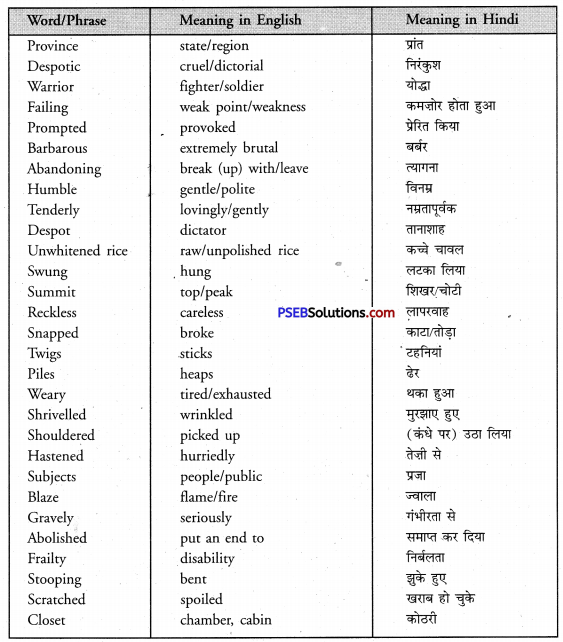
Class 9th English Main Course Book Poem Chapter 2 No Men are Foreign Question Answers

No Men are Foreign Class 9 Questions and Answers

Question 1.
What is the theme or central idea of the poem ?
(इस कविता का उद्देश्य अथवा केन्द्रीय भाव क्या है ?)
Answer:
All men are the same. They have the same kind of body. They breathe in the same way. Thus no men are strange or foreign. We should never hate others. They are all our brothers. By hating others, we lose their love. Thus the poet gives the message of love and brotherhood.

सब लोग एक ही प्रकार के होते हैं। वे एक ही प्रकार का शरीर रखते हैं। वे एक ही प्रकार से सांस लेते हैं। इसलिए कोई भी आदमी बेगाने या विदेशी नहीं हैं। हमें कभी भी दूसरों से घृणा नहीं करनी चाहिए। वे सब हमारे भाई हैं। दूसरों से घृणा करके हम उनके प्यार को खो बैठते हैं। इस प्रकार कवि प्यार और भाईचारे का सन्देश देता है।

PSEB 9th Class English Main Course Book Solutions Poem 2 No Men are Foreign

Question 2.
Write the summary of the poem in your own words.
(कविता का सार अपने शब्दों में लिखें।)
Answer:
The poet says that no men are foreign and no countries are strange. Men all over the world have the same kind of body. Similarly, no countries are strange or foreign. It is the same earth everywhere. When there is war, fire and dust pollute the air all around. So the poet says that we should not heed those who tell us to hate others.

कवि कहता है कि कोई मनुष्य बेगाने नहीं होते और कोई देश बाहरी नहीं होते। संसार-भर के लोग एक जैसा ही शरीर रखते हैं। उसी प्रकार हम किसी देश को भी बेगाना या बाहरी नहीं कह सकते हैं। सब जगह वही धरती है। जब लड़ाई होती है, तो आग और धूल पूरी धरती के गिर्द की हवा को दूषित कर देती है। इसलिए कवि कहता है कि हमें उन लोगों की ओर ध्यान नहीं देना चाहिए जो हमें दूसरों से नफरत करने के लिए कहते हों।

Question 3.
What inspiration do we derive from this poem ?
(इस कविता से हमें क्या प्रेरणा मिलती है ?)
Answer:
The poet inspires us to look upon the people of all countries as our brothers. No men are foreign. No countries are strange. Everywhere there are men who live and die in the same manner. Therefore, we should love all and hate none.

यह कविता हमें प्रेरित करती है कि हम सभी देशों के लोगों को अपने भाई समझें। कोई आदमी विदेशी नहीं हैं। कोई देश बेगाने नहीं हैं। हर जगह लोग हैं जो एक ही तरह से जीवन बिताते हैं और मरते हैं। इसलिए हमें सभी से प्रेम करना चाहिए और किसी से घृणा नहीं करनी चाहिए।

Question 4.
What will happen if we hate our fellow beings ?
(यदि हम अपने साथियों से घृणा करने लगें तो क्या होगा ?)
Answer:
If we hate our fellow beings, we shall lose their love. All men are our brothers. Thus when we hate others, we hate ourselves only.
यदि हम अपने साथी जीवों से घृणा करेंगे तो हम उनका प्यार खो बैठेंगे। सभी लोग हमारे भाई हैं। इस प्रकार जब हम दूसरों से घृणा करते हैं तो हम स्वयं अपने से ही घृणा करते हैं।

PSEB 9th Class English Main Course Book Solutions Poem 2 No Men are Foreign

Question 5.
How are all men similar to one another?
(सभी लोग एक-दूसरे के जैसे किस तरह हैं ?)
Answer:
All people have the same kind of body. They breathe the same air. They sleep and wake up in the same way. They eat in the same way. After their death, they lie under the same earth. Thus all men are similar to one another.

सभी लोग एक ही किस्म का शरीर रखते हैं। वे एक ही किस्म की हवा में श्वास लेते हैं। वे एक ही तरह से सोते हैं और जागते हैं। वे एक ही तरह से खाते हैं। अपनी मृत्यु के पश्चात् वे एक ही धरती के नीचे पड़े होते हैं। इस प्रकार सभी मनुष्य एक-दूसरे के जैसे ही होते हैं।

Question 6.
Write True or False against the following sentences :
(a) No men are strange and no countries are foreign.
(b) People are different from one another.
(c) We should hate our brothers.
(d) We should not defile our earth.
Answer:
(a) True
(b) False
(c) False
(d) True

Question 7.
This poem is an attempt to create ‘brotherhood’ amongst people. Discuss.
(यह कविता लोगों के मध्य ‘भ्रातृभाव’ पैदा करने का एक यत्न है। विवेचना करें।)
Answer:
This poem tries to create a feeling of brotherhood among all people. It says that no men or countries are foreign. All men have the same kind of body. They breathe in the same way. They eat, sleep and wake up in the same manner. After their death, they lie under the same earth. Thus all men are brothers.

यह कविता सभी लोगों में भ्रातृत्व की एक भावना पैदा करने का यत्न करती है। यह कहती है कि कोई भी लोग या देश बेगाने नहीं होते। सभी मनुष्यों का एक जैसा शरीर होता है। वे एक ही ढंग से श्वास लेते हैं। वे एक ही ढंग से खाते, सोते और जागते हैं। अपनी मृत्यु के पश्चात् वे एक ही धरती के नीचे पड़े होते हैं। इस तरह सभी लोग हमारे भाई हैं।

Stanzas For Comprehension

Stanza -1

Remember, no men are strange, no countries foreign
Beneath all uniforms, a single body breathes
Like ours; the land our brothers walk upon
Is earth like this, in which we all shall lie.

Questions
1. Name the poem and the poet.
2. What should we remember?
3. What are all men to us?
4. Where do we all walk upon?
5. Where shall we all lie in the end?
Answer
1. The name of the poem is ‘No Men Are Foreign’. The name of the poet is James Kirkup.
2. We should remember that no men are strange and no countries are foreign.
3. All men are brothers to us.
4. We all walk upon the same earth.
5. We shall all lie in the same land.

PSEB 9th Class English Main Course Book Solutions Poem 2 No Men are Foreign

Stanta – 2

They, too, aware of sun and air and water
Are fed by peaceful harvests, by war’s long winter starved.
Their hands are ours, and in their lives we read
A labour not different from our own.

Questions
1. Who does ‘They’ refer to in these lines ?
2. What do they all make use of ?
3. What are they fed by ?
4. What is meant by
(a) ‘peaceful harvests’
(b) ‘war’s long winter’?
5. What do we read in their lives?
Answer:
1. “They’ here refers to all men of the world.
2. They all make use of the same sun and air.
3. They are fed by the harvests that they grow.
4.
(a) ‘Peaceful harvests’ means the crops that we can grow in times of peace.
(b) ‘War’s long winter’ means the painful days when we have to stay in and can have nothing to feed ourselves.
5. We read in their lives that they do the same labour that we have to do.

Stanza – 3

Remember they have eyes like ours that wake
Or sleep, and strength that can be won
By love. In every land is common life
That all can recognize and understand.

Questions
1. Who does ‘they’ here refer to ?
2. What kind of eyes do they have ?
3. How can we win their strength ?
4. What is there in every land ?
5. What can all recognize and understand ?
Answer::
1. The word ‘they’ here refers to all men of the world.
2. They have eyes like ours.
3. We can win it by love.
4. In every land, there is the same kind of life.
5. All can recognize and understand that there is the same kind of life everywhere.

Stanza – 4

Let us remember, whenever we are told
To hate our brothers, it is ourselves
That we shall dispossess, betray, condemn.
Remember we who take arms against each other,
It is the human earth that we defile,
Our hells of fire and dust outrage the innocence
Of air that is everywhere our own.
Remember, no men are foreign, and no countries strange.

Questions
1. Who have been called “our brothers’ ?
2. Who should we not hate and why ?
3. What shall happen if we take up arms against each other?
4. What is everywhere our own ?
5. What message does the poet want to convey in these lines ?
Answer:
1. All men of the world have been called our brothers.
2 We should not hate others because they are all our brothers.
3. We shall defile this earth of ours.
4. The pure and fresh air is everywhere our own.
5. The poet means to say that all men of the world are our brothers. No men are foreign and no countries are strange.

PSEB 9th Class English Main Course Book Solutions Poem 2 No Men are Foreign

Objective Type Questions

Answer the following in one word / phrase / sentence :

Question 1.
Who has written the poem, ‘No Men Are Foreign’ ?
Answer:
James Kirkup.

Question 2.
What type of a poem this poem is ?
Answer:
It is an anti-war poem.

Question 3.
Where do all men move ?
Answer:
They move on the same earth.

Question 4.
Who shouldn’t be heeded, according to the poet ?
Answer:
Those who tell us to hate others.

Question 5.
What will we be doing if we hate others ?
Answer:
We will be robbing ourselves.

Complete the following :

1. The poet ‘says that no men are ……….
2. According to the poet, no …………………. are foreign.
3. By taking up arms against others, we will be defiling the …….
Answer:
1. strange
2. countries
3. earth.

Write True or False against each statement :

1. All other countries are foreign, according to the poet.
2. We should not hate anybody.
3. War pollutes the air that we all breathe.
Answer:
1. False
2. True
3. True.

Choose the correct option for each of the following :

Question 1.
According to the poem, no countries are
(a) developed
(b) developing
(c) bad
(d) foreign
Answer:
(d) foreign

PSEB 9th Class English Main Course Book Solutions Poem 2 No Men are Foreign

Question 2.
The poem is ………….
(a) an anti-war poem
(b) a sonnet
(c) an elegy
(d) a hymn.
Answer:
(a) an anti-war poem

No Men are Foreign Poem Summary in English

No Men are Foreign Introduction:

This poem contains a very noble idea. It advocates the unity of mankind. No men are strange, and no countries are foreign. All men live on the same earth and breathe the same air. If we hate others, it is like hating ourselves because there is no difference between us and others. Love is the best weapon to win others. By taking up arms against one another, we defile the human earth itself. So we should always remember that no men are foreign and no countries are strange.

No Men are Foreign Summary in English:

This is an anti-war poem that teaches the basic oneness of mankind and folly of going to war. The poet says that no men are strange and no countries are foreign. Under the outward superficial differences, the inner essence is everywhere the same. Under all kinds of different dresses, all men have the same kind of body. The bodies of all men breathe in the same way as our body does. All men move on the same earth. And after death, all men lie under the same earth. Everywhere it is the same sun, air and water that people enjoy. Everywhere people are fed on the crops that are grown during times of peace. And everywhere they have to starve when there is a long winter of war.

Everywhere men have the same kind of hands. They do the same kind of labour. They have the same kind of eyes that wake and sleep. They have the same kind of strength that can be won by love. Everywhere, the same kind of life is lived which can be understood and recognized easily.

PSEB 9th Class English Main Course Book Solutions Poem 2 No Men are Foreign

Therefore, the poet says that we shouldn’t heed those who tell us to hate others. We should remember that by hating others, it is only ourselves that we rob, deceive and criticize. By taking up arms against others, we only defile this earth that belongs to all of us. The fire and destruction of war pollutes the air that we all breathe. So, the poet asks us to remember that no men are foreign and no countries are strange.

No Men are Foreign Poem Summary in Hindi

No Men are Foreign Introduction:

कविता का संक्षिप्त परिचय इस कविता में एक बहुत ही महान विचार भरा हुआ है। यह मानवता की एकता की वकालत करती है। कोई भी मनुष्य भिन्न नहीं होते और कोई भी देश पराए नहीं होते। सब लोग एक ही धरती के ऊपर रहते हैं और एक ही हवा में सांस लेते हैं। यदि हम दूसरों से घृणा करेंगे, तो यह खुद अपने से घृणा करने के समान होगा क्योंकि हमारे में और दूसरों में कोई अन्तर नहीं है। दूसरों को जीतने के लिए प्यार सबसे बढ़िया हथियार होता है। एक-दूसरे के विरुद्ध घातक हथियार उठाकर हम मानव धरती को दूषित करते हैं। इसलिए हमें सदा याद रखना चाहिए कि कोई मनुष्य विदेशी नहीं होते और कोई देश बेगाने नहीं होते हैं।

No Men are Foreign Summary in Hindi:

यह एक युद्ध-विरोधी कविता है जो मनुष्य-जाति की मौलिक एकता और युद्ध करने की मूर्खता के बारे में शिक्षा देती है। कवि कहता है कि कोई लोग बेगाने नहीं होते और कोई देश बाहरी नहीं होते। बाहरी दिखावे के अन्तरों के नीचे अन्दरूनी वास्तविकता सब जगह एक जैसी ही होती है। भिन्न-भिन्न प्रकार की सब पोशाकों के नीचे सब लोगों का एक ही प्रकार का शरीर होता है। सब लोगों के शरीर उसी प्रकार सांस लेते हैं जिस . प्रकार हमारा शरीर साँस लेता है। सब लोग एक ही धरती के ऊपर चलते-फिरते हैं और मरने के बाद एक ही धरती के नीचे सोते हैं।

हर जगह वही सूरज, हवा और पानी है जिसका लोग आनन्द उठाते हैं। हर जगह लोग उन फसलों से भोजन प्राप्त करते हैं जो शान्ति के समय के दौरान उगाई जाती हैं। और हर जगह उनको भूखों मरना पड़ता है जब युद्ध-रूपी लम्बी सर्दी आ जाती है। हर जगह लोगों के एक ही प्रकार के हाथ होते हैं और वे एक ही प्रकार की मेहनत करते हैं। उनकी एक ही प्रकार की आँखें होती हैं जो जागती हैं और सोती हैं। उनके पास एक ही प्रकार की ताकत होती है जिसको प्यार से जीता जा सकता है। हर जगह एक ही प्रकार का जीवन गुज़ारा जाता है जिसको आसानी से समझा जा सकता है, और पहचाना जा सकता है।

इसलिए कवि कहता है कि हमें उन लोगों की ओर कोई ध्यान नहीं देना चाहिए जो हमें दूसरों से घृणा करने के लिए कहते हों। हमें याद रखना चाहिए कि दूसरों से नफ़रत करने से हम सिर्फ खुद को ही लूट रहे होते हैं, धोखा दे रहे होते हैं और बुरा-भला कह रहे होते हैं। दूसरे लोगों के विरुद्ध हथियार उठा कर हम केवल इस धरती को गन्दी और अपवित्र बनाते हैं जो हमारी सब की सांझी है। युद्ध की अग्नि और विनाश उसी हवा को दूषित करते हैं जिसमें हम साँस लेते हैं। इसीलिए कवि हमें याद रखने के लिए कहता है कि कोई लोग बेगाने नहीं होते और कोई देश बाहरी नहीं होते।

No Men are Foreign Poem Translation in Hindi

(Lines 1-4)

Remember, no men are strange, no countries foreign
Beneath all uniforms, a single body breathes
Like ours; the land our brothers walk upon
Is earth like this, in which we all shall lie.

कठिन शब्दार्थ-1. strange – पराए ; 2. beneath – के नीचे; 3. uniform – पोशाक ; 4. breathes – श्वास लेती है।

अनुवाद-
याद रखो कि कोई भी मनुष्य पराए नहीं होते; कोई देश बेगाने नहीं होते।
सभी प्रकार की पोशाकों के नीचे उसी प्रकार का शरीर होता है जिस प्रकार का हमारा है ।
सभी शरीर उसी प्रकार साँस लेते हैं जिस प्रकार हमारा शरीर साँस लेता है।
वह जमीन जिसके ऊपर हमारे भाई चलते हैं वैसी ही है, जिसके ऊपर हम चलते-फिरते हैं।
हम सब उसी धरती के नीचे पड़े होंगे जब हम मरेंगे।

PSEB 9th Class English Main Course Book Solutions Poem 2 No Men are Foreign

(Lines 5 – 8)

They, too, aware of sun and air and water,
Are fed by peaceful harvests, by war’s long winter starvd.
Their hands are ours, and in their lives we read
A labour not different from our own.

कठिन शब्दार्थ-1. aware of – ज्ञान होना, प्रयोग करना ; 2. are fed -भोजन प्राप्त करते हैं ; 3. peaceful harvests – शान्ति के समय पैदा की जा सकने वाली फसलें ; 4. starved – भूखे मरना ; 5. labour – परिश्रम ।

अनुवाद- दूसरे सब लोग उसी धूप, हवा और पानी का उपयोग करते हैं जिसका हम करते हैं। वे सब हमारे समान ही शान्ति के समय के दौरान फसलों से भोजन प्राप्त करते हैं और जब युद्ध रूपी लम्बी सर्दी आती है तो सब को समान रूप में भूखों मरना पड़ता है। उनके हाथ उसी तरह के हैं जैसे हमारे पास हैं, तथा उनकी जीवनियों में हम पढ़ सकते हैं वैसी ही मेहनत जो हमें हमारे जीवन में करनी पड़ती है।

(Lines 9-12)

Remember they have eyes like ours that wake
Or sleep, and strength that can be won
By love. In every land is common life
That all can recognize and understand.

कठिन शब्दार्थ-1. wake – जागना ; 2. common life – एक जैसा जीवन ; 3. recognize – पहचानना ।

अनुवाद-
याद रखो, उनकी आंखें हमारी आँखों के समान ही हैं।
उनकी आँखें उसी प्रकार सोती-जागती हैं
जिस प्रकार हमारी आँखें सोती-जागती हैं।
उनके अन्दर उसी प्रकार की ताकत होती है जिस प्रकार की ताकत हमारे अन्दर होती है
ऐसी ताकत जिसको प्यार के द्वारा जीता जा सकता है। .
प्रत्येक देश में एक ही प्रकार की ज़िन्दगी गुजारी जाती है।
जीवन के उस सांझे तरीके को हम सब पहचान सकते हैं और समझ सकते हैं।

(Lines 13-20)

Let us remember, whenever we are told
To hate our brothers, it is ourselves
That we shall dispossess, betray, condemn.
Remember, we who take arms against each other,
It is the human earth that we defile,
Our hells of fire and dust outrage the innocence
Of air that is everywhere our own.
Remember, no men are foreign, and no countries strange.

कठिन शब्दार्थ
-1. dispossess – खो देना, लूटना ; 2. betray – धोखा देना ; 3. condemn – लोचना करना ; 4 defile – गन्दा और अपवित्र बनाना ; 5. human earth – धरती जिसके ऊपर मनुष्य रहते हैं ; 6. outrage – नष्ट करना ; 7. innocence – शुद्धता।

PSEB 9th Class English Main Course Book Solutions Poem 2 No Men are Foreign

अनुवाद-
जब कभी हमें अपने ही भाइयों से घृणा करने के लिए कहा जाए, तो हमें याद रखना चाहिए कि
यह हम खुद ही होंगे जो खुद को (उनके प्यार से) लूट रहे होंगे।
दूसरों से घृणा करके हम केवल खुद को ही धोखा दे रहे होंगे और केवल खुद की ही
आलोचना कर रहे होंगे।
याद रखो कि जब हम एक-दूसरे के विरुद्ध हथियार उठा लेते हैं,
तो हम केवल इस मानव धरती को ही दूषित कर रहे होते हैं।
युद्ध के दौरान आग और धूल के जो नर्क पैदा हो जाते हैं,
वे उसी हवा को दूषित करते हैं ।
जो सब जगह हमारी अपनी ही है।
इसलिए हमें याद रखना चाहिए कि कोई लोग बाहरी नहीं होते,
और कोई देश बेगाने नहीं होते।

Class 9th English Main Course Book Solutions PSEB Poetry

My Dear Soldiers Question Answer Class 8 English Solutions Poem Chapter 4 PSEB Solutions

Punjab State Board PSEB 8th Class English Book Solutions Poem 4 My Dear Soldiers Textbook Exercise Questions and Answers.

Class 8th English Solutions Poem Chapter 4 My Dear Soldiers Question Answers

My Dear Soldiers Class 8 Questions and Answers

Activity 1.

Look up the following words in a dictionary. You should seek the following information about the words and put them in your WORDS notebook.
1. Meaning of the word as used in the poem (adjective/noun/verb. etc.)
2. Pronunciation (The teacher may refer to the dictionary or a mobile phone for correct pronunciation.)
3. Spellings.

defenders border deed windy scorching
sweltering treading marshes surveillance vibrate

Vocabulary Expansion

Activity 2.

Write synonyms of the following words.

(a) very hot – Scorching
(b) protect – defend

PSEB 8th Class English Solutions Poem 4 My Dear Soldiers

Read the following pairs of words carefully.

1. great sons
2. windy season
3. snowy days
4. scorching sun

All the highlighted words are ‘adjectives’ and the partner words are ‘nouns.’ Sometimes adjectives can be changed to nouns. For example ‘beautiful is an adjective. The noun from the adjective ‘beautiful is ‘beauty’

Sr. No. Adjective Noun
1. strong wind
2. active members
3. rich people
4. wise men
5. loyal soldiers
6. careful student
7. kind person
8. happy lad
9. good friend
10. faithful dog

Learning to Read and Comprehend

Activity 4.

Read the stanza and answer the questions that follow.

A. Oh! Defenders of borders
You are great sons of my land
When we are all asleep in
You still hold on to your deed.
Windy season or snowy days
Or scorching sun’s sweltering rays
You are there guarding all the time awake
Treading the lonely expanses as Yogis.

PSEB 8th Class English Solutions Poem 4 My Dear Soldiers

(a) Name the poet of the poem ‘My Dear Soldiers’.
‘My Dear Soldiers’ कविता के लेखक का नाम बताएं
Answer:
The poet of this poem is A.P.J. Abdul Kalam.

(b) Who are being referred to as ‘Defenders of borders’ ?
‘सीमाओं का रक्षक’ किसे कहा जा रहा है
Answer:
Indian soldiers are being referred to Defenders of Borders’.

(c) How do these great sons serve their motherland ?
ये महान सपूत मातृभूमि की सेवा कैसे करते हैं ?
Answer:
They guard the borders of their motherland day and night.

(d) What kind of weather conditions do the soldiers have to face ?
सैनिक किस प्रकार की मौसमी दशाओं का सामना करते हैं ?
Answer:
They face windy and snowy weather.

B. Climbing the heights or striding the valleys
Defending the desert guarding the marshes
Surveillance in seas and by securing the air
Prime of your youth given to the nation!!
Wind chimes of my land vibrate your feat
We pray for you brave men!!
May the Lord bless you all!!

(a) Whom has the poem been addressed to ?
कविता किसे संबोधित की गई है ?
Answer:
The poem is addressed to the Indian soldiers.

(b) What do these great sons sacrifice for the nation ?
ये महान सपूत राष्ट्र के लिए क्या त्याग करते हैं ?
Answer:
They sacrifice their lives and their youth for the nation.

(c) What is the intention of the poet ?
कवि का इरादा क्या है?
Answer:
The poet wishes to tribute to our brave soldiers. He also wishes that they should enjoy God’s blessings.

PSEB 8th Class English Solutions Poem 4 My Dear Soldiers

(d) Explain: ‘Wind chimes of my land vibrate your feat’.
व्याख्या कीजिए : “मेरे देश की पावन की झंकार तुम्हारे कदमों में सुनाई देती है”
Answer:
It means that our soldiers march forward with rhythmical sound.

Learning Language

Formation of Adverbs

A large number of adverbs are formed by adding ‘-ly’ to certain adjectives.

1. Most of the adverbs formed this way are the Adverbs of Manner. For example :

Sl.No Adjective Adverb 
1. strong strongly
2. faithful faithfully
3. sincere sincerely
4. quick quickly
5. slow slowly
6. neat ready
7. busy busily.
8. happy happily
9. true truly
10. severe severely

2. Some adverbs have the same form as the corresponding adjectives. For example :

S. No Adjective Adverb
1. Fie put in a lot of hard work. He worked hard.
2. I want a little sugar. Please move a little.
3. Fie has high aims. He aims high in life.
4. I want an early reply. Please reply early.

PSEB 8th Class English Solutions Poem 4 My Dear Soldiers

3. Some adverbs are formed by combining a noun and a qualifying adjective. For example : yesterday, otherwise, meanwhile, sometimes.
4. Some adverbs are formed by adding a noun to ‘a’, ‘be’ and ‘to’, etc. For example : today, abreast, ahead, besides, etc.
5. Some adverbs are formed by combining ‘à or ‘be’ and an adjective. For example : aloud, anew, behind, aloud, alone, etc.
6. Some adverbs are formed from participles. For example : wittingly, surprisingly, knowingly, etc.
7. Some adverbs are formed in the following ways. For example : 1… one

1. one once
2. two twice
3. three thrice
4. four fourfold
5. many manifold

8. There are several adverbs which we used together having been joined together with
conjunctions to form adverbial phrases. For example :
(a) by and by (within a short period)
(b) again and again
(c) far and wide
(d) first and foremost
(e) to and fro
(f) off and on (occasionally) etc.

Activity 5.

Change the following adjectives to adverbs.

S. No. Adjective Adverb
1. bad badly
2. angry angrily
3. fast faddy
4. bold boldly
5. brisk briskly
6. meek meekly
7. nice nicely
8. soft softly
9. fair fairly
10. clean cleanly

Activity 6.

In the following sentences, same words are used both as an adjective and as an adverb. Underline the word and write whether it is used as an adjective or an adverb.

(a) You gave a beautiful, presentation. — ‘beautiful’ as an adjective
(b) Your work is beautifully presented. — ‘beautifully as an adverb
(c) I get a monthly paycheque. — ‘monthly’ as an adjective
(d) My company pays me monthly. — ‘monthly’ as an adverb
(e) She dressed elegantly. — ‘elegandy’ as an adverb
(f) She looks very elegant in suit.– ‘elegant’ as an adjective
(g) That boy is so loud. — ‘loud’ as an adjective
(h) That boy speaks so loudly. — ‘loudly as an adverb
(i) He is a gentle person. — ‘gently as an adjective
(j) He hugged me gently. — ‘gently’ as an adverb.

PSEB 8th Class English Solutions Poem 4 My Dear Soldiers

Activity 7.

You will tell your partner something that she/he doesn’t know about you. You may talk about one of the following topics.

  • your pet
  • yourself
  • something you have bought
  • a neighbour
  • a place

While speaking. include two or three lies too. Take turns in speaking. The listener will listen carefully and note down in the notebook what she/he thinks is not true’ or ‘a lie’. When both of you have taken turns in speaking, you will tell your partner what you think was not true in his/her story.

The teacher must go to each bench to ensure that students are using English. Alternatively, the teacher can give two stories with lies which they can read and the partner can point out the lies.

My Pet

I have a pet. It is dog. It is small. But it is very greedy. It can eat one kilo of rice and twelve eggs for a single meal. It eats its rice with a spoon. When I come from outside, it jumps out me and talks to me in English. It scolds me if I reach home late. My father, is very happy with my dog because it helps him in cleaning the house.
Or
A Visit to Simla

I went to Simla for a vacation. It is a very big city. It is a very warm place. I went there on a shop. I did a lot of shopping there. I bought juices from there. I also bought an aeroplane from there and came home on that aeroplane. I keep the aeroplane in my garage and go to my school on my plane everyday.

Learning to Speak (Pairwork)

There are birds of prey that live on high mountains and trees. They have very good eye sight and can see things on the ground while flying in the sky. If they see something that they can eat, they dive like a thunderbolt to catch their prey.

PSEB 8th Class English Solutions Poem 4 My Dear Soldiers

Activity 8.

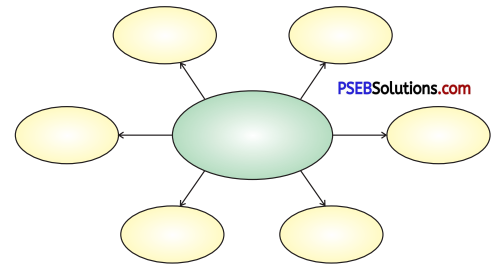
Think of a wild animal or a bird that you like. Write its different qualities in the mind map given below. Take 2-3 minutes to do this work. You can use the following hints.
(a) kind of bird or animal
(b) its appearance and size
(c) its habitat
(d) its eating habits – herbivorous/carnivorous
(e) some special quality
(f) usefulness of the animal/bird
PSEB 8th Class English Solutions Poem 4 My Dear Soldiers 1

Now speak for two minutes about the animal or the bird you have made notes on. You can refer to your notes while speaking.
Answer:
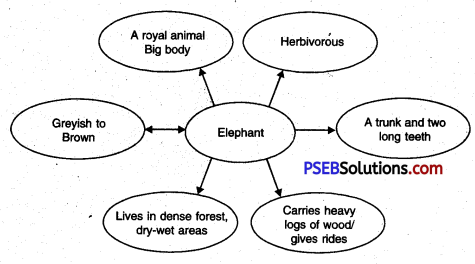
Elephant is my favourite animal. It lives in dense forests, mostly in dry-wet areas. It is a royal animal that walks gracefully. It has big body greyish to brown in colour. It is a herbivorous. Sugarcane is its favourite food. It has a trunk and two long teeth. It carries heavy logs of wood. It gives rides too.
PSEB 8th Class English Solutions Poem 4 My Dear Soldiers 2

Learning to Write

Letter Writing

Letter writing is an important skill. We need to write letters in our daily life. It may be stated that these days people write emails more than letters. However, the art of writing letters and emails is the same though the format is different. Let us look at a complete letter written below:

Write a letter to your younger brother congratulating him on his brilliant success.

A 204 Rishi Apartments
Sector 70
SAS Nagar
June 10, 20…
Dear Harnaaz
Heartiest congratulations on achieving brilliant success in your board examination! I just came to know about it and I am very happy. I hope you are also extremely happy to receive the news of your result. You have stood first in your stater It is the result of your hard work. I am really proud of you. Your parents must also be very happy. If you continue to work hard like this, you will be a successful person in life.
I wish you a lot of success in your future too.
Yours sincerely
Mankeerat.

Activity 9

Now, using the format of letter writing given earlier and the notes written by you in the mind map above, write a letter to your friend telling him/her all about the animal/ bird you wrote about. At the end of the letter, you must write to your friend about why human beings should try to protect birds and animals from getting hunted by poachers.
Answer:
C-203, Sardar Patel Marg
Sector–22
Chandigarh
21 May, 20…..
Dear Divyadeep
India is a land of bio-diversity (जैव – विविधता) We have many kinds of birds and animals wild and domestic. They have different colours, sizes and different food habits. They live in different climatic conditions (जलवायु दशाएं). They are the beauty of our planet. Elephant is a royal animal. He has kingly grace. Bengal Tiger is another wild animal worth mentioning. Lion is the king of forest. Killing of these animals for food and profit is banned. But it is a pity that poachers hunt them for money. They don’t spare even innocent birds like peacock. It must be stopped otherwise our earth will become a poor place to live in.
Yours Sincerely
Jasjeet.

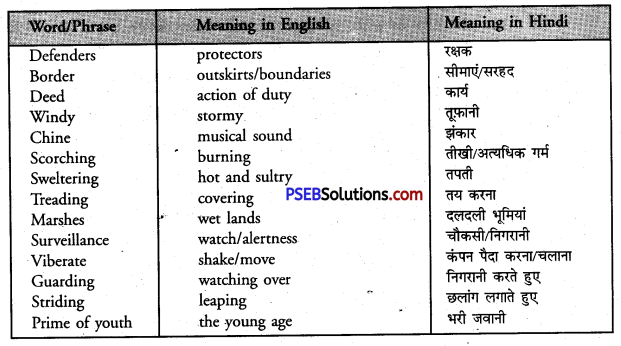
Word Meanings

PSEB 8th Class English Solutions Poem 4 My Dear Soldiers 3

PSEB 8th Class English Solutions Poem 4 My Dear Soldiers

My Dear Soldiers Poem Summary in English

My Dear Soldiers Summary in English

It is a patriotic poem by A.P.J. Abdul Kalam. It is dedicated to the Indian soldiers. They are the great sons of India. Sun or shine they do their duty. They don’t care for hot sun rays or chilly winds. They are awake day and night guarding borders, the sea, the air and marshes.

Our soldiers are true patriots and selfless soldiers. They sacrifice their all for the sake of the country. They die for the sake of their motherland in the prime of their youth. They are worthy of our praise, respect and god’s blessing. Every Indian prays for the glory of our brave soldiers.

My Dear Soldiers Summary in Hindi

यह A.P.J. Abdul Kalam द्वारा लिखी गई देशभक्ति की एक कविता है। यह भारतीय सैनिकों को समर्पित है। वे भारत के महान् सपूत हैं। वे हर मौसम में अपना कर्तव्य निभाते हैं। वे सूर्य की गर्म किरणों या शीतल हवाओं की परवाह नहीं करते। वे हमारी सीमाओं-सागरों, हवाई मार्गों तथा दलदली भूमियों-की रक्षा करते हुए दिन-रात जागते रहते हैं। हमारे सैनिक सच्चे देशभक्त और नि:स्वार्थ सिपाही हैं। वे देश के लिए अपना सब कुछ बलिदान कर देते हैं। वे भरी जवानी में देश के लिए अपने प्राण दे देते हैं। वे हमारी प्रशंसा, हमारे सम्मान और परमात्मा के आशीर्वाद के पात्र हैं। हर भारतीय भारतीय सैनिकों के गौरव के लिए प्रार्थना करता है।

Central Idea of The Poem

This poem sings the glory of our soldiers. They are true patriots who sacrifice their all for the sake of their country. They guard our boundaries day and night. Sun or shine they are alert. Let us pray for their honour and glory.

Class 8 PSEB Solutions Poetry

Open Thy Eyes and see Thy God Question Answer Class 9 English Main Course Book Poem Chapter 1 PSEB Solutions

Punjab State Board PSEB 9th Class English Book Solutions English Main Course Book Poem 1 Open Thy Eyes and see Thy God Textbook Exercise Questions and Answers.

Class 9th English Main Course Book Poem Chapter 1 Open Thy Eyes and see Thy God Question Answers

Open Thy Eyes and see Thy God Class 9 Questions and Answers

Question 1.
Write the central idea of the poem.
(कविता का केन्द्रीय भाव लिखें।)
Answer:
Tagore says that we can’t find God in temples. We can’t find Him by chanting and singing. We can’t find Him by telling beads. He lives among poor labourers. So we should go and work with the poor if we want to find God.”

टैगोर कहता है कि हम ईश्वर को मन्दिरों में नहीं ढूंढ सकते हैं। हम उसे भजन बोल कर और गा कर नहीं ढूंढ सकते हैं। हम उसे माला फेर कर नहीं ढूंढ सकते हैं। वह ग़रीब मजदूरों के मध्य रहता है। इसलिए हमें ग़रीबों के साथ जा कर काम करना चाहिए यदि हम ईश्वर को ढूंढना चाहते हैं।

PSEB 9th Class English Main Course Book Solutions Poem 1 Open Thy Eyes and see Thy God

Question 2.
Why does the poet say that we should leave chanting, singing and telling of beads ?
(कवि यह क्यों कहता है कि हमें भजन बोलना, गाना और माला फेरना छोड़ देना चाहिए ?)
Answer:
The poet believes that God does not live in temples. We cannot find him by chanting, singing and telling beads. So the poet says that we should leave chanting and telling beads.

कवि मानता है कि ईश्वर मन्दिरों में नहीं रहता है। हम उसे भजन बोलकर, गाकर और माला फेरकर प्राप्त नहीं कर सकते। इसलिए कवि कहता है कि हम भजन बोलना और माला फेरना छोड़ दें।

Question 3.
Where can God be found ?
(ईश्वर को कहां पाया जा सकता है ?)
Answer:
We can find God where the tiller is tilling the hard land. We can find Him where the pathmaker is breaking stones. In other words, God lives among the poor hardworking people.

हम ईश्वर को उस जगह पा सकते हैं जहां किसान सख्त ज़मीन पर हल चला रहा होता है। हम उसे वहां देख सकते हैं जहां सड़कें बनाने वाला पत्थर तोड़ रहा होता है। अन्य शब्दों में, ईश्वर कठोर परिश्रम करने वाले ग़रीब लोगों के मध्य रहता है।

Question 4.
What does the poet suggest regarding the presence of God ?
(कवि ईश्वर की उपस्थिति के बारे में क्या सुझाव देता है ?)
Answer:
The poet says that God doesn’t live in temples. He lives among the poor hard working people.
कवि कहता है कि ईश्वर मन्दिरों में नहीं रहता है। वह कठिन परिश्रम करने वाले निर्धन लोगों के मध्य रहता है।

Question 5.
Write ‘True’ or ‘False’ against the following statements :
(a) God lives in temples.
(b) By chanting, singing and telling of beads we can reach God.
(c) God is there where the tiller is tilling the land.
(d) We should not work hard.
Answer:
(a) False
(b) False
(c) True
(d) False.

PSEB 9th Class English Main Course Book Solutions Poem 1 Open Thy Eyes and see Thy God

Question 6.
Do you agree with Tagore’s contention in his poem, ‘Open Thy Eyes and See Thy God’ ? Why?
(क्या आप इस कविता में टैगोर के विचारों से सहमत हैं ? क्यों ?)
Answer:
I fully agree with Tagore’s contention. True worship does not mean chanting and telling beads. It does not mean going to temples. It means working hard and helping the poor.

मैं टैगोर के विचारों से पूरी तरह सहमत हूं। सच्ची पूजा का अर्थ भजन बोलना और माला फेरना नहीं होता है। इसका अर्थ मन्दिरों को जाना नहीं होता है। इसका अर्थ होता है – कठिन परिश्रम करना और ग़रीबों की मदद करना।

Stanzas For Comprehension

Stanza 1

Leave this chanting and
singing and telling of beads !
Whom dost thou worship in this
lonely dark corner of a temple
with doors all shut ? Open thine
eyes and see thy God is not
before thee !

Questions
1. What does the poet want us to leave? Why?
2. The poet in this stanza asks a question. What is the question?
3. Our eyes are open. Why does the poet say ‘Open thine eyes”?
4. Who are these lines addressed to?
5. What does the poet want the worshipper of God to do?
Answer:
1. The poet wants us to leave chanting and telling beads in temples. He says that God doesn’t live in temples. We can’t find him there by the singing of hymns and telling of beads.
2. The poet asks whom we are worshipping in the lonely dark corner of the temple with doors all shut.
3. Our physical eyes are open but our eyes of the mind are closed. That is why the poet asks us to open our eyes.
4. The poet imagines someone singing hymns and telling beads in a dark corner of a temple. He addresses these lines to such a worshipper of God.
5. He wants the worshipper to open his eyes and see that God whom he is worshipping is not there before him.

Stanza 2

He is there where the tiller is
tilling the hard ground and where
the pathmaker is breaking stones.
He is with them in sun and in
shower, and His garment is covered
with dust. Put off thy holy mantle
and even like Him come
down on the dusty soil !

Questions

1. ‘Thy God is not before thee. Where can we find him?
2. Why are His garments covered with dust?
3. What is the tiller doing?
4. What is the pathmaker doing?
5. How does the poet think we can seek God?
Answers
1. We can find God where the tiller is tilling the hard land and where the pathmaker is breaking stones.
2. His garments are covered with dust because He lives among those who till the hard land and break stones.
3. He is tilling the hard land.
4. He is breaking stones.
5. The poet thinks we can seek God by working among the poor people such as the tillers and pathmakers.

PSEB 9th Class English Main Course Book Solutions Poem 1 Open Thy Eyes and see Thy God

Stanza 3

Deliverance ? Where is this deliverance
to be found ? ‘Our master himself
has joyfully taken upon him the bonds
of creation; He is bound with us all
for ever.

Question
1. What is meant by ‘deliverance’ ?
2. Does the poet think of deliverance to be a desirable thing?
3. Who is our master ?
4. What bonds has our master taken upon himself ?
5. How is He bound with us all for ever?
Answer:
1. ‘Deliverance’ means freedom from a life of toil.
2. The poet doesn’t think of deliverance to be a desirable thing.
3. God is our master.
4. He has taken upon himself the bonds of creation.
5. We all are God’s creation. Thus God is bound with us for ever.

Stanza 4

Come out of thy meditations and
leave aside thy flowers and incense !
What harm is there if thy clothes
become tattered and stained ? Meet
him and stand by him in toil and in the
sweat of thy brow.

Question
1. What does the poet say about our meditations ?
2. What does he want us to leave aside ? Why?
3. How will our clothes become tattered and stained ?
4. Does the poet see any harm if our clothes become tattered and torn ?
5. ‘Meet him ………’ Who does ‘him’ here refer to ?’
Answer:
1. The poet says that we can’t find God through our meditations. So we should give them up.
2. He wants us to leave aside the flowers and the incense. He says this because he feels that we can’t please God by offering any flowers or incense.
3. Our clothes will become tattered and torn if we go to work with tillers and pathmakers.
4. No, he doesn’t see any harm in this.
5. The word ‘him’ here refers to God.

Objective Type Questions

Answer the following in one word / phrase / sentence :

Question 1.
Name the poet of the poem, ‘Open Thy Eyes ….
Answer:
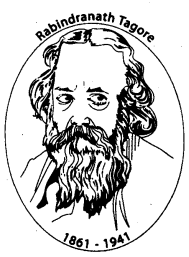
Rabindranath Tagore.

Question 2.
Where is the devotee, as given in the poem ?
Answer:
In a dark corner of a temple.

Question 3.
Who is there with the devotee ?
Answer:
He is sitting there all alone.

Question 4.
Where does God live ?
Answer:
He lives where tiller tills the hard ground.

Question 5.
Where can God be found ?
Answer:
He can be found where the poor people work hard.

PSEB 9th Class English Main Course Book Solutions Poem 1 Open Thy Eyes and see Thy God

Complete the following :

1. The devotee is sitting ……………….. in ………………
2. We can’t find God by …………………. and …………..
3. God lives where the poor people …………… hard and shed ………..
Answer:
1. all alone, a temple
2. chanting hymns, telling beads
3. work / labour, sweat.

Write True or False against each statement :

1. The devotee was sitting in his home, doing Pooja.
2. God cannot be found in temples.
3. God has taken upon himself the task of creation.
Answer:
1. False
2. True
3. True.

Choose the correct option for each of the following:

Question 1.
God can be found by ……………….
(a) chanting hymns
(b) telling the beads
(c) praising him day and night
(d) none of the above.
Answer:
(d) none of the above.

Question 2.
The garment of God, in this poem, is ……..
(a) studded with gems
(b) covered with dust
(c) shining brightly
(d) colourful.
Answer:
(b) covered with dust

Open Thy Eyes and see Thy God Poem Summary in English

Open Thy Eyes and see Thy God Introduction:

In this poem, Tagore says that the worship of idols is useless. He says that God can never be found in places of worship. He can be found where the tillers are tilling land. He can be found where the workers are sweating in the sun. Anyone who wants to find God, should go and work with the tillers and the pathmakers.

PSEB 9th Class English Main Course Book Solutions Poem 1 Open Thy Eyes and see Thy God 1

Moksha cannot be achieved through empty rituals. In fact, the very desire for deliverance is unholy. Even God has not given Himself deliverance. He always remains busy in the task of creation. A true devotee of God should also work tirelessly. He should work for the poor and the downtrodden.

Character of a Happy Man Summary in English:

The poet sees a devotee in a dark corner of a temple. The devotee is sitting all alone. All the doors of the temple are shut. The devotee is chanting hymns. He is telling beads. The poet asks the devotee whom he is worshipping. He asks him to open his eyes. He asks him to see that his God is not there before him. The poet means to say we can’t find God by chanting hymns. We can’t find Him by telling beads. God does not live in temples.

The poet says that God lives where the tiller tills the hard ground. He lives where the path maker is breaking stones. He lives with the poor labouring people. He lives with them in sun and shower. His garment is covered with dust. So the poet asks the devotee to put off his mantle of worship. Like God Himself, he should go and work with the poor. The poet means to say that God cannot be found in temples. He can be found in places where the poor work hard and shed their sweat.

Then the poet talks of deliverance or moksha. Deliverance means the freedom from labour. The poet says that there is no deliverance for anyone. Even God has no deliverance. He has to do hard labour. He has taken upon Himself the difficult job of creation. He performs this task joyfully.

PSEB 9th Class English Main Course Book Solutions Poem 1 Open Thy Eyes and see Thy God

So the poet asks the devotee to come out of the dark corner of his meditations. He should leave aside his flowers and incense. He should go and work among the poor. No harm would come if his clothes get stained. Rather he would be able to fulfil his desire. He would be able to meet God and stand by Him.

Open Thy Eyes and see Thy God Poem Summary in Hindi

Open Thy Eyes and see Thy God Introduction:

कविता का संक्षिप्त परिचय इस कविता में टैगोर निरर्थक मूर्ति-पूजा की आलोचना करता है। वह कहता है कि ईश्वर को कभी भी पूजास्थलों में ढूंढा नहीं जा सकता। उसे वहां ढूंढा जा सकता है, जहां किसान भूमि जोत रहे होते हैं और जहां मज़दूर लोग धूप में पसीना बहा रहे होते हैं। कोई भी व्यक्ति जो ईश्वर की तलाश करना चाहता है उसे किसानों के साथ और सड़कें बनाने वालों के साथ जा कर काम करना चाहिए। मोक्ष खोखले रीति-रिवाजों द्वारा प्राप्त नहीं किया जा सकता। वास्तव में मोक्ष की इच्छा करना ही एक अपवित्र बात है। स्वयम् ईश्वर ने भी अपने आप को मुक्ति प्रदान नहीं की है। वह सदा रचना के काम में लगा रहता है। ईश्वर के सच्चे भक्त को भी अथक रूप से काम करना चाहिए। उसे गरीबों और दलितों के लिए काम करते रहना चाहिए।

Open Thy Eyes and see Thy God Summary in Hindi:

कवि को किसी मन्दिर के एकान्त और अन्धेरे कोने में बैठा एक भक्त दिखलाई देता है। मन्दिर के सभी दरवाजे बन्द हैं। भक्त भजन गा रहा है और माला फेर रहा है। कवि उससे पूछता है कि वह किसकी पूजा कर रहा है। वह भक्त से कहता है कि वह अपनी आंखें खोले और देखे कि वहां उसके सामने ईश्वर नहीं है। कवि के कहने का भाव यह है कि ईश्वर को भजन गा कर अथवा माला फेर कर प्राप्त नहीं किया जा सकता है। ईश्वर मन्दिरों में नहीं रहता है। कवि कहता है कि ईश्वर उस जगह पर रहता है जहां खेतिहर मजदूर धरती जोत रहा है। वह उस जगह पर रहता है जहां सड़कें बनाने वाला मज़दूर पत्थर तोड़ रहा है। वह मेहनत करने वाले इन लोगों के साथ धूप तथा वर्षा में खड़ा रहता है। उसके वस्त्र मजदूरों के वस्त्रों की भान्ति धूल से भरे रहते हैं।

इसलिए कवि भक्त से कहता है कि वह अपने पूजा वाले वस्त्र उतार दे। स्वयं ईश्वर की भान्ति उसे गरीब लोगों के साथ जा कर काम करना चाहिए। कवि के कहने का भाव है कि ईश्वर को मन्दिरों में नहीं खोजा जा सकता है। उसे उस स्थान पर देखा जा सकता है जहां निर्धन लोग परिश्रम करते हैं और अपना पसीना बहाते हैं। कवि मुक्ति की बात करता है। मुक्ति का अर्थ होता है कि कठिन परिश्रम करने से छूट। कवि कहता है कि मुक्ति कहीं नहीं मिलती है। स्वयं ईश्वर को भी मुक्ति प्राप्त नहीं है। उसे भी परिश्रम करना पड़ता है। उसने अपने ऊपर संसार की रचना करने का कठिन काम लिया हुआ है। वह उस काम को खुशी-खुशी करता रहता है।

PSEB 9th Class English Main Course Book Solutions Poem 1 Open Thy Eyes and see Thy God

इसलिए कवि भक्त से कहता है कि वह अपनी समाधि को छोड़ दे। उसे अपने फूल और धूपबत्ती एक तरफ रख देने चाहिएं। उसे निर्धन लोगों के मध्य जा कर काम करना चाहिए। कोई हानि नहीं होगी यदि उसके वस्त्र फट जाएंगे अथवा गंदे हो जाएंगे। इसके विपरीत उसे अपनी इच्छा की प्राप्ति हो जाएगी। वह ईश्वर से मिलने और उसके साथ खड़ा होने के योग्य हो जाएगा।

Open Thy Eyes and see Thy God Translation in Hindi

Stanza 1

Leave this chanting and
singing and telling of beads !
Whom dost thou worship in this
lonely dark corner of a temple
with doors all shut ? Open thine
eyes and see thy God is not
before thee !

कठिन शब्दार्थ-1. chanting-भजन गाना ; 2. telling of beads—माला फेरना ; 3. dost – do ; 4. thine-your, तुम्हारी ; 5. thee-you, तुम।

अनुवाद

छोड़ो यह भजन बोलना
और गाना तथा माला का फेरना !
किसकी पूजा कर रहे हो तुम इस
एकान्त अन्धेरे कोने में एक मन्दिर के
जिसके सब दरवाजे हैं बंद ? खोलो अपनी
आँखें और देखो तुम्हारा ईश्वर नहीं है
तुम्हारे सामने !

Stanza 2

He is there where the tiller is
tilling the hard ground and where
the pathmaker is breaking stones.
He is with them in sun and in
shower, and His garment is covered
with dust. Put off thy holy mantle
and even like Him come
down on the dusty soil !

कठिन शब्दार्थ-
1. tiller-खेती करने वाला मजदूर ; 2. tilling-खेती कर रहा, हल चला रहा ; 3. sun-धूप ; 4. garment-वस्त्र ; 5. mantle-ओढ़न।

PSEB 9th Class English Main Course Book Solutions Poem 1 Open Thy Eyes and see Thy God

अनुवाद
वह उस जगह है जहां किसान
चला रहा है हल, सख्त ज़मीन पर और जहां
सड़कें बनाने वाला, तोड़ रहा है पत्थर !
वह उनके साथ है, धूप और वर्षा में,
और उसका वस्त्र भरा हुआ है ।।
धूल से। उतार दो अपना पवित्र ओढ़न .
और आ जाओ उसी की भांति
नीचे धूल-भरी मिट्टी में !

Stanza 3

Deliverance ? Where is this deliverance
to be found ? Our master himself
has joyfully taken upon him the bonds
of creation; He is bound with us all
for ever.

कठिन शब्दार्थ-1. deliverance-मुक्ति, मोक्ष ; 2. bonds—बन्धन ; 3. creation-संसार की रचना।

अनुवाद

मुक्ति ? यह मुक्ति कहां
मिलती है ? स्वयं हमारे स्वामी ने
प्रसन्नतापूर्वक लिया हुआ है बन्धन |
संसार की रचना का; वह बन्धा हुआ है हम सबसे
सदा के लिए।

Stanza 4

Come out of thy meditations and
leave aside thy flowers and incense !
What harm is there if thy clothes
become tattered and stained ? Meet
him and stand by him in toil and in the
sweat of thy brow.

कठिन शब्दार्थ-1. meditations-समाधि, चिन्तन ; 2. aside-एक तरफ ; 3. incenseधूपबत्ती ; 4. tattered—कटे-फटे ; 5. stained—दाग-भरे ; 6. sweat of the brow-माथे (अर्थात् कड़ी मेहनत) का पसीना।

PSEB 9th Class English Main Course Book Solutions Poem 1 Open Thy Eyes and see Thy God

अनुवाद
जागो अपनी समाधि से और
रख दो एक तरफ अपने फूल और धूपबत्ती !
क्या होगा नुक्सान अगर तुम्हारे वस्त्र
हो जाएंगे कटे-फटे और दाग-भरे ? मिलो
उसे और उसकी मदद करो, अपनी मेहनत और
अपने माथे के पसीने के द्वारा।

Class 9th English Main Course Book Solutions PSEB Poetry

A Letter to God Question Answer Class 9 English Literature Book Chapter 4 PSEB Solutions

Punjab State Board PSEB 9th Class English Book Solutions English Literature Book Solutions Chapter 4 A Letter to God Textbook Exercise Questions and Answers.

Class 9th English Literature Book Solutions Chapter 4 A Letter to God Question Answers

A Letter to God Class 9 Questions and Answers

Question 1.
Where was Lencho’s house located ? Did he have any neighbours ?
(लैंको का घर कहां स्थित था? क्या उसके कोई पड़ोसी थे?)
Answer:
Lencho’s house was on the top of a low hill. It was the only house in the valley. Thus Lencho had no neighbours.
लैंको का मकान एक कम ऊंची पहाड़ी की चोटी पर था। घाटी में यह एकमात्र मकान था। इस प्रकार लैंको का कोई पड़ोसी नहीं था।

Question 2.
When did it start raining ?
(वर्षा होनी कब शुरू हुई?)
Answer:
It started raining when Lencho and his family were having dinner.
वर्षा तब शुरू हुई जब लैंको और उसका परिवार रात का भोजन कर रहे थे।

PSEB 9th Class English Literature Book Solutions Chapter 4 A Letter to God

Question 3.
What was Lencho’s family doing when it started raining ?
(जब वर्षा होनी शुरू हुई तो लैंको का परिवार क्या कर रहा था?)
Answer:
They were having dinner.
(वे रात्रिभोज कर रहे थे।)

Question 4.
Why did Lencho go out ? What did he observe ?
(लैंको बाहर क्यों गया? उसने क्या देखा?)
Answer:
It had started raining. Lencho went out to have the pleasure of feeling of rain on his body. He observed the raindrops falling from the sky. He called them new coins. He said, “The big drops are ten-cent pieces and the little ones are fives.”

वर्षा होनी शुरू हो गई थी। लैंको अपने शरीर पर वर्षा को महसूस करने का आनन्द लेने के लिए बाहर गया। उसने आकाश से गिर रही वर्षा की बूंदों को देखा। उसने उन्हें नए सिक्कों का नाम दिया। उसने कहा, “बड़ी बूंदे दस-सेन्ट के सिक्के हैं और छोटी बूंदे पांच-सेन्ट के सिक्के हैं।”

Question 5.
Why did Lencho’s sons run out ? Were they happy ? How do you know?
(लैंको के बेटे भागते हुए बाहर क्यों गए? क्या वे प्रसन्न थे? आप कैसे कह सकते हैं ?)
Answer:
It had started hailing. The sons went out to collect the hailstones. They were very happy. The hailstones seemed to them like frozen pearls. And they ran out to collect them.

ओले पड़ने लगे थे। पुत्र ओले इकट्ठे करने के लिए बाहर गए। वे बहुत प्रसन्न थे। उन्हें ओले जमे हुए मोतियों के जैसे लग रहे थे। और वे उन्हें बटोरने के लिए बाहर को भागे।

Question 6.
Why did Lencho become unhappy after the storm ? What did he say?
(लैंको तूफान के बाद उदास क्यों हो गया ? उसने क्या कहा ?)
Answer:
After the storm, the field was all covered with hailstones. Not a leaf remained in the trees. The corn was totally destroyed. The flowers were gone from the plants. All this made Lencho very unhappy. He said that the hail had left nothing. They would have no corn that year.

तूफ़ान के बाद पूरा खेत ओलों से ढक गया था। पेड़ों पर एक भी पत्ता नहीं रहा था। अनाज पूरा नष्ट हो गया था। पौधों पर से फूल जाते रहे थे। इस सब से लैंको बहुत दुःखी हो गया। उसने कहा कि ओलों ने कुछ नहीं छोड़ा था। उस वर्ष उन्हें कोई अनाज प्राप्त नहीं होगा।

PSEB 9th Class English Literature Book Solutions Chapter 4 A Letter to God

Question 7.
What did Lencho think throughout the night ?
(लैंको पूरी रात क्या सोचता रहा?)
Answer:
Lencho thought only of help from God. This was his only hope. He believed that God sees everything. He believed that God sees even what is deep in one’s heart.

लैंको केवल ईश्वर से सहायता के बारे में सोचता रहा। यह उसकी एकमात्र आशा थी। उसका विश्वास था कि ईश्वर हर चीज़ देखता है। उसका विश्वास था कि ईश्वर वह भी देख लेता है जो आदमी के गहरे दिल में होता है।

Question 8.
Who did Lencho write to for help ? What did he write in his letter ?
(लैंको ने सहायता के लिए किसे लिखा? अपने पत्र में उसने क्या लिखा?) ”
Answer:
Lencho wrote to God for help. In his letter, he wrote, “God, if you don’t help me, my family and I will go hungry this year. I need a hundred pesos in order to sow my field again.”

लैंको ने सहायता के लिए ईश्वर को लिखा। अपने पत्र में उसने लिखा, “ईश्वर, यदि तुम मेरी सहायता नहीं करोगे, तो इस वर्ष मेरे परिवार को और मुझे भूखा रहना पड़ेगा। अपने खेत को फिर से बोने के लिए मुझे एक सौ पेसो की ज़रूरत है।”

Question 9.
How did Lencho address the envelope ? What did he do after that ?
(लिफ़ाफ़े के ऊपर लैंको ने पता कैसे लिखा? इसके बाद उसने क्या किया?)
Answer:
Lencho wrote on the envelope only two words : ‘To God’. He put his letter inside the envelope and went to the town. There he got a stamp at the post office. He put the stamp on the envelope and dropped it into the mailbox.

लैंको ने लिफ़ाफ़े के ऊपर केवल दो शब्द लिखे : ‘ईश्वर को’। उसने अपना पत्र लिफ़ाफ़े में डाला और नगर को गया। वहां उस ने डाकघर से एक टिकट लिया। उसने टिकट को लिफ़ाफ़े के ऊपर लगाया और इसे डाक बक्से में डाल दिया।

Question 10.
Who took the letter to the postmaster?
(पोस्टमास्टर के पास पत्र को कौन ले कर गया?)
Answer:
It was a postman who took the letter to the postmaster.
यह एक डाकिया था जो पोस्टमास्टर के पास पत्र ले कर गया।

PSEB 9th Class English Literature Book Solutions Chapter 4 A Letter to God

Question 11.
What did the postmaster do after reading Lencho’s letter ? Why did he do so?
(लैंको का पत्र पढ़ने के बाद पोस्टमास्टर ने क्या किया? उसने ऐसा क्यों किया?)
Answer:
The postmaster was struck by Lencho’s faith in God. He thought of sending God’s reply to Lencho’s letter. He collected money from his employees. He himself gave a part of his salary. Thus he collected seventy pesos. The money was handed to Lencho in the form of a letter.

पोस्टमास्टर ईश्वर में लैंको की आस्था पर चकित रह गया। उसने लैंको के पत्र का ईश्वर द्वारा उत्तर भेजने का विचार बनाया। उसने अपने कर्मचारियों से पैसे इकट्ठा किए। उसने स्वयं अपने वेतन का कुछ भाग दिया। इस तरह उसने सत्तर पेसो इकट्ठे कर लिए। ये पैसे एक पत्र के रूप में लैंको को दे दिए गए।

Question 12.
When did Lencho receive the letter from ‘God’ ? Who gave it to him and where ?
(लैंको को ‘ईश्वर’ की तरफ से आया पत्र कब प्राप्त हुआ? यह पत्र उसे किसने दिया और कहां दिया?)
Answer:
It was a Sunday morning. Lencho went to the post office to ask if there was a letter for him. The postman handed a letter to him. Lencho thought it was a letter from God. But it was the same letter which the post office people had sent for Lencho.

रविवार की प्रातः थी। लैंको डाकघर में यह पूछने गया कि क्या वहां उसके लिए कोई पत्र था। डाकिए ने उसे एक पत्र दिया। लैंको ने समझा कि यह ईश्वर की ओर से आया हुआ पत्र था। किन्तु यह वही पत्र था जो डाक-घर के लोगों ने लैंको के लिए भेजा था।

Question 13.
Was Lencho surprised to receive the money ? Why?
(क्या पैसे प्राप्त करने के बाद लैंको को हैरानी हुई ? क्यों ?)
Answer:
Lencho was not at all surprised to receive the money. He was certain that God would reply his letter and send him the money.
लैंको को पैसे प्राप्त करके बिल्कुल भी हैरानी नहीं हुई। उसे पूरा विश्वास था कि ईश्वर उसके पत्र का उत्तर देगा और उसे पैसे भेजेगा।

Question 14.
Why was Lencho angry after counting the money ?
(पैसे गिनने के बाद लैंको को क्रोध क्यों आया?)
Answer:
Lencho had asked God for a hundred pesos. But he found only seventy pesos in the envelope. He thought that the post-office people had taken out the rest of money. That was why he was angry.

लैंको ने ईश्वर से एक सौ पेसो मांगे थे। किन्तु उसे लिफ़ाफ़े में केवल सत्तर पेसो मिले। उसने सोचा कि बाकी के पैसे डाकघर के लोगों ने निकाल लिए थे। इसी कारण से वह क्रोधित था।

Question 15.
Did Lencho write back to God ? Why did he do so ?
(क्या लैंको ने ईश्वर को वापस पत्र लिखा? उसने ऐसा क्यों किया?)
Answer:
Lencho did write back to God. He had asked God for a hundred pesos. But he got only seventy pesos. He thought the post-office people had taken out the money. So he wrote back to God to send him the rest of money.

लैंको ने ईश्वर को वापस पत्र अवश्य लिखा। उसने ईश्वर से एक सौ पेसो मांगे थे किन्तु उसे केवल सत्तर पेसो प्राप्त हुए। उसने सोचा कि डाकघर के लोगों ने पैसे निकाल लिए थे। इसलिए उसने ईश्वर को वापस पत्र लिखा कि वह उसे बाकी के पैसे भेजे।

PSEB 9th Class English Literature Book Solutions Chapter 4 A Letter to God

Question 16.
What did Lencho write in his second letter to God ?
(लैंको ने ईश्वर को अपने दूसरे पत्र में क्या लिखा?)
Answer:
Lencho had asked God for a hundred pesos. But he got only seventy. He thought the post-office people had taken out his money. So he asked God to send him the other thirty pesos. But he asked Him not to send the money through mail. He said that the post-office employees were a bunch of crooks.

लैंको ने ईश्वर से एक सौ पेसो मांगे थे। किन्तु उसे केवल सत्तर पेसो प्राप्त हुए। उसने सोचा कि डाक-घर के लोगों ने उसके पैसे निकाल लिए थे। इसलिए उसने ईश्वर से कहा कि वह उसे शेष तीस पेसो भेज दे परन्तु उसने उससे (ईश्वर से) यह भी कहा कि वह पैसे डाक से न भेजे। उसने कहा कि डाकखाने के कर्मचारी मक्कारों का टोला थे।

A Letter to God Summary in English

A Letter to God Introduction:

Lencho was, a poor farmer. He was very hard-working. Once there was a hailstorm. It destroyed his crops completely. Lencho had great faith in God. He wrote a letter to God. He asked God to send him money. The postmaster saw this letter. He decided to help Lencho. He collected some money. He put it inside an envelope. Lencho came to the post office to check his mail. The post office people gave him the envelope. Lencho opened the envelope. He took out the money and counted it. He found that it was less than he had asked for. He wrote another letter to God. He asked God to send him the rest of the money. But he wanted Him not to send the money through the mail. He said that the post office people were a bunch of crooks.

A Letter to God Summary in English

Lencho was a poor farmer. He was very hard-working. He was expecting a good harvest after the rains. Lencho waited expectantly for the rains. The rain did come but it came with hailstorm and destroyed his crop completely. Lencho’s soul was filled with sadness. He had firm faith in God. He believed that God would not let him starve. He, therefore, wrote a letter to God, asking Him to send one hundred pesos. (Peso is a unit of money in many Latin American countries and the Philippines.) Lencho then went to the post-office. He fixed a stamp on the letter and put it in the mail-box.

One of the postmen laughed to find in the mail a letter addressed to God. He showed it to the postmaster. The postmaster also laughed on seeing the letter. But immediately he became serious. He admired the faith of the man and decided to help him. He asked for contribution from his employees. He himself also gave a part of his salary. Though he could not collect one hundred pesos, yet he was able to send the farmer a little more than half of it. The postmaster put the money inside an envelope and addressed it to Lencho. He also put into the envelope a letter. But his letter had only one single word written on it. The word was in the form of a signature — God.

PSEB 9th Class English Literature Book Solutions Chapter 4 A Letter to God

The next Sunday Lencho went to the post-office to ask if there was any letter for him. The postman took out a letter and handed it over to Lencho. Lencho was not surprised on seeing the money in the envelope. He was rather angry when he counted the money. There were only seventy pesos in the envelope. Lencho was sure God could not have made a mistake. So he wrote another letter to God asking him to send him the rest of the money. He also wrote to God not to send the money through the mail because he thought that the post-office employees were a bunch of crooks.

A Letter to God Summary in Hindi

A Letter to God Introduction:

लैंको एक ग़रीब किसान था। वह बहत परिश्रम किया करता था। एक बार भारी ओले पड़े। इससे उसकी पूरी फ़सल नष्ट हो गई। लैंको को ईश्वर में बहुत भरोसा था। उसने ईश्वर को एक पत्र लिखा। उसने ईश्वर से कहा कि वह उसे पैसे भेज दे। पोस्टमास्टर ने लैंको का यह पत्र देख लिया। उसने लैंको की सहायता करने का निश्चय किया। उसने कुछ पैसे एकत्रित किए। उसने ये पैसे एक लिफ़ाफ़े में डाल दिए। लैंको अपनी डाक देखने के लिए डाकघर में आया। डाकघर के लोगों ने उसे लिफ़ाफ़ा दे दिया। लैंको ने लिफ़ाफ़ा खोला। उसने पैसे निकाले और इन्हें गिना। उसने देखा कि पैसे उस से कम थे, जितने उसने मांगे थे। उसने ईश्वर को एक अन्य पत्र लिखा। उसने ईश्वर से कहा कि वह उसे बाकी पैसे भेज दे। किन्तु वह ईश्वर से चाहता था कि वह उसे पैसे डाक द्वारा न भेजे। उसने कहा कि डाकघर के लोग धोखेबाज़ों का एक टोला थे।

A Letter to God Summary in Hindi

कहानी का विस्तृत सार लैंको एक निर्धन किसान था। वह बहुत परिश्रम किया करता था। उसे आशा थी कि वर्षा होने के बाद उसकी फ़सल अच्छी होगी। लैंको ने वर्षा की प्रतीक्षा की। वर्षा तो आई किन्तु यह ओलों के साथ आई। लैंको की फ़सल पूरी तरह नष्ट हो गई। उसकी आत्मा उदासी से भर गई किन्तु उसे ईश्वर में विश्वास था। उसे विश्वास था कि ईश्वर उसे भूखा नहीं मरने देगा। इसलिए उसने ईश्वर को एक पत्र लिखा कि वह उसे एक सौ पेसो भेज दे। (पेसो अनेक लेटिन अमरीकी देशों और फिलीपीन्ज़ में मुद्रा की इकाई का नाम है।) पत्र लिखने के बाद लैंको डाकघर को गया। वहां उसने पत्र पर एक टिकट लगाई और इसे डाक-पेटी में डाल दिया।

डाकियों में से एक डाकिया भगवान् को सम्बोधन किए उस पत्र को देखकर हंस दिया। उसने यह पत्र पोस्टमास्टर को दिखाया। पोस्टमास्टर भी पत्र देखकर हंस दिया। परन्तु तुरन्त ही वह गम्भीर हो गया। उसने पत्र लिखने वाले द्वारा भगवान् में व्यक्त विश्वास की सराहना की और उसकी सहायता करने का निश्चय किया। उसने अपने साथी कर्मचारियों से कुछ धन एकत्रित किया। उसने अपने वेतन का भी कुछ भाग दिया। यद्यपि वह एक सौ पेसो एकत्रित न कर सका, वह किसान को आधे से कुछ अधिक पैसे भेजने के योग्य हो गया। पोस्टमास्टर ने यह धन एक लिफ़ाफ़े में डाल दिया जिस पर लैंकों का पता लिखा था। उसने इस लिफाफे के अन्दर एक पत्र भी डाला किन्तु इस पर केवल एक ही शब्द लिखा था। वह शब्द हस्ताक्षर के रूप में था-ईश्वर।

अगले रविवार के दिन लैंको डाकघर में यह पूछने गया कि क्या उसका कोई पत्र आया था। डाकिए ने एक पत्र निकाला और इसे लैंको को दे दिया। लैंको लिफ़ाफ़े में पड़े पैसे देखकर चकित न हुआ क्योंकि उसे विश्वास था कि ईश्वर उसकी सहायता अवश्य करेगा। किन्तु जब उसने पैसों को गिना तो वहां केवल 70 पेसो ही निकले। लैंको क्रोध से भर गया। उसे विश्वास था कि ईश्वर ग़लती नहीं कर सकता था। इसलिए उसने ईश्वर के नाम एक और पत्र लिखा तथा उसे शेष पैसे भेजने के लिए कहा। उसने ईश्वर को यह भी लिखा कि वह डाक द्वारा पैसे न भेजे क्योंकि उसके अनुसार डाकघर के कर्मचारी धोखेबाज़ लोगों का एक टोला था।

A Letter to God Translation in Hindi

(Page 35-36)

कठिन शब्दार्थ-1. entire—पूरी ; 2. crest-चोटी ; 3. dotted—इधर-उधर बिखरा हुआ, छिटका हुआ ; 4. harvest—पकी हुई फसल ; 5. downpour_भारी वर्षा ; 6. intimately-पूरी तरह से ; 7. supper – सायंकाल का भोजन ; 8. predicted-पहले ही बता दिया था ; 9. approaching-नजदीक आते हुए ; 10. pleasure-खुशी।

अनुवाद-वह मकान-जो उस पूरी घाटी में एकमात्र ही था-एक निचली पहाड़ी की चोटी पर खड़ा था। इस ऊंचाई पर से आदमी नदी को तथा पके हुए अनाज के उस खेत को देख सकता था जो हर जगह ऐसे फूलों, से भरा हुआ था जो सदा एक अच्छी फसल के होने का भरोसा दिलाते थे।

एकमात्र चीज़ जिसकी धरती को ज़रूरत थी, वह थी-एक मूसलाधार वर्षा अथवा कम-से-कम एक बौछार। उस पूरी प्रातः के दौरान लैंको-जो अपने खेतों को पूरी तरह से जानता था–ने उत्तर-पूर्व से आकाश को देखने के अतिरिक्त अन्य कोई काम नहीं किया था।

“ए औरत, हमें अब सचमुच कुछ पानी मिलने वाला है।” उस औरत ने, जो सायंकाल का भोजन तैयार कर रही थी, उत्तर दिया, “हां, यदि ईश्वर की इच्छा हुई।” जो लड़के आयु में बड़े थे, वे खेत में काम कर रहे थे, जबकि छोटे लड़के घर के नज़दीक खेल रहे थे, और अन्त में औरत ने उन सब को यह कहते हुए बुलाया, “रात्रि-भोजन के लिए आ जाओ……………।”

इस भोजन के दौरान ही, जैसा कि लैंको ने पहले ही अनुमान लगा लिया था, वर्षा की बड़ी-बड़ी बूंदें गिरने लगीं। उत्तर-पूर्वी दिशा में बड़े-बड़े पहाड़ों के जैसे बादल आते दिखाई दिये। हवा ताजी तथा सुहावनी लग रही थी। वह आदमी बाहर चला गया, तथा इसके अतिरिक्त इसका अन्य कोई कारण नहीं था कि वह अपने शरीर पर वर्षा के अनुभव का आनन्द लेना चाहता था, तथा जब वह वापस आया तो उसने खुशी से चिल्लाते हुए कहा “ये आकाश से गिरती हुई वर्षा की बूंदे नहीं हैं; ये तो नये सिक्के हैं। बड़ी बूंदें दस-दस सेन्ट के सिक्के हैं, तथा छोटी बूंदे पांच-पांच सेन्ट के सिक्के।”

(Page 36)

कठिन शब्दार्थ-1. expression-चेहरे पर का भाव ; 2. regarded—सन्तोष के भाव से निरन्तर देखता रहा ; 3. draped—ढके हुए ; 4. hailstones-ओले ; 5. resemble-के जैसे लगना ; 6. exposing बिना ढके हुए छोड़ देना ; 7. passes—समाप्त हो जाएगा ; 8. cornfield-अनाज का खेत ; 9. plague-बड़ा भारी दल ; 10. locusts-पंखदार, कीड़े, टिड्डियां ; 11. solitary-एकान्त ; 12. upset-चिन्तित ; 13. instructed—सिखाया ; 14. conscience—दिल, आत्मा।

अनुवाद-संतोष की भावना सहित उसने पके अनाज के उस खेत को देखा जो फूलों से भरा हुआ था तथा जो वर्षा रूपी चादर से ढका हुआ था। किन्तु अचानक एक तेज़ हवा चलने लगी और वर्षा के साथ-साथ बहुत बड़े-बड़े ओले गिरने लगे। ये सचमुच ही चांदी के नए सिक्कों के जैसे लगते थे। वर्षा में भीगने की परवाह न करते हुए लड़के उन जमे हुए मोतियों को इकट्ठा करने के लिए बाहर को भाग लिए। “अब मौसम सचमुच खराब होता जा रहा है,” लैंको ने दु:खी होते हुए कहा, “मुझे आशा है कि यह (ओले पड़ना) शीघ्र ही समाप्त हो जाएगा।”

किन्तु यह शीघ्र समाप्त न हुआ। लगातार एक घण्टा भर ओले बरसते रहे-घर के ऊपर, बाग़ में, पहाड़ी की ढलान पर, अनाज के खेत में और पूरी घाटी के ऊपर। खेत सफ़ेद हो गया, मानो यह नमक से ढका हुआ हो। पेड़ों के ऊपर एक पत्ता भी न रहा। अनाज पूरी तरह से नष्ट हो गया। पौधों पर से फूल जाते रहे। लैंको की आत्मा उदासी से भर गई। जब तूफ़ान समाप्त हो गया तो वह खेत के मध्य में जा खड़ा हुआ, और अपने बेटों से कहने लगा,

“एक बड़ा टिड्डी-दल भी इससे ज्यादा शेष छोड़ जाता ओले तो कुछ भी बाकी नहीं छोड़ गए हैं। इस वर्ष हमारे पास कोई अनाज नहीं होगा ………….” वह रात एक दुःख की रात थी।
“हमारी सब मेहनत बेकार गई है।” “कोई नहीं है. जो हमारी मदद कर सके।”
“इस वर्ष हम सब को भूखे रहना होगा …..” किन्तु उन सभी लोगों के दिलों में, जो घाटी के मध्य उस एकान्त घर में रहते थे, वहां एक-मात्र आशा अब भी थी-ईश्वर से मदद की आशा।
“इतना दुःखी मत बनो, यद्यपि ऐसा लगता है कि सब लुट गया है। याद रखो, भूख से कोई नहीं मरता है।”
“कहते तो ऐसा ही हैं-भूख से कोई नहीं मरता।” (अर्थात् ईश्वर किसी को भूख से नहीं मरने देता)।
पूरी रात भर लैंको अपनी एकमात्र आशा के विषय में सोचता रहा-उस ईश्वर की सहायता के बारे में जिस की आंखें, जैसा कि उसे सिखाया गया था, सब-कुछ देखती हैं, उस चीज़ को भी जो मनुष्य के गहरे अन्तर्मन में होती है।

(Page 37-38)

कठिन शब्दार्थ-1. an ox of a man-बैल की भाँति काम करने वाला ; 2. following-अगले ; 3. daybreak-प्रभात ; 4. pesos-अनेक लातीनी अमरीकी देशों का सिक्का ; 5. troubled- चिन्तित ; 6. dropped—डाल दिया ; 7. employees—कर्मचारी ; 8. boss—अधिकारी ; 9. heartily-बहुत ज्यादा ; 10. career-काम, नौकरी ; 11. amiable-मैत्रीपूर्ण ; 12. broke out-शुरू हो गया ; 13. tapping—टपटपाते हुए ; 14. commented—टिप्पणी की ; 15. correspondence-पत्र-व्यवहार ;16. shake-कमज़ोर बनाना ; 17. evident-स्पष्ट ; 18. goodwill-सद्भावना ; 19. stuck-दृढ़-निश्चय बना रहा ; 20. resolution-निश्चय ; 21. obliged—बाध्य हो गए ; 22. charity-दया ; 23. the following–अगले ; 24. a bit थोड़ा सा ; 25. handed—दिया ; 26. experiencing-महसूस करते हुए ; 27. contentment-सन्तोष ; 28. performed—किया होना।

अनुवाद-लैंको बैल की भाँति काम करने वाला व्यक्ति था। वह खेतों में एक पशु की भाँति काम करता था, किन्तु फिर भी उसे लिखना आता था। आगामी रविवार के दिन प्रातः होते ही वह एक पत्र लिखने लगा जिसे वह स्वयं नगर ले जा कर डाक में डालना चाहता था। यह पत्र ईश्वर को लिखे गए पत्र से कोई कम पत्र नहीं था।

“प्रभु,” उसने लिखा, “यदि आप मेरी सहायता नहीं करोगे तो मुझे तथा मेरे परिवार को इस वर्ष भूखा रहना होगा। मुझे अपने खेत को फिर से बोने के लिए अपना गुजारा चलाने के लिए एक सौ पेसो की ज़रूरत है जब तक कि (अगली) फसल नहीं आती क्योंकि ओलों ने ……”

Class 9 English Literature Book PSEB Supplementary Reader

The Aged Mother Question Answer Class 8 English Solutions Chapter 2 PSEB Solutions

Punjab State Board PSEB 8th Class English Book Solutions Chapter 2 The Aged Mother Textbook Exercise Questions and Answers.

Class 8th English Solutions Chapter 2 The Aged Mother Question Answers

The Aged Mother Class 8 Questions and Answers

Activity 1

Look up the following words in a dictionary. You should seek the following information about the words and put them in your WORDS notebook.

1. Meaning of the word as used in the lesson (adjective/noun/verb. etc.)
2. Pronunciation (The teacher may refer to the dictionary or a mobile phone for correct pronunciation.)
3. Spellings.

despotic suggestive failing prompted barbarous abandoning widowed
humble reckless snapped . hastened blaze abolished frailty

Vocabulary Expansion

Activity 2

Put a tick on the option that brings out the meaning of the underlined word.

1. It was governed by a despotic leader.
(a) A person who expects everyone to obey all his orders.
(b) A person who loves his people.

PSEB 8th Class English Solutions Chapter 2 The Aged Mother

2. He had a great dislike for anything suggestive of failing health and strength.
(a) giving an idea of
(b) typical

3. This prompted him to make a cruel law for the province.
(a) encouraged to do something
(b) made a rule

4. Those were barbarous days.
(a) uncivilized
(b) crude

5. The custom of abandoning old people to die was not uncommon.
(a) to leave or desert
(b) to discontinue

6. The narrow road was crossed and re-crossed by many paths made by the hụnters and the woodcutters.
(a) small width
(b) big

7. She stretched forth her hand and snapped the twigs from bushes.
(a) broke
(b) pulled

8. His demand was that his subjects should present him with a rope of ash.
(a) people
(b) studies

PSEB 8th Class English Solutions Chapter 2 The Aged Mother

9. That very hour the cruel law was abolished.
(a) came to an end
(b) destroyed

10. He realised that old age meant experience of life and not frailty.
(a) physical weakness
(b) strength
Answer:
1. (a) A person who expects everyone to obey all his orders
2. (a) giving an idea of
3. (a) encouraged to do something
4. (a) uncivilized
5. (a) to leave or desert
6. (a) small width
7. (a) broke
8. (a) people
9. (a) came to an end
10. (a) physical weakness.

Learning to Read and Comprehend 

Activity 3:

Rearrange the sentences given below in the correct sequence.

Write the numbers in the given brackets. The first one is done for you.
1. The son decided to take his mother back home.
2. A farmer decided to leave his old mother on the top of a mountain.
3. The governor realized his mistake and abolished the law.
4. Once in Shining, a cruel ruler made a law that all the old people must be put to death.
5. Using the idea of his old and experienced mother, the farmer made a rope of ash.
6. When the farmer turned to go back home, the mother advised him to return home with the help of twigs.
7. Filled with fear, he hid his mother in his home.
8. The mother dropped the small twigs as markers on the way to help her son return home safely.
Answer:
1. Once in Shining, a cruel ruler made a law that all the old people must be put to death.
2. A farmer decided to leave his old mother on the top of a mountain.
3. The mother dropped the small twigs as markers on the way to help her son return home safely.
4. When the farmer turned to go back home, the mother advised him to return home with the help of twigs.
5. The son decided to take his mother back home.
6. Filled with fear, he hid his mother in his home.
7. Using the idea of his old and experienced mother, the farmer made a rope of ash.
8. The governor realized his mistake and abolished the law.

PSEB 8th Class English Solutions Chapter 2 The Aged Mother

Activity 4.

Answer the following questions in one or two sentences.

Question 1.
What was the cruel announcement made by the despotic leader ?
तानाशाह नेता द्वारा क्या घोषणा की गई ?
Answer:
It was to put all the aged in the province to death.

Question 2.
Why was the farmer sorrowful ?
Answer:
The farmer was sorrowful because he loved his old mother very much. He did not want to leave her.

Question 3.
What things did the farmer carry to the top of the mountain ?
किसान पर्वत की चोटी पर क्या-क्या चीजें ले गया ?
Answer:
The farmer carried some cooked rice and a pot filled with cold water to the top of the mountain.

Question 4.
What made the mother anxious as they climbed up the mountain ?
पहाड़ी पर चढ़ते समय माँ को किस बात ने चिंतित किया?
Answer:
Many paths to the top of the mountain were unknown to the son. This made the mother anxious. She got worried about her son to lose his way on his return.

Question 5.
What did the mother drop along the way?
माँ ने रास्ते के साथ-साथ क्या गिरा दिया ?
Answer:
The mother dropped twigs along the way.

PSEB 8th Class English Solutions Chapter 2 The Aged Mother

Question 6.
What was the advice given by the farmer’s mother for the safe return of her son ?
किसान की माँ ने अपने पुत्र की सुरक्षित वापिसी के लिए क्या परामर्श दिया ?
Answer:
She adviced her son to follow the path dotted with piles of twigs.

Question 7.
Where did the farmer hide his mother?
किसान ने अपनी माँ को कहाँ छिपाया ?
Answer:
The farmer hide his mother in a walled closet under their kitchen floor.

Question 8.
When did the Governor realize his mistake ?
गवर्नर को अपनी गलती का अहसास कब हुआ ?
Answer:
The governor realized his mistake when he came to know the truth of real wisdom. He realized that real wisdom comes with a growing age.

Activity 5

Identify the underlined character(s).

1. He gave orders for the aged to be put to death.
2. He considered the order to be the kindest mode of death.
3. She quietly dropped some twigs on the way.
4. Together we will follow the path, together we will die.
5. He listened and meditated in silence.
Answer:
1. The governor of Shining
2. the farmer
3. the farmer’s old mother
4. the farmer and his old mother
5. The governor.

The Determiners

To determine’ means to mark, to fix or to limit. Therefore, a determiner is a word which limits or fixes the meaning of a noun. It is also called a Noun-marker.

‘Determine’ का अर्थ है कुछ निर्धारित करना या सीमित करना। इस तरह Determiner वह शब्द है जो Noun के अर्थ को ‘निश्चित करता है या एक सीमा में बांधता है। इसे Noun-marker भी कहा जाता है।

Examples :
1. He helped his friend.
2. My friend gave me a pen.
In sentence 1. ‘his’ is a determiner. It tells us that ‘he’ helped only ‘his friend and no one else. In sentence

PSEB 8th Class English Solutions Chapter 2 The Aged Mother

2. the word ‘my’ is a determiner.

Note : A determiner limits or fixes only the noun and not any other part of speech.
For example : Veena is a good girl. In this sentence a refers to the noun ‘girl and the adjective ‘good’ makes no difference to the function of a. Kinds of Determiners.
There are five types of determiners :

1. Articles – a, an, the
2. Possessives – my, our, your, his, her, their, its.
3. Numerals – one, two, three, four, first, second, etc.
4. Quantitative – all, any, little, a little, much, some, etc.
5. Demonstratives – this, that, these, those. 1. Articles
There are two types of articles :
1. Indefinite articles – ‘a’, ‘an’
2. Definite article – the
(a) Indefinite articles : ‘A’and ‘an’ are indefinite articles. They are used before a countable common noun in singular number. They are called indefinite articles because they are used with indefinite names.
Examples : a boy, a pencil, an apple, etc.

Use of ‘a’ and ‘an’
1. ‘An’ is generally used with countable common nouns in singular numbers before words beginning with a vowel sound.
For example : an apple, an egg, an MLA, an umbrella, an incident.

2. If a word begins with a silent h, ‘an’ is used before it.
For example : an hour, an honest man.

3. When a word begins with a vowel letter ‘u’ sounding like ‘you’, ‘& is used before ‘it instead of ‘an’.
For example : a university, a union.

4. If a word begins with a vowel letter é sounding like ‘you’, ‘k’ is used instead of ‘an’.
For example : a European.

5. If a vowel gives the sound of ‘w’, ‘a’ is used.
For example : a one-eyed man, a one-rupee coin.

PSEB 8th Class English Solutions Chapter 2 The Aged Mother

6. ‘A’ and an’ are used in expressions denoting price, speed, ratio etc.
For example : thirty miles an hour
twenty rupees a day
two of a trade

7. ‘A’ is used in some numerical expressions.
For example :
a great deal, a lot of, a dozen, a hundred

8. ‘A’ is used with few’ and ‘little’.
For example :
I borrowed a few books from him.
A little knowledge is a dangerous thing.

(b) Definite Article :
“The’ is called the definite article because it points out to a definite person or a thing.
1. I met a boy.
2. The boy told me a story.
3. The story was very interesting.
In the first sentence ‘a boy’ means any boy and not a particular person.
In the second sentence, ‘the boy’ refers to a particular person. Similarly, in the second sentence ‘a story’ means any story. But in the third sentence ‘the story’ means a particular story.

Use of ‘the’
“The’ is used to denote a particular person, place or thing.
For example:
1. He is the boy who won the prize.
2. She has gone to the bus stop.
“The’ is used when a person, place or thing has already been mentioned.
For example :
I bought a bicycle. The bicycle cost me ₹5000.
‘The’ is used to denote the whole class or community.
For example : The dog runs fast.

Special ‘use of the’ :
1. Before the names of rivers, mountain ranges, oceans, groups of islands, bays, descriptive names of states and countries :
the Ganges
the Ravi/Beas
the Shivaliks
the Indian Ocean
the Andaman and Nicobar Islands
the Bay of Bengal
the USA

PSEB 8th Class English Solutions Chapter 2 The Aged Mother

2. Before the names of newspapers, magazines, companies, corporations, organizations :
The Tribune
The Hindustan Times
The Life Insurance
The National Book Trust
The Punjab Roadways

3. Before the names of sacred books :
the Ramayana/the Gita
the Guru Granth Sahib
the Quran
the Vedas
the Bible

4. Before musical instruments :
the sitar
the veena

5. Before the names of unique things :
the sun the moon
the stars

6. Before adjectives in superlative degree :
He is the best doctor of the college.
Mumbai is the biggest city in India.

7. Before adjectives used as nouns :
the sick
the poor

8. As part of the phrase made of the comparative degrees :
The higher we go, the colder it gets.

9. When a family name is used to refer to the whole family:
The Malhotras are a happy family.

The position of the Article
Generally the article is placed before the noun it refers to. But when an adjective or an adverb appears before a noun, the article comes before the adjective or the adverb.
For example :
She is a teacher. (before a noun)
She is a good teacher. (before an adjective)
She is a very good player. (before an adverb)
But when the adjective is preceded by “as,’ ‘so’, ‘too’ and ‘how’, the article is used between :the noun and the adjective.

PSEB 8th Class English Solutions Chapter 2 The Aged Mother

For example:
so beautiful a house
too hot a day
When the noun is preceeded by ‘such’, both’ and ‘all, the article is placed after them.

For example :
I have not seen such a fool.
Both the brothers were present.
All the boys had left.

2. Possessives
(सम्बन्धवाचक शब्द) my, her, your,his, its, our, their सम्बन्धवाचक सर्वनाम है और इनका प्रयोग एक वचन और बहुवचन दोनों प्रकार को संज्ञाओं के साथ किया जाता है जैसे
These determiners are possessive forms of personal pronouns. They can be used both before singular and plural nouns.
For example :
1 I do not lend my books to anyone.
2. We love our teacher.
3. One should do one’s duty.
4. My mother is a doctor.

3. Numerals
Numerals are words that relate to numbers. There are three types of numerals :
Definite Numerals : They refer to a definite or exact number.
The definite numerals are further divided into two kinds:
a. Cardinals : one, two, three, five, etc.
These words can be used before nouns which are countable :
1. Please bring one pen for me.
2. He gave him ten coins.

b. Ordinals : first, second, third, etc.
These words are used to indicate order:
1. The first book was very boring.
2.He was the last man to come.

Indefinite Numerals : They refer to vague or indefinite number such as “many’, ‘few’;’a . few’, ‘the few’, ‘several, ‘all’, etc.
1. I have many things to do.
2. Several people witnessed the accident.
3. He has few friends in the city. (almost none)
4. He does have a few friends in the city. (a small number)
5. The few friends he has are loyal to him. (whatever small number)

PSEB 8th Class English Solutions Chapter 2 The Aged Mother

Distributive Numerals :
These words refer to each of a group, such as ‘each’, ‘every’, “either’, ‘neither’ etc.
1. Each of us must do so.
2. Each of the boys must do his duty.
3. Either Gurpreet or Harpreet has won the prize.

4. Quantitatives
Words like some’, ‘any’, ‘little’, ‘much etc. are determiners of quantity.
(a) Some and Any: ‘Some’ has positive implications and any’ has negative implications. · Questions with negative implications also take any’. But questions with positive
implications take ‘some’.

Examples :
1. I want some milk. Is there any milk in the house ?
2. I spent some holidays with my uncle.
3. There is hardly any milk.
4. Did you hear any noise ?
5. Do you want books ? We have some very good books.
6. I don’t have any money with me.
7. I have hardly any money.
8. There was hardly any boy in the school.
9. I can lend you some money.

(b) Much : ‘Much’ is used to denote quantity.
He has much money.
Don’t think about it too much.

(c) Little, a little, the little : ‘Little’ has a negative implication. It means ‘hardly any’. A little means ‘some’. “The little means whatever little exists, but the whole of it.
I want to have some water. But there is little water in the pitcher.
However, there is a little in the bucket.
I have drunk the little water the jug had.

PSEB 8th Class English Solutions Chapter 2 The Aged Mother

5. Demonstratives
This’, ‘that’, ‘these and those are called Demonstrative determiners. They point out the object denoted by the nouns that follow them. “This and that are singular; ‘these and ‘those are plural. They show which person, place or thing is being talked about.

For example :
1. This book is mine and that is yours.
2. These men are hardworking.
3. Those girls sing very well.

Activity 6

Fill in the blanks with suitable determiners.

1. I went to …………….. window which commanded a large green garden.
2. I have …………………. work to do…
3. Lookout of the window for ………………… minute.
4. …………… shirt is costly but ……………….. shirt is cheap.
5. ………………….. books she had were all lost.
6. ………………… pen costs two rupees.
7. But I had …………………. idea of all this.
8. He didn’t make . …………….. mistakes in the essay.
9. I borrowed ……………….. books from him.
10. It educates both ……………….. blind and the helpers.
11. We should look into ………………….. depth of the problem.
12. It was ………………….. daring idea.
13. ………………….. boys attended the class.
14. This is …………….. good home for him.
15. ………………… teachers were asked to be present on Sunday.
16. …………………. sum cannot be solved by ……….. silly boys.
17. Besides them stood Pasteur, holding a narrow tube in … ………… hand.
18. They took samples from ………………. brain of a dog that had died.
19. ………….. little knowledge is …………….. dangerous thing.
20. He takes ……………… interest in me.
Answer:
1. the
2. much
3. a
4. this, that/ my, your
5. The
6. My
7. no
8. any
9. some
10. the
11. the
12. a
13. only, A few
14. a
15. only
16. This, the,
17. his
18. the
19. A, a
20. no.

PSEB 8th Class English Solutions Chapter 2 The Aged Mother

Activity 7 :

Rewrite the following sentences after correcting them by adding/deleting a word wherever necessary in each sentence :

Question 1.
Only few men are honest.
Answer:
Only a few men are honest.

Question 2.
The man is mortal.
Answer:
Man is mortal.

Question 3.
He acted like man.
Answer:
He acted like a man.

Question 4.
Beas flows in Punjab.
Answer:
The Beas flows in the Punjab.

Question 5.
You are in wrong but he is in right.
Answer:
You are in the wrong but he is in the right.

Question 6.
He is by far ablest boy.
Answer:
He is by far the ablest boy.

Question 7.
Nobody likes a person with bad temper.
Answer:
Nobody likes a person with a bad temper.

Question 8.
The iron is useful metal.
Answer:
Iron is a useful metal.

Question 9.
Not word was said.
Answer:
Not a word was said.

Question 10.
He has too high a opinion of you.
Answer:
He has too high an opinion of you.

Question 11.
Learn this poem by the heart.
Answer:
I learn this poem by heart.

PSEB 8th Class English Solutions Chapter 2 The Aged Mother

Question 12.
Never tell lie.
Answer:
Never tell a lie.

Leaning to Listen

Activity 8.

Listen to your teacher carefully. She/he will tell you a story. Write the story in the given space as you hear it. Listen carefully to the pauses and tone and use appropriate punctuation marks.
Answer:
The Lion and the Boar
It was a hot summer day. A lion and a boar reached a small water body for a drink. They began arguing and fighting about who would drink first. After a while they were tired and stopped for breath, when they noticed vultures above. Some. they realized that the vultures are waiting for one or both of them to fall, to feast on them. The lion and the boar then decided that it were best to make up and be friends than fight and become food for vultures. They drank the water together and went their own ways.

PSEB 8th Class English Solutions Chapter 2 The Aged Mother

Learning to Speak
Role Play

Making Telephone Calls in Emergency
There are special emergency numbers that you can dial in an emergency. For example, to call the police you need to dial 100 from your phone. Other emergency calls could be made to the ambulance service, fire station, trauma centres, etc. When making such calls, we must give quick and adequate information. Our address or location and our contact details are most important. We must also be able to tell them the reason for our call i.e. what kind of emergency we are dealing with.

Look at the following conversation for proper understanding :

Police station : Hello, this is Mullanpur Police Station.
You : Hello, there is a hit and run case. A boy is lying injured on the road.
Police station : Please give us your location details.
You : I am standing near the main office of Omaxe Township. I will send you my mobile location.
Police station : That will be very helpful!
You : Can you also call an ambulance please ? He needs immediate medical attention.

Activity 9.

Create a dialogue between yourself and the Fire station informing them about the fire near your house. Once you have written the dialogue in your notebooks, practise it with your partner. You must take turn to play both roles.
Answer:

I : Hurry up ! There is a big fire in Sector 11.
Fire station : What is the location ?
I : It is just behind the Rose Model School Building.
Fire station : Worry not! The Fire Brigade reaches within five minutes.
I : How can we help you?
Fire station : Look ! Try to keep the traffic away from the road.

Story Writting

Activity 10

Write a short story. You may use some of the following words and phrases :

  • felt scared
  • heard the sound in the cupboard
  • thought it must be a thief
  • might be a killer
  • lay still
  • could hardly breathe
  • felt someone touched my foot
  • shouted with fear
  • parents came and switched on light
  • saw a rat

Begin your story with :
Suddenly, I woke up. It was very dark. I felt there was someone in my room. I tried to guess who it could be. It might be a thief. It could be a killer. I got scared and lay still. I could hardly breathe, out of fear. I felt someone touching my foot. I shouted loudly. At that very moment, my parents came and switched on the light. We all burst into laughter when we saw a rat close to my bed.

PSEB 8th Class English Solutions Chapter 2 The Aged Mother

Learning to Use the language (Grop Work)

Activity 11

Suppose your classroom has been attacked by a swarm of bees. It is time to go back home. Get into groups of five and think of how you will take your bags from the classroom full of bees. You will get 5 minutes to discuss.
Answer:
When you have finished discussing, your chosen group leader will present your ideas in front of the class. The teacher will observe and discuss good, practical and impractical points.
Group leader : We are going to cover our body with blankets, lying in the emergency room. We will produce smoke by burning a rags. It will make the bees fly away. We will quickly pick up our bags and come out of the room.
Teacher : This method may work successfully. But some bees may not fly away. You must: keep this point in mind.

Comprehension of passage

Read the following passages and answer the questions given below each :

(1) Long, long ago there was a province in Japan called Shining. It was governed by a despotic leader. He was a good warrior but he had a great dislike for anything suggestive of failing health and strength. This prompted him to make a cruel law for the province. The entire province was given strict orders to immediately put all the aged people to death. Those were barbarous days and the custom of abandoning old people to die was not uncommon.

In the same province lived a poor farmer and his aged widowed mother at the foot of the mountain. They owned a bit of land which supplied them with food. They were humble, peaceful and happy. The poor farmer loved his aged mother and dealt with her very tenderly. The order by the despot filled his heart with sorrow. Other people did not think twice about obeying the order of the governor but this farmer was very unhappy. However, he had to obey the order so the farmer prepared for what at that time was considered the kindest way of death.

1. What prompted him to make a cruel law ?
उसे किस बात ने क्रूर कानून बनाने के लिए प्रोत्साहित किया ?

2. What was the order given to the people ?
लोगों को क्या आदेश दिया गया

3. Choose true and false statements and write them in your answer-book :
(a) The order by the despot filled the heart of the farmer with delight.
(b) The mother and the son were humble and peaceful.

4. Complete the following sentences according to the meaning of the passage :
(a) The custom of abandoning old people to die was …….
(b) They owned a bit of land which …
Or
Match the words with their meaning :

(i) entire whole
(ii) barbarous beautiful
cruel

Answer:
1. He disliked failing health and strength. This prompted him to make a cruel law.
2. The people were ordered to put all the aged people to death immediately.
3. (a) False, (b) True.
4. (a) The custom of abandoning old people to die was not uncommon.
(b) They owned a bit of land which supplied them with food.
Or
(i) entire — whole
(ii) barbarous — cruel.

PSEB 8th Class English Solutions Chapter 2 The Aged Mother

(2) Just at sunset, when his day’s work ended, he took some unwhitened rice which was the main food for the poor and cooked it, dried it and tied it in a cloth which he swung in a bundle around his neck along with a pot filled with cool water. Then he lifted his helpless old mother on his back and started on his painful journey up the mountain. The road was long and steep. The narrow road was crossed and re-crossed by many paths made by the hunters and the woodcutters. At some places, they got lost and confused but he did not think about it. He was about to abandon his dear mother so it did not matter. which path he took to reach the mountain top. On he went, climbing blindly upward-ever upward towards the high bare summit known as Obatsuyama, the mountain where the aged were abandoned.

1. Where did he take his old mother?
2. Why was the journey painful ?
3. Choose true and false statements and write them in your answer-book :
(a) The name of the high bare summit was Shining.
(b) Unpolished rice was the main food for the people.
4. Complete the following sentences according to the meaning of the passage :
(a) In this bundle, along with rice there was a pot ……..
(b) The summit where …………… was known as obatsuyama.
Or. Write the meaning of the following words in English : (Any two)
helpless, summit, puzzled.
Answer:
1. He took his old mother to the top of a mountain.
2. The journey was painful because it lay through a mountain. The road was long and steep. Beside, the son was carrying his helpless old mother on his back.
3. (a) False
(b) True.
4. (a) In the bundle, along with rice, there was a pot filled with cool water.
(b) The summit where the aged were abandoned was known as obatsuyama.
Or
poor, top, confused.

(3) The eyes of the old mother were not so dim that they could not notice the reckless hastening from one path to another and her loving heart grew anxious. Her son did not know many paths of the mountain and his return might be dangerous so she stretched forth her hand and snapped twigs from bushes as they passed. She quietly dropped a handful every few steps of the way so that as they climbed, the narrow path behind them was dotted with tiny piles of twigs. At last, the summit was reached. Weary and heartsick, the youth gently released his burden and silently prepared a place of comfort as his last duty to the loved one. Gathering fallen pine needles, he made a soft cushion and tenderly lifted his old mother onto it. He wrapped her padded coat more closely about her stooping shoulders and with tearful eyes and an aching heart, he had farewell to his mother.

PSEB 8th Class English Solutions Chapter 2 The Aged Mother

1. Why did the old mother grow anxious ?
वृद्ध मोँ चिंता में क्यों पड़ गई
2. Why did he prepare a place of comfort ?
उसने आरामदायक स्थान क्यों तैयार किया ?
3. Choose true and false statements and write them in your answer-book :
(a) The summit was reached easily.
(b) He had farewell to his mother with tearful eyes.
4. Complete the following sentences according to the meaning of the passage :
(a) Gathering fallen pine needles, he made a
(b) The narrow path behind them was dotted with …
Or
Match the words with their meaning :

(i) Weary softly and slowly
(ii) tenderly heavy
tired

Answer:
1. The old mother grew anxious because her son did not know many paths of mountain. So his return might be dangerous.
2. He prepared a place of comfort for his old mother. It was a symbol of his last duty to his loved mother.
3. (a) False
(b) True.
4. (a) Gathering fallen pine needles, he made a soft cushion.
(b) The narrow path behind them was dotted with tiny piles of twigs.
Or
tired
(i) Weary — tired
(ii) Tenderly — softly and slowly.

(4) The entire province of Shining trembled with fear. The order had to be obeyed but how could any one make a rope of ash ? One night, in great distress, the son whispered the news to his hidden’ mother. “Wait”, she said, “Let me think … Let me think”. On the second day, she told him what to do, “Make a rope of twisted straw.” she said. “Then stretch it upon a row of flat stones and burn it on a windless night.” He called the people together and did as she had said. When the blaze died down, there upon the stones, with every twist and fiber showing perfectly, lay a rope of ash.

The governor was pleased at the wit of the youth and praised greatly but he demanded to know where he had obtained his wisdom from. “Alas! Alas!” cried the farmer, “the truth must be told!” and with deep bows, he narrated his story. The governor listened and then meditated is silence. Finally, he lifted his head. “Shining needs more than the strength of youth,” he said gravely. “Ah, how could I have forgotten the well-known saying, “With the crown of snow, there cometh wisdom !” That very hour, the cruel law was abolished as he realised that old age means experience of life and not frailty.

1. What was the order given to the people of Shining ?
Shining के लोगों को क्या आदेश दिया गया था?
2. Who made the rope and how ?
रस्सी किसने बनाई और कैसे ?
3. Choose true and false statements and write them in your answer-book :
(a) The entire province of Shining jumped with joy.
(b) “With the crown of snow, there cometh wisdom” is a well-known saying.
4. Complete the following sentences according to the meaning of the passage :
(a) Shining needs more than the …………..
(b) That very hour, the cruel law …………….
Or Write the meanings of the following words in English : (Any two) wit, meditated, gravely.
Answer.
1. The people of Shining given the order of making a rope of ash.
2. The young farmer made the rope. He made it by burning some twisted straw on a windless night.
3. (a) False
(b) True.
4. (a) Shining needs more than the strength of youth.
(b) That very hour, the cruel law was abolished.
Or wit—wisdom, meditated—thought over something deeply, gravely—-seriously.

Use Of Words And Phrases in Sentences

1. Warrior – Arjuna was a great warrior.
2. Abolish – The British government abolished the salt law.
3. Prompt – His cruel nature prompted him to tease the poor beggar.
4. Humble – My father is very humble at heart.
5. Peaceful – The villagers are very peaceful.
6. Boast of – Never boast of your wealth.
7. Summit – The Himalayas have many high summits.
8. Distress – He is in great distress these days.
9. Pleased at – I am pleased at his honesty.
10. Blaze – The sudden blaze almost blinded him.

Word Meaning

PSEB 8th Class English Solutions Chapter 2 The Aged Mother 1

The Aged Mother Summary in Hindi

Long, long ago …………………… aged were abandoned.

बहुत समय पहले जापान में शीनिंग (Shining) नामक एक प्रांत था। वहाँ पर एक निरंकुश नेता का शासन था। वह एक अच्छा योद्धा था परन्तु उसे गिरते स्वास्थ्य और ताकत के बारे में कोई भी बात अच्छी नहीं लगती थी। इस बात ने उसे प्रांत के लिए एक क्रूर कानून बनाने के लिए उकसाया। पूरे प्रांत में सभी वृद्धों को तुरन्त मार डालने के सख्त आदेश जारी कर दिए गए। ये बर्बरता के दिन थे और वृद्ध लोगों को मरने के लिए छोड़ देना कोई असामान्य बात नहीं थी। . इसी प्रांत में पहाड़ी के तल पर एक ग़रीब किसान अपनी बूढ़ी विधवा माँ के साथ रहता था। उनके पास भूमि का एक छोटा सा टुकड़ा था जिससे वे जीवनयापन करते थे।

वे विनम्र, शांतिप्रिय तथा खुश थे। गरीब किसान अपनी वृद्ध माँ को बहुत प्यार करता था और वह उसके साथ बहुत ही नम्रतापूर्वक व्यवहार करता था। तानाशाह के आदेश से उसका मन दु:खी हो गया। अन्य लोगों ने शासक के आदेश का पालन करने पर एक बार भी पुनः विचार नहीं किया। परन्तु किसान बहुत ही अप्रसन्न था। फिर भी उसे आदेश का पालन करना था इसलिए किसान ने वह तरीका अपनाने की तैयारी कर ली जो उस काल में मृत्यु का सबसे दयापूर्ण तरीका माना जाता था।

PSEB 8th Class English Solutions Chapter 2 The Aged Mother

शाम के समय जब दिनभर का कार्य समाप्त हो गया, उसने कुछ कच्चे चावल जो गरीबों का मुख्य भोजन था लिये और उन्हें पकाया। उसने चावलों को सुखाकर एक कपड़े में इनकी गठरी बना कर उसने इन्हें अपने गले में लटका लिया। उसने ठण्डे पानी से भरा एक, बर्तन भी उनके साथ लटका लिया। तब उसने अपनी लाचार बूढ़ी माँ को अपनी पीठ पर उठा लिया और पहाड़ी पर अपनी कष्टभरी यात्रा के लिए चल पड़ा। सड़क लम्बी और सीधी खड़ी थी। संकरी सड़क को जगह-जगह पर शिकारियों और लकड़हारों द्वारा बनाए गए रास्ते काटते रहे।

कुछ स्थानों पर वे उलझ गए और भटक गए परन्तु उसने इस बारे में नहीं सोचा। उसे तो अपनी प्रिय माँ को त्यागना था, इसलिए इस बात का कोई महत्त्व नहीं था कि वह किस रास्ते से पहाड़ की चोटी पर पहुँचे। वह अन्धा-धुंध ऊपर की ओर चढ़ता गया और अधिक ऊपर उस वनस्पति हीन शिखर की ओर जो Obatsuyama के नाम से जाना जाता था। यह वह पर्वत था जहाँ वृद्धों को त्यागा (छोड़ा) जाता था। .

The eyes of the old……….. we will die !”

वृद्ध माँ की आँखें इतनी धुंधली नहीं हुईं थीं कि वे लापरवाही से एक मार्ग से दूसरे मार्ग पर जाते हुए कदमों को न भांप सकें। उसका प्रेम भरा मन चिंतित हो उठा। उसके पुत्र को पर्वत के बहुत से मार्गों की जानकारी नहीं थी और इससे उसकी वापसी खतरनाक हो सकती थी। इसलिए आगे बढ़ते हुए उसने अपने हाथों को फैला लिया और झाड़ियों की टहनियां तोड़ती गई। वह ऊपर चढ़ते हुए थोड़ी-थोड़ी दूरी पर चुपचाप मुट्ठी भर गिराती रही। उनके पीछे के संकरे मार्ग पर टहनियों के छोटे-छोटे ढेर लग गए थे।

अंत में वे शिखर पर पहुँच गए। थके हुए और मायूस नवयुवक ने धीरे से अपने बोझ को उतारा और चुपचाप अपने अंतिम कर्त्तव्य के लिए आराम भरे एक स्थान को तैयार करने लगा। उसने चीड़ के पेड़ की नुकीली पत्तियों को इकट्ठा करके एक मुलायम गद्दी बनाई और अपनी वृद्ध माता को उस पर बिठा दिया। उसने उसके नर्म कोट को उसके झुके कंधों के और अधिक निकट तक कर दिया और रोते हुए तथा दुःखी मन से अपनी माता से अलविदा कहा।

उसकी माँ ने कांपती आवाज़ तथा नि:स्वार्थ प्यार से उसे अंतिम निर्देश दिए। उसने कहा, “पुत्र अपनी आँखें बंद न होने देना । पर्वत का रास्ता खतरों से भरा हुआ है। ध्यानपूर्वक देखना और उस मार्ग पर चलना जहाँ तुम्हें टहनियों के ढेर दिखें। वे तुम्हें और नीचे जाने के परिचित मार्ग पर ले जाएंगे।” पुत्र ने हैरानी भरी नज़रों से पीछे मार्ग की ओर देखा और फिर अपनी लाचार वृद्ध माँ के थके-हारे हाथों को देखा जिनमें उसके प्यार भरे कार्य के कारण खरोंचें आई हुई थीं और जो मैले हो गए थे।

गवर्नर नवयुवक की बुद्धिमता पर खुश था और उसने उसकी भरपूर प्रशंसा की। परन्तु उसने यह जानने की माँग रखी कि उसने यह बुद्धिमता कहाँ से प्राप्त की। किसान चिल्लाया, “अरे मर गए !’ सच्चाई तो बतानी पड़ेगी !” पूरी तरह झुकते हुए उसने सारी कहानी कह सुनाई। शासक ने सुना और फिर खामोश होकर सोचने लगा। अंततः उसने अपना सिर उठाया। उसने गंभीरता से कहा, “शीनिंग (Shining) को नवयुवकों की ताकत से ज्यादा कुछ और चाहिए।”आह, मैं इतनी प्रसिद्ध कहावत कैसे भूल गया कि बुद्धिमता सफ़ेद बालों (उम्र) के साथ आती है।” उसी क्षण उसने क्रूर कानून को समाप्त कर दिया। उसे आभास हो गया कि बुढ़ापा जीवन का अनुभव है न कि निर्बलता।

Retranslation From English to Hindi

वहां पर एक निरंकुश नेता का शासन था। उनके पास भूमि का एक छोटा सा टुकड़ा था जिससे वे जीवनयापन करते थे। वे विनम्र, शांतिप्रिय तथा खुश थे।

1. It was governed by a deposite leader. —- वहां पर एक निरंकुश नेता का शासन था।
2. They owned a bit of land which supplied them with food. —- उनके पास भूमि का एक छोटा सा टुकड़ा था जिससे वे जीवनयापन करते थे।
3. They were humble, peaceful and happy. —- वे विनम्र, शांतिप्रिय तथा खुश थे।
4. The poor farmer loved his aged mother. —- ग़रीब किसान अपनी वृद्ध माँ से बहुत प्यार करता था।
5. However, he had to obey the order. —- फिर भी उसे आदेश का पालन करना था।
6. The road was long and steep. —- सड़क लम्बी और सीधी खड़ी थी।
7. They got lost and confused. —- वे उलझ गए और भटक गए।
8. He was about to abandon his dear mother. —- वह अपनी प्रिय माँ को त्यागने ही वाला था।
9. Her son did not know many paths of mountain.—- उसके पुत्र को पर्वत के बहुत से मार्गों की जानकारी नहीं थी।
10. The youth gently released his burden. —- नवयुवक ने धीरे से अपना बोझ उतारा
11. He wrapped her padded coat more closely. —- उसने उसके नर्म कोट को और अधिक निकट तक कर दिया।
12. The mountain road is full of dangers. —- पर्वत का रास्ता खतरों से भरा हुआ है।
13. The son hid his mother. —- पुत्र ने अपनी माँ को छिपा लिया।
14. The governor was pleased at the wit the youth. —- गवर्नर नवयुवक की बुद्धिमता पर खुश था।
15. Finally, he lifted his head. —- अंतत: उसने अपना सिर उठाया।
16. The cruel law was abolished.—- क्रूर कानून को समाप्त कर दिया गया।

English Guide for Class 8 PSEB Prose

Grooming of a Boy Question Answer Class 9 English Main Course Book Chapter 1 PSEB Solutions

Punjab State Board PSEB 9th Class English Book Solutions English Main Course Book Chapter 1 Grooming of a Boy Textbook Exercise Questions and Answers.

Class 9th English Main Course Book Chapter 1 Grooming of a Boy Question Answers

Grooming of a Boy Class 9 Questions and Answers

Answer the following questions in your own words:

Question 1.
All men are not just and true. Why is the author still hopeful ?
(सभी मनुष्य न्यायवान और सच्चे नहीं होते। लेखक फिर भी आशावान क्यों है ?)
Answer:
The author is hopeful because for every bad person, there is a good one also.
लेखक आशावान इसलिए है क्योंकि प्रत्येक बुरे मनुष्य के साथ-साथ वहां एक अच्छा आदमी भी है।

PSEB 9th Class English Main Course Book Solutions Chapter 1 Grooming of a Boy

Question 2.
What should Lincoln’s son be steered away from ?
(लिंकन के पुत्र को किस बात से दूर ले जाया जाना चाहिए ?)
Answer:
He should be steered away from envy.
उसे ईर्ष्या से दूर ले जाया जाना चाहिए।

Question 3.
What should one never sell ?
(व्यक्ति को क्या कभी नहीं बेचना चाहिए ?)
Answer:
One should never sell one’s heart and soul.
व्यक्ति को अपने हृदय और अपनी आत्मा को कभी नहीं बेचना चाहिए।

Question 4.
Why does Lincoln not want his son to be cuddled ?
(लिंकन क्यों नहीं चाहता कि उसके बेटे को ज्यादा छाती से लगाया जाए.?)
Answer:
According to Lincoln, one becomes tough only by passing through the difficulties of life. So that is why he doesn’t want his son to be cuddled.
लिंकन के अनुसार, कोई व्यक्ति जीवन की कठिनाइयों में से गुज़र कर ही कठोर बनता है। इसी कारण से वह नहीं चाहता कि उसके पुत्र को ज़्यादा छाती से लगा कर रखा जाए।

Question 5.
How can one gain sublime faith in mankind ?
(व्यक्ति मनुष्य-जाति में उत्कृष्ट विश्वास कैसे रख सकता है ?)
Answer:
It can be done by having sublime faith in oneself also.
ऐसा स्वयं में उत्कृष्ट विश्वास रखने से भी किया जा सकता है।

PSEB 9th Class English Main Course Book Solutions Chapter 1 Grooming of a Boy

Question 6.
What should one ponder about ?
(व्यक्ति को किस विषय में सोच-विचार करना चाहिए ?)
Answer:
One should ponder about the mystery of all the objects of nature.
व्यक्ति को प्रकृति के सभी पदार्थों के रहस्य के बारे में सोच-विचार करना चाहिए।

Question 7.
After listening to all the men, what should one do ?
(सभी लोगों को सुनने के पश्चात् व्यक्ति को क्या करना चाहिए ?)
Answer:
One should accept only that which is good and true.
व्यक्ति को केवल उन बातों को स्वीकार करना चाहिए जो अच्छी और सच्ची हों।

Question 8.
What should one beware of ?
(व्यक्ति को किससे बचना चाहिए ?)
Answer:
One should beware of the flatterers.
व्यक्ति को चापलूसों से बचना चाहिए।

Answer the following questions in your own words:

Question 1.
List the qualities which make a good human being.
(ऐसे गुणों की सूची बनाइए जो किसी व्यक्ति को अच्छा मानव बनाती हैं।)
Answer:
The following qualities make one a good human being : honesty, courage, patience, truthfulness, faith in oneself and faith in the goodness of mankind.
निम्नलिखित गुण व्यक्ति को एक अच्छा मानव बनाते हैं – ईमानदारी, साहस, धैर्य, सच्चाई, अपने ऊपर विश्वास तथा मानव-जाति की अच्छाई में विश्वास।

Question 2.
Make a list of the qualities you have in yourself.
(ऐसे गुणों की सूची बनाइए जो आप अपने में रखते हैं।)
Answer:
My motto of life is – ‘Do good, find good’. So I never think ill of others. I hate cruelty and dishonesty in any form.
मेरे जीवन का आदर्श उसूल है-‘कर भला, हो भला’। इसलिए मैं कभी दूसरों का बुरा नहीं सोचता हूं। मैं किसी भी रूप में निर्दयता और बेईमानी से घृणा करता हूं।

Tick (✓) the correct statements as found in the lesson text :

Question 1.
Lincoln’s son will learn that
a. all men are not just.
b. all men are not true.
Answer:
(a) ✓
(b) ✓

PSEB 9th Class English Main Course Book Solutions Chapter 1 Grooming of a Boy

Question 2.
He should be taught that
a. for every scoundrel there is a hero.
b. for every selfish politician there is a dedicated leader.
c. for every success there is a failure.
d. for every enemy there is a friend.
Answer:
(a) ✓
(b) ✓
(c) ✗
(d) ✓

Question 3.
He should have faith in–
a. everyone.
b. himself.
c. his own ideas.
d. mankind.
Answer:
(a) ✗
(b) ✓
(c) ✓
(d) ✓

Textual Vocabulary & Grammar

Match the words in column A with their meanings in column B :
Answer:
1. selfish — One who is interested in self only.
2. dedicated — One who performs his duty with devotion.
3. scoundrel — One who shows no moral conscience.
4. honourable — One who is respected by all.
5. impatient – One who has no patience.
6. cynic – One who believes that everyone is bad.
7. just — One who is reasonable and fair.

Fill in the blanks with adjective forms of the following words :

honour; courage; enjoy; wonder; faith; envy

1. Mr. Satish is an ………………. man; everyone in the town respects him.
2. Do not be jealous; be ………………
3. The dog is a ………………… animal.
4. Swimming through Palk Straits was a challenge for Mihir Sen, but he was ……………… enough to attempt it.
5. The sunset in the sea presented a ………. sight.
6. Our trip was really …………….. ; we had a lot of fun.
Answer:
1. honourable
2. envious
3. faithful
4. courageous
5. wonderful
6. enjoyable.

Fill in the blanks with the words given in the box :

education; educating; little; called; demanded; requested; amount; buy; cost.

There lived a man who was very rich. He was always worried about the ………. of his son. He ……………….. a philosopher and ……………… him to take upon himself the task of educating his son. The philosopher ………………. one hundred pieces of gold for this. The rich man was surprised at the ………….. demanded and said he could …… a slave for a far smaller amount. The philosopher replied he could get a slave free of ………………. by not …………. his son, for a man without ……………. is ………………. better than a slave.
Answer:
education
called
requested
demanded
amount
buy
cost
educating
education
little.

PSEB 9th Class English Main Course Book Solutions Chapter 1 Grooming of a Boy

Fill in the blanks with the passive form of the verbs to complete the following sentences :

1. There is a thief in the house; the police ……… (inform)
2. It is getting dark; the light …….. (switch on)
3. The patient is getting worse; let the doctor ……. (call)
4. We are already getting late; this letter …….. today.
5. He is in trouble; he …….. to the doctor. (take)
Answer:
1. have been informed
2. must be switched on
3. be called
4. must be posted
5. must be taken.

Fill in the blanks with the articles

a, an, the :

1. ……. small tear becomes ….. big hole in ……. same way as ……. small illness grows into ……. big disease. …… good mother does not allow ………. tear that appears on her child’s shirt to grow big. She stitches it in time. Unnecessary labour is spared if it is done before it is too late.
Answer:
A, a, the, a; a; A, the.

2. Most of us have read ……. story of ……… hare and ……. tortoise. ……. steady worker makes his mark sooner than …….. one who works by fits and starts.
Answer:
the, a, a; A, the.

3. ……. apple ……. day keeps …… doctor away. But if ……. doctor is smart, he keeps ……. apple away from you.
Answer:
An, a, the; the, the.

Put proper punctuation marks in the following passage and use capital letters wherever necessary :

After the midday meal, it was suggested that we went for a picnic to another Maori village nearby called Whatarewarewa. “What a tongue- twister !” I could not help saying. “Oh ! we call it Whaka for short,” said my host.

Fill in the blanks with suitable prepositions :

1. Here is the book that you had asked ……
2. The emperor ruled ……… a vast empire.
3. The clock is lying ……. the table.
4. Act according ……. my instructions.
5. Don’t loiter ……. the street.
Answer:
1. for 2. over 3. on 4. to 5. in.

Pronunciation Practice

Note the different spellings for the same sound / i: / in the following words:
PSEB 9th Class English Main Course Book Solutions Chapter 1 Grooming of a Boy 1

Thus one can notice that there is no one-to-one correspondence between sounds and spellings in English.
Spellings (orthographic representation), therefore, are not a proper guide to correct pronunciation of words.

Now, say these words aloud:

conceive – knee – feel – each – keep
police – ski – piece – siege – beat

Creative Writing and Extended Reading

(i) Have you read any of the letters written by Pandit Jawahar Lai Nehru to his daughter indira Gandhi? Do read at least one such letter, What does Nehru want to convey in this letter?

(ii) What type of a boy or girl would you like to become? Write ten sentences in the light of your study of this lesson.

(iii) As a citizen of the world, make a list of five things you would never do.

Use Of Textual Words / Phrases

1. Scoundrel – Some students are real scoundrels.
2. Dedicated – Mrs. Raman is a dedicated teacher.
3. Bully – He was a bully; he was asked to mend his ways or leave the school.
4. Lick – He was quite tough, but we did lick him without much effort.
5. Ponder – My father pondered over the problem, but could not find a solution.
6. Eternal – True love is eternal; it never dies.
7. Scoff at – He scoffed at our foolish answers.
8. Howl – Wolves were howling in the forest.
9. Cuddle – The child cuddled her doll to her chest.
10. Courage – The soldiers showed great courage in the battlefield.
11. Sublime – The food was absolutely sublime.

PSEB 9th Class English Main Course Book Solutions Chapter 1 Grooming of a Boy

Objective Type Questions

Answer the following in one word / phrase / sentence :

Question 1.
Who is the writer of the letter on which the chapter, Grooming of a Boy’, is based ?
Answer.
Abraham Lincoln.

Question 2.
Who was the letter written to ?
Answer.
To the teacher of Abraham Lincoln’s son.

Question 3.
What does Lincoln want from his son ?
Answer.
He wants him to learn good things of life.

Question 4.
What does Lincoln tell his son about victory and defeat ?
Answer.
He tells him to take both in an honourable fashion.

Question 5.
What does Lincoln think about bullies ?
Answer.
He says that the bullies are the easiest to defeat.

Question 6.
What does he say about envy ?
Answer.
He advises his son to keep away from envy.

Question 7.
Does Lincoln think that the good qualities can be learned quickly ?
Answer.
No, he says that it will take its own reasonable time.

Question 8.
What does Lincoln say about the crowd ?
Answer.
He tells his son not to follow the crowd blindly.

Question 9.
What should the son do when he is sad ?
Answer.
He should laugh away his sadness.

Question 10.
How should the boy deal with cynics ?
Answer.
The son will do well to scoff at them.

Complete the following :

1. All men are not ……………….. and ……………
2. For every enemy, there is a …………
3. For every ………………., there is a hero.
4. A dollar …………………. is better than five found.
5. The bullies are the …………………. to defeat.
6. The son should have faith in ……………….. ideas.
Answer.
1. just, true
2. friend
3. scoundrel
4. earned
5. easiest
6. his own.

Write True or False against each statement :

1. The bullies are the most difficult to defeat.
2. Envy is to be kept away from.
3. For every selfish politician, there is a dedicated leader.
4. It is much more honourable to cheat than to fail.
5. The boy should learn that there is no shame in honest tears.
6. The boy should be friends to those who speak very sweetly.
Answer.
1. False
2. True
3. True
4. False
5. True
6. False.

Choose the correct option for each of the following:

Question 1.
Abraham Lincoln wrote the letter to ……
(a) his son
(b) his daughter
(c) his son’s teacher
(d) his friend.
Answer.
(c) his son’s teacher

Question 2.
Lincoln wants the teacher to teach his son to …….
(a) learn the ways of the world
(b) to cheat when necessary
(c) to speak sweetly
(d) to become a politician.
Answer.
(a) learn the ways of the world

PSEB 9th Class English Main Course Book Solutions Chapter 1 Grooming of a Boy

Question 3.
A dollar earned is better than five ….
(a) as pocket money
(b) as a prize
(c) found somewhere
(d) pounds.
Answer.
(c) found somewhere

Question 4.
There is no …………….. in honest tears.
(a) pride
(b) ego
(c) happiness
(d) shame.
Answer.
(d) shame.

Grooming of a Boy Summary in English

Grooming of a Boy Introduction:

This chapter is an extract from a letter. It was written by Abraham Lincoln to his son’s teacher. In this letter, Lincoln wants the teacher to instill some special qualities in his son. He lists those qualities in this letter. He wants the teacher to teach his son how to behave in different situations. He wants his son to be respectful to others. Lincoln wants that his son should grow into a wise, intelligent, brave and patient person. He wants that his son should be able to decide his own path instead of following the crowd.

Grooming of a Boy Summary in English:

This chapter is an extract from a letter. The letter was written by Abraham Lincoln to his son’s teacher. In this letter, Lincoln lists some of the things he wants the teacher to teach his son :

PSEB 9th Class English Main Course Book Solutions Chapter 1 Grooming of a Boy 2

The boy should be taught that all men are not just, and all men are not true. But it is also true that for every scoundrel, there is a hero. For every selfish politician, there is a dedicated leader. For every enemy, there is a friend. He should learn that a dollar earned is of far more value than five found. He should learn to take his defeat as well as victory in an honourable fashion. He should keep away from envy.  He should learn the secret of soft laughter. He should learn that the bullies’ are the easiest to defeat.

He should learn about the wonderful world of books, but he should also find time to think about the beauties and mysteries of nature. He should learn that it is far more honourable to fail than to cheat. He should have faith in his own ideas, even if everyone tells him they are wrong. He should learn to be gentle with the gentle, and tough with the tough. He should not follow the crowd or the beaten path of success. He should have the strength to decide his own path. He should listen to all men, but should be able to sift the good from the bad. He should accept only what is good.

He should learn to laugh even when he is sad. He should learn that there is no shame in honest tears. He should learn to scoff at cynics and to beware of those who speak too sweetly. He should learn that he could charge the highest price for his body and mind, but he should never sell his heart and soul. He should not listen to the howling mob. If he thinks he is right, he should stand firmly and fight bravely.

He should always have sublime faith in himself because only then he can have sublime faith in mankind. He should have the courage to be impatient and the patience to be brave. At the end, Lincoln tells the teacher that he should treat his son gently, but he shouldn’t cuddle him. He says that only the test of fire makes fine steel. Lincoln calls his son a fine little fellow’. Lincoln knows that it is a big task for the teacher to make his son what he wants him to be. But he requests the teacher to do what he can in this respect.

PSEB 9th Class English Main Course Book Solutions Chapter 1 Grooming of a Boy

Grooming of a Boy Summary in Hindi

Grooming of a Boy Introduction:

यह पत्र अब्राहम लिंकन ने अपने पुत्र के अध्यापक को लिखा था। इस पत्र में लिंकन कुछ विशेष गुणों का उल्लेख करता है जो वह चाहता है कि उसके पुत्र का अध्यापक लड़के में भर दे। वह चाहता है कि अध्यापक उसके पुत्र को विभिन्न परिस्थितियों में और विभिन्न व्यक्तियों के प्रति उपयुक्त व्यवहार करना सिखाए। लिंकन चाहता है कि उसका पुत्र बड़ा होकर बुद्धिमान, योग्य, वीर, धीर और पारखी व्यक्ति बने। वह चाहता है कि उसका पुत्र भीड़ के पीछे चलने की बजाय अपना रास्ता स्वयम् ही बनाए।

Grooming of a Boy Summary in Hindi:

पाठ का विस्तृत सार इस लेख में वह पत्र दिया गया है जो अब्राहम लिंकन ने अपने पुत्र के अध्यापक को लिखा था। इस पत्र में लिंकन उन कुछ बातों का उल्लेख करता है जो वह चाहता है कि अध्यापक ‘उसके पुत्र को सिखलाए

लड़के को यह सिखाया जाए कि सभी लोग न्यायवान् नहीं होते तथा सभी लोग सच्चे नहीं होते। किन्तु यह भी सत्य है कि प्रत्येक दुष्ट व्यक्ति के बदले एक सज्जन भी होता है, एक स्वार्थी राजनीतिज्ञ के बदले एक समर्पित नेता भी होता है, तथा एक शत्रु के बदले एक मित्र भी होता है। उसे यह सीखना चाहिए कि मेहनत से कमाए गए एक डॉलर की कीमत उन पाँच डॉलरों से कहीं अधिक होती है जो वैसे ही मिल गए हों। उसे अपनी हार तथा विजय दोनों को ही एक सम्मानपूर्ण ढंग से लेना सीखना चाहिए। उसे ईर्ष्या से दूर रहना चाहिए।

उसे कोमलतापूर्वक हँसने का रहस्य सीखना चाहिए। उसे सीखना चाहिए कि धौंसिया लोगों को हराना सबसे आसान होता है। उसे पुस्तकों के अद्भुत संसार के बारे में जानना चाहिए किन्तु उसे प्रकृति की सुन्दरताओं अथवा रहस्यों के बारे में सोचने का समय भी निकालना चाहिए।

उसे यह सीखना चाहिए कि धोखा देने की अपेक्षा हारना कहीं अधिक सम्मानपूर्ण होता है। उसे अपने विचारों में विश्वास रखना सीखना चाहिए यद्यपि हर कोई यह कह रहा हो कि उसके विचार गलत हैं।

Grooming of a Boy Translation in Hindi

(Page 1) Abraham Lincoln’s ……. he is right.

कठिन शब्दार्थ-1. scoundrel – दुष्ट व्यक्ति ; 2. dedicated – वफ़ादार ; 3. steer – मार्गदर्शन करना ; 4. envy – ईर्ष्या ; 5. bullies – धौंसिया लोग ; 6. lick – हराना ; 7. ponder – ध्यानपूर्वक सोचना ; 8. eternal – अनन्त, शाश्वत ; 9. getting on the bandwagon – सफल होने की आशा में दूसरों के पीछेपीछे चल पड़ना ; 10. scoff – उपहास करना ; 11. cynics – मानव-द्वेषी ; 12. brawn – शक्तिशाली शरीर ; 13. howling – शोर मचाती हुई, चीखती-चिल्लाती हुई।

Text

[Abraham Lincoln’s son is at school. Lincoln writes a letter to his son’s teacher requesting him to mould the boy in such a way that he grows up to be a good human being. What are the qualities which make one a good human being ?]

The Letter

He will have to learn, I know, that all men are not just, all men are not true. But teach him also that for every scoundrel,’ there is a hero; that for every selfish politician, there is a dedicated leader. Teach him that for every enemy there is a friend. It will take time, I know; but teach him, if you can, that a dollar earned is of far more value than five found. Teach him to learn to lose and also to enjoy winning. Steer him away from envy; if you can, teach him the secret of quiet laughter.

Let him learn early that the bullies are the easiest to lick. Teach him, if you can, the wonder of books. But also give him quiet time to ponder the eternal mystery of birds in the sky, bees in the sun, and flowers on a green hillside.

In school, teach him it is far more honourable to fail than to cheat. Teach him to have faith in his own ideas, even if everyone tells him they are wrong. Teach him to be gende with the gende, and tough with the tough. ’

Try to give my son the strength not to follow the crowd when everyone is getting on the bandwagon. Teach him to listen to all men; but teach him also to filter all that he hears on a screen of truth, and take only the good that comes through. Teach him, if you can, how to laugh when he is sad. Teach him there is no shame in tears.

Teach him to scoff at cynics and to beware of too much sweetness. Teach him to sell his brawn and brain to the highest bidders, but never to put a price tag on his heart and soul. Teach him to close his ears to a howling mob and to stand and fight, if he thinks he is right

PSEB 9th Class English Main Course Book Solutions Chapter 1 Grooming of a Boy

अनुवाद

[अब्राहम लिंकन का बेटा एक स्कूल में पढ़ता है। लिंकन अपने बेटे के अध्यापक को यह प्रार्थना करते हुए एक पत्र लिखता है कि वह उसके लड़के को ऐसे रूप में ढाल दे कि वह बड़ा होकर एक अच्छा इन्सान बने। वे कौन से गुण हैं जो मनुष्य को एक अच्छा इन्सान बनाते हैं|

पत्र

मैं जानता हूँ उसे यह जानना सीखना होगा, कि सभी लोग न्यायप्रिय नहीं होते, सभी लोग सच्चे नहीं होते। किन्तु उसे यह भी सिखाइए कि प्रत्येक दुष्ट के मुकाबले में एक सज्जन व्यक्ति भी होता है; कि प्रत्येक स्वार्थी राजनीतिज्ञ के बदले वहाँ एक समर्पित नेता भी होता है। उसे यह सिखाइए कि प्रत्येक शत्रु के मुकाबले में वहाँ एक मित्र भी होता है। मैं जानता हूँ कि ऐसा करने में समय लगेगा किन्तु यदि आप ऐसा कर सकें तो उसे यह सिखाइए कि अर्जित किए गए एक डॉलर की कीमत कहीं मिले हुए पाँच डॉलरों से कहीं अधिक होती है। उसे हारना सिखाइए और जीत में से आनन्द प्राप्त कर लेना भी। उसे ईर्ष्या से दूर ले जाइए; यदि आप ऐसा कर सकें तो उसे शान्तिपूर्ण हँसी का रहस्य सिखाइए।

उसे यह शुरू में ही सिखा दीजिए कि धौसिया लोगों को हराना सबसे आसान होता है। यदि आप ऐसा कर सकें, तो उसे सिखाइए कि पुस्तकों का संसार कितना अद्भुत होता है। किन्तु उसे आकाश में उड़ने वाले पक्षियों, सूर्य की रोशनी में चमकने वाली मधुमक्खियों तथा हरी-हरी पहाड़ियों की ढलानों पर उगे हुए फूलों के शाश्वत् रहस्य के बारे में सोचने के लिए भी शान्तिपूर्ण समय दीजिए।

स्कूल में उसे यह सिखाइए कि धोखा देने की बजाए फेल होना कहीं अधिक सम्मान की बात होती है। उसे अपने विचारों में भरोसा रखना सिखाइए, यद्यपि उसे हर कोई यह कह रहा हो कि वे (विचार) गलत हैं। उसे विनम्र लोगों के प्रति विनम्र और कठोर लोगों के प्रति कठोर बनना सिखाइए। मेरे पुत्र को यह शक्ति देने का यत्न कीजिए कि वह भीड़ के पीछे न चले जब हर कोई सफलता की गाड़ी पर चढ़ने की कोशिश कर रहा हो। उसे सभी लोगों की बात सुनना सिखाइए; किन्तु उसे यह भी सिखाएं कि वह अपने द्वारा सुनी गई सब बातों को सत्य-रूपी छलनी में से छानकर देखे तथा उसमें से जो अच्छाई निकल कर आए, केवल उसे ही ग्रहण करे।

यदि आप ऐसा कर सकें, तो उसे यह सिखाइए कि कैसे हँसा जाता है जब वह उदास हो। उसे सिखाइए कि आँसुओं में कोई लज्जा वाली बात नहीं होती है। उसे मानव-द्वेषियों की खिल्ली उड़ाना तथा अत्यन्त मीठे लोगों से बचकर रहना सिखाइए। उसे कहिए कि अपना दिमाग और बाहुबल सबसे ऊंची बोली लगाने वालों को बेचे, किन्तु अपने दिल और आत्मा की कभी कोई कीमत न रखे। उसे चीखने-चिल्लाने वाली भीड़ के प्रति अपने कान बन्द रखना सिखाइए तथा खड़े रहकर मुकाबला करना सिखाइए, यदि वह यह समझे कि वह न्याय के रास्ते पर है।

(Page 2) Treat him gently… ………. my son !

कठिन शब्दार्थ-1. cuddle – गले लगाना ; 2. courage – साहस ; 3. impatient – अधीर, व्यग्र ; 4. sublime – उत्तम ; 5. order – मांग।

Treat him gently, but do not cuddle him, because only the test of fire makes fine steel. Let him have the courage to be impatient; let him have the patience to be brave. Teach him always to have sublime faith in himself, because then he will always have sublime faith in mankind. This is a big order, but see what you can do. He is such a fine little fellow, my son !

PSEB 9th Class English Main Course Book Solutions Chapter 1 Grooming of a Boy

अनुवाद
उसके साथ कोमलतापूर्वक व्यवहार कीजिए परन्तु उसे ज्यादा छाती से लगाकर मत रखिए क्योंकि केवल | आग में से गुजरने से ही बढ़िया फौलाद बनता है। उसे अधीर बने रहने का साहस दीजिए; उसे वीर बने रहने का धैर्य दीजिए। उसे यह सिखाइए कि स्वयं | में सदा उत्कृष्ट विश्वास रखे क्योंकि तब वह मानव जाति में सदा उत्कृष्ट विश्वास रखेगा।, यह एक बहुत ऊँची माँग है किन्तु आप देख लें कि आप इस सम्बन्ध में क्या कर सकते हैं। वह एक कितना बढ़िया छोटा-सा बालक है, मेरा पुत्र !

English Main Course Book Class 9 Solutions PSEB Prose

We Who Love Books Question Answer Class 8 English Solutions Poem Chapter 3 PSEB Solutions

Punjab State Board PSEB 8th Class English Book Solutions Poem 3 We Who Love Books Textbook Exercise Questions and Answers.

Class 8th English Solutions Poem Chapter 3 We Who Love Books Question Answers

We Who Love Books Class 8 Questions and Answers

Learning New Words

Activity 1.

Look up the following words in a dictionary. You should seek the following information about the words and put them in your WORDS notebook.

1. Meaning of the word as used in the poem (adjective/noun/verb. etc.)
2. Pronunciation (The teacher may refer to the dictionary or a mobile phone for correct pronunciation.)
3. Spellings. familiar timeless.

familiar timeless refrain
verse companions nourish

Activity 2.

Pick up the rhyming words from the poem and make a list.
Answer:
(a) away — stay
(b) down — gone
(c) again — refrain
(d) me — be/free

PSEB 8th Class English Solutions Poem 3 We Who Love Books

Activity 3.

Match the words with their correct synonyms.

S.No. Word Synonym
1. moment nutrition
2. modern high
3. clever time
4. upset intelligent
5. nourishment new
6. wealthy lift
7. garbage big
8. infant story
9. tall old
10. large unhappy
11. companion bowl
12. secure friend
13. thief known
14. dish trash
15. ancient burglar
16. timeless rich
17. familiar safe
18.  raise permanent
19. tale baby
20. joy happiness

Answer:
1. moment – time
2. modren – new
3. clever – intelligent
4. upset – unhappy
5. nourishment – nutrition
6. wealthy – rich
7. garbage – trash
8. infant – baby
9. tall – high
10. large – big
11. companion – friend
12. secure – safe
13. thief – burglar
14. dish – bowl
15. ancient – old
16. timeless – permanent
17. familiar – known
18. raise – lift
19. tale – story
20. joy – happiness.

PSEB 8th Class English Solutions Poem 3 We Who Love Books

Learning to Read and Comprehend

Activity 4.

Read the following stanzas and answer the questions.

A. Some books I’ll never give away.
Though old and worn, their binding torn,
Upon my shelves they’ll always stay,
Alive, still read, still fresh each dawn,
Their magic moments never gone.

(a) Name the poem and the poet.
Answer:
The name of the poem is ‘We Who Love Books and that of the poet is Ruskin Bond.

(b) The poet doesn’t want to part with some books. Where does he keep them?
Answer:
The poet keeps them on his shelves.

(c) What is the condition of the books ?
Answer:
They are old and worn. Their binding is torn.

PSEB 8th Class English Solutions Poem 3 We Who Love Books

B. Familiar friends, these timeless tales
Have been with me since I was ten,
And as I turn their pages once again
I feel and love their old refrain.

(a) The poet calls his books ‘familiar friends”. Why does he call them ‘familiar’ ?
Answer:
The poet calls his books ‘familiar friends’ because they have been his friends since he was ten.

(b) What do you understand by the phrase ‘timeless tales’ ?
Answer:
‘Timeless tales’ means untouched by time. They are as fresh today as they  were years ago.

(c) How does the poet feel when he touches and feels the pages of his books ?
Answer:
The poet’s love for their old refrains.

C. Great verse, great thoughts, still stand the test
Of time that’s passing by so fast.
These good companions never fail
To give me joy, to nourish me.
We who love books will always be
The lucky ones’ our minds set free.

(a) According to the poet, what still stand the test of time ?
Answer:
According to the poet great verse and great thoughts still stand the test of time.

(b) What do you think the poet will always get from his good companions ?
Answer:
The poet will always get joy and nourishment from his good friends.

(c) Who according to the poet will always be the lucky ones ?
Answer:
According to the poet, those who love books will always be lucky ones.

PSEB 8th Class English Solutions Poem 3 We Who Love Books

Activity 5.
Books have been described using many names and adjectives. In the given table, list all the names and adjectives used by the poet to describe books.
Answer:

Nouns used for books Adjectives used for describing books
binding some
friends old
tales worn
refrains torn
verse fresh, alive, familiar
companions timeless, great, good

Learning Language

Tenses Tense is the form of a verb used to show the time of an action or a state. The three main tenses are :

  • the Present tense
  • the Past tense
  • the Future tense

Look at the following sentences :

1. I go to school everyday.
2. I went to school yesterday.
3. I shall go to school tomorrow.

  • In sentence 1, the verb ‘go’ refers to the present time and is therefore said to be in the present tense.
  • In sentence 2, the verb ‘went’ refers to an action that happened in the past time and is therefore said to be in the past tense.
  • In sentence 3, the word ‘shall go’ refers to the future time and is therefore said to be in the future tense.

1. Present Tense
Read the following sentences.

  • I help my mother every day.
  • I am helping my mother.
  • I have helped my mother.
  • I have been helping my mother since morning.

PSEB 8th Class English Solutions Poem 3 We Who Love Books

All the four sentences above refer to the present time and therefore are all in the Present Tense. But there is a distinction in the ways in which the action is taking place.

In Sentence 1, the action is mentioned simply. There is no reference to the completeness or incompleteness of the action. The verb ‘help’ is therefore said to be in the Simple Present Tense or the Present Indefinite Tense.

In Sentence 2, the action mentioned is incomplete. It is still going on. The verb ‘am helping’ is said to be in the Present Continuous Tense.

In Sentence 3, the action is mentioned as finished, complete or perfect. The verb ‘have helped’ is said to be in the Present Perfect Tense.

In Sentence 4, the action is mentioned as having been going on continuously but not completed at the present moment.

PSEB 8th Class English Solutions Poem 3 We Who Love Books

The verb ‘have been helping’ is said to be in the Present Perfect Continuous tense. So, the present tense has four forms :

  • Simple Present, or Present Indefinite
  • Present Continuous or Present Progressive
  • Present Perfect
  • Present Perfect Continuous

2. Past Tense
Just as the present tense has four forms, the past tense also has the following four forms :

1. I helped my mother yesterday. (Simple Past or Past Indefinite)
2. I was helping my mother. (Past Continuous or Past Progressive)
3. I had helped my mother. (Past Perfect)
4. I had been helping my mother. (Past Perfect Continuous)

3. Future Tense
Similarly, the future tense has the following four forms :

1. I shall call. (Simple Future or Future Indefinite)
2. I shall be calling. (Future Continuous or Future Progressive)
3. I shall have called. (Future Perfect)
4. I shall have been calling. (Future Perfect Continuous)

Look at the following chart for understanding forms of Tenses :

PSEB 8th Class English Solutions Poem 3 We Who Love Books 1

Continuous Present Indefinite (Simple Present)

1. to express what is actually taking place now, for example :

  • Here comes the bride.
  • There goes the bus.

PSEB 8th Class English Solutions Poem 3 We Who Love Books

2. to express a habitual action, for example :

  • He gets up early in the morning.
  • He takes exercise everyday.
  • I go to school by bus.

PSEB 8th Class English Solutions Poem 3 We Who Love Books 2

3. to express some universal truth, for example :

  • The earth moves round the sun.
  • The sun rises in the east and sets in the west.
  • The soul is immortal.

4. to express a situation or a fact that is permanent, for example :

  • My house faces the east.
  • This road runs from Ludhiana to Delhi.

5. to express a future action, when the futurity is indicated by them, for example :

  • The college reopens next week.
  • We leave by the 8.30 a.m. train.

Look at the tables below to understand how the present tense works.

PSEB 8th Class English Solutions Poem 3 We Who Love Books 3
Answer:
PSEB 8th Class English Solutions Poem 3 We Who Love Books 5

PSEB 8th Class English Solutions Poem 3 We Who Love Books

When we talk about singular subjects, we add-s/es to the verb. For example ‘he’, ‘she’ ‘iť and other singular subjects such as ‘this toy’, ‘the table etc.
PSEB 8th Class English Solutions Poem 3 We Who Love Books 4
Answer:
PSEB 8th Class English Solutions Poem 3 We Who Love Books 6

More examples :
(a) He drives to work.
(b) She works in an office.
(c) The bank opens at 9:00 a.m.
We do not use ‘be’ verb with the main verb in the simple present tense.
For example :
He works at a bank. (Correct)
He is work at a bank. (Incorrect)

Activity 6.

Underline the correct form of the verb to complete each sentence.
1. Priya love/loves her work.
2. He study/studies agriculture.
3. A salesperson sell/sells products for a company.
4. Sunita work/works in a bank.
5. Nurses help/helps people.
6. We write/writes English books.
7. Your office close/closes at 5:00 p.m.
8. She teach/teaches in a school.
9. I walk/walks to work everyday.
10. I start/starts work at 8:00 a.m. every morning.
Answer:
1. loves
2. studies
3. sells
4. works
5. help
6. write
7. closes
8. teaches
9. walk
10. start.

PSEB 8th Class English Solutions Poem 3 We Who Love Books

Present Continuous

It is used to express an action going on at the time of speaking. It is often associated with adverbs and adverb phrases, of present time, such as ‘now’, ‘at present, ‘at this moment’, etc.
For example :

  • What are you doing now?
  • Mohan is singing a song now.

This tense is sometimes used to mark an action that will happen in the future. For example :

  • We are leaving for London tomorrow.
  • She’s coming to meet me next week.

Activity 7.

Fill in the blanks with the correct form of the verb, Present Continuous or Present Simple.

1. I ……………… (not/belong) to Delhi.
2. Hurry! The bus …………….. (come).
3. Seema is a vegetarian. She ……………. (not/eat) meat
4. I ……………. (look) for a maid.
5. Jayati ……………. (eat) oranges.
6. At the moment, we ……………. (make) a video of the party.
7. I ……………… (know) what Mr Sharma wants to buy.
8. I …………….. (apply) for a job in a school but I don’t know if I will be successful.
9. Vanita ……………. (do) some research in the library.
10. She always ……………… (remember) my birthday.
11. Mr Brown …………… (work) in a supermarket.
12. Look! It ……………. (snow).
13. Do you …………… (know) Helen?
14. Look! That woman ……………. (try) to steal that man’s wallet.
15. The Ganges ……………. (flow) into the Bay of Bengal.
Answer:
1. do not belong
2. is coming
3. does not eat
4. am looking
5. eats
6. are making
7. know
8. am applying
9. is doing
10. remembers
11. works
12. is snowing
13. know
14. is trying
15. flows.

Present Perfect

This tense is used :

1. to express an action that has just been completed, for example :

  • The sun has set.
  • We have just arrived.

2. to express a past action the results of which still continue, for example:

  • I have lived in Mumbai for ten years. (the speaker is still living in Mumbai)
  • We have known each other for the past two years.

3. to express a Future Perfect when such words as ‘when’, ‘before’, ‘as soon as’, ’till, ‘after are used before it, for example :

  • I shall go there after I have done my work. (as soon as I finish my work)

Present Perfect Continuous

It shows the action that began in the past and is continuing up to the present time, for example :

  • I have been standing here for two hours.
  • It has been raining since morning.

PSEB 8th Class English Solutions Poem 3 We Who Love Books

Note : In the Present Perfect Continuous tense, ‘since’ and ‘for are used to indicate point of time and period of time respectively, for example :

  • We have been living here since 1955.
  • Meena has been dancing since morning.
  • The girls have been playing for three hours.
  • It has been snowing for two hours.

Activity 8.

Fill in the blanks with the Present Perfect or Present Perfect Continuous forms of the verbs given in the brackets.

(a) Someone …………… the window. (break).
(b) Reeta …………….. her pen. (lose)
(c) We ……………. many medals. (win)
(d) I …………… for a house for two months. (search)
(e) The train ………….. just …………… at the platform. (arrive)
(f) ……………. he …………….. a beard ? (grow)
(g) …………….. you …………….. the Gita ? (read)
(h) I …………….. my uncle for months. (not visit)
(i) She …………….. to Paris twice. (be)
(j) We ……………. already …………. Our breakfast. (have)
Answer:
(a) has broken
(b) has lost
(c) have won
(d) have been searching
(e) has arrived
(f) Has, grown
(g) Have, read
(h) have not visited
(i) has been
(j) have, had.

Learning to Listen (Pairwork)

Activity 9.

Your teacher will tell you a story. Listen to it carefully and fill in the blanks with the words from the story. For the last paragraph, you will write all the words. The teacher will read the passage twice and the last part of the story will be read three times. Once upon a time, there was a shepherd who bought a …………. of sheep. He also had ……… who helped him to …………… his sheep. When the sheep grew up a little, the ………4…. realised that these sheep just …………….. not stop bleating. All day long, the sheep bleated-”Baaah baaah.” What a deafening sound they made; and they just ignored the ……………. commands. He used all the ……………. he could to get the sheep to listen to him and to his dog, but the …………….. didn’t care. Finally, seeing as the sheep wouldn’t stop …………….. the shepherd decided to at least have some ……10……. with it. He bought an enormous ear and transported it out to his fields on the ……..11….. of his wagon.
Answer:
1. flock
2. dog
3. control
4. shepherd
5. would
6. shepherd’s
7. means
8. sheep
9. bleating
10. fun
11. back

Learning to Speak (Pairwork)

Activity 10.

Take a currency note of any value. Describe the currency note to your partner. You must talk about various things that are there on the note and their colour, size, number, location
(where on the note) etc.
Answer:
Your partner will write/draw all the items that you describe on the currency note. You will take turns in describing. The teacher will look at the notes made by your partner to check whether the description matches with the drawing/writing.

Currency Note : ₹500

  • Issued By : Reserve Bank of India
  • Guaranteed by : The Central Government
  • Colour : Stone grey
  • Number : 3 NC 7…… 7
  • Size : 63 mm x 150 mm
  • Shape : Rectangular

Special feature (Design Elements)

  • Picture of Mahatma Gandhi
  • Picture of Red Fort (Historical Building)
  • Picture of National Emblem
  • Symbol of Swachh Bharat

PSEB 8th Class English Solutions Poem 3 We Who Love Books

Learning to write (Pairwork)

Activity 11.

Look at the picture below. The pictures are in a sequence. Work together and write a short story based on the pictures.
PSEB 8th Class English Solutions Poem 3 We Who Love Books 10
It was winter. The days were snowy. There was a thick sheet of snow on the earth. Trees was bare. Birds got no shelter, no food. Little Minni and her father came to their help. They took some cardboard and gum. They made a small hut for the birds. They put some food grains in it also. Now the little birds were happy.

Learning to Use the Language (Pairwork)

Read the following poster very carefully.
PSEB 8th Class English Solutions Poem 3 We Who Love Books 11

PSEB 8th Class English Solutions Poem 3 We Who Love Books

Activity 12.

Write the dialogue using the hints given in the poster on page

Partner 1 : Engage in a dialogue with your friend to invite him/her over to your home for dinner.
Partner 2 : Decline the invitation after asking questions about the day, time, occasion, etc.
Partner 1 : Hi Ramesh ! You are back to India. I am going to arrange a dinner party tonight. Would you like to come over for that ?
Partner 2 : What is the time? Where are you going to arrange it ? Is this some special occasion ?
Partner 1 : Tonight at 9 p.m. at hotel Sun. Forgot ! It is my birthday today.
Partner 2 : I’d love to come. But I’m afraid I am busy tonight.

Comprehension Of Stanzas

Read the following stanza (extract) and answer the questions given below each :

1. Some books I’ll never give away,
Though old and worn, their binding torn,
Upon my shelves they’ll always stay,
Alive, still read, still fresh each dawn,
Their magic moments never gone.

1. What shows the poet’s love for books ?
क्या बात पुस्तकों के प्रति कवि के प्रेम को व्यक्त करती है ?

2. What do the words ‘Their magic moments’ suggest ?
“Their Magic Moments” शब्द क्या सुझाव देते है?

3. Write in three or four sentences, the central idea of the poem.
तीन या चार पंक्तियों में कविता का केंद्रीय भाव लिखें।
Answer:
1. Some of the poet’s books are old and torn. Still he enjoys reading them everyday.
He keeps them on his shelves.
2. “Their magic moments’ means time for the poet to read his books. He reads them every morning.
3. Read C- ‘Central Idea of the poem.

PSEB 8th Class English Solutions Poem 3 We Who Love Books

नोट : अन्य Comprehension Stanzas के लिए Textual Exercises में दिए गए Comprehension का अध्ययन करें।

Word Meanings
PSEB 8th Class English Solutions Poem 3 We Who Love Books 9

We Who Love Books Poem Summary in English

We Who Love Books Summary in English

Books have timeless value. They never become old. They are as fresh today as they were long ago. They are a big source of joy and information. The poet has great love for books. He loves reading books since he was ten. He keeps them on his shelves. Though the binding of some books is torn yet he never parts with them. He still reads them with the same interest. He calls them familiar and good friends.The poet says that great thoughts and great verse never lose their charm. They always stand the test of time. Lucky are those who love books.

We Who Love Books Summary in Hindi

पुस्तकों के महत्त्व की कोई समय सीमा नहीं होती। वे आज भी उतनी ही ताज़ा लगती हैं, जितनी वे बहुत समय पहले थीं। वे खुशी तथा जानकारी का बहुत बड़ा साधन हैं। कवि को पुस्तकों से बहुत अधिक प्रेम है। उसे दस साल की आयु से पुस्तकें पढ़ने से प्रेम है। वह उन्हें अपनी शेल्वज़ पर रखता है। यद्यपि उनमें से कुछ पुस्तकों की सिलाई खुल चुकी है, तो भी वह उन्हें वहां से कभी नहीं हटाता। वह अब भी उन्हें पूरी रुचि के साथ पढ़ता है। वह उन्हें जाने-पहचाने और अच्छे मित्र कह कर बुलाता है। कवि कहता है कि महान् विचारों तथा महान् काव्यांश का आकर्षण कभी समाप्त नहीं होता। वे समय की कसौटी पर खरे उतरते हैं। वे लोग भाग्यशाली हैं, जिन्हें पुस्तकों से प्रेम है।

PSEB 8th Class English Solutions Poem 3 We Who Love Books

Central Idea Of The Poem

The poem brings out the pleasure of reading. Love for books is a great blessing. It is a joy for ever. The books have everlasting value. The great thoughts of books are always fresh and stand the test of time. Therefore lucky are those who love books and enjoy books.

Class 8 PSEB Solutions Poetry

Journey by Night Question Answer Class 9 English Main Course Book Chapter 4 PSEB Solutions

Punjab State Board PSEB 9th Class English Book Solutions English Main Course Book Chapter 4 Journey by Night Textbook Exercise Questions and Answers.

Class 9th English Main Course Book Chapter 4 Journey by Night Question Answers

Journey by Night Class 9 Questions and Answers

Answer the following questions in brief:

Question 1.
Who was Sher Singh Bahadur ?
(शेर सिंह बहादुर कौन था ?)
Answer:
He was a famous hunter. He lived in Laldwani village. His name was Sher Singh. The word ‘Bahadur’ was added to his name like a medal.

वह एक प्रसिद्ध शिकारी था। वह लालदवानी गांव में रहता था। उसका नाम शेर सिंह था। ‘बहादुर’ शब्द उसके नाम के साथ एक तमगे की भांति जुड़ गया था।

PSEB 9th Class English Main Course Book Solutions Chapter 4 Journey by Night

Question 2.
Where did he get the big scar from?
(उसे घाव का बड़ा निशान कहां से प्राप्त हुआ ?)
Answer:
Once Sher Singh Bahadur tried to save a comrade from a tiger. The tiger attacked Sher Singh Bahadur also, and tore his flesh to the bone. Thus Sher Singh Bahadur got

एक बार शेर सिंह बहादुर ने एक साथी को एक बाघ से बचाने का यत्न किया। बाघ ने शेर सिंह बहादुर पर भी आक्रमण कर दिया और उसकी चमड़ी को हड्डी तक फाड़ दिया। इस प्रकार शेर सिंह बहादुर की खोपड़ी, उसकी पीठ और कन्धे पर घाव का एक बड़ा निशान बन गया।

Question 3.
Why were there no men in the village?
(गांव में कोई आदमी क्यों नहीं था ?)
Answer:
All men of the village had gone to the jungle with a hunting party. That was why there were no men in the village.
गांव के सभी आदमी एक शिकारी-टोली के साथ जंगल गए हुए थे। इसी कारण से गांव में कोई आदमी नहीं था।

Question 4.
What had happened to the other children ?
(अन्य बच्चों को क्या हुआ था ?)
Answer:
They all had died. It was cholera and influenza that had taken their lives.
वे सभी मर गए थे। यह हैज़ा और फ़्लू था जिसने उनकी जाने ले ली थीं।

Question 5.
Why could Sher Singh’s mother not take her son to the hospital ?
(शेर सिंह की मां अपने बेटे को अस्पताल क्यों नहीं ले जा सकती थी ?)
Answer:
Sher Singh’s father had gone to the jungle with a hunting party. His mother could not leave home. She had to look after the cattle and attend to the field. So she could not take her son to the hospital.

शेर सिंह का पिता शिकार करने वाली एक टोली के साथ जंगल गया हुआ था। उसकी माता घर छोड़कर नहीं जा सकती थी। उसे पशुओं की देखभाल करनी थी और खेत का भी ध्यान रखना था। इसलिए वह अपने बेटे को अस्पताल नहीं ले जा सकती थी।

PSEB 9th Class English Main Course Book Solutions Chapter 4 Journey by Night

Question 6.
How did Sher Singh carry his brother ?
(शेर सिंह अपने भाई को कैसे उठा कर ले गया ?)
Answer:
Sher Singh’s mother took one of her two saris. She made a sling with it. Sher Singh put it round his forehead and down his back. It was in this sling that he carried his brother.

शेर सिंह की मां ने अपनी दो साड़ियों में से एक साड़ी ली। उसने इसके साथ एक गलपट्टी बनाई। शेर सिंह ने इसे अपने माथे के साथ टिका कर अपनी पीठ की तरफ लटका लिया। इसी झूले में वह अपने भाई को उठा कर ले गया।

Question 7.
What happened at the first river ?
(पहली नदी पर क्या हुआ ?)
Answer:
The first river was very shallow. Sher Singh was able to cross it without much difficulty. He had to go very slowly because the stones were slimy.

पहली नदी बहुत कम गहरी थी। शेर सिंह इसे अधिक कठिनाई के बिना ही पार करने में सफल हो गया। उसे बहुत धीरे-धीरे जाना पड़ा क्योंकि पत्थर बहुत फिसलन वाले थे।

Question 8.
What was the condition of the second river ? What had happened to the bridge ?
(दूसरी नदी की क्या दशा थी ? पुल को क्या हुआ था ?)
Answer:
The second river was in flood. It had a bamboo bridge. But now the bridge was gone. It lay broken in the flooded river.
दूसरी नदी में बाढ़ आई हुई थी। इस पर बांस का बना एक पुल था। किन्तु अब पुल जा चुका था। यह बाढ़ आई नदी में टूटा पड़ा था।

Question 9.
How did Sher Singh cross the second river ?
(शेर सिंह ने दूसरी नदी कैसे पार की ?)
Answer:
Sher Singh made a rope from grass. He tied it round himself and his brother. Then he moved forward inch by inch through the flooded river. It was only his courage that helped him to cross the river.

शेर सिंह ने घास से एक रस्सा बनाया। उसने इसे अपने तथा अपने भाई के गिर्द बांध लिया। फिर वह बाढ़ वाली नदी में एक-एक इंच करके आगे बढ़ने लगा। यह केवल उसका साहस ही था जिसने नदी को पार करने में उसकी सहायता की।

PSEB 9th Class English Main Course Book Solutions Chapter 4 Journey by Night

Question 10.
How did they reach the hospital after crossing the rivers ?
(नदियों को पार करने के बाद वे अस्पताल कैसे पहुंचे ?)
Answer:
Sher Singh was too tired to walk. He went crawling some distance. Then he did not know what happened. After that, he only knew he and his brother were in a bullock cart and then a truck. Thus they reached the hospital.

शेर सिंह इतना थक गया था कि चल नहीं सकता था। वह कुछ दूरी तक रेंगते हुए चलता गया। फिर उसे पता न रहा कि क्या हुआ। उसके बाद केवल उसे इतना ही पता चला कि वह और उसका भाई एक बैलगाड़ी में थे और फिर एक ट्रक में। इस तरह वे अस्पताल पहुंच गए।

Question 11.
What did the doctor say?
(डाक्टर ने क्या कहा ?)
Answer:
The doctor called Sher Singh a brave boy. He called him Sher Singh Bahadur. He said, “Your brother will live. Come and see.”
डाक्टर ने शेर सिंह को एक वीर लड़का कहा। उसने उसे शेर सिंह बहादुर कह कर बुलाया। उसने कहा, “तुम्हारा भाई जीवित रहेगा। आओ और देखो।”

Answer the following questions in your own words:

Question 1.
Explain the circumstances in which Kunwar was carried to the hospital.
(उन परिस्थितियों का वर्णन कीजिए जिनमें कंवर को अस्पताल ले जाया गया था।)
Answer:
Kunwar had severe pain in his stomach. The pain was getting worse and worse. So the boy had to be taken to hospital. Sher Singh’s father was not at home. There was no other man also in the village. His mother, too, could not leave home. Thus there was none but Sher Singh to carry Kunwar to the hospital. And he did it like a hero.

कंवर के पेट में सख्त दर्द था। पीड़ा अति भयंकर होती जा रही थी। इसलिए लड़के को अस्पताल ले जाना पड़ना था। शेर सिंह का पिता घर पर नहीं था। गांव में कोई दूसरा पुरुष भी नहीं था। उसकी मां भी घर छोड़ कर नहीं जा सकती थी। इस प्रकार कंवर को अस्पताल ले जाने के लिए वहां शेर सिंह के अतिरिक्त और कोई नहीं था। तथा उसने यह काम एक योद्धा की भांति किया।

Question 2.
Write a few lines about the character-sketch of Sher Singh.
(शेर सिंह के चरित्र-चित्रण के बारे में कुछ पंक्तियां लिखें।)
Answer:
Sher Singh was only twelve but had the courage of a lion. He carried his sick brother to the Kalaghat hospital. It was eighty kilometres from the village. Sher Singh had to face many dangers on the way. But he did not lose courage. At last, he was able to reach the Kalaghat hospital. He saved the life of his brother.

शेर सिंह केवल बारह वर्ष का था किन्तु उसमें एक शेर जैसा हौसला था। वह अपने बीमार भाई को कालाघाट अस्पताल तक उठा कर ले गया। यह गांव से अस्सी किलोमीटर की दूरी पर था। शेर सिंह को रास्ते में बहुत से खतरों का सामना करना पड़ा। किन्तु उसने हौसला न छोड़ा। अन्त में वह कालाघाट अस्पताल पहुंचने में सफल हो गया। उसने अपने भाई का जीवन बचा लिया।

PSEB 9th Class English Main Course Book Solutions Chapter 4 Journey by Night

Question 3.
Describe Sher Singh’s father.
Answer:
Sher Singh’s father was a famous hunter. He was very brave and fearless. He was known far and wide. The word ‘Bahadur’ was added to his name like a medal. Once he tried to save a comrade from a tiger. The tiger gave him a big scar on his skull, back and shoulder.

शेर सिंह का पिता एक प्रसिद्ध शिकारी था। वह बहुत वीर तथा निडर था। वह दूर-दूर तक प्रसिद्ध था। उसके नाम के साथ ‘बहादुर’ शब्द एक तमगे की भांति जुड़ गया था। एक बार उसने एक साथी को एक बाघ से बचाने की कोशिश की। बाघ ने उसे उसकी खोपड़ी, पीठ और कन्धे पर एक बड़ा घाव का निशानं दे दिया।

Textual Vocabulary & Grammar

Identify and match the sounds made by the animals under column A to the sounds in column B :

1. bees — buzz
2. birds — chirp
3 cats — mew
4. cocks — crow
5. cows — low or moo
6. dogs — bark
7. donkeys — bray
8. frogs — croak
9. horses — neigh
10. lions — roar
11. owls — hoot
12. snakes — hiss
13. wolves — howl

Add the correct suffixes to the words given in the brackets, choosing from the list given below :

-dom ; -ness ; -hood.

1. We salute the (wise) and (martyr) of those who fought for the (free) of our country.
2. His journey from (child) to (man) was full of struggle.
3. (Good) and (sweet) of behaviour are of no avail if one lacks in (bold) of character.
4. (Parent) brings responsibilities.
5. He lost his (king) to the enemy.
6. (Happy) is a state of mind.
Answer:
1. wisdom, martyrdom, freedom
2. childhood, manhood
3. Goodness, sweetness, boldness
4. Parenthood
5. kingdom
6. Happiness.

Fill in the following blanks with the words given in the box :

cursed; passed by; written; remove; middle; stone; lazy; attempted; lesson; road ; stumbled

Once upon a time there lived a king who believed in hard work. But he was distressed because his people had become lazy. One day, to teach them a lesson, he put a big stone in the middle of the road. One of his ministers passed by in his carriage. He did not even ask his servants to remove the stone. Then some merchants came. They saw the stone and cursed the government for this and went away. Many people came and went, but no one attempted to remove it. A child was going to school. He stumbled and fell down. He got up and pushed the stone away from the road. There lay a box full of gold under it, on which was written : “This gold is meant for the one who removes the stone.”

Fill in the blanks with the correct verb forms of the italicized words :

1. It is an old belief; you may …………….. it or not. (belief)
2. Why don’t you …………….. your dog properly ? (food)
3. Researches have shown that plants also ……………. . (breath)
4. Don’t let the liquid ……………… (drop)
5. The cattle …….. ……. on these fields. (grass)
6. Pray to God to …………….. all. (bliss)
7. You can ……………… your dress. (choice)
8. …. and let live. (life) .
9. The lawyer tried his best to ……………. him guilty. (proof)
10. On every festival day, he went to the village to ……………… the poor. (cloth)
Answer:
1. believe
2. feed
3. breathe
4. drip
5. graze
6. bless
7. choose
8. Live
9. prove
10. clothe.

PSEB 9th Class English Main Course Book Solutions Chapter 4 Journey by Night

Correct the following sentences :

1. The football match ended to a draw.
2. Our Principal is a honest lady.
3. He is senior than me.
4. She is a M.A., B.Ed.
5. Mr. Sharma is a honourable man.
6. He is an European.
7. He is an one-eyed man.
8. I read Tribune every day.
9. This is an useful article.
10. A lion is the king of forest.
Answer:
1. The football match ended in a draw.
2. Our Principal is an honest lady.
3. He is senior to me.
4. She is an M.A., B.Ed.
5. Mr. Sharma is an honourable man.
6. He is a European.
7. He is a one-eyed man.
8. I read The Tribune every day.
9. This is a useful article.
10. The lion is the king of the forest.

Fill in the blanks with correct Prepositions :

1. All mothers look …………….. their children.
2. Do not look ……………. upon the poor.
3. My teacher asked me to look ……… the word in the dictionary.
4. The officer promised to look …. the matter.
5. Shiela looks ………………. him as her son.
6. Prices are looking …………
Answer:
1. after
2. down
3. up
4. into
5. upon
6. up.

Pronunciation Practice

Say the following words aloud:
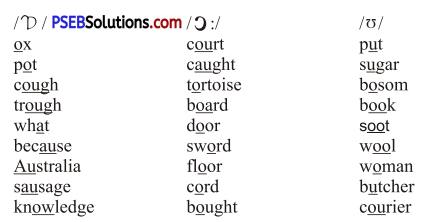
PSEB 9th Class English Main Course Book Solutions Chapter 4 Journey by Night 1

Creative Writing and Extended Reading

1. Read sorne books on the stories of brave children who received awards for bravery on the Republic Day. Discuss these with your friends.
2. Imagine that you are Sher Singh. What would you do in a similar situation?
3. Write a paragraph on : A Village without a Hospital.
4. Have you ever performed any great act of social service in your life? Describe it in a few lines.

Objective Type Questions

Answer the following in one word / phrase / sentence :

Question 1.
Where did Sher Singh live ?
Answer:
He lived in a hilly village.

Question 2.
Who is the writer of the story, ‘Journey by Night ?
Answer:
Norah Burke.

Question 3.
How old was Sher Singh ?
Answer:
He was about 12 years old.

Question 4.
What was Sher Singh’s father known as ?
Answer:
He was known as ‘Sher Singh Bahadur’.

Question 5.
What was Sher Singh’s father an expert in ?
Answer:
In hunting wild animals.

Question 6.
What seemed trophies to Sher Singh’s father?
Answer:
The wound marks on his body.

Question 7.
Who was Kunwar ?
Answer:
The younger brother of Sher Singh.

PSEB 9th Class English Main Course Book Solutions Chapter 4 Journey by Night

Question 8.
How far was the hospital where Kunwar was to be taken?
Answer:
About 80 kilometres away.

Question 9.
Who was to take Kunwar to the hospital ?
Answer:
Sher Singh, his elder brother.

Question 10.
Did Sher Singh’s efforts bear fruit ?
Answer:
Yes, his brother’s life was saved.

Complete the following :

1. Kunwar was Sher Singh’s ………..
2. Sher Singh’s father was an …………………. in hunting ……….
3. Sher Singh’s father went on a ………….. expedition.
4. Sher Singh carried Kunwar on his back to the
5. Sher Singh had to save himself from ……………… on the way.
6. Kunwar would ……………… but for the efforts made by Sher Singh.
Answer:
1. younger brother
2. expert, wild animals
3. hunting
4. hospital
5. wild beasts
6. have died.

Write True or False, against each statement :

1. Kunwar was the elder brother of Sher Singh.
2. Sher Singh was an expert Shikari.
3. Sher Singh carried his younger brother all the way to the hospital.
4. The hospital was in the nearest town.
5. The entire distance to the hospital was frequented by wild beasts.
6. In spite of his efforts, Sher Singh could not save his younger brother.
Answer:
1. False
2. False
3. True
4. False
5. True
6. False.

Choose the correct option for each of the following:

Question 1.
Sher Singh lived in ………………….
(a) a jungle
(b) a big town
(c) an ashrama
(d) a hilly village.
Answer:
(d) a hilly village.

Question 2.
Sher Singh and Kunwar were …………..
(a) cousins
(b) classmates
(c) real brothers
(d) fast, friends.
Answer:
(c) real brothers

Question 3.
Kunwar had been struck with ………………..
(a) a severe headache
(b) flu
(c) a severe pain in the stomach pain in the stomach
(d) malaria.
Answer:
(c) a severe pain in the stomach pain in the stomach

Question 4.
Sher Singh proved himself a …….
(a) brave boy
(b) responsible person
(c) loving brother
(d) all the above.
Answer:
(d) all the above.

PSEB 9th Class English Main Course Book Solutions Chapter 4 Journey by Night

Use Of Textual Words / Phrases

1. Several – There are several places of worship on the banks of the Holy Ganges.
2. Resort – Gandhiji took to fasting as a last resort.
3. Doomed – He is doomed to die if he does not give up drinking.
4. Expedition – Army men went on the Himalayan expedition.
5. Scar – Even the scar on her face did not spoil her beauty.
6. Trodden – The child got trodden under the feet of the huge animal.
7. Glazed – The school compound had a border of glazed tiles.
8. Decimated – The hurricane decimated the national property.
9. Mauled – The mountain bear mauled her face.
10. Cliff – We went on a picnic by the side of a cliff.
11. Jostle – The rowdy boys jostled in the crowd of ladies.
12. Squeal – The children in the train got afraid of the squeal of the engine.
13. Snort – We snorted with laughter on hearing his joke.
14. Plod – The old man plodded along the hilly path.
15. Delirious – The drunkard ran into a delirious state of mind.
16. Maelstrom- All the fishermen along with their boats were caught in the maelstrom.
17. Deluge – People are still talking about the Mumbai deluge.
18. Stumble – He stumbled over a stone and fell down.
19. Poach – Poaching of animals is banned in this state.

Journey by Night Summary in English

Journey by Night Introduction:

It is a story of rare courage shown by a 12-year-old boy. His name was Sher Singh. His younger brother had fallen ill. His father was not at home. His mother was not in a position to leave home. The city hospital was many miles away. So, Sher Singh carried his little brother on his back and set out for the city. He had to pass through a hilly area that was full of many dangers. A thick forest and two hilly rivers fell on the way. But Sher Singh braved all these dangers with great courage. The only thought in his mind was to reach the city hospital as soon as possible. At last, Sher Singh was able to reach the hospital with his brother. Everybody was surprised to hear the story of his great courage. The doctor at once gave first aid to Sher Singh’s brother. The doctor said that the boy was out of danger. Sher Singh was really a Sher, a lion. He had saved the life of his brother at a great risk to his own life.

Journey by Night Summary in English:

Sher Singh lived in a hilly village. He was about twelve years old. His father was known far and wide as Sher Singh Bahadur since he was a very brave and famous shikari. The father was an experienced hunter. He usually went out to help the hunting expeditions into the jungle and remained away from home for many days together. He was an expert in hunting wild animals. His body bore a number of wound-marks, which he took as the trophies of his various fights with several dangerous jungle beasts.

Sher Singh had a little brother named Kunwar. He was several years younger to Sher Singh. The two brothers lived with their parents in Laldwani village near a jungle. One day, Sher Singh Bahadur had gone with a hunting expedition. All the men of Laldwani village had also gone as beaters (men employed to drive animals towards those waiting to shoot or photograph them). In his father’s absence, the little boy, Kunwar, fell seriously ill. He had a severe pain in the stomach. His condition was getting from bad to worse.

The child did not respond to home remedies. The helpless mother said that Kunwar must be taken to hospital at Kalaghat, which was 80 kilometres away. Seeing the fear of death in Kunwar’s eyes, Sher Singh at once decided to do the job of taking his brother to the Kalaghat hospital. His mother made a sling with one of her two saris. She put it around Sher Singh’s forehead and down his back. She then put the sick Kunwar into the sling.

It was evening when Sher Singh set off on his difficult and dangerous journey to Kalaghat. Soon it was night and the moon appeared in the sky. Sher Singh continued to walk on and on. He saw the marks of a bear’s paw in the dust. It made him quicken his steps. Presently, he climbed on to a cliff above a river bed. He felt tired, and put his sick brother down. All of a sudden, he heard the squeal of elephants. Luckily, the elephants moved on and disappeared into the forest. Relieved of this fresh fear, Sher Singh got ready to restart his journey. However, his difficulties were not yet over.

Sher Singh was to cross two rivers on the way. The first river was a shallow one. There was not much water in it. He crossed it easily. But the second river was in flood. It was midnight and the flooded river was making a roaring sound as it flowed. Sher Singh hoped to cross this river by the bridge over it. But when he came closer, he found that the bamboo bridge over this river had broken and was submerged into water.

Sher Singh was disappointed but he kept up his courage. Making a rope of grass, he tied it round his brother and himself. He then entered the river. At first he found it impossible to move. But his firm determination and his courage enabled him to cross the river. He went on slowly but determinedly. He was thoroughly drenched in the ice-cold water.

PSEB 9th Class English Main Course Book Solutions Chapter 4 Journey by Night

At last, Sher Singh reached the metalled road that led to Kalaghat. He got a lift first in a bullock cart, then in a truck. Soon the brave boy was dropped at the hospital of Kalaghat. He put his sick brother under the treatment of the doctor there. After some time, the doctor came out in the verandah. He told Sher Singh that his brother was out of danger. He said that Sher Singh was a brave boy. He took him in so that he could see his sick brother.

Journey by Night Summary in Hindi

Journey by Night Introduction:

यह कहानी एक 12-वर्षीय शेर सिंह नामक लड़के के अद्वितीय साहस की कहानी है। उसका छोटा भाई अति बीमार पड़ गया और उसका पिता घर पर नहीं था। उसकी मां बच्चे को उठा कर अनेक मील दूर शहर के अस्पताल में नहीं ले जा सकती थी। इसलिए शेर सिंह अपने छोटे भाई को अपनी पीठ पर उठा कर शहर के लिए चल दिया। दुर्गम पहाड़ी रास्ते में उसे अनेक खतरों का सामना करना पड़ा। रास्ते में एक जंगल और दो नदियां भी पड़ती थीं। नदियों में बाढ़ आई हुई थी और उन्हें बिना किसी नाव के पार करना असम्भव बात थी।

किन्तु शेर सिंह ने किसी भी खतरे की परवाह न की। उसके मन में एक ही लक्ष्य था कि वह अपने भाई को जल्दी से जल्दी शहर के अस्पताल में पहुंचा सके। जब घोर कष्ट झेलने के बाद शेर सिंह अपने भाई सहित अस्पताल पहुंचा तो उसके साहस को देख कर सभी लोग चकित रह गए। डॉक्टर ने प्राथमिक उपचार के बाद शेर सिंह से कहा कि उसका भाई अब खतरे से बाहर था। शेर सिंह वास्तव में ही एक शेर (अथवा सिंह) की भांति बहादुर था। उसने अपने भाई के जीवन को बचा लिया। यदि वह साहस न दिखलाता तो उसके भाई की अवश्य ही मृत्यु हो जानी थी।

Journey by Night Summary in Hindi:

कहानी का विस्तृत सार बारह-वर्षीय शेर सिंह एक पहाड़ी गांव में रहता था। उसका पिता शेर सिंह बहादुर के नाम से दूर-दूर तक प्रसिद्ध था। वह एक तजुरबेकार साहसी शिकारी था। अनेक शिकारी टोलियां उसकी सहायता लिया करती थीं। इसलिए शेर सिंह बहादुर कई-कई दिनों तक घर से बाहर रहा करता था। उसके शरीर पर अनेक घावों के निशान थे जो एक प्रकार से जंगली जानवरों के साथ उसकी लड़ाई के पदक थे।

शेर सिंह का एक छोटा भाई था जिसका नाम कंवर था। वह शेर सिंह से कई वर्ष छोटा था। दोनों भाई अपने माता-पिता के साथ एक जंगल के समीप लालदवानी नामक गांव में रहते थे। एक दिन शेर सिंह बहादुर एक शिकारी टोली के साथ गया हुआ था। लालदवानी गांव के अन्य पुरुष भी इस टोली की सहायता के लिए उनके साथ गए हुए थे। पिता की अनुपस्थिति में कंवर सख्त बीमार हो गया। उसके पेट में बहुत ज़ोर का दर्द था। घर में कई देसी ढंगों का उस पर प्रयोग किया गया किन्तु उसकी हालत बिगड़ती ही गई।

बेबस होकर मां ने शेर सिंह से कहा कि वह कंवर को कालाघाट के अस्पताल में ले जाए। कालाघाट का यह अस्पताल लालदवानी से अस्सी किलोमीटर की दूरी पर था। शेर सिंह ने जब पीड़ा से भरी हुई अपने भाई की आंखों को देखा तो उसे ऐसा लगा मानो कंवर मर रहा हो। शेर सिंह ने तुरन्त निश्चय कर लिया कि वह कंवर को ले कर कालाघाट के अस्पताल में अवश्य जायेगा। उसकी मां ने अपनी दो साड़ियों में से एक साड़ी ली और इससे एक झूला-सा बना दिया जिसे शेर सिंह ने अपने माथे के साथ टिका कर अपनी पीठ की तरफ लटका लिया। फिर उसकी मां ने इस लटकते हुए कपड़े में बीमार कंवर को डाल दिया।

जब शेर सिंह ने कालाघाट के लिए अपनी कठिन यात्रा आरम्भ की तो सांझ हो चुकी थी। शीघ्र ही रात हो गई और चांद निकल आया। शेर सिंह चलता गया। उसने धूल में रीछ के पैरों के निशान देखे। शेर सिंह ने अपनी गति कुछ तेज कर दी क्योंकि वह जानता था कि वह रीछ कहीं समीप ही इधर-उधर होगा। शीघ्र ही, वह नदी के तल के ऊपर की ओर स्थित चट्टान पर पहुंच गया।

चट्टान की चढ़ाई में वह बहुत थक गया। इसलिए थोड़ा आराम करने के लिए वह नीचे बैठ गया। उसने अपने बीमार भाई को नीचे ज़मीन पर लिटा दिया। अचानक उसे हाथियों की आवाजें सुनाई दीं। वे एक-दूसरे को धक्के लगाते हुए और चिंघाड़ते हुए चले जा रहे थे। भाग्यवश, वे दूसरी चट्टान पर थे और शेर सिंह से कुछ दूरी पर थे। वे उसी चट्टान पर चलते गए और शीघ्र ही नज़र से ओझल हो गए। जब हाथियों का भय समाप्त हो गया तो शेर सिंह फिर से चलने के लिए तैयार हो गया। और अगले ही पल वह अपनी पीठ पर कंवर को उठाए हुए चलने लगा।

PSEB 9th Class English Main Course Book Solutions Chapter 4 Journey by Night

शेर सिंह ने अभी दो नदियां पार करनी थीं। पहली नदी छोटी थी जिसमें अधिक पानी नहीं था। यह उसने आसानी से पार कर ली। किन्तु दूसरी नदी में बाढ़ आई हुई थी। शेर सिंह को आशा थी कि वह इस नदी को पुल द्वारा पार कर लेगा किन्तु उसकी आशा निराशा में बदल गई जब उसने देखा कि नदी पर बना हुआ बांस का वह पुल पानी में डूबा हुआ था। शेर सिंह बहुत निराश हुआ किन्तु उसने साहस न छोड़ा। उसने घास की एक रस्सी बनाई और यह अपने भाई के चारों और इस तरह बांध ली कि वह उसकी पीठ से न गिर सके। फिर वह पानी में घुस गया। आरम्भ में पानी के तेज़ वेग के कारण उसे अपने पांव उखड़ते हुए प्रतीत होते थे, किन्तु धीरे-धीरे अद्वितीय साहस के द्वारा उसने नदी को पार कर लिया। नदी के बर्फीले पानी में वह पूरी तरह भीग गया था और सर्दी से कांपने लगा था।

धीरे-धीरे चलता हआ शेर सिंह कालाघाट को जाने वाली सडक तक पहुंच गया। पहले एक बैलगाडी वाले ने तथा फिर एक ट्रक चालक ने उसे अपने वाहन में बिठा लिया। शीघ्र ही इस वीर बालक को उसके भाई सहित कालाघाट अस्पताल में पहुंचा दिया गया। शेर सिंह के भाई का डॉक्टर ने तुरन्त इलाज शुरू कर दिया। कुछ समय के बाद डॉक्टर ने बाहर आकर ‘शेर सिंह-बहादुर’ पुकारते हुए आवाज़ लगाई। उसने शेर सिंह को बतलाया कि अब उसका भाई खतरे से बाहर था। फिर वह शेर सिंह को अन्दर ले गया ताकि वह वहां अपने छोटे भाई को देख सके।

Journey by Night Translation in Hindi

(Page 39) Sher Singh’s little brother …….. you find him.

कठिन शब्दार्थ-1. cheerful-प्रसन्नचित्त ; 2. carried off-(मृत्यु द्वारा) ले जाया गया ; 3. wring outनिचोड़ना ; 4. rags-~-चीथड़े ; 5. resort-आश्रय, ठिकाना ; 6. doomed—दुर्भाग्य को प्राप्त।

Text

Sher Singh’s little brother, Kunwar, lay in the hut with a pain in his stomach that was getting worse. Sher Singh himself was only 12 years old, small and cheerful, a child of the jungle, and his brother was several years younger. There had been other children of course, but they were dead, carried off by cholera and influenza. “I will wring out rags in boiling water and lay them on his stomach,” said mother.

She did not weep. She had lived through everything. The steaming clothes did nothing. After a while, Sher Singh’s mother said, “He must be carried to the hospital at Kalaghat.” Then Sher Singh knew that his brother was dying, for all jungle people know that the hospital is the last resort of the doomed. “I will run for my father,” he cried. “It may be days before you find him.”

अनुवाद

शेर सिंह का छोटा भाई कंवर झोंपड़ी में अपने पेट में पीड़ा की वजह से पड़ा हुआ था जो अधिकाधिक भयंकर होती जा रही थी। शेर सिंह स्वयं केवल बारह वर्ष का था, छोटे से शरीर वाला प्रसन्नचित्त, जंगल में रहने वाला बच्चा, और उसका भाई उससे कई वर्ष छोटा था। वहां निस्सन्देह अन्य बच्चे भी हुए थे, किन्तु वे मर चुके थे, हैजा और इन्फ्लु एंजा ने उनकी जाने ले ली थीं।। “मैं उबलते हुए पानी में चीथड़ों को निचोड़ कर निकालूंगी और उसके पेट के ऊपर रखूगी,” मां ने कहा वह रोई नहीं थी। वह हर चीज़ भोग चुकी थी।

भाप निकलते हुए कपड़ों का कोई असर न हुआ। कुछ देर के बाद शेर सिंह की मां ने कहा, “उसे कालाघाट के अस्पताल ले जाना होगा।” तब शेर सिंह समझ गया कि उसका भाई मर रहा था, क्योंकि जंगल में रहने वाले सभी लोग जानते है कि दुर्भाग्यग्रस्त लोगों का अन्तिम सहारा अस्पताल होता “मैं भाग कर बापू को बुला लाता हूँ,” उसने ऊंचे स्वर में कहा। “इस से पहले कि तुम उसे ढूंढ पाओ, कई दिन लग सकते हैं।”

PSEB 9th Class English Main Course Book Solutions Chapter 4 Journey by Night

(Page 39-41) sher singh’s father ………….. eyes shut, recovering.

कठिन शब्दार्थ-1. cultivating-खेती करते हुए; 2. expedition-किसी विशेष उद्देश्य के लिए साहसपूर्ण यात्रा; 3. game-शिकार किए जाने वाले जानवर; 4. skull-खोपड़ी; 5. scar-घाव का निशान; 6. comradeसाथी; 7. beater-ढोल आदि पीट-पीट कर जंगली जानवरों को उनके छिपने के स्थान से बाहर भगाने वाला व्यक्ति; 8. glazed-शीशे जैसे चमकते हुए आवरण वाला; 9. starve-भूखे मरना; 10. sling-गलपट्टी; 11. immediately-तुरन्त; 12. whispered-धीमी आवाज़ में बोली; 13. despair-निराशा; 14. get there-वहां पहुंचना; 15. set off-रवाना हुआ; 16. track-तंग रास्ता; 17. poached-चोरी से शिकार करते; 18. decimated-दसवां भाग नष्ट करना; 19. beasts of prey-शिकार किए जाने वाले जानवर; 20. domestic-घरेलू: 21. blazed-चमक रहा था ; 22. shaggy-खुरदरा; 23. glance round-इधरउधर नज़र घुमाना; 24. uneasily-बेचैनी से; 25. mauled-बुरी तरह से घायल; 26. cliff-खड़ी ढलान वाली चट्टान; 27. thrilled-फड़कने लगीं।

Text

Sher Singh’s father was known far and wide as Sher Singh Bahadur-the Brave-a famous hunter, with the title ‘Bahadur’ added to his name like a medal because of all he had done. He lived his life here in Laldwani village, grazing his animals, cultivating his bit of land. But whenever an expedition entered the jungle in search of big game, they sent for Bahadur, the Brave. All along his skull and back and shoulder went a scar where claws had opened his flesh to the bone when he was pulling a comrade away from a tiger.

Now he was away in the jungle with an expedition. All the men of Laldwani village too were away, as beaters. In this mud and grass hut, upon the floor of trodden earth, Kunwar lay crying sometimes,but mostly glazed and silent. Sher Singh saw death in his young brother’s eyes.

“There are no men in the village,” he said. “I will take him.” His mother must stay behind to mind the cattle and work on the land without which they would all starve; and he and she both understood this without saying so. She took one of her two saris and, making a sling for Sher Singh, lifted up Kunwar, and put him into it. Sher Singh could feel immediately the heat of the boy’s body burning through the cotton cloth on his back. He felt the weight, too, and wondered how he was going to manage.

“He is too big for you,” his mother whispered in despair. “You will never get there.Sher Singh said nothing. He set off into the jungle in the orange glow of evening. Kalaghat was 80 kilometres away, but Sher Singh hoped that if he could get through the jungle and cross the two rivers in between, he might get a lift in a bullock cart or perhaps even a broken-down truck, for the last part of his journey.

He was alone on the track that wound into the forest, into night. Not quite alone, though. Around him lay the forest in which the struggle of life continued as it had done since the beginning of the world. The deer were now so poached and decimated that the beasts of prey had to kill domestic animals for food. Sometimes even men.

Night fell. The sky blazed with stars. Presently, the moon rose. The sight of bear tracks in the dust – the square front paw and long back one, with the shaggy claws – made him glance round uneasily. He had once seen a man who had been mauled by a bear, all his face torn away. He quickened his steps. Soon, on a cliff above a river-bed, Sher Singh knew he could go no further without rest. He set Kunwar down gently. Suddenly all Sher Singh’s muscles, shrinking back to their natural positions, thrilled with piercing pain. He layagainst a tree with his eyes shut, recovering.

अनुवाद

शेर सिंह का पिता दूर-दूर तक शेर सिंह बहादुर के नाम से प्रसिद्ध था – बहादुर अर्थात् वीर – एक मशहूर शिकारी, जिसके नाम के साथ बहादुर का खिताब एक तमगे की भांति जुड़ गया था, उन सब कामों की वजह से जो वह कर चुका था। उसने अपना जीवन यहां लालदवानी गांव में बिताया था, अपने जानवरों को चराते हुए, अपनी थोड़ी-सी ज़मीन पर खेती करते हुए। किन्तु जब कभी कोई दल जंगल में किसी बड़े शिकार की खोज में प्रवेश करता, तो वे बहादुर अर्थात् उस वीर को बुलवा भेजते।

उसकी पूरी खोपड़ी तथा पीठ और कन्धे के ऊपर घाव का एक निशान बना हुआ था जहां पंजों ने उसकी चमड़ी को हड्डियों तक फाड़ दिया था जब वह एक साथी को एक बाघ से बचा कर खींचने की कोशिश कर रहा था। अब वह एक दल के साथ जंगल में गया हुआ था। लालदवानी गांव के सभी पुरुष भी ढोल पीटने वालों के रूप में गए हुए थे। गीली मिट्टी और घास की बनी इस झोंपड़ी में, पैरों से कुचली मिट्टी के फर्श के ऊपर कंवर लेटा हुआ था, कभी-कभी चिल्ला उठता, किन्तु अधिकतर समय सफेद पड़ा हुआ तथा शान्त।

शेर सिंह को अपने छोटे भाई की ‘आंखों में मौत दिखलाई पड़ गई। “गांव में कोई आदमी नहीं है,” उसने कहा। “मैं उसे ले जाऊंगा।” उसकी मां को पशुओं की देखभाल करने के लिए पीछे रहना पड़ना था और ज़मीन का काम करना था, अन्यथा जिसके बिना वे सभी भूखों मर जाते; तथा वह और उसकी मां दोनों इस बात को बिना कहे समझते थे। उसने अपनी दो साड़ियों में से एक ली, शेर सिंह के लिए एक गलपट्टी बना दी, कंवर को उठाया, और उसे इसमें डाल दिया। शेर सिंह तुरन्त लड़के के शरीर की गर्मी को महसूस कर सकता था, जो सूती कपड़े में से उसकी गर्दन के ऊपर तपता हुआ लग रहा था। उसे बोझ भी महसूस हुआ और हैरानी में सोचने लगा कि इसको कैसे संभाल पायेगा। “वह तुम्हारे लिए ज्यादा ही बड़ा है,”

उसकी मां निराशा में फुसफुसा दी। “तुम वहां कभी पहुंच नहीं पाओगे।” शेर सिंह ने कुछ न कहा। वह सांझ की संतरई चमक में जंगल के अन्दर को चल दिया। कालाघाट वहां से 80 किलोमीटर दूर था, किन्तु शेर सिंह को आशा थी कि यदि वह जंगल में से निकल गया और बीच की दो नदियों को पार कर गया, तो हो सकता है उसे अपनी यात्रा के अन्तिम भाग के लिए किसी बैलगाड़ी में सवारी मिल जाए, अथवा रास्ते में बिगड़ा हुआ कोई ट्रक मिल जाए। वह उस रास्ते पर अकेला था जो घूमता हुआ जंगल के अन्दर को जा रहा था, और रात के जैसा अन्धेरा होता जा रहा था। तो भी वह बिल्कुल अकेला नहीं था। उसके गिर्द वह जंगल था जिसमें जीवन का संघर्ष वैसे ही जारी था जैसे यह संसार के आरम्भ से चलता आ रहा था।

मृगों का अब चोरी-चोरी इतना शिकार होने लगा था और उनकी गिनती इतनी कम हो गई थी कि शिकारी जानवरों को अब अपने भोजन के लिए घरेलू जानवरों को मारना पड़ रहा था। कई बार आदमियों को भी। रात हो गई। आकाश तारों से चमक उठा। थोड़े ही समय में चांद चढ़ आया। धूल में किसी रीछ के पैरों के निशान – आगे वाले वर्गाकार पंजे और पीछे वाले लम्बे-लम्बे, खुरदरे पंजों सहित इन्हें देखकर वह बेचैनी सहित चारों तरफ नज़र दौड़ाने लगा।

एक बार उसने एक आदमी देखा था जिसे एक रीछ ने बुरी तरहघायल कर दिया था, उसका पूरा चेहरा चिरा पड़ा था। शेर सिंह ने अपने कदम तेज़ कर लिए। शीघ्र ही एक नदी-तल के ऊपर की तरफ एक खड़ी ढलान वाली चट्टान पर पहुंचने के बाद शेर सिंह जान गया कि वह आराम किए बिना और आगे नहीं जा सकता था। उसने कंवर को धीरे से नीचे डाल दिया। अचानक शेर सिंह की सभी मांसपेशियां सिकुड़ कर अपनी पहले वाली स्वाभाविक स्थिति में आ गईं और तीखी पीडाकरती हुईं फड़कने लगीं। वह एक पेड़ से टेक लगाकर अपनी आंखें बन्द करके पड़ा रहा, अपनी शक्ति फिर से प्राप्त करता हुआ।

(Page 41) It was then ………….. in his hands.

कठिन शब्दार्थ-1. jostle-धक्के लगाना; 2. squeal-तीखी चीख; 3. trunk-हाथी की सूंड; 4. chilled-अति ठण्डा पड़ गया; 5. fright-भय; 6. snorted—नाक से कर्कश शब्द निकाला; 7. trumpetedचिंघाड़ा; 8. scrambled—संघर्ष किया; 9. slime—कीचड़; 10. thanks goodness-ईश्वर का शुक्र है; 11. impermanent-अस्थाई; 12. swashed up–कोलाहलपूर्ण गति की; 13. twinkled-टिमटिमाया; 14. glitter-चमक; 15. plodded—भारी कदमों के साथ कठिनाईपूर्वक चला; 16. panted—हांफने लगा; 17. fierce भयानक; 18, crest-चोटी; 19. submerged-पानी में डूबा हुआ; 20. churning-ज़ोर-ज़ोर से घूमता हुआ; 21. crashed-ज़ोर से टकराते हुए।

Text

It was then he heard the jostle and squeal of elephants. Below him on each side of the shallow river-bed, the elephants travelled. He could see the cows and the babies, and one great old tusker. He was playing his trunk to and fro to learn whatever the breeze could tell him; and suddenly he hesitated. The trunk came round towards the boys.

Sher Singh chilled with fright. With Kunwar to carry, he could neither climb nor run. Prayer after prayer fled up from his frightened spirit. The tusker snorted, trumpeted, shook his head. Suddenly he hurried on angrily up the river-bed, and all the herd with him. They disappeared. Sher Singh breathed another prayer, of thanks this time, and made ready to move with Kunwar on his back once again.

He scrambled down into the river-bed. Though the water was only waist-deep, he had to go slowly because of slime on the stones. Thanks goodness there was a bridge at the second river, he thought. That bridge was an impermanent thing made of bamboo poles, stones and thick grass. But it was at least a bridge As Sher Singh swashed up on to the shore, water twinkled in his footprints before sinking into the sand. Coming up out of the river were another set of prints – a tiger’s, and there was glitter in them too. Even as he looked, they dried. He plodded steadily on, and his body panted and sobbed.

Towards midnight, he heard the second river from far away, a steady roar of flood. When he came out on the shore, he saw it. A big head of snow must have melted yesterday, because from bank to bank, the river foamed. He looked for the bridge. It was not there. Only a fierce crest of water showed where it lay, submerged .

He could hear the river grinding its teeth. Then a tree, churning over and over, crashed against the drowned bridge, which heeled and broke, throwing up its bamboo ribs like a fan. Sher Singh set Kunwar down and brought him water from the river in his hands.

अनुवाद

तभी उसे हाथियों की चीखों और एक-दूसरे को धक्के लगाने की आवाज़ सुनाई दी। उसके नीचे की तरफ कम गहराई वाले नदी-तल के दोनों तरफ हाथी चलते हुए जा रहे थे। वह हथिनियों, उनके बच्चों और एक बहुत बड़े बूढ़े हाथी को देख सकता था। वह अपनी सूंड को इधर-उधर घुमा रहा था, जानने के लिए, जो भी मन्द पवन उसे बता सकती थी, और अचानक वह रुक गया। उसकी सूंड घूम कर लड़कों की तरफ आई। शेर सिंह भय से अति ठण्डा पड़ गया। जबकि उसके पास उठाने को कंवर था, वह न तो ऊपर को चढ़ सकता था और न ही भाग सकता था। उसकी भयभीत आत्मा

में से एक-के-बाद एक करके प्रार्थनाएं निकलने लगीं। हाथी ने आवाज़ करते हुए नाक में से फुफकारा लगाया, चिंघाड़ लगाई, और अपना सिर झटकाया। अचानक वह नदी-तल के ऊपर की तरफ को क्रोधपूर्वक भाग लिया, तथा उसके साथ-साथ पूरा झुंड भाग लिया। वे ओझल हो गए। शेर सिंह ने अपने श्वासों में एक अन्य प्रार्थना पढ़ी, इस बार धन्यवाद के रूप में, और अपनी पीठ पर कंवर

को फिर से उठाए हुए तैयार हो गया। वह ज़ोर लगाता हुआ नीचे की तरफ नदी-तल के अन्दर की तरफ़ चल दिया। यद्यपि पानी केवल कमर तक ही गहरा था, उसे |,धीरे-धीरे जाना पड़ा, क्योंकि पत्थरों के ऊपर कीचड़ जमा हुआ था। ईश्वर का शुक्र है कि वहां दूसरी नदी के ऊपर एक पुल था, उसने ऐसा अपने मन में सोचा। वह पुल एक अस्थाई चीज़ था जो बांस के खम्भों, पत्थरों और घनी घास का बना हुआ था। किन्तु कम से कम यह एक पुल तो था। जब शेर सिंह कठिनाईपूर्वक तट पर चढ़ कर गया, तो पानी उसके पांवों से बने निशानों में टिमटिमा रहा था, रेत में सोखे जाने से पूर्व। नदी से बाहर आने के बाद पैरों के निशानों का वहां एक अन्य जोड़ा था एक बाघ के पांव, और वहां उनमें भी चमक थी। जब वह अभी उन्हें देख ही रहा था कि वे सूख गए। वह भारी कदमों के साथ धीरे-धीरे चलता गया, तथा उसका शरीर हांफ रहा था और सिसक रहा था।

को फिर से उठाए हुए तैयार हो गया। वह ज़ोर लगाता हुआ नीचे की तरफ नदी-तल के अन्दर की तरफ़ चल दिया। यद्यपि पानी केवल कमर तक ही गहरा था, उसे ,धीरे-धीरे जाना पड़ा, क्योंकि पत्थरों के ऊपर कीचड़ जमा हुआ था। ईश्वर का शुक्र है कि वहां दूसरी नदी के ऊपर एक पुल था, उसने ऐसा अपने मन में सोचा। वह पुल एक अस्थाई चीज़ था जो बांस के खम्भों, पत्थरों और घनी घास का बना हुआ था।

किन्तु कम से कम यह एक पुल तो था। जब शेर सिंह कठिनाईपूर्वक तट पर चढ़ कर गया, तो पानी उसके पांवों से बने निशानों में टिमटिमा रहा था, रेत में सोखे जाने से पूर्व। नदी से बाहर आने के बाद पैरों के निशानों का वहां एक अन्य जोड़ा था एक बाघ के पांव, और वहां उनमें भी चमक थी। जब वह अभी उन्हें देख ही रहा था कि वे सूख गए। वह भारी कदमों के साथ धीरे-धीरे चलता गया, तथा उसका शरीर हांफ रहा था और सिसक रहा था।

आधी रात के लगभग उसे दूसरी नदी की आवाज़ दूर से ही सुनाई दी, बाढ़ के पानी की निरन्तर आती हुई आवाज़। जब वह जंगल से बाहर इसके किनारे पर पहुंचा तो उसे यह दिखाई पड़ गई। बर्फ का एक विशाल स्रोत अवश्य ही कल के दिन पिघल आया होगा, क्योंकि एक किनारे से दूसरे किनारे तक नदी झाग से भरी हुई थी। उसने पुल को ढूंढने की कोशिश की।

यह वहां नहीं था। केवल पानी की एक भयानक चोटी से पता चल रहा था कि यह कहां पर था, पानी में डूबा हुआ। अपने दान्त पीसती हुई नदी की आवाज़ को वह सुन सकता था। फिर एक पेड़ जो ज़ोर-ज़ोर से घूमता हुआ आ रहा था, डूबे हुए पुल के साथ आकर टकराया, जो एक तरफ को झुक गया और टूट गया, इसके बांस की बनी कमानियां एक पंखे की भांति ऊपर को उठ आईं। शेर सिंह ने कंवर को नीचे डाला और उसके लिए नदी में से पानी अपने हाथ में लेकर आया।

(Page 42-43) “My brother ……… Come and see.”

कठिन शब्दार्थ-1. delirious-बेसुध, तेज़ बुखार में बड़बड़ाता हुआ; 2. whispered—धीमी आवाज़ में बोला; 3. plaiting-गूंथना; 4. flattened-चपटा किया; 5. maelstrom-भंवर; 6. split-टूटा हुआ; 7. deluge-बड़ी बाढ़; 8. deafened—बहरा कर दिया; 9. banged—चोट लगाई; 10. bruised—खरोंच आ गई; 11. spray-बौछार; 12. gasping-हांफते हुए; 13. stumbled—ठोकर खा गया; 14. tremblingकांपते हुए; 15. crawling-रेंगते हुए; 16. heralding-पूर्व-सूचना देते हुए; 17. bullock cart-बैलगाड़ी।

Text

“My brother -” the delirious little boy whispered, and drank.Sher Singh gathered grass and, plaiting it into a rope, tied it round his brother and himself so they would keep together. Then he entered the water just above the bridge. The river seized them and flattened them against the wreck. Unable to move at first, he edged forward into the maelstrom, feeling for the split ends of bamboo.

The deluge deafened him, timber banged and bruised him. It was so cold he could hardly keep his hold. He could not get his breath in the spray, and he did not know if his brother lived or died. But he kept the child’s head above water, and moved slowly. Gasping in mortal struggle, he was deaf, blinded, frozen, drowned.

Gradually, the river seemed to lose power.They were through. After that, Sher Singh did not know what happened. He was wet and ice-cold but he stumbled on, his knees bent and trembling. They gave way. He was crawling. Then there was a road and the barking of the dogs, heralding a village.

PSEB 9th Class English Main Course Book Solutions Chapter 4 Journey by Night

Suddenly, somehow — people.After that, the next he knew they were in a bullock cart, then a truck.

“Where have you come from, boy?” “Laldwani.”“You carried him alone ? Across the river in flood ?”
They were at the hospital.
Sher Singh felt shy of the big building. He did not go in. Much later, the doctor came out on the verandah.
“Sher Singh Bahadur, are you there ?” he called out. . …
“My father is not here,” replied the boy, going up to the verandah. “But I am Sher Singh.”
“You are the boy who brought the child Kunwar in from Laldwani ?”
“Yes.”
Then a smile broke all over the doctor’s great gentle face.
“Then you are Sher Singh Bahadur – the Brave !” he said. “Your brother will live. Come and see.”

अनुवाद

‘मेरे भाई-‘ तेज़ बुखार में बड़बड़ाते हुए नन्हें लड़के ने कहा, और इसे पी गया।शेर सिंह ने घास इकट्ठी की और गूंथ कर एक रस्से के रूप में बनाते हुए इसे अपने भाई के गिर्द और स्वयंअपने गिर्द इस तरह बांध लिया जिससे वे साथ-साथ रह सकें। फिर वह पुल के बिल्कुल ऊपर वाली तरफ से पानी में प्रवेश कर गया। नदी ने उन्हें पकड़ कर टूटे हुए पुल के साथ दे मारा। पहले तो वह हिलने में असमर्थ हो गया, किन्तु फिर वह धीरे-धीरे आगे भंवर के अन्दर की तरफ बढ़ने लगा, बांस के टूटे हुए सिरों को महसूस करने की कोशिश करता हुआ। प्रलयकारी बाढ के शोर से वह बहरा हो रहा था, लकड़ियां उसके साथ टकरा रही थीं और उसे खरोंच रही थीं।

बाढ़ का पानी इतना ठण्डा था कि वह अपनी पकड़ मुश्किल से ही बना पा रहा था। पानी की बौछार में वह मुश्किल से ही सांस ले पा रहा था, तथा उसे इस बात का कोई पता नहीं था कि उसका भाई जीवित था या मर गया था। किन्तु उसने बच्चे का सिर पानी के ऊपर किए रखा, और धीरे-धीरे चलता गया। इस घातक संघर्ष में हांफता हुआ, ‘वह बहरा हो रहा था, अन्धा हो रहा था, बर्फ की भांति जम रहा था और डूब रहा था। धीरे-धीरे नदी की शक्ति कम होती हुई प्रतीत हुई। वे इसे पार कर चुके थे। इसके बाद शेर सिंह को पता न चला कि क्या हुआ था।

वह गीला हुआ पड़ा था और बर्फ की तरह ठण्डा किन्तु वह लड़खड़ाता हुआ चलता गया, उसके घुटने झुकने लगे थे और कांप रहे थे। वे जवाब दे गए। वह घुटनों के बल रेंगने लगा। फिर वहां एक सड़क आ गई, और कुत्तों का भौंकना सुनाई दिया, यह सूचित करते हुए कि वहां कोई गांव था। अचानक, किसी तरह-आदमी दिखाई दिए। इसके बाद, अगली बात जो वह जान पाया यह थी कि वे एक बैलगाड़ी में सवार थे, और फिर एक ट्रक में।

PSEB 9th Class English Main Course Book Solutions Chapter 4 Journey by Night

“अरे लड़के, तुम कहां से आए हो ?” “लालदवानी से।” “तुम उसे अकेले ही उठा कर लाए हो ? उस बाढ़ वाली नदी के पार से ?” वे अस्पताल में पहुंच चुके थे। शेर सिंह उस बड़ी इमारत को देखकर झिझक गया। वह अन्दर न गया। इसके बहुत देर बाद डाक्टर बाहर बरामदे में आया। “शेर सिंह बहादुर, क्या तुम वहां हो ?” उसने पुकारते हुए कहा। “मेरा बापू यहां नहीं है,” लड़के ने उत्तर दिया,ऊपर बरामदे तक जाते हुए। “किन्तु मैं शेर सिंह यहां “क्या तुम वही लड़के हो जो बच्चे कंवर को लालदवानी से यहां लेकर आए हो ?” “जी।” फिर डाक्टर के विशाल कोमल चेहरे पर एक मुस्कान खिल आई। “तब तुम ही शेर सिंह बहादुर हो – वीर शेर कहा। “तुम्हारा भाई खतरे से बाहर है। आओ और देख लो।”

English Main Course Book Class 9 Solutions PSEB Prose

Marco Polo Question Answer Class 8 English Solutions Chapter 8 PSEB Solutions

Punjab State Board PSEB 8th Class English Book Solutions Chapter 8 Marco Polo Textbook Exercise Questions and Answers.

Class 8th English Solutions Chapter 8 Marco Polo Question Answers

Marco Polo Class 8 Questions and Answers

Activity 1.

Look up the following words in a dictionary. You should seek the following information about the words and put them in your WORDS notebook.

1. Meaning of the word as used in the lesson (adjective/noun/verb. etc.)
2. Pronunciation (The teacher may refer to the dictionary or a mobile phone for correct pronunciation.)
3. Spellings.

merchant adventurous explorer caravan fascinated
grandness luxury spy translated inspired

PSEB 8th Class English Solutions Chapter 8 Marco Polo

Vocabulary Expansion

Activity 2.

Make sentences of the idioms you have studied. (Teachers must help students make sentences.)

English idioms, proverbs and expressions are an important part of everyday English. Idioms are a group of words established by usage and have a different meaning than is apparent from the words, e.g. over the moon, see the light. They come up all the time in both written and spoken English. Let us look at some idioms and their meanings.

S.No Idiom Meaning
1. beat about the bush avoiding the main topic, not speaking directly about the problem
2. every cloud has a silver lining be positive, even difficult times will lead to better days
3. actions speak louder than words people’s intentions can be judged better by what they do than what they say
4. add insult to injury to further add to a loss with mockery or indignity; to worsen an unfavourable situation
5. the ball is in your court it is up to you to take the next decision or step
6. blessing in disguise something good that isn’t recognized at first
7. cry over spilt milk when you complain about a loss from the past
8. kill two birds with one stone to achieve two things with one action
9. once in a blue moon happens very rare
10. turn over a new leaf to change one’s behaviour usually in a positive way

PSEB 8th Class English Solutions Chapter 8 Marco Polo

Sentences :

1. Don’t beat about the bush; come to the point.
2. Don’t be upset. Every cloud has a silver lining in it.
3. We must show our talent in actions. Actions speak louder than words.
4. Don’t hurt his feelings more by adding insult to his injury.
5. Now it is you to save the situation. The ball is in your court.
English education proved blessing in disguise for the Indians:
7. It is foolish to cry over spilt milk. You yourself wasted the money.
8. He killed two birds with one stone by selling his old car at high price.
9. Such achievements are won once in a blue moon.
10. His sudden success turned a new leaf in his life.

Learning to Read and Comprehend

Activity 3.

Read the lesson and answer the following questions.

Question 1.
Who was Marco Polo ?
मार्को पोलो कौन था ?
Answer:
Marco Polo was a merchant and an adventurer of Italy.

Question 2.
When and where was Marco Polo born?
मार्को पोलो का जन्म कब और कहां हुआ ?
Answer:
Marco Polo was born in 1524 in Venice.

Question 3.
Why did Marco Polo visit so many cities?
मार्को पोलो ने इतने सारे शहरों की यात्रा क्यों की ?
Answer:
Marco visited so many cities because he wanted to learn about people, their food habits and their culture there.

Question 4.
Who accompanied Marco Polo during his visits ?
मार्को पोलो की यात्राओं में कौन उसके साथ घुमने गया ?
Answer:
His father Niccolo and his uncle Maffeo accompanied Marco Polo during his visits.

Question 5.
Which features of the Chinese cities impressed Marco Polo ?
मार्को पोलो को चीन की किन विशेषताओं ने प्रभावित किया ?
Answer:
The grandness and greatness of the Chinese cities impressed him.

PSEB 8th Class English Solutions Chapter 8 Marco Polo

Question 6.
How did he serve the Chinese Emperor ?
उसने चीन के शासक की सेवा किस प्रकार की ?
Answer:
He served the Chinese Emperor as a messenger and as a spy.

Question 7.
After how many years did Marco Pole return to Venice ?
कितने वर्षों के बाद मार्को पोलो वेनिस वापिस लौटा ?
Answer:
Marco Pole returned Venice after 24 years.

Question 8.
What was the effect of the war between Venice and Genoa upon Marco Polo ?
वेनिस और जेनोआ के युद्ध का मार्को पोलो पर क्या प्रभाव पड़ा ?
Answer:
Marco Polo was captured and put behind the bars in Genoa prison.

Question 9.
Name the book that contains detailed stories about Marco’s journeys.
मार्को पोलो की यात्राओं के विवरण संबंधी पुस्तक का नाम बताओ।
Answer:
The name of the book is ‘The Travels of Marco Polo.’

Question 10.
Who carried the book, ‘The Travels of Marco Polo’ along with him on his travels ? Why?
‘ट्रैवलज़ ऑफ मार्को पोलो’ नामक पुस्तक को कौन अपनी यात्रा पर साथ ले गया और क्यों ?
Answer:
Christopher Columbus carried this book with him because he was greatly inspired by the book.

Activity 4

Read the story and fill in the blanks.
(a) Marco Polo set out on his first voyage at the age of …….
(b) He visited the holy city of …………….
(c) He was released from the prison in …………..
(d) He was married to ……
(e) Marco Polo passed away on ………….. at the age of …………….
Answer:
(a) 17
(b) Jerusalem
(c) 1299
(d) Donata Badoer,
(e) 8 January, 70.

PSEB 8th Class English Solutions Chapter 8 Marco Polo

Activity 5

Imagine that you are a traveller. Write the experiences of your visit to any place in five sentences.
Answer:
Visit to a Jaipur It was Sunday. I with my friend visited Jaipur. We all arrived at Jaipur around 11 a.m. We went straight to a hotel Amer on M.I. Road. After a light breakfast we went to Amber fort. We had a ride on the elephant. It was fantastic! Then we saw the Jantar Mantar. It was brilliant. Around 1 p.m. we came out and went to the hotel. Had our lunch. In the evening we all went to Hawa Mahal and Ram Bagh Place. We meant to Chowkhi Dhani and had an experience of Rajasthan over the years. In this chapter we will do Active and Passive Voice of the Continuous and Prefect form of all the tenses i.e.
(a) Present Continuous Tense
(b) Past Continuous Tense
(c) Present Prefect Tense
(d) Past Perfect Tense
(e) Future Perfect

Tense Present Continuous Tense

Rule : is/am/are + being + 3rd form of the verb
Examples :
Active : He is telling a story.
Passive : A story is being told by him.
Active : She is not reading a book.
Passive : A book is not being read by her.

Activity 6.

Change the voice of the following sentences :

(a) The leader is making a speech.
Answer:
A speech is being made by the leader.

(b) They are playing hockey.
Answer:
Hockey is being played by them.

(c) Sudhir is telling a story.
Answer:
A story is being told by Sudhir

(d) Randhir is cleaning his kitchen.
Answer:
His kitchen is being cleaned by Randhir.

PSEB 8th Class English Solutions Chapter 8 Marco Polo

(e) The girls are making chairs.
Answer:
Chairs are being made by the girls.

(f) The workers are not repairing the road.
Answer:
The road is not being repaired by the workers.

(g) We are not taking orders.
Answer:
Orders are not taken by us.

(h) I am not favouring you.
Answer:
You are not being favoured by me.

(i) Are they knocking at the door?
Answer:
Is the door being knocked at by them?

(j) Is he serving his country ?
Answer:
Is his country being served by him ?

Past Continuous Tense

Rule : was/werel + being + 3rd form of the verb
Examples :
Active : The boys were playing football.
Passive : Football was being played by the boys.
Active : The men were not repairing the road.
Passive : The road was not being repaired by the men.
Active : Was Meera singing a song ?
Passive : Was a song being sung by Meera ?

Activity 7.

Change the voice of the following sentences.

(a) They were chasing the thief.
Answer:
The thief was being chased by them.

(b) The boys were making a noise.
Answer:
A noise was being made by the boys.

(c) I was preparing my lesson.
Answer:
My lesson was being prepared by me.

PSEB 8th Class English Solutions Chapter 8 Marco Polo

(d) We were helping the poor.
Answer:
The poor were being helped by us.

(e) She purchased a book named “The Patriot’.
Answer:
A book named ‘The Patriot’ was purchased by her.

(f) The children were not reading books.
Answer:
Books were not being read by the children.

(g) He was not closing his shop.
Answer:
His shop was not being closed by him.

(h) The servant was not cleaning the room.
Answer:
The room was not being cleaned by the servant.

(i) They were stealing our books.
Answer:
Our books were being stolen by them.

(j) Who was insulting the beggar?
Answer:
By whom was the beggar being insulted ?

Future Continuous Tense

Note : Sentences belonging to this tense cannot be changed into Passive Voice.

Present Perfect Tense
Rule : has/have + been +3rd form of the verb

Examples :
Active : I have won the match.
Passive : The match has been won by me.
Active : He has not spoken the truth.
Passive : The truth has not been spoken by him.
Active : Has she read the letter?
Passive : Has the letter been read by her ?

PSEB 8th Class English Solutions Chapter 8 Marco Polo

Activity 8.

Change the voice of the following sentences.

(a) She has torn my book.
Answer:
My book has been torn by her.

(b) You have cheated everybody.
Answer:
Everybody has been cheated by you.

(c) We have said our prayers.
Answer:
Our prayers have been said by us.

(d) Seema has written a poem.
Answer:
A poem has been written by Seema.

(e) Kavita has missed the bus.
Answer:
The bus has been missed by Kavita.

PSEB 8th Class English Solutions Chapter 8 Marco Polo

(f) She has not stolen my camera.
Answer:
My camera has not been stolen by her.

(j) The teacher has not scolded us.
Answer:
We have not been scolded by the teacher.

(h) I have not told the entire story.
Answer:
The entire story has not been told by me.

(i) Have you seen a zoo ?
Answer:
Has a zoo been seen by you?

(j) Has the teacher marked you absent ?
Answer:
Have you been marked absent by the teacher ?

Past Perfect Tense

Rule : had + been + 3rd form of the verb

Examples :

Active : The gardener had watered the plants.
Passive : The plants had been watered by the gardener.
Active : She had not told a lie.
Passive : A lie had not been told by her.
Active : Had our team won the match ?
Passive : Had the match been won by our team ?

Activity 9.

Change the voice of the following sentences.

(a) Abdul had lost his bag.
Answer:
His bag had been lost by Abdul.

(b) He had posted the letter.
Answer:
The letter had been posted by him.

(c) She had made a frock.
Answer:
A frock had been made by her.

PSEB 8th Class English Solutions Chapter 8 Marco Polo

(d) I had learnt my lesson.
Answer:
My lesson had been learnt by me.

(e) The gardener had watered the plants.
Answer:
The plants had been watered by the gardener.

(f) We had not plucked the flowers.
Answer:
The flowers had not been plucked by us.

(g) He had not killed the snake.
Answer:
The snake had not been killed by him.

(h) I had not seen a lion before.
Answer:
A lion had not been seen before by me.

(i) Had you hidden the books ?
Answer:
Had the books been hidden by you ?

(j) Had our team won the match ?
Answer:
Had the match been won by our team?

Future Perfect Tense

Rule : will/shall + have + been +3rd form of the verb.

Examples :

Active : They will have taken their lunch.
Passive : Their lunch will have been taken by them.
Active : I shall not have finished my work.
Passive : My work will not have been finished by me.
Active : Who will have done this?
Passive : By whom will this have been done?

Activity 10.

Change the voice of the following sentences.

(a) Radha will have said her prayers.
Answer:
Her prayers will have been said by Radha.

(b) You will have bought a new house.
Answer:
A new house will have been bought by you.

PSEB 8th Class English Solutions Chapter 8 Marco Polo

(c) Gurpreet will have painted the doors.
Answer:
The doors will have been painted by Gurpreet.

(d) They will have caught the train.
Answer:
The train will have been caught by them.

(e) Nobody will have betrayed you.
Answer:
You will have been betrayed by nobody.

(f) The tiger will not have killed the deer
Answer:
The deer will not have been killed by the tiger.

(g) I shall have taken my lunch.
Answer:
My lunch will have been taken by me.

(h) Will the letter have been posted by him?
Answer:
Will he have posted the letter?

(i) Will they have checked the accounts ?
Answer:
Will the accounts have been checked by them ?

(j) Will you have received the money?
Answer:
Will the money have been received by you ?

Let’s have a quick revision of Active and Passive voice rules using the table given below.

From Active to Passive 

Tense Rule Active Voice Passive Voice
Present
Indefinite
is/am/are +V3 My mother bakes cakes. Cakes are baked by my brother.
Present Continuous is/am/are + being + V3 My mother is baking cakes. Cakes are being baked by my mother.
Present Perfect has/have + been + V3 My mother has baked cakes. Cakes have been baked by my mother.
Past Indefinite was/were + V3 My mother baked cakes. Cakes were baked by my mother.
Past Continuous was/were + being + V3 My mother was baking cakes. Cakes were being baked by my mother.
Past Perfect had + been + V3 My mother had baked cakes. Cakes had been baked by my mother.
Future Indefinite will/shall + be + V3 My mother will bake cakes. Cakes will be baked by my mother.
Future Perfect will/shall + have + been + V3 My mother will have baked cakes. Cakes will have been baked by my mother.

PSEB 8th Class English Solutions Chapter 8 Marco Polo

Learning to Listen

Activity 11.

Listen to the announcements being made on a railway station and fill in the given blanks.

Announcement 1

The announcement was to inform the travellers going to …………… that the ……………. Express departing from …………. will now …………. from platform number …………… at …………… pm and not from platform number …………..
Answer:
1. Jammu
2. Patna Jammu
3. New Delhi
4. depart
5. 13
6.5: 23 pm
7. 10

Announcement 2

(a) What is the announcement about ?
Answer:
It is about the safety of travellers going to Jammu from New Delhi.

(b) How is safety ensured ?
Answer:
It is secured through 24 hour CCTV recording.

(c) Why are the travellers asked not to leave their luggage unattended ?
Answer:
They are advised to do this because unattended luggage may cause disorder and scare.

(d) What will the security service staff do with the unattended luggage ?
Answer:
They will remove it without warning or destroy it.

(e) What are the travellers advised to do on finding a suspicious item ?
Answer:
They are asked to call the staff of the Indian Railways.

(f) What are the train passengers asked to do whilst waiting for the train?
Answer:
They are asked to stand back behind the yellow line.

Learning to Speak (Role Play – Pairwork)

Activity 12

Scene : You are Aryan. Your mother needs money and asks you to get the money from an ATM. She gives you the security PIN along with the ATM card. When you reach the ATM, you forget the PIN. You try to take out the money using the wrong PIN. Your ATM card gets sucked by the machine.

One of you will be Aryan and one will be a bank employee. Aryan will complain to the bank employee regarding the sucked ATM card and request the bank employee to return the card to him. You may use the following words/phrases

PSEB 8th Class English Solutions Chapter 8 Marco Polo

(a) wanted to withdraw money
(b) inserted the card
(c) forgot the PIN
(d) account holder
(e) computerized machine
(f) block
(g) my mother’s account
(h) sucked the card
(i) how long
(j) registered address
(k) two weeks Book

Employee : What is your problem ? How can I help you ?

Aryan : The ATM machine has sucked my ATM card.
Book Employee : What did you do there?
Aryan : I wanted to withdraw some money from my mother’s account. I inserted the card in the hole. But I forgot PIN and used a wrong code. Soon my card was sucked up. Book
Employee : When did all this happen?
Aryan : Only 30 mintues before.
Book Employee : It is computerized machine. But don’t worry. Give your complaint in written. Write your registered mobile number and registered address on it. If it is not a fraud case, your card will be back within two weeks.

Learning to Write

Activity 13.

Study the figure below. It is a conversation between a travel agent and his client. Read all the sentences given in the bubbles and mark them with numbers from 1 to 18 in the order they should occur in a conversation.
.PSEB 8th Class English Solutions Chapter 8 Marco Polo 1

PSEB 8th Class English Solutions Chapter 8 Marco Polo

Learning to Use the Language

In our everyday communication the most important element is asking/framing and answering questions. Asking questions is a skill that must be practised all the time. · Look at the table below to understand how questions are framed grammatically.
PSEB 8th Class English Solutions Chapter 8 Marco Polo 2
PSEB 8th Class English Solutions Chapter 8 Marco Polo 3
PSEB 8th Class English Solutions Chapter 8 Marco Polo 4

Activity 14.

You are the monitor of your class and you have to introduce your new teacher to your class fellows. Make a list of questions that you will ask your teacher before you introduce him/her to the class. You can ask questions based on the given hints.

  • name of the teacher
  • place she/he comes from
  • subject she/he teaches
  • why she/he was interested in that subject
  • what her/his other interests are
  • what her/his views are regarding environment/global warming
  • what she/he would like to do about it
  • what she/he would like to do in the future

You must work in groups and prepare a written list of the questions. Also think of possible answers to the questions. After you have done that, you must practise the interview questions by playing the roles of the monitor and the new teacher and students.

  • The monitor will introduce the teacher.
  • The students will ask questions from the teacher.
  • The teacher will answer the questions.

Answer:
विधार्थी स्वयं करें

List of Questions Monitor

  • What is your good name sir/madam?
  • Where do you come from?
  • Which subjects do you teach?
  • What makes you interested in these subjects?
  • Would you tell us about some of your other interests?
  • What are your views about the burning problems of environmental pollution and global warming?
  • How can you help solve these problems?
  • What are your future plans about your career?

PSEB 8th Class English Solutions Chapter 8 Marco Polo

New Teacher.
Your questions are worth asking. My answers to these questions are.

  • My name is Vineete Sharma.
  • I am from Ludhiana.
  • I have mastery over spoken English and English grammar.
  • I am also interested in poetry and writing skill.
  • I am also a good speaker and a hockey player.
  • Global warming is mainly the result of increasing environmetal pollution.
  • It is a big threat to life on our planet.
  • I would start a drive to check the problem.
  • I would awaken the people too.
  • As regards my future plans, I have no clear-cut vision.

Monitor : Dear class-fellows, you can see that you are going to have a great teacher. I hope he can mould us into true citizens and can serve the cause of education a great deal.
Students : Thank you, madam. We promise to fully cooperate with you.

Comprehension Of Passages

Read the following passages and answer the questions given below each :

Marco Polo was a merchant and an adventurer. He travelled with his father and uncle from Venice (Italy) to China. Marco Polo spent 17 years in China before returning to Venice. Let us read and learn more about this adventurous explorer.

Long, long ago when there were no planes and trains, no cars and buses, people had to travel to other countries by ship or caravan. Marco Polo was one such traveller who went to many countries because he wanted to learn about the people, their food habits and their culture.

1. Who accompanied Marco Polo on his travels ?
मार्को पोलो की यात्राओं पर उसके साथ कौन गया ?

2. What did he want to learn during his travels ?
वह अपनी यात्राओं के दौरान क्या सीखना चाहता था ?

3. Choose true and false statements and write them in your answer-book :
(a) Marco spent on travelling 17 years in Europe.
(b) Marco Polo was an adventurous explorer.

PSEB 8th Class English Solutions Chapter 8 Marco Polo

4. Complete the following sentences according to the meaning of the passage :
(a) Marco Polo was one such traveller …….. countries.
(b) Long ago people travelled to other countries by ………….

Match the words with their meaning :

(i) travels go along
(ii) accompany journeys
discoveries

Answer:
1. His father and uncle accompany Marco on his travels.
2. He wanted to learn about the people, their food habits and their culture.
3.
(a) False
(b) True
4.
(a) Marco Polo was one such traveller who went to many countries.
(b) Long ago people travelled to other countries by ship or caravan.
Or
(i) travels — journeys
(ii) accompany — go along

(2) The wealth and luxury of the Chinese cities impressed Marco Polo. He was fascinated by the grandness and the greatness of Kublai Khan’s court. It was nothing like he had experienced in Europe. The capital city of Kinsay was large but well organised and clean. The roads were wide. All this was well beyond anything he had experienced in Venice.

Everything from the food to the people to the animals, like orangutans and rhinos, were new and interesting. Marco Polo lived in China for many years and learnt to speak the local language. He travelled throughout China. He served as a messenger and spy for the emperor. He visited a lot of countries in Western Asia, North Africa and Southern Europe.

1. What fascinated Marco Polo ?
मार्को पोलो को किस चीज़ ने आकर्षित किया ?

2. Mention any two features of the capital city of Kinsay.
किनजे की राजधानी शहर की कोई दो विशेषताएं बताएं।

3. Choose true and false statements and write them in your ansewr-book :
(a) Foods to the people and animals were new and interesting.
(b) Marco Polo lived in China for a few years.

4. Complete the following sentences according to the meaning of the passage :
(a) Marco Polo learnt to speak the local language of China for …
(b) He served as messenger and spy for …………..

Match the words with their meaning :

(i) spy comfort
(ii) luxury messenger
detective

Answer:
1. The grandness and greatness of Kublai Khan’s court fascinated Marco Polo.
2.
(a) It was large and well-organised.
(b) It was clean.
3.
(a) True
(b) False
4.
(a) Marco Polo learnt to speak local language of China for many years.
(b) He served as messenger and spy for the Emperor.
Or
(i) spy — detective
(ii) luxury — comfort.

PSEB 8th Class English Solutions Chapter 8 Marco Polo

(3) After travelling for twenty-four years, Marco along with his father and uncle decided to return to Venice. They had left home in 1271 and finally returned in 1295. A few years after returning home, Venice fought a war with the city of Genoa.

Marco was captured and put in a Genoese prison. He was released from prison in 1299. He became a wealthy merchant. He married a lady named Donata Badoer and had three children. He died on 8 January 1324 at the age of 70 and was buried in the church of San Lorenzo in Venice.

1. When did Marco and his party return home?
मार्को और उसका दल वापिस कब आया ?

2. Where was Marco buried ?
मार्को को कहां दफ़नाया गया ?

3. Choose true and false statements and write them in your ansewr-book :
(a) Marco died in 1295.
(b) He was released from prison in 1299.

4. Complete the following sentences according to the meaning of the passage :
(a) He married a lady named ……….
(b) Venice fought a war with ………….
Or
Write the meanings of the following words in English : (Any two) finally, wealthy, captured
Answer:
1. Marco and his party returned home in 1295.
2. Marco was buried in the church of San Lorenzo in Venice.
3.
(a) False
(b) True
4.
(a) He married a lady named Donata Badoer.
(b) Venice fought a war with the city of Genoa.
or
in the end, rich and prosperous, arrested.

PSEB 8th Class English Solutions Chapter 8 Marco Polo

(4) It was in the prison that Marco met a well-known story writer. Marco narrated detailed stories of his journeys to the writer, who wrote all the stories in a book called The Travels of Marco Polo. It became a very popular book. It was translated into many languages and read throughout Europe. It is said that Christopher Columbus, another explorer was greatly inspired by the book. It is believed that he carried it along with him on his travels.

1. Who did Marco meet when he was in prison ?
जब मार्को जेल में था, तो वह किससे मिला ?
2. Which book did Columbus carry along with him on his travels ?
अपनी यात्राओं पर कोलम्बस कौन-सी पुस्तक साथ ले गया ?
3. Choose true and false statements and write them in your answer-book :
(a) Christopher Columbus was a story writer.
(b) “The Travels of Marco Polo’ was translated into many languages.
4. Complete the following sentences according to the meaning of the passage :
(a) The book ‘The Travels of Marco Polo’ was read …………..
(b) Marco narrated …………………. to a writer.
Or
Match the words with their meaning :

(i) well-known unidentified
(ii) inspired encouraged
famous

Answer:
1. In prison, Marco met a well-known story-writer.
2. On his travels, Columbus carried along famous book called ‘The Travels of Marco
3.
(a) False
(b) True
4.
(a) The book “The Travels of Marco Polo’ was read throughout Europe.
(b) Marco narrated detailed stories of his journey to a writer.
Or
(i) well-known — famous
(ii) inspired — encouraged

PSEB 8th Class English Solutions Chapter 8 Marco Polo

Use Of Words And Phrases In Sentences

1. Explorer – (discoverer) – Many explorers lost their lives during third dangerous travels.
2. Culture – (society/civilization) – We love Indian culture and its values.
3. Adventures – (daring deeds) – The adventures of our soldiers are well known.
4. Wealth – (money, property) – He gathered a huge wealth by working hard.
5. Merchant – (trader) – His father is a big cloth merchant.
6. Finally – in the end) – Finally he left his studies and started a business.
7. Prison – (jail) – Gandhiji was put in prison many a time.
8. Captured – (arrested) – The culprit was captured and punished.
9. Inspired – (encouraged) – Inspired by his father he earned a lot of money.
10. Beyond – (out of reach) – To buy this car is beyond my sources.

Word Meanings
PSEB 8th Class English Solutions Chapter 8 Marco Polo 5

Marco Polo Summary in Hindi

Marco Polo was ………….. many adventures.

मार्को पोलो एक व्यापारी और साहसिक पुरुष था। उसने अपने पिता और चाचा के साथ वेनिस (इटली) से चीन की यात्रा की। वेनिस लौटने से पहले मार्को पोलो 17 वर्ष तक चीन में रहा। आओ हम इस साहसिक खोजों के बारे में पढ़ें और उसकी अधिक जानकारी प्राप्त करें।

बहुत समय पहले जब हवाई जहाज, रेलगाड़ियां, कारें तथा बसें कुछ भी नहीं था तो लोगों को दूसरे देशों के लिए समुद्री जहाज़ अथवा काफ़िलों में यात्रा करनी पड़ती थी। मार्को पोलो उन यात्रियों में से एक था जिन्होंने बहुत सारे देशों की यात्रा इसलिए की थी, क्योंकि वे वहां के लोगों, उनके खाने की आदतों और उनके रीति-रिवाजों को जानने के इच्छुक थे।

मार्को पोलो का जन्म 1254 में वेनिस में हुआ। जब वह 17 वर्ष का हुआ तो वह अपनी पहली यात्रा पर अपने पिता निकोलो (Niccolo) और अपने चाचा माफो (Maffeo) के साथ निकला। वह चीन की यात्रा करना चाहता था ताकि उस देश और उसके लोगों के बारे में जानकारी जुटा सके। यात्रा के दौरान वह बहुत से जाने-माने शहरों में गया और उसने येरूशलम के पवित्र शहर सहित बहुत से स्थल देखे। उसने हिंदु-कुश पर्वत, प्रशा और गो-मरुस्थल भी देखे। वह भिन्न-भिन्न प्रकार के लोगों से मिला और उसने बहुत से साहसिक कार्य किए।

PSEB 8th Class English Solutions Chapter 8 Marco Polo

The wealth and luxury…… …………… ever seen before.

चीनी शहरों की धन संपत्ति और विलासता ने मार्को पोलो को बहुत प्रभावित किया। वह कुबलई खां के दरबार की भव्यता और महानता से बहुत अधिक आकर्षित हुआ। यूरोप में प्राप्त उसके अनुभव के मुकाबले यह कुछ भी नहीं था। राजधानी शहर किनसे (Kinsay) न केवल बहुत ही बड़ा था, बल्कि साफ़-सुथरा और पूर्ण रूप से व्यवस्थित था। – सड़कें चौड़ी थीं। यह सब कुछ तो उसके वेनिस के अनुभव से कहीं अधिक अच्छा था।

लोगों तथा जानवरों जैसे आरंगुटान (गुरिल्ला) और राइनो (गेंडा) को मिलने वाले भोजन तक हर चीज़ नई और रोचक थी। … मार्को पोलो चीन में बहुत वर्षों तक रहा और वहां उसने स्थानीय भाषा को बोलना सीखा। उसने पूरे चीन की यात्रा की। उसने सम्राट का दूत और जासूस बन कर कार्य किया।

उसने पश्चिमी एशिया, उत्तरी अफ्रीका तथा दक्षिणी यूरोप के बहुत से देशों की यात्रा की। – इन यात्राओं के दौरान उसने भिन्न-भिन्न संस्कृतियों, भोजनों और लोगों के बारे में जानकारी प्राप्त की। उसने ऐसे बहुत से स्थानों और बहुत-सी चीजों को देखा जो इससे पहले यूरोप में आए किसी भी यात्री ने नहीं देखा।

After travelling ………….. on his travels.

मार्को पोलो ने अपने पिता और अंकल के साथ चौबीस (24) वर्षों की यात्रा के बाद वेनिस वापिस लौटने का फैसला किया। उन्होंने 1271 में अपना घर छोड़ा था और अंततः 1295 में वापिस पहंचे। घर पहुंचने के कुछ ही वर्षों बाद वेनिस का जेनोआ (Ogenoa) के साथ युद्ध छिड़ गया। मार्को को बंदी बना लिया गया और जेनोआ को जेल में डाल दिया गया। उसे 1299 में जेल से रिहा किया गया। वह एक धनी व्यापारी बन गया।

उसने Donata Badoer नाम की स्त्री से विवाह किया और उनके तीन बच्चे हुए। उसका देहांत 8 जनवरी, 1324 को 70 वर्ष की आयु में हुआ और उसे वेनिस की चर्च San Lorenzo में दफ़नाया गया। – जेल में मार्को एक प्रसिद्ध कहानी लेखक से मिला। मार्को ने अपनी यात्राओं की विस्तृत जानकारी लेखक को बताई जिसने “ट्रैवल्स ऑफ़ मार्को पोलो” नामक पुस्तक में सभी कहानियां लिखीं। यह पुस्तक बहुत ही लोकप्रिय हुई।

इसका अनुवाद बहुत-सी भाषाओं में किया गया और यह सारे यूरोप में पढ़ी गईं। ऐसा कहा जाता है कि एक अन्य खोजी क्रिसटोफर कोलम्बस भी इस पुस्तक से बहुत प्रभावित हुआ। ऐसा विश्वास किया जाता है कि वह यह पुस्तक अपनी यात्राओं पर साथ ले गया था।

Translation From English To Hindi

1. Marco Polo was a merchant and an adventurer. — मार्को पोलो एक व्यापारी और साहसिक पुरुष था।
2. He wanted to learn about the people, their food habits and their culture. — वह लोगों के बारे में, उनके खाने की आदतों और उनके रीति-रिवाजों को जानने का इच्छुक था।
3. Marco Polo was born in Venice in 1254.– मार्को पोलो का जन्म 1254 में वेनिस में हुआ।
4. He wanted to visit China. — वह चीन की यात्रा करना चाहता था।
5. He also saw the mountains of Hindu Kush. — उसने हिंदु कुश के पर्वत भी देखे। .
6. He met a lot of different poeple. — वह भिन्न प्रकार के लोगों को मिला।
7. It was nothing like he had experienced in Europe. — यूरोप में प्राप्त उसके अनुभव के मुकाबले यह कुछ भी नहीं था।
8. The roads were wide.– सड़कें चौड़ी थीं।
9. Marco Polo lived China for many years. — मार्को पोलो चीन में बहुत वर्षों तक रहा |
10. They had left home in 1271. — उन्होंने 1271 में अपना घर छोड़ा या
11. He was released from prison in 1299. — उसे 1299 में जेल से रिहा किया गया |
12. It became a very popular book. यह पुस्तक बहुत ही लोकप्रिय हुई।
13. It was translated into many languages. — इसका अनुवाद बहुत – सी भाषाओ में किया गया
14. Marco met a well-known story writer.– मार्को एक प्रसिद्ध कहानी लेखक से मिला

English Guide for Class 8 PSEB Prose

The Death of Abhimanyu Question Answer Class 9 English Main Course Book Chapter 7 PSEB Solutions

Punjab State Board PSEB 9th Class English Book Solutions English Main Course Book Chapter 7 The Death of Abhimanyu Textbook Exercise Questions and Answers.

Class 9th English Main Course Book Chapter 7 The Death of Abhimanyu Question Answers

The Death of Abhimanyu Class 9 Questions and Answers

Answer the following questions in brief:

Question 1.
Why did Karna decline to be the Commander-in-Chief of the Kaurava army?
(कर्ण ने कौरव सेना का मुख्य सेनापति बनने से इन्कार क्यों कर दिया ?)
Answer:
Drona was older and more experienced than Karna. That was why Karna refused to be the Commander-in-Chief of the Kaurava army.
द्रोण कर्ण की अपेक्षा आयु में अधिक बड़ा था तथा अधिक अनुभवी था। इसी कारण से कर्ण ने कौरव सेना का मुख्य सेनापति बनने से इन्कार कर दिया।

Question 2.
What request did Duryodhana make to Drona ?
(दुर्योधन ने द्रोण से क्या प्रार्थना की ?)
Answer:
He requested Drona to make the plan of war in such a way that Yudhishthira could
be arrested. उसने द्रोण से प्रार्थना की कि वह युद्ध की योजना इस तरह बनाए कि युधिष्ठिर को बन्दी बनाया जा सके।

PSEB 9th Class English Main Course Book Solutions Chapter 7 The Death of Abhimanyu

Question 3.
What happened on the eleventh day of the war?
(युद्ध के ग्यारहवें दिन क्या हुआ ?)
Answer:
Drona had planned to capture Yudhishthira. Arjuna wanted to keep near his brother and help him. But Susharma’s sons made it impossible for Arjuna to help Yudhishthira. Drona made his greatest attempt to capture Yudhishthira. But just then Bhima came to the help of his elder brother. Thus this day was saved by the Pandavas.

द्रोण ने युधिष्ठिर को बन्दी बनाने की योजना बनाई हुई थी। अर्जुन अपने भाई के पास ही बने रहना चाहता था और उसकी मदद करना चाहता था। किन्तु सुशर्मा के पुत्रों ने युधिष्ठिर की सहायता करना अर्जुन के लिए असम्भव बना दिया। द्रोण ने युधिष्ठिर को बन्दी बनाने के लिए अपना सबसे बड़ा यत्न किया। किन्तु तभी भीम अपने बड़े भाई की सहायता के लिए आ गया। इस प्रकार यह दिन पाँडवों ने बचा लिया।

Question 4.
Who came to the rescue of Yudhishthira when Drona tried to capture him ?
(युधिष्ठिर के बचाव के लिए कौन आ गया जब द्रोण ने उसे बन्दी बनाने की कोशिश की ?)
Answer:
It was Bhima who came there.
यह भीम था जो वहां आ गया।

Question 5.
What is a Chakravyuh ?
(चक्रव्यूह क्या होता है ?)
Answer:
It is a form of arranging an army during the war. The arrangement is in the shape of a wheel. That is why it is called Chakravyuh.
यह वह व्यवस्था होती है जो युद्ध के दौरान सेना को दी जाती है। यह व्यवस्था एक पहिए के आकार में होती है। इसी कारण से इसे चक्रव्यूह कहा जाता है।

Question 6.
Who knew how to pierce through Chakravyuh ?
(चक्रव्यूह को भेद कर अंदर जाना कौन जानता था ?)
Answer:
Only Arjuna, Krishna, Pradyumna and Abhimanyu knew this.
केवल अर्जुन, कृष्ण, प्रद्युम्न और अभिमन्यु इसे जानते थे।

Question 7.
What was Arjina’s vow ?
(अर्जुन की शपथ क्या थी ?)
Answer:
His vow was to kill Jayadrati by sunset the next day or die himself.
उसकी शपथ थी कि वह अगले दिन सूर्यास्त होने तक जयद्रथ को मार देगा अथवा स्वयं मर जाएगा।

PSEB 9th Class English Main Course Book Solutions Chapter 7 The Death of Abhimanyu

Question 8.
Who killed Jayadratha and how ?
(जयद्रथ को किसने मारा तथा कैसे ?)
Answer:
It was Arjuna who killed Jayadratha. He shot his arrows at Jayadratha with a terrific speed. Thus he slashed Jayadratha’s head from his body.
यह अर्जुन था जिसने जयद्रथ को मारा। उसने अपने तीर जयद्रथ पर भयानक गति से छोड़े। इस तरह उसने जयद्रथ का सिर उसके शरीर से काट कर अलग कर दिया।

Answer the following questions in your own words:

Question 1.
Who was Abhimanyu ? How did he pierce through the Chakravyuh ? Who killed him and how?
(अभिमन्यु कौन था ? वह चक्रव्यूह को बींध कर कैसे प्रवेश कर गया ? उसे किसने मारा तथा कैसे ?)
Answer:
Abhimanyu was Arjuna’s son. Drona formed a Chakravyuh in order to capture Yudhishthira. Abhimanyu pierced through the Chakravyuh. The Kauravas surrounded him on all sides. The brave boy kept fighting all alone. But at last the Kauravas disarmed him, and killed him. Jayadratha was the most cruel of them. He cut off Abhimanyu’s limbs from his trunk.

अभिमन्य अर्जन का पुत्र था। द्रोण ने युधिष्ठिर को बन्दी बनाने के लिए एक चक्रव्यूह की रचना की। अभिमन्यु चक्रव्यूह को बींधता हुआ प्रवेश कर गया। कौरवों ने उसे सभी तरफ से घेर लिया। वीर बालक बिल्कुल अकेला लड़ता रहा। किन्तु अन्त में कौरवों ने उसे निहत्था कर दिया और उसे मार दिया। जयद्रथ उनमें सबसे निर्दय था। उसने अभिमन्यु के धड़ से उसके अंग काट कर अलग कर दिए।

Question 2.
How did Arjuna avenge his son’s death ?
(अर्जुन ने अपने पुत्र की मृत्यु का बदला कैसे लिया ?)
Answer:
Jayadratha had killed Abhimanyu in a very cruel manner. Arjuna vowed to kill Jayadratha by sunset the next day or die himself. Jayadratha tried to hide himself among the Kauravas. But Arjuna pierced through the heart of the enemy. His arrows slashed Jayadratha’s head from his body. Thus Arjuna avenged the death of his beloved son.

जयद्रथ ने अभिमन्यु को बहुत निर्दयतापूर्वक मार दिया था। अर्जुन ने शपथ ली कि वह अगले दिन सूर्यास्त होने तक जयद्रथ को मार देगा अथवा स्वयं मर जाएगा। जयद्रथ ने स्वयं को कौरवों के मध्य छिपाने की कोशिश की। किन्तु अर्जुन शत्रु को बींध कर मध्य तक पहुंच गया। उसके तीरों ने जयद्रथ का सिर उसके धड़ से अलग कर दिया। इस प्रकार अर्जुन ने अपने प्रिय पुत्र की मृत्यु का बदला ले लिया।

Tick (✓) the correct choice :

Question 1.
Abhimanyu was ………….
a. a coward
b. an ignorant young boy
c. a brave warrior
d. a leader.
Answer:
c. a brave warrior

Question 2.
Jayadratha was ………….
a. an honest man
b. a divine power
c. cruel and unprincipled
d. a true soldier.
Answer:
c. cruel and unprincipled

Question 3.
…………. played the most unscrupulous and mischievous role in the death of Abhimanyu.
a. Arjuna
b. Duryodhana
c. Jayadratha
d. Yudhishthira
Answer:
c. Jayadratha

PSEB 9th Class English Main Course Book Solutions Chapter 7 The Death of Abhimanyu

Textual Vocabulary & Grammar

Match the words in column A with their antonyms in column B :

1. declined → accepted
2 older → younger
3. attack → defend
4. difficult → easy
5. disadvantage → advantage
6. careful → careless
7. standing → sitting
8. war → peace.

Match the words in column A with their meanings in column B :

1. avenge = to take revenge for a wrong or harmful act
2. unscrupulous = not based on principles or honesty
3. pierced = penetrated
4. armour = a protective shield or covering
5. fray = a fight or battle
6. arrested = taken into custody
7. severed = cut off or separated
8. incredible = which cannot be believed.

Fill in the following blanks with the words given in the box :

bubbling, crucial, appreciated, incredible, chosen, brave, enthusiasm , saved
Answer:
John was a brave boy. He was always bubbling with enthusiasm. He was chosen as the leader by his friends. He helped them in their crucial times. One day, he saved a boy from drowning in the river. His incredible courage was appreciated by all.

PSEB 9th Class English Main Course Book Solutions Chapter 7 The Death of Abhimanyu

Change the following sentences from Direct to Indirect Speech :

1. She says “I have done my duty.”
2. He said, “I know her.”
3. You said, “I have got a prize.”
4. The teacher said, “Two and two make four.”
5. Seema said, “I am all right.”
6. You said to me, “She knows me very well.”
7. She said to me, “Is your brother intelligent ?”
8. The teacher said to the student, “Do not waste time.”
Answer:
1. She says that she has done her duty.
2. He said that he knew her.
3. You said that you had got a prize.
4. The teacher said that two and two make four.
5. Seema said that she was all right.
6. You told me that she knew you very well.
7. She asked me if my brother was intelligent.
8. The teacher advised the student not to waste time.

Correct the following sentences :

1. The class has less boys today.
2. I prefer milk than tea.
3. Do you have a five rupees note ?
4. Please lay down.
5. He has no informations.
6. He is angry at me.
7. I have written a poetry.
8. What is the time in your watch ?
Answer:
1. The class has fewer boys today.
2. I prefer milk to tea.
3. Do you have a five-rupee note ?
4. Please lie down.
5. He has no information.
6. He is angry with me.
7. I have written a poem.
8. What is the time by your watch?

Fill in the blanks with suitable pronouns :

1. Seema tried to save ………….. younger sister.
2. ……….. were sitting in the garden.
3. We shall always do …………. duty.
4. She lost ………….. purse in the fair.
5. This book is not
6. Only ………… students who work hard will get through.
7. You must behave ………… in the class.
8. They did not learn ………….. lessons.
Answer.
1. her
2. They
3. our
4. her
5. mine
6. those
7. yourself
8. their.

PSEB 9th Class English Main Course Book Solutions Chapter 7 The Death of Abhimanyu

Write comparative and superlative degrees of the following adjectives :

PSEB 9th Class English Main Course Book Solutions Chapter 7 The Death of Abhimanyu 1

Answer:

PSEB 9th Class English Main Course Book Solutions Chapter 7 The Death of Abhimanyu 4

Pronunciation Practice

Note the silent letter in the words given below. Say each word aloud.
PSEB 9th Class English Main Course Book Solutions Chapter 7 The Death of Abhimanyu 2
PSEB 9th Class English Main Course Book Solutions Chapter 7 The Death of Abhimanyu 3

Creative Writing and Extended Reading

1. Abhimanyu was an intelligent, brave and fearless young boy. What inspiration do you derive from such
a character ? Write in 8-10 lines.
2. Some girls are very bold and determined. Read the book The Diary of a Young Girl (Anne Frank), Bantam Books, USA.
3. Relate the story of Anne’s life to your class- fellows.

PSEB 9th Class English Main Course Book Solutions Chapter 7 The Death of Abhimanyu

Use Of Textual Words / Phrases

1. Declined – She declined my invitation.
2. Strategy – Let us work out a new strategy to achieve success.
3. Intention – He is humble and honest; his intentions are not bad.
4. Rescue — Nobody rescued the drowning boy.
5. Crucial — It is very crucial to decide what you want to be in your life.
6. Chariot – Chariots were used in ancient times by royal families.
7. Charioteer – Sri Krishna was Arjuna’s charioteer in the war of Mahabharata.
8. Entrap – He got entrapped into his cunningness.
9. Bubbling with enthusiasm — The students were going on a trip; they were bubbling with enthusiasm.
10. Pounce – The cat pounced upon the rat.
11. Incredible – I can’t believe this incredible story.
12. Subdue – All efforts were made to subdue the rebels.
13. Sever – His leg was severed into two pieces in the accident.
14. Unscrupulous.- He is using unscrupulous methods to succeed in his business.
15. Pierced – The arrow pierced his chest and he died on the spot.
16. Resistance – Our forces didn’t have to face any resistance from the enemy.
17. Impregnable – The country’s defence should be made impregnable.
18. Duel – The youth challenged his opponent to a duel.
19. Truce – Pakistan has signed a truce with the extremists.

objective type questions

Answer the following in one word / phrase / sentence :

Question 1.
Who wrote the chapter, ‘The Death of Abhimanyu’ ?
Answer:
S.B. Srivastava.

Question 2.
Who was Abhimanyu ?
Answer:
Arjuna’s son.

Question 3.
Who was Commander-in-Chief of the Kaurava army?
Answer:
Guru Drona.

Question 4.
What did Duryodhana request Drona to do ?
Answer:
To make the plan of war in such a way that Yudhishthira could be captured.

Question 5.
What did Drona do to capture Yudhishthira?
Answer:
He formed a Chakravyuh.

Question 6.
Who pierced through the ‘Chakravyuh’ ?
Answer:
It was Abhimanyu.

Question 7.
What did the Kauravas do when Abhimanyu entered the ‘Chakravyuh’ ?
Answer:
They surrounded him from all sides.

Question 8.
What did cruel Jayadratha do to Abhimanyu ?
Answer:
He cut off Abhimanyu’s limbs from his trunk.

Question 9.
What did Arjuna vow to avenge his son’s death?
Answer:
He vowed to kill Jayadratha by sunset the next day or die himself.

PSEB 9th Class English Main Course Book Solutions Chapter 7 The Death of Abhimanyu

Question 10.
Who was Jayadratha ?
Answer:
The king of the Sindhus.

Complete the following:

1. ……………….. is a form of arranging an army during the war.
2. It was ……………… who killed Jayadratha.
3. ……………… made it impossible for Arjuna to help Yudhishthira.
4. ………….. came to the rescue of Yudhishthira.
5. Arjuna vowed to avenge.
6. ………………. and ……………… knew about the vow of Arjuna.
Answer:
1. Chakravyuh
2. Arjuna
3. Susharma’s sons
4. Bhima
5. his son’s death
6. Jayadratha,Kauravas.

Write True or False against each statement :

1. Jayadratha was given all care and protection by the Kauravas.
2. The Kauravas captured Yudhishthira in the Chakravyuh.
3. Arjuna pierced through the Kaurava army to kill Karna.
4. Arjuna was not aware of the time of the truce.
5. On the thirteenth day of the battle, Arjuna decided to bring the attack of his enemies to an end.
6. Arjuna was Abhimanyu’s father.
Answer:
1. True
2. False
3. False
4. False
5. True
6. True.

Choose the correct option for each of the following:

Question 1.
…… declined to be the Commander-in-Chief of the Kaurava army.
(a) Duryodhana
(b) Drona
(c) Karna
(d) Dushashna.
Answer:
(c) Karna

Question 2.
Drona formed a ‘Chakravyuh’ to capture ………..
(a) Arjuna
(b) Bhima
(c) Yudhishthira
(d) Krishna.
Answer:
(c) Yudhishthira

Question 3.
Jayadratha was the King of ………………
(a) Pandavas
(b) Sindhus
(c) Kauravas
(d) Yadavas.
Answer:
(b) Sindhus

Question 4.
The most cruel, unprincipled and decisive blow to Abhimanyu was given by ……………….
(a) Karna
(b) Duryodhana
(c) Drona
(d) Jayadratha.
Answer:
(d) Jayadratha.

The Death of Abhimanyu Summary in English

The Death of Abhimanyu Introduction:

This chapter gives an account of Abhimanyu’s death in the war of Mahabharata. Abhimanyu was a brave young boy. He was Arjuna’s son. Drona was the commander of the Kaurava forces. In order to trap Yudhishthira, he arranged his army in the form of a wheel. This formation was known as Chakravyuh. Yudhishthira did not know how to pierce through it. So he called Abhimanyu for help. Abhimanyu at once pierced through the rings of the Chakravyuh. There he was surrounded by the Kauravas. He was disarmed. Then he was killed mercilessly by Jayadratha who was the husband of Duryodhana’s sister. When Arjuna came to know of this, he was filled with deep, grief. He swore to kill Jayadratha by sunset the next day. He was able to do this with the help of Shri Krishna. Thus the death of Abhimanyu was avenged.

The Death of Abhimanyu Summary in English:

After the fall of Bhishma, Drona was made the Commander-in-Chief of the Kaurava army. It was the eleventh day of the war. Duryodhana asked Drona to have Yudhishthira arrested in some way. In order to keep Arjuna away from Yudhishthira, Susharma’s sons were sent to make a powerful attack on Arjuna. Now Drona made a great attempt to capture Yudhishthira. But just then Bhima came to the help of his elder brother. Thus the day was saved for the Pandavas.

On the thirteenth day of the battle, Arjuna decided to put an end to the attack of his enemies. He asked Krishna to drive his chariot to the place where Susharma’s sons had assembled. Seeing this, Drona arranged his army in the shape of a wheel. This arrangement was known as Chakravyuh. Drona wanted to trap Yudhishthira in his Chakravyuh and have him arrested. Now Yudhishthira did not know how to pierce through a Chakravyuh.

So he called Arjuna’s son, Abhimanyu for help. The brave boy at once pierced through the rings of the Chakravyuh. Now the Kauravas surrounded him from all sides. The brave boy kept fighting all alone. At last, the Kauravas disarmed him. He was killed mercilessly by Jayadratha who was the husband of Duryodhana’s sister. Now the sun had set, and all the warriors returned to their camps.

When Arjuna came to know of his son’s cruel death, he was in deep grief. He took a vow to kill Jayadratha by sunset the next day or die himself. When Jayadratha came to know of Arjuna’s vow, he was filled with terror. He wanted to run away but Duryodhana assured him of all protection. Duryodhana was certain that they would be able to protect Jayadratha the next day, and then Arjuna would end his life as he had vowed. And without Arjuna, there would be a sure victory for the Kauravas.

PSEB 9th Class English Main Course Book Solutions Chapter 7 The Death of Abhimanyu

The next day came. The Kauravas surrounded Jayadratha from all sides so that Arjuna could never reach him. Arjuna made a fierce attack on the Kauravas. With great difficulty, he advanced step by step. At last, he pierced through the heart of the army. He was very close to the place where Jayadratha was. But suddenly Duryodhana sprang up before him and challenged him to a duel.

Arjuna directed his arrows towards Duryodhana. But his arrows seemed to have no effect on Duryodhana. It was because Duryodhana was wearing a magic armour. Now Arjuna started aiming his arrows at the unprotected limbs of Duryodhana. Duryodhana was soon tired. But by now the sun was going to set and then it would be the time of truce. Krishna knew this. With the help of his divine power, he covered the sun with mist. Thus none could know when the sun set that day.

With fresh courage, Arjuna continued to fight. At last, he was able to reach the place where Jayadratha was hiding in terror. Arjuna shot his arrows with terrific speed. His arrows slashed Jayadratha’s head from his body. Thus Arjuna avenged Abhimanyu’s death and fulfilled his vow.

The Death of Abhimanyu Summary in Hindi

The Death of Abhimanyu Introduction:

पाठ का संक्षिप्त परिचय यह पाठ महाभारत के युद्ध में अभिमन्यु की मृत्यु का वर्णन करता है। अभिमन्यु एक वीर बालक था। वह अर्जुन का पुत्र था। द्रोण कौरव सेनाओं का कमांडर था। युधिष्ठिर को घेरने के लिए उसने अपनी सेना को एक पहिए के आकार में व्यवस्थित कर लिया। इस व्यवस्था को चक्रव्यूह कहा जाता था। युधिष्ठिर इसमें से बींध कर निकलना नहीं जानता था। इसलिए उसने अभिमन्यु को सहायता के लिए बुलाया। अभिमन्यु तुरन्त चक्रव्यूह के घेरों को बींधता हुआ निकल गया। वहां उसे कौरवों ने घेर लिया। उसे निहत्था कर दिया गया। फिर उसका जयद्रथ जो दुर्योधन की बहन का पति था के द्वारा बेरहमी से वध कर दिया गया। जब अर्जुन को इसका पता चला तो वह गहरे दुःख से भर गया। उसने शपथ ली कि वह अगले दिन सूर्यास्त होने तक जयद्रथ को मार देगा। वह श्री कृष्ण की मदद से ऐसा करने के योग्य हो गया। इस प्रकार अभिमन्यु की मृत्यु का बदला ले लिया गया।

The Death of Abhimanyu Summary in Hindi:

पाठ का विस्तृत सार भीष्म के घायल हो जाने के बाद द्रोण को कौरव सेना का मुख्य सेनापति बना दिया गया। युद्ध का यह ग्यारहवां दिन था। दुर्योधन ने द्रोण से कहा कि वह किसी-न-किसी तरह युधिष्ठिर को बन्दी बना ले। अर्जुन को युधिष्ठिर से दूर किए रखने के लिए सुशर्मा के पुत्रों को अर्जुन पर एक शक्तिशाली आक्रमण करने के लिए भेजा गया। अब द्रोण ने युधिष्ठिर को बन्दी बनाने का एक भारी यत्न किया। किन्तु तभी भीम अपने बड़े भाई की सहायता के लिए आ गया। इस प्रकार पांडवों के लिए वह दिन सुरक्षा से निकल गया। युद्ध के तेरहवें दिन अर्जुन ने अपने शत्रुओं के आक्रमण का अन्त करने का निश्चय कर लिया। उसने कृष्ण

से कहा कि वह उसका रथ उस स्थान पर ले चले जहां सुशर्मा के पुत्र एकत्र हुए थे। यह देखकर द्रोण ने अपनी सेना को एक चक्र के रूप में व्यवस्थित कर लिया। इस व्यवस्था को चक्रव्यूह के नाम से जाना जाता था। द्रोण युधिष्ठिर को अपने चक्रव्यूह में फांसना चाहता था और उसे बन्दी बनाना चाहता था। अब युधिष्ठिर नहीं जानता था कि चक्रव्यूह को कैसे भेदा जाता है। इसलिए उसने अर्जुन के पुत्र अभिमन्यु को सहायता के लिए बुलाया। वीर पुत्र उसी क्षण चक्रव्यूह के घेरों को भेदता हुआ इसके अन्दर पहुंच गया। अब कौरवों ने उसे चारों ओर से घेर लिया। वीर पुत्र अकेला युद्ध करता रहा। अन्त में कौरवों ने उसे निहत्था कर दिया। उसे जयद्रथ ने निर्दयतापूर्वक मार गिराया जो दुर्योधन की बहन का पति था। सूर्य डूब चुका था और सभी योद्धा अपने-अपने शिविरों को वापस लौट गए।

जब अर्जुन को अपने पुत्र की निर्मम हत्या का पता चला तो वह अत्यन्त दुःखी हुआ। उसने शपथ ली कि अगले दिन सूर्यास्त से पहले वह जयद्रथ को मार डालेगा अन्यथा वह आत्महत्या कर लेगा। जब जयद्रथ को अर्जुन की शपथ का पता चला तो वह भय से भर गया। वह वहां से भाग जाना चाहता था परन्तु दुर्योधन ने उसे पूर्ण सुरक्षा का आश्वासन दिया। दुर्योधन निश्चित था कि वे अगले दिन जयद्रथ को बचाने में सफल रहेंगे और फिर अर्जुन अपनी जीवन-लीला समाप्त कर लेगा जैसी कि उसने शपथ ली थी। और अर्जुन के बिना कौरवों की जीत निश्चित होगी।

अगला दिन आया। कौरवों ने जयद्रथ को चारों ओर से घेर लिया ताकि अर्जुन उस तक कभी न पहुंच सके। अर्जुन ने कौरवों पर भयंकर आक्रमण कर दिया। बड़ी मुश्किल से वह कदम दर कदम आगे बढ़ा। अन्त में वह सेना को भेदता हुआ इसके अन्दर तक पहुंच गया। वह उस स्थान के बहुत निकट था जहां जयद्रथ छुपा बैठा था। परन्तु अचानक ही दुर्योधन उछल कर उसके सामने आ खड़ा हुआ और उसे द्वन्द्व युद्ध के लिए चुनौती देने लगा।

अर्जन ने अपने तीरों का रुख दुर्योधन की ओर मोड़ लिया। परन्तु उसके तीर दुर्योधन पर कोई प्रभाव डालते दिखाई नहीं दे रहे थे। ऐसा इसलिए था क्योंकि दुर्योधन एक जादुई कवच पहने हुए था। अब अर्जुन ने दुर्योधन के अरक्षित अंग अपने तीरों का निशाना बनाने शुरू कर दिए। दुर्योधन जल्दी ही थक गया। परन्तु इस समय सूर्य अस्त होने जा रहा था और फिर यह अस्थायी युद्ध विश्राम का समय होता। कृष्ण इस बात को जानते थे। अपनी दिव्य शक्ति की सहायता से उन्होंने सूर्य को धुंध से ढक दिया। इसलिए कोई न जान सका कि उस दिन सूर्य कब अस्त हुआ।

नये जोश के साथ अर्जुन ने युद्ध जारी रखा। अन्त में वह उस स्थान पर पहुंच गया जहां जयद्रथ डर कर छुपा बैठा था। अर्जुन ने अत्यन्त तीव्र गति से अपने तीर चलाए। उन्होंने जयद्रथ के सिर को उसके धड़ से अलग कर दिया। इस प्रकार अर्जुन ने अभिमन्यु की मौत का बदला ले लिया और अपनी शपथ पूरी की।

The Death of Abhimanyu Translation in Hindi

(Page 136-137) when Bhishma fell ………………. Duryodhana’s sister.

कठिन शब्दार्थ-1. declined—अस्वीकार कर दिया; 2. offer-पेशकश, प्रस्ताव; 3. war strategy-युद्ध की योजना; 4. capture-बंदी बनाना; 5. launched—छोड़ दिया; 6. reckless-अन्धाधुंध; 7. desperateभयंकर; 8. crucial-अति महत्त्वपूर्ण; 9. rescue-बचाव; 10. chariot-रथ; 11. pierce-(चक्रव्यूह) भेद कर अन्दर घुसना; 12. bubbling with-से भरपूर; 13. enthusiasm-उत्साह, जोश; 14. charioteerसारथी; 15. pounced upon-टूट पड़ा; धावा बोल दिया; 16. fury-क्रोध; 17. eminent—निपुण; 18. incredible-अविश्वसनीय; 19. subdue-हराना, वश में करना; 20. disarming-निहत्था करना; 21. decisive–निर्णयकारी; 22. blow-प्रहार।

Text

When Bhishma fell, Kama was chosen to take his place as the Commander-in-Chief of the Kaurava army. But he declined the offer in favour of Drona, who was older and more experienced. Duryodhana requested Drona to plan the war strategy in such a way that Yudhishthira might be arrested. On the eleventh day of the war, Drona went to the battlefield, determined to capture Yudhishthira.

Arjuna was informed about the intentions of Drona, and he was fully cautious. In order to engage Arjuna away from Yudhishthira,’Susharma’s sons launched a mighty and reckless attack on Arjuna. Arjuna that day fought on two fronts. His attention and energy Were divided. The enemy made a desperate attack on Arjuna to keep him engaged. Arjuna found it difficult to divert his attention from the daring attack. Drona took advantage of this situation and made a most determined attempt to capture , Yudhishthira. At this crucial time Bhima came to the rescue of his elder brother. Somehow, the day was saved by the Pandavas.

On the thirteenth day of the battle, Arjuna decided to bring the attack of his enemies to an end. Arjuna, therefore, requested Krishna to drive his chariot to the place where Susharma’s sons had assembled. While Arjuna went to fight them, Drona arranged his army in the shape of a wheel. This was known as Chakravyuh. Only Arjuna, Krishna, Pradyumna and Abhimanyu knew how to pierce through it. Since, Arjuna and Pradyumna were fighting far away and Krishna would not fight, Drona tried to entrap Yudhishthira.

PSEB 9th Class English Main Course Book Solutions Chapter 7 The Death of Abhimanyu

Yudhishthira called Abhimanyu and asked him if he would be of any help at this moment. A brave young boy, bubbling with enthusiasm, Abhimanyu immediately agreed to lead the army and pierce through the Chakravyuh. Abhimanyu knew only the art of entering the Chakravyuh but he knew nothing about carving his way out of it. Abhimanyu immediately asked his charioteer to drive towards the Chakravyuh at the gate of which Drona was standing.

Yudhishthira sent others to help Abhimanyu. The young lad pounced upon the enemies with great fury and broke the rings of the Chakravyuh. He pierced through the rings one after another. No sooner had he entered the Chakravyuh than the Kauravas surrounded him and stopped the other warriors of the Pandava army from reaching the place where Abhimanyu was fighting alone. Surrounded from all sides by such eminent warriors as Drona, Kama, Duryodhana, Dushahsana and Jaydratha, Abhimanyu, without the least sign of nervousness, fought with incredible courage and skill. The Kaurava warriors found it difficult – to subdue the lonely Abhimanyu.

At last they thought of disarming him first. His bow was cut into pieces, his sword was broken and his club was shattered. Now left with no weapon, he fought with the wheel of his chariot. At last, the wheel was also torn into pieces. Unarmed as he was, the Kaurava warriors killed him. The most cruel, unprincipled and decisive blow was given by Jayadratha, the king of the Sindhus and the husband of Duryodhana’s sister.

अनुवाद

जब भीष्म युद्ध में धराशायी हो गया तो कौरव सेना के सेनाधिपति के रूप में उसकी जगह लेने के लिए कर्ण को चुना गया। परन्तु उसने द्रोण के पक्ष में इस प्रस्ताव को अस्वीकार कर दिया जो उम्र में बड़ा और ज़्यादा अनुभवी था। दुर्योधन ने द्रोण से प्रार्थना की कि वह युद्ध नीति की योजना कुछ इस प्रकार से बनाए कि युधिष्ठिर को बंदी बना लिया जाए। युद्ध के ग्यारहवें दिन द्रोण युधिष्ठिर को बंदी बना लेने के दृढनिश्चय के साथ युद्ध के मैदान में गया। अर्जुन को द्रोण के इरादों की जानकारी मिल गई थी और वह परी तरह से सतर्क था।

अर्जन को यधिष्ठिर से दर यद्ध में व्यस्त रखने के लिए सशर्मा के पुत्रों ने अर्जुन पर एक शक्तिशाली और अन्धाधुंध आक्रमण कर दिया। अर्जुन उस दिन दो मोर्चों पर युद्ध करता रहा। उसका ध्यान और उसकी शक्ति बंट गए थे।शत्रु ने अर्जुन को व्यस्त रखने के लिए उस पर भयंकर आक्रमण कर दिया।

इस दुस्साहसी आक्रमण से अपना ध्यान हटा पाना अर्जुन को बहुत कठिन लगा। द्रोण ने इस स्थिति का लाभ उठाया और उसने युधिष्ठिर को बंदी बनाने का एक अत्यन्त दृढ़निश्चयी यत्न किया। इस नाजुक समय में अपने बड़े भाई को बचाने के लिए भीम आगे आया। किसी तरह पांडवों ने इस दिन को बचा लिया। युद्ध के तेरहवें दिन अर्जुन ने अपने शत्रुओं के आक्रमण का अन्त करने का निश्चय कर लिया। इसलिए अर्जुन ने कृष्ण से प्रार्थना की कि वह उसका रथ उस जगह ले चले जहां सुशर्मा के पुत्र एकत्रित हुए थे। जब अर्जुन उनसे युद्ध करने के लिए गया तो द्रोण ने अपनी सेना को एक चक्र के रूप में व्यवस्थित कर लिया।

इसे चक्रव्यूह कहा जाता था। केवल अर्जुन, कृष्ण, प्रद्युम्न और अभिमन्यु इसे भेदना जानते थे। क्योंकि अर्जुन और प्रद्युम्न बहुत दूर कहीं युद्ध कर रहे थे और कृष्ण ने युद्ध में भाग नहीं लेना था, द्रोण ने युधिष्ठिर को फंसाने का यत्न किया। युधिष्ठिर ने अभिमन्यु को बुलाया और उससे पूछा कि क्या वह इस समय कोई सहायता कर सकता था।

एक वीर नौजवान लड़का, अभिमन्यु जो जोश से भरपूर था, तुरन्त ही सेना का नेतृत्व करने और चक्रव्यूह को भेदने के लिए तैयार हो गया। अभिमन्यु केवल चक्रव्यूह में घुसने की कला जानता था परन्तु उसे इससे बाहर निकलने के लिए अपना रास्ता बनाना नहीं आता था। अभिमन्यु ने तुरन्त ही अपने सारथी से उस चक्रव्यूह की ओर रथ ले जाने के लिए कहा जिसके द्वार पर द्रोण खड़ा था। युधिष्ठिर ने अन्यों को अभिमन्यु की सहायता करने के लिए भेजा। वह नौजवान लड़का बहुत क्रोध के साथ शत्रुओं पर टूट पड़ा और उसने चक्रव्यूह के घेरे तोड़ दिए। वह एक के बाद एक घेरे को तोड़ता हुआ अंदर घुस गया।

PSEB 9th Class English Main Course Book Solutions Chapter 7 The Death of Abhimanyu

अभी उसने चक्रव्यूह में प्रवेश किया ही था कि कौरवों ने उसे चारों ओर से घेर लिया और पांडवों की सेना के अन्य योद्धाओं को उस जगह पर पहुँचने से रोक दिया जहां अभिमन्यु अकेला युद्ध कर रहा था। चारों ओर से द्रोण, कर्ण, दुर्योधन, दुशासन और जयद्रथ जैसे निपुण योद्धाओं से घिरा अभिमन्य, घबराहट का तनिक भी चिन्ह प्रकट किए बिना, अविश्वसनीय साहस और निपुणता के साथ युद्ध करता रहा। कौरव योद्धाओं को एक अकेले अभिमन्यु को वश में करना मुश्किल लग रहा था। अन्त में उन्होंने पहले उसे निहत्था करने की योजना बनाई।

उसके धनुष को टुकड़ों में काट दिया गया, उसकी तलवार को तोड़ दिया गया और उसकी गदा को छिन्न भिन्न कर दिया गया। अब जब उसके पास कोई शस्त्र नहीं बचा था, वह अपने रथ के पहिए के साथ युद्ध करने लगा। अन्ततः पहिया भी टुकड़े टुकड़े कर दिया गया। क्योंकि वह निहत्था था, कौरव योद्धाओं ने उसे मार गिराया। सबसे अधिक क्रूर, सिद्धान्तहीन और निर्णयकारी प्रहार जयद्रथ द्वारा किया गया जो दुर्योधन की बहन का पति था और सिन्ध प्रदेश का राजा था।

(Page 137-138) The sun set………….. could not be saved.

कठिन शब्दार्थ-1. truce – अस्थायी युद्धविराम; 2. trunk – धड़; 3. severed – कट कर अलग हुए; 4. heart-piercing – हृदय-विदारक; 5. unscrupulous – अनैतिक; 6. mischievous – शरारतपूर्ण; 7. vow – शपथ, सौगन्ध; 8. panic – भगदड़ मचना; 9. terror-stricken – आतंकित; 10. assured – विश्वास दिलाया; 11. victory – विजय; 12. fiercely – भयंकर रूप से; 13. pierced. – चीरता हुआ; 14. impregnable – अभेद्य; 15. sprang up – उछला; 16. duel – द्वन्द्व युद्ध, दो योद्धाओं के बीच लड़ा जाने वाला युद्ध; 17. mist – धुन्ध, कोहरा; 18. fray – युद्ध; 19. slashed – काट कर अलग कर दिया।

Text

The sun set. Truce was announced. All the warriors returned to their camps. Arjuna also came back after destroying Susharma’s sons. When the dead body of Abhimanyu, with limbs severed from the trunk, was brought, there were heart-piercing cries in the Pandava camp. Arjuna wept bitterly, so did other Pandavas and Krishna. Arjuna came to know that in the death of his son, the most unscrupulous and mischievous role was played by Jayadratha. He took a vow to kill Jayadratha next day by sunset or die himself.

When Jayadratha and the Kauravas knew about the vow of Arjuna, there was panic in the Kaurava camp. Jayadratha was so terror- stricken that he wanted to run away. Duryodhana assured him all protection. He made it clear that the entire. forces of the Kauravas would be dedicated to protect Jayadratha that day. If they succeeded in protecting Jayadratha that day, Arjuna would commit suicide.

This would mean a sure victory for the Kauravas in the war. Consequently, Jayadratha was so surrounded and protected by the Kauravas that Arjuna could never reach him. Arjuna fiercely attacked the Kauravas that day. He pierced through the Kaurava army through the lines of their elephants. Warriors of the Kauravas ran to and fro in great confusion. With whole-hearted devotion to the cause of finding out Jayadratha, Arjuna advanced ahead. He met with tough resistance at every step.

opposition of the Kauravas. With very great difficulty, he managed to pierce through the heart of the army. But suddenly Duryodhana sprang up and challenged him to a duel. Arjuna made repeated attacks on Duryodhana, but it appeared to him that his arrows had lost effectiveness. The fact was that Duryodhana was fighting with a magic armour on his body. He then started aiming his arrows at the unprotected limbs of Duryodhana. Duryodhana was soon exhausted. It was the time when the shades of evening started spreading over the battlefield.

PSEB 9th Class English Main Course Book Solutions Chapter 7 The Death of Abhimanyu

Arjuna was aware of the time of truce. Krishna was watching everything carefully. He knew that the sun was to set soon. But before the hour of sunset drew near, Krishna, with the help of his power, covered the sun with a mist so thick that none could know when the sun set that day. The fighting continued. With fresh courage and strength, he jumped into the fray, and at last managed to reach the centre of the army formation where Jayadratha hid in great terror. Sighting Jayadratha there, Arjuna shot his arrows with terrific speed. They slashed the head of Jayadratha from his body. Thus the death of Abhimanyu was avenged, and Arjuna fulfilled

अनुवाद

सूर्य अस्त हो गया। अस्थायी युद्धविराम की घोषणा कर दी गई। सभी योद्धा अपने-अपने शिविर में लौट गए। अर्जुन भी सुशर्मा के पुत्रों का नाश करके लौट आया। जब अभिमन्यु का मृत शरीर उसके धड़ से कट कर अलग हुए अंगों के साथ लाया गया तो पांडवों के शिविर में हृदय-विदारक चीखो-पुकार मच गई। अर्जुन फूट-फूट कर रोने लगा। अन्य पांडवों और कृष्ण ने भी ऐसा ही किया। अर्जुन को पता चला कि उसके पुत्र की मृत्यु में सबसे अधिक अनैतिक और शरारतपूर्ण भूमिका जयद्रथ ने निभाई थी। उसने अगले दिन सूर्यास्त से पहले जयद्रथ को मार डालने या फिर स्वयं आत्महत्या कर लेने की शपथ ली।

जब जयद्रथ और कौरवों को अर्जुन की शपथ का पताचला तो कौरवों के शिविर में भगदड़ मच गई। जयद्रथ इतना ज्यादा आतंकित हो गया कि वह वहां से भाग जाना चाहता था। दुर्योधन ने उसे पूर्ण सुरक्षा का आश्वासन दिया। उसने यह बात स्पष्ट कर दी कि उस दिन कौरवों की सम्पूर्ण सेना जयद्रथ की रक्षा करने में जुटी रहेगी। यदि वे उस दिन जयद्रथ को बचा लेंगे तो अर्जुन आत्महत्या कर लेगा। इसका अर्थ होगा-युद्ध में कौरवों की निश्चित विजय। परिणामस्वरूप जयद्रथ कौरवों से इस प्रकार घिरा था और ऐसी उसकी रक्षा की जा रही थी कि अर्जुन उस तक कभी पहुंच ही नहीं सकता था। अर्जुन ने उस दिन कौरवों पर भयंकर आक्रमण किया।

वह कौरवों की सेना में उनके हाथियों की पंक्तियों को चीरता हुआ घुस गया। कौरवों के योद्धा भारी उलझन में इधर-उधर भागने लगे। जयद्रथ को ढूंढ निकालने के अपने उद्देश्य के लिए पूरे दिल से समर्पित अर्जुन आगे बढ़ता गया। हर कदम पर उसे कठोर विरोध का सामना करना पड़ा। कौरवों के अभेद्य विरोध के कारण वह बहुत परेशान था। बहुत कठिनाई के साथ वह कौरवों की सेना को भेदता हुआ उनके मध्य तक पहुँच गया। परन्तु

English Main Course Book Class 9 Solutions PSEB Prose