PSEB 9th Class Computer Solutions Chapter 1 MS Excel Part-I

Punjab State Board PSEB 9th Class Computer Book Solutions Chapter 1 MS Excel Part-I Textbook Exercise Questions and Answers.

PSEB Solutions for Class 9 Computer Science Chapter 1 MS Excel Part-I

Computer Guide for Class 9 PSEB MS Excel Part-I Textbook Questions and Answers

1. Fill in the Blanks

1. An Excel Workbook consists of ………………………
(a) Worksheets
(b) Rows
(c) Columns
(d) Formulas
Answer:
Worksheets

2. The actual value of a cell is displayed in …………………….. bar.
(a) Title
(b) Menu
(c) Formula
(d) None of these
Answer:
Formula

3. …………………….. Formatting applies one or more rules to any cells you want.
(a) Formula
(b) Function
(c) Conditional
(d) None of these
Answer:
Conditional

4. Format Command is available on ………………… Tab.
(a) Home
(b) Insert
(c) Data
(d) Formulas
Answer:
Home

5. All Formulas must begin with an ………………………… sign.
(a) Sigma
(b) Plus
(c) Equal
(d) None of these
Answer:
Equal

6. A data in your worksheet can be arranged in an order using ………………………
(a) Formula
(b) Function
(c) Filter
(d) Sorting
Answer:
Sorting

7. Sort & Filter command is available on ……………………Tab.
(a) Home
(b) Insert
(c) Data
(d) Formulas
Answer:
Data

PSEB 9th Class Computer Solutions Chapter 1 MS Excel Part-I

2. Short Answer Type Questions

Question 1.
What is Formatting?
Answer:
Formats are changes that are made to Excel worksheets in order to enhance their appearance and/or to focus attention on specific data in the worksheet. Formatting changes the appearance of data but does not change the actual data in the cell, which can be important if that data is used in calculations. For example, formatting numbers to display only two decimal places does not shorten or round values with more than two decimal places. To actually alter the numbers in this way, the data would need to be rounded using one of Excel’s rounding functions.

Question 2.
Define Number Format in Excel.
Answer:
By applying different number formats, you can change the appearance of a number without changing the number itself. A number format does not affect the actual cell value that Excel uses to perform calculations. The actual value is displayed in the formula bar. By applying different number formats, you can display numbers as percentages, dates, currency, and so on.

Question 3.
What are the standard operators used in simple formulas?
Answer:
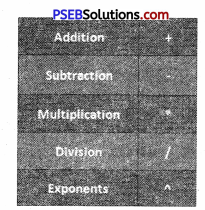
Excel uses standard operators for formulas, such as a plus sign for addition (+), a minus sign for subtraction (-), an asterisk for multiplication (*), a forward slash for division (/), and a caret (Λ) for exponents.
PSEB 9th Class Computer Solutions Chapter 1 MS Excel Part-I Img 1
All formulas in Excel must begin with an equals sign (=). This is because the cell contains, or is equal to, the formula and the value it calculates.

Question 4.
What is a cell reference?
Answer:
A cell reference refers to a cell or a range of cells on a worksheet and can be used in a formula so that Microsoft Office Excel can find the values or data that you want that formula to calculate.
In one or several formulas, you can use a cell reference to refer to :

  • Data from one cell on the worksheet.
  • Data is contained in different areas of a worksheet.
  • Data in cells on other worksheets in the same workbook.

PSEB 9th Class Computer Solutions Chapter 1 MS Excel Part-I

Question 5.
What are the parts of a Function?
Answer:
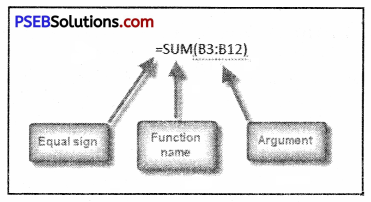
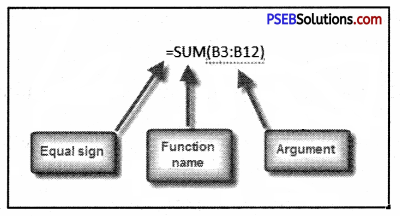
The order in which you insert a function is important. Each function has a specific order—called syntax — which must be followed in order for the function to work correctly. The basic syntax to create a formula with a function is to insert an equals sign (=), function name (SUM, for example, is the function name for addition), and argument. Arguments contain the information you want the formula to calculate, such as a range of cell references.
PSEB 9th Class Computer Solutions Chapter 1 MS Excel Part-I Img 2

Question 6.
Define Sorting.
Answer:
Sorting is a common spreadsheet task that allows you to easily reorder your data. The most common type of sorting is alphabetical ordering, which you can do in ascending or descending order.
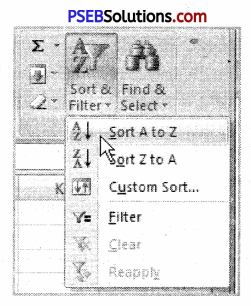
To sort in alphabetical order :

  • Select a cell in the column you want to sort (In this example, we choose a cell in column A).
  • Click the Sort & Filter command in the Editing group on the Home tab.
  • Select Sort A fo Z. NOWT the information in the Category column is organized in alphabetical order.

PSEB 9th Class Computer Solutions Chapter 1 MS Excel Part-I Img 3

You can sort in reverse alphabetical order by choosing Sort Z to A in the list.

Question 7.
Define Filter.
Answer:
The basic Excel filter (also known as the Excel Autofilter) allows you to view specific rows in an Excel spreadsheet while hiding the other rows in the worksheet. When a filter is added to the header row of a spreadsheet, a drop-down menu appears on each cell of the header row. This provides you with a number of filter options that can be used to specify which rows of the spreadsheet are to be displayed.

PSEB 9th Class Computer Solutions Chapter 1 MS Excel Part-I

3. Long Answer Type Questions

Question 1.
What are Merge and Centre? Write down the steps to merge a group of cells.
Answer:
If you go to the Home menu in the ribbon and look in the Alignment grouping of commands, you will see a small icon in the lower, right-hand corner called Merge and Center. This command does just what it implies. It not only merges the cells into one larger cell, but it also centers the text. Merge and Center improves the appearance of a title or header by centering the text over a particular section of the spreadsheet. If you click on the More icon to the Merge and Center command, you will see other Merge options.

  • The first one is Merge Across. This will merge multiple cells and more than one row at the same time. The text will remain left-justified.
  • Then there are Merge Cells. This will merge multiple cells on one row and will keep the text left-justified.
  • Finally, you have Unmerge Cells, which will undo the merged cells.

Let’s take a look at an example using the Merge and Center command. Imagine you are a painting contractor for residential homes. You created a spreadsheet to include several different costs for work requested by a new client. You have everything formatted nicely. The title, which includes the name of the client, the estimated number, and street address has been entered into cell Al. It would be nice if we could quickly and easily center the title across the top of the spreadsheet. Here are the steps.

  1. Highlight the cells you want to merge. (In our example, Al through FI),
  2. Go to the Home menu in the ribbon.
  3. Look in the Alignment grouping of commands.
  4. Click on Merge and Center.

Just like that, your title is centered and the cells have been merged into one larger cell. The benefit? Well, besides it looks better, you can make changes to the cells below and the title will remain centered: For instance, you can add a column (or delete one) and your title will not be affected. One important note about the Merge command: merging cells can delete data. Only the data in the upper-left cell will be kept once the cells have merged. Do not place data in every cell if you plan on merging multiple cells into one larger cell.

Question 2.
What is Conditional Formatting? Write down the steps to create a conditional formatting rule.
Answer:
Conditional formatting in Excel enables you to highlight cells with a certain color, depending on the cell’s value.
Highlight Cells Rules
To highlight cells that are greater than a value, execute the following steps.
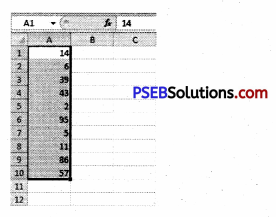
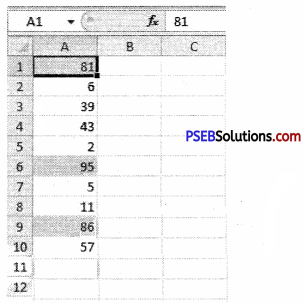
1. Select the range A1:A10.
PSEB 9th Class Computer Solutions Chapter 1 MS Excel Part-I Img 4

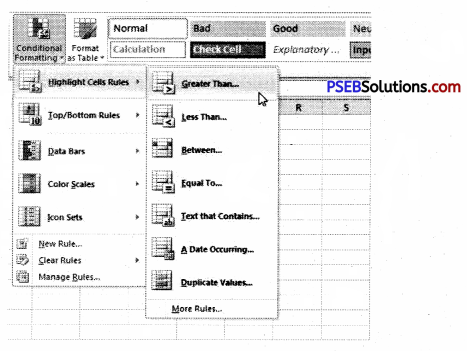
2. On the Home tab, click Conditional Formatting, Highlight Cells Rules, Greater Than…
PSEB 9th Class Computer Solutions Chapter 1 MS Excel Part-I Img 5

3. Enter the value 80 and select a formatting style.
PSEB 9th Class Computer Solutions Chapter 1 MS Excel Part-I Img 6

4. Click OK.
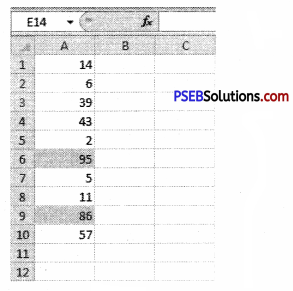
Result. Excel highlights the cells that are greater than 80.
PSEB 9th Class Computer Solutions Chapter 1 MS Excel Part-I Img 7

5. Change the value of cell A1 to 81.
Result. Excel changes the format of cell A1 automatically.
PSEB 9th Class Computer Solutions Chapter 1 MS Excel Part-I Img 8

Question 3.
What is a cell? How can we insert a new cell in our current worksheet?
Answer:
A cell is an intersection between a row and a column on a spreadsheet that starts with cell Al. Below is an illustrated example of a highlighted cell in Microsoft Excel; the cell address, cell name, or cell pointer “D8” (column D, row 8) is the selected cell and the location of what is being modified.
Insert Cells into an Excel Worksheet
Having to insert extra cells to an Excel worksheet from time to time is a common practice: data gets forgotten and must be added, space must be made for new data, or existing data gets moved about when the sheet is reorganized.
Whatever the reason, there is, as is the case with all Microsoft programs, more than one way to accomplish the task of inserting cells to an Excel worksheet.
PSEB 9th Class Computer Solutions Chapter 1 MS Excel Part-I Img 9

Question 4.
What is a Formula? Write down the steps to create a simple Formula in Excel.
Answer:
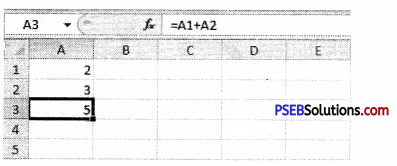
A formula is an expression that calculates the value of a cell. Functions are predefined formulas and are already available in Excel. For example, cell A3 below contains a formula that adds the value of cell A2 to the value of cell A1.
PSEB 9th Class Computer Solutions Chapter 1 MS Excel Part-I Img 10

Steps to create a simple formula in MS Excel
You can create a simple formula to add, subtract, multiply or divide values in your worksheet. Simple formulas always start with an equal sign (=), followed by constants that are numeric values and calculation operators such as plus (+), minus (-), an asterisk(*), or forward-slash (/) signs.
For example, when you enter the formula =5+2*3, Excel multiplies the last two numbers and adds the first number to the result. Following the standard order of mathematical operations, multiplication is performed before addition.

  1. On the worksheet, click the cell in which you want to enter the formula.
  2. Type the = (equal sign) followed by the constants and operators that you want to use in the calculation.

You can enter as many constants and operators in a formula as you need, up to 8192 characters.

PSEB 9th Class Computer Solutions Chapter 1 MS Excel Part-I

Question 5.
What is a Function? Write down the steps to create a basic Function in Excel.
Answer:
In Excel, a function is a preset formula used for calculations. Like formulas, functions begin with the equal sign ( = ) followed by the function’s name and its arguments. The function name tells Excel what calculation to perform. The arguments are contained inside round brackets. For example, the most used function in Excel is the function, which is used to add together the data in selected cells.

The SUM function is written as –
= SUM (D1: D6 )
Here the function adds the contents of cell range D1 to D6 and displays the answer in cell D7.

The parts of a function :
The order in which you insert a function is important. Each function has a specific order called syntax—which must be followed in order for the function to work correctly. The basic syntax to create a formula with a function is to insert an equals sign (=), function name (SUM, for example, is the function name for addition), and argument. Arguments contain the information you want the formula to calculate, such as a range of cell references.
PSEB 9th Class Computer Solutions Chapter 1 MS Excel Part-I Img 11

PSEB 9th Class Computer Guide MS Excel Part-I Important Questions and Answers

Fill in the Blanks

1. Format Cell window contains …………………… Labs.
(a) 5
(b) 6
(c) 7
(d) 8
Answer:
(b) 6

2. Excel has ……………………. Number formats.
(a) 6
(b) 8
(c) 10
(d) 12
Answer:
(d) 12

3. Insert/Delete dialog box has ………………. options.
(a) 4
(b) 5
(c) 6
(d) 7
Answer:
(a) 4

4. Workbook contains sheets by default.
(a) 2
(b) 3
(c) 4
(d) 5
Answer:
(b) 3

5. Arranged data in ascending or descending order is called …………………
(a) Formatting
(b) Splitting
(c) Sorting
(d) Replacing
Answer:
(c) Sorting

6. Cell address used in the formula is called ……………………………………..
(a) Function
(b) Formula
(c) Address
(d) Reference
Answer:
(d) Reference

Short Answer Type Questions

Question 1.
What is Microsoft Excel?
Answer:
Microsoft Excel is an electronic worksheet developed by Microsoft, to be used for organizing, storing, and manipulating.

Question 2.
What is a ribbon?
Answer:
The ribbon runs on the top of the application and is the replacement for the toolbars and menus. The ribbons have various tabs on the top, and each tab has its own group of commands.

Question 3.
How can I hide or show the ribbon?
Answer:
Use the CTRL and FI key to toggle & show or hide the ribbon.

PSEB 9th Class Computer Solutions Chapter 1 MS Excel Part-I

Question 4.
How can you wrap the text within a cell?
Answer:
You have to select the text you want to wrap, and then click wrap text from the home tab and you can wrap the text within a cell.
PSEB 9th Class Computer Solutions Chapter 1 MS Excel Part-I Img 12

Question 5.
Is it possible to prevent someone from copying the cell from your worksheet?
Answer:
Yes, it is possible. In order to protect your worksheet from getting copied, you need to go into Menu bar >Review > Protect sheet > Password. By entering the password, you can secure your worksheet from getting copied by others.

PSEB 9th Class Computer Solutions Chapter 1 MS Excel Part-I

Question 6.
How you can sum up the Roi4p and Column number quickly in the excel sheet?
Answer:
By using the SUM function you can get the total sum of the rows arid columns, in an excel worksheet.

Question 7.
How you can add a new excel worksheet?
Answer:
To add a new Excel worksheet you have to insert a worksheet tab at the bottom of the screen.

Question 8.
How you can resize the column?
Answer:
To resize the column you have to change the width of one column and then drag the boundary on the right side of the column heading to the width you want. The other way of doing it is to select the Format from the home tab, and in Format, you have to select AUTOFIT COLUMN WIDTH under the cell section. On clicking on this the cell size will get formatted.

Question 9.
What are three report formats that are available in Excel?
Answer:
The three report formats in Excel are :

  • Compact
  • Report
  • Tabular

Question 10.
How would, you provide a Dynamic range in the “Data Source” of Pivot Tables?
Answer:
To provide a dynamic range in the “Data Source” of Pivot tables, first, create a named range using offset function and base the pivot table using a named range created in the first step.

Question 11.
Is it possible to make a Pivot table using multiple sources of data?
Answer:
If the multiple sources are different worksheets, from the same workbook/then it is possible to make a Pivot table using multiple sources of data.

Long Answer Type Questions

Question 1.
How do you create formulas in Excel?
Answer:
Create a simple formula in Excel with constants and calculation operators.
To create a simple calculation, click the cell in which you wish to enter the formula and type an equal sign. Enter the constants and operators that you wish to use in the calculation within the cell. Use the plus sign for addition, a minus sign for subtraction, the backslash for division, and the asterisk for multiplication. For instance, to add ten and ten in a cell, enter “=10+10” within the desired cell and press the Enter key.

PSEB 9th Class Computer Solutions Chapter 1 MS Excel Part-I

Question 2.
Write the various steps for inserting a single cell into a worksheet.
Ans. The first example will insert a single cell to column A in order to make room for the month of March. To do this April will be shifted downward to cell A4.

  1. Click on cell A3 to make it the active cell
  2. Right-click on cell A3 to open the right-click menu
  3. Click on Insert in the right-click menu to open the Insert cells dialog box
  4. Click on the Shift cells down option in the dialog box
  5. Click OK to add the one cell to the worksheet and to close the dialog box
  6. Cell A3 should now be blank and April should be located in cell A4
  7. Type March into cell A3

Question 3.
Write the various steps for inserting multiple cells into a worksheet.
Answer:
The second example will insert two additional cells to row two in order to make room for February and June in cells A2 and B2. In the process, October will be shifted to cell C3.

  1. Drag select cells A2 and B2 in the worksheet to highlight them
  2. Right-click on cells B2 to open the right-click menu
  3. Click on Insert in the right-click menu to open the Insert cells dialog box
  4. Click on the Shift cells right option in the dialog box
  5. Click OK to add the two cells to the worksheet and to close the dialog box
  6. Cells A2 and B2 should now be blank and October should be located in cell C3
  7. Type February into cell A2 and June into cell B2.

Question 4.
Discuss the cell reference in Excel.
Answer:
For many spreadsheets, you won’t want to go back to the original formula to change all the information you’re working with. This is where cell references come in handy. By entering a reference to another cell on the worksheet, you can tell the formula to work its calculation with whatever number is placed in that cell. The formula can then be changed quickly by trying out different numbers in the reference cell.

To reference a cell, simply enter the location of the call as designated by its column and row; for example, A1 is the cell in the top left corner of the spreadsheet. To reference a cell on another worksheet within the same workbook, type the name of the worksheet followed by an exclamation point, then the location of the cell. So Sheet !A1 would refer to the A1 cell on the worksheet titled “Sheet.” If you want to reference a range of cells, use a colon between the first and last cell of the range. The formula =SUM(A1:A12) will calculate the total sum of all the figures in the range from A1 down to A12.

Question 5.
Demonstrate the use of AutoSum in Excel.
Answer:
Using AutoSum to select common functions
The AutoSum command allows you to automatically return the results for a range of cells for common functions like SUM and AVERAGE.

  1. Select the cell where the answer will appear (E24, for example).
  2. Click the Home tab.
  3. In the Editing group, click the AutoSum drop-down arrow and select the function you want (Average, for example).

PSEB 8th Class Science Solutions Chapter 9 Reproduction in Animals

Punjab State Board PSEB 8th Class Science Book Solutions Chapter 9 Reproduction in Animals Textbook Exercise Questions and Answers.

PSEB Solutions for Class 8 Science Chapter 9 Reproduction in Animals

PSEB 8th Class Science Guide Reproduction in Animals Textbook Questions and Answers

Exercises

Question 1.
Explain the importance of reproduction in organisms.
Answer:
Importance of Reproduction.
It is the ability of living organism to produce the youngones of its own kind. Reproduction helps to increase the population of species. It is an important biological process for existence and continuity of a species. It also involves the transmission of genetic material from parents to offsprings.

Question 2.
Describe the process of fertilization in human beings.
Answer:
Fertilization.
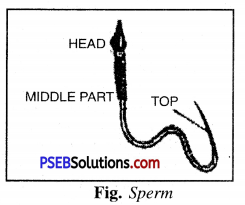
The testes produce the male gametes called sperms. Millions of sperms are produced by the testes. Though sperms are very small in size, each has a head, a middle piece and a tail.
PSEB 8th Class Science Solutions Chapter 9 Reproduction in Animals 1
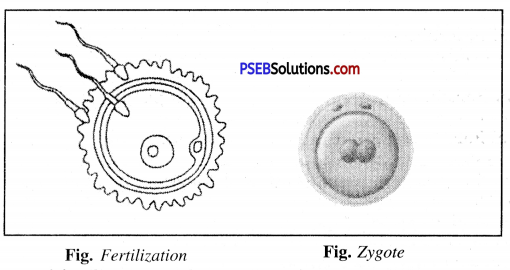
The first step in the process of reproduction is the fusion of a sperm and an ovum or an egg. Millions of sperms from the male are transferred into female body. The sperms swim in the oviduct with the help of their tails to reach egg. When they come in contact with the egg,- one of the sperms may fuse with the egg. Such fusion of the egg and the sperm is called fertilization. During fertilization, the nuclei of the sperm and the egg fuse to form a single nucleus which result in the formation of a fertilized egg called zygote. Zygote is the beginning of a new individual.
PSEB 8th Class Science Solutions Chapter 9 Reproduction in Animals 2
The process of fertilization is the meeting of an egg cell from the mother and a sperm cell from the father. So the new individual inherits some characteristics from the mother and some from the father.

PSEB 8th Class Science Solutions Chapter 9 Reproduction in Animals

Question 3.
Choose the most appropriate answer.
(a) Internal fertilization occurs:
(i) in female body.
(ii) outside female body.
(iii) in male body.
(iv) outside male body.
Answer:
(i) In female body.

(b) A tadpole develops into an adult frog by the process of:
(i) fertilization
(ii) metamorphosis
(iii) embedding
(iv) budding.
Answer:
(ii) metamorphosis.

(c) The number of nuclei present in a zygote is
(i) none
(ii) one
(iii) two
(iv) four.
Answer:
(ii) one

Question 4.
Indicate whether the following statements are True [T] or False [F]:
(a) Oviparous animals give birth to young ones.
Answer:
False

(b) Each sperm is a single cell.
Answer:
True

(c) External fertilization takes place in frog.
Answer:
True

(d) A new human individual develops from a cell called gamete.
Answer:
False

(e) Egg laid after fertilization is made up of a single cell.
Answer:
True

(f) Amoeba reproduces by budding.
Answer:
False

(g) Fertilization is necessary event in asexual reproduction.
Answer:
False

(h) Binary fission is a method of asexual reproduction.
Answer:
True

(i) A zygote is formed as a result of fertilization.
Answer:
True

(j) An embryo is made up of a single cell.
Answer:
False

Question 5.
Give two differences between a zygote and a foetus.
Answer:
Differences between a zygote and a foetus

Zygote Foetus
1. The fusion of sperm and egg is called a zygote. 1. The stage of embryo in which cell body parts are identifiable is called foetus.
2. It is single celled structure. 2. It is a multicellular structure.

Question 6.
Define asexual reproduction. Describe two methods of asexual reproduction in animals.
Answer:
Asexual Reproduction.
The type reproduction in which only a single parent is involved is called asexual reproduction.

Methods of asexual reproduction in animals
1. Binary Fission.
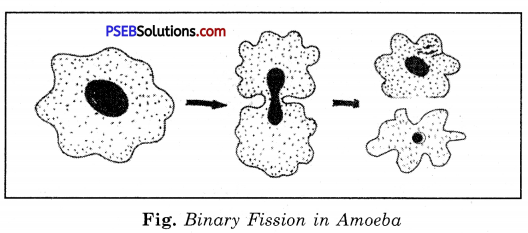
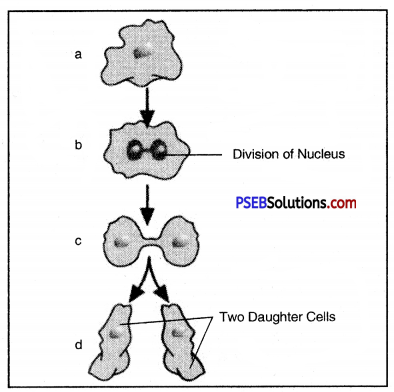
Binary fission involves an equal or nearly equal longitudinal or transverse splitting of the body of the parents into two parts each of which grows to parental size and form. This method of reproduction occurs regularly among protozoa (Amoeba, Paramecium etc.) in which it is essentially the process of cell division which results in the complete separation of the daughter cells. It has also been observed among multicellular animals as an sea anemones in the form of longitudinal fission or as transverse fission among planarians.
PSEB 8th Class Science Solutions Chapter 9 Reproduction in Animals 2

2. Budding.
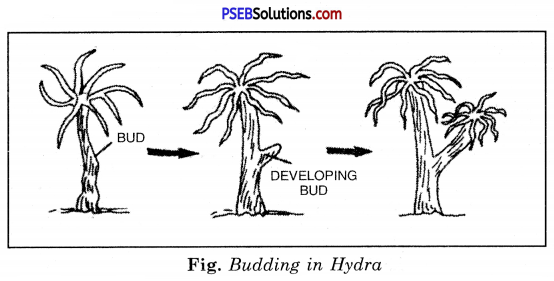
Budding is a form of asexual reproduction in which new individual arises from a relatively small mass of cells that initially forms a bud on the parental body. The bud may assume parental form either before separation from the body of the parent as in external budding or after separation as in internal budding. External budding is common among sponges, coelenterates (e.g. Hydra), flatworms and tunicates. But in some coelenterate as in Obelia, it gives rise to medusae rather than to the parental.
PSEB 8th Class Science Solutions Chapter 9 Reproduction in Animals 4

Question 7.
In which female reproductive organ does embryo get embedded ?
Answer:
Uterus (Uterine wall).

PSEB 8th Class Science Solutions Chapter 9 Reproduction in Animals

Question 8.
What is metamorphosis ? Give examples.
Answer:
Metamorphosis. The drastic changes that take place during the development of an animal is called metamorphosis.
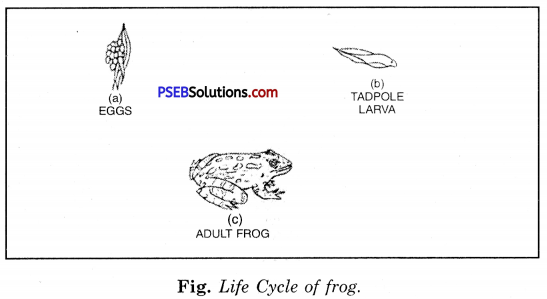
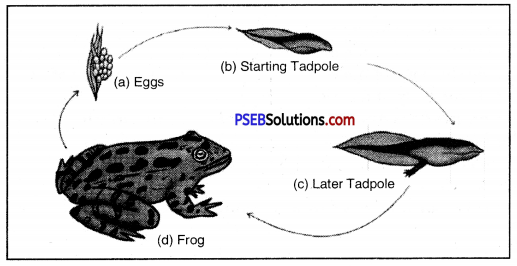
PSEB 8th Class Science Solutions Chapter 9 Reproduction in Animals 5
In the above figure, we see the different stages of development of frog. We find three distinct stages –
(i) Egg (ii) tadpole larva (iii) adult frog.
We see that tadpole larva is totally different from its adults.
Tadpole has gills for respiration because it lives outside the water. The sudden changes come in the body of tadpole like gills are replaced lungs. These sudden changes are called metamorphosis.
Example of animals in which metamorphosis take place are : Frog, silkworm.

Question 9.
Differentiate between internal fertilization and external fertilization.
Answer:
Differences between external fertilization and internal fertilization

External fertilization Internal fertilization
1. The fusion of male gamete (sperm) and female gamete (ovum) occurs outside the body. 1. The fusion of gametes occurs inside the body.
2. Both individuals discharge their gametes outside the body. 2. Only the male discharge gametes into genital tract of female.
3. Development occurs outside the body. 3. Development may occur inside the body.
4. Example : Frog. 4. Example : Human, cattle, shark, birds.

Question 10.
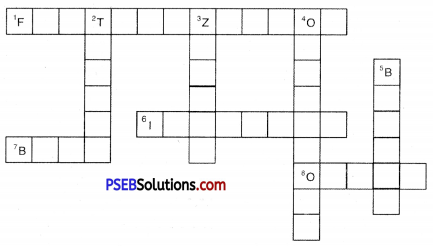
Complete the crossword puzzle using the hints given below.
Across
1. The process of the fusion of the gametes.
6. The type of fertilization in hen.
7. The term used for bulges observed on the sides of the body of Hydra.
8. Eggs are produced here.

Down
2. Sperms are produced in these male reproductive organs.
3. Another term for the fertilized egg.
4. These animals lay eggs.
5. A type of fission in amoeba.
PSEB 8th Class Science Solutions Chapter 9 Reproduction in Animals 6
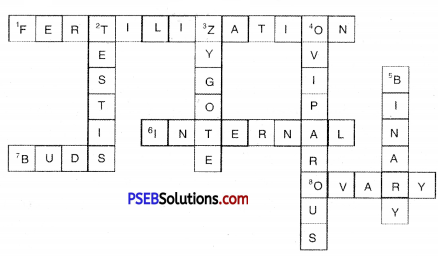
Answer:
PSEB 8th Class Science Solutions Chapter 9 Reproduction in Animals 7

PSEB Solutions for Class 8 Science Reproduction in Animals Important Questions and Answers

Multiple Choice Questions

Question 1.
A hydra on fission produces two or more hydra. What is this type of asexual reproduction called ?
(a) Budding
(b) Binary Fission
(c) Vegetative reproduction
(d) Gamete.
Answer:
(a) Budding.

Question 2.
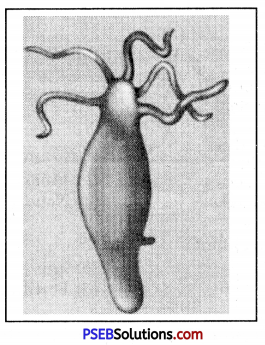
The following diagram is of which organism ?
PSEB 8th Class Science Solutions Chapter 9 Reproduction in Animals 8
(a) Amoeba
(6) Paramecium
(c) Hydra
(d) Frog
Answer:
(c) Hydra.

PSEB 8th Class Science Solutions Chapter 9 Reproduction in Animals

Question 3.
The following diagram shows the life cycle of which organism ?
PSEB 8th Class Science Solutions Chapter 9 Reproduction in Animals 9
Answer:
Life cycle of a frog.

Question 4.
The following Diagram shows which process of asexual reproduction of amoeba ?
PSEB 8th Class Science Solutions Chapter 9 Reproduction in Animals 10
(a) Budding
(b) Binary fission
(c) Asexual reproduction
(cl) None of these.
Answer:
(b) Binary fission

Question 5.
Female gamete is called:
(a) Sperm
(b) Egg
(c) Zygote
(d) Fertilization
Answer:
(b) Egg.

Question 6.
An amoeba on fission produces two amoeba. What type of asexual reproduction is this ?
(a) Budding
(b) Binary fission
(c) Gametes
(d) Vegetative reproduction.
Answer:
(b) Binary fission.

Question 7.
Internal fertilization is:
(a) Inside the body of female
(b) Outside the body of female
(c) Inside the body of male
(d) Outside the body of male.
Answer:
(a) Inside the body of female.

Question 8.
By which process one tadpol is developed into adult ?
(a) Fertilization
(b) Metamorphosis
(c) Stagnation
(d) Budding.
Answer:
(b) Metamorphosis.

Question 9.
The number of nucleus found in gamete is:
(a) None
(b) One
(c) Two
(d) Four
Answer:
(b) One.

PSEB 8th Class Science Solutions Chapter 9 Reproduction in Animals

Very Short Answer Type Questions

Question 1.
Fill in the blanks:
1. The process of ……………… ensures continuity of life on earth.
2. The male and female gametes in the flower are called ………………. and ………………… respectively.
3. In ……………….. reproduction, one individual can make many new individuals from its body parts.
4. ………………….. grow throughout life, but ………………… grow only upto a certain age.
5. A multicellular animal starts its life from a ……………………. through sexual reproduction.
Answer:
1. reproduction
2. pollen, egg
3. asexual (vegetative)
4. plants, animals
5. zygote.

Question 2.
Which part of the body:
(a) produces sperms ?
(b) produces ova ?
(c) passes sperms from a man to a woman ?
Answer:
(a) Testis
(b) Ovaries
(c) Penis.

Question 3.
How many methods of reproduction are there in the plants and animals ?
Answer:
Two:

  1. asexual
  2. sexual.

Question 4.
How many parents are needed in asexual reproduction ?
Answer:
Only one parent is needed in asexual reproduction.

Question 5.
How many parents are needed in sexual reproduction ?
Answer:
Two parents are needed in sexual reproduction.

Question 6.
What are the specialised cells present in the sex organs ?
Answer:
Gametes.

Question 7.
Name two animals which reproduce by binary fission.
Answer:

  1. Amoeba
  2. Paramecium.

Question 8.
In which organisms do the buds remain attached to the parent organisms ?
Answer:
Sponges, Corals.

PSEB 8th Class Science Solutions Chapter 9 Reproduction in Animals

Question 9.
What is zygote ?
Answer:
Zygote. Zygote is the first structure formed after union of sperm and egg.

Question 10.
What is fertilization ?
Answer:
The fusion of male gamete and female gamete is known as fertilization.

Question 11.
Which is the larger-sperm or ovum ?
Answer:
Ovum or egg.

Question 12.
Name two hermaphrodites.
Answer:

  1. Earthworm
  2. Leech.

Question 13.
Name two animals in which fertilization is external.
Answer:

  1. Frog
  2. Fish.

Question 14.
Define metamorphosis.
Answer:
Metamorphosis. The drastic changes which transform a larva into an adult is called metamorphosis.

Question 15.
What is gonad ? Name the male and female gonads of human body.
Answer:
Gonad.
The reproductive organ that produces special sex cells called gametes, is called gonad.
Male gonad. The male gonad testis produces male gametes, called sperms.
Female gonad. It is the ovary and produces female gametes called ova.

Question 16.
Name the male and female gametes of man.
Answer:
Male gamete – Sperm : Female gamete – Ovum.

PSEB 8th Class Science Solutions Chapter 9 Reproduction in Animals

Question 17.
Give one example each of animal showing external fertilization and another of internal fertilization.
Answer:
External fertilization – Frog;
Internal Fertilization – Human.

Question 18.
What is the function of sperm duct ?
Answer:
Sperm duct (vas deferens). It conducts sperms from testes to urethra.

Question 19.
What is hymen ?
Answer:
Hymen. In the case of virgins at the orifice of vagina present a thin membranous diaphragm called hymen. It is perforated to pass menstrual discharge.

Question 20.
In which type of asexual reproduction takes place in Hydra ?
Answer:
Budding.

Question 21.
Define cloning.
Answer:
Cloning. It is the production of an identical cell, any other part, or a complete organism.

Question 22.
Name the sheep which was cloned successfully by Ian Wilmont at the Roslin Institute in Edenburgh, Scotland.
Answer:
Dolly sheep.

Question 23.
Name the first mammal to be cloned.
Answer:
A sheep named Dolly which was born on 5th July, 1996.

PSEB 8th Class Science Solutions Chapter 9 Reproduction in Animals

Question 24.
What is reproduction ?
Answer:
Reproduction. To produce young ones of their own kind is called reproduction.

Question 25.
What is the function of tail of sperm in man ?
Answer:
For movement.

Question 26.
What is ovulation ?
Answer:
Production of eggs from the ovaries is called ovulation.

Question 27.
What is a test tube baby ?
Answer:
The babies produced by an artificial fertilization outside the body are called test tube babies.

Question 28.
Give full form of I.V.F.
Answer:
Invitro fertilization.

Question 29.
Where does test tube baby develops ?
Answer:
In uterus.

Question 30.
What are oviparons animals ?
Answer:
Egg laying animals are called oviparous animals.

PSEB 8th Class Science Solutions Chapter 9 Reproduction in Animals

Question 31.
What are viviparous animals ?
Answer:
Young ones producing animals are called viviparous animals.

Short Answer Type Questions

Question 1.
What is the difference between sexual reproduction and asexual reproduction ?
Answer:
Differences between Asexual and Sexual reproduction:

Asexual reproduction Sexual reproduction
1. New individuals are formed from a single parent. 1. Two parents are involved in the formation of new individual.
2. It does not require the production of sex organs. 2. Sex organs are pre-requisite for it.
3. It does not involve meiosis. 3. It involves meiosis at one or the other stage.
4. It does not involve fusion of cells. 4. It involves formation and fusion of gametes.
5. New individual develops from one cell. 5. New individual develops from fusion product of two gametes.
6. New individuals are genetically similar to the parents. 6. New individuals are generally different from either of the two parents.
7. It does not introduce variability. 7. It introduces variability.

Question 2.
What is sexual reproduction ? Discuss sexual reproduction in animals.
Answer:
Sexual reproduction.
Union of male and female individuals to accomplish fertilization is called sexual reproduction.

Sexual reproduction in animals.
In sexual reproduction, there are two parents. The parents have sex organs which produce sex cells. Females produce eggs while males produce sperms. Sperms are produced by sex organs called testes. Female sex cells are called eggs or ova (singular ovum). Ova are produced by sex organ called ovaries. A sperm enters an egg. This is called fertilization. A fertilized egg divides many times. The cells develops into an embryo which later develops into an adult.

Question 3.
What are the organs in human beings which produce the gametes ?
Answer:
The male organs in human beings are a pair of testis. The female organs in human beings are a pair of ovaries.

Question 4.
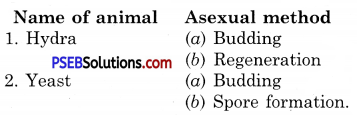
Name two organisms which produce by two types of asexual methods. What are the methods ?
Answer:
PSEB 8th Class Science Solutions Chapter 9 Reproduction in Animals 11

Question 5.
What are gametes ? What is the difference between the unisexual and hermaphrodite ?
Answer:
Gametes.
Gametes are the reproductive cells which are produced by the sex organs of the body. There are two types of gametes-male and female. Due to the union of gametes, fertilization takes place.

Unisexual organism are those which have only one kind of sex organs either male or female.
Hermaphrodite are those organisms which have both kinds of sex organs.

PSEB 8th Class Science Solutions Chapter 9 Reproduction in Animals

Question 6.
What is hermaphrodite ? Give two examples.
Answer:
The organisms which can produce both the male and female gamete are called hermaphrodites or bisexual. Examples:

  1. Earthworm
  2. Hydra.

Question 7.
In how many ways can a tissue grow in size ?
Answer:
Growth means getting bigger in size. The tissue can grow in size by:

  1. Increasing the size of the cells.
  2. Increasing the number of cells.

Question 8.
What are the basic features in the process of asexual reproduction ?
Answer:
Basic features of asexual reproduction

  1. Only one parent is involved.
  2. All the cell divisions are mitotic.
  3. All the offsprings are genetically similar to the parent.
  4. The reproductive unit is a fragment or specialised part of the parent.

Question 9.
How is process of binary fission different from budding ?
Answer:
Differences between binary fission and budding

Binary Budding
1. Only two young ones are formed. 1. Large number of buds may be formed, each growing into new individual.
2. Example : Amoeba, Euglena. 2. Examples : Sponges, Hydra.

Question 10.
Define ovulation.
Answer:
Ovulation.
Release of ovum (unfertilized egg) from the ovary is called ovulation. Egg is released on 14th day of 28-day menstrual cycle.

Question 11.
What is reproduction ? What are its basic types ?
Answer:
Reproduction.
All organisms born on this earth show characteristics life cycle, involving birth, growth, maturation, reproduction and death. Reproduction is one of the most important processes by which continuation of the species from one generation to another generation can take place. Older and aged organisms are replaced by new and younger organisms by reproduction. There are two basic types of reproduction. Reproduction is of two types:
A. Asexual reproduction
B. Sexual reproduction.

Question 12.
Name the various organs of male reproductive system in man.
Answer:
Male reproductive organs of man

  1. A pair of testes
  2. A pair of epididymis
  3. A pair of vas deferentia
  4. A pair of seminal vesicles
  5. Urethra
  6. Penis
  7. Male reproductive glands
    (Cowper’s gland and prostate gland).

PSEB 8th Class Science Solutions Chapter 9 Reproduction in Animals

Question 13.
Name the various organs of female reproductive system.
Answer:
Female reproductive system is composed of organs given ahead :

  1. A pair of ovaries
  2. A pair of fallopian tubes
  3. Uterus
  4. Vagina
  5. Vulva

Question 14.
Differentiate the following:
(i) Sperm and Ovum
(ii) Vas deferens and Fallopian tube
(iii) Male urethra and Female urethra
(iv) Foetus and Embryo.
Answer:
(i) Differences between Sperm and Ovum

Sperm Ovum
1. The sperm is active. 1. The ovum is inactive.
2. The sperm is capable of movement. 2. The ovum is stationary.
3. It has a locomotory organ (tail). 3. It has no locomotory organ.
4. It is smaller in size. 4. It is bigger in size due to presence of yolk.

(ii) Differences between Vas deferens and Fallopian tube

Vas deferens Fallopian tube
1. Vas deferens is a part of male reproductive system. 1. Fallopian tube is a part of female reproductive system.
2. It serves to conduct the sperm from the testis to the urethra. 2. It serves to conduct the ovum from the ovary to the uterus.

(iii) Differences between Male Urethra and Female Urethra

Male urethra Female urethra
In male the urethra serves to carry the urine as well as semen outside. In female urethra serves to carry only the urine as the urethra and the vaginal apertures are separate.

(iv) Differences between Foetus and Embryo

Foetus Embryo
1. The mammalian embryo which has recognisable appearance of main features of fully developed animal is called as foetus. 1. In early stage of development (from the fertilized egg), the developing animal is called as embryo.
2. In humans after two months of gestation the embryo is called foetus. 2. It is the early stage of development, before it emerges from the egg or from the uterus of the mother. In humans, the term is restricted to the stages between second to eighth week after conception.

Question 15.
Write a note on ‘test tube babies’.
Answer:
Test tube babies.
Actually this name is a wrong name because babies cannot grow in test tubes. In some women oviducts are blocked. These women unable to bear babies because sperms can not reach the egg for fertilization. In such cases, doctors collect freshly released egg and sperms and keep them together for a few houjs for in vitro fertilization (fertilization outside the body). After the zygote develops for about a week, it is placed in the mother’s uterus. Complete development takes place in the uterus and the baby is born like any other baby.

Question 16.
How does fertilization take place in frog ?
Answer:
In frog fertilization takes place outside the body of female. So this type of fertilization is called external fertilization.

During spring or rainy season, frogs and toads move to ponds. As the eggs are laid, the male frog deposits sperms over them. Each sperm swims randomly in water with the help of its long tail. The sperms come in contact with the eggs. This results in fertilization.

PSEB 8th Class Science Solutions Chapter 9 Reproduction in Animals

Question 17.
Why animals which undergo external fertilization such as frog and fish lay eggs in hundreds while a hen lays only one egg at a time ?
Answer:
Frog and fish release hundred of eggs and millions of sperms. But all the eggs are not fertilized because eggs and sperms get exposed to water movement, wind and rainfall. Some animals found in water may feed on eggs. Thus production of large number of eggs are necessary to ensure fertilization.

Question 18.
What are oviparous and viviparous animals ?
Answer:
Oviparous animals. The animals, which lay eggs are called oviparous animals. Frog, butterfly, hen, crow etc.

Viviparous animals. The animals which give birth to young ones are called viviparous animals, e.g. man, dog, cow, cat etc.

Question 19.
What is Menstruation ?
Answer:
Menstruation.
The rhythmic changes in the uterus which occur about every 28 days throughout the reproductive cycle of women except the pregnancy is called menstrual cycle. The female sex hormones initiate the thickening of the uterine wall for the implantation of a fertilized ovum. If the ovum is not fertilized, the lining wall is broken down and discharged from the body. This is called menstruation. Normally the menstrual cycle starts at the age of 10-14 years and stops at the age of 45-50 when menopause is reached.

Long Answer Type Questions

Question 1.
What are gonads ? Briefly explain male reproductive system.
Answer:
PSEB 8th Class Science Solutions Chapter 9 Reproduction in Animals 12
Gonads.
The primary sex organs which produce gametes are called gonads. Male gonads are testes and female gonads, ovaries.

Male reproductive system. The male reproductive system of man consist of following organs:
1. A pair of testes.
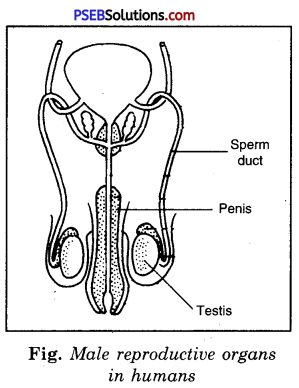
The male gonads (primary sex organs) are a pair of testes. They are paired organs and are located outside the body cavity in a pouch called scrotum. It helps in keeping the testes at a cooler temperature than the body temperature essential for maintenance and function of spermatogenic tissue. It measures 4 cm, 3 cm and 2.5 cm in length, thickness and width. Each testis is formed of large number of seminiferous tubules, they produce sperms and glandular cells which produce sex hormone, testosterone.

2. A pair of epididymis.
At the end of each seminiferous tubule is a very small tubule called the vas efferens. The vasa efferentia lead into epididymis. In the epididymis sperms are stored.

3. A pair of vasa deferentia (Sing. Vas deferens).
Corpus epididymis continues as vas deferens. It is a muscular tube. It is about 30 cm long. It leaves the scrotum by inguinal canal passes over the urinary bladder and receives a duct from seminal vesicle to form ejaculatory Fig. Male reproductive organs duct.

4. Male Urethra.
It is about 7-9 inches long. It leaves the urinary bladder and is joined by ejaculatory duct. It passes through penis and opens at the tip. The tip of penis is called glans penis and is covered over by fold of skin which is known as prepuce.

5. Reproductive glands (Accessory or secondary glands). They are prostate gland and Cowper’s gland.

  • Prostate gland. It surrounds the urethra and opens into by means of numerous fine ducts. It secretes milky alkaline secretion and form 15-30% of semen.
  • Cowper’s gland. A pair of glands called Cowper’s gland are attached to urethra. They secrete a clear viscid muscus which is lubricatory in function.
  • The seminal vesicles. They are paired tubular structures located behind the neck of bladder. Its secretion forms essential component of seminal fluid.

Question 2.
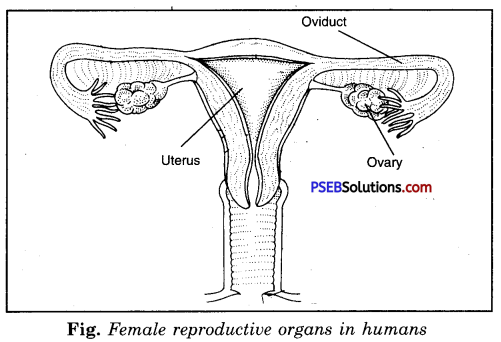
Briefly explain various parts of female reproductive system.
Answer:
PSEB 8th Class Science Solutions Chapter 9 Reproduction in Animals 13
Reproductive system of woman. It consists of following organs:
1. A pair of ovaries.
There are present a pair of ovaries (primary female sex organ) measuring 3 cm, 2 cm and 1 cm in length, breadth and thickness. Each ovary is a small almond-like flattened body. Each ovary lies in the abdominal cavity on either side of the middle line. Ovaries produce female sex cells, ova and their glandular cells produce hormones. Each ovary is attached to dorsal abdominal wall by a fold of peritoneal membrane called mesovarium.

2. A pair of fallopian (uterine) tubes.
Each fallopian tube is about 5 inches long. It extends from the vicinity of the ovary to the uterus. The fallopian tube is retained in its position by a mesentery called mesometrium.

3. Uterus.
The uterus is hollow, muscular, thick walled organ. Its mucous membrane contains small gland cells and many capillaries. It receives ova and pass them on to vagina. The lower part of uterus is called cervix.

4. Vagina.
It is muscular tube measures 8 cm in length and lined with stratified epithelium. It receives the semen from the male during mating and during child birth, it conveys the child to the outside.

5. Vulva.
The opening of vagina to the outside alongwith labia majora and labia minora constitute the external female sex organs collectively called as vulva. Clitoris, homologous to penis is present at the junction of labia majora and labia minora.

Question 3.
Write a note on cloning.
Answer:
Cloning. It is the production of an identical cell or a complete organism. Dolly, a sheep, was successfully cloned. It was the first mammal to be cloned in 1996.
PSEB 8th Class Science Solutions Chapter 9 Reproduction in Animals 14
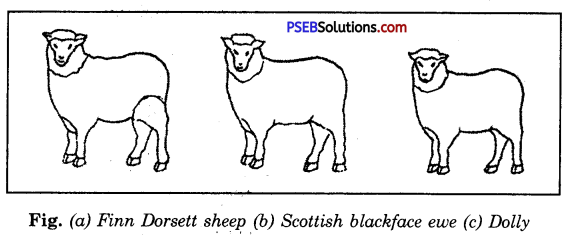
A cell was collected from the mammary gland of a female Finn Dorsett sheep. [Fig. (a)]. Simultaneously, an egg was obtained from a Scottish blackface ewe [Fig. (b)]. The nucleus was removed from the egg. Then, the nucleus of the cell from the Finn Dorsett sheep was inserted into the egg of the Scottish blackface ewe. The egg thus produced was implanted into the Scottish blackface ewe. Development of the egg took place normally and finally Dolly was born. Though Dolly was given birth by Scottish blackface ewe, it was found to be identical to the Finn Dorsett sheep from which the nucleus was taken. Because the nucleus of Scottish blackface ewe was removed, Dolly did not show any character of the Scottish blackface ewe. Unfortunately, Dolly died on 14th February 2003 due to certain lung diseases.
The cloned animals are also found to be born with severe abnormalities.

PSEB 6th Class Science Solutions Chapter 6 Changes Around Us

Punjab State Board PSEB 6th Class Science Book Solutions Changes Around Us Textbook Exercise Questions and Answers.

PSEB Solutions for Class 6 Science Chapter 6 Changes Around Us

Science Guide for Class 6 PSEB Changes Around Us Intext Questions and Answers

Think and Answer (Textbook Page No. 53)

Question 1.
Before preparing roti your mother makes a ball from the dough. Can the ball be reversed into dough?
Answer:
Yes, the ball can be reversed into the dough.

Question 2.
You make a toy boat from a piece of paper. Can you obtain back the paper in original form?
Answer:
Yes, we can obtain back the paper in original form.

PSEB 6th Class Science Solutions Chapter 6 Changes Around Us

Think and Answer (Textbook Page No. 54)

Question 1.
Observe the height of students of class 5th and of class 8th. Is the change in height a reversible or irreversible change ?
Answer:
The change in height is an irreversible change.

Question 2.
Is burning of candle reversible or irreversible change ?
Answer:
The burning of candle is an irreversible change.

Think and Answer (Textbook Page No. 55)

Question 1.
Which type of change is involved in tearing of paper ?
Answer:
Physical change.

Question 2.
Which type of change is involved in melting of ice to water ?
Answer:
Physical change.

Think and Answer (Textbook Page No. 56)

Question 1.
What type of change is observed in formation of paneer from milk ?
Answer:
Irreversible change.

Question 2.
Name the change involved in formation of wax from burning candles.
Answer:
Physical change.

Think and Answer (Textbook Page No. 57)

Question 1.
Have you seen Bunsen Burner in the shop of goldsmith? What is its purpose there ?
Answer:
It is used for melting of gold.

PSEB 6th Class Science Solutions Chapter 6 Changes Around Us

Question 2.
When you put clinical thermometer in your mouth, why do Mercury in the thermometer rises and why it falls down when you take it out ? (noted that Mercury is a metal which is liquid at room temperature)
Answer:
Metals expand on heating and contract on cooling. When we put clinical thermometer in our mouth due to higher temperature inside the mouth the mercury in the thermometer rises. When we take out the mercury falls because the outside temperature is lower than the temperature of the mouth.

PSEB 6th Class Science Guide Changes Around Us Textbook Questions and Answers

1. Fill in the Blanks:

(a) A new substance is always formed in …………….. change.
Answer:
chemical

(b) Melting of ice is ……………… and ……………… change.
Answer:
physical, reversible

(c) Burning of paper is ……………… change.
Answer:
chemical/irreversible

(d) On heating, metals ………………
Answer:
expand

(e) Change that is repeated after regular interval of time is known as …………….
Answer:
periodic change

Write True or False:

(a) Converting milk into paneer is a reversible change.
Answer:
False

(b) Rusting of iron is a slow change.
Answer:
True

(c) Metals contract on heating.
Answer:
False

PSEB 6th Class Science Solutions Chapter 6 Changes Around Us

(d) Melting of snow from mountains is a natural change.
Answer:
True

(e) Bursting of crackers is a fast change.
Answer:
True

3. Match the Column A with Column B:

Column A Column B
1. Freezing of water (a) Non-periodic
2. Milk to curd (b) Physical and reversible
3. Burning of matchstick (c) Periodic
4. Earthquake (d) Fast
5. Change of season (e) Chemical.

Answer:

Column A Column B
1. Freezing of water (b) Physical and reversible
2. Milk to curd (e) Chemical.
3. Burning of matchstick (d) Fast
4. Earthquake (a) Non-periodic
5. Change of season (c) Periodic.

4. Choose the Correct Answer:

Question (i)
Cooking of food is which type of change ?
(a) Physical
(b) Fast
(c) Reversible
(d) Irreversible.
Answer:
(d) Irreversible.

Question (ii)
Which of the following is change a non-periodic ?
(a) Heart beat
(b) Earthquake
(c) Occurence of day and night
(d) Motion of pendulum.
Answer:
(b) Earthquake

Question (iii)
Which of the following expand on heating ?
(a) Wood
(b) Paper
(c) Metal
(d) Cloth.
Answer:
(c) Metal

Question (iv)
Rusting of iron is which type of change ?
(a) Reversible
(b) Slow
(c) Periodic
(d) Fast.
Answer:
(b) Slow

PSEB 6th Class Science Solutions Chapter 6 Changes Around Us

Question (v)
Growth in plants and animals is which type of change :
(a) Slow
(b) Reversible
(c) Chemical
(d) Periodic.
Answer:
(a) Slow

5. Very Short Answer Type Questions:

Question (i)
What are changes ?
Answer:
Change is an act by which a thing becomes different from its previous one.

Question (ii)
Define slow and fast changes with examples.
Answer:
Slow changes are those which takes more time to happen. For example, growing of tree, a baby becoming adult, etc.
Fast changes are those that happen very fast. For example, burning of match stick, bursting of crackers, etc.

Question (iii)
Give two examples of reversible change.
Answer:
Melting of ice and expansion of metals on heating.

Question (iv)
Why, the iron rim is slightly smaller in diameter than the wooden wheels ?
Answer:
The metal rim used is slightly smaller in diameter than the wooden wheels because
on heating the rim expands and can easily lie on the wheels. When the rim cools, it contracts and fits tightly onto the wheel.

Question (v)
Give two examples of chemical change.
Answer:
Converting milk into cheese and curd, cooking of vegetables.

6. Short Answer Type Questions:

Question (i)
Give differences between periodic and non-periodic changes with examples.
Answer:
Periodic change. Changes that are repeated after regular interval of time are called periodic changes.
Examples are change of day and night, swinging of pendulum of clock, beating of heart, change of seasons.

Non-periodic change. Changes that are not repeated after regular interval of time are called non-periodic changes.
Examples are occurrence of earthquakes, occurrence of rain, etc.

PSEB 6th Class Science Solutions Chapter 6 Changes Around Us

Question (ii)
Give differences between reversible and irreversible changes with examples.
Answer:
Reversible change. When a change in a substance can be reversed by changing the conditions it is said to be a reversible change.
Examples are melting of ice, evaporation of water, etc.

Irreversible Change. If a substance after change cannot be brought back to its original state then the change is said to be an irreversible change.
Examples are cooking of food, converting milk into cheese and curd, etc.

Question (iii)
Why a candle in reduces in size on burning ?
Answer:
On burning, some of the wax melts and some of it changes to carbon dioxide and water. Due to these changes the size of the candle reduces on burning.

Question (iv)
Give differentce between physical and chemical changes with examples.
Answer:
Physical Change.
Physical change is a temporary change in which no new substance is formed and chemical composition of the original substance remains the same. During this change colour, shape, size, state, etc. may change. It is a reversible change. Melting of ice, blowing of balloon, stretching of rubber, tearing of paper, folding a paper, etc. are some of the examples of physical changes.

Chemical changes.
Any change which is permanent, in which new substances are formed whose physical and chemical properties are completely different from those of the original substance is called a chemical change. Chemical changes are irreversible in nature.
Ripening of mango, cooking of food, converting milk to paneer, growth of plants, etc. are some of the examples of chemical changes.

7. Long Answer Type Question:

Question (i)
What is expansion ? Define thermal expansion ? Explain with two examples.
Answer:
Expansion. It can be defined as the increase in the dimension of a body when
subjected to high temperature and high pressure. For example blowing of balloon, stretching of spring.
When expansion is due to increase in temperature it is called as thermal expansion.
We can explain this with the help of many examples.

  • When we put clinical thermometer in our mouth, the level of mercury increases. This is because mercury is a metal and metals expand on heating.
  • A metal ball which can pass through a ring on heating becomes larger in size and cannot pass through the same ring.

PSEB Solutions for Class 6 Science Changes Around Us Important Questions and Answers

Multiple Choice Questions:

Question 1.
Balloon bursts:
(a) when we blow it.
(b) when we put water into it.
(c) when it is pricked.
(d) all the above.
Answer:
(c) when it is pricked.

PSEB 6th Class Science Solutions Chapter 6 Changes Around Us

Question 2.
Water changes into vapours:
(a) on cooling
(b) on heating
(c) by both (i) and (ii)
(d) none.
Answer:
(b) on heating

Question 3.
Cow dung changes to biogas. It is an example of:
(a) Reversible change
(b) Irreversible change
(c) both
(d) none.
Answer:
(b) Irreversible change

Fill in the Blanks:

(a) When a fully blown balloon is pricked, it ………………
Answer:
bursts

(b) Pencil changes its …………….. and size with repeated use.
Answer:
shape

(c) Iron is heated till it becomes red hot and soft to be ……………… into a desired shape.
Answer:
beaten

(d) Ice ……………. when it is heated.
Answer:
melts

(e) The change of milk to paneer is a ……………….. change.
Answer:
irreversible

(f) When two substances are mixed together, they undergo …………… only on heating.
Answer:
changes

PSEB 6th Class Science Solutions Chapter 6 Changes Around Us

Write (T) against true and (F) against false statement:

(a) Salt cannot be separated from its solution.
Answer:
False

(b) Flowers bloom and wither away.
Answer:
True

(c) A baked roti is an example of irreversible change.
Answer:
True

(d) When a candle bums, its size decreases.
Answer:
True

(e) Iron expands on heating.
Answer:
True

(f) Many changes occur due to some magical power.
False

Very Short Answer Type Questions

Question 1.
What type of a change is cooking of food ?
Answer:
Irreversible change.

PSEB 6th Class Science Solutions Chapter 6 Changes Around Us

Question 2.
What happens when we blow a balloon ?
Answer:
It expands and grows in size.

Question 3.
Can rolled out roti be reversed to dough ?
Answer:
Yes.

Question 4.
Give an example of irreversible change.
Answer:
Cutting of paper into bits.

Question 5.
When candle burns which change takes place ?
Answer:
Irreversible change.

Question 6.
Define solution.
Answer:
Solution. A clear homogeneous mixture of solid and liquid is called solution. For example, salt dissolved in water.

Question 7.
What type of change is a change of climate ?
Answer:
Slow change.

Question 8.
What type of change is a cooking of food ?
Answer:
Irreversible change.

PSEB 6th Class Science Solutions Chapter 6 Changes Around Us

Question 9.
What type of change is rusting of iron ?
Answer:
Irreversible change. During rusting a reddish brown substance iron oxide is formed.

Question 10.
State whether burning of a piece of paper is a reversible or an irreversible change.
Answer:
Burning of a piece of paper is an irreversible change.

Question 11.
Is printing a reversible or an irreversible change ?
Answer:
Printing is an irreversible change.

Question 12.
Can we say that ironing of a cloth is a reversible change ?
Answer:
Yes, ironing of a cloth is a reversible change.

Short Answer Type Questions

Question 1.
Name the various changes taking place in nature.
Answer:
Changes in nature.

  1. Falling of leaves from trees.
  2. Blooming of flowers.
  3. Ripening of fruits.
  4. Drying of wet clothes.
  5. Growth of nails and hair.

Question 2.
Give examples of changes which can be reversed easily.
Answer:
Reversible changes.

  1. Blowing air into a balloon.
  2. Rolling out a roti.
  3. Folding paper toys.
  4. Melting of ice.

PSEB 6th Class Science Solutions Chapter 6 Changes Around Us

Question 3.
Write few changes which cannot be reversed at all.
Answer:
Irreversible Changes.

  1. Growth of a person.
  2. Baked roti.
  3. Baked earthen pot in oven.
  4. Burning of candle.

Question 4.
Why is curd formation an irreversible change ?
Answer:
Curd formation is done by adding little curd to warm milk. In this method, the milk sets into curd and curd cannot be churned back into milk. So curd formation is an irreversible change.

Question 5.
Classify the following changes :
(i) Heating black material (tar) for repairing a road.
(ii) Melting of ice cubes.
(iii) Growth of hair.
(iv) Heating wax.
(v) Burning of candle.
(vi) Burning of incense stick.
Answer:
(i) Reversible change.
(ii) Reversible Change.
(iii) Irreversible Change.
(iv) Reversible Change.
(v) Irreversible Change.
(vi) Irreversible Change.

Question 6.
Write some changes that you see around yourself.
Answer:

  1. The flowers bloom
  2. Nails grow
  3. Hair grow
  4. body weight increases or decreases
  5. Leaves fall from tree
  6. Colour of leaf changes from green to yellow etc.

Question 7.
Write few changes that cannot be reversed.
Answer:

  1. Breaking of a glass.
  2. Germination of seed.
  3. Grain to its flour.

Question 8.
Write few changes which can be reversed.
Answer:

  1. Cold milk to hot milk.
  2. Melting of ice cream.
  3. Stretched rubber band to its normal size.

PSEB 6th Class Science Solutions Chapter 6 Changes Around Us

Question 9.
Most physical changes are reversible. Give reasons with two examples.
Answer:
Most physical changes are reversible because no new products are formed. The original products can be obtained on reversing the reaction. For example,

  • Water on freezing changes to ice and on heating ice, again water can be obtained.
  • Wax melts on heating. On cooling, again the wax can be obtained.

Question 10.
Classify the following as reversible or irreversible changes :
(i) Growth of a plant.
(ii) Ploughing a field.
(iii) Melting of wax.
(iv) Falling of rain.
(v) Pulling of rubber string.
(vi) Breaking of a glass rod.
(vii) Cooking of food.
Answer:
Reversible changes : Ploughing a field, Melting of wax, Pulling of rubber string.

Irreversible changes : Growth of a plant, Falling of rain, Cooking of food, Breaking a glass rod.

Long Answer Type Questions

Question 1.
Explain the following terms :
(i) Reversible change
(ii) Irreversible change
(iii) Contraction
(iv) Evaporation
(v) Condensation
(vi) Combustion.
Answer:
(i) Reversible changes. The changes in which original substances can be recovered by reversing the process, are called reversible changes, e.g. when wax is heated, it melts and when the liquid wax is cooled, it solidifies.

(ii) Irreversible changes. The changes in which the original substance cannot be recovered by reversing the process are called irreversible changes, e.g. formation of ash by burning coal.

(iii) Contraction. It is the property of substance by which the size of the substances decreases on cooling.

(iv) Evaporation. The process of conversion of liquid into vapour state by heating is known as evaporation.

(v) Condensation. The process of conversion of vapours into liquid by cooling is known
as condensation.

(vi) Combustion. Some substances start burning on heating. This is called combustion. If we light a candle, the wax in the wick bums.

Question 2.
State the reason for following :
(i) Heating of metal rim to fix on wooden wheel.
(ii) Storing of cooked food in refrigerator.
(iii) Coating of iron sheet with tin before making a can.
(iv) Cutting of trees for fuel and furniture.
(v) Burning of a candle.
Answer:
(i) Metal rim is at first heated so that it increases in size. It is then slipped on wooden wheel. Water is poured on it so that iron rim contracts on cooling and fixes firmly to hold the wooden wheel.

(ii) Bacteria and microbes can easily spoil cooked food at room temperature. But in refrigerator, the temperature is low as compared to outside which prevents (inhibits) the growth of the microbes. So, cooked food is kept in refrigeration to prevent it from spoiling.

(iii) Iron sheet can easily rust in presence of air and moisture. But tin cannot rust. So, iron sheet is coated with tin to prevent from rusting.

(iv) Trees are being cut for fuel and other numerous wood items. But cutting of trees lead to many adverse effects, such as soil erosion, less rain fall, unfertile soil etc. So, cutting of trees must be banned.

(v) A candle burns involves both chemical and physical change. In it some wax melts into liquid form while some converts into gas which bum in air to give a flame.

PSEB 7th Class Science Solutions Chapter 2 Nutrition in Animals

Punjab State Board PSEB 7th Class Science Book Solutions Chapter 2 Nutrition in Animals Textbook Exercise Questions and Answers.

PSEB Solutions for Class 7 Science Chapter 2 Nutrition in Animals

Science Guide for Class 7 PSEB Nutrition in Animals Intext Questions and Answers

Think and Answer (Textbook Page No. 12)

Question 1.
Name the solution secreted by the Salivary glands of mouth.
Answer:
The saliva Juice is released by the salivary glands in the mouth.

Question 2.
What changes are seen in starch on adding iodine solution ?
Answer:
Post-iodine solution added to starch iodine solution turns purple or blue.

PSEB 7th Class Science Solutions Chapter 2 Nutrition in Animals

Question 3.
In which form the starch is converted after digestion in mouth ?
Answer:
Saliva is released by the salivary glands in the mouth which contains an enzyme called amylase. This enzyme converts starch into sugar.

Think and Answer (Textbook Page No. 13)

Question 1.
Give other name for cutting teeth.
Answer:
Incisors are also called sharp teeth.

Question 2.
Which age group has both premolars and molars ?
Answer:
Pre-molar and molar teeth begin to break at the age of 50 years and above.

Question 3.
What is the maximum number of teeth present in an adult ?
Answer:
Adults over the age of 30 have a total of 32 teeth of all types in their mouths.

Think and Answer (Textbook Page No. 14)

Question 1.
At which region of the tongue sour taste is felt ?
Answer:
At around 3/4th part of the tongue from the starting i.e. a bit ahead of middle of the tongue the sour taste is experienced.

Question 2.
Why don’t we feel bitter taste at front part of the tongue ?
Answer:
The front part of tongue is free to move in all directions and this part only helps in chewing food and mixing saliva. The four glands on tongue are sweet, salty, sour and a little. Only sweet taste is experienced in the front part of the tongue whereas bitter taste is experienced in the last part of the tongue.

PSEB 7th Class Science Guide Nutrition in Animals Textbook Questions and Answers

1. Fill in the Blanks:

(i) The animals that eat both plants as well as animals are called ………………..
Answer:
omnivorous

(ii) ……………… of the food in human beings start in mouth and is completed in the ……………. .
Answer:
digestion, small intestine

(iii) ………………… is the largest gland in human beings.
Answer:
liver

PSEB 7th Class Science Solutions Chapter 2 Nutrition in Animals

(iv) The large intestine absorb excess ………………… and ……………… from undigested food
Answer:
excess water, salt

2. State True or False:

(i) The tongue helps in mixing of food with saliva.
Answer:
True

(ii) In a humans digestion is completed in the stomach.
Answer:
False

(iii) Cud chewing animals are called ruminants.
Answer:
True

(iv) Amoeba captures food particles with the help of pseudopodia.
Answer:
False

3. Match the Column ‘A’ with Column ‘B’:

Column ‘A’ Column ‘B’
1. Ruminant (a) Bile
2. Carbohydrates (b) Store undigested food
3. Gall bladder (c) Glucose
4. Small intestine (d) Cow
5. Rectum (e) Digestion is completed

Answer:

Column ‘A’ Column ‘B’
1. Ruminant (d) Cow
2. Carbohydrates (c) Glucose
3. Gall bladder (a) Bile
4. Small intestine (e) Digestion is completed
5. Rectum (b) Store undigested food

4. Choose the Correct Answer:

Question (i)
Animals that eat only plants are called:
(a) Carnivores
(b) Herbivores
(c) Omnivores
(d) Saprophytes
Answer:
(b) Herbivorous.

PSEB 7th Class Science Solutions Chapter 2 Nutrition in Animals

Question (ii)
Extracellular digestion occurs in:
(a) Parasites
(b) Carnivores
(e) Saprophytes
(d) Herbivores
Answer:
(e) Saprophytes.

Question (iii)
The process of taking food into the body is called:
(a) Ingestion
(b) Digestion
(e) Absorption
(ri) Egestion
Answer:
(a) Ingestion.

Question (iv)
Secretion of Liser is:
(a) Proteins
(b) Bile
(c) Carbohydrates
(d) Saliva
Answer:
(b) Bile.

Question (v)
Nutrition in Amoeba is:
(a) Parasitic
(b) Holozoic
(c) Saprophytic
(d) Assimilation
Answer:
(c) Saprophytic.

5. Very Short Answer Type Questions:

Question (i)
What is holozoic nutrition ?
Answer:
PSEB 7th Class Science Solutions Chapter 2 Nutrition in Animals 1
Holozoic nutrition. During this type of nutrition Complex food is taken into the body and then broken down into simple soluble compounds with the help of enzymes; which are absorbed by the body, e.g. Amoeba, human,etc.

Question (ii)
What do you mean by absorption ?
Answer:
Absorption.
During this process the digested food is absorbed through the walls of the small intestine. After this the digested food goes into the blood vessels. On the inner walls of the small intestine, there are a large number of eruptions, called Villi. These finger like projections increase the absorption area of intestine.

Question (iii)
Define assimilation.
Answer:
Automation. Food absorbed by intestine reaches different parts of the body through the blood. This is called Automation.

Question (iv)
Name the parts of alimentary canal.
Answer:
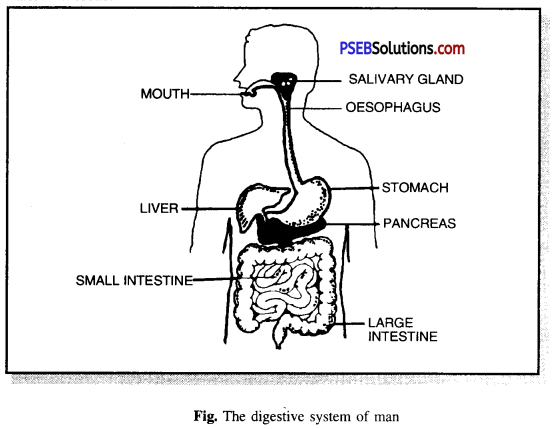
The different parts of the Digestive system are as follows:

  1. Oral cavity
  2. Food Pipe
  3. Stomach
  4. Small intestine
  5. Large intestine
  6. Rectum
  7. Anus.

PSEB 7th Class Science Solutions Chapter 2 Nutrition in Animals

6. Short Answer Type Questions:

Question (i)
What do you mean by milk teeth and permanent teeth ?
Answer:
(a) Milk teeth. Two sets of teeth develop during a person’s lifetime. The first set consists of 20 small teeth, also called milk teeth. They grow during infancy and break down at 6 and 8 years of age.

(b) Permanent Teeth. Between the ages of 6 to 8 years, permanent teeth (32) appear after the fall of the milk teeth. Permanent teeth begin to fall out between the ages of 50 and 60.

Question (ii)
Write four types of human teeth and their functions.
Answer:
The four types of teeth found in post-humans and the four types of teeth found in functional humans are given below:
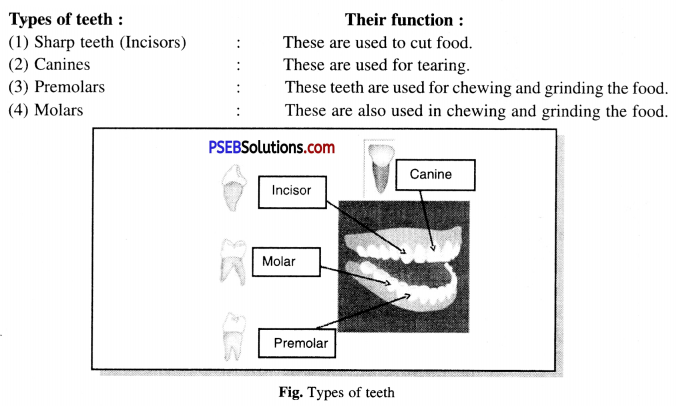
PSEB 7th Class Science Solutions Chapter 2 Nutrition in Animals 2

7. Long Answer Type Questions:

Question (i)
Explain nutrition in Amoeba with the help of a diagram.
Answer:
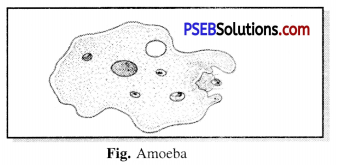
PSEB 7th Class Science Solutions Chapter 2 Nutrition in Animals 3
Amoeba.
Amoeba is a microscopic single celled organism found in pond water. It has a cell membrane, a rounded, dense nucleus and many small bubbles- like vacuoles. Amoeba constantly changes it’s shape and position. It moves with it’s virtual feet (called pseudopodia).These are finger like structures which help in movement. During food intake, the membrane between the two virtual legs melts around the food and the food particle get trapped into a vacuole and there is a leakage of enzymes inside it, which break it down in simpler substances from which nutrients are absorbed. Undigested food particles are abandoned by a similar process.

Question (ii)
label the following diagrams:
PSEB 7th Class Science Solutions Chapter 2 Nutrition in Animals 4
Answer:
PSEB 7th Class Science Solutions Chapter 2 Nutrition in Animals 5

PSEB 7th Class Science Solutions Chapter 2 Nutrition in Animals

PSEB Solutions for Class 7 Science Nutrition in Animals Important Questions and Answers

1. Fill in the Blanks:

(i) The main steps of digestion in humans are ……………, ……………, ………….., ………… and ………… .
Answer:
ingestion, digestion, absorption, assimilaton, egestion

(ii) The largest gland in human body is ………………
Answer:
liver

(iii) The stomach releases hydrochloric acid and ………………. juices which act on food.
Answer:
digestive

(iv) The inner wall of small intestine has many finger like outgrowths called ……………… .
Answer:
villi

(v) Amoeba digests its food in the …………… .
Answer:
food vacuole

2. State True or False:

(i) Digestion of starch starts in the stomach.
Answer:
False

(ii) The tongue helps in mixing food with saliva.
Answer:
True

(iii) The gall bladder temporarily stores bile.
Answer:
True

PSEB 7th Class Science Solutions Chapter 2 Nutrition in Animals

(iv) The ruminants bring back swallowed grass into their mouth and chew it for some time.
Answer:
True

3. Match the Column I with Column II:

Column I (Food Components) Column II (Products of Digestion)
1. Carbohydrate (a) Fatty acids and glycerol
2. Proteins (b) Sugar
3. Fats (c) Amino acids.

Answer:

Column I (Food Components) Column II (Products of Digestion)
1. Carbohydrate (b) Sugar
2. Proteins (c) Amino acids
3. Fats (a) Fatty acids and glycerol.

4. Multiple Choice Questions:

Question (i)
Name the process of breaking down of complex substances of food into simpler forms.
(a) Assimilation
(b) Ingestion
(c) Digestion
(d) Egestion.
Answer:
(c) Digestion.

Question (ii)
Name the largest digestive gland of human beings ?
(a) Salivary
(b) Pancreas
(c) Liver
(d) Intestinal.
Answer:
(c) Liver.

Question (iii)
Which acid kills bacteria in stomach ?
(a) Sulphuric
(b) Nitric
(c) Hydrochloric
(d) Phosphoric.
Answer:
(c) Hydrochloric.

Question (iv)
Of the following, in which animal rumen is found?
(a) Cow
(b) Dog
(c) Lion
(cI) Cheetah.
Answer:
(a) Cow.

Question (v)
What is the length of small intestine?
(a) 10.5 m
(b) 4 m
(c) 3 m
(d) 7.5 m.
Answer:
(d) 7.5 m.

PSEB 7th Class Science Solutions Chapter 2 Nutrition in Animals

Question (vi)
Movement of food in alimentary canal is called:
(a) Locomotion
(b) Pumping
(c) Peristalsis
(d) Sliding.
Answer:
(c) Peristalsis.

Question (vii)
Which is the simplest carbohydrate?
(a) Glucose
(b) Sucrose
(c) Starch
(d) All of the above.
Answer:
(a) Glucose.

Question (viii)
Where is Saliva produced?
(a) Stomach
(b) Pancreas
(c) Salivary Glands
(d) None of the above.
Answer:
(c) Salivary Glands.

Very Short Answer Type Questions

Question 1.
What is food pipe ?
Answer:
Food pipe. It consists of orla cavity oesophagus, stomach, small intestine, large intestine, anus etc.

Question 2.
Write the names of digestive glands.
Answer:

  1. Salivary glands
  2. Liver
  3. pancreas.

Question 3.
What are the different parts of the digestive system ?
Answer:
Digestive juices and food pipe.

Question 4.
When does temporary or milk teeth fall ?
Answer:
Upto the age of six or eight years.

PSEB 7th Class Science Solutions Chapter 2 Nutrition in Animals

Question 5.
What is length of small intestine ?
Answer:
7.5 metre (approx.)

Question 6.
What length of large intestine ?
Answer:
1.5 metre (approx.)

Question 7.
Name different types of teeth found in human body.
Answer:
Canines, Incisors, Molars, Premolars.

Question 8.
Which teeth are for cutting and bitting ?
Answer:
Incisors.

Question 9.
Which teeth help in tearing the flesh of prey in animals ?
Answer:
Canines.

Question 10.
What is function of molars and premolars ?
Answer:
Chewing and grinding.

Question 11.
What is tongue ?
Answer:
Tongue. Tongue is a fleshy part of body.

Question 12.
How does tongue taste ?
Answer:
With the help of taste buds.

PSEB 7th Class Science Solutions Chapter 2 Nutrition in Animals

Question 13.
What food items are responsible for tooth decay ?
Answer:
Chocolates, Cold drinks, Sweets etc.

Question 14.
Which acid present in stomach kills germs ?
Answer:
Hydrochloric acid.

Question 15.
Which component of food is broken down by saliva in mouth ?
Answer:
Starch.

Short Answer Type Questions

Question 1.
What is Villi ? Where are they present and what are their functions?
Answer:
Villi. Finger-like raised structures in the inner wall of the small intestine are called villi. These are found in the small intestine. Its main function is to absorb digested food.

Question 2.
Where is bile juice made ? Which food components are digested by it?
Answer:
Bile juice is made in the liver and accumulates temporarily in the gallbladder. Its main function is to digest fats.

Question 3.
Write the name of the carbohydrate which is digested by Ruminants but not by humans. Also give reason.
Answer:
Cellulose can be easily digested by Ruminant. A type of bacterium that helps in the digestion of cellulose is found in a sac between the small and large intestines in the rumen of ruminants only. This is the reason humans cannot digest cellulose.

Question 4.
What is the reason that we get energy from glucose immediately?
Answer:
Glucose is a simple form of carbohydrate that is easily absorbed by the body. It dissolves easily in the blood and gives energy immediately.

PSEB 7th Class Science Solutions Chapter 2 Nutrition in Animals

Question 5.
Which part of the digestive canal is involved in:
(i) Absorption of food …………. .
(ii) Chewing of food ………………. .
(iii) Killing of bacteria ……………. .
(iv) Complete digestion of food …………… .
(v) Formation of faeces ……………….. .
Answer:
(i) Small intestine
(ii) Buccal cavity
(iii) Stomach
(iv) Small intestine
(v) Large intestine.

Question 6.
Write one similarity and one difference between the nutrition in amoeba and human beings.
Answer:
Similarity in the nutrition in amoeba and human beings:
(a) Digestion of food
(b) Release of energy
Difference in nutrition in amoeba and human beings.
Human beings have a well developed digestive system while amoeba has only food vacuole for digestion.

Question 7.
Can we live only by eating vegetable/grass ? Discuss.
Answer:
Raw green vegetables are rich source of minerals, cellulose and vitamins etc. Apart from, this body needs carbohydrates, fats and proteins. So only vegetables can not provide all these for sustaining etc.

Question 8.
What is digestion and what are its main objectives?
Answer:
The breakdown or conversion of complex foods into simple foods is called digestion.
Purpose of Digestion.

  • Breaking of large particles into smaller particles so that they can pass through the
    membranes.
  • Conversion of insoluble substances into soluble substances so that the solution can reach all the places.
  • Complete conversion of complex foods into simple substances so that they can be absorbed by cells.

Question 9.
What is a tooth cavity and why does it occur ?
Answer:
Tooth cavity and toothache. By eating too much sweets and not keeping our teeth clean, we invite bacteria which causes damage to our teeth. If we do not keep our teeth clean, food particles get stuck in the teeth and by attacking them, the bacteria start decomposing the food particles which results in the formation of acid. This acid destroys tooth enamel and causes tooth decay. So we should always brush our teeth after eating food and sweets.

Long Answer Type Questions

Question 1.
Describe the digestive system of man.
Answer:
The digestive system of man includes the following organs :

  • Mouth. The mouth is first part of food pipe. It contains tongue, teeth and salivary glands. The tongue tastes the food. The salivary glands secrete saliva which lubricates the food. The teeth break the solid food into smaller fragments.
  • Oesophagus. It is a tubular structure from mouth to stomach. It takes the food from mouth to stomach.
  • Small intestine. It is a coiled tube and is the longest part of food pipe. The digestion of food is completed here with the help of enzymes present in the secretions of liver and pancreas.

PSEB 7th Class Science Solutions Chapter 2 Nutrition in Animals 6

  • Large intestine. It absorbs water. The undigested food or faecal matter is stored temporarily and finally removed from the body through the anus.

Question 2.
What is the process of Rumination? How is digestion done in Ruminants? Explain.
Answer:
Rumination. Grass-eating animals chew the cud and are called Ruminants. Cows, buffaloes, camels, and deer are a few examples. Their stomach is made up of four cells. The first cell is the rumen, which is the largest part of the stomach. The animal first swallows the food and stores it in the rumen. This half-digested food is called cud. Later, the cud returns to the animal’s mouth in the form of small lumps and the animal continues to chew it slowly. This process is called rumination. Such animals are called ruminants.

During rumination, the cellulose in the food breaks down into simple compounds. It is then digested in liquid form in the other three cells. The esophagus of ruminant animals has a sac-like structure between the small intestine and the large intestine called the Caecum, where there are some bacteria that help digest grass straw.
PSEB 7th Class Science Solutions Chapter 2 Nutrition in Animals 7

PSEB 6th Class Physical Education Solutions Chapter 6 National Flag

Punjab State Board PSEB 6th Class Physical Education Book Solutions Chapter 6 National Flag Textbook Exercise Questions and Answers.

PSEB Solutions for Class 6 Physical Education Chapter 6 National Flag

Physical Education Guide for Class 6 PSEB National Flag Textbook Questions and Answers

Question 1.
Which are the three colours in National Flag? Throw some light on the significance of these three colours.
Answer:
National Flag has three colours:
(1) Saffron
(2) White
(3) Green.

1. Saffron:
Saffron colour should always be on the top. It has been taken from fire. Fire has two qualities offering sacrifice and destruction. So, the saffron colour is a symbol of chivalry and zeal. The poor, the needy and the weak should be looked after with zeal and zest.

2. White:
It is the symbol of virtue, truth and peace. It means that the whole nation should be replete with such qualities. If it is there, the evils will- die its own death. This white stripe of this colour is in the middle of the flag.

3. Green:
It is the third and the lowest stripe in the flag. It represents the soil of the land. It is the symbol of prosperity. The fact is that the soil of our country is fertile & the fields are blooming.

PSEB 6th Class Physical Education Solutions Chapter 6 National Flag

Question 2.
On what occasions can the National flag be unfurled?
Answer:
(a) Republic Day:
The President of India unfurls the flag on Rajpath in Delhi every year on 26th January. On the government buildings of the country or wherever Republic day is celebrated, the Flag is hoisted.

(b) National Week (6th April to 13th April):
In the memory of martyrs of Jalianwala Bagh, National Week is celebrated and National flag is hoisted.

(c) Independence day:
The Prime Minister of India hoists the National flag on 15th August every year from the ramparts of the Red Fort. On all the government buildings & on all buildings where this day is celebrated our National Flag is hoisted.

(d) On National festivals/conferences.

(e) On 2nd October-Mahatma Gandhi’s Birthday.

(f) In foreign countries where any Indian representative stays and when Indian team participates in International matches.

(g) The flag is hoisted everyday on the buildings of Lok Sabha, Rajya I Sabha, Supreme Court, Posts of National boundaries, official residences of the President, Vice-President, Governors and the Lieutenant Governors.

Question 3.
Write a note on shape and size of National flag.
Answer:
Its length and breadth is 3:2. And its size is:

  • 6.40 mt × 4.27 mt (21 feet × 14 feet)
  • 3.66 mt × 2.44 mt (12 feet × 8 feet)
  • 1.83 mt × 1.22 mt (6 feet × 4 feet)
  • 90 cm × 60 cm (3 feet × 2 feet)
  • 23 cm × 15 cm (9 inches × 6 inches)

PSEB 6th Class Physical Education Solutions Chapter 6 National Flag

Question 4.
At what time should the flag be unfurled?
Answer:
The national flag is unfurled the following functions:

1. Republic day:
In 26th Jan. is celebration is great pump and day. On this Republic day president’of India unfurled the flag at Delhi and so many other cities the flag is also unfurled in various cities.

2. National week of year: (6 to 13 April):
The national week of year is celebrated in the hoqour of martyrs of Jallianwala Bagh. In this week the national flag is unfurled.

3. Independent day 15 Aug:
India got freedom after so many centuries in 15 Aug. 1947. Therefore every year 15 Aug. is celebrated with great enthusiasm. On 15 Aug. the Prime Minister of India unfurl the flag at red fort in Delhi. In all cities of the country the national flag is unfurled.

4. Gandhi Jayanti 2 Oct: On Birthday of Mahatma Gandhi unfurled the flag.

5. In national all celebrations also, the flag is unfurled

6. International sports competition: In International competition the flag is unfurled with other countries.

Provincial day:
When any state celebrate its provincial day this national flag is unfurled every day. Lok Sabha, Rajya Sabha, Supreme Court, Vice president, Governor and Lt. Governors also unfurled the national flag in their house everyday.

Question 5.
Which points should be borne in mind at the time of hoisting the National Flag?
Answer:

  • National Flag is hoisted when saffron colour is on the top.
  • National Flag with respectfully should be high from everything.
  • It is always held in the right hand.

PSEB 6th Class Physical Education Solutions Chapter 6 National Flag

PSEB 6th Class Physical Education Guide National Flag Important Questions and Answers

Multiple Choice Questions

Question 1.
How many colours are there in our flag?
(A) Three
(B) Four
(C) Five
(D) Six.
Answer:
(A) Three

Question 2.
On which occasions can the National Flag be unfurled?
(A) Republic Day
(B) Independence Day
(C) Gandhi Jayanti
(D) All above.
Answer:
(D) All above.

Question 3.
Which points should be born in mind at the time of hoisting the National Flag?
(A) Saffron colours is on the top.
(B) It is always in the right hand.
(C) National flag should be high from everything.
(D) All above.
Answer:
(D) All above.

PSEB 6th Class Physical Education Solutions Chapter 6 National Flag

Question 4.
What is the significance of National Flag of the country?
(A) Culture
(B) Aan Ban
(C) Civilization
(D) All above.
Answer:
(A) Culture

Question 5.
Which colours are there in our National Flag?
(A) Saffron
(B) White
(C) Green
(D) All above.
Answer:
(D) All above.

Question 6.
From where we took Chakra for our National flag?
(A) Samath by Emperor Ashoka
(B) Teerkaman
(C) From sky
(D) None of them.
Answer:
(A) Samath by Emperor Ashoka

PSEB 6th Class Physical Education Solutions Chapter 6 National Flag

Very Short Answer Type Questions

Question 1.
National flag of each country gives the significance of.
Answer:
Culture.

Question 2.
Government provides us knowledge about National Flag through.
Answer:
Schools and Colleges.

Question 3.
Which colours are present in our national flag?
Answer:
Saffron, White & Green.

Question 4.
When our Constitution adopted our National Flag?
Answer:
22 July, 1947.

PSEB 6th Class Physical Education Solutions Chapter 6 National Flag

Question 5.
When our National flag first hoisted on Red Fort?
Answer:
15 August, 1947.

Question 6.
Which thing is indicated by saffron colour present in our flag?
Answer:
It indicates sacrifice, courage and selflessness.

Question 7.
From where we took the Ashok Chakra for our National Flag?
Answer:
Samath by Emperor Ashok.

Question 8.
From which cloth our national flag is prepared?
Answer:
Khadar.

Question 9.
Where did small sized flags are placed?
Answer:
In Cars.

Question 10.
When and where Prime Minister hoists our National Flag every year?
Answer:
On 15th August on the Red Fort.

Question 11.
Flag is held in which hand?
Answer:
Right hand.

PSEB 6th Class Physical Education Solutions Chapter 6 National Flag

Short Answer Type Questions

Question 1.
What do you know about the history of your National Flag?
Answer:
In 1947, our country got the Independence after more than 200 years. When our country got Independence then we also had prepared a flag for our country. On 22 July, 1947 our constitution accepted our National Flag. On 14-15 August 1947 at night our national flag was hoisted on Red Fort.

Question 2.
Write the four-five lines on our National Flag.
Answer:
The shape of our National Flag is rectangular. It is made up of three different colours. So, it is also known as ‘Tiranga’. In centre a circle is also drawn with 24 spokes named Ashok Chakra. It has three colours-Saffron, White & Green.

Question 3.
What we know through our National Flag?
Answer:

  • Be a strong person
  • Always do hardwork
  • Make your country happy & beautiful
  • Always live in peace

PSEB 6th Class Physical Education Solutions Chapter 6 National Flag

Question 4.
Three colours of our National Flag indicate us what things?
Answer:
Saffron colour indicates us sacrifice, courage and selflessness. White colour indicates truth and peace. Green colour indicates soil of the land and its fertility.

Kabaddi Game Rules – PSEB 10th Class Physical Education

Punjab State Board PSEB 10th Class Physical Education Book Solutions Kabaddi Game Rules.

Kabaddi Game Rules – PSEB 10th Class Physical Education

Question 1.
Mention the length and breadth of the Kabaddi ground. Describe the main rules of the game?
Answer:
Playground:
The playground shall be rectangular, level and soft. It should be made of earth, manure or saw dust. For men, it is 12.50 metre long and 10 metre wide. For women and juniors, it is 11 metre long and 8 metre wide. It is divided by a centre line into two equal parts. There shall be a strip of one metre on each side of the playfield. It is called Lobby. In each half at a distance of 3 metres on the centre line and parallel to it, lines of the full width of ground shall be drawn.

These lines are called Baulk lines. The mid-line should be distinctly marked. The width of the mid-line and other lines should not exceed 5 cms, or 2 inches. Outside the side line and towards the end line a space of 4 metres should be left empty. The sitting block shall be 2 metres away from the end line. The sitting block for men shall be 2 m × 8 m., and for women and juniors it shall be 2 m × 6 m.

Bonus Line:

  1. This line is at a distance of 10 cms. from the baulk line, and for seniors, it is at a distance of 1 metre from the baulk line.
  2. When a raider comes after having crossed it fully, he does not get any point for it.
  3. If a raider after having crossed the bonus line is caught, the opposing team is awarded a point.
  4. If a raider succeeds in crossing the bonus line and also touching an opponent, he is given one point.

kabbadi court image 1

Officials:

  1. One referee
  2. Two umpires
  3. Two linesmen
  4. One scorer

The decisions of the umpire are final, but they can be changed under special circumstances. When the referee considers the decision wrong, he announces his own decision.

Players Dress:
The player’s dress includes a banyan and nicker (half pant). Then there is ‘jangian’ or join-cloth below. The use of safety pin and ring is prohibited. Nails should be pared.

Kabaddi Game Rules - PSEB 10th Class Physical Education

Rules of The Game

1. The toss winning team shall have the right to choose the end of raid.

2. A player who goes out of the boundary during the play shall be considered ‘out’.

3. If anjapponent goes out of the boundary and catches the raider, the raider shall not be considered ‘out’ but all the players catching him shall be ‘out’. The raider shall come back to his side and take part in their game.

4. Lobby is also considered to be the limit of the game when the struggle starts. When the struggle is over, players in the struggle can enter the respective lobby.

5. A raider should go on sounding the words ‘Kabaddi-Kabaddi’ while entering the court of the opponents. If he starts the cant of Kabaddi only after he has entered the opponent’s court, he is ordered back by the umpire and the opponent shall be given the chance of raiding.

6. If even after the warning the raider deliberately violates the rule, the umpire shall declare his turn over, and his opponent shall be awarded one point, but he shall not be declared out.

7. After a raider has returned to his court, the opposing team shall immediately send its raider. So each side shall send its raiders alternately until the end of the play.

8. If a raider caught by opponents escapes and reaches his side safely, he shall not be pursued thereafter.

9. Only one raider shall go to the anti-court at a time. If more than one raiders reach the anti-court, the umpire shall order them to return to their court, and their turn of raiding shalLbe over. The opponents who touch them shall not be declared out. They shall not pursue the raiders to send them out.

10. If after the warning a player violates the rule, the umpire shall end his turn, and award one point to the opponents, but he shall not be declared ‘out’.

11. If a raider loses his cant in the anti-court, he shall be reckoned to be ‘out’. But if it happens as a result of the use of unfair means by the opponents, then he shall be deemed to have returned safely to his court.

12. No player shall push his opponent violently out of his boundary. The one who does so shall be considered ‘out’, and the raider shall return safely to his court.

13. Until the raider is in the anti-court, no opposing player shall touch with any part of his body the ground of the raider’s court beyond the mid-line.

14. If a player who violates the Rule no. 12 catches the raider or helps others in catching him, the raider shall safely return to his court, and all the opponents involved in the struggle shall be ‘out’.

15. If a player enters the anti-court out of turn, the umpire shall order him to come back. If after the warning by the umpire he does so again, the opponents shall be given one point.

16. According to new rules, it is not a foul to get water from outside and drink it.

17. When a team makes the entire opposing team out, it is successful. Two points are added to the points it has scored in making the opponents out. The players of both the sides shall enter their respective courts, and the game shall continue upto the end of time.

18. If a player warns a raider against any danger by the opponents, the umpire shall award one point against him.

19. No raider or opponent can be held by any part of his body other than his waist, hand or foot. He who violates this rule shall be declared ‘out’.

20. During any play if only one or two players of a team are left and the captain of the opposing team declares them out in order to bring in the play the whole of his team, the opponents shall score as many points as there are players and additional two scores of Lona.

21. With the opponents being out, the out-players of the team shall be put in the game in the same order in which they were out.

22. New Rules – If the match remains suspended for 20 minutes because of injury to some players, the match can be replayed.

23. The match can be started with five players. But when the five players are out, we shall consider full Lona, that is, 5 + 2 score, of players and 2 scores of Lona.

24. Lona has two scores.

Kabaddi Game Rules - PSEB 10th Class Physical Education

Question 2.
Write five main rules of the Kabaddi match and its violations?
Answer:
Rules Of The Match
1. Each team has twelve members in all, out of which only 7 shall enter the ground together. The remaining shall remain in reserve.

2. For men the game shall have two durations of 20 minutes, and for women, two durations of 15 minutes. There shall be an interval of 5 minutes between these durations of play. The ends shall be changed after the interval.

3. For each player going ‘out’, the opposing team shall be given one score. The team getting Lona shall be given two scores.

4. At the end of the game the team having more scores shall be declared the winner.

5. If the match ends in a draw, two extra durations of 5-5 minutes for play shall be granted. During the extra time the game shall be continued by the end players of the other team. If the tie occurs at the end of 50 minute game for men or 40 minute game for women, the team that scores the first point shall be the winning one.

6. If no score is made during the whole 50 minute game for men or 40 minute game for women, the toss winning team shall be declared the winner.

7. If a match cannot be completed due to some reason, it shall be re-played.

8. In case of an injury to a player, the captain shall ask for a time out. But the duration of the time-out shall not be more than two minutes. The injured player can be substituted. Before starting the second turn of the game, two players can be substituted.

The game can be started by one or two or minimum number of players. At the start of the game those players who are absent can join the game later at any time, but the referee must be informed. If the injury to a player is serious, the injured player can be substituted. By the end of the first game, only two players can be substituted.

9. A match may be started if there are five players in a team but

(i) when the seven players of the team are out, the absent players shall also be ‘out’ and the opposing team shall be awarded Lona, (ii) the absent players can join the game with the referee’s permission.

(iii) the substitutes can be taken in place of absent players any time, but when they are so taken, no player can be substituted till the end of the match, and (iv) any player can be substituted in case the match is re-played.

10. Playing by using oil on the body is not permissible. The nails of the players should be pared well. The players shall wear banyan, underwear the nicker (half pant). Rubber-soled shoes and socks may be put on, if necessary.

11. During the play except the captain or leader, no player shall instruct. The captain can instruct only in his own half.

12. For junior boys and girls the duration of play is 15-5-15 minutes, out of which the interval is of 5 minutes.

Various Fouls and Violations in Kabaddi Fouls.

  • To try to stifle a raider by shutting his mouth or throttling him.
  • Using violent tackling by one player against the other.
  • Instruction or coaching cannot be done from the outside.
  • To hold the raider with the half of leg-scissors.
  • It is a foul when player on rest takes more than five minutes.
  • To take more than five seconds to send a raider by a team.
  • The referee can remove such players from the game by deducting their scores or marks. The whistle shall not be blown during the time of struggle.
  • To catch by hair or clothes intentionally is foul.

Violations

  • Violating the rules or decisions time and again.
  • Using derogatory remarks against the officials.
  • To show insulting behaviour to the officials or to try to influence their decisions.
  • To make insulting remarks to the opponent.

FOULS PLAY:
Referee or umpire will control the match of tournament by using the cards:

GREEN CARD:
Warning to player or coach.

YELLOW CARD:
Temporary suspension for 2 minutes.

RED CARD:
Suspension for the match or for the tournament

Kabaddi Game Rules - PSEB 10th Class Physical Education

Important Information About the Kabbadi Game

  • The length of the ground for men = 13 Metre
  • The Breadth of the ground for men = 10 Metre
  • The length of‘the ground for women = 12 Metre
  • The breadth of ground for women = 8 Metre
  • The length and breadth for Junior boys & girls = 11 × 8 metre
  • Total number of players in a team = 12
  • Duration of the match for men = 20-5-20 Minutes
  • Duration of play for women = 15-5-15 M.
  • Breadth of the lines = 5 cms.
  • Points of Iona = 2 points
  • Size of sitting block for men = 1 × 8 M.
  • Size of sitting block for women = 1 × 6 M.
  • Officials of the match = One referee, Two umpires, one scorer, one time-keeper, two linemen
  • Each team has 7 players. Seven players shall play in ground at one time. There are 5 substitutes.
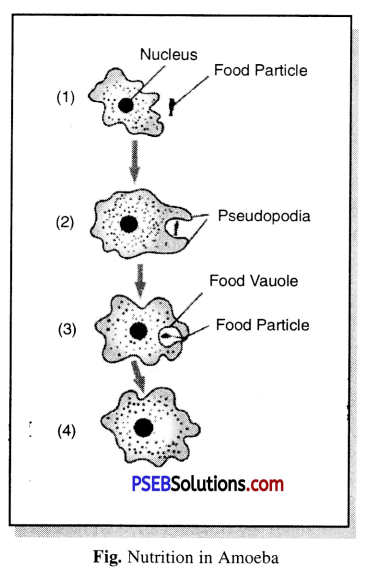
  • The team that wins the toss chooses the end and also gets an opportunity of the raid first.
  • The game has two durations of 20 minutes each with an interval of 5 minutes. For women and juniors the duration of the game is 15-5-15 minutes, out of which there is an interval of 5 minutes.
  • If any player leaves the ground, he shall be declared ‘out’.
  • If any part of the body of a player touches the outside of the boundary of the ground, he shall be ‘out’.
  • If the match is not completed for some reason, it shall be replayed.
  • A player cannot use oil or any greasy matter on his body.
  • During the game no player can hold the other player by leg scissors.
  • A substitute may take the place of a player if he is injured.
  • The captain can take a time-out with the permission of the referee, but the duration of the time-out should not be more than 2 minutes.
  • The player can be given water from outside the boundary. If water is given inside the boundary, it is a foul.
  • A team can substitute three players.
  • If a team gets a Lona, it is given additional two points.
  • Substitutes cannot be substituted again.

Handball Game Rules – PSEB 10th Class Physical Education

Punjab State Board PSEB 10th Class Physical Education Book Solutions Handball Game Rules.

Handball Game Rules – PSEB 10th Class Physical Education

Question 1.
Give an introduction to the Handball game?
Answer:
Handball-An Introduction:
Handball is a team sport. Two teams participate in this game. Each team has 12 players, out of which 10 are court players and 2 are goal-keepers. Not more than 7 players enter the court at a tinine. Out of these 7, 6 are court players and 1 is a goal-keeper. The remaining 5 players are substitutes. A player may be included in a game or a substitute may be allowed for him. No one else but a goal keeper is allowed in the goal area.

The game starts in the middle of the court as soon as the referee whistles for a throw-on. The duration of the game for men is 30-10-30 minutes, while for women it is 25-10-25 minutes.

Each team tries to put the handball into the goal of the rival team, and tries to defend its own goal against the rival attacks. The ball is played by hands, but it can be touched by knees or any other part of the body. Only a goal-keeper can touch the ball by all parts of his body. A player can be substituted any time during the play. There is no time out in this game.

The players, running, walking or standing, can toss the ball with single hand. A player with a ball can move forward, but he cannot move more than three steps. A ball can be held for three seconds at the most. If a player gets hint, the game can be stopped on the referee’s orders, and the substitute enters the court in case of need. The weight of the ball for men is 475 gms. and for women, it is 425 gms. The circumference of the handball is from 58 to 60 cms.

After a goal has been scored, the game shall re-start from the middle of the court with a throw-on. The throw-on-shall be done by that player against whom a goal has been scored. If the ball goes out during the play, the rival team gets a throw from that place. After half-time the goal and throw-on shall be changed.

A team that scores more goals is declared the winner. If the number of goals scored by both the teams is equal or if no goal is scored, the match shall end in a draw. Each game shall be conducted by two referees who are assisted by a scorer and a time-keeper. Referees enforce the rules of the game. Referees are the managers of the match from the start to the finish.

Handball Game Rules - PSEB 10th Class Physical Education

Question 2.
Mention the Play ground, Goal, Ball, Players, Duration of the game, Goal area, Score, Throw-in, Comer throw, Goal throw, Free throw and Penalty throw in the game of Handball.
Answer:
Playground:
The playground is divided into two circular areas, The court of the game is rectangular with a length of 40 metres and width of 20 metres. The thickness of each line is 0.5 cm. The height of the poles is 7 feet, while their width is 3 metres. A‘D’ is marked 6 metres in front of the poles. The penalty area is 7 metres away from poles. In special circumstances, the play area may be 38-44 metres in length and 18-22 metres in width.

Handball image 1
Handball image 2
Handball image 3

Goals:
Goals shall be in the centre of goal lines. There shall be two straight poles in each goal parallel to and at an equal distance from the corners of the playfield. The poles shall be 3 metres from each other and 2 metres in height. They shall be firmly planted in the ground, and linked properly with each other with a horizontal cross-bar. The outer end of the goal line and the back end of the goal post shall be in one line.

Poles and cross-bar shall be square and of the size of 8 × 8 cms. They shall be made of wood, light metal and synthetic material. They shall have two colours on all sides and shall be distinctly different from the background.

Each goal shall be marked with a line of 3 metres, 6 metres from goal area and parallel to the goal line. The ends of this line shall be linked by quarter circles to goal line. The circumference of these circles shall be 6 metres from the back of the inner cover of goal poles. This line is called goal-area-line. Penalty line is marked at a distance of 7 metres, from the centre of goal post, and the second free throw line at a distance of 9 m.

The Ball:
The handball should be spherical, with a rubber bladder, and its outer cover should be made of leather of one colour or of synthetic material. The outer cover should neither be bright nor slippery. The ball should not be inflated too much. Its weight for men and seniors shall not be more than 475 gms. or less than 425 gms. Its diameter shall be from 58 cms. to 60 cms. For all women and junior boys, its weight shall not be more than 400 gms..and not less than 325 gms. Its diameter shall be from 54 to 56 cms.

Players:
Each team has 12 players in all, out of which 10 are court players and 2 are goal-keepers. But only 7 players can participate in the game at one time, out of which 1 is goal-keeper and 6 are court players. In case a player is hurt, a substitute player comes in his place to play the game.

Duration of Game:
The duration of the game for men is 30-10-30 minutes, while for women it is 25-10-25 minutes. There is no time out in the game. The referee can take official time-out, if needed.

Note:
In tournaments, the game is played into two durations of 30 minutes each with no interval.

Handball image 4
Handball image 5

For women and juniors, the game is divided into two durations of 25 minutes each with an interval of 10 minutes.

Note:
In tournaments, the game is played in two durations of 10 minutes each state interval. For all other teams, it shall be played in two equal durations of 20 minutes each.

Goal:
A goal cannot be scored against the rivals by a direct throw-on.

Playing the Ball:
The following methods of play are allowed:

Blocking the ball, catching, throwing, tossing or hitting it in any way or direction (with palms or flat hands) by using arms, head, body, knees etc are valid.

When the ball lies on the ground, it can be held for three seconds at the most. To walk with the ball for three steps is valid.

Handball Game Rules - PSEB 10th Class Physical Education

The Goal Area:
The goal-keeper alone is entitled to enter or remain inside the goal-area. The goal-keeper is considered to be entered if a player touches him in any way. The goal area line is included in the goal area. The following penalties are awarded on entering the goal area:

Handball image 6

  • Free-throw, when the ball is in the court player’s possession.
  • Free-throw, when the ball is not in the court player’s possession but he has clearly taken the advantage by entering the goal area.
  • Penalty-throw, when any player of the defending team knowingly and clearly enters the goal area for defence.

Scoring:
A goal is considered to have been scored when the hall passes through the goal line of the rivals through the goal posts under the cross bars, provided the scorer or any player of his team has not violated the rules.

Throw-in:
If the ball crosses the boundary line or goes out of side line in the air, the game shall be re-started by a throw-in. The throw-in is taken by that player who has been last touched by the ball. The throw-in is taken from the point from where the ball has crossed the side-line.

Corner-throw:
When the ball passes the goal line outside the goal by the player of the defending team when touched for the last time, the attacking team is awarded a corner throw. This rule is not applicable on the goal-keeper in his own goal area.

Handball image 7

Within 3 seconds of the court referee’s whistle the corner throw shall be taken from the same point of the goal side where the touch line and goal line meet each other, and from where the ball has gone out. The players of the defending team can take positions along the goal area line.

Goal-throw. Goal-throw is given in the following circumstances:

  • When the ball crosses from above the goal line on the ground, in the air, having touched by the players of the attacking team or when the goal-keeper of the defending team has touched it in the goal-area.
  • When the ball passes straight in the goal of the rival team by throw-in.

Free-throw:
Free-throw is awarded in the following circumstances:

  • On a player’s entering or leaving the playground in a wrong manner.
  • On a player’s making the throw-in wrongly.
  • On a player’s violating the rules.
  • On a player’s knowingly playing the ball outside the side line.

Handball Game Rules - PSEB 10th Class Physical Education

Penalty-throw:
Penalty-throw is awarded ‘when a player:

(i) makes a serious violation of rules in his own half.
(ii) makes a serious violation of rules in the court, area, spoiling the possibility of a clear goal.

Handball image 8

GOAL KEEPER’S POSITION FOR PREVENTING SCORING

(iii) enters his goal area intentionally with the aim to defend.
(iv) pushes the ball intentionally in his goal area and the ball touches the goal-keeper.
(v) or when a goal-keeper carries the ball in his own goal area.
(vi) or when a goal-keeper spoils a clear possibility of scoring a goal in the opponent’s half of court.
(vii) or wdien there is a wrong substitution of a goal-keeper.

Question 3.
Describe the number of officials conducting the Handball game.
Answer:
Officials
The following officials conduct the game of handball:

(i) Referee-1
(ii) Umpire-1
(iii) Time-keeper-1

Decision:
The team that scores more goals is declared the winner.

Handball image 9

Handball Game Rules - PSEB 10th Class Physical Education

Important Information About the Handball Game

  • Number of players in a team = 12
  • Number of players on the court = 7
  • Number of goalkeeper in a team = 2
  • Number of players who actually play = 7 (6 court – player one goal keeper)
  • Circumference of the ball = 58 to 60 cm
  • Duration of play for men = 30-10-30 minutes
  • Duration of rest = 10 minute
  • Weight of the ball for men = 425 to 472 grams
  • Weight of the ball for women = 325 to 375 grams
  • Circumference of the ball for men = 58 to 60 cm
  • Circumference of the ball for women = 54 to 56 cm
  • The game of handball is played between two teams
  • The game starts with the pass from one team to the other from the centre line.
  • The duration of the game for men is 30-10-30 minutes while for women it is 25-10-25 minutes.
  • The total number of players in each team is 12. The number of players to participate in the game is 7; the remaining five players are substitutes.
  • The player can be substituted any time during the play.
  • If a player gets injured, the game can be stopped on the orders of the referee, and the substitute enters the playfield, in case of need.
  • To run with the ball is considered to be a foul.
  • The weight of the handball for men is 475 gms, while for women it is 425 gms.
  • The circumference of handball is from 58 cms. to 60 cms.
  • If the ball goes out of the court, the rival team gets a throw from that place.
  • To push any player deliberately during the game is considered to be a foul.
  • A referee and an umpire conduct the game.
  • The length of the playground is 40 metres, and the width is 20 metres.
  • The goal-keeper cannot leave the outer D.
  • There are two D’s in the game of handball.
  • If a player with the ball is proceeding towards the D, and if a rival catches him by the arm, the referee awardg a penalty.

PSEB 6th Class Physical Education Solutions Chapter 4 Folk Games of Punjab

Punjab State Board PSEB 6th Class Physical Education Book Solutions Chapter 4 Folk Games of Punjab Textbook Exercise Questions and Answers.

PSEB Solutions for Class 6 Physical Education Chapter 4 Folk Games of Punjab

Physical Education Guide for Class 6 PSEB Folk Games of Punjab Textbook Questions and Answers

Question 1.
Name any two games of Children.
Answer:
Bandar Killa and Gulli Danda.

Question 2.
How many ways are there of ‘Pugatta’? Explain anyone.
Answer:
There are two methods of Pugatta.
First Method:
First of all three players place their right hands on one- another’s hands and toss their hands together in the air and then they are reversed or kept straight. If hands are placed upturned by two or three players and the third player’s hands remain straight, then that player is supposed to be ‘puggna’. In this way one by one all the players except one supposed to be ‘puggna’. If the position of the hands of all the three players is same, it means either their hands are upright straight reversed.

PSEB 6th Class Physical Education Solutions Chapter 4 Folk Games of Punjab

Question 3.
Write a note on the importance of the folk games.
Answer:
While children play different games. Every game teaches different qualities to the child. They become strong, active & alertness in brain. Kotla Chipaki game increases quickness in the child! Pithu Garam and aiming with Catapult make the child a good shot and Bandar Killa teaches how to be defensive. Wrestling & Kabaddi increase the physical strength. All these games even make the brain sharp. It makes understanding among the children & we can heritage our folk games.

Question 4.
Describe the method of playing the game ‘Bandar Killa’.
Answer:
It is very famous game of children. Children get together in the lanes of colony & find the place for Killa (Peg) to play the game of Bandar Killa. The children address each other by singing on starting the game.
‘Juttian-chapplan da,
Kar lo ve heela.
Hun apan rail ke,
Khedna Bandar killa.’
PSEB 6th Class Physical Education Solutions Chapter 4 Folk Games of Punjab 1
In this game children take off their shows & place them near the peg then they tie a rope of 5-7 metres at the bottom of the peg. All the children play the game of Bandar Killa. Do ‘puggatta’ for fixing the turn for any child. All the children after ‘pugatta’ select the child for the ‘turn’. This selected child is called ‘Bandar’. A children who make Bandar hold the rope which was tie to the peg & guard the heap of shoes. The child without leaving the rope will try to touch any child.

The other players without being touched by the .Bandar try to pick up the shoes & chappal if the Bandar touches any child while picking the chappals that child becomes Bandar. If all the children become successful in picking all the shoes & chappals without being touched by the Bandar all will run towards the place to be touched which is already fixed. All the children beat the Bandar with shoes until he reaches the fixed place as soon as Bandar reaches the fixed place beating with shoes stopped. After this another child will take the turn to perform as Bandar.

PSEB 6th Class Physical Education Solutions Chapter 4 Folk Games of Punjab

Question 5.
Which folk game do you like the most? How is it played?
Answer:
Our most wanted game is Kotla Chhapaki. In this game there is no counted of children. This game is also known as Kaji ‘Kotle di Maar.’ This game is played by 10-15 children. Children prepare a kotla making a thick rope of cloth after twisting. Then a child draw a circle with a sharp object on the ground. All the children set on the edge of the drawn circle facing inside. Now the child whose turn is fixed runs outside the circle with kotla and sing the song-
‘Kotla chhapaki, jumme raat ayie
Jehra agge-pichhe dekhe, ohdi shamat ayie’.

A child, who takes the turn runs around the children by repeating same song. No child can see at the back in this game. All the children keep their heads down. If any child looks at the back a child who takes his turn give 4-5 beats with this kotla. After running he keeps kotla behind any child & completes his round & comes back to the same child. Where he has kept kotla. If the child behind kotla at the back is placed does not aware about kotla. The child who is taking round start beating him with his kotla.
PSEB 6th Class Physical Education Solutions Chapter 4 Folk Games of Punjab 2
The child who is being beaten starts running very fast around the circle to escape his beating he has to bear beating of the kotla until he reaches back to his seat. If the child notices about kotla he picks the same & beats the child on his turn. He keeps on beating until he takes round & places the weekend seat.

PSEB 6th Class Physical Education Guide Folk Games of Punjab Important Questions and Answers

Multiple Choice Questions

Question 1.
Method of Pugna:
(A) Two
(B) Three
(C) Four
(D) Five.
Answers:
(A) Two

PSEB 6th Class Physical Education Solutions Chapter 4 Folk Games of Punjab

Question 2.
Name the Folk game of your choice.
(A) Bandar Killa
(B) Kotla Chhapaki
(C) Rope Skipping
(D) None of them.
Answers:
(A) Bandar Killa

Question 3.
Name two games:
(A) Hockey
(B) Football
(C) Cricket
(D) All above.
Answers:
(A) Hockey
(B) Football

Question 4.
Write two Folk games:
(A) Bandar Killa and Kotla Chhapaki
(B) Thief and Police man
(C) Rope Skipping
(D) Circle Kho-Kho.
Answers:
(A) Bandar Killa and Kotla Chhapaki

Question 5.
Write the importance of folk games.
(A) Development of body and mind
(B) Activeness
(C) Attentiveness
(D) All above.
Answers:
(D) All above.

PSEB 6th Class Physical Education Solutions Chapter 4 Folk Games of Punjab

Very Short Answer Type Questions

Question 1.
Write any two names of folk games.
Answer:
Kotla Chhapaki
Kikli.

Question 2.
Write the song of Kotla Chhapaki.
Answer:
‘Kotla Chhapaki, jumme raat ayie
Jehra agge-pichhe dekhe, ohdi shamat ayie.’

Question 3.
Write four lines of ‘Bandar Killa’.
Answer:
Juttian-chapplan da,
Kar lo ve heela,
Hun apan rail ke,
Khedna Bandar Killa.

Question 4.
Write how many methods of Pugatta?
Answer:
There are three methods of pugatta.

Question 5.
Write any folk game do you like most.
Answer:
Bandar Killa.

Question 6.
Which is the best game for health?
Answer:
Rope skipping.

Question 7.
Which game provide activeness, alertness and concentration?
Answer:
Pithhu Garam.

PSEB 6th Class Physical Education Solutions Chapter 4 Folk Games of Punjab

Question 8.
Write one name of big and one name of folk games.
Answer:
Hockey & Kotla Chhapaki.

Question 9.
Write one importance of folk games.
Answer:
Body become healthy.

Question 10.
Who plays the kikli?
Answer:
It is for girls.

Short Answer Type Questions

Question 1.
What is play?
Answer:
Play is a that activity which is performed for recreation and from these activities we get pleasure.

Question 2.
Write the types of games.
Answer:
We can describe the games in many ways-

  • Physically games
  • Mentally games

Our games like Cricket, Hockey, Volleyball, Football are those type of games by playing these games, we require a lot of equipments and particular playfield which are played under certain rules. Folk games are contrary of these games.

Question 3.
At what age people play the games?
Answer:
Games are played at every age-children, young & elder people. Boys & girls both play the games.

Question 4.
How can we divide our games?
Answer:
Our games like Cricket, Hockey, Football etc.

PSEB 6th Class Physical Education Solutions Chapter 4 Folk Games of Punjab

Question 5.
Which are the important rules of playing the folk games?
Answer:
In these games we don’t require any equipment & certain rules.

Question 6.
What are main rules of big games?
Answer:
In big games equipments, playfield & particular rules are required. These games are played under certain rules.

Question 7.
Write the method pugatta in folk games.
Answer:
First of all three players place their right hands on one-another’s hands & toss their hands together in the air and then they are reversed or kept straight. If hands are placed upturned by two or three players and the third player’s hands remain straight then that player is supposed to be puggna. In this way one by one all players supposed to be puggna.

Question 8.
Write the song of pugatta of second method.
Answer:
“Eengan meengan tadi talingan
Kala, peela, dakkra
Gurh khawan, vail wdhawan,
Mooli patra
Pattan Waley, ghorre aye,
Hath Kutarri, Paer kutarri
Nikkal baleya teri wari.”

Question 9.
Is their any division of team in folk games?
Answer:
Yes, in many games we divide the players in two teams like- Gulli Danda, Kabaddi etc.

PSEB 6th Class Physical Education Solutions Chapter 4 Folk Games of Punjab

Question 10.
Write the five names of folk games.
Answer:
Bandar Killa, kotla Chhapaki, Kikli, Pittu Garam, Skipping rope.

Question 11.
Write any two importance of folk games?
Answer:
By playing these games we get strength, activeness & alertness of mind. When a player aim at the thikri he know how to concentrate.

Question 12.
Write the importance of Rope Skipping.
Answer:

  • This game is very important for the point view of exercise.
  • It develop the strength & flexibility.

Question 13.
What is Pithhu garam?
Answer:
Pithhu garam is one of the favourite game of children. No. of children is not fixed in this game. Children are divided into two groups. Seven broken pieces of earthen ware are placed on one-another. These are called Pithhu.

Question 14.
What is the importance of Kikli?
Answer:
It is very important of punjabi girls and it is the combination of giddha.

  • It help in co-ordination.
  • It also help to increase understanding.
  • It is main cause of recreation and using leisure time.
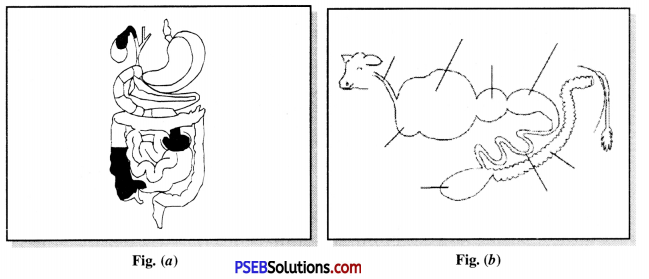
PSEB 6th Class Physical Education Solutions Chapter 4 Folk Games of Punjab

Long Answer Type Questions

Question 1.
Write the second method of Pugna.
Answer:
Second method of Pugna:
All players have stand in a circle. One of them players sing his hand shoulder on the other player and sing a song.

Eengan meengan tadi talingan
Kala peela, dakkra
Gurh khawan, vail wdhawan
Mooli patra
Pattan waley, ghorre aye.
Hath Kutarri, paer kutare
Nikkal baleya teri wali

The player who is touched at the sound of the last word spoken is not supposed to take his turn. He is supposed to be pugna. By using this method again and again, the player is left in the end, get his turn fixed.

Question 2.
Write about the rope keeping and pithhu kho game.
Answer:
It is very important Khel for exercises after pugna, two players remain they stand against each other and swing the rope by put in slope and rotate the rope in one side. The other player in a line by one by one take two steps in the rope. Those players who will touch the rope while
jumping we go out and takes the turn rotating the rope. This game is very important and recreational but in these days it is diminished.

Pithhu Garam:
In this game the player beats at the back of the other player. It is also very favourite game of the students in Punjab. Children are divided into two groups. Seven broken pieces of earthenware are placed on one another. These are called Pithu. A line is drawn at a distance of 10-15 feet from the pieces which are put in an orderly manner, both teams perform pugatta.
PSEB 6th Class Physical Education Solutions Chapter 4 Folk Games of Punjab 3
Any player of the winner team stand of the line and try to hit ordinary player placed pieces of earthenware with ball. A player gets three chances to hit the target. If he is unable to hit the target, he is declared out of the game. If the ball is got after one balance by the opposite even then the player hitting the pieces is declared to be out. If a player hitting them successfully and scattered them to be out. It is known as breaking of the pithu. After breaking the pithu the hitter tries to collect all the pieces meanwhile the member of the opposite team hits the player collecting the pieces with the ball. If the player places the pieces before he is hit with a ball he deserves another turn. The other player takes his turn to hit him. In this way the game starts again.

PSEB 6th Class Physical Education Solutions Chapter 4 Folk Games of Punjab

Question 3.
Write about the Kikli.
Answer:
Kikli is a famous game among girls of Punjab. Kikli means happiness and it creates the voice of interest. Kikli game is a combination of giddha which is played by girls with great interest. The girls gathered in a particular place join hands with hands of other girls and start moving around. They catch the opposite hands of the girls and make a shape of figure eight (infinity°o). While rotating they sing a song:
Kikli Kallir di
Pagg mere veer di
Duppatta Bharjai da
Phite muh Jawai da.
PSEB 6th Class Physical Education Solutions Chapter 4 Folk Games of Punjab 4
In this way, while participating in Kikli they start competition. When any one of the girls leaves her hands and falls down, the other girls make a shout of joy after her fall. In this way the girls enjoy the game very well.

PSEB 6th Class Physical Education Solutions Chapter 5 Safety Education

Punjab State Board PSEB 6th Class Physical Education Book Solutions Chapter 5 Safety Education Textbook Exercise Questions and Answers.

PSEB Solutions for Class 6 Physical Education Chapter 5 Safety Education

Physical Education Guide for Class 6 PSEB Safety Education Textbook Questions and Answers

Question 1.
What do you understand by self-security?
Answer:
Self-security means we can save ourselves from accidents to great extent. We come across such accidents often at home, school, while walking on the road or while playing. Walking in the wrong direction and carelessly, results in such injuries. Sometimes, it is fatal that is why we should meet with an accident. Knowledge about safety education makes us to live a happy life.

While the safety education is important from today. Today it is machine age and the heavy transportation are causes of the road of heavy traffics. We meet so many accidents in our daily life. There is not a single day when there is a news in newspaper about accident. There is not a single day accident news published in newspapers. Some where Cars collap with each other, sometime a Car collaps with truck.

Sometime bus falls in deep valley, sometimes a school going child is run over by the truck or any other transport. These accidents causes many deaths and financial looses. We can stop these accidents by following the safety education. In safety education we know the rules and regulations which save us from accidents. In this way, in modem life, it is important to have safety- education.

PSEB 6th Class Physical Education Solutions Chapter 5 Safety Education

Question 2.
Why is self-security so important?
Answer:
Modem age is machine age. Transport system are very flurish and fast these days. There were huge rash on the road which causes incidents every day. In every day there is a big news of accident of paper and no day is left. Some where to cars slash with each other and some where car crashed with truck some times bus falls in a dump. Sometimes school going child erased by car or track. Such type of these accidents causes so many death of human being. The need of time to avoid accident is safety education, we learn the traffic rales from safety education and abide by these rales to avoid these accidents. For this very reason. The need of safety education is very important:

  • In every days we can controls these accidents with the help of safety education.
  • Safety education teaches us how to cross the road.
  • With the knowledge of safety education we should avoid the accidents by following the traffic signs given by the policeman who controls the traffic.
  • With the help of safety education we move and drive the left hand.
  • With the knowledge of the rales of safety education we could cross cycle, rickshaw from his right side.

Question 3.
What are the causes of injury in house?
Answer:
There can be happened many injuries at homes.
1. Falling on slippery floor: Big injuries can occur by falling due to soap, shampu, oil, water etc.

2. Stumbling sometimes:
We stumble due to disorderly things placed at home, unmindfully or due to dim light at homes. This cause may serious injury. Sometimes injury is caused due to slipping of our foot while getting down or climbing up the stairs even we receive injuries and fractures.

PSEB 6th Class Physical Education Solutions Chapter 5 Safety Education

Question 4.
What are the methods of safety in the house?
Answer:
The methods of safety in the house are :

  • Kerosene and L.P.G. gas should be kept away from the fire. There should be arrangement of fire extinguisher at home.
  • Fire crackers should be cracked at open spaces away from home.
  • Do not smoke beedi or cigarettes at home.
  • Most of people die due to electrocution every year. Make sure that electric wires should not be uncovered while using cooler, refrigerator etc.

Question 5.
Who are responsible for the safety?
Answer:
The responsibility of safety not only for one person of social organisation. It is the responsibility of parents, teachers, government and social organisations. Home is a first school of education. And child spends most of his time in home so it is first responsibility of the parents for the safety of the children. Children do not meet any accident in this way.

After home school is such a way where children spend 5-6 hours. It is teachers responsibility to provide safety education to their students. So, that they can safe while coming and going to school or at playground. In this way municipal corporation and government are also responsible to provide safety education to the people which causes the less accident in daily life so that we may live long life.

PSEB 6th Class Physical Education Solutions Chapter 5 Safety Education

Question 6.
Which institutions can be helpful in self-security and how?
Answer:
For the safety education the following institutions can be helpful:
1. Schools and colleges: In schools & colleges teachers should teach the rules of safety to their students.

2. Municipal Committee, or Municipal Corporation:
Municipal Committee should also provide the safety education to their inhabitants by showing the slides in Cinema and exhibitions must be organized for the rules of safety education.

3. Society:
Society can be helpful for safety education. They should educate the people about the safety rules and their duties. People should know how to walk on roads and streets should not through the peels of fruits and vegetables. If there is any hindrance it should be removed.

4. Government:
Government can also be helpful for the safety of the people. They should make footpath on the road for people who can walk easily. They should provide good light on streets and roads. They should provide the rules of traffic to control the traffic. There must be policemen on duty on the different chowks.

PSEB 6th Class Physical Education Guide Safety Education Important Questions and Answers

Multiple Choice Questions

Question 1.
Need of Safety Education :
(A) Safety from accidents.
(B) With the help of safety education we learn to walk on left
(C) With safety education we learn to understand the sign of policeman who stand in chowk.
(D) All above.
Answer:
(D) All above.

PSEB 6th Class Physical Education Solutions Chapter 5 Safety Education

Question 2.
Who are responsible for the safety?
(A) Parents
(B) Teachers
(C) Municipal Committee
(D) All above.
Answer:
(D) All above.

Question 3.
Which institutions can be helpful in self security?
(A) School and College
(B) Municipal committee
(C) Government
(D) All above.
Answer:
(D) All above.

Question 4.
Which education saves us from accidents?
(A) Safety education
(B) Sports education
(C) Recreation education
(D) None of these.
Answer:
(A) Safety education

Question 5.
By which education we can reduce the accidents?
(A) Rules of traffic
(B) Rule of house
(C) Rules of school and college
(D) None of them.
Answer:
(A) Rules of traffic

PSEB 6th Class Physical Education Solutions Chapter 5 Safety Education

Question 6.
Write causes of accidents one road.
(A) While driving drinking alcohol.
(B) Ignoring the signs of policeman or traffic lights.
(C) While taking a turn the proper indication is not given.
(D) All above.
Answer:
(D) All above.

Very Short Answer Type Questions

Question 1.
Which education saves us from accidents?
Answer:
Safety Education.

Question 2.
By which education we can reduce the accidents?
Answer:
By Safety Education.

Question 3.
What should we use while driving vehicles at night?
Answer:
Dipper.

PSEB 6th Class Physical Education Solutions Chapter 5 Safety Education

Question 4.
In which ways driving is harmful?
Answer:
Under the influence of liquor.

Question 5.
Which should be provided to the people who walk on road?
Answer:
Footpaths.

Question 6. How we can control the traffic in a chowks?
Answer:
By deputing policemen or Traffic Signal Lights.

Question 7.
What things should people bear in mind to free from accidents?
Answer:
Rules of Traffic.

Question 8.
What type of school playground should be there to save from accidents?
Answer:
Clean and Plain.

Short Answer Type Questions

Question 1.
Write any five causes of road accidents.
Answer:

  • Driving while drinking.
  • Ignore the signs of the policeman who is on duty in chowk.
  • Driving the vehicles in a full speed without control.
  • Overtaking the others vehicles.
  • While taking turn proper indication is not given.

PSEB 6th Class Physical Education Solutions Chapter 5 Safety Education

Question 2.
Write any five causes of accidents in kitchen of house.
Answer:

  • If floor of the kitchen is slippery.
  • If no proper ventilation of smoke.
  • If inflammable clothes are used in kitchen.
  • If utensils, soap etc are thrown here and there.
  • If there is no proper lighting arrangement.

Question 3.
Write any five causes of accidents in bathroom in house.
Answer:

  • Soap or oil spreading on the floor.
  • If the water tap is not on the proper place.
  • Green Grass should be there in bathroom.
  • If bathroom is not airy and is tight.
  • If shower is not on proper place.

Question 4.
Write any five causes of accidents in living room.
Answer:

  • Slippery floor of the room.
  • Improper place of furniture.
  • Sufficient light is not placed.
  • In winter fire coal is burned in room.
  • Scissors and knives are placed on the bed.

PSEB 6th Class Physical Education Solutions Chapter 5 Safety Education

Long Answer Type Questions

Question 1.
Write any causes of accidents on roads.
Answer:

  • Do not following the safety rules.
  • While driving vehicles very fast.
  • While driving drinking alchohol or smoking or attending Mobile Phones.
  • While driving while not using the lights of vehicle at night.
  • While taking: a turn the proper indication is not given.
  • When Cars, Scooter etc. get out of order by chance.
  • By throwing the piece of mango or banana.
  • While overtaking the other vehicles in a short time.
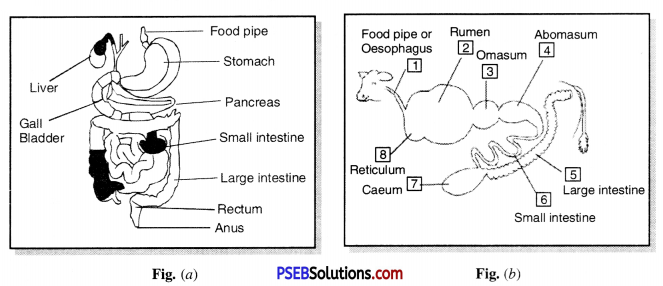
  • Ignoring the signs of policeman or traffic lights.
  • While do not follow the traffic rules.
  • If the surrounding of the road is having loose earth and there is a great heap on the road.
  • With weak eye sight of the driver.
  • If a driver is over tired of long journey.
  • If any animal or child come on the road by chance.
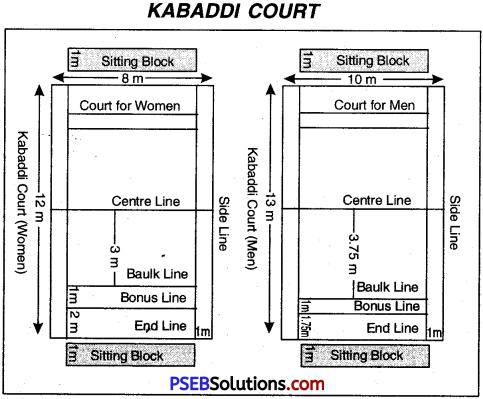
  • The children while playing on the road.
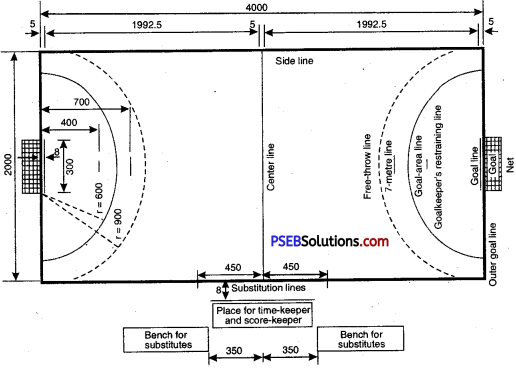
Question 2.
Write the safety measures in the school.
Answer:

  • Playground of the school should be clean and plain.
  • The broken equipments should not be placed in one room.
  • While playing games like Kabaddi and Wrestling, the players should not wear the rings, bracelet or any sharp thing.
  • Bathrooms should not be slippery of the school.
  • The floor of schools should be clean and dry.
  • A students should not throw the peels of Banana on the floor.
  • Unconditional player should not take part in sports.
  • A trained teacher must provide the training of the play.

PSEB 6th Class Physical Education Solutions Chapter 5 Safety Education

Question 3.
Over population causes the accidents. Why?
Answer:
Many people move, around the world due to over population. For their livinghood they move from one place to another. And the number of people increasing on the road day-by-day and it is possible to hit each other. The second thing due to over population is that motor cars, scooters etc. are increasing on the road day-by-day. These are causing various accidents. In this way over population causes many accidents. We should control over population.
PSEB 6th Class Physical Education Solutions Chapter 5 Safety Education 1

Question 4.
Write the causes of accidents on roads.
Answer:
Causes of road accidents are:

  • Without knowing the rules of traffic.
  • Driving the car, cycle etc. in a fast speed.
  • Driving while drinking alcohol or drug substances.
  • Not using the proper light of the vehicle.
  • While driving on other road turn indicator not used.
  • Throwing the peels of bananas and oranges here and there.
  • Ignoring the signs of policeman on the chowks.
  • Not following the rules of traffic or ignorance of the traffic rules.
  • Broken roads also cause so many accidents.
  • Weak eyesight of the drivers also responsible for accidents.
  • By chance the entry of car, bikes, bicycle or any animal on the road.
  • While saving them on road vehicles meet an accident.
    PSEB 6th Class Physical Education Solutions Chapter 5 Safety Education 2

PSEB 7th Class Science Solutions Chapter 5 Acids, Bases and Salts

Punjab State Board PSEB 7th Class Science Book Solutions Chapter 5 Acids, Bases and Salts Textbook Exercise Questions and Answers.

PSEB Solutions for Class 7 Science Chapter 5 Acids, Bases and Salts

Science Guide for Class 7 PSEB Acids, Bases and Salts Intext Questions and Answers

Think and Answer (Textbook Page No. 54)

Question 1.
What will be the colour of basic solution after the addition of pehnolphthalein?
Answer:
Adding phenolphthalein to the alkaline solution turns its colour to pink.

Question 2.
Name the products of neutralisation.
Answer:
In the process of neutralisation salt and water are produced in the form of products.

PSEB 7th Class Science Guide Acids, Bases and Salts Textbook Questions and Answers

1. Fill in the blanks:

(i) Acids are …………….. in taste.
Answer:
sour

PSEB 7th Class Science Solutions Chapter 5 Acids, Bases and Salts

(ii) Litmus and turmeric extract are …………….. indicators.
Answer:
natural

(iii) Phenolphthalein is ………………………… in acidic solution.
Answer:
pink

(iv) Reaction between an acid and a …………………… is called neutralisation reaction.
Answer:
alkali (Base)

(v) Ant’s sting has ………………….. acid.
Answer:
formic

(vi) Excess secretion of hydrochloric acid in stomach, is called ……………………….. .
Answer:
indigestion

(vii) Milk of magnesia is used in case of ……………………. .
Answer:
acidity

2. Match the Column ‘A’ with Column ‘B’:

Column ‘A’ Column ‘B’
1. Red litmus changes to blue in (a) Neutralisation
2. Blue litmus changes to red in (b) Zinc Carbonate
3. Reaction between acid and a base (c) Basic solution
4. Formic acid (d) Antbite
5. Calamine (e) Acidic Solution

Answer:

Column ‘A’ Column ‘B’
1. Red litmus changes to blue in (c) Basic solution
2. Blue litmus changes to red in (e) Acidic Solution
3. Reaction between acid and a base (a) Neutralisation
4. Formic acid (d) Antbite
5. Calamine (b) Zinc Carbonate

PSEB 7th Class Science Solutions Chapter 5 Acids, Bases and Salts

3. Choose the Correct Answer:

Question (i)
Vinegar contains :
(a) acetic acid
(c) citric acid
Ans.
(a) acetic acid .

Question (ii)
Tamarind contains :
(a) acetic acid
(b) lactic acid
(c) citric acid
(d) tartaric acid
Answer:
(d) tartaric acid

Question (iii)
The example of natural indicator is
(a) Litmus
(b) Turmeric extract
(c) China rose petals
(d) All the above
Answer:
(d) All the above

Question (iv)
The colour of blue litmus in acidic solution in :
(a) purple
(b) blue
(c) red
(d) pink
Answer:
(c) red

Question (v)
Amla contains :
(a) ascorbic acid
(b) quick lime
(c) calmine
(d) All the above
Answer:
(a) Ascorbic acid

4. Write True or False:

(i) Citric acid is found in tamarind.
Answer:
False

(ii) Ant’s sting has oxalic acid.
Answer:
False

(iii) Turmeric extract gives reddish brown colours in basic solution.
Answer:
True

PSEB 7th Class Science Solutions Chapter 5 Acids, Bases and Salts

(iv) Sodium hydroxide turns blue litmus red.
Answer:
False

(v) Organic matter is used to treat acidic soil.
Answer:
False

5. Very Short Answer Type Questions:

Question (i)
Which acid is secreted in our stomach ?
Answer:
Gastric acid is excreted in our stomach.

Question (ii)
Name any two ant acids.
Answer:
Names of two antacids :

  1. Magnesium Hydroxide,
  2. Baking Soda.

Question (iii)
What type of substances are used as ant bites ?
Answer:
Solution of calamine or baking soda is used to treat ant-stings.

Question (iv)
Name any two citric fruits.
Answer:
Names of Citrus Fruits :

  1. Orange,
  2. Lemon,
  3. Grapes.

Question (v)
Why is it essential to treat acidic products ?
Answer:
Factory and industry residues are naturally acidic. If thrown away directly without treatment, it can harm aquatic life. To neutralize them, some base is added to such wastes.

PSEB 7th Class Science Solutions Chapter 5 Acids, Bases and Salts

6. Short Answer Type Questions:

Question (i)
Name the source from which litmus solution is obtained. What is the use of this solution ?
Answer:
The solution of litmus is obtained from a plant called lichens found in nature. A strip of paper dipped in a solution of litmus is called litmus paper and the solution is called litmus solution. It is available as red and blue litmus.
Blue litmus turns red when dissolved in acidic solution and red litmus turns blue when dissolved in alkaline solution.

Question (ii)
Is the distilled water acidic/basic/neutral ? How would you verify it ?
Answer:
Distilled water is neutral. This is confirmed by the addition of litmus with which it gives green colour. The colour of Red litmus and blue litmus remain unchanged when added to distilled water showing that it is neutral in character.

Question (iii)
Describe the process of neutralisation with the help of an example.
Answer:
Neutralisation. The chemical reaction between an acid and an alkali is called neutralisation. As energy is released, salt and water are formed as products.
Acid + Alkali → Salt + Water + Heat (Energy)
Example : Hydrochloric Acid + Sodium Hydroxide → Sodium chloride + Water + Energy

Experiment: Fill a quarter of a test tube with dilute hydrochloric acid. Now add 2-3 drops of phenolphthalein solution (indicator) and note the color of the test tube solution. Now with the help of a dropper add a few drops of sodium hydroxide (alkali) in the test tube and gently shake the test tube. To the solution while stirring constantly, add Sodium hydroxide (alkali) solution till it turns light pink.
PSEB 7th Class Science Solutions Chapter 5 Acids, Bases and Salts 1
Now mix a drop of dilute Hydrochloric acid to it. You will notice that the color of the solution has disappeared (colourless) again. It is clear from this that phenolphthalein is pink in color as long as the solution is alkaline and the solution becomes colourless when the solution becomes acidic.

By mixing alkali solution with acid solution, they react with each other to neutralize the solution, i.e. the nature of acid and base gets cancelled out. This reaction is called Neutralisation.

Question (iv)
Name any two common acids and two common bases.
Answer:
Common acids. (1) Hydrochloric acid. (2) Sulphuric acid.
Common Bases. (1) Sodium hydroxide, (2) Calcium hydroxide

Question (v)
What are indicators ? Write their types and two examples of each.
Answer:
Indicators. Solution of substances that on reaction with acids, alkalis and neutral substances, give different colours, they are called indicators.
Types of indicators. There are two types of indicators:

  1. Natural indicators. These are indicators that are obtained from plants such as litmus, turmeric, China rose petals etc.
  2. Synthetic Indicators. These are indicators that are prepared in the laboratory, such as phenolphthalein and methyl orange etc.

PSEB 7th Class Science Solutions Chapter 5 Acids, Bases and Salts

7. Long Answer Type Questions:

Question (i)
State differences between acids and bases.
Answer:
Differences between Acids and Bases :

Acids Bases
1. They are sour in taste.

2. They change the solution of blue litmus to red.

3. They don’t seem like soap when touched.

4. It doesn’t change colour of phenolphthalein solution.

5. They react with bases to produce salt, water and heat.

1. They are bitter in taste.

2. They change solution of red litmus to blue color.

3. They appear like soap when touched.

4. They react with phenolphthalein solution to make it pink.

5. They react with acid to produce salt, water and heat.

Question (ii)
Name the acid present in : (1) Vinegar (2) tamarind (3) citrus fruits and (4) curd.
Answer:
Substance The name of the acid

1. Vinegar  1. Acetic acid
2. Tamarind  2. Tartaric acid
3. Citric fruit  3. Citric acid
4. Spinach  4. Oxalic acid
5. Yogurt  5. Lactic acid

Question (iii)
You are given hydrochloric acid solution, sodium hydroxide solution and water in three different bottles. How would you check which bottle has which compound ?
Answer:
1. Take three test tubes. Take a few drops of the solution from each bottle separately in these three test tubes. Now add three drops of phenolphthalein solution to each of these test tubes. The test tube in which pink colour is observed contains base (Sodium Hydroxide) while the colour will not change in the other two test tubes.

2. Wash the test tubes and again take 5-5 drops of each solution in three different test tubes as before. Now put two drops of blue litmus in these test tubes. The test tube in which the blue litmus turns red contains acid (Hydrochloric acid).

3. Now we know that the third test tube contains water in which red and blue litmus don’t show any change.
In this way, we can find out which solution is present in which bottle.

PSEB Solutions for Class 7 Science Acids, Bases and Salts Important Questions and Answers

1. Fill in the Blanks:

(ii) is used to cure indigestion.
Answer:

(iii) Treatment of soil acidity is done by adding
Answer:
Lime

(iv) on reaction with a solution of phenolphthalein turn it pink.
Answer:
Alkali

(v) In the process of Neutralisation and are produced as a products.
Answer:
Salt, water

2. Match the Column A with Column B:

Column ‘A’ Column ‘B’
(i) Gooseberries (a) Acetic acid
(ii) Indigestion (b) Quick lime
(iii) Vinegar (c) Milk of Magnesia
(iv) Treatment of acidic soil (d) Ascorbic acid

Answer:

Column ‘A’ Column ‘B’
(i) Gooseberries (d) Ascorbic acid
(ii) Indigestion (c) Milk of Magnesia
(iii) Vinegar (a) Acetic acid
(iv) Treatment of acidic soil (b) Quick lime

PSEB 7th Class Science Solutions Chapter 5 Acids, Bases and Salts

3. Choose the Correct Answer:

Question (i)
Curd tastes sour so it is :
(a) basic
(b) acidic
(c) salt
(d) None of these.
Answer:
(b) acidic.

Question (ii)
Bases are :
(a) sour
(b) saltish
(c) bitter
(d) Neither sour nor sweet.
Ans.
(c) bitter.

Question (iii)
The acid present in vinegar is :
(a) Formic acid
(b) Citric acid
(c) Acetic acid
(d) Lactic acid.
Answer:
(c) Acetic acid.

Question (iv)
The acid present in curd is :
(a) Acetic acid
(b) Formic acid
(c) Citric acid
(d) Lactic acid.
Answer:
(d) Lactic acid.

(a) Calcium hydroxide
(b) turns blue litmus paper to red.
(c) Magnesium hydroxide
(a) Calcium hydroxide.

Acidic solution:
(a) turns red litmus paper to blue
(b) turns blue litmus paper to red
(c) neither turns blue litmus paper to red nor red litmus to blue
(d) None of these.

4. State True or False:

(i) Nitric acid turns red litmus blue.
Answer:
False

(ii) Sodium hydroxide turns blue litmus red.
Answer:
False

(iii) Sodium hydroxide and hydrochloric acid neutralize each other and form salt and water.
Answer:
True

(iv) Indicator is a substance which shows different colours in acidic and basic solution.
Answer:
True

PSEB 7th Class Science Solutions Chapter 5 Acids, Bases and Salts

(v) Tooth decay is caused by the presence of a base.
Answer:
False

Very Short Answer Type Questions

Question 1.
Name different types of substances based on their chemical nature.
Answer:

  1. Acidic
  2. Basic
  3. Neutral.

Question 2.
Name few substances that contain natural acids.
Answer:
Curd, lemon juice, orange juice, vinegar.

Question 3.
Name few substances which are basic in nature.
Answer:
Washing soda, baking soda.

Question 4.
Name the substance which is used to test the nature of chemical compounds.
Answer:
Indicator.

Question 5.
Name few natural indicators.
Answer:
Turmeric, litmus, China rose petals.

Question 6.
Which acid is present in curd ?
Answer:
Lactic acid.

Question 7.
What is household name of Acetic acid ?
Answer:
Vinegar.

PSEB 7th Class Science Solutions Chapter 5 Acids, Bases and Salts

Question 8.
Amla is rich in which acid ?
Answer:
Ascorbic acid.

Question 9.
What is lime water ?
Answer:
It is calcium hydroxide, a base.

Question 10.
Name a base found in soaps.
Answer:
Sodium hydroxide.

Question 11.
What is use of Ammonium hydroxide ?
Answer:
For cleaning window glass panes.

Question 12.
What is source of litmus ?
Answer:
Lichens.

Question 13.
What are neutral substances ?
Answer:
Neutral Substances. The substances which do not change the colour of either blue or red litmus, are neutral substances.

Short Answer Type Questions

Question 1.
Write the properties of bases.
Answer:
Properties of Bases,

  1. Bases are bitter to taste.
  2. All alkalies have a slippery touch much like that of soap.
  3. Bases turn red litmus paper blue.
  4. Bases turn phenolphthalein solution from colourless to pink.

PSEB 7th Class Science Solutions Chapter 5 Acids, Bases and Salts

Question 2.
Write the properties of acids.
Answer:
Properties of Acids.

  1. Acids turn blue litmus red.
  2. Acids contain hydrogen atom.
  3. Acids are sour in taste.
  4. Acids react with bases to form salt and water.

PSEB 7th Class Science Solutions Chapter 5 Acids, Bases and Salts 2

Question 3.
What is an indicator ? Name an indicator.
Answer:
Indicator. The chemicals or substances which give different colours with acids and bases, are known as acid-base indicators or simply indicators.
Phenolphthalein is another indicator which gives pink colour in alkaline solution and is colourless in acidic solution.

Question 4.
What is neutralization reaction ?
Answer:
Neutralization reaction. The process of treating an acid with an alkali/base to form a salt and water, is called neutralization reaction.
PSEB 7th Class Science Solutions Chapter 5 Acids, Bases and Salts 3

Question 5.
How the salts are formed?
Answer:
Salts. Salts are formed when an acid reacts with a base or salt is a compound which is formed by combination of acid with base.
PSEB 7th Class Science Solutions Chapter 5 Acids, Bases and Salts 4

Question 6.
Three liquids are given to you. One is hydrochloric acid, another is sodium hydroxide and third is a sugar solution. How will you identify them ? You have only turmeric powder.
Answer:
Turmeric powder is a natural indicator. With turmeric powder, turmeric strips are prepared which give different colour in three given liquids.

Question 7.
Blue litmus paper when dipped in a solution remains blue. What is the nature of the solution ? Explain.
Answer:
Acids turn blue litmus red while bases do not change the colour of blue litmus. Therefore, the given solution is base as it has not changed the colour of blue litmus paper.

Question 8.
Explain why :
(i) An antacid tablet is taken when you suffer from acidity.
(ii) Calamine solution is applied on skin when an ant bites.
(ii) Factory waste is neutralized before disposing it into the water bodies.
Answer:
(i) An antacid tablet is taken when you suffer from acidity. To neutralize acidity, antacid tablet such as milk of magnesia is taken because it contains Magnesium hydroxide (base) which neutralizes the effect of acids.

(ii) Calamine solution is applied on skin when an ant bites. Ant bite contains formic acid which gets neutralized by calamine solution (zinc carbonate).

(iii) Factory waste is neutralized before disposing it into the water bodies. Factory waste usually contains acids, so they have to be neutralized as they can kill aquatic animals and plants. Some basic substances are used to neutralize such wastes.

Long Answer Type Question

Question 9.
What are the uses of neutralization in our daily life? Explain in detail.
Answer:
Uses of Neutralisation in daily life:
(i) As Antacids.
We know that in human stomach acid is produced called as stomach acids which contain hydrochloric acid which helps in digestion of food. But too much of it can cause indigestion, abdominal pain, and heartburn, which is called acidity. To neutralize this excess acid, some mild alkali is used to relieve the pain. Such substances are called antacids, such as milk of magnesia (magnesium hydroxide), baking soda, etc.

(ii) As a treatment for insect stings.
Different species of insects such as; bees, wasps, spiders, and ants, etc. release formic acid in the body when they sting our body. The effect of formic acid can be reduced by neutralizing it with some mild alkali, such as baking soda or calamine solution.

(iii) As a treatment for soil acidity and alkalinity.
The presence of certain substances makes the soil more acidic or more alkaline. Excessive use of chemical fertilizers makes the soil acidic. Soil should be neutral for the proper growth and development of plants. Soils are tested and if it is acidic, it is treated with lime (calcium oxide), Quick lime (Calcium hydroxide), etc. But if the soil is alkaline, it is mixed with organic matter which releases acid and neutralizes the alkali present in the soil.

(iv) As a treatment for factory wastes.
Industry and factory wastes are naturally acidic. If it is thrown away directly, it can affect and harm aquatic life. Therefore, it is important to neutralize the acid present in that waste. So some alkali is added to treat it.