The Model Millionaire Question Answer Class 11 English Literature Book Chapter 4 PSEB Solutions

Punjab State Board PSEB 11th Class English Book Solutions Supplementary Chapter 4 The Model Millionaire Textbook Exercise Questions and Answers.

Class 11th English Literature Book Chapter 4 The Model Millionaire Question Answers

The Model Millionaire Class 11 Questions and Answers

Short Answer Type Questions

Question 1.
What qualities made Hughie Erskine popular with men and women ?
Answer:
Hughie was wonderfully good-looking. He was very good at heart. He never said any ill-natured thing. He never said any unkind word even. In fact, he had every quality except that of making money. All this made him very popular among men and women.

ह्यई अदभुत रूप से सुन्दर था। वह दिल का बहुत अच्छा था। वह कभी कोई दुष्टतापूर्ण बात नहीं करता था। वह कभी भी कोई क्रूरतापूर्ण शब्द तक नहीं बोलता था। वास्तव में उसमें धन कमाने के अतिरिक्त प्रत्येक अन्य गुण थे। इन सब बातों के कारण वह पुरुषों तथा स्त्रियों में बहुत प्रिय बन गया था।

PSEB 11th Class English Solutions Supplementary Chapter 4 The Model Millionaire

Question 2.
Hughie was unable to settle down in a profession because he was unwilling to work (Yes / No). If ‘no’, what was the reason ?
Answer:
It was not that Hughie was unwilling to work. In fact, he tried his hand at many professions, but always failed. In fact, he did not know the art of making money. That was why he was nowhere successful.

इसका कारण यह नहीं था कि ह्यूई कोई काम नहीं करना चाहता था। वास्तव में उसने बहुत-से कामों में अपना हाथ आजमाया, परन्तु वह सदा असफल रहा। वास्तव में वह धन कमाने की कला नहीं जानता था। यही कारण था कि वह किसी भी काम में सफल नहीं हुआ।

Question 3.
What condition did the Colonel lay down for letting Hughie be engaged to Laura ?
Answer:
The Colonel knew that his daughter, Laura, loved Hughie. He too was fond of Hughie. But he wanted Hughie to be self dependent. So he said that first Hughie must have ten thousand pounds of his own. Only then he would allow Hughie to be engaged to Laura.

कर्नल जानता था कि उसकी बेटी, लारा, ह्यूई से प्रेम करती है। वह स्वयं भी ह्यूई को बहुत पसंद करता था। परन्तु वह चाहता था कि ह्यूई आत्मनिर्भर बने। इसलिए उसने कहा कि ह्यूई के पास पहले अपने दस हजार पौंड होने चाहिए। केवल तभी वह ह्यूई की लॉरा के साथ सगाई की इजाजत देगा।

Question 4.
Why did Alan Trevor like Hughie so much as to let him visit his studio whenever he wanted ?
Answer:
Artists always love things of beauty. Trevor was an artist and Hughie was wonderfully good-looking. Hughie was also a carefree and joyful spirit. Trevor came to like Hughie very much. That was why he let him visit his studio whenever he liked.

कलाकार सदा सुन्दरता की चीज़ों से प्यार करते हैं। ट्रेवोर एक कलाकार था और ह्यूई अद्भुत रूप से सुन्दर था। ह्यूई एक चिन्ता-रहित और प्रसन्नचित्त व्यक्ति भी था। ट्रेवोर ह्यूई को बहुत ज्यादा पसन्द करने लगा था। इसलिए उसने उसे अपने स्टूडियो में, जब वह चाहे, आने की इजाजत दे रखी थी।

PSEB 11th Class English Solutions Supplementary Chapter 4 The Model Millionaire

Question 5.
Why did Hughie think that Trevor’s model was an amazing one ?
Or
Question 6.
Did Trevor think highly of his model ? How do you know?
Answer:
Trevor’s model had a wrinkled face. His clothes were in rags. He looked every inch a beggar. He was the very picture of misery. That was why Hughie thought him an amazing model. Trevor’s model was not a beggar as he looked. He was Baron Hausberg, one of the richest men of Europe. Naturally, Trevor thought very highly of him.

ट्रेवोर के मॉडल का चेहरा झुर्रियों से भरा हुआ था। उसके वस्त्र चीथड़ों जैसे थे। वह हर तरह से एक भिखारी लगता था। वह दुःख की एक वास्तविक तस्वीर प्रतीत होता था। यही कारण था कि ह्यूई उसे एक अचम्भायुक्त मॉडल समझता था। ट्रेवोर का मॉडल एक भिखारी नहीं था जैसा कि वह दिखाई देता था। वह बेरन हॉसबर्ग था जो यूरोप के सबसे धनी व्यक्तियों में से एक था। स्वाभाविक रूप से, ट्रेवोर उसके सम्बन्ध में बहुत ऊंचे विचार रखता था।

Question 7.
‘He (Hughie) got a charming scolding for his extravagance.’ Who scolded Hughie ? What was Hughie’s extravagance ? Why was Hughie scolded ? Why is the scolding
described as charming ?
Answer:
(1) It was Laura who scolded Hughie for his extravagance.
(2) Hughie had only a pound and some coins in his pocket. He gave his pound as alms to an old beggar. Laura considered it an act of extravagance.
(3) Hughie was scolded for his extravagance.
(4) It was Hughie’s own sweetheart who scolded him. That is why the scolding has been described as charming.

(1) यह लारा थी जिसने ह्यई को उसकी फिजूलखर्ची के लिए डांटा था।
(2) ह्यूई के पास केवल एक पौंड तथा कुछ छोटे-छोटे सिक्के थे। उसने अपना पौंड भीख के रूप में किसी बूढ़े भिखारी को दे दिया था। लारा ने इसे एक फिजूलखर्ची का काम समझा।
(3) ह्यूई को उसकी फिजूलखर्ची के लिए डांटा गया था।
(4) यह ह्यूई की अपनी प्रेमिका थी जिसने उसे डांटा था। यही कारण है कि उस डांट को प्यारी-प्यारी कहा गया है।

PSEB 11th Class English Solutions Supplementary Chapter 4 The Model Millionaire

Question 8.
Why did Trevor think that Hughie had made a deep impression on his old model’ ?
Answer:
The old model’ showed a deep interest in Hughie. He asked Trevor all about Hughie : who he was; where he lived; what his income was; and other such things. Thus Trevor thought that Hughie had made a deep impression on his ‘old modeľ.

‘बूढ़े मॉडल’ ने ह्यूई में गहरी दिलचस्पी दिखाई। उसने ट्रेवोर से ह्यूई के बारे में सब कुछ पूछा – वह कौन था; वह कहां रहता था; उसकी आय कितनी थी; तथा इस तरह की अन्य बातें। इस प्रकार ट्रेवोर ने सोचा कि ह्यूई ने उसके ‘बूढ़े मॉडल’ पर गहरा प्रभाव डाला था।

Question 9.
Did Trevor’s model behave differently from what Trevor had thought of him ? If differently, how ?
Answer:
Trevor had thought that Baron Hausberg would talk of Hughie’s foolish act to his friends and have a good laugh. But, on the other hand, the Baron sent Hughie ten thousand pounds to help him marry his beloved.

ट्रेवोर ने सोचा था कि बेरन हॉसबर्ग ह्यूई के मूर्खतापूर्ण व्यवहार की कहानी अपने मित्रों को सुनाएगा और खूब हंसेगा। परन्तु इसके विपरीत बेरन ने ह्यूई को दस हज़ार पौंड भेजे ताकि अपनी प्रेमिका के साथ विवाह करने में उसकी सहायता की जा सके।

Question 10.
How was Baron Hausberg both a millionaire model and a model millionaire ?
Answer:
Baron Hausberg was a millionaire who posed as a beggar for Trevor’s painting. Thus he was a millionaire model. But more important than that, he was a model millionaire. He had proved a model of compassion and charity.

नवाब हॉसबर्ग एक करोड़पति था जिसने ट्रेवोर के चित्र के लिए भिखारी का पोज़ बनाया था। इस प्रकार वह करोड़पति मॉडल था। किन्तु इससे भी ज्यादा महत्त्वपूर्ण बात यह थी कि वह एक मॉडल (आदर्श) करोड़पति था। वह दया और परोपकार का एक आदर्श नमूना साबित हुआ था।

PSEB 11th Class English Solutions Supplementary Chapter 4 The Model Millionaire

Question 11.
Why was Hughie unable to marry his beloved, Laura ? Who helped him to realise his dream ?
Answer:
Laura’s father said that first Hughie must have ten thousand pounds of his own. Only then he would allow Hughie to be engaged to Laura. But poor Hughie was penniless. It was Baron Hausberg’s kindness that helped Hughie to realise his dream.

लॉरा के पिता ने कहा कि ह्यूई के पास पहले अपने खुद के दस हज़ार पौंड होने चाहिएं। सिर्फ तब ही वह ह्युई को लॉरा के साथ सगाई की इजाजत देगा। परन्तु बेचारे ह्यूई के पास कोई पैसा नहीं था। यह बेरन हॉसबर्ग की दयालुता थी जिसने ह्यूई का सपना पूरा करने में उसकी मदद की।

Question 12.
Describe the appearance of Trevor’s model.
Answer:
Trevor’s model was an old beggar. His face was wrinkled. Over his shoulder was a brown cloak. It was all in rags. His thick boots had many patches. He had a rough stick in one hand. He was leaning over this stick. With his other hand, he was holding out his old hat for alms. The old beggar looked the very picture of misery.

ट्रेवोर का मॉडल एक बूढ़ा भिखारी था। उसके चेहरे पर झुर्रियां पड़ी हुई थीं। उसके कन्धे पर एक भूरे रंग का चोगा पड़ा हुआ था। यह बिल्कुल चीथड़े हुआ पड़ा था। उसके मोटे-मोटे भारी बूटों पर अनेक पैवद लगे हुए थे। उस ने अपने हाथ में खुरदरी लाठी पकड़ी हुई थी। अपने दूसरे हाथ से उसने अपना पुराना हैट भीख के लिए आगे को बढ़ाया हुआ था। बूढ़ा भिखारी पूरी तरह से दुःख की एक तस्वीर प्रतीत हो रहा था।

Question 13.
How and why did Hughie oblige the old beggar ?
Answer:
Hughie was deeply moved by the miserable looks of the old beggar. He had only one pound and some pennies in his pocket. He walked up to the beggar and slipped the pound into his hand.

ह्यूई उस बूढ़े भिखारी की दुःख-भरी शक्ल देख कर बहुत भावुक हो गया। उसकी जेब में सिर्फ एक पौंड तथा कुछ सिक्के थे। वह चल कर भिखारी के पास गया और उसके हाथ में पौंड खिसका दिया।

PSEB 11th Class English Solutions Supplementary Chapter 4 The Model Millionaire

Question 14.
How can you say that Hughie was kind and large-hearted ?
Answer:
Hughie was deeply moved by the miserable looks of the old beggar. He had only a pound and some small coins in his pocket. He thought to himself, “He wants it more than I do.” And he slipped the pound into the beggar’s hand. It shows that Hughie had a kind heart.

ह्यूई बूढ़े भिखारी की दुःख-भरी शक्ल देख कर बहुत भावुक हो गया। उसकी जेब में सिर्फ एक पौंड तथा कुछ सिक्के थे। उसने अपने मन में सोचा, “उसे इसकी ज़रूरत मुझ से ज़्यादा है।” और उसने पौंड भिखारी के हाथ में रख दिया। इससे पता चलता है कि ह्यूई का दिल बहुत दयालु था।

Question 15.
What information did Trevor give about his model ? How did Hughie feel then ?
Answer:
Trevor said that his model was not a beggar. He was Baron Hausberg, one of the richest men of Europe. Hughie felt ashamed when he came to know of it. He had made a fool of himself by giving a pound as alms to the millionaire.

ट्रेवर ने कहा कि उसका मॉडल कोई भिखारी नहीं था। वह बेरन हॉसबर्ग था, यूरोप के सबसे ज़्यादा अमीर व्यक्तियों में से एक। ह्यूई को बहुत शर्मिन्दगी महसूस हुई जब उसे यह पता चला। एक करोड़पति को एक पौंड भीख में देकर उसने स्वयं ही खुद को बेवकूफ बना लिया था।

Question 16.
What was Hughie’s reaction when Trevor told him that the old beggar was, in fact, Baron Hausberg
Answer:
Hughie felt ashamed of what he had done. He had made a fool of himself by giving a pound as alms to the millionaire.

ह्यूई को अपने किए पर लज्जा महसूस हुई। उसने एक करोड़पति व्यक्ति को भीख के रूप में एक पौंड दे कर स्वयम् को मूर्ख बना लिया था।

Question 17.
Why did the millionaire send Hughie ten thousand pounds ?
Answer:
The millionaire was deeply impressed by Hughie’s noble nature. He came to know of his problem. So he sent him ten thousand pounds to help him marry his beloved.

PSEB 11th Class English Solutions Supplementary Chapter 4 The Model Millionaire

करोड़पति व्यक्ति ह्यूई के अच्छे स्वभाव से गहरा प्रभावित हुआ था। उसे उसकी समस्या का पता चल गया। इसलिए उसने उसे दस हज़ार पौंड भेजे ताकि अपनी प्रेमिका के साथ विवाह करने में उसकी सहायता की जा सके।

Long Answer Type Questions

Question 1.
Give in your own words a pen-portrait of Baron Hausberg.
Answer:
Baron Hausberg is a millionaire. He is one of the richest men of Europe. He has a whim to have himself painted as a beggar. He proves a very successful model. He looks every inch a beggar. He leans over a coarse stick.

His clothes are in rags. He holds out an old hat for alms. He looks the very picture of misery. Hughie takes him for a real beggar. He slips a pound into his hand. We can say that Baron Hausberg is a millionaire model. But more important than that, he proves a model millionaire.

He comes to know of Hughie’s problem in love. He sends him a cheque for ten thousand pounds. Thus he enables Hughie to marry his beloved. The Baron proves a model of compassion and charity. He is, indeed, a model millionaire.

बेरन हॉसबर्ग एक करोड़पति है। वह यूरोप के सबसे धनी व्यक्तियों में से एक है। उसकी एक अजीब-सी इच्छा है कि वह एक भिखारी के रूप में अपना चित्र बनवाए। वह एक बहुत सफल मॉडल सिद्ध होता है। वह पूरी तरह से एक भिखारी दिखलाई देता था। वह एक खुरदरी लाठी पर झुका होता है।

उसके वस्त्र चीथड़े बने होते हैं। उसने भीख के लिए एक पुराना टोप आगे को बढ़ाया होता है। वह दुःख की एक तस्वीर प्रतीत होता है। ह्यूई उसे एक वास्तविक भिखारी समझ लेता है। वह उसके हाथ में एक पौंड सरका देता है। हम कह सकते हैं कि बेरन हॉसबर्ग एक करोड़पति मॉडल है। किन्तु इससे भी अधिक वह एक मॉडल (आदर्श) करोड़पति साबित होता है। उसे ह्यूई की प्यार-सम्बन्धी समस्या का पता चलता है।

वह उसे दस हजार पौंड का एक चैक भेज देता है। इस प्रकार वह ह्यूई को अपनी प्रेमिका से विवाह करने में समर्थ बना देता है। बेरन दया और परोपकार का एक आदर्श नमूना साबित होता है। वह वास्तव में ही एक मॉडल (आदर्श) करोड़पति है।

Question 2.
What impression do you form of Hughie’s character ?
Answer:
Hughie was wonderfully good looking. He was popular with men and women equally. He never said any unkind word. In fact, he had every quality except that of making money. He tried his hand at many professions, but always failed.

To make it worse, he was in love. He loved a Colonel’s daughter. But the Colonel would not let him marry his daughter. He said that first, Hughie must have ten thousand pounds of his own. At last, Hughie’s kind and noble nature got him the reward he desired.

Baron Hausberg was so impressed by him that he sent him a cheque for ten thousands pounds. Thus Hughie was able to fulfil the Colonel’s condition and marry his daughter.

PSEB 11th Class English Solutions Supplementary Chapter 4 The Model Millionaire

ह्यूई अद्भुत रूप से सुन्दर था। वह पुरुषों तथा स्त्रियों में समान रूप में प्रिय था। वह कभी भी कोई क्रूरतापूर्ण शब्द नहीं बोलता था। वास्तव में उसमें धन कमाने के अतिरिक्त प्रत्येक अन्य गुण था। उसने अनेक व्यवसायों में अपना हाथ आज़माया, किन्तु सदा असफल रहा। इससे भी बुरी बात यह थी कि उसे प्यार हो गया था।

वह एक कर्नल की लड़की से प्यार करता था। किन्तु कर्नल उसे अपनी लड़की के साथ विवाह करने की इजाजत देने को तैयार नहीं था। वह कहता था कि पहले ह्यूई के पास अपने दस हज़ार पौंड होने चाहिए। अन्ततः ह्यूई के दयालुतापूर्ण और अच्छे स्वभाव ने उसे वह ईनाम दिलवा दिया जिसकी उसे इच्छा थी।

बेरन हॉसबर्ग उससे इतना प्रभावित हो गया कि उसने उसे दस हज़ार पौंड का एक चैक भेज दिया। इस प्रकार ह्यूई कर्नल की शर्त को पूरा करने और उसकी पुत्री से विवाह करने में समर्थ हो गया।

Question 3.
How and why did Hughie oblige the old beggar ?
Answer:
One day, Hughie went to see his friend, Alan Trevor, who was a painter. He saw Trevor painting a wonderful picture of a beggar man. The beggar himself was standing in a corner of the studio. He was a wizened old man. His face was wrinkled.

He had a brown cloak over his shoulder. It was all in rages. His thick boots had many patches. He had a rough stick in one hand. He was leaning over this stick. With his other hand, he was holding out his old hat for alms.

The old beggar looked the very picture of misery. Hughie was deeply moved by the miserable looks of the old beggar. He could not help pitying him. He felt in his pockets, but could find only one pound in them. Then he walked up to the beggar and slipped the pound into his hand.

एक दिन ह्यूई अपने दोस्त, ऐलन ट्रेवोर, से मिलने के लिए गया जो एक चित्रकार था। उसने ट्रेवोर को एक भिखारी की अद्भुत तस्वीर बनाते देखा। भिखारी स्वयं स्टूडियों के एक कोने में खड़ा हुआ था। वह एक मुरझाया हुआ बहुत बूढ़ा व्यक्ति था। उसके चेहरे पर झुर्रियां पड़ी हुई थीं।

उसके कंधे पर एक भूरे रंग का चोगा पड़ा हुआ था। यह बिल्कुल चीथड़े-चीथड़े हुआ पड़ा था। उसके मोटे-मोटे भारी बूटों पर कई पैबन्द लगे हुए थे। उसने अपने एक हाथ में एक खुरदरी लाठी पकड़ी हुई थी। वह उस लाठी के सहारे आगे की ओर झुका हुआ था। अपने दूसरे हाथ से उसने अपना पुराना हैट भीख मांगने के लिए आगे को बढ़ाया हुआ था।

बूढ़ा भिखारी पूरी तरह से दु:ख की एक तस्वीर लग रहा था। ह्यूई बूढ़े भिखारी की दयनीय शक्ल देखकर गहरा द्रवित हो उठा। वह उस पर तरस खाए बगैर रह न सका। उसने अपनी जेबों को टोटला, परन्तु उसे उनमें सिर्फ एक पौंड ही मिला। फिर वह चल कर भिखारी तक गया और धीरे से अपना वह पौंड उसके हाथ पर रख दिया।

Question 4.
How could Hughie marry the girl he loved ?
Answer:
Hughie Erskine loved a girl named Laura. This girl’s father was a retired Colonel. He liked Hughie, but would not allow him to marry his daughter. He said that first, Hughie must have ten thousand pounds of his own. But Hughie was jobless.

He had no hope of earning that much money. One day, he saw an old beggar at the studio of his friend. He looked very miserable. Hughie was moved to pity. He gave him the only pound he had in his pocket. Now this old beggar was, in fact, Baron Hausberg. He was one of the richest men of Europe. He was sitting there merely as a beggar model.

He was impressed by Hughie’s noble nature. He came to know of his problem. He sent him a cheque of ten thousand pounds. Thus Hughie was able to marry his beloved.

PSEB 11th Class English Solutions Supplementary Chapter 4 The Model Millionaire

राई अर्सकाइन लॉरा नाम की एक लड़की से प्यार करता था। इस लड़की का पिता एक सेवा-निवृत्त कर्नल था। वह ह्यूई को पसंद करता था, किन्तु उसे अपनी लड़की के साथ विवाह करने की इजाजत नहीं देता था। वह कहता था कि इससे पहले ह्यूई के पास अपने दस हज़ार पौंड होने चाहिएं।

किन्तु ह्यूई बेरोज़गार था। उसे इतने ज्यादा पैसे कमा सकने की कोई आशा नहीं थी। एक बार उसने अपने मित्र के स्टूडियो में एक बूढ़ा भिखारी देखा। वह बहुत दुःखी प्रतीत हो रहा था। ह्यूई दया से भर गया। उसने उसे अपना एकमात्र पौंड जो उसकी जेब में था, दे दिया। अब यह बूढ़ा भिखारी वास्तव में नवाब हॉसबर्ग था।

वह योरुप के सबसे धनी व्यक्तियों में से एक था। वह वहां केवल एक भिखारी का मॉडल बना हुआ बैठा था। वह ह्यूई की दया-भावना से प्रभावित हो गया। उसे उसकी समस्या का पता चल गया। उसने उसे दस हज़ार पौंड का एक चैक भेज दिया। इस प्रकार ह्यूई अपनी प्रेमिका से विवाह करने में समर्थ हो गया।

Question 5.
How did Baron Hausberg react to the alms given by Hughie ?
Answer:
Baron Hausberg was having himself painted as a beggar in Trevor’s studio. Just then, Hughie reached there. He took the Baron for a real beggar. He was deeply moved by the miserable looks of the old beggar’.

He took out from his pocket the only pound he had. He slipped it into the beggar’s hand. The Baron smiled and said, “Thank you, sir. Thank you.” He was deeply impressed by Hughie’s noble nature. Later he enquired of Trevor all about Hughie.

He came to know of Hughie’s problem in love. He sent him a cheque for ten thousand pounds. Now Hughie could fulfil the Colonel’s condition and marry his daughter, Laura. Thus, the Baron was not only a millionaire model, but also a model millionarie.

नवाब हॉसबर्ग ट्रेवोर के स्टूडियो में एक भिखारी के वेश में अपना चित्र बनवा रहा था। उसी समय ह्यूई वहां आ गया। उसने नवाब को एक वास्तविक भिखारी समझ लिया। वह बूढ़े भिखारी का दुःख-भरा चेहरा देख कर गहरा द्रवित हो उठा। उसने अपनी जेब से वह एकमात्र पौंड निकाला जो उसके पास था।

उसने इसे भिखारी के हाथ में सरका दिया। नवाब मुस्करा दिया और बोला, “धन्यवाद, श्रीमान जी। धन्यवाद।” वह ह्यूई की दया-भावना से गहरा प्रभावित हुआ। बाद में उसने ट्रेवोर से ह्यूई के बारे में सब पूछ-ताछ की। उसे ह्यूई की प्यार-सम्बन्धी समस्या का पता चला। उसने उसे दस हज़ार पौंड़ का एक चैक भेज दिया।

PSEB 11th Class English Solutions Supplementary Chapter 4 The Model Millionaire

अब ह्यूई कर्नल की शर्त को पूरी कर सकता था और उसकी पुत्री, लॉरा, से विवाह कर सकता था। इस प्रकार नवाब न केवल एक करोड़पति मॉडल था, बल्कि एक मॉडल (आदर्श) करोडपति भी था।

Objective-Type Questions

Question 1.
Who wrote the story, ‘The Model Millionaire ?
Answer:
Oscar Wilde.

Question 2.
Who was Hughie Erskine ?
Answer:
A handsome young man.

Question 3.
Who was Hughie’s beloved ?
Answer:
Laura Merton.

Question 4.
What was Laura’s father ?
Answer:
A retired Colonel.

Question 5.
Why was Hughie unable to marry his beloved ?
Answer:
Because he was penniless.

Question 6.
Who helped Hughie to realize his dream ?
Answer:
Baron Hausberg.

Question 7.
Who was Alan Trevor ?
Answer:
He was an artist.

PSEB 11th Class English Solutions Supplementary Chapter 4 The Model Millionaire

Question 8.
Why did Alan Trevor like Hughie so much as to let him visit his studio whenever he wanted ?
Answer:
Because Hughie was wonderfully good-looking and very good at heart.

Question 9.
Who was Trevor’s model ?
Answer:
Baron Hausberg in disguise of a beggar.

Question 10.
Who was Baron Hausberg ?
Answer:
One of the richest men of Europe.

Question 11.
What did Hughie give to the beggar who was sitting in Trevor’s studio ?
Answer:
A pound.

Question 12.
What information did Trevor give about his model ?
Answer:
His model was not a beggar.

Question 13.
Who scolded Hughie ?
Answer:
Laura Merton, his beloved.

Question 14.
Why was Hughie scolded ?
Answer:
For his extravagance.

Question 15.
Who was the model millionaire ?
Answer:
Baron Hausberg, a very rich man of Europe.

Question 16.
What did the millionaire send to Hughie ?
Answer:
A cheque for ten thousand pounds.

The Model Millionaire Summary in English

The Model Millionaire Introduction in English:

“The Model Millionaire’ is a humorous story which tells how a young man named Hughie was able to win the hand of his beloved, Laura, in marriage. Hughie loved Laura very intensely. But he was unemployed and had no money with him.

The girl’s father was a retired Colonel. He said that he would let Hughie marry his daughter only when he got ten thousand pounds of his own. Hughie could never hope to collect that much amount in his life. But luckily, a millionaire comes to know of Hughie’s predicament.

PSEB 11th Class English Solutions Supplementary Chapter 4 The Model Millionaire

He sends him a cheque for ten thousand pounds as a wedding present. Thus the way is cleared for the union of the lover and the beloved. Who that millionaire was and how he came to know of Hughie’s problem, is the chief source of suspense and humour in this story.

The Model Millionaire Summary in English:

Hughie Erskine was a handsome young man. He was wonderfully good-looking. He was popular with men and women equally. He never said any unkind word. In fact, he had every quality except that of making money. His father had left him no money. He lived on merely two hundred pounds a year that an old aunt allowed him.

Hughie tried his hand at many professions but always failed. It does not mean that he was unwilling to work. In fact, he did not know the art of making money. Hughie was in love with a girl named Laura Merton who was the daughter of a retired Colonel.

Hughie wanted to marry Laura. The Colonel knew all this and he was fond of Hughie also. But he would not let him marry his daughter. He said that first Hughie must have ten thousand pounds of his own. Hughie could never hope to collect that much amount in his life.

So poor Hughie was very unhappy in those days. Hughie had a friend named Alan Trevor who was a great painter. His pictures were eagerly sought after. At first, Trevor had been attracted by Hughie entirely on account of his personal charm. He used to say that for a painter, only beautiful people mattered most. However, after he got to know Hughie better, he liked him for his habits also.

He liked his generous and reckless nature. So he had given Hughie the permanent ‘entry’ to his studio. One day, Hughie went to Trevor’s studio. He saw Trevor putting the finishing touches to a picture. It was a wonderful life-size picture of a beggar-man.

The beggar himself was standing in a corner of the studio. Trevor was using him as a model for his painting. His face was wrinkled. Over his shoulder was a brown cloak. It was all in rags. His thick boots had many patches. He had a rough stick in one hand. He was leaning over this stick. With the other hand, he was holding out his old hat for alms.

He looked the very picture of misery. “What an amazing model,” said Hughie in a whisper. At this, Trevor shouted at the top of his voice, “Such beggars as he are not to be met with every day.” Then Trevor told Hughie that he would get 2000 guineas (2100 pounds) for that picture. But he was paying the model only a shilling an hour.

PSEB 11th Class English Solutions Supplementary Chapter 4 The Model Millionaire

Hughie thought it too low a payment for the model. He said, “I think the model should have a percentage. They work quite as hard as you.” At this Trevor said, “It is no easy job to stand and work with the brush all day.” Then Trevor went out to speak to the frame-maker who had come to see him.

The old beggar sat down on a bench to rest for a moment. He looked very unhappy. Hughie couldn’t help pitying him. He felt in his pockets. He could find only one pound in them. He went to the beggar and slipped it into his hand. A faint smile appeared on the beggar’s withered face. Then Hughie went away.

That night, Hughie met Trevor in a club. He told Hughie the beggar-model was quite devoted to him (Hughie) and wanted to know all about his life. So he had to tell the beggar all about Hughie, Laura, the Colonel and the 10,000.

Hughie was wonder-struck when Trevor told him that the old beggar was, in fact, Baron Hausberg, the richest man of Europe. He had asked Trevor to paint him as a beggar. Now Hughie felt very small at what he had done. Trevor burst into laughter when Hughie said that he had given the old model a pound as charity.

Next morning, an old gentleman came to Hughie and gave him a letter. It was from Baron Hausberg. On it was written : “A wedding present to Hughie Erskine and Laura Merton, from an old beggar.” Hughie found inside it a cheque for 10,000.

When they were married, Trevor was the best man (principal groomsman at a wedding). The Baron made a speech at the party. Trevor remarked, “Millionaire models are rare enough; but by Jove, model millionaires are rarer still !”

The Model Millionaire Summary in Hindi

The Model Millionaire Introduction in Hindi:

‘The Model Millionaire’ एक हास्य से भरपूर कहानी है जो यह बताती है कि किस तरह ह्यूई नाम का एक नौजवान अपनी प्रेमिका, लॉरा, से विवाह करने में सफल हुआ। ह्यूई लॉरा से बहुत प्यार करता था। किन्तु वह बेकार था और उसके पास कोई पैसा नहीं था। लड़की का पिता एक सेवानिवृत्त कर्नल था।

वह कहता था कि वह ह्यूई को अपनी लड़की के साथ विवाह करने की इजाजत केवल तभी देगा जब उसके पास अपने खुद के कमाए दस हजार पौंड जमा हो जाएंगे। ह्यूई को इस बात की कोई आशा नहीं थी कि वह अपने जीवन में कभी दस हजार पौंड जमा कर पाएगा।

किन्तु खुशकिस्मती से एक करोड़पति व्यक्ति को ह्यूई की दुविधा का पता चल जाता है। वह दस हजार पौंड का एक चैक ह्यूई को उसके विवाह के उपहार के रूप में भेज देता है। इस प्रकार प्रेमी-प्रेमिका के विवाह का रास्ता साफ हो जाता है। वह करोड़पति व्यक्ति कौन था और उसे ह्यूई की समस्या का किस प्रकार पता चला, इस कहानी में जिज्ञासा और हास्य के मुख्य स्त्रोत हैं।

The Model Millionaire Summary in Hindi:

राई अर्सकाइन एक आकर्षक नौजवान था। वह अद्भुत रूप से सुन्दर था। वह पुरुषों तथा स्त्रियों में समान रूप से प्रिय था। वह कभी भी कोई क्रूरतापूर्ण शब्द नहीं बोलता था। वास्तव में उसमें धन कमाने के अतिरिक्त प्रत्येक अन्य गुण था। उसका पिता उसके लिए कोई धन छोड़कर नहीं गया था।

राई केवल 200 पौंड सालाना पर ही निर्वाह करता था जो उसे अपनी एक बूढ़ी मौसी से मिलते थे। उसने कई कामों में अपना हाथ आजमाया परन्तु, वह सदा असफल ही रहा। इसका अर्थ यह नहीं कि वह कोई काम नहीं करना चाहता था। वास्तव में वह धन कमाने की कला नहीं जानता था।

PSEB 11th Class English Solutions Supplementary Chapter 4 The Model Millionaire

ह्यूई लॉरा मर्टन नामक एक लड़की से प्यार करता था जो एक सेवानिवृत्त कर्नल की लड़की थी। ह्यूई लॉरा से विवाह करना चाहता था। कर्नल इस सब के बारे में जानता था और वह ह्यूई को बहुत पसन्द भी करता था। परन्तु वह उसे अपनी बेटी से शादी करने की इजाजत देने को तैयार नहीं था।

वह कहता था कि पहले ह्यूई के पास अपने स्वयं के दस हजार पौंड होने चाहिएं। ह्यूई को इस बात की कोई आस नहीं थी कि वह अपने जीवन में कभी दस हजार पौंड इकट्ठे कर पाएगा। इसलिए बेचारा ह्यूई उन दिनों बहुत उदास था।
ाई का एक मित्र था जिसका नाम एलन ट्रेवर था। वह एक बहुत बड़ा चित्रकार था।

उसकी तस्वीरों की बहुत मांग रहती थी। शुरू-शुरू में ट्रेवर ह्यूई की ओर केवल उसकी शारीरिक सुन्दरता की वजह से ही आकर्षित हुआ था। वह कहा करता था कि एक चित्रकार के लिए केवल सुन्दर व्यक्ति ही सबसे महत्त्वपूर्ण चीज़ हुआ करते हैं। परन्तु बाद में वह ह्यूई को उसकी आदतों के कारण भी पसन्द करने लगा। वह उसकी खुशमिज़ाजी, उसकी उदारता तथा उसके फक्कड़पन को बहुत पसंद करता था। इसीलिए उसने राई को अपने स्टूडियो में आने की खुली छूट दे रखी थी।

एक दिन हाई देवर के स्टूडियो में गया। उसने ट्रेवर को एक तस्वीर को अन्तिम रूप देते हुए देखा। यह एक भिखारी की पूरे आकार वाली अद्भुत तस्वीर थी। भिखारी स्वयं स्टूडियो के एक कोने में खड़ा हुआ था। ट्रेवर उसे अपनी पेन्टिंग के लिए एक मॉडल के रूप में इस्तेमाल कर रहा था। उसके चेहरे पर झुर्रियां पड़ी हुई थीं। उसके कन्धे पर एक भूरे रंग का चोगा रखा हुआ था। वह बिल्कुल चीथड़े हुआ पड़ा था।

उसके मोटे-मोटे भारी बूटों पर अनेक पैबंद लगे हुए थे। उसने हाथ में एक खुरदरी लाठी पकड़ी हुई थी। वह इस लाठी के सहारे आगे को झुका हुआ था। अपने दूसरे हाथ के साथ उसने अपना पुराना हैट भीख के लिए आगे को बढ़ाया हुआ था। वह दुःख की पूरी तस्वीर प्रतीत हो रहा था।

“कितना अद्भुत मॉडल है !” हाई ने धीमे स्वर में कहा। इस बात पर ट्रेवर ऊंचे स्वर में चिल्लाते हुए बोला, “इस तरह के भिखारी रोज नहीं मिल सकते हैं।” फिर ट्रेवर ने ह्यूई को बताया कि उस तस्वीर को बनाने के लिए उसे 2100 पौंड प्राप्त होने थे। लेकिन वह उस मॉडल को प्रति घण्टा की दर से केवल एक शिलिंग दे रहा था। ह्यूई को उस मॉडल को दिया जाने वाला यह भुगतान बहुत कम लगा।

उसने कहा, “मुझे लगता है कि मॉडल को प्रतिशत की दर से हिस्सा मिलना चाहिए। ये लोग उतनी ही मेहनत करते हैं जितनी तुम करते हो।” इस बात पर ट्रेवर बोला, “दिन भर खड़े हो कर ब्रश चलाना कोई आसान काम नहीं है।” फिर ट्रेवर फ्रेम बनाने वाले से बात करने के लिए बाहर चला गया जो उससे मिलने के लिए आया था।

बूढ़ा भिखारी थोड़ी देर आराम करने के लिए एक बैंच पर बैठ गया। वह बहुत उदास दिखाई दे रहा था। ह्यूई को उस पर दया आ गई। ह्यूई ने अपनी जेबों को टटोला। उसे उनमें सिर्फ एक ही पौंड मिला। वह भिखारी के पास गया और इसे उसके हाथ में दे दिया। भिखारी के मुरझाए हुए चेहरे पर एक हल्की सी मुस्कान आ गई। फिर ह्यूई वहां से निकल गया उस रात ह्यई देवर को एक क्लब में मिला।

उसने एई को बताया कि वह भिखारी मॉडल उसका (ाई का) बहुत भक्त बन गया था और वह उसके जीवन के बारे में सब कुछ जानना चाहता था। इसलिए उसे भिखारी को ह्यूई, लॉरा, कर्नल तथा 10,000 पौंड के बारे में सब कुछ बताना पड़ा। ह्यूई दंग रह गया जब ट्रेवर ने उसे बताया कि बूढ़ा भिखारी वास्तव में यूरोप का सबसे धनी व्यक्ति, बेरन हासबर्ग था। उसने ट्रेवर से कहा था कि वह भिखारी के रूप में उसकी एक तस्वीर बनाए।

PSEB 11th Class English Solutions Supplementary Chapter 4 The Model Millionaire

अब राई को अपने किए पर बहुत शर्मिन्दगी होने लगी। ट्रेवर जोर-जोर से हंसने लगा जब उसे पता चला कि ह्यूई ने उस करोड़पति को भीख के रूप में एक पौंड दिया था। अगली प्रातः एक बुजुर्ग व्यक्ति ह्यूई के पास आया और उसे एक पत्र दिया। यह पत्र बेरन हासबर्ग की ओर से लिखा गया था। इस पर लिखा था–“एक बूढ़े भिखारी की ओर से झुई अर्सकाइन और लॉरा मर्टन के लिए विवाह उपहार।”

ह्यूई ने जब इस लिफाफे को खोला तो वहां इसके अन्दर दस हज़ार पौंड का एक चैक था। जब ह्यूई और लॉरा का विवाह हुआ तो ट्रेवर दूल्हे का मित्र बना और बेरन ने विवाह-भोज के समय पर एक भाषण दिया। ट्रेवर ने अपने भाषण में कहा, “लखपति मॉडल बहुत कम होते हैं किन्तु, ईश्वर की कसम, मॉडल (अर्थात् आदर्श) लखपति उससे भी कम होते हैं!”

सरल हिन्दी में कहानी की विस्तृत व्याख्या

जब तक कोई आदमी धनी न हो, उसके सुन्दर होने का कोई लाभ नहीं होता। इश्क करना और कल्पना के संसार में घूमना अमीर लोगों के शौक होते हैं, न कि गरीबों के वश की बातें। गरीब व्यक्ति को व्यावहारिक होना चाहिए तथा साधारण रूप से सोचना और रहना चाहिए। किसी गरीब व्यक्ति के लिए सुन्दर होने की बजाय अपने पास पक्की आमदन का होना बेहतर होता है। आधुनिक जीवन का यह एक महान् सत्य है।

किन्तु ह्यूई अर्सकाइन (Hughie Erskine) नाम का युवक इन बातों को कभी समझ नहीं पाया। दिमागी तौर पर वह अधिक तेज़ नहीं था, किन्तु देखने में अति सुन्दर था। उसके बाल भूरे रंग के और घुघराले थे, आंखें सांवले रंग की थीं, चेहरा नक्काशा हुआ लगता था। वह औरतों में उतना ही प्रिय था, जितना पुरुषों में। धन कमा सकने के अतिरिक्त उसमें प्रत्येक अन्य बात का गुण था। उसका पिता उसके लिए कोई धन छोड़कर नहीं गया था।

ह्यई प्रति वर्ष केवल 200 पौंड पर ही निर्वाह करता था, जो उसे अपनी एक बूढ़ी मौसी से मिलते थे। उसने प्रत्येक प्रकार के काम में अपना भाग्य आजमा कर देखा था; उसने सट्टे का काम किया; कुछ समय उसने चाय का व्यापार किया; फिर उसने शराब बेचने का काम भी किया। किन्तु कहीं भी उसे सफलता न मिली।

अन्त में वह अपने जीवन में कुछ भी न बन सका। वह मात्र एक सुन्दर नौजवान था जिसके पास करने को कोई व्यवसाय नहीं था। इससे भी बुरी बात यह थी कि ह्यूई को इश्क हो गया था। जिस लड़की से वह प्यार करता था, उसका नाम लॉरा मर्टन (Laura Merton) था। वह लड़की भी ह्यूई से बहुत प्यार करती थी। वह एक सेवानिवृत्त कर्नल की लड़की थी। वह कर्नल एक बहुत गुस्सैल आदमी था।

उसे अपनी लड़की और ह्यई के बीच प्यार के बारे में सब पता था तथा वह ह्यूई को बहुत चाहता भी था। किन्तु वह उसके साथ अपनी लड़की की सगाई की कोई बात सुनने को तैयार नहीं था। वह राई से कहता कि ‘जब तुम्हारे पास अपने दस हज़ार पौंड जमा हो जाएंगे तो इस बात पर विचार किया जा सकेगा।’ इसलिए बेचारा ह्यई उन दिनों प्रायः बहुत उदास रहा करता था।

ह्यई का एक मित्र था जिसका नाम एलन ट्रेवर (Alan Trevor) था। ट्रेवर एक चित्रकार था। देखने में वह एक बहुत अजीब शक्ल वाला बेढंगा सा व्यक्ति लगता था। उसके चेहरे पर भूरे धब्बे पड़े हुए थे; उसकी दाढ़ी लाल रंग की थी तथा बिखरी रहती थी। किन्तु जब वह रंगों में अपना ब्रुश चलाता तो कमाल कर दिया करता था। वह एक बहुत ही अच्छा कलाकार था। उसकी तस्वीरों की बहुत मांग रहती थी।

आरम्भ में ट्रेवर ह्यई की ओर केवल उसकी शारीरिक सुन्दरता की वजह से ही आकर्षित हुआ था। वह कहा करता था कि एक चित्रकार के लिए सुन्दर व्यक्ति ही सबसे महत्त्वपूर्ण चीज़ होते हैं। किन्तु जब ट्रेवर ह्यई को अधिक अच्छी तरह से पहचान गया तो उसे उसकी आदतें भी पसन्द आने लगीं। वह उसकी खुश-मिज़ाजी, उसकी उदारता तथा उसके फक्कड़पन को बहुत ही पसन्द किया करता था। इसलिए उसने ह्यूई को अपने स्टूडियो में आने की खुली छूट दे रखी थी।

PSEB 11th Class English Solutions Supplementary Chapter 4 The Model Millionaire

एक प्रातः ह्यई लॉरा के घर जा रहा था। रास्ते में वह ट्रेवर से मिलने के लिए रुक गया। जब वह अन्दर आया तो ट्रेवर एक तस्वीर को अन्तिम रूप दे रहा था। यह एक भिखारी की पूरे आकार वाली अद्भुत तस्वीर थी। भिखारी स्वयं स्टूडियो के एक कोने में चौकी पर खड़ा था। वह एक मुरझाया हुआ बहुत बूढ़ा व्यक्ति था।

उसके चेहरे पर झुर्रियां पड़ी हुई थीं। देखने में वह बड़ा दु:खी लग रहा था। उसके कन्धे पर मोटे कपड़े का बना एक चोगा लटका हुआ था। यह बिल्कुल चीथड़े हुआ पड़ा था। उस भिखारी के बूट जगह-जगह से फटे हुए थे। उन पर टांके लगे हुए थे। अपने एक हाथ में पकड़ी हुई एक पुरानी सी लाठी के सहारे वह झुका हुआ था। अपने दूसरे हाथ से उसने अपना फटा हुआ टोप भीख मांगने के लिए आगे को बढ़ा रखा था।

राई ने अपने मित्र से हाथ मिलाते हुए धीमे स्वर में कहा, “कितना अद्भुत मॉडल (model) है !” किन्तु ट्रेवर ने ऊंचे स्वर में बोलते हुए उत्तर दिया कि उस तरह के भिखारी हर रोज़ नहीं मिल सकते थे। ह्यई को भिखारी का दुःख-भरा चेहरा देख कर दया महसूस हुई। उस पर ट्रेवर ने कहा कि क्या हंसते हुए भिखारी का चित्र देखने में अच्छा प्रतीत हो सकता था। ट्रेवर ने ह्यई को बतलाया कि उस तस्वीर को बनाने के बदले उसे 2100 पौंड प्राप्त

होने थे, किन्तु उसने मॉडल के रूप में बैठे उस व्यक्ति को केवल एक शिलिंग प्रति घण्टे की दर से भुगतान करना था। भिखारी की दशा को देखकर ह्यूई को अपने मन में उसके प्रति बहुत सहानुभूति महसूस हुई। उसने ट्रेवर से कहा कि मॉडल बनने के बदले उस भिखारी को किया जाने वाला भुगतान बहुत कम था।

ह्यई ने ट्रेवर से कहा, “मॉडल को प्रतिशत की दर से हिस्सा मिलना चाहिए। ये लोग उतनी ही मेहनत करते हैं जितनी तुम करते हो।” यह सुनकर ट्रेवर ने ऊंचे स्वर में कहा, “दिन भर खड़े होकर ब्रश चलाना कोई आसान काम नहीं है। तुम्हारे लिए बातें बनाना बहुत आसान है …. किन्तु तुम अपनी बकबक बन्द करो क्योंकि मुझे बहुत काम है। तुम वहां बैठकर सिगरेट पियो और चुप रहो।”

थोड़ी देर के बाद नौकर अन्दर आया। उसने ट्रेवर को बतलाया कि फ्रेम बनाने वाला (Frame-maker) उससे बात करना चाहता था। इसलिए ट्रेवर बाहर चला गया। बूढ़े भिखारी ने ट्रेवर की अनुपस्थिति का लाभ उठाया। वह आराम करने के लिए एक लकड़ी के बैंच पर बैठ गया। वह बहुत दुःखी लग रहा था। ह्यई को उस पर दया आ गई। उसनेअपनी जेबों को टटोला। उसे उनमें केवल एक ही पौंड मिल सका।

फिर वह उठकर भिखारी के पास गया और वह पौंड उसके हाथ में दे दिया। बूढ़ा आदमी चौंक उठा। उसके मुरझाए हुए चेहरे पर हल्की-सी मुस्कान आ गई। उसने इस भीख के लिए ह्यूई का धन्यवाद किया। जब ट्रेवर वापस आया तो ह्यई ने उससे विदा ली और वहां से चला गया। शेष दिन उसने अपनी प्रेमिका, लॉरा, के साथ बिताया। उसने लॉरा को बूढ़े भिखारी वाली सारी कहानी सुना दी। लॉरा ने उसकी लुटाऊ आदतों के लिए उसे झिड़क दिया। बेचारे ह्यई को पैदल चलकर घर वापस आना पड़ा।

उस रात ह्यई एक क्लब (club) में गया। वहां उसे टूवर मिल गया। उसने ट्रेवर से उस भिखारी मॉडल वाली तस्वीर के बारे में पूछा। ट्रेवर ने ह्यई को बतलाया कि वह बूढ़ा मॉडल उसका (ह्यूई का) बहुत भक्त बन गया था। वह ह्यई के बारे में सब कुछ जाननी चाहता था। ट्रेवर ने कहा कि उसने बूढ़े मॉडल को ह्यूई के बारे में, लॉरा के बारे में, कर्नेल और उसकी 10,000 पौंड की शर्त वाली बात के बारे में सब कुछ बतला दिया था। राई ने ट्रेवर से नाराजगी प्रकट की क्योंकि उसने एक साधारण से बूढ़े भिखारी को उसके निजी जीवन के बारे में सब कुछ बता दिया था।

किन्तु ह्यई चकित रह गया जब ट्रेवर ने उसे बताया कि वह बूढ़ा मॉडल कोई भिखारी नहीं था, अपितु वह यूरोप का सबसे धनी व्यक्ति, बेरन हासबर्ग (Baron Hausberg), था। उसे एक भिखारी के रूप में अपनी तस्वीर बनवाने का शौक था और इसीलिए वह ट्रेवर के पास आया था।

अब ह्यूई ने उस करोड़पति बूढे मॉडल को एक भिखारी समझ कर उसके हाथ में एक पौंड भीख के रूप में रख दिया था। घई ने ट्रेवर से प्रार्थना की कि वह इस घटना के बारे में किसी को न बतलाए अन्यथा लोग उसका मज़ाक उड़ाएंगे। ट्रेवर हंसता ही चला गया, किन्तु बेचारा ह्यई बहुत दुःखी होने लगा। वह वहां से उठा और वापस घर चला गया।

PSEB 11th Class English Solutions Supplementary Chapter 4 The Model Millionaire

अगली प्रातः जब ह्यई नाश्ता कर रहा था तो एक बुजुर्ग व्यक्ति अन्दर आया। उसने ह्यई को एक पत्र दिया। वह पत्र बेरन हासबर्ग की ओर से लिखा गया था। वह एक बन्द लिफाफे में था जिस पर लिखा था-“एक बूढ़े भिखारी की ओर से ह्यई अर्सकाइन और लॉरा मर्टन के लिए विवाह उपहार।”

ह्यई ने जब इस लिफाफे को खोला तो वहां उसके अन्दर देस हज़ार पौंड का एक चैक था। जब ह्यई और लॉरा का विवाह हुआ तो ट्रेवर दूल्हे का मित्र बना और बेरन ने विवाह-भोज के समय पर एक भाषण दियो। ट्रेवर ने अपने भाषण में कहा, “लखपति मॉडल बहुत कम होते हैं, किन्तु, ईश्वर की कसम, मॉडल (अर्थात् आदर्श) लखपति उससे भी कम होते हैं!”

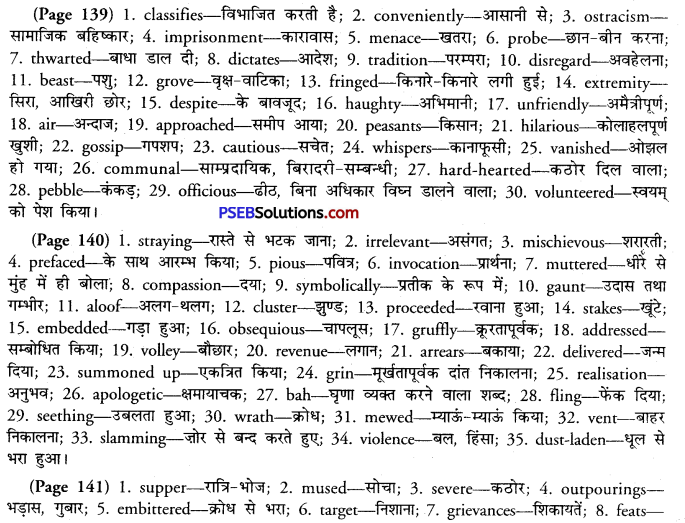
Word Meanings
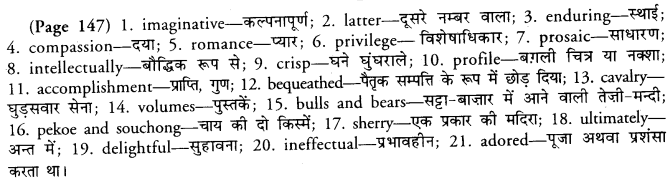
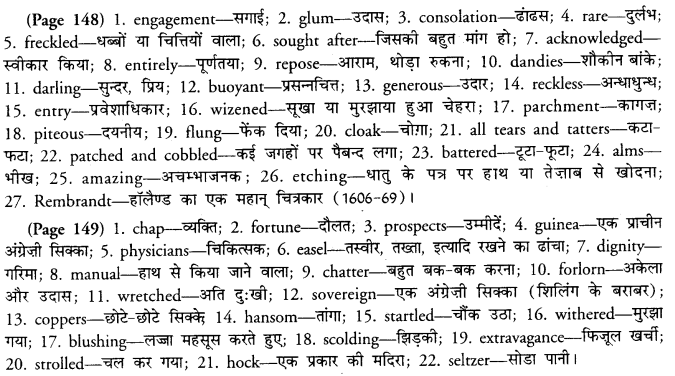
PSEB 11th Class English Solutions Supplementary Chapter 4 The Model Millionaire 1
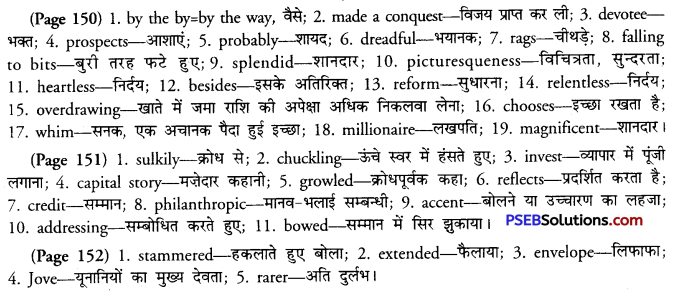
PSEB 11th Class English Solutions Supplementary Chapter 4 The Model Millionaire 2
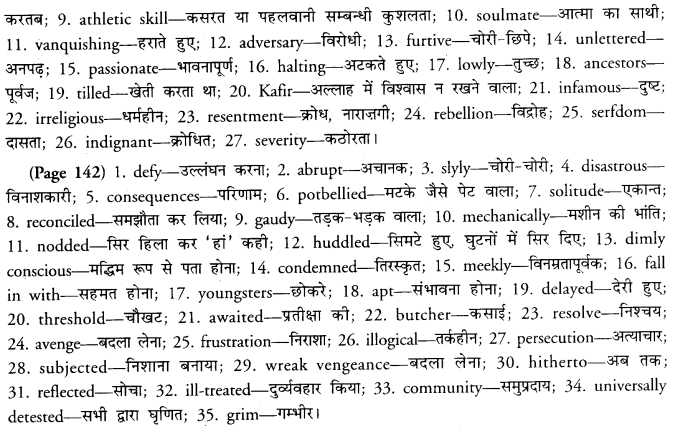
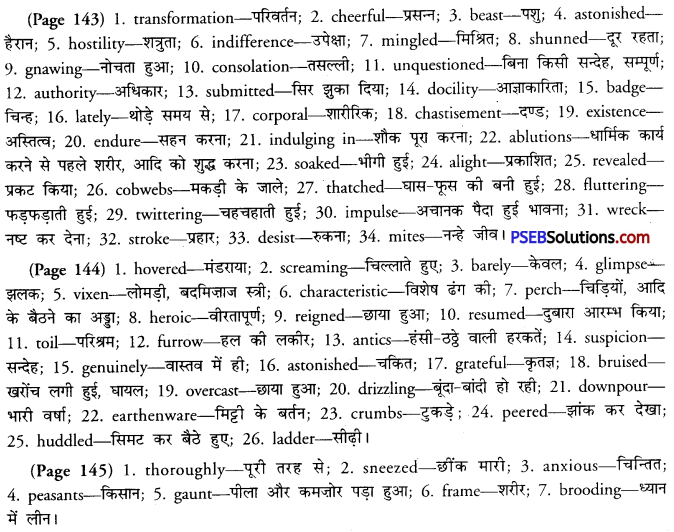
PSEB 11th Class English Solutions Supplementary Chapter 4 The Model Millionaire 3

Class 11 General English Guide PSEB Pdf Supplementary Reading
The First Atom Bomb Question Answer Class 11 English Book Chapter 9 PSEB Solutions

Punjab State Board PSEB 11th Class English Book Solutions Chapter 9 The First Atom Bomb Textbook Exercise Questions and Answers.

Class 11th English Book Chapter 9 The First Atom Bomb Question Answers

The First Atom Bomb Class 11 Questions and Answers

Short Answer Type Questions

Question 1.
Where were the first two atomic bombs dropped ?
Answer:
In the Second World War, first two atomic bombs were dropped by America on two cities of Japan. One bomb was dropped on the city of Hiroshima and the other bomb was dropped at Nagasaki.

दूसरे विश्व युद्ध के दौरान अमरीका द्वारा जापान के दो शहरों पर एटम बम गिराए गए। एक बम हिरोशिमा शहर पर गिराया गया था और दूसरा बम नागासाकी पर गिराया गया था।

PSEB 11th Class English Solutions Chapter 9 The First Atom Bomb

Question 2.
What prophecy was broadcast by the American wireless regarding the effects of atomic bombardment?
Answer:
The American wireless had boradcast a horrible prophecy regarding the effects of atomic bombardment. That prophecy was : ‘For seventy years at least, the radioactivity of the earth around the scene of the explosion will prevent all forms of life from existing there.’

अमरीकी रेडियो ने एटम बमबारी के परिणामों के बारे में एक भयंकर भविष्यवाणी प्रसारित की थी। वह भविष्यवाणी यह थी : “कम से कम सत्तर वर्ष तक विस्फोट वाली जगह के चारों तरफ धरती के ऊपर की रेडियोएक्टिविटी (विकिरणशीलता) इतनी होगी कि वहां किसी भी तरह का जीवन संभव नहीं हो पाएगा।”

Question 3.
How was a Japanese policeman able to bring a copy of a telegram to the author regarding the effect of the atomic bombardment ?
Answer:
The Japanese policeman was able to have a copy of a telegram regarding the effect of the atomic bombardment because the Japanese Government had not yet issued a censorship visa. The policeman had brought that copy at a great risk.

जापानी पुलिसवाला एटम बमबारी के असर से जुड़े एक टेलीग्राम की कापी इसलिए ले पाया क्योंकि जापान की सरकार ने अभी तक सैंसरशिप वीज़ा जारी नहीं किया था। पुलिसवाला यह कापी बहुत जोखिम उठाकर लाया था।

Question 4.
Where did the author take the telegram ?
Answer:
The author took the telegram at his villa in Torizaka, Tokyo.
लेखक ने वह टेलीग्राम टोकियो के टोरीज़ाका में स्थित अपने निवास स्थान पर लिया।

Question 5.
Who were the first Americans to see the photographs of Hiroshima taken on the ground after the dropping of the atomic bomb ?
Answer:
The first Americans to see photographs of Hiroshima taken on the ground after the dropping of the atomic bomb were General Fitch, Colonel Marcus, Colonel Webster and Colonel Sams.

एटम बम गिराए जाने के बाद जमीन पर ली गई हिरोशिमा की तस्वीरों को देखने वाले पहले अमरीकी लोग थे – जनरल फिच, कर्नल मार्क्स, कर्नल वेबस्टर तथा कर्नल सैम्ज़।

PSEB 11th Class English Solutions Chapter 9 The First Atom Bomb

Question 6.
Where is Hiroshima situated ?
Answer:
Hiroshima, on which an atomic bomb was dropped by America in the second World War, is a city in Japan. It is situated near the river Ota which flows down from Mount Kamuri in Japan.

हिरोशिमा जिस पर द्वितीय विश्व युद्ध के दौरान अमरीका द्वारा एटम बम गिराया गया था, जापान में स्थित एक शहर है। यह जापान में ओटा नदी के निकट स्थित है जो कामुरी पर्वत से नीचे को बहकर आती है।

Question 7.
What was the effect on houses up to three miles from the centre of the explosion ?
Answer:
Within three miles from the centre of the explosion, the roofs of the houses had fallen in and the beams jutted out from the wreckage of their walls. The houses were flattened as though they had been built of cardboard.

विस्फोट के केन्द्र से तीन मील के भीतर के मकानों की छतें गिर गईं थीं और उनकी दीवारों के मलबे में से शहतीर बाहर को निकले हुए थे। मकान इस तरह से धराशायी हो गए थे मानो वे गत्ते के बने हुए हों।

Question 8.
Why did a fine rain begin to fall half an hour after the explosion ?
Answer:
When an atom bomb was dropped on Hiroshima, there was an unnatural tremor and then a suffocating heat. After about half an hour after the explosion, a fine rain began to fall. It was caused by the sudden rise of overheated air to a great height, where it condensed and fell back as rain.

जब हिरोशिमा पर एटम बम गिराया गया, तो एक असामान्य-सा झटका लगा और फिर दम घोंटने वाली गर्मी हो गई। विस्फोट के लगभग आधे घंटे बाद वहां महीन वर्षा होने लगी। ऐसा अत्यधिक गर्म हुई हवा के अचानक बहुत ही ज़्यादा ऊपर को उठने की वजह से हुआ, जहां पर जाकर यह सघन हो गई और फिर वर्षा के रूप में वापस आ गई।

Question 9.
What was the effect of the atomic bombardment at three-quarters of a mile from the centre of the explosion ?
Answer:
Nothing at all was left there. Everything had disappeared. It was a stony waste littered with debris and twisted girders. About half an hour after the explosion, a fine rain began to fall. It was caused by the sudden rise of overheated air to a great height, where it condensed and fell back as rain.

वहां कुछ भी बाकी नहीं बचा रह गया था। हर चीज़ गायब हो चुकी थी। यह एक पत्थरों का खण्डहर था जो जहां-तहां फैले मलबे और मुड़े-तुड़े गर्डरों से भरा पड़ा था। विस्फोट के लगभग आधे घंटे के बाद वहां महीन वर्षा होने लगी। ऐसा अत्यधिक गर्म हुई हवा के अचानक बहुत ही ज़्यादा ऊपर को उठने की वजह से हुआ, जहां जाकर यह सघन हो गई और फिर वर्षा के रूप में वापस आ गई।

Question 10.
Who was Brigadier-General Baker ? What did he inform the author about ?
Answer:
Brigadier-General Baker was one of the American officers incharge of foreign relations. He informed the author that General MacArthur wished to receive the delegation of the International Red Cross.

ब्रिगडियर-जनरल बेकर अमरीका के विदेशी संबंधों के वरिष्ठ अधिकारियों में से एक था। उसने लेखक को सूचना दी कि जनरल मैकआर्थर अन्तर्राष्ट्रीय रैड क्रास के प्रतिनिधि मंडल से मिलना चाहता था।

PSEB 11th Class English Solutions Chapter 9 The First Atom Bomb

Question 11.
What was General MacArthur’s opinion about war ?
Answer:
The atomic bombardment on Hiroshima had destroyed it completely. Looking at the horrible destruction caused by the explosion, General MacArthur said that force was not a solution to man’s problems. A new war would leave nothing behind worthy of mention. General MacArthur was one of those who were responsible for the atomic bombaredment.

हिरोशिमा पर हुई एटम बमबारी ने इसे पूरी तरह नष्ट कर दिया था। विस्फोट के कारण हुए भयंकर विनाश को देखते हुए जनरल मैकआर्थर ने कहा कि बल, प्रयोग करने से मनुष्य की समस्याओं का हल नहीं निकाला जा सकता। एक अन्य युद्ध अपने पीछे ऐसा कुछ नहीं छोड़ेगा जो उल्लेख करने योग्य हो। जनरल मैकआर्थर उनमें से एक था जो एटम बमबारी के लिए जिम्मेदार थे।

Question 12.
What was the reaction of the first four Americans who saw the photographs of Hiroshima taken on the ground after the dropping of the atomic bomb ?
Answer:
Those four high officials of the American Army were, General Fitch, Colonel Marcus, Colonel Webster and Colonel Sams. Their faces at once grew grave and attentive when they saw the photographs of Hiroshima after the dropping of the atomic bomb. They were deeply moved to see the photographs.

अमरीकी सेना के वे चार बड़े अफसर थे – जनरल फिच, कर्नल मार्क्स, कर्नल वेबस्टर तथा कर्नल सैम्ज़। उनके चेहरे एकदम गंभीर और सचेत हो गए जब उन्होंने हिरोशिमा में एटम बम गिराए जाने के बाद के वहां के फोटोग्राफ देखे। फोटोग्राफ़ देख कर वे बुरी तरह से विचलित हो गए।

Question 13.
Write in brief about Hiroshima.
Answer:
Hiroshima is situated near the river Ota which flows down from Mount Kamuri in Japan. It was built on the delta of the river Ota. It was the seventh town in point of size in Japan. It had a population of 250,000 people. In addition, there was a garrison of about 150,000 soldiers. But after the blast, nothing remained alive.

हिरोशिमा जापान में ओटा नदी के निकट स्थित है जो कामुरी पर्वत से नीचे को बहती है। इसका निर्माण ओटा नदी के मुहाने पर हुआ था। आकार की दृष्टि से यह जापान में सातवां नगर था। इसकी जनसंख्या दो लाख पचास हज़ार थी। इसके अलावा वहां लगभग एक लाख पचास हज़ार सैनिकों का दल (नगर की) रक्षा के लिए तैनात था। परन्तु विस्फोट के बाद कुछ भी जिंदा नहीं बचा था।

Question 14.
Who was General MacArthur ? What did he say about war when the author met him ?
Answer:
General MacArthur belonged to the American army. He was one of those officers who were responsible for the dropping of atom bombs on Hiroshima and Nagasaki. When he met the author, he said that force was not a solution to man’s problems. A new war would leave nothing behind worthy of mention.

जनरल मैकआर्थर अमेरिकी सेना से संबंध रखता था। वह उन अफसरों में से एक था जो हिरोशिमा तथा नागासाकी पर एटम बम गिराए जाने के ज़िम्मेदार थे। जब वह लेखक से मिला, तो उसने कहा कि बल-प्रयोग करने से मनुष्य की समस्याओं का हल नहीं निकाला जा सकता। एक अन्य युद्ध अपने पीछे ऐसा कुछ नहीं छोड़ेगा जो उल्लेख करने योग्य हो।

Question 15.
What happened within a few seconds after the explosion ? What happened to the vegetation ?
Answer:
Thousands of people in the streets and the gardens in the centre of the town were scorched by a wave of searing heat. All houses and buildings were completely destroyed. Trees went up in flames. The rice plants lost their greenness and grass burned on the ground like dry straw.

गलियों के अन्दर हजारों लोग तथा नगर के मध्य में स्थित बाग झुलसा देने वाली गर्मी की एक लहर में झुलस गए। सभी घर तथा इमारतें पूरी तरह नष्ट हो गए। आग लगने के कारण पेड़ों से लपटें उठने लगी। चावल के पौधों की हरियाली चली गई और ज़मीन के ऊपर की घास सूखे भूसे की भांति जलने लगी।

PSEB 11th Class English Solutions Chapter 9 The First Atom Bomb

Long Answer Type Questions

Question 1.
What did Miss Ito tell the author about Hiroshima ?
Answer:
Miss Ito gave the author a great deal of information about what Hiroshima had once been. Hiroshima, she said, means The Broad Island. It was built on the delta of the river Ota. It was the seventh town in point of size in Japan. It had a population of 250,000 people. In addition, there was a garrison of about 150,000 soldiers. But now after the blast, nothing remained alive.

मिस इटो ने लेखक को इस बारे में काफी सूचना प्रदान की कि हिरोशिमा एक समय कैसा हुआ करता था। उसने कहा कि हिरोशिमा का अर्थ होता है, चौड़ा द्वीप । यह ओटा नदी के मुहाने पर बनाया गया था। आकार की दृष्टि से यह जापान का सातवां बड़ा शहर था। इसकी जनसंख्या दो लाख पचास हज़ार थी। इसके अतिरिक्त वहां एक लाख पचास हजार सुरक्षा सैनिकों का एक दल था। किन्तु अब धमाके के बाद कुछ भी जीवित नहीं बचा था।

Question 2.
Describe the immediate effect of the atomic bombardment on Hiroshima.
Answer:
When an atom bomb was dropped on Hiroshima, there was an unnatural tremor and then a suffocating heat. Within a few seconds, thousands of people in the streets were scorched by the searing heat.

Many were killed instantly and others lay writhing from intolerable pain of their burns. Houses were flattened as though they had been built of cardboard. The cattle suffered the same fate as human beings. Within three miles from the centre of the explosion, nothing remained alive.

जब हिरोशिमा पर एटम बम गिराया गया, तो एक असामान्य-सा झटका लगा और फिर दम घोंटने वाली गर्मी हो गई। कुछ ही सैकिंडों में गलियों में हजारों लोग झुलसा देने वाली गर्मी में झुलस गए। अनेकों लोग कुछ ही सैकिंडों में मारे गए और अन्य लोग अपने जलने के घावों की असहनीय पीड़ा में तड़पते हुए पड़े थे। मकान इस तरह धराशायी हो गए मानो वे गत्ते के बने हों। पशुओं का भी वही हाल हुआ जो मनुष्यों का हुआ था। विस्फोट के केन्द्र से तीन मील के भीतर कुछ भी जीवित न बचा।

Question 3.
What happened to the houses in Hiroshima after the bombardment ?
Answer:
At four miles from the centre of the explosion, the roofs of the houses had lost their tiles. At three miles, the roofs of the houses had fallen in and the beams jutted out from the wreckage of their walls. At about two and a half miles, all the buildings had been burnt out and destroyed.

Only traces of the foundations and piles of debris were left. At three-quarters of a mile from the centre of the devastation, nothing at all was left. It was a stony waste littered with debris and twisted girders.

विस्फोट वाले स्थान के केन्द्र से चार मील की दूरी पर बने मकानों की छतों पर लगी टाइलें गायब हो गई थीं। तीन मील की दूरी पर बने मकानों की छतें नीचे गिरी हुई थी और उनकी दीवारों के मलबे में से शहतीर बाहर को निकले हुए थे। अढ़ाई मील की दूरी पर बनी सभी इमारतें जल चुकी थीं और नष्ट हो चुकी थीं। केवल बुनियादों के चिन्ह तथा मलबे के ढेर ही शेष बचे थे। तबाही के केन्द्र से पौना मील दूर बिल्कुल कुछ भी बाकी नहीं बचा था। यह एक पत्थरों का खण्डहर था जो मलबे और मुड़े-तुड़े गार्डरों से जहां-तहां भरा पड़ा था।

PSEB 11th Class English Solutions Chapter 9 The First Atom Bomb

Question 4.
Describe, in brief, the author’s meeting with General MacArthur.
Answer:
General MacArthur was also responsible for dropping of the atom bombs at Hiroshima and Nagasaki. When he met the author and his men, he thanked them for all the work they had done for the victims in Hiroshima. Then he shared with them his views about the devastation that had resulted from the war. He admitted that force could never be a solution to man’s problems. He said that a new war would leave nothing behind worthy of mention.

हिरोशिमा तथा नागासाकी पर एटम बम गिराए जाने के लिए जनरल मैकआर्थर भी ज़िम्मेदार था। जब वह लेखक तथा उसके आदमियों से मिला, तो उसने उस पूरे काम के लिए उनका धन्यवाद किया जो उन्होंने हिरोशिमा में पीड़ित लोगों के लिए किया था। फिर उसने युद्ध के कारण हुई तबाही के बारे में उनके साथ अपने विचार साझे किए। उसने इस बात को स्वीकार किया कि मनुष्य की समस्याओं का हल बल-प्रयोग से कभी नहीं किया जा सकता। उसने कहा कि एक अन्य युद्ध अपने पीछे ऐसा कुछ नहीं छोड़ जाएगा जो उल्लेख करने योग्य हो।

Question 5.
How did Marcel Junod begin to have the idea of the terrible disaster that took place in Hiroshima after the atomic bombardment ?
Answer:
Three weeks had passed after the explosion. But still nothing was practically known about the fate of the devastated towns or of the innumerable victims. An American journalist had managed to get near Hiroshima in a plane, but his account had immediately been suppressed.

The Japanese also maintained complete silence concerning the disaster. However, verbal reports went from one end of Japan to the other. It was from these reports that Junod began to have some idea of the terrible disaster.

विस्फोट के बाद तीन सप्ताह बीत चुके थे। किन्तु अभी तक उन तबाह हुए नगरों के बारे में अथवा प्रभावित हुए अनगिनत लोगों के बारे में वास्तविक रूप से कुछ भी पता नहीं चला था। एक अमरीकी पत्रकार वायुयान द्वारा हिरोशिमा के नजदीक पहुँचने में समर्थ हो गया, किन्तु उसके ब्योरे को तुरन्त दबा दिया गया। जापानियों ने भी तबाही के बारे में पूरी खामोशी धारण कर रखी थी। लेकिन मौखिक खबरें जापान के एक छोर से दूसरे छोर तक आने-जाने लगी थीं। इन्हीं रिपोर्टों के माध्यम से जुनोद को उस भयंकर तबाही का अनुमान होने लगा था।

PSEB 11th Class English Solutions Chapter 9 The First Atom Bomb

Question 6.
What did the Japanese journalist tell Junod about the atomic bombardment on Hiroshima ?
Answer:
The journalist told Junod that it was 6 August 1945 when an atom bomb was dropped on Hiroshima. That morning, the sky was quite clear. Suddenly, a glaring whitish-pinkish light appeared in the sky. There was an unnatural tremor, and then a suffocating heat.

Within a few seconds, thousands of people in the streets were scorched by the searing heat. Many were killed instantly. Others lay writhing from the intolerable pain of their burns.

When a terrible wind rose, fires spread everywhere. Trams were picked up by the wind. The animals suffered the same fate as human beings. Within three miles from the centre of the explosion, nothing remained alive. Houses were flattened as though they had been built of cardboard.

The terrible play of wind, fire, death and destruction went on all day. By evening, the fire went out when nothing was left to burn. Hiroshima had ceased to exist.

पत्रकार ने जुनोद को बताया कि वह 6 अगस्त, 1945 का दिन था जब हिरोशिमा पर एटम बम गिराया गया। उस प्रात: आकाश बिल्कुल साफ़ था। अचानक एक चुंधिया देने वाली सफ़ेद और गुलाबी-सी रोशनी आकाश में दिखलाई दी। एक असामान्य-सा झटका लगा और फिर दम घोंटने वाली गर्मी हो गई। कुछ ही सैकिंडों में गलियों में हज़ारों लोग झुलसा देने वाली गर्मी में झुलस गए। अनेकों लोग तुरन्त मारे गए।

अन्य लोग अपने जलने के घावों की असहनीय पीडा में तडपते हए पड़े थे। जब भयानक तेज़ हवा चलने लगी, तो आग हर जगह फैल गई। तेज़ हवा ट्रामों को उड़ा ले गई। पशुओं का भी वही हाल हुआ जो मनुष्यों का हुआ था। विस्फोट के केन्द्र से तीन मील के भीतर कुछ भी जीवित न बचा।

मकान इस तरह धराशायी हो गए मानो गत्ते के बने हों। तेज़ हवा, आग, मृत्यु और विनाश का भयानक खेल पूरा दिन चलता रहा। सायं होते-होते आग बुझ गई जब वहां जलने को कुछ बाकी नहीं रहा। हिरोशिमा का अस्तित्व समाप्त हो चुका था।

Objective Type Questions

Question 1.
Who wrote the chapter, ‘The First Atom Bomb ?
Answer:
Marcel Junod.

Question 2.
When was an atom bomb dropped on Hiroshima ?
Answer:
On 6 August, 1945.

PSEB 11th Class English Solutions Chapter 9 The First Atom Bomb

Question 3.
Name the four high officers of the American army who were the first to see the photographs of destroyed Hiroshima.
Answer:
General Fitch, Colonel Marcus, Colonel Webster and Colonel Sams.

Question 4.
What does ‘Hiroshima’ mean?
Answer:
It means ‘the broad island’.

Question 5.
Where is Hiroshima situated ?
Answer:
On the delta of the river Ota in Japan.

Question 6.
What happened about half an hour after the explosion ?
Answer:
It started raining lightly.

Question 7.
When did the fire go out after the explosion ?
Answer:
When there was nothing left to burn.

Question 8.
Name the man who was responsible for dropping the atom bomb over Hiroshima.
Answer:
General MacArthur.

Question 9.
Where was Junod when he received a copy of a telegram that had been sent from Hiroshima ?
Answer:
In Tokyo.

Question 10.
Who was Professor Tsusuki ?
Answer:
One of the leading surgeons in Japan.

Question 11.
Who was Brigadier General Baker ?
Answer:
One of the American officers incharge of foreign relations.

Question 12.
Who wished to receive the delegation of the International Red Cross at his office ?
Answer:
General MacArthur.

Question 13.
According to General MacArthur, what would be the result of a new war?
Answer:
It would leave nothing behind worthy of mention.

PSEB 11th Class English Solutions Chapter 9 The First Atom Bomb

Question 14.
Who is termed as the chief architect of victory in this chapter ?
Answer:
General MacArthur.

Vocabulary And Grammar

1. Match the words under column A with their antonyms under column B :

1. extraordinary — explicable
2. verbal — inattentive
3. inexplicable — danger
4. arrival — tolerable
5. perceptible — describable
6. safety — reveal
7. intolerable — imperceptible
8. indescribable — written
9. conceal — departure
10. attentive — ordinary
Answer:
1. extraordinary → ordinary
2. verbal → written
3. inexplicable → explicable;
4. arrival → departure
5. perceptible → imperceptible
6. safety → danger
7. intolerable → tolerable
8. indescribable + describable
9. conceal → reveal;
10. attentive + inattentive.

2. Use prefixes to form the antonyms of the following words :

acquainted, human, cultivated, effective, definable.
Answer:
1. acquainted = unacquainted
2. human = inhuman
3. cultivated = uncultivated;
4. effective = ineffective
5. definable = indefinable.

3. Fill in each blank with a suitable preposition :

1. We are ………… the top five nations of the world in terms of GDP.
2. Her lips constantly moved ………….. an inaudible prayer.
3. Do we realize that self-respect comes ……….. self-reliance ?
4. I came here the day …………. yesterday.
5. Everything in this store is …………. sale.
Answer:
1. among
2. in
3. from
4. before
5. for.

4. Change the voice :

1. She was writing five to six letters to Malcolm every week.
2. The smell of blood and the bear had nauseated him.
3. How could anyone love a freak ?
4. I shall help you in every way.
5. Why did your brother give such a rude reply ?
Answer:
1. Five to six letters were being written to Malcolm every week (by her).
2. He had been nauseated by the smell of blood and the bear.
3. How could a freak be loved (by anybody) ?
4. You will be helped in every way (by me).
5. Why was such a rude reply given by your brother?

5. Do as directed :

1. He purchased a new bicycle. (Change into future indefinite tense)
2. He held his breath. (Change into past perfect tense)
3. Everything had disappeared. (Change into present perfect tense)
4. The child ran towards his parents. (Change into future continuous tense)
5. Everything is working out fine. (Change into past indefinite tense)
Answer:
1. He will purchase a new bicycle.
2. He had held his breath.
3. Everything has disappeared.
4. The child will be running towards his parents.
5. Everything worked out fine.

PSEB 11th Class English Solutions Chapter 9 The First Atom Bomb

The First Atom Bomb Summary & Translation in English

The First Atom Bomb Summary in English:

In this chapter the writer, Marcel Junod, gives a vivid account of Hiroshima after the bombing of 6 August 1945. Here he gives his first-hand experience of the devastation caused in Japan during the Second World War due to the atomic bombing of Hiroshima and Nagasaki. Three weeks had passed since the two atomic bombs had been dropped on Hiroshima and Nagasaki. But still, nothing was practically known about the fate of the devastated towns or of the innumerable victims.

An American journalist had managed to get near Hiroshima in a plane, but his account had immediately been suppressed. The Japanese also maintained complete silence concerning the disaster. However, verbal reports went from one end of Japan to the other. It was from these reports that Junod began to have some idea of the terrible disaster.

Many people had fled from Hiroshima. Their first-hand descriptions of the horror were deeply painful. But no one knew the total number of the dead. And of those who seemed at first to have escaped, thousands were dying every day with strange symptoms.

PSEB 11th Class English Solutions Chapter 9 The First Atom Bomb

Junod was then in Tokyo when he got some photographs from the Foreign Ministry of Japan. These photographs had been taken in Hiroshima after the explosion of the bomb. They gave a very horrible picture of the city.

Then Junod got a copy of a telegram also that had been sent from Hiroshima. It told the terrible state of those who had survived. Junod took the telegram and the photographs with him and immediately went to the Yokohama Chamber of Commerce where some big Generals of American Army were staying. He showed them the telegram and the photographs.

Their faces at once grew grave and attentive. When they looked at the photographs of badly burnt corpses, they were deeply moved. They asked Junod what he wanted from them. Junod suggested that a rescue expedition should be organised at once.

Then arrangements were made for Junod to go to Hiroshima. He went there as a part of the International Red Cross delegation. Two Japanese interpreters were sent with him. One of them was Miss Ito and the other was a Japanese journalist. On their way, the two interpreters gave Junod a great deal of information about what Hiroshima had once been.

Hiroshima, said Miss Ito, means the broad island. It was built on the delta of the river, Ota. It was the seventh town in point of size in Japan. It had a population of 250,000 people. In addition, there was a garrison of about 150,000 soldiers. But now nothing remained alive after the blast.

The Japanese journalist told Junod that it was 6 August 1945 when an atom bomb was dropped on Hiroshima. That morning, the sky was quite clear. Suddenly, a glaring whitish pinkish light appeared in the sky. There was an unnatural tremor, and then a suffocating heat.

Within a few seconds, thousands of people in the streets were scorched by the searing heat. Many were killed instantly. Others lay writhing from the intolerable pain of their burns. Most Japanese houses are built of timber and straw. So when a terrible wind rose,

fires spread everywhere. Trees went up in flames. Trams were picked up by the wind and tossed aside as though they had no weight. The animals suffered the same fate as human beings. Within three miles from the centre of the explosion, nothing remained alive.

Houses were flattened as though they had been built of cardboard. The terrible play of wind, fire, death and destruction went on all day. By evening, the fire began to die down. Then it went out when nothing was left to burn. Hiroshima had ceased to exist.

PSEB 11th Class English Solutions Chapter 9 The First Atom Bomb

What Junod actually saw on reaching Hiroshima was nothing but a catacomb: At three miles from the centre of the devastation, the roofs of the houses had fallen in and the beams jutted out from the wreckage of their walls. At about two and a half miles, all the buildings had been burnt out completely and destroyed.

And at three quarters of a mile from the centre of the explosion, nothing at all was left. It was a stony waste littered with debris. Absolute silence reigned in the whole city that had turned into an endless graveyard. There was not even a bird or an animal to be seen anywhere.

Before leaving Tokyo, Junod and his delegation were invited by General MacArthur to his office. He thanked them for all the work they had done for the victims in Hiroshima. General MacArthur was one of those who had been responsible for the dropping of the bombs on Hiroshima and Nagasaki.

After seeing the death and devastation caused by it, he was deeply repentant. “Too much has been destroyed in this war,” he said. He realised how destructive an atomic war would be. He said, “A new war would leave nothing worthy of mention.” He felt that all possible efforts must be made to save mankind from itself. ‘Force is not a solution for man’s problems, he said.

The First Atom Bomb Translation in English:

Marcel Junod (1904-1961) was a Swiss doctor and a field delegate of the International Committee of the Red Cross. He is remembered for his selfless service during the Abyssinian War, the Spanish Civil War and World War II. He was the first foreign doctor to reach Hiroshima after the atom bomb attack on 6 August, 1945.

In this essay, he gives a first-hand experience of the devastation caused in Japan during the Second World War due to the dropping of the first atom bombs on Hiroshima and Nagasaki. Even those who were responsible for dropping the bombs, like General MacArthur, after seeing the death and destruction, felt that force is not a solution to mans problem and ‘a new war would leave nothing behind worthy of mention.

Three weeks had passed since the two atomic bombs had been dropped on Hiroshima and Nagasaki, but we still knew practically nothing about the fate of the devastated towns or of the innumerable victims.

PSEB 11th Class English Solutions Chapter 9 The First Atom Bomb

The American wireless had broadcast a very great deal about the preparations made for the use of the new weapon and about its extraordinary power, but information concerning the effects of atomic bomb ardment was limited to the horrible prophecy ‘for seventy years at least the radio- activity of the earth around the scene of the explosion will prevent all forms of life from existing there.’

The Americans I had met the evening before on board the Benevolence had all fallen silent the moment I mentioned the word, ‘Hiroshima’. When they questioned me about Japan, they carefully avoided all mention of it, and when I uttered the word I think we all felt an indefinable sense of discomfort.

For different reasons the Japanese also maintained complete silence concerning the disaster which had brought their sudden defeat. It was only through the verbal reports which went from one end of Japan to the

other that we began to have some idea of what the sudden cataclysm had meant for the inhabitants of Hiroshima. One of our secretaries named Nohara, a half-Japanese, sometimes repeated to us more or less the gist of what was being rumoured amongst the Japanese.

Many fugitives had fled from Hiroshima to seek safety with their families, and their first-hand descriptions of the horror were profoundly disquieting; the blinding light suddenly flashing out of a peaceful sky was a phenomenon much more terrible than an earthquake. It was a typhoon of glare, heat, and wind which had swept suddenly over the earth and left a sea of fire behind it.

No one knew the total of dead; 50,000 said some; 200,000 insisted others. And there were just as many wounded, or more. And of those who seemed at first to have escaped injury, thousands were dying every day with strange, new and inexplicable symptoms.

PSEB 11th Class English Solutions Chapter 9 The First Atom Bomb

On 2 September a Japanese policeman brought a copy of a telegram to our villa in Torizaka for which Tokyo had not yet issued a censorship visa. Bilfinger had arrived at Hiroshima on 30 August and hurriedly sent off the following disjointed report :

Situation horrifying ………… Ninety per cent of town razed ………. All hospitals ……. destroyed or severely damaged Have visited two provisional hospitals : conditions indescribable …. Bomb effects mysterious. Many victims apparently recovering suddenly experience fatal relapse owing to degeneration’ of white corpuscles’ and other internal injuries …….. Deaths still

occurring in great numbers. More than 100,000 victims still in provisional hospitals in neighbourhood. Grave shortage of material, bandages, medicaments Appeal allied high command supplies be parac-huted immediately into centre of town.

Urgently need large supplies of bandages, cottonwool, ointments for burns, sulpha- mides, blood plasma and transfusion kits …. immediate action necessary I took this telegram, and the photographs, which I still had in my possession, and went at once to the Yokohama Chamber of Commerce where General MacArthur had installed himself and his staff.

A few minutes after my arrival four high officers were bending over the table on which I had wordlessly placed the photos and the telegram : General Fitch, Chief of the U.S. Information Service; Colonel Marcus, of the Prisoners-of-war Department; Colonel Webster, Chief of the Hospital Service; and Colonel Sams, who was incharge of assistance for the civil population.

They were the first Americans to see photographs of Hiroshima taken on the ground after the fall of the atomic bomb. Their faces were grave and attentive, and their expressions were a trifle wry at the sight of those carbonized corpses No one spoke.

The photos went from hand to hand. General Fitch put on his glasses. He read the telegram twice and then turned to me. ‘What do you want us to do ?’ What did I want them to do ? Wasn’t Bilfinger’s telegram plain enough ? There were 100,000 wounded people without proper

attention. Bandages, sulphamides, blood plasma — Bilfinger has listed it all. I suggested that a rescue expedition should be organised at once. The General turned to Colonel Sams. ‘That’s your department, I think,’ he said. The four officers put their heads together. Then one of them picked up the photos and the telegram. ‘Leave these with me,’ he said. ‘I want to show them to General MacArthur’.

It was 7 September, five days later, before I heard anything further, and then Colonel Sams summoned me to Yokohama. ‘It is impossible for the United States Army to organize any direct relief action,’ he informed me, ‘but General MacArthur is willing to let you have fifteen tons of medicaments and hospital material. They can be distributed under the control and responsibility of the Red Cross.’ And he added :

PSEB 11th Class English Solutions Chapter 9 The First Atom Bomb

‘A commission of inquiry is leaving for Hiroshima tomorrow. A seat has been reserved for you on board one of the planes.’Early on September the investigation commission left the island of Miyajima. From our hotel we walked along the shore of the little harbour. We boarded the boat which was to take us over the arm of the sea which separated us from the main island.

A car was waiting for us there, and I sat between two Japanese interpreters, a Miss Ito, who has been born in Canada, and a Japanese journalist who had spent twenty years in the United States. They both gave me a great deal of information about what Hiroshima had once been : its main activities and its geographical situation.

I needed their accounts in order to compare the reality of yesterday, a busy prosperous town, with the reality of today : the desolating spectacle after its utter destruction by one flash of blinding searing light.

‘Hiroshima,’ explained the fragile Miss Ito, ‘means “the broad island.” It was built on the delta6 of the river Ota which flows down from Mount Kamuri and it was the seventh town in point of size in Japan.

The seven arms of the Ota – seven rivers which pour their waters into the inland sea enclose in an almost perfect triangle the harbour of the town, the factories, an arsenal, oil refineries, and warehouses. Hiroshima had a population of 250,000 people, and in addition there was a garrison of about 150,000 soldiers.’.

The journalist described : ‘On 6 August there wasn’t a cloud in the sky above Hiroshima, and a mild, hardly perceptible wind blew from the south. Visibility was almost perfect for ten or twelve miles.‘At nine minutes past seven in the morning an air-raid warning sounded and four American B 29 planes appeared.

To the north of the town two of them turned and made off to the south and disappeared in the direction of the Shoho Sea. The other two, after having circled the neighbourhood of Shukai, flew off at high speed southwards in the direction of the Bingo Sea.

‘At 7. 31 the all-clear was given. Feeling themselves in safety people came out of their shelters and went about their affairs, and the work of the day began. Suddenly a glaring whitish pinkish light appeared in the sky, accompanied by an unnatural tremor which was followed almost immediately by a wave of suffocating heat and wind which swept away everything in its path.

‘Within a few seconds the thousands of people in the streets and the gardens in the centre of the town were scorched by a wave of searing heat. Many were killed instantly, others lay writhing on the ground screaming in agony from the intolerable pain of their burns.

Everything standing upright in the way of the blast walls, houses, factories, and other buildings was annihilated, and the debriso spun round in a whirlwind and was carried up into the air. Trams were picked up and tossed aside as though they had neither weight nor solidity.

Trains were flung off the rails as though they were toys. Horses, dogs, and cattle suffered the same fate as human beings. Every living thing was petrified in an attitude of indescribable suffering. Even the vegetation did not escape. Trees went up in flames, the rice plants lost their greenness, the grass burned on the ground like dry straw.

PSEB 11th Class English Solutions Chapter 9 The First Atom Bomb

‘Beyond the zone of utter death in which nothing remained alive, houses collapsed in a whirl of beams, bricks, and girders. Up to about three miles from the centre of the explosion lightly-built houses were flattened as though they had been built of cardboard. Those who were inside were either killed or wounded. Those who managed to extricate themselves by some miracle found themselves

surrounded by a ring of fire. And the few who succeeded in making their way to safety generally died twenty or thirty days later from the delayed effects of the deadly gamma rays. Some of the reinforced concrete or stone buildings remained standing, but their interiors were completely gutted by the blast.

‘About half an hour after the explosion, whilst the sky all round Hiroshima was still cloudless, a fine rain began to fall on the town and went on for about five minutes.

It was caused by the sudden rise of overheated air to a great height, where it condensed’ and fell back as rain. Then a violent wind rose and the fires extended with terrible rapidity, because most Japanese houses are built only of timber and straw.

‘By the evening the fire began to die down and then it went out. There was nothing left to burn. Hiroshima had ceased to exist.’ The Japanese broke off, and then pronounced one word with indescribable but restrained emotion : ‘Look’. About two and a half miles from the centre of the town all the buildings had been burnt out and destroyed.

Only traces of the foundations and piles of debris and rusty charred ironwork were left. At three-quarters of a mile from the centre of the explosion nothing at all was left. Everything had disappeared. It was a stony waste littered with debris and twisted girders.

We got out of the car and made our way slowly through the ruins into the centre of the dead city. Absolute silence reigned in the whole city. There was not even a survivor searching in the ruins, though some distance away a group of soldiers was clearing a passage through the debris.

There was not a bird or an animal to be seen anywhere. Professor Tsusuki (one of the leading surgeons in Japan) led the way and spoke in a loud voice so that we could all hear what he said. His sentences came to us disjointed as though by deep excitement and emotion.

‘We must open our minds… we must try to understand everything.’ He pointed to the remnants’ of a wall, the base of which ran foperhaps six or seven yards. ‘There was a hospital here, gentlemen. Two hundred beds, eight doctors, twenty nurses.

Every single one and all the patients were killed. That’s what an atomic bomb does….’ A few days before I left Tokyo, Brigadier- General Baker, one of the American officers incharge of foreign relations, informed me that General MacArthur wished to receive the delegation of the International Red Cross. General MacArthur received us in his office on the top floor of the building.

He was wearing the ordinary service uniform of the U.S. Army, and the only indication of his high rank were five stars in each shoulder strap He invited us all to sit down near the window, which gave on to the grounds of the Imperial Palace, and sitting down with us and smoking his traditional pipe he talked to us freely.

He thanked us for the work we had done on behalf of the imprisoned Americans, but we could feel that his thoughts went even further than the fate of his own men. He was thinking of everyone who had been assisted and protected by the Red Cross, of all those who in their exile and their humiliation had no other hope of assistance. ‘The supreme value of human life and human blood has been forgotten,’ he said, ‘and human dignity too.’

In a firm voice, emphasizing each word, he went on : ‘Force is not a solution for man’s problems. Force on its own is nothing. It never has the last word. Perhaps you find it strange that I, a professional soldier, should say that to you.’

The chief architect of victory in the Pacific did not conceal his opinion that peace still lay far ahead in the future. ‘Even with our present weapons,’ he went on, ‘not including those still to be developed, a new war would leave nothing behind worthy of mention.’

PSEB 11th Class English Solutions Chapter 9 The First Atom Bomb

And in even more precise terms he sketched the danger of death and destruction which still hung over the world. ‘Too much has been destroyed in this war, and the physical exhaustion is too great, for there to be another war during the next twenty or twenty-five years. But what will happen after that ? What will happen unless between now and then we do everything possible to save mankind from itself ?’

The First Atom Bomb Summary & Translation in Hindi

The First Atom Bomb Summary in Hindi:

इस पाठ में लेखक, मार्सेल जुनोद, 6 अगस्त 1945 के दिन एटम बम गिराए जाने के बाद हिरोशिमा में पैदा होने वाली स्थिति का एक सजीव चित्र प्रस्तुत करता है। यहां वह उस तबाही का एक आँखों देखा अनुभव बताता है जो द्वितीय विश्व युद्ध के दौरान हिरोशिमा और नागासाकी के ऊपर एटम बम गिराए जाने के परिणामस्वरूप हुई थी।

हिरोशिमा और नागासाकी पर दो एटम बम गिराए जाने के बाद तीन सप्ताह बीत चुके थे। किन्तु अभी तक उन तबाह हुए नगरों के बारे में अथवा प्रभावित हुए अनगिनत लोगों के बारे में वास्तविक रूप से कुछ भी पता नहीं चला था।

एक अमरीकी पत्रकार वायुयान द्वारा हिरोशिमा के नजदीक पहुँचने में समर्थ हो गया, किन्तु उसके उल्लेख को तुरन्त दबा दिया गया। जापानियों ने भी तबाही के बारे में पूरी खामोशी धारण कर रखी थी। लेकिन मौखिक खबरें जापान के एक छोर से दूसरे छोर तक आने-जाने लगी थीं। इन रिपोर्टों के माध्यम से जुनोद को उस भयंकर तबाही का अनुमान होने लगा था। बहुत से लोग हिरोशिमा छोड़ कर भाग गए थे।

उनके द्वारा दिए गए आँखों देखे विवरण अत्यन्त पीड़ाजनक थे। लेकिन किसी को भी मरने वालों की कुल संख्या का कोई ज्ञान नहीं था। और वे लोग जिनके बारे में शुरू में ऐसा लगता था कि वे वहां से बच निकले थे, उनमें से हजारों लोग प्रतिदिन विचित्र लक्षणों के साथ मर रहे थे।

जनोद उस समय टोकियो में था जब उसे जापान के विदेश मन्त्रालय से कुछ फोटोग्राफ प्राप्त हुए। ये फोटोग्राफ हिरोशिमा में बम फटने के बाद लिए गए थे। वे नगर का एक बहुत भयंकर चित्र प्रस्तुत करते थे। फिर जुनोद को एक टेलीग्राम की एक नकल प्राप्त हुई जो हिरोशिमा से भेजा गया था। यह टेलीग्राम उन लोगों की भयानक स्थिति के बारे में बताती थी जो बच गए थे। जुनोद ने टेलीग्राम तथा फोटोग्राफ को अपने साथ लिया और तुरन्त योकोहामा वाणिज्य भवन में गया जहां अमरीकी सेना के कुछ बड़े जनरल ठहरे हुए थे।

उसने उन्हें वह टेलीग्राम तथा फोटोग्राफ दिखाए। उनके चेहरे एकदम गम्भीर और सचेत बन गए। जब उन्होंने बुरी तरह से जले हुए शवों के चित्र देखे तो वे बेहद विचलित हो उठे। उन्होंने जुनोद से पूछा कि वह उनसे क्या चाहता था। जुनोद ने सुझाव दिया कि तुरन्त एक बचाव अभियान शुरू किया जाना चाहिए।

PSEB 11th Class English Solutions Chapter 9 The First Atom Bomb

फिर जुनोद के हिरोशिमा जाने के प्रबन्ध कर दिए गए। वह वहां अन्तर्राष्ट्रीय रैड क्रास के प्रतिनिधि मण्डल के एक सदस्य के रूप में गया। उसके साथ दो जापानी अनुवादकों को भेजा गया। उनमें से एक मिस इटो थी और दूसरा एक जापानी पत्रकार था। रास्ते में उन दोनों अनुवादकों ने जुनोद को इस बारे में काफी सूचना प्रदान की कि हिरोशिमा एक समय कैसा हुआ करता था।

मिस इटो ने कहा कि हिरोशिमा का अर्थ होता है-‘चौड़ा द्वीप’। यह ओटा नदी के मुहाने पर बनाया गया था। आकार की दृष्टि से यह जापान का सातवां बड़ा शहर था। इसकी जनसंख्या दो लाख पचास हजार की थी। इसके अतिरिक्त वहां एक लाख पचास हजार सुरक्षा सैनिकों का एक दल था। किन्तु अब धमाके के बाद कुछ भी नहीं बचा था।

जापानी पत्रकार ने जुनोद को बताया कि वह 6 अगस्त, 1945 का दिन था जब हिरोशिमा पर एटम बम गिराया गया। उस प्रातः आकाश बिल्कुल साफ़ था। अचानक एक चुंधिया देने वाली सफ़ेद और गुलाबी-सी रोशनी आकाश में दिखलाई दी। एक असामान्य-सा झटका लगा और फिर दम घुटने वाली गर्मी हो गई।

कुछ ही सैकिंडों में गलियों में हजारों लोग झलसा देने वाली गर्मी में झलस गए। अनेकों लोग तरन्त मारे गए। अन्य लोग अपने जलने के घावों की असहनीय पीड़ा में तड़पते हुए पड़े थे। अधिकतर जापानी मकान लकड़ी और घास-फूस के बने होते हैं। इसलिए जब भयानक तेज हवा चलने लगी तो आग हर जगह फैल गई। आग लगने के कारण पेड़ों से लपटें उठने लगीं। तेज़ हवा ट्रामों को उड़ा ले गई और उन्हें ऐसे उलट दिया मानो उनका कोई वज़न ही न हो।

पशुओं का भी वही हाल हुआ जो मनुष्यों का हुआ था। विस्फोट के केन्द्र से तीन मील के भीतर कुछ भी जीवित न बचा। मकान इस तरह धराशाई हो गए मानो गत्ते के बने हों। तेज़ हवा, आग, मृत्यु और विनाश का भयानक खेल पूरा दिन चलता रहा। सायं होते-होते आग धीमी पड़नी शुरू हो गई। फिर वह बुझ गई जब वहां जलने को कुछ बाकी नहीं रहा। हिरोशिमा का अस्तित्व समाप्त हो चुका था।

हिरोशिमा पहुंचने पर जुनोद ने जो वास्तविक रूप से देखा वह कब्रों के तहखाने के अतिरिक्त और कुछ नहीं था। विनाश के केन्द्र से तीन मील की दूरी तक के मकानों की छतें नीचे को गिरी हुईं थीं तथा उनकी दीवारों के मलबे में से शहतीर बाहर को निकले हुए थे। अढ़ाई मील की दूरी की सभी इमारतें पूरी तरह जल चुकी थीं और नष्ट हो चुकी थीं।

विस्फोट के केन्द्र वाली जगह से पौना मील दूर बिल्कुल कुछ भी बाकी नहीं बचा था। यह एक पत्थरों का खण्डहर था जो जहां-तहां मलबे से भरा पड़ा था। पूरे नगर में जो एक कभी न खत्म होने वाले एक कब्रिस्तान के जैसा लग रहा था, बिल्कुल खामोशी छाई हुई थी। वहां कोई पक्षी या कोई जानवर तक दिखाई नहीं दे रहा था।

टोकियो छोड़ने से पहले जुनोद तथा उसके प्रतिनिधि मंडल को जनरल मैकआर्थर ने अपने कार्यालय में आमन्त्रित किया। उसने उनका उस सारे काम के लिए धन्यवाद किया जो उन्होंने घायलों के लिए हिरोशिमा में किया था। जनरल मैकआर्थर उन लोगों में से एक था जो हिरोशिमा तथा नागासाकी पर बम गिराने के लिए जिम्मेवार रहे थे।

PSEB 11th Class English Solutions Chapter 9 The First Atom Bomb

इसके कारण हुए संहार और विनाश को देखने के बाद उसने गहरा पश्चाताप हुआ। “इस युद्ध में बहुत ही ज्यादा तबाही हो गई है,” उसने कहा। उसे अहसास हो गया था कि एटमी युद्ध कितना विनाशकारी हो सकता है। उसने कहा, “एक अन्य युद्ध अपने पीछे ऐसा कुछ नहीं छोड़ेगा जो वर्णन योग्य हो।” उसने महसूस किया कि मानव जाति को अपने आप से ही बचाने के लिए सभी संभव यत्न अवश्य किए जाने चाहिएं। “बल प्रयोग मनुष्य की समस्याओं का हल नहीं है,” उसने कहा।

The First Atom Bomb Translation in Hindi:

मार्सेल जुनोद (1904-1961) एक स्विस डॉक्टर तथा रेड क्रास की अंतर्राष्ट्रीय समिति का क्षेत्र प्रतिनिधि था। उसे अबिसीनिया के युद्ध, स्पेन गृह युद्ध तथा विश्व युद्ध के दौरान उसकी नि:स्वार्थ सेवा के लिए याद किया जाता है। वह 6 अगस्त 1945 को परमाणु बम के हमले के बाद हिरोशिमा पहुंचने वाला पहला विदेशी डॉक्टर था। इस लेख में वह दूसरे विश्व युद्ध के दौरान हिरोशिमा

तथा नागासाकी के ऊपर गिराए गए पहले परमाणु बमों के tकारण हुई तबाही का आँखों देखा अनुभव पेश करता है। यहाँ तक कि वे लोग भी जो बम गिराए जाने के लिए जिम्मेवार थे, जैसे कि जनरल मैकआर्थर, ने भी मृत्यु तथा विनाश को देखने के बाद महसूस किया कि बल प्रयोग मनुष्य की समस्याओं का हल नहीं है और एक अन्य युद्ध अपने पीछे ऐसा कुछ शेष नहीं छोड़ेगा जो वर्णन करने के योग्य हो। हिरोशिमा तथा नागासाकी पर दो परमाणु बम गिराए जाने के बाद तीन सप्ताह बीत चुके थे, लेकिन हम वास्तविक रूप से तबाह हो चुके नगरों तथा शिकार हुए अनगिनत लोगों की हालत के बारे में लगभग कुछ नहीं जानते थे।

अमरीकी रेडियो ने इस नए हथियार के इस्तेमाल के लिए की गई तैयारियों के बारे में तथा इसकी असाधारण शक्ति के बारे में बहुत कुछ प्रसारित किया था, किंतु परमाणु बम गिराए जाने के प्रभावों के बारे में सूचना एक भयानक भविष्यवाणी तक ही सीमित रखी गई थी : ‘कम से कम सत्तर वर्ष तक विस्फोट वाली जगह के चारों तरफ धरती के ऊपर रेडियो-एक्टिविटी (विकिरणशीलता) इतनी ज्यादा होगी कि वहां किसी भी तरह का जीवन संभव नहीं हो पाएगा।’

वे अमरीकी जिनसे मैं ‘दि बिनेवलेन्स’ (हवाई जहाज का नाम) में एक शाम पहले मिला था, उस क्षण बिल्कुल खामोश हो गए जब मैंने ‘हिरोशिमा’ शब्द का जिक्र |किया। जब उन्होंने मुझसे जापान के बारे में पूछा तो उन्होंने इस बात का बड़ा ध्यान रखा कि इसका जिक्र न हो, और जब मैंने वह शब्द बोल ही दिया तो मेरा ख्याल है कि हम सभी ने ही एक अकथनीय असुविधा की भावना सी महसूस की।

PSEB 11th Class English Solutions Chapter 9 The First Atom Bomb

विभिन्न कारणों से जापानियों ने भी इस तबाही के बारे में पूरी तरह चुप्पी साधे रखी थी जो कि उनकी अचानक हार का कारण बनी थी। यह सिर्फ उन मौखिक रिपोर्टों के द्वारा ही संभव हो पाया, जो कि जापान के एक कोने से दूसरे कोने तक

पहुँच रही थीं, कि हमें इस बात का कुछ-कुछ अंदाजा होने लगा कि हिरोशिमा के निवासियों के लिए इस अचानक विनाश का क्या अर्थ था। हमारी एक सेक्रेटरी नोहारा, जो कि आधी जापानी थी, ने जापानियों के बीच जो भी अफवाहें फैलाई जा रही थीं को हमारे सामने कई बार दोहराया।

बहुत से लोग सुरक्षा की तलाश में अपने परिवारों के साथ हिरोशिमा से भाग गए, और उनके द्वारा दिए गए तबाही के आँखों देखे विवरण अत्यन्त पीड़ाजनक थे; शांत आकाश में अचानक चमक उठने वाली चंधिया देने वाली रोशनी एक ऐसी अनोखी घटना थी जो कि एक भूकंप से भी कहीं ज्यादा भयानक थी। वह तेज़ रोशनी, गर्मी तथा तेज़ हवा का एक तूफान था जो धरती के ऊपर से अचानक बड़ी तेज़ी से गुज़र गया और अपने पीछे आग का एक समुद्र छोड़ गया।

किसी को भी मरने वालों की कुल संख्या के बारे में, पता नहीं था; कुछ कहते 50,000; कुछ लोग जोर देकर कहते दो लाख। और घायलों की गिनती भी उतनी ही थी, अथवा उससे भी अधिक। और वे लोग जिनके बारे में शुरू में लगता था कि वे घावों से बच गए हैं, उनमें से हज़ारों लोग प्रतिदिन विचित्र, नए तथा अवर्णनीय

लक्षणों के साथ मर रहे थे। दो सितम्बर को एक जापानी पुलिसवाला टोरीज़ाका में हमारे बंगले पर उस टेलीग्राम की एक नकल लाया जिसके विरुद्ध अभी तक टोकियो ने प्रतिबंध पत्र जारी नहीं किया था।

बिलफिन्जर 30 अगस्त को हिरोशिमा पहुंच गया था तथा जल्दी-जल्दी में निम्नलिखित अव्यवस्थित रिपोर्ट भेज दी थी : स्थिति भयानक नब्बे प्रतिशत नगर मिट गया सभी अस्पताल नष्ट हो चुके या बुरी तरह क्षतिग्रस्त दो काम-चलाऊ

अस्पतालों का दौरा किया : हालत अवर्णनीय बम के प्रभाव रहस्यमय स्पष्ट रूप से ठीक हो रहे बहुत से शिकार लोग सफेद रक्तकणों की कमी के कारण या अन्य अन्दरूनी घावों के कारण अचानक ही घातक आवृत्ति का अनुभव करने लगते हैं मौतें अभी भी बड़ी गिनती में हो रही. एक लाख से भी ज्यादा घायल अभी भी

नज़दीक के काम-चलाऊ अस्पतालों में। सामग्री, पट्टियों 100,000 तथा दवाइयों की भारी कमी ……. मित्र राष्ट्रों की आला कमान से निवेदन, आपूर्ति तुरंत नगर के मध्य में पैराशूटसे गिराई जाए। भारी मात्रा में पट्टियों, रूई, जलने से उत्पन्न हुए घावों के लिए मलहमें, सल्फर के विभिन्न मिश्रण, रक्त पलाविका तथा खून चढ़ाने वाले किटों की बहुत ज़रुरत है ….. तुरन्त कारवाई आवश्यक ………. |

मैंने इस टेलीग्राम तथा उन फोटोग्राफों को लिया जो अभी भी मेरे कब्जे में थीं, और तुरन्त योकोहामा वाणिज्य भवन गया जहां जनरल मैकआर्थर खुद तथा अपने कर्मचारी दल के साथ ठहरा हुआ था। मेरे पहुंचने के कुछ मिनटों बाद चार उच्च अधिकारी उस मेज़ के ऊपर झुके हुए थे जिसके ऊपर मैंने वे फोटोग्राफ तथा वह टैलीग्राम चुपचाप रख दिए थे जनरल फिच, अमरीकी सूचना सेवा का मुखिया; युद्ध बंदी विभाग का कर्नल मार्क्स; कर्नल वेबस्टर, अस्पताल सेवा का मुखिया; तथा कर्नल सैम्ज, जो कि आम नागरिकों की सहायता सेवा का प्रभारी था ।

PSEB 11th Class English Solutions Chapter 9 The First Atom Bomb

वे पहले अमरीकी थे जिन्होंने परमाणु बम गिराए जाने के बाद ज़मीन पर ली गई हिरोशिमा की उन तस्वीरों को देखा था। उनके चेहरे गंभीर तथा सतर्क थे, और उन जले हुए शवों की तस्वीरों को देखकर उनके चेहरे के भाव थोड़े-से उदासी वाले हो गए थे। कोई भी कुछ न बोला। तस्वीरें एक हाथ से दूसरे हाथ में जाती रहीं।

जनरल फिच ने अपना चश्मा लगा लिया। उसने टेलीग्राम को दो बार पढ़ा और मेरी ओर घूमा। ‘आप हमसे क्या चाहते हैं ?’ मैं उनसे क्या चाहता था ? क्या बिलफिन्जर का टेलीग्राम पर्याप्त रूप से स्पष्ट नहीं था ? एक लाख घायल लोग थे जिनकी तरफ उचित ध्यान नहीं दिया गया

था। पट्टियां, सल्फर के विभिन्न मिश्रण, रक्त पलाविका बिलफिन्जर ने इन सब की एक सूची बनाई थी। मैंने सलाह दी कि बचाव अभियान तुरंत शुरू कर देना चाहिए। जनरल कर्नल सैम्ज की ओर मुड़ा। ‘मेरे विचार से यह तुम्हारा विभाग है,’ उसने कहा। चारों अधिकारियों ने इकट्ठे होकर सोचना शुरू कर | दिया।

फिर उनमें से एक ने वे तस्वीरें और टेलीग्राम उठा लिए। ‘इन्हें मेरे पास छोड़ जाइए,’ उसने कहा। ‘मैं इन्हें जनरल मैकआर्थर को दिखाना चाहता हूँ।’ यह सात सितम्बर का दिन था, पांच दिन बाद, मेरे कुछ और सुनने से पहले, और फिर कर्नल सैम्ज ने मुझे योकोहामा बुला लिया। संयुक्त राज्य सेना के लिए यह असम्भव है कि राहत के किसी काम को सीधे तौर पर शुरू किया जाए,’

उसने मुझे सूचित किया, ‘किन्तु जनरल मैकआर्थर आपको पन्द्रह टन दवाइयां और अस्पताल से सम्बन्धित अन्य चीजें देने को सहमत है। उन्हें रेड क्रॉस के नियंत्रण तथा जिम्मेवारी के अधीन बांटा जा सकता है।’ और उसने आगे कहा
‘एक जांच-पड़ताल आयोग कल हिरोशिमा के लिए रवाना हो रहा है। आपके लिए जहाज़ में एक सीट

आरक्षित कर दी गई है।’ नौ सितम्बर को प्रात:काल ही जांच-पड़ताल आयोग मियाजिमा से चला गया। अपने होटल से छोटी-सी बंदरगाह के किनारे तक हम लोग पैदल चलकर गए। हम उस नाव में बैठ गए जिसने हमें समुद्र के उस हिस्से में ले जाना था जो हमें मुख्य द्वीप से अलग करता था।

वहां एक कार हमारी प्रतीक्षा कर रही थी, और मैं दो जापानी दुभाषिओं के बीच में बैठ गया, एक थी मिस इटो, जिसका जन्म कैनेडा में हुआ था, तथा दूसरा एक जापानी पत्रकार जिसने बीस वर्ष संयुक्त राज्य में बिताए थे। उन्होंने मुझे इस बारे में भारी जानकारी प्रदान की कि किसी समय हिरोशिमा क्या हुआ करता था : इसकी मुख्य गतिविधियां तथा इसकी भौगोलिक स्थिति।

कल की वास्तविकता, जो कि एक व्यस्त तथा खुशहाल नगर था, की तुलना आज की वास्तविकता से : एक अंधा कर देने वाले तेज़ प्रकाश की एक चमक के द्वारा पूरी तरह तबाह कर दिए जाने के बाद का उदास कर देने वाला वीरान दृश्य, के साथ करने के लिए मुझे उनके विवरणों की आवश्यकता थी।

‘हिरोशिमा,’ नाजुक सी मिस इटो ने व्याख्या करते हुए कहा, ‘का अर्थ होता है-“चौड़ा द्वीप”। इसका निर्माण ओटा नदी के मुहाने पर हुआ जो कामुरी पर्वत से नीचे को बहती है तथा आकार की दृष्टि से यह जापान का सातवां बड़ा नगर था। ओटा की सात बांहें – वे सातों नदियां जो अपना पानी आन्तरिक समुद्र में डालती हैं -लगभग एक संपूर्ण त्रिकोण में नगर की बन्दरगाह, कारखानों, एक शस्त्रागार, तेल-शोधक कारखानों, तथा गोदामों को समेट लेती हैं।

हिरोशिमा की जनसंख्या दो लाख पचास हजार लोगों की थी, और इसके अलावा वहां लगभग एक लाख पचास हजार सैनिकों का दल रक्षा करने के लिए तैनात था।’ 150,00 पत्रकार ने वर्णन किया : ‘छ: अगस्त को हिरोशिमा के ऊपर आकाश में एक भी बादल नहीं था, तथा एक कोमल-सी, मुश्किल से ही महसूस होने वाली, हवा दक्षिण दिशा की ओर से चल रही थी। दस या बारह मील तक हर चीज़ लगभग पूरी

तरह साफ़ दिखाई दे रही थी। ‘प्रात:काल सात बजकर नौ मिनट पर हवाई हमले की चेतावनी देने वाला एक हूटर सुनाई दिया तथा चार अमरीकी बी-29 हवाई जहाज़ दिखाई दिए। उनमें से दो नगर की उत्तर दिशा में मुड़ गए और फिर दक्षिण की तरफ चले गए और शोहो सागर की दिशा में ओझल हो गए। बाकी के दो जहाज़ शुकाई के इर्द-गिर्द चक्कर काटने के बाद तेज़ गति के साथ बिंगो सागर की ओर मुड़ गए।

‘सात बजकर इकत्तीस मिनट पर खतरा टलने का हूटर बजा दिया गया। अपने आप को सुरक्षित महसूस करते हुए लोग अपनी छिपने की जगहों से बाहर आ गए और अपने-अपने कामों में लग गए, और दिन का काम शुरू हो गया। अचानक एक तेज़ चुभने वाली चमक के साथ सफेद गुलाबी रोशनी आकाश में दिखाई दी, इसके बाद एक असाधारण-सा झटका लगा जिसके बाद दम घोंट देने वाली एक लहर-सी आई और एक ऐसी आंधी जो अपने रास्ते में आने वाली हर चीज़ को उड़ाकर ले गई। ‘कुछ ही सैकिंडों में गलियों के अन्दर हज़ारों लोग तथा नगर के मध्य में बने बाग़ झुलसा देने वाली गर्मी की एक लहर में झुलस गए।

अनेकों लोग तुरन्त मारे गए, अन्य धरती के ऊपर पड़े तड़पते रहे, जलने के कारण हुए घावों की असहनीय पीड़ा के दर्द में चिल्लाते हुए। हरेक चीज़ जो उस विनाश के रास्ते में आई जैसे दीवारें, मकान, कारखाने, तथा अन्य इमारतें – पूर्ण रूप से मिट गईं, और उनका मलबा एक चक्रवात की शक्ल में चक्कर काटने लगा तथा उठकर ऊपर हवा में चला गया। ट्राम गाड़ियां ऐसे उठ गई और एक तरफ को उछल गईं मानो उनका कोई भार ही न हो तथा उनमें कोई ठोसपन न हो।

रेलगाड़ियां पटरी पर से ऐसे फेंक दी गईं मानों वे कोई खिलौने हों। घोड़ों, कुत्तों तथा दूध देने वाले पशुओं का भी वही हाल हुआ जो मनुष्यों का हुआ था। हरेक सजीव चीज़ अवर्णनीय कष्ट सहते हुए पथरा गई। यहां तक कि हरियाली भी न बची। पेड़ों को आग लग गई, चावल के पौधों की हरियाली चली गई, ज़मीन के ऊपर की घास सूखे भूसे की भांति जल गई।

‘संपूर्ण मौत (विनाश) जिसके अंदर कुछ भी जीवित न बचा, के क्षेत्र के बाहर शहतीरों, ईंटों तथा गर्डरों के चक्रवात में मकान धराशाई हो गए। विस्फोट वाले केन्द्रीय स्थान से लेकर तीन मील के घेरे में हल्की किस्म के बने हुए मकान ऐसे गिर गए मानो वे गत्ते के बने हुए थे। जो लोग इमारतों के अंदर थे, वे या तो मारे गए या घायल हो गए। वे जो किसी अजूबे से स्वयं को बाहर निकालने के योग्य हो गए थे, आग के एक दायरे में घिर गए। तथा वे मुट्ठी-भर जो बच कर सुरक्षित जगहों पर जाने में

सफल हो गए थे, वे आमतौर पर बीस या तीस दिन बाद घातक गामा किरणों के देर से होने वाले प्रभाव की वजह से मारे गए। लोहे तथा सीमेंट से बनीं या पत्थर से बनी कुछ इमारतें खड़ी रह गईं, लेकिन उनके अन्दर की चीजें उस विस्फोट से पूरी तरह जलकर राख हो गईं। ‘विस्फोट के लगभग आधा घण्टा बाद, जबकि हिरोशिमा के चारों तरफ आकाश अभी भी बिना किसी बादल के था, नगर के ऊपर हल्की -हल्की वर्षा होने लगी जो लगभग पांच मिनट तक जारी रही।

ऐसा अत्यधिक गर्म हवा के अचानक बहुत ऊपर तक उठने के कारण हुआ, जहां यह सघन हो गई और वर्षा के रूप में वापस नीचे आ गई। फिर एक भयानक आंधी पैदा हुई तथा आग भयानक तेजी से फैल गई, क्योंकि अधिकतर जापानी घर लकड़ी और सूखी घास के बने हुए होते हैं। ‘शाम तक आग कम होनी शुरू हो गई और फिर यह बुझ गई। वहां जलने को और कुछ बचा ही नहीं था। हिरोशिमा का अस्तित्व समाप्त हो गया था।’

PSEB 11th Class English Solutions Chapter 9 The First Atom Bomb

जापानी व्यक्ति बोलते-बोलते रुक गया और फिर अजीब से किंतु नियंत्रित भाव से एक शब्द बोला ‘देखो।’ नगर के केन्द्र से लगभग अढ़ाई मील की दूरी पर सभी इमारतें जल चुकी थीं और नष्ट हो चुकी थीं। केवल बुनियादों के चिन्ह तथा मलबे के ढेर और बुरी तरह जल चुके लोहे के जंग लगे ढांचे शेष बचे थे।विस्फोट के केन्द्र वाली जगह से पौना मील दूर बिल्कुल कुछ भी नहीं बचा था। हर चीज़ गायब हो चुकी थी। यह एक पत्थरों से भरा खण्डहर था जो मलबे तथा मुड़े-तुड़े गर्डरों से जहां-तहां भरा पड़ा था।

हम कार से बाहर आए तथा उन नष्ट हुए खण्डहरों में से धीरे-धीरे चलते हुए उस मृत नगर के केन्द्र में पहुंच गए। पूरे नगर में बिल्कुल खामोशी छाई हुई थी। वहां एक भी बचा हुआ कोई ऐसा आदमी नहीं था जो उन खण्डहरों में कुछ ढूंढ रहा हो, यद्यपि कुछ दूरी पर सैनिकों का एक दल मलबे को साफ करके एक रास्ता बना रहा था।

किसी भी जगह कोई पक्षी या कोई जानवर दिखाई नहीं प्रोफेसर सुसुकी (जो जापान के मुख्य सर्जनों में से एक था) रास्ता दिखाते हुए ऊँचे स्वर में बोलता जा रहा था ताकि हम वह सब सुन सकें जो वह कह रहा था। उसके वाक्य हम तक अव्यवस्थित से रूप में आए जैसे कि वे गहरे जोश तथा भावना से भरे हों। ‘हमें अपने दिमाग के दरवाजे खोल देने चाहिएं …….. हमें हर चीज़ को समझने की कोशिश करनी चाहिए।’

उसने एक दीवार के अवशेषों की ओर इशारा करते हुए कहा, जिसका आधार लगभग छ: या सात गज़ तक लम्बा था, ‘सज्जनो, यहां एक अस्पताल हुआ करता था। दो सौ बिस्तर वाला अस्पताल, आठ डॉक्टर और बीस| नर्से । एक-एक डॉक्टर व नर्स तथा सभी रोगी मारे गए। ऐसा है जो एक परमाणु बम करता है…..मेरे टोकियो छोड़ कर जाने के कुछ दिन पहले, ब्रिगेडियर-जनरल बेकर, जो अमरीकी विदेशी संबंधों के प्रभारी अधिकारियों में से एक था, ने मुझे यह सूचना दी कि जनरल मैकआर्थर अन्तर्राष्ट्रीय रैड क्रॉस के प्रतिनिधि मंडल से मिलना चाहता था।

जनरल मैकआर्थर ने इमारत की सबसे ऊपर वाली मंजिल में बने अपने कार्यालय में हमसे मुलाकात की। उसने संयुक्त राज्य सेना वाली साधारण सैनिक वर्दी पहन रखी थी, और उसकी पदवी का एकमात्र संकेत चिन्ह उसके प्रत्येक कंधे के फीते पर लगे हुए पाँच-पाँच सितारे थे। उसने हम सब को खिड़की के समीप बैठने को कहा, जहां से इंपीरियल पैलेस का मैदान दिखाई देता था, और हमारे साथ ही नीचे बैठकर अपनी पारंपरिक पाइप पीते हुए उसने हमसे खुलकर बात की।

उसने हमारा उस काम के लिए धन्यवाद किया जो हमने बंदी बनाए गए अमरीकियों के लिए किया था, लेकिन हम महसूस कर सकते थे कि उसके विचार अपने लोगों के भाग्य (स्थिति) से आगे तक जाते थे। वह उन सबके बारे में – जिनकी रैड क्रॉस के द्वारा सहायता की गई थी तथा रक्षा की गई थी, वे जो प्रवास में तथा अपमान में जी रहे थे तथा जिन्हें सहायता की कोई दूसरी उम्मीद नहीं थी – सोच रहा था।

‘मानव जीवन तथा मानव रक्त के उच्चतम मूल्य को भुला दिया गया है,’ उसने कहा, ‘तथा मानव सम्मान को भी।’ एक दृढ़ आवाज़ में तथा प्रत्येक शब्द पर बल देते हुए उसने कहना जारी रखा :’बल प्रयोग मनुष्य की समस्याओं का हल नहीं है। बल अपने आप में कुछ नहीं है। यह कभी भी अन्तिम विकल्प नहीं होता है। शायद आप लोगों को यह अजीब लगे कि मैं जोकि पेशे से एक सैनिक हूं, ऐसी बात आपसे कह रहा हूं।’ प्रशांत सागर में विजय के मुख्य निर्माता ने अपना विचार नहीं छिपाया कि शांति भविष्य में अभी भी बहुत दूर थी।

हमारे वर्तमान के हथियारों के साथ भी,’ उसने कहना जारी रखा, ‘यद्यपि उन हथियारों को शामिल न भी किया जाए जिनको अभी विकसित किया जाना है, एक अन्य युद्ध अपने पीछे ऐसा कुछ शेष नहीं छोड़ेगा जो वर्णन करने योग्य हो।’ तथा उसने और भी स्पष्ट शब्दों में मृत्यु और विनाश के उस खतरे का चित्र पेश किया जो अभी भी संसार के ऊपर मंडरा रहा था।

PSEB 11th Class English Solutions Chapter 9 The First Atom Bomb

इस युद्ध में बहुत ही ज्यादा नष्ट किया जा चुका है, तथा शारीरिक थकावट इतनी ज़्यादा हो चुकी है कि अगले बीस या पच्चीस वर्ष में भी एक अन्य युद्ध लड़ा जाना असम्भव है। किंतु उसके बाद क्या होगा ? क्या होगा यदि अब और तब के बीच के समय में हम मानव जाति को अपने आप से बचाने के लिए हर संभव यत्न नहीं करेगे ?’

A Panorama of Life PSEB Solutions Class 11

Where is Science Taking Us? Question Answer Class 10 English Main Course Book Chapter 2 PSEB Solutions

Punjab State Board PSEB 10th Class English Book Solutions English Main Course Book Chapter 2 Where is Science Taking Us? Textbook Exercise Questions and Answers.

Class 10th English Main Course Book Chapter 2 Where is Science Taking Us? Question Answers

Where is Science Taking Us? Class 10 Questions and Answers

Short Answer Type Questions

Question 1.
Why does the author of ‘Where Is Science Taking Us ? say that science is doing less than nothing ?
Answer:
Science has done nothing with regard to ethical and spiritual matters. It has created many ethical problems, but doesn’t offer any solutions. Therefore, the writer says that science is doing less than nothing.

नैतिक और आध्यात्मिक विषयों के सम्बन्ध में विज्ञान ने कुछ नहीं किया है। इसने अनेक नैतिक समस्याएं खड़ी कर दी हैं, परन्तु उनका समाधान नहीं दिया है। इसलिए लेखक कहता है कि विज्ञान कुछ भी नहीं से भी कम कर रहा है।

Question 2.
What are machines doing for the humans ?
Answer:
Machines have given humans abnormal power. They are helping them in every field. They are working as man’s slaves.

मशीनों ने मनुष्यों को असाधारण शक्ति प्रदान कर दी है। वे हर क्षेत्र में उनकी सहायता कर रही हैं। वे मनुष्य के दासों के रूप में काम कर रही हैं।

PSEB 10th Class English Main Course Book Solutions Chapter 2 Where is Science Taking Us?

Question 3.
What is the greatest triumph of science ?
Answer:
Science has helped us to produce more and more food. It has also invented many new medicines and helped man to live longer.

विज्ञान ने अधिकाधिक भोजन पैदा करने में हमें सहायता प्रदान की है। इसने अनेक नई दवाइयों का आविष्कार भी किया है और मनुष्य की अधिक समय तक जीवित रहने में सहायता की है।

Question 4.
What are the consequences of war ?
Answer:
War causes death and destruction. Selfish traders hoard all food and people have to starve.

युद्ध से मृत्यु और विनाश पैदा होते हैं। स्वार्थी व्यापारी सभी खाने की चीज़ों की जमाखोरी कर लेते हैं और लोगों को भूखा मरना पड़ता है।

Question 5.
Today the upper age group is overcrowded.’ Why?
Answer:
Almost every year, many new drugs are invented. These drugs increase the average span of life. As a result of this, the upper age group has become overcrowded.

लगभग प्रत्येक वर्ष अनेकों नई दवाइयों की खोज हो जाती है। ये दवाइयां जीवन की औसत अवधि को बढ़ा देती हैं। इसके परिणामस्वरूप अधिक आयु के लोगों की संख्या अत्यन्त बढ़ गई है।

Question 6.
What has happened to the ethics and morals in the modern world?
Answer:
In the modern world, everybody is running after material things. Nobody cares about ethics and morals.

आधुनिक संसार में प्रत्येक व्यक्ति भौतिक चीजों के पीछे भाग रहा है। नैतिकता और नीति-शास्त्र की परवाह कोई नहीं करता है।

Question 7.
What is really needed in the world today ?
Answer:
Moral and spiritual values are needed in the world today. The qualities of charity, mercy, understanding, tolerance and justice need to be developed.

आज संसार में नैतिक और आध्यात्मिक मूल्यों की ज़रूरत है। दान, दया, सहानुभूति, सहनशीलता और न्याय सम्बन्धी गुणों को विकसित करने की ज़रूरत है।

PSEB 10th Class English Main Course Book Solutions Chapter 2 Where is Science Taking Us?

Question 8.
Why does the author of ‘Where Is Science Taking Us ? wish to live another hundred years ?
Answer:
The author hopes that life will become more interesting, intriguing and exciting in future. He wants to enjoy such kind of life. That is why he wishes to live another hundred years.

लेखक को आशा है कि भविष्य में जीवन और अधिक रोचक, जटिल और रोमांचक हो जाएगा। वह इस प्रकार के जीवन का आनन्द उठाना चाहता है। इसी कारण से वह सौ वर्ष और जीना चाहता है।

Long Answer Type Questions

Question 1.
List the material triumphs of science and the non-material necessities to make the world a better place.
Answer:
Science has given man all power over the physical world. It has given man the power of machines. With the help of machines, man can do even the impossible. But science has given man only the power over material things. In fact, it is the non-material things like charity, mercy, tolerance and justice that make the world a better place. In this regard, science has done less than nothing.

विज्ञान ने मनुष्य को भौतिक संसार के ऊपर पूरी शक्ति प्रदान कर दी है। इसने मनुष्य को मशीनों की शक्ति प्रदान कर दी है। मशीनों की सहायता से मनुष्य असम्भव काम तक कर सकता है। किन्तु विज्ञान ने मनुष्य को केवल भौतिक चीज़ों के ऊपर शक्ति प्रदान की है। वास्तव में यह दान, दया, सहनशीलता और न्याय जैसी चीजें हैं जो संसार को एक बेहतर जगह बनाती हैं। इस विषय में विज्ञान ने कुछ नहीं से भी कम काम किया है।

Question 2.
What should be the ultimate aim of science ?
Answer:
The ultimate aim of science should be to make life worthwhile on the earth. No doubt, science has given man the comfort of all material things. But more than material things, it is the non-material things that man needs. They are the qualities of charity, mercy, tolerance and justice. It is these things that make life worthwhile. Science should help man develop these functions of the mind.

विज्ञान का अन्तिम लक्ष्य इस धरती पर जीवन को सार्थक बनाना है। निस्सन्देह विज्ञान ने मनुष्य को सभी भौतिक चीज़ों की सुविधा प्रदान की है। किन्तु भौतिक चीजों से ज्यादा मनुष्य को अभौतिक चीज़ों की ज़रूरत है। वे दान, दया, सहनशीलता और न्याय के गुण हैं। यही चीजें हैं जो जीवन को सार्थक बनाती हैं। विज्ञान को मनुष्य में यही क्रियाएँ विकसित करने में सहायता देनी चाहिए।

Vocabulary and Grammar

Question 1.
Modern drugs have decreased the average span of life of human beings. (True, False)
Answer:
False

Question 2.
Machines give us more and more hours of …………..
(i) hard work
(ii) leisure
(iii) life
(iv) health.
Answer:
(ii) leisure

Question 3.
Name two non-material things mentioned in the lesson.
Answer:
Charity and tolerance

Question 4.
According to the writer, science is doing ‘less than nothing for material things’. (True, False)
Answer:
True

Question 5.
Which age group is overcrowded today?
(i) Childhood
(ii) Middle age group
(iii) Upper age group
(iv) None of these.
Answer:
(iii) Upper age group

Question 6.
Science has helped man to live ……
(i) forever
(ii) no more
(iii) longer
(iv) a short life.
Answer:
(iii) longer

Answer each of the following in one word / phrase / sentence :

Question 1.
Name the author of the essay, Where is Science Taking Us’?
Answer:
The name of the author is Dr. S.W. Pennyquick.

Question 2.
Which is the newer question cropping up before us ?
Answer:
The question is : ‘Where is science taking us ?

Question 3.
Which thing does the author first take as a material thing ?
Answer:
He first takes up the machine as a material thing.

Question 4.
Where do we find machines ?
Answer:
We find them in every sphere of life.

PSEB 10th Class English Main Course Book Solutions Chapter 2 Where is Science Taking Us?

Question 5.
What does a machine give us ?
Answer:
A machine gives us power and leisure.

Question 6.
Are machines good for us in all the ways ?
Answer:
No, they also create problems for us.a

Question 7.
What questions regarding machines come in man’s mind ?
Answer:
Man wants to know the answer regarding the aims and goal of the machines.

Question 8.
What things are now most important for the humanity ?’
Answer:
They are understanding, tolerance, justice and mercy.

Question 9.
Has science been successful in non-material things ?
Answer:
No, science has been helpless in this regard.

Question 10.
How is the life becoming because of machines ?
Answer:
It is becoming more and more interesting and exciting.

Complete the following :

1. Material things are our ………………… business.
2. Machines are there in every …………………. of human activity.
3. This age is truly the age of ………………….
4. We can now kill our fellow men in …………………. numbers.
5. During the war, many people have to …………………
6. Machine age gives us more hours of …………..
Answer:
1. daily
2. field
3. machine
4. large
5. starve
6. leisure.

Write True or False against each statement :

1. From the early times, man has wanted to know the meaning of life.
2. Science is doing a lot in respect of ethical and spiritual values.
3. Machines have reduced our leisure time.
4. Science produces goods, but it has no control over the consequences.
5. The number of aged persons has come down.
6. The spirit of tolerance and understanding is necessary for the humans.
Answer:
1. True
2. False
3. False
4. True
5. False
6. True.

Choose the correct option for each of the following:

Question 1.
Man has always wanted to know the ………………… of life.
(a) use
(b) meaning
(c) complexities
(d) mystery
Answer:
(b) meaning

Question 2.
Machines have given us more hours of ……………
(a) worries
(b) troubles
(c) leisure
(d) hard work.
Answer:
(c) leisure

Question 3.
We can now kill our fellow beings in …………
(a) fewer numbers
(b) a second
(c) the trenches
(d) larger numbers.
Answer:
(d) larger numbers.

PSEB 10th Class English Main Course Book Solutions Chapter 2 Where is Science Taking Us?

Question 4.
Now the wars have become ……
(a) very terrible
(b) easy
(c) rare
(d) impossible.
Answer:
(a) very terrible

Objective Type Questions

Question 1.
The synonym of each word under column A rhymes with the other word given under column C. Fill in the blanks in column B with the synonyms of words under A :
Answer:
1. fury – rage – page
2. began-started – parted
3. consequence – result – insult
4. conquest – victory – history
5. ethical – moral – oral
6. apparent – obvious – tedious
7. tolerate – bear – tear
8. charity – donation – nation
9. sufficient – enough – rough
10. abolish – end – mend.

Question 2.
Match the words under A with their antonyms under B :
Answer:
1. material → spiritual
2. forward → backward
3. necessary → unnecessary
4. creative → destructive
5. triumph → defeat
6. less → more
7. obvious → latent
8. ultimate → initial
9. justice → injustice
10. exciting → dull.

Question 3.
Make meaningful words by using over and under as prefix or suffix.
Answer:
1. overcome
2. underline
3. overestimate, underestimate
4. overstatement, understatement
5. undercurrent
6. overarm, underarm
7. overdo
8. overground, underground
9. pullover
10. overage, underage
11. underpants
12. overcharge, undercharge.

Question 4.
Rewrite the following in Direct Speech :
Answer:
1. The minister said, “I spoke about the rights of the citizens in a democracy. I must speak about the citizen’s responsibilities too.”
2. My mother said to me, “Do not waste your time during the holidays. Do some useful reading.”
3. The school inspector said, “I was very pleased with the school. I wish to congratulate the principal and the staff.”
4. The boys said to the teacher, “We didn’t understand the question. Please explain it once more.”

Question 5.
Change the Voice in the following sentences :
Answer:
1. The examination has been passed by him.
2. The truth must be spoken by you.
3. Your uncle’s advice should be followed by you.
4. A song can be sung by her now.
5. The test will be passed by Ram.
6. Why was he abused by you ?
7. It has to be done by me.
8. The police will arrest him soon.
9. A lie cannot be told by her.
10. You must accept this.

Question 6.
Put the words in the brackets into the be-going form :
Answer:
1. You are going to miss your bus.
2. The man with a brick in his hand is going to throw it at the dog.
3. We are wearing red clothes and the bull is going to attack us.
4. I am not going to sleep in this room, it is dirty.
5. Due to some technical fault, the aeroplane is going to crash.
6. They are going to make a lot of money out of this deal.
7. I am going to collect my new dress this evening.
8. I’ve reminded you once; I am not going to do it again.
9. He is going to smuggle this gold out of the country.
10. Look at the clouds. It is going to rain.

Where is Science Taking Us? Summary & Translation in English

Where is Science Taking Us Introduction:

In this chapter, the writer analyses the aims and the ultimate goal of science. He says that science has so far limited itself to material things. It has given man immense power over his material environment. But in non-material things such as charity, tolerance, forbearance, justice, mercy and understanding – science has been helpless. The writer says that the ultimate goal of science should be to make life worthwhile. And it can be done only by the advancement of non-material things. The writer hopes that one day science will bring about a functional improvement in the human mind and give it greater power of reasoning and understanding. He hopes that man will then have sufficient reason and understanding to abolish war.

Where is Science Taking Us? Summary & Translation in English:

Page – 18

When man first began to think, he asked himself the deepest of all questions a question which you have undoubtedly asked yourself many times : What is the Meaning of Life ? What is it all about ? Where are we all going ? What drives men ever forward to work and worry ? And now there’s this other big question a newer question which is beginning to force itself into our notice. One that is not ages old that has not been with us since man first began to think. It is : Where is Science Taking Us?

First, where is science taking us with regard to ethical and spiritual values ? We know what it is doing with regard to material things, for material things are its daily business; but what is it doing with regard to non-material things ? If the answer were ‘nothing at all’, that would be bad enough; but the actual answer is ‘less than nothing’. Here science is actually doing less than nothing. Its material teachings have been so over-emphasized that many people are floundering and wondering whether after all man is but a machine animated by forces over which he has no control.

Let’s concentrate on material things, the things that form the very stronghold of science. Look at the machine, for instance. This is the age of the machine. Machines are everywhere in the fields, in the factory, in the home, in the street, in the city, in the country, everywhere. To fly, it is not necessary to have wings; there are machines. To swim under the sea it is not necessary to have gills ; there are machines. To kill our fellow men in overwhelming numbers, there are machines. Petrol machines alone provide ten times more power than all human beings in the world. In the busiest countries, each individual has six hundred human slaves in his machines.

PSEB 10th Class English Main Course Book Solutions Chapter 2 Where is Science Taking Us?

Page – 19

What are the consequences of this abnormal power ? Before the war, it looked as though it might be possible, for the first time in history, to provide food and clothing and shelter for the teeming population of the world every man, woman and child. This would have been one of the greatest triumphs of science. And yet, many a time especially during the war we have seen the world crammed full of food and people hungry. For that’s the way of science and the machine age. Science produces the goods, it makes the goods, but has no control over the consequences.

The machine age gives us year by year more hours of leisure but it fails to teach us how to use them. It gives us mechanical habits of mind and represses the spirit of adventure except along machine- made lines. We will need all our creative powers to think our way out of the social problems which science has created for us.

It is science that has given us the unexpected redistribution of the age groups. Almost every year, some modern drug adds a little more to the average span of life, until the upper group is overcrowded. In the United States, for instance, there are already nine million people over the age of sixty. (This talk was delivered around the 1950’s.) In fifteen years’ time, this number will reach the astonishing figure of forty-five million. Who is to keep them ? It will need some readjustment.

And so science goes on raising its problems. Compared with our fundamental question What is Life ? these problems may seem to be of less importance. But they are not really so.

What is happening is that science is creating problems faster than they can be solved. Man is struggling in a sort of vicious circle, always striving to catch up and never getting nearer. And there are no signs that the glut of discoveries is coming to an end. War is the worst example; science has pushed it so far forward that ethics 1 and morals are floundering hopelessly behind.

Page -20

It makes one sometimes ask : What is science really after? What are its aims? What is its goal? Its aims seem to be obvious. They are material, of course. One aim is the complete understanding, indeed the conquest, of man’s environment ; the conquest of everything material, big or small, bringing all powers within man’s reach. The other aim is the understanding of all the mysteries that lie within the human body the material mysteries, the innumerable chemical and physical actions that make the body work.

If these are the apparent aims of science, surely they cannot represent the ultimate goal. The ultimate goal, if there is such a thing, must be the understanding of everything that makes life worth while, the enrichment of all that life means. That goes beyond material things; for man needs more than food and shelter and clothing and the understanding of what goes on within his stomach.

What is really needed in the world today, perhaps more than ever before, is not some new world-shattering discovery in nuclear physics, or some breath taking discovery in chemistry or medicine. The advance for which the world is waiting, beyond any doubt, is a small advance a slight advance in charity, in understanding, forbearance, tolerance, justice and mercy. That is what the world is waiting for, and waiting rather anxiously. But charity, and tolerance, and forbearance, and the understanding of one another are non-material matters. And in non-material things in the simplest social things science has been helpless. It cannot even help us to distinguish good from evil.

Maybe this will not always be so. Who knows ? It is quite probable that some day science will effect an improvement in the human brain itself. Not a structural improvement, for in structure the human brain is the greatest miracle of all; its understanding will come last. But there might well be a functional improvement. That is far from fantastic. The advances in science might one day well increase the capacity and reasoning power of the human brain.

PSEB 10th Class English Main Course Book Solutions Chapter 2 Where is Science Taking Us?

Page -21

I should say there is little doubt that man will one day improve on the natural man, raise his intellectual status, and give himself greater power of reasoning and understanding. He might have sufficient reason and understanding to abolish war. Whether that will be so, whether and when he will have a better understanding of his fellow men that remains to be seen. It brings us back to the question Where is Science Taking Us ? Despite the present vicissitudes, we are going somewhere. There are trouble some times ahead. But those who fear for the future are the craven (cowardly) in spirit; for life is becoming more and more interesting, intriguing and exciting. I wish I had another hundred years

Where is Science Taking Us? Summary & Translation in Hindi

Where is Science Taking Us? Introduction:
इस लेख में लेखक विज्ञान के उद्देश्यों तथा इसके अन्तिम लक्ष्य का विश्लेषण करता है। वह कहता है कि विज्ञान ने अब तक स्वयं को भौतिक चीज़ों तक ही सीमित रखा है। इसने मनुष्य को अपने भौतिक पर्यावरण पर अथाह शक्ति प्रदान की है। किन्तु दयालुता, सहनशीलता, धैर्य, न्याय, दान-भावना तथा सहानुभूति जैसी अभौतिक चीज़ों के बारे में विज्ञान असहाय है। लेखक कहता है कि विज्ञान का अन्तिम लक्ष्य जीवन को सार्थक बनाना होना चाहिए तथा ऐसा केवल अभौतिक चीजों को विकसित करने से ही सम्भव हो सकता है। लेखक आशा करता है कि एक दिन विज्ञान मनुष्य के दिमाग की कार्य-प्रणाली में सुधार ला देगा। यह इसे तर्क करने तथा दूसरों को समझ पाने के लिए अधिक योग्यता प्रदान कर देगा। वह आशा करता है कि मनुष्य के पास तब इतना तर्क और इतनी सहानुभूति होगी कि युद्ध सदा के लिए समाप्त हो जाएगा।

Where is Science Taking Us? Summary & Translation in Hindi:

Page – 18

जब मनुष्य ने पहली बार सोचना शुरू किया तो उसने सभी प्रश्नों से अधिक गहराई वाला एक प्रश्न स्वयं से पछा – वह प्रश्न जो आप ने निश्चय ही स्वयं से अनेक बार पछा होगा जीवन का अर्थ क्या है ? वह सब किसके विषय में है ? हम सब कहां जा रहे हैं ? कौन-सी चीज़ मनुष्यों को हमेशा आगे की तरफ धकेलते हुए काम करने और चिन्ता करने के लिए धकेलती रहती है ? और अब वहां यह दूसरा बड़ा प्रश्न है – एक और नया प्रश्न जो हमारे ध्यान में ज़बरदस्ती आना शुरू हो / गया है। ऐसा प्रश्न जो युगों पुराना नहीं है ……. जो | हमारे पास तब से नहीं रहा है जब से मनुष्य ने पहली

बार सोचना शुरू किया था। यह प्रश्न है – विज्ञान हमें कहां ले जा रहा है ? पहली बात यह है कि विज्ञान हमें नैतिक और आध्यात्मिक गुणों के विषय में हमें कहां ले जा रहा है ? हमें पता है कि यह भौतिक पदार्थों के विषय में क्या कर रहा है, क्योंकि भौतिक चीजें इसकी दैनिक क्रिया में आती हैं ; किन्तु यह अभौतिक चीज़ों के सम्बन्ध में क्या कर रहा है ? यदि इसका उत्तर होता ‘कुछ भी नहीं’, तो यह बहुत खराब बात होती; किन्तु वास्तविक उत्तर है – ‘कुछ नहीं से भी कम’। इस क्षेत्र में विज्ञान वास्तव में कुछ नहीं से भी कम कर रहा है। इसकी भौतिक शिक्षाओं को इतना ज्यादा वज़न दिया गया है कि अनेक लोग भटकने लगे हैं और हैरान हुए  सोच रहे हैं कि आखिर क्या मनुष्य मात्र एक मशीन है| जो ऐसी शक्तियों के द्वारा संचालित हो रही है जिनके ऊपर उसका कोई वश नहीं है।

आइए, हम भौतिक चीज़ों पर अपना ध्यान एकाग्र | करें, वे चीजें जो विज्ञान का केन्द्र हैं। उदाहरण के रूप में, मशीन को देखिए।यह मशीन का युग है। मशीनें हर जगह हैं – खेतों में, फैक्टरियों में, घरों में, शहर में, गलियों में, देहात में,| हर जगह। उडने के लिए पंखों की ज़रूरत नहीं: इसके लिए मशीनें हैं। समुद्र के भीतर तैरने के लिए गलफड़ों की ज़रूरत नहीं है। इसके लिए मशीनें हैं। अपने साथी मानव-जीवों को भारी संख्या में मारने के लिए वहां. मशीनें हैं। अकेली पेट्रोल की मशीनें ही दुनिया भर के सभी मनुष्यों की अपेक्षा दस गुणा अधिक शक्ति प्रदान / करती हैं। व्यस्ततम् देशों में प्रत्येक व्यक्ति के पास | उसकी मशीनों के रूप में छ: सौ गुलाम हैं।

PSEB 10th Class English Main Course Book Solutions Chapter 2 Where is Science Taking Us?

Page – 19

इस असामान्य शक्ति के क्या परिणाम हैं ? युद्ध के पहले ऐसा प्रतीत होता था मानो इतिहास में पहली बार विश्व की उमड़ती जनसंख्या को खाना, कपड़े और | रहने के लिए छत दे पाना शायद सम्भव | हर आदमी, औरत और बच्चे के लिए। विज्ञान की यह हो जाएगा सबसे बड़ी जीत होनी थी। और फिर भी हमने कई बार, विशेषकर युद्ध के दौरान, विश्व में भोजन से ठसाठस भरे हए भंडार देखे हैं और लोगों को भखे रहते देखा है। क्योंकि यही तरीका है विज्ञान और मशीनी युग का। विज्ञान चीज़ों का उत्पादन करता है, वह चीजें बनाता है, किन्त परिणामों पर इसका कोई नियंत्रण नहीं है। मशीनी युग हमें वर्ष-प्रति-वर्ष विश्राम के अधिकाधिक घण्टे प्रदान करता है किन्तु हमें इस विश्राम का उपयोग करना नहीं सिखाता है।

यह हमारे दिमाग को एक मशीन के जैसी आदतें प्रदान कर देता है और साहसिक भावना को दबा देता है – मशीनी ढंग से काम करने के अतिरिक्त शेष सभी भावनाओं को। हमें अपनी सभी सृजनात्मक शक्तियों का प्रयोग करते हुए सोचना होगा कि हम उन सामाजिक समस्याओं से कैसे बाहर निकल सकते हैं जो विज्ञान ने हमारे लिए पैदा कर दी हैं। यह विज्ञान है जिस ने हमें आयु-वर्गों का अप्रत्याशित रूप से पुनः वर्गीकरण प्रदान कर दिया है। लगभग प्रति वर्ष कोई न कोई आधुनिक दवाई जीवन की औसत अवधि को थोडा और बढ़ा देती है. जिस से ऊपरी आयु-वर्ग की संख्या और भी ज्यादा हो जाती है। उदाहरण के रूप में, संयुक्त राज्य में साठ वर्ष से अधिक आयु वाले लोग पहले ही 90 लाख हैं।

(यह भाषण 1950 के आसपास दिया गया था।) पन्द्रह वर्षों केसमय में यह संख्या साढ़े चार करोड़ के अचम्भाजनक आँकड़े तक पहुँच जायेगी। उनका पालन कौन करेगा ? इसके लिए कुछ पुनः समन्वय करने की ज़रूरत पड़ेगी। तथा इस प्रकार विज्ञान अपनी समस्याएँ पैदा करता रहता है। हमारे मौलिक प्रश्न के मुकाबले में – कि ज़िन्दगी क्या है ? ये समस्याएं शायद थोड़ी कम महत्त्वपूर्ण लगें। परन्तु वास्तव में वे ऐसी नहीं हैं। सुलझाया नहीं जा सकता। मनुष्य एक प्रकार के दुश्चक्र में संघर्ष कर रहा है, हमेशा समस्याओं से निबटने का संघर्ष करता रहता है और कभी भी उनके बराबर आगे बढ़ नहीं पाता है। और इस बात के कोई संकेत नहीं है कि आविष्कारों की भरमार समाप्त होने वाली है। सबसे| बुरा उदाहरण युद्ध है; विज्ञान ने इसे इतना आगे धकेल दिया है कि नीतिशास्त्र और नैतिकता बेबस रूप से भटकते हुए पीछे रह गए हैं।

Page -20

इस कारण कभी-कभी व्यक्ति पूछने लगता है विज्ञान वास्तव में क्या प्राप्त करना चाहता है ? इसके उद्देश्य क्या हैं ? इसका अन्तिम लक्ष्य क्या है ? इसके लक्ष्य स्पष्ट लगते हैं। वे निस्सन्देह भौतिक हैं। एक लक्ष्य है : पूर्ण समझ, असल में विजय, इन्सान की उसके वातावरण पर विजयः प्रत्येक भौतिक चीज़ पर विजय, बड़ी हो या छोटी, सभी शक्तियों को मनुष्य की पहुंच के अंदर लाना।दूसरा उद्देश्य उन सभी रहस्यों को समझना है जो मनुष्य के शरीर के भीतर छिपे हैं – भौतिक रहस्य, वे असंख्य रासायनिक और शारीरिक क्रियाएं जो शरीर को चलाने में मदद करती हैं। यदि विज्ञान के प्रत्यक्ष उद्देश्य यही हैं तो निस्सन्देह वे अन्तिम उद्देश्य नहीं हो सकते।

अन्तिम उद्देश्य, यदि ऐसी कोई चीज़ होती है, तो यह अवश्य उन सभी बातों की समझ होनी चाहिए जो जीवन को सार्थक बनाती हैं, उन सभी बातों की समृद्धि जिनका अर्थ जीना होता है। यह बात भौतिक चीज़ों से परे की बात है; क्योंकि मनुष्य को रोटी, कपड़ा और मकान से कुछ ज्यादा चाहिए होता है और ऐसी बातों की समझ से कुछ ज्यादा कि उसक पट म क्या गातावाधया चल रही होती हैं।

आज की दुनिया में वास्तव में जिस चीज की आवश्यकता है, शायद पहले के किसी समय से भी ्यादा, वह परमाणु भौतिकी के किसी विश्व-विनाशक आविष्कार की नहीं है, अथवा रसायन-विज्ञान या औषधि विज्ञान में किसी आश्चर्यजनक खोज की। वह प्रगति, जिसकी संसार प्रतीक्षा कर रहा है वह निस्संदेह एक छोटी-सी प्रगति है सिर्फ थोड़ी-सी प्रगति दानशीलता, समझ, धैर्य, सहनशीलता, न्याय और दया भावना में प्रगति। यही चीज़ है जिसका इंतजार दुनिया कर रही है, और बहुत उत्सुकता से। किन्तु दानशीलता और सहनशीलता और धैर्य तथा परस्पर समझ अभौतिक चीजें हैं। और अभौतिक चीजों

PSEB 10th Class English Main Course Book Solutions Chapter 2 Where is Science Taking Us?

के विषय में अति साधारण सामाजिक बातों के सम्बन्ध में विज्ञान बेबस रहा है। यह तो बुराई और अच्छाई में अंतर करने में भी हमारी मदद नहीं कर सकता। शायद ऐसा हमेशा नहीं रहेगा। कौन जानता है ? ऐसी बहुत सम्भावना है कि विज्ञान किसी दिन इन्सानी दिमाग़ में ही सुधार ला दे। दिमाग़ की बनावट में नहीं, क्योंकि आकार की दृष्टि से इन्सानी दिमाग एक सब से बड़ा अजूबा है; इसे समझ पाना सब से अन्तिम बात होगी। किन्तु इस में क्रियात्मक सुधार लाया जा सकता है। यह कोई बहुत विलक्षण बात नहीं है। विज्ञान में होने वाली प्रगतियां शायद एक दिन मानव दिमाग़ की क्षमता और इसकी तर्क-शक्ति को भी बढ़ा दें।

Page -21

मैं तो कहूंगा कि इस बात में लगभग कोई सन्देह नहीं है कि मानव अपने स्वाभाविक रूप से बेहतर बन जाएगा, अपने बौद्धिक स्तर को ऊपर उठा लेगा, तथा स्वयं को तर्क करने और समझने की बेहतर शक्ति प्रदान कर देगा। उसके पास शायद इतना तर्क और इतनी बुद्धि आ जाए कि वह युद्ध को समाप्त कर दे। क्या ऐसा होगा, क्या उसे अपने सहजीवों के बारे में बेहतर समझ प्राप्त हो जाएगी और कब होगी ये बातें अभी देखना बाकी इस से हम पुनः वापस उस प्रश्न पर आ जाते हैं कि विज्ञान हमें कहां ले जा रहा है ? वर्तमान के उतार चढ़ावों के बावजूद हम किसी-न-किसी तरफ़ अग्रसर हो रहे हैं। आने वाला समय मुश्किलों से भरा होगा। किन्तु वे लोग जो भविष्य के विषय में डरते हैं, वे आत्मा के कायर हैं, क्योंकि जीवन अधिकाधिक रुचिपूर्ण, जटिल और रोमांचक होता जा रहा है। काश, मेरे पास (जीवन के) एक सौ वर्ष और होते।

English Main Course Book Class 10 Solutions PSEB Prose

The Portrait of a Lady Question Answer Class 11 English Book Chapter 2 PSEB Solutions

Punjab State Board PSEB 11th Class English Book Solutions Chapter 2 The Portrait of a Lady Textbook Exercise Questions and Answers.

Class 11th English Book Chapter 2 The Portrait of a Lady Question Answers

The Portrait of a Lady Class 11 Questions and Answers

Short Answer Type Questions

Question 1.
Whose portrait hung above the mantelpiece in the drawing-room ?
Answer:
It was the portrait of the author’s grandfather that hung above the mantelpiece in the drawing room. He wore a big turban and loose-fitting clothes. He had a long white beard. He looked at least a hundred years old.

यह लेखक के दादा का चित्र था जो बैठक की अंगीठी के ऊपर लटका हुआ था। उसने एक बड़ी पगड़ी और खुलेढीले वस्त्र पहने हुए थे। उसकी लम्बी सफेद दाढ़ी थी। वह कम से कम एक सौ वर्ष का बूढ़ा प्रतीत होता था।

PSEB 11th Class English Solutions Chapter 2 The Portrait of a Lady

Question 2.
What, according to the author, was absurd and undignified on Grandmother’s part ?
Answer:
Grandmother often described the games she used to play in her childhood. It seemed to the author absurd and undignified on her part. It was so because as a child, the author could not imagine that his grandmother who was so old, could ever have been young and pretty.

दादी प्रायः उन खेलों का वर्णन करती जो वह अपने बचपन में खेला करती थी। लेखक को उसकी तरफ से ऐसी बातें मूर्खतापूर्ण तथा अशोभनीय प्रतीत होती थीं। ऐसा इसलिए था क्योंकि एक बच्चे के रूप में लेखक कभी यह कल्पना ही नहीं कर सकता था कि उसकी दादी जो इतनी बूढ़ी थी, कभी नौजवान तथा सुन्दर भी रही होगी।

Question 3.
Why did she say her prayer in a monotonous singsong ?
Answer:
Every day when grandmother got the author ready for school, she would keep saying her morning prayer all the time. But she would say her prayer in a monotonous singsong. She did so with the hope that the author would listen and get to know it by heart.

हर रोज सुबह जब दादी लेखक को स्कूल के लिए तैयार करती तो वह उस दौरान सारा समय अपना प्रातः का धार्मिक पाठ बोलती रहती। वह अपने पाठ को एक ही लय में बोलती रहती। वह ऐसा इस आशा के साथ किया करती थी कि लेखक इसे सुनता रहे और इस प्रकार यह उसे धीरे-धीरे जुबानी याद हो जाए।

Question 4.
What did they have for breakfast ?
Answer:
For breakfast, they used to have thick stale chapattis with some butter and sugar spread on them.
नाश्ते में वे मोटी बासी चपातियां खाया करते थे जिनके ऊपर थोड़ा-सा मक्खन तथा चीनी का लेप लगा होता।

Question 5.
Why did Grandmother always go to school. with the author ?
Answer:
Grandmother always went to school with the author because the school was attached to the village temple. While the author studied in the school, Grandmother would read the scriptures in the temple. And after the school, Grandmother and the author would come back home together.

दादी हमेशा लेखक के साथ स्कूल जाती थी क्योंकि स्कूल गांव के गुरुद्वारे के अंदर ही बना हुआ था। जिस दौरान लेखक स्कूल में पढ़ाई करता, दादी गुरुद्वारे में धार्मिक ग्रन्थ पढ़ा करती। और स्कूल के बाद दादी तथा लेखक दोनों इकट्ठे घर वापिस आया करते थे।

PSEB 11th Class English Solutions Chapter 2 The Portrait of a Lady

Question 6.
The children in the village school were taught the alphabet. Did Grandmother know the alphabet ?
Answer:
Yes, she knew the alphabet. She used to read the scriptures in the village temple.
हां, उसे वर्णमाला आती थी। वह गांव के गुरुद्वारे में धार्मिक ग्रंथ पढ़ा करती थी।

Question 7.
How did they feed the village dogs while returning home ?
Answer:
Every day in the morning before taking the author for school, Grandmother would pack several stale chapattis for the village dogs. And while returning home after the school, she and the author would feed the village dogs with those chapattis.

हर रोज सुबह लेखक को स्कूल ले जाने से पहले दादी गांव के कुत्तों के लिए कई बासी चपातियां पैक कर लेती। और स्कूल से वापिस घर आते समय वह तथा लेखक गांव के कुत्तों को वही चपातियां खिलाया करते थे।

Question 8.
‘That was the turning-point in our friendship.’ What happened to the friendship ?
Answer:
While living in the village, Grandmother used to accompany the author to his school. Grandmother knew the alphabet. She helped the author in his studies also. But in the city, she could neither accompany him to school nor help him in his studies. Their friendship did not remain as intimate as it was in the village.

गांव में रहते हुए दादी लेखक के स्कूल जाने के वक्त उसके साथ जाया करती थी। दादी को वर्णमाला आती थी। वह पढ़ाई में लेखक की मदद भी करती थी। परन्तु शहर में वह न उसके साथ स्कूल जा सकती थी और न ही अब वह पढ़ाई में मदद कर सकती थी। उनकी मित्रता इतनी घनिष्ठ न रही, जितनी गांव में हुआ करती थी।

Question 9.
How did the author go to school in the city ?
Answer:
In the village, the author used to go to school on foot with his Grandmother. There the school was situated not far from Grandmother’s house. But in the city, the school was very far from the author’s home. So he would go to school in a motor-bus in the city.

गांव में लेखक अपनी दादी के साथ पैदल ही स्कूल जाया करता था। वहां स्कूल दादी के घर से अधिक दूर नहीं था। परन्तु नगर में स्कूल लेखक के घर से बहुत दूर था। इसलिए वह नगर में एक मोटर-बस में बैठ कर स्कूल जाया करता था ।

PSEB 11th Class English Solutions Chapter 2 The Portrait of a Lady

Question 10.
Why was Grandmother unhappy about the school education in the city ?
Answer:
In the city school, the children were taught lessons in science and music only. They were not given any religious education. They were not taught any holy books or prayers. This was the reason that Grandmother was unhappy about the school education in the city.

नगर वाले स्कूल में बच्चों को सिर्फ विज्ञान और संगीत के पाठ सिखाए जाते थे। उन्हें कोई धार्मिक शिक्षा नहीं दी जाती थी। उन्हें कोई धार्मिक पुस्तकें नहीं पढ़ाई जाती थीं और उन्हें कोई प्रार्थनाएं नहीं सिखाई जाती थी। यही कारण था कि दादी नगर के स्कूलों में दी जाने वाली शिक्षा से नाखुश थी।

Question 11.
Why did she feel disturbed when the author announced that they were being given – music lessons at school ?
Answer:
According to grandmother, music had lewd associations. She considered it the monopoly of harlots and beggars. She believed that music was not meant for gentle folk. This was the reason why she felt disturbed when the author announced that they were being given music lessons at school.

दादी के विचार में संगीत घटिया किस्म की काम-वासनाएं पैदा करने वाली चीज़ था। वह समझती थी कि यह केवल वेश्याओं तथा भिखारियों का ही एकाधिकार था। उसका मानना था कि संगीत भले लोगों के लिए नहीं बना था। यही कारण था कि वह बहुत परेशान हो गई जब लेखक ने बताया कि उसके स्कूल में उन्हें संगीत के पाठ पढ़ाए जा रहे थे।

PSEB 11th Class English Solutions Chapter 2 The Portrait of a Lady

Question 12.
When was the common link of friendship between the author and his grandmother broken ?
Answer:
The common link of friendship between the author and his grandmother was broken when the author went to a university. He was given a room of his own. Grandmother accepted her seclusion calmly. Now she would spend most of her time in spinning wheel.

लेखक तथा उसकी दादी के बीच की मित्रता की साझी कड़ी तब टूट गई जब लेखक ने विश्वविद्यालय में दाखिला ले लिया। उसे उसका अपना एक अलग कमरा दे दिया गया। दादी ने इस अकेलेपन को शन्तिपूर्वक स्वीकार कर लिया। अब वह अपना अधिकतर समय चरखा कातने में बिताती थी।

Question 13.
What did Grandmother do from sunrise to sunset ?
Answer:
When the author joined the university and was given a separate room for him, Grandmother started spending most of her time in spinning wheel. From sunrise to sunset, she would sit by her wheel, spinning and reciting prayers. She would rarely leave her spinning wheel to talk to anyone.

जब लेखक ने विश्वविद्यालय में दाखिला ले लिया और उसे उसके लिए एक अलग कमरा दे दिया गया, तो दादी अपना अधिकतर समय चरखा कातने में बिताने लगी। सूर्योदय से लेकर सूर्यास्त तक वह अपने चरखे पर बैठी सूत कातती रहती और प्रार्थना करती रहती। वह किसी से बात करने के लिए अपने चरखे से शायद ही कभी उठा करती थी।

Question 14.
What took the place of village dogs in Grandmother’s life in the city ?
Answer:
Sparrows took the place of village dogs in her life in the city. Grandmother would daily feed the sparrows with breadcrumbs. She would feed them very lovingly. Hundreds of sparrows collected round her. But she never shooed them away.

उसकी नगर वाली जिंदगी में गांव वाले कुत्तों की जगह चिड़ियों ने ले ली। दादी रोजाना चिड़ियों को रोटी के टुकड़े खिलाया करती। वह उन्हें बड़े प्यार से खिलाया करती। सैंकड़ों चिड़ियां उसके इर्द-गिर्द इकट्ठी हो जाती। परन्तु वह उन्हें कभी परे नहीं हटाती थी।

Question 15.
What could have been the cause of Grandmother’s falling ill ?
Answer:
When the author came back from aborad, she celebrated his homecoming in her own way. She collected the women of her neighbourhood, got a drum and started singing. Grandmother overstrained herself in thumping the drum and singing. That was why she fell ill.

जब लेखक विदेश से वापिस लौटा, तो उसने लेखक की घर-वापसी की खुशी अपने ही तरीके से मनाई। उसने पड़ोस की औरतों को इकट्ठा किया, एक ढोलक ली और गाना शुरू कर दिया। दादी ने ढोलक बजाने और गाने में स्वयं को बहुत ज्यादा थका लिया। यही कारण था कि वह बीमार पड़ गई।

Question 16.
How did the sparrows show (on the last day) that they had not come for the bread ?
Answer:
Grandmother was lying dead in her room. A large number of sparrows came and sat all around her. The author’s mother threw crumbs to them, but the sparrows didn’t eat them. When the dead body was carried off for cremation, the sparrows also flew away in silence. It clearly shows that they had not come for the bread.

दादी अपने कमरे में मृत पड़ी हुई थी। बड़ी संख्या में चिड़ियां आईं और उसके चारों ओर बैठ गईं। लेखक की मां ने रोटी के टुकड़े उनकी ओर फेंके, परन्तु चिड़ियों ने उनको नहीं खाया। जब मृत शरीर को अंतिम संस्कार के लिए ले जाया जा रहा था, तो चिड़ियां भी चुपचाप वहां से उड़ गईं। इससे साफ़ पता चलता है कि वे रोटी के लिए नहीं आई थीं।

Question 17.
What was Grandmother’s routine when she lived with the author together in their village home?
Answer:
Grandmother would wake the author in the morning. She would bathe and dress him for school. She would give him breakfast and then accompany him to school. The school was attached to the village temple. While the author studied in the school, Grandmother would read scriptures in the temple. She would walk back with the author after school.

दादी लेखक को सवेरे जगा देती थी। स्कूल भेजने के लिए वह उसे नहलाती व कपडे पहनाती थी। वह उसे नाश्ता देती थी व फिर स्कूल तक उसके साथ जाती थी। स्कूल गांव के गुरुद्वारे के साथ संबद्ध था। जिस दौरान लेखक स्कूल में पढ़ाई करता, दादी मंदिर में धर्मग्रंथ पढ़ती थी। वह स्कूल बंद होने के बाद लेखक के साथ ही वापस लौटती थी।

Question 18.
Draw a comparison between the village-school education and city-school education.
Answer:
The village school was attached to the village temple. The priest acted as the teacher. He taught the children the alphabet and the prayer. Thus religious education was given in the village school. But in the city school, there was no religious education. Children were taught there science and even music.

गांव का स्कूल गांव के मंदिर से संबद्ध था। पुजारी ही अध्यापक का काम करता था। वह बच्चों को वर्णमाला तथा प्रार्थना सिखाता था। इस प्रकार गांव के स्कूल में धार्मिक शिक्षा दी जाती थी। परन्तु शहर के स्कूल में धार्मिक शिक्षा बिल्कुल नहीं थी। बच्चों को वहां विज्ञान और यहां तक कि संगीत भी सिखाया जाता था।

Question 19.
What was the happiest moment of the day for the grandmother ?
Answer:
It was the afternoon time when she fed the sparrows. She took great delight in feeding them. She would feed them very lovingly. Hundreds of sparrows collected round her. Some sat on her legs, shoulders and head. She would just keep smiling. She never shooed them away.

वह दोपहर का समय होता था जब वह चिड़ियों को खिलाया करती थी। उसे उन्हें खिलाने में बहुत आनंद आता था। वह उन्हें बहुत प्रेमपूर्वक खिलाया करती। सैंकड़ों चिड़ियां उसके चारों ओर इकट्ठा हो जाती थीं। उनमें से कुछ उसकी टांगों, कंधों और सिर पर भी बैठ जाती थीं। वह सिर्फ मुस्कराती रहती थी। वह उन्हें कभी भगाती नहीं थी।

PSEB 11th Class English Solutions Chapter 2 The Portrait of a Lady

Question 20.
What was the last sign of physical contact between the author and his grandmother ? Why did the author think it to be the last physical contact ?
Answer:
The author was going abroad. Grandmother came to see him off at the railway station. She kissed him on the forehead. The author thought it to be the last sign of physical contact between them. Grandmother had grown very old. The author didn’t think she would live long. That was why he thought it to be the last physical contact.

लेखक विदेश जा रहा था। दादी उसे अलविदा कहने के लिए रेलवे स्टेशन आई। उसने उसके माथे पर चूमा। लेखक ने सोचा कि यह उनके बीच शारीरिक संपर्क का अंतिम चिन्ह था। दादी बहुत बूढ़ी हो चुकी थी। लेखक को विश्वास नहीं था कि अब वह ज्यादा देर जी पाएगी। इसी वजह से वह उसको अंतिम संपर्क ही मानता था।

Question 21.
Everybody including the sparrows mourned Grandmother’s death. Elaborate.
Answer:
Grandmother lay dead in her room. When the people went to take her to the funeral ground, they saw sparrows all round her body. The author’s mother threw crumbs to them, but the sparrows didn’t eat them. Thus everybody, including the sparrows, mourned Grandmother’s death.

दादी अपने कमरे में मृत पड़ी थी। जब लोग उसे श्मशान ले जाने के लिए अंदर आए तो उन्होंने चिड़ियों को उसके शरीर के चारों ओर बैठे देखा। लेखक की मां ने रोटी के टुकड़े उनकी तरफ फेंके, पर चिड़ियों ने उन्हें नहीं खाया। इस प्रकार चिड़ियों समेत सभी ने दादी की मृत्यु पर शोक जताया।

Long Answer Type Questions

Question 1.
Grandmother ‘had always been short and fat and slightly bent’: Is this true in the light of what is said in the first paragraph ? What information in the first paragraph would you cite in support of your answer ?
Answer:
In the chapter, ‘The Portrait of a Lady, the author Khuswant Singh describes the physical appearance of his Grandmother. He says that his Grandmother was terribly old. He says that Grandmother had always been short and fat and slightly bent.

He further says that people said that she had been once young and pretty. But the author finds it hard to believe. He says that he had known her for twenty years and she had always looked the same; short and slightly bent.

PSEB 11th Class English Solutions Chapter 2 The Portrait of a Lady

But it is not true. The very first paragraph of the chapter tells us that she was once young and pretty. In this passage, we come to know that Grandmother often told the author about the games she used to play in her childhood. This shows that the author’s grandmother had not always been short and fat and slightly bent’.

इस पाठ, ‘The Portrait of a Lady, में लेखक खुशवन्त सिंह अपनी दादी के शारीरिक रूप का वर्णन करता है। वह कहता है कि उसकी दादी बहुत ज्यादा बूढ़ी थी। वह कहता है कि दादी हमेशा से ही छोटे कद वाली और मोटी और थोड़ी-सी कुबड़ी थी। वह आगे कहता है कि लोग कहते थे कि वह भी कभी जवान तथा सुन्दर हुआ करती थी।

परन्तु लेखक को इस पर विश्वास करना बहुत कठिन लगता है। वह कहता है कि वह उसे बीस सालों से जानता आ रहा था। और वह हमेशा एक जैसी ही दिखाई दी – छोटे कद की और मोटी और थोड़ी-सी कुबड़ी। – परन्तु यह सच नहीं है। पाठ का सबसे पहला पैरा हमें बतलाता है कि वह किसी समय जवान और सुन्दर हुआ करती थी।

इस पैरे में हमें यह भी पता चलता है कि दादी लेखक को उन खेलों के बारे में बताया करती थी जो वह अपने बचपन में खेला करती थी। इससे पता चलता है कि लेखक की दादी सदा से ही ‘नाटी और मोटी तथा थोड़ी सी कुबड़ी’ नहीं थी।

Question 2.
How would Grandmother prepare the author for school ?
Answer:
The author’s grandmother would wake him up in the morning to get him ready for school. She would bathe him and dress him up for school. All the time, she would keep saying her morning prayer. She would say her prayer in a monotonous singsong.

She did so with the hope that the author would listen and get to learn it by heart. She would wash his wooden slate and plaster it with yellow chalk. She would tie a tiny earthen inkpot and a reed pen in a bundle.

Then she would give the author a thick stale chapatti to eat. She would spread on it some butter and sugar. Then after breakfast, she would hand the bundle to the author and walk with him to school.

लेखक की दादी उसे प्रात:काल जगा देती थी। वह उसे नहलाती और स्कूल के लिए तैयार करती। इस दौरान सारा समय वह अपना प्रातः का धार्मिक पाठ करती रहती। वह अपने पाठ को एक ही लय में बोलती रहती। वह ऐसा इस उम्मीद के साथ करती कि लेखक इसे सुनता रहे और इस प्रकार उसे यह धीरे-धीरे जुबानी याद हो जाए।

वह उसकी लकड़ी की स्लेट धोती और उस पर पीली मिट्टी का लेप करती। वह मिट्टी की छोटी-सी दवात और सरकण्डे की कलम को एक गठरी में बांध देती। फिर वह लेखक को खाने के लिए एक मोटी बासी रोटी दिया करती। वह इस पर कुछ मक्खन और चीनी लगा देती। फिर नाश्ते के बाद वह लेखक को गठरी थमा देती और उसके साथ स्कूल चल पड़ती।

Question 3.
Grand mother is portrayed as a very religious woman. What details in the story create that impression ?
Answer:
The author’s grandmother was a deeply religious lady. She spent most of her time saying prayers and telling beads. She was fond of reading the scriptures also. She would spend whole day in the temple of the village. When the author was sent to an English school, she was unhappy because children were not given any religious education there. It was because of her religious nature that she fed birds and animals.

Her inner peace was also because of this. She remained calm and showed no emotion when the author left for abroad for five years. Like all great persons of religion, she knew when her end was near. Now she did not want to waste her little time in talking to anyone. She kept saying her prayers and telling the beads till her last breath.

लेखक की दादी गहरे रूप से एक धार्मिक स्त्री थी। वह अपना अधिकतर समय प्रार्थना करने तथा माला फेरने में ही व्यतीत करती थी। उसे धार्मिक ग्रन्थों का पाठ करना बहुत अच्छा लगता था। वह अपना पूरा दिन गांव के गुरुद्वारे में व्यतीत करती थी। जब लेखक को अंग्रेजी स्कूल में भेजा गया, तो वह अप्रसन्न हो गई क्योंकि वहां बच्चों को कोई धार्मिक शिक्षा नहीं दी जाती थी। अपनी धार्मिक प्रवृत्ति के कारण ही वह पशु-पक्षियों को खाना खिलाती थी।

उसकी आंतरिक शान्ति भी इसी वजह से थी। वह शान्त रही और बिल्कुल भावुक नहीं हुई जब लेखक पांच वर्ष के लिए विदेश चला गया। सभी महान् लोगों की भांति वह जान गई जब उसका अंतिम समय नज़दीक आ गया। अब वह अपना थोड़ासा बचा समय किसी से बातचीत करने में नष्ट नहीं करना चाहती थी। वह अपने अन्तिम श्वास तक प्रार्थना करती रही और माला फेरती रही।

Question 4.
Grandmother has been portrayed as a kind woman. What details in the story illustrate this?
Answer:
The author’s grandmother had a truly kind heart. Her love for the author is no proof of her kindness. Every grandmother loves her grandchildren. The real proof of the old lady’s kindness lies in her love for animals and birds.

As long as she lived in the village, she used to feed the dogs with stale chapatties. And when she came to live in the city, she took to feeding the sparrows. She took great delight in it. The sparrows would perch on her legs, shoulders and even on her head.

But the old woman never shooed them away. The little birds were full of grief when their foster mother passed away. All this shows that the author’s grandmother was really a kind-hearted lady.

लेखक की दादी का हृदय सचमुच में बहुत दयालु था। लेखक के लिए उसका प्यार उसकी दयालुता का कोई प्रमाण नहीं है। हर दादी अपने पोते-पोतियों से प्यार करती है। बूढ़ी औरत की दयालुता का सही प्रमाण जानवरों और पक्षियों के उसके प्रति उसके प्यार में दिखता है। जब तक वह गांव में रही, वह गांव के कुत्तों को बासी रोटियां खिलाती रही।

और जब वह शहर में रहने आई, तो वह चिड़ियों को खिलाने लगी। इसमें उसे अत्यधिक आनन्द मिलता। चिड़ियां उसकी टांगों, कन्धों और यहां तक कि उसके सिर पर भी बैठ जातीं। परन्तु बूढ़ी औरत कभी उन्हें दूर नहीं हटाती थी। छोटे-छोटे पक्षी भी दुःख से भर गए जब उनका पालन-पोषण करने वाली मां की मृत्यु हो गई। इन सब बातों से पता चलता है कि लेखक की दादी सचमुच एक दयालु हृदय वाली औरत थी।

PSEB 11th Class English Solutions Chapter 2 The Portrait of a Lady

Question 5.
What was Grandmother’s daily routine in the city ?
Answer:
From sunrise to sunset, Grandmother would sit by her wheel spinning and reciting her prayer. Only in the afternoon, she would relax a little when she fed sparrows with little bits of bread. She took great delight in feeding them. She would feed them very lovingly.

Hundreds of sparrows collected round her. Some sat on her legs, shoulders and head. She would just keep smiling. She never shooed them away. The sparrows also seemed to feel quite at home in her company. It used to be the happiest half hour of the day for Grandmother.

सूर्योदय से लेकर सूर्यास्त तक दादी अपने चरखे पर बैठी सूत कातती रहती और प्रार्थना करती रहती। केवल दोपहर के समय ही वह थोड़ी देर के लिए आराम करती जब वह चिड़ियों को रोटी के लिए छोटे-छोटे टुकड़े खिलाती। उसे उन्हें खिलाने में बहुत आनंद आता। वह उन्हें बहुत प्रेमपूर्वक खिलाया करती।

सैंकड़ों चिड़ियां उसके चारों ओर इकट्ठा हो जाती थीं। उनमें से कुछ उसकी टांगों, कंधों और सिर पर भी बैठ जाती थीं। वह सिर्फ मुस्कराती रहती। वह उन्हें कभी भगाती नहीं थी। चिड़ियों को भी उसकी संगति में आनन्द आता प्रतीत होता था। दादी के लिए आधे घण्टे का वह समय दिन-भर में सबसे अधिक खुशी वाला समय हुआ करता था।

Question 6.
Give a brief pen-portrait of the grandmother.
Answer:
The authors grandmother was very old. Her face was criss-cross of wrinkles. She was fat and had a little stoop. She was so old that she couldn’t have looked older. The author had lived with her for twenty years. She had always looked the same.

It was difficult to imagine that she had ever been young and pretty. But in spite of being so old, she looked very attractive. She was dignified in her looks and habits. She was deeply religious. She spent

most of her time saying prayers and telling the beads. She was fond of reading the scriptures also. She had a kind heart. She took great delight in feeding dogs and little birds. She dressed in spotless white. In her soul also, she was spotless.

Her inner purity lent her spiritual peace. Like all pious souls, the grandmother knew when her end was near. She refused to talk to anybody. She kept saying her prayers and telling the beads till her end.

लेखक की दादी बहुत बूढ़ी थी। उसका चेहरा झुर्रियों का एक ताना-बाना था। वह मोटी थी तथा कुछ झुकी हुई थी। वह इतनी बूढ़ी थी कि वह इससे अधिक बूढ़ी नहीं लग सकती थी। लेखक उसके साथ बीस वर्षों तक रहा था। वह हमेशा एक जैसी ही दिखी। इस बात पर विश्वास करना मुश्किल था कि वह कभी जवान तथा सुन्दर भी रही होगी। परन्तु इतनी बूढ़ी होने के बावजूद वह आकर्षक दिखाई देती थी।

अपनी शक्ल-सूरत तथा आदतों में वह ओजस्वी लगती थी। वह बहुत धार्मिक स्वभाव की थी। वह अपना अधिकतर समय प्रार्थना करने तथा माला के मनकों को फेरने में बिताती थी। उसे धार्मिक ग्रन्थ पढ़ने का भी शौक था। उसका हृदय दयालु था। कुत्तों तथा नन्ही चिड़ियों को खिलाने में उसे बहुत प्रसन्नता मिलती थी।

वह बिल्कुल बेदाग सफेद कपड़े पहनती थी। उसकी आत्मा भी बिल्कुल बेदाग थी। उसकी आंतरिक शुद्धता उसे आध्यात्मिक शांति प्रदान करती थी। सभी पावन आत्माओं की भांति दादी को भी पता चल गया था कि कब उसका अन्त निकट था। उसने किसी से भी बात करने से इन्कार कर दिया। वह अपने अन्त तक प्रार्थना करती रही तथा माला फेरती रही।

Question 7.
Write a brief note on Grandmother’s relationship with the sparrows.
Answer:
In the city, Grandmother used to feed the sparrows daily with breadcrumbs. She took great delight in it. She would feed the sparrows very lovingly. Hundreds of sparrows collected round her. The sparrows would come and sit on her legs, shoulders, and head also.

But the old woman never shooed them away. The little birds too loved her. They seemed to enjoy her company. When Grandmother died, the sparrows were full of grief. Thousands of sparrows came to the place where Grandmother lay dead.

They were all very quiet. They did not chirp at all. The author’s mother threw some crumbs to them. But they did not touch them even. They flew away quietly when Grandmother’s deadbody was carried off for cremation.

शहर में दादी रोज़ाना चिड़ियों को रोटी के टुकड़े खिलाया करती थी। ऐसा करने में उसे बहुत आनन्द अनुभव होता था। वह चिड़ियों को बहुत प्रेमपूर्वक खिलाया करती थी। सैंकड़ों चिड़ियां उसके गिर्द इकट्ठी हो जातीं। चिड़ियां
आ कर उसकी टांगों, उसके कन्धों और सिर पर भी बैठ जातीं। परन्तु बूढी औरत उन्हें कभी भगाती नहीं थी।

नन्हे पक्षी भी उससे प्रेम करते थे। वे भी उसकी संगति का आनन्द उठाते प्रतीत होते थे। जब दादी की मृत्यु हो गई, तो चिड़ियां दुख से भर गईं। हजारों चिड़ियां उस जगह पर आ गई जहां दादी का शव पड़ा हुआ था। वे सब बहुत शान्त थीं। वे बिल्कुल भी नहीं चहचहाई। लेखक की मां ने उनके सामने रोटी के कुछ टुकड़े फेंके। परन्तु चिड़ियों ने उन्हें छुआ तक नहीं। जब अंतिम संस्कार के लिए दादी का शव उठा लिया गया तो वे चुपचाप उड़ गईं।

PSEB 11th Class English Solutions Chapter 2 The Portrait of a Lady

Question 8.
The grandmother was not formally educated, but was serious about the author’s education. How does the text support this ?
Answer:
While living in the village, Grandmother rook every care of the author and his education. She would wake him up in the morning. She would bathe him and dress him up for school. She would wash his wooden slate and plaster it with yellow chalk.

She would tie a tiny earthen inkpot and a reed pen in a bundle. Then after breakfast, she would hand all these to the author and walk with him to school. She would pass the day in the village temple and walk back home with the author after school. All this shows how serious the old lady was about her grandson’s education.

गांव में रहते समय दादी लेखक और उसकी शिक्षा का पूरा ख्याल रखा करती थी। वह उसे प्रात:काल जगा देती थी। वह उसे नहलाती और स्कूल के लिए तैयार करती। वह उसकी लकड़ी की स्लेट धोती और उस पर पीली मिट्टी का लेप करती। वह मिट्टी की छोटी-सी दवात और सरकण्डे की कलम को एक गठरी में बांध देती।

फिर नाश्ते के बाद वह इसे लेखक को थमा देती और उसके साथ स्कूल चल पड़ती। वह गांव के गुरुद्वारे में अपना दिन व्यतीत करती और स्कूल के बाद लेखक के साथ घर वापस आती। यह सब इस बात को दर्शाता है कि बूढ़ी औरत अपने पोते की शिक्षा के प्रति कितनी गम्भीर थी।

Question 9.
Gradually, the author and Grandmother saw less of each other and their friendship was broken. Was the distancing in the relationship deliberate or due to demand of
the situation ?
Answer:
As long as the author and his grandmother lived together in the village, they were good friends. Grandmother used to wake him up in the morning. She bathed and dressed him. She got him ready for school. She would give him breakfast. Then she would accompany him to school also.

But this friendship was broken when they came to live in the city. The author was sent to an English school. Now Grandmother could neither accompany him to school nor help him in his lessons. She was shocked to know that there was no religious teaching in the new school and that music was taught there.

Now she rarely talked to the author. But this distancing wasn’t deliberate. It was due to the new situation. The old lady understood this and accepted the new situation calmly.

जब तक लेखक और उसकी दादी गांव में रहते थे, वे अच्छे मित्र थे। दादी उसे सुबह जगाया करती थी। वह उसे नहलाती और कपड़े पहनाती थी। वह उसे स्कूल के लिए तैयार करती थी। वह उसे नाश्ता देती थी। फिर वह स्कूल भी उसके साथ जाया करती थी। परन्तु उस समय यह मित्रता टूट गई जब वे शहर में रहने आ गए।

लेखक को एक अंग्रेजी स्कूल में भेजा जाने लगा। दादी न तो अब उसके साथ स्कूल जा सकती थी और न ही वह उसकी पढ़ाई में कोई सहायता कर सकती थी। उसे इस बात से बहुत आघात लगा कि नए स्कूल में कोई धार्मिक शिक्षा नहीं दी जाती थी और वहां संगीत सिखाया जाता था। अब वह लेखक से कभी-कभार ही बात करती। परन्तु यह दूरी जानबूझ कर नहीं उत्पन की गई थी। यह नई परिस्थिति की वजह से थी। बूढ़ी औरत इसे समझ गई और उसे नई परिस्थिति को शान्ति से स्वीकार कर लिया।

Question 10.
Give a brief account of the friendship between the author and his grandmother.
Answer:
The author spent his early childhood with his grandmother in the village. The two lived as good friends. Grandmother used to wake him up in the morning. She bathed and dressed him. She got him ready for school. After breakfast, she would walk with him to school.

She would pass her day in the village temple. She would sit and read scriptures there. Then after school, she would walk back home with the author. On their way, they would throw chapattis to the village dogs. But this bond of friendship was broken when they came to live in the city with the author’s parents. The author was sent to an English school.

He went to school in a motor-bus. Grandmother had no need to go with him. She was shocked when she came to know that children in the English school were not given any religious education and were taught music. After this, she rarely talked to the author.

लेखक ने अपना शुरुआती बचपन गांव में अपनी दादी के साथ बिताया। वे अच्छे मित्रों की भांति रहे। दादी उसे प्रातः उठाया करती। वह उसे नहलाती और कपड़े पहनाती। वह उसे स्कूल के लिए तैयार करती। नाश्ते के बाद वह उसके साथ स्कूल जाया करती। वह अपना दिन गांव के गुरुद्वारे में व्यतीत करती।

PSEB 11th Class English Solutions Chapter 2 The Portrait of a Lady

वह वहां बैठ कर धार्मिक ग्रन्थ पढ़ा करती। फिर स्कूल के बाद वह लेखक के साथ वापस घर जाती। रास्ते में वे गांव के कुत्तों को रोटियां डाला करते। परन्तु मित्रता का यह बन्धन उस समय टूट गया जब वे शहर में लेखक के मां-बाप के साथ रहने आ गए। लेखक को एक अंग्रेजी स्कूल में भेजा जाने लगा।

वह स्कूल एक मोटर-बस में जाता । दादी को उसके साथ जाने की कोई आवश्यकता नहीं थी। उसे उस समय धक्का लगा जब उसे पता लगा कि अंग्रेजी स्कूल में बच्चों को कोई धार्मिक शिक्षा नहीं दी जाती थी और उन्हें संगीत सिखाया जाता था। इसके बाद वह लेखक से कभी-कभार ही बात करती थी।

Objective Type Questions

Question 1.
Name the writer of the story, ‘The Portrait of a Lady’.
Answer:
Khushwant Singh.

Question 2.
Whose portrait does the writer give in ‘The Portrait of a Lady’ ?
Answer:
His grandmothers.

Question 3.
Was the writer’s grandmother still alive or dead ?
Answer:
She was dead.

Question 4.
Was the writer’s grandmother tall or short ?
Answer:
She was short.

Question 5.
Was the writer’s grandmother thin or fat ?
Answer:
She was fat.

Question 6.
Who accompanied the writer to the village school ?
Answer:
His grandmother.

PSEB 11th Class English Solutions Chapter 2 The Portrait of a Lady

Question 7.
Why did the author’s grandmother carry stale chapattis with her ?
Answer:
To feed the village dogs.

Question 8.
Which school was the writer sent to in the city ?
Answer:
An English school.

Question 9.
Why did the author’s grandmother stop feeding the dogs in the city ?
Answer:
There were no street dogs in the city.

Question 10.
Who did the author’s grandmother feed in the city instead of the dogs ?
Answer:
The sparrows.

Question 11.
How many years did the author study abroad ?
Answer:
Five.

Question 12.
Who threw breadcrumbs to the sparrows after the grandmother’s death?
Answer:
The author’s mother.

Vocabulary And Grammar

1. Match the words under column A with their antonyms under column B :

Α —– B

1. pretty — happy
2. absurd — dry
3. untidy — noisily
4. distressed — eastern
5. sure — fresh
6. moist — serious
7. frivolous — doubtful
8. quietly — rational
9. western — smart-looking / neat
10. stale — ugly
Answer:
1. pretty → ugly
2. absurd → rational
3. untidy → smart-looking / neat;
4. distressed – happy
5. sure → doubtful
6. moist → dry
7. frivolous → serious
8. quietly — noisily
9. western → eastern
10. stale → fresh.

2. Form verbs from the following words :

Word — Verb
1. belief — believe
2. knowledge — know
3. prayer — pray
4. food — feed
5. association — associate
6. arrival — arrive
7. decision — decide
8. suspicion — suspect
9. sweeper — sweep
10. Sure — assure

PSEB 11th Class English Solutions Chapter 2 The Portrait of a Lady

3. Fill in each blank with a suitable determiner :

1. ……….. of us were constantly together. (our / both)
2. She told me about the games she used to play as ……….. child. (the / a)
3. ……….. parents left me with Grandmother. (my / each)
4. …………. drop of water is precious. (every / all)
5. We hear …………. amazing success stories but we refuse to acknowledge them. (much / many)
Answer:
1. Both
2. a
3. My
4. Every
5. many.

4. Fill in each blank with a suitable modal :

1. I did not know who headed Telco. I thought it …………. be one of the Tatas. (need / must)
2. The film ………….. to be a great success. (should / ought)
3. My hostel mates told me I ……. use the opportunity to go to Pune. (should I would)
4. She …………. never have been pretty. (can I could)
5. You …………. …… start somewhere, otherwise, no woman will ever be able to work in your factories. (may / must)
Answer:
1. must
2. ought
3. should
4. could
5. must.

5. Do as directed :

1. I was too scared to go to meet Mr JRD Tata. (Rewrite the sentence after removing ‘too’)
2. She was too old to have grown older. (Rewrite the sentence after removing too’)
3. We are so lazy that we do not care to lift the garbage lying around us. (Rewrite using too’)
4. Major Som Nath was too brave to quit even in the face of heavy firing. (Rewrite after removing too’)
5. I’m not too sure about it. (Rewrite after removing too’)
Answer:
1. I was so scared that I could not go to meet Mr JRD Tata.
2. She was so old that she could not look older.
3. We are too lazy to care to lift the garbage lying around us.
4. Major Som Nath was so brave that he did not quit even in the face of heavy firing.
5. I’m not so very sure about it.

The Portrait of a Lady Summary & Translation in English

The Portrait of a Lady Summary in English:

Khushwant Singh draws here an interesting portrait of his grandmother. He presents her as a tender, loving and deeply religious old lady. Khushwant Singh says that his grandmother was an old woman. She was so old and her face was so wrinkled that it was difficult to believe she could ever have been young and pretty.

It appeared unbelievable when she talked of the games she used to play in her childhood. Her hair was as white as snow. She had a little stoop in her back. She could be seen telling the beads of her rosary all the time. The author says, “She was like the winter landscape in the mountains, an expanse of pure white serenity breathing peace and contentment.”

PSEB 11th Class English Solutions Chapter 2 The Portrait of a Lady

A picture of author’s grandfather hung on the wall. He appeared too old to believe that he ever had a wife. He appeared to have only lots and lots of grandchildren. Khushwant Singh was only a child at that time. His parents had gone to live in the city, leaving him behind in the village with Grandmother.

She would wake him in the morning and get him ready for school. As she bathed and dressed him, she would sing prayers. She hoped that in time, Khushwant Singh would also come to learn it by heart, but he could never do so.

After a breakfast of a stale bread and butter, Grandmother would accompany Khushwant Singh to the village school. The school was attached to the village temple. While the children sat in the verandah singing the alphabet or the prayer in chorus, Grandmother would read religious books in the temple. She would walk back home with Khushwant Singh when the school was over. On their way back, they would throw chapattis to the village dogs.

When his parents were well settled in the city, Khushwant Singh and his grandmother also went to live with them. Khushwant Singh joined an English-medium school. His grandmother didn’t like many things taught in this school. Though she still shared her room with Khushwant Singh, she could no longer help him in his lessons. She no longer went with him to his school.

In due course, Khushwant Singh went up to the University. He was then given a room of his own, and thus the common link of friendship between them now snapped completely. Grandmother began to pass her time at the spinning wheel from sunrise to sunset.

Only in the afternoon did she relax a little when she fed sparrows with little bits of bread. The sparrows also seemed to feel quite at home in her company. Some of the birds would sit on her shoulders, and even on her head.

Khushwant Singh decided to go abroad for further studies. He was to be away for five years. His grandmother went to the railway station to see him off. Khushwant Singh felt

that his grandmother would not live till the time he was to come back. But that was not so. She was there to receive him at the station when he came back. She celebrated his homecoming in her own way. She collected the women of the neighbourhood, got an old drum and started singing.

She kept singing and beating the drum for several hours. Next morning Grandmother fell ill. The doctor said that it was only a mild fever and would soon go. But Grandmother knew that her end was near.

She lay peacefully in bed, praying and telling the beads of her rosary. She did’t want to waste the remaining moments of her life in talking to anybody. Quite suddenly, the rosary fell from her hand. She had breathed her last.

Her body was placed on the ground and covered with a red shroud. After making preparations for her funeral, they went to her room to fetch her body for the last journey.

Thousands of sparrows had already gathered in the verandah and in her room right up to her dead body. The birds were all silent, and there was no chirping. The writer’s mother brought some bread, broke it into bits and threw it to them.

The sparrows did not pay any attention to the crumbs. When Grandmother’s dead body was taken away, the sparrows flew away quietly.

The Portrait of a Lady Translation in English:

Khushwant Singh has written a number of books on Sikh history and religion. He has also translated a number of books from Urdu and Punjabi into English. Apart from being a writer, he has been a lawyer, a public relations officer, and the editor of the Illustrated Weekly of India.

Two of his well-known novels are ‘Train to Pakistan and Shall Not Hear the Nightingale’. My grandmother, like everybody’s grandmother, was an old woman. She had been old and wrinkled for the twenty years that I had known her.

People said that she had once been young and pretty and even had a husband. But that was hard to believe. My grandfather’s portrait hung above the mantelpiece in the drawing-room. He wore a big turban and loose-fitting clothes. His long, white beard covered the best part of his chest and he looked at least a hundred years old. He did not look the sort of person who would have a wife or children. He looked as if he could only have lots and lots of grandchildren.

PSEB 11th Class English Solutions Chapter 2 The Portrait of a Lady

As for my grandmother being young and pretty, the thought was almost revolting. She often told us of the games she used to play as a child. That seemed quite absurd and undignified on her part and we treated it like the fables’ of the prophets she used to tell us.

She had always been short and fat and slightly bent. Her face was a criss-cross of wrinkles running from everywhere to everywhere. No, we were certain she had always been as we had known her. Old, so terribly old that she could not have grown older, and has stayed at the same age for twenty years. She could never have been pretty; but she was always beautiful.

She hobbled about the house in spotless white with one hand resting on her waist to balance her stoop and the other telling the beads of her rosary. Her silver locks were scattered undtidily over her pale, puckere face and her lips constantly moved in an inaudible prayer. Yes, she was beautiful.

She was like the winter landscape in the mountains, and expanse of pure white serenity breathing peace and contentment. My grandmother and I were good friends. My parents left me with her when they went to live in the city and we were constantly together. She used to wake me up in the

morning and get me ready for school. She said her morning prayer in a monotonous singsong while she bathed and dressed me in the hope that I would listen and get to know it by heart. I listened because I loved her voice but never bothered to learn it.

Then she would fetch my wooden slate which she had already washed and plastered with yellow chalk, a tiny earthen ink-pot and a reed pen, tie them all in a bundle and hand it to me. After a breakfast of a thick, stale chapatti with a little butter and sugar spread on it, we went to the school. She carried several stale chapattis with her for the village dogs.

My grandmother always went to school with me because the school was attached to the temple. The priest taught us the alphabet and the morning prayer. While the children sat in rows on either side of the verandah singing the alphabet or the prayer in a chorus, my grandmother sat inside reading the scriptures.

When we had both finished, we would walk back together. This time the village dogs would meet us at the temple door. They followed us to our home growling and fighting with each other for chapattis we threw to them.

When my parents were comfortably settled in the city, they sent for us. That was a turning-point in our friendship. Although we shared the same room, my grandmother no longer came to school with me. I used to go to an English School in a motor bus. There were no dogs in the streets and she took to feeding sparrows in the courtyard of our city house. As years rolled by, we saw less of each other. For some time she continued to wake

me up and get me ready for school. When I came back she would ask me what the teacher had taught me. I would tell her English words and little things of western science and learning, the law of gravity, Archimedes’ principle, the world being round, etc. This made her unhappy. She could not help me with my lessons.

She did not believe in the things they taught at the English school and was distressed that there was no teaching about God and scriptures. One day I announced that we were being given music lessons. She was very disturbed. To her music had lewd associations. It was the monopoly’ of harlots and beggars and not meant for gentlefolk. She said nothing but her silence meant disapproval. She rarely talked to me after that.

PSEB 11th Class English Solutions Chapter 2 The Portrait of a Lady

When I went up to the University, I was given a room of my own. The common link of friendship was snapped. My grandmother accepted her seclusion with resignation. She rarely left her spinning-wheel to talk to anyone. From sunrise to sunset, she sat by her wheel spinning and reciting prayers.

Only in the afternoon she relaxed for a while to feed the sparrows. While she sat in the verandah breaking the bread into little bits, hundreds of little birds collected round her creating a veritable bedlam of chirrupings. Some came and perched on her legs, others on her shoulders. Some even sat on her head. She smiled but never shood them away. It used to be the happiest half-hour of the day for her.

When I decided to go abroad for further studies, I was sure my grandmother would be upset. I would be away for five years, and at her age one could never tell. But my grandmother could. She was not even sentimental.

She came to leave me at the railway station but did not talk or show any emotion. Her lips moved in prayers, her mind was lost in prayer. Her fingers were busy telling the beads of her rosary’. Silently she kissed my forhead, and when I left I cherished the moist imprint as perhaps the last sign of physical contact between us.

But that was not so. After five years I came back and was met by her at the station. She did not look a day older. She still had no time for words, and while she clasped me in her arms, I could hear her reciting her prayer. Even on first day of my arrival, her happiest moments were with her sparrows whom she fed longer and with frivolous rebukes. In the evening a change came over her.

She did not pray. She collected the women of the neighbourhood, got an old drum and started to sing. For several hours she thumped the sagging skin of the dilapidated drum and sang of the homecoming of warriors.

We had to persuade her to stop to avoid overstraining. That was the first time since I had known her that she did not pray. The next morning she was taken ill. It was a mild fever and the doctor told us that it would go. But my grandmother thought differently. She told us that her end was near.

She said that, since only a few hours before the close of the first chapter of her life she had omitted to pray, she was not going to waste any more time talking to us. We protested. But she ignored our protest. She lay peacefully in bed praying and telling her beads.

Even before we could suspect, her lips stopped moving and the rosary fell from her lifeless fingers. A peaceful pallor spread on her face and we knew that she was dead.

We lifted her off the bed and, as is customary, laid her on the ground and covered her with a red shroud. After a few hours of mourning, we left her alone to make arrangements for her funeral. In the evening we went to her room with a crude stretcher to take her to be cremated.

The sun was setting and had lit her room and verandah with a blaze of golden light. We stopped halfway in the courtyard. All over the verandah and in her room right up to where she lay dead and stiff wrapped in red shroud, thousands of sparrows sat scattered on the floor. There was no chirruping. We felt sorry for the birds and my mother fetched some bread for them.

PSEB 11th Class English Solutions Chapter 2 The Portrait of a Lady

She broke it into little crumbs, the way my grandmother used to, and threw it to them. The sparrows took no notice of the bread. When we carried my grandmother’s corpse off, they flew away quietly. Next morning the sweeper swept the breadcrumbs into the dustbin.

The Portrait of a Lady Summary & Translation in Hindi

The Portrait of a Lady Summary in Hindi:

खुशवंत सिंह यहां अपनी दादी की एक दिलचस्प तस्वीर पेश करता है। वह उसे एक कोमल, प्रेमपूर्ण तथा गहरे रूप से धार्मिक बूढ़ी स्त्री के रूप में पेश करता है। खशवंत सिंह कहता है कि उसकी दादी एक बढी स्त्री थी।

वह इतनी बुढी थी तथा उसका चेहरा झर्रियों से इतना भरा हुआ था कि यह विश्वास करना कठिन था कि वह कभी जवान और सुन्दर भी रही थी। यह अविश्वसनीयसा प्रतीत होता जब वह उन खेलों के बारे में बातें करती जो वह अपने बचपन में खेला करती थी। उसके बाल बर्फ़ की भांति सफ़ेद थे। उसकी पीठ थोड़ी-सी झुकी हुई थी।

उसे हमेशा ही अपनी माला के मनके फेरते हुए देखा जा सकता था। लेखक कहता है, “वह पर्वतों के शीतकालीन प्राकृतिक नज़ारे की भांति प्रतीत होती थी, शुद्ध सफ़ेद स्थिरता की एक प्रतिमा जिसके श्वासों में शांति और सन्तोष भरा होता था।”

लेखक के दादा का एक चित्र दीवार पर टंगा हुआ था। वह इतना बूढ़ा प्रतीत होता था कि यह विश्वास कर पाना कठिन था कि कभी उसकी कोई पत्नी भी थी। ऐसा प्रतीत होता था कि उसके केवल ढेर सारे पोते । पोतियां / नवासे / नवासियां ही हो सकते थे।

उस समय खुशवंत सिंह सिर्फ एक बच्चा ही था। उसके माता-पिता उसे पीछे गांव में उसकी दादी के पास छोड़कर शहर में रहने चले गए थे। वह उसे प्रातःकाल जगा देती तथा उसे स्कूल जाने के लिए तैयार करती। जब वह उसे नहला और वस्त्र पहना रही होती, तो वह अपनी प्रार्थनाएं गाती रहती। उसे आशा थी कि धीरे-धीरे खुशवंत सिंह को वे ज़बानी याद हो जाएंगी, लेकिन वह ऐसा कभी न कर पाया।

PSEB 11th Class English Solutions Chapter 2 The Portrait of a Lady

बासी रोटी और मक्खन का नाश्ता करने के बाद दादी खुशवंत सिंह के साथ स्कूल तक उसे छोड़ने जाती। स्कूल गांव के गुरुद्वारे के अन्दर ही बना हुआ था। जिस दौरान बच्चे बरामदे में बैठे गा-गा कर अक्षर-माला अथवा प्रार्थना एक सुर में बोल रहे होते, तो उस समय दादी गुरुद्वारे के अंदर बैठी धार्मिक ग्रन्थ पढ़ रही होती।

स्कूल के बंद होने के बाद वह खुशवंत सिंह के साथ ही चलते हुए वापस आ जाती। वापस आते समय वे गांव के कुत्तों के आगे चपातियां फेंका करते। जब उसके माता-पिता शहर में अच्छी तरह से बस गए, तो खुशवंत सिंह तथा उसकी दादी भी उनके साथ रहने के लिए चले गए। खुशवंत सिंह ने अंग्रेजी माध्यम के एक स्कूल में दाखिला ले लिया। उसकी दादी इस स्कूल में पढ़ाई जाने वाली बहुत-सी चीज़ों को पसन्द नहीं करती थी।

यद्यपि वह अभी भी खुशवंत सिंह के साथ एक ही कमरे में रहती थी, लेकिन अब वह उसके पाठों (lessons) में उसकी सहायता नहीं कर पाती थी। अब वह उसके साथ उसके स्कूल तक नहीं जाती थी।

समय बीतने के साथ खुशवंत सिंह ने विश्वविद्यालय में प्रवेश ले लिया। तब उसे उसका एक अलग कमरा दे दिया गया, और इस तरह उनके बीच की मित्रता की साझी कड़ी पूरी तरह से टूट गई। दादी सूर्योदय से लेकर सूर्यास्त तक अपना समय चरखे पर ही बिताने लगी। वह केवल तीसरे पहर ही विश्राम करती जब वह चिड़ियों को रोटी के छोटे-छोटे टुकड़े खिला रही होती। चिड़ियां भी उसकी संगति में आनंदमय महसूस करतीं।

उनमें से कुछ पंछी उसके कंधों, तथा सिर पर भी बैठ जाते। खुशवंत सिंह ने आगे की पढ़ाई के लिए विदेश जाने का फैसला कर लिया। उसे पांच वर्ष तक (घर से) दूर रहना था। उसकी दादी उसे विदा करने के लिए रेलवे स्टेशन पर गई। खुशवंत सिंह ने महसूस किया कि वह उस समय तक जीवित नहीं रहेगी जब वह वापस आएगा। लेकिन ऐसा न हुआ। जब वह वापस आया तो वह स्टेशन

पर उसका स्वागत करने के लिए मौजूद थी। उसने उसकी घर-वापसी की खुशी को अपने ही ढंग से मनाया। उसने आस-पड़ोस की औरतों को इकट्ठा किया, एक पुराना-सा ढोलक लिया और गाना शुरू कर दिया। वह कई घंटों तक गाती रही और ढोलक को बजाती रही।

अगली सुबह दादी बीमार पड़ गई। डॉक्टर ने बताया कि यह सिर्फ हल्का-सा ज्वर था और जल्दी उतर जाएगा। किंतु दादी जानती थी कि उसका अंतिम समय करीब आ गया था। वह बिस्तर पर प्रार्थना करती हुई तथा अपनी माला के मनके फेरती हुई शांतिपूर्वक पड़ी रही। वह अपनी जिंदगी के बचे हुए पल किसी से बात करने में व्यर्थ नहीं गंवाना चाहती थी। अचानक ही माला उसके हाथ से गिर पड़ी। उसके प्राण निकल चुके थे।

उसके शव को ज़मीन पर रख दिया गया और लाल कफ़न से ढक दिया गया। उसके अंतिम संस्कार की तैयारियां करने के बाद वे उसकी अंतिम यात्रा के लिए उसे ले जाने के लिए उसके कमरे में गए। बरामदे में तथा उसके कमरे में उसके शव तक हज़ारों की संख्या में चिड़ियां इकट्ठी हो गई थीं।

पंछी बिल्कुल शांत थे और वहां चहचहाने का कोई शोर नहीं था। लेखक की मां कुछ रोटियां लाई, इसे छोटेछोटे टुकड़ों में तोड़ा और उनके आगे फेंक दिया। चिड़ियों ने रोटी के टुकड़ों की तरफ कोई ध्यान न दिया। जब दादी के शव को उठाकर ले जाया गया तो चिड़ियां चुपचाप उड़ गईं।

The Portrait of a Lady Translation in Hindi:

खुशवंत सिंह ने सिखों के इतिहास तथा धर्म पर कई पुस्तकें लिखी हैं। उसने उर्दू तथा पंजाबी की कई किताबों का अंग्रेज़ी में अनुवाद भी किया है। एक लेखक होने के अतिरिक्त वह एक वकील, एक जन सम्पर्क अधिकारी का सम्पादक भी रहा है। उसके सुप्रसिद्ध उपन्यासों में से दो हैं : मेरी दादी प्रत्येक व्यक्ति की दादी की भांति एक वृद्धा स्त्री थी।

पिछले बीस वर्षों से वह बूढ़ी और झुर्रियों से भरी चली आ रही थी, जब से मैं उसे पहचानने लगा था। लोग कहा करते थे कि कोई समय था जब वह जवान और सुन्दर हुआ करती थी, तथा उसका एक पति भी हुआ करता था। किन्तु इन बातों पर विश्वास हो पाना कठिन था। मेरे दादा का चित्र बैठक में अंगीठी के ऊपर की ओर लटका हुआ था। उसने एक बड़ी पगड़ी और खुले-ढीले वस्त्र पहने हुए थे। उसकी लम्बी सफेद दाढ़ी से उसके

वक्षस्थल का अधिकतर भाग ढका हुआ था और वह कम से कम एक सौ वर्ष बूढ़ा प्रतीत होता था। वह इस तरह का व्यक्ति प्रतीत नहीं होता था जिसकी कोई पत्नी अथवा बच्चे हो सकते हों। वह ऐसे लगता था जैसे उसके केवल पोते / पोतियां / नवासे / नवासियां ही हो सकते थे।

जहां तक मेरी दादी के जवान और सुन्दर होने का सम्बन्ध है, ऐसा सोचना भी लगभग असहनीय था। वह हमें प्रायः उन खेलों के बारे में बतलाती जो वह बचपन में खेला करती थी। ऐसी बात उसकी तरफ से बहुत मूर्खतापूर्ण और अशोभनीय प्रतीत होती थी, और हम इसे सन्त महात्माओं की उन काल्पनिक कहानियों जैसी ही एक काल्पनिक कहानी समझा करते थे जो वह हमें सुनाया करती थी।

PSEB 11th Class English Solutions Chapter 2 The Portrait of a Lady

वह सदा से ही छोटे कद वाली और मोटी और थोड़ी-सी कुबड़ी थी। उसके चेहरे पर ताना-बाना बनाती हुई अनगिनत झुर्रियां रही थीं जो हर जगह से हर जगह की तरफ फैली हुई थीं। नहीं, हमें पक्का विश्वास था कि वह सदा से वैसी ही थी जैसा हम उसे देखते आ रहे थे। वह बूढ़ी, इतनी भयानक रूप से बूढ़ी थी कि वह इससे और अधिक बूढ़ी हो ही नहीं सकती थी, और बीस वर्ष से वह उसी आयु पर टिकी हुई थी।

वह कभी भी सुन्दर नहीं रही हो सकती थी, किन्तु वह सदा आकर्षक दिखलाई दिया करती थी। वह घर में इधर-उधर लंगड़ाती हुई चक्कर काटती रहती; उसने बेदाग़ सफेद वस्त्र पहने होते, अपने एक हाथ को उसने अपनी कमर पर टिकाया होता जिससे उसके झुके हुए शरीर का सन्तुलन बना रह सके तथा दूसरा उसकी माला के मनके फेरने में व्यस्त रहता। उसकी चांदी जैसी सफेद लटें उसके पीले, सिकुड़े हुए चेहरे पर उलझी हुई लटकी रहतीं और उसके होंठ मौन पाठ (प्रार्थना) में लगातार हिलते रहते। हां, वह आकर्षक अवश्य थी।

वह पर्वतों के शीतकालीन प्राकृतिक नज़ारे की भांति प्रतीत होती थी, शुद्ध सफेद स्थिरता की एक प्रतिमा जिसके श्वासों में शान्ति और सन्तोष भरा होता था। मेरी दादी और मैं अच्छे मित्र थे। मेरे माता-पिता मुझे उसके पास छोड़ गए जब वे रहने के लिए शहर चले गए थे, और अब हम हर समय इकट्ठे ही रहते थे। वह मुझे प्रातःकाल जगा दिया करती और मुझे स्कूल के लिए

तैयार किया करती थी। जब वह मुझे नहला और वस्त्र पहना रही होती तो वह अपना प्रातः का पाठ एक ही लय में बोलती रहती, इस आशा के साथ कि मैं इसे सुनता रहूं और इस प्रकार यह मुझे धीरे-धीरे जबानी याद हो जाए। मैं इसे सुनता रहता क्योंकि मुझे उसकी आवाज़ अच्छी लगती थी, किन्तु उसे याद करने का मैंने कभी कष्ट न किया।

फिर वह मेरी लकड़ी की तख्ती लेकर आती जिसे उसने पहले ही धोया होता और उस पर पीली मिट्टी का लेप किया होता; मिट्टी की एक छोटी-सी दवात और सरकंडे की एक कलम लाती जिन्हें वह एक पोटली में बांधती और मुझे पकड़ा देती। मोटी बासी रोटी जिसके ऊपर थोड़ा-सा मक्खन और चीनी का लेप किया गया होता, नाश्ते के रूप में खाने के बाद हम स्कूल की तरफ चल पड़ते। वह गांव के कुत्तों के लिए बहुत-सी बासी

रोटियां अपने साथ ले लिया करती थी। मेरी दादी सदा मेरे साथ स्कूल जाया करती क्योंकि स्कूल (गांव के) गुरुद्वारे के अन्दर ही बना हुआ था। पुजारी (पाठी) हमें अक्षरमाला तथा प्रात:कालीन प्रार्थना (पाठ) सिखलाया करता। जिस दौरान बच्चे बरामदे के दोनों तरफ पंक्तियों में बैठे गा-गा कर अक्षर-माला अथवा पाठ बोल रहे होते, तो उस समय मेरी दादी अंदर बैठी धार्मिक ग्रन्थ पढ़ रही होती।

जब हम दोनों अपना अपना काम समाप्त कर लेते, तो हम इकट्ठे चलते हुए वापस आ जाते। इस समय गांव के कुत्ते हमें मन्दिर (गुरुद्वारे) के द्वार पर मिल जाते। वे हमारे पीछे-पीछे हमारे घर तक आ जाते, गुर्राते हुए तथा उन रोटियों के लिए एक-दूसरे से लड़ते हुए जो हम उनकी तरफ फेंका

करते। जब मेरे माता-पिता शहर में अच्छी तरह से बस गए तो उन्होंने हमें बुलवा भेजा। यह हमारी मित्रता में एक नया मोड़ था। यद्यपि हम एक ही कमरे में इकट्ठे रहते थे, मेरी दादी अब मेरे साथ स्कूल नहीं जाया करती थी। मैं एक मोटर-बस में बैठ कर एक अंग्रेजी स्कूल में जाया करता था।

वहां गलियों में कोई कुत्ते नहीं होते थे, और उसने (मेरी दादी ने) हमारे शहर वाले मकान के आंगन में चिड़ियों को दाने खिलाने की आदत डाल ली थी। जैसे-जैसे वर्ष बीतते गए हम एक-दूसरे को पहले से कम देखने-मिलने लगे। कुछ समय तक उसने मुझे जगाना और स्कूल के लिए तैयार करना जारी रखा। जब मैं वापस आता तो वह मुझसे पूछती कि अध्यापक ने मुझे क्या-क्या पढ़ाया था।

मैं उसे अंग्रेज़ी के शब्दों और पश्चिमी ज्ञान विज्ञान, गुरुत्व-आकर्षण के नियम, आर्कीमीडीज़ के सिद्धान्त, संसार के गोल होने, आदि के सम्बन्ध में छोटी-छोटी बातें बतलाया करता था। यह सब सुन कर वह दुःखी हो उठती। वह मेरे पाठों में मेरी सहायता नहीं कर सकती थी। वह उन चीज़ों में विश्वास नहीं रखती थी जो अंग्रेजी स्कूल में पढ़ाई जाती थीं और उसे इस बात पर बहुत पीड़ा महसूस होती कि वहां ईश्वर और धार्मिक ग्रन्थों के सम्बन्ध में कोई पढ़ाई नहीं करवाई जाती थी।

एक दिन मैंने कह दिया कि हमें संगीत के पाठ सिखलाए जा रहे थे। वह बहुत बेचैन हो उठी। उसके विचार में संगीत घटिया किस्म की वासनाएं पैदा करने वाली चीज़ थी। यह केवल वेश्याओं और भिखारियों का ही एकाधिकार था और शरीफ लोगों का इससे कोई प्रयोजन नहीं हो सकता था। वह बोली तो कुछ नहीं, किन्तु उसकी खामोशी उसकी नापसंदगी की सूचक थी। इसके बाद वह मेरे साथ कभी-कभार ही बोला करती थी। जब मैंने विश्वविद्यालय में प्रवेश ले लिया तो मुझे अपना एक अलग से कमरा दे दिया गया। इस प्रकार हमारी मित्रता की साझी कड़ी टूट गई।

मेरी दादी ने अपना एकान्तपन शान्तिपूर्वक स्वीकार कर लिया। वह किसी से बात करने के लिए अपने चरखे पर से शायद ही कभी उठा करती थी। सूर्योदय से लेकर सूर्यास्त तक वह कातती और पाठ (प्रार्थना) करती हुई अपने चरखे पर बैठी रहती। केवल तीसरे पहर को ही वह चिड़ियों को खिलाने के लिए थोड़ा आराम किया करती। जब वह रोटी को छोटे-छोटे टुकड़ों में तोड़ती हुई बरामदे में बैठी होती तो सैंकड़ों छोटे-छोटे पक्षी उसके गिर्द एकत्रित हो जाते जिससे वहां चहचहाने की आवाज़ों से भरा हुआ एक सचमुच का पागलखाना बना जाता।

PSEB 11th Class English Solutions Chapter 2 The Portrait of a Lady

कुछ (चिड़ियां) आ कर उसकी टांगों पर बैठ जाती, और अन्य उसके कन्धों पर। कुछ उसके सिर पर भी बैठ जातीं। वह मुस्कराती रहती और कभी भी उन्हें (डरा कर) उड़ाती नहीं थी। उसके लिए आधे-घण्टे का यह समय दिन भर में सबसे खुशी वाला समय हुआ करता था।

जब मैंने आगे की पढ़ाई के लिए विदेश जाने का मन बनाया, तो मुझे पक्का विश्वास था कि मेरी दादी बेचैन हो उठेगी। मैंने पांच वर्ष तक (घर से) दूर रहना था और उसकी आयु के हिसाब से कुछ नहीं कहा जा सकता था। किन्तु मेरी दादी जानती थी। वह तनिक भी भावुक न हुई। वह मुझे छोड़ने के लिए रेलवे स्टेशन पर आई, किन्तु न तो वह कुछ बोली और न ही उसने कोई भावुकता दिखलाई।

उसके होंठ पाठ करते हुए हिल रहे थे, उसका मन पाठ में खोया हुआ था। उसकी अंगुलियां उसकी माला के मनकों को फेरने में व्यस्त थीं। उसने खामोशी से मेरे माथे को चूमा और जब मैं (गाड़ी में) चल दिया तो मुझे वह नम छाप बहुत प्रिय महसूस होती रही, शायद हम दोनों के बीच शारीरिक सम्पर्क के एक अन्तिम चिह्न के रूप में। किन्तु ऐसा नहीं था। पांच वर्ष पश्चात् मैं घर लौट आया और वह मुझे स्टेशन पर मिली।

वह पहले की अपेक्षा एक दिन भी अधिक बूढी प्रतीत नहीं हो रही थी। अब भी उसके पास बोलने को कोई समय नहीं था, तथा जब उसने मुझे अपनी बांहों में कसकर लिया तो मुझे उसके पाठ करने की आवाज़ सुनाई दे रही थी। मेरे वापस आने से पहले दिन भी उसके सबसे खुशी-भरे क्षण अपनी चिड़ियों के मध्यं ही बीते जिन्हें वह पहले से अधिक देर तक खिलाती रही और उन्हें मज़ाक-भरी गालियां निकालती रही।

सायंकाल के समय उसमें एक परिवर्तन आ गया। उसने पाठ न किया। उसने पड़ोस की औरतों को इकट्ठा किया, एक पुराना ढोलक लिया और गाने बैठ गई। कई घण्टों तक वह उस टूटे-फूटे ढोलक की धंसी हुई चमड़ी को पीटती रही और योद्धाओं के घर लौटने सम्बन्धी गीत कहीं अधिक थकावट न हो जाए।

जब से मैं उसे पहचानने लगा था, यह पहला अवसर था जब उसने अपना पाठ नहीं किया था। अगली प्रातः वह बीमार पड़ गई। यह हल्का-सा ज्वर था और डॉक्टर ने हमें बतलाया कि यह उतर जाएगा। किन्तु मेरी दादी कुछ अलग ही सोच रही थी। उसने हमें बतलाया कि उसका अन्त समीप आ गया था।

उसने कहा कि क्योंकि अपने जीवन के पहले अध्याय की समाप्ति से कुछ ही घण्टे पहले वह अपना पाठ करना भूल गई थी, इसलिए वह अब और कोई समय हमारे साथ बातें करने में व्यर्थ गंवाना नहीं चाहती थी। हमने इस पर विरोध व्यक्त किया। किन्तु उसने हमारे विरोध की कोई परवाह न की। वह बिस्तर पर शान्तिपूर्वक पड़ी रही, पाठ करती हुई और अपनी माला फेरती हुई। हमें कोई सन्देह होने से पहले ही उसके होंठ हिलना बन्द हो गए और उसकी निर्जीव अंगुलियों में से माला नीचे गिर पड़ी। उसके चेहरे पर एक शान्तिमय पीलापन

छा गया और हम समझ गए कि वह मर चुकी थी। हमने उसे बिस्तर पर से उठाया और, जैसा कि रिवाज है, धरती पर लिटा दिया तथा उसे एक लाल कफ़न से ढक दिया। कुछ घण्टों तक विलाप करने के पश्चात् हम अन्तिम संस्कार की तैयारियां करने के लिए उसे अकेला छोड़ कर चले गए।

सायंकाल को हम उसका अन्तिम संस्कार करने को ले जाने के लिए एक अर्थी लेकर उसके कमरे में गए। सूर्य अस्त हो रहा था तथा उसके कमरे और बरामदे को अपनी सुनहरी रोशनी की चमक के साथ प्रकाशित कर रहाथा । हम बरामदे के आधे रास्ते में रुक गए। पूरे बरामदे में और कमरे में ठीक उस जगह तक जहां तक वह लाल कफ़न में लिपटी हुई निर्जीव और अकड़ी पड़ी थी, हजारों चिड़ियां फ़र्श पर सभी जगह बैठी हुई थीं।

PSEB 11th Class English Solutions Chapter 2 The Portrait of a Lady

वहां कोई चहचहाना नहीं हो रहा था। हमें इन पक्षियों पर दया आई, और मेरी मां उनके लिए रोटी ले आई। उसने उसे तोड़ कर छोटे-छोटे टुकड़े किए, जिस तरह मेरी दादी किया करती थी, और इन्हें उनके सामने फेंक दिया। चिड़ियों ने रोटी की ओर कोई ध्यान न दिया। जब हम दादी का शव उठा कर ले गए तो वे (चिड़ियां) खामोशी से उड़ कर वहां से चली गईं। अगली प्रातः सफाई करने वाले ने झाड़ लगा कर उन रोटी के टुकड़ों को कूड़ेदान में डाल दिया।

A Panorama of Life PSEB Solutions Class 11

The Earth is Not Ours Question Answer Class 11 English Book Chapter 6 PSEB Solutions

Punjab State Board PSEB 11th Class English Book Solutions Chapter 6 The Earth is Not Ours Textbook Exercise Questions and Answers.

Class 11th English Book Chapter 6 The Earth is Not Ours Question Answers

The Earth is Not Ours Class 11 Questions and Answers

Short Answer Type Questions

Question 1.
What is the meaning of globalization ?
Answer:
Globalisation means treating the entire world as the field of an activity. It means world wide interaction of groups and individuals. People interact directly across State frontiers. Sometimes, the State has no involvement at all. Globalisation is a new trend.

PSEB 11th Class English Solutions Chapter 6 The Earth is Not Ours

वैश्वीकरण का अर्थ है, किसी गतिविधि के लिए पूरे संसार को एक क्षेत्र मानना। इसका अर्थ है, समूहों तथा व्यक्तियों का विश्वव्यापी आदान-प्रदान। लोग राज्यों की सीमाओं के आर-पार सीधे रूप से आदान-प्रदान करते हैं। कई बार राज्य की इसमें बिल्कुल कोई भूमिका नहीं होती है। वैश्वीकरण एक नई प्रवृत्ति है।

Question 2.
What are the dangers of globalization ?
Answer:
There can be an increase in crime. Narcotics and weapons can have a free movement across the borders. As a result, there can be an increase in terrorist activities also.

इसमें जुर्मों में वृद्धि हो सकती है। नशीले पदार्थों और हथियारों का सीमाओं के पार से खुला आदान-प्रदान हो सकता है। इसके फलस्वरूप आतंकवादी गतिविधियों में वृद्धि भी हो सकती है।

Question 3.
What are the benefits of globalization ?
Answer:
Globalization can lead to a better understanding between nations. People can have new opportunities for their economic development. They can have higher standards of living. The growth rate can become much faster. Thus globalisation can help to fight the problem of poverty in the world.

वैश्वीकरण राज्यों के मध्य बेहतर सूझ-बूझ की ओर ले जा सकता है। लोग अपनी आर्थिक प्रगति के लिए नए अवसर प्राप्त कर सकते हैं। वे जीवन-यापन का अधिक ऊंचा स्तर प्राप्त कर सकते हैं। प्रगति की रफ्तार बहुत तेज़ हो सकती है। इस प्रकार वैश्वीकरण संसार में ग़रीबी की समस्या से लड़ने में सहायता कर सकता है।

Question 4.
What is the overarching challenge of our times ?
Answer:
The overarching challenge of our times is to make globalisation mean more than just bigger markets. Globalisation is a new trend. It means treating the entire world as the field of an activity. If we want to make this great revolution successful, we will have to learn how to govern better and that also together.

हमारे समय की सबसे बड़ी चुनौती यह है कि वैश्वीकरण का अर्थ केवल बड़ी मण्डियों तक सीमित न रख कर हम इसे और अधिक विशाल बनाएं। वैश्वीकरण एक नई प्रवृत्ति है। इसका अर्थ है, किसी गतिविधि के लिए पूरे संसार को एक क्षेत्र मानना। यदि हम इस महान क्रान्ति को सफल बनाना चाहते हैं तो हमें सीखना होगा कि बेहतर शासन कैसे चलाया जाए और वह भी इकट्ठे मिल कर।

Question 5.
What fundamental freedoms does the author talk about ?
Answer:
The fundamental freedoms that the author talks about are –
(i) freedom from poverty
(ii) freedom from fear and
(iii) freedom for the future generations to survive on this planet.
We can’t say that human beings are free and equal because, at present, half of the human race is still living in poverty.

वह मूल स्वतन्त्रताएं जिसके बारे में लेखक बात करता है, वे हैं
(i) ग़रीबी से मुक्ति,
(ii) भय से मुक्ति तथा
(iii) आने वाली पीढ़ियों के लिए इस ग्रह पर जीवन को बनाए रखने की आज़ादी।
हम यह बात नहीं कह सकते कि सभी मनुष्य स्वतन्त्र तथा समान हैं क्योंकि वर्तमान समय में लगभग आधी मानव-जाति ग़रीबी में रह रही है।

PSEB 11th Class English Solutions Chapter 6 The Earth is Not Ours

Question 6.
Why can’t we say that human beings are not yet free and equal ?
Answer:
In this world, there are some who have unlimited wealth. They may be a few thousand in number. But about half of the human race still lives in deep poverty. The rich worry about mastering the latest computers. But there are more than half who have never made even a telephone call in their life.

इस संसार में कुछ लोग ऐसे हैं जिनके पास असीमित सम्पत्ति है। वे गिनती में कुछ हज़ार हो सकते हैं। परन्तु लगभग आधी मानव-जाति अभी तक घोर ग़रीबी की हालत में रहती है। अमीर लोग नए से नए कम्प्यूटरों में अभ्यस्त होने की चिंता करते हैं। किन्तु आधे से ज्यादा लोग ऐसे हैं जिन्होंने अपने जीवन में एक टेलीफोन कॉल तक कभी नहीं की है।

Question 7.
What does the author say about internal wars?
Answer:
Internal wars are fought in a nation between its own people. Most of the internal conflicts happen in poor countries. They happen in countries that are badly governed. They result from unfair distribution of power and wealth in a country. Different groups of the country fight among themselves.

आन्तरिक युद्ध किसी राष्ट्र में इसके अपने लोगों के मध्य लड़े जाते हैं। अधिकतर आन्तरिक झगड़े ग़रीब देशों में होते हैं। वे ऐसे देशों में होते हैं जो कुशासित हैं। किसी देश में आन्तरिक युद्ध सत्ता तथा सम्पत्ति का न्यायपूर्ण ढंग से बंटवारा न किए जाने का परिणाम होते हैं। देश के विभिन्न समुदाय आपस में लड़ते रहते हैं।

Question 8.
Where do most conflicts happen and why?
Answer:
Most conflicts happen in poor countries. They happen in the countries that are badly governed. They happen where power and wealth are unfairly distributed between ethnic and religious groups.

अधिकतर झगड़े ग़रीब देशों में होते हैं। वे ऐसे देशों में होते हैं जो कुशासित हों। वे ऐसी जगहों पर होते हैं, जहां जातीय तथा धार्मिक सम्प्रदायों के मध्य शक्ति तथा सम्पत्ति का न्यायोचित रूप से बंटवारा नहीं किया जाता।

Question 9.
What is the best way to prevent these conflicts ?
Answer:
The best way to end these conflicts is to end poverty. Power and wealth should be fairly distributed. All groups should be fairly represented in the government. Human rights and minority rights should be respected. Above all, there should be broad-based economic development.

इन झगड़ों को समाप्त करने का सबसे बढ़िया तरीका है, ग़रीबी को समाप्त करना। सत्ता और सम्पत्ति का न्यायपूर्ण ढंग से बंटवारा होना चाहिए। सरकार में सभी समूहों का उचित प्रतिनिधित्व होना चाहिए। मानव-अधिकारों और अल्पसंख्यक अधिकारों का सम्मान होना चाहिए। सबसे बढ़ कर, विस्तृत आधार वाली अर्थिक प्रगति होनी चाहिए।

Question 10.
What is the third fundamental freedom ?
Answer:
The third kind of freedom is with respect to future generations. They should have the freedom to sustain their life on this planet. But for that, we shall have to stop the destruction of our forests, fisheries and various species of wildlife.

तीसरी प्रकार की आज़ादी भावी पीढ़ियों के सम्बन्ध में है। उन्हें इस ग्रह पर अपना जीवन बनाए रखने की आजादी होनी चाहिए। किन्तु इसके लिए हमें अपने वनों, मत्स्य-क्षेत्रों तथा वन्य-जीवन की विभिन्न नस्लों का विनाश बन्द करना होगा।

PSEB 11th Class English Solutions Chapter 6 The Earth is Not Ours

Question 11.
How is the third fundamental freedom threatened?
Answer:
The freedom for future generations to sustain their life on this planet is the third fundamental freedom. By plundering our natural resources thoughtlessly, we are making the earth unliveable for our children. Thus we are threatening the third fundamental freedom.

तीसरी मूल स्वतन्त्रता है, भावी पीढ़ियों के लिए इस ग्रह पर अपना जीवन बनाए रखने की आजादी। अपने प्राकृतिक संसाधनों का बिना कोई विचार किए अत्यधिक उपभोग करके हम अपने बच्चों के लिए इस धरती को न रहने लायक बना रहे हैं। इस प्रकार हम तीसरी मूल स्वतन्त्रता को खतरे में डाल रहे हैं।

Question 12.
What is the old African wisdom that the author refers to ?
Answer:
Kofi Annan refers to an old African wisdom which he had learnt in his childhood According to this wisdom, the earth is not ours. It is a treasure we hold in trust for our descendar We have no right to destroy our children’s heritage. We must preserve it with all care.

कोफ़ी अन्नान एक पुरानी अफ्रीकी कहावत की ओर संकेत करता है जो उसने अपने बचपन में सीखी थी। इस कहावत के अनुसार धरती हमारी नहीं है। यह एक खज़ाना है जिसे हमने अपने वंशजों के लिए अमानत के रूप में रखा हुआ है। हमें अपने बच्चों की कुल-सम्पति (विरासत) को नष्ट करने का कोई अधिकार नहीं है। हमें इसे पूरे ध्यान से सहेज कर रखना चाहिए।

Question 13.
Why does the author say that new opportunities are not equally distributed ?
Answer:
In this world, there are some who have unlimited wealth. But about half of the human race still lives in deep poverty. The rich worry about mastering the latest computers. But there are more than half of the world population who have never made even a telephone call in their life. So the author rightly says that new opportunities are not equally distributed.

इस संसार में कुछ लोग हैं जिनके पास असीमित सम्पत्ति है। परन्तु लगभग आधी मानव-जाति अभी तक घोर ग़रीबी की हालत में रहती है। अमीर लोग नए से नए कम्प्यूटरों में अभ्यस्त होने की चिंता करते हैं। किन्तु दुनिया की जनसंख्या के आधे से ज्यादा लोग ऐसे हैं जिन्होंने अपने जीवन में एक टेलीफोन कॉल तक कभी नहीं की है। इसलिए लेखक सही कहता है कि नए अवसरों का बंटवारा समान रूप से नहीं किया गया है।

Question 14.
How does the author explain each of the fundamental freedoms ?.
Answer:
The first fundamental freedom is freedom from want. Over a billion people don’t get even two meals a day. The world needs freedom from poverty. The second freedom is freedom from fear of wars. Now there are internal wars which are caused due to the unfair distribution of power and wealth. We need freedom from this fear also. The third kind of freedom is for future generations to sustain their life on this planet.

पहली आज़ादी है. ग़रीबी से मक्ति। एक अरब से भी अधिक लोगों को दिन में दो जून का भोजन भी प्राप्त नहीं होता। संसार को ग़रीबी से मुक्ति की ज़रूरत है। दूसरी आज़ादी है, युद्धों के भय से मुक्ति। अब आन्तरिक युद्ध होते हैं जो सत्ता तथा सम्पत्ति के न्यायोचित रूप से बंटवारा न होने के कारण होते है। हमें इस भय से भी आज़ादी चाहिए। तीसरी किस्म की आज़ादी भावी पीढ़ियों के लिए है, इस ग्रह पर अपना जीवन बनाए रखने की खातिर।

PSEB 11th Class English Solutions Chapter 6 The Earth is Not Ours

Question 15.
Explain the significance of the title of the lesson, “The Earth Is Not Ours.
Answer:
This lesson makes us aware of the vital fact that the earth does not belong to us only. It belongs to the coming generations also. So we have no right to destroy our children’s heritage. We should not plunder the natural resources of the earth. We should use them judiciously. Thus we see that the title of the lesson is quite appropriate.

यह पाठ हमें इस अत्यंत महत्त्वपूर्ण वास्तविकता के बारे में जागृत करता है कि यह धरती सिर्फ हमारी ही नहीं है। यह आने वाली पीढ़ियों की भी है। इसलिए हमें कोई अधिकार नहीं है कि हम अपने बच्चों की कुल-सम्पत्ति (विरासत) को नष्ट करें। हमें धरती के प्राकृतिक संसाधनों का अत्यधिक उपभोग नहीं करना चहिए। हमें उन्हें विवेकपूर्ण रूप से प्रयोग करना चहिए। इस प्रकार हम देखते हैं कि इस पाठ का शीर्षक बिल्कुल उपयुक्त है।

Question 16.
Where do most conflicts take place ? How can we prevent these conflicts ?
Answer:
Most conflicts take place in poor countries which are badly governed. We can prevent these conflicts by promoting political arrangements in which all groups are fairly represented combined with human rights and broad-based economic development.

अधिकतर झगड़े गरीब देशों में होते हैं जो कुशासित होते हैं। हम इन झगड़ों को ऐसी राजनीतिक व्यवस्थाओं को प्रोत्साहित करके टाल सकते हैं जिसमें सभी समूहों का उचित प्रतिनिधित्व हो, मानव-अधिकारों तथा विस्तृत आधार वाली आर्थिक प्रगति सहित।

Long Answer Type Questions

Question 1.
What does the author tell us about globalization ?
Or
What is meant by globalization’ ? What are its dangers and benefits ?
Answer:
Globalization means treating the entire world as the field of an activity. It means worldwide interaction of groups and individuals. People interact directly across State frontiers. Sometimes, the State has no involvement at all. Globalization is a new trend.

It has its dangers as well as benefits. For example, there can be an increase in crime. Narcotics and weapons can have a free movement across the borders. As a result, there can be an increase in terrorist activities also. But the benefits also are not a few.

Globalization can lead to a better understanding between nations. People can have new opportunities for their economic development. They can have higher standards of living. The growth rate can become much faster. Thus globalization can help to fight the problem of poverty in the world.

वैश्वीकरण का अर्थ है, किसी गतिविधि के लिए पूरे संसार को एक क्षेत्र मानना। इसका अर्थ है, समूहों तथा व्यक्तियों का विश्वव्यापी आदान-प्रदान। लोग राज्यों की सीमाओं के आर-पार सीधे रूप से आदान-प्रदान करते हैं। कई बार राज्य की इसमें बिल्कुल कोई भूमिका नहीं होती है। वैश्वीकरण एक नई प्रवृत्ति है।

इसके ख़तरे भी हैं, तथा लाभ भी। उदाहरण के रूप में, इसमें जुर्मों में वृद्धि हो सकती है। नशीले पदार्थों और हथियारों का सीमाओं के पार से खुला आदान-प्रदान हो सकता है। इसके फलस्वरूप आतंकवादी गतिविधियों में वृद्धि भी हो सकती है। किन्तु लाभ भी कोई कम नहीं हैं।

वैश्वीकरण राज्यों के मध्य बेहतर सूझ-बूझ की ओर ले जा सकता है। लोग अपनी आर्थिक प्रगति के लिए नए अवसर प्राप्त कर सकते हैं। वे जीवन-यापन का अधिक ऊंचा स्तर प्राप्त कर सकते हैं। प्रगति की रफ्तार बहुत तेज़ हो सकती है। इस प्रकार वैश्वीकरण संसार में ग़रीबी की समस्या से लड़ने में सहायता कर सकता है।

PSEB 11th Class English Solutions Chapter 6 The Earth is Not Ours

Question 2.
Why does the author say that new opportunities are not equally distributed ?
Or
Why can’t we call human beings free and equal ?
Answer:
In this world, there are some who have unlimited wealth. They may be a few thousands in number. But there are about half of the population who live in deep poverty. They don’t get even two meals a day. They don’t get safe drinking water.

They have to live in dirty conditions. There is no sanitation. The rich worry about stock markets. They worry about mastering the latest computers. But there are many more who have never made even a telephone call in their life.

They remain worried about where their children’s next meal is to come from. For them, freedom is a mere mockery. Any talk of equality is an insult to them. So the author rightly says that new opportunities are not equally distributed.

इस संसार में कुछ लोग हैं जिनके पास असीमित सम्पत्ति है। वे गिनती में कुछ हज़ार हो सकते हैं। किन्तु वहीं लगभग आधे ऐसे हैं जो घोर ग़रीबी की हालत में रहते हैं। उन्हें दिन में दो बार का भोजन भी प्राप्त नहीं होता। उन्हें पीने का सुरक्षित पानी नहीं मिलता। उन्हें गंदगी की हालतों में रहना पड़ता है।

वहां कोई सफ़ाई नहीं होती। अमीर लोगों को शेयर मार्किट की चिंता रहती है। वे नए-से-नए कम्प्यूटरों में अभ्यस्त होने की चिंता करते हैं। किन्तु बहुत से ऐसे लोग हैं जिन्होंने अपने जीवन में कभी एक टैलीफोन काल तक नहीं की है। वे चिन्तित रहते हैं कि उनके बच्चों का अगला भोजन कहां से आना है।

उनके लिए आजादी मात्र एक उपहास है। समानता की कोई भी बात करना उनका अपमान करना है। इसलिए लेखक सही कहता है कि नए अवसरों का बंटवारा समान रूप से नहीं किया गया है।

Question 3.
How does the author explain each of the fundamental freedoms ?
Or
What different kinds of freedom does Kofi Annan talk of in his speech ?
Answer:
Kofi Annan talks of three kinds of freedom. The first is the freedom from want. Over a billion people don’t get even two meals a day. They don’t get safe drinking water. They have to live in dirty conditions. Kofi Annan wants the world to have freedom from poverty.

Then he talks of freedom from fear. It is the fear of wars. Previously, there used to be wars between States. But now there are internal wars. In the last decade, five million lives were lost in such wars. Most of these wars are due to the unfair distribution of power and wealth.

We need freedom from this fear also. The third kind of freedom is with respect to future generations. They should have the freedom to sustain their life on this planet. But for that, we shall have to stop the destruction of our forests, fisheries and various species of wildlife.

कोफ़ी अन्नान तीन प्रकार की आज़ादी की बात करता है। सबसे पहले ग़रीबी से आजादी की बात है। एक अरब से ज्यादा लोग दिन में दो समय का भोजन भी प्राप्त नहीं करते। उन्हें पीने का सुरक्षित पानी नहीं मिलता। उन्हें गंदगी की हालतों में रहना पड़ता है। कोफ़ी अन्नान चाहता है कि संसार ग़रीबी से मुक्ति प्राप्त कर ले।

फिर वह भय से मुक्ति की बात करता है। यह युद्धों का भय है। पहले राज्यों के मध्य युद्ध हुआ करते थे। किन्तु अब आन्तरिक यद्ध होने लगे हैं। पिछले दशक में इस तरह के युद्धों में पचास लाख लोगों की जानें गई थीं। इन युद्धों में से अधिकतर युद्ध सत्ता और सम्पत्ति के अन्यायपूर्ण बटवारे की वजह से होते हैं।

हमें इस भय से मुक्ति की भी ज़रूरत है। तीसरी प्रकार की आज़ादी भावी पीढ़ियों के सम्बन्ध में है। उन्हें इस ग्रह पर अपना जीवन बनाए रखने की आजादी होनी चाहिए। किन्तु इसके लिए हमें अपने वनों, मत्स्य-क्षेत्रों तथा वन्य-जीवन की विभिन्न नस्लों का विनाश बन्द करना होगा।

PSEB 11th Class English Solutions Chapter 6 The Earth is Not Ours

Question 4.
Explain the significance of the title of the lesson, “The Earth Is Not Ours’.
Answer:
In this lesson, the author makes us aware of the vital fact that the earth does not belong to us only. It belongs to the coming generations also. It is a treasure we hold in trust for them. So we have no right to destroy our children’s heritage. We should not plunder the natural resources of the earth. We should use them judiciously. Thus we see that the title of the lesson is quite appropriate.

इस पाठ में लेखक हमें इस अत्यंत महत्त्वपूर्ण वास्तविकता के बारे में जागृत करता है कि यह धरती सिर्फ हमारी ही नहीं हैं। यह आने वाली पीढ़ियों की भी है। यह एक खज़ाना है जिसे हमने अपने वंशजों के लिए अमानत के रूप में रखा हुआ है। इसलिए हमें कोई अधिकार नहीं है कि हम अपने बच्चों की कुल सम्पत्ति (विरासत) को नष्ट करें। हमें धरती के प्राकृतिक संसाधनों का अत्यधिक उपभोग नहीं करना चहिए। हमें उन्हें विवेकपूर्ण रूप से प्रयोग करना चहिए। इस प्रकार हम देखते हैं कि इस पाठ का शीर्षक बिल्कुल उपयुक्त है।

Question 5.
Write a paragraph on ‘Man and His Environment’.
Answer:
Environment pollution is the biggest problem facing the modern man. All advancement becomes useless if man does not get the very basic necessity of life, i.e. fresh and pure air. And
only trees can do this service to man.

Unluckily man, in his ignorance, has so far been destroying his very benefactors. Only recently has our government become aware of the gravity of this problem. Various steps have been taken to keep the environment free from pollution.

In fact, environmental awareness is a social necessity. It is not only the duty of the government, but also a social responsibility of each and every individual to help in keeping the environment free from pollution.

वातावरण का प्रदूषण आधुनिक मनुष्य की सबसे बड़ी समस्या है। सारी प्रगति अर्थहीन हो जाती है, यदि मनुष्य को जीवन की मूल आवश्यकता, जोकि ताज़ी एवम् शुद्ध हवा है, ही न मिले। और केवल वृक्ष ही मनुष्य की यह सेवा कर सकते हैं। दुर्भाग्यवश, मनुष्य अपनी नासमझी के कारण अपने इन्हीं भला करने वालों को नष्ट किए जा रहा है। हाल ही में हमारी सरकार इस समस्या की गम्भीरता के प्रति सचेत हुई है।

वातावरण को प्रदूषण मुक्त रखने के लिए विभिन्न कदम उठाए गए हैं। वास्तव में वातावरण के प्रति जागरूकता एक सामाजिक आवश्यकता है। यह केवल सरकार का ही कर्त्तव्य नहीं है, अपितु यह हर व्यक्ति की सामाजिक ज़िम्मेदारी भी है कि वह अपने वातावरण को प्रदूषण से मुक्त रखे।

Question 6.
What are the causes of internal conflicts in a nation ? How can we prevent such conflicts ?
Or
What conflict and fear Kofi Annan is referring to in his speech ? How can we be free from fear and solve the conflict ?
Answer:
Man has always lived in the fear of wars. Luckily, wars between States are not so frequent now. But now there is the fear of another kind of wars. They are not fought between one nation and another. They are fought in a nation between its own people.

They are internal wars. In the last decade, they have claimed more than five million lives. Many times that number have been made homeless. Most of the internal conflicts happen in poor countries. They happen in countries that are badly governed. They happen where power and wealth are unfairly distributed.

The best way to end these conflicts is to end poverty. Power and wealth should be fairly distributed. All groups should be fairly represented in the government. Human rights and minority rights should be respected. Above all, there should be broad-based economic development.

मनुष्य हमेशा ही युद्धों के भय में रहा है। सौभाग्य से राज्यों के बीच युद्ध अब इतने बारंबार नहीं रहे। किन्तु अब एक अन्य प्रकार के युद्धों का भय है। वे एक राष्ट्र और दूसरे राष्ट्र के मध्य नहीं लड़े जाते। वे किसी राष्ट्र में इसके अपने लोगों के मध्य लड़े जाते हैं। वे आन्तरिक युद्ध हैं।

पिछले दशक में उन्होंने पचास लाख से ज्यादा लोगों की जाने ले ली हैं। इस गिनती से कई गुणा ज़्यादा बेघर हो गए हैं। अधिकतर आन्तरिक झगड़े ग़रीब देशों में होते हैं। वे ऐसे देशों में होते हैं जो कुशासित हैं। वे ऐसी जगहों पर होते हैं जहां सत्ता और सम्पत्ति का बटवारा न्यायपूर्ण ढंग से नहीं हुआ होता।

इन झगड़ों को समाप्त करने का सबसे बढ़िया तरीका है, ग़रीबी को समाप्त करना। सत्ता और सम्पत्ति का न्यायपूर्ण ढंग से बंटवारा होना चाहिए। सरकार में सभी समूहों का उचित प्रतिनिधित्व होना चाहिए। मानव-अधिकारों और अल्पसंख्यक अधिकारों का सम्मान होना चाहिए। सबसे बढ़ कर, विस्तृत आधार वाली अधिक प्रगति होनी चाहिए।

PSEB 11th Class English Solutions Chapter 6 The Earth is Not Ours

Question 7.
How has Kofi Annan justified that the United Nations will play a significant role in shaping the future of this planet ? Give instances from the text.
Answer:
Kofi Annan talks of three problems that the world is facing in present times. The biggest problem is the problem of poverty. There are over a billion who don’t get even two meals a day. Then there is the problem of internal wars.

In the last decade, more than five million people have lost their lives in such wars. Here again, the major cause is poverty. Power and wealth are not fairly distributed. The third problem is the destruction of our forests, fisheries and many species of wildlife. Kofi Annan thinks that the United Nations must play a significant role in solving these problems.

Its utility will be judged on its ability to handle these problems. The United Nations was founded in the name of common people. Therefore, it must listen to what the people are saying : “Our past achievements are not much. We must do more, and do it better.”

कोफ़ी अन्नान तीन समस्याओं की बात करता है जिनका सामना संसार वर्तमान में कर रहा है। सबसे बड़ी समस्या ग़रीबी की समस्या है। एक अरब से अधिक लोग ऐसे हैं जो दिन में दो बार का भोजन भी प्राप्त नहीं कर पाते। फिर आन्तरिक युद्धों की समस्या है। पिछले दशक में पचास लाख से ज्यादा लोग ऐसे युद्धों में अपनी जानें खो बैठे हैं।

यहां भी मुख्य कारण ग़रीबी है। सत्ता और सम्पत्ति का न्यायपूर्ण ढंग से बटवारा नहीं हुआ है। तीसरी समस्या हमारे वनों, मत्स्य-क्षेत्रों और वन्य-जीवन की अनेक किस्मों का विनाश है। कोफ़ी अन्नान का विचार है कि संयुक्त राष्ट्र को इन समस्याओं को हल करने में अवश्य एक महत्त्वपूर्ण भूमिका निभानी चाहिए।

इसकी उपयोगिता को इन समस्याओं को हल करने में इसकी योग्यता के आधार पर आंका जाएगा। संयुक्त राष्ट्र को साधारण लोगों के नाम पर स्थापित किया गया था। इसलिए अवश्य सुनना चाहिए कि लोग क्या कह रहे हैं – “हमारी पिछली प्राप्तियां अधिक नहीं हैं। हमें अवश्य ही और अधिक काम करना चाहिए, और इसे बेहतर ढंग से करना चाहिए।”

Question 8.
What is our children’s heritage ? How are we plundering it?
Or
What is the old African wisdsom’ Kofi Annan has quoted in his speech ? How is it relevant even today?
Answer:
Kofi Annan refers to an old African wisdom. He had learnt it in his childhood. According to this wisdom, the earth is not ours. It is a treasure we hold in trust for our descendants. Therefore, we have no right to destroy our children’s heritage.

We must preserve it with all care. But what we are doing is quite the opposite of it. We are plundering it thoughtlessly. We are destroying our forests, fisheries and various species of wildlife. We are making the earth unliveable for our children.

Thus the old African wisdom has a great relevance even today. We should stop the over-consumption of our non-renewable resources. There should be regulations and incentives to discourage pollution. Environment-friendly practices should be encouraged.

कोफ़ी अन्नान एक पुरानी अफ्रीकी कहावत की तरफ संकेत करता है। उसने यह अपने बचपन में सीखी थी। इस कहावत के अनुसार धरती हमारी नहीं है। यह एक खज़ाना है जो हमने अपने वंशजों के लिए अमानत के रूप में रखा हुआ है। इसलिए हमें कोई अधिकार नहीं है कि हम अपने बच्चों की कुल-सम्पत्ति को नष्ट करें।

हमें पूरे ध्यान के साथ इसे संभाल कर रखना चाहिए। किन्तु जो हम कर रहे हैं, वह इसके बिल्कुल विपरीत है। हम बिना कोई विचार किए इसे लूट रहे हैं। हम अपने वनों, मत्स्य-क्षेत्रों और वन्य-जीवन की विभिन्न नस्लों को नष्ट कर रहे हैं। हम धरती को अपने बच्चों के लिए रहने के काबिल नहीं छोड़ रहे हैं।

इसलिए उस पुरानी अफ्रीकी कहावत की आज भी बहुत प्रासंगिकता है। हमें अपने उन साधनों का ज़रूरत से ज़्यादा उपभोग करना बन्द कर देना चाहिए जिन्हें पुनः स्थापित नहीं किया जा सकता। प्रदूषण को निरुत्साहित करने के लिए नियम और प्रोत्साहन होने चाहिएं। पर्यावरण-सहायक तरीकों को प्रोत्साहित किया जाना चाहिए।

PSEB 11th Class English Solutions Chapter 6 The Earth is Not Ours

Question 9.
What are the basic problems man is facing these days ? How can we remove them ?
Answer:
There are three kinds of basic problems man is facing these days. First of all, there is the problem of poverty. Over a billion people don’t get even two meals a day. They don’t get safe drinking water. They have to live in dirty conditions.

Then there is the fear of wars. Previously, there used to be wars between States. But now there are internal wars. In the last decade, five million lives were lost in such wars. Many times that number were made homeless. Most of these wars are due to the unfair distribution of power and wealth. Then there are the problems of pollution.

We are destroying our natural resources. We are destroying our forests, fisheries and various species of wildlife. Thus we are making the earth unliveable for our children. We should remember that this earth is not ours. It is a treasure we hold in trust for our descendants. We have no right to destroy it.

तीन प्रकार की मौलिक समस्याएं हैं जिनका मनुष्य आज सामना कर रहा है। सबसे पहले ग़रीबी की समस्या है। दस अरब से ज़्यादा लोगों को दिन में दो बार का भोजन भी प्राप्त नहीं होता। उन्हें पीने का सुरक्षित पानी नहीं मिलता। उन्हें गन्दगी की हालतों में रहना पड़ता है।

इसके अतिरिक्त युद्धों का भय भी होता है। पूर्व समय में राज्यों के बीच युद्ध हुआ करते थे। किन्तु अब आन्तरिक युद्ध होने लगे हैं। पिछले दशक में इस तरह के युद्धों में पचास लाख लोग मारे गए थे। इस गिनती से कई गुना ज्यादा बेघर हो गए थे। इन युद्धों में से अधिकतर युद्ध सत्ता और सम्पत्ति के अन्यायपूर्ण बंटवारे की वजह से होते हैं।

फिर प्रदूषण की समस्या भी है। हम अपने प्राकृतिक संसाधनों को नष्ट कर रहे हैं। हम अपने वनों, मत्स्य-क्षेत्रों और वन्य-जीवन की विभिन्न नस्लों को नष्ट कर रहे हैं। इस तरह हम धरती को अपने बच्चों के रहने के अयोग्य बना रहे हैं। हमें याद रखना चाहिए कि यह धरती हमारी नहीं है। यह एक ख़जाना है जिसे हम अपने वंशजों के लिए एक अमानत के रूप में रखे हुए हैं। इसे नष्ट करने का हमें कोई अधिकार नहीं है।

Objective Type Questions

Question 1.
Who wrote the essay, ‘The Earth is not Ours’ ?
Answer:
Kofi Annan.

Question 2.
What change has come about in the present-day world ?
Answer:
Groups and individuals can interact very freely across borders.

Question 3.
What is ‘globalisation’ ?
Answer:
Treating the entire world as the field of an activity.

Question 4.
What are the benefits of globalisation ?
Answer:
Faster growth, higher living standards and new opportunities.

Question 5.
What is the problem about opportunities in the present-day world ?
Answer:
They are not equally distributed.

Question 6.
What kind of freedom does the writer want for future generations ?
Answer:
The freedom to sustain their lives on this planet.

Question 7.
What is the basic worry of poor people ?
Answer:
To get meals for their children.

Question 8.
What constant fear do we have ?
Answer:
The fear of wars.

Question 9.
Where do most conflicts take place ?
Answer:
In poor countries which are badly governed.

Question 10.
What things should we keep in mind in our economic policy decisions ? .
Answer:
Environmental costs and benefits.

Question 11.
What is the old African wisdom that the author refers to in this chapter ?
Answer:
The earth is not ours.

Question 12.
What was founded in the name of common people ?
Answer:
The United Nations.

Vocabulary And Grammar

1. Match the words under column A with their antonyms under column B : 

A — B
1. benefit — die
2. upheaval — rare
3. survive — demote
4. adequate — encourage
5. next — remember
6. frequent construction
7. promote — previous
8. discourage insufficient
9. forget — peace
10. destruction — harm
Answer:
1. benefit → harm
2. upheaval → peace
3. survive → die
4. adequate → insufficient
5. next → previous
6. frequent → rare
7. promote → demote;
8. discourage → encourage
9. forget – remember
10. destruction. → construction.

PSEB 11th Class English Solutions Chapter 6 The Earth is Not Ours

2. Use a prefix to form the antonyms of the following words :

justice, pleasant, dignified, convenience, polite.

Answer:
1. justice → injustice
2. pleasant → unpleasant
3. dignified → undignified;
4. convenience → inconvenience
5. polite → impolite.

3. Fill in each blank with a suitable preposition :

1. Major Som Nath Sharma was honoured ……………. the Param Vir Chakra.
2. Trust …………. God and do what is right.
3. I wear a ring …………… my finger.
4. We believe …………. freedom to think.
5. A man becomes a gentleman only …………. overcoming his weakness.
Answer:
1. with
2. in
3. on
4. in
5. by.

4. Change the form of narration :

1. The boy said to the girl, “Aren’t you happy to see me ?”
2. “I see,” said the Colonel, “you don’t know how to return a salute.”
3. I asked him, “Where do you come from?”
4. The old woman said, “May you live long !”
5. The policeman said to the driver, “Show me your licence.”
Answer:
1. The boy asked the girl if she wasn’t happy to see him.
2. The Colonel told me that I did not know how to return a salute.
3. I asked him where he came from.
4. The old woman wished for my long life.
5. The policeman asked the driver to show him his licence.

5. Use each of the following words as a noun and an adjective :

Public, Round, Crime, Back, Future.
Answer:
1. Public
(noun) – The palace is not open to the public.
(adjective) – There is a big public park in our colony.

2. Round
(noun) – Let us have a round of cards.
(adjective) – The earth is round.

3. Crime (noun) – There is a rapid increase in crime against women.
(adjective) – Her brother is a famous crime reporter.

4. Back
(noun) – I have pain in my back.
(adjective) – He came through the back door.

5. Future
(noun) – We need to plan for the future.
(adjective) – We must preserve the natural resources for our future generations.

PSEB 11th Class English Solutions Chapter 6 The Earth is Not Ours

The Earth is Not Ours Summary & Translation in English

The Earth is Not Ours Summary in English:

This chapter contains the inaugural speech delivered by Kofi Annan, the then Secretary General of UNESCO, at the 55th session of the General Assembly in 2000. In his speech, Kofi Annan says that the world has become interconnected as it never before was. Groups and individuals can interact almost freely across borders. The entire world can be treated as the field of an activity. We can call it ‘globalisation’.

Globalisation is a new trend. It has its dangers as well as benefits. There can be an increase in crime, terrorism and smuggling of weapons and narcotics. But globalisation has a number of benefits also. It can lead to a better understanding between nations.

It can help us to tackle global issues more effectively. It can lead to new opportunities, faster growth and higher standard of living. Thus globalisation can help to fight the problem of poverty in the world. Then Kofi Annan groups global issues under three headings :

  • Freedom from poverty
  • Freedom from fear of wars
  • Freedom for the future generations to survive on this planet.

First of all, Kofi Annan talks about freedom from poverty. He says that at present, half of the human race is living in poverty. Over a billion people don’t get even two meals a day. They don’t get safe drinking water. They have to live in very dirty conditions.

Kofi Annan wants the world to have freedom from poverty. Then he talks of freedom from fear of wars. Man has always been in the fear of wars. Previously, there were wars between states. But now there are internal wars. Different groups in a country fight among themselves.

Such wars result from unfair distribution of power and wealth. Most of the internal wars are fought in poor countries or in countries that are badly governed. In the last decade, more than five million lives were lost in internal wars. Many times that number were made homeless. We need freedom from this fear also.

Then he talks about the pollution and destruction of natural resources. Due to overconsumption, our forests, fisheries and various species of wildlife are being destroyed. An old wisdom says that the earth is not ours. It is a treasure we hold in trust for our descendants.

Therefore, we have no right to destroy our children’s heritage. We must preserve it with all care. But we are doing quite the opposite of it. We are plundering this treasure thoughtlessly. In the end of his speech, Kofi Annan says that the United Nations has a significant role to play to solve these problems.

PSEB 11th Class English Solutions Chapter 6 The Earth is Not Ours

The utility of the United Nations will be judged on how these problems are handled. The United Nations was founded in the name of common people. Therefore, it must listen to what the people are saying, “Our past achievements are not enough. We must do more, and do it better.”

The Earth is Not Ours Translation in English:

In a partly symbolic gesture, in 1998, the General Assembly of the United Nations Organisation (UNO) decided that its fifty-fifth session would be designated?, ‘The Millennium Assembly of the United Nations’. This Millennium Summit was held from 6 to 8 September 2000.

The following passage is an extract from the inauguraf address given by Kofi Annan, the then Secretary General of the UNO. The Millennium might have been no more than an accident of the calendar. But you, the Governments and peoples of the world, have chosen to make it more than that an occasion for all humanity to celebrate, and to reflect.

If one word encapsulates the changes we are living through, it is ‘globalisation’. We live in a world that is interconnected as never before one in which groups and individuals interact more and more directly across State frontiers, often without involving the States at all.

This has its dangers, of course. Crime, narcotics, terrorism, disease, weapons all these move back and forth faster, and in greater numbers, than in the past. People feel threatened by events far away.

But the benefits of globalization are obvious too : faster growth, higher living standards, and new opportunities not only for individuals but also for a better understanding between nations, and for common action

One problem is that, at present, these opportunities are far from equally distributed. How can we say that the half of the human race, which has yet to make or receive a telephone call, let alone use a computer, is taking part in globalization ? We cannot, without insulting their poverty.

The overarching challenge of our times is to make globalization mean more than bigger markets. To make a success of this great upheaval we must learn how to govern better, and, above all, how to govern better together.

What are these global issues? I have grouped them under three headings, each of which I relate to a fundamental’ human freedom freedom from want, freedom from fear, and the freedom of future generations to sustain-1 their lives on this planet.

First, freedom from want. How can we call human beings free and equal in dignity when over a billion of them are struggling to survive on less than one dollar a day, without safe drinking water, and when half of all humanity lacks adequate sanitation ?

Some of us are worrying about whether the stock market will crash, or struggling to master our latest computer, while more than half of our fellow men and women have much more basic worries, such as where their children’s next meal is coming from.

The second main heading is freedom from fear. Wars between States are mercifully less frequent than they used to be. But in the last decade internal wars have claimed more than five million lives, and driven many times.

that number of people from their homes. Moreover, we still live under the shadow of weapons of mass destruction. We must do more to prevent conflicts happening at all. Most conflicts happen in poor countries, especially those which are badly governed or where power and wealth are very unfairly distributed between ethnic or religious groups.

So the best way to prevent conflict is to promote political arrangements in which all groups are fairly represented, combined with human rights, minority rights, and broad-based economic development.

The third fundamental freedom is one that is not clearly identified in the United Nations Charter, because in 1945 our founders could scarcely imagine that it would ever be threatened. I mean the freedom of future generations to sustain their lives on this planet.

PSEB 11th Class English Solutions Chapter 6 The Earth is Not Ours

Even now, many of us have not understood how seriously that freedom is threatened. If I could sum it up in one sentence, I should say we are plundering our children’s heritage to pay for our present unsustainable practices.

We must preserve our forests, fisheries , and the diversity of living species, all of which are close to collapsing under the pressure of human consumption and destruction. In short, we need a new ethic of stewardship.

We need a much better informed public, and we need to take environmental costs and benefits fully into account in our economic policy decisions. We need regulations and incentivest discourage pollution and over-consumption of non-renewable resources, and to encourage environment-friendly practices.

And we need more accurate scientific data. Above all we need to remember the old African wisdom which I learned as a child that the earth is not ours. It is a treasure we hold in trust for our descendants

Those are the. problems and the tasks which affect the everyday lives of our peoples. It is on how we handle them that the utility of the United Nations will be judged. If we lose sight of the point the United Nations will have little or no role to play in the twenty-first century.

Let us never forget, that our organisation was founded in the name of “We, the peoples”. We are at the service of the worlds peoples, and we must listen to them. They are telling us that our past achievements are not enough. They are telling us we must do more, and do it better.

The Earth is Not Ours Summary & Translation in Hindi

The Earth is Not Ours Summary in Hindi:

इस अध्याय में वह उद्घाटन भाषण दिया गया है जो यूनेस्को (UNESCO) के जनरल सेक्रेटरी, कोफ़ी अन्नान, ने सन 2000 में जनरल असैम्बली के 55वें सत्र में 2000 में दिया था। अपने भाषण में कोफ़ी अन्नान कहता है कि संसार इतना अन्त:सम्बन्धित हो गया है जितना यह पहले कभी नहीं था।

समुदाय तथा अलग-अलग व्यक्ति लगभग मुक्त रूप से सीमाओं के आर-पार आदान-प्रदान कर सकते हैं। किसी क्रिया के लिए पूरे संसार को एक क्षेत्र माना जा सकता है। हम इसे वैश्वीकरण का नाम दे सकते हैं। वैश्वीकरण एक नई प्रवृत्ति है। इसके ख़तरे भी हैं तथा लाभ भी।

इससे जुर्म, आतंकवाद तथा हथियारों और नशीले पदार्थों की तस्करी में वृद्धि हो सकती है। किन्तु वैश्वीकरण के अनेक लाभ भी हैं। यह हमें राष्ट्रों के मध्य बेहतर सूझबूझ की ओर ले जा सकता है। इससे हमें अधिक प्रभावशाली ढंग से संसार की समस्याओं का समाधान करने में सहायता मिल सकती है। इससे नए अवसर प्राप्त हो सकते हैं, प्रगति की गति अधिक तेज़ हो सकती है तथा जीवन-स्तर ऊँचा हो सकता है।

इस प्रकार वैश्वीकरण संसार में ग़रीबी की समस्या से लड़ने में हमारी सहायता कर सकता है। कोफ़ी अन्नान संसार की समस्याओं को तीन शीर्षकों में बांटता है –

  • ग़रीबी से मुक्ति
  • युद्धों के भय से मुक्ति
  • आने वाली पीढ़ियों के लिए इस ग्रह पर जीवन को बनाए रखने की आज़ादी।

सबसे पहले कोफ़ी अन्नान ग़रीबी से मुक्ति के बारे में बात करता है। वह कहता है कि वर्तमान समय में लगभग आधी मानव-जाति ग़रीबी में रह रही है। एक अरब से ज़्यादा लोगों को प्रतिदिन दो समय का भोजन भी नहीं मिलता। उन्हें पीने का सुरक्षित पानी नहीं मिलता। उन्हें बहुत गन्दी परिस्थितियों में रहना पड़ता है।

PSEB 11th Class English Solutions Chapter 6 The Earth is Not Ours

कोफ़ी अन्नान चाहता है कि संसार ग़रीबी के भय से मुक्ति प्राप्त कर ले। फिर वह भय से मुक्ति के बारे में बात करता है। मनुष्य सदा युद्धों के भय में रहा है। पूर्व समय में राष्ट्रों के मध्य युद्ध हुआ करते थे। किन्तु अब आन्तरिक युद्ध होने लगे हैं। एक देश में विभिन्न समुदाय आपस में लड़ते रहते हैं।

इस तरह के युद्ध सत्ता और सम्पत्ति के अन्यायपूर्ण बटवारे का परिणाम होते हैं। अधिकतर आन्तरिक युद्ध ग़रीब देशों में लड़े जाते हैं अथवा ऐसे देशों में जो कुशासित होते हैं। पिछले दशक में आन्तरिक युद्धों में पचास लाख से ज्यादा लोग मारे गए थे। इस गिनती से कई गुणा ज्यादा बेघर हो गए थे। हमें इस भय से मुक्ति की भी ज़रूरत है।

फिर वह प्रदूषण और हमारे प्राकृतिक संसाधनों के विनाश की समस्या के बारे में बात करता है। ज़रूरत से ज़्यादा उपभोग की वजह से हमारे वन, मत्स्य-क्षेत्र और वन्य-जीवन की अनेक प्रजातियां नष्ट हो रही हैं। एक पुरानी अफ्रीकी कहावत है कि धरती हमारी नहीं है।

यह एक खज़ाना है, जो हमारे वंशजों के लिए हमारे पास रखी एक अमानत है। इसलिए हमें कोई अधिकार अपनी नहीं है कि हम अपने बच्चों की कुल सम्पत्ति (विरासत) को नष्ट करें। हमें पूरे ध्यान के साथ इसे संभाल कर रखना चाहिए। परन्तु हम इसका बिल्कुल विपरीत कर रहे हैं। अपने भाषण के अन्त में कोफ़ी अन्नान कहता है कि इन समस्याओं को हल करने के लिए संयुक्त राष्ट्र ने एक महत्त्वपूर्ण भूमिका अदा की है।

संयुक्त राष्ट्र की उपयोगिता को इस बात से आंका जाएगा कि इन समस्याओं का समाधान कैसे किया जाता है। संयुक्त राष्ट्र संघ को साधारण लोगों के नाम पर स्थापित किया गया था। इसलिए इसे अवश्य सुनना चाहिए कि लोग क्या कह रहे हैं-“हमारी पिछली प्राप्तियां पर्याप्त नहीं हैं। हमें अवश्य ही और अधिक काम करना है और वह भी बेहतर ढंग से।”

The Earth is Not Ours Translation in Hindi:

कठिन शब्दार्थ तथा संपूर्ण लेख का हिन्दी अनुवाद 1998 में एक आँशिक प्रतीकात्मक काम के रूप में संयुक्त राष्ट्र संघ की जनरल असैम्बली ने यह फैसला किया कि पचपनवें सत्र का नाम ‘संयुक्त राष्ट्र की सहस्राब्दि सभा’ रखा जायेगा। यह सहस्राब्दि शिखर सम्मेलन 6 सितम्बर से 8 सितम्बर 2000 तक आयोजित किया गया।

नीचे दिया गया गद्यांश यू० एन० ओ० के तत्कालीन सेक्रेटरी जनरल, कोफ़ी अन्नान, द्वारा दिए गए उद्घाटन भाषण से लिया गया अंश है। यह सहस्राब्दि केलेण्डर के एक संयोग से अधिक शायद और कुछ न हुई होती, किन्तु आपने, संसार की सरकारों और लोगों ने, इसे उससे कुछ अधिक बनाने का निर्णय किया है – पूरी मानव-जाति के लिए उत्सव मनाने, और चिन्तन करने का एक अवसर।

यदि उन परिवर्तनों, जिनमें से हम गुज़र रहे हैं, का सार एक शब्द में देना हो तो इसे ‘वैश्वीकरण’ कहा जाएगा। हम एक ऐसे संसार में रह रहे हैं जो इतना अन्तःसम्बद्ध हो गया है जितना पहले कभी नहीं था – ऐसा संसार जिसमें वर्ग एवम् पृथक्-पृथक् व्यक्ति अधिकाधिक रूप से राष्ट्रों की सीमाओं के पार एक-दूसरे से लेन-देन करते हैं; प्राय: राष्ट्रों को इसमें बिल्कुल भी शामिल न करते हुए।

निस्सन्देह इसके अपने ख़तरे हैं। जुर्म, नशीले पदार्थ, आतंकवाद, बीमारी, हथियार – ये सभी चीजें अतीत की अपेक्षा ज़्यादा तेज़ी से और ज्यादा गिनती में आने-जाने लगी हैं। लोग बहुत दूर की घटनाओं से भयभीत होने लगते हैं। किन्तु वैश्वीकरण के लाभ भी स्पष्ट हैं : अधिक तेज़ गति से प्रगति, अधिक ऊंचे जीवन-स्तर तथा नए अवसर – केवल व्यक्तियों के लिए ही नहीं, अपितु राष्ट्रों के मध्य बेहतर सूझ-बूझ के लिए तथा मिल कर काम करने के लिए भी।

PSEB 11th Class English Solutions Chapter 6 The Earth is Not Ours

एक समस्या यह है कि वर्तमान में ये अवसर समान रूप से बंटे होने से बहुत दूर की बात हैं। हम ऐसा कैसे कह सकते हैं कि मानव-जाति का आधा भाग वैश्वीकरण में हिस्सा ले रहा है, जिसने अभी तक कभी टैलीफोन पर न कभी बात की है और न सुनी है, कम्प्यूटर इस्तेमाल करने की बात तो एक तरफ रही ?

हम उनकी ग़रीबी का अपमान किए बिना ऐसा नहीं कह सकते हैं। हमारे समय की सबसे बड़ी चुनौती यह है कि वैश्वीकरण का अर्थ केवल बड़ी मण्डियों तक सीमित न रख कर हम इसे और अधिक विशाल बनाएँ। इस महान् क्रान्ति को सफल बनाने के लिए हमें अवश्य सीखना होगा कि बेहतर शासन कैसे चलाया जाए, और सबसे बढ़ कर यह सीखना होगा कि किस तरह इकट्ठे मिल कर बेहतर शासन चलाया जाए।

ये विश्वव्यापी विषय (या समस्याएं) क्या हैं ? मैंने इन्हें तीन शीर्षकों में बांटा है, जिसमें से प्रत्येक को मैंने मौलिक मानवीय स्वतन्त्रता के साथ जोड़ा है-अभाव से मुक्ति, भय से मुक्ति तथा आने वाली पीढ़ियों के लिए इस ग्रह पर अपना जीवन बनाए रखने की स्वतन्त्रता।

पहले, अभाव से मुक्ति। हम मानव लोगों को स्वतन्त्र तथा प्रतिष्ठा में समान कैसे कह सकते हैं जब उनमें से एक अरब लोग प्रतिदिन एक डालर से भी कम पर जीवित रहने के लिए संघर्ष कर रहे हैं, सुरक्षित पीने के पानी के बिना तथा जब पूरी मानव जाति के आधे भाग में पर्याप्त सफ़ाई-सुविधाओं का अभाव है ?

हम में से कुछ को इस बात की चिन्ता रहती है कि शेयर बाज़ार गिरेगा या नहीं, या हम में से कुछ अपने आधुनिकतम कम्प्यूटर में अभ्यस्त होने के लिए ज़ोर लगाते हैं, जबकि हमारे साथी पुरुषों तथा स्त्रियों में आधे से ज्यादा कहीं बड़ी मौलिक चिंताएँ रखते हैं, जैसे कि उनके बच्चों के लिए अगला भोजन कहां से आएगा।

दूसरा मुख्य शीर्षक है, भय से मुक्ति। सौभाग्य से राष्ट्रों के बीच युद्ध पहले की अपेक्षा प्रायः कम हो गए हैं। किन्तु पिछले दशक में आन्तरिक युद्धों ने पचास लाख से ज़्यादा जाने ले ली हैं, तथा लोगों की उस संख्या से कई गुणा अधिक को उनके घरों से बेघर कर दिया है।

इसके अतिरिक्त हम अब भी विशाल स्तर पर विनाश करने वाले हथियारों के साए में रह रहे हैं। हमें झगड़ों को बिल्कुल ही होने से रोकने के लिए अधिक यत्न करना होगा। अधिकतर झगड़े ग़रीब देशों में होते हैं; विशेष रूप से उन देशों में जो कुशासित हैं अथवा जहां जातीय और धार्मिक सम्प्रदायों के मध्य शक्ति और धन-दौलत न्यायोचित रूप से नहीं बांटे गए हैं। इसलिए झगड़ों को रोकने का सबसे बढ़िया तरीका ऐसी राजनीतिक व्यवस्था को प्रोत्साहित करना है जिसमें सभी समूहों को उचित रूप से प्रतिनिधित्व प्राप्त हो, और इसके साथ साथ मानवीय अधिकार, अल्पसंख्यक अधिकार तथा विस्तृत आधार वाली आर्थिक प्रगति हो।

तीसरी मौलिक स्वतन्त्रता वह है जिसे संयुक्त राष्ट्र के शासन-पत्र में स्पष्ट रूप से बताया नहीं गया है, क्योंकि में हमारे संस्थापक इस बात का मुश्किल से ही अनुमान लगा सकते थे कि यह ख़तरे में पड़ जाएगी। मेरे कहने का भाव है कि आने वाली पीढ़ियों के लिए इस ग्रह पर अपने जीवन को बनाए रखने की स्वतन्त्रता। अब भी हम में से अनेक यह समझ नहीं पाए हैं कि यह स्वतन्त्रता कितनी गम्भीर रूप से ख़तरे में है। यदि मैं इसका सार एक वाक्य में दे सकता तो मैं कहता कि हम अपने बच्चों की विरासत को लूट रहे हैं, अपनी उन आदतों पर खर्च करने के लिए जिन्हें बनाए रखना सम्भव

नहीं है। हमें अपने वनों, मत्स्य-क्षेत्रों और जीवित प्रजातियों की विभिन्नता को अवश्य सुरक्षित रखना चाहिए, जो सभी की सभी ही मानवों द्वारा उपभोग और विनाश के दबाव के अधीन नष्ट होने के कगार पर हैं। संक्षेप में, हमें नेतृत्व के सम्बन्ध में एक नए आचार शास्त्र की ज़रूरत है। हमें एक बहुत बेहतर ज्ञान-प्राप्त जनता की जरूरत है, तथा हमें अपने आर्थिक फैसलों में पर्यावरण सम्बन्धी लागतों और लाभों को पूरी तरह से ध्यान में रखने की ज़रूरत है। हमें नियमों और प्रोत्साहनों की ज़रूरत है, प्रदूषण को तथा फिर से न स्थापित किए

जा सकने वाले साधनों की अत्यधिक खपत को निरुत्साहित करने के लिए, तथा पर्यावरण-अनुकूल व्यवहार को प्रोत्साहित करने के लिए। तथा हमें और अधिक शुद्ध वैज्ञानिक आंकड़ों की ज़रूरत है। सबसे बढ़ कर हमें अक्लमंदी की एक पुरानी अफ्रीकी कहावत याद रखने की ज़रूरत है जो मैंने बचपन में सीखी थी

यह धरती हमारी नहीं है। यह एक खजाना है जो हम अपने वंशजों के लिए एक अमानत के रूप में रखे हुए हैं। यही समस्याएं और काम हैं जो हमारे लोगों के दैनिक जीवन को प्रभावित करते हैं। हम इनसे कैसे निबटते हैं इस बात पर संयुक्त राष्ट्र की उपयोगिता को जांचा जाएगा। यदि हम इस बात को भूल जाएँगे तो इक्कीसवीं शताब्दी में संयुक्त राष्ट्र की भूमिका न के बराबर अथवा बिल्कुल ही नहीं रह जाएगी।

PSEB 11th Class English Solutions Chapter 6 The Earth is Not Ours

हम यह बात कभी न भूलें कि हमारे संगठन की स्थापना ‘हम लोग’ के नाम पर हुई थी। हम संसार के लोगों की सेवा में हैं और हमें उनकी बात अवश्य सुननी होगी। वे हमें कह रहे हैं कि हमारी पिछली प्राप्तियां पर्याप्त नहीं हैं। वे हमें कह रहे हैं कि हमें अवश्य ही और ज़्यादा काम करना चाहिए और वह भी बेहतर ढंग से।

A Panorama of Life PSEB Solutions Class 11

Upagupta Question Answer Class 11 English Book Poem Chapter 4 PSEB Solutions

Punjab State Board PSEB 11th Class English Book Solutions Poem 4 Upagupta Textbook Exercise Questions and Answers.

Class 11th English Book Poem Chapter 4 Upagupta Question Answers

Upagupta Class 11 Questions and Answers

Question 1.
Which lines in the poem prove that it was a dark night when Upagupta lay asleep?
Answer:
The following lines prove that it was a dark night when Upagupta lay asleep –
Lamps were all out, doors were all shut, and
stars were all hidden by the murky sky of August.

PSEB 11th Class English Solutions Poem 4 Upagupta

Question 2.
How does the poet describe the dancing girl ?
Answer:
The dancing girl was very beautiful. She was all decorated with shining jewels. She had covered herself with a cloth of pale-blue colour. She was drunk with the wine of her youth.

नर्तकी बहुत सुन्दर थी। उसका पूरा शरीर चमकते हुए आभूषणों से सजा हुआ था। उसने स्वयं को एक हल्के नीले रंग की चुनरिया से ढका हुआ था। उसे अपनी जवानी रूपी मदिरा का नशा चढ़ा हुआ था।

Question 3.
How can a face be austere yet beautiful ?
Answer:
Beauty doesn’t lie in the physical ornamentation. It comes out of soul and lends charm to the face.
सुन्दरता शारीरिक सजावट में निहित नहीं होती। यह तो आत्मा से आती है और चेहरे को सौम्यता प्रदान करती है।

Question 4.
Why was the woman hurriedly removed from the town ?
Answer:
The woman was struck with a horrible disease. There were sores all over her body. It was an infectious disease that could pass easily from person to person. So to save others from this horrible disease, she was hurriedly removed from the town.

वह स्त्री एक भयानक बीमारी से ग्रस्त थी। उसके सारे शरीर पर फोड़े निकल आए थे। यह एक छूत की बीमारी थी जो आसानी से एक व्यक्ति से दूसरे व्यक्ति को हो सकती थी। इसलिए दूसरे लोगों को इस भयंकर बीमारी से बचाने के लिए उसे शीघ्रता से नगर से निकाल दिया गया।

Question 5.
How did the ascetic help the woman ?
Answer:
The ascetic sat down by her side. He took her head on his knees. He put water on her lips and applied balm on her body.

संन्यासी उसकी एक तरफ बैठ गया। उसने उसके सिर को अपने घुटनों पर रख लिया। उसने उसके होंठों पर पानी डाला और उसके शरीर पर मरहम लगाई।

PSEB 11th Class English Solutions Poem 4 Upagupta

Question 6.
Match the words in Column A with their meanings in Column B :
A — В.
murky — flourish
mantle — a group of trees
ascetic — spreading of a disease by touch
blossom — cloudy
rampart — abstinent / living like a monk
pestilence — ointment
contagion — cloak
balm — parapet
grove — epidemic
Answer:
1. murky = cloudy
2. mantle = cloak
3. ascetic = abstinent / living like a monk;
4. blossom = flourish
5. rampart = parapet
6. pestilence = epidemic
7. contagion = spreading of a disease by touch
8. balm = ointment
9. grove = a group of trees.

Question 7.
Read the following lines :
The young ascetic answered, “Woman, go on your way.”
What was ‘her’ way and what was ‘his way?
Answer:
‘Her’ way led to prostitution. And ‘his’ way led to asceticism that has nothing to do with physical pleasures.

उस (नर्तकी) का रास्ता वेश्यावृत्ति की ओर जाता था। और उस (भिक्षुक) का रास्ता तपस्या की ओर जाता था जिसका शारीरिक सुखों से कुछ लेना-देना नहीं होता।

Question 8.
“Suddenly the black night showed its teeth in a flash of lightning.’
How can you say that the figure of speech used is personification ?
Answer:
The figure of speech used in this line is personification because the black night’ is personified here.

PSEB 11th Class English Solutions Poem 4 Upagupta

Question 9.
Write down the figure of speech used in the following line :
………. spotted with sores of small-pox.
Answer:
The figure of speech used here is – alliteration. Alliteration is the repetition of the same sound, usually initial consonants of words, in any sequence of words.

Important Stanzas For Comprehension

Note : A complete Answer Key has been given at the end of the stanzas.

Stanza 1.

Upagupta, the disciple of Buddha, lay asleep in
the dust by the city wall of Mathura.
Lamps were all out, doors were all shut, and
stars were all hidden by the murky sky of August.
Whose feet were those tinkling with anklets,
touching his breast of a sudden ?
He woke up startled, and a light from a woman’s
lamp fell on his forgiving eyes.
It was the dancing girl, starred with jewels,
Wearing a pale blue mantle, drunk with the wine of her youth.

Questions
1. Give the name of the poem and the poet.
2. What woke up Upagupta ?
3. Why have the ascetic’s eyes been described as forgiving’?
4. Write the figure of speech used in the line ………….
a light from a woman’s lamp fell on his forgiving eyes.’
Answer:
1. The name of the poem is ‘Upagupta’ and the name of the poet is Rabindranath Tagore.
2. The touch of a woman’s feet and the tinkling of her anklets woke up Upagupta.
3. The dancing girl had touched the ascetic’s breast with her feet, yet the ascetic did not get angry. That is why his eyes have been described as forgiving.
4. Alliteration.

Stanza 2.

She lowered her lamp and saw the young face
austerely beautiful.
“Forgive me, young ascetic,” said the woman,
“Graciously come to my house. The dusty earth
is not a fit bed for you.”
The young ascetic answered, “Woman,
go on your way;
When the time is ripe I will come to you.”
Suddenly the black night showed its teeth
in a flash of lightning.
The storm growled from the corner of the sky, and
The woman trembled in fear of some unknown danger.

Questions
1. Give the name of the poem and the poet.
2. What did the dancing girl say to the ascetic ?
3. What was the ascetic’s reply to the girls invitation ?
4. Write the figure of speech used in the following line :
Suddenly the black night showed its teeth…………
Answers:
1. The name of the poem is ‘Upagupta’ and the name of the poet is Rabindranath Tagore.
2. She invited him to visit her house. She said that the dusty earth was not a fit bed for him.
3. He replied that he would visit her when the ripe time came for it.
4. Personification.

Stanza 3.

The branches of the wayside trees were aching with blossom.
Gay notes of a flute came floating in the
warm spring air from afar.
The citizens had gone to the woods for the
festival of flowers.
From the mid-sky gazed the full moon on the
shadows of the silent town.
The young ascetic was walking in the lonely street,
While overhead the love-sick koels uttered from the
mango branches their sleepless plaint.

Questions
1.Give the name of the poem and the poet.
2. Why were the streets lonely ?
3. Who was walking in the lonely street ?
4. In which line of the given stanza is the figure of speech ‘alliteration’ used ?
Answers:
1. The name of the poem is ‘Upagupta’ and the name of the poet is Rabindranath Tagore.
2. The streets were lonely because people had gone to celebrate the festival of flowers.
3. The young ascetic Upagupta, was walking in the lonely street.
4. “Gay notes of a flute came floating in the warm spring air from afar.’

PSEB 11th Class English Solutions Poem 4 Upagupta

Stanza 4.

Upagupta passed through the city gates, and
stood at the base of the rampart.
Was that a woman lying at his feet in the
shadow of the mango grove ?
Struck with black pestilence, her body
spotted with sores of small-pox,
She had been hurriedly removed from the town
To avoid her poisonous contagion.

Questions
1. Give the name of the poem and the poet.
2. Who did Upagupta see lying in the shadow of the mango grove ?
3. Why was she lying there?
4. Write the figure of speech used in the following line :
……spotted with sores of small-pox.’
Answers:
1. The name of the poem is ‘Upagupta’ and the name of the poet is Rabindranath Tagore.
2. He saw the dancing girl lying in the shadow of the mango grove.
3. She was suffering from a terrible disease. The people had turned her out of the city.
4. Alliteration.

Stanza 5.

The ascetic sat by her side, took her head
on his knees,
And moistened her lips with water, and
smeared her body with sandal balm.
“Who are you, merciful one ?” asked the woman.
“The time, at last, has come to visit you, and
I am here,” replied the young ascetic.

Questions
1. Give the name of the poem and the poet.
2. Why did the woman call the ascetic ‘merciful one’?
3. Why did the ascetic say: ‘The time, at last, has come to visit you.’ ?
4. Write the figure of speech used in the very first line of the given stanza.
Answers:
1. The name of the poem is ‘Upagupta’ and the name of the poet is Rabindranath Tagore.
2. The girl was suffering from a horrible disease. The ascetic came to help her when nobody would come near her. Therefore, she called him the merciful one.
3. In her youth, she had invited the ascetic to visit her. But he had refused saying that he would visit her when the ripe time came for it. Now when she was in sore need, everybody had deserted her. That is why the ascetic said, “The time, at last, has come to visit you.”
4. Alliteration.

Upagupta Poem Summary in English

Upagupta Introduction:

This poem is about the strength of character of a great Buddhist monk named Upagupta. He was a true ascetic. He had wonderful self-control. Once a young and beautiful girl invited him to come to her house. Upagupta simply looked at her with pity.

He said that he would visit her when the ripe time came for it. And when the time did come, he proved how his heart was full of the milk of human kindness. He felt no hesitation in nursing the woman who was suffering from a horrible disease. This poem is, in fact, a great tribute to Upagupta.

PSEB 11th Class English Solutions Poem 4 Upagupta

Upagupta Summary in English:

Upagupta was a disciple of the Buddha. One dark night, he was lying asleep on the ground near the city wall of Mathura. All the lamps had gone out. All the doors were shut. All of a sudden, Upagupta was awakened by the tinkling sound of anklets. A dancing girl’s feet had touched his breast.

Upagupta woke up with a start. The woman had a lamp in her hand. Upagupta saw that she was a dancing girl. She was all decorated in shining jewels. She was drunk with the wine of her youth. The dancing girl bent down and lowered her lamp. She saw the handsome face of the monk. She begged him to forgive her. She invited him to her house.

At this, the ascetic replied, “O woman, go on your way. I shall visit your house when the time is ripe for it.’ Some time later, it was a spring night. All the people of the city had gone to the woods. They had gone there to celebrate the festival of flowers. The full moon was shining high up in the middle of the sky. Upagupta passed through the city gates, and stood near the outer wall.

Just then the monk saw a woman lying near his feet. She was struck with a horrible disease. There were sores all over her body. She had been driven away from the city because of her dangerous disease. The ascetic sat down by her side. He took her head on his knees. He wetted her lips and applied balm on her body.

The woman asked, “O merciful one ! Who are you ?” The young ascetic replied, “Perhaps you remember, once you invited me to your house. I told you then that I would visit you when the ripe time came for it. Now at last the time has come to visit you and I am here.”

Upagupta Poem Summary in Hindi

Upagupta Introduction:

यह कविता उपगुप्त नाम के एक महान् बौद्ध भिक्षु के चरित्रबल के बारे में है। वह एक सच्चा संन्यासी था। उसमें गज़ब का आत्म-नियंत्रण था। एक बार एक जवान तथा सुन्दर औरत ने उसे अपने घर आने का आमंत्रण दिया। उपगुप्त ने उसकी तरफ सिर्फ दया-भाव से देखा।

उसने कहा कि वह उसके पास आएगा, जब इसके लिए उपयुक्त समय आएगा। और जब वह समय आया तो उसने सिद्ध कर दिया कि वह दयालुता की भावना से भरपूर था। उसने उस औरत की देखभाल करने में कोई हिचकिचाहट न दिखाई जो कि एक भयानक बीमारी से पीड़ित थी। यह कविता वास्तव में उपगुप्त के प्रति एक महान् श्रद्धांजलि है।

Upagupta Summary in Hindi:

उपगुप्त बुद्ध का एक अनुयायी था। एक अन्धेरी रात को वह मथुरा नगर की दीवार के पास धरती पर सोया हुआ था। सभी दीपक बुझ चुके थे और सभी दरवाज़े बंद थे। अचानक उपगुप्त पाजेबों की छन-छन से जाग उठा। एक नर्तकी के पाँव उसकी छाती से छू गए थे।

उपगुप्त चौंक कर उठ बैठा। उस स्त्री के हाथ में एक दीपक था। उपगुप्त ने देखा कि वह एक नर्तकी थी। उसका पूरा शरीर चमकते हुए गहनों से सजा हुआ था। उसे अपनी जवानी रूपी मदिरा का नशा चढ़ा हुआ था। वह नर्तकी झुकी तथा उसने अपना दीपक नीचे की तरफ किया। उसने भिक्षुक के युवा तथा सुन्दर चेहरे को देखा। उसने उससे क्षमा माँगी तथा उसे अपने घर आने के लिए आमंत्रित किया। इस पर संन्यासी ने उत्तर दिया, “ए औरत, तुम अपनी राह लो। मैं तुम्हारे घर आऊँगा जब इसके लिए उपयुक्त समय आएगा।”

PSEB 11th Class English Solutions Poem 4 Upagupta

कुछ समय पश्चात् बसन्त की रात थी। नगर के सभी लोग वन में गए हुए थे। वे वहां फूलों का त्योहार मनाने गए हुए थे। पूर्ण चन्द्रमा ऊंचे आकाश में चमक रहा था। उपगुप्त नगर के दरवाज़े से बाहर आया तथा बाहर वाली दीवार के पास खड़ा हो गया। – तभी भिक्षुक ने अपने पैरों के समीप एक औरत पड़ी हुई देखी। वह एक भयानक बीमारी का शिकार हो गई थी। उसके पूरे शरीर पर फोड़े बने हुए थे।

उसकी भयानक बीमारी के कारण उसे नगर से बाहर निकाल दिया गया था। संन्यासी उसके पास बैठ गया। उसने स्त्री का सिर अपने घुटनों पर रख लिया। उसने औरत के होंठों को पानी से गीला किया तथा उसके शरीर पर मरहम लगाया। उस स्त्री ने पूछा, “हे दयालु पुरुष! आप कौन हैं ?” युवा संन्यासी ने उत्तर दिया, “तुम्हें शायद याद होगा – तुमने मुझे अपने घर आने के लिए आमंत्रित किया था। तब मैंने तुम्हें कहा था कि मैं उपयुक्त समय आने पर तुम्हारे घर आऊँगा। अब आखिर में वह समय आ गया है तथा मैं यहां तुम्हारे पास हूं।”

Upagupta Poem Translation in Hindi

(Lines 1-6)

Upagupta, the disciple of
Buddha, lay asleep in the dust by the city wall of Mathura.
Lamps were all out, doors were all shut, and
stars were all hidden by the murky sky of August.
Whose feet were those tinkling with anklets,
touching his breast of a sudden ?

Explanation : Upagupta was a disciple of the Buddha. One day, he was lying asleep on the ground near the city wall of Mathura. It was late night and all the lamps had gone out. All the doors were shut. It was a dark August night and there were no stars in the sky. All of a sudden, Upagupta was awakened by the tinkling sound of anklets. It was a dancing girl. Her feet had touched against the breast of the sleeping monk.

उपगुप्त बुद्ध का एक शिष्य था। एक दिन वह मथुरा नगर की दीवार के समीप धरती पर सोया पड़ा था। देर रात हो गई थी और सभी दीपक बुझ चुके थे। सभी द्वार बन्द थे। यह अगस्त मास की एक अन्धेरी रात थी और आकाश में कोई सितारे नहीं थे। अचानक उपगुप्त पाजेबों की छन-छन से जाग उठा। यह एक नर्तकी थी। उसके पांव सोए हुए भिक्षु के वक्षस्थल के साथ छू गए थे।

(Lines 7-16)

He woke up startled, and a light from a woman’s
lamp fell on his forgiving eyes.
It was the dancing girl, starred with jewels,
Wearing a pale blue mantle, drunk with the wine of her youth.
She lowered her lamp and saw, young face
austerely beautiful.
“Forgive me, young ascetic,” said the woman,
“Graciously come to my house. The dusty earth
is not a fit bed for you.”

Explanation : Upagupta woke up startled. The woman had a lamp in her hand. In its light, she saw Upagupta’s face. There was a look of forgiveness in the monk’s eyes. He saw that it was a dancing girl. She was all decorated with shining jewels. She had covered herself with a cloth of pale-blue colour. She was drunk with the wine of her youth.

The dancing girl bent down and lowered her lamp. She saw the young and handsome face of the monk. Then she begged the ascetic to forgive her and invited him to her house, saying, “Please do me the favour of coming to my house. This dusty earth is not a fit bed for you.

PSEB 11th Class English Solutions Poem 4 Upagupta

उपगुप्त चौंक कर जाग उठा। उस स्त्री के हाथ में एक दीपक था। इसके प्रकाश में उसने उपगुप्त का चेहरा देखा। भिक्षु की आंखों में क्षमा का भाव भरा हुआ था। उसने देखा कि वह एक नर्तकी थी। उसका पूरा शरीर चमकते हुए आभूषणों से सजा हुआ था। उसने स्वयं को एक हल्के नीले रंग की चुनरिया से ढका हुआ था।

उसे अपनी जवानी रूपी मदिरा का नशा चढ़ा हुआ था। वह नर्तकी झुकी और उसने अपना दीपक नीचे को किया। उसने भिक्षु के जवान और सुन्दर चेहरे को देखा। फिर उसने संन्यासी से क्षमा मांगी और उसे यह कहते हुए अपने घर. आमन्त्रित किया, “कृपया मेरे घर पधारने की कृपा कीजिए। यह धूल-भरी धरती आपके लिए उपयुक्त शैय्या नहीं है।”

(Lines 17-23)

The young ascetic answered, “Woman,
go on your way;
When the time is ripe I will come to you.”
Suddenly the black night showed its teeth
in a flash of lightning.
The storm growled from the corner of the sky, and
The woman trembled in fear of some unknown danger.

Explanation : At this, the ascetic replied, ‘O woman, go on your way. I shall visit your house when the time is ripe for it.’ Suddenly, there was a flash of lightning in the dark black night. A thundering storm began to blow from a corner of the sky. It frightened the woman and she began to tremble in fear.

इस पर संन्यासी ने उत्तर दिया, ‘ए स्त्री, तुम अपना रास्ता लो। मैं तुम्हारे घर आऊंगा जब इसके लिए उपयुक्त समय आएगा।’ अचानक वहां काली अन्धेरी रात में बिजली चमकी। आकाश के कोने से गरज के साथ तूफान चलने . लगा। इससे वह स्त्री भयभीत हो उठी और डर के मारे कांपने लगी।

(Lines 24–35)

The branches of the wayside trees were aching with blossom.
Gay notes of a flute came floating in the
warm spring air from afar.
The citizens had gone to the woods for the
festival of flowers.
From the mid-sky gazed the full moon on the
shadows of the silent town.
The young ascetic was walking in the lonely street,
While overhead the love-sick koels uttered from the
mango branches their sleepless plaint.
Upagupta passed through the city gates, and
stood at the base of the rampart.

Explanation : Some time later, it was the spring season. The branches of trees on the roadside were full of blossoms. In the pleasant spring air, gay notes of the flute were coming from afar. All the people of the city had gone to the woods to celebrate the festival of flowers. The full moon was shining high up in the middle of the sky.

PSEB 11th Class English Solutions Poem 4 Upagupta

It seemed to be looking below on the shadows of the silent town. At this time, the same young ascetic was going through a lonely street of the town. The koels were sitting in the mango orchards. They were singing their love-sick songs in the silence of the night. Upagupta passed through the city gates, and stood near the outer wall.

कुछ समय पश्चात् बसन्त ऋतु का समय था। सड़क के किनारे उगे हुए वृक्षों की टहनियां पंखुड़ियों से भरी हुईं थी। बसन्त ऋतु की मधुर पवन में बांसुरी के मीठे स्वर दूर किसी जगह से सुनाई पड़ रहे थे। नगर के सभी लोग फूलों का उत्सव मनाने के लिए वन में गए हुए थे। पूर्ण चन्द्रमा आकाश के मध्य में ऊंचा चमक रहा था।

वह नीचे की तरफ खामोश पडी नगरी की परछाइयों को देखता हआ प्रतीत हो रहा था। इस समय वही जवान संन्यासी नगर की एक सुनसान गली में से चला जा रहा था। कोयलें आमों के उद्यान में बैठी हुई थीं। वे रात की खामोशी में अपने प्यार के व्यथा-भरे गीत गा रही थीं। उपगुप्त नगर के द्वार में से निकला और दीवार के समीप खड़ा हो गया।

(Lines 36-48)

Was that a woman lying at his feet in the
shadow of the mango grove ?
Struck with black pestilence, her body
spotted with sores of small-pox,
She had been hurriedly removed from the town
To avoid her poisonous contagion.
The ascetic sat by her side, took her head
on his knees,
And moistened her lips with water, and
smeared her body with sandal balm.
“Who are you, merciful one ?” asked the woman.
“The time, at last, has come to visit you, and
I am here,” replied the young ascetic.

Explanation : The monk saw a woman lying near his feet in the shadow of the mango grove. She was struck with a horrible disease. There were sores all over her body. She had been driven away from the city because of her dangerous disease. The ascetic sat down by her side.

He took her head on his knees. He put water on her lips and applied balm on her body. The woman asked, “O merciful one ! Who are you? The young ascetic replied, “Perhaps you remember I told you once that I shall visit you when the ripe time comes. Now at last the time has come to visit you, and I am here.

PSEB 11th Class English Solutions Poem 4 Upagupta

भिक्षु ने आमों के उपवन की परछाई में अपने पैरों के समीप एक औरत को पड़े हुए देखा। वह एक भयानक बीमारी से ग्रस्त थी। उसके पूरे शरीर पर फोड़े बने हुए थे। उसकी भयानक बीमारी के कारण उसे नगर से बाहर निकाल दिया गया था। संन्यासी उसकी एक तरफ बैठ गया। उसने उसके सिर को अपने घुटनों पर रख लिया।

उसने उसके होंठों पर पानी डाला और उसके शरीर पर मरहम लगाई। उस स्त्री ने पूछा, ‘ओ दयावान ! आप कौन हैं ?’ जवान संन्यासी ने उत्तर दिया, ‘शायद तुम्हें याद हो – मैंने तुम्हें एक बार बतलाया था कि मैं उपयुक्त समय पर तुम्हारे पास आऊँगा। अब आखिर में तुम्हारे पास आने का समय आ गया है और मैं यहां तुम्हारे पास बैठा हूँ।’

Upagupta Central Idea Of The Poem in the English

This poem brings out the strength of character of a great Buddhist monk named Upagupta. He was a true ascetic. He was forgiving by nature. He had wonderful self-control. He was full of the milk of human kindness. He felt no hesitation in nursing a woman who was suffering from a horrible disease. This poem is, in fact, a great tribute to Upagupta.

Upagupta Central Idea Of The Poem in the Hindi

यह कविता उपगुप्त नाम के एक महान् बौद्ध भिक्षु के चरित्रबल को स्पष्ट करती है। वह एक सच्चा संन्यासी था। वह स्वभाव से ही क्षमाशील था। उसमें अद्भुत आत्म-संयम था। वह मानवता के प्रति प्यार से भरा हुआ था। उसे उस स्त्री की सेवा करने में कोई झिझक अनुभव न हुई जो एक भयानक रोग से ग्रस्त थी। यह कविता, वास्तव में, उपगुप्त के प्रति एक महान् श्रद्धांजलि है।

A Panorama of Life PSEB Guide Class 11

Return to Air Question Answer Class 10 English Literature Book Chapter 6 PSEB Solutions

Punjab State Board PSEB 10th Class English Book Solutions English Literature Book Chapter 6 Return to Air Textbook Exercise Questions and Answers.

Class 10th English Literature Book Chapter 6 Return to Air Question Answers

Return to Air Class 10 Questions and Answers

Question 1.
Why was the boy called ‘Sausage’ ?
Answer:
The boy was quite fat and plump. That was why he was called Sausage.

लड़का काफ़ी मोटा और गोलमटोल था। इसलिए हर कोई उसे कुल्चा कहता था।

Question 2.
Why did the boy not like diving ?
Answer:
The boy had weak eyesight. He could not see properly without his glasses. He had to take off his glasses for diving. Therefore, he did not like diving.

लड़के की दृष्टि कमज़ोर थी। वह अपने चश्मे के बिना ठीक तरह से देख नहीं पाता था। गोताखोरी के लिए उसे अपना चश्मा उतारना पड़ता था। इसलिए वह गोताखोरी पसन्द नहीं करता था।

PSEB 10th Class English Literature Book Solutions Chapter 6 Return to Air

Question 3.
What is duck-diving ? How is it taught ?
Answer:
Duck-diving means diving into water in the manner of a duck. A brick is thrown into water and the learner is asked to bring it out. In this way, duck-diving is taught.

बत्तखी-गोताखोरी का अर्थ होता है, पानी में बत्तख की तरह गोता लगाना। एक ईंट पानी में फेंक दी जाती है और प्रशिक्षु से इसे निकाल कर लाने के लिए कहा जाता है। इस प्रकार बत्तखी-गोताखोरी सिखाई जाती है।

Question 4.
What happened to Sausage when he tried duck-diving the first time ?
Answer:
Sausage. had to remove his glasses for diving. He could not see properly inside the water. Instead of the brick, he brought out an old tin-box from the bottom.

गोताखोरी के लिए सासेज को अपना चश्मा उतारना पड़ा। पानी के अन्दर वह ठीक तरह से देख न पाया। ईंट की बजाए वह एक पुराना टीन का डिब्बा तल से उठा लाया।

Question 5.
Why couldn’t Sausage see inside the water ?
Answer:
Sausage had weak eyesight and had to wear glasses. But for diving, he had to remove his glasses. That was why he couldn’t see properly inside the water.

सासेज की नज़र कमज़ोर थी और उसे चश्मा पहनना पड़ता था। किन्तु गोता लगाने के लिए उसे अपना चश्मा उतारना पड़ा था। इसी कारण से वह पानी के अन्दर ठीक ढंग से देख न पाया।

Question 6.
Why did the water change colours ? How did it change colours ?
Answer:
The water changed colours because the intensity of sunlight decreased gradually underwater. The water changed from thick green to brown lemonade and then to blackish-brown.

पानी ने रंग इसलिए बदले क्योंकि सूर्य की रोशनी की चमक पानी के नीचे धीरे-धीरे कम होती गई। पानी का रंग गहरे हरे रंग से बदल कर भूरे नींबू-सोडे जैसा और फिर भूरा-काला हो गया।

Question 7.
Was Sausage sure that he would not come out alive ? Give examples to support your answer.
Answer:
Sausage had been underwater for a long time. He was about to lose his breath. Although he started going up quickly, he thought he would not come out alive.

सासेज लम्बा समय पानी के अन्दर रहा था। उसकी सांस उखड़ने वाली थी। यद्यपि उसने तेज़ी से ऊपर आना शुरू कर दिया, उसने सोचा कि वह जीवित बाहर नहीं आ पाएगा।

Question 8.
What did Sausage dig out ? Did he know what he had caught hold of when he was inside the water ? Why ?
Answer:
He dug out an old tin-box. But he did not know what it was. He had weak eyesight and could not see properly without his glasses.

उसने एक पुराना टीन का बक्सा खोद कर निकाला। किन्तु उसे यह पता नहीं था कि यह क्या था। उसकी नज़र कमज़ोर थी और अपने चश्मे के बिना वह ठीक ढंग से देख नहीं सकता था।

Question 9.
Where did Sausage reach while swimming ?
Answer:
While swimming, he reached the other end of the pond.

तैरते हुए वह तालाब के दूसरे किनारे पर पहुंच गया।

PSEB 10th Class English Literature Book Solutions Chapter 6 Return to Air

Question 10.
What did Sausage do with the tin-box ?
Answer:
He took the tin-box to his home. He placed it on the mantelpiece. He put his coin collection in it. He wanted to keep it as long as he lived.

वह टीन के बक्से को अपने घर ले गया। उसने इसे अंगीठी पर रख दिया। उसने इसमें अपने सिक्कों का संग्रह डाल दिया। वह इसे उतनी देर रखना चाहता था जितनी देर वह जीवित रहे।

Objective Type Questions

Question 1.
The boy was called …………
(i) flabby
(ii) filthy
(iii) Sausage
(iv) honest.
Answer:
(iii) Sausage

Question 2.
The instructor threw a tin in the pond. (True/False)
Answer:
False

Question 3.
Sausage put his stamp collection in the tin. (True/False)
Answer:
False

Question 4.
Sausage brought a ………….. from under the water.
(i) tin-box
(ii) fish
(iii) duck
(iv) pearl.
Answer:
(i) tin-box

Question 5.
Duck-diving means diving into water in the manner of a …………..
(i) fish
(ii) duck
(iii) crocodile
(iv) turtles.
Answer:
(ii) duck

Question 6.
Where did Sausage reach while diving ?
Answer:
The other end of the pond.

Answer each of the following in one word / phrase / sentence :

Question 1.
Who is the author of the story ?
Answer:
Philippa A Pearce.

Question 2.
What was the boy called ?
Answer:
‘Sausage’

Question 3.
What did Sausage not like ?
Answer:
Diving

Question 4.
What is thrown into water while teaching duck-diving ?
Answer:
A brick.

Question 5.
Why couldn’t Sausage see inside the water ?
Answer:
Because he had a weak eyesight.

Question 6.
How did water change colours ?
Answer:
From thick green to brown lemonade and then to blackish brown.

Question 7.
What was Sausage about to lose underwater ?
Answer:
His breath.

Question 8.
What did Sausage dig out ?
Answer:
He dug out an old tin box.

Complete the following :

1. The author of the story used to swim in a ……..
2. The boy was very fat and ………………
3. Duck-diving means diving like a ……………….
4. Sausage could not see ………. in water.
5. The water changed its ……….
Answer:
1. pond
2. plump
3. duck
4. properly
5. colours.

PSEB 10th Class English Literature Book Solutions Chapter 6 Return to Air

Write True or False against each statement :

1. The boy was nicknamed ‘Sausage’ because he was fat and plump.
2. Sausage liked diving very much.
3. A pitcher is thrown into water in duck-diving training.
4. For diving, the boy had to remove his sweater.
5. Sausage was about to lose his breath underwater.
Answer:
1. True
2. False
3. False
4. False
5. True.

Choose the correct option for each of the following:

Question 1.
The author of the story was expert in …
(a) shooting
(b) birdwatching
(c) swimming
(d) playing at cards.
Answer:
(c) swimming

Question 2.
What did Sausage have to take off before going into water ?
(a) His hat.
(b) His dress.
(c) His legs.
(d) His spectacles.
Answer:
(d) His spectacles.

Question 3.
Sausage dug out an old ……….
(a) radio set
(b) tin-box
(c) book
(d) bottle.
Answer:
(b) tin-box

Question 4.
Where was the tin-box placed ?
(a) On the shelf.
(b) In the almirah.
(c) On the mantelpiece.
(d) On the rooftop.
Answer:
(c) On the mantelpiece.

Return to Air Summary & Translation in English

Return to Air Introduction:
The author used to swim in a pond. He was quite expert in swimming. But he could not dive from the diving-board. He had to take off his specs to go into the water. Therefore, he did not want to learn diving. But he was told that one should learn to dive and go underwater. In this way, a person could rescue anyone from drowning. To teach the author diving, his swimming instructor threw a brick into the pond and asked him to bring it out. When the author removed his specs, he could see only blurred figures.

Even then, he jumped into the water. He could not see the brick underwater. He found a brick-like object at the bottom of the pond. He dug it out from the mud. He had swum underwater too far. Now he wanted to come on the surface as soon as possible. He became quite afraid. Various fears came into his mind. He thought he might not reach the surface in time. He kept on going upwards. Suddenly, he reached the surface. When he put on his specs, he found that instead of the brick, he had brought an old tin box from the bottom.

Return to Air Summary & Translation in Hindi

Return to Air Introduction:
लेखक एक तालाब में तैरा करता था। वह तैराकी में काफी निपुण था। परन्तु वह डाइविंग-बोर्ड से गोता नहीं लगा सकता था। पानी के अन्दर जाने के लिए उसे अपना चश्मा उतारना पड़ता था। इसलिए वह गोताखोरी नहीं सीखना चाहता था। परन्तु उसे बताया गया था कि व्यक्ति को गोता लगाना और पानी के अन्दर जाना आना चाहिए था। इस प्रकार व्यक्ति किसी को भी डूबने से बचा सकता था। लेखक को गोताखारी सिखाने के लिए उसके तैराकी प्रशिक्षक ने तालाब में एक ईंट फेंकी और उसे उसको बाहर निकाल कर लाने के लिए कहा।

जब लेखक ने अपना चश्मा उतारा तो वह धुंधली-सी आकृतियां ही देख पा रहा था। फिर भी उसने पानी में छलांग लगा दी। वह पानी के अंदर ईंट न देख पाया। उसे तालाब की तली पर एक ईंट जैसी चीज़ मिल गई। उसने उसे कीचड़ से खोद कर निकाल लिया। वह पानी के नीचे तैरता हुआ काफ़ी दूर चला गया था। वह अब जितनी जल्दी हो सके, सतह पर आना चाहता था। वह काफ़ी डर गया। विभिन्न प्रकार के भय उसके मन में आ गए। उसने सोचा कि वह समय से सतह पर नहीं पहुंच पाएगा। उसने ऊपर जाना जारी रखा। अचानक वह सतह पर पहुंच गया। जब उसने अपना चश्मा पहना तो उसने पाया कि वह तल से ईंट के स्थान पर टीन का एक पुराना बक्सा ले आया था। कठिन शब्दार्थ और सम्पूर्ण कहानी का हिन्दी अनुवाद.

PSEB 10th Class English Literature Book Solutions Chapter 6 Return to Air

Return to Air Summary & Translation in Hindi:

(Page 51-52)
The ponds are ………. never get it.”

Word-meanings : 1. pond-तालाब; 2. bald-गंजे; 3. squeeze-तंग जगह में घुसना; 4. wade –मुश्किल से चलना; 5. float-सतह पर तैरते रहना; 6. sausage-मांस से बनाया हुआ एक प्रकार का कबाब जैसा पदार्थ; 7. glasses—(नज़र का) चश्मा; 8. upend-उल्टा हो जाना।

अनुवाद- तालाब बहुत बड़े हैं, इसलिए एक सिरे पर लोग नहाते हैं और दूसरे सिरे पर मछली का शिकार करते हैं। गंजे सिरों वाले बूढ़े आदमी फोल्डिंग स्टूलों पर बैठे रहते हैं और डंडी और डोरी की सहायता से मछलियों का शिकार करते रहते हैं और छोटे-छोटे बच्चे जंगलों में अपने को सिकोड़ कर घुसते रहते हैं और फिर पानी में धीरे-धीरे चलते हुए अपने जाल से मछलियां पकड़ते हैं। किन्तु तालाब के हमारे वाले सिरे पर पानी ज्यादा

अन्य चीज़ के बारे में नहीं सोचा, सिवाए इसके कि उस ईंट को लिए हुए ऊपर उठू और (पानी से बाहर) हवा में पहुंच जाऊं। तली को मेरे उस तरह छुने ने कीचड़ को हिला दिया था इसलिए इसके एक बादल में से होते हुए मैं ऊपर की तरफ जाना शुरू हो गया। मुझे महसूस हुआ कि मैं खो जाऊंगा। शायद मैं पानी के अन्दर-अन्दर तैरते हुए बहुत दूर तक चला गया था – शायद मैं भटकते हुए उस जगह पर पहुंच जाऊंगा जहां लोग मछली का शिकार कर रहे थे और मेरे गाल के मांस में मछली वाला कांटा फंस जाएगा, या शायद मुझे ऊपरी सतह और बाहर की हवा फिर से नहीं मिल पाने वाली थी

(Page 53)
I was quite ……….. to be hundred.

Word-meanings : 1. exploded—एक तेज़ आवाज़ के साथ पानी से बाहर निकल आया था; 2. for a while – कुछ समय के लिए; 3. trickling down—पतली धाराओं की शक्ल में बह रहा था; 4. mantelpiece – अंगीठी के ऊपर सजावटी चीजें रखने की जगह।

अनुवाद- मैं काफ़ी डरा हुआ था यद्यपि मैं काफ़ी तेज़ी से ऊपर आ रहा था, और पानी अब भूरे-काले से हरा-भूरा और फिर चमकदार लैमनेड के रंग का होता जा रहा था; मैं पानी के अन्दर से सूरज को चमकते हुए भी देख पा रहा था, मैं सतह के नज़दीक आता जा रहा था। मैं काफ़ी धीरे-धीरे जा रहा था; मैं जान गया था कि मैं समय रहते फिर से हवा तक नहीं पहुंच पाऊंगा। अब मैं हवा में कभी नहीं पहुंच सकूँगा फिर अचानक ही मैं सतह पर था – मैं एक धमाके के साथ पानी से दुबारा हवा में आ पहुंचा था। कुछ समय के लिए मैं किसी भी चीज़ के बारे में नहीं सोच सका; और मैं कुछ भी नहीं कर सका, सिवाए इसके कि उस पुरानी सांस को छोड़ दूं, जिसे मैंने अन्दर रोक कर रखा हुआ था और कुछ ताज़ी और तेज़ सांसें लूं और ईंट को पकड़े रखू।

तालाब का पानी पतली धारों में मेरी नाक में से बह रहा था और मेरे मुंह में आ रहा था, जिससे मैं घृणा करता हूं किन्तु मेरे चारों तरफ़ और ऊपर की तरफ़ हवा थी, मेरे सांस लेने के लिए, जीवित रहने के लिए; और अब मैं शायद सौ साल का होने तक ज़िन्दा रहूं और मेरी अपनी हलवाई की दुकान हो, और मैं चांद पर चलं और कुत्तों को पालूं और किसी को डूबने से बचाऊं और इसके लिए मुझे पदक दिया जाए और टी०वी० पर मेरा इंटरव्यू लिया जाए। और फिर मैंने गौर किया कि वे किनारे पर खड़े चिल्ला रहे थे। वे ताली बजा रहे थे और चिल्ला रहे थे, “कबाब! कबाब!” प्रशिक्षक अपने हाथों को मुंह के गिर्द रखे हुए कह रहा था, “अरे, वह तुमने क्या पकड़ रखा है?”

तो उस समय मैं समझा कि मैं लगभग तालाब के दूसरे सिरे पर आ पहुंचा था। मैं पीछे मुड़ा और तैर कर किनारे पर पहुंच गया। उन्होंने मुझे मेरा चश्मा दिया ताकि मैं देख सकूँ कि मैं तली से क्या ले आया था। क्योंकि वह ईंट नहीं थी; उतनी ही बड़ी चीज़, पर वह एक टीन था – एक पुराना टीन – ऐसा बक्सा जिस पर कुछ भी पेंट बाकी नहीं रहा था और उस पर वह काला-भूरा कीचड़ जमा हुआ था जो तालाब की तली में से आया था। वह ईंट जितना ही भारी था क्योंकि इसमें कीचड़ भरा हुआ था – कीचड़ के सिवा कुछ नहीं। वह टीन तली में कई सालों से पड़ा रहा होगा।

PSEB 10th Class English Literature Book Solutions Chapter 6 Return to Air

मैंने उस टीन को साफ़ कर लिया है और घर में अंगीठी के ऊपर वाली जगह रख दिया है और उसमें मैंने सिक्कों का अपना संग्रह डाल दिया है। मुझे बाद में फिर से एक अन्य ईंट के लिए वह बत्तख-गोता लगाना पड़ा था, और मैं ईंट को लाने में सफल हो गया था तथा मैं बिल्कुल भी डरा नहीं था। मैं उस टीन को रखे रहूंगा जब तक मैं जीवित रहूंगा, और मैं शायद सौ साल की उम्र तक जीवित रहूं।

Class 10 English Literature Book PSEB Supplementary Reader

How Much Land Does A Man Need? Question Answer Class 10 English Literature Book Chapter 5 PSEB Solutions

Punjab State Board PSEB 10th Class English Book Solutions English Literature Book Chapter 5 How Much Land Does A Man Need? Textbook Exercise Questions and Answers.

Class 10th English Literature Book Chapter 5 How Much Land Does A Man Need? Question Answers

How Much Land Does A Man Need? Class 10 Questions and Answers

Question 1.
What did the two women discuss ? Were they related to each other ?
Answer:
The two women discussed about town life and village life. Both of them were sisters. The elder one spoke in praise of town life. The younger one praised country life.

उन दोनों औरतों ने शहरी जीवन और ग्रामीण जीवन के बारे में विचार-विमर्श किया। वे दोनों बहनें थीं। बड़ी ने शहरी जीवन की प्रशंसा की। छोटी ने ग्रामीण जीवन की प्रशंसा की।

PSEB 10th Class English Literature Book Solutions Chapter 5 How Much Land Does A Man Need?

Question 2.
What did one woman say in defence of rural life ? What was the counter argument ?
Answer:
She said that rural life could be rough, but it was free from anxiety. Villagers might never grow rich, but they always had enough to eat. But the other woman boasted of the town life.

उसने कहा कि ग्रामीण जीवन कठिनाई-पूर्ण हो सकता है, परन्तु यह चिन्ता मुक्त होता है। ग्रामीण. लोग चाहे कभी धनी न बन सकें, परन्तु उनके पास खाने के लिए सदा काफी रहता है। परन्तु दूसरी औरत ने शहरी जीवन की डींग मारी।

Question 3.
Pakhom listened to the women’s chatter. He started brooding and reached a conclusion. What was the conclusion ?
Answer:
Pakhom did not have enough land. He thought that if he had plenty of land, he would not fear the Devil himself. And he decided to buy some more land.

पाखोम् के पास पर्याप्त ज़मीन नहीं थी। उसने सोचा कि यदि उसके पास काफ़ी ज़मीन हो जाए तो वह स्वयम् शैतान से भी नहीं डरेगा। और उसने कुछ और ज़मीन खरीदने का मन बनाया।

Question 4.
What did the Devil decide when he heard Pakhom’s musings?
Answer:
The Devil decided to give Pakhom enough land. And by means of that land, he decided to get Pakhom into his power.

शैतान ने पाखोम् को काफी ज़मीन देने का फैसला किया। और इस भूमि के द्वारा उसने पाखोम् को अपने पंजे में करने का फैसला किया।

Question 5.
The estate-owner, on whose land Pakhom was a tenant, sold her land. Who bought the land ?
Answer:
One of Pakhom’s neighbours bought fifty acres of the land. Pakhom also arranged to buy forty acres of that land.

पाखोम् के एक पड़ोसी ने उस ज़मीन के पचास एकड़ खरीद लिए। पाखोम ने भी चालीस एकड़ खरीदने का प्रबन्ध कर लिया।

PSEB 10th Class English Literature Book Solutions Chapter 5 How Much Land Does A Man Need?

Question 6.
How did Pakhom manage to put together the money for buying the land ?
Answer:
Pakhom sold his colt and one half of his bees. He hired out one of his sons as a labourer and took his wages in advance. He also borrowed some money from his brother-in-law.

पाखोम् ने अपना बछेड़ा (घोड़े का बच्चा) और आधी मधुमक्खियां बेच दी। उसने अपने पुत्र को कहीं मज़दूर लगवा दिया और उसका वेतन पेशगी ले लिया। उसने अपने बहनोई से भी कुछ पैसा उधार लिया।

Question 7.
Pakhom met a stranger one day. Who was this stranger ? What information did he give to Pakhom ?
Answer:
This stranger was a peasant. He told Pakhom that he had come from beyond the Volga. He said that the land there was very fertile. The rye sown on it grew as high as a horse.

यह अजनबी एक किसान था। उसने पाखोम् को बताया कि वह वोल्गा नदी के पार से आया था। उसने कहा कि वहां पर की जमीन बहुत उपजाऊ थी। इस पर उगाई गई राई एक घोड़े जितनी ऊंची हो जाती थी।

Question 8.
A trader told Pakhom something about the land of Bashkirs. What was it ?
Answer:
He told Pakhom that the Bashkirs had plenty of land. It was near a river and was very fertile. They sold it at a very low price – 13,000 acres for only 1,000 roubles.

उसने पाखोम् को बताया कि बशकीर लोगों के पास काफ़ी ज़मीन थी। यह एक नदी के नज़दीक थी और बहुत उपजाऊ थी। वे इसे बहुत कम कीमत पर बेच देते थे -.13,000 एकड़ केवल 1,000 रूबल में।

Question 9.
Who were the Bashkirs ? How did Pakhom make friends with them ?
Answer:
The Bashkirs were very simple people. They lived in tents. They had plenty of land. Pakhom made friends with them by giving them various gifts.

बशकीर लोग बहुत सीधे-सादे थे। वे तम्बुओं में रहते थे। उनके पास काफ़ी ज़मीन थी। पाखोम् ने उन्हें विभिन्न उपहार देकर उनसे मित्रता कर ली।

Question 10.
Bashkirs wanted to repay Pakhom for his gifts. What did Pakhom want from them ?
Answer:
Pakhom wanted from them their land. It was for this purpose only that he had come there.

पाखोम् उनसे उनकी ज़मीन चाहता था। वह केवल इसी उद्देश्य के लिए वहां पर आया था।

Question 11.
‘Our price is always the same : one thousand roubles a day, the chief said. What did he mean ?
Answer:
The Bashkirs did not sell their land by acres. They sold it by the day. It meant one could have for one thousand roubles as much land as one could walk round in one day.

बशकीर लोग अपनी ज़मीन एकड़ों के हिसाब से नहीं बेचते थे। वे इसे दिन के हिसाब से बेचते थे। इसका मतलब था कि व्यक्ति एक हज़ार रूबल में उतनी ज़मीन प्राप्त कर सकता था, जितनी ज़मीन का वह पैदल चल कर एक दिन में चक्कर काट सकता था।

PSEB 10th Class English Literature Book Solutions Chapter 5 How Much Land Does A Man Need?

Question 12.
On what condition did the chief agree to sell land to Pakhom ?
Answer:
For one thousand roubles, Pakhom could have as much land as he could walk round in a day. But there was one condition. He had to come back to the starting point before sunset.

एक हज़ार रूबल देकर पाखोम् एक दिन में जितनी भी जगह का चलकर चक्कर काट सकता था, उसे प्राप्त कर सकता था। परन्तु वहां एक शर्त थी। उसे सूर्यास्त से पहले उसी जगह पर वापस आना था, जहां से वह चला था।

Question 13.
What is the moral of the story ?
Answer:
Man’s physical needs on this earth are not many. Yet he keeps hungering for them all his life. He never feels satisfied till he meets his end.

इस धरती पर मनुष्य की भौतिक आवश्यकताएं अधिक नहीं होती हैं। फिर भी वह सारा जीवन उनके लिए तड़पता रहता है। वह सन्तुष्ट नहीं होता जब तक उसकी मृत्यु नहीं हो जाती।

Objective Type Questions

Question 1.
The two women discussing about village and town life were
(i) friends
(ii) sisters
(iii) neighbours
(iv) enemies.
Answer:
(ii) sisters

Question 2.
The Bashkirs had plenty of ……………
(i) cattle
(ii) money
(iii) land
(iv) gold.
Answer:
(iii) land

Question 3.
How much land did Pakhom manage to buy from the estate owner ?
Answer:
Forty acres

Question 4.
Pakhom was a very …………… man.
(i) helpful
(ii) greedy
(iii) kind
(iv) selfish.
Answer:
(ii) greedy

Question 5.
Pakhom was dead in the end. (True/False)
Answer:
True

Question 6.
Pakhom borrowed some money from his brother-in-law. (True/False)
Answer:
True

Question 7.
Pakhom met a stranger who was a peasant. (True/False)
Answer:
True

Answer each of the following in one word / phrase / sentence :

Question 1.
Who is the writer of the story ?
Answer:
Leo Tolstoy.

Question 2.
What is the story about ?
Answer:
About the sin of greed.

Question 3.
Were the two women discussing about the town and village life ?
Answer:
Yes, they were.

PSEB 10th Class English Literature Book Solutions Chapter 5 How Much Land Does A Man Need?

Question 4.
How were the two women related to each other ?
Answer:
Both of them were sisters.

Question 5.
What did Pakhom decide ?
Answer:
To buy some more land.

Question 6.
Who purchased the estate-owner’s land ?
Answer:
Pakhom.

Question 7.
How did Pakhom arrange to buy the land ?
Answer:
By selling his colt and half of his bees.

Question 8.
Who told Pakhom something about the land of Bashkirs ?
Answer:
A trader.

Question 9.
Who were Bashkirs ?
Answer:
They were very simple people.

Question 10.
What sum was agreed upon to sell land to Pakhom ?
Answer:
One thousand roubles.

Complete the following:

1. The elder woman spoke ……….. .. town life.
2. Pakhom thought if he had plenty of land, he would not fear …………..
3. The Devil decided to give Pakhom ….
4. The stranger told that he had come from beyond …………..
5. One of Pakhom’s neighbours bought ……………… acres of land.
6. Pakhom was supposed to come back to the starting point before the sun had …
7. Pakhom met a stranger one day. The stranger was a ………..
Answer:
1. in favour of
2. the Devil
3. enough
4. the Volga
5. fifty
6. set
7. peasant.

Write True or False against each statement :

1. Pakhom did not have enough land.
Answer:
True

2. The younger woman praised town life.
Answer:
False

3. Pakhom purchased the estate-owner’s land.
Answer:
True

4. The Bashkirs lived in palaces.
Answer:
False

5. The Bashkirs did not sell their land by acres.
Answer:
True

6. Man never feels satisfied till his death.
Answer:
True

Choose the correct option for each of the following:

1. Man wants more and more of ……………..
(a) greed
(b) wealth
(c) education
(d) satisfaction.

2. What were the two women discussing ?
(a) The town life and village life.
(b) Domestic problems
(c) Military life.
(d) Kashmir issue.

3. Pakhom borrowed money from his …..
(a) maternal uncle
(b) neighbour
(c) colleague
(d) brother-in-law.

4. Pakhom wanted from the Bashkirs ……………
(a) their land
(b) their clothes
(c) their guns
(d) their horses.

PSEB 10th Class English Literature Book Solutions Chapter 5 How Much Land Does A Man Need?

How Much Land Does A Man Need? Summary & Translation in English

How Much Land Does A Man Need? Introduction:
This story by Leo Tolstoy is about the sin of greed. Man’s material needs on this earth are not many. Yet he troubles himself all his life. He wants more and more of wealth. He runs from one sin to the other till he meets his end. Tolstoy has illustrated this idea through the story of Pakhom. Pakhom had an insatiable greed for land.

The more land he had, the more greedy he grew. Once he said, “If I had plenty of land, I shouldn’t fear the devil himself.” On hearing this, the devil decided to try his strength against Pakhom. He thought that he would give Pakhom as much land as he desired, and thus get him into his power. In course of time, Pakhom came to have 125 acres of land, yet he was not satisfied.

He came to know about the land of Bashkir people. There he could get for 1000 roubles as much land as he could go round on his feet in one day. In his greed, he exerted himself too much. Yet he did not stop. He fell down dead just when he had completed the circuit. A grave was dug for him. Six feet from head to heels was all that Pakhom needed. Thus Tolstoy shows that greed brings man’s ruin.

How Much Land Does A Man Need? Summary & Translation in Hindi

How Much Land Does A Man Need? Introduction:
लियो टालस्टाए द्वारा लिखित यह कहानी लालच की बुराई के सम्बन्ध में है। इस धरती पर मनुष्य की भौतिक आवश्यकताएं अधिक नहीं होती हैं। फिर भी वह आयु-भर अपने आप को तड़पाता रहता है। वह अधिकाधिक दौलत प्राप्त करना चाहता है। वह एक पाप से दूसरे पाप की ओर भागा चला जाता है तथा अन्त में अपने अन्त को प्राप्त हो जाता है। टालस्टाए ने इस विचार को पाखोम् की कहानी द्वारा स्पष्ट किया है। पाखोम् के मन में ज़मीन प्राप्त करने के लिए न सन्तुष्ट हो सकने वाला लालच भरा हुआ था।

उसके पास जितनी अधिक ज़मीन होती जाती, वह उतना ही अधिक लालची होता जाता। एक बार उसने कहा, “यदि मेरे पास बहुत-सी ज़मीन हो जाए, तो मैं स्वयम् शैतान से भी नहीं डरूंगा।” यह सुनकर शैतान ने अपनी शक्ति उस पर आज़माने का निश्चय किया। उसने सोचा कि वह पाखोम् को जितनी भी ज़मीन वह चाहेगा, दे देगा और इस प्रकार उसे अपने शिकंजे में फंसा लेगा। कुछ समय के बाद पाखोम् के पास 125 एकड़ भूमि हो गई, परन्तु फिर भी वह सन्तुष्ट न हुआ। उसे बशकीर लोगों की जमीन के विषय में पता लगा।

वहां पर वह 1000 रूबल में उतनी ज़मीन प्राप्त कर सकता था जितनी ज़मीन का वह पैदल चल कर एक दिन में चक्कर काट सकता था। अपने लालच में उसने स्वयम् को बहुत थका लिया। परन्तु वह फिर भी नहीं रुका। ठीक उसी समय, जब उसने अपना चक्कर पूरा कर लिया था, वह मर कर गिर पड़ा। उसके लिए कब्र खोदी गई। सिर से पांव तक पाखोम् को केवल छः फुट की ज़रूरत थी। इस प्रकार टालस्टाए यह दिखाता है कि लालच मनुष्य का विनाश ले आता है।

How Much Land Does A Man Need? Summary & Translation in Hindi:

कहानी का विस्तृत सार

दो बहनें थीं। बड़ी का विवाह शहर में एक व्यापारी के साथ हुआ था। छोटी का विवाह गांव में एक किसान के साथ हुआ था। एक बार बड़ी बहन अपनी छोटी बहन से मिलने के लिए उसके गांव में आई। दोनों बहनें चाय पीते हुए बातें करने लगीं। बड़ी बहन ने शहरी जीवन के लाभों के बारे में डींगें मारनी शुरू कर दी। उसने कहा कि वे शहर में खाने और पहनने को बहुत अच्छी चीजें प्राप्त कर सकते थे। वहां मनोविनोद के बहुत- से साधन थे।

छोटी बहन को बहुत बुरा महसूस हुआ। उसने बदले में एक व्यापारी के जीवन में दोष निकालने शुरू कर दिए तथा उसकी अपेक्षा एक किसान के जीवन को बेहतर ठहराया। उसने यह स्वीकार किया कि शहरी लोग अधिक धन कमा सकते हैं, किन्तु उनका जीवन चिन्ताओं से भरा होता है। उसने कहा कि यद्यपि किसान का शरीर मोटा नहीं होता, किन्तु उसका जीवन लम्बा अवश्य होता है। उसने कहा, “हम कभी धनी तो नहीं बन सकते हैं, किन्तु हमारे पास खाने के लिए सदा पर्याप्त रहेगा।”

छोटी बहन का पति, जिसका नाम पाखोम् (Pakhom) था, पास बैठा दोनों बहनों की बातें सुन रहा था। अपनी पत्नी के मुंह से किसान के जीवन की जोरदार प्रशंसा सुन कर उसे बहुत गर्व महसूस हुआ। वह एक किसान के जीवन से पूरी तरह सन्तुष्ट था। यद्यपि किसान का जीवन व्यस्त तथा कठिन परिश्रम वाला होता है, किन्तु यह प्रत्येक प्रकार की बुराई से मुक्त होता है। पाखोम् ने अपने मन में सोचा, “हमारी एकमात्र कठिनाई यह है कि हमारे पास पर्याप्त भूमि नहीं है। यदि मेरे पास बहुत-सी ज़मीन होती, तो मैंने स्वयं शैतान से भी नहीं डरना था।” इस सारे समय के दौरान शैतान पाखोम् के पिछली ओर बैठा हुआ था। उसने वे सब बातें सुन ली जो वहां की जा रही थीं। उसे इस बात पर बहुत प्रसन्नता हुई कि किसान की बीवी ने अपने पति के मन में घमंड पैदा कर दिया था। शैतान ने पाखोम् पर अपनी शक्ति परखने का निश्चय कर लिया। उसने सोचा कि वह पाखोम् को बहुत-सी ज़मीन दे देगा और इस प्रकार उसे अपने पंजे में फंसा लेगा।

पाखोम् के गांव के समीप ही एक औरत रहती थी। उसके पास 300 एकड़ ज़मीन की जायदाद थी। वह एक बहुत भद्र और दयालु-हृदय स्त्री थी। एक शीत-ऋतु के दिनों में यह समाचार फैल गया कि वह औरत अपनी ज़मीन बेच रही थी। पाखोम् को बहुत ईर्ष्या महसूस हुई जब उसे पता चला कि उसका पड़ोसी पचास एकड़ जमीन खरीद रहा था। उसके पास केवल एक सौ रूबल (रूस में प्रचलित मुद्रा) थे। उसने अपनी एक घोड़ी और आधी मधुमक्खियां बेच दीं। उसने अपने लड़कों में से एक को कहीं नौकर लगवा दिया और उसका वेतन पेशगी ले लिया। शेष धन-राशि उसने अपने एक सम्बन्धी से उधार ले ली।

यह सब करने के बाद पाखोम् उस औरत के पास गया। उसने 40 एकड़ भूमि के एक टुकड़े के लिए उसके साथ सौदा कर लिया। उसने आधे पैसे नकद दे दिए और शेष राशि दो वर्ष के अन्दर चुकता करने का वचन दे दिया। इस प्रकार पाखोम् के पास अब अपनी निजी भूमि हो गई। उसने कहीं से बीज उधार ले लिए और ज़मीन में बो दिए। फसल बहुत अच्छी हुई और एक ही वर्ष के भीतर पाखोम् ने पूरा ऋण चुकता कर दिया।

एक दिन पाखोम् अपने घर में बैठा हुआ था कि वहां एक किसान आया। पाखोम्. ने किसान को अपने पास रात गुजारने की इजाजत दे दी। उसने किसान को भोजन भी खिलाया। किसान ने पाखोम् को बतलाया कि वह एक किसान था तथा वोल्गा नदी के दूसरी ओर से आया था। बहुत-से लोग वहां आ कर बस रहे थे। कोई भी व्यक्ति जिसके पास धन हो, वह दो शिलिंग प्रति एकड़ की दर से जितनी ज़मीन चाहे, खरीद सकता था। उसने बताया कि वहां ज़मीन इतनी उपजाऊ थी कि इस पर बोये हुए अनाज की फसल एक घोड़े जितनी ऊंची उग आती थी।

पाखोम के दिल में प्रबल इच्छा भर आई। उसने अपना मकान, अपने पश तथा अपनी सारी ज़मीन बेच डाली। वहां उसने नई भूमि खरीदी। यह भूमि अनाज की उपज के लिए बहुत अच्छी थी। पाखोम् ने वहां अपनी आवश्यकतानुसार इमारत खड़ी कर ली और पशु भी खरीद लिए। वह अब पहले की अपेक्षा दस गुणा धनी हो गया था।

PSEB 10th Class English Literature Book Solutions Chapter 5 How Much Land Does A Man Need?

आरम्भ में तो पाखोम् अपने नए जीवन से बहुत प्रसन्न था। किन्तु जब वह इस का आदी हो गया तो वह सोचने लग गया कि यहां भी उसके पास पर्याप्त ज़मीन नहीं थी। वह गेहूं बोने के लिए अधिक, तथा और अधिक जगह प्राप्त करना चाहता था। हर वर्ष वह अन्य लोगों से ज़मीन किराए पर ले लेता था। मौसम ठीक होने के कारण उसे फसलें बहुत अच्छी प्राप्त हुईं। उसने पैसे बचाने शुरू कर दिए। किन्तु पाखोम् हर वर्ष अन्य लोगों की ज़मीन किराए पर लेने की मजबूरी से तंग आ गया। उसने गेहूं बोने के लिए अधिक भूमि खरीदने का निश्चय कर लिया। अचानक उसे एक ऐसा किसान मिल गया जो अपनी 1300 एकड़ जमीन बेचना चाहता था। पाखोम् ने सौदा कर लिया और 1500 रूबल पर मूल्य निश्चित हो गया। इस में से कुछ राशि नकद तथा शेष राशि बाद में दी जानी थी।
ठीक जिस समय सौदा पक्का किया जाना था, उस गांव में से एक व्यापारी गुजरा। वह अपने घोड़ों के वास्ते चारा प्राप्त करने के लिए पाखोम् के यहां आ कर रुका। उसने पाखोम् के साथ बैठ कर चाय पी, और उन्होंने

एक-दूसरे से बातें कीं। व्यापारी ने पाखोम् को बतलाया कि वह बशकीर लोगों के प्रदेश से आ रहा था जहां उसने केवल 1000 रूबल में 13000 एकड़ जमीन खरीदी थी। पाखोम् ने तुरन्त बशकीर लोगों के प्रदेश जाने का निश्चय कर लिया। उसने अपनी पत्नी को घर की देखभाल करने के लिए छोड़ा, और एक नौकर को साथ लेकर अपनी यात्रा पर निकल पडा।

पाखोम् तथा उसका नौकर सात दिन तक यात्रा करते रहे। अन्त में वे बशकीर लोगों के प्रदेश में पहुंच गए। ज्योंहि बशकीर लोगों ने पाखोम को देखा वे अपने तम्बुओं में से बाहर निकल आए। वे बहुत प्रसन्न लग रहे थे। उन्होंने अपने अतिथि का बड़े स्नेह से स्वागत किया। पाखोम् ने कुछ उपहार अपने छकड़े में से निकाले और बशकीर लोगों में बांट दिए। इसी दौरान बशकीर मुखिया भी वहां आ पहुंचा। पाखोम् ने कुछ सुन्दर उपहार मुखिया को भी दिए। फिर उसने उन लोगों को अपने वहां आने का उद्देश्य समझाया। मुखिया ने पाखोम् से कहा कि वह 1000 रूबल प्रति दिन के हिसाब से जितनी ज़मीन चाहे, खरीद सकता था। पाखोम् को मुखिया की 1000 रूबल प्रति दिन के हिसाब वाली बात समझ में न आई।

उसने मुखिया से पूछा, “जमीन मापने की यह कौन-सी इकाई होती है ? इसमें कितने एकड होते हैं ?” मुखिया ने उत्तर दिया कि उन्हें एकड़ों में मापना नहीं आता था। इसलिए वे दिनों के हिसाब से ज़मीन बेचते थे। मुखिया ने अपनी बात को इस प्रकार से कह कर स्पष्ट किया, “तुम अपने पैरों से चल कर एक दिन में जितनी भी जगह का चक्कर काट लोगे, वह तुम्हारी हो जाएगी, इसकी कीमत 1000 रूबल प्रति दिन होगी। किन्तु इसमें एक शर्त है। यदि तुम उसी दिन उस स्थान पर वापस पहुंच नहीं पाते जहां से तुम चले थे तो तुम्हारे पैसे ज़ब्त कर लिए जाएंगे। तुम जितना बड़ा चक्कर चाहो, काट सकते हो किन्तु सूर्य डूबने से पहले तुम्हें उस स्थान पर लौटना होगा जहां से तुम चले थे। वह सारी ज़मीन, जिस का तुम चक्कर काट लोगे, तुम्हारी हो जायेगी।” __ पाखोम् को यह सब सुन कर बहुत प्रसन्नता हुई। यह फैसला हो गया कि अगली प्रातः पाखोम् चलना शुरू करेगा। पाखोम् इतना उत्तेजित था कि उस रात को वह सो न सका। वह अपने मन में यही हिसाब-किताब लगाता रहा कि वह कितनी जगह का चक्कर काट पाएगा। वह रात-भर जागता रहा और प्रभात होने से थोड़े ही समय पहले उसकी आंख लग गई। सुबह उसने तुरन्त अपने नौकर को जगाया और बशकीर लोगों को बुलाने के लिए चल पड़ा।

वे सभी एक पहाड़ी पर पहुंच गए। चारों और असीमित भूमि फैली थी जो अति उपजाऊ थी। मुखिया ने पाखोम् से कहा, “जितनी दूरी तक तुम्हारी आंखें देख रही हैं, यह सब जगह हमारी है। तुम इसका जो भी भाग चाहो, ले सकते हो।” पाखोम् की आंखें चमकने लगीं। मुखिया ने टोपी उतारी, इसे ज़मीन पर रखा तथा कहने लगा, “यह निशान होगा। यहां से शुरू हो जाओ और लौट कर यहीं पहुंच जाओ। जितनी भी जगह का तुम चक्कर काट लोगे, तुम्हारी हो जाएगी।”

पाखोम ने अपने पैसे निकाल कर टोपी पर रख दिए। ज्योंहि सूर्य क्षितिज से ऊपर उठा, उसने चलना शुरू कर दिया। उसने अपने साथ कुछ रोटी और पानी की एक सुराही ले ली। ज़मीन के हर मोड़ पर निशान खोदने के लिए उसने अपने साथ एक फावड़ा भी ले लिया। आरम्भ में पाखोम् न तो बहुत धीरे और न ही बहुत तेज़ चला। एक हज़ार गज़ चलने के बाद उसने एक गड्ढा खोदा। इस निशान को और अधिक नज़र आ सकने योग्य बनाने के लिए उसने वहां घास वाली मिट्टी की एक ढेरी बना दी। पाखोम् ने अब अपनी गति और तेज कर दी।

गरमी बढ़ रही थी। उसने अपना कोट उतार कर कन्धे पर रख लिया। पाखोम् तीन मील तक चलता गया। फिर उसने मुड़ कर पीछे देखा। वह पहाड़ी मुश्किल से ही दिखाई दे रही थी। इस पर खड़े लोग काली चींटियों जैसे लग रहे थे। पाखोम् ने एक गड्ढा खोदा और वहां घास वाली मिट्टी की एक और ढेरी बना दी।

पाखोम् को अब थकावट महसूस होने लगी।
उसने सूर्य की ओर देखा तो पता चला कि अब दोपहर हो गई थी। वह कुछ आराम करने के लिए बैठ गया। बाद दोपहर पाखोम् ने शेष दूरी सीधी रेखा में दौड़ कर पूरी करने का निश्चय कर लिया।

पाखोम् ने जल्दी से एक गड्ढा खोदा और फिर सीधा पहाड़ी की ओर चल पड़ा।
वह अब मुश्किल से ही चल पा रहा था। गर्मी की वजह से उस का बुरा हाल हो गया था। उसके पैर कट गये थे और उनमें घाव हो गए थे। उसकी टांगें जवाब देने लगीं और उसे यह भय हो गया कि कहीं थकावट से उसकी मौत न हो जाए। फिर भी पाखोम् रुका नहीं। उसने अपना कोट, अपने बूट, अपनी सुराही और अपनी टोपी – सब फेंक दिए। उसने अपने पास केवल फावड़ा ही रखा क्योंकि इससे उसे चलने में सहारा मिलता रहा था। जब वह पहाड़ी के समीप पहुंचा तो सूर्य डूबने ही वाला था। पाखोम् ने एक लम्बी सांस भरी और पहाड़ी के ऊपर की ओर दौड़ पड़ा।

पाखोम् चोटी पर पहुंच गया और उसने वहां पड़ी हुई टोपी देखी। वह आगे की ओर गिर पड़ा और उसके हाथ टोपी तक पहुंच गये। मुखिया ने चिल्ला कर कहा, “वाह, कितना अच्छा आदमी है। उसने बहुत सारी जगह हासिल कर ली है।”

PSEB 10th Class English Literature Book Solutions Chapter 5 How Much Land Does A Man Need?

पाखोम् का नौकर दौड़ता हुआ आगे आया। उसने अपने स्वामी को ऊपर उठाने की कोशिश की, किन्तु पाखोम् तो मर चुका था। उसके मुंह से खून बह रहा था।

नौकर ने फावड़ा लिया और इतनी बड़ी कब्र खोदी जिसमें पाखोम् को दफनाया जा सके।
फिर उसने अपने स्वामी को इस में दफना दिया। पाखोम् को अपने सिर से लेकर एड़ियों तक के लिए केवल छ: फुट जगह की ही ज़रूरत थी।

Class 10 English Literature Book PSEB Supplementary Reader

Gender Bias Question Answer Class 11 English Book Chapter 1 PSEB Solutions

Punjab State Board PSEB 11th Class English Book Solutions Chapter 1 Gender Bias Textbook Exercise Questions and Answers.

Class 11th English Book Chapter 1 Gender Bias Question Answers

Gender Bias Class 11 Questions and Answers

Short Answer Type Questions

Question 1.
What course was the author pursuing at the Indian Institute of Science, Bangalore ?
Answer:
Sudha Murthy, the author of this chapter, was very bright at studies. She was pursuing her M.Tech. course at the Indian Institute of Science in Bangalore. At that time, this institute was known as the Tata Institute. She was the only girl in her postgraduate department.

सुधा मूर्थी, इस अध्याय की लेखिका, पढ़ाई में बहुत होशियार थी। वह बेंगलौर के इंडियन इंस्टिट्यूट ऑफ साइंस में अपना एम० टेक० का कोर्स कर रही थी। उस समय इस संस्थान को टाटा इंस्टिट्यूट के नाम से जाना जाता था। वह अपने पोस्टग्रैजुएट विभाग में एकमात्र लड़की थी।

PSEB 11th Class English Solutions Chapter 1 Gender Bias

Question 2.
Where did the author want to complete a doctorate in computer science ?
Answer:
The author was pursuing her M.Tech. course at the Indian Institute of Science in Bangalore. She was doing there her master’s course in computer science. She also wanted to do doctorate in it. And she wanted to go abroad to complete her doctorate in computer science.

लेखिका बेंगलोर के इंडियन इंस्टिट्यूट ऑफ साइंस में अपना एम० टेक० कोर्स कर रही थी। वह वहां कंप्यूटर साइंस में अपना पोस्टग्रैजुएट का कोर्स कर रही थी। वह इसमें डॉक्टरेट भी करना चाहती थी। वह कंप्यूटर साइंस में अपनी डॉक्टरेट की डिग्री पूरी करने के लिए विदेश जाना चाहती थी।

Question 3.
What advertisement did the author see on the noticeboard ?
Answer:
It was in 1974 when the author was pursuing her M. Tech. course at the Indian Institute of Science in Bangalore. She was then in the final year. One day, she saw an advertisement on the noticeboard. It was a standard job-requirement notice from the famous automobile company, Telco (now called Tata Motors).

यह वर्ष 1974 में तब हुआ जब लेखिका बेंगलोर के इंडियन इंस्टिट्यूट ऑफ साइंस में अपना एम० टेक० का कोर्स कर रही थी। तब वह अंतिम वर्ष में थी। एक दिन उसने नोटिसबोर्ड पर एक विज्ञापन देखा। यह प्रसिद्ध कार-निर्माता कंपनी, टेल्को (जिसे आज टाटा मोटर्ज के नाम से जाना जाता है), द्वारा दिया गया नौकरी के विषय में एक मानक नोटिस था।

Question 4.
What was it in the advertisement that made the author very upset ?
Answer:
The advertisement was a standard job-requirement notice from the famous automobile company, Telco (now called Tata Motors). The author became very upset when she read a line in the advertisement. It said, “Lady candidates need not apply.”

वह विज्ञापन नौकरी के विषय में दिया गया मानक नोटिस था जो कि मोटर-कार बनाने वाली प्रसिद्ध कंपनी टेल्को (जिसे आज टाटा मोटर्ज के नाम से जाना जाता है), की तरफ से था। लेखिका ने जब विज्ञापन में एक पंक्ति पढ़ी तो वह दुःखी हो गई। इसमें कहा गया था, “स्त्री उम्मीदवारों को आवेदन करने की आवश्यकता नहीं है।”

PSEB 11th Class English Solutions Chapter 1 Gender Bias

Question 5.
Why did she write a postcard to Telco ?
Answer:
The famous automobile company, Telco, had given an advertisement about a standard job-requirement. In it, lady candidates were asked not to apply. Sudha became upset when she read it. She wrote a postcard to Telco to express her displeasure at the discrimination against women shown by Telco.

प्रसिद्ध कार-निर्माता कंपनी, टेल्को, ने नौकरी के विषय में एक मानक विज्ञापन दिया था। इसमें स्त्री उम्मीदवारों से प्रार्थना-पत्र न देने के लिए कहा गया था। सुधा विचलित हो गई जब उसने उस विज्ञापन को पढ़ा। उसने टेल्को द्वारा महिलाओं के विरुद्ध दिखाए गए भेदभाव पर अपनी अप्रसन्नता व्यक्त करने के लिए उस कंपनी को एक पोस्टकार्ड लिखा।

Question 6.
What telegram did the author receive from Telco ?
Answer:
The author had written a postcard to the automobile company, Telco, to express her displeasure at the discrimination against women shown by them. In its reply, she got a telegram from Telco. She was called to appear for an interview at Telco’s Pune office at the company’s expense.

लेखिका ने कार-निर्माता कम्पनी, टेल्को, द्वारा स्त्रियों के प्रति दिखाए गए भेदभाव के विरुद्ध अपनी नाराजगी व्यक्त करने के लिए कंपनी को एक पोस्टकार्ड लिखा था। उसके जवाब में उसे टेल्को की ओर से एक डाक-तार प्राप्त हुई। उसे टेल्को के पुणे-स्थित कार्यालय में कम्पनी के खर्चे पर इंटरव्यू के लिए उपस्थित होने के लिए बुलाया गया था।

PSEB 11th Class English Solutions Chapter 1 Gender Bias

Question 7.
Why did author’s hostelmates want her to go to Pune for the interview ?
Answer:
The author had received a telegram from the famous automobile company, Telco. She was called to appear for an interview at Telco’s Pune office at the company’s expense. So her hostelmates wanted her to use the opportunity to go to Pune free of cost and buy them the famous Pune sarees for cheap.

लेखिका को प्रसिद्ध कार-निर्माता कंपनी, टेल्को, की तरफ से एक डाक-तार प्राप्त हुई थी। उसे कंपनी के खर्च पर ही टेल्को के पुणे-स्थित कार्यालय में इंटरव्यू के लिए बुलाया गया था। इसलिए छात्रावास में रहने वाली उसकी साथिनें चाहती थीं कि वह इस मौके का इस्तेमाल मुफ्त में पुणे जाने के लिए करे और उनके लिए पुणे की प्रसिद्ध साड़ियां सस्ते दामों पर खरीद लाए।

Question 8.
How many people were there on the interview panel ? What did the author realize ?
Answer:
There were six people on the interview panel. Then the author realized that it was a serious business. So before the interview, Sudha told the panel that she hoped that it was only a technical interview. The interview panel asked the author technical questions only.

इंटरव्यू में विशेषज्ञों के समूह में छः लोग थे। तब जाकर लेखिका को एहसास हुआ कि यह एक गंभीर मामला था। इसलिए इंटरव्यू से पहले ही सुधा ने विशेषज्ञों के समूह से कह दिया कि उसे आशा थी कि यह केवल एक तकनीकी (नाममात्र का) इंटरव्यू था। इंटरव्यू में विशेषज्ञों के समूह ने लेखिका से केवल तकनीकी प्रश्न ही पूछे।

PSEB 11th Class English Solutions Chapter 1 Gender Bias

Question 9.
What did Sudha tell the panel before the interview ?
Answer:
When Sudha went for the interview at Telco’s Pune office, she saw there were six people on the panel. Then the author realized that it was a serious business. So before the interview, Sudha told the panel that she hoped it was only a technical interview.

जब सुधा इंटरव्यू के लिए टेल्को के पुणे-स्थित कार्यालय गई तो उसने देखा कि वहां विशेषज्ञों के समूह में छ: लोग थे। तब लेखिका को एहसास हुआ कि यह एक गंभीर मामला था। इसलिए इंटरव्यू से पहले ही सुधा ने विशेषज्ञों के समूह से कह दिया कि उसे उम्मीद थी कि यह सिर्फ एक तकनीकी इंटरव्यू था।

Question 10.
What type of questions was the author asked by the interview panel ?
Answer:
The panel asked Sudha technical questions only. One of the six people on the interview panel was an elderly gentleman. He talked to Sudha very affectionately. He told her why they had said ‘Lady candidates need not apply’. He told her that they had never employed any ladies on the shop floor of the company. “This is not a co-ed college; this is a factory,” he said.

विशेषज्ञों के समूह ने सुधा से सिर्फ तकनीकी प्रश्न ही पूछे। विशेषज्ञों के उस छ:-सदस्यीय समूह में एक वृद्ध भद्रपुरुष था। उसने सुधा से बड़े प्यार से बात की। उसने उसे बताया कि उन्होंने क्यों कहा था कि ‘स्त्री उम्मीदवारों को आवेदन करने की आवश्यकता नहीं है’। उसने उसे बताया कि उन्होंने कभी स्त्रियों को कंपनी के कारखाने में नौकरी नहीं दी थी। “यह एक सह-शिक्षा महाविद्यालय नहीं है; यह एक कारख़ाना है,” उसने कहा।

PSEB 11th Class English Solutions Chapter 1 Gender Bias

Question 11.
When did Sudha first see Mr JRD Tata ?
Answer:
After joining Telco, Sudha did not get a chance to meet him till she was transferred to Mumbai. One day, she went to the chairman’s office. Suddenly Mr JRD too came there. It was the first time that she met Mr JRD Tata.

टेल्को कंपनी में शामिल होने के बाद सुधा को उससे मिलने का अवसर तब तक न मिल पाया जब तक कि उसका तबादला मुम्बई न हो गया। एक दिन वह चेयरमैन के कार्यालय में गई। अचानक मिस्टर जे० आर० डी० भी वहां आ गया। यह पहली बार था कि वह मिस्टर जे० आर० डी० टाटा से मिली थी।

Question 12.
What did Sumant Moolgaokar tell Mr JRD about Sudha ?
Answer:
One day, Sudha had to show some reports to the chairman, Mr Moolgaokar. She went to his office. Suddenly Mr JRD too came there. It was the first time that she met Mr JRD Tata. Mr Moolgaokar introduced her to Mr JRD saying, “She is the first woman to work on the Telco’s shop floor.”

एक दिन सुधा ने मिस्टर मूलगांवकर को कुछ रिपोर्ट दिखानी थीं। वह उसके कार्यालय में गई। अचानक मिस्टर जे० आर० डी० भी वहां आ गया। यह पहली बार था जब सुधा मिस्टर जे० आर० डी० से मिली थी। मिस्टर मूलगॉवकर ने यह कहते हुए उसे मिस्टर जे० आर० डी० टाटा से मिलवाया, “यह टेल्को के कारखाने में काम करने वाली पहली स्त्री है।”

Question 13.
How many girls are now studying in engineering colleges ?
Answer:
In 1974 when Sudha Murthy was pursuing her M.Tech. course at the Indian Institute of science, in Banglore, very few girls took engineering as their career. It was so because girls were not given jobs of engineers in the companies. But today, nearly 50 per cent of the students in engineering colleges are girls.

वर्ष 1974 में जब सुधा मूर्थी बेंगलोर में टाटा इंस्टिट्यूट में अपना एम० टेक० कोर्स कर रही थी, बहुत कम लड़कियां इंजीनियरिंग को अपना व्यवसाय बनाती थीं। ऐसा इसलिए था क्योंकि लड़कियों को कंपनियों में इंजीनियरों की नौकरियां नहीं दी जाती थीं। लेकिन आज इंजीनियरिंग कालजों में लगभग पचास प्रतिशत विद्यार्थी लड़कियां हैं।

Question 14.
What would the author want from life, if time stops ?
Answer:
Sudha Murthy was greatly impressed by Mr JRD Tata, the owner of the very famous automobile company, Telco (now Tata Motors). Sudha says that if time stops and asks her what she wants from life, she would say she wishes Mr Tata was alive today. He would have been very happy to see his company having made so much progress.

सुधा मूर्थी एक अत्यंत प्रसिद्ध कार-निर्माता कंपनी, टेल्को (जिसे अब टाटा मोटर्स कहा जाता है), के मालिक, मिस्टर जे० आर० डी० टाटा, से अत्यंत प्रभावित हुई। सुधा का कहना है कि यदि समय रुक जाए और उससे पूछे कि वह जीवन से क्या चाहती है, तो वह कहेगी कि उसकी कामना है कि काश, मिस्टर. टाटा आज जीवित होते। वह यह देख कर अत्यंत प्रसन्न होते कि उनकी कंपनी ने कितनी उन्नति कर ली है।

Question 15.
Describe Sudha’s life as a student at the Indian Institute of Science, Bangalore.
Answer:
Sudha was doing her master’s course in computer science at the Indian Institute of Science in Bangalore. She was a bright student. She was the only girl in her postgraduate department. She was very bold and idealistic. Her life was full of fun and joy.

सुधा बेंगलोर के इंडियन इंस्टिट्यूट ऑफ साइंस में कम्प्यूटर साइंस में अपना मास्टर्ज़ कोर्स कर रही थी। वह एक होशियार विद्यार्थी थी। वह अपने पोस्टग्रैजुएट विभाग में अकेली लड़की थी। वह बहुत ही साहसी और आदर्शवादी थी। उसकी जिंदगी मौज-मस्ती से भरपूर थी।

PSEB 11th Class English Solutions Chapter 1 Gender Bias

Question 16.
Why did Sudha want to go abroad ?
Answer:
Sudha was a bright student. She had been offered scholarship from universities in the U.S. and she didn’t want to take up any job in India. So after completing her master’s course in computer science, she was looking forward to going abroad. There she wanted to complete her doctorate in computer science.

सुधा एक होशियार विद्यार्थी थी। उसे अमरीका के विश्वविद्यालयों द्वारा छात्रवृत्ति का प्रस्ताव दिया गया था और वह भारत में कोई नौकरी नहीं करना चाहती थी। इसलिए कम्प्यूटर साइंस में अपना मास्टर्स कोर्स पूरा करने के पश्चात् वह विदेश जाने के लिए उत्सुकता से इंतज़ार कर रही थी। वहां वह कम्प्यूटर साइंस में अपनी डॉक्टरेट पूरी करना चाहती थी।

Question 17.
Why did Sudha write a postcard to Telco ? And what did she receive in reply from the company ?
Answer:
Sudha wrote a postcard to Telco because she wanted to express her displeasure at the discrimination against women shown by the famous automobile company. In reply to that letter, Sudha received a telegram from Telco. She was called to appear for an inteview at Telco’s Pune office at the company’s expense.

सुधा ने टेल्को कम्पनी को एक पत्र लिखा क्योंकि वह मोटर-कार बनाने वाली उस प्रसिद्ध कम्पनी के द्वारा स्त्रियों के प्रति दिखाए गए भेदभाव के विरुद्ध अपनी नाराजगी व्यक्त करना चाहती थी। उस पत्र के जवाब में सुधा को टेल्को कम्पनी की ओर से एक डाक-तार प्राप्त हुई। उसे टेल्को के पुणे-स्थित कार्यालय में कम्पनी के खर्चे पर इंटरव्यू के लिए उपस्थित होने के लिए बुलाया गया था।

Question 18.
What was the reason given by the elderly man for not employing women in Telco ?
Answer:
The elderly gentleman talked to Sudha very affectionately. He told her why they had said ‘Lady candidates need not apply’. He told her that they had never employed any ladies on the shop floor of the company. “This is not a co-ed college; this is a factory,” he said.

उस वृद्ध भद्रपुरुष ने सुधा से बड़े प्यार से बात की। उसने उसे बताया कि उन्होंने क्यों कहा था कि ‘स्त्री उम्मीदवारों को आवेदन करने की आवश्यकता नहीं है। उसने उसे बताया कि उन्होंने कभी स्त्रियों को कंपनी के कारख़ाने में नौकरी नहीं दी थी। “यह एक सह-शिक्षा महाविद्यालय नहीं है; यह एक कारख़ाना है,” उसने कहा।

Question 19.
What did the writer see as a challenge ? What did she decide to do and why?
Answer:
To apply for the job which was not considered applicable for women by the Telco company was a challenge for the writer. She decided to write to the topmost person in Telco’s management. She wanted to inform him about the injustice being perpetrated by the company.

उस नौकरी के लिए आवेदन करना जिसे टेल्को कंपनी द्वारा स्त्रियों के लिए उपयुक्त नहीं समझा जाता था, लेखिका के लिए एक चुनौती थी। उसने टेल्को के प्रबंधन वर्ग के सर्वोच्च व्यक्ति को एक पत्र लिखने का निश्चय किया। वह उसे उस अन्याय के बारे में सूचित करना चाहती थी, जो कंपनी के द्वारा किया जा रहा था।

Question 20.
What did she write in the letter to Telco company ?
Answer:
In the postcard, she wrote that the great Tatas not only started the basic infrastructure industries in India, but also established the Indian Institute of Science. But she was surprised to find Telco discriminating on the basis of gender.

PSEB 11th Class English Solutions Chapter 1 Gender Bias

पोस्टकार्ड में उसने लिखा कि महान् टाटा परिवार के लोगों ने न सिर्फ भारत में बुनियादी ढांचागत उद्योगों की शुरुआत की, बल्कि इंडियन इंस्टियूट ऑफ साइंस की स्थापना भी की। उसे यह देख कर बड़ी हैरानी हुई थी कि टेल्को लिंग के आधार पर भेदभाव कर रही थी।

Long Answer Type Questions

Question 1.
Describe Sudha’s life as a student at the Indian Institute of Science, Bangalore.
Answer:
Sudha was doing her master’s course in computer science at the Indian Institute of Science in Bangalore. At that time, this institute was known as the Tata Institute. It was a co-ed college. Sudha stayed at the ladies hostel in Bangalore. Sudha was a bright student.

She was the only girl in her postgraduate department. Other girls in the institute were pursuing research in different departments of science . Sudha was very bold and idealistic. Her life was full of fun and joy.

She did not know what helplessness or injustice meant till she came to know about the gender bias prevalent in the society. Her one move against this bias brought a great change in the policy of the famous automobile company named Telco (Tata Motors). Telco company started giving work to women also on its shop floor.

सुधा बेंगलोर के इंडियन इंस्टिट्यूट ऑफ साइंस में कम्प्यूटर साइंस में अपना मास्टर्ज कोर्स कर रही थी। उस समय यह संस्थान टाटा इंस्टिट्यूट के नाम से जाना जाता था। यह एक सह-शिक्षा कालेज था। सुधा बेंगलोर में लड़कियों के छात्रावास में रहती थी। सुधा एक होशियार विद्यार्थी थी। वह अपने पोस्टग्रैजुएट विभाग में अकेली लड़की थी। उस संस्थान में अन्य लड़कियां विज्ञान के विभिन्न विभागों में खोज-कार्य में पढ़ाई कर रही थीं।

सुधा बहुत ही साहसी और आदर्शवादी थी। उसकी जिंदगी मौज-मस्ती से भरपूर थी। वह तब तक नहीं जानती थी कि लाचारी तथा अन्याय का क्या अर्थ था जब तक कि उसे समाज में फैले लिंग भेदभाव के बारे में पता न चला। इस भेदभाव के विरुद्ध उसकी एक चेष्टा ने टेल्को (टाटा मोटर्स) नाम की एक सुप्रसिद्ध कार-निर्माता कम्पनी की नीति में एक बड़ा बदलाव ला दिया। टेल्को कम्पनी ने अपने कारखाने में औरतों को भी काम पर रखना शुरू कर दिया।

Question 2.
What were Sudha’s plans after completing her master’s course in computer science ?
Answer:
Sudha was an intelligent student. She was pursuing her M.Tech. course at the Indian Institute of Science in Bangalore. She was in the final year of her M.Tech. course. She was the only girl in her postgraduate department. She was very bright at studies.

She had always been excellent in academics and in M.Tech. she had done better than most of her male classmates. She had been offered scholarship from universities in the U.S. and she didn’t want to take up any job in India.

So after completing her master’s course in computer science, she was looking forward to going abroad. She wanted to go abroad to study for her doctorate in computer science. But there was something different in store for her. An incident changed her decision of going abroad for further studies and also starting her career there. She got a job in the famous automobile company, Telco, in Pune.

सुधा एक होशियार विद्यार्थी थी। वह बेंगलोर में इंडियन इंस्टिट्यूट ऑफ साइंस में अपने एम० टेक० कोर्स की पढ़ाई कर रही थी। वह एम० टेक० कोर्स के अंतिम वर्ष में थी। अपने पोस्टग्रैजुएट विभाग में वह अकेली लड़की थी। वह पढ़ाई में बहुत होशियार थी। वह पढ़ाई में सदा ही अति उत्तम रही थी और एम० टेक० में उसने अपने अधिकतर पुरुष सहपाठियों के मुकाबले बेहतर किया था।

PSEB 11th Class English Solutions Chapter 1 Gender Bias

उसे अमरीका के विश्वविद्यालयों द्वारा छात्रवृत्ति का प्रस्ताव दिया गया था और वह भारत में नौकरी नहीं करना चाहती थी। इसलिए कम्प्यूटर साइंस में अपना मास्टर्ज़ कोर्स पूरा करने के पश्चात् वह विदेश जाने के लिए उत्सुकता से इंतज़ार कर रही थी। वह कम्प्यूटर साइंस में अपनी डॉक्टरेट पूरी करने के लिए विदेश जाना चाहती थी। परन्तु उसके भाग्य में कुछ और ही लिखा था। एक घटना ने उसके आगे की पढ़ाई के लिए विदेश जाने और वहीं अपना काम करने के निश्चय को बदल दिया। उसे पुणे में सुप्रसिद्ध कम्पनी टैल्को में एक नौकरी मिल गई।

Question 3.
Why did Sudha become angry after reading the job advertisement from the automobile company, Telco ?
Answer:
There was a small line at the bottom of the job advertisement from the famous company, Telco. It said, “Lady candidates need not apply.” Sudha was shocked to read this. She was surprised how a company such as Telco was discriminating on the basis of gender.

She grew so angry that she decided to write to the topmost person in Telco’s management. She wanted to inform him about the injustice being perpetrated by the company. And she wrote a letter to Mr JRD Tata, expressing her displeasure at the discrimination against women. She took it as a challenge to apply for the job which was not considered applicable for women by the Telco company.

मोटर-कार बनाने वाली प्रसिद्ध कंपनी, टेल्को, के द्वारा दिए गए नौकरी के विज्ञापन में सबसे नीचे एक लाइन थी। इसमें कहा गया था : “स्त्री उम्मीदवारों को आवेदन करने की आवश्यकता नहीं है।” सुधा को इसे पढ़कर झटका लगा। उसे हैरानी हुई कि टेल्को जैसी एक कंपनी किस तरह लिंग के आधार पर भेदभाव कर रही थी। वह इतनी क्रोधित हो उठी कि उसने टेल्को के प्रबंधन-वर्ग के शिखर पर बैठे व्यक्ति को पत्र लिखने का निश्चय किया।

वह उसे उस अन्याय के बारे में सचित करना चाहती थी जो कम्पनी कर रही थी। और उसने स्त्रियों के प्रति भेदभाव पर अपनी नाराजगी व्यक्त करते हुए मिस्टर जे० आर० डी० टाटा को एक पत्र लिख दिया। उसने उस नौकरी के लिए आवेदन भेजने को जिसे टेल्को कंपनी द्वारा स्त्रियों के लिए उपयुक्त नहीं समझा जाता था, एक चुनौती के रूप में लिया।

Question 4.
What was the reason given by the elderly man for not employing women in Telco ?
Answer:
When Sudha went for the interview at Telco’s Pune office, there were six people on the panel. One of them was an elderly gentleman. He talked to Sudha very affectionately. He told her why they had said ‘Lady candidates need not apply’.

He told her that they had never employed any ladies on the shop floor of the company. “This is not a co-ed college; this is a factory,” he said to Sudha. He appreciated Sudha for being first ranker throughout her academics. That elderly gentleman said to Sudha that bright people like her should work in research laboratories.

जब सुधा इंटरव्यू के लिए टेल्को के पुणे-स्थित कार्यालय गई तो वहां विशेषज्ञों के समूह में छः लोग थे। उनमें से एक वृद्ध भद्रपुरुष था। उसने सुधा से बड़े प्यार से बात की। उसने उसे बताया कि उन्होंने क्यों कहा था कि ‘स्त्री उम्मीदवारों को आवेदन करने की आवश्यकता नहीं है’।

उसने उसे बताया कि उन्होंने कभी किसी स्त्री को कंपनी के कारखाने में नौकरी नहीं दी थी। “यह एक सह-शिक्षा महाविद्यालय नहीं है; यह एक कारख़ाना है,” उसने सुधा से कहा।उसने शिक्षा में पूरे समय के दौरान सदैव प्रथम आने के लिए सुधा की प्रशंसा की। इस वृद्ध भले आदमी ने सुधा से कहा कि उसके जैसे बुद्धिमान लोगों को खोज-कार्य करने वाली प्रयोगशालाओं में काम करना चाहिए।

Question 5.
When did Sudha come to know who Mr JRD Tata was ? When did she happen to meet him ?
Answer:
It was only after joining Telco that Sudha came to know who Mr JRD Tata was. He was the uncrowned king of Indian industry. However, she did not get to meet him till she was transferred to Bombay. One day, she went to the chairman’s office to show some reports.

Mr Moolgaokar was the chairman of the company. When Sudha was showing Mr Moolgaokar the reports, suddenly, Mr JRD too came there. It was the first time that she met Mr JRD Tata. On seeing Mr JRD Tata all of a sudden before her, Sudha became very nervous, remembering her postcard episode.

PSEB 11th Class English Solutions Chapter 1 Gender Bias

But Mr Moolgaokar introduced her very nicely to Mr JRD Tata. He said, “Jeh, this young woman is an engineer and that too a postgraduate. She is the first woman to work on the Telco shop floor.

यह टेल्को कंपनी में शामिल होने के बाद ही था कि सुधा को पता चला कि मिस्टर जे० आर० डी० टाटा कौन था। वह भारतीय उद्योग का बेताज बादशाह था। लेकिन उसको उसे मिलने का अवसर तब तक न मिल पाया जब तक कि उसका तबादला बंबई न हो गया। एक दिन वह चेयरमैन के कार्यालय में कुछ रिपोर्ट दिखाने के लिए गई थी।

मिस्टर मूलगावकर कम्पनी का चेयरमैन था। जब सुधा मिस्टर मूलगावकर को रिपोर्ट दिखा रही थी, अचानक मि० जे० आर० डी० भी वहां आ गया। यह पहली बार था कि वह मिस्टर जे० आर० डी० टाटा से मिली थी। मिस्टर जे० आर० डी० टाटा को अचानक अपने सामने आया देख कर सुधा को घबराहट होने लगी, अपनी उस पोस्टकार्ड वाली घटना को याद करके। परन्तु मिस्टर मूलगावकर ने मिस्टर जे० आर० डी० टाटा से उसका परिचय बहुत अच्छे ढंग से करवाया।

उसने कहा, “जेह, यह नौजवान स्त्री एक इंजीनियर है और वह भी एक पोस्टग्रैजुएट। यह टैल्को के कारखाने में काम करने वाली पहली स्त्री है।” ..

Question 6.
What was written in the job advertisement from a famous automobile company that the writer got shocked ? What did she do and what was the result ?
Answer:
There was a small line at the bottom of the job advertisement from the famous company, Telco. It said, “Lady candidates need not apply.” Sudha was shocked to read this. She was surprised how a company such as Telco was discriminating on the basis of gender.

She grew so angry that she wrote a letter to Mr JRD Tata, expressing her displeasure at the discrimination against women. In response to her letter, Sudha received a telegram from the Telco. She was called to appear for an interview at Telco’s Pune office at the company’s expense.

मोटर-कार बनाने वाली प्रसिद्ध कंपनी, टेल्को, के द्वारा दिए गए नौकरी के विज्ञापन में सबसे नीचे एक लाइन थी। इसमें कहा गया था : “स्त्री उम्मीदवारों को आवेदन करने की आवश्यकता नहीं है।”सुधा को इसे पढ़कर झटका लगा। उसे हैरानी हुई कि टेल्को जैसी कोई कंपनी किस तरह लिंग के आधार पर भेदभाव कर रही थी।

वह इतनी क्रोधित हो गई कि उसने स्त्रियों के प्रति भेदभाव पर अपनी नाराजगी व्यक्त करते हुए मिस्टर जे० आर० डी० टाटा को एक पत्र लिख दिया। उस पत्र के उत्तर में सुधा को टेल्को कंपनी की ओर से एक डाक-तार प्राप्त हुआ। उसे टेल्को के पुणे-स्थित कार्यालय के ही खर्चे पर इंटरव्यू के लिए हाज़िर होने के लिए बुलाया गया था।

Question 7.
What happened when Sudha went for the interview at Telco’s Pune office ? How many people were there on the interview panel ? What did the author realize ?
Answer:
When Sudha went for the interview at Telco’s Pune office, she saw there were six people on the panel. Then the author realized that it was a serious business. So before the interview, Sudha told the panel that she hoped it was only a technical interview.

And the panel asked Sudha technical questions only. One of the six people on the interview panel was an elderly gentleman. He talked to Sudha very affectionately. He told her why they had said ‘Lady candidates need not apply’. He told her that they had never employed any ladies on the shop floor of the company. “This is not a co-ed college; this is a factory,” he said.

जब सुधा इंटरव्यू के लिए टेल्को के पुणे-स्थित कार्यालय गई, तो उसने देखा कि वहां विशेषज्ञों के समूह में छ: लोग थे। तभी लेखिका को अहसास हुआ कि यह एक गंभीर मामला था। इसलिए इंटरव्यू से पहले ही सुधा ने विशेषज्ञों के समूह से कह दिया कि उसे उम्मीद थी कि यह सिर्फ एक तकनीकी इंटरव्यू था।

और विशेषज्ञों के समूह ने भी सुधा से सिर्फ तकनीकी प्रश्न ही पूछे। विशेषज्ञों के समूह में एक वृद्ध भद्रपुरुष था। उसने सुधा से बड़े प्यार से बात की। उसने उसे बताया कि उन्होंने क्यों कहा था कि ‘स्त्री उम्मीदवारों को आवेदन करने की आवश्यकता नहीं है’। उसने उसे बताया कि उन्होंने कभी स्त्रियों को कंपनी के कारखाने में नौकरी नहीं दी थी। “यह एक सहशिक्षा महाविद्यालय नहीं है; यह एक कारख़ाना है,” उसने कहा।

Objective Type Questions

Question 1.
Name the writer of the chapter, ‘Gender Bias’.
Answer:
Sudha Murthy.

Question 2.
What was the writer doing at the Indian Institute of Science in Bangalore ?
Answer:
She was doing her master’s course in computer science.

Question 3.
Where did the writer want to do a doctorate in computer science ?
Answer:
In a foreign country.

Question 4.
What did the writer see as a challenge ?
Answer:
To apply for the job which was not considered suitable for women by the Telco Company.

Question 5.
Who was Mr Sumant Moolgaokar ?
Answer:
The chairman of Telco Company.

PSEB 11th Class English Solutions Chapter 1 Gender Bias

Question 6.
Who did the writer address her postcard to ?
Answer:
To Mr JRD Tata, the owner of Tata Industries.

Question 7.
Who started the basic infrastructure industries in India ?
Answer:
The great Tatas.

Question 8.
What did the writer receive from Telco ?
Answer:
A telegram to appear for an interview at Telco’s Pune office.

Question 9.
How many people were there on the interview panel ?
Answer:
Six.

Question 10.
What type of questions was the writer asked by the interview panel ?
Answer:
Technical questions.

Question 11.
In which company did the writer get a job in Pune ?
Answer:
In the famous automobile company, Telco.

Question 12.
Where did the writer see Mr JRD Tata for the first time?
Answer:
In Mr Moolgaokar’s office.

Vocabulary And Grammar

1. Match the words under column A with their meanings under column B :

A — B
1. opportunity — educational
2. bias — loving
3. pursue — Part
4. academic — luckily
5. fortunately — anxious
6. affectionate — afraid
7. scared — continue with
8. nervous — prejudice
9. segment — rude
10. impolite — chance
Answer:
1. opportunity = chance;
2. bias = prejudice;
3. pursue = continue with;
4. academic = educational;
5. fortunately = luckily;
6. affectionate = loving;
7. scared = afraid;
8. nervous = anxious;
9. segment = part;
10. impolite = rude.

2. Form nouns from the following words :

Word — Noun
1. long — length
2. know — knowledge
3. apply — application
4. decide — decision
5. collect — collection
6. advertise — advertisement
7. receive — receipt
8. affectionate — affection
9. marry — marriage
10. young — youth

3. Fill in each blank with a suitable preposition :

1. Life was full …………. fun and joy.
2. I was looking forward …………… going abroad.
3. She saw an advertisement …………… the notice board.
4. Sudha fell …………. love with the beautiful city.
5. She had done better than most …………. her male peers.
Answer:
1. of
2. to
3. on
4. in
5. of.

4. Fill in the blanks with the correct form of the verbs given in the brackets :

1. The workers ………… (go) on strike. (Present Perfect Tense)
2. Children ………. (play) in the park. (Present Continuous Tense)
3. Hard work ………. (bring) success. (Simple Present)
4. He ……….. (reach) the ground before the match started. (Past Perfect Tense)
5. She ………. (stay) here till Sunday. (Future Continuous Tense)
Answer:
1. have gone
2. are playing
3. brings
4. had reached
5. will be staying.

5. Use each of the following words as a noun and a verb :

book, challenge, interview, iron, change.
Answer:
1. Book (noun) – I have read this book.
(verb) — Have you booked your passage to London ?

2. Challenge (noun) — The role of Milkha Singh was the-biggest challenge for his acting career.
(verb) – Mohan challenged me to a game of chess.

3. Interview (noun) — He has an interview next week for the manager’s job.
(verb) – Which post are you being interviewed for ?

PSEB 11th Class English Solutions Chapter 1 Gender Bias

4. Iron (noun) — Iron is a useful metal.
(verb) – Iron your clothes.

5. Change (noun) — Change is the law of nature.
(verb) — He has changed his programme.

Gender Bias Summary & Translation in English

Gender Bias Summary in English

In this essay, the writer Sudha Murthy describes how she got a job which had been advertised only for men. It was in 1974. Sudha Murthy was in the final year of her M.Tech. course at the Indian Institute of Science in Bangalore.

At that time, this institute was known as the Tata Institute. It was a co-ed college. Sudha stayed at the ladies’ hostel in Bangalore. She was very bright at studies. She was the only girl in her postgraduate department.

Sudha wanted to go abroad to study for her doctorate in computer science. In fact, she was offered scholarship from universities in the U.S. Moreover, she had not thought of taking up any job in India. But there was something different in store for her.

One day, she saw an advertisement on the noticeboard of her college. It was about a job requirement from the famous automobile company named Telco, which is now known as Tata Motors. The company required young and hard-working engineers with an excellent academic background.

But Sudha became very upset when she read a line at the bottom of the advertisement. It said : “Lady candidates need not apply.” She was quite surprised to find such a big company discriminating on the basis of gender.

Though Sudha was not at all interested in getting that job, she took it as a challenge. She had always been par excellence in academics and in M.Tech. She had done better than most of her male classmates. So she decided to apply for the job and also inform the highest official in Telco’s management about the injustice that Telco company was doing. But there was a problem. Sudha didn’t know who headed Telco.

She had seen the pictures of Mr JRD Tata in newspapers and magazines. So she thought Mr JRD Tata was the head of the Tata Group. But, in fact, Sumant Moolgaokar was the chairman of the company at that time. However, Sudha wrote a letter to Mr JRD Tata, saying, “The great Tatas have always been pioneers.

They started the basic infrastructure industries in India. They cared for higher education in India and so they established the Indian Institute of Science in Bangalore.” She further wrote, “Fortunately, I study in this institute. But I am shocked to find such a huge company Telco discriminating on the basis of gender.”

PSEB 11th Class English Solutions Chapter 1 Gender Bias

About ten days after posting the letter, Sudha received a telegram from Telco. She was asked to appear for an interview at Telco’s Pune office. She was called there at the company’s expense. It was a big surprise for Sudha. She was not at all prepared for this. But her hostel mates asked her to make use of the opportunity of going to Pune free of cost.

They also asked her to buy them famous Pune sarees for cheap. And each girl who wanted a Pune sari paid its price to Sudha in advance. When Sudha reached Pune, she went to Telco’s Pimpri office as directed. There she was to appear for the interview. On the interview panel, there were six people. As Sudha entered the room, she heard a whisper, “This is the girl who wrote to Mr JRD.” It made Sudha sure

that she would not get this job. This realization abolished all fears from her mind and she became rather cool during the interview. Even before the interview started, she had the opinion that the panel was still biased on the basis of gender. So she said to the panel, “I hope this is only a technical interview.” They were taken aback at her rudeness. However, they asked her technical questions. And Sudha gave right answers to all the questions.

Then an elderly gentleman of the panel asked her very affectionately, “Do you know why we said lady candidates need not apply?” He told her that they had never before employed any ladies on the shop floor. He further said, “This is not a co-ed college; this is a factory.”

At this Sudha said, “But you must start somewhere, otherwise no woman will ever be able to work in your factories.” Finally, Sudha remained successful in the interview and got a job in Pune.

After joining Telco, now Sudha realized who Mr JRD was : the uncrowned king of Indian industry. However, she couldn’t meet Mr JRD till she was transferred to Mumbai. One day, Sudha had to show some reports to the chairman, Mr Moolgaokar.

She went to his office. Suddenly Mr JRD too came there. It was the first time that she met Mr JRD Tata. Mr Moolgaokar introduced her to Mr JRD saying, “She is the first woman to work on the Telco’s shop floor.”

Gender Bias Translation in English

Sudha Murthy (b. 1950,) is a well-known social worker and author. She is renowned for her noble mission of providing computer and library facilities in all government schools of Karnataka. Her stories deal with the lives of common people and social issues.

After a degree in electrical engineering from Hubli, Sudha Murthy went on to do an M. Tech. in computer Science from Indian Institute of Science, Bangalore. In 2006, she was a warded the Padma Shri. She is the chairperson

of Infosys Foundation and has successfully implemented various projects relating to poverty alleviationfi, education and health. This essay is an extract from the collection of Stories, ‘How I Taught My Grandmother to Read’.

The book is a collection of twenty-five heart-warming stories from the life of the author, Sudha Murthy. In this particular essay, the writer describes how she applied for and got a job that had been advertised solely for men. When she was in the final year of the M. Tech course at the Indian Institute of Science in Bangalore, Sudha Murthy came across an advertisement for a job at Telco in Pune. What caught her attention with regard to the advertisement was the line‘Lady candidates need not apply.

PSEB 11th Class English Solutions Chapter 1 Gender Bias

She not only applied for the job, taking it as a challenge, but also wrote a postcard to Mr JRD Tata conveying her displeasure at the discrimination against women.Sudha Murthy was surprised to be called for the interview. She was sure she would not be selected and hence was cool.

At the interview, she was told that women were not selected as they would find it difficult to work on the shop floor. However, this did not deter Sudha Murthy and she said that a beginning had to be made sometimes and somewhere.

Sudha Murthy was offered the job. Later, she met Mr JRD Tata, who said that he was happy that women were becoming engineers. Thanks to the perseverance of Sudha Murthy, women engineers have become very common in todays world and are employed in factories. It was long time ago. I was young and bright, bold and idealistic. I was in the

final year of my master’s course in computer science at the Indian Institute of Science [IISc] in Bangalore, then known as the Tata Institute. Life was full of fun and joy. I did not know what helplessness or injustice meant. It was probably the April of 1974.

Bangalore was getting warm and gulmohars were blooming at the IISc campus. I was the only girl in my postgraduate department and was staying at the ladies’ hostel. Other girls were pursuing research in different departments of science. I was looking forward to going abroad to complete a doctorate in computer science.

I had been offered scholarship from universities in the U.S. I had not thought of taking up a job in India. One day, while on the way to my hostel from our lecture-hall complex, I saw an advertisement on the notice board. It was a standard job-requirement notice from the famous automobile company Telco (now Tata Motors).

It stated that the company required young, bright engineers, hard working and with an excellent academic background, etc. At the bottom was a small line : “Lady candidates need not apply.” I read it and was very upset. For the first time in life I was up against gender discrimination.

Though I was not keen on taking up the job, I saw it as a challenge. I had done extremely well in academics, better than most of my male peers . Little did I know then that in real life

started to write, but there was a problem : I did not know who headed Telco ! I thought it must be one of the Tatas, I knew Mr JRD Tata was the head of the Tata Group; I had seen his pictures in newspapers. (Actually, Sumant Moolgaokar was the company’s chairman then.)

I took the card, addressed it to Mr JRD and started writing. To this day I remember clearly what I wrote. “The great Tatas have always been pioneers.

They are the people who started the basic infrastructure industries in India, such as iron and steel, chemicals, textiles and locomotives’. They have cared for higher education in India since 1900 and they were responsible for the establishment of the Indian Institute of Science.

Fortunately, I study there. But I am surprised how a company such as Telco is discriminating on the basis of gender.” I posted the letter and forgot about it. Less than 10 days later, I received a telegram stating that I had to appear for an interview at Telco’s Pune office at the company’s expense. I was taken aback by the telegram.

My hostelmates told me I should use the opportunity to go to Pune free of cost and buy them the famous Pune saris for cheap. I collected Rs. 30 each from everyone who wanted a sari. When I look back, I feel like laughing at the reasons for my going, but back then they seemed good enough to make the trip. It was my first visit to Pune and I immediately fell in love with the city.

To this day it remains dear to me. I feel as much at home in Pune as I do in Hubli, my hometown. The place changed my life in so many ways. As directed, I went to Telco’s Pimpri office for the interview. There were six people

the panel and I realized then that this was a serious business.“This is the girl who wrote to Mr JRD,” I heard somebody whisper as soon as I entered the room. By then I knew for sure that I would not get the job. The realization abolished all fear from my mind, so I was rather cool while the interview was being conducted. Even before the interview started, I reckoned the panel was biased, so I told them, rather impolitely, “I hope this is only a technical interview.”

They were taken aback by my rudeness, and even today I am ashamed about my attitude6. The panel asked me technical questions and I answered all of them. Then an elderly gentleman with an affectionate voice told me, “Do you know why we said lady candidates need not apply ? The reason is that we have never employed any ladies on the shop floor.

This is not a co-ed college; this is a factory. When it comes to academics, you are a first ranker throughout. We appreciate that, but people like you should work in research laboratories.”

I was a young girl from a small town, Hubli. My world had been a limited place. I did not know the ways of large corporate houses and their difficulties, so I answered, “But you must start somewhere, otherwise no woman will ever be able to work in your factories.” Finally, after a long interview, I was told I had been successful. So this was what the

future had in store for me. Never had I thought I would take up a job in Pune. I met a shy young man from Karnataka there, we became good friends and we got married. It was only after joining Telco that I realized who Mr JRD was : the uncrowned king of Indian industry. Now I was scared’, but I did not get to meet him till I was transferred to Bombay. One day I had to show some reports to Mr Moolgaokar, our chairman, who we all knew as SM.

I was in his office on the first floor of Bombay House when, suddenly Mr JRD walked in . That was the first time I saw “appro JRD”. ‘Appro’ means “our” in Gujarati. This was the affectionate term by which people at Bombay House called him. I was feeling very nervous, remembering my postcard episode.

SM introduced me nicely, “Jeh (that’s what his close associates called him), this young woman is an engineer and that too a postgraduate. She is the first woman to work on the Telco shop floor.” Mr JRD looked at me. I was praying he would not ask me any question about my interview (or the postcard that preceded9 it).

PSEB 11th Class English Solutions Chapter 1 Gender Bias

Close to 50 percent of the students in todays engineering colleges are girls. And there are women on the shop floor in many industry segments. I see these changes and I think of Mr JRD. If at all time stops and asks me what I want from life, I would say I wish Mr JRD were alive today to see how the company he started has grown. He would have enjoyed it wholeheartedly.

Gender Bias Summary & Translation in Hindi

Gender Bias Summary in Hindi

पाठ का विस्तृत सार इस लेख में लेखिका, सुधा मूर्ती, वर्णन करती है कि किस तरह उसने एक ऐसी नौकरी प्राप्त की जिसका विज्ञापन केवल पुरुषों के लिए ही दिया गया था। यह 1974 का समय था। वह बेंगलोर में इंडियन इंस्टिट्यूट ऑफ साइंस में अपने एम० टेक० कोर्स के अंतिम वर्ष की पढ़ाई कर रही थी।

उस समय यह संस्थान टाटा इंस्टिट्यूट के नाम से जाना जाता था। यह एक सह-शिक्षा महाविद्यालय था। सुधा बेंगलोर में लड़कियों के हॉस्टल में रहती थी। वह पढ़ाई में बहुत होशियार थी। अपने पोस्टग्रैजुएट विभाग में वह एकमात्र लड़की थी। सुधा कम्प्यूटर साइंस में अपनी डॉक्टरेट की पढ़ाई करने के लिए विदेश जाना चाहती थी।

वास्तव में उसे अमरीका के विश्वविद्यालयों की तरफ से छात्रवृत्ति का प्रस्ताव दिया गया था। इसके अलावा उसने कभी भी भारत में नौकरी करने के बारे में नहीं सोचा था। लेकिन भाग्य में तो उसके लिए कुछ और ही लिखा था। एक दिन उसने अपने महाविद्यालय के नोटिस बोर्ड पर एक विज्ञापन देखा। यह नौकरी के लिए आवश्यकता के बारे में था जो कि मोटर-कार बनाने वाली टेल्को नाम की एक प्रसिद्ध कंपनी, जिसे आजकल टाटा मोटर्ज के नाम से जाना जाता है, की तरफ से था।

कंपनी को उत्तम शैक्षणिक पृष्ठभूमि वाले नौजवान तथा परिश्रमी इंजीनियरों की जरूरत थी। लेकिन जब सुधा ने सबसे नीचे लिखी एक पंक्ति पढ़ी तो वह दुःखी हो गई। इसमें कहा गया था : “स्त्री उम्मीदवारों को आवेदन करने की आवश्यकता नहीं है।” इस प्रकार की बड़ी कंपनी को लिंग के आधार पर पक्षपात करते हुए देखकर उसे अचंभा हुआ। यद्यपि सुधा को उस नौकरी में बिल्कुल भी रुचि न थी, फिर भी उसने इसे एक चुनौती की भांति लिया।

वह पढ़ाई-लिखाई में हमेशा ही सर्वश्रेष्ठ रही थी और एम० टेक० में उसने अपने अधिकतर पुरुष सहपाठियों की अपेक्षा बेहतर किया था। इसलिए उसने नौकरी के लिए आवेदन करने तथा टेल्को के प्रशासन में सर्वोच्च अधिकारी को उस अन्याय के बारे में सूचित करने का भी फैसला किया जो कि टेल्को कंपनी कर रही थी। किंतु एक समस्या थी।

सुधा नहीं जानती थी कि टेल्को का मुखिया कौन था। उसने मिस्टर जे० आर० डी० टाटा की तस्वीरें समाचार पत्रों तथा पत्रिकाओं में देखी थीं। इसलिए उसने सोचा कि मिस्टर जे० आर० डी० टाटा ही टाटा समूह का मुखिया था। लेकिन वास्तव में उस समय सुमंत मूलगांवकर कंपनी का चेयरमैन था। फिर भी सुधा ने यह कहते हुए मिस्टर जे० आर० डी० टाटा को एक पत्र लिखा, “महान टाटा परिवार के लोग हमेशा ही मार्ग प्रशस्त करने वाले रहे हैं।

उन्होंने भारत में बुनियादी ढांचागत उद्योगों की शुरुआत की। उन्होंने भारत में उच्च शिक्षा के बारे में चिंता की और इसलिए उन्होंने बेंगलोर में इंडियन इंस्टिट्यूट ऑफ साइंस की स्थापना की।” उसने आगे लिखा, “सौभाग्यवश, मैं इसी संस्थान में पढ़ती हूं। परंतु मुझे यह देखकर झटका लगा है कि टेल्को जैसी कंपनी लिंग के आधार पर भेदभाव कर रही है।”

PSEB 11th Class English Solutions Chapter 1 Gender Bias

पत्र भेजने के करीब दस दिन बाद सुधा को टेल्को की तरफ से एक डाकतार प्राप्त हुई। उसे टेल्को के पुणे वाले कार्यालय में इंटरव्यू के लिए उपस्थित होने के लिए कहा गया था। उसे वहां कंपनी के खर्चे पर बुलाया गया था। यह सुधा के लिए बड़े अचंभे की बात थी। वह इसके लिए कतई तैयार नहीं थी। लेकिन उसके हॉस्टल के साथियों ने उसे कहा कि उसे मुफ्त में पुणे घूमने जाने के अवसर का फायदा उठाना चाहिए। उन्होंने उसे उन्हें प्रसिद्ध पुणे साड़ियां भी सस्ते दाम पर खरीद कर ला देने को कहा। तथा प्रत्येक लड़की, जो कि पुणे साड़ी लेना चाहती थी, ने इसके पैसे सुधा को पेशागी दे दिए।

सुधा जब पुणे पहुँची तो वह टेल्को के पिंपरी कार्यालय गई जैसा कि उसे कहा गया था। वहां उसे इंटरव्यू देना था। इंटरव्यू के लिए विशेषज्ञों के समूह में छः लोग थे। जैसे ही सुधा ने कमरे में प्रवेश किया, उसने एक फुसफुसाहट सुनी, “यह वही लड़की है जिसने मिस्टर जे० आर० डी० को पत्र लिखा था।” इससे सुधा को यह यकीन हो गया कि उसे यह नौकरी नहीं मिलेगी।

इस एहसास ने उसके दिमाग से सारे डर को खत्म कर दिया और इंटरव्यू के दौरान वह बल्कि और भी शांत हो गई। इंटरव्यू शुरू होने के पहले तक भी उसकी सोच यही थी कि विशेषज्ञों का समूह अभी भी लिंग के आधार पर पक्षपाती था। इसलिए उसने विशेषज्ञों के समूह से कह दिया, “मैं आशा करती हूँ कि यह सिर्फ एक तकनीकी इंटरव्यू है।” वे उसकी अभद्रता देखकर चकित रह गए। फिर भी उन्होंने उससे तकनीकी प्रश्न पूछे। और सुधा ने सभी प्रश्नों के सही उत्तर दिए।

फिर उन सदस्यों में से एक वृद्ध भद्रपुरुष ने उससे बड़े प्यार से पूछा, “क्या तुम्हें मालूम है कि हमने क्यों कहा था कि स्त्री उम्मीदवारों को आवेदन करने की आवश्यकता नहीं है ?” उसने उसे बताया कि उन्होंने इससे पहले कभी भी कारखाने में किसी स्त्री को नौकरी पर नहीं रखा था।

उसने आगे कहा, “यह कोई सह-शिक्षा महाविद्यालय नहीं है, यह एक कारखाना है।” इस पर सुधा ने कहा, “लेकिन आपको कहीं से तो शुरुआत करनी ही चाहिए, वर्ना कोई भी स्त्री कभी भी आपके कारखानों में काम करने के योग्य नहीं हो पाएगी।” सुधा इंटरव्यू में सफल रही और उसे पुणे में नौकरी मिल गई।

टेल्को कंपनी में शमिल होने के पश्चात् उसे एहसास हुआ कि मिस्टर जे० आर० डी० कौन था : भारतीय उद्योग का बेताज बादशाह। लेकिन वह तब तक मिस्टर जे० आर० डी० से नहीं मिल पाई जब तक उसका तबादला मुम्बई न हो गया। एक दिन सुधा ने मिस्टर मूलगाँवकर को कुछ रिपोर्ट दिखानी थीं। वह उसके कार्यालय गई।

अचानक मिस्टर जे० आर० डी० भी वहां आ गया। यह पहली बार था जब सुधा मिस्टर जे० आर० डी० से मिली थी। मिस्टर मूलगॉवकर ने यह कहते हुए उसे मिस्टर जे० आर० डी० टाटा से मिलवाया, “यह टेल्को के कारखाने में काम करने वाली पहली स्त्री है।”

Gender Bias Translation in Hindi

सुधा मूर्ती (जन्म 1950) एक जानी-पहचानी सामाजिक कार्यकर्ता तथा लेखिका है। वह कर्नाटक के सभी सरकारी स्कूलों में कम्प्यूटर तथा लाइब्रेरी की सुविधाएं प्रदान करने के अपने महान् मिशन के लिए प्रसिद्ध है। उसकी कहानियां साधारण लोगों की जिंदगियों तथा सामाजिक मुद्दों से संबंध रखती हैं।

हुबली से इलैक्ट्रिकल इंजीनियरिंग में डिग्री प्राप्त करने के पश्चात् उसने इंडियन इंस्टिट्यूट ऑफ सांइस, बेंगलोर, से कम्प्यूटर विज्ञान में एम०टेक० किया। में उसे पद्म श्री प्रदान किया गया। वह इनफोसिस

फाऊडेशन की अध्यक्ष है और उसने ग़रीबी निवारण, शिक्षा तथा स्वास्थ्य से संबंधित विभिन्न परियोजनाओं को सफलतापूर्वक लागू किया है। यह लेख कहानी-संग्रह ‘How I Taught My Grand Mother to Read’ से लिया गया एक अंश है। यह पुस्तक लेखिका, सुधा मूर्ती, के जीवन से ली गई पच्चीस आनंददायक कहानियों का संग्रह है। इस लेख-विशेष में लेखिका वर्णन करती है कि किस तरह उसने एक नौकरी के लिए आवेदन किया और उसे प्राप्त किया जिसका विज्ञापन केवल पुरुषों के लिए ही दिया गया था।

जब वह इंडियन इंस्टिट्यूट ऑफ साइंस, बेंगलोर, में एम० टेक० कोर्स के अंतिम वर्ष में पढ़ रही थी तो सुधा मूर्ती की नज़र अचानक एक विज्ञापन पर पड़ी जो कि पुणे की टेल्को कंपनी में एक नौकरी के लिए था। विज्ञापन के संबंध में जिस बात ने उसका ध्यान आकर्षित किया वह थी एक लाइन : ‘स्त्री उम्मीदवारों को आवेदन करने की आवश्यकता नहीं है’।

इसे एक चुनौती की तरह लेते हुए, उसने न सिर्फ आवेदन किया, बल्कि मिस्टर जे० आर० डी० टाटा को एक पत्र भी लिखा औरतों के प्रति भेदभाव के विरुद्ध अपनी नाराजगी व्यक्त करते हुए इंटरव्यू के लिए बुलाए जाने पर सुधा मूर्ती को हैरानीहुई। उसे विश्वास था कि उसे नौकरी के लिए रखा नहीं जाएगा और इसलिए वह शांत थी। इंटरव्यू में उसे बताया गया कि औरतों को इसलिए नहीं रखा जाता था क्योंकि कारखानों में काम करना उन्हें मुश्किल लगेगा था।

परंतु fइससे सुधा मूर्ती डरी नहीं और उसने कहा कि कभी और कहीं तो शुरुआत करनी ही पड़ेगी। सुधा मूर्ती को नौकरी की पेशकश की गई। बाद में, वह मिस्टर जे० आर० डी० टाटा से मिली जिसने उसे बताया कि उसे इस बात की खुशी थी कि औरतें इंजीनियर बन रही थीं। सुधा मूर्ती की दृढ़ता के कारण ही आज की थी। मैं बेंगलोर के

इंडियन इंस्टिट्यूट ऑफ साइंस )जिसे उस समय टाटा इंस्टिट्यूट के नाम से जाना जाता था, में कम्प्यूटर साइंस के मास्टर्ज कोर्स के अंतिम वर्ष की पढ़ाई कर रही थी। जिंदगी मौज-मस्ती से भरपूर थी। मुझे नहीं मालूम था कि लाचारी और अन्याय का अर्थ क्या था। यह शायद 1974 के अप्रैल का समय था। बेंगलोर में गर्मी बढ़ रही थी और आई० आई० एस० सी० के अहाते में गुलमोहर के पेड़ों पर फूल आ रहे थे।

पोस्टग्रैजुएट विभाग में मैं अकेली ही लड़की थी और मैं लड़कियों के हॉस्टल में रह रही थी। अन्य लड़कियां विज्ञान के विभिन्न विभागों में शोधकार्य कर रही थीं। मैं कम्प्यूटर विज्ञान में डॉक्टरेट की उपाधि के लिए पढ़ाई पूरी करने के लिए विदेश जाने की उत्सुकता से प्रतीक्षा कर रही थी। मुझे अमरीका के विश्वविद्यालयों के द्वारा छात्रावृत्ति की पेशकश की गई थी। मैंने भारत में नौकरी करने के बारे में नहीं सोचा था। एक दिन, लेक्चर

PSEB 11th Class English Solutions Chapter 1 Gender Bias

हॉल भवन से अपने हॉस्टल को जाते समय, मैंने नोटिस बोर्ड पर एक विज्ञापन देखा। यह एक विशिष्ट नौकरी सम्बन्धी विज्ञापन था जोकि वाहन बनाने वाली मशहूर कंपनी, टेल्को (अब टाटा मोटर्ज), की तरफ से था। इसमें कहा गया था कि कंपनी को नौजवान, होशियार इंजीनियरों, जो परिश्रमी हों तथा जिनकी उत्तम शैक्षणिक पृष्ठभूमि, इत्यादि हो की ज़रूरत थी। सबसे नीचे एक छोटी सी लाइन में लिखा था : “स्त्री उम्मीदवारों को आवेदन करने की आवश्यकता नहीं है।” मैंने इसे पढ़ा और बहुत दु:खी हुई। जिंदगी में पहली बार मैं लिंग भेदभाव का सामना कर रही थी।

यद्यपि मैं नौकरी (शुरू) करने के लिए उत्सुक नहीं थी, मैंने इसे एक चुनौती के रूप में देखा। मैंने पढ़ाई में बहुत अच्छा किया था, अपने ज़्यादातर पुरुष साथियों से बेहतर। तब मुझे बहुत ही कम पता था कि वास्तविक जीवन में सफल होने के लिए पढ़ाई-लिखाई में श्रेष्ठता ही काफ़ी नहीं है। नोटिस पढ़ने के बाद मैं आग-बबूला हुई अपने कमरे में चली गई। मैंने टेल्को के प्रबन्धक वर्ग के चोटी पर बैठे व्यक्ति को उस अन्याय के बारे में सूचित करने का फैसला कर लिया जो कि कंपनी कर रही थी। मैंने एक पोस्टकार्ड लिया और लिखना शुरू किया,

लेकिन एक समस्या थी : मैं नहीं जानती थी कि टेल्को का मुखिया कौन था! मैंने सोचा कि वह टाटा परिवार में से ही कोई एक होगा। मैं जानती थी कि मिस्टर जे० आर० डी० टाटा, टाटा समूह का मुखिया था; मैंने उसकी तस्वीरें समाचारपत्रों में देखी थीं। (वास्तव में सुमन्त मूलगॉवकर उस समय कंपनी का चेयरमैन था।)

मैंने पोस्टकार्ड लिया, इसे मिस्टर जे० आर० डी० को संबोधित किया और लिखना शुरू कर दिया। आज भी मुझे स्पष्ट रूप से याद है कि मैंने क्या लिखा था। “महान् टाटा परिवार के लोग हमेशा ही मार्ग प्रशस्त करने वाले रहे हैं। वे वही लोग हैं जिन्होंने भारत में बुनियादी ढांचागत उद्योगों, जैसे कि लोहा और इस्पात, रसायनद्रव्य, वस्त्र तथा (रेलगाड़ियों के) इंजनों की शुरुआत की।

वर्ष 1900 से उन्होंने भारत में उच्च शिक्षा के बारे में चिंता की है और वे इंडियन इंस्टिट्यूट ऑफ साइंस की स्थापना के लिए जिम्मेदार थे। सौभाग्यवश, मैं वहीं पढ़ती हूँ। लेकिन मुझे हैरानी है कि टेल्को जैसी एक कंपनी किसतरह लिंग के आधार पर भेदभाव कर रही है।”

मैंने पत्र भेज दिया और इसके बारे में भूल गई। दस दिन से भी कम समय बाद मुझे एक डाकतार प्राप्त हुई जिसमें लिखा था कि मुझे टेल्को के पुणे वाले कार्यालय में इंटरव्यू के लिए कंपनी के ही खर्च पर हाज़िर होना था। डाकतार पा कर मैं हक्की-बक्की रह गई। मेरे हॉस्टल के साथियों ने मुझसे कहा कि मुझे मुफ्त में पुणे जाने तथा उनके लिए पुणे की मशहूर साड़ियां सस्ते दाम में खरीद कर लाने के अवसर का लाभ उठाना चाहिए।

मैंने हर किसी से, जो भी साड़ी चाहता था, 30-30 रुपए इकट्ठे कर लिये। (आज) जब मैं मुड़कर देखती हूँ तो मेरा अपने (पुणे) जाने के कारणों पर हँसने का दिल करता है, लेकिन उस समय वे मुझे वहां जाने के लिए अच्छे-खासे कारण प्रतीत हुए थे। पुणे की यह मेरी पहली यात्रा थी और मुझे पहली ही नज़र में इस शहर से प्यार हो गया।

आज तक यह मेरा प्रिय शहर बना हुआ है। पुणे में मुझे उतना ही घर के जैसा महसूस होता है जितना कि मेरे गृहनगर, हुबली, में होता है। इस जगह ने मेरे जीवन को कई तरह से बदल दिया। जैसा कि मुझे निर्देश दिया गया था, मैं टेल्को के पिंपरी कार्यालय में इंटरव्यू के लिए गई। विशेषज्ञों के

समूह में छः लोग थे और तब मुझे एहसास हुआ कि यह एक गम्भीर मामला था। “यह वही लड़की है जिसने मिस्टर जे० आर० डी० को पत्र लिखा था,” मैंने किसी व्यक्ति को फुसफुसाते सुना, जैसे ही मैंने कमरे में प्रवेश किया। तब तक मुझे निश्चित तौर पर पता लग गया था कि यह नौकरी मुझे नहीं मिलेगी। इस एहसास ने मेरे दिमाग़ में से सारे डर को खत्म कर दिया, इसलिए जब इन्टरव्यू लिया जा रहा था, मैं बल्कि और भी शांत हो गई। इन्टरव्यू शुरू होने से पहले ही मुझे लगा कि विशेषज्ञों का समूह पक्षपाती था, इसलिए मैंने उन्हें बता दिया, बल्कि थोड़े रूखे ढंग से, “मुझे उम्मीद है कि यह सिर्फ ”

एक तकनीकी (नाम-मात्र का) इन्टरव्यू है।” मेरी अभद्रता को देखकर वे हक्के-बक्के रह गए और आज भी मैं अपने उस रवैए के लिए शर्मिन्दा हूं। विशेषज्ञों ने मुझ से तकनीकी प्रश्न पूछे और मैंने उन सब के उत्तर दिए। फिर एक वृद्ध भद्रपुरुष बहुत स्नेहपूर्वक आवाज़ में मुझसे बोला, “क्या तुम्हें मालूम है कि हमने यह क्यों कहा था कि स्त्री उम्मीदवारों को आवेदन भेजने की आवश्यकता नहीं है ?

इसका कारण यह है कि हमने कंपनी के कारखाने में इससे पहले कभी किसी स्त्री को नौकरी पर नहीं रखा है। यह एक सह-शिक्षा महाविद्यालय नहीं है; यह एक कारखाना है। जब शिक्षा की बात आती है, तुम अपनी शिक्षा के पूरे समय के दौरान प्रथम स्थान

पर रही हो। हम इस बात की प्रशंसा करते हैं, परन्तु तुम जैसे लोगों को शोधकार्यों के लिए बनी प्रयोगशालाओं में काम करना चाहिए।” मैं एक छोटे से शहर, हुबली, से आई एक युवा लड़की थी। एक सीमित जगह ही मेरी दुनिया रही थी। मुझे बड़े-बड़े औद्योगिक घरानों के तौर-तरीकों और उनकी मुश्किलों के बारे में कुछ पता नहीं था, इसलिए मैंने उत्तर देते हुए कहा, “लेकिन आपको कहीं से तो शुरुआत अवश्य करनी चाहिए, नहीं तो कोई भी स्त्री ” कभी भी आपके कारखानों में काम करने में समर्थ नहीं हो पाएगी।” अन्ततः एक लम्बे इन्टरव्यू के बाद मुझे बताया गया कि मैं (इन्टरव्यू में) सफल रही थी। इस प्रकार यह था

जो मेरे भाग्य में लिखा था। मैंने यह कभी नहीं सोचा था कि मैं पुणे में नौकरी करूँगी। वहां मेरी मुलाकात कर्नाटक से आए एक शर्मीले-से नौजवान से हुई, हम अच्छे दोस्त बन गए और फिर हमने शादी कर ली। ऐसा टेल्को कंपनी में आने के बाद ही हुआ कि मुझे एहसास हुआ कि मिस्टर जे० आर० डी० कौन था : भारतीय उद्योग का बेताज बादशाह। अब मैं बहुत डर गई थी, परन्तु मुझे उससे मिलने का अवसर तब तक नहीं मिल पाया जब तक कि मेरी बदली बम्बई नहीं हो गई।

एक दिन मुझे हमारे चेयरमैन मिस्टर मूलगॉवकर, जिसे हम के नाम से जानते थे, को कुछ रिपोर्ट दिखानी थीं। मैं बॉम्बे हाउस की पहली मंजिल पर स्थित उसके कार्यालय में थी जब अचानक मिस्टर जे० आर० डी० अन्दर आया। यह पहली बार था जब मैंने ‘अपरो जे० आर० डी०’ को देखा। गुजराती में ‘अपरो’ का अर्थ होता है ‘हमारा।’ बॉम्बे हाउस के लोग उसे इसी

PSEB 11th Class English Solutions Chapter 1 Gender Bias

प्यार-भरे शब्द से पुकारते थे। अपनी पोस्टकार्ड वाली घटना को याद करके मुझे बहुत घबराहट हो रही थी। SM ने बहुत अच्छी तरह से मेरा परिचय देते हुए कहा, “जेह (यह वह नाम था जिससे उसके बहुत नज़दीकी लोग उसे बुलाया करते थे), यह नवयुवती एक इंजीनियर है और वह भी पोस्टग्रेजुएट।

टेल्को के कारखाने में काम करने वाली यह पहली स्त्री है।” मिस्टर जे० आर० डी० ने मेरे ओर देखा। मैं (मन ही मन) प्रार्थना कर रही थी कि वह मेरी इन्टरव्यू के बारे में (या इस से पहले आने वाले पोस्ट कार्ड के बारे में) मुझसे कोई सवाल न पूछ ले। आज के इंजीनियरिंग कॉलेजों में पढ़ने वाले विद्यार्थियों में लगभग 50% लड़कियां है। और उद्योगों के कई हिस्सों के कारखानों में स्त्रियां काम करती हैं।

मैं इन परिवर्तनों को देखती हूँ और फिर मिस्टर जे० आर० डी० के बारे में सोचती हूँ। यदि समय रुक जाए और मुझसे पूछे कि मैं जिंदगी से क्या चाहती हूँ, तो मैं कहूँगी कि काश, मिस्टर जे० आर० डी० आज यह देखने के लिए जिंदा होते कि जिस कम्पनी को उन्होंने शुरू किया था, वह आज कितनी आगे बढ़ गई है। उन्होंने | इसका पूरे दिल से आनन्द उठाना था।

A Panorama of Life PSEB Solutions Class 11

Sparrows Question Answer Class 11 English Literature Book Chapter 3 PSEB Solutions

Punjab State Board PSEB 11th Class English Book Solutions Supplementary Chapter 3 Sparrows Textbook Exercise Questions and Answers.

Class 11th English Literature Book Chapter 3 Sparrows Question Answers

Sparrows Class 11 Questions and Answers

Short Answer Type Questions

Question 1.
What was Rahim Khan’s occupation ?
Answer:
Rahim Khan was a peasant. However, he was a fine athlete and he wanted to join circus. But his father didn’t allow him to do so. He thought it immoral and below the dignity of a respectable peasant.

रहीम खां एक किसान था। लेकिन वह एक अच्छा खिलाड़ी था और वह सर्कस में भर्ती होना चाहता था। परन्तु उसके पिता ने उसे ऐसा करने की इजाजत नहीं दी। वह इसे अनैतिक तथा एक सम्मानित किसान की प्रतिष्ठा से नीचे का काम समझता था।

PSEB 11th Class English Solutions Supplementary Chapter 3 Sparrows

Question 2.
………. he walked with a haughty and unfriendly air….. What does this suggest about Rahim Khan’s reputation in the village ?
Answer:
Rahim Khan had a very bad reputation in his village. Nobody liked him. He was hated and feared. He was thought to be a cruel person. The children looked on him with fear and would run away at his sight. People called him a hard-hearted devil.

रहीम खान अपने गांव में बहुत बदनाम था। कोई भी व्यक्ति उसे पसन्द नहीं करता था। उससे लोग घृणा करते थे और उससे डरते थे। उसे एक क्रूर आदमी समझा जाता था। बच्चे उसे बहुत निर्दय समझा करते थे और उसे देखते ही भाग जाया करते थे। लोग उसे एक पत्थर-दिल शैतान कहते थे।

Question 3.
What does the phrase ‘cautious whispers’ suggest about the attitude of the villagers towards Rahim Khan : respect / fear / a mixture of both ?
Answer:
It suggests that the villagers were afraid of him. They considered him a cruel person. The children looked on him with fear and would run away at his sight. He was called a hard-hearted devil.

इससे यह विचार प्राप्त होता है कि गांव वाले उससे डरते थे। वे उसे एक कर आदमी समझते थे। बच्चे उसे बहुत निर्दय समझा करते थे और उसे देखते ही भाग जाते थे। उसे पत्थर-दिल शैतान कहा जाता था।

Question 4.
“The other day he very nearly killed my mare… .” said the zaildar. Was Rahim Khan entirely to blame?
Answer:
One day, Rahim Khan beat the Zaildar’s mare cruelly. But he was not entirely to blame. In fact, the zaildar’s sons had acted mischievously. They had knowingly driven their mare into Rahim Khan’s fields. And the Zaildar knew this fact.

एक दिन रहीम खां ने जैलदार की घोड़ी को निर्दयता से पीट दिया। परन्तु इसके लिए पूरी तरह से उसका दोष नहीं था। वास्तव में जैलदार के पुत्रों ने शरारतपूर्ण ढंग से व्यवहार किया था। उन्होंने जान-बूझ कर अपनी घोड़ी को रहीम खां के खेतों में धकेल दिया था। और जैलदार इस सच को जानता था।

Question 5.
What news did Rahim Khan get on returning to his hut ? Had his wife left him or was she visiting her brother ? (What do you think?)
Answer:
Rahim Khan got the news that his wife had gone away to her brother. She had not gone simply to visit him. She had gone to live with him as she was fed up with her cruel husband.

रहीम खां को समाचार मिला कि उसकी पत्नी अपने भाई के पास चली गई थी। वह केवल उससे मिलने के लिए नहीं गई थी। वह उसके पास रहने के लिए चली गई थी क्योंकि वह अपने निर्दय पति से तंग आ गई थी।

Question 6.
What was Rahim Khan’s reaction when he heard his wife had gone away – relief / unhappiness / anger / discomfort?
Answer:
Rahim Khan was filled with a deep anger when he learnt that his wife had gone away. Rahim Khan had always been angry with his wife when she was there. But now when she had left, he became even more angry. He knew that she would now never come back to stand his atrocities.

रहीम खां गहरे क्रोध से भर गया जब उसे पता चला कि उसकी पत्नी चली गई थी। रहीम खां हमेशा अपनी पत्नी पर क्रोधित रहता था, जब तक वह वहां थी। परन्तु अब जब वह जा चुकी थी, वह और अधिक क्रोधित हो उठा। वह जानता था कि अब वह उसके अत्याचार सहने के लिए कभी वापिस नहीं आएगी।

PSEB 11th Class English Solutions Supplementary Chapter 3 Sparrows

Question 7.
What were Rahim Khan’s ambitions as a young man ? Were they fulfilled ?
Answer:
Rahim Khan had two ambitions in his life. His first ambition was to join a touring circus. The other was to marry a Hindu girl named Radha. But neither of these ambitions was fulfilled. His parents killed both his ambitions.

जीवन में रहीम खां की दो आकांक्षाएं थी। उसकी पहली इच्छा एक भ्रमणकारी सर्कस में शामिल होने की थी। उसकी दूसरी इच्छा राधा नाम की एक हिन्दू लड़की से विवाह करने की थी। लेकिन इन इच्छाओं में से कोई भी पूरी न हो सकी। उसके माता-पिता ने उसकी दोनों आकांक्षाओं को रौंद दिया।

Question 8.
Why was Rahim Khan not able to join the circus ?
Answer:
Rahim Khan was a fine athlete and he wanted to join a circus. But Rahim Khan’s father was against it. He did not let him join the circus. He thought it immoral and below the dignity of a respectable peasant.

रहीम एक अच्छा खिलाड़ी था और वह सर्कस में भर्ती होना चाहता था। परन्तु रहीम खां का पिता इसके विरुद्ध था। उसने उसे सर्कस में शामिल होने की इजाजत नहीं दी। वह इसे अनैतिक तथा एक सम्मानित किसान की प्रतिष्ठा से नीचे का काम समझता था।

Question 9.
How did Rahim Khan’s romance with Radha end ?
Answer:
Rahim Khan fell in love with Radha who was a Hindu girl. Rahim Khan’s father was furious when he came to know of it. He suggested Radha’s father to marry off Radha. Radha’s father got the hint. He found a middle-aged banya for Radha. Rahim Khan, too, was married to a Muslim girl. Thus Rahim Khan’s romance with Radha came to an end.

रहीम खां राधा से प्रेम करने लगा जो कि एक हिन्दू लड़की थी। रहीमखां का पिता क्रोध से लाल हो गया जब उसे इसका पता चला। उसने राधा के पिता को यह सुझाव दिया कि राधा का विवाह कर दिया जाना चाहिए। राधा का पिता इशारा समझ गया। उसने राधा के लिए अधेड़ उमर का एक बनिया ढूंढ लिया। रहीम खां का विवाह भी एक मुसलमान लड़की के साथ कर दिया गया। इस प्रकार राधा के साथ रहीम खां का प्रेम-प्रसंग समाप्त हो गया।

PSEB 11th Class English Solutions Supplementary Chapter 3 Sparrows

Question 10.
Iron entered his hitherto kindly soul.’ Explain.
Answer:
Rahim Khan’s parents and society were responsible for turning him into a beast. They had killed all his ambitions very cruelly. Poor Rahim Khan’s heart was filled with bitterness. And iron entered his kindly soul. Now Rahim Khan wanted to destroy everything.

रहीम खां के माता-पिता तथा समाज उसे एक जानवर में बदलने के लिए ज़िम्मेदार थे। उन्होंने बहुत निर्दयतापूर्वक उसकी इच्छाओं को रौंद डाला था। बेचारे रहीम खां का दिल कड़वाहट से भर गया। और उसकी दयावान आत्मा में लोहा भर गया। अब रहीम खां प्रत्येक चीज़ को नष्ट कर देना चाहता था।

Question 11.
Who did Rahim Khan hold responsible for the frustration of his dreams ? How did he avenge himself ?
Answer:
Rahim Khan held society and his parents responsible for the frustration of his dreams. He avenged himself by being cruel to his wife. He thought her as the symbol of all her failures. So he beat her almost every day. He ill-treated his children and his bullocks also.

रहीम खां अपने सपनों के टूटने के लिए समाज और अपने माता-पिता को ज़िम्मेदार समझता था। उसने अपनी पत्नी के प्रति निर्दय बन कर अपना बदला लिया। वह उसे अपनी सभी असफलताओं का प्रतीक मानता था। इसलिए वह उसे लगभग हर रोज़ पीटता था। वह अपने बच्चों तथा अपने बैलों के साथ भी बुरा बर्ताव करता था।

Question 12.
Something made Rahim Khan desist from wrecking the sparrows’ nest. What do you think it was ? What influence did the nest have on him ?
Answer:
The mother-sparrow’s love for its young ones moved Rahim Khan’s heart. It kindled the hidden goodness of his heart. The nest of the sparrows completely transformed Rahim Khan. And his behaviour towards the sparrows shows that he was at heart a very kind person. It was only his circumstances that had made him cruel.

चिड़िया-मां के अपने बच्चों के प्रति प्यार ने रहीम खां के दिल को द्रवित कर दिया। इसने उसके दिल की छिपी अच्छाई को जागृत कर दिया। चिड़ियों के घोंसले ने रहीम खां को पूरी तरह से बदल दिया। और चिड़ियों के प्रति उसका व्यवहार यह दिखाता है कि वह दिल से एक बहुत दयालु व्यक्ति था। यह केवल उसकी परिस्थितियां थी जिन्होंने उसे निर्दय बना दिया था।

Question 13.
Can you say how Rahim Khan felt when a group of children ran away from him ?
Answer:
Rahim Khan was hated and feared in his village. The children looked on him with fear and would run away at his sight. But Rahim Khan was no longer cruel. He wanted the children to come to him. He felt very miserable when the children ran away from him.

रहीम खां के गांव वाले उससे घृणा करते थे और उससे डरते थे। बच्चे उसे बहुत निर्दय समझा करते थे और उसे देखते ही भाग जाया करते थे। परन्तु रहीम खां अब निर्दय नहीं रहा था। वह चाहता था कि बच्चे उसके पास आएं। उसे बहुत दुःख महसूस हुआ जब बच्चे उससे दूर भाग गये।

Question 14.
How did Rahim Khan get drenched ? What was his only worry even during the last moments of his life?
Answer:
It was raining heavily. The roof just above the sparrows’ nest was leaking. Rahim Khan went up to the roof to repair it. Thus he got drenched. During the last moments of his life, Rahim Khan’s only worry was about the sparrows. He was worried about who would feed them after his death.

जोरों से बारिश हो रही थी। चिड़ियों के घोंसले के बिल्कुल ऊपर की जगह से छत टपक रही थी। इसकी मरम्मत करने के लिए रहीम खां छत पर गया। इस प्रकार वह पूरी तरह से भीग गया। अपने जीवन के अन्तिम क्षणों के दौरान रहीम खां की एकमात्र चिन्ता चिड़ियों के बारे में थी। वह इस बारे में चिन्तित था कि उसके मरने के बाद उन्हें भोजन कौन खिलाएगा।

Question 15.
What does Rahim Khan’s behaviour towards the sparrows show about his own nature ?
Answer:
The nest of the sparrows completely transfomed Rahim Khan. It kindled the hidden goodness of his heart. His behaviour towards the sparrows shows that he was at heart a very kind person. It was only his circumstances that had made him cruel.

चिड़ियों के घोंसले ने रहीम खां को पूरी तरह से बदल दिया था। इसने उसके दिल की छिपी अच्छाई को जागृत कर दिया था। चिड़ियों के प्रति उसका व्यवहार यह दिखलाता है कि वह दिल से एक बहुत दयालु व्यक्ति था। यह केवल उसकी परिस्थितियां थीं जिन्होंने उसे निर्दय बना दिया था।

PSEB 11th Class English Solutions Supplementary Chapter 3 Sparrows

Question 16.
Friends keep vigil over the body of a dear one. Who kept vigil over the body of Rahim Khan ?
Answer:
The sparrows kept vigil over Rahim Khan’s body. When a person dies, his near and dear ones, his relatives and friends keep a vigil over his body. When Rahim Khan died, there was no one to keep vigil over his body. The sparrows performed this duty. This is the reason that they are referred to as ‘friends’.

चिड़ियों ने रहीम खां के शव के पास रात काटी। जब किसी व्यक्ति की मृत्यु होती है तो उसके अपने लोग, उसके रिश्तेदार और मित्र उसके मृत शरीर के पास रात काटते हैं। जब रहीम खां मरा तो उसके मृत शरीर के पास रात काटने वाला कोई नहीं था। चिड़ियों ने यह कर्त्तव्य निभाया। यही कारण है कि उन्हें ‘मित्र’ कहा गया है।

Question 17.
Who was Rahim Khan ? What did he want to do in his life? Did he succeed in it ?
Answer:
Rahim Khan was a peasant. However, he was a fine athlete and he wanted to join circus. But his father didn’t allow him to do so. He thought it immoral and below the dignity of a respectable peasant.

रहीम खां एक किसान था। लेकिन वह एक अच्छा खिलाड़ी था और वह सर्कस में भर्ती होना चाहता था। परन्तु उसके पिता ने उसे ऐसा करने की इजाजत नहीं दी। वह इसे अनैतिक तथा एक सम्मानित किसान की प्रतिष्ठा से नीचे का काम समझता था।

Question 18.
How did the villagers come to know that Rahim Khan was ill ? What did they do then ?
Answer:
The villagers did not see Rahim Khan going to his fields for several days. Some of them came to his hut and peeped in. They found that he was lying ill. At once they sent for his wife and sons.

गांव वालों ने कई दिनों तक रहीम खां को अपने खेतों की तरफ़ जाते हुए न देखा। उनमें से कुछ झोंपड़ी की तरफ़ आए और अन्दर झांक कर देखा। उन्होंने देखा कि वह बीमार पड़ा था। तुरन्त उन्होंने उसकी पत्नी और पुत्रों को बुला भेजा।

Question 19.
Which trait of Rahim Khan’s character is highlighted at the time of his death? How do you know?
Answer:
It is Rahim Khan’s kindness that has been highlighted at the time of his death. We know it from the anxiety he shows about the sparrows. At heart, Rahim Khan is a very kind person. The sparrows rekindle the hidden goodness of Rahim’s heart.

यह रहीम खां की दया-भावना है जिसे उसकी मृत्यु के समय उजागर किया गया है। हमें इस बात का ज्ञान उस चिन्ता से होता है जो वह चिड़ियों के विषय में व्यक्त करता है। दिल से रहीम खां एक बहुत दयालु व्यक्ति है। चिड़ियां रहीम के दिल की छिपी हुई अच्छाई को फिर से जागृत कर देती हैं।

Question 20.
Why did Rahim Khan ill-treat his wife?
Answer:
Rahim Khan wanted to marry Radha, a Hindu girl. But his parents killed this ambition of his life. They chose a Muslim girl for him and got him married to her against his wishes. Rahim Khan felt bitter and revengeful. He took his revenge by ill-treating his wife. Beating her daily became part and parcel of his life.

रहीम खां राधा नाम की एक हिन्दु लड़की से प्यार करता था। परन्तु उसके माता-पिता ने उसके जीवन की इस आकांक्षा को कुचल दिया। उन्होंने उसके लिए एक मुसलमान लड़की चुनी और उसकी इच्छा के विरुद्ध उसका विवाह उस लड़की से करवा दिया। रहीम खां के मन में कटुता तथा बदले की भावना भर गई। वह इसके बदले के रूप में अपनी पत्नी से दुर्व्यवहार किया करता था। उसे पीटना उसके जीवन का एक अभिन्न अंग बन गया था।

PSEB 11th Class English Solutions Supplementary Chapter 3 Sparrows

Question 16.
Friends keep vigil over the body of a dear one. Who kept vigil over the body of Rahim Khan ?
Answer:
The sparrows kept vigil over Rahim Khan’s body. When a person dies, his near and dear ones, his relatives and friends keep a vigil over his body. When Rahim Khan died, there was no one to keep vigil over his body. The sparrows performed this duty. This is the reason that they are referred to as ‘friends’.

चिड़ियों ने रहीम खां के शव के पास रात काटी। जब किसी व्यक्ति की मृत्यु होती है तो उसके अपने लोग, उसके रिश्तेदार और मित्र उसके मृत शरीर के पास रात काटते हैं। जब रहीम खां मरा तो उसके मृत शरीर के पास रात काटने वाला कोई नहीं था। चिड़ियों ने यह कर्त्तव्य निभाया। यही कारण है कि उन्हें ‘मित्र’ कहा गया है।

Question 17.
Who was Rahim Khan ? What did he want to do in his life? Did he succeed in it ?
Answer:
Rahim Khan was a peasant. However, he was a fine athlete and he wanted to join circus. But his father didn’t allow him to do so. He thought it immoral and below the dignity of a respectable peasant.

रहीम खां एक किसान था। लेकिन वह एक अच्छा खिलाड़ी था और वह सर्कस में भर्ती होना चाहता था। परन्तु उसके पिता ने उसे ऐसा करने की इजाजत नहीं दी। वह इसे अनैतिक तथा एक सम्मानित किसान की प्रतिष्ठा से नीचे का काम समझता था।

Question 18.
How did the villagers come to know that Rahim Khan was ill ? What did they do then ?
Answer:
The villagers did not see Rahim Khan going to his fields for several days. Some of them came to his hut and peeped in. They found that he was lying ill. At once they sent for his wife and sons.

गांव वालों ने कई दिनों तक रहीम खां को अपने खेतों की तरफ़ जाते हुए न देखा। उनमें से कुछ झोंपड़ी की तरफ़ आए और अन्दर झांक कर देखा। उन्होंने देखा कि वह बीमार पड़ा था। तुरन्त उन्होंने उसकी पत्नी और पुत्रों को बुला भेजा।

Question 19.
Which trait of Rahim Khan’s character is highlighted at the time of his death? How do you know?
Answer:
It is Rahim Khan’s kindness that has been highlighted at the time of his death. We know it from the anxiety he shows about the sparrows. At heart, Rahim Khan is a very kind person. The sparrows rekindle the hidden goodness of Rahim’s heart.

यह रहीम खां की दया-भावना है जिसे उसकी मृत्यु के समय उजागर किया गया है। हमें इस बात का ज्ञान उस चिन्ता से होता है जो वह चिड़ियों के विषय में व्यक्त करता है। दिल से रहीम खां एक बहुत दयालु व्यक्ति है। चिड़ियां रहीम के दिल की छिपी हुई अच्छाई को फिर से जागृत कर देती हैं।

Question 20.
Why did Rahim Khan ill-treat his wife?
Answer:
Rahim Khan wanted to marry Radha, a Hindu girl. But his parents killed this ambition of his life. They chose a Muslim girl for him and got him married to her against his wishes. Rahim Khan felt bitter and revengeful. He took his revenge by ill-treating his wife. Beating her daily became part and parcel of his life.

रहीम खां राधा नाम की एक हिन्दु लड़की से प्यार करता था। परन्तु उसके माता-पिता ने उसके जीवन की इस आकांक्षा को कुचल दिया। उन्होंने उसके लिए एक मुसलमान लड़की चुनी और उसकी इच्छा के विरुद्ध उसका विवाह उस लड़की से करवा दिया। रहीम खां के मन में कटुता तथा बदले की भावना भर गई। वह इसके बदले के रूप में अपनी पत्नी से दुर्व्यवहार किया करता था। उसे पीटना उसके जीवन का एक अभिन्न अंग बन गया था।

Long Answer Type Questions

Question 1.
Write a character-sketch of Rahim Khan.
Answer:
We see two sides of Rahim Khan’s character in this story. He was loving as well as beastly. He used to be a very cheerful boy in his youth. He had an intense desire to join a touring circus. He wanted to marry a Hindu Girl.

PSEB 11th Class English Solutions Supplementary Chapter 3 Sparrows

But both these ambitions of Rahim Khan were most cruelly trampled by his family and society. As a result, his heart was filled with bitterness. And from a cheerful young man, he became a heartless devil. But when the sparrows came in his life, they rekindled the hidden goodness of his heart.

They brought out the true self of Rahim Khan. He was very kind at heart. He gave his life for the sake of those little creatures. Thus we see that Rahim Khan was a nice human being. It was only his circumstances that had made him cruel.

इस कहानी में हम रहीम खाँ के चरित्र के दो पहलू देखते हैं। वह प्यार करने वाला भी था और पशु-समान भी। वह अपनी युवावस्था में एक बहुत हंसमुख व्यक्ति हुआ करता था। वह एक भ्रमणकारी सर्कस में भर्ती होने की तीव्र इच्छा रखता था। वह एक हिन्दू लड़की से विवाह करना चाहता था।

लेकिन रहीम खाँ की इन दोनों इच्छाओं को उसके परिवार तथा समाज के द्वारा बड़ी निर्दयतापूर्वक कुचल दिया गया। परिणामस्वरूप, उसका दिल कड़वाहट से भर गया और वह एक हंसमुख नौजवान से एक निर्दय शैतान बन गया। लेकिन जब चिड़ियां उसके जीवन में आईं तो उन्होंने उसकी छुपी हुई अच्छाई को जागृत कर दिया।

वे रहीम खाँ के वास्तविक व्यक्तित्व को सामने ले आईं। वह दिल से बहुत ही दयालु था। उसने इन नन्हे जीवों के लिए अपना जीवन कुर्बान कर दिया। इस प्रकार हम देखते हैं कि रहीम खाँ एक अच्छा इन्सान था। यह तो केवल उसकी परिस्थितियां थीं जिन्होंने उसे निर्दय बना दिया।

Question 2.
Rahim Khan was known to be cruel and heartless. Briefly trace the incidents which changed his nature.
Answer:
Rahim Khan ill-treated his wife and his sons. Due to his cruel behaviour, his wife and his sons left him one by one. Now in their absence, Rahim Khan started feeling lonely. But he also realized how much this woman, whom he hated, had become a part of his life.

One day, Rahim Khan saw a sparrows’ nest near the roof of his hut. There were two baby sparrows in the nest. He had a mind to destroy the nest and finish off the sparrows. But the mother-sparrow attacked him when he tried to touch the baby sparrows.

The mother-sparrow’s love for its young ones moved Rahim Khan’s heart. A strange feeling of pity arose in him. He made friends with the sparrows. He would feed them and play with them. He developed a deep love for them. The sparrows transformed Rahim Khan completely. They rekindled the goodness of his heart.

रहीम खाँ अपनी पत्नी तथा अपने पुत्रों के साथ दुर्व्यवहार किया करता था। उसके क्रूर व्यवहार के कारण उसकी पत्नी तथा उसके पुत्र एक-एक करके उसे छोड़कर चले गए। लेकिन उसे यह भी एहसास हुआ कि किस तरह वह औरत, जिससे वह घृणा करता था, उसके जीवन का एक अंग बन गई थी।

एक दिन रहीम खाँ ने अपनी झोंपड़ी की छत के निकट चिड़ियों का एक घोंसला देखा। घोंसले में चिड़ियों के दो बच्चे थे। उसका दिल किया कि वह घोंसले को नष्ट कर दे तथा चिड़ियों को मार डाले। लेकिन जब उसने चिड़ियों के बच्चों को छूने की कोशिश की, तो मां-चिड़िया ने उस पर हमला कर दिया।

अपने बच्चों के प्रति मां-चिड़िया के प्रेम ने उसके दिल को पिघला दिया। उसके दिल में करुणा की एक विचित्र-सी भावना जागृत हो गई। उसने चिड़ियों से मित्रता कर ली। वह उन्हें दाना डालता तथा उनके साथ खेलता। उसने उनके लिए गहरा प्रेम विकसित कर लिया। चिड़ियों ने रहीम खाँ को पूरी तरह से बदल कर रख दिया। उन्होंने उसके दिल की अच्छाई को पुनर्जागृत कर दिया।

Question 3.
What is the message conveyed in the story ? Explain.
Answer:
The message conveyed in the story is that nobody is bad by birth. If one is bad, there are bound to be some social or domestic reasons behind it. This is what happens with Rahim Khan, the main character of this story. Rahim Khan had two ambitions in his life.

First, he wanted to join a touring circus. Secondly, he wanted to marry a Hindu girl, Radha. But his parents killed both these ambitions. They did not let him join the circus. They got him married to a Muslim girl against his wishes. All this brought about a big change in Rahim Khan’s nature. He used to be very cheerful. But now he became very bitter and cruel.

He began to ill-treat his wife, children and even his bullocks. He came to be hated and feared. But when the sparrows came in his life, they kindled the hidden goodness of his heart. He came out as a kind person. This was his true self.

इस कहानी में प्रस्तुत किया गया संदेश यह है कि कोई भी व्यक्ति जन्म से बुरा नहीं होता। यदि कोई व्यक्ति बुरा बनता है, तो इसके पीछे अनेक सामाजिक अथवा पारिवारिक कारण होते हैं। इस कहानी में मुख्य पात्र, रहीम खां, के साथ यही बात घटित होती है। अपने जीवन में रहीम खाँ की दो आकांक्षाएं थीं।

प्रथम, वह एक भ्रमणकारी सर्कस में भर्ती होना चाहता था। दूसरे वह राधा नाम की एक हिन्दू लड़की से विवाह करना चाहता था। परन्तु उसके माता-पिता ने उसकी ये दोनों आकांक्षाएं कुचल दी। उन्होंने उसे सर्कस में भर्ती नहीं होने दिया। फिर उन्होंने उसकी इच्छा के विरुद्ध उसका विवाह एक मुसलमान लड़की से कर दिया।

इन सभी बातों ने रहीम खाँ के स्वभाव में बड़ा भारी परिवर्तन ला दिया। वह बहुत हंसमुख हुआ करता था। परन्तु अब वह बहुत कटु और निर्दय बन गया था। वह अपनी पत्नी, बच्चों तथा यहां तक कि अपने बैलों के साथ भी दुर्व्यवहार करने लगा। सब उससे नफरत करने लगे तथा उससे डरने लगे। परन्तु जब उसके जीवन में चिड़ियों का आगमन हुआ तो उन्होंने उसके दिल की अच्छाई को जागृत कर दिया। वह एक दयालु व्यक्ति के रूप में उभर कर सामने आया। यही उसका असली रूप था।

PSEB 11th Class English Solutions Supplementary Chapter 3 Sparrows

Question 4.
What were Rahim Khan’s dreams as a young man ? Who do you think was responsible for the frustration of his dreams ?
Answer:
Once a touring circus passed through Rahim Khan’s village. He thought of joining it. He felt that the circus would give him a chance to show his athletic skill. Besides, he would enjoy travels and fame. His second ambition was to marry a Hindu girl named Radha.

But Rahim Khan’s parents killed both his ambitions. They thought that circus was a lowly profession for a respectable peasant family. They also did not allow Rahim Khan to marry Radha. They said that it was against religion for a Muslim boy to marry a Hindu girl. Thus, Rahim Khan’s parents were responsible for the frustration of his dreams.

एक बार रहीम खां के गांव से एक भ्रमणकारी सर्कस पार्टी गुजरी। वह उसमें शामिल होना चाहता था। उसने महसूस किया कि सर्कस उसे अपनी खेल-कूद कला दिखाने का मौका देगा। इसके अतिरिक्त वह यात्राएं करने तथा प्रसिद्धि का आनन्द ले सकता था। उसकी दूसरी आकांक्षा थी, राधा नाम की एक हिन्दू लड़की से शादी करने की। परन्तु रहीम खां के माता-पिता ने उसकी ये दोनों आकांक्षाएं समाप्त कर दीं।

वे समझते थे कि एक सम्मानित किसान परिवार के लिए सर्कस एक घटिया काम था। उन्होंने उसे राधा से शादी की भी आज्ञा न दी। उन्होंने कहा कि एक मुसलमान लड़के द्वारा किसी हिन्दू लड़की से विवाह करना एक धर्म-विरुद्ध बात थी। इस प्रकार रहीम खां के माता पिता ही उसके सपनों के निराशाजनक अन्त के लिए जिम्मेदार थे।

Question 5.
What was the change that came in Rahim Khan after his marriage ? What were the reasons of this change ?
Answer:
Rahim Khan used to be a cheerful young man. He had two ambitions in his life. First, he wanted to join a touring circus. Secondly, he wanted to marry a Hindu girl, Radha.

गांव में प्रत्येक व्यक्ति उससे डरता था और उससे घृणा करता था। वह प्रत्येक चीज़ को नष्ट कर देना चाहता था। उसके मन में चिड़ियों के घोंसले को नष्ट करने का विचार भी आया। किन्तु चिड़िया-मां के अपने बच्चों के प्रति प्यार ने उसके दिल को द्रवित कर दिया।

उसे यह देखकर आनन्द महसूस हुआ कि किस तरह चिड़िया-मां ने उस पर आक्रमण कर दिया था। अब घोंसले को नष्ट करने की इच्छा उसके मन से जाती रही। वह इन छोटे जीवों से गहरा प्यार करने लगा। एक प्रकार से यह उनकी खातिर ही था कि उसने अपना जीवन दे दिया। इस लिए हम कह सकते

Objective-Type Questions

Question 1.
Who is the writer of the story, ‘Sparrows’ ?
Answer:
K.A. Abbas.

Question 2.
What had the peasants gathered at the chaupal for ?
Answer:
For their evening smoke.

Question 3.
Who called Rahim Khan ‘the hard-hearted devil ?
Answer:
Kallu.

Question 4.
Who was Nanha ?
Answer:
The fat sweet-seller.

PSEB 11th Class English Solutions Supplementary Chapter 3 Sparrows

Question 5.
Who had beaten Ramoo’s child ?
Answer:
Rahim Khan.

Question 6.
Why had Rahim Khan beaten Ramoo’s child ?
Answer:
For throwing stones at his oxen.

Question 7.
Who was Ramnath ?
Answer:
The village zaildar.

Question 8.
Whose mare had gone into Rahim Khan’s field ?
Answer:
The zaildar’s.

Question 9.
Who told Rahim Khan that his wife had gone to Nurpur ?
Answer:
An old woman in the neighbourhood.

Question 10.
How long had Rahim Khan been married
Answer:
Thirty years.

Question 11.
Who was Bundu ?
Answer:
Rahim Khan’s elder son.

Question 12.
Who was Nuru ?
Answer:
Rahim Khan’s younger son.

Question 13.
What profession did Rahim Khan want to take up in his youth?
Answer:
He wanted to join a touring circus.

Question 14.
Who did Rahim Khan fall in love with in his youth?
Answer:
Radha.

Question 15.
Who was Radha ?
Answer:
The village banya’s daughter.

Question 16.
Who was Ram Charan ?
Answer:
The village banya.

Question 17.
Friends keep vigil over the body of a dear one. Who kept vigil over the body of Rahim Khan ?
Answer:
The sparrows.

Sparrows Summary in English

Sparrows Introduction in English:

This story is based on the idea that nobody is bad by birth. If one is bad, there are bound to be some social or domestic reasons behind it. This is what happens with a young man named Rahim Khan in this story. Rahim Khan had two ambitions in his life.

First, he wanted to join a touring circus. Secondly, he wanted to marry a Hindu girl, Radha. But his parents killed both these ambitions. They did not let him join the circus. Then they got him married to a Muslim girl against his wishes. All this brought about a big change in Rahim Khan’s nature. He used to be very cheerful earlier. But now he became very bitter and cruel.

He had a grievance against society and his family. He wanted to have his revenge on them. He took his wife to be the symbol of all his failures. So he beat her almost every day. He ill-treated his children and his bullocks also. One day, his wife and his sons left him in disgust.

And Rahim Khan was left alone in his life. Then sparrows came in Rahim’s life and became the instrument of change in his heart. They kindled the hidden goodness of his heart.

Sparrows Summary in English:

Rahim Khan used to be a very cheerful boy in his youth. He was very fond of sports. In wrestling, in kabaddi and in diving he had no match in the whole village. He had an intense desire to join a touring circus. He fell in love with a Hindu girl named Radha, and wanted to marry her.

But both these ambitions of Rahim Khan were trampled most cruelly. The first of his desires was smashed by his father. He thought it below the dignity of their family that their son should join a circus. And religion stood in the way of his other desire. How could a Muslim boy marry a Hindu girl ? Many problems and quarrels could result from it.

PSEB 11th Class English Solutions Supplementary Chapter 3 Sparrows

Radha was married off to a middle-aged banya. And Rahim Khan was married to a Muslim girl against his wishes. Thus both the ambitions of Rahim Khan were crushed. As a result, his heart was filled with bitterness. He hardened into a beast. He quarrelled with everyone in the village.

He beat his bullocks mercilessly. The village children would run away from him in fear. Rahim Khan gave vent to his anger on his wife and two sons also. He would beat his wife almost daily and was very hard to his sons. At last, the sons left him in disgust. But his wife bore his cruelty patiently and stayed on with him. However, there is a limit to everything.

The wife also got sick of Rahim Khan’s cruel behaviour and she too left him. She went to her brother at Nurpur. Thus Rahim Khan was left alone in his life. However, Rahim Khan did not feel sorry for this.

Then in the absence of his wife and children, Rahim Khan started feeling lonely. He used to beat his wife and ill-treat his sons. But now he began to miss them. He realized how much his wife, whom he hated, had become a part of his life. She used to take care of all his needs. But now she was not there to look after him.

One day Rahim Khan saw a sparrows’ nest near the roof of his hut. There were two baby sparrows in the nest. Rahim’s first impulse was to shatter the nest and finish off the sparrows. But the parent sparrows attacked him when he tried to touch the baby sparrows. Rahim Khan bore their attack calmly. A strange feeling of pity arose in him.

In fact, he was moved by the mother-sparrow’s love for its young ones. Rahim Khan developed a deep love for the sparrows and made friends with them. He would feed them and play with them. He would call the little sparrows lovingly by the names of his sons, Nuru and Bundu.

Such was the effect of this new transformation that Rahim Khan stopped beating his bullocks. He wanted to show affection for the village children also, but they still looked on him with fear and would run away at his sight.

One monsoon evening, it rained heavily. The roof of Rahim Khan’s hut started leaking. There was a hole just above the nest of the sparrows. Rahim Khan repaired the leak in heavy rain. He got wet all over and caught cold. When he got up the next morning, he had a very high fever.

He remained in bed for several days. When the villagers came to know of it, they at once sent for his wife. But when his wife came and opened the door, she saw that Rahim Khan was lying dead on his cot and the four sparrows were fluttering about in the hut.

Sparrows Summary in Hindi

Sparrows Introduction in Hindi:

यह कहानी इस विचार पर आधारित है कि कोई भी व्यक्ति जन्म से बुरा नहीं होता। यदि कोई व्यक्ति बरा बनता है तो उसके पीछे अनेक सामाजिक अथवा पारिवारिक कारण होते हैं। इस कहानी में रहीम खाँ नामक एक व्यक्ति के साथ यही बात घटित होती है। रहीम खाँ अपने जीवन में दो आकांक्षाएं रखता था।

प्रथम, वह एक भ्रमणकारी सर्कस में भर्ती होना चाहता था। दूसरे, वह राधा नाम की एक हिन्दू लड़की से विवाह करना चाहता था। परन्तु उसके माता-पिता ने उसकी ये दोनों आकांक्षाएं कुचल दी। उन्होंने उसे सर्कस में भर्ती नहीं होने दिया। फिर उन्होंने उसकी इच्छा के विरुद्ध उसका विवाह एक मुसलमान लड़की से कर दिया। इन सभी बातों ने रहीम खां के स्वभाव में बड़ा भारी परिवर्तन ला दिया। पहले वह बहुत हंसमुख हुआ करता था।

PSEB 11th Class English Solutions Supplementary Chapter 3 Sparrows

परन्तु अब वह बहुत कटु और निर्दय बन गया था। उसे अपने परिवार तथा समाज के विरुद्ध शिकायत थी। वह उनसे बदला लेना चाहता था। वह अपनी पत्नी को अपनी असफलताओं का प्रतीक मानता था। अतः वह लगभग प्रतिदिन उसे पीटा करता था। वह अपने बच्चों तथा बैलों के साथ भी दुर्व्यवहार करता था।

एक दिन उसकी पत्नी तथा उसके पुत्र तंग आकर उसे छोड़कर चले गए और रहीम खाँ अपने जीवन में अकेला रह गया। फिर उसके जीवन में चिड़ियों का आगमन हुआ और वे उसके दिल में परिवर्तन लाने का साधन बनीं। उन्होंने उसके दिल की छिपी हुई अच्छाई को जागृत कर दिया।

Sparrows Summary in Hindi:

कहानी का विस्तृत सार रहीम खां अपनी युवावस्था में एक बहुत ही प्रसन्नचित्त व्यक्ति हुआ करता था। उसकी खेलों में बहुत रुचि थी। कुश्ती, कबड्डी तथा गोता लगाने के मुकाबले में पूरे गांव में उसकी कोई बराबरी नहीं कर सकता था। वह एक भ्रमणकारी सर्कस में शामिल होने की गहरी आकांक्षा रखता था।

उसका राधा नाम की एक हिन्दू लड़की से प्रेम हो गया और वह उससे विवाह करना चाहता था। किन्तु रहीम खां की इन दोनों इच्छाओं को बुरी तरह से रौंद दिया गया। पहली इच्छा के रास्ते में रहीम खां का पिता रुकावट बन गया। वह इस बात को अपने परिवार की प्रतिष्ठा से नीचे समझते थे कि उसका बेटा किसी सर्कस में काम करे।

और उसकी दूसरी इच्छा के रास्ते में धर्म रुकावट बनकर खड़ा हो गया। एक मुसलमान लड़का एक हिन्दू लड़की से विवाह कैसे कर सकता था? इससे अनेक झगड़े अथवा समस्याएं खड़ी हो सकती थीं। राधा का विवाह एक अधेड़ उम्र के बनिए से कर दिया गया। और रहीम खां का विवाह उसकी मर्जी के विरुद्ध एक मुसलमान लड़की से करवा दिया गया।
इस प्रकार रहीम खां की दोनों इच्छाओं को दबा दिया गया।

परिणामस्वरूप, उसका मन कटुता से भर गया। वह एक पशु के समान कठोर बन गया। वह गांव में हर किसी के साथ झगड़ता रहता। वह अपने बैलों को निर्दयतापूर्वक पीटा करता। गांव के बच्चे डर के कारण उससे दूर भाग जाते। रहीम खां अब अपने मन की कटुता को अपनी पत्नी और दो लड़कों पर निकालने लगा। वह अपनी पत्नी को लगभग प्रतिदिन पीटा करता और लड़कों के साथ भी बहुत कठोरता का व्यवहार किया करता।

उसके लड़के तंग आकर उसे छोड़ गए। परन्तु उसकी पत्नी उसका क्रोध सहन करती रही और उसके साथ रहती रही। लेकिन हर बात की एक सीमा होती है। उसकी पत्नी भी उसके अत्याचारपूर्ण व्यवहार से तंग आ गई और वह भी उसे छोड़ गई। वह नूरपुर में अपने भाई के पास चली गई। इस प्रकार रहीम खां अपने जीवन में अकेला रह गया। परन्तु रहीम खां को इस सब के लिए कोई अफसोस नहीं हुआ।

फिर पत्नी तथा बच्चों की अनुपस्थिति में रहीम खां अकेलापन महसूस करने लगा। वह अपनी पत्नी को पीटा करता था और अपने पुत्रों के साथ बुरा व्यवहार किया करता था। परन्तु अब वह उनकी अनुपस्थिति महसूस करने लगा था। उसे अहसास हो गया था कि उसकी पत्नी, जिससे वह घृणा करता था, कैसे उसके जीवन का एक हिस्सा बन गई थी। वह उसकी सभी जरूरतों का ध्यान रखा करती थी।

परन्तु अब वह उसकी देखभाल करने के लिए वहां नहीं थी। एक दिन रहीम खां को अपनी झोंपड़ी की छत के निकट एक चिड़ियों का घोंसला दिखाई दिया। घोंसले में चिड़ियों के दो बच्चे थे। रहीम खां की पहली इच्छा यह हुई कि वह घोंसले को तोड़ दे और चिड़ियों को मार दे। परन्तु जब उसने चिड़ियों के बच्चों को छूने का यत्न किया तो बड़ी चिड़ियों ने उस पर आक्रमण कर दिया। रहीम खां ने उनके आक्रमण को शांति से सहन किया।

उसके अन्दर करुणा की एक विचित्र सी भावना पैदा हो गई। वास्तव में वह मां-चिड़िया के अपने बच्चों के प्रति प्रेम को देख कर द्रवित हो उठा था। रहीम खां के मन में उन चिड़ियों के प्रति गहरा प्रेम उत्पन्न हो गया और उसने उनसे दोस्ती कर ली। वह उन्हें दाना डाला करता और उनके साथ खेला करता। वह नन्ही चिड़ियों को बड़े प्यार से अपने पुत्रों के नाम से नुरू तथा बुन्दू कह कर बुलाया करता।

PSEB 11th Class English Solutions Supplementary Chapter 3 Sparrows

प्यार और करुणा की इस नई भावना का ऐसा प्रभाव हुआ कि रहीम खां अब अपने बैलों को भी पीटा नहीं करता था। वह गांव के बच्चों के प्रति भी स्नेह दिखाना चाहता था, परन्तु वे अभी भी उसे पहले वाला क्रूर रहीम खां ही समझते थे और डर कर उससे दूर भाग जाया करते थे। वर्षा ऋतु की एक शाम को भारी वर्षा हुई। रहीम खां की झोंपड़ी की छत से पानी टपकने लगा। चिड़ियों के घोंसले के बिल्कुल ऊपर (छत में) एक छेद था।

भारी वर्षा में रहीम खां ने उस सुराख की मरम्मत की। वह पूरी तरह से भीग गया और उसे ठण्ड लग गई। जब वह अगले दिन प्रातः उठा तो उसे तेज बुखार चढ़ा हुआ था। वह कई दिनों तक बिस्तर में ही पड़ा रहा। जब गांव वालों को इस बारे में पता चला तो उन्होंने उसकी पत्नी को बुला भेजा। जब उसकी पत्नी आई और उसने दरवाजा खोला, तो उसने देखा कि रहीम खां अपनी चारपाई पर मरा पड़ा था और चारों चिड़ियां कमरे में फड़फड़ा रही थीं।

सरल हिन्दी में कहानी की विस्तृत व्याख्या

रहीम खां एक गरीब किसान था। वह लगभग 50 वर्ष की आयु का था, किन्तु शारीरिक रूप से बहुत हृष्ट-पुष्ट था। उसकी शक्ल देखकर सभी भयभीत हो जाते थे क्योंकि उसे बहुत निर्दय व्यक्ति समझा जाता था। पूरे गांव में उसका एक भी मित्र नहीं था। गांव के लोग प्रायः चौपाल में बैठकर उसकी निन्दा किया करते थे।

एक सायंकाल खेतों में अपना दिन का काम समाप्त करने के पश्चात् रहीम खां चौपाल के पास से गुजर रहा था। गांव के कुछ लोग वहां बैठे हुक्का पी रहे थे और गपशप कर रहे थे। ज्योंही उन्होंने रहीम खां को देखा, वे उसके बारे में धीरे-धीरे बातें करने लगे। कल्लू. ने कहा कि वह एक निर्दय दानव था।

मोटे मिठाई वाले नन्हे ने बच्चों के प्रति उसके कठोर व्यवहार की निन्दा की। गांव के वृद्ध मुखिया ने कहा कि रहीम खां न केवल बच्चों के प्रति, बल्कि मासूम और असहाय जानवरों के प्रति भी निर्दय था। रहीम खां का विवाह हुए 30 वर्ष बीत चुके थे। उसके दो बेटे थे – एक नुरू और दूसरा बुन्दु। परन्तु वह अपने बेटों के साथ इतना कठोर व्यवहार किया करता था कि वे घर से भाग गए। रहीम खां अपनी पत्नी को लगभग रोज़ पीटा करता था, किन्तु वह उसके अत्याचार को धैर्य सहित सहन करती रही और उसके साथ ही रहती रही।

किन्तु हर बात की कोई सीमा होती है। उसकी पत्नी भी उसके अत्याचारपूर्ण व्यवहार से तंग आ गई और उसे छोड़ कर नूरपुर अपने भाई के पास चली गई। उसी सायं चौपाल के पास से गुज़रने के बाद जब रहीम खां अपनी झोंपड़ी में पहुंचा, तो वह बहुत अकेलापन अनुभव करने लगा। उसकी कोई इच्छा नहीं थी कि आग सुलगा कर अपना खाना तैयार करे। वह अपनी चारपाई पर लेट गया। उस समय वह बड़े क्रोध में था।

वहां उसकी देखभाल के लिए कोई नहीं था। वहां कोई व्यक्ति नहीं था जिसे वह कोस सकता अथवा पीट सकता। किसी न किसी को डांटते अथवा पीटते रहना उसके स्वभाव का एक हिस्सा बन गया था। वह हमेशा अपनी पत्नी तथा पुत्रों के प्रति क्रूर एवम् कठोर रहा था। छ: वर्ष पूर्व उसका बड़ा पुत्र, बुन्दु, घर छोड़ कर चला गया था। इसके तीन वर्ष बाद उसका छोटा लड़का नुरू भी घर से दौड़ गया।

तीस वर्ष तक उसकी पत्नी उसका क्रोध सहन करती रही किन्तु फिर वह भी उसे छोड़कर चली गई। रहीम खां के मन में अपने परिवार के प्रति तथा स्वयम् अपने जीवन के प्रति बहुत बड़ा क्रोध भरा हुआ था। – रहीम खां की इस निर्दयता और क्रोध के पीछे कुछ कारण थे। जब वह अपनी युवावस्था में था तो वह एक अच्छा खिलाड़ी हुआ करता था। कुश्ती, कबड्डी तथा गोता लगाने के मुकाबले में पूरे गांव में उसकी कोई बराबरी नहीं कर सकता था।

जीवन में उसकी दो आकांक्षाएं थीं। पहली यह कि वह एक भ्रमणकारी सर्कस में भर्ती होकर अपने करतब दिखलाया करे और प्रसिद्धि प्राप्त करे। दूसरी इच्छा उसकी यह थी कि वह राधा नाम की एक हिन्दू लड़की से विवाह करे जिसे वह बहत प्यार करता था। परन्तु उसके माता-पिता ने उसकी ये दोनों आकांक्षाएं रौंद दीं।

वे इस बात को घटिया समझते थे कि एक सम्मानित किसान परिवार का लड़का किसी सर्कस में काम करे। जहां तक एक हिन्दू लड़की से विवाह करने की बात थी, यह उनके धर्म के विरुद्ध थी। राधा का विवाह एक अधेड़ आयु के बनिये से हो गया। रहीमखां के माता-पिता ने उसके लिए एक मुसलमान लड़की ढूंढ ली और उसकी इच्छा के विरुद्ध उसका विवाह उस लड़की से कर दिया।

रहीम खां को सामाजिक बन्धनों तथा अपने पिता के हठ के सामने झुकना पड़ा। परन्तु उसकी आकांक्षाएं मिट्टी में मिल जाने से उसका दिल टूट गया। एक हंसमुख युवक के बदले अब वह एक निर्दय दानव बन गया। उसने अपने माता-पिता, परिवार तथा समाज से बदला लेने का निश्चय कर लिया। अपनी निर्दयता में वह एक जानवर बन गया और अपनी पत्नी, बच्चों तथा यहां तक कि अपने बैलों के साथ भी निर्दयतापूर्ण व्यवहार करने लगा।

PSEB 11th Class English Solutions Supplementary Chapter 3 Sparrows

लोग उसे घृणा और भय की दृष्टि से देखने लगे। किसी ने भी यह जानने का प्रयत्न न किया कि उसकी इस क्रूरता तथा कठोरता के पीछे क्या कारण था। पत्नी तथा बच्चों की अनुपस्थिति में रहीम खां अकेलापन महसूस करने लगा। अपनी पत्नी के साथ रहते हुए वह उसे पीटा करता था और उसके साथ बुरा बर्ताव किया करता था।

परन्तु जब वह उसे छोड़कर चली गई तो वह उसकी अनुपस्थिति महसूस करने लगा। अब उसको अनुभव हुआ कि वह स्त्री, जिससे वह घृणा किया करता था, उसके जीवन का एक भाग बन गई थी। जब वह उस सायं अपनी चारपाई पर लेटा हुआ था तो वह अपने बीते जीवन की बहुत सी घटनाओं के बारे में सोचता रहा। तब उसे नींद आ गई। जब वह प्रात: उठा तो दिन काफी चढ़ चुका था।

उसने अपनी पत्नी को वहां उसके पास न होने के कारण कोसा क्योंकि वह उसे प्रातः सवेरे जगा दिया करती थीं। परन्तु अब वह उसे जगाने तथा उसकी देखभाल करने के लिए वहां नहीं थी। रहीम खां उठा और उसने अपना नाश्ता तैयार किया। उस दिन खेतों में जाने को उसका मन न चाहा। उसने सोचा कि आज वह अपनी झोंपड़ी साफ कर ले और चीजें ठीक करके रख ले। अचानक उसकी दृष्टि अपनी झोंपड़ी की छत पर पड़ी जहां दो चिड़ियों ने अपना घोंसला बना रखा था। इसमें उन चिड़ियों के दो बच्चे थे।

रहीम खां की पहली इच्छा यह हुई कि घोंसला तोड़ दे और चिड़ियों को मार दे। परन्तु जब उसने चिड़ियों के बच्चों को छूने का यत्न किया तो बड़ी चिड़ियों ने उस पर आक्रमण कर दिया। रहीम खां यदि चाहता तो चिड़ियों को बड़ी आसानी से मार सकता था, किन्तु उनका अपने बच्चों के प्रति मोह देख कर उसे बहुत आनन्द महसूस हुआ। उसके मन में करुणा की एक विचित्र भावना पैदा हो गई।

उसने इन चिड़ियों से एक मैत्रीपूर्ण सम्बन्ध स्थापित कर लिया और वह उनसे मित्रों की भांति बातें किया करता। समय बीतने के साथ चिड़ियों के बच्चे बड़े हो गए और बड़ी चिड़ियों की भांति सुन्दर लगने लगे। रहीम खां उन्हें अपने पुत्रों के नाम पर नुरू तथा बुन्दु कह कर पुकारा करता। इन चार पक्षियों के अतिरिक्त उसका पूरे संसार

में कोई मित्र नहीं था। वह उन्हें रोटी के टुकड़े डालता और उनके साथ खेलता रहता। प्यार और करुणा की इस नई भावना का ऐसा प्रभाव हुआ कि रहीम खां अब अपने बैलों को भी पीटा नहीं करता था। वह गांव के बच्चों के साथ भी प्यार करना चाहता था, किन्तु वे अभी भी उसे पहले वाला क्रूर रहीम खां ही समझा करते थे और डर कर उससे दूर भाग जाया करते थे। वर्षा ऋतु की एक शाम को बहुत वर्षा हुई।

रहीम खां अपनी झोंपड़ी में गया और खाने के लिए नुरू तथा बुन्दु को बुलाया। परन्तु पक्षी अपने घोंसले से बाहर न निकले। अचानक उसने घोंसले में देखा तो पता चला कि घोंसले के ठीक ऊपर छत में से पानी टपक रहा है। उसने एक सीढ़ी ली और मूसलाधार वर्षा में छत के ऊपर जाकर सुराख को बन्द कर दिया जिससे घोंसले में पानी टपकना बन्द हो गया।

बरसात में भीग जाने के कारण रहीम खां को ठण्ड लग गई और जब वह अगले दिन प्रातः उठा तो उसे तेज़ बुखार चढ़ा हुआ था। रहीम खां कई दिन तक बिस्तर में ही पड़ा रहा। जब गांव वालों ने उसे कई दिन तक अपने खेतों की ओर जाते हुए न देखा तो उन्हें कुछ सन्देह होने लगा। वे उसकी झोंपड़ी पर गए और दरवाज़े के अन्दर झांक कर देखा। रहीम खां चारपाई पर लेटा हुआ था।

PSEB 11th Class English Solutions Supplementary Chapter 3 Sparrows

वह बड़बड़ाता हुआ बोल रहा था कि उसके मरने के पश्चात् नुरू और बुन्दु को भोजन कौन खिलाया करेगा। गांव वालों ने सोचा कि वह पागल हो गया था। उन्होंने उसकी पत्नी को उसकी बीमारी की सूचना दे दी। वह अपने पुत्रों को साथ लिए हुए तुरन्त वहां आ पहुंची। दरवाज़ा अन्दर से बन्द था। उन्होंने दरवाज़ा खटखटाया, परन्तु कोई उत्तर न मिला। दरवाजा तोड़ कर खोला गया। रहीम खां चारपाई पर मरा पड़ा था और चारों चिड़ियां कमरे में फड़फड़ा रही थीं।

Word Meanings

PSEB 11th Class English Solutions Supplementary Chapter 3 Sparrows 1
PSEB 11th Class English Solutions Supplementary Chapter 3 Sparrows 2
PSEB 11th Class English Solutions Supplementary Chapter 3 Sparrows 3

Class 11 General English Guide PSEB Pdf Supplementary Reading