A Chameleon Question Answer Class 12 English Supplementary Chapter 2 PSEB Solutions

Punjab State Board PSEB 12th Class English Book Solutions Supplementary Chapter 2 A Chameleon Textbook Exercise Questions and Answers.

Class 12th English Supplementary Chapter 2 A Chameleon Question Answers

A Chameleon Class 12 Questions and Answers

Short Answer Type Questions

Question 1.
Why did Otchumyelov’s statement keep on changing regarding Hryukin’s complaint ?
Otchumyelov का वक्तव्य Hryukin की सिकायत के बारे क्यों बदलता रहता है
Answer:
Otchumyelov was a police officer with a wavering mind. Hryukin complained about his being bitten by a dog. He wanted compensation. Otchumyelov said that he would teach a lesson to those who let loose their dogs. He was told that the dog belonged to the General or the General’s brother. He changed his mind out of fear.

Otchumyelov अस्थिर मन वाला पुलिस अफ़सर था। Hryukin ने स्वयम् को कुत्ते द्वारा काटे जाने के बारे में शिकायत की। वह मुआवज़ा चाहता था। Otchumyelov ने उन लोगों को सबक सिखाने के लिए कहा जो अपने कुत्तों को खुला छोड़ देते थे। उसे बताया गया कि कुत्ता General अथवा General के भाई का था। उसने डर कर अपना मन बदल लिया।

Long Answer Type Questions

Question 1.
Why did Otchumyelov’s statement keep on changing regarding Hryukin’s complaint ?
Hryukin की शिकायत के बारे Otchumyelov का बयान क्यों बदलता
Answer:
Otchumyelov was not a resolute officer. He had a wavering mind. Hryukin made a complaint about his having been bitten by a dog. He wanted compensation because he had to stay away from his work. The S.P. heard his complaint very attentively.

He threatened to teach a lesson to those people who allowed their dogs to run all over the place. He felt that such dogs should be throttled. He wanted to find out the name of the owner. He wanted a report to be prepared about it.

PSEB 12th Class English Solutions Supplementary Chapter 2 A Chameleon

It was known that the dog belonged to General Zhigalov. The S.P. felt nervous. Then he started questioning Hryukin how a heavy and tall man could be bitten by a weak and small dog. Then the General’s cook came on the scene. He said that the dog was that of the General’s brother.

This again made him nervous. He was willing to send the dog to the General. In the mean while the cook took away the dog. The S.P. had no definite views. He was lacking firmness. He had a wavering mind. A chameleon could not help changing his mind depending on the situation.

Otchumyelov कृतसंकल्प अधिकारी नहीं था। उसका मन विचलित होने वाला था। Hryukin ने SP. से शिकायत की कि उसको कुत्ते ने काटा था। उसे कुछ मुआवजा चाहिए था क्योंकि उसे अपना काम बन्द करना होगा। S.P. ने उसकी शिकायत को बड़े ध्यान से सुना। उसने उन लोगों को सबक सिखाने की धमकी दी जो अपने कुत्तों को हर स्थान पर बिना रोक-टोक जाने देते थे। उसका विचार था कि ऐसे कुत्तों का गला घोंट देना चाहिए।

वह कुत्ते के मालिक का नाम जानना चाहता था। वह इस बारे रिपोर्ट भी तैयार करना चाहता था। पता चला कि यह कुत्ता General zhigalov का था। S.P. घबरा गया। फिर उसने Hryukin को प्रश्न करना आरम्भ कर दिया कि एक भारी-भरकम और लम्बे आदमी को एक कमजोर और छोटा कुत्ता कैसे काट सकता था।

तब General का खानसामा वहाँ आ पहुंचा। उसने कहा कि यह कुत्ता General के भाई का था। वह कुत्ते को General के पास भेजना चाहता था। इतने में खानसामा कुत्ते को ले गया। S.P. की कोई निश्चित राय नहीं थी। उसमें दृढ़ता की कमी थी। उसका मन अस्थिर था। वह स्थिति के अनुसार गिरगिट की तरह अपनी राय बदल लेने वाला व्यक्ति था।

Question 2.
Justify the title of the story. (V. V. Imp.)
कहानी के शीर्षक को उचित सिद्ध करो।
Answer:
The title of a story should be appropriate. It should throw light on the main events of the story and capture its theme. Chameleon is the title of the story. The Superintendent of Police represents the title. He changes his opinion from time to time.

He is walking across the market square. A goldsmith is bitten by a dog. He makes a complaint to the Superintendent of Police. He listens to him attentively. The Superintendent of Police threatens to teach a lesson to those who allow their dogs to run all over the place. He even says that stray dogs must be throttled. He seems to be serious in redressing the complaint of Hryukin.

He wants to know the name of the owner of the dog. Soon he comes to know that General Zhigalov is the owner of the dog. This makes him nervous. He starts snubbing Hryukin. He questions him how a tall and heavy man like him was bitten by a small and weak looking dog.

It is decided to send the dog to the General. Then the General’s cook comes on the spot. He says that the dog belongs to the General’s brother. He takes away the dog. Obviously the complaint of Hryukin is forgotten by the chameleon of a Superintendent of Police. The title is quite apt.

PSEB 12th Class English Solutions Supplementary Chapter 2 A Chameleon

कहानी का शीर्षक उचित होना चाहिए। इसे कहानी की मुख्य घटनाओं पर प्रकाश डालना चाहिए और इसके विषय को भी दर्शाना चाहिए। Chameleon इस कहानी का शीर्षक है। Police Superintendent इस शीर्षक का प्रतिनिधित्व करता है। वह market square में चलता जा रहा है। एक सुनार को कुत्ता काट लेता है। वह अपनी शिकायत S.P. के पास लेकर आता है। वह उसकी बातों को ध्यान से सुनता है।

वह उन लोगों को सबक सिखाने का मन बनाता है जो अपने कुत्ते को इधर-उधर आवारागर्दी करने के लिए छोड़ देते हैं। वह यहां तक कह देता है कि आवारा कुत्तों का गला घोट कर उन्हें मार देना चाहिए। वह Hryukin की शिकायत दूर करने के लिए गम्भीर है। वह कुत्ते के मालिक का नाम जानना चाहता है। शीघ्र ही उसे पता चलता है कि General Zhigalov इसका मालिक है। वह यह सुनकर घबरा जाता है।

वह Hryukin की बेइज्जती करना शुरु कर देता है। वह उससे प्रश्न करता है कि उस जैसे लम्बेचौड़े और भारी-भरकम मनुष्य को एक छोटे से और कमज़ोर कुत्ते ने कैसे काटा। वह निर्णय करता है कि कुत्ते को General के यहां भेज दिया जाये। तब General का खानसामा वहां आ जाता है। वह कहता है कि यह तो General के भाई का कुत्ता है। वह कुत्ते को ले जाता है। स्पष्टतया Hryukin की शिकायत को गिरगिट जैसे Police Superintendent के द्वारा नज़रअन्दाज़ कर दिया जाता है। शीर्षक बिल्कुल उचित है।

Question 3.
Give a character sketch of Otchumyelov. (V. Imp.)
Otchumyelov का चरित्र-चित्रण करो।
Answer:
Otchumyelov is the Police Superintendent in a Russian town. When the story begins, he is walking across the market square. He is wearing a new. overcoat. He is bothered by a man named Hryukin, a goldsmith by profession. He says that he has been bitten by a dog without reason. He wants to be compensated for the injury caused to his finger by the dog.

Otchumyelov poses to be strict. As he hears the goldsmith’s complaint, he threatens to teach a lesson to those people who let their dogs run all over the place. He tells the policeman to find out the name of the owner of the dog. He wants the dog to be throttled.

Otchumyelov is a chameleon. He changes his stand every now and then. When he comes to know that the dog belongs to General Zhigalov, he feels nervous. He begins to feel hot and asks the constable to remove his coat. He questions Hryukin as to how a small dog could bite a big man like him. In the meantime, the General’s cook comes on the scene.

PSEB 12th Class English Solutions Supplementary Chapter 2 A Chameleon

He tells Otchumyelov that the dog belongs to the General’s brother. Otchumyelov wants the dog to be sent back to the General. The General’s cook Prohor takes away the dog. The Superintendent of Police is a comic figure. His handling of the case produces fun. His use of his overcoat to cover his nervousness makes us laugh.

Otchumyelov रूस के किसी नगर में Police Superintendent है। जब कहानी शुरू होती है तो वह किसी market square में चलता जा रहा है। उसने नया overcoat पहना हुआ है। उसे एक व्यक्ति जिसका नाम Hryukin है और जो व्यवसाय से सुनार है उसको परेशान कर रहा है। वह कहता है कि उसको बिना कारण एक कुत्ते ने काट लिया है। उसकी ऊंगली पर कुत्ते ने काट कर जख्म कर दिया है और वह उसके लिए मुआवजा माँगता है।

Otchumyelov कठोर होने का दिखावा करता है। ज्यों ही वह सुनार की शिकायत सुनता है, वह उन लोगों को सबक सिखाने की धमकी देता है जो अपने कुत्ते खुले छोड़ देते हैं। वह पुलिसमैन को कहता है कि वह कुत्ते के मालिक के नाम का पता लगाये। वह कहता कि ऐसे कुत्ते का गला घोंट कर मार दिया जाना चाहिए। Otchumyelov एक गिरगिट की तरह रंग बदलता है। वह बार-बार अपना stand बदल लेता है।

जब उसे पता चलता है कि कुत्ते का मालिक General Zhigalov है, वह घबरा जाता है। उसको गर्मी लगनी शुरु हो जाती है। वह सिपाही को कहता है कि वह उसका कोट उतार दे। वह Hryukin को पूछता है कि एक छोटे-से कुत्ते ने उस जैसे भारी-भरकम व्यक्ति को कैसे काट लिया। इतने में जनरल का खानसामा उस स्थान पर पहुँच जाता है। वह Otchumyelov को कहता है कि यह कुत्ता तो जनरल के भाई का है।

Otchumyelov चाहता है कि कुत्ते को जनरल के पास भेज दिया जाये। जनरल का खानसामा जिसका नाम Prohor है, कुत्ते को ले जाता है। Police Superintendent एक हास्यस्पद व्यक्ति है। उसके case का निपटारा करने पर हंसी आती है। उसके द्वारा अपनी घबराहट को Overcoat के प्रयोग से काबू पाने पर भी हमें हंसी आती है।

Question 4.
Give a character sketch of Hryukin.
Hryukin का चरित्र-चित्रण करो।
Answer:
Hryukin is the second important character in the story. According to the Superintendent of Police, he is a goldsmith by profession. He claims that he does fine work on gold. He has a fertile brain. He wants to make easy money. He complains to the Superintendent of Police that a dog bit him without any reason.

Since he is a fine craftsman, he claims to get compensation from the Superintendent of Police. At first the S.P. listens to him carefully and begins to think over his claim. He plans to teach a lesson to those people who allow their dogs to run all over the place. People in the crowd say that Hryukin is a liar.

PSEB 12th Class English Solutions Supplementary Chapter 2 A Chameleon

The dog did not bite him. It is he who tried to burn the dog’s face with a cigarette. The dog took revenge by biting his finger. He is a victim of the chameleon S.P. In the beginning, the S.P. heard his complaint carefully. But when he comes to know that the owner of the dog is a General, then the S.P. questions him how a heavy and tall man like him (Hryukin) could be bitten by a small dog.

Hryukin becomes a butt of the people. The General’s cook comes and takes the dog away, because the dog belongs to the General’s brother. The crowd of people laugh at Hryukin the liar. They laugh at his being deprived of the compensation.

Hryukin कहानी में दूसरा महत्त्वपूर्ण पात्र है। S.P के अनुसार, वह अपने व्यवसाय से सुनार है। वह अपने आपको सोने का बढ़िया कारीगर समझता है। उसका दिमाग़ बड़ा उपजाऊ है। वह सुगम तरीके से पैसे बनाना चाहता है। वह S.P को शिकायत करता है कि एक कुत्ते ने उसे बिना कारण काट लिया। पहले तो S.P. उसकी बात को ध्यान से सुनता है और उसके दावे के बारे विचार करता है। वह उन लोगों को सबक सिखाने की योजना बनाता है जो अपने कुत्तों को हर स्थान पर आवारा घूमने देते हैं। जनसमूह (भीड़) में लोग कहते हैं कि Hryukin झूठा व्यक्ति है।

उनके अनुसार कुत्ते ने उसको नहीं काटा। वास्तव में Hryukin ने सिगरेट से कुत्ते के चेहरे को जलाने का प्रयत्न किया। कुत्ते ने बदला लेने के लिए उसकी ऊंगली को काटा। वह गिरगिट S.P. का शिकार बन गया। शुरू में S.P. ने उसकी शिकायत को ध्यान से सुना। परन्तु S.P. को पता लगा कि कुत्ते का मालिक एक General है।

फिर S.P. उसको प्रश्न पूछता है कि छोटा-सा दुबला कुत्ता Hryukin जैसे एक भारी-भरकम आदमी को कैसे काट सकता है। Hryukin लोगों के मज़ाक का पात्र बन जाता है। General का खानसामा आता है और वह कुत्ते को ले जाता है क्योंकि यह कुत्ता General के भाई का है। जनसमूह झूठे Hryukin पर हंसता है। वे इसलिए हंसते है क्योंकि वह मुआवज़े से वंचित रह जाता है। .

Objective Type Questions

This question will consist of 3 objective type questions carrying one mark each. These objective questions will include questions to be answered in one word to one sentence or fill in the blank or true/false or multiple choice type questions.

Question 1.
What does the author tell us about Miss Beam ?
Answer:
He tells us that Miss Beam was a middle-aged, kindly, understanding and impressive lady.

Question 2.
What was the real aim of Miss Beam’s school ?
Answer:
Its real aim was to make the students thoughtful, helpful and sympathetic citizens.

PSEB 12th Class English Solutions Supplementary Chapter 2 A Chameleon

Question 3.
Why did the author feel sorry for some of the children ?
Answer:
He felt sorry for some children because they seemed to be handicapped.

Question 4.
Were the children playing in the ground really physically handicapped ?
Answer:
They were not really handicapped.

Question 5.
Why were the children acting to be blind, deaf or lame ?
Answer:
The children were acting to be blind, lame and deaf to have experience of misfortune.

Question 6.
What is the educative value of a blind, deaf or lame day?
Answer:
Students get an idea of the discomfort of handicapped persons and then they have sympathy for the handicapped.

Question 7.
Which day is the most difficult for children ?
Answer:
The blind day is the most difficult for children.

Question 8.
Who did Miss Beam lead the author to ?
Answer:
Miss Beam led the author to the girl whose eyes were bandaged.

Question 9.
How did the girl with bandaged eyes feel on her blind day?
Answer:
All the time she feared that she was going to be hit by something.

PSEB 12th Class English Solutions Supplementary Chapter 2 A Chameleon

Question 10.
What does the girl with the bandaged eyes tell the author about her guides ?
Answer:
She tells the author that the guides were very good.

Question 11.
What, according to the girl with the bandaged eyes, is almost a fun ?
Answer:
According to her, hopping about with a crutch is almost a fun.

Question 12.
Why does the girl with the bandaged eyes say that her head aches all the time on her blind day?
Answer:
She says that her head aches all the time just from dodging things that are not there.

Question 13.
What does the girl, with the bandaged eyes, tell the author about the head girl ?
Answer:
She says that she is very decent.

Question 14.
What does the girl with the bandaged eyes say about the gardener ?
Answer:
She says that he is hundreds of years old.

Question 15.
What made Miss Beam think that there was something in her system?
Answer:
Miss Beam was right to think so because her school had taught the author to share the sorrows of others.

Question 16.
Choose the correct option:
(i) Miss Beam was a cruel lady.
(ii) Miss Beam was a young lady, teaching in a school.
(iii) Miss Beam was a middle aged, kindly and impressive lady.
Answer:
(iii) Miss Beam was a middle aged, kindly and impressive lady.

PSEB 12th Class English Solutions Supplementary Chapter 2 A Chameleon

Question 17.
Choose the correct option :
(i) The aim of Miss Beam’s school was to make the students thoughtful, helpful and sympathetic citizens.
(ii) The object of Miss Beam’s school was to make the students bookworms.
(iii) Miss Beam’s school made the students into good sportspersons.
Answer:
(i) The aim of Miss Beam’s school was to make the students thoughtful, helpful and sympathetic citizens.

Question 18.
Choose the correct option :
The author was sorry for some children of Miss Beam’s school because they were :
(i) poor.
(ii) handicapped.
(iii) sick.
Answer:
(ii) handicapped.

Question 19.
Write True or False as appropriate :
(i) The children in Miss Beam’s school were handicapped.
(ii) They were acting to be handicapped.
(iii) They were being treated for being handicapped.
Answer:
(i) False
(ii) True
(iii) False.

Question 20.
Write True or False as appropriate :
The most difficult day for the students in Miss Beam’s school was the lame day.
Answer:
False.

Question 21.
Write True or False as appropriate :
The most difficult day for the students in Miss Beam’s school was the deaf day.
Answer:
False.

PSEB 12th Class English Solutions Supplementary Chapter 2 A Chameleon

Question 22.
Write True or False as appropriate :
The most difficult day for the students in Miss Beam’s school was the blind day.
Answer:
True.

Question 23.
The writer had heard of the ……….. of the system of Miss Beam’s school. (Fill up the blank)
Answer:
originality

Question 24.
The bandaged girl tells the writer that the gardener was …………. of years old. (Fill in the blank)
Answer:
hundreds

Question 25.
What was the name of the bandaged girl ?
Answer:
Millie.

A Chameleon Summary in English

A Chameleon Introduction:

The dictionary meaning of chameleon is a small lizard that can change colour according to the surroundings. It also stands for a person who changes his behaviour or opinion according to the situation. In Hindi and Punjabi a chameleon is a ‘girgit’. The story is about a Superintendent of Police. He is bothered by a man looking for easy money.

We come to know the man when he chases down a dog in front of the Superintendent. He shows the Superintendent his bleeding finger. He says that the dog has bitten him for no reason. He demands to be compensated for his pain. But the crowd complained that the man had burned the dog with a cigarette. So the dog had hit him back.

The Superintendent changes his stand like a chameleon in handling the case. The story goes on. It is asked whose dog it is. It comes to be known that the dog belongs to the General’s brother. Being friends with the General, the Superintendent sends the dog back to its owner.

A Chameleon Summary in English:

The Police Superintendent whose name is Otchumyelov is walking across a market square. He is wearing a new overcoat. He carries a parcel under his arm. A red-haired policeman walks after him with a sieve full of gooseberries in his hands. There is silence all around. The doors of shops and inns are open. There is not even a beggar near them.

PSEB 12th Class English Solutions Supplementary Chapter 2 A Chameleon

A dog is barking. Otchumyelov looks in the direction of the sound. He sees a dog. The dog is moving on three legs out of a timber-yard. A man is chasing him. While chasing him, he falls. The dog barks. The man catches him by his hind legs.

Soon a crowd of people gathers round the timber-yard. The policeman tells the Superintendent that it is a noisy quarrel. The Police Superintendent walks towards the crowd. He sees a man in an unbuttoned waist-coat.

He is Hryukin, the goldsmith. It is he who has created the sensation. A dog is sitting on the ground. It is trembling all over. The Police Superintendent asks the man Hryukin about the problem. He says that this dog has bitten his finger. He explains and further says that he is a working man.

He does fine work. His finger has been bitten by the dog without any reason. He must have damages. He regrets to say that he would not be able to use his finger for a week. The Police Superintendent wants to know who the owner of the dog is.

He would not allow such a thing to happen. He would teach a lesson to those who let their dogs run all over the place. He seems to be stern and is determined to teach a lesson to the owner of the dog.

He tells the policeman to find out the name of the owner of the dog and make a report. He orders that such a dog must be throttled. Such a dog is likely to be mad. Someone in the crowd says that the dog is General Zhigalov’s.

On hearing this, the Superintendent feels hot in his overcoat. He thinks that it is going to rain. He is not able to understand how the dog happened to bite Hryukin. He wonders how the little dog could reach. Hyrukin’s finger. Hryukin is a heavy man. He says that Hryukin must have scratched his finger with a nail. And then the idea came to him to claim compensation for it.

Someone from the crowd told the Police Superintendent that Hyrukin had put a cigarette in the dog’s face and the dog had hit him back. He added Hyrukin is a stupid person. Hyrukin said that it was a lie. He added that the honourable Police Superintendent could easily make out who was telling a lie and who was speaking the truth.

PSEB 12th Class English Solutions Supplementary Chapter 2 A Chameleon

He said that his own brother is in the police. The policeman said that it was not the General’s dog. The Police Superintendent began to feel cold. He told the policeman to help him on with his overcoat. He ordered him to take the dog to the General. He should be told that his dog should not be in the street. It may be a valuable dog. He told Hryukin to put his hand down. He should not display his finger. It was his own fault.

In the mean time Prohor, the General’s cook came on the scene. He was asked if it was the General’s dog. The Police Superintendent himself said that it was no use wasting time talking about the dog. Since it is a stray dog, he must be destroyed.

Prohor said that the dog belongs to the General’s brother. Prohor calls the dog and walks away from there. The crowd laughs at Hryukin. The Police Superintendent threatens Hyrukin. He puts on his overcoat and then tells. Hyrukin that he will set him right.

A Chameleon Summary in Hindi

A Chameleon Introduction:

Chameleon (कैमिलियन) शब्द का dictionary अर्थ है एक छोटी छिपकली जो कि अपने वातावरण के . अनुसार अपना रूप बदल लेती है। यह शब्द एक ऐसे व्यक्ति का प्रतिनिधित्व भी करता है जो स्थिति के अनुसार अपनी राय बदल लेता है। हिन्दी और पंजाबी में Chameleon को बहुरुपी ‘गिरगिट’ कहते हैं।

यह कहानी एक पुलिस Superintendent के बारे है। उसको एक ऐसा आदमी परेशान करता है जो आसानी से पैसे बनाना चाहता है। हमें ऐसे आदमी से तब सामना होता है जब वह Superintendent के सामने कुत्ते का पीछा करता है। वह Superintendent को अपनी ऊंगली दिखाता है जिससे रक्त बह रहा है। वह कहता है कि कुत्ते ने उसको बिना कारण काट लिया है। लेकिन लोग शिकायत करते हैं कि इस व्यक्ति ने कुत्ते को सिगरेट से जलाया था।

PSEB 12th Class English Solutions Supplementary Chapter 2 A Chameleon

इसलिए कुत्ते ने इससे बदला लेने के लिए उसको काटा था। केस से निपटने के लिए Superintendent अपना stand गिरगिट की तरह बदल लेता है। पूछा जाता है कि यह कुत्ता किसका है। पता चलता है कि कुत्ता General के भाई का है। General का मित्र होने के नाते Superintendent कुत्ते को मालिक के पास भेज देता है।

A Chameleon Summary in Hindi:

Police Superintendent जिसका नाम Otchumyelov है एक Market Square में जा रहा है। उसने नया overcoat पहना हुआ है। उसने अपने बाजू के नीचे एक पार्सल उठा रखा है। लाल बालों वाला एक पुलिस का सिपाही उसके पीछे-पीछे चल रहा है, उसके हाथों में एक छलनी है जिसमें gooseberry (काक बदरी) के फल हैं। चारों और खामोशी है। दुकानों और Pubs (शराबघरों) के दरवाजे खुले है लेकिन उनके समीप कोई भिखारी भी नहीं है।

एक कुत्ता भौंक रहा है। (वास्तव में यह एक कुतिया है।) Otchumyelov कुत्ते के भौंकने की दशा में देखता है। उसे एक कुत्ता दिखाई देता है। कुत्ता लकड़ी (Timber) के आंगन से तीन टांगों पर भागता बाहर आ रहा है। एक आदमी उसके पीछे भागता आ रहा है। उसके (कुत्ते के) पीछे भागते-भागते वह गिर जाता है।

कुत्ता भौंकता है। आदमी उसको उसकी पिछली टाँगों से पकड़ लेता है। शीघ्र ही timber-yard के पास लोगों की भीड़ इकट्ठी ही जाती है। पुलिसमैन Police Superintendent को बताता है कि कोई शोर भरा झगड़ा हो रहा है। Police Superintendent भीड़ की ओर जाता है। वह एक आदमी को वहां देखता है जिसने खुले बटनों वाली वासकिट पहनी हुई है।

उसका नाम है Hryukin सुनार। यह वह व्यक्ति है जिसने यहां सारा गुलपाड़ा पैदा कर दिया है। एक कुत्ता ज़मीन पर बैठा हुआ है। यह पूरी तरह से कांप रहा है। Police Superintendent Hryukin को पूछता है कि क्या माजरा है। वह कहता है कि इस कुत्ते ने उसकी ऊंगली को काट दिया है। वह और स्पष्टीकरण करता है और कहता है कि वह काम करने वाला आदमी है। वह सुन्दर काम करने वाला कारीगर है। बिना किसी कारण कुत्ते ने उसकी ऊंगली काट दी है। उसे मुआवज़ा मिलना चाहिए। वह खेद से कहता है कि वह सात दिन तक काम नहीं कर सकेगा।

PSEB 12th Class English Solutions Supplementary Chapter 2 A Chameleon

Police Superintendent जानना चाहता है कि कुत्ते का मालिक कौन है। वह ऐसी घटना कभी भी घटित नहीं होने देगा। वह उन लोगों को सबक सिखायेगा जो अपने कुत्तों को हर जगह जाने देते हैं। वह कठोर दिखाई देता है और उसने पक्का इरादा किया हुआ है कि वह कुत्ते के मालिक को सबक सिखायेगा। वह पुलिसमैन को आदेश देता है कि कुत्ते के मालिक के नाम का पता करे और उसकी रिपोर्ट तैयार करे। वह आदेश देता है कि ऐसे कुत्ते का गला घोंट देना चाहिये। हो सकता है कि यह कुत्ता पागल हो।

भीड़ में से एक आदमी कहता है कि कुत्ता General Zhigalov का है। यह सुनकर Police Superintendent को अपने Overcoat में गर्मी लगनी शुरू हो जाती है। उसका विचार है कि अब वर्षा होगी। उसको यह समझ नहीं आती कि कुत्ते ने Hryukin सुनार को कैसे काट दिया। वह यह देखकर हैरान रह जाता है कि एक छोटा सा कुत्ता Hryukin जैसे भारी-भरकम आदमी की ऊंगली को कैसे काट सकता है। वह कहता है कि Hryukin ने किसी कील से अपनी ऊंगली को खरोच लिया हो। और उसको बाद में यह विचार आ गया कि उसे इसका मुआवज़ा मांगना चाहिये।

भीड़ में से किसी ने Police Suprintendent को कहा कि Hryukin ने कुत्ते के चेहरे को सिगरेट से जलाया था और फिर कुत्ते ने बदला लेने के लिए काटा था। उसने यह कहा कि Hryukin एक मूर्ख व्यक्ति था। Hryukin ने कहा कि झूठ है। उसने यह भी कहा कि माननीय Police Superintendent यह बात आसानी से समझ सकते थे कि कौन झूठ बोल रहा है और सच कौन बोल रहा था। उसने कहा कि उसका अपना भाई भी Police में है। Policeman ने कहा कि यह General का कुत्ता नहीं था। Police Superintendent को सर्दी लगनी शुरु

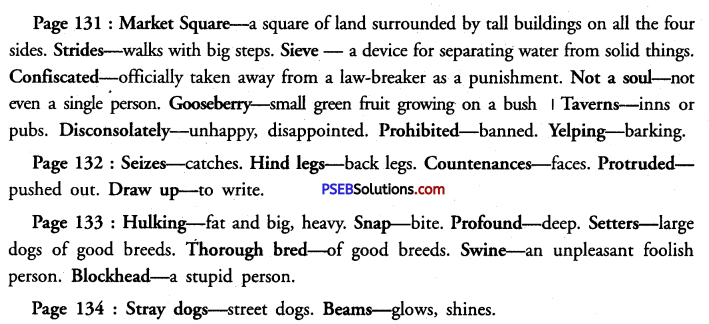
Word Meanings:
PSEB 12th Class English Solutions Supplementary Chapter 2 A Chameleon 1

Class 12 PSEB Solutions Supplementary Reading

Razia, the Tigress Question Answer Class 10 English Main Course Book Poem Chapter 4 PSEB Solutions

Punjab State Board PSEB 10th Class English Book Solutions English Main Course Book Poem 4 Razia, the Tigress Textbook Exercise Questions and Answers.

Class 10th English Main Course Book Poem Chapter 4 Razia, the Tigress Question Answers

Razia, the Tigress Class 10 Questions and Answers

Question 1.
Write a summary of the poem, ‘Razia, the Tigress’.
Answer:
Razia is a young tigress. She has two little cubs. Her male companion, Sheru, has left her. Now Razia is worried about her two cubs. She can’t leave them alone and go hunting for food. Hyenas can come and kill the little cubs. She is afraid of the poachers also.

रज़िया एक युवा बाघिन है। उसके दो छोटे बच्चे हैं। उसका नर साथी, शेरू, उसे छोड़कर चला गया है। अब रज़िया अपने दो बच्चों के बारे में चिन्तित है। वह उन्हें अकेला छोड़ कर भोजन के लिए शिकार करने नहीं जा सकती है। लकड़बग्घे आकर उन्हें मार सकते हैं। वह शिकार-चोरों से भी डरती है।

PSEB 10th Class English Main Course Book Solutions Poem 4 Razia, the Tigress

Question 2.
What is the theme (central idea) of the poem, ‘Razia, the Tigress’ ?
Answer:
This poem underlines the grave danger to wildlife resulting from the destruction of forests. Man has usurped the land belonging to wild animals. Now the poor animals have nowhere to live. They live in the danger of poachers.

यह कविता जंगलों के विनाश-स्वरूप वण्य जीवों को होने वाले भयानक ख़तरों को रेखांकित करती है। मनुष्य ने जंगली जानवरों की जमीन पर अनुचित अधिकार जमा लिया है। अब बेचारे जानवरों के
पास रहने की कोई जगह नहीं है। वे शिकार-चोरों के भय में रहते हैं।

Question 3.
Why does Razia, the tigress, live alone ?
Answer:
Razia, the tigress, used to live with her mate, Sheru. But soon after the birth of two cubs, Sheru left her. He has not come back. That is why Razia is living alone with her cubs.

बाघिन रज़िया अपने साथी शेरू के साथ रहा करती थी। किन्तु उसके दो बच्चों के जन्म के शीघ्र ही बाद शेरू उसे छोड़ कर चला गया। वह वापस नहीं आया है। इसी कारण से रज़िया अपने बच्चों के
साथ अकेली रह रही है।

Question 4.
What was Sheru’s expertise ?
Answer:
Sheru was very good at hunting. He had a good knowledge of the winds and their directions. He knew that he should keep himself on the upside of the wind. Thus his scent would not reach the deer and he could get at them easily.

शेरू शिकार करने में बहुत कुशल था। उसे पवनों तथा उनकी दिशाओं का अच्छा ज्ञान था। वह जानता था कि उसे स्वयं को पवन की ऊपर वाली दिशा में रखना चाहिए। इस प्रकार उसकी गन्ध मृगों तक
नहीं पहुंचेगी और वह आसानी से उन का शिकार कर सकेगा।

Question 5.
What happened to Sheru ?
Answer:
Forests had been destroyed. There was not enough game for Sheru. It became difficult for him to find food. There was the danger of poachers also. So he left the forest and went somewhere else.

जंगल नष्ट कर दिए गए थे। शेरू के लिए शिकार करने को ज्यादा जानवर नहीं बचे थे। उसके लिए भोजन ढूंढना मुश्किल हो गया। वहां शिकार-चोरों का ख़तरा भी था। इसलिए उसने जंगल छोड़ दिया तथा कहीं और चला गया।

PSEB 10th Class English Main Course Book Solutions Poem 4 Razia, the Tigress

Question 6.
What are Razia’s fears ?
Answer:
Razia has two little cubs. She can’t leave them alone and go hunting. Hyenas can come and kill them. Then there is the fear of poachers also. They can come with their guns and kill all of them.

रज़िया के दो छोटे बच्चे हैं। वह उन्हें अकेला छोड़ कर शिकार करने नहीं जा सकती है। लकड़बग्घे आकर उन्हें मार सकते हैं। इसके अतिरिक्त वहां शिकार-चोरों का भय भी है। वे अपनी बन्दूकें लिए आ सकते हैं और उन सभी को मार सकते हैं।

Objective Type Questions

Question 1.
Razia, the Tigress has …………. cubs.
(i) two
(ii) three
(iii) four
(iv) five.
Answer:
(i) two

Question 2.
Sheru was an expert on ….
(i) hunting
(ii) winds
(iii) racing
(iv) aiming at birds.
Answer:
(ii) winds

Question 3.
Razia was not afraid of poachers. (True False)
Answer:
False.

Answer each of the following in one word / phrase / sentence :

Question 1.
Who wrote the poem, ‘Razia, the Tigress’ ?
Answer:
Keki N Daruwalla.

Question 2.
Who was Sheru ?
Answer:
A tiger.

Question 3.
Who left Razia after she had given birth to two cubs ?
Answer:
Sheru, her male companion.

Question 4.
What do we call the people who illegally hunt birds and animals ?
Answer:
Poachers.

Question 5.
What does the poet say about the tiger’s claw ?.
Answer:
He calls it a giant club.

Complete the following :

1. Sheru had left Razia shortly after ………….
2. Sheru had a good knowledge of …………….
3. Man has usurped the land belonging to ….
Answer:
1. the birth of two cubs
2. winds and their directions
3. wild animals.

Write True or False against each statement :

1. Sheru was very good at hunting.
2. Poachers are the people who legally hunt animals.
3. Razia’s male companion has left her.
Answer:
1. True
2. False
3. True.

PSEB 10th Class English Main Course Book Solutions Poem 4 Razia, the Tigress

Choose the correct option for each of the following :

Question 1.
Razia is worried about her ………
(a) male companion
(b) the poachers
(c) two cubs
(d) none of these three.
Answer:
(b) the poachers

Question 2.
Sheru was expert in the knowledge of ………….
(a) poachers
(b) his prey
(c) winds
(d) hunting
Answer:
(c) winds

Reading Comprehension

Razia, the Tigress Poem Summary in English

Razia, the Tigress Introduction:
A tigress named Razia lived in a forest. She lived with her male companion and her two cubs. The cubs were yet too little and had not been given any name. The male, named Sheru, left Razia and the two cubs alone. (Perhaps he had been killed by poachers). He went away because men had cut down the forest and there was no deer, antelope or any other game to hunt for food. Now Razia was worried about herself and her two little cubs. She feared that one day some poacher would come and hunt her down and also her little cubs. Thus the poet tries to show how by cutting down our forests, we have harmed our flora and fauna.

Razia, the Tigress Summary in English:

The tigress named Razia is now living alone. She has two little cubs. The cubs have not been given any name yet. Their father, Sheru, merely played with them a couple of days and is now gone. What a shame that he has left his mate and the two little cubs to suffer alone. (Perhaps Sheru has been killed by poachers.)

Sheru was an expert at hunting. He had a good knowledge of the winds and their directions of blowing. He knew how they flew over the hills and valleys. He knew the places where no wind blew during the night and not even a leaf moved there. The place was all still where he could lie hiding and waiting for his victim.

He knew what winds blew at what time of the year and what way they went. He also knew that the herd of deer would smell him out if they were on the down side of the wind and he was on the upper side. So he would keep lying on his belly in a crouching position.

PSEB 10th Class English Main Course Book Solutions Poem 4 Razia, the Tigress

Sheru wanted to avoid being smelt out by the deer. He would keep crouching and would take a long circular route. He would keep himself hidden behind bushes and other small plants. When he became certain that the wind won’t carry his scent to the deer, he would spring up in a flash and pounce on his victim.

Clearly the deer had not been able to sniff the thick and mouldy smell of the tiger. Among people, this smell is known as tiger-scent. From among the herd, the tiger chose a stag as its victim. Using his claws as a giant club, he fell upon the stag and caught it.

The tiger caught hold of the antler’s neck with his giant claws. The antler fell dead at once. But now sadly the male tiger Sheru is gone. Now the people living around are no longer afraid of the dreadful tiger-scent. Now no pug-marks are ever seen on the floor of the forest.

In the absence of Sheru, Razia’s heart is filled with grief and fear. She fears that with Sheru gone, the wild hyenas (lakarbaggas) could chase her cubs like hounds and kill them. Thus how could she now leave her little ones alone and go hunting for their food ?

Thus the tigress Razia now lives in fear. She can’t leave her kids alone for fear of their being killed by the wild hyenas. She can’t go to hunt for flesh and bone as food for her little ones. But she has a still greater fear. The poachers can come again any time with their guns and kill the mother as well as her cubs.

Razia, the Tigress Poem Summary in Hindi

Razia, the Tigress Introduction:
रज़िया नाम की एक मादा-बाघ किसी जंगल में रहा करती थी। वह अपने नर साथी और अपने दो नन्हें बच्चों के साथ रहा करती थी। बच्चे अभी बहुत छोटे थे और उन्हें कोई नाम नहीं दिया गया था। शेरू, जो कि उसका नर साथी था, रज़िया और दोनों बच्चों को अकेला छोड़ कर भाग गया (वह शायद शिकारियों द्वारा मार दिया गया था)। वह इसलिए चला गया क्योंकि मनुष्यों ने जंगल को काट दिया था और भोजन के लिए शिकार करने को वहां कोई मृग, बारहसिंघा या कोई अन्य जानवर नहीं बचा था। अब रज़िया अपने बारे में और अपने दो छोटेछोटे बच्चों के बारे में चिन्तित थी। वह डरती थी कि किसी दिन कोई शिकार-चोर आएगा और उसे तथा उसके दो छोटे-छोटे बच्चों को भी मार गिराएगा। इस प्रकार कवि यह दिखाने की कोशिश करता है कि अपने जंगलों को काट कर हम ने किस तरह अपने पेड़-पौधों तथा वन्य प्राणियों को. हानि पहुंचाई है।

Razia, the Tigress Summary in Hindi:

कविता का विस्तृत सार रज़िया नाम की मादा-बाघ अब अकेली रह रही है। उसके दो छोटे-छोटे बच्चे (शावक) हैं। बच्चों का अभी कोई नाम नहीं रखा गया है। उनका पिता शेरू उनके साथ मात्र कुछ-एक दिन खेला और अब वह उन्हें छोड़कर चला गया है। कितनी लज्जा की बात है कि वह अपनी साथिन और दो छोटे-छोटे बच्चों को अकेले ही कष्ट झेलने के लिए छोड़ गया है। (या शायद शेरू शिकारियों द्वारा मार दिया गया है।)

शेरू शिकार करने में बड़ा माहिर था। उसे पवनों और उनके चलने की दिशाओं का बहुत अच्छा ज्ञान था। वह जानता था कि वे पहाड़ियों और घाटियों के ऊपर से होकर किस प्रकार चलती हैं। वह उन जगहों के बारे में भी जानता था जहां रात के दौरान कोई हवा नहीं चलती थी और एक भी पत्ता हिला नहीं करता था। वह जगह बिल्कुल शांत हुआ करती थी जहां वह छिपकर बैठे हुए अपने शिकार की प्रतीक्षा कर सकता था।

शेरू जानता था कि वर्ष के किस समय के दौरान कौन सी हवाएं चलती हैं और वे किस रास्ते से होकर गुज़रती हैं। वह इस बात को भी जानता था कि मृगों का झुण्ड उसके बारे में सूंघ कर जान सकता था यदि वे हवा के नीचे वाली दिशा में होंगे तथा वह ऊपर वाली दिशा में होगा। इसलिए वह अपने पेट के बल झुक कर रेंगने वाली स्थिति बनाए हुए पड़ा रहता।।

PSEB 10th Class English Main Course Book Solutions Poem 4 Razia, the Tigress

शेरु मृगों के द्वारा सूंघ कर पता चलने से बचना चाहता था। वह झुक कर पड़ा रहता और रेंगते हुए एक गोलाई वाला रास्ता धारण कर लेता। वह स्वयं को छोटी-छोटी झाड़ियों तथा अन्य छोटे-छोटे पौधों के पीछे छिपाए रखता। जब उसे इस बात का निश्चय हो जाता कि हवा उसकी गंध को मृगों तक नहीं ले जाएगी तो वह बिजली की सी चमक के साथ उछलता और अपने शिकार के ऊपर झपट पड़ता।

स्पष्ट रूप से मृग, बाघ की घनी और बासी गंध को संघ पाने में असमर्थ रहते थे। इस गंध को लोगों में बाघ की गंध के नाम से जाना जाता है। झुण्ड के मध्य में से बाघ अपने शिकार के रूप में एक हिरण को चुन लेता। अपने पंजों को एक भारी गदा के रूप में इस्तेमाल करते हुए वह हिरण के ऊपर झपटता और इसे पकड़ लेता।

बाघ हिरण की गर्दन को अपने बड़े-बड़े पंजों से पकड़ लेता। वह हिरण तुरन्त ढेर हो जाता। किन्तु अब दुर्भाग्यवश वह नर-बाघ शेरू चला गया है। अब वहां इर्द-गिर्द रहने वाले लोग उस भयानक गंध का कोई भय नहीं रखते हैं। अब जंगल की धरती पर बाघ के पैरों के कोई चिन्ह दिखाई नहीं देते हैं।

शेरू की अनुपस्थिति में रज़िया का दिल भय और दुःख से भरा रहता है। वह डरती है कि शेरू के चले जाने पर जंगली लकड़बग्घे उसके बच्चों को शिकारी कुत्तों की भान्ति दबोच लेंगे और मार डालेंगे। इस प्रकार अब वह किस तरह अपने छोटे बच्चों को अकेले छोड़ सकती थी और उनके भोजन के लिए शिकार पर निकल सकती थी?

इस प्रकार मादा-बाघ रज़िया अब अपने दिन भय में काटती है। वह जंगली लकड़बग्घों के द्वारा अपने बच्चों के मारे जाने के भय से उन्हें अकेले नहीं छोड़ सकती। वह अपने बच्चों के लिए भोजन के रूप में कोई मांस या हड्डी की खोज करने के लिए नहीं जा सकती। किन्तु उसे इससे भी बड़ा एक भय है। शिकारी-चोर अपनी बंदूकें लिए हुए किसी भी समय दोबारा आ सकते हैं तथा मां और उसके बच्चों को मार सकते हैं।

Razia, the Tigress Poem Translation in Hindi

(1) (Lines 1-2)
The tigress Razia lives alone.
Her two cubs haven’t yet been named.
Sheru barely played with them
And now he’s gone, O what a shame !
Sheru was an expert on winds,
Knew how they traversed dale and hill,
And where they put up for the night.
When no leaf stirred and all was still.

Word-meanings : 1. cubs-बच्चे (शावक); 2. barely-मुश्किल से ही; 3. shame-लज्जा की बात; 4. traversed-घूमती थीं; 5. dale-घाटी; 6. put up-निवास करना; 7. stirred-गति करता था; 8. still-शांत।

अनुवाद-मादा-बाघ रज़िया अकेली ही रह रही है। उसके दो बच्चों का अभी नामकरण नहीं हुआ है। शेरू (उनका पिता) मुश्किल से ही उनके साथ खेला होगा और अब वह चला गया है। अरे कितनी लज्जा की बात है! पवनों के सम्बन्ध में शेरू बहुत माहिर था। वह जानता था कि पवनें घाटी और पहाड़ी के ऊपर किस तरह घूमती-फिरती हैं और रात को वह किस जगह विश्राम करती हैं, जहां कोई भी पत्ता हिल नहीं रहा होता और सब कुछ बिल्कुल शांत होता है।

PSEB 10th Class English Main Course Book Solutions Poem 4 Razia, the Tigress

(2) (Lines 3-4)
He knew his winds, their traffic lanes !
He knew the deer would smell him out,
If they were down-wind.
So he would belly-crawl and crouch
And take a long circular route,
Hiding behind bush and shrub
Once he knew his scent won’t carry,
In a flash he would erupt.

Word-meanings : 1. traffic lanes—आने-जाने के रास्ते; 2. the deer-मृगों के झुण्ड; 3. smell him out-सूंघकर उसका पता लगाना; 4. down-wind-हवा बहने की दिशा में; 5. belly-crawl—पेट के बल रेंगना; 6. crouch-दुबक कर बैठना; 7. circular route-घुमावदार रास्ता; 8. bush and shrub- झाड़-पात; 9. in a flash-पल भर में; 10. erupt-उछल पड़ना।

अनुवाद-वह अपने क्षेत्र की पवनों को और उनके बहने के रास्ते को जानता था। वह जानता था कि मृगों के झुण्ड सूंघकर उसके बारे में जान लेंगे यदि वे पवन के बहने की दिशा में किसी जगह पर हुए। इसलिए वह पेट के बल रेंगते हुए और दुबकते हुए एक लम्बा घुमावदार रास्ता ले लेता। वह झाड़-पात के पीछे स्वयं को छिपाए रखता। जब उसको इस बात का निश्चय हो जाता कि उसकी गंध उन तक नहीं पहुंचेगी तब वह पल भर में उछल पड़ता।

(3) (5–6)
(Deer hadn’t sniffed that thick and musty
Smell of his which people dubbed As tiger-scent.)
He got the stag, His claw fell like a giant club
On neck and antler – both were crushed.
Now Sheru’s gone. Not any more
Do people fear his dreaded spoor,
Pug-marked on the forest floor.

Word-meanings : 1. sniffed—नाक से सूंघा ; 2. musty-सीली और बासी ; 3. dubbedनाम देते थे ; 4. stag-हिरण, मृग, बारासिंघा ; 5. giant club–भारी गदा (पंजा); 6. antler-बारासिंघे का सींग; 7. crushed-कुचले जाना ; 8. dreaded spoor – भयभीत कर देने वाली जानवर की गंध ; 9. pug-marked-पंजों के निशान।।

अनुवाद-मृगों के झुण्ड उस घनी और सीली बासी गंध को सूंघ नहीं पाए थे जिसे लोग बाघ-गंध का नाम देते हैं। वह हिरण के ऊपर झपट पड़ा। उसका पंजा एक भारी गदा की भान्ति हिरण की गर्दन और सींगों पर एक साथ जा पड़ा और उन्हें वहीं कुचल दिया। अब वह शेरू चला गया है। अब लोग उसकी भयानक गंध से डरते नहीं हैं और न ही जंगल की धरती पर उसके पैरों के कोई निशान देखने को मिलते हैं।

(4) (Lines 7-8)
Grief and fear start competing
In Razia’s heart. With Sheru gone,
Will the hyenas hound her cubs ?
Can she leave the little ones alone,
When she goes hunting flesh and bone ?
The tigress Razia lives in fear.
A greater dread, when will again
The poachers with their guns appear ?

Word-meanings : 1. grief-दुःख ; 2. hyenas-लकड़बग्घे ; 3. hound-शिकार करना ; 4. flesh and bone-मांस-हड्डी का भोजन ; 5. dread-भय ; 6. poachers-चोर-शिकारी।

PSEB 10th Class English Main Course Book Solutions Poem 4 Razia, the Tigress

अनुवाद-रज़िया के दिल में दुःख और भय का अन्तर्द्वद होने लगता है। अब जब कि शेरू चला गया है तो क्या लकड़बग्घे उसके बच्चों को शिकारी कुत्तों की भान्ति नोच नहीं डालेंगे? क्या वह अपने छोटे-छोटे बच्चों को अकेले छोड़ जाए जब वह उनके लिए मांस-हड्डी का भोजन ढूंढने को जाए? इसलिए मादा-बाघ रज़िया भय में रह रही है। उससे भी बड़ा एक अन्य भय यह है कि पता नहीं कब चोर-शिकारी लोग अपनी बंदूकें लेकर एक बार फिर वहां आ जाएं!

Class 10th English Main Course Book Solutions PSEB Poetry

Lines Written in Early Spring Question Answer Class 11 English Book Poem Chapter 1 PSEB Solutions

Punjab State Board PSEB 11th Class English Book Solutions Poem 1 Lines Written in Early Spring Textbook Exercise Questions and Answers.

Class 11th English Book Poem Chapter 1 Lines Written in Early Spring Question Answers

Lines Written in Early Spring Class 11 Questions and Answers

Question 1.
The poet describes a bitter-sweet moment. Why is the moment ‘bitter sweet’ ?
Answer:
The poet was in a sweet mood and was filled with pleasant thoughts. Since extremes always meet, the pleasant thoughts led the poet to sad thoughts. This is the reason why the moment described in the poem is bitter-sweet.

कवि बहुत अच्छे मूड में था और उसका मन सुहावने विचारों से भरा हुआ था। क्योंकि चरम सीमाएं हमेशा मिलती हैं, इसलिए सुहावने विचार कवि के मन में उदासी वाले विचार भी ले आए। यही कारण है कि कविता में वर्णन किया गया वह पल खट्टा-मीठा है।

PSEB 11th Class English Solutions Poem 1 Lines Written in Early Spring

Question 2.
Write a few lines about the simplicity of the language used in the poem, ‘Lines Written in Early Spring’.
Answer:
Wordsworth’s poetry is straightforward and simple. He has written his poems in plain words from everyday speech. In this poem also, he has used words from the common man’s language. Through the use of simple language, he has made the scenes, described in the poem, seem real to the readers.

वर्डजवर्थ का काव्य सीधा और सरल होता है। उसने अपनी कविताएं आम बोलचाल की भाषा के सरल शब्दों में लिखी हैं। इस कविता में भी उसने ऐसे शब्दों का प्रयोग किया है जो आम आदमी की भाषा से हैं। सरल भाषा के प्रयोग से उसने कविता में वर्णित दृश्यों को अपने पाठकों के लिए वास्तविक के जैसा बना दिया है।

Question 3.
What abilities, according to the poet, does nature have ?
Answer:
According to the poet, the nature has the ability to give joy and beauty. It provides beauty to the man’s eyes and it gives joy to his soul. It fills all its creations with joy and beauty. In fact, nature has the cure of all human ills.

कवि के अनुसार प्रकृति के पास प्रसन्नता तथा सुन्दरता प्रदान करने की योग्यता है। यह मनुष्य की आंखों को सुन्दरता प्रदान करती है तथा उसकी आत्मा को प्रसन्नता प्रदान करती है। यह अपनी सभी रचनाओं को प्रसन्नता तथा सुन्दरता से भर देती है। वास्तव में, प्रकृति के पास मनुष्य की सभी बीमारियों का उपचार है।

Question 4.
What does the poet lament about ?
Answer:
The poet thinks that all objects of nature were full of pleasure. Man was also meant to be a part of nature. He could be happy like the various objects of nature. But man separated himself from nature. Now he has made himself unhappy by running after material things. It grieves the poet much to think what man has made of man.

कवि सोचता है कि प्रकृति के सब पदार्थ खुशी से भरे हुए थे। मनुष्य को भी प्रकृति के एक हिस्से के रूप में बनाया गया था। वह कुदरत के भिन्न-भिन्न पदार्थों के समान खुश रह सकता था। लेकिन मनुष्य ने खुद को प्रकृति से अलग कर लिया। अब उसने भौतिक चीज़ों के पीछे दौड़-दौड़ कर खुद को दु:खी कर लिया है। यह सोचकर कवि को बहुत दुःख होता है कि मनुष्य ने अपना क्या हाल बना रखा है।

PSEB 11th Class English Solutions Poem 1 Lines Written in Early Spring

Question 5.
How does the poet glorify nature ?
Answer:
According to the poet, nature is not something dead and lifeless. He thinks of nature as something living with a spirit of its own. And he believes that nature everywhere is beautiful and full of joy. He finds music in the different sounds of nature. He finds beauty in the different sights of nature. That is the reason why he talks of flowers as dancing in the breeze.

He talks of waves as jumping in pleasure. He talks of the tree branches as spreading their arms. In this poem, he expresses his attitude towards nature in very clear words. He says And it’s my faith that every flower Enjoys the air it breathes.’

कवि के अनुसार प्रकृति कोई निर्जीव या मृत वस्तु नहीं है। वह प्रकृति के विषय में ऐसा सोचता है कि वह एक ऐसी चीज़ है जिसमें स्वयं की एक आत्मा है। और उसका विश्वास है कि प्रत्येक स्थान पर प्रकृति सुन्दर है तथा प्रसन्नता से भरपूर है। वह प्रकृति की विभिन्न आवाजों में मधुर संगीत पाता है। प्रकृति के विभिन्न दृश्यों में उसे सुन्दरता नज़र आती है।

इसी कारण से वह फूलों के विषय में यह कहता है कि वे मंद पवन में नाच रहे हैं। वह लहरों के विषय में यह कहता है कि वे प्रसन्नता से उछल रही हैं। वह वृक्ष की डालों के विषय में कहता है कि वे अपनी बांहें फैला रही हैं और इस कविता में वह प्रकृति के प्रति अपनी भावना को बहुत स्पष्ट शब्दों में प्रकट करता है। वह कहता है ‘और मेरा विश्वास है कि प्रत्येक फूल आनन्द लेता है, उस हवा का जिसमें सांस लेता है यह।’

Question 6.
Give an example of personification of nature in this poem.
Answer:
“To her fair works did Nature link……

Question 7.
Give the central idea of the poem, ‘Lines Written in Early Spring’.
Answer:
The central idea of the poem is that man’s separation from Nature is the only cause of all ills and worries. Man has become greedy for material things. He has no peace of mind. He must go back to Nature if he wants to regain his lost happiness.

He should develop true love for Nature. He should accept Nature as his friend and guide. Only then can he be happy again. He can be as happy and carefree as Nature herself is. Such was Wordsworth’s firm belief and also Nature’s holy plan.

PSEB 11th Class English Solutions Poem 1 Lines Written in Early Spring

Question 8.
Add more words that rhyme with the rhyming words given below :
Answer:

  • Reclined, mind, find, rewind.
  • Link, think, sink, stink.
  • Measure, pleasure, treasure, leisure.
  • Sent, lament, tent, cement.

Important Stanzas For Comprehension

Note : A complete Answer Key has been given at the end of the stanzas.

Stanza 1

I heard a thousand blended notes,
While in a grove I sate reclined,
In that sweet mood when pleasant thoughts
Bring sad thoughts to the mind.

Questions
1. Give the name of the poem and the poet.
2. Where is the poet sitting ?
3. What does he hear?
4. Give the rhyme scheme of the given stanza.
Answers:
1. The name of the poem is ‘Lines Written in Early Spring’ and the name of the poet is William Wordsworth.
2. He is sitting in a grove.
3. He hears numberless sweet sounds. They are as sweet as the harmonious notes of music.
4. abab.

Stanza 2.

To her fair works did Nature link
The human soul that through me ran;
And much it grieved my heart to think
What man has made of man.

Questions
1. Give the name of the poem and the poet.
2. What are the fair works of nature referred to in this stanza ?
3. Why is the poet grieved ?
4. Write the figure of speech used in the following line :
“To her fair works did Nature link.
Answers:
1. The name of the poem is ‘Lines Written in Early Spring’ and the name of the poet is William Wordsworth.
2. ‘Fair works’ means the various beautiful objects in the world of Nature.
3. The poet is grieved to think what man has made of man.
4. Personification.

PSEB 11th Class English Solutions Poem 1 Lines Written in Early Spring

Stanza 3.

Through primrose tufts, in that green bower,
The periwinkle traiļd its wreaths;
And tis my faith that every flower
Enjoys the air it breathes.

Questions
1. Give the name of the poem and the poet.
2. What type of flower is primrose ?
3. Where did the poet see the periwinkle ?
4. Give the words that rhyme in the given stanza.
Answers:
1. The name of the poem is ‘Lines Written in Early Spring and the name of the poet is William Wordsworth.
2. ‘Primrose’ is a wild plant that has pale flowers in spring.
3. He saw the periwinkle trailing through the primrose tufts.
4. (bower – flower) ; (wreaths — breathes).

Stanza 4.

The birds around me hoppd and play’d,
Their thoughts I cannot measure
But the least motion which they made
It seem’d thrill of pleasure.

Questions
1. Give the name of the poem and the poet.
2. What were the birds doing?
3. Could the poet know the thoughts of the birds ?
4. Give the rhyme scheme of the given stanza.
Answers:
1. The name of the poem is ‘Lines Written in Early Spring’ and the name of the poet is William Wordsworth.
2. The birds were hopping around the poet.
3. No, the poet could not know the thoughts of the birds because there was no channel of communication between them.
4. abab.

Stanza 5.

The budding twigs spread out their fan
To catch the breezy air;
And I must think, do all I can,
That there was pleasure there.

Questions
1. Give the name of the poem and the poet.
2. What was there on the branches of the trees?
3. What were the budding twigs doing?
4. Which figure of speech is used in the very first line of the given stanza ?
Answers:
1. The name of the poem is ‘Lines Written in Early Spring’ and the name of the poet is William Wordsworth.
2. There were delicate buds and blossoms on the branches of the trees.
3. The fresh twigs of the trees were sprouting forth their leaves. It appeared as if they were trying to catch the gentle wind.
4. Personification.

Stanza 6.

If this belief from heaven be sent,
If such be Nature’s holy plan,
Have I not reason to lament
What Man has made of Man ?

Questions
1. Give the name of the poem and the poet.
2. What ‘belief’ is the poet talking about ?
3. What is the holy plan of nature, according to the poet ?
4. Write down the figure of speech used in the following line :
‘What Man has made of Man’.
Answers:
1. The name of the poem is ‘Lines Written in Early Spring’ and the name of the poet is William Wordsworth.
2. Here the poet it talking about the belief that there is a close relationship between man and nature.
3. It is nature’s holy plan that all her creations should live in peace and harmony.
4. Alliteration.

Lines Written in Early Spring Poem Summary in English

Lines Written in Early Spring Introduction:

Wordsworth was a great lover of Nature. He found in nature the cure of all human ills. He thought that separation from nature was the only cause of modern man’s unhappiness. Man leads an artificial life in cities. He lives away from the beauties of nature.

PSEB 11th Class English Solutions Poem 1 Lines Written in Early Spring

He is caught in the rat-race of earning and spending. In this poem, he expresses his joy at the sight of beautiful objects of nature. But the thought of man’s misery makes him sad. He thinks that man is himself responsible for the misery. He can get back his joys by returning to nature.

Lines Written in Early Spring Summary in English:

It was early spring. The poet was sitting in a grove. He was resting there. He heard numberless sweet sounds. They were as sweet as the harmonious notes of music. These sweet sounds filled the poet’s mind with pleasant thoughts.

By a natural transition, these sweer thoughts led the poet to the realm of sad thoughts. The same soul runs through man and nature. There is a close relationship between man and nature. Nature gave the same soul to man and her fair works.

But it pained the poet much to see what man has made of man. In other words, man’s separation from nature grieved the poet’s heart. This very separation, according to the poet, was the cause of all ills in the world of man.

The poet saw a creeper of periwinkle trailing through the branches of primrose. He believed that all objects of nature are living things. They are full of joy and beauty everywhere. It was his firm faith that every flower enjoys the air it breathes.

The birds were hopping around the poet. They were playing joyfully. The poet could not gauge the thoughts in their hearts. But their frolics showed that they were immensely happy. The least motion which they made was an expression of joy.

There were delicate buds and blossoms on the branches of the trees. The branches with their leaves looked like spread-out fans. It appeared as if they were trying to catch the gentle wind. The poet could not but think that the trees and plants were also enjoying themselves. The poet thought that his belief in nature as a living reality was sent by heaven.

PSEB 11th Class English Solutions Poem 1 Lines Written in Early Spring

It was nature’s holy plan that all creatures should live in peace and harmony. There is a spiritual relationship between man and the beautiful objects of nature. But man has separated himself from nature. That is why he is unhappy. The poet says that his lament over man’s miserable fate is justified since it is of man’s own making.

Lines Written in Early Spring Poem Summary in Hindi

Lines Written in Early Spring Introduction:

वर्डजवर्थ प्रकृति का बहुत बड़ा प्रेमी था। उसे प्रकृति में मनुष्य की सभी बीमारियों का अर्थात् बुराइयों का इलाज नज़र आता था। वह समझता था कि प्रकृति से खुद को अलग कर लेना आधुनिक मनुष्य के दुःख का एकमात्र कारण था। मनुष्य शहरों में एक बनावटी जीवन गुजारता है। वह प्रकृति की सुन्दरता से दूर रहता है।

वह कमाने और खर्च करने की भाग-दौड़ में फँसा रहता है। इस कविता में वह प्रकृति के सुन्दर नज़ारों पर अपनी खुशी व्यक्त करता है। परन्तु मनुष्य के दुःखों के बारे में सोच कर वह उदास हो जाता है। उसका विचार है कि मनुष्य अपने दुःखों के लिए खुद ज़िम्मेदार है। वह प्रकृति की गोद में वापस जा कर अपनी खुशियाँ फिर से प्राप्त कर सकता है।

Lines Written in Early Spring Summary in Hindi

बसन्त ऋतु के आरम्भ का समय था। कवि एक वृक्ष-वाटिका में बैठा हुआ था। वह वहां विश्राम कर रहा था। उसने अनगिनत मधुर आवाजें सुनीं। ये आवाजें इतनी मधुर थीं जितने संगीत की सुरीले सुर होते हैं। इन मधुर आवाज़ों ने कवि के मन में मीठे विचार भर दिये।

एक स्वाभाविक परिवर्तन के द्वारा मीठे विचार कवि को कुछ दुःख भरी बातों की याद की ओर ले गये। मनुष्य तथा प्रकृति में एक ही आत्मा निवास करती है। मनुष्य तथा प्रकृति में एक घनिष्ठ सम्बन्ध है। प्रकृति ने मनुष्य को तथा अपनी सुन्दर रचनाओं को एक जैसी आत्मा दी हुई है।

किन्तु यह देख कर कवि को बहुत दुःख हुआ कि मनुष्य ने अपना क्या हाल बना लिया है। अन्य शब्दों में, प्रकृति से मनुष्य के अलग होने को देख कर कवि के दिल को बहुत दुःख पहुंचा। कवि के अनुसार, यही अलग होना ही मानव संसार में सभी बुराइयों तथा दुःखों का कारण है।

PSEB 11th Class English Solutions Poem 1 Lines Written in Early Spring

कवि ने पेरीविन्कल की सदाबहार बेल को बसन्ती फूलों वाले पौधे के गुच्छों के बीचों-बीच ज़मीन के साथ-साथ बल खाते हुए और फैले हुए देखा। उसका यह विश्वास था कि प्रकृति की सभी वस्तुएं जीवित पदार्थ हैं। वे सभी जगह खुशी तथा सुन्दरता से भरी हुई हैं। उसे यह पक्का विश्वास था कि प्रत्येक फूल उस हवा से आनन्द प्राप्त करता है जिसमें यह श्वास लेता है। कवि के इर्द-गिर्द पक्षी फुदक रहे थे। वे खुशी से खेल रहे थे।

कवि उनके मन के विचारों को जान न सका। किन्तु उनकी हरकतों से यह पता चलता था कि वे अति प्रसन्न थे। उनकी प्रत्येक छोटी-छोटी हरकत खुशी की सूचक प्रतीत होती थी। पेड़ों की टहनियों के ऊपर कोमल-कोमल कोपलें और फूल थे। पत्तों से भरी टहनियां ऐसे लगती थीं मानो उन्होंने अपने पंख बिखेर रखे हों।

ऐसा प्रतीत होता था मानो वे मधुर पवन को पकड़ने का यत्न कर रही हों। कवि यह सोचे बिना न रह सका कि पेड़ तथा पौधे भी आनन्द मना रहे थे। कवि का विचार था कि उसका यह विश्वास कि प्रकृति एक जीवित वास्तविकता है, ईश्वर द्वारा ही दिया गया था और इसीलिए सच्चा था।

प्रकृति की यह पवित्र योजना थी कि सभी जीव शान्ति से तथा मित्रता से रहें। मनुष्य तथा प्रकृति के सुंदर पदार्थों के बीच एक आत्मिक सम्बन्ध होता है। किन्तु मनुष्य ने स्वयं को प्रकृति से अलग कर लिया है। यही कारण है कि वह दुःखी है। कवि कहता है कि मनुष्य की दयनीय स्थिति पर उसका विलाप करना उचित है क्योंकि यह मनुष्य ने स्वयं बनाई है।

Lines Written in Early Spring Poem Translation in Hindi

(Lines 1-4)

I heard a thousand blended notes,
While in a grove I sate reclined,
In that sweet mood when pleasant thoughts
Bring sad thoughts to the mind.

Explanation : It was early spring. The poet was sitting in a grove. He was resting there. He heard numberless sweet sounds. They were as sweet as the harmonious notes of music. These sweet sounds filled the poet’s mind with pleasant thoughts. By a natural transition, these sweet thoughts led the poet to the realm of sad thoughts.

PSEB 11th Class English Solutions Poem 1 Lines Written in Early Spring

बसन्त ऋतु के आरम्भ का समय था। कवि एक वृक्ष-वाटिका में बैठा हुआ था। वह वहां विश्राम कर रहा था। उसने अनगिनत मधुर आवाजें सुनीं। ये इतनी मधुर थीं जितनी संगीत के सुरीले सुर होते हैं। इन मधुर आवाज़ों ने कवि के मन में मीठे विचार भर दिये। एक स्वाभाविक परिवर्तन के द्वारा मीठे विचार कवि को कुछ दुःख भरी बातों की याद की ओर ले गये।

(Lines 5-8)

To her fair works did Nature link
The human soul that through me ran;
And much it grieved my heart to think
What man has made of man.

Explanation :
The same soul runs through man and nature. There is a close relationship between man and nature. Nature gave the same soul to man and her fair works. But it pained the poet much to see what man has made of man. In other words, man’s separation from nature grieved the poet’s heart. This very separation, according to the poet, was the cause of all ills in the world of man.

मनुष्य तथा प्रकृति में एक ही आत्मा निवास करती है। मनुष्य तथा प्रकृति में एक घनिष्ठ सम्बन्ध है। प्रकृति ने मनुष्य को तथा अपनी सुन्दर रचनाओं को एक जैसी आत्मा दी हुई है। किन्तु यह देख कर कवि को बहुत दुःख हुआ कि मनुष्य ने अपना क्या हाल बना लिया है। अन्य शब्दों में, प्रकृति से मनुष्य के अलग होने को देख कर कवि के दिल को बहुत दुःख पहुंचा। कवि के अनुसार, यह अलग होना ही मानव संसार में सभी बुराइयों तथा दुःखों का कारण है।

(Lines 9-12)

Through primrose tufts, in that green bower.
The periwinkle trailed its wreaths;
And ’tis my faith that every flower
Enjoys the air it breathes.

PSEB 11th Class English Solutions Poem 1 Lines Written in Early Spring

Explanation : The poet saw a creeper of periwinkle trailing through the branches of primrose. He believed that all objects of nature are living things. They are full of joy and beauty everywhere. It was his firm faith that every flower enjoys the air it breathes.

कवि ने पेरीविन्कल की सदाबहार बेल को बसन्ती फूलों वाले पौधे के गुच्छों के बीचों-बीच ज़मीन के साथसाथ बल खाते हुए और फैले हुए देखा। उसका यह विश्वास था कि प्रकृति की सभी वस्तुएं जीवित पदार्थ हैं। वे सभी जगह खुशी तथा सुन्दरता से भरी हुई हैं। उसे यह पक्का विश्वास था कि प्रत्येक फूल उस हवा से आनन्द प्राप्त करता है जिसमें यह श्वास लेता है।

(Lines 13-16)

The birds around me hopp’d and play’d,
Their thoughts I cannot measure —
But the least motion which they made,
It seemed a thrill of pleasure.

Explanation : The birds were hopping around the poet. They were playing joyfully. The poet could not gauge the thoughts in their hearts. But their frolics showed that they were immensely happy. The least motion which they made was an expression of joy.

कवि के इर्द-गिर्द पक्षी फुदक रहे थे। वे खुशी से खेल रहे थे। कवि उनके मन के विचारों को जान न सका। किन्तु उनकी हरकतों से यह पता चलता था कि वे अति प्रसन्न थे। उनकी प्रत्येक छोटी-छोटी हरकत खुशी की सूचक प्रतीत होती थी।

(Lines 17-20)

The budding twigs spread out their fan
To catch the breezy air;
And I must think, do all I can,
That there was pleasure there.

Explanation : There were delicate buds and blossoms on the branches of the trees. The branches with their leaves looked like spread-out fans. It appeared as if they were trying to catch the gentle wind. The poet could not but think that the trees and plants were also enjoying themselves.

पेड़ों की टहनियों के ऊपर कोमल-कोमल कोंपलें और फूल थे। पत्तों से भरी टहनियां ऐसे लगती थीं मानो उन्होंने अपने पंख बिखेर रखे हों। ऐसा प्रतीत होता था मानो वे मधुर पवन को पकड़ने का यत्न कर रही हों। कवि यह सोचे बिना न रह सका कि पेड़ तथा पौधे भी आनन्द मना रहे थे।

(Lines 21-24)

If this belief from heaven be sent
If such be Nature’s holy plan,
Have I not reason to lament
What man has made of man?

Explanation : The poet thought that his belief in nature as a living reality was sent by heaven. It was nature’s holy plan that all creatures should live in peace and harmony. There is a spiritual relationship between man and the beautiful objects of nature.

But man has separated himself from nature. That is why he is unhappy. The poet says that his lament over man’s miserable fate is justified since it is of man’s own making.

कवि का विचार था कि उसका यह विश्वास, कि प्रकृति एक जीवित वास्तविकता है, ईश्वर द्वारा ही दिया गया था और इसीलिए सच्चा था। प्रकृति की यह पवित्र योजना थी कि सभी जीव शान्ति तथा मित्रता से रहें। मनुष्य तथा प्रकृति के सुन्दर पदार्थों के बीच एक आत्मिक सम्बन्ध होता है।

किन्तु मनुष्य ने स्वयं को प्रकृति से अलग कर लिया है। यही कारण है कि वह दुःखी है। कवि कहता है कि उसका मनुष्य की दयनीय स्थिति पर विलाप करना उचित है क्योंकि यह मनुष्य ने स्वयं बनाई है।

Central Idea Of The Poem in English:

The central idea of the poem is that man’s separation from Nature is the only cause of all ills and worries. Man has become greedy for material things. He has no peace of mind. He must go back to Nature if he wants to regain his lost happiness. He should develop true love for Nature. He should accept Nature as his friend and guide. Only then can he be happy again. He can be as happy and carefree as Nature herself is. Such was Wordsworth’s firm belief and also Nature’s holy plan.

PSEB 11th Class English Solutions Poem 1 Lines Written in Early Spring

Central Idea Of The Poem in Hindi:

कविता का केन्द्रीय भाव यह है कि प्रकृति से मनुष्य की जुदाई उसकी सभी बुराइयों और चिन्ताओं का कारण है। मनुष्य भौतिक चीज़ों के लिए लालची बन गया है। उसे कोई मानसिक शान्ति नहीं है। उसे प्रकृति की तरफ़ वापस जाना होगा, यदि वह अपनी खोई हुई खुशी फिर से प्राप्त करना चाहता है। उसे प्रकृति के साथ सच्चा प्यार बनाना चाहिए। उसे प्रकृति को अपना मित्र और मार्गदर्शक स्वीकार करना चाहिए। केवल तभी वह फिर से प्रसन्न हो सकता है। वह उतना ही प्रसन्न तथा चिन्तारहित हो सकता है जितनी स्वयं प्रकृति है। वर्डज़वर्थ का ऐसा पक्का विश्वास था और यही प्रकृति की पवित्र योजना भी थी।

A Panorama of Life PSEB Guide Class 11

The Rule of the Road Question Answer Class 10 English Main Course Book Chapter 8 PSEB Solutions

Punjab State Board PSEB 10th Class English Book Solutions English Main Course Book Chapter 8 The Rule of the Road Textbook Exercise Questions and Answers.

Class 10th English Main Course Book Chapter 8 The Rule of the Road Question Answers

The Rule of the Road Class 10 Questions and Answers

Short Answer Type Questions

Question 1.
Why was the stout lady walking down the middle of a road ?
Answer:
She thought she had liberty to walk wherever she liked. She said now they had got liberty.

वह समझती थी कि उसे इस बात की आज़ादी है कि वह जहाँ चाहे, चल सकती है। उसने कहा कि अब उन्हें आजादी प्राप्त हो गई थी।

PSEB 10th Class English Main Course Book Solutions Chapter 8 The Rule of the Road

Question 2.
How was the stout lady mistaken about liberty ?
Answer:
She failed to understand that if every man were free to do what he liked,there would be no freedom at all. There would be chaos everywhere.

वह इस बात को समझने में असफल रही कि यदि प्रत्येक आदमी वह करने को आजाद हो जो वह चाहता है, तो वहां बिल्कुल कोई आजादी नहीं रहेगी। सभी जगह अराजकता फैल जाएगी।

Question 3.
What does the policeman at Picadilly Circus symbolize ?
Answer:
He symbolizes the true meaning of liberty. He puts a little check on personal liberty so that there is social liberty.

वह स्वतन्त्रता के सच्चे अर्थ का प्रतीक है। वह निजी स्वतन्त्रता पर थोड़ी-सी रोक लगाता है ताकि वहां सामाजिक स्वतन्त्रता हो सके।

Question 4.
Can we do whatever we feel like doing?
Answer:
Liberty is not a personal affair. It is a social contract. So we can’t be free to do whatever we like to do.

स्वतन्त्रता कोई निजी बात नहीं होती। यह एक सामाजिक इकरारनामा होती है। इसलिए हम अपनी इच्छा का हर कोई काम करने को स्वतन्त्र नहीं हो सकते हैं।

Question 5.
What was the writer reading during the journey ?
Answer:
He was reading a Blue-book.

वह एक महत्त्वपूर्ण सूचनाओं वाली पुस्तक पढ़ रहा था।

Question 6.
Why did the writer need a reasonable silence in the compartment ?
Answer:
The writer was not reading the book for pleasure. He was reading it for a serious purpose. That was why he needed a reasonable silence.

लेखक पुस्तक को आनन्द के लिए नहीं पढ़ रहा था। वह इसे एक गम्भीर उद्देश्य के लिए पढ़ रहा था। इसी कारण से उसे यथोचित शान्ति की आवश्यकता थी।

PSEB 10th Class English Main Course Book Solutions Chapter 8 The Rule of the Road

Question 7.
Who disturbed the author on the train ?
Answer:
Two passengers boarded the train. One of them kept talking loudly. The author couldn’t concentrate on the book he wanted to read.

दो यात्री गाड़ी में सवार हुए। उनमें से एक ऊंचे-ऊंचे स्वर में बोलता रहा। लेखक अपना ध्यान उस पुस्तक में केन्द्रित न कर पाया जो वह पढ़ना चाहता था।

Question 8.
What was the intruding passenger talking of ?
Answer:
He was not talking of any particular thing. He was talking of any and every subject under the sun.

वह किसी विशेष विषय पर बात नहीं कर रहा था। वह कल्पना किए जा सकने वाले किसी भी और सभी विषयों पर बोल रहा था।

Question 9.
What is the basis of social contract ?
Answer:
A reasonable consideration for the rights of others is the basis of social contract.

दूसरों के अधिकारों के प्रति उचित सम्मान रखना सामाजिक समझौते का आधार होता है।

Question 10.
We should be a judicious mixture of both.What does the writer mean by this statement ?
Answer:
There can neither be complete social liberty nor complete individual liberty. There must be a judicious mixture of both.

वहां न तो पूर्ण रूप से सामाजिक स्वतन्त्रता हो सकती है और न ही व्यक्तिगत स्वतन्त्रता। वहां अवश्य दोनों का विवेकपूर्ण मिश्रण होना चाहिए।

Long Answer Type Questions

Question 1.
What is the theme of the essay, ‘The Rule of the Road ? Explain.
Answer:
Liberty is not a personal affair. It is a social contract. Our personal liberty must not become a cause of nuisance for others. It is good to have personal liberty, but we must have reasonable consideration for the rights of others. Only then we can sweeten the journey of life.

स्वतन्त्रता कोई निजी बात नहीं होती है। यह एक सामाजिक समझौता होता है। हमारी निजी स्वतन्त्रता दूसरों के लिए सिरदर्दी नहीं बननी चाहिए। निजी स्वतन्त्रता होना अच्छी बात होती है किन्तु हमें दूसरों के अधिकारों के प्रति उपयुक्त सम्मान रखना चाहिए। केवल तभी हम जीवन-रूपी यात्रा को मधुर बना सकते हैं।

PSEB 10th Class English Main Course Book Solutions Chapter 8 The Rule of the Road

Question 2.
Describe, in your own words, how the writer was disturbed during his train journey.
Answer:
During his train journey, the writer wanted to do some serious reading. But two men boarded the train and sat next to him. One of them started talking loudly. He kept talking irrelevantly all the time. He made it impossible for the writer to continue with his reading.

अपनी रेल-यात्रा के दौरान लेखक कोई गम्भीर पढ़ने का काम करना चाहता था। किन्तु दो आदमी गाड़ी में सवार हो गए और उसकी बगल में बैठ गए। उनमें से एक ऊंचे स्वर में बातें करने लगा। वह पूरा समय असंगत बातें करता रहा। उसने लेखक के लिए अपना पढ़ने का काम जारी रखना असम्भव बना दिया।

Question 3.
‘Liberty is not a personal affair only, but a social contract.’ Explain.
Answer:
Liberty is not a personal affair; it is a social contract. Unrestrained personal liberty can lead to chaos only. Our personal liberty should not intrude into the liberty of others. It should not become a nuisance for others. In order to sweeten the journey of life, we should have a reasonable regard for the liberty of others.

आज़ादी कोई निजी विषय नहीं होता; यह एक सामाजिक समझौता होता है। अनियन्त्रित निजी आजादी केवल अव्यवस्था की ओर ले जा सकती है। हमारी निजी आजादी को दूसरों की आज़ादी में घुसपैठ नहीं करना चाहिए। यह दूसरों के लिए सिरदर्दी नहीं बननी चाहिए। जीवन रूपी यात्रा को मधुर बनाने के लिए हमें दूसरों की आजादी के प्रति उचित सम्मान प्रदर्शित करना चाहिए।

Vocabulary and Grammar

Question 1.
Match the phrases in Column A with their meanings in Column B :
Answer:
A ——– B
A pointed out — showed, explained
of course — without doubt
to have a fancy for — to have a liking for
to be indifferent to — to ignore
to occur — to come to mind
to look after — to take care of
to fly into passion — to go mad
to rush out — to come out quickly
to reflect on — to think about

Question 2.
Add the correct suffixes to the words given in the brackets and fill in the blanks, choosing words from the list given below :
Answer:
1. We must work hard for our freedom.
2. The difference between madness and wisdom is measured by success.
3. Human journey from childhood to manhood is full of surprises.
4. Truthfulness is essential for sweetness in life.
5. Parenthood is an art.
6. Happiness is an intrinsic quality.

PSEB 10th Class English Main Course Book Solutions Chapter 8 The Rule of the Road

Question 3.
Fill in the blanks with suitable words from amongst those given in the box :
Answer:
There once lived in Athens a very wise man called Diogenes. He was an eccentric fellow. To show people how he despised wealth and luxury, he lived in an old tub. One day he came to the marketplace with a lighted lantern in broad daylight. He looked at the face of everyone he met with his lantern. People followed him wondering as to what he was searching for. But he did not answer their questions. At last he blew out his lantern and went into his tub. When people pressed him for an answer, he replied, “I was looking for an honest man; but there is not a single such man in all Athens.”

Question 4.
Punctuate the following sentences : Answer:
(a) “But why? Isn’t it absurd ?” I persisted. “I can buy as many things as I like,” he replied.
(b) John said, “I am in a hurry and can’t spare time.”
(c) Phatik was furious. He cried, “If you don’t get down this minute, I’ll thrash you.”
(d) “What an easy paper !” said Ashok. “Was it set by a kind examiner ?”
(e) On Tuesday, the Prime Minister of Afghanistan would reach India.

Question 5.
Rearrange the following words and phrases to form meaningful sentences :
Answer:
(a) Cricket is a game of glorious uncertainties.
(b) Mumbai is a very large city.
(c) Jupiter, the largest planet in the solar system, has thirty-nine satellites.
(d) The equator is an imaginary line that divides the earth into two equal halves.

Question 6.
Fill in the blanks with correct form of the verbs given in brackets :
Answer:
(a) Sitar maestro Pandit Ravi Shankar has been nominated for this year’s Grammy Award for his album, ‘Full Circle’.
(b) This is the fourth time he has been nominated for the music world’s top award.
(c) Shankar has already won two Grammy Awards.
(d) ‘Full Circle’, which was recorded in October 2000, features Shankar’s rendering of the night raga Kaushi Kanhara.

Objective Type Questions

Question 1.
What is liberty ?
(i) A personal affair.
(ii) A social contract.
(iii) Both of these.
(iv) None of these.
Answer:
(ii) A social contract.

Question 2.
What was the author reading during the journey ?
Answer:
He was reading a Blue-book

Question 3.
We should interfere in the liberty of others. (True/False)
Answer:
False

Question 4.
The stout old lady was walking in the middle of the
(i) road
(ii) pavement
(iii) railway track
(iv) none of these.
Answer:
(i) road

Question 5.
The policeman at Picadilly Circus is the symbol of ……..
(i) liberty
(ii) tyranny
(iii) anarchy
(iv) none of these.
Answer:
(i) liberty

PSEB 10th Class English Main Course Book Solutions Chapter 8 The Rule of the Road

Question 6.
A reasonable consideration for the …………. of others is the foundation of social conduct.
(i) duties
(ii) friends
(iii) rights
(iv) relatives.
Answer:
(iii) rights

Answer each of the following in one word / phrase / sentence :

Question 1.
Name the author of the chapter.
Answer:
A.G. Gardiner.

Question 2.
What is the author’s purpose in writing this essay ?
Answer:
To tell us how we should behave while using the roads.

Question 3.
What was the undesirable thing the lady was doing in Petrograd ?
Answer:
She was causing confusion all around.

Question 4.
What did the lady wrongly think ?
Answer:
She thought she was free to do anything she liked.

Question 5.
Is a policeman controlling the traffic a symbol of tyranny ?
Answer:
No, he is truly a symbol of liberty.

Question 6.
How can we enjoy a good social order ?
Answer:
By allowing our liberty to be curtailed a bit.

Question 7.
Can I be allowed to do whatever I feel like ?
Answer:
No, I can do nothing that affects other people’s liberty.

Question 8.
Why was the author feeling uncomfortable in the train ?
Answer:
Because his co-passengers went on chatting very loudly.

Question 9.
Can we be complete anarchists or completely socialists ?
Answer:
No, we can and must try to be a judicious mixture of both.

Question 10.
Can I choose to make my son a pickpocket ?
Answer:
No, such an unsocial act is not allowed in a civilized society.

Complete the following:

1. The lady in Petrograd had no respect for …………
2. The excessive individual liberty is liable to become a social
3. The policeman at the Picadilly circus is a symbol of …………………. not of tyranny.
4. In my own matters, I can be as ………………… as I like.
5. We are more conscious of ………………… than of our own.
6. Good social conduct implies a ……………. consideration for the rights of others.
Answer:
1. rule of the road
2. anarchy
3. liberty
4. free
5. the faults of others
6. reasonable.

PSEB 10th Class English Main Course Book Solutions Chapter 8 The Rule of the Road

Write True or False against each statement :

1. The lady in the story was walking in London.
2. Picadilly Circus is in Petrograd.
3. Our liberty should not cause inconvenience to others.
4. The two men in the railway carriage were aware of the rule of the road.
5. The author wanted to read a novel in the train.
6. A civilized person always has a consideration for the rights of others.
7. Liberty is merely a personal affair, not a social contract.
Answer:
1. False
2. False
3. True
4. False
5. False
6. True
7. False.

Choose the correct option for each of the following :

Question 1.
The lady in the story was walking in the middle of ……….
(a) a street
(b) a thoroughfare
(c) the pavement
(d) a crowded platform.
Answer:
(a) a street

Question 2.
The policeman at the Picadilly circus was …….
(a) an arrogant person
(b) talking loudly
(c) disrespectful to the ladies
(d) a symbol of liberty.
Answer:
(d) a symbol of liberty.

Question 3.
We have to sacrifice a bit of …………. in a civilized society.
(a) our personal liberty
(b) other people’s liberty
(c) truthfulness
(d) none of these three.
Answer:
(a) our personal liberty

Question 4.
In my personal matters, I am ………..
(a) bound by religion
(b) free to do what I like
(c) to be honest
(d) I am not free
Answer:
(b) free to do what I like

Question 5.
“The rule of the road
(a) is an indicator of our civility
(b) can be flouted
(c) has least importance
(d) is just an essay.
Answer:
(a) is an indicator of our civility

The Rule of the Road Summary & Translation in English

The Rule of the Road Introduction:
We have the liberty to do what we like, but our liberty should not interfere with the liberty of others. If every man were free to do what he likes, there would be chaos everywhere. The rule of the road means that to preserve the liberties of all, the liberties of everybody must be curtailed. That is what a policeman on the road does.

Liberty is not a personal affair. It is a compromise or social contract. We are free in matters which don’t touch the liberty of anyone. But in matters which affect the liberty of others, we have to curtail our liberty. We should never do anything that can cause discomfort to those around us.

PSEB 10th Class English Main Course Book Solutions Chapter 8 The Rule of the Road

For example, we should not talk aloud while travelling in a train if someone sitting close to us wants to read or do something in quiet. A reasonable consideration for the rights of others is the foundation of social conduct. This is the only test of our being civilized or uncivilized. Society has to respect the liberty of the individual and the individual has to respect the liberty of society. There can neither be complete social liberty nor complete individual liberty. It is a judicious mixture of both.

The Rule of the Road Summary & Translation in English

(Page 110)

That was a jolly story which Mr Arthur Ransome told the other day in one of his messages from Petrograd. A stout old lady was walking with her basket down the middle of a street in Petrograd to the great confusion of the traffic and with no small peril to herself. It was pointed out to her that the pavement was the place for foot passengers, but she replied : ‘I’m going to walk where I like.

We’ve got liberty now.’ It did not occur to the dear old lady that if liberty entitled the foot passenger to walk down the middle of a road, it also entitled the car driver to drive on the pavement, and that the end of such liberty would be universal chaos. Everybody would be getting in everybody else’s way and nobody would get anywhere. Individual liberty would have become social anarchy.

There is a danger of the world getting liberty-drunk in these days like the old lady with the basket, and it is just as well to remind ourselves of what the rule of the road means. It means that in order that the liberties of all may be preserved, the liberties of everybody must be curtailed. When the policeman, say at Picadilly Circus, steps into the middle of the road and puts out his hand, he is the symbol not of tyranny, but of liberty.

You may not think so. You may, being in a hurry and seeing your motor car pulled up by this insolence of office, feel that your liberty has been outraged. How dare this fellow interfere with your free use of the public highway ? Then, if you are a reasonable person, you will reflect that if he did not, incidentally, interfere with you he would interfere with no one, and the result would be that Picadilly Circus would be a maelstrom that you would never cross at all. You have submitted to a curtailment of private liberty in order that you may enjoy a social order which makes your liberty a reality.

PSEB 10th Class English Main Course Book Solutions Chapter 8 The Rule of the Road

(Page 111)

Liberty is not a personal affair only, but a social contract. It is an accommodation of interests. In matters which do not touch anybody else’s liberty, of course, I may be as free as I like. If I choose to go down the Strand in a dressing-gown with long hair and bare feet, who shall raise on objection ? You have liberty to laugh at me, but I have liberty to be indifferent to you. And if I have a fancy for dyeing my hair, or waxing my moustache or wearing a tall hat, a frock-coat and sandals, or going to bed late or getting up early, I shall follow my fancy and ask no man’s permission.

In all these and a thousand other details you and I please ourselves and ask no one’s leave. We have a whole kingdom in which we rule alone, can do what we choose, be wise or ridiculous, harsh or easy, conventional or odd. But directly we step out of that kingdom, our personal liberty of action becomes qualified by other people’s liberty. I might like to practise on the guitar from midnight till three in the morning.

If I went on to the top of a hill to do it, I could please myself, but if I do it out in the streets, the neighbours will remind me that my liberty to play on a guitar must not interfere with their liberty to sleep in quiet. There are a lot of people in the world, and I have to accommodate my liberty to their liberties. We are all liable to forget this and, unfortunately, we are much more conscious of the imperfections of others in this respect than of our own.

(Page 112)

I got into a railway carriage at a country station the other morning and settled down for what the school-boys would call an hour’s ‘swot’ at a Blue- book. I was not reading it for pleasure. The truth is that I never do read Blue- books for pleasure. I read them as a lawyer reads a brief, for the very humble purpose of turning an honest penny out of them. Now, if you are reading a book for pleasure it doesn’t matter what is going on around you. I think I could enjoy a really good novel even in the midst of an earthquake.

But when you are reading a thing as a task, you need reasonable quiet, and that is what I didn’t get, for at the next station in came a couple of men, one of whom talked to his friend for the rest of the journey in a loud and pompous voice on any and every subject under the sun.
If I had asked him to be good enough to talk in a lower tone, I daresay he would have thought I was a very rude fellow.

It did not occur to him that anybody could have anything better to do than to listen to him, and I have no doubt he left the carriage convinced that everybody in it had, thanks to him, had a very illuminating journey, and would carry away a pleasing impression of his great knowledge. He was obviously a well-intentioned person. The thing that was wrong with him was that he had not the social sense. He was not ‘a clubbable man’. A reasonable consideration for the rights or feelings of others is the foundation of social conduct.

Let us take the guitar as an illustration again. A man who wants to learn to play on it is entitled to learn it in his own house, even though he is a nuisance to his neighbours, but it is his business to make the nuisance as slight as possible. He must practise in the attic and shut the window. He has no right to sit in his front room, open the window, and blow his noise into his neighbours’ ears with the maximum of violence.

You are interfering with the liberties of your neighbours if you don’t do what you can to limit the noise to your own household. Your neighbours may prefer to have their Sunday afternoon undisturbed, and it is as great an impertinence for you to wilfully 10 trespass on their peace as it would be to go, unasked, into their gardens and trample on their flower beds.

(Page 113)

There are cases, of course, where the clash of liberties seems to defy compromise. My dear old friend X, who lives in West End Square and who is an amazing mixture of good nature and irascibility, flies into a passion when he hears a street piano, and rushes out to order it away. But nearby lives a distinguished lady of romantic picaresque tastes, who dotes on street pianos, and attracts them as wasps are attracted to a jar of jam. Whose liberty in this case should surrender to the other ? For the like of me, I cannot say. It is as reasonable to like street pianos as to dislike them and vice versa. I would give much to hear Sancho Panza’s solution of such a nice riddle.

PSEB 10th Class English Main Course Book Solutions Chapter 8 The Rule of the Road

I suppose the fact is, that we can be neither complete anarchists nor complete socialists in this complex world. We must be a judicious mixture of both. We have both liberties to preserve, our individual liberty and our social liberty. I shall not permit any authority to say that my child must go to this school or that, shall specialize in science or arts, shall play cricket or soccer.

These things are personal. But if I proceed to say that my child shall have no education at all, that he shall be brought up as a primeval savage, or at Mr Fagin’s academy for pickpockets, then society will politely but firmly tell me that it has no use for primeval savages and a very stern objection to pickpockets, and that my child must have a certain minimum of education whether I like it or not. I cannot have the liberty to be nuisance to my neighbours or make my child a burden and a danger to the commonwealth.

It is in the small matters of conduct, in the observance of the rule of the road, that we pass judgement upon ourselves, and declare that we are civilized or uncivilized. The great moments of heroism and sacrifice are rare. It is the little habits of commonplace intercourse that make up the great sum of life and sweeten or make bitter the journey. I hope my friend in the railway carriage will reflect on this.

The Rule of the Road Summary & Translation in Hindi

The Rule of the Road Introduction:
हमें वह करने की आज़ादी है जो हम करना चाहते हैं, लेकिन हमारी आजादी दूसरों की आज़ादी में बाधा नहीं बननी चाहिए। यदि प्रत्येक व्यक्ति वह करने को आज़ाद हो जो वह चाहता है, तो सभी जगह अराजकता फैल जाएगी। सड़क के नियम का मतलब यह है कि सभी लोगों के स्वतन्त्र अधिकारों को बनाए रखने के लिए, सभी के स्वतन्त्र अधिकारों में कांट-छांट करनी ज़रूरी होती है।

सड़क पर तैनात किया गया पुलिस कर्मी यही काम करता है। स्वतन्त्रता कोई निजी बात नहीं होती। यह एक समझौता अथवा सामाजिक इकरारनामा होता है। हम ऐसे विषयों में स्वतन्त्र होते हैं जो दूसरों की स्वतन्त्रता को छूते नहीं हैं। किन्तु ऐसे विषयों में, जो दूसरों की स्वतन्त्रता को प्रभावित करते हों, हमें अपनी स्वतन्त्रता को सीमित करना होता है।

हमें कभी कोई ऐसा काम नहीं करना चाहिए जो हमारे इर्द-गिर्द के लोगों के लिए असुविधाजनक हो। उदाहरण के रूप में, हमें गाड़ी में यात्रा करते समय ऊँचा नहीं बोलना चाहिए यदि हमारी बगल में बैठा हुआ कोई आदमी पढ़ना चाह रहा हो अथवा खामोशी में कोई दूसरा काम करना चाह रहा हो। दूसरों के अधिकारों के लिए उचित सम्मान सामाजिक व्यवहार का आधार होता है। हमारे सभ्य या असभ्य होने की यही एकमात्र परख होती है। समाज को व्यक्ति की स्वतन्त्रता का सम्मान करना होता है और व्यक्ति को समाज की स्वतन्त्रता का। पूर्ण रूप से न तो सामाजिक स्वतन्त्रता हो सकती है और न ही व्यक्तिगत स्वतन्त्रता। यह दोनों का विवेकपूर्ण मिश्रण होता है।

PSEB 10th Class English Main Course Book Solutions Chapter 8 The Rule of the Road

The Rule of the Road Summary & Translation in Hindi

(Page 110)

यह एक मज़ेदार कहानी थी जो उस दिन मिस्टर आर्थर रेन्सम ने पैट्रोग्राड से भेजे गए अपने सन्देशों में से एक सन्देश में बताई थी। एक हृष्ट-पुष्ट बूढ़ी औरत अपनी टोकरी उठाए हुए पैट्रोग्राड (पूर्ववर्ती रूस की राजधानी) की एक सड़क के बीचों-बीच चली जा रही थी। जिसके कारण यातायात में बहुत गड़बड़ पैदा हो रही थी तथा ऐसा करना स्वयं उस औरत के लिए भी कोई कम खतरनाक नहीं था। उसे बताया गया कि पैदल चलने वालों के लिए सड़क के साथ वाली पटरी उपयुक्त स्थान होता है, किन्तु वह औरत कहने लगी, “जहाँ मैं चाहती हूँ, वहीं चलूँगी। अब हमें आजादी मिल गई है।” उस प्यारी बूढ़ी औरत के दिमाग में यह बात न आई कि यदि स्वतन्त्रता का अर्थ पैदल चलने वालों को सड़क के मध्य चलने का अधिकार है तो इस का अर्थ यह भी है कि गाड़ी चलाने वालों को पटरी के ऊपर अपनी गाड़ी चलाने का अधिकार है और इस सबका अन्तिम परिणाम यह होगा कि सभी जगह अव्यवस्था फैल जाएगी।

प्रत्येक व्यक्ति दूसरे व्यक्ति के रास्ते में फंसने लगेगा और कोई भी कहीं पहुँच नहीं पाएगा। इस तरह व्यक्तिगत स्वतन्त्रता सामाजिक अराजकता का रूप धारण कर लेगी। टोकरी वाली बूढ़ी महिला की भांति आजकल संसार के लोगों को स्वतन्त्रता का नशा होने का खतरा बन आया है। इसलिए उचित रहेगा कि हम स्वयं को याद दिलाएँ कि सड़क के नियम का अर्थ क्या होता है। इसका अर्थ यह होता है कि सभी व्यक्तियों की स्वतन्त्रताओं में कुछ कांट-छांट की जाए ताकि प्रत्येक व्यक्ति की स्वतन्त्रताओं को बनाए रखा जा सके। उदाहरण के रूप में, जब कोई पुलिसकर्मी पिकाडिली सर्कस (लंदन का एक व्यस्त व्यापारिक चौराहा) के मध्य में आकर अपना हाथ उठा लेता है, तो उस समय वह किसी अत्याचार का प्रतीक नहीं होता है, अपितु स्वतन्त्रता का प्रतीक होता है। हो सकता है आप ऐसा न सोचें। हो सकता है आप जल्दी में हों और समझें कि पुलिसकर्मी का व्यवहार अभद्र है जिसने आप की गाड़ी को रोक दिया है, और इस तरह आप समझें कि आप की आजादी का अपमान किया गया है।

आप सोच सकते हैं कि उसकी हिम्मत कैसे हुई जो उसने सड़क के स्वतन्त्र इस्तेमाल करने के आपके अधिकार में विघ्न डाला। किन्तु यदि आप एक विवेकी आदमी हैं तो आप सोचेंगे कि यदि उसने आपको न टोका होता तो वह किसी अन्य को भी न टोकता और इसका परिणाम यह होता कि पिकाडिली सर्कस वाली जगह एक भंवर बन गई होती जिसे पार करने में आप कभी सफल न हुए होते। आप अपनी निजी स्वतन्त्रता में कुछ कमी के लिए सहमत हो गए ताकि आप एक ऐसी सामाजिक व्यवस्था का आनन्द ले सकें जो आपकी स्वतन्त्रता को सचमुच एक वास्तविकता बना दे।

(Page 111)

स्वतन्त्रता मात्र एक निजी विषय नहीं होता, यह एक सामाजिक समझौता होता है। इसका अर्थ है – आपसी हितों का समझौता। ऐसे विषयों में जहां किसी अन्य व्यक्ति की स्वतन्त्रता प्रभावित न होती हो, हम जितना चाहें उतना स्वतन्त्र हो सकते हैं। यदि हमारे मन में आए कि हमें स्ट्रैण्ड पर एक ड्रेसिंग गाउन पहने हुए जाना है, लम्बे-लम्बे बाल और नंगे पांव लिए, तो कौन इस पर आपत्ति करेगा ? आपको आज़ादी है कि आप मेरा मजाक उड़ाएं, लेकिन मुझे भी आजादी है कि मैं आपके मज़ाक की उपेक्षा करूं और यदि मेरे मन में आए कि मुझे अपने बाल रंगने हैं, अथवा अपनी मूंछों को ताव देना है अथवा एक लम्बा टोप पहनना है, या एक फ्राक के आकार का कोट और सैण्डल पहनने हैं, अथवा देर से सोना है और जल्दी उठना है, तो मैं अपनी चाहत को पूरा कर सकता हूं और मुझे किसी आदमी की इजाजत लेने की जरूरत नहीं है।

इन सभी विषयों में तथा हज़ारों अन्य विषयों में हम जैसा चाहें कर सकते हैं, और हमें किसी की अनुमति लेने की ज़रूरत नहीं होती। एक पूरा क्षेत्र होता है जहां केवल हमारा ही साम्राज्य होता है और जहां हम जैसा चाहें कर सकते हैं – हम बुद्धिमत्ता का व्यवहार कर सकते हैं अथवा मूर्खता का, हम कठोर बन सकते हैं अथवा सुलभ, आधुनिक विचारों वाले बन सकते हैं या रूढ़िवादी। किन्तु ज्योंही हम इस साम्राज्य के क्षेत्र से बाहर कदम रखते हैं, कोई भी क्रिया करने की हमारी निजी स्वतन्त्रता दूसरे लोगों की स्वतन्त्रता द्वारा सीमित हो जाती है। हो सकता है मेरा दिल चाहे कि मैं आधी रात से ले कर प्रात: तीन बजे तक अपनी गिटार पर अभ्यास करूँ। ऐसा करने के लिए यदि मैं किसी पहाड़

की चोटी पर चला जाऊँ तो मैं जैसा चाहे कर सकता हूं; किन्तु यदि यही काम मैं गलियों में करने लगा तो मेरे पड़ोसी मुझे याद दिलाएंगे कि गिटार बजाने की मेरी आज़ादी उनकी आराम से सोने की आज़ादी में विघ्न नहीं बननी चाहिए। संसार में अनेकों लोग हैं और मुझे अपनी स्वतन्त्रता को उनकी स्वतन्त्रता के अनुसार ढालना होता है। दुर्भाग्यवश हम यह भूल जाते हैं, तथा इस सन्दर्भ में अपनी कमजोरियों की अपेक्षा दूसरों की कमजोरियों की तरफ़ हमारा ज्यादा ध्यान रहता है।

(Page 112)

पिछले दिनों एक प्रातः मैं किसी ग्रामीण स्टेशन से रेलगाड़ी में सवार हुआ और यात्रा के एक घण्टे भर के समय के लिए संसद की रिपोर्ट पर लिखी एक पुस्तिका पढ़ने बैठ गया जिसे कोई स्कूली लड़का गहन पढ़ाई का नाम देगा। मैं इसे किसी मनोरंजन के लिए नहीं पढ़ रहा था। सच्ची बात यह है कि मैं कभी भी ब्लू बुक्स को मनोरंजन के लिए नहीं पढ़ता हूँ। मैं उन्हें वैसे ही पढ़ता हूँ जैसे कोई वकील किसी विषय के सारांश को पढ़ता है ताकि उसमें से कोई ईमानदारी की कमाई की जा सके।

अब यदि आप किसी पुस्तक को मनोरंजन के लिए पढ़ रहें हों, तो इस बात से कोई अन्तर नहीं पड़ता कि आपके गिर्द क्या हो रहा है। मेरे विचार में मैं किसी वास्तव में ही अच्छे उपन्यास को एक भूचाल के दौरान भी पढ़ सकता हूँ। किन्तु जब आप कोई पुस्तक किसी गंभीर काम के लिए पढ़ रहे हों तो आप को उपयुक्त शान्त वातावरण की ज़रूरत होती है जो कि मुझे गाड़ी में प्राप्त न हो सका, क्योंकि आगे के स्टेशन पर दो व्यक्ति डिब्बे में आ कर सवार हो गए।

उनमें से एक व्यक्ति पूरी शेष यात्रा के दौरान अपने मित्र के साथ एक ऊँची और खोखली दिखावटी आवाज़ में किसी भी और सभी विषयों पर बातें करता चला गया। यदि मैंने उस व्यक्ति से थोड़ा धीमा बोलने को कहा होता तो मैं कह सकता हूँ कि उसने अवश्य ही मुझे एक गुस्ताख आदमी समझ लेना था। उसके दिमाग़ में यह बात बिल्कुल न आई कि उसकी बातें सुनने से बेहतर कोई अन्य काम भी किसी को हो सकता था, और मुझे पूरा विश्वास है कि जब वह गाड़ी में से उतरा तो वह पूरा विश्वास लिए गया होगा कि डिब्बे में बैठे प्रत्येक व्यक्ति ने बहुत ज्ञानवर्धक यात्रा का आनन्द लिया होगा और उसे धन्यवाद देता होगा, तथा वह यह सोच कर और भी प्रसन्न होता होगा कि उसका ज्ञान कितना विशाल था। वह आदमी स्पष्टतः दिल का अच्छा था। जिस बात की उसमें खराबी थी, वह यह थी कि उसमें सामाजिक बुद्धि नहीं थी। वह किसी संगति में बैठने की बुद्धि नहीं रखता था।

PSEB 10th Class English Main Course Book Solutions Chapter 8 The Rule of the Road

दूसरों के अधिकारों तथा उनकी भावनाओं के प्रति उचित ध्यान रखना सामाजिक व्यवहार की नींव होता है। आइए गिटार वाले उदाहरण को हम एक बार फिर से लेते हैं। कोई व्यक्ति जो इसे बजाना सीखना चाहता है उसे अधिकार है कि वह इसे अपने घर में सीखे, यद्यपि वह अपने पड़ोसियों के लिए एक सिरदर्दी हो, किन्तु यह उसका कर्त्तव्य है कि वह इस सिरदर्दी को कम-से-कम बनाए। उसे अपनी अटारी में बैठ कर ही अभ्यास करना चाहिए और खिड़की बन्द कर लेनी चाहिए। उसे कोई अधिकार नहीं है कि वह अपने आगे वाले कमरे में आ कर बैठ जाए, खिड़की खोल दे, और अधिकतम ऊंचे स्तर में अपना शोर पड़ोसियों के कानों में धकेले। आप अपने पड़ोसियों की स्वतन्त्रताओं में विघ्न डाल रहे होंगे यदि आप अपने ही घर तक शोर को सीमित रखने के लिए वह काम नहीं करते जो आप कर सकते हों। हो सकता है आप के पड़ोसी रविवार का तीसरा पहर बिना किसी खलल के आराम से बिताना चाहते हों, और उन की शान्ति में जानबूझ कर विघ्न डालना उतनी ही बड़ी गुस्ताखी होगी जितनी उनके बाग में अनधिकार घुस जाना और उनकी फूलों की क्यारियों को अपने पैरों नीचे रौंद देना।

(Page 113)

निस्सन्देह ऐसी स्थितियां आ जाती हैं जहां आज़ादियों की भिड़न्त में कोई समझौता कर पाना असम्भव हो जाता है। मेरा प्रिय पुराना मित्र मिस्टर एक्स जो वेस्ट एण्ड स्क्वे अर में रहता है तथा जो सौम्यता और क्रोध का एक अचम्भाजनक मिश्रण है, वह अति क्रोधित हो उठता है जब उसे गली में किसी पियानो के बजने की आवाज़ आती है, और इसे वहां से भगाने के लिए दौड़ कर बाहर निकल आता है। किन्तु समीप ही एक विशिष्ट वृद्धा स्त्री रहती है जिसे रोमांचकारी और खल-कथाओं वाले उपन्यासों का शौक है, जिसे गली में पियानो बजाने वाले अति अच्छे लगते हैं, तथा उन्हें उसी प्रकार आकर्षित कर लेती है जैसे मीठी चटनी के किसी मर्तबान के ऊपर भिड़ें खिंची आती हैं।

इस अवस्था में किसकी आजादी को दूसरे के सामने झुकना चाहिए? जहां तक मेरा सम्बन्ध है, मेरे पास इसका कोई उत्तर नहीं है। पियानो को पसन्द करने की बात उतनी ही तर्कसंगत है, जितनी इससे घृणा करने की, और इसके विपरीत भी। इस तरह की पहेली का हल मेरे विचार से सैंको पेन्ज़ा से ही करवाया जाना चाहिए। मेरे विचार में वास्तविकता यह है कि इस जटिल संसार में हम न तो पूरी तरह से अराजकतावादी बन सकते हैं, और न ही पूरी तरह से समाजवादी।

हमें इन दोनों का एक समझदारी वाला मिश्रण बनाना होगा। हमें तरह की आज़ादियों को सुरक्षित रखना होगा अपनी निजी स्वतन्त्रता को और अपनी सामाजिक स्वतन्त्रता को। मैं किसी भी सत्ता को इस बात की इजाजत नहीं दूंगा कि वह इस बात का निर्णय करे कि मेरे बच्चे को इस स्कूल में जाना होगा या उस स्कूल में, विज्ञान का अध्ययन करना होगा या आर्टस का, क्रिकेट खेलना होगा या फुटबाल। यह बातें निजी हैं। किन्तु यदि मैं यह कहने लगूं कि मेरे बच्चे को कोई शिक्षा नहीं दी जाएगी, कि उसका पालन-पोषणं एक असभ्य जंगली की भांति किया जाएगा, अथवा उसे मिस्टर फागिन की अकादमी में जेब-तराशी का प्रशिक्षण दिया जाएगा, तो समाज इस बात को विनम्रतापूर्वक किन्तु दृढ़ता से मुझे बताएगा कि इसे जंगली किस्म के लोगों की कोई जरूरत नहीं है, और इसे जेबतराशों के सम्बन्ध में सख्त आपत्ति है, तथा यह कहेगा कि मुझे पसन्द हो या न हो, मेरे बच्चे को कुछ कम-से-कम शिक्षा अवश्य ग्रहण करनी होगी। मुझे इस बात की आजादी नहीं दी जा सकती कि मैं अपने पड़ोसियों के लिए सिरदर्दी बनूं या अपने बच्चे को

समाज के लिए कोई बोझ या ख़तरा बना दूं। साधारण व्यवहार की ये छोटी-छोटी बातें ही होती हैं, जैसे सड़क के नियम का पालन करना, जिनके द्वारा हम स्वयं को जांच सकते हैं और कह सकते हैं कि हम सभ्य हैं अथवा असभ्य। बहादुरी या बलिदान के अवसर कभी-कभार ही आते हैं। ये साधारण आपसी व्यवहार की छोटी-छोटी बातें ही होती हैं जो जीवन में महत्त्व रखती हैं और जीवन-रूपी सफ़र को मधुर या कड़वा बनाती हैं। मुझे आशा है कि रेल के डिब्बे वाला मेरा मित्र इस बात पर विचार करेगा।

English Main Course Book Class 10 Solutions PSEB Prose

The Making of the Earth Question Answer Class 10 English Main Course Book Chapter 7 PSEB Solutions

Punjab State Board PSEB 10th Class English Book Solutions English Main Course Book Chapter 7 The Making of the Earth Textbook Exercise Questions and Answers.

Class 10th English Main Course Book Chapter 7 The Making of the Earth Question Answers

The Making of the Earth Class 10 Questions and Answers

Short Answer Type Questions

Question 1.
What are planets ?
Answer:
A body that goes round a star is called a planet. For example, the sun is a star and the earth goes round it. Thus the earth is a planet of the sun.

वह पिण्ड जो किसी तारे के गिर्द चक्र लगाता है, उसे ग्रह कहा जाता है। उदाहरण के लिए, सूर्य एक तारा है और पृथ्वी उसके गिर्द चक्र लगाती है। इस प्रकार पृथ्वी सूर्य का एक ग्रह है।

Question 2.
Define the solar system.
Answer:
The solar system means the family of the sun. It includes the sun, its planets and the satellites of these planets.

सौर-मण्डल का अर्थ है, सूर्य का परिवार। इसमें सूर्य, उसके ग्रह और इन ग्रहों के उपग्रह शामिल हैं।

PSEB 10th Class English Main Course Book Solutions Chapter 7 The Making of the Earth

Question 3.
How can you distinguish between planets and stars?
Answer:
Stars twinkle while planets don’t. This is the real way to distinguish between planets and stars.

तारे टिमटिमाते हैं जबकि ग्रह टिमटिमाते नहीं हैं। ग्रहों और तारों के मध्य भेद जानने का यही वास्तविक तरीका है।

Question 4.
Why do the stars twinkle ?
Answer:
The stars, like the sun, are balls of fire. As their rays pass through the different layers of the atmosphere, they seem to be twinkling.

सूर्य की तरह तारे आग के गोले हैं। जब उनकी किरणें वायुमंडल की विभिन्न परतों में से गुज़रती हैं तो वे टिमटिमाते हुए प्रतीत होते हैं।

Question 5.
How was the earth formed ?
Answer:
The earth shot out from the sun. In the beginning, it was very hot. It took millions of years to cool down.

धरती छिटक कर सूर्य से अलग हो गई। शुरू में यह बहुत गर्म थी। इसे ठण्डा होने में लाखों वर्ष लग गए।

Question 6.
How were oceans and seas formed ?
Answer:
To begin with, the earth was very hot. When it cooled, all the water vapour in the air condensed into water. It came down as rain. It rained heavily. All the hollows of the earth were filled. Thus oceans and seas were formed.

आरम्भ में धरती बहुत गर्म थी। जब यह ठण्डी हो गई तो हवा में मौजूद सब जल-वाष्प कण पानी में बदल गए। यह वर्षा के रूप में नीचे आ गिरे। भारी वर्षा हुई। धरती के सभी गड्डे भर गए। इस प्रकार महासागर और सागर बन गए।

Question 7.
Why does the moon look bigger than the stars ?
Answer:
The moon looks bigger than the stars because it is quite near to the earth.

चाँद तारों से बड़ा दिखाई देता है क्योंकि यह धरती के बहुत निकट है।

Long Answer Type Questions

Question 1.
What are planets ? Define the solar system.
Answer:
A body that goes round a star is called a planet. For example, the sun is a star and the earth goes round it. Thus the earth is a planet of the sun. The solar system means the family of the sun. It includes the sun, its planets and the satellites of these planets.

वह पिण्ड जो किसी तारे के गिर्द चक्र लगाता है, उसे ग्रह कहा जाता है। उदाहरण के लिए, सूर्य एक तारा है और पृथ्वी उसके गिर्द चक्र लगाती है। इस प्रकार पृथ्वी सूर्य का एक ग्रह है। सौर-मण्डल का अर्थ है, सूर्य का परिवार। इसमें सूर्य, उसके ग्रह और इन ग्रहों के उपग्रह शामिल हैं।

PSEB 10th Class English Main Course Book Solutions Chapter 7 The Making of the Earth

Question 2.
Write a short note on the making of the earth.
Answer:
Long, long ago, the earth and the other planets were part of the sun. Somehow, little bits of the sun shot away from it. One of these bits was our earth. To begin with, it was as hot as the sun. But very slowly, it started to cool. And then life began to appear on it.

बहुत लंबे समय पहले, धरती और अन्य ग्रह सूर्य का भाग होते थे। किसी तरह सूर्य के कुछ छोटेछोटे कण छिटक कर इससे अलग हो गए। इनमें से एक टुकड़ा हमारी धरती था। शुरू में यह सूर्य के समान ही गर्म थी। परन्तु बहुत धीरे-धीरे यह ठण्डी होनी शुरू हो गई। और फिर इस पर जीवन प्रकट होने लगा।

Question 3.
Write a few words on the happy family of the sun.
Answer:
The sun has its planets and the planets have their satellites. All these form a happy family. They are called the solar system. Solar means belonging to the sun. The sun is the father of all the planets. Therefore, the whole group is called the Solar System.

सूर्य के अपने ग्रह हैं और ग्रहों के अपने-अपने उपग्रह हैं। वे सभी एक खुशहाल परिवार बनाते हैं। इन्हें सौर-मण्डल कहा जाता है। सौर का अर्थ है, सूर्य से सम्बन्धित । सूर्य सभी ग्रहों का पिता है। इसलिए पूरे समूह को सौर-मण्डल कहा जाता है।

Vocabulary and Grammar

Question 1.
Moon is the satellite of ……………
(i) universe
(ii) oceans
(iii) Mars
(iv) Earth.
Answer:
(iv) Earth.

Question 2.
From where do the planets get light ?
Answer:
From the sun.

Question 3.
The planets twinkle at night. (True/False)
Answer:
False

Question 4.
All the hollows of the earth were filled with ……………… when it rained heavily.
(i) dust
(ii) snow
(iii) water
(iv) light.
Answer:
(iii) water

Question 5.
How many years did the Earth take to cool down?
(i) Thousand
(ii) Millions
(iii) Hundred
(iv) None of these
Answer:
(iv) None of these

Question 6.
Planets have natural satellites. (True/False)
Answer:
True

Answer each of the following in one word / phrase / sentence :

Question 1.
Name the author of the chapter.
Answer:
Jawahar Lal Nehru.

Question 2.
What does the earth go round ?
Answer:
The sun.

Question 3.
What constitues the solar system ?
Answer:
The sun, its planets and the satellites of the planets.

PSEB 10th Class English Main Course Book Solutions Chapter 7 The Making of the Earth

Question 4.
Is the sun a planet?
Answer:
No, it is a star.

Question 5.
Why is moon called a satellite of the earth?
Answer:
Because it revolves round the earth.

Question 6.
How do the stars shine?
Answer:
They shine of themselves.

Question 7.
How is the inside of the earth ?
Answer:
It is extremely hot.

Question 8.
Why did the moon cool earlier than the earth ?
Answer:
Because it was much smaller in size.

Question 9.
How were the oceans and seas formed?
Answer:
They were formed after the heavy rain when all the water on the earth condensed.

Question 10.
How do we feel when we go down a coal mine?
Answer:
It becomes hotter and hotter as we go deeper into the mine.

Complete the following :

1. The earth goes round ……………
2. The moon is called a ………. of the earth.
3. ………………. is termed the father of the family called ‘solar system’.
4. The sun is actually a ……
5. The sun is much ……………… than the earth or the moon.
6. Moon shines due to ……………… light falling on it.
Answer:
1. the sun
2. satellite
3. The sun.
4. star
5. bigger
6. the sun’s.

Write True or False against each statement :

1. The sun is the nearest star to the inhabitants of the earth.
2. The moon is also a star.
3. The solar system was formed only a few hundred years ago.
4. The other stars revolve round the sun.
5. The sun is heavier than the earth.
6. Stars twinkle because they are very far away.
Answer:
1. True
2. False
3. False
4. False
5. True
6. False.

Choose the correct option for each of the following :

Question 1.
The earth goes round …………..
(a) the sun
(b) the moon
(c) the satellites
(d) the stars.
Answer:
(a) the sun

Question 2.
The solar system includes ………….
(a) the sun
(b) its planets
(c) the satellites of the planets.
(d) all the above.
Answer:
(d) all the above.

Question 3.
The inside of the earth is ……….
(a) hotter than moon
(b) very cool
(c) full of water
(d) still extremely hot.
Answer:
(d) still extremely hot.

Question 4.
The earth took …….. to turn into solid form.
(a) a lot of time
(b) millions of years
(c) hundreds of years
(d) about 1000 years.
Answer:
(b) millions of years

Objective Type Questions

Question 1.
Fill in the blanks with the given prepositions, making appropriate phrasal verbs :
Answer:
(a) on
(b) off
(c) out
(d) into
(e) down.
Answer:

Question 2.
Fill in the blanks, selecting suitable words from the given list :
Answer:
Everything exists in space. But what exactly is space is something beyond human imagination and comprehension. It is also beyond mathematical calculation. We do not know for sure how far space extends. It does not have a beginning. And it does not have an end. It was earlier believed that the earth was the centre of the universe and that all heavenly bodies, including the sun, revolved around it. With the advancement of science and technology, it was known that the sun was the centre of the solar system and that the entire solar system occupies just a tiny fraction of space in the entire universe.

PSEB 10th Class English Main Course Book Solutions Chapter 7 The Making of the Earth

Question 3.
Fill in the blanks, using the correct infinitive or participle :
Answer:
1. failing
2. to go
3. going
4. to living
5. to live
6. waiting
7. to visit.

Question 4.
Fill in the blanks with suitable articles :
Answer:
So the earth started to cool. It took a long time over it. Gradually, the surface of the earth became cooler although the interior remained very hot. Even now if you go down a coal mine, it becomes hotter and hotter as you go down. Probably if you could go down deep enough inside the earth, you would find it red hot.

The Making of the Earth Summary & Translation in English

The Making of the Earth Introduction:
This chapter is an extract from Nehru’s ‘Letters from a Father to His Daughter. He wrote these letters to his daughter in the summer of 1928 when she was at Mussoorie. In this chapter, Nehru defines the solar system to which our earth belongs. He differentiates between a planet and a star. He talks of the breaking away of the earth from the sun and the breaking away of the moon from the earth. He also talks about the gradual cooling of the earth and the moon, and the formation of the great oceans.

The Making of the Earth Summary & Translation in English

Page 103

You know that the earth goes round the sun and the moon goes round the earth. You know also perhaps that there are several other bodies which like the earth go round the sun. All these, including our earth, are called planets of the sun. The moon is called a satellite of the earth because it hangs on to it. The Other planets have also got their satellites.

The sun and the planets with their satellites form a happy family. This is called the solar system. Solar means belonging to the sun, and the sun being the father of all the planets, the whole group is called the Solar System. At night you see thousands of stars in the sky. Only a few of these are the planets and these are really not called stars at all. Can you distinguish between a planet and a star? The planets are really quite tiny, like our earth, compared to the stars but they look bigger in the sky because they are much nearer to us.

Just as the moon, which is in reality quite a baby, looks so big because it is quite near to us. But the real way to distinguish stars from the planets is to see if they twinkle or not. Stars twinkle, planets do not. That is because the planets only shine because they get the light of our sun. It is only the sunshine on the planets or the moon that we see. The real stars are like our sun. They shine of themselves because they are very hot and burning. In reality our sun itself is a star, only it looks bigger as it is nearer and we see it as a great ball of fire.

Page 104

So our earth belongs to the family of the sun the solar system. We think the earth is very big and it is big compared to our tiny selves. It takes weeks and months to go from one part of it to another even in a fast train or steamer. But although it seems so big to us it is just like a speck of dust hanging in the air. The sun is millions of miles away and the other stars are even further away.

Astronomers, those people who study the stars, tell us that long, long ago the earth and all the planets were part of the sun. The sun was then as it is now a mass of flaming matter, terribly hot. Somehow little bits of the sun got loose and they shot out into the air. But they could not wholly get rid of their father, the sun.

It was as if a rope was tied to them and they kept whirling round the sun. This strange force, which I have compared to a rope, is something which attracts little things to great. It is the force which makes things fall by their weight. The earth being the biggest thing near us, attracts everything we have.

In this way, our earth also shot out from the sun. It must have been very hot, with terrible hot gases and air all around it, but as it was very much smaller than the sun, it started to cool. The sun also is getting less hot but it will take millions of years to cool down. The earth took much less time to cool. When it was hot, of course, nothing could live on it – no man or animal or plant or tree. Everything would have been burnt up then.

PSEB 10th Class English Main Course Book Solutions Chapter 7 The Making of the Earth

Page 105
Just as a bit of the sun shot out and became the earth, so also a bit of the earth shot out and became the moon. Many people think that moon came out of the great hollow which is now the Pacific Ocean, between America and Japan. So the earth started to cool. It took a long time over it. Gradually the surface of the earth became cooler although the interior remained very hot. Even now if you go down a coal mine it becomes hotter and hotter as you go down. Probably if you could go down deep enough inside the earth you would find it red hot. The moon also started to cool and because it was much smaller than even the earth, it cooled more quickly than the earth. It looks delightfully cool, does it not ? It is called the ‘cold moon’. Perhaps it is full of glaciers and ice fields.

When the earth cooled all the water vapour in the air condensed into water and probably came down as rain. It must have rained a tremendous lot then. All this water filled the great hollows in the earth and so the great oceans and seas were formed.As the earth became cooler and the oceans also became cooler, it became possible for living things to exist on the earth’s surface or in the sea .

The Making of the Earth Summary & Translation in Hindi

The Making of the Earth Introduction:
यह पाठ नेहरू द्वारा लिखित ‘एक पिता द्वारा अपनी पुत्री को लिखे पत्रों में से लिया गया एक अंश है। उसने ये पत्र अपनी पुत्री को 1928 की गर्मियों में लिखे जब वह मसूरी में थी। इस पाठ में नेहरू सौर-मण्डल का वर्णन करता है जिससे हमारी पृथ्वी सम्बन्ध रखती है। वह एक ग्रह और तारे में भेद बताता है। वह धरती के सूर्य से अलग होने और चन्द्रमा के धरती से अलग होने के बारे में बताता है। वह धरती और चन्द्रमा के धीरे-धीरे ठण्डा होने और बड़े-बड़े महासागरों के बनने के बारे में भी बताता है।

The Making of the Earth Summary & Translation in Hindi

Page 103

तुम जानती हो कि पृथ्वी सूर्य के चारों तरफ घूमती है और चंद्रमा पृथ्वी के चारों तरफ घूमता है। शायद तुम यह भी जानती हो कि कई अन्य ऐसे अन्य पिंड हैं जो पृथ्वी की तरह सूर्य के चारों ओर चक्कर लगाते हैं। हमारी धरती सहित इन सभी को सूर्य के ग्रह कहा जाता है। चन्द्रमा को पृथ्वी का उपग्रह कहा जाता है क्योंकि यह इसके साथ लटका रहता है। अन्य ग्रहों के भी अपने-अपने उपग्रह हैं। सूर्य और उसके ग्रह अपने अपने उपग्रहों सहित एक सुखी परिवार बनाते हैं।

इस परिवार को सौर-मंडल कहा जाता है। सौर का अर्थ होता है सूर्य से संबंध रखने वाला, और क्योंकि सूर्य सभी ग्रहों का पिता है, पूरे समूह को सौर-मंडल कहा जाता है। रात के समय तुम आकाश में हज़ारों तारे देखती हो। उनमें से केवल कुछ ही ग्रह हैं और इन्हें वास्तव में तारे बिल्कुल भी नहीं कहा जाता है। क्या तुम एक ग्रह और एक सितारे में भेद बता सकती हो ? वास्तव में तारों की तुलना में ग्रह हमारी पृथ्वी की ही भान्ति बहुत छोटे होते हैं, किन्तु वे आकाश में अधिक बड़े दिखते हैं क्योंकि वे हमारे बहुत नज़दीक हैं।

बिल्कुल उसी तरह चन्द्रमा भी, जो वास्तव में एक छोटे बच्चे के समान है, इतना बड़ा दिखता है क्योंकि यह हमारे बहत नज़दीक है। परन्तु तारों और ग्रहों में फर्क जानने का असली तरीका यह देखना है कि वे झिलमिलाते हैं या नहीं। तारे झिलमिलाते हैं, किन्त ग्रह नहीं। ऐसा इसलिए है क्योंकि ग्रह केवल इसलिए चमकते हैं क्योंकि वे हमारे सूर्य से प्रकाश ग्रहण करते हैं। ग्रहों पर अथवा चन्द्रमा पर यह केवल सूर्य की रोशनी ही है जिसे हम देखते हैं। वास्तविक तारे हमारे सूर्य की तरह होते हैं। वे स्वयं के प्रकाश से चमकते हैं क्योंकि वे बहुत गर्म हैं और जल रहे हैं। असल में हमारा सूर्य स्वयं एक तारा है, केवल यह ज्यादा बड़ा दिखता है क्योंकि यह ज़्यादा नज़दीक है और हम इसे आग की एक विशाल गेंद के जैसा देखते हैं।

PSEB 10th Class English Main Course Book Solutions Chapter 7 The Making of the Earth

Page 104

इस प्रकार हमारी पृथ्वी सूर्य के परिवार अर्थात् सौर मंडल से संबंध रखती है। हम सोचते हैं कि पृथ्वी बहुत बड़ी है और हम छोटे जीवों की तुलना में यह वास्तव में बहुत बड़ी है। किसी तेज़ रेलगाड़ी या स्टीमर द्वारा भी इसके एक भाग से दूसरे भाग तक पहुंचने में कई सप्ताह और महीने लग जाते हैं। किन्तु यद्यपि यह हमें इतनी विशाल प्रतीत होती है, यह मात्र हवा में लटकी हुई धूल के एक कण के समान है। सूर्य लाखों मील दूर है तथा अन्य तारे उससे भी बहुत ज्यादा दूर हैं। खगोल-शास्त्री, वे लोग जो तारों का अध्ययन करते हैं, हमें बताते हैं कि बहुत लम्बे समय पहले पृथ्वी और सभी ग्रह सूर्य का भाग हुआ करते थे। सूर्य उस समय, जैसा वह आज भी है, जलते हुए पदार्थ का एक पुंज था, जो भयानक रूप से गर्म था। किसी कारणवश सूर्य के कुछ छोटे टुकड़े उससे अलग हो गए और तेजी से बाहर हवा में चले गए।

किन्तु वे पूरी तरह से अपने पिता अर्थात् सूर्य से छुटकारा न पा सके। यह ऐसे था मानो उनके साथ एक रस्सी बन्धी हो और वे तेजी के साथ सूर्य के चारों तरफ चक्कर लगाने लगे। यह विचित्र बल,
जिसकी तुलना मैंने रस्सी से की है, एक ऐसी चीज़ होता है जो छोटी-छोटी चीज़ों को बड़ी चीजों की तरफ़ खींच लाता है। यही वह बल है जो चीज़ों को उनके भार की वजह से गिरने पर विवश करता है। पृथ्वी हमारे नज़दीक की सबसे बड़ी चीज़ होने के कारण हमारी सब चीज़ों को अपनी तरफ़ खींचती है।

इस तरह, हमारी पृथ्वी भी सूर्य से छिटक कर अलग हो गई। इसके चारों ओर फैली भयानक रूप से गर्म गैसों और हवा के कारण यह बहुत गर्म रही होगी, किन्तु क्योंकि यह सूर्य से बहुत छोटी थी, यह ठंडी होनी शुरू हो गई। सूर्य भी कम गर्म होता जा रहा है |किन्तु इसे ठंडा होने में लाखों वर्ष लग जाएंगे। पृथ्वी ने ठंडा होने में इससे बहुत कम समय लिया। जब यह गर्म थी तो निस्संदेह इस पर कोई भी चीज़ जीवित नहीं रह सकती थी – न मनुष्य और न ही कोई जानवर अथवा पौधा या पेड़। हर चीज़ तब भस्म हो जाती।

Page 105
जिस प्रकार सूर्य का एक टुकड़ा छिटक गया और पृथ्वी बन गया, ठीक उसी प्रकार पृथ्वी का एक टुकड़ा इससे छिटक गया और चन्द्रमा बन गया। बहत लोगों का विचार है कि चन्द्रमा उस विशाल गड़े से निकला था जो वर्तमान में अमेरिका और जापान के मध्य स्थित प्रशांत महासागर है। इस प्रकार पृथ्वी ठंडी होनी शुरू हो गई। ऐसा करने में इसे लंबा समय लग गया। धीरे-धीरे पथ्वी की सतह ठंडी हो गई यद्यपि इसका आंतरिक भाग बहुत गर्म रहा। आज भी यदि आप कोयले की किसी खान में नीचे जाएं तो यह अधिकाधिक गर्म होती जाएगी जैसे-जैसे आप नीचे तथा और नीचे चलते जाएंगे।

शायद यदि आप पृथ्वी के अन्दर काफी गहराई तक जा सकें तो आप इसे तपती हुई लाल पाएंगे। चन्द्रमा भी ठंडा होना शुरू हो गया और क्योंकि यह पृथ्वी से काफ़ी छोटा था, यह पृथ्वी की अपेक्षा अधिक जल्दी ठंडा हो गया। यह आनंददायक ठंडा दिखाई देता है, क्या नहीं ? इसे ‘ठंडा चंद्रमा’ कहा जाता है। शायद यह हिमनदियों और बर्फ के मैदानों से भरा हुआ है।जब पृथ्वी ठंडी हो गई तो हवा में विद्यमान सब जल-वाष्प कण घने हो कर पानी बन गए और संभवतया वर्षा बन कर नीचे गिर आए।

PSEB 10th Class English Main Course Book Solutions Chapter 7 The Making of the Earth

उस समय अवश्य बहुत भारी वर्षा हुई होगी। इस पूरे पानी ने पृथ्वी के बड़े-बड़े गड्ढों को भर दिया और इस प्रकार विशाल महासागरों और समुद्रों की रचना हुई। जैसे-जैसे पृथ्वी और ज़्यादा ठंडी होती गई और महासागर भी ज्यादा ठंडे हो गए तो पृथ्वी की सतह पर और समुद्र के अंदर जीवों का रहना संभव हो गया

English Main Course Book Class 10 Solutions PSEB Prose

Liberty and Discipline Question Answer Class 11 English Book Chapter 4 PSEB Solutions

Punjab State Board PSEB 11th Class English Book Solutions Chapter 4 Liberty and Discipline Textbook Exercise Questions and Answers.

Class 11th English Book Chapter 4 Liberty and Discipline Question Answers

Liberty and Discipline Class 11 Questions and Answers

Short Answer Type Questions

Question 1.
How does the author define liberty’ ?
Answer:
‘Liberty’ is the freedom to think what we like, say what we like, work at what we like and go where we like. Liberty is the birthright of each and every person. But even then, it is not a personal affair. It is a compromise or social contract.

‘लिबर्टी’ आज़ादी है – वह सोचने की जो हम सोचना चाहते हैं, वह कहने की जो हम कहना चाहते हैं, वह काम करने की जो हम करना चाहते हैं और वहां जाने की जहां हम जाना चाहते हैं। स्वतन्त्रता प्रत्येक व्यक्ति का जन्मसिद्ध अधिकार होती है। परन्तु फिर भी यह कोई निजी विषय नहीं होता। यह एक समझौता अथवा एक सामाजिक इकरारनामा होता है।

PSEB 11th Class English Solutions Chapter 4 Liberty and Discipline

Question 2.
What is discipline ?
Answer:
Discipline is restraint on liberty. It trains people to obey rules and orders and punishes them if they don’t do. Discipline is very necessary in every field of society. It is only discipline that enables men to live in a society and yet retain individual liberty.

अनुशासन स्वतन्त्रता पर लगाई गई एक पाबन्दी है। यह लोगों को नियमों तथा आदेशों का पालन करने में प्रशिक्षित करता है और यदि वे ऐसा न करें तो उन्हें दण्ड देता है। समाज के हर क्षेत्र में अनुशासन बहुत जरूरी है। यह केवल अनुशासन ही है जो व्यक्ति को समाज में रहने और फिर भी अपनी व्यक्तिगत स्वतन्त्रता को कायम रखने के योग्य बनाता है।

Question 3.
Why should one keep to the left ?
Answer:
Keeping to the left while going on a road is the rule of the road. We should obey this rule of the road not only for our own advantage, but also for the rights of others. If we don’t do so, we will not only endanger others, but ourselves also.

सड़क पर जाते समय बाएं तरफ चलना सड़क का नियम है। हमें सड़क के इस नियम का पालन सिर्फ अपने फायदे के लिए ही नहीं, बल्कि दूसरों के अधिकारों के लिहाज से भी करना चाहिए। यदि हम ऐसा नहीं करते तो हम सिर्फ दूसरों को ही नहीं, बल्कि स्वयं को भी खतरे में डालते हैं।

Question 4.
How does pure discipline differ from enforced discipline ?
Answer:
The discipline that comes from our inside is pure discipline. And the discipline that is enforced on us from outside is enforced discipline. Since discipline is a restraint on liberty, it is quite natural that man has an inclination to avoid this restraint.

वह अनुशासन जो हमारे अन्दर से उठता है, वह शुद्ध अनुशासन होता है। और वह अनुशासन जो बाहर से हम पर थोपा जाता है, वह बाध्यकारी (जबरदस्ती लागू किया गया) अनुशासन होता है। क्योंकि अनुशासन स्वतन्त्रता पर लगा एक प्रतिबन्ध होता है, इसलिए यह बहुत स्वाभाविक है कि मनुष्य के अन्दर इस प्रतिबन्ध को नज़रअंदाज करने की प्रवृत्ति होती है ।

PSEB 11th Class English Solutions Chapter 4 Liberty and Discipline

Question 5.
What types of liberty do the British believe in ?
Answer:
The British believe in four types of liberty. They want the liberty to think what they like. They want the liberty to say what they like. They want to have liberty to work at what they like. They want to have the liberty to go where they like.

अंग्रेज चार किस्मों की स्वतन्त्रता में विश्वास रखते हैं। वह सोचने की आजादी चाहते हैं जो वे सोचना चाहें। वह कहने की आजादी चाहते हैं जो वे कहना चाहें। वह काम करने की आजादी चाहते हैं जो वे करना चाहें। वे वहां जाने की आजादी चाहते हैं जहां वे जाना चाहें।

Question 6.
Why does one have a natural inclination to avoid discipline ?
Answer:
Discipline trains people to obey rules and orders and punishes them if they don’t do so. It is a restraint on liberty. So it is quite natural that man has an inclination to avoid this restraint.

अनुशासन लोगों को नियमों और आदेशों का पालन करने की शिक्षा देता है और यदि वे ऐसा नहीं करते तो यह उन्हें दण्ड देता है। यह स्वतन्त्रता पर लगा एक प्रतिबन्ध होता है। इसलिए यह बहुत स्वाभाविक है कि मनुष्य के अन्दर इस प्रतिबन्ध को नज़रअंदाज करने की प्रवृत्ति होती है ।

Question 7.
Why is discipline unavoidable for a modern man ?
Answer:
Modern man lives in complex communities in which every person is dependent on others. So discipline is unavoidable for a modern man. If every man were free to do what he liked, there
would be chaos everywhere. So discipline is very necessary for modern man in every field of society.

आधुनिक मनुष्य मिश्रित समुदायों में रहता है जिनमें प्रत्येक व्यक्ति दूसरों पर निर्भर करता है। इसलिए आधुनिक मनुष्य के लिए अनुशासन बहुत अनिवार्य है। यदि प्रत्येक व्यक्ति वही करने को आजाद हो जो वह करना चाहता है, तो सभी जगह अराजकता फैल जाएगी। इसलिए आधुनिक मनुष्य के लिए समाज के हर क्षेत्र में अनुशासन बहुत जरुरी हैं।

Question 8.
How did the author acknowledge the salute of a private soldier ?
Answer:
The author was a brand new second lieutenant at that time. Once he was walking on to parade. A private soldier passed him and saluted him. The author acknowledged the salute of that soldier with an airy wave of his hand.

उस समय लेखक नया-नया भर्ती हुआ सैकण्ड लेफ्टिनेंट था। एक दिन वह परेड के लिए जा रहा था। एक निचले दर्जे का सैनिक उसके पास से गुजरा और उसने उसे सलामी दी। लेखक ने उस सैनिक की सलामी का जवाब हवा में अपना हाथ लहराते हुए दिया ।

PSEB 11th Class English Solutions Chapter 4 Liberty and Discipline

Question 9.
How did the Colonel punish the author for not returning a salute properly ?
Answer:
The Colonel rebuked the author for not returning a salute properly. He punished the author for this. He made the author march in front of the whole battalion and practise before the Sergeant Major’s cane how to return a salute. “Discipline begins with the officers,” he said to the author.

कर्नल ने सलामी का जवाब उचित ढंग से न देने के लिए लेखक को डांटा। उसने इसके लिए लेखक को दंडित किया। उसने लेखक से पूरी बटालियन के सामने मार्च करवाया और सार्जेंट मेजर के बेंत के आगे अभ्यास करवाया कि सलामी का जवाब कैसे दिया जाता है। “अनुशासन की शुरुआत अफसरों से होती है,” उसने लेखक से कहा।

Question 10.
What did the Colonel tell the author about discipline ?
Answer:
The author had not returned the salute of a private soldier properly. The Colonel rebuked him for this and also punished him. He made the author practise before the Sergeant Major’s cane how to return a salute. The Colonel told the author that discipline begins with the officers.

लेखक ने एक निजी सैनिक की सलामी का जवाब उचित ढंग से नहीं दिया था। कर्नल ने उसे इस बात के लिए डांटा और उसे सजा भी दी। उसने सार्जेन्ट मेजर के बेंत के आगे उससे अभ्यास भी करवाया कि सलामी का जवाब कैसे दिया जाता है। कर्नल ने लेखक को बताया कि अनुशासन की शुरुआत अफसरों से होती है ।

Question 11.
How can the leader build up the leadership of his team ?
Answer:
The leader can build up the leadership of his team on the discipline of understanding. In order to inculcate a sense of discipline in his team, he must first realize his own responsibility. He must display high standards of discipline in his own life. Only then he can succeed in building up the leadership of his team.

नेता अपने दल के नायकत्त्व का निर्माण आपसी समझ के अनुशासन के आधार पर कर सकता है। अपने दल में अनुशासन की भावना भरने के लिए एक नेता को सबसे पहले अपनी स्वयं की जिम्मेदारी का अहसास होना चाहिए। उसे स्वयं के जीवन में अनुशासन के उच्च मापदण्डों का प्रदर्शन करना चाहिए। सिर्फ तभी वह अपने दल के नायकत्व का निर्माण करने में सफल हो सकता है।

Question 12.
What, according to the author, was not a new technique invented in the last war ?
Answer:
According to the author, taking men into one’s confidence was not a new technique invented in the last war. He says that leaders have always followed this technique to lead the people by winning their confidence. This art is a must in a successful leader. It helps in building a good rapport between the leader and his followers.

लेखक के अनुसार लोगों को अपने विश्वास में ले लेना पिछले युद्ध में खोजी गई कोई नई तकनीक नहीं थी। वह कहता है कि नेताओं ने लोगों का विश्वास जीत कर उनका नेतृत्व करने के लिए हमेशा ही इस तकनीक का अनुसरण किया है। एक सफल नेता में यह कला होना अनिवार्य है। यह नेता तथा उसके अनुचरों के बीच अच्छे संबंध पैदा करने में मदद करती है।

Question 13.
How can you say that discipline is not derogatory?
Answer:
It is only discipline that enables people to live in a community and yet retain individual liberty. It does put some check on our freedom, but it does not cut down our individual freedom. It makes man truly free. Totalitarian discipline with its slogan-shouting masses is deliberately designed to submerge the individual.

यह केवल अनुशासन ही है जो लोगों को समाज में रहने और फिर भी अपनी व्यक्तिगत स्वतन्त्रता को बनाए रखने के योग्य बनाता है। यह हमारी स्वतन्त्रता पर कुछ रोक अवश्य लगाता है, परन्तु यह हमारी व्यक्तिगत स्वतन्त्रता में कोई कटौती नहीं करता। यह व्यक्ति को सही अर्थों में स्वतन्त्र बनाता है। सर्वसत्तावादी अनुशासन, जिसमें नारेबाजी करती जनता शामिल होती है, का निर्माण पूर्ण विचार-विमर्श के साथ किया गया है, व्यक्ति को पूरी तरह से गायब कर देने के लिए।

PSEB 11th Class English Solutions Chapter 4 Liberty and Discipline

Question 14.
What type of discipline is deliberately designed to submerge the individual ?
Answer:
Totalitarian discipline with its slogan-shouting masses is deliberately designed to submerge the individual. Totalitarian discipline means a system of government in which there is only one political party that has complete power and control over the people.

सर्वसत्तावादी अनुशासन, जिसमें नारेबाजी करती जनता शामिल होती है, का निर्माण पूर्ण विचार-विमर्श के साथ किया गया है, व्यक्ति को पूरी तरह से गायब कर देने के लिए। सर्वसत्तावादी अनुशासन का अर्थ है, सरकार की एक ऐसी प्रणाली जिससे केवल एक राजनीतिक दल होता है जिसका लोगों के ऊपर सम्पूर्ण अधिकार एवं नियंत्रण होता है।

Question 15.
How does the author commend the role of British railway signalmen in the last war?
Answer:
The author says that in the blitz of the last war, not even a single British Railway signalman left his post. They stood in the heart of the target area. They didn’t leave their place. They put
their job before themselves. They knew the importance of their work for their country.

लेखक कहता है कि पिछले युद्ध में हुए हमलों के दौरान बरतानवी रेलवे सिग्नलमैनों में से एक भी व्यक्ति ने अपनी नियुक्त की गई जगह नहीं छोड़ी। वे लक्ष्य बनाई गई जगहों के बीचो-बीच पर डटे रहे। उन्होंने अपनी जगह न छोड़ी। उन्होंने अपने काम को अपने से पहले रखा। वे जानते थे कि उनके देश के लिए उनके काम का क्या महत्त्व था।

Question 16.
How can a nation overcome an economic or military crisis ?
Answer:
A nation can overcome an economic or military crisis with the help of discipline only. Any nation without discipline surely goes to the dogs. And no work or progress is possible without a disciplined living. Rather there is bound to be confusion, disorder and chaos.

सिर्फ अनुशासन की सहायता से ही एक राष्ट्र किसी आर्थिक अथवा सैन्य संकट से उभर सकता है। किसी भी ऐसे राष्ट्र की दुर्दशा होना निश्चित है जिसमें अनुशासन न हो। और अनुशासित जीवन के बिना कोई भी कार्य अथवा प्रगति संभव नहीं है। बल्कि वहां अफरा-तफरी, अव्यवस्था तथा अशांति होना निश्चित है।

Question 17.
What, according to the author, is meant by democracy ?
Answer:
According to the author, democracy means that responsibility is decentralised. And no one can avoid doing something he should do. He says that a nation can overcome an economic or military crisis with the help of discipline only.

लेखक के अनुसार, प्रजातन्त्र का अर्थ है कि ज़िम्मेदारी विकेन्द्रित होती है। और कोई भी उस काम को नज़रअंदाज नहीं कर सकता जो उसे करना चाहिए। वह कहता है कि सिर्फ अनुशासन की सहायता से ही एक राष्ट्र किसी आर्थिक अथवा सैन्य-संकट से उभर सकता है।

Question 18.
Why did the Colonel punish the author ?
Answer:
The author had acknowledged the salute of a private soldier with an airy wave of his hand. At this, his Colonel punished him for not returning a salute properly. He made the author march in front of the whole battalion and practise before the Sergeant Major’s cane how to return a salute.

लेखक ने एक निजी सैनिक की सलामी का जवाब हवा में अपना हाथ लहराते हुए दिया था। इस बात पर उसके कर्नल ने उसे सलामी का जवाब उचित प्रकार से न देने के लिए दंड दिया। उसने लेखक से पूरी बटालियन के सामने मार्च करवाया और सार्जेंट मेजर के बेंत के सामने अभ्यास करवाया कि सलामी का जवाब कैसे दिया जाता है।

Question 19.
What are the advantages of discipline ?
Answer:
Discipline is, in fact, the foundation of all freedom. It makes man truly free. It enables man to live in the society and yet retain individual liberty. It brings order in the society. It is only discipline which enables a nation to march on the way to progress.

वास्तव में, अनुशासन ही संपूर्ण स्वतन्त्रता की नींव होता है। यह मनुष्य को सही अर्थों में स्वतन्त्र बनाता है। यह मनुष्य को समाज में रहने और फिर भी अपनी व्यक्तिगत स्वतन्त्रता कायम रखने के योग्य बनाता है। यह समाज में व्यवस्था लाता है। यह सिर्फ अनुशासन ही है जो किसी राष्ट्र को प्रगति के पथ पर ले जाता है।

PSEB 11th Class English Solutions Chapter 4 Liberty and Discipline

Question 20.
What does indiscipline lead to ?
Answer:
Indiscipline leads to confusion and chaos in a society. It creates corruption, lawlessness and disorder all around. The evil elements in the society look for excuses to create violence. Security for the poor and the weak vanishes. In short, indiscipline eats into the roots of our moral, social and national life.

अनुशासनहीनता समाज में अफरा-तफरी तथा अशांति फैलाती है। यह हर तरफ भ्रष्टाचार, अराजकता तथा अव्यवस्था फैलाती है। समाज में फैले बुरे तत्त्व हिंसात्मक कार्य करने के बहाने ढूंढते रहते हैं। गरीब लोगों तथा कमज़ोरों के प्रति सुरक्षा गायब हो जाती है। संक्षेप में, अनुशासनहीनता हमारे नैतिक, सामाजिक तथा राष्ट्रीय जीवन की जड़ों तक को खा जाती है।

Question 21.
What do you mean by totalitarian discipline?
Answer:
Totalitarian discipline means a system of government in which there is only one political party that has complete power and control over the people. Totalitarian discipline with its slogan-shouting masses is deliberately designed to submerge the individual.

सर्वसत्तावादी अनुशासन का अर्थ है, सरकार की एक ऐसी प्रणाली जिसमें सिर्फ एक राजनीतिक दल होता है जिसका लोगों के ऊपर सम्पूर्ण अधिकार तथा नियंत्रण होता है। सर्वसत्तावादी अनुशासन, जिसमें नारेबाजी करती जनता शामिल होती है, का निर्माण पूर्ण विचार-विमर्श के साथ किया गया है, व्यक्ति को पूरी तरह से गायब कर देने के लिए।

Question 22.
What great job did the British Railway signalmen do during the last war ?
Answer:
They never left their post during the war. They stood often in the heart of target areas where the bombs were dropped. They always put their job before themselves.

युद्ध के दौरान उन्होंने अपना स्थान बिल्कुल न छोड़ा। वे अक्सर उन लक्ष्य क्षेत्रों के मध्य में खड़े रहते थे जहां बम गिराए जाते थे। उन्होंने अपने काम को सदैव स्वयं से पहले रखा।

Long Answer Type Questions

Question 1.
How does history teach us the need of a disciplined living ? Explain.
Answer:
From history, we have learnt that whenever the sense of order or discipline fades in a nation, its economic life declines completely. Its standard of living falls and its security vanishes. Then the nation goes into the hands of either some more powerful militant power or a dictator.

In short, any nation without discipline surely goes to the dogs. And no work or progress is possible without a disciplined living. Rather there is bound to be confusion, disorder and chaos. Modern man lives in complex communities in which every person is dependent on others. So discipline is indispensable for a modern man.

इतिहास से हमने सीखा है कि जब भी किसी राष्ट्र में व्यवस्था अथवा अनुशासन की भावना लुप्त हो जाती है, तब इसके आर्थिक जीवन का पूरी तरह पतन हो जाता है। इसका जीवन-स्तर गिर जाता है तथा इसकी सुरक्षा गायब हो जाती है। फिर वह राष्ट्र या तो किसी अधिक ताकतवर लड़ाकू शक्ति के हाथों में चला जाता है या फिर किसी तानाशाह के हाथों में चला जाता है। संक्षेप में कहें तो किसी भी ऐसे राष्ट्र की दुर्दशा होना निश्चित है जिसमें अनुशासन न हो।

और अनुशासित जीवन के बिना कोई भी कार्य अथवा प्रगति संभव नहीं है। बल्कि वहां अफरा-तफरी, अव्यवस्था तथ अशांति होना निश्चित है। आधुनिक मनुष्य जटिल समुदायों में रहता है जिनमें प्रत्येक व्यक्ति दूसरे पर निर्भर करता है। इसलिए आधुनिक मनुष्य के लिए अनुशासन बहुत अनिवार्य है।

PSEB 11th Class English Solutions Chapter 4 Liberty and Discipline

Question 2.
What is the relationship between liberty and discipline ?
Answer:
“Liberty’ is the freedom to think what we like, say what we like, work at what we like and go where we like. Discipline is a restraint on liberty. It trains people to obey rules and orders and punishes them if they don’t do. Liberty is the birthright of each and every person. But even then, it is not a personal affair. It is a compromise or social contract.

If every man were free to do what he liked, there would be chaos everywhere. So discipline is very necessary in every field of society. It is only discipline that enables men to live in a society and yet retain individual liberty. We can have discipline without liberty, but we cannot have liberty without discipline.

‘लिबर्टी’ आज़ादी है वह सोचने की जो हम सोचना चाहते हैं, वह कहने की जो हम कहना चाहते हैं, वह काम करने की जो हम करना चाहते हैं और वहां जाने की जहां हम जाना चाहते हैं। अनुशासन स्वतन्त्रता पर लगाई गई एक पाबन्दी है। यह लोगों को नियमों तथा आदेशों का पालन करने में प्रशिक्षित करता है और यदि वे ऐसा न करें, तो उन्हें दण्ड देता है। स्वतन्त्रता प्रत्येक व्यक्ति का जन्मसिद्ध अधिकार होती है।

परन्तु फिर भी यह कोई निजी विषय नहीं होता। यह एक समझौता अथवा एक सामाजिक इकरारनामा होता है। यदि प्रत्येक व्यक्ति वही करने के लिए आज़ाद हो जो वह करना चाहता है, तो सभी जगह अराजकता फैल जाएगी। इसलिए समाज के हर क्षेत्र में अनुशासन बहुत ज़रूरी है। यह केवल अनुशासन ही है जो व्यक्ति को समाज में रहने और फिर भी अपनी व्यक्तिगत स्वतन्त्रता को कायम रखने के योग्य बनाता है। हम स्वतन्त्रता के बिना अनुशासन तो प्राप्त कर सकते हैं, परन्तु अनुशासन के बिना स्वतन्त्रता प्राप्त नहीं कर सकते।

Question 3.
What does indiscipline lead to ?
Answer:
Indiscipline leads to confusion and chaos in a society. It creates corruption, lawlessness and disorder all around. It creates violence also among the people. The evil elements in the society look for excuses to create violence. Security for the poor and the weak vanishes. Indiscipline eats into the roots of our moral, social and national life.

Whenever the sense of order or discipline fades in a nation, its economic life declines completely. Its standard of living falls and its security vanishes. Then the nation goes into the hands of either some more powerful militant power or a dictator. And an indisciplined nation surely goes to the dogs.

अनुशासनहीनता समाज में अफरा-तफरी तथा अशांति फैलाती है। यह हर तरफ भ्रष्टाचार, अराजकता तथा अव्यवस्था फैलाती है। यह लोगों के बीच हिंसा की भावना पैदा करती है। समाज में फैले बुरे तत्त्व हिंसात्मक कार्य करने के बहाने ढूंढते हैं। गरीब लोगों तथा कमज़ोरों के प्रति सुरक्षा गायब हो जाती है। अनुशासनहीनता हमारे नैतिक, सामाजिक तथा राष्ट्रीय जीवन की जड़ों तक को खा जाती है।

जब भी किसी राष्ट्र में व्यवस्था अथवा अनुशासन की भावना लुप्त हो जाती है, तब इसके आर्थिक जीवन का पूरी तरह पतन हो जाता है। इसका जीवन-स्तर गिर जाता है तथा इसकी सुरक्षा गायब हो जाती है। फिर वह राष्ट्र या तो किसी अधिक ताकतवर लड़ाकू शक्ति के हाथों में चला जाता है या फिर किसी तानाशाह के हाथों में चला जाता है। और एक अनुशासनहीन राष्ट्र को अवश्य ही दुर्दशा का शिकार होना पड़ता है।

Question 4.
How can an officer inculcate a sense of discipline in his subordinates ?
Answer:
In order to inculcate a sense of discipline in his subordinates, an officer must first realize his own responsibility. He must display high standards of discipline in his own life. Only then can his teaching or his instructions have an effect on his subordinates.

In this chapter, the writer tells us that once he acknowledged the salute of a private soldier with an airy wave of his hand. And his Colonel punished him for not returning the salute properly. He made the writer march in front of the whole battalion and practise before the Sergeant Major’s cane how to return a salute. He said to the writer, “Discipline begins with the officers.”

अपने अधीनस्थ कर्मचारियों में अनुशासन की भावना जगाने के लिए एक अधिकारी को पहले अपनी खुद की ज़िम्मेदारी का अहसास होना चाहिए। उसे स्वयं अपने जीवन में अनुशासन के उच्च मानदण्डों का प्रदर्शन करना चाहिए। सिर्फ तब ही उसकी शिक्षा अथवा उसके दिशा-निर्देश उसके अधीनस्थ कर्मचारियों पर कोई प्रभाव डाल सकते हैं।

इस पाठ में लेखक हमें बताता है कि एक बार उसने निचले दर्जे के एक सैनिक की सलामी का जवाब हवा में अपना हाथ लहराते हुए दिया। और उसके कर्नल ने उसे सलामी का जवाब उचित प्रकार से न देने के लिए दण्ड दिया। उसने लेखक से पूरी बटालियन के सामने मार्च करवाया और सार्जेंट मेजर के बेंत के सामने इस बात का अभ्यास करवाया कि सलामी का जवाब कैसे दिया जाता है। उसने लेखक से कहा, “अनुशासन की शुरुआत अफ़सरों से होती है।”

PSEB 11th Class English Solutions Chapter 4 Liberty and Discipline

Question 5.
What are the advantages of discipline ?
Answer:
Discipline is very necessary in every field of society. It means training of the mind and character. It trains people to obey rules and orders. It does put some checks on our freedom. But it does not cut down our individual freedom. In fact, it is the foundation of all freedom.

It makes man truly free. It enables man to live in the society and yet retain individual liberty. It helps in maintaining law and order in the society. It is only discipline which enables a nation to march on the way to progress.

समाज के हर क्षेत्र में अनुशासन का होना बहुत जरूरी है। इसका अर्थ है, मन तथा चरित्र का प्रशिक्षण। यह लोगों को नियमों तथा आदेशों का पालन करने में प्रशिक्षित करता है। यह हमारी स्वतन्त्रता पर कुछ रोक अवश्य लगाता है। परन्तु यह हमारी व्यक्तिगत स्वतन्त्रता में कोई कटौती नहीं करता है। वास्तव में यह सारी स्वतन्त्रता की नींव है।

यह मनुष्य को सही अर्थों में स्वतन्त्र बनाता है। यह मनुष्य को समाज में रहने और फिर भी अपनी व्यक्तिगत स्वतन्त्रता कायम रखने के योग्य बनाता है। यह समाज में कानून तथा व्यवस्था बनाए रखने में मदद करता है। यह सिर्फ अनुशासन ही है जो किसी राष्ट्र को प्रगति के पथ पर ले जाता है।

Question 6.
In the chapter, Liberty and Discipline’, the writer describes an incident which took place when he was a brand new second lieutenant. What was that incident ?
Answer:
Once he was walking to to parade. A private soldier passed him and saluted him. The writer acknowledged his salute with an airy wave of the hand. Just then, his Colonel came there along with the Regimental Sergeant Major.

He rebuked the writer for not returning the salute properly. He punished the writer for this. He said to the Major, “Plant your staff in the ground and let Mr Slim practise until he does know how to return a salute !” After about ten minutes, he called the writer up to him and said, “Now remember, discipline begins with the officers.”

एक दिन वह परेड के लिए जा रहा था। एक निचले दर्जे का सैनिक उसके पास से गुजरा और उसने उसे सलामी दी। लेखक ने उसकी सलामी का जवाब अपना हाथ हवा में लहराते हुए दिया। तभी उसका कर्नल, रेजिमेण्टल सार्जेंट मेजर के साथ वहां आ गया। उसने सलामी का जवाब उचित तरीके से न देने के लिए लेखक को डांटा।

उसने इसके लिए लेखक को दण्ड दिया। उसने मेजर से कहा, “अपना डंडा जमीन में गाड़ दो और मिस्टर स्लिम को तब तक अभ्यास करने दो जब तक उसे यह न पता चल जाए कि सलामी का जवाब कैसे दिया जाता है !” लगभग दस मिनट के पश्चात् उसने लेखक को अपने पास बुलाया और कहा, “अब याद रखना, अनुशासन की शुरुआत अफसरों से होती है।”

Question 7.
What should a person do when he / she holds a position of authority ?
Answer:
If a man holds a position of authority, he must impose discipline on himself first. It is true that if he gives orders, they will be obeyed. But he should keep in mind that he can build up the leadership of his team on the discipline based on understanding only.

In order to inculcate a sense of discipline in his subordinates, an officer must first realize his own responsibility. He must display high standards of discipline in his own life. Only then can his teaching or his instructions have an effect on his subordinates.

यदि किसी व्यक्ति के पास प्रभावशाली पद हो तो उसे सबसे पहले खुद के ऊपर अनुशासन लागू करना चाहिए। यह सच है कि अगर वह आदेश देगा तो उसका पालन होगा। लेकिन उसे यह बात दिमाग़ में रखनी चाहिए कि वह अपने दल के नेतृत्व का निर्माण केवल आपसी समझ के अनुशासन की नींव पर ही कर सकता है।

अपने अधीनस्थ कर्मचारियों में अनुशासन की भावना भरने के लिए एक अधिकारी को सबसे पहले अपनी स्वयं की जिम्मेदारी का एहसास होना चाहिए। उसे स्वयं के जीवन में अनुशासन के उच्च मापदण्डों का प्रदर्शन करना चाहिए। केवल.तभी उसके अधीनस्थ कर्मचारियों पर उसकी शिक्षा या उसके दिशा-निर्देशों का कोई प्रभाव हो सकता है।

Question 8.
We can have discipline without liberty. But we can’t have liberty without discipline. Explain.
Answer:
Without discipline, no nation can overcome any economic or military crisis. Democracy means that responsibility is decentralised. And no one can avoid doing something he should do. But it is very sad that many of us shirk our share of work. If everyone of us really works, we can overcome any sort of crisis.

But all that takes discipline pure discipline that comes from inside. We think more of liberty than of responsibility. We should always keep in mind that we can never get anything without paying something for it. And in this case, liberty is no exception. We can have discipline without liberty, but we cannot have liberty without discipline.

PSEB 11th Class English Solutions Chapter 4 Liberty and Discipline

अनुशासन के बिना कोई भी राष्ट्र किसी आर्थिक अथवा सैनिक संकट पर काबू नहीं पा सकता है। प्रजातन्त्र का अर्थ होता है, जिम्मेदारी का विकेन्द्रीकृत होना। और कोई भी उस काम की अनदेखी नहीं कर सकता जो काम करने की उससे आशा की जाती है। लेकिन यह बड़े दुःख की बात है कि हम में से बहुत से लोग अपने हिस्से के काम से जी चुराते हैं। यदि हम में से हर कोई काम करे, तो हम किसी भी प्रकार के संकट पर विजय प्राप्त कर सकते हैं।

लेकिन इस सब के लिए अनुशासन – बल्कि शुद्ध अनुशासन -की आवश्यकता होती है जो कि हमारे अन्दर से पैदा होता है। हम अपनी ज़िम्मेदारी से ज़्यादा अपनी आज़ादी के बारे में सोचते हैं। हमें यह बात हमेशा दिमाग़ में रखनी चाहिए कि हम किसी भी चीज़ की कीमत अदा किए बगैर उसे प्राप्त नहीं कर सकते हैं। और इस संबंध में आज़ादी भी कोई अपवाद नहीं है। हम आज़ादी के बिना अनुशासन तो प्राप्त कर सकते हैं, लेकिन अनुशासन के बिना हम आज़ादी प्राप्त नहीं कर सकते हैं।

Objective Type Questions

Question 1.
Who wrote the chapter, ‘Liberty and Discipline’ ?
Answer:
William Slim.

Question 2.
What is discipline’ ?
Answer:
It is the training of mind and character.

Question 3.
What is considered as a restraint on liberty ?
Answer:
Discipline

Question 4.
What would happen if everybody did what he wanted ?
Answer:
There would be complete disorder in the world.

Question 5.
What happens when the sense of order or discipline fades in a nation ?
Answer:
Its economic life declines.

Question 6.
What would you call the discipline imposed forcibly’ ?
Answer:
It is nothing but dictatorship.

Question 7.
Who saluted the narrator when he was walking on to a parade ?
Answer:
A private soldier.

Question 8.
What did the Colonel rebuke the writer for ?
Answer:
For not returning a salute properly.

Question 9.
For what purpose is totalitarian discipline designed ?
Answer:
To submerge the individual.

PSEB 11th Class English Solutions Chapter 4 Liberty and Discipline

Question 10.
How can a nation overcome an economic or military crisis?
Answer:
With the help of discipline only.

Question 11.
How can an officer build up the leadership of his team ?
Answer:
He can build up the leadership of his team on the discipline of understanding only.

Question 12.
What should an officer do to inculcate a sense of discipline in his subordinates ?
Answer:
He must display high standards of discipline in his own life.

Vocabulary And Grammar

1. Tick mark (✓) the correct meaning of each of the following words :

1. choose
a. select
b. reject
c. accept

2. sermon
a. rebuke
b. a holy lecture
c. a political practice

3. inclination
a. dislike
b. hatred
c. bent of mind

4. unavoidable
a. impossible
b. simultaneous
c. inevitable

5. acknowledge
a. admire
b. dislike
c. know to be correct

6. grin
a. burst out
b. smile widely
c. praise

7. technique
a. desire
b. method
c. description

8. derogatory
a. ennobling
b. insulting
c. praiseworthy

9. initiative
a. fear
b. helplessness
c. courage to start

PSEB 11th Class English Solutions Chapter 4 Liberty and Discipline

10. crisis a.
a walkover
b. a difficult situation
c. a challene.
Answer:
1. choose = select
2. sermon = a holy lecture
3. inclination = bent of mind;
4. unavoidable = inevitable
5. acknowledge = know to be correct
6. grin = smile widely
7. technique = method
8. derogatory = insulting
9. initiative = courage to start
10. crisis = a difficult situation.

2. Form adjectives from the following words :

Word — Adjective

1. ornament — ornamental
2. delight — delightful
3. business — businesslike
4. use — useful / useless
5. craft — crafty
6. taste — tasty
7. curiosity — curious
8. memory — memorable
9. wit — witty
10. defect — defective.

3. Fill in each blank with a suitable determiner :

1. We felt …………… indefinable sense of discomfort. (a / an)
2. …………… fugitives had fled from Hiroshima. (many / much)
3. ………….. living thing was petrified in an attitude of indescribable suffering. (many / every)
4. Children begin learning by imitating …………… elders. (his/ their)
5. Each unhappy family is unhappy in ………….. own way. (his / its)
Answer:
1. an
2. Many
3. Every
4. their
5. its.

PSEB 11th Class English Solutions Chapter 4 Liberty and Discipline

4. Change the form of narration :

1. The teacher will say, “Gita is performing on the stage.”
2. She said, “If I were rich, I would help him.”
3. “Oh, Tom,” she said, “I am so ashamed of you !”
4. The lawyer asked Bob, “Do you still deny the charges ?”
5. The principal said, “Virtue is its own reward.”
Answer:
1. The teacher will say that Gita is performing on the stage.
2. She said that if she had been rich, she would have helped him.
3. She rebuked Tom saying she was very ashamed of him.
4. The lawyer asked Bob if he still denied the charges.
5. The principal said that virtue is its own reward.

5. Use each of the following words as a noun and a verb :

face, lock, delight, water, consent.
Answer:
1. Face (noun) – Her face is very pretty.
(verb) – I had to face several difficulties.

2. Lock (noun) – I have lost the key to this lock.
(verb) – Lock the room.

3. Delight (noun) – He takes great delight in teasing others.
(verb) – His victory delighted his fans all over the world.

4. Water (noun) — Please give me a glass of water.
(verb) – The gardener is watering the plants.

5. Consent (noun) – Our parents finally gave their consent to our marriage.
(verb) – At last, Mr Raman had to consent to answer our questions.

Liberty and Discipline Summary & Translation in English

Liberty and Discipline Summary in English:

Liberty is the freedom to think what we like, say what we like, work at what we like and go where we like. Discipline is the training of mind and character. It trains people to obey rules and orders and punishes them if they don’t. In short, discipline is a restraint on liberty.

So man has a very natural inclination to avoid it. But since ancient times, man has no option but to accept it. If everybody did what he wanted, there would be complete disorder in the world. There would be the law of the jungle.

From all history we have learnt that whenever the sense of order or discipline fades in a nation, its economic life declines. Its standard of living falls and its security vanishes. Then the nation goes into the hands of either some more virile militant power or a dictator.

PSEB 11th Class English Solutions Chapter 4 Liberty and Discipline

Then both of them impose their own brand of discipline. Somehow, eventually, discipline is again enforced. Now the question is not “Shall we accept discipline ?” Sooner or later we have to accept it. So the question is  “How shall we accept it ?” Shall it be imposed by physical violence and fear or accepted by consent and understanding. However, the discipline imposed forcibly is not discipline. That is dictatorship. The discipline that comes from our inside is pure discipline.

Here the writer describes an incident which took place when he was a brand new second lieutenant. Once he was walking on to parade. A private soldier passed him and saluted him. The writer acknowledged his salute with an airy wave of the hand. Just then, his Colonel came there along with the Regimental Sergeant Major.

He rebuked the writer for not returning a salute properly. He punished the writer for this. He said to the Major, “Plant your staff in the ground and let Mr Slim practise until he does know how to return a salute !” After about ten minutes, he called the writer up to him and said, “Now remember, discipline begins with the officers.”

If a man holds a position of authority, he must impose discipline on himself first. It is true that if he gives orders, they will be obeyed. But he should keep in mind that he can build up the leadership of his team on the discipline based on understanding only.

In order to inculcate a sense of discipline in his subordinates, an officer must first realize his own responsibility. He must display high standards of discipline in his own life. Only then can his teaching or his instructions have an effect on his subordinates.

No doubt, discipline puts some checks on our freedom. But it does not cut down individual freedom. In fact, it is the foundation of all freedom. It makes man truly free. It enables man to live in a community and yet retain individual liberty.

So it is not at all derogatory for any man or woman. Rather it is ennobling. Without discipline, no nation can overcome any economic or military crisis. Democracy means that responsibility is decentralised. And no one can avoid doing something he should do. But it is very sad that many of us shirk our share of work. If everyone of us really works,

we can overcome any sort of crisis. But all that takes discipline pure discipline that comes from inside. We think more of liberty than of responsibility. We should always keep in mind that we can never get anything without paying something for it. And in this case, liberty is no exception. We can have discipline without liberty. But we cannot have liberty without discipline.

Liberty and Discipline Translation in English:

Field Marshal Sir William Slim, the Chief of the Imperial General Staff, held the highest office in the British Army. He is well qualified to speak on the subject of discipline and the relation it bears to liberty?. This chapter has been condensed from an article contributed by Sir William Slim to The Fortnightly, London. This will be of special interest to all those who are rightly worried about the general disquiet for lack of discipline both at the personal and the national level.

PSEB 11th Class English Solutions Chapter 4 Liberty and Discipline

When you get into your car or on your bicycle, you can choose where you want to go. That is liberty. But, as you drive or ride through the streets, you will keep to the left of the road. That is discipline.

There are four reasons why you will keep to the left :

  • Your own advantage
  • Consideration for others
  • Confidence in your fellows; and
  • Fear of punishment.

It is the relative weight which we give to each of these reasons that decides what sort of discipline we have. And that can vary from the pure self-discipline of the Sermon on the Mount to the discipline of the concentration camp, the enforced discipline of fear. In spite of all our squabbles, the British are united when it comes to the most of the things that matter and liberty is one of them.

We believe in freedom to think what we like, say what we like, work at what we like, and go where we like. Discipline is a restraint on liberty, so many of us have a very natural inclination to avoid it. But we cannot. Man, ever since the dim prehistoric past, has had no option but to accept the discipline of some kind. For a modern man, living in complex communities, in which every individual is dependent on others, discipline is more than ever unavoidable.

All history teaches that when through either idleness, weakness or faction, the sense of order fades in a nation, its economic life sinks into decay, then, as its standard of living falls and security vanishes, one of two things happens.

Either some more virile militant power steps in to impose its own brand of discipline or a dictator arises and clamps down the iron control of the police state. Somehow, eventually, discipline is again enforced. The problem is not; “Shall we accept discipline ?”

sooner or later we have to; it is “How shall we accept it ?” Shall it be imposed by physical violence and fear, by grim economic necessity, or accepted by consent and understanding ? Shall it come from without or from within ? The word “discipline” for some flashes on the screen of the mind a jackbooted commissar bawling commands across the barrack square at tramping squads. But that is dictatorship, not discipline. The voluntary, reasoned discipline accepted by free, intelligent men and women is another thing. It is binding on all, from top to bottom.

One morning, long ago, as a brand new second lieutenant, I was walking on to parade. A private soldier passed me and saluted. I acknowledged his salute with an airy wave of the hand. Suddenly behind me, a voice rasped out my name.

I spun round and there was my Colonel, for whom I had a most wholesome respect, and with him the Regimental Sergeant Major, of whom also I stood in some awe . “I see,” said the Colonel, “you don’t know how to return a salute. Sergeant Major, plant your staff in the ground, and let Mr Slim practise saluting it until he does know how to return a salute !”

So to and fro I marched in sight of the whole battalion, saluting the Sergeant Major’s cane. (I could cheerfully have murdered the Colonel, the Sergeant Major, and my grinning9 fellow-subalterns.) At the end of ten minutes, the Colonel called me up to him. All he said was : “Now remember, discipline begins with the officers !”

And so it does. The leader must be ready, not only to accept a higher degree of responsibility but a severer standard of self – discipline than those he leads. If you hold a position of authority, whether you are the managing director or the charge-head, you must impose discipline on yourself first. Then forget the easy way of trying to enforce

it on others by just giving orders and expecting them to be obeyed’. You will give orders and you will see they are obeyed, but you will only build up the leadership of your team on the discipline of understanding. There is more to a soldier’s discipline than blind obedience and to take men into your confidence is not a new technique invented in the last war.

PSEB 11th Class English Solutions Chapter 4 Liberty and Discipline

Oliver Cromwell demanded that every man in his new model army should “know what he fights for, and love what he knows. Substitute work for fight and you have the essence of industrial discipline too to know what you work for and to love what you know. it is only discipline that enables men to live in a community and yet retain individual liberty.

Sweep away or under mine discipline, and security for the weak and the poor vanishes. That is why, far from it being derogatory” for any man or woman voluntarily to accept discipline, it is ennobling.

Totalitarian discipline with its slogan shouting masses is deliberately designed to submerge the individual. The discipline a man imposes on himself because he believes intelligently that it helps him to get a worthwhile job done to his own and his country’s benefit, fosters character and initiative’.

It makes a man do his work, without being watched, because it is worth doing. in the blitzt of the last war not a man of the thousands of British railway signalmen even left his post. They stood, often in the heart of the target areas, cooked up in flimsy buildings, surrounded by glass, while the bombs screamed down. They knew what they worked for, they knew its importance to others and to their country and they put their job before themselves.

That was discipline. No nation even got out of a difficult position, economic or military, without discipline. Democracy means that responsibility is decentralized and that no one can shirk his share of the strain. And some of us, a lot of us, in all walks of life, do not. If everyone not only the other fellows we are always pointing at really worked when we were supposed to be working, we should beat our economic crisis hollow.

That takes discipline based not only on ourselves, but backed by a healthy public opinion. We are apt these days to think more of liberty than of responsibility but, in the long run, we never get anything worth having without paying something for it. Liberty is no exception. You can have discipline without liberty, but you cannot have liberty without discipline.

Liberty and Discipline Summary & Translation in Hindi

Liberty and Discipline Summary in Hindi:

लेख का विस्तृत सार । आजादी वह सोचने की स्वतंत्रता होती है जो हम सोचना चाहते हैं, वह कहने की स्वतंत्रता जो हम कहना चाहते हैं, वह काम करने की स्वतंत्रता जो हम करना चाहते हैं, वहां जाने की स्वतंत्रता जहां हम जाना चाहते हैं। अनुशासन दिमाग तथा चरित्र का प्रशिक्षण होता है। यह लोगों को नियमों तथा आदेशों का पालन करना सिखाता है और यदि वे ऐसा नहीं करते हैं तो यह उन्हें दण्ड देता है।

संक्षेप में, अनुशासन आजादी पर लगाई गई पाबन्दी होता है। इसलिए मनुष्य के अन्दर इसे अनदेखा करने की स्वाभाविक प्रवृत्ति होती है। लेकिन प्राचीन समय से ही मनुष्य के पास इसे स्वीकार करने के अतिरिक्त और कोई विकल्प नहीं रहा है। अगर हर कोई वही करता जो उसे पसन्द था, तो दुनिया में पूर्ण अव्यवस्था होती।

तब वहां जंगल का कानून चलता। पूरे इतिहास से हमने सीखा है कि जब भी किसी राष्ट्र में व्यवस्था तथा अनुशासन की भावना लुप्त हो जाती है, तो इसके आर्थिक जीवन का पतन हो जाता है। उसका जीवन-स्तर गिर जाता है तथा उसकी सुरक्षा गायब हो जाती है। फिर राष्ट्र या तो किसी अधिक ताकतवर लड़ाकू शक्ति के हाथों में चला जाता है या किसी तानाशाह के हाथ में। फिर वे दोनों अपने-अपने किस्म के अनुशासन को जबरदस्ती लागू कर देते हैं।

अब प्रश्न यह नहीं है -“क्या हम इसे स्वीकार करें ?” देर-सवेर हमें इसे स्वीकार करना ही पड़ता है। इसलिए प्रश्न यह है – “हम इसे कैसे स्वीकार करें ?” क्या इसे शारीरिक हिंसा तथा भय के द्वारा थोपा जाएगा अथवा सहमति और आपसी समझ के द्वारा स्वीकार कर लिया जाएगा ? परंतु जबरदस्ती थोपा गया अनुशासन, अनुशासन नहीं होता है। वह तानाशाही होता है। वह अनुशासन जो हमारे अन्दर से उत्पन्न होता है, वही शुद्ध अनुशासन होता है।

PSEB 11th Class English Solutions Chapter 4 Liberty and Discipline

यहां लेखक उस समय की एक घटना का वर्णन करता है जब वह बिल्कुल नया-नया भर्ती हुआ सैकण्ड लेफ्टिनेंट था। एक दिन वह परेड के लिए जा रहा था। एक निचले दर्जे का सैनिक उसके पास से गुजरा और उसने उसे सलामी दी। लेखक ने उसकी सलामी का जवाब अपना हाथ हवा में लहराते हुए दिया। तभी उसका कर्नल, रेजीमेण्टल सारजैंट मेजर के साथ वहां आ गया।

उसने सलाम का जवाब उचित तरीके से न देने के लिए लेखक को डांटा। उसने इसके लिए लेखक को दण्ड दिया। उसने मेजर से कहा, “अपना डंडा जमीन में गाड़ दो और मिस्टर स्लिम को तब तक अभ्यास करने दो जब तक उसे यह न पता चल जाए कि सलामी का जवाब कैसे दिया जाता है !” लगभग दस मिनट के पश्चात् उसने लेखक को अपने पास बुलाया और कहा, “अब याद रखना, अनुशासन की शुरुआत अफसरों से होती है।”

यदि किसी व्यक्ति के पास प्रभावशाली पद हो तो उसे सबसे पहले खुद के ऊपर अनुशासन लागू करना चाहिए। यह सच है कि अगर वह आदेश देगा तो उसका पालन होगा, लेकिन उसे यह बात दिमाग में रखनी चाहिए कि वह अपने दल के नेतृत्व का निर्माण केवल आपसी समझ के अनुशासन की नींव पर ही कर सकता है।

अपने अधीनस्थ कर्मचारियों में अनुशासन की भावना भरने के लिए एक अधिकारी को सबसे पहले अपनी स्वयं की जिम्मेवारी का एहसास होना चाहिए। उसे स्वयं के जीवन में अनुशासन के उच्च मापदण्डों का प्रदर्शन करना चाहिए। केवल तभी उसके अधीनस्थ कर्मचारियों पर उसकी शिक्षा या उसके दिशा-निर्देशों का कोई प्रभाव हो सकता है।

इसमें कोई संदेह नहीं है कि अनुशासन हमारी स्वतंत्रता पर कुछ पाबन्दियां लगाता है। लेकिन यह व्यक्तिगत स्वतंत्रता में किसी प्रकार की कटौती नहीं करता है। वास्तव में यह सारी स्वतंत्रता की नींव है। यह मनुष्य को वास्तव में स्वतंत्र बनाती है। यह मनुष्य को समाज में रहने और फिर भी अपनी निजी आज़ादी बनाए रखने के योग्य बनाती है। यह किसी पुरुष या स्त्री के लिए अपमानजनक नहीं होता है। अपितु यह तो महान् बनाने वाला होता है। अनुशासन के बिना कोई भी राष्ट्र किसी आर्थिक अथवा सैनिक संकट पर काबू नहीं पा सकता है।

प्रजातन्त्र का अर्थ होता है-जिम्मेवारी का विकेन्द्रीकृत होना। और कोई भी उस काम की अनदेखी नहीं कर सकता जो काम करने की उससे आशा की जाती है। लेकिन यह बड़े दुःख की बात है कि हम में से बहुत से लोग अपने 53 हिस्से के काम से जी चुराते हैं। यदि हम में से हर कोई काम करे, तो हम किसी भी प्रकार के संकट पर विजय प्राप्त कर सकते हैं। लेकिन इस सब के लिए अनुशासन – बल्कि शुद्ध अनुशासन – की आवश्यकता होती है जो कि हमारे अन्दर से पैदा होता है।

हम अपनी जिम्मेवारी से ज़्यादा अपनी आज़ादी के बारे में सोचते हैं। हमें यह बात हमेशा दिमाग में रखनी चाहिए कि हम किसी भी चीज़ की कीमत अदा किए बगैर उसे प्राप्त नहीं कर सकते हैं। और इस संबंध में आजादी भी कोई अपवाद नहीं है। हम आज़ादी के बिना अनुशासन तो प्राप्त कर सकते हैं, लेकिन अनुशासन के बिना हम आजादी प्राप्त नहीं कर सकते हैं।

Liberty and Discipline Translation in Hindi:

फील्ड मार्शल सर विलियम स्लिम, जो कि इंपीरियल जनरल स्टाफ का मुखिया था, बरतानवी सेना में सबसे ऊँचे ओहदे पर था। वह अनुशासन तथा स्वतंत्रता के साथ इसके सम्बन्ध के विषय में बोलने के लिए सुयोग्य है। यह अध्याय सर विलियम स्लिम के दि फोर्टनाईटली, लन्दन, के लिए लिखे गए लेख में से संक्षिप्त किया गया है। यह उन सभी लोगों के लिए विशेष दिलचस्पी वाला साबित होगा जो उचित रूप से व्यक्तिगत तथा राष्ट्रीय दोनों स्तरों पर अनुशासन की कमी के कारण फैली अशांति के बारे में चिंतित हैं।

PSEB 11th Class English Solutions Chapter 4 Liberty and Discipline

आप जब अपनी कार में बैठते हैं या अपनी साइकिल पर बैठते हैं तो आप फैसला कर सकते हैं कि आप कहां जाना चाहते हैं। इसे स्वतंत्रता कहते हैं। लेकिन जब आप कार में या साइकिल पर सवार होकर गलियों में से निकलेंगे तो आप सड़क की बाईं तरफ रहेंगे। इसे अनुशासन कहते हैं।

इसके चार कारण हैं कि आप बाईं तरफ ही क्यों चलेंगे :

  • आपका अपना फायदा
  • दूसरों का लिहाज़
  • अपने साथियों में आपका विश्वास; और
  • सज़ा का भय।

यह तुलनात्मक महत्त्व है जो कि हम इन कारणों मेंसे प्रत्येक को देते हैं जो यह निश्चित करता है कि हम किस प्रकार का अनुशासन रखते हैं। और यह सरमन ऑन दि माउन्ट (ईसा मसीह द्वारा पहाड़ी पर खड़े होकर दिया गया पहला उपदेश) वाले शुद्ध आत्म-अनुशासन से लेकर बंदी शिविर, जो कि भय पैदा करने का जबरदस्ती लागू किया हुआ अनुशासन था, तक भिन्न हो सकता है। हमारे सभी महत्त्वहीन झगड़ों के बावजूद, बरतानवी लोग एक हैं जब बात उन ज्यादातर चीज़ों पर आ जाती है जो महत्त्व की हैं और स्वतंत्रता इनमें से एक है।

हम इन बातों की स्वतंत्रता में विश्वास करते हैं की जो हम चाहते हैं, वह कहने की जो हम चाहते हैं, वह काम करने की जो हम चाहते हैं, तथा वहां जाने की जहां हम जाना चाहते हैं। अनुशासन स्वतंत्रता पर लगाई गई पाबन्दी है, इसलिए हम में से बहुतेरों का स्वाभाविक झुकाव इसे नज़रअंदाज़ करने की तरफ ही रहता है, लेकिन हम ऐसा नहीं कर सकते।

धुंधले अति पुरातन काल से ही मनुष्य के पास किसी न किसी प्रकार के अनुशासन को स्वीकार करने के अलावा और कोई चारा नहीं रहा है। उस आधुनिक मनुष्य के लिए, जो कि जटिल समुदायों में रहता है, जिनमें प्रत्येक व्यक्ति दूसरों पर निर्भर है, अनुशासन पहले से भी कहीं अधिक अनिवार्य है।

सारे इतिहास ने हमें सिखाया है कि जब आलस्य, कमज़ोरी अथवा गुटबन्दी के कारण किसी राष्ट्र में व्यवस्था की भावना लुप्त हो जाती है, तो इसके आर्थिक जीवन का पतन हो जाता है, फिर, जब इसका जीवन-स्तर गिर जाता है तथा सुरक्षा गायब हो जाती है, तो दो में से एक बात घटित होती है। या तो कोई अधिक ताकतवर लड़ाकू

शक्ति अपनी ही किस्म का अनुशासन थोपने के लिए आ जाती है अथवा एक तानाशाह का उदय होता है और वह पुलिस राज्य (शासन) का सख़्त नियंत्रण (लोगों के ऊपर) लागू कर देता है। किसी न किसी तरह अन्ततः अनुशासन को दोबारा लागू कर दिया जाता है। समस्या यह नहीं है; “क्या हम अनुशासन को स्वीकार करें?” आज नहीं तो कल हमें करना ही पड़ना है-; समस्या तो यह है “हम इसे कैसे स्वीकार करें?”

PSEB 11th Class English Solutions Chapter 4 Liberty and Discipline

क्या इसे शारीरिक हिंसा या भय के द्वारा, गंभीर आर्थिक आवश्यकता के द्वारा लागू किया जाएगा अथवा सहमति तथा (आपसी) समझ के द्वारा स्वीकार कर लिया जाएगा? क्या यह कहीं बाहर से आएगा या हमारे भीतर से? शब्द ‘अनुशासन’ कुछ लोगों के लिए मन के पर्दे पर एक ऊँचे जूते पहने हुए अधिकारी, जो कि बैरकों के

चौराहे के उस तरफ मार्च कर रहे फौजियों के दस्ते को जोर-जोर से आदेश दे रहा हो, की तस्वीर बिजली की चमक की भांति ले आता है। लेकिन यह तानाशाही है, अनुशासन नहीं। बुद्धिमान पुरुषों और स्त्रियों के द्वारा स्वीकार किया गया स्वैच्छिक तथा तर्कसंगत अनुशासन एक दूसरी चीज़ है।

यह ऊपर से नीचे तक सभी के ऊपर लागू होता है। बहुत समय पहले, एक सुबह नए-नए भर्ती हुए सेकण्ड लेफ्टिनेंट के रूप में, मैं परेड के लिए जा रहा था। एक निचले दर्जे का सैनिक मेरे पास से गुज़रा और उसने सलामी दी। मैंने उसकी सलामी का जवाब हवा में हाथ लहराते हुए दिया। अचानक मेरे पीछे से एक रूखी-सी आवाज़ ने मेरा नाम पुकारा। मैं तुरंत घूमा और यह मेरा कर्नल था, जिसके लिए मेरे अंदर बहुत आदर था, तथा |

उसके साथ रेजीमेण्टल सारजैंट मेजर था, जिसका मैं आदर भी करता था और जिससे मैं डरता भी था। “मैंने देखा है,” कर्नल ने कहा, “तुम्हें नहीं मालूम कि सलामी का जवाब कैसे दिया जाता है। सारजैंट मेजर, अपना डंडा मैदान में गाड़ दो, और मिस्टर स्लिम को तब तक अभ्यास करने दो जब तक उसे पता न चल जाए कि सलामी का जवाब कैसे दिया जाता है!”

इसलिए आगे-पीछे मैं पूरी बटालियन की आंखों के सामने मार्च करने लगा, सारजैंट मेजर के बेंत को सलामी देते हुए। (मैंने प्रसन्नतापूर्वक कर्नल, सारजैंट मेजर तथा दांत निकालकर हँसते हुए अपने साथी अफसरों को मार दिया होता।) दस मिनट समाप्त होने के बाद कर्नल ने मुझे अपने पास बुलाया।

उसने जो भी कहा वह था “अब याद रखना, अनुशासन की शुरुआत अफसरों से |होती है!” और होता भी ऐसे ही है। नेता को तैयार रहना चाहिए, न सिर्फ उत्तरदायित्व के ऊँचे दर्जे को स्वीकार करने के लिए, बल्कि जिनकी अगुवाई वह करता है उनसे भी अधिक सख़्त आत्म-अनुशासन के दर्जे के लिए। अगर आप किसी प्रभावशाली ओहदे पर हैं, चाहे आप प्रबंध निदेशक हैं या किसी कार्यभार के मुखिया हैं, सबसे पहले आपको अनुशासन अपने स्वयं के ऊपर लागू करना चाहिए। फिर इसे दूसरों के ऊपर लागू करने की कोशिश

करने के आसान तरीके को भूल जाइए – केवल आदेश दे देना और आशा करना कि उनका पालन किया जाएगा। आप आदेश देंगे और आप देखेंगे कि उनका पालन किया जाएगा, लेकिन आप केवल (आपसी) समझ के अनुशासन के ऊपर अपनी टीम के नेतृत्व का निर्माण करेंगे। एक फौजी के अनुशासन में अंधाधुंध आज्ञापालन से बढ़कर भी कुछ होता है और लोगों को अपने विश्वास में लेना कोई पिछले युद्ध में खोजी गई नई तकनीक नहीं है।

ओलिवर क्रॉमवैल यह अपेक्षा करता था कि उसकी should नई आदर्श सेना में प्रत्येक व्यक्ति को “यह मालूम होना चाहिए कि वह किस के लिए लड़ रहा है तथा वह जो जानता है, उससे उसे प्यार होना चाहिए।” शब्द ‘लड़ाई’ की जगह ‘काम’ कर दीजिए और आपको औद्योगिक अनुशासन का सार भी मिल जाएगा – यह जानना कि आप किस के लिए काम करते हैं तथा जो आप जानते हैं उससे प्यार करना।

यह केवल अनुशासन ही है जो लोगों को समाज में रहने तथा फिर भी अपनी व्यक्तिगत स्वतंत्रता को कायम रखने के योग्य बनाता है। अनुशासन से छुटकारा पा लीजिए या इसे अंदर ही अंदर खोखला कर लीजिए, और कमज़ोर लोगों तथा गरीबों की सुरक्षा गायब हो जाएगी। इसलिए, किसी पुरुष या स्त्री के द्वारा अनुशासन को स्वेच्छा से स्वीकार करना अपमानजनक होना तो दूर की बात है, बल्कि यह तो श्रेष्ठ बना देने वाला होता है।

PSEB 11th Class English Solutions Chapter 4 Liberty and Discipline

सर्वसत्तावादी अनुशासन, जिसमें नारेबाजी करती जनता शामिल होती है, का निर्माण व्यक्ति को पूरी तरह से छिपा देने के लिए किया गया है। वह अनुशासन, जिसे व्यक्ति अपने ऊपर इसलिए लागू करता है क्योंकि उसका समझदारीपूर्वक मानना होता है कि इससे उसकी अपनी तथा देश की भलाई के लिए किए जाने वाले लाभदायक काम को करने में उसे सहायता मिलेगी, चरित्र तथा पहलकदमी का विकास करता है।

यह व्यक्ति को उसका काम करने के लिए प्रोत्साहित करता है, किसी के जाने या देखे बगैर, क्योंकि यह काम करने लायक होता है। पिछले युद्ध के हमलों के दौरान हज़ारों बरतानवी रेलवे सिग्नलमैनों में से एक भी व्यक्ति ने अपनी नियुक्त की गई जगह नहीं छोड़ी। जब बम शोर करते हुए नीचे गिर रहे थे तो वे चारों तरफ शीशे लगी हुई कमज़ोर इमारतों में गर्मी से झुलसे हुए लक्ष्य-क्षेत्रों के बीचों-बीच डटे रहे।

वे जानते थे कि वे किस लिए काम कर रहे थे, वे जानते थे कि इसका दूसरों के लिए तथा उनके देश के लिए क्या महत्त्व था और उन्होंने स्वयं से पहले अपने काम को रखा। यह था अनुशासन। कोई भी देश कभी भी अनुशासन के बिना बुरी स्थिति, चाहे वह आर्थिक हो या सैन्य, से बाहर नहीं निकला।

प्रजातन्त्र का अर्थ है कि जिम्मेवारी विकेन्द्रीकृत होती है और कोई भी परिश्रम के अपने हिस्स स जा नहा चुरा सकता। और हम में से कुछ (बल्कि ) हम में से बहुतेरे, जिंदगी के सभी क्षेत्रों में, जी नहीं चुराते हैं। यदि हर किसी – सिर्फ वही अन्य लोग नहीं जिनकी तरफ हम हमेशा इशारा करते रहते हैं ने उस समय काम किया होता जब उससे काम करने की उम्मीद की जाती थी, तो हम अपने आर्थिक संकट से छुटकारा पा चुके होते।

उसके लिए अनुशासन की जरूरत पड़ती है, जो सिर्फ हम पर ही आधारित न हो, बल्कि जिसको एक स्वस्थ जनमत का समर्थन भी प्राप्त हो। आजकल हम जिम्मेवारी से ज्यादा स्वतन्त्रता के बारे में सोचते हैं, लेकिन अन्ततः हमें कोई भी अच्छी चीज़ उसकी कीमत अदा किए बगैर नहीं मिलती। स्वतन्त्रता भी कोई अपवाद नहीं है। आप स्वतन्त्रता के बिना अनुशासन तो प्राप्त कर सकते हैं, लेकिन आप अनुशासन के बिना स्वतन्त्रता प्राप्त नहीं कर सकते।

A Panorama of Life PSEB Solutions Class 11

The Peasant’s Bread Question Answer Class 11 English Literature Book Chapter 6 PSEB Solutions

Punjab State Board PSEB 11th Class English Book Solutions Supplementary Chapter 6 The Peasant’s Bread Textbook Exercise Questions and Answers.

Class 11th English Literature Book Chapter 6 The Peasant’s Bread Question Answers

The Peasant’s Bread Class 11 Questions and Answers

Short Answer Type Questions

Question 1.
What was the peasant’s routine before breakfast ?
Answer:
The peasant would go to his field early in the morning. He would take his breakfast with him. There he would plough his field before taking his breakfast.

प्रातः किसान बहुत सवेरे अपने खेत की ओर जाता। वह अपना नाश्ता अपने साथ ले जाता। वहां वह अपना नाश्ता करने से पहले अपने खेत में हल चलाया करता।

PSEB 11th Class English Solutions Supplementary Chapter 6 The Peasant’s Bread

Question 2.
Who had stolen the peasant’s bread ? Why ?
Answer:
An imp had stolen the peasant’s bread. He had come there to obey his master’s command. He had been ordered to corrupt the gentle peasant. He wanted to make the peasant swear. He wanted to make him call on the name of the devil.

एक इम्प ने किसान की रोटी चुराई थी। वह वहां अपने मालिक के आदेश का पालन करने आया था। उसे भोलेभाले किसान को बिगाड़ने का आदेश मिला था। वह किसान से अपशब्द बुलवाना चाहता था। वह चाहता था कि किसान डेवल का नाम ले-ले कर पुकारे।

Question 3.
What was the peasant’s reaction when he found his breakfast stolen by the imp?
Answer:
When the peasant found his breakfast stolen, he didn’t get angry. He did not swear in the name of the Devil. He only said, “After all, I shall not die of hunger ! No doubt, whoever took the bread needed it. May it do him good !”.

जब किसान ने देखा कि उसका नाश्ता किसी ने चुरा लिया था तो वह क्रोधित नहीं हुआ। उसने शैतान के नाम से गालियां नहीं निकाली। उसने सिर्फ इतना कहा, “आखिर मैं भूख से मर नहीं जाऊँगा ! निस्सन्देह जो भी रोटी ले गया है, उसे इसकी ज़रूरत होगी। ईश्वर करे इससे उसका भला हो !”

Question 4.
Why was the imp upset to find the peasant calm ?
Answer:
The imp was upser because he had failed in his business. He had stolen the peasant’s bread to provoke him to swear in the name of the Devil. But the peasant did not get angry. Rather he remained calm. The imp had not been able to make the peasant do any wrong. So he was upset.

इम्प परेशान था क्योंकि वह अपने काम में असफल रहा था। उसने किसान को भड़काने के लिए उसकी रोटी चुराई थी ताकि वह शैतान के नाम से गालियां निकाले। परन्तु किसान क्रोधित नहीं हुआ। बल्कि वह शान्त रहा। इम्प किसान से कोई भी ग़लत काम नहीं करवा पाया था। इसलिए वह परेशान था।

PSEB 11th Class English Solutions Supplementary Chapter 6 The Peasant’s Bread

Question 5.
What was the threat given to the imp by his master, the devil ?
Answer:
The devil had ordered the imp to corrupt the gentle peasant. But the imp failed in it. At this, the devil became angry with the imp. He said to the imp that if in three years, he did not get the better of the peasant, he would be thrown into holy water.

डेवल ने इम्प को आदेश दिया था कि वह भोले-भाले किसान को बिगाड़ दे। परन्तु इम्प इस काम में असफल रहा। इस पर डेवल उससे क्रोधित हो गया। उसने इम्प से कहा कि यदि वह तीन वर्षों में उस किसान को अपने वश में नहीं कर सका, तो उसे पवित्र पानी में फेंक दिया जाएगा।

Question 6.
What advice did the imp give to the peasant in the first year ?
Answer:
The imp wanted to make the gentle peasant corrupt. For this, he decided to make the peasant rich. And that could be done only if the peasant had good crops. So the first year, the imp advised the peasant to sow corn in a low-lying damp place.

इम्प भोले-भाले किसान को बिगाड़ना चाहता था। इसके लिए उसने किसान को अमीर बनाने का निश्चय किया। और ऐसा तभी किया जा सकता था, यदि किसान को अच्छी फसल प्राप्त होती। इसलिए पहले वर्ष में इम्प ने किसान को परामर्श दिया कि वह अनाज को निचली नम जगह में बोए।

Question 7.
What was the result of the imp’s advice ?
Answer:
The peasant took the imp’s advice and sowed corn in a low-lying damp place. That year happened to be a very dry one. The hot sun burnt up the crops of the other peasants. But the poor peasant had a very good crop.

किसान ने इम्प का परामर्श मान कर बीजों को निचली नम जगह में बो दिया। वह वर्ष बहुत सूखे का वर्ष रहा। तेज़ धूप से अन्य किसानों की फसलें झुलस गईं। किन्तु उस गरीब किसान की फसल बहुत अच्छी रही।

Question 8.
What was the imp’s advice the second year ?
Answer:
The second year, the imp advised the peasant to grow corn on a hill.
दूसरे वर्ष इम्प ने किसान को परामर्श दिया कि वह अनाज को किसी पहाड़ी पर बोए।

Question 9.
What happened during the second year ?
Answer:
That year, it happened to be a wet summer. It rained heavily. As a result, the crops of the other people were beaten down with rain. But the peasant’s crop was on the hill. It grew very fine once again and it made the peasant rich.

उस वर्ष ग्रीष्म ऋतु बहुत बरसात वाली रही। बहुत जोरों की बरसात हई। इसके परिणाम स्वरूप अन्य लोगों की फसलें वर्षा के चलते नीचे बैठ गईं। परन्तु उस किसान की फसल पहाड़ी के ऊपर थी। यह एक बार फिर से बहुत बढ़िया उग आई और इसने किसान को धनी बना दिया।

PSEB 11th Class English Solutions Supplementary Chapter 6 The Peasant’s Bread

Question 10.
What did the imp teach the peasant to do with the excess grain he had ?
Answer:
The imp taught the peasant how he could crush the grain and make vodka from it. In fact, the imp had got the better of the peasant. He had only made certain that the peasant had more grain than he needed. Then he showed him the way to get pleasure out of it. He showed him the way of drinking.

इम्प ने किसान को सिखाया कि वह अनाज को पीस कर उससे वोदका (शराब) कैसे बना सकता था। वास्तव में इम्प ने किसान को अपने वश में कर लिया था। उसने सिर्फ इस बात को निश्चित किया था कि किसान के पास उसकी ज़रूरत से ज्यादा अनाज हो जाए। फिर उसने उसे इस में से खुशी प्राप्त करने का रास्ता दिखा दिया। उसने उसे शराब पीने का रास्ता दिखा दिया।

Question 11.
What happened when the guests in the peasant’s house drank the first glass of vodka?
Answer:
When the guests in the peasant’s house drank the first glass of vodka, they started telling nice lies about each other. They made soft speeches full of lies. They behaved like foxes, trying to please each other. Thus they began to cheat each other with their false talk.

जब किसान के घर आए मेहमानों ने वोदका (शराब) का पहला गिलास पिया, तो उन्होंने एक-दूसरे के बारे में मीठे-मीठे झूठ बोलने शुरू कर दिए। वे झूठ से भरी मीठी-मीठी बातें करने लगे। एक-दूसरे को खुश करने की कोशिश में वे लोमड़ों के जैसा व्यवहार करने लगे। इस प्रकार वे अपनी झूठी बातों से एक-दूसरे को धोखा देने लगे।

Question 12.
What happened as they drank the second glass ?
Answer:
As they drank the second glass of vodka, their talk became wilder and rougher. Instead of making soft speeches, they began to grow angry. Soon, they started behaving like fierce wolves. They started fighting and abusing each other. They hit each other on the nose.

जैसे ही उन्होंने वोदका का दूसरा गिलास पिया, उनकी बातें पहले से ज़्यादा गंवारों वाली और उग्र हो गईं। मीठीमीठी बातें करने की बजाए अब वे क्रोधित होने लगे। शीघ्र ही वे भयंकर भेड़ियों की तरह व्यवहार करने लगे। वे एकदूसरे से लड़ने लगे तथा गालियां निकालने लगे। उन्होंने एक-दूसरे की नाक पर चूंसे मारे।

Question 13.
What happened when the guests had their third glass ?
Answer:
When the guests had their third glass of vodka, they stopped fighting with each other. Now they started behaving like pigs. They made strange noises. They shouted without knowing why. They did not listen to one another.

जब मेहमानों ने वोदका (शराब) का तीसरा गिलास पिया, तो उन्होंने एक-दूसरे के साथ लड़ना बंद कर दिया। अब उन्होंने सूअरों के जैसा व्यवहार करना शुरू कर दिया। वे अजीब-अजीब आवाजें करने लगे। बिना कोई कारण जाने वे चिल्लाने लगे। वे एक-दूसरे की कोई बात नहीं सुन रहे थे।

PSEB 11th Class English Solutions Supplementary Chapter 6 The Peasant’s Bread

Question 14.
What exactly had the imp done ?
Answer:
The imp had got the better of the peasant. He had only made certain that the peasant had more grain than he needed. Then he showed him the way to get pleasure out of it. He showed him the way of drinking.

इम्प ने किसान को अपने वश में कर लिया था। उसने केवल यह बात निश्चित की थी कि किसान के पास ज़रूरत से ज़्यादा अनाज हो जाए। फिर उसने किसान को इसमें आनन्द प्राप्त करने का रास्ता बताया। यह रास्ता शराब पीने का रास्ता था।

Question 15.
How was the imp rewarded by his master ?
Answer:
The imp had finally succeeded in his plan to corrupt the gentle peasant and thus he had obeyed the command of his master. The master forgave the imp for his former mistake and gave him a position of high honour.

इम्प आखिरकार भोले-भाले किसान को बिगाड़ने की अपनी योजना में सफल हुआ था, और इस प्रकार उसने अपने मालिक की आज्ञा का पालन किया था। मालिक ने इम्प को उसकी पहले वाली गलती के लिए क्षमा कर दिया और उसे ऊँचे सम्मान की एक जगह दे दी।

Question 16.
What did the peasant not understand when he lifted his coat ?
Answer:
When the peasant lifted his coat, he found his breakfast missing. He looked here and there. He turned the coat over and shook it. But he found the bread nowhere. The peasant could not understand all this.

जब किसान ने अपना कोट उठाया, तो उसने देखा कि उसका नाश्ता गायब था। उसने इधर-उधर देखा। उसने कोट को उल्टा करके इसे झटकाया। परन्तु उसे रोटी कहीं नजर न आई। किसान को यह बात बिल्कुल समझ न आई।

PSEB 11th Class English Solutions Supplementary Chapter 6 The Peasant’s Bread

Question 17.
What happened when the imp advised the peasant to sow the corn on the hill ?
Answer:
That year, it happened to be a wet summer. The crops of the other people were beaten down with rain. But the peasant’s crop was on the hill. It grew very fine.

उस वर्ष ग्रीष्म ऋतु बहुत बरसात वाली रही। अन्य लोगों की फसलें वर्षा के कारण नीचे बैठ गई। परन्तु उस किसान की फसल पहाड़ी के ऊपर थी। यह बहुत बढ़िया उग आई।

Question 18.
How did the peasant behave when his wife fell and a glassful of vodka splashed on to the floor?
Answer:
The peasant’s wife fell against a table. A glassful of vodka splashed on the floor. The peasant started shouting at her, “You foolish woman ! Do you think that this good drink is dirty water that you can pour all over the floor ?”

किसान की पत्नी एक मेज से टकरा कर गिर गई। वोदका का एक भरा हुआ गिलास फर्श पर बिखर गया। किसान ने उस पर चिल्लाना शुरू कर दिया, “अरे मूर्ख औरत! क्या तुम यह समझती हो कि यह बढ़िया शराब कोई गन्दा पानी है जिसे तुम पूरे फर्श पर फैला सकती हो?”

Question 19.
How did the peasants behave after having had their third glass of drink?
Answer:
When the guests had their third glass of vodka, they started behaving like pigs. They made strange noises without knowing why. They did not listen to one another.

जब मेहमानों ने वोदका (शराब) का तीसरा गिलास पी लिया, तो उन्होंने सूअरों के जैसा व्यवहार करना शुरू कर दिया। बिना कोई कारण जाने वे अजीब-अजीब आवाजें करने लगे। वे एक-दूसरे की कोई बात नहीं सुन रहे थे।

PSEB 11th Class English Solutions Supplementary Chapter 6 The Peasant’s Bread

Question 20.
What was the imp’s answer when the Devil asked him about mixing the blood of animals in the drink?
Answer:
The imp told the Devil that he had not mixed any animal blood in the Vodka. He had only made certain that the peasant had more grain than he needed. When man has more than he needs, the blood of wild animals automatically springs up in him.

इम्प ने डेवल को बताया कि उसने वोदका में कोई जानवरों का खून नहीं मिलाया था। उसने केवल यह बात निश्चित की थी कि किसान के पास ज़रूरत से ज्यादा अनाज हो जाए। जब मनुष्य के पास जरूरत से ज़्यादा हो जाता है तो जंगली जानवरों का खून स्वयमेव उसमें उछलने लगता है।

Long Answer Type Questions

Question 1.
Describe the scene of the party going on at the peasant’s house.
Answer:
The peasant had invited his wealthy friends. He was giving them drinks. His wife was going round with the drinks. She fell against a table and a glassful fell on the floor. The peasant shouted angrily at her. He began to serve the drinks himself. Then he also sat down to drink with his friends.

Soon, they started behaving like foxes. They tried to please each other. Then they took another glass each. Now they started fighting like wolves. They hit one another on the nose. And after another glass, they started making noises like the pigs.

When the guests started leaving, the peasant went out to bid them goodbye. He fell down on his nose in the mud. He lay there making noises like a pig.

किसान ने अपने धनी मित्रों को आमन्त्रित कर रखा था। वह उन्हें मदिरा पेश कर रहा था। उसकी पत्नी मदिरा के गिलास उठाए घूम रही थी। वह एक मेज़ के साथ टकरा कर गिर पड़ी और मदिरा का एक भरा हुआ गिलास फर्श पर जा गिरा। किसान उस पर क्रोधपूर्वक चिल्लाया। उसने मदिरा खुद परोसनी शुरू कर दी। फिर वह भी अपने मित्रों के साथ मदिरा पीने बैठ गया। शीघ्र ही उन लोगों ने लोमड़ों के जैसा व्यवहार करना शुरू कर दिया।

वे एकदूसरे को खुश करने की कोशिश कर रहे थे। फिर उन्होंने (मदिरा का) एक-एक गिलास और पिया। अब वे भेड़ियों की तरह लड़ने लगे। उन्होंने एक-दूसरे की नाक पर घूसे लगाए। और एक अन्य गिलास लेने के बाद वे सूअरों की भांति शोर करने लगे। जब मेहमान वहां से आने लगे तो किसान उन्हें विदा कहने बाहर आया। वह नाक के बल कीचड़ में गिर पड़ा। वह एक सूअर की भांति शोर करता हुआ वहीं पड़ा रहा।

Question 2.
What made the devil happy ?
Answer:
The devil saw that the peasant had invited his wealthy friends. He was giving them drinks. His wife was going around with the drinks. She fell against a table. A glassful fell on the floor. The peasant shouted angrily at her. He began to serve the drinks himself. A poor man came in. He was very tired and thirsty. But the peasant did not give him any drink.

He kept drinking with his rich guests. Soon, they started behaving like foxes. They told nice lies about each other. Then they took another glass each. Now they started fighting like wolves. And after another glass, they started making noises like pigs.

Then the guests started leaving. The peasant went out to bid them goodbye. He fell on his nose into the muddy water. He Jay there making noises like a pig. All this pleased the devil very much.

डेवल ने देखा कि किसान ने अपने धनी मित्रों को आमन्त्रित कर रखा था। वह उन्हें पीने के लिए मदिरा दे रहा था। उसकी पत्नी मदिरा के गिलास उठाए घूम रही थी। वह एक मेज़ के साथ टकरा कर गिर पड़ी। एक भरा हुआ गिलास फ़र्श पर जा गिरा। किसान उस पर क्रोधपूर्वक चिल्लाया।

उसने स्वयं मदिरा परोसनी शुरू कर दी। एक ग़रीब आदमी वहां आया। वह बहुत थका हुआ और प्यासा था। किन्तु किसान ने उसे पीने को कुछ न दिया। वह अपने धनी मेहमानों के साथ बैठ कर पीता रहा। शीघ्र ही उन्होंने लोमड़ों के जैसा व्यवहार करना शुरू कर दिया। वे एकदूसरे के बारे में प्यारे-प्यारे झूठ बोलने लगे।

फिर उन्होंने एक-एक गिलास और पिया। अब वे भेड़ियों की भांति लड़ने लगे तथा एक अन्य गिलास के बाद वे सूअरों की भांति शोर करने लगे। फिर मेहमान जाने शुरू हो गए। किसान उन्हें विदा कहने के लिए बाहर गया। वह अपनी नाक के बल कीचड़ वाले पानी में गिर पड़ा। वह एक सूअर की भांति शोर करता हुआ वहां पड़ा रहा। इस सबसे डेवल को बहुत खुशी महसूस हुई।

PSEB 11th Class English Solutions Supplementary Chapter 6 The Peasant’s Bread

Question 3.
Describe the effect of vodka on the peasant’s guests.
Answer:
The peasant and his guests behaved like wild animals after drinking vodka. First, they behaved like foxes. They told nice lies about each other. They were trying to please each other. When they drank another glass each, their talk became wilder and rougher. They began to shout at one another. Soon, they started fighting. They hit one another on the nose.

The peasant also joined in the fight. All of them looked like wolves. After taking another glass each, they strated behaving like pigs. They made strange noises. They shouted without knowing why. They didn’t listen to one another. When the guests started leaving, the host went out to bid them goodbye. He fell on his nose in the mud. He lay there making noises like a pig.

वोदका पीने के बाद किसान तथा उसके मेहमान जंगली जानवरों के जैसा व्यवहार करने लगे। पहले तो उन्होंने लोमड़ों के जैसा व्यवहार किया। उन्होंने एक-दूसरे के बारे में मीठे-मीठे झूठ बोले। वे एक-दूसरे को खुश करने की कोशिश कर रहे थे। जब उन्होंने एक-एक गिलास और पिया, तो उनकी बातें पहले से अधिक गंवारों जैसी और उग्र हो गईं। वे एक-दूसरे पर चिल्लाने लगे। शीघ्र ही वे लड़ने लगे।

उन्होंने एक-दूसरे को नाक पर घूसे लगाए। किसान भी लड़ाई में शामिल हो गया। वे सभी भेड़ियों के जैसे लग रहे थे। एक-एक गिलास और पीने के बाद वे सूअरों के जैसा व्यवहार करने लगे। उन्होंने अजीब-अजीब शोर किए। वे बिना कारण जाने चिल्लाने लगे। उन्होंने एक-दूसरे की कोई बात न सुनी। जब मेहमान जाने शुरू हो गए, तो मेज़बान उन्हें विदा कहने के लिए घर से बाहर गया। वह नाक के बल कीचड़ में गिर गया। सूअरों की भांति आवाज़ करता हुआ वह वहीं पड़ा रहा।

Question 4.
What is the message contained in the story, ‘The Peasant’s Bread ? Explain.
Answer:
The message contained in this story is that when a man has more than he needs, he begins to find ways of pleasure. And these pleasures at last land him into the hands of the devil. As long as the peasant, the main character in the story, was poor, he remained contented.

He made no trouble when he lost his only piece of bread. But when he had much corn to spare, he looked for pleasure in vodka. Now the blood of wild animals like the fox, the wolf and the pig showed itself in him. In fact, the blood of wild animals is always there in men.

It is kept under control as long as men have as much as they need. But when they have more than they need, the blood of wild animals automatically springs up in them. And they fall into the hands of the devil.

इस कहानी में निहित संदेश यह है कि जब मनुष्य के पास उसकी ज़रूरत से अधिक हो जाता है, तो फिर वह भोग-विलास के स्रोत ढूंढने लगता है। और वह आनंद के साधन अंत में उसे डेवल के हाथों तक पहुँचा देते हैं। जब तक कहानी का मुख्य पात्र किसान गरीब था, वे सन्तुष्ट रहता था।

उसने कोई हल्ला न किया जब उसका रोटी का एकमात्र टुकड़ा जाता रहा। परन्तु जब उसके पास फालतू अनाज इकट्ठा हो गया तो वह वोदका में आनन्द तलाशने लगा। अब लोमड़, भेड़िया और सूअर जैसे जंगली जानवरों का खून उसमें नज़र आना शुरू हो गया। वास्तव में, जंगली जानवरों का खून इन्सानों में हमेशा रहता है।

यह तब तक काबू में रहता है जब तक आदमियों के पास उतना ही होता है, जितने की उन्हें ज़रूरत होती है। परन्तु जब उनके पास ज़रूरत से ज्यादा हो जाता है तो जंगली जानवरों का खून उनमें स्वयंमेव उछलने लगता है और वे डेवल के वश में आ जाते हैं।

Question 5.
Is wealth bad in itself ? How can it destroy people ? Give your views.
Answer:
In fact, nothing is good or bad in itself. It all depends upon the use we put it to. Similarly wealth, too, is not bad in itself. No doubt, wealth is a great source of pleasure. But it depends on us what sort of pleasure we want to derive from it. Wealth is a blessing if we use it for noble purposes and it is a curse if we use it for evil purposes.

Wealth itself does not lead man to the way of destruction. Wealth destroys only those persons who adopt evil ways in their life. It kills the human instinct in those persons and turns them into heartless beasts. The rich persons, who use their money in drinking and gambling, surely go to the dogs one day. And the wealthy men who use their money for the welfare of others are adored by the world.

वास्तव में कोई भी चीज़ अपने आप में अच्छी अथवा बुरी नहीं होती। यह सब तो उस बात पर निर्भर करता है कि हम इसका प्रयोग किस प्रकार करते हैं। इसी प्रकार धन भी अपने आप में बुरा नहीं होता। निस्सन्देह धन खुशी का एक बहुत बड़ा स्रोत होता है। परन्तु यह हम पर निर्भर करता है कि हम इससे किस प्रकार की खुशी पाना चाहते हैं। धन एक वरदान है यदि हम इसका प्रयोग नेक कामों में करते हैं और यह एक अभिशाप है यदि हम इसका प्रयोग बुरे कामों में करते हैं। धन स्वयं मनुष्य को विनाश के मार्ग पर नहीं ले जाता।

धन सिर्फ उन्हीं व्यक्तियों को नष्ट करता है जो अपने जीवन में बुरे रास्ते अपनाते हैं। यह उन व्यक्तियों के अन्दर की मानवीय संवेदनाओं को खत्म कर देता है और उन्हें निर्दय जानवर बना देता है। धनी लोग जो अपने पैसे का प्रयोग शराब पीने तथा जुआ खेलने में करते हैं, वे एक दिन निश्चित रूप से बर्बाद हो जाते हैं। और वे दौलतमंद आदमी जो अपने पैसे का प्रयोग दूसरों की भलाई के लिए करते हैं, उनकी संसार पूजा करता है।

PSEB 11th Class English Solutions Supplementary Chapter 6 The Peasant’s Bread

Question 6.
What lesson does the story teach you ?
Answer:
The story teaches us that wealth is a blessing if we use it for noble purposes and it is a curse if we use it for evil purposes. Wealth destroys only those persons who adopt evil ways in their life. It kills the human instinct in those persons and turns them into heartless beasts. The rich persons who use their money in drinking and gambling surely go to the dogs onė day. And the wealthy men who use their money for the welfare of others are adored by the world.

यह कहानी हमें यह शिक्षा देती है कि धन एक वरदान होता है यदि हम इसका प्रयोग नेक कामों में करें और यह एक अभिशाप होता है यदि हम इसका प्रयोग बुरे कामों में करें। धन सिर्फ उन्हीं व्यक्तियों को नष्ट करता है जो अपने जीवन में बुरे रास्ते अपनाते हैं। यह उन व्यक्तियों के अन्दर की मानवीय संवेदनाओं को खत्म कर देता है और उन्हें निर्दय जानवर बना देता है। धनी लोग, जो अपने पैसे का प्रयोग शराब पीने तथा जुआ खेलने में करते हैं, एक दिन निश्चित रूप से बरबाद हो जाते हैं। और वे दौलतमंद आदमी जो अपने पैसे का प्रयोग दूसरों की भलाई के लिए करते हैं, संसार उनकी पूजा करता है।

Question 7.
How did the imp succeed in his plan to corrupt the gentle peasant ?
Answer:
The imp started working with the peasant. The first year, he advised the peasant to sow corn in a low-lying damp place. It happened to be a very dry year. The hot sun burnt up the crops of the other peasants. But the poor peasant had a very good crop.

He had enough for his needs and much to spare. The next year, the imp advised the peasant to sow on the hill. This year, it rained very heavily. The crops of the other peasants were beaten down. But the peasant’s crop on the hill was a fine one.

Now he had even more grain to spare. He did not know what to do with it all. The imp taught the peasant to make vodka from it. The peasant made vodka and began to drink it. Thus imp succeeded in his plan to corrupt the gentle peasant.

इम्प किसान के साथ काम करने लगा। पहले वर्ष उसने किसान को एक निचली दलदली जगह में बीज बोने का परामर्श दिया। वह साल बहुत सूखा रहा। गर्म तपते हुए सूर्य ने दूसरे किसानों की फसलें झुलसा दीं। परन्तु उस ग़रीब किसान को बहुत अच्छी फसल प्राप्त हुई। अपनी ज़रूरतों के लिए उसके पास पर्याप्त अनाज था और काफी सारा फालतू भी बचा रहा। अगले साल इम्प ने किसान को पहाड़ी पर बुआई करने की सलाह दी।

इस साल बहुत भारी वर्षा हुई। दूसरे किसानों की फसलें नष्ट हो गईं। परन्तु उस किसान को पहाड़ी पर बहुत अच्छी फसल प्राप्त हुई। अब उसके पास और भी अधिक फालतू अनाज हो गया। उसे समझ नहीं आ रहा था कि वह इस सारे अनाज का क्या करे। इम्प ने किसान को इस अनाज से वोदका बनानी.सिखाई। किसान ने वोदका बना कर पीनी शुरू कर दी। इस प्रकार इम्प उस भले किसान को भ्रष्ट बनाने की अपनी योजना में सफल हो गया।

Question 8.
“The blood of wild animals is always present in men.’ Explain.
Answer:
The blood of wild animals is always there in men. It is kept under control as long as men have as much as they need. But when they have more than they need, the blood of wild animals automatically springs up in them.

And then they look for ways to get pleasure out of it. The imp showed the peasant one such way. It was the way of drinking. The peasant looked for pleasure in vodka. And then the blood of wild animals like the fox, the wolf and the pig showed itself in him.

PSEB 11th Class English Solutions Supplementary Chapter 6 The Peasant’s Bread

जंगली जानवरों का खून इन्सानों में हमेशा रहता है। यह तब तक काबू में रहता है जब तक आदमियों के पास उतना ही होता है, जितने की उन्हें ज़रूरत होती है। परन्तु जब उनके पास ज़रूरत से ज्यादा हो जाता है तो जंगली जानवरों का खून उनमें स्वयंमेव उछलने लगता है।

और फिर वे इसमें आनन्द प्राप्त करने के रास्ते ढूँढने लगते हैं। इम्प ने किसान को एक ऐसा ही रास्ता बता दिया। यह रास्ता शराब पीने का रास्ता था। किसान वोदका में आनन्द तलाशने लगा। और फिर लोमड़, भेड़िए और सूअर जैसे जंगली जानवरों का खून उसमें नज़र आना शुरू हो गया

Objective Type Questions

Question 1.
Who wrote the story, ‘The Peasant’s Bread’?
Answer:
Leo Tolstoy.

Question 2.
Where did the peasant go early in the morning ?
Answer:
He went to plough his field.

Question 3.
Where did the peasant hide his breakfast ?
Answer:
He hid it under a bush.

Question 4.
Who had stolen the peasant’s bread ?
Answer:
It was an imp who had stolen the peasant’s bread.

Question 5.
Why had the imp stolen the peasant’s bread ?
Answer:
He wanted to make the peasant swear and call on the name of the Devil.

Question 6.
Did the peasant get angry when he found his bread stolen ?
Answer:
No, he only said, “Whoever took the bread needed it.”

Question 7.
Why was the imp upset to find the peasant calm ?
Answer:
Because he had not been able to make the peasant do any wrong.

Question 8.
What was the threat given to the imp by the Devil ?
Answer:
That he would be thrown into holy water if he didn’t get the better of the peasant.

Question 9.
What advice did the imp give to the peasant in the first year ?
Answer:
He advised him to sow corn in a low-lying damp place.

Question 10.
What advice did the imp give to the peasant in the second year ?
Answer:
He advised him to sow corn on the hill.

Question 11.
What suggestion did the imp give to the peasant regarding the spare grain ?
Answer:
He asked him to make vodka from it.

Question 12.
What happened when the guests took the first glass of vodka ?
Answer:
They started telling nice lies about each other.

Question 13.
What happened when the guests took the third glass of vodka ?
Answer:
They started behaving like pigs.

PSEB 11th Class English Solutions Supplementary Chapter 6 The Peasant’s Bread

Question 14.
What did the Devil give the imp as his reward ?
Answer:
He gave him a position of high honour.

The Peasant’s Bread Summary in English

The Peasant’s Bread Introduction in English:

A poor peasant went off one morning to plough his field. He hid his breakfast under a bush and began to plough. When he felt hungry, he came to have his breakfast. But it was not there. An imp had stolen it. The peasant didn’t get angry. He only said, “Whoever took the bread, needed it. May it do him good !” The imp went back to the Devil and reported what had happened.

The Devil grew angry with the imp. He said, “You don’t understand your business !” The imp’s business was to make a man do wrong. But the imp had failed in his business. The Devil told the imp that he would punish him if he could not have the peasant in his control in three years.

The imp made a plan to get the better of the peasant. And he succeeded in it. He made the peasant behave like wild animals. The Devil was so pleased with the imp’s success that he gave him a position of high honour.

The Peasant’s Bread Summary in English:

Early one morning, a poor peasant went to plough his field. He took his breakfast with him. He put his coat round the breakfast and hid it under a bush. Then he started his work. After a while, he felt hungry. He came to the bush to have his breakfast. But it was not there. The peasant looked here and there. But it was nowhere.

The peasant could not understand this at all. “I saw no one here. But someone has been here and has stolen the bread !” he said. In fact, it was an imp who had stolen his breakfast. He had stolen it while the peasant was ploughing. Now he was sitting behind the bush. He wanted to hear the peasant swear. He was waiting to see him call on the name of the Devil.

But the peasant didn’t swear at anybody. He only said, “After all, I shall not die of hunger ! No doubt, whoever took the bread, needed it. May it do him good.” The peasant went to the well, drank some water and began ploughing again.

The imp went back to the Devil, his master, and reported what had happened. The Devil grew angry with the imp and said, “It was your fault if you couldn’t get the better of the man. You don’t understand your business !” He further said that if the imp did not get the better of that peasant within three years, he would be thrown into the holy water.

The imp was so frightened that he hurried back to the earth. He wanted to make up for his failure. He thought of a plan to get the better of the poor peasant. The imp changed himself into a working man and went to work with the poor peasant. The first year, he advised the peasant to sow corn in a low-lying damp place. The peasant took the imp’s advice.

It happened to be a very dry year. The hot sun burnt up the crops of the other peasants. But the poor peasant had a very good crop. He had enough for his needs and much to spare. The next year, the imp advised the peasant to sow on the hill. Again the peasant accepted the imp’s advice. This year, it rained very heavily. The crops of the other peasants were beaten down.

But the peasant’s crop on the hill was a fine one. Now he had even more grain to spare. He did not know what to do with it all. The imp asked the peasant to make vodka from it. He showed the peasant how he could make vodka from the grain. The peasant made vodka and began to drink it.
Then the imp reported to the Devil about his success.

The Devil said that he would himself go to the earth and see it. Then the Devil came to the peasant’s house. He saw that the peasant had invited his wealthy friends. His wife was offering the drink to the guests. But as she took it round, she fell against a table. A glassful of vodka splashed on to the floor. The peasant shouted angrily at his wife, “You foolish woman !

Do you think that this good drink is dirty water that you can pour all over the floor ?” The imp said to the Devil, “Now see for yourself. That is the man who made no trouble when he lost his only piece of bread.” Just then, a poor peasant came there. He was on his way from work. He was feeling very thirsty.

Though he had not been invited, he hoped that he too would be given some vodka. But the host didn’t offer him any. Rather he said dryly, “I cannot find drink for everyone who comes here.” This pleased the Devil even more. Then the Devil saw that the peasant and his friends were drinking and telling nice lies about each other. Then they had another glass and started behaving like foxes, trying to please each other.

They had another glass each. Their talk became rougher and wilder. Soon they started fighting like wolves. They hit one another on the nose. The peasant also joined them. After taking another glass each, they started behaving like pigs. They made strange noises. When the guests started leaving, the host went out to bid them goodbye. He fell down on his nose in the mud. He lay there making noises like a pig.

PSEB 11th Class English Solutions Supplementary Chapter 6 The Peasant’s Bread

The Devil was much pleased with the imp. He thought that in preparing vodka, the imp first added to it the blood of foxes, then of wolves and lastly of pigs. That was why first the peasants behaved like foxes, then like wolves and in the end like pigs.

But the imp told the Devil that he had not done any such thing. He had only made certain that the peasant had more grain than he needed. When man has more than he needs, the blood of wild animals automatically springs up in man. The Devil was so pleased with the imp that he gave him a position of high honour.

The Peasant’s Bread Summary in Hindi

The Peasant’s Bread Introduction in Hindi:

एक गरीब किसान एक सुबह अपने खेतों में हल चलाने के लिए गया। उसने अपना नाश्ता एक झाड़ी के नीचे छिपा दिया और हल चलाने लगा। जब उसे भूख लगी तो वह अपना नाश्ता करने के लिए आया। किन्तु वह वहां पर नहीं था। एक इम्प ने इसे चुरा लिया था। किसान को क्रोध न आया।

उसने केवल यही कहा, “जो भी रोटी ले गया है, उसे इसकी ज़रूरत होगी। ईश्वर करे उसका इससे भला हो !” इम्प डेवल (शैतान) के पासँ वापस गया और जो भी घटित हुआ था, उसे बता दिया। डेवल इम्प से नाराज़ हो गया। उसने कहा, “तुम्हें अपने काम की समझ नहीं है !” इम्प का काम था, किसी भी व्यक्ति से ग़लत काम करवाना।

लेकिन इम्प अपने काम में असफल हो गया था। डेवल ने इम्प से कहा कि वह उसे दण्ड देगा यदि वह किसान पर तीन वर्षों के भीतर काबू न पा सका। इम्प ने किसान को काबू में करने के लिए एक योजना बनाई। और वह इसमें सफल हो गया। उसने किसान से जंगली जानवरों की भांति व्यवहार करवाया। डेवल इम्प की सफलता से इतना प्रसन्न हुआ कि उसने उसे ऊंचे सम्मान की एक जगह दे दी।

The Peasant’s Bread Summary in Hindi:

एक प्रात: बहुत जल्दी एक गरीब किसान अपने खेत में हल चलाने के लिए गया। वह अपना नाश्ता अपने साथ ले गया। उसने अपना कोट नाश्ते के गिर्द लपेटा और इसे एक झाड़ी के नीचे छिपा दिया। फिर उसने अपना काम शुरू कर दिया। कुछ देर पश्चात् उसे भूख लगी। वह अपना नाश्ता लेने के लिए झाड़ी की तरफ गया। परन्तु वह वहां नहीं था। किसान ने इधर-उधर देखा। लेकिन वह उसे कहीं भी दिखाई न दिया।

किसान को यह बात बिल्कुल भी समझ न आई। “मुझे तो यहां कोई भी दिखाई न दिया। लेकिन कोई-न-कोई यहां अवश्य आया है और रोटी ले गया है !” उसने कहा। वास्तव में यह एक इम्प (नरकदूत) था जो नाश्ता चुराकर ले गया था। उसने इसे उस समय चुराया था जब किसान हल चला रहा था। अब वह झाड़ी के पीछे बैठा था। वह किसान को अपशब्द बोलते हुए सुनना चाहता था। वह यह देखने के लिए इंतज़ार कर रहा था कि वह डेवल (शैतान) का नाम ले-लेकर पुकारे।

किन्तु किसान ने किसी को भी अपशब्द न बोला। उसने सिर्फ इतना कहा, “आखिर मैं भूख से मर नहीं जाऊंगा ! निस्सन्देह जो भी रोटी ले गया है, उसे इसकी ज़रूरत होगी। ईश्वर करे इससे उसका भला हो।” किसान कुएँ पर गया, थोड़ा-सा पानी पिया और दोबारा हल चलाने लगा।

इम्प अपने स्वामी डेवल के पास गया और उसे घटित हुई पूरी बात बता दी। डेवल को इम्प के ऊपर क्रोध आ गया और उसने कहा, “यह तुम्हारा ही दोष था अगर तुम उस आदमी को काबू में नहीं कर सके। तुम्हें अपने काम की समझ नहीं है!” उसने आगे कहा कि अगर इम्प तीन वर्ष में उस किसान पर काबू न पा सका तो उसे पवित्र पानी में फेंक दिया जाएगा। इम्प इतना अधिक डर गया कि वह जल्दी से धरती को लौट गया। वह अपनी ग़लती सुधारना चाहता था। उसे किसान को अपने काबू में करने के लिए एक योजना सूझी।

PSEB 11th Class English Solutions Supplementary Chapter 6 The Peasant’s Bread

इम्प ने स्वयं को एक मजदूर के वेश में बदल लिया और उस ग़रीब किसान के साथ काम करने लगा। पहले वर्ष उसने किसान को एक निचली दलदली जगह में बीज बोने का परामर्श दिया। किसान ने इम्प का परामर्श मान लिया। वह साल बहुत सूखा रहा। गर्म तपते हुए सूर्य ने दूसरे किसानों की फसलें जला दीं। परन्तु उस ग़रीब किसान को बहुत अच्छी फसल प्राप्त हुई। अपनी ज़रूरतों के लिए उसके पास पर्याप्त अनाज था और काफी सारा फालतू भी बचा रहा।

अगले साल इम्प ने किसान को पहाड़ी पर बुआई करने की सलाह दी। किसान ने फिर से इम्प की सलाह मान ली। इस साल बहुत भारी वर्षा हुई। दूसरे किसानों की फसलें नष्ट हो गईं। परन्तु उस किसान को पहाड़ी पर बहुत अच्छी फसल प्राप्त हुई। अब उसके पास और अधिक फालतू अनाज हो गया। उसे समझ नहीं आ रहा था कि वह इसका क्या करे। इम्प ने किसान को सलाह दी कि वह इस अनाज से वोदका (एक तेज़ किस्म की रूसी शराब) बनाए।

उसने किसान को सिखाया कि अनाज से वोदका कैसे बनाई जाती है। किसान ने वोदका बना कर पीनी शुरू कर दी।  फिर इम्प ने डेवल को अपनी सफलता की सूचना दी। डेवल ने कहा कि वह स्वयं वहां जाकर देखेगा। फिर डेवल किसान के घर गया। उसने देखा कि किसान ने अपने धनी मित्रों को निमन्त्रित कर रखा था। उसकी पत्नी मेहमानों को मदिरा पेश कर रही थी। परन्तु जब वह इसे लेकर जा रही थी तो वह एक मेज़ के साथ टकरा कर गिर गई। वोदका का एक भरा हुआ गिलास फर्श के ऊपर बिखर गया। किसान क्रोध से अपनी पत्नी पर चिल्लाया, “ओ

मूर्ख औरत! क्या तुम समझती हो कि यह अमृत कोई गन्दा पानी है जिसे पूरे फर्श पर बहाया जा सकता है ?” इम्प ने अपने मालिक से कहा, “अब आप स्वयं देख लीजिए। यह वही आदमी है जिसने कोई हो-हल्ला नहीं किया था जब उसकी रोटी का एकमात्र टुकड़ा जाता रहा था।” उसी समय एक गरीब किसान वहाँ आया।

वह अपने काम से लौट कर आ रहा था। उसे बहुत प्यास लगी थी। यद्यपि उसे वहां निमन्त्रित नहीं किया गया था, परन्तु उसे लगता था कि उसे भी पीने के लिए थोड़ी वोदका दी जाएगी। परन्तु मेज़बान ने उसे पीने के लिए कुछ नहीं दिया, बल्कि उसने तो बहुत रूखे भाव से कहा, “मैं यहां आने वाले प्रत्येक आदमी के लिए मदिरा पैदा नहीं कर सकता हूं।” इससे डेवल और भी खुश हो गया।

फिर शैतान ने देखा कि किसान और उसके दोस्त मदिरा पी रहे थे और एक-दूसरे के बारे में झूठ बोल रहे थे। फिर उन्होंने एक और गिलास लिया। अब वे एक-दूसरे को प्रसन्न करने की कोशिश में लोमड़ों जैसा व्यवहार करने लगे। उन्होंने एक-एक गिलास और पिया। उनकी बातें पहले से अधिक गंवारों जैसी और उग्र हो गईं। शीघ्र ही वे भेडियों के जैसे लडने लगे। उन्होंने एक-दूसरे को नाक पर घुसे लगाए।

किसान भी लड़ाई में शामिल हो गया। एक-एक गिलास और पीने के बाद वे सूअरों के जैसा व्यवहार करने लगे। उन्होंने अजीब-अजीब से शोर किए। जब मेहमान जाने शुरू हो गए तो मेजबान उन्हें विदा कहने के लिए घर से बाहर गया। वह नाक के बल कीचड़ में गिर पड़ा। वहां वह एक सूअर की भांति शोर करता हुआ पड़ा रहा।

डेवल इम्प से बहुत प्रसन्न हुआ। उसे लगा कि इम्प ने वोदका को तैयार करने के लिए इसमें पहले लोमड़ों का खून, फिर भेड़ियों का खून तथा अन्त में सूअरों का खून मिलाया होगा। इसी कारण से किसान सबसे पहले लोमड़ों के जैसा व्यवहार करने लगे थे, फिर भेड़ियों के जैसा और अन्त में सूअरों के जैसा।

परन्तु इम्प ने डेवल को बताया कि उसने ऐसा कुछ नहीं किया था। उसने केवल यह बात निश्चित की थी कि किसान के पास ज़रूरत से ज्यादा अनाज हो जाए। जब मनुष्य के पास ज़रूरत से ज्यादा हो जाता है तो जंगली जानवरों का खून स्वयमेव उसमें उछलने लगता है। डेवल इम्प से इतना प्रसन्न हुआ कि उसने इम्प को उच्च सम्मान का एक स्थान प्रदान कर दिया।

सरल हिन्दी में कहानी की विस्तृत व्याख्या

एक प्रात: बहुत सवेरे एक किसान अपने खेत में हल चलाने के लिए गया। वह अपने साथ नाश्ते के लिए रोटी का एक टुकड़ा ले गया। उसने अपने हल को तैयार कर लिया। उसने अपना कोट अपनी रोटी के गिर्द लपेटा और इसे एक झाड़ी के नीचे छिपा दिया। फिर उसने अपना काम करना शुरू कर दिया। कुछ समय के बाद उसे भूख लगी और उसका घोड़ा भी थक गया। किसान ने हल चलाना बन्द कर दिया और अपने घोड़े को चरने के लिए खुला छोड़ दिया। वह अपना कोट और अपना नाश्ता लेने के लिए झाड़ी की तरफ गया।

उसने अपना कोट उठाया, किन्तु वहां से उसकी रोटी गायब थी। उसने बहुत ध्यानपूर्वक इधर-उधर देखा। उसने कोट को उल्टा करके इसे झटकाया। किन्तु रोटी उसे कहीं न मिली। किसान को यह बात बिल्कुल समझ न आई।
“बहुत अजीब बात है,” वह सोचने लगा। “मुझे तो यहां कोई भी दिखाई नहीं दिया। किन्तु कोई न कोई यहां अवश्य आया है और रोटी ले गया है।”

यह एक इम्प (नरकदूत) था जो रोटी चुरा कर ले गया था। उसने वह उस समय चुराई थी जब किसान हल चला रहा था। अब वह झाड़ी के पीछे की तरफ बैठा हुआ था। वह किसान को अपशब्द बोलते हुए सुनना चाहता था। वह देखना चाहता था कि किसान डेवल का नाम ले-ले कर पुकारे।

किसान को अपनी रोटी खोने पर दुःख हुआ, किन्तु उसने किसी को कोई अपशब्द नहीं कहा। उसने केवल इतना कहा, ‘अब क्या हो सकता है। आखिर मैं भूख से मर नहीं जाऊँगा ! निस्सन्देह जो भी रोटी ले गया है, उसे इसकी ज़रूरत होगी। ईश्वर करे उसका इससे भला हो !’ वह कुएँ पर गया और वहां से थोड़ा-सा पानी पिया। उसने कुछ देर आराम किया। फिर उसने अपने घोड़े को पकड़ा और इसे हल के साथ जोत दिया। अब वह फिर से हल चलाने लगा।
इम्प परेशान हो गया। वह किसान से कोई भी ग़लत काम नहीं करवा पाया था।

PSEB 11th Class English Solutions Supplementary Chapter 6 The Peasant’s Bread

वह अपने स्वामी डेवल (शैतान) के पास गया, और उसे घटित हुई पूरी बात बता दी। उसने डेवल को बताया कि उसने किस तरह किसान की रोटी ले ली थी, किन्तु किसान कुछ भी बुरा-भला न बोला। उसने केवल इतना कहा, “ईश्वर करे इससे उसका भला हो!”

डेवल को क्रोध आ गया। उसने इम्प से कहा, “यह तुम्हारा ही दोष था कि तुम उस आदमी को अपने काबू में नहीं कर सके। तुम्हें अपने काम की समझ ही नहीं है ! यदि किसान लोग और उनकी पत्नियां इस तरह से व्यवहार करेंगे, तब तो हम नष्ट हो जाएँगे। इस बात को यहीं छोडा नहीं जा सकता है। अभी वापस जाओ और पूरी बात को ठीक करो। यदि तीन वर्ष में तुम किसान पर काबू न पा सके तो तुम्हें पवित्र पानी में फेंक दिया जाएगा।”

इम्प डर गया। वह जल्दी से धरती को लौट गया। वह सोच रहा था कि वह अपनी गलती को कैसे सुधारे। वह सोचता जा रहा था। अन्त में उसे एक बढ़िया योजना सूझ गई। इम्प ने स्वयं को एक मजदूर के वेश में बदल दिया। वह ग़रीब किसान के पास काम करने के लिए चला गया। पहले वर्ष उसने किसान को एक निचली दलदली जगह में बीज बोने का परामर्श दिया। किसान ने इम्प का परामर्श मान लिया और उस जगह बीज बो दिए।

वह वर्ष बहुत सूखे का वर्ष रहा। तेज़ धूप से अन्य किसानों की फसलें जल गईं। किन्तु उस ग़रीब किसान की फसल बहुत अच्छी रही। उसके पास पूरा वर्ष चलने के लिए पर्याप्त अनाज हो गया। उसके पास बहुत-सा फालतू अनाज भी बच गया।

उससे अगले वर्ष इम्प ने किसान को एक पहाड़ी के ऊपर बीज बोने का परामर्श दिया। किसान ने इम्प का परामर्श मान लिया। वह ग्रीष्म ऋतु बहुत बरसात वाली रही। अन्य लोगों की फसलें वर्षा के कारण नीचे बैठ गईं, किन्तु उस किसान की फसलें पहाड़ी के ऊपर थी। वह बहुत बढ़िया उग गई। किसान के पास पहले से भी ज्यादा फालतू अनाज हो गया।
फिर इम्प ने किसान को बताया कि अनाज को पीस कर उससे वोदका (तेज़ किस्म की रूसी मदिरा) कैसे बनाई जाती है। किसान ने वोदका बना कर पीनी शुरू कर दी।

उसने यह अपने मित्रों को भी पेश की। इसलिए इम्प अपने स्वामी डेवल के पास गया। वहां उसने गर्व सहित दावा किया कि अब वह सफल हो गया था जबकि पहले वह असफल रहा था। डेवल ने कहा कि वह स्वयं वहां जाकर देखेगा।
डेवल किसान के घर आ गया। उसने देखा कि किसान ने अपने धनी मित्रों को निमन्त्रित कर रखा था। वह उन्हें मदिरा पिला रहा था। उसकी पत्नी मेहमानों को मदिरा पेश कर रही थी। किन्तु जब वह इसे लेकर जा रही थी तो वह एक मेज़ के साथ टकरा कर गिर गई। वोदका का एक भरा हुआ गिलास फर्श के ऊपर गिरकर बिखर गया।

किसान अपनी पत्नी के साथ क्रोधपूर्वक बोला। “मूर्ख औरत !” उसने कहा। “तुम क्या कर रही हो ? क्या तुम समझती हो कि यह अमृत कोई गन्दा पानी है जिसे पूरे फर्श पर बहाया जा सकता है ? तुम इतनी लापरवाह हो।”  इम्प ने अपने स्वामी डेवल की तरफ इशारा किया। “अब आप स्वयं देख लीजिए,” उसने कहा। “यह वही आदमी है जिसने कोई हल्ला नहीं किया था जब उसकी रोटी का एकमात्र टुकड़ा जाता रहा था।”

किसान अपनी पत्नी के ऊपर फिर से चिल्लाया। वह मदिरा को स्वयं उठा कर इसे मेहमानों के पास ले जाने लगा। तभी एक ग़रीब किसान अन्दर आ गया। वह अपने काम से लौट कर आ रहा था। उसे आमन्त्रित नहीं किया गया था। किन्तु वह अन्दर आ गया और उसने सभी का अभिवादन किया। उसने देखा कि वे मदिरापान कर रहे थे और वह उनके मध्य बैठ गया। दिन भर के काम के बाद वह थका हुआ था।

उसने महसूस किया कि वह वोदका की एक बूंद पीना चाहेगा। वह बहुत देर तक बैठा रहा। उसकी प्यास बढ़ती जा रही थी। किन्तु मेज़बान ने उसे कोई मदिरा पेश न की। “मैं यहां आने वाले प्रत्येक आदमी के लिए मदिरा पैदा नहीं कर सकता हूं।” उसने रूखे भाव से कहा। इससे डेवल खुश हो गया। इम्प प्रसन्नतापूर्वक हंस दिया और बोला, “इन्तज़ार कीजिए। अभी कुछ और होने वाला है।”

धनी किसान मदिरा पीते रहे, और उनका मेज़बान भी पीता रहा। शीघ्र ही वे एक-दूसरे के बारे में प्यारी-प्यारी बातें बोलने लगे। वे झूठ से भरे हुए भाषण करने लगे। डेवल सुनता रहा। वह इम्प की प्रशंसा करता रहा। “इस मदिरा ने उन्हें कितना लोमड़ों के जैसा बना दिया है! वे एक-दूसरे को धोखा देने लगे हैं।

शीघ्र ही वे सब हमारे शिकन्जे में आ जाएँगे।” “अभी देखिए क्या होने वाला है,” इम्प ने कहा। “उन्हें एक-एक गिलास और पीने दीजिए। अभी तक वे लोमड़ों के जैसे हैं। वे अपनी दुमें हिला रहे हैं। वे एक-दूसरे को खुश करने की कोशिश कर रहे हैं। लेकिन शीघ्र ही आप उन्हें भयानक भेड़ियों के जैसा व्यवहार करते हुए देखेंगे।”

किसानों ने मदिरा का एक-एक गिलास और पिया। उनकी बातें पहले से ज़्यादा गंवारों वाली और उग्र हो गईं। कोमल भाषण करने की बजाए वे क्रोध–भरी बातें करने लगे। वे एक-दूसरे पर चिल्लाने लगे। शीघ्र ही वे लड़ने लगे। उन्होंने एक-दूसरे को नाक पर घूसे मारे। मेज़बान भी लड़ाई में शामिल हो गया। उसकी भी अच्छी पिटाई हो गई।
डेवल यह सब बहुत प्रसन्नतापूर्वक देखता रहा। “बहुत बढ़िया है,” उसने कहा।

PSEB 11th Class English Solutions Supplementary Chapter 6 The Peasant’s Bread

किन्तु इम्प ने उत्तर दिया, “प्रतीक्षा कीजिए – सबसे बढ़िया बात तो अभी होनी रहती है। तब तक इन्तज़ार कीजिए जब तक वे तीसरा गिलास नहीं पी लेते। अब वे भेड़ियों के जैसा व्यवहार कर रहे हैं। लेकिन उन्हें एक और गिलास पीने दीजिए तब वे सूअरों के जैसे हो जाएंगे।”

किसानों ने एक-एक तीसरा गिलास ले लिया। अब उन्होंने बिल्कुल सूअरों के जैसा व्यवहार करना शुरू कर दिया। वे अजीब किस्म के शोर करने लगे। वे बिना कारण जाने चिल्लाने लगे। कोई एक-दूसरे की बात सुन नहीं रहा था। इसके बाद मेहमान जाने शुरू हो गए। कुछ अकेले ही चले गए। कुछ दो-दो करके गए, और कुछ तीन-तीन करके। सभी लड़खड़ाते हुए जा रहे थे। वे गली में पहले एक तरफ और फिर दूसरी तरफ लड़खड़ाते हुए जा रहे थे।

मेजबान अपने मेहमानों को विदा कहने के लिए बाहर गया। वह नाक के बल पानी में गिर गया। वह सिर से पांव तक कीचड़ से भर गया। वह वहां एक सूअर की भांति आवाजें करता हुआ पड़ा रहा। इससे डेवल और भी प्रसन्न हो गया। “तुमने एक बढ़िया पेय खोज निकाला है,” डेवल ने इम्प से कहा। “तुमने अपनी रोटी वाली ग़लती की कमी बिल्कुल पूरी कर दी है। लेकिन मुझे बताओ कि यह पेय तुमने कैसे बनाया था।

मेरे विचार से तुमने इसमें पहले लोमड़ का खून डाला होगा। यही चीज़ थी जिसने किसानों को लोमड़ों के जितना चालाक बना दिया। फिर तुमने इसमें मेरे विचार से भेड़िये का खून डाला होगा। इसी से वे भेड़ियों की भांति भयानक बन गए थे। तथा अन्त में तुमने अवश्य ही इसमें सूअरों का खून डाला होगा। उसी से वे सूअरों के जैसा व्यवहार करने लगे थे।” “मैंने ऐसा नहीं किया था,” इम्प ने कहा।

“मैंने केवल इतना निश्चित कर दिया कि किसान के पास ज़रूरत से ज्यादा अनाज हो जाए। जंगली जानवरों का खून मनुष्यों में सदा रहता है। यह काबू में रहता है जितनी देर तक मनुष्यों के पास केवल उतना ही अनाज होता है जितने की उनको ज़रूरत होती है। किसान ने अपनी रोटी का अन्तिम टुकड़ा खो जाने पर भी कोई हल्ला नहीं किया था। किन्तु जब उसके पास फालतू अनाज हो गया, वह इसमें से आनन्द-प्राप्ति के रास्तों की तलाश करने लगा।

PSEB 11th Class English Solutions Supplementary Chapter 6 The Peasant’s Bread

और मैंने उसे एक आनन्द का रास्ता दिखा दिया – मदिरा पीने का रास्ता। और जब उसने ईश्वर के शुभ उपहार को अपनी निजी खुशी के लिए तेज़ मदिरा में बदल दिया तो लोमड़, भेड़िए और सूअर सभी का खून उसमें उभर आया। और यदि वह इस मदिरापान को जारी रखेगा तो वह सदा एक जंगली जानवर के जैसा बना रहेगा।” डेवल ने इम्प की प्रशंसा की। उसने उसकी पहली ग़लती क्षमा कर दी, और उसे ऊँचे सम्मान की एक जगह दे दी।

Word Meanings

PSEB 11th Class English Solutions Supplementary Chapter 6 The Peasant’s Bread 1

Class 11 General English Guide PSEB Pdf Supplementary Reading

The Home-Coming Question Answer Class 10 English Main Course Book Chapter 6 PSEB Solutions

Punjab State Board PSEB 10th Class English Book Solutions English Main Course Book Chapter 6 The Home-Coming Textbook Exercise Questions and Answers.

Class 10th English Main Course Book Chapter 6 The Home-Coming Question Answers

The Home-Coming Class 10 Questions and Answers

Short Answer Type Questions

Question 1.
Who was Phatik ?
Answer:
Phatik was a fourteen-year-old boy. He was the ringleader among the boys of his village. His fertile mind always thought of new mischiefs.

फटिक एक चौदह-वर्षीय लड़का था। वह अपने गाँव के लड़कों का मुखिया था। उसका उपजाऊ दिमाग़ हमेशा नई-नई शरारतें सोचता रहता था।

Question 2.
What was the new mischief Phatik thought of ?
Answer:
There was a log lying on the bank of the river. He planned to roll the log away with the help of the other boys. In this way, he wanted to annoy the owner and enjoy the fun.

नदी के किनारे लकड़ी का एक लट्ठा पड़ा हुआ था। उसने अन्य लड़कों की मदद से लटे को लुढ़का कर दूर ले जाने की योजना बनाई। इस प्रकार वह मालिक को परेशान करना और इसका आनन्द उठाना चाहता था।

PSEB 10th Class English Main Course Book Solutions Chapter 6 The Home-Coming

Question 3.
Why were Phatik and his friends annoyed with Makhan ?
Answer:
Phatik and the other boys wanted to roll the log away. But Makhan came and sat down on the log. This annoyed Phatik and his friends.

फटिक और दूसरे लड़के लट्ठ को लुढ़का कर दूर ले जाना चाहते थे। परन्तु माखन आया और लट्ठ पर बैठ गया। इससे फटिक और उसके मित्र नाराज़ हो गए।

Question 4.
What was Phatik’s ‘new manoeuvre’ ?
Answer:
Phatik asked his followers to roll the log with Makhan sitting over it. This, he thought, would give them added amusement.

फटिक ने अपने साथियों से कहा कि वे लढे को उसके ऊपर बैठे हुए माखन सहित ही लुढ़का दें। उसने सोचा कि इससे उन्हें और भी ज्यादा मज़ा आएगा।

Question 5.
Why did Phatik beat Makhan even in the presence of his mother ?
Answer:
Makhan lied to his mother that Phatik had beaten him. Phatik could not bear this. Therefore, he beat Makhan.

माखन ने अपनी मां से झूठ बोल दिया कि फटिक ने उसे पीटा था। फटिक से यह सहन न हुआ। इसलिए उसने माखन की पिटाई कर दी।

Question 6.
Was Makhan speaking the truth?
Answer:
No, he was not speaking the truth. Phatik had not beaten him. In fact, it was Makhan who had beaten Phatik.

नहीं, वह सच नहीं बोल रहा था। फटिक ने उसकी पिटाई नहीं की थी। वास्तव में, यह माखन था जिसने फटिक की पिटाई की थी।

Question 7.
Why did Phatik’s mother want to send him away to her brother’s house ?
Answer:
The mother had a prejudice against Phatik. She thought he would some day drown Makhan in the river, or break his head in a fight. Therefore, she wanted to send him away.

मां फटिक के प्रति एक ग़लत धारणा रखती थी। वह सोचती थी कि किसी दिन वह माखन को या तो नदी में डुबो देगा या लड़ाई में उसका सिर फोड़ देगा। इसलिए वह उसे वहां से भेज देना चाहती थी।

PSEB 10th Class English Main Course Book Solutions Chapter 6 The Home-Coming

Question 8.
How was Phatik received by his aunt ?
Answer:
The aunt was not at all pleased. She thought of Phatik as an unnecessary addition to her family.

(फटिक की) मामी तनिक भी प्रसन्न न हुई। वह फटिक को अपने परिवार में एक अनावश्यक वृद्धि मानती थी।

Question 9.
Why couldn’t Phatik do well at school ?
Or How did Phatik fare at his new school in Kolkata ?
Answer:
Phatik was ill-treated at his uncle’s house. He was always sad. He could not put his mind to his studies. Naturally, he could not do well at school.

फटिक के साथ उसके मामा के घर पर बहुत बुरा व्यवहार किया जाता था। वह सदा उदास रहता था। वह अपना ध्यान पढ़ाई में नहीं लगा पाता था। स्वाभाविक रूप से, वह स्कूल में अच्छा प्रदर्शन न कर पाया।

Question 10.
How did Phatik’s aunt behave on learning about the loss of his book ?
Answer:
The aunt called Phatik a country lout. She said that she couldn’t buy him new books five times a month.

मामी ने फटिक को गांव का एक गंवार कहा। उसने कहा कि वह उसे महीने में पांच बार नई पुस्तकें खरीद कर नहीं दे सकती।

Question 11.
What was the immediate reason for Phatik’s departure from his uncle’s house ?
Answer:
One day, Phatik had a bad headache and a shivering fit. He feared he would become a nuisance to his aunt. That was why he left the house.

एक दिन फटिक को भयानक सिर-दर्द हुआ और कंपकंपी छिड़ गई। उसे भय था कि वह अपनी मामी के लिए मुसीबत बन जाएगा। इसी कारण से उसने घर छोड़ दिया।

Question 12.
Why did Bishamber send for his sister ?
Answer:
Phatik was seriously ill. The doctor said that the boy’s condition was critical. That was why Bishamber sent for his sister.

फटिक गम्भीर रूप से बीमार हो गया। डाक्टर ने कहा कि लड़के की हालत नाजुक थी। इसी कारण से बिशम्बर ने अपनी बहन को बुला भेजा।

PSEB 10th Class English Main Course Book Solutions Chapter 6 The Home-Coming

Question 13.
What were Phatik’s last words ?
Answer:
Phatik’s last words were : ‘Mother, the holidays have come.’

फटिक के अन्तिम शब्द थे : ‘मां, छुट्टियां आ गई हैं।’

Long Answer Type Questions

Question 1.
How does Phatik feel when he is at Kolkata ?
Answer:
While at Kolkata, Phatik feels like a fish out of water. His aunt ill-treats him. His cousins mock at him. At school, his teachers cane him daily. All this makes Phatik’s life very miserable. He longs to go back to his village home.

कोलकाता में रहने के दौरान फटिक पानी से बाहर आई मछली की भांति महसूस करता है। उसकी मामी उससे बुरा व्यवहार करती है। उसके ममेरे भाई उसका मजाक उड़ाते हैं। स्कूल में उसके अध्यापक उसे प्रतिदिन बैंतों से मारते हैं। इन सबसे फटिक का जीवन बहुत दुःख-भरा हो जाता है। वह वापस अपने गांव के घर में जाने के लिए तड़पता रहता है।

Question 2.
Why does Bishamber want to take Phatik to Kolkata ?
Answer:
The mother is prejudiced against Phatik. She thinks of him as a big nuisance. She calls him lazy, wild and disobedient. Bishamber wants to help his widowed sister. So he offers to take Phatik with him to Kolkata. He says he will educate him there with his own children.

मां की फटिक के प्रति एक ग़लत धारणा बनी हुई है। वह उसे एक बड़ी सिरदर्दी मानती है। वह उसे निकम्मा, असभ्य और गुस्ताख कहती है। बिशम्बर अपनी विधवा बहन की मदद करना चाहता है। इसलिए वह फटिक को अपने साथ कोलकाता ले जाने की पेशकश करता है। वह कहता है कि वह वहां उसे अपने खुद के बच्चों के साथ शिक्षा दिलाएगा।

Question 3.
Who is responsible for Phatik’s death ?
Answer:
It is solely the cruel aunt who is responsible for Phatik’s death. She dislikesthe boy from the very beginning. She thinks of him as an unnecessary addition to her family. She ill-treats him all the time. Even when the poor boy is critically ill, she calls him a nuisance. We can say that the heartless witch causes the poor boy’s death in the end.

यह पूरी तरह से निर्दय मामी है जो फटिक की मृत्यु के लिए ज़िम्मेदार है। वह शुरू से ही लड़के को नापसन्द करती है। वह उसे अपने परिवार में एक अनावश्यक वृद्धि समझती है। वह उसके साथ हर समय बुरा व्यवहार करती है। जब वह बेचारा लड़का भयंकर रूप से बीमार भी होता है तो भी वह उसे एक सिरदर्दी कहती है। हम कह सकते हैं निर्दय चुडैल अन्त में बेचारे लड़के की मृत्यु का कारण बनती है।

Question 4.
Write a character-sketch of Bishamber.
Answer:
Bishamber is Phatik’s maternal uncle. He has a lot of love for his widowed sister. He finds that Phatik is a trouble for his sister. He offers to take him to Kolkata. He says he will educate him there with his own children. Truly, Bishamber is a loving brother. But he is not imaginative. He commits a blunder in taking Phatik to Kolkata.

बिशम्बर फटिक का मामा है। वह अपनी विधवा बहन से बहुत प्यार करता है। वह देखता है कि फटिक उसकी बहन के लिए एक मुसीबत है। वह उसे कोलकाता ले जाने की पेशकश करता है। वह कहता है कि वह उसे वहां अपने खुद के बच्चों के साथ पढ़ाएगा। सचमुच बिशम्बर एक प्यार करने वाला भाई है। किन्तु वह कल्पनाशील नहीं है। वह फटिक को कोलकाता ले जाने में बड़ी भारी ग़लती करता है।

Question 5.
Write a character-sketch of Makhan.
Answer:
Makhan is Phatik’s younger brother. He is the darling of his mother. She calls him as good as gold. But we see that Makhan is not that good. He is spoilsport. He comes and sits on the log when the other boys want to roll it away. He also tells lies to his mother about Phatik.

माखन फटिक का छोटा भाई है। वह अपनी मां का लाडला है। वह उसे सोने के जैसा अच्छा कहती है। किन्तु हम देखते हैं कि माखन इतना अच्छा नहीं है। वह रंग में भंग डालने वाला है। जब दूसरे लड़के लटे को लुढ़काना चाहते हैं तो वह आ कर इसके ऊपर बैठ जाता है। वह फटिक के बारे में अपनी मां के सामने झूठ भी बोलता है।

Question 6.
Write a character-sketch of Phatik’s aunt.
Answer:
Phatik’s aunt is a heartless witch. She dislikes Phatik from the very beginning. She thinks of him as an unnecessary addition to her family. She ill-treats him all the time. Even when the poor boy is critically ill, she calls him a nuisance. She has no womanly feelings in her heart. It is she who can be held solely responsible for Phatik’s death.

फटिक की मामी एक निर्दय चुडैल है। वह फटिक को शुरू से ही नापसन्द करती है। वह उसे अपने परिवार में एक अनावश्यक वृद्धि मानती है। वह हर समय उसके साथ दुर्व्यवहार करती है। जब बेचारा लड़का भयानक रूप से बीमार होता है, तब भी वह उसे एक सिरदर्दी कहती है। उसके दिल के अन्दर औरतों वाली कोई भावनाएं नहीं हैं। यह वही है जिसे फटिक की मृत्यु के लिए पूरी तरह से ज़िम्मेदार ठहराया जा सकता है।

Question 7.
Write a character-sketch of Phatik’s mother.
Answer:
Phatik’s mother is a simple-hearted lady. She is a widow and has two sons to bring up. She is prejudiced against Phatik, the elder one. But it does not mean she does not love him. She agrees to send him to Kolkata with her brother. But then she feels sad to see how anxious Phatik is to go. She is after all a mother !

फटिक की मां एक सरल हृदय वाली औरत है। वह एक विधवा है और उसके पास पालन-पोषण करने के लिए दो पुत्र हैं। उसे बड़े पुत्र, फटिक, के प्रति एक ग़लत धारणा है। किन्तु इसका अर्थ यह नहीं कि वह उससे प्यार नहीं करती है। वह उसे अपने भाई के साथ कोलकाता भेजने के लिए सहमत हो जाती है। किन्तु फिर वह यह देख कर उदास हो जाती है कि फटिक जाने के लिए कितना उत्सुक है। आखिर वह एक मां ही तो है!

PSEB 10th Class English Main Course Book Solutions Chapter 6 The Home-Coming

Question 8.
Give a pen-portrait of Phatik.
Answer:
Phatik is a fourteen-year-old boy. He is the ringleader among the boys of his village. He has a fertile mind. He keeps thinking of new mischiefs. His mother is fed up with him. She sends him away to Kolkata with her brother. Now Phatik begins to feel like a fish out of water. He longs to go back to his village home. But he has to wait until the holidays of his life come !

फटिक चौदह वर्ष की आयु का एक लड़का है। अपने गांव के लड़कों के मध्य वह एक मुखिया है। उसका एक उपजाऊ दिमाग है। वह नई-नई शरारतें सोचता रहता है। उसकी मां उससे तंग आई हुई है। वह उसे अपने भाई के साथ कोलकाता भेज देती है। अब फटिक बिना पानी की मछली की भान्ति महसूस करने लगता है। वह अपने गांव वाले घर को वापस चला जाना चाहता है। किन्तु उसे अपने जीवन की छुट्टियां शुरू होने का इन्तजार करना पड़ता है !

Question 9.
Describe the quarrel between Phatik and Makhan.
Answer:
Phatik and his friends want to roll a log away. But Makhan comes and sits on the log. He does not care for Phatik’s warning: Phatik asks the boys to roll the log. As they do so, Makhan falls down. Now Makhan gets up, falls upon Phatik and scratches his face. Then he goes home crying. He tells his mother that Phatik has beaten him. Phatik can’t bear this telling of lies. He rains on Makhan a shower of blows.

फटिक तथा उसके मित्र एक लटे को लुढ़का कर दूर ले जाना चाहते हैं। किन्तु माखन आ कर लटे के ऊपर बैठ जाता है। वह फटिक की चेतावनी की परवाह नहीं करता। फटिक लड़कों से कहता है कि वे लढे को लुढ़का दें। जब वे ऐसा करते हैं तो माखन नीचे गिर जाता है। अब माखन उठ खड़ा होता है, फटिक पर झपटता है और उसके चेहरे को नोच डालता है। फिर वह रोता हुआ घर चला जाता है। वह अपनी मां से कहता है कि फटिक ने उसे मारा है। फटिक इस झूठ बोलने को सहन नहीं कर पाता। वह माखन पर घूसों की बौछार कर देता है।

Vocabulary and Grammar

Question 1.
Fill in the blanks with adjective forms of the following words :
Answer:
1. fertile
2. dignified
3. futile
4. delirious
5. philosophical.

Question 2.
Match the words in Column A with their opposites in Column B :
Answer:
A — B
unanimously — individually
timidly — boldly
futile — useful
furious — calm
fertile — barren
earthly — heavenly
impotent — potent
exhausted — invigorated
bequeath — take, receive
despised — liked
jeer — applaud

Question 3.
Makhan was ‘as good as gold’. Complete the following expressions in the same way :
Answer:
1. as white as snow.
2. as black as coal.
3. as innocent as a baby.
4. as obstinate as a mule.
5. as gentle as, a lamb.

Question 4.
Fill in the blanks with the correct verb form of the italicized words :
Answer:
1. glorify
2. sulked
3. amused
4. distressed
5. exhausted
6. despised
7. lost.

Question 5.
Fill in the blanks with suitable articles :
Answer:
1. The Ganga is a sacred river.
2. He reads the Bible every day.
3. The man struck a match.
4. Where is the money to come from?
5. He began a series of experiments.
6. I was on an official visit.
7. There was an elephant on the road.

Question 6.
Fill in the blanks with the passive forms of the verbs given in italics to complete the following sentences :
Answer:
1. informed
2. be posted
3. should be taken
4. be helped
5. would be closed.

PSEB 10th Class English Main Course Book Solutions Chapter 6 The Home-Coming

Question 7.
Put proper punctuation marks in the following passage and use capital letters wherever necessary :
Answer:
The effect of books is twofold. Books preserve knowledge in time and spread it in space. Suppose, for example, that you think of an important idea or a beautiful poem. Unless you can write it down, your idea or poem will probably die.

Objective Type Questions

Question 1.
What was the name of Phatik’s brother ?
Answer:
Makhan

Question 2.
Phatik’s uncle lived in ………
(i) Mumbai
(ii) Dehradun
(iii) Calcutta
(iv) Chandigarh.
Answer:
(iii) Calcutta

Question 3.
Phatik’s aunt welcomed Phatik in her home. (True/False)
Answer:
False

Question 4.
Phatik’s …………….. did not like his ways.
(i) mother
(ii) sister
(iii) student
(iv) neighbours.
Answer:
(i) mother

Question 5.
Phatik wanted to move a ……………. from its place.
Answer:
log

Question 6.
Phatik’s last words were : ‘Mother, ………… have come.
(i) friends
(ii) aunt and uncle
(iii) brothers
(iv) holidays.
Answer:
(iv) holidays.

Answer each of the following in one word / phrase / sentence :

Question 1.
Name the author of the story, ‘The Home-coming’.
Answer:
Rabindranath Tagore.

Question 2.
Who was Makhan ?
Answer:
He was Phatik’s younger brother.

Question 3.
Did the mother of Phatik and Makhan treat them equally ?
Answer:
No, she loved Makhan much more than Phatik.

Question 4.
What offer did Bishamber make to Phatik’s mother ?
Answer:
He offered to take Phatik to his home in Kolkata.

Question 5.
Was Phatik happy in going to Kolkata ?
Answer:
Yes, he was extremely happy in going to the big city.

Question 6.
Was Phatik’s mother sad in parting from her son ?
Answer:
No, she felt greatly relieved to get rid of him.

Question 7.
How did Phatik’s aunt feel on seeing Phatik in her home ?
Answer:
She was unhappy to be burdened with an unwanted responsibility.

Question 8.
How did Phatik fare in his school in Kolkata ?
Answer:
He was considered a very stupid student.

Question 9.
Who brought Phatik back to his uncle’s house ?
Answer:
Two constables.

Question 10.
What were the last words murmured by Phatik ?
Answer:
“Mother, the holidays have come.”

PSEB 10th Class English Main Course Book Solutions Chapter 6 The Home-Coming

Complete the following :

1. Makhan was Phatik’s …………
2. The surname of Phatik’s family was ………..
3. Phatik was considered the ……. of the village boys.
4. On Makhan’s false complaint, the mother rained. …………….. on Phatik.
5. Bishamber had left ………………. and started living in …….
6. Phatik died while he was living with his
Answer:
1. younger brother
2. Chakravarti
3. ringleader
4. blows
5. Mumbai, Kolkata
6. uncle.

Write True or False against each statement :

1. Phatik and Makhan were cousins.
2. Makhan’s mother was Phatik’s stepmother.
3. Phatik’s mother readily agreed to her brother’s offer.
4. Phatik was a very brilliant student in Kolkata.
5. Phatik was brought back to home by his mother.
6. Phatik was very cruelly treated by his aunt.
Answer:
1. False
2. False
3. True
4. False
5. False
6. True.

Choose the correct option for each of the following :

Question 1.
Phatik was a …………………. in his village.
(a) brilliant student
(b) an obedient son
(c) well-behaved boy
(d) ringleader of the boys.
Answer:
(d) ringleader of the boys.

Question 2.
Bishamber was …………. of the Chakravartis.
(a) a close relative
(b) a neighbour
(c) a family friend
(d) the landlord.
Answer:
(a) a close relative

Question 3.
Phatik’s aunt behaved with Phatik very
(a) lovingly
(b) nobly
(c) cruelly
(d) none of the above.
Answer:
(c) cruelly

Question 4.
Phatik met his death …..
(a) after a long illness
(b) after a short illness
(c) at his hometown.
(d) in a hospital.
Answer:
(b) after a short illness

The Home-Coming Summary & Translation in English

The Home-Coming Introduction:
This is the story of a fourteen-year-old boy, Phatik. He is very mischievous. He is sent to Kolkata with his maternal uncle. But there, he is not treated well by his aunt as well as his cousins. He becomes seriously ill and dies in the end. The underlying idea of this story is that home is a place where we find love – a place that our feet may leave, but not our hearts. Though it rains gold and silver in another place and daggers and spears at home, yet it is better to be at home.

The Home-Coming Summary & Translation in English

(Page 84)

Phatik Chakravarti was the ring – leader amongst the boys of the village. One day a plan for new mischief entered his head. There was a heavy log lying on the mud-flat of the river, waiting to be shaped into a mast for a boat. His plan was that they should all work together to shift the log by main force from its place and roll it away. The owner of the log would be angry and surprised, while they would all enjoy the fun. Everyone supported the proposal, and it was carried unanimously .

But just as the fun was about to begin, Makhan, Phatik’s younger brother, sauntered up without a word and sat down on the log in front of them all. The boys were puzzled for a moment. One of them pushed him rather timidly, and told him to get up; but he remained quite unconcerned. He appeared like a young philosopher meditating on the futility of things. Phatik was furious. “Makhan,” he cried, “if you don’t get up this minute, I’ll thrash6 you !”

Makhan only moved to a more comfortable position. Now, if Phatik was to keep his regal dignity before the public, it was clear that he must carry out his threat. But his courage failed him at the crisis. His fertile brain, however, rapidly seized upon a new maneuver which would discomfit his brother and afford his followers added amusement. He gave the word and command to roll the log and Makhan over together. Makhan heard the order and made it a point of honour to stick on. But like those who attempt earthly fame in other matters, he overlooked the fact that there was peril in it.

PSEB 10th Class English Main Course Book Solutions Chapter 6 The Home-Coming

(Page 85)

The boys began to heave at the log with all their might calling out, “One, two, three, go !” At the word ‘go’ the log went; and with it went Makhan’s philosophy, glory and all. The other boys shouted themselves hoarse with delight. But Phatik was a little frightened. He knew what was coming. And he was not mistaken, for Makhan rose from Mother Earth blind as Fate and screaming like the Furies. He rushed at Phatik, scratched his face, beat him and kicked him, and then went crying home. The first act of the drama was over.

Phatik wiped his face, and sitting down on the edge of a sunken barge by the river bank, began to nibble at a piece of grass. A boat came up to the landing and a middle-aged man, with grey hair and dark moustache, stepped on to the shore. He saw the boy sitting there doing nothing and asked him where the Chakravartis lived. Phatik went on nibbling the grass and said : ‘Over there’; but it was quite impossible to tell where he pointed. The stranger asked him again. He swung his legs to and from on the side of the barge and said : ‘Go and find out’ and continued to nibble the grass.

But, at the moment, a servant came down from the house and told Phatik that his mother wanted him. Phatik refused to move. But on this occasion the servant was the master. He roughly took Phatik up and carried him, kicking and struggling in impotent rage. When Phatik entered the house, his mother saw him and called out angrily : ‘So you have been hitting Makhan again ?’

Phatik answered indignantly : ‘No, I haven’t ! Who told you that I had ?’
His mother shouted : ‘Don’t tell lies ! You have.’ Phatik said sullenly ‘I tell you, I haven’t. You ask Makhan !‘ But Makhan thought it best to stick to his previous statement. He said : ‘Yes, mother, Phatik did hit me.’

Page -86

Phatik’s patience was already exhausted. He could not bear this injustice. He rushed at Makhan and rained on him a shower of blows : ‘Take that,’ he cried, ‘and that, and that, for telling lies.’

His mother took Makhan’s side in a moment and pulled Phatik away, returning his blows with equal vigour. When Phatik pushed her aside , she shouted out: ‘What! You little villain ! Would you hit your own mother ?’

It was just at this critical moment that the grey-haired stranger arrived. He asked what had occurred. Phatik looked sheepish and ashamed. But when his mother stepped back and looked at the stranger, her anger was changed to surprise, for she recognized her brother and cried : ‘Why, Dada ! Where have you come from ?’ As she said these words, she bowed to the ground and touched his feet.

Her brother Bishamber had gone away soon after she had married, and had started business in Mumbai. She herself had lost her husband while he was there. Bishamber had now come back to Kolkata, and had at once made enquiries concerning his sister. As soon as he found out where she was, he had hastened to see her.

The next few days were full of rejoicing. The brother asked how the two boys were being brought up. He was told by his sister that Phatik was a perpetual nuisance. He was lazy, disobedient and wild. But Makhan was as good as gold, as quiet as a lamb, and very fond of reading. Bishamber kindly offered to take Phatik off his sister’s hands and educate him with his own children in Kolkata. The widowed mother readily agreed. When his uncle asked Phatik if he would like to go to Kolkata with him, his joy knew no bounds, and he said : ‘Oh, yes, uncle !’ in a way that made it quite clear that he meant it.

It was an immense relief to the mother to get rid of Phatik. She had a prejudice against the boy, and no love was lost between the two brothers. She was in daily fear that he would some day either drown Makhan in the river, or break his head in a fight, or urge him on into some danger. At the same time she was a little distressed to see Phatik’s extreme eagerness to leave his home.

PSEB 10th Class English Main Course Book Solutions Chapter 6 The Home-Coming

Page 87

Phatik, as soon as all was settled, kept asking his uncle every minute when they were to start. He was on pins all day long with excitement and lay awake most of the night. He bequeathed to Makhan, in perpetuity, his fishing-rod, his big kite, and his marbles. Indeed at this time of departure, his generosity towards Makhan was unbounded. When they reached Kolkata, Phatik met his aunt for the first time. She was by no means pleased with this unnecessary addition to her family. She found her own three boys quite enough to manage without taking anyone else. And to bring a village lad of fourteen into their midst was terribly upsetting1. Bishamber should really have thought twice before committing such an indiscretion.

In this world there is no worse nuisance than a boy at the age of fourteen. He is neither ornamental nor useful. It is impossible to shower affection on him as on a smaller ,boy; and he is always getting in the way. If he talks with a childish lisp he is called a baby, and if in a grown-up way he is called impertinent. In fact, “talk of any kind from him is resented. Then he is at the unattractive, growing age. He grows out of his clothes with indecent haste his face grows suddenly angular and unsightly.

It is easy to excuse the shortcomings of early childhood, but it is hard to tolerate even unavoidable lapses in a boy of fourteen. He becomes painfully self-conscious, and when he talks with elderly people he is either unduly forward, or else so unduly shy that he appears ashamed of his own existence. Yet, it is at this age that in his heart of hearts, a young lad most craves recognition and love; and he becomes the devoted slave of any one who shows him consideration. But none dare openly love him, for that would be regarded as undue indulgence and therefore bad for the boy. So, what with scolding and chiding, he becomes very much like a stray dog that has lost its master.

Page 88

His own home is the only paradise that a boy of fourteen can know. To live in a strange house with strange people is little short of torture; while it is the height of bliss to receive the kind looks of women and never to suffer their slights. It was an anguish to Phatik to be an unwelcome guest in his aunt’s house, constantly despised and slighted by this elderly woman.

If she ever asked him to do anything for her, he would be so overjoyed that his joy would seem exaggerated; and then she would tell him not to be so stupid, but to get on with his lessons. ’ There was no more backward boy in the whole school than Phatik. He gaped and remained silent when the teacher asked him a question, and like an overladen ass patiently suffered the many thrashings that were meted out to him. When other boys were out at play, he stood wistfully by the window and gazed at the roofs of the distant houses. And if by chance he espied children playing on the open terrace of a roof, his heart would ache with longing.

One day he summoned up all his courage, and asked his uncle, ‘Uncle, when can I go home ?’ His uncle and. ‘Wait till the holidays come.’ But the holidays would not come till October and there was still a long time to wait.

One day Phatik lost his lesson book. Even with the help of books he had found it very difficult to prepare his lesson. But, now, it became impossible. Day after day the teacher caned him unmercifully. He became so abjectly miserable that even his cousins were ashamed to own him. They began to jeer and insult him more than even the other boys did. At last he went to his aunt and told her that he had lost his book.

PSEB 10th Class English Main Course Book Solutions Chapter 6 The Home-Coming

Page 89

With an expression of the greatest contempt she burst out : ‘You great, clumsy, country lout ! How can I afford to buy you new books five times a month, when I have my own family to look after ?’ That night, on his way back from school, Phatik had a bad headache and a shivering fit. He felt that he was going to have an attack of malaria. His one great fear was that he might be a nuisance to his aunt.

The next morning Phatik was nowhere to be seen. Search in the neighbourhood proved futile. The rain had been pouring in torrents all night, and those who went out to look for the boy were drenched to the skin. At last Bishamber asked the police to help him. At nightfall a police van stopped at the door of the house. It was still raining and the streets were flooded. Two constables carried Phatik out in their arms and placed him before Bishamber. He was wet through from head to foot, covered with mud, while, his face and eyes were flushed with fever and his limbs were trembling. Bishamber carried him in his arms and took him inside the house. When his wife saw him, she exclaimed : ‘What a heap of trouble this boy has given us ! Hadn’t you better send him home ?’

Phatik heard her words and sobbed aloud : ‘Uncle, I was just going home; but they dragged me back again.’ The fever rapidly increased, and throughout the night.the boy was delirious. Bishamber brought in a doctor. Phatik opened his eyes, and looking up to the ceiling said vacantly ‘Uncle, have the holidays come yet ?’

Bishamber wiped the tears from his eyes and took Phatik’s thin burning hands in his own and sat by his side through the night. Again the boy began to mutter, till at last his voice rose almost to a shriek. ‘Mother !’ he cried, ‘don’t beat me like that Mother ! I am telling the truth.’

(Page 90)

The next day Phatik, for a short time, became conscious. His eyes wandered round the room as if he expected someone to come. At last, with an air of disappointment, his head sank back on the pillow. With a deep sigh he turned his face to the wall. Bishamber read his thoughts, and bending down his head whispered ‘Phatik, I have sent for your mother.

The day dragged on. The doctor said in a troubled voice that the boy’s condition was very critical. Phatik began to cry out: ‘By the mark three fathoms. By the mark four fathoms. By the mark.’ Many times had he heard the sailors on the river-steamers calling out the mark on the lead line. Now he was himself plumbing an unfathomable sea.

Later in the day Phatik’s mother burst into the room like a whirlwind and rocking herself to and fro from side to side, began to moan and cry. Bishamber tried to calm her, but she flung herself on the bed, and cried ‘Phatik, my darling, my darling.’Phatik stopped his restless movements for a moment. His hands ceased beating up and down. He said ‘Eh ?’ The mother cried again: ‘Phatik, my darling, my darling.’Very slowly Phatik’s eyes wandered, but he could no longer see the people around his bed. At last he murmured ‘Mother, the holidays have come.’

The Home-Coming Summary & Translation in Hindi

The Home-Coming Introduction:
यह कहानी एक चौदह-वर्षीय लड़के फटिक की है। वह बहुत शरारती है। उसे अपने मामा के साथ कोलकाता भेज दिया जाता है। परन्तु वहां न तो उसकी मामी और न ही उसके ममेरे भाई उसके साथ अच्छा व्यवहार करते हैं। वह गम्भीर रूप से बीमार हो जाता है और अन्त में उसकी मृत्यु हो जाती है। इस कहानी में दिया गया विचार यह है कि घर एक ऐसा स्थान होता है जहां हमें स्नेह मिलता है – एक ऐसा स्थान जिसे हमारे पैर तो छोड़ सकते हैं, परन्तु हमारा दिल नहीं। यद्यपि किसी अन्य जगह में सोने-चांदी की बरसात ही क्यों न हो रही हो और घर पर कटारों और भालों की, फिर भी घर पर होना बेहतर होता है। कठिन शब्दार्थ तथा सम्पूर्ण कहानी का हिन्दी अनुवाद

The Home-Coming Summary & Translation in Hindi

(Page 84)

फटिक चक्रवर्ती गांव के लड़कों का मुखिया था। एक दिन उसके दिमाग में किसी नई शरारत के लिए योजना सूझी। नदी की कीचड़दार तलहटी पर लकड़ी का एक भारी लट्ठा पड़ा हुआ था जिससे एक नाव का मस्तूल बनाया जाना था। उसकी योजना थी कि वे सभी मिलकर ज़ोर लगाएंगे और उस लट्टे को पूरी ताकत लगाकर उसकी जगह से हटा देंगे और इसे लुढ़का कर वहां से दूर ले जाएंगे। लट्टे का मालिक क्रोध से भर जाएगा और आश्चर्यचकित होगा जबकि वे सभी इस खेल का आनन्द लेंगे। प्रत्येक लड़के ने इस सुझाव का समर्थन किया और इसे एकमत से स्वीकार कर लियागया।

किन्तु जैसे ही खेल शुरू होने वाला था, फटिक का छोटा भाई माखन बिना कोई शब्द कहे टहलता हुआ आया और उन सब के सामने लट्टे के ऊपर बैठ गया। लड़के एक पल के लिए उलझन में पड़ गए। उनमें से एक ने उसे कुछ भीरुता के साथ धक्का दिया और उससे उठने को कहा; किन्तु वह बिल्कुल कोई परवाह किए बिना बैठा रहा। वह एक छोटे दार्शनिक के जैसा लग रहा था जो चीज़ों की व्यर्थता के बारे में चिन्तन कर रहा था। फटिक अत्यन्त क्रोधित हो गया। “माखन,” उसने चिल्लाते हुए कहा, “यदि तुम इसी पल नहीं उठोगे तो मैं तुम्हारी अच्छी पिटाई कर दूंगा।”

माखन केवल और अधिक आरामदायक स्थिति में हो गया। अब यदि फटिक ने जनता के सामने अपनी राजसी शान कायम रखनी थी तो यह स्पष्ट था कि वह अपनी धमकी को पूरा करे। किन्तु उस संकटपूर्ण स्थिति में उसकी हिम्मत जवाब दे गई। उसके आविष्कारी दिमाग़ ने तुरन्त ही एक नई तरकीब सोच ली जिससे उसका भाई परेशान भी हो जाए और उसके अनुयायियों को अतिरिक्त आनन्द भी मिल जाए। उसने उस लटे को और माखन दोनों को इकट्ठे ही लुढ़काने का आदेश दे दिया। माखन ने इस आदेश को सुना और डटे रहने को सम्मान की बात बना ली। परन्तु उन लोगों की तरह, जो अन्य विषयों में भौतिक ख्याति प्राप्त करने का यत्न करते हैं, उसने इस तथ्य की अनदेखी कर दी कि ऐसा करने में ख़तरा था।

PSEB 10th Class English Main Course Book Solutions Chapter 6 The Home-Coming

(Page 85)

लड़के अपनी पूरी शक्ति से लट्टे पर जोर लगाने लगे और कहने लगे, “एक, दो, तीन, चलो!” ‘चलो’ शब्द के साथ ही लट्ठा लुढ़कने लगा, और इसके साथ ही माखन का दर्शन, उसकी शान और सब कुछ जाता रहा। अन्य लड़कों का खुशी से चिल्लाते हुए गला बैठ गया। किन्तु फटिक अब थोड़ा-सा डर गया। वह नहीं था, क्योंकि माखन धरती माता पर से उठा, भाग्यदेव की भान्ति अन्धा बना हुआ और क्रोध की देवियों की भान्ति चिल्लाता हुआ। वह फटिक के ऊपर झपटा, उसके चेहरे को खरोंचा, उसे पीटा और ठोकरें मारी, और फिर रोता हुआ घर चला गया। नाटक का प्रथम अंक समाप्त हो गया। फटिक ने अपना मुंह पोंछा और नदी के किनारे पड़ी एक धंसी हुई नाव के छोर पर बैठकर घास के एक तिनके को कुतरने लगा।

घाट पर एक नाव आ कर रुकी और अधेड़ आयु का एक व्यक्ति, जिसके बाल सफेद थे और मूंछे काली थीं, उतर कर तट पर आया। उसने उस लड़के को वहां कुछ न करते हुए देखा और उससे पूछा कि चक्रवर्ती परिवार कहां रहता था। फटिक ने घास को कुतरना जारी रखा और कहा, “वहां पर,”, किन्तु यह बता पाना असम्भव था कि उसने किस तरफ इशारा किया था। अजनबी ने उससे दुबारा पूछा। फटिक ने अपनी टांगें नाव की साइड के साथ इधर-उधर झुलाई और बोला ‘जाओ और पता कर लो’ और घास को कुतरना जारी रखा।

किन्तु उसी समय एक नौकर घर की तरफ से आया और उसने फटिक से कहा कि उसकी मां उसे बुला रही थी। फटिक ने हिलने से इन्कार कर दिया। किन्तु इस अवसर पर नौकर मालिक बना हुआ था। उसने फटिक को कर्कश ढंग से पकड़ा और उसे उठाकर ले गया, जब कि वह टांगें इधर-उधर पटक रहा था और बेअसर क्रोध से संघर्ष कर रहा था। जब फटिक ने घर में प्रवेश किया तो उसकी मां ने
उसे देखा और क्रोध में बोली, ‘तो तुमने माखन को फिर से पीटा है ?’ फटिक ने क्रोधपूर्वक उत्तर दिया, ‘नहीं, मैंने नहीं पीटा। तुमसे किसने कहा मैंने पीटा था ?’ उसकी मां चिल्लाई : ‘झूठ मत बोलो ! तुमने पीटा है।’ फटिक ने चिड़चिड़े ढंग से कहा : ‘मैं तुम्हें कहता हूँ कि मैंने नहीं पीटा है। तुम माखन से पूछ लो!’ किन्तु माखन ने अपनी पहले वाली बात पर डटे रहना ही सबसे अच्छा समझा। उसने कहा : ‘हां, मां, फटिक ने मुझे पीटा था।’

Page -86

फटिक का धैर्य पहले ही समाप्त हो चुका था। वह इस अन्याय को सहन न कर सका। वह माखन की तरफ झपटा और उस पर घूसों की बौछार कर दी। यह लो,’ वह चिल्लाते हुए बोला, ‘और यह लो, और यह लो, झूठ बोलने के लिए।’ उसकी मां ने एक पल में माखन का पक्ष ले लिया, और फटिक को खींच कर हटा दिया, उसके बूंसों को उसी शक्ति से लौटाते हुए। जब फटिक ने उसे एक तरफ धकेल दिया तो वह चिल्ला पड़ी, ‘अरे क्या! छोटे दुष्ट! क्या तुम अपनी मां को भी मारोगे ?’ इसी नाजुक घड़ी में वह सफ़ेद बालों वाला अजनबी आ पहुँचा। उसने पूछा कि क्या हुआ था। फटिक लज्जित और मुंह छिपाता हुआ लगने लगा।

किन्तु जब उसकी मां ने पीछे कदम हटाया और उसने अजनबी की तरफ देखा तो उसका क्रोध आश्चर्य में बदल गया क्योंकि उसने अपने भाई को पहचान लिया और चिल्ला उठी, ‘अरे, दादा ! आप कहां से आए ये शब्द कहने के साथ ही, वह ज़मीन को झुकी और उसके पांव छुए। उसका भाई, बिशम्बर, उसके विवाह के तुरन्त बाद ही घर से चला गया था और उसने मुम्बई में अपना व्यापार शुरू कर लिया था। वह अपना पति खो बैठी थी जिस दौरान बिशम्बर मुम्बई में था। बिशम्बर अब वापस कोलकाता आ गया था और उसने आते ही अपनी बहन के बारे में पूछताछ शुरू कर दी थी। जैसे ही उसे पता चला कि वह कहां पर थी, वह जल्दी से उसे मिलने चल पड़ा था|

अगले कई दिन हंसी-खुशी में बीत गए। भाई ने पूछा कि लड़कों का पालन-पोषण कैसे चल रहा था। उसकी बहन ने उसे बताया कि फटिक निरन्तर एक परेशानी था। वह सुस्त, गुस्ताख और मनमर्जी करने वाला था। किन्तु माखन सोने के जैसा अच्छा और मेमने के जैसा शांत था और पढ़ने का बहुत शौकीन था। बिशम्बर ने कृपापूर्वक फटिक को अपनी बहन के घर से ले जाने और उसे अपने ही बच्चों के साथ कोलकाता में पढ़ाने की पेशकश की। विधवा मां तुरन्त सहमत हो गई। जब फटिक के मामा ने उससे पूछा कि क्या वह उसके साथ कोलकाता चलना पसन्द करेगा तो उसकी खुशी की कोई सीमा न रही और उसने ऐसे ढंग से कहा ‘ओह, हां, मामा जी !’ जिससे साफ़ पता चलता था कि वह ऐसा ही चाहता था।

फटिक से छुटकारा पाना मां के लिए एक बड़ी भारी राहत की बात थी। उस लड़के के प्रति उसमें एक पूर्वाग्रह बना हुआ था और दोनों भाइयों में कोई भी प्यार नहीं रहा था। उसे प्रतिदिन डर लगा रहता था कि फटिक किसी दिन माखन को या तो नदी में डुबो देगा, या लड़ाई में उसका सिर फोड़ देगा या उसे किसी खतरे में break his धकेल देगा। किन्तु साथ ही फटिक की अपना घर छोड़ने की तीव्र उत्सुकता को देख कर उसे थोड़ा दुःख भी हो रहा था।

Page 87

जब सब बात तय हो गई तो फटिक ने हर पल अपने मामा से पूछना शुरू कर दिया कि उन्होंने कब रवाना होना था। वह सारा दिन उत्तेजना से बेचैन बना रहा और रात को अधिकतर समय जागता पड़ा रहा। उसने माखन को अपनी मछली पकड़ने की कांटी. अपनी बडी पतंग और अपने कंचे सदा के लिए (वसीयत में) दे दिए। सचमुच प्रस्थान के इस समय पर माखन के प्रति उदारता असीमित थी।
जब वे कोलकाता पहुंचे तो फटिक अपनी मामी से पहली बार मिला। अपने परिवार में इस अनावश्यक वृद्धि से वह किसी भी तरह प्रसन्न न हुई।

अपने परिवार में किसी अन्य को लिए बिना उसे अपने ही तीन लड़के सम्भालने काफी लग रहे थे। तथा उनके मध्य चौदह साल के एक ग्रामीण लड़के को ले आना अत्यन्त विचलित करने वाली बात थी। ऐसी नासमझी करने से पहले बिशम्बर को सचमुच दो बार सोच लेना चाहिए था। इस दुनिया में चौदह साल के लड़के से बढ़ कर कोई अन्य परेशानी नहीं होती है। वह न तो देखने में सुन्दर लगता है, और न ही उपयोगी। एक छोटे बच्चे की भान्ति उस पर स्नेह की बौछार करना असम्भव होता है; और वह हमेशा बाधा बना रहता है। यदि वह बचकानी तुतलाहट में बोले तो उसे बच्चा कहा जाता है और यदि वह सयाने व्यक्तियों की तरह व्यवहार करे तो उसे गुस्ताख कहा जाता है। वास्तव में उसकी किसी भी बात का बुरा मनाया जाता है।

इसके अलावा वह एक अनाकर्षक और बढ़ती हुई उम्र में होता है। एक अभद्र तेजी के साथ उसके वस्त्र उस पर छोटे होने लगते हैं : उसका चेहरा अचानक ही कोणाकार और कुरूप हो जाता है। छोटे बचपन की कमियों को क्षमा कर देना आसान होता है,किन्तु एक चौदह साल के लड़के की अपरिहार्य कमियों को भी सहन करना मुश्किल हो जाता है। उसे पीड़ाजनक ढंग से आत्मचेतना हो जाती है, और जब वह बड़ी उम्र के लोगों से बात करता है तो वह या तो अनुचित रूप से बड़बोला लगता है, या अनुचित रूप से इतना शर्मीला बन जाता है कि वह अपने अस्तित्व पर ही शर्मिंदा प्रतीत होता है।

PSEB 10th Class English Main Course Book Solutions Chapter 6 The Home-Coming

फिर भी इसी उम्र में होता है कि चौदह साल का एक जवान लड़का अपने अन्तर्मन से पहचान और स्नेह की इच्छा अत्यधिक रखता है; और वह किसी भी ऐसे व्यक्ति का समर्पित गुलाम बन जाता है जो उसके प्रति ध्यान देता है। परन्तु कोई भी व्यक्ति खुल कर उससे प्यार नहीं कर सकता क्योंकि ऐसा करने को अनुचित लाड़-प्यार समझा जाता है और इसलिए लड़के के लिए बुरा माना जाता है। इसलिए डांट और झिड़क का मारा वह बहुत-कुछ उस आवारा कुत्ते के समान बन जाता है जो अपने मालिक को खो बैठा हो।

Page 88

उसका अपना घर ही एकमात्र स्वर्ग होता है जो एक चौदह वर्ष का लड़का जानता होता है। एक अजनबी घर में अजनबी लोगों के साथ रहना यातना से कोई कम नहीं होता है। जबकि स्त्रियों की कृपा-भरी दृष्टि ले पाना और उनकी उपेक्षा कभी न सहन करना सबसे बड़ा आनन्द होता है। फटिक के लिए अपनी मामी के घर पर एक अनचाहा मेहमान बन कर रहना, निरन्तर घृणा सहना और उस बुजुर्ग औरत के द्वारा अपमानित होते रहना एक व्यथापूर्ण बात थी। यदि वह उसे कभी कोई काम करने के लिए कहती तो वह इतनी ज्यादा खुशी से भर जाता कि उसकी खुशी ज़रूरत से ज्यादा प्रतीत होती; और फिर वह औरत उससे कहती कि वह इतना मूर्ख न बने और अपनी पढ़ाई पर ध्यान दे।

पूरे स्कूल में फटिक से ज़्यादा पिछड़ा लड़का कोई नहीं था। वह मुँह खोले देखता रहता और खामोश बना रहता जब अध्यापक उससे कोई प्रश्न पूछता, और एक अत्यधिक लदे गधे की भान्ति चुपचाप वह सब पिटाइयां सहन कर लेता जो उसे दी जातीं। जब अन्य लड़के बाहर खेल रहे होते, वह उदासीपूर्वक खिड़की की बगल में खड़ा हो जाता और दूर-स्थित मकानों की छतों को टकटकी लगाए देखता रहता। और यदि संयोग से वह खुली छत पर लड़कों को खेलते हुए देख लेता तो उसका दिल तीव्र इच्छा की पीड़ा से भर जाता। एक दिन उसने अपनी पूरी हिम्मत जुटाई और अपने मामा से पूछा, ‘मामा जी, मैं घर कब जा पाऊँगा ? उसके मामा ने उत्तर दिया, ‘छुट्टियां होने तक प्रतीक्षा करो।’

किन्तु छुट्टियां तो अक्तूबर तक नहीं होने वाली थीं, और अभी वहां प्रतीक्षा करने को लम्बा समय था। एक दिन फटिक अपनी पाठ्यपुस्तक खो बैठा। पुस्तकों की मदद से भी उसे अपना पाठ तैयार करना बहुत कठिन लगता था। किन्तु अब तो यह असंभव हो गया। दिन-प्रति-दिन अध्यापक उसे निर्दयतापूर्वक बैंतें मारता। वह इतने दयनीय रूप से दुःखी हो गया कि उसके ममेरे भाई भी उसे अपना कहने में शर्म महसूस करते थे। वे अन्य लड़कों से भी ज्यादा उसका मज़ाक उड़ाते और उसे अपमानित करते। अन्त में वह अपनी मामी के पास गया और उसे बताया कि उसकी पुस्तक खो गई थी।

Page 89

अत्यन्त तिरस्कार व्यक्त करते हुए वह फूट उठी, ‘अरे महा बेढंगे, गंवार लड़के ! मैं तुम्हें महीने में पांच बार नई पुस्तकें कैसे खरीद कर दे सकती हूं जबकि पास देखभाल करने के लिए मेरा अपना परिवार भी उस रात स्कूल से लौटते हुए फटिक को सख्त सिरदर्द हुआ और कंपकंपी छिड़ गई। उसे महसूस हुआ कि उसे मलेरिया होने जा रहा था। उसका एकमात्र मुख्य भय यह था कि वह अपनी मामी के लिए परेशानी बन जाएगा।

अगली प्रातः फटिक कहीं भी नज़र न आया। पड़ोस में की गई तलाश बेकार सिद्ध हुई। पूरी रात भर मूसलाधार वर्षा होती रही थी और वे लोग जो लड़के को ढूंढने गए थे, वे पूरी तरह भीग गए। अन्त में बिशम्बर ने पुलिस को उसकी सहायता करने के लिए कहा। रात होने पर पुलिस की एक गाड़ी घर के दरवाज़े पर आ कर रुकी। वर्षा अब भी हो रही थी और गलियों में पानी भरा हुआ था। दो सिपाहियों ने फटिक को अपनी

बांहों में लेकर बाहर निकाला और बिशम्बर के सामने लिटा दिया। वह सिर से पांव तक पूरी तरह भीगा हुआ था, कीचड़ से भरा हुआ था, जबकि उसका चेहरा और आंखें बुखार से लाल हो रहे थे, और उसके हाथ-पांव कांप रहे थे। बिशम्बर ने उसे बांहों में उठाया और घर के अन्दर ले गया। जब उसकी पत्नी ने उसे देखा तो वह कह उठी, ‘इस लड़के ने हमें कितना कष्टों का ढेर दिया क्या बेहतर न होता अगर तुम इसे घर भेज देते ?’ फटिक ने उसके शब्द सुने और ऊंची सिसकियां भरते हुए कहने लगा, ‘मामा जी, मैं घर ही जा रहा था; परन्तु वे मुझे घसीट कर वापस ले आए।’

बुखार तेजी से बढ़ता गया और रात भर लड़का बड़बड़ाता रहा। बिशम्बर एक डाक्टर को बुला लाया। फटिक ने अपनी आंखें खोली और ऊपर छत की तरफ़ देखते हुए शून्य भाव से बोला : ‘मामा जी, क्या छुट्टियां आ गई हैं ?’ बिशम्बर ने अपनी आंखों से आंसू पोंछे और फटिक के जलते हुए पतले हाथों को अपने हाथों में लिया, और पूरी रात उसकी बगल में बैठा रहा। लड़का फिर से बड़बड़ाने लगा और अंत में उसकी आवाज़ ऊंची हो कर लगभग एक चीख में बदल गई। ‘माँ!’ वह चीखा, ‘मुझे इस तरह न मारो …………मां ! मैं सच कह रहा हूँ।’

(Page 90)

अगले दिन थोड़ी देर के लिए फटिक को होश आया। उसकी नज़रें कमरे में चारों तरफ़ भटक रही थीं मानो वह किसी के आने की आशा कर रहा था। अन्त में निराशा की भावना में उसका सिर वापस तकिए पर गिर गया। गहरी आह भरते हुए उसने दीवार की तरफ़ अपना मुंह घुमा लिया। बिशम्बर उसके विचारों को भांप गया और अपना सिर झुकाते हुए फुसफुसाया : ‘फटिक, मैंने तुम्हारी मां को बुलवा भेजा है।’

दिन धीरे-धीरे घिसटता रहा। डॉक्टर ने दुःखी आवाज़ में कहा कि लड़के की हालत बहुत नाजुक थी। फटिक चिल्लाने लगा : ‘निशान के हिसाब से तीन फ़ैदम। निशान के हिसाब से – चार फ़ैदम। निशान के हिसाब से।’ कई बार उसने नदी में चलने वाले स्टीमरों के नाविकों को गहराई नापने वाली रस्सी पर के चिन्हों को ऊँचे स्वर में बोलते हुए सुना था। अब वह स्वयं एक अथाह सागर की गहराई को नाप रहा था। दिन के पिछले पहर, फटिक की मां एक चक्रवात की तरह कमरे के अन्दर पटाक से आई, और एक तरफ़ से दूसरी तरफ़ झूलती हुई कराहने और चिल्लाने लगी। बिशम्बर ने उसे शांत करने का यत्न किया, परन्तु उसने स्वयं को चारपाई पर पटक दिया और चिल्ला उठी : ‘फटिक, मेरे बच्चे, मेरे प्यारे।’

PSEB 10th Class English Main Course Book Solutions Chapter 6 The Home-Coming

फटिक ने एक पल के लिए अपनी बेचैनी-भरी गतियां रोक दी। उसके हाथों ने ऊपर-नीचे फड़फड़ाना बन्द कर दिया। उसने कहा, ‘क्या ?’ मां फिर से चिल्लाई : ‘फटिक, मेरे बच्चे, मेरे प्यारे।’ बहुत धीरे-धीरे फटिक की नज़रें इधर-उधर घूमी किन्तु अब वह अपनी चारपाई के गिर्द खड़े हुए लोगों को देख नहीं पा रहा था। अन्त में वह बड़बड़ाया : ‘मां, छुट्टियां आ गई हैं।’ .

English Main Course Book Class 10 Solutions PSEB Prose

A Ballad of Sir Pertab Singh Question Answer Class 10 English Main Course Book Poem Chapter 3 PSEB Solutions

Punjab State Board PSEB 10th Class English Book Solutions English Main Course Book Poem 3 A Ballad of Sir Pertab Singh Textbook Exercise Questions and Answers.

Class 10th English Main Course Book Poem Chapter 3 A Ballad of Sir Pertab Singh Question Answers

A Ballad of Sir Pertab Singh Class 10 Questions and Answers

Question 1.
Write a summary of the poem in your own words.
Answer:
Pertab Singh was the king of Jodhpore. He had a friend who was an Englishman. Suddenly, the friend died. Pertab Singh himself carried his friend’s bier. He did not care for the warning of priests who said that he would lose his caste by carrying the bier of an Englishman.

प्रताब सिंह जोधपुर का राजा था। उसका एक अंग्रेज़ मित्र था। अचानक मित्र की मृत्यु हो गई। प्रताब सिंह ने स्वयं अपने मित्र की अरथी उठाई। उसने पण्डितों की चेतावनी की परवाह न की जो कहते थे कि एक अंग्रेज़ की अरथी उठाने से वह अपनी जाति खो बैठेगा।

PSEB 10th Class English Main Course Book Solutions Poem 3 A Ballad of Sir Pertab Singh

Question 2.
What is the central idea of the poem ?
Answer:
This poem brings out the folly of the caste system. All men are equal in the eyes of God. No one is high or low by caste. Humanity is the only true caste. A caste that divides men from men can’t be called a true caste.

यह कविता जाति-प्रथा की मूर्खता को व्यक्त करती है। सभी लोग ईश्वर की दृष्टि में बराबर हैं। जाति से कोई बड़ा या छोटा नहीं होता। मानवता ही एकमात्र सच्ची जाति है। ऐसी जाति जो मनुष्यों को मनुष्यों से बांटती हो, उसे सच्ची जाति नहीं कहा जा सकता।

Question 3.
Who was Sir Pertab Singh ?
Answer:
Sir Pertab Singh was the king of Jodhpore. He lived in the Red-rose House. He was a true friend. He did not believe in the caste system. For him, the caste of a soldier was the only true caste.

सर प्रताब सिंह जोधपुर का राजा था। वह रेड-रोज हाऊस में रहता था। वह एक सच्चा मित्र था। वह जाति प्रथा में विश्वास नहीं रखता था। उसके अनुसार एक सैनिक की जाति एकमात्र सच्ची जाति होती है।

Question 4.
Why did Pertab Singh immediately like the English soldier ?
Answer:
The Englishman looked every inch a soldier. Pertab Singh himself was a true soldier. That was why he liked him immediately. He did not believe in any differences of caste. For him the caste of a soldier was the only true caste.

अंग्रेज़ पूरी तरह से एक सच्चा सैनिक दिखाई देता था। प्रताब सिंह स्वयं एक सच्चा सैनिक था। इस कारण से वह उसे तुरन्त पसन्द करने लगा। वह जाति के किसी भेद-भाव में विश्वास नहीं करता था। उसके लिए एक सैनिक की जाति ही एकमात्र सच्ची जाति थी।

Question 5.
How did the two comrades spend their days ?
Answer:
The two comrades spent their days together. They would go riding in the morning and in the evening. They told each other stories of love and adventure. Thus they passed their days happily. Then one day the English soldier died suddenly.

दोनों मित्र अपने दिन एक-साथ बिताया करते थे। वे प्रातः और सायं घुड़सवारी करने के लिए जाया करते थे। वे एक-दूसरे को प्यार और साहस की कहानियां सुनाया करते। इस तरह उन्होंने अपने दिन प्रसन्नतापूर्वक बिताए। फिर एक दिन अंग्रेज़ सैनिक की अचानक मृत्यु हो गई।

PSEB 10th Class English Main Course Book Solutions Poem 3 A Ballad of Sir Pertab Singh

Question 6.
Why was Pertab Singh asked to send a sweeper when the Englishman died ?
Answer:
Four men were needed to carry the Englishman’s bier. But in Jodhpore, they could find only three Englishmen. No one from the Hindu castes was supposed to carry the bier of a non-Hindu. So Pertab Singh was asked to send a sweeper. A sweeper has no caste to lose.

अंग्रेज़ आदमी की अरथी उठाने के लिए चार आदमियों की ज़रूरत थी। किन्तु जोधपुर में वे केवल तीन अंग्रेज़ ही ढूँढ पाये। हिन्दू जातियों में से कोई भी ऐसे आदमी की अरथी उठाने को तैयार नहीं होना था जो हिन्दू न हो। इसलिए प्रताब सिंह से कहा गया कि वह एक मेहतर को भेज दे। एक मेहतर की कोई जाति नहीं होती जिसे वह खो बैठे।

Question 7.
What was the problem that arose when the Englishman died ?
Answer:
Four men were needed to carry the Englishman’s bier. But in Jodhpore, they could find only three Englishmen. No one from the Hindu castes was supposed to carry the bier of a non-Hindu. Thus a problem arose to find the fourth bearer.

अंग्रेज़ की अरथी को उठाने के लिए चार आदमियों की ज़रूरत थी। किन्तु जोधपुर में वे केवल तीन अंग्रेज़ ही ढूँढ पाये। हिन्दू जातियों में से कोई भी ऐसे आदमी की अरथी उठाने को तैयार नहीं होना था जो हिन्दू न हो। इसलिए चौथे उठाने वाले को ढूंढने की समस्या पैदा हो गई।

Question 8.
What, according to the priests, had Pertab Singh lost ? Why?
Answer:
The priests said that Pertab Singh had lost his caste. He had carried the bier of a foreigner. Religion did not allow this. Pertab Singh had defied religion. He had made himself impure and thus lost his caste. However, Pertab Singh did not care what the priests said.

पुरोहितों ने कहा कि प्रताब सिंह अपनी जाति खो चुका था। उसने एक विदेशी की अरथी को उठाया था। धर्म इस की इजाजत नहीं देता था। प्रताब सिंह ने धर्म का उल्लंघन किया था। उसने स्वयं को अपवित्र बना लिया था और इस तरह अपनी जाति खो बैठा था। किन्तु प्रताब सिंह ने उस बात की परवाह न की जो पुरोहितों ने कही।

Objective Type Questions

Question 1.
Sir Pertab Singh lived in …………… House.
(i) Red-rose
(ii) Black-rose
(iii) Rose-red
(iv) Rose-blood.
Answer:
(iii) Rose-red

Question 2.
Sir Pertab Singh’s friend was ……………. soldier.
(i) an Indian
(ii) a Chinese
(iii) an English
(iv) a Pakistani.
Answer:
(iii) an English

Question 3.
According to the priests, Pertab Singh lost his caste forever. (True False)
Answer:
True.

Answer each of the following in one word / phrase / sentence :

Question 1.
Who wrote the poem, ‘A Ballad of Sir Pertab Singh’ ?
Answer:
Sir Henry Newbolt.

Question 2.
What was Sir Pertab Singh’s house called ?
Answer:
It was called Rose-red House.

Question 3.
Who came forward to carry the bier of Pertab’s English friend ?
Answer:
Sir Pertab Singh himself.

PSEB 10th Class English Main Course Book Solutions Poem 3 A Ballad of Sir Pertab Singh

Question 4.
What did the Brahmins tell Sir Pertab Singh when he carried his English friend’s bier ?
Answer:
They told Pertab Singh that he had lost his caste.

Question 5.
What does the poem, ‘A Ballad of Sir Pertab Singh’ bring out ?
Answer:
It brings out the folly of caste system.

Complete the following :

1. Sir Pertab Singh was the king of ……
2. ….. is the only true caste.
3. Sir Pertab Singh did not care about the warning of the …….
Answer:
1. Jodhpore
2. Humanity
3. priests.

Write True or False against each statement:

1. Sir Pertab Singh did not believe in the caste system.
2. Pertab’s friend was a German soldier.
3. No one is high or low by caste.
Answer:
1. True
2. False
3. True.

Choose the correct option for each of the following :

Question 1.
Sir Pertab Singh liked the English soldier because he looked every inch a …………
(a) lover
(b) soldier
(c) traitor
(d) joker.
Answer:
(b) soldier

Question 2.
The two comrades told each other the stories of ………
(a) saints and prophets
(b) kings and knights
(c) gods and goddesses
(d) love and adventure.
Answer:
(d) love and adventure.

Reading Comprehension

(1) In the first year of him that first
Was Emperor and King,
A rider came to the Rose-red House,
The House of Pertab Singh.

1. Name the poem and the poet.
2. Who came to Pertab Singh’s house ?
3. What was the house called ?
4. How long had Pertab Singh been the King ?
Answer:
1. The name of the poem is ‘A Ballad of Sir Pertab Singh’. The poet is Sir Henry
2. A young English rider came to Pertab Singh’s house.
3. The house was called Rose-red House.
4. He was yet in the first year of his rule

(2) Beneath the morning stars they rode,
Beneath the evening sun,
And their blood sang to them as they rode
That all good wars are one.

1. Who were the riders ?
2. How did they feel while riding together ?
3. How did they feel about wars ?
4. How long did the two continue riding together ?
Answer:
1. The two riders were Pertab Singh and an English soldier.
2. They felt very brave and happy.
3. They felt that all good wars are one.
4. They kept riding from early dawn till it was evening.

(3) So ran their joy the allotted days,
Till at the last day’s end
The shadow stilled the Rose-red House
And the heart of Pertab’s friend.

1. Who was Pertab’s friend ?
2. What happened to the friend ?
3. How did the two feel while living together ?
4. Explain : “The shadow stilled the Rose-red House.?
Answers ·
1. Pertab’s friend was an English soldier.
2. The friend died suddenly.
3. They felt very happy while living together.
4. Pertab’s heart was filled with sorrow over his friend’s death. The whole palace was covered in the shadow of grief.

(4) There were three of his race and creed,
Three only and no more :
They could not find to bear the dead
A fourth in all Jodhpore.
‘O Maharaj, of your good grace
Send us a sweeper here;
A sweeper has no caste to lose
Even by an alien bier.’

1. “There were three of his race and creed. Which race has been mentioned here ?
2. What could they not find in all Jodhpore ?
3. What did they request the king to do ?
Answers
1. The race and creed of the Englishman has been mentioned here.
2. They could not find a fourth one of the English race and creed in all Jodhpore to carry the bier of a foreigner:
3. They requested the king to send a sweeper to carry the bier of a foreigner.

(5) What need, what need ?’ said Pertab Singh,
And bowed his princely head.
‘I have no caste, for I myself
Am bearing forth the dead.’

1. What need does Pertab Singh refer to ?
2. Who came forward to carry the bier ?
3. Whose bier was it ?
4. Why did Pertab Singh say, “I have no caste.” ?
Answer:
1. It was the need of a fourth person to carry the bier.
2. Pertab Singh himself came forward to carry the bier.
3. It was the bier of an English soldier who was Pertab Singh’s friend.
4. He said this because he did not believe in the caste system

PSEB 10th Class English Main Course Book Solutions Poem 3 A Ballad of Sir Pertab Singh

(6) “God only knows,’ said Pertab Singh,
“That which I lose today :
And without me no hand of man,
Shall bear my friend away.’

1. Name the poem and the poet.
2. How did he feel over this loss ?
3. What did he decide to do ?
4. What did Pertab Singh say he had lost ?
Answer:
1. The name of the poem is ‘A Ballad of Sir Pertab Singh’. The poet is Sir Henry Newbolt.
2. He felt very unhappy over the loss.
3. He decided to carry his friend’s bier himself.
4. He said he had lost a very dear friend.

A Ballad of Sir Pertab Singh Poem Summary in English

A Ballad of Sir Pertab Singh Introduction:
Now there arose a problem. There were only three Englishmen in all Jodhpore. They could not find a fourth one to carry the dead man’s bier. Religion did not allow a Hindu to carry the dead body of a foreigner. So, the king was requested to send a sweeper. But the king himself came forward to carry his friend’s dead body to the grave. The king was warned that he would lose his caste by doing so.

Sir Pertab Singh paid no heed to it. Next morning the Brahmins came to Pertab Singh. They informed him that he had been declared an outcaste. Pertab Singh angrily told the Brahmins that there was a caste higher than any other caste in the world. It was the caste of a true soldier. The king belonged to this caste and had no fear of losing it.

A Ballad of Sir Pertab Singh Summary in English:

This ballad shows the folly of the Hindu caste system. Sir Pertab Singh was the king of Jodhpore. It was the first year of his rule when a rider came to his palace. This rider was a young Englishman. He was every inch a soldier. On seeing him Pertab’s heart lit up with joy. The two became fast friends.

Now the two friends spent most of their time together. They told each other their stories of love and adventure. Thus they passed their days joyfully. But unfortunately, after some days, Pertab’s friend died all of a sudden. The king’s heart was filled with sorrow. The shadow of grief spread over his palace.

Next morning the Englishman’s dead body was placed in a coffin. It was to be carried to the place of burial. But there arose a problem. There were only three men of his race and creed in all Jodhpore. They could not find a fourth one to carry the bier. Religion did not allow a Hindu to carry the bier of a foreigner. So they requested the king to send a sweeper. A sweeper, they said, had no caste to lose.

PSEB 10th Class English Main Course Book Solutions Poem 3 A Ballad of Sir Pertab Singh

But the king himself came forward to carry the bier of his friend. People were filled with surprise. They told the king that he would lose his caste if he did so. But the king paid no heed to what they said. No loss could be greater to him than the loss of his friend. Without caring for what the people said, he became the fourth pall-bearer. He carried the bier of his friend in the sight of all Jodhpore.

Next morning some Brahmins came to Pertab Singh. They said that a very fearful thing had happened. The king had lost his caste for what he had done. At this the king flew into a rage. He said that his caste was above the caste of any Brahmin or Rajput. It was immortal. It was wide as the world, free as the air, and pure as the pool of death. It was the caste of all noble hearts. It was the caste of a true soldier. Sir Pertab Singh had no fear of losing it.

A Ballad of Sir Pertab Singh Poem Summary in Hindi

A Ballad of Sir Pertab Singh Introduction:
यह गीत हिन्दू जाति-प्रथा की मूर्खता को नंगा करता है। सर प्रताब सिंह जोधपुर का राजा था। एक बार एक घुड़सवार उसके महल में आया। वह घुड़सवार एक अंग्रेज़ था। वह पूर्ण रूप से एक सैनिक प्रतीत होता था। दोनों पक्के मित्र बन गए। अब वे अपना अधिकतर समय इकट्ठे ही बिताया करते थे। एक दिन सर प्रताब सिंह के मित्र की अचानक मृत्यु हो गई। राजा का दिल दुःख से भर गया। अब एक समस्या पैदा हो गई। पूरे जोधपुर में केवल तीन अंग्रेज़ व्यक्ति थे। उन्हें मृत व्यक्ति की अरथी उठाने के लिए चौथा आदमी न मिल सका।

धर्म एक हिन्दू को इजाजत नहीं देता था कि वह किसी विदेशी के मृत शरीर को उठाकर ले जाए। इसलिए राजा से प्रार्थना की गई कि वह किसी मेहतर को भेज दे। किन्तु अपने मित्र के शव को उठा कर कब्र तक ले जाने के लिए राजा स्वयं आ गया। राजा को चेतावनी दी गई कि ऐसा करने से वह अपनी जाति खो बैठेगा। सर प्रताब सिंह ने इसकी ओर कोई ध्यान न दिया। अगली प्रातः ब्राह्मण प्रताब सिंह के पास आए। उन्होंने उसे सूचित किया कि उसे जाति में से निकाल दिया गया था। प्रताब सिंह ने क्रोधपूर्वक ब्राह्मणों से कहा कि एक जाति ऐसी थी जो प्रत्येक अन्य जाति से ऊंची थी। यह एक सच्चे सैनिक की जाति थी। राजा इसी जाति से सम्बन्ध रखता था तथा इसे खोने का उसे कोई भय नहीं था।

A Ballad of Sir Pertab Singh Summary in Hindi:

कविता का विस्तृत सार यह गीत हिन्दू जाति-प्रथा की मूर्खता को स्पष्ट करता है। सर प्रताब सिंह जोधपुर का राजा था। उसके राज्यकाल का पहला वर्ष था जब एक घुड़सवार उसके महल में आया। यह घुड़सवार एक युवा अंग्रेज़ था। वह पूरी तरह से एक सैनिक प्रतीत हो रहा था। उसे देखकर प्रताब का दिल खुशी से भर गया। दोनों पक्के मित्र बन गए। – दोनों मित्र अब अपना अधिकतर समय इकट्ठे ही गुजारा करते थे। वे एक-दूसरे को अपने प्यार और पराक्रम की कहानियां सुनाया करते थे। इस प्रकार वे अपने दिन खुशी-खुशी बिताते चले गए। किन्तु दुर्भाग्यवश कुछ दिनों के पश्चात् प्रताब के मित्र की अचानक मृत्यु हो गई। राजा का दिल दुःख से भर गया। दुःख की परछाईं महल के ऊपर छा गई।

अगली प्रातः उस अंग्रेज़ के शव को एक ताबूत में रख दिया गया। इसे दफनाने की जगह पर ले जाया जाना था। किन्तु एक समस्या पैदा हो गई। पूरे जोधपुर में उसकी जाति तथा धर्म के केवल तीन लोग थे। उन्हें अरथी उठाने के लिए चौथा व्यक्ति न मिल सका। धर्म एक हिन्दू को इस बात की इजाजत नहीं देता था कि वह किसी विदेशी की अरथी को उठाए। इसलिए उन्होंने राजा से प्रार्थना की कि वह किसी मेहतर को भेज दे। उन्होंने कहा कि एक मेहतर की कोई जाति नहीं होती थी जिसे वह खो सकता हो।

किन्तु राजा अपने मित्र की अरथी को उठाकर ले जाने के लिए स्वयं आगे आया। लोग हैरानी से भर गए। उन्होंने राजा से कहा कि वह अपनी जाति खो बैठेगा यदि उसने ऐसा किया। किन्तु राजा ने उनके द्वारा कही गई बात की तरफ कोई ध्यान न दिया। अपने मित्र की हानि (मृत्यु) से बड़ी हानि उसके लिए कोई अन्य नहीं हो सकती थी। इस बात की कोई परवाह किए बिना कि लोग क्या कह रहे थे वह अरथी उठाने वाला चौथा व्यक्ति बन गया। वह पूरे जोधपुर की आंखों के सामने अपने मित्र की अरथी को उठा कर ले गया।

PSEB 10th Class English Main Course Book Solutions Poem 3 A Ballad of Sir Pertab Singh

अगली प्रातः कुछ ब्राह्मण प्रताब सिंह के पास आए। उन्होंने उसे बतलाया कि एक बहुत भयानक बात हो गई थी। राजा ने जो किया था उसके कारण वह अपनी जाति खो बैठा था। यह सुनकर राजा क्रोध से भर गया। उसने कहा कि उसकी जाति किसी ब्राह्मण या राजपूत की जाति से अधिक ऊंची थी। यह कभी न मिट सकने वाली थी। यह संसार जितनी विशाल, पवन जितनी स्वतन्त्र और मृत्यु के सरोवर जितनी पवित्र थी। यह सभी सच्चे दिल वाले व्यक्तियों की जाति थी। सर प्रताब सिंह को इसके खो जाने का कोई भय नहीं था।

A Ballad of Sir Pertab Singh Poem Translation in Hindi

(1) (Lines 1-4)
In the first year of him that first
Was Emperor and King,
A rider came to the Rose-red House,
The House of Pertab Singh.

अनुवाद-उसे सम्राट् तथा राजा बने हुए अभी पहला ही वर्ष चल रहा था जब एक घुड़सवार प्रताब सिंह के लाल-गुलाबी महल में आया।

(2) (Lines 5 – 8)
Young he was and an Englishman,
And a soldier, hilt and heel,
And he struck fire in Pertab’s heart
As the steel strikes on steel.

अनुवाद-वह घुड़सवार जवान था तथा एक अंग्रेज़ था। वह सिर से पांव तक पूरा सिपाही था। उसे देखकर प्रताब सिंह के दिल से ऐसी ज्वाला उठी जो फौलाद के साथ फौलाद के टकराने पर निकलती है।

(3) (Lines 9-12)
Beneath the morning stars they rode,
Beneath the evening sun,
And their blood sang to them as they rode
That all good wars are one.

अनुवाद-वे प्रातःकाल के तारों की छांव में इकट्ठे घुड़सवारी किया करते। सायंकाल को सूर्य डूबने के समय भी वे इकटे घुड़सवारी किया करते तथा जब वे घुड़सवारी कर रहे होते तो उन्हें अपने खून में से यही संगीत सुनाई देता कि भले कामों के लिए लड़ी जाने वाली सभी लड़ाइयां एक जैसी होती हैं।

(4) (Lines 13-16)
They told their tales of the love of women,
Their tales of East and West,
But their blood sang that of all their loves
They loved a soldier best.

अनुवाद-वे एक-दूसरे को अपने-अपने प्यार की कहानियां सुनाते। वे पूर्व के देशों की तथा पश्चिम के देशों की कहानियां सुनाते। किन्तु उनके खून में से यही संगीतमय आवाजें आतीं कि वे सबसे अधिक एक सैनिक से ही प्यार करते थे।

(5) (Lines 17-20)
So ran their joy the allotted days,
Till at the last day’s end
The shadow stilled the Rose-red House
And the heart of Pertab’s friend.

अनुवाद-इस प्रकार उनका प्रसन्नतापूर्ण जीवन निश्चित दिनों तक चलता रहा। अन्त में मौत की परछाईं ने लाल-गुलाबी (पत्थर के बने हुए) महल को सुला दिया तथा प्रताब के मित्र के दिल को भी (अर्थात् प्रताब के उस अंग्रेज़ मित्र की मृत्यु हो गई)।

(6) (Lines 21-24)
When morning came, in narrow chest,
The soldier’s face they hid,
And over his fast-dreaming eyes
Shut down the narrow lid.

अनुवाद-जब प्रातः हुई तो उन्होंने एक तंग बक्से (ताबूत) में उस सैनिक के चेहरे को छिपा दिया तथा उसकी गहरी स्वप्नों से भरी आँखों से ऊपर ताबूत के तंग ढक्कन को बन्द कर दिया।

PSEB 10th Class English Main Course Book Solutions Poem 3 A Ballad of Sir Pertab Singh

(7) (Lines 25-28)
Three were there of his race and creed,
Three only and no more :
They could not find to bear the dead
A fourth in all Jodhpore.

अनुवाद-वहां उस अंग्रेज़ की अपनी कौम और जाति के तीन व्यक्ति थे। वे केवल तीन ही थे और कोई नहीं था। अरथी को उठाने के लिए पूरे जोधपुर में उन्हें कोई चौथा व्यक्ति न मिल सका।

(8) (Lines 29-32)
‘O Maharaj, of your good grace
Send us a sweeper here;
A sweeper has no caste to lose
Even by an alien bier.’

अनुवाद-“ओ महाराज, आपकी बड़ी कृपा होगी, यदि आप हमारे लिए यहां एक मेहतर भेज दें। एक मेहतर की जाति भ्रष्ट नहीं हो सकती है यद्यपि वह किसी विदेशी की (अथवा किसी अन्य जाति के व्यक्ति की) अरथी को भी कन्धा लगा दे।”

(9) (Lines 33-36)
‘What need, What need ?’ said Pertab Singh,
And bowed his princely head.
‘I have no caste, for I myself
Am bearing forth the dead.’

अनुवाद-“क्या ज़रूरत है, क्या ज़रूरत है ?” प्रताब सिंह ने कहा। यह कहते हुए उसने अपना शाही सिर झुकाया तथा फिर कहा, “मेरी कोई जाति नहीं है, क्योंकि मैं स्वयं मृतक को कन्धा देने जा रहा हूं।”

(10) (Lines 37-40)
O Maharaj, O passionate heart,
Be wise, bethink you yet :
That which you lose today is lost
Till the last sun shall set.’

अनुवाद-“ओ महाराज, ओ दया के सागर, बुद्धि से काम लीजिए। अभी भी आप विचार कर लीजिए। जो आप आज गंवा बैठेंगे वह अन्तिम सूर्य के डूबने तक (अर्थात् संसार के रहने तक) खो बैठेंगे।”

(11) (Lines 41-44)
‘God only knows,’ said Pertab Singh,
That which I lose today :
And without me no hand of man
Shall bear my friend away.

अनुवाद-प्रताब सिंह ने कहा, “वह तो केवल ईश्वर ही जानता है कि मैं आज क्या गंवा बैठा हूँ। तथा मेरे अतिरिक्त किसी भी अन्य व्यक्ति का हाथ मेरे मित्र (की अरथी) को उठा कर नहीं ले जाएगा।”

(12) (Lines 45-48)
Stately and slow and shoulder-high
In the sight of all Jodhpore,
The dead went down, by the rose-red steps
Upheld by bearers four.

अनुवाद-पूरे जोधपुर की आंखों के सामने शाही ढंग से धीरे-धीरे कन्धों पर उठाए गए मृत शरीर को लालगुलाबी (पत्थर की बनी) सीढ़ियों के नीचे ले जाया गया, जिसे चार व्यक्तियों ने उठाया हुआ था।

(13) (Lines 49-52)
When dawn relit the lamp of grief
Within the burning East
There came a word to Pertab Singh,
The soft word of a priest.

अनुवाद-जब अगली प्रातः होने पर जलती हुई पूर्व दिशा में सूर्य रूपी दुःख का दीपक फिर से चमकने लगा तो प्रताब सिंह को एक पुजारी की तरफ से नम्रतापूर्ण सन्देश प्राप्त हुआ।

(14) (Lines 53-56)
He woke, and even as he woke
He went forth all in white,
And saw the Brahmins bowing there
In the hard morning light.

अनुवाद-वह जाग उठा तथा जागते ही पूरे सफ़ेद वस्त्र पहने हुए बाहर आया। वहां उसने प्रातः की दुःखदायक रोशनी में ब्राह्मणों को सिर झुकाए हुए खड़े देखा।

(15) (Lines 57-60)
‘Alas ! O Maharaj, alas!
O noble Pertab Singh
For here in Jodhpore yesterday
Befell a fearful thing.

अनुवाद-“बहुत शोक की बात है ! ओ महाराज, बहुत शोक की बात है ! ओ भली आत्मा वाले प्रताब सिंह जी ! क्योंकि कल यहां जोधपुर में बहुत भयानक बात हो गई।”

(16) (Lines 61-64)
o here in Jodhpore yesterday
A fearful thing befell.’
‘A fearful thing,’ said Pertab Singh,
God and my heart know well.

अनुवाद-“हां, कल यहां जोधपुर में एक बहुत भयानक बात हो गई।” “हां, एक भयानक बात हो गई है,” प्रताब सिंह ने कहा, “यह तो ईश्वर और मेरा दिल अच्छी तरह से जानते हैं।”

(17) (Lines 65-68)
I lost a friend.’ ‘More fearful yet !
When down these steps you passed
In sight of all Jodhpore you lost
O Maharaj ! – your caste.

अनुवाद-“मैं एक मित्र खो बैठा हूँ।” “इससे भी अधिक भयानक बात हो गई है। जब पूरे जोधपुर की नज़रों के सामने इन सीढ़ियों से नीचे को आप चलकर गए थे, तब ओ महाराज, आप अपनी जाति खो बैठे थे।”

PSEB 10th Class English Main Course Book Solutions Poem 3 A Ballad of Sir Pertab Singh

(18) (Lines 69 – 72)
Then leapt the light in Pertab’s eyes
As the flame leaps in smoke,
“Thou priest ! thy soul hath never known
The word thy lips have spoke.

अनुवाद-तब प्रताब सिंह की आंखों में क्रोध की ज्वाला ऐसे चमक उठी जैसे धुएं में से आग चमक उठती है। “अरे पुजारी ! तुम्हारी आत्मा उन शब्दों के अर्थ को कभी समझ नहीं सकती है जो तुम्हारे होठों में से निकल रहे हैं।”

(19) (Lines 73-76)
‘My caste ! Know you there is a caste
Above my caste or thine,
Brahmin and Rajput are but dust
To that immortal line :

अनुवाद-“तुम मेरी जाति की बात करते हो ! तुम जान लो कि एक जाति ऐसी भी है जो मेरी जाति से तथा तुम्हारी जाति से भी ऊंची है। उस कभी न मिटने वाली जाति के सामने किसी ब्राह्मण अथवा राजपूत की जाति मात्र धूलि समान है।”

(20) (Lines 77—80)
“Wide as the world, free as the air,
Pure as the pool of death
The caste of all Earth’s noble hearts
Is the right soldier’s faith.

अनुवाद-“एक सच्चे सैनिक की जाति संसार जितनी विशाल, वायु जितनी स्वतन्त्र तथा मृत्यु के सरोवर के समान पवित्र होती है। तथा यह पूरी धरती के सज्जन पुरुषों की जाति होती है।”

Class 10th English Main Course Book Solutions PSEB Poetry

No Time for Fear Question Answer Class 11 English Book Chapter 10 PSEB Solutions

Punjab State Board PSEB 11th Class English Book Solutions Chapter 10 No Time for Fear Textbook Exercise Questions and Answers.

Class 11th English Book Chapter 10 No Time for Fear Question Answers

No Time for Fear Class 11 Questions and Answers

Short Answer Type Questions

Question 1.
Who were Malcolm and Barb?
Answer:
Malcolm and Barb, described in this story, were two young CanadiAnswer:Malcolm was a young boy of 19 and Barb was his girlfriend. She was 18 years old. Barb and Malcolm loved each other very much.

इस कहानी में वर्णित मैल्कम और बार्ब दो युवा कैनेडा-निवासी थे। मैल्कम एक उन्नीस-वर्षीय लड़का था और बार्ब उसकी प्रेमिका थी। वह अठारह वर्ष की थी। बार्ब और मैल्कम एक-दूसरे से बहुत प्रेम करते थे।

PSEB 11th Class English Solutions Chapter 10 No Time for Fear

Question 2.
Where did they go on their date ?
Answer:
Malcolm and Barb went on their date to Balu Pass, 2050 metres up in British Columbia’s Glacier National Park. Both of them had deep love for mountains.

मैल्कम और बार्ब ब्रिटिश कोलम्बिया के ग्लेशियर नैशनल पार्क में 2050 मीटर ऊपर बालू पर घूमने गए थे। दोनों पहाड़ों से अत्यधिक प्रेम करते थे।

Question 3.
Why were they forced to spend the night in a cabin ?
Answer:
They had gone on a hike to Balu Pass. The climb up to the Pass was smooth. But when they reached the top, they were caught in a freak snow flurry. So they were compelled to spend the night in an alpine cabin.

वे बालू दर्रे पर लम्बी पदयात्रा पर गए थे। दर्रे तक तो चढ़ाई बड़े आराम से चलती रही। परन्तु जब वे शिखर पर पहुंचे तो वे एक अकस्मात् हुए हिमपात में फंस गए। इसलिए उन्हें एक ऊंची पहाड़ी झोपड़ी में रात बितानी पड़ी।

PSEB 11th Class English Solutions Chapter 10 No Time for Fear

Question 4.
Who attacked Barb ?
Answer:
When Malcolm and Barb were coming back after their trip to the Balu pass, suddenly a grizzly came over a ridge and attacked Barb. It was a she-bear. The grizzly stood on Barb’s leg and started biting hard near the back of her neck.

मैल्कम और बार्ब जब बालू दर्रे की अपनी यात्रा से वापस लौट रहे थे, एक खुंखार भूरा रीछ एक ढालुआं पहाड़ी के दूसरी तरफ से आ गया और बार्ब पर हमला कर दिया। वह एक मादा रीछ थी। वह रीछ बार्ब की टांगों पर खड़ी हो गई और उसकी पीठ के निकट गर्दन पर दांतों से जोर-जोर से काटने लगी।

Question 5.
How did Malcolm try to save Barb from the grizzly ?
Answer:
When Malcolm saw the grizzly standing on Barb’s leg and gnawing at her neck, he realized that there was no time for fear. So without losing a moment, he rushed at the grizzly. To save Barb from the grizzly, Malcolm thrust his hunting knife into its neck.

जब मैल्कम ने देखा कि खुंखार भूरी रीछ बार्ब की टांगों पर खड़ी थी और उसकी गर्दन पर दांतों से काट रही थी, उसे एहसास हो गया कि गंवाने को बिल्कुल भी समय नहीं था। इसलिए एक भी पल गंवाए बगैर, वह रीछ पर टूट पड़ा। बार्ब को रीछ से बचाने के लिए मैल्कम ने अपना शिकार करने वाला चाकू उसके गले में घुसेड़ दिया।

Question 6.
Why did the grizzly leave Malcolm ?
Answer:
When Malcolm attacked at the grizzly and plunged his knife into her neck to save Barb, the grizzly at once turned to Malcolm. It grabbed Malcolm with both her paws, Malcolm stopped struggling. The grizzly took him for dead. So she left Malcolm and went away.

जब मैल्कम ने खुंखार भूरी रीछ पर धावा बोला और बार्ब को बचाने के लिए उसकी (रीछ की) गर्दन में अपना चाकू घुसेड़ दिया, तो रीछ एकदम से मैल्कम की ओर घूमी। उसने मैल्कम को अपने दोनों पंजों से पकड़ लिया। मैल्कम ने संघर्ष करना बंद कर दिया। रीछ ने उस मरा हुआ समझ लिया। इसलिए उसने मैल्कम को छोड़ दिया और वहां से चली गई।

Question 7.
What did Barb do when she saw Malcolm after the grizzly had gone ?
Answer:
When the grizzly had gone, Barb came to Malcolm. She was deeply shocked to find Malcolm seriously wounded. His face had been split. His one knee-cap was torn off. His front teeth were broken and his one eye was badly wounded. Barb threw her coat on Malcolm and ran back towards the lodge to call for help.

जब रीछ जा चुकी थी, तो बार्ब मैल्कम के पास आई। उसे यह देख कर गहरा आघात लगा कि मैल्कम गंभीर रूप से घायल था। उसका चेहरा चिर गया था। उसकी एक घुटने की चपनी कट कर अलग हो गई थी। उसके आगे के दांत टूट गए थे और उसकी एक आंख बुरी तरह जख्मी हो गई थी। बार्ब ने मैल्कम के ऊपर अपना कोट फेंक दिया और सहायता लेने के लिए वापस लॉज की तरफ भागी।

PSEB 11th Class English Solutions Chapter 10 No Time for Fear

Question 8.
Who was Gordy Peyto ? What did he say to Malcolm ?
Answer:
Gordy Peyto was a warden. He was also a good friend of Malcolm. Gordy Peyto tried to cheer Malcolm saying that he always felt exhausted while looking for him.

गोर्डी पेयटो एक वार्डन (रक्षक) था। वह मैल्कम का एक अच्छा मित्र भी था। उसने यह कहते हुए मैल्कम को खुश करने की कोशिश की कि वह हमेशा ही उसे ढूंढते-ढूंढते थक जाता था।

Question 9.
Who was Ned Clough? How did the he help Malcolm ?
Answer:
Ned Clough was a first-aid attendant. When Malcolm was badly wounded by the grizzly, Ned Clough came there with the rescuers. He wrapped Malcolm’s face. Then Ned strapped Malcolm in a stretcher and also sent a wireless message and arranged for an helicopter to take him to a hospital.

नेद क्लाऊ एक प्राथमिक उपचार सहायक था। जब मैल्कम को खुंखार रीछ द्वारा घायल कर दिया गया था, तो नेद क्लाऊ बचावकारियों के साथ वहां आया था। उसने मैल्कम के चेहरे को लपेट दिया। फिर नेद क्लाऊ ने मैल्कम को एक स्टेचर से कसकर बांध दिया और एक वायरलेस संदेश भी भेज दिया और उसे अस्पताल ले जाने के लिए एक हेलीकॉप्टर का प्रबंध भी कर दिया था।

Question 10.
What, according to the doctor, was like putting a jigsaw puzzle together?
Answer:
According to the doctor, restoring Malcolm’s face was like putting a jigsaw puzzle together. Malcolm was seriously injured by the grizzly. There were several cuts on his face. His one eye was torn off. This was the reason that the doctor said that restroing Malcolm’s face was like putting a jigsaw puzzle together.

डॉक्टर के अनुसार, मैल्कम के चेहरे को फिर से ठीक करना एक जिगसॉ पहेली को जोड़ने जैसा था। मैल्कम को रीछ द्वारा गंभीर रूप से घायल कर दिया गया था। उसका चेहरा कई जगहों से कट गया था। उसकी एक आंख कट कर अलग हो गई थी। इसी कारण से डॉक्टर ने कहा था कि मैल्कम के चहेरे को दोबारा ठीक करना एक जिगसॉ पहेली को जोड़ने जैसा था।

PSEB 11th Class English Solutions Chapter 10 No Time for Fear

Question 11.
What made Malcolm almost sick ?
Answer:
When Malcolm looked at himself in the mirror, he saw that he had become very ugly. His face was disfigured and horribly ugly. He had no hair left. Thick scars criss-crossed one side of his face. His skin was puffy and ugly shiny-red. All this made him almost sick.

मैल्कम ने जब शीशे में अपने आपको देखा, तो उसने देखा कि वह बहुत कुरूप हो गया था। उसका चेहरा विकृत हो गया था और भयानक रूप से कुरूप हो गया था। उसके कोई बाल नहीं बचे थे। उसके चेहरे के एक तरफ घावों के निशानों का ताना-बाना सा बन गया था। उसकी चमड़ी फूल गई थी और यह चमकीले लाल रंग वाली भद्दीसी थी। इस सब से उसे मानो उबकाई आने लग गई।

Question 12.
Why did he ignore Barb’s letters ?
Answer:
After his encounter with the grizzly, Malcolm was reduced to a. freak. He had no hair left on his head. His face was a criss-cross of scars. His skin was puffy. It was ugly shinyred. This was the reason why he ignored Barb’s letters. He thought that she couldn’t love an ugly person like him..

रीछ के साथ हुई लड़ाई के बाद मैल्कम की शक्ल एक अप्राकृतिक चीज़ जैसी हो गई। उसके सिर पर बाल नहीं थे। उसके चेहरे पर घावों के निशानों का एक ताना-बाना बन गया था। उसकी चमड़ी फूली हुई थी। यह चमकीले लाल रंग वाली और भद्दी थी। यही कारण था कि उसने बार्ब के पत्रों को अनदेखा कर दिया। उसने सोचा कि वह उसके जैसे कुरूप व्यक्ति से प्यार नहीं कर सकती थी।

Question 13.
Barb wrote to. Malcolm, It’s a leap year.’ What is the significance of this term ?
Answer:
It refers to an old custom. In a leap year, if a woman proposed to a man, he had to accept it unless he was already engaged. Bard sent her marriage proposal to Malcolm in 1972, a leap year. She wanted to draw his attention to the leap year because she sincerely wished him to accept her proposal.

यह एक पुराने रिवाज की ओर संकेत करता है। किसी लीप वर्ष में यदि कोई स्त्री किसी पुरुष के सामने विवाहप्रस्ताव रखती थी, तो उसे इसे स्वीकार करना ही पड़ता था यदि वह पहले किसी दूसरी जगह वचनबद्ध न हो। बार्ब ने मैल्कम के सामने शादी का प्रस्ताव 1972 में रखा जो कि एक लीप वर्ष था। वह उसका ध्यान लीप वर्ष की ओर इसलिए खींचना चाहती थी क्योंकि वह सचमुच चाहती थी कि वह उसके प्रस्ताव को स्वीकार कर ले।

PSEB 11th Class English Solutions Chapter 10 No Time for Fear

Question 14.
When did they get married ?
Answer:
They got married on 21 July, 1973.
उन्होंने 21 जुलाई 1973 को विवाह कर लिया।

Question 15.
Why did Barb marry Malcolm ?
Answer:
Barb truly loved Malcolm very much. Her love for him was not physical, but spiritual. She did not love him for his looks. She could not reject or dislike her Malcolm for his disfigured face. She loved Malcolm before the accident and would always love him. ‘Scars don’t change a man,’ she said.

बार्ब मैल्कम से सचमुच बहुत प्यार करती थी। उसके प्रति उसका प्रेम दैहिक नहीं, बल्कि आत्मिक था। वह उससे उसके रंग-रूप के कारण प्रेम नहीं करती थी। वह अपने मैल्कम को उसके विकृत चेहरे के कारण अस्वीकार या नापसंद नहीं कर सकती थी। वह मैल्कम से दुर्घटना से पहले भी प्यार करती थी और हमेशा प्यार करती रहती। ‘ज़ख़्मों के निशान होने से आदमी बदल नहीं जाता,’ उसका कहना था।

Question 16.
What was heroic about Malcolm’s encounter with the grizzly?
Answer:
Malcolm saw the grizzly gnawing at the back of Barb’s neck. He ran at once to attack it with his hunting knife. It was really heroic on his part that he put his own life in danger to save Barb.

मैल्कम ने रीछ को बार्ब की गर्दन की पिछली तरफ दांतों से काटते हुए देखा। वह तुरन्त उस पर अपने शिकार वाले चाकू से हमला करने के लिए भागा। यह उसकी ओर से किया गया सचमुच एक वीरतापूर्ण कार्य था कि उसने बार्ब को बचाने के लिए अपनी जान खतरे में डाल दी।

Question 17.
What was the event that created an inner crisis for Malcolm when he was recovering?
Answer:
One day in hospital, Malcolm stood before the bathroom mirror and had a first look at himself after the accident. He felt shocked to see how ugly he looked. He lost all interest in life. This event created an inner crisis for Malcolm when he was recovering.

अस्पताल में एक दिन मैल्कम स्नानघर के दर्पण के सामने खड़ा हो गया और उस दुर्घटना के बाद पहली बार अपने आपको (दर्पण में) देखा। उसे यह देख कर आघात लगा कि वह कितना बदसूरत दिखता था। उसको अपने जीवन में कोई रुचि न रही। इस घटना ने मैल्कम के लिए एक संकट-स्थिति उत्पन्न कर दी, जब वह ठीक हो रहा था।

PSEB 11th Class English Solutions Chapter 10 No Time for Fear

Question 18.
What does the writer mean by Christmas-time despondency?
Answer:
One day close to Christmas, Malcolm chanced to look into the mirror. He saw his face for the first time after the accident. He was deeply shocked to see how ugly his face had become. It sent him into deep depression.

क्रिसमस के निकट एक दिन अचानक मैल्कम ने दर्पण में खुद को देखा। दुर्घटना के बाद उसने पहली बार अपना चेहरा देखा था। यह देख कर उसे गहरा सदमा लगा कि उसका चेहरा कितना बदसूरत हो गया था। इससे वह गहरी निराशा में चला गया।

Question 19.
What does the writer mean by ‘rejection period’ ?
Answer:
Malcolm was deeply shocked to see his ugly face. He began to hate the world and himself. He refused to meet even his parents and close friends. This period in Malcolm’s life has been termed as the “rejection period.

मैल्कम को अपने बदसूरत चेहरे को देखकर बहुत गहरा सदमा लगा। वह दुनिया से तथा स्वयं से घृणा करने लगा। उसने अपने माता-पिता तथा अपने घनिष्ठ मित्रों से भी मिलने से इनकार कर दिया। मैल्कम के जीवन के इस काल को ‘इनकारियों का दौर’ कहा जाता है।

Question 20.
Why did Malcolm not respond to Barb’s letters when he was in the hospital ? How did Barb’s unexpected visit pull Malcolm out of his despondency?
Answer:
Malcolm’s face had become very ugly. He thought Barb would not love him any longer. So he did not respond to her letters. One day, Malcolm lay sadly on his hospital bed. He was feeling deeply shocked over his ugliness. Suddenly, Barb came there after covering a long distance. Her sweet talk pulled Malcolm out of his despondency.

मैल्कम का चेहरा बहुत कुरूप हो गया था। उसे लगता था कि बार्ब अब उससे प्रेम नहीं करेगी। इसलिए वह उसके पत्रों का उत्तर नहीं देता था। एक दिन मैल्कम अस्पताल में अपने बिस्तर पर उदास पड़ा था। वह अपनी कुरूपता पर गहरे रूप से दु:खी हो रहा था। अचानक बार्ब एक बहुत लम्बी दूरी तय करने के बाद वहां आ पहुंची। उसकी मीठी-मीठी बातों ने मैल्कम को उसकी निराशा से बाहर निकाल लिया।

Question 21.
How and when did Barb propose to Malcolm ?
Answer:
Barb sent her marriage proposal to Malcolm through a letter. She pointed out that it was a ‘leap year’, meaning that Malcolm must accept her proposal of marriage if he was not already engaged. It was in January, 1972.

बार्ब ने मैल्कम को विवाह का प्रस्ताव एक पत्र के माध्यम से भेजा। उसने इस बात की ओर ध्यान दिलाया कि यह एक लीप वर्ष था, जिसका अर्थ था कि मैल्कम को उसका विवाह का प्रस्ताव स्वीकार करना ही होगा, यदि वह पहले से ही किसी दूसरी जगह वचनबद्ध नहीं था। यह जनवरी 1972 की बात है।

Long Answer Type Questions

Question 1.
How did the grizzly injure Malcolm ?
Answer:
The grizzly threw Malcolm off with one swat of her paw. Malcolm went blank for a moment. Then the grizzly attacked Barb. She stood on Barb’s leg and started biting hard near the back of Barb’s neck. When Malcolm saw, this he realized that there was no time for fear.

So without losing a moment, he rushed at the grizzly and plunged his hunting knife into her neck. The grizzly at once twisted her head so powerfully that Malcolm’s right wrist was broken.

PSEB 11th Class English Solutions Chapter 10 No Time for Fear

Then the grizzly caught Malcolm in her paws. And squeezing him tightly, the grizzly gave Malcolm such a blow that his scalp along with the hair was gone like a wig. The grizzly mauled his face very badly. Malcolm’s face had been split. His front teeth were broken and one of his eyes was torn off.

रीछ ने अपने पंजे से एक चपत लगाकर मैल्कम को दूर फेंक दिया। एक पल के लिए मैल्कम अचेत हो गया। फिर रीछ ने बार्ब पर हमला कर दिया। वह बार्ब की टांग पर खड़ी हो गई और बार्ब की गर्दन के पिछले हिस्से के पास जोर-जोर से दांत गड़ाने लगी। जब मैल्कम ने यह देखा, तो उसे अहसास हो गया कि अब डरने के लिए कोई समय नहीं था।

अतः एक भी पल गंवाए बगैर वह रीछ पर टूट पड़ा और उसकी गर्दन में अपना शिकार करने वाला चाकू घुसेड़ दिया। रीछ ने एकदम से अपना सिर इतने ज़ोर से घुमाया कि मैल्कम की दाहिनी कलाई टूट गई। फिर रीछ ने मैल्कम को अपने पंजों से पकड़ लिया।

और उसे कसकर दबाते हुए, रीछ ने मैल्कम को ऐसा चूंसा मारा कि उसकी खोपडी बालों समेत एक विग की भांति उड़ गई। रीछ ने उसकी शक्ल का नक्शा बुरी तरह से बिगाड़ दिया। मैल्कम का चेहरा चिर गया था। उसके आगे के दांत टूट गए थे और उसकी एक आंख बाहर निकल गई थी।

Question 2.
Describe, in brief, Malcolm’s treatment in the hospital after the attack of the grizzly.
Answer:
When the grizzly left Malcolm and went away, Barb came to him and saw him lying in a serious condition. She ran back to the lodge for help. Soon the rescuers reached there. Ned Clough, a first-aid attendant, wrapped Malcolm’s face and the chewed gashes on his legs in gauge.

Then the rescuers strapped him in a stretcher. Then they sent a wireless message and arranged for a helicopter. Malcolm was taken to Queen Victoria Hospital in Revelstoke. An emergency operation lasting seven hours was performed on him. More than 1000 stitches were put on his body.

Then he was taken to a hospital in his hometown, Edmonton. Here 41 skin-graft operations were done on him. The doctors assured him that he would look fine after the grafts were finished and the bandages removed.

जब रीछ ने मैल्कम को छोड़ दिया और चली गई, तो बार्ब उसके पास आई और देखा कि वह गंभीरावस्था में पड़ा था। वह सहायता लेने के लिए दौड़ कर लॉज की तरफ़ वापस चली गई। शीघ्र ही बचावकारी वहां आ पहुंचे। नेद क्लाऊ, जोकि एक प्राथमिक उपचार सहायक था, ने मैल्कम के चेहरे को लपेट दिया और उसकी टांगों पर के गहरे घावों पर पट्टी बांध दी। इसके पश्चात् बचावकारियों ने उसे एक स्ट्रैचर में डाल दिया।

फिर उन्होंने एक वायरलेस संदेश भेजा और एक हेलीकॉप्टर का प्रबंध किया। मैल्कम को रेवल्स्टोक में क्वीन विक्टोरिया अस्पताल लेकर जाया गया। उसका एक एमरजेन्सी ऑपरेशन किया गया जोकि सात घंटे तक चला। उसके शरीर में एक हजार से ज्यादा टांके लगाए गए। फिर उसे उसके गृहनगर, एडमण्टन, के एक अस्पताल में ले जाया गया।

यहां उसके 41 त्वचारोपण के ऑपरेशन किए गए। डॉक्टरों ने उसे विश्वास दिलाया कि त्वचा-रोपण ऑपरेशनों तथा पट्टियां उतर जाने के बाद वह बढ़िया दिखने लगेगा।

Question 3.
Why did Barb continue writing letters to Malcolm ?
Answer:
After his encounter with the grizzly, Malcolm was reduced to a freak. He had no hair on his head. His face was a criss-cross of scars. His skin had become ugly shiny-red. When Malcolm discovered that he had become very ugly, he started ignoring Barb’s letters.

He thought that Barb could not love an ugly person like him. But Barb didn’t give up writing to Malcolm. She wrote to Malcolm faithfully five to seven letters a week even though he never responded.

Barb did so because she loved Malcolm before as well as after the accident. “Scars don’t change the person, she said. She also sent her marriage proposal to Malcolm through a letter in January 1972. In this letter, she pointed out that it was a leap year’, meaning that Malcolm must accept her proposal of marriage if he was not already engaged.

PSEB 11th Class English Solutions Chapter 10 No Time for Fear

रीछ से झड़प के बाद मैल्कम एक अप्राकृतिक जीव-सा दिखने लगा था। उसके सिर पर कोई बाल नहीं थे। उसके चेहरे पर घावों के निशानों का ताना-बाना सा बना था। उसकी चमड़ी चमकीली लाल रंग वाली और भद्दी हो गई थी। जब मैल्कम को पता चला कि वह बहुत कुरूप हो गया है, तो उसने बार्ब के पत्रों को अनदेखा करना शुरू कर दिया।

उसने सोचा कि बार्ब उसके जैसे किसी कुरूप व्यक्ति से प्यार नहीं कर सकती। लेकिन बार्ब ने मैल्कम को पत्र लिखना बन्द नहीं किया। उसने विश्वासपूर्वक मैल्कम को हरेक सप्ताह पांच से सात पत्र. तक लिखे, यद्यपि उसने उनका उत्तर कभी नहीं दिया। बार्ब ने ऐसा इसलिए किया क्योंकि वह मैल्कम को दुर्घटना के पहले भी प्यार करती थी तथा बाद में भी प्यार करती थी। ‘घावों के निशान से आदमी नहीं बदल जाता,’ वह कहती।

उसने जनवरी 1972 में मैल्कम को एक पत्र के जरिए विवाह-प्रस्ताव भी भेजा। उस पत्र में उसने इशारा किया कि वह एक लीप वर्ष था, जिसका अर्थ था मैल्कम को उसका विवाह-प्रस्ताव स्वीकार करना ही पड़ता, यदि वह पहले से ही किसी और जगह वचनबद्ध नहीं था।

Question 4.
Describe, in brief, Barb and Malcolm’s meeting in the hospital.
Answer:
Malcolm had stopped responding to Barb’s letters. He thought that nobody could love a man with such an ugly face. He refused to meet even his parents and close friends. But one fine morning, Malcolm was filled with surprise when he saw Barb walking into his hospital room.

She had reached there after a long journey of 1250 kilometres. She came there to cheer up Malcolm. The two sat together and talked for a long time. Malcolm was stubbornly aloof. But Barb’s presence forced him to think of the good past days he had spent in her company. However, he could not decide whether Barb still loved him or not.

मैल्कम ने बार्ब के पत्रों के उत्तर देने बंद कर दिए थे। उसका सोचना था कि ऐसे भद्दे चेहरे वाले आदमी से कोई प्यार नहीं कर सकता था। उसने अपने माता-पिता तथा अपने घनिष्ठ मित्रों तक से मिलना बंद कर दिया। लेकिन एक खूबसूरत सुबह को मैल्कम चकित रह गया जब उसने बार्ब को अपने अस्पताल के कमरे में प्रवेश करते देखा।

वह 1250 किलोमीटर लम्बी यात्रा करके वहां पहंची थी। वह वहां मैल्कम को खश करने के लिए आई थी। दोनों इकट्ठे बैठ गए तथा काफी देर तक बातें करते रहे। मैल्कम हठपूर्वक अलग हुआ बैठा रहा। परन्तु बार्ब की उपस्थिति ने उसे अतीत में उसके साथ बिताए गए अच्छे दिनों को याद करने को मजबूर कर दिया। किंतु वह फैसला नहीं कर पाया कि बार्ब उससे अभी भी प्यार करती थी या नहीं।

Question 5.
What awards were given to Malcolm for his bravery ?
Answer:
Malcolm had put his own life in danger to save Barb from the grizzly. Malcolm was awarded many medals for his rare courage, bravery and sense of sacrifice. The Royal Humane Society, London, awarded him the Stanhope Gold Medal for performing the bravest deed in the entire Commonwealth.

He received the Gold Medal for bravery from the Royal Canadian Humane Association. Malcolm was honoured with the Carnegie Medal for the heroism that he had shown in his encounter with the grizzly and in saving the life of his beloved, Barb. He received this medal from the Carnegie Hero Fund Commission.

बार्ब को बचाने के लिए मैल्कम ने अपनी जिंदगी खतरे में डाल दी थी। मैल्कम को उसके दुलर्भ साहस, बहादुरी तथा त्याग की भावना के लिए बहुत से मैडल प्रदान किए गए। लंदन की रॉयल युमेन सोसायटी ने उसे समूचे राष्ट्रमंडल में सबसे अधिक वीरतापूर्ण काम करने के लिए स्टैनहोप गोल्ड मैडल प्रदान किया।

उसने रॉयल कैनेडियन ह्यूमेन सोसायटी से अपनी वीरता के लिए गोल्ड मैडल प्राप्त किया। अपनी प्रेमिका, बार्ब, की जिंदगी बचाने के लिए रीछ से लड़कर जो बहादुरी मैल्कम ने दिखाई थी, उसके लिए उसे कारनेगी पदक से सम्मानित किया गया। उसने यह पदक कारनेगी हीरो फंड कमीशन से प्राप्त किया था।

PSEB 11th Class English Solutions Chapter 10 No Time for Fear

Question 6.
Write a paragraph on : ‘True Love Knows No Barriers’.
Answer:
True love is the noblest feeling of heart. It is true love that lasts for ever. The path of love is not smooth. The lovers have to face many hardships. Sometimes, the situations become so weird that the fever of love seems to cool down.

But it’s not so. True love is not based on conditions. It doesn’t change with the situations. It always remains the same. The story, “No Time for Fear’, also shows the beloved’s unswerving love for her lover.

She doesn’t turn away from him when he becomes very ugly after his encounter with the grizzly. She marries him because she loves him the same as she loved him before that accident. It’s truly said that true love knows no barriers.

सच्चा प्यार दिल की सबसे सुन्दर भावना होता है। यह सच्चा प्यार ही होता है जो हमेशा कायम रहता है। प्यार का रास्ता आसान नहीं होता। प्रेमियों को कई मुश्किलों का सामना करना पड़ता है। कभी-कभी परिस्थितियां इतनी विकट हो जाती हैं कि ऐसा लगने लगता हैं कि अब प्यार का बुखार ठंडा पड़ जाएगा।

परन्तु ऐसा नहीं होता है। सच्चा प्यार शर्तों पर नहीं टिका होता। यह परिस्थितियों के साथ बदलता नहीं है। यह सदा एक जैसा रहता है। ‘No Time for Fear’ कहानी भी अपने प्रेमी के लिए प्रेमिका के अडोल प्यार को दर्शाती है। वह उससे मुंह नहीं मोड़ती, जब वह एक रीछ के साथ हुई अपनी मुठभेड़ के बाद बहुत बदसूरत हो जाता है।

वह उससे विवाह इसलिए करती है क्योंकि वह अब भी उससे उतना ही प्यार करती है जितना कि वह उससे दुर्घटना से पहले किया करती थी। सच ही कहा गया है कि सच्चा प्यार कोई अड़चनें नहीं जानता।

Question 7.
Write a note on Malcolm’s encounter with the grizzly.
Answer:
Malcolm and Barb were coming back after their trip to the Balu Pass. Suddenly, a fierce grizzly came over a ridge and attacked Malcolm. It was a she-bear. With one swat of her paw, she threw off Malcolm. He went blank for a moment.

When he raised his head, he saw Barb lying face down. The grizzly was gnawing at her neck. Malcolm at once realised that there was no time for fear. He took out his hunting knife and plunged it into the grizzly’s neck. The grizzly at once turned and caught Malcolm in her paws.

He was badly mauled. His right wrist was broken. One of his eyes was also torn off. The skin on one side of his face was ripped loose. His hair and part of the skull were gone. Now, Malcolm stopped struggling. The grizzly took him for dead. She left him and went away.

बालू दर्रे की अपनी सैर के पश्चात् मैल्कम और बार्ब लौट रहे थे। अचानक एक भयानक (भूरे रंग का) रीछ पहाड़ी के ऊपर से आया और उसने मैल्कम पर आक्रमण कर दिया। यह एक मादा रीछ थी। अपने पंजे की एक ही चपत से उसने मैल्कम को दूर फेंक दिया। वह पल-भर के लिए बेसुध हो गया।

जब उसने अपना सिर उठाया तो उसने बार्ब को मुंह के बल पड़ा हुआ देखा। मैल्कम ने तुरन्त महसूस कर लिया कि अब भयभीत होने का कोई समय नहीं था। उसने अपना शिकार करने वाला चाकू निकाला और इसे रीछ की गर्दन में घुसेड़ दिया। रीछ तुरन्त मुड़ी और उसने मैल्कम को अपने पंजों में पकड़ लिया।

वह बुरी तरह से घायल हो गया। उसकी दाईं कलाई टूट गई। उसकी एक आंख भी निकल गई। उसके चेहरे की एक तरफ वाली चमड़ी कट कर लटकने लगी। उसके बाल और खोपड़ी का कुछ भाग चले गए। अब मैल्कम ने संघर्ष करना बन्द कर दिया। रीछ ने उसे मरा हुआ समझ लिया। वह उसे छोड़ कर चली गई।

Question 8.
Describe the incident that started a ‘rejection period in Malcolm’s life.
Or
Why did Malcolm not respond to Barb’s letters when he was in hospital ?
Answer:
One day, a nurse was changing Malcolm’s bandages. She was called away momentarily. In the meantime, Malcolm walked into the bathroom and stood before a mirror. He wanted to see how he looked after his operations. And what he saw almost made him sick. He had no hair. His face was a criss-cross of scars. His skin was puffy. It was an ugly shiny-red.

This incident started a ‘rejection period’ in Malcolm’s life. It lasted several weeks. He refused to see even his parents or friends. He hated the world and himself. He thought nobody could love a man with such an ugly face. So he stopped responding to Barb’s letters.

एक दिन एक नर्स मैल्कम की पट्टियां बदल रही थी। उसे कुछ पलों के लिए वहां से बुला लिया गया। इसी बीच मैल्कम उठ कर गुसलखाने में चला गया और शीशे के सामने खड़ा हो गया। वह देखना चाहता था कि अपने आप्रेशनों के बाद वह कैसा लगता था। तथा जो उसने देखा, उससे उसे उबकाई-सी आने लगी।

उसके सिर पर कोई बाल नहीं थे। उसके चेहरे पर घावों के निशानों का एक ताना-बाना बना हुआ था। उसकी चमड़ी फूली हुई थी। यह अपने चमकीले लाल रंग के साथ बहुत भद्दी लग रही थी। इस घटना ने मैल्कम के जीवन में ‘इनकारियों का एक दौर’ शुरू कर दिया। वह दौर कई सप्ताह तक चलता रहा।

PSEB 11th Class English Solutions Chapter 10 No Time for Fear

उसने अपने माता-पिता अथवा मित्रों तक से मिलने से इनकार कर दिया। वह संसार और स्वयं से घृणा करने लगा। उसने सोचा कि इस तरह के भद्दे चेहरे वाले व्यक्ति से कोई प्यार नहीं कर सकता था। इसलिए उसने बार्ब के पत्रों का उत्तर देना बन्द कर दिया।

Question 9.
How did Barb show that ‘scars don’t change the person’ and that she loved Malcolm before as well as after the accident?
Answer:
After his encounter with the grizzly, Malcolm was reduced to a freak. He had no hair on his head. His face was a criss-cross of scars. His skin was puffy. It was an ugly shinyred. Malcolm thought that nobody could love a man with such an ugly face.

So he stopped responding to Barb’s letters. However, Barb proved a true beloved. She continued writing to Malcolm. She even came to visit him in the hospital. All doubts from Malcolm’s mind were dispelled when she sent him a marriage proposal.

At last, they were married on 21 July 1973. Today, they are a happy married couple. Barb married Malcolm not because he had saved her life, but because she loved him. She often says, ‘Scars don’t change the person.

रीछ के साथ हुई मुठभेड़ के बाद मैल्कम की शक्ल एक अप्राकृतिक चीज़ जैसी हो गई। उसके सिर पर बाल नहीं थे। उसके चेहरे पर घावों के निशानों का एक ताना-बाना बन गया था। उसकी चमड़ी फूली हुई थी। यह चमकीले लाल रंग वाली और भद्दी थी। मैल्कम सोचता था कि इस तरह के भद्दे चेहरे वाले व्यक्ति से कोई भी प्यार नहीं कर सकता था। इसलिए उसने बार्ब के पत्रों का उत्तर देना बन्द कर दिया। किन्तु बार्ब एक सच्ची प्रेमिका सिद्ध हुई।

उसने मैल्कम को पत्र लिखने जारी रखे। वह उसे अस्पताल में मिलने के लिए भी आई। मैल्कम के मन से सभी सन्देह समाप्त हो गए जब बार्ब ने उसे विवाह का प्रस्ताव भेजा। आखिर 21 जुलाई 1973 को उनका विवाह हो गया। आज वे एक प्रसन्न विवाहित दम्पति हैं। बार्ब ने मैल्कम से इसलिए विवाह नहीं किया था क्योंकि उसने उसका जीवन बचाया था, बल्कि इसलिए क्योंकि वह उससे प्यार करती थी। वह प्रायः कहती है, ‘घावों के निशान पड़ने से व्यक्ति बदल नहीं जाता है।’

Question 10.
In the story, No Time for Fear’, what do you think is the most striking part without which the story would lose its interest ?
Answer:
This story describes the bravery of a young Canadian, Malcolm. He risked his own life to save his girlfriend, Barb, from a grizzly. He was almost mauled to death. The doctors had to put 1000 stitches on his body. Forty-one skin-grafting operations were done on him. His life was saved, no doubt, but now he looked very ugly. He began to hate himself and the world.

All this is quite moving. But the most striking part of the story is Barb’s unswerving love for Malcolm. She does not turn away from him. By her true love, she brings back hope in Malcolm’s life. But for Barb’s true love, this story would lose all its interest.

यह कहानी मैल्कम नाम के एक युवा कैनेडा-निवासी की वीरता का वर्णन करती है। उसने अपनी प्रेमिका, बार्ब, को एक रीछ से बचाने के लिए अपने जीवन को जोखिम में डाल दिया। वह इतनी बुरी तरह से घायल हो गया कि लगभग मर ही गया था। डॉक्टरों को उसके शरीर में 1000 टांके लगाने पड़े। उस पर नई त्वचा लगाने के लिए 41 आप्रेशन किए गए।

निस्सन्देह उसका जीवन बचा लिया गया, किन्तु वह अब बहुत बदशक्ल दिखलाई देने लगा था। वह स्वयं से तथा संसार से घृणा करने लगा। यह सभी कुछ बहुत हृदय-स्पर्शी है। किन्तु कहानी का सबसे अधिक महत्त्वपूर्ण तत्त्व मैल्कम के लिए बार्ब का अडिग प्यार है। वह उससे मुंह नहीं मोड़ती है। अपने सच्चे प्यार के द्वारा वह मैल्कम के जीवन में फिर से आशा ले आती है। बार्ब के सच्चे प्यार के बिना इस कहानी की सारी रुचि समाप्त

Objective Type Questions

Question 1.
Who wrote the chapter, ‘No Time for Fear’ ?
Answer:
Philip Yancey.

Question 2.
Which incident is described in this chapter ?
Answer:
The incident of Barb and Malcolm’s encounter with a grizzly.

Question 3.
What does the chapter, ‘No Time for Fear’, describe ?
Answer:
The bravery of a young Canadian, Malcolm.

Question 4.
Who was the girlfriend of Malcolm ?
Answer:
Barb.

PSEB 11th Class English Solutions Chapter 10 No Time for Fear

Question 5.
Why was Malcolm crazed with anger ?
Answer:
Because he saw the grizzly gnawing at Barb’s neck.

Question 6.
Why was there no time for fear?
Answer:
Because Barb’s life was in danger.

Question 7.
How did Malcolm try to counter the grizzly’s attack when she bent to rip into his neck with her teeth ?
Answer:
By striking at her sensitive nose.

Question 8.
Why did Barb run towards the lodge ?
Answer:
To call for help.

Question 9.
Why did Malcolm try to get his haversack ?
Answer:
To use it as a bandage.

Question 10.
Who was Malcolm’s good friend ?
Answer:
Warden Gordy Peyto.

Question 11.
Why did Malcolm ignore Barb’s letters ?
Answer:
Because he thought she couldn’t love an ugly person like him.

Question 12.
Did Barb still love Malcolm ?
Answer:
Yes.

Question 13.
Who proposed Malcolm for marriage ?
Answer:
Barb.

Question 14.
When were Malcolm’s doubts finally dispelled ?
Answer:
When he received a proposal for marriage from Barb.

Question 15.
When did Barb and Malcolm get married ?
Answer:
On 21 July, 1973.

Vocabulary And Grammar

1. Fill in the blanks in the following sentences with suitable words selected from the box given below :

gurgling .grabbed ducked nauseated ripped despondency obligation throbbing sedation
1. She ……….. the opportunity as soon as it came to her.
2. When he threw a stone at me, I ………… a little and saved my head.
3. We saw water ………… down the hill.
4. The patient had to be given a light ……….. to relieve him of the pain.
5. After having lost the case, we returned home in a mood of ………
6. It will be a great personal ………… if you help me in this hour of need.
7. With a heart ……. hard, I entered the interview room to find that it was not so difficult an affair.
8. The brave soldier ………. into the enemy defence and blew up their camp.
9. I was badly …………. at the sight of blood and violence all around me.
Answer:
1. grabbed
2. ducked
3. gurgling
4. sedation
5. despondency
6. obligation
7. throbbing
8. ripped
9. nauseated.

PSEB 11th Class English Solutions Chapter 10 No Time for Fear

(a) Form nouns from :

immortal, store, acquaint, expand, safe.
Answer:
1. immortality
2. storage
3. acquaintance
4. expansion
5. safety.

(b) Form verbs from :

conservation, protection, life, description, attention.
Answer:
1. conserve
2. protect
3. live
4. describe
5. attend.

(c) Form adjectives from :

plenty, salt, imagine, margin, violence.
Answer:
1. plentiful
2. salty
3. imaginary
4. marginal
5. violent.

3. Fill in each blank with a suitable determiner :

1. …………. one incident started a rejection period lasting weeks. (each / that)
2. Our team won ……………. match. (an / the)
3. I am ……….. same person that you loved last summer. (a / the)
4. “How could ……….. one love a freak ? (each / any)
5. Malcolm could not answer ………… proposal. (both / her)
Answer:
1. That
2. the
3. the
4. any
5. her.

4. Fill in each blank with a suitable modal :

1. It ………. rain tomorrow. (may / shall)
2. You ……… have liberty without discipline. (can’t / may not)
3. You would not ………….. to eat in public during Ramadan, in Dubai.(dare / must)
4. Tomorrow ………. be Sunday. (may / will)
5. He ………… be thirty next birthday. (shall / will)
Answer:
1. may
2. can’t
3. dare (“dare’ is not a modal here, but a full verb.)
4. will
5. will.

5. Do as directed :

1. We must set things right before it is too late. (Rewrite after removing too)
2. Water is too important a resource to be wasted. (Remove ‘too)
3. The atom bombs dropped on Hiroshima and Nagasaki were really very destructive. (Use ‘too’ and rewrite the sentence)
4. Too much has been destroyed in the war. (Remove ‘too’ and rewrite the sentence)
5. Barb was too afraid to make a reply. (Rewrite after removing ‘too)
Answer:
1. We must set things right before it is so late that we can’t mend them.
2. Water is so important a resource that it should not be wasted.
3. The atom bombs dropped on Hiroshima and Nagasaki were too destructive.
4. So much has been destroyed in the war that it can never be recovered.
5. Barb was so afraid that she could not make a reply.

No Time for Fear Summary & Translation in English

No Time for Fear Summary in English:

This chapter describes the story of two young Canadians Malcolm and Barb who displayed rare courage and bravery in the face of certain death. Malcolm was a young man of 19 and Barb was a young girl of 18. They had met only two months before.

PSEB 11th Class English Solutions Chapter 10 No Time for Fear

Both of them had a deep love for mountains. They went on a hiking trip to Balu Pass (in British Columbia’s Glacier National Park). The climb up to the Pass was smooth. But an unexpected snowfall forced them to spend the night in one of the Park’s mountain cabins.

Late next morning, when it had stopped snowing, the young couple began their downward journey. As they reached midway, they were caught in a dangerous situation. They saw two bear cubs playing about 20 metres to their right.

They felt certain that the mother bear must also be not far. (The mother bear was a grizzly a large fierce grey-brown bear of North America.) Malcolm and Barb decided to slip away quietly. But as Malcolm lifted his foot to go forward, the grizzly came charging towards him in full rage.

Within no time, the huge beast hit Malcolm with her paws. Malcolm fell down senseless. But when he raised his head, he saw the grizzly standing on Barb’s leg and biting hard near the back of her neck. Malcolm doeided there was no time for fear.

Without losing a moment, he rushed at the grizzly and plunged his hunting knife in her back. She roared loudly and shook her head backwards. The grizzly’s twist was so powerful that Malcolm’s knife was thrown away and his wrist was broken.

Now the growling bear attacked Malcolm again. Squeezing him tightly with her paws, she gave him such a blow that most of his scalp along with the hair was gone like a wig. Malcolm hit her on the nose again and again, but it had no effect on the huge beast.

The grizzly mauled his face badly. Malcolm thought he would certainly die now. He closed his eyes and became motionless. As soon as he stopped moving, the grizzly left him and went away. Malcolm called out to Barb in a weak tone if she was all right. But Barb did not answer for she was afraid that the grizzly was still around.

She crawled nearer and looked at Malcolm’s seriously wounded face. She told him to hold on, and ran back to the lodge for help. Malcolm lay there in a serious condition. His face had been split. His one knee-cap was torn off; his front teeth were broken and his one eye was badly wounded

Meanwhile, the rescuers reached there. They sent a wireless message and arranged for a helicopter. Malcolm was taken to Queen Victoria Hospital in Revelstoke. An emergency operation, lasting seven hours, was performed on him. More than 1000 stitches were put on his body.

Then he was taken to a hospital in his hometown, Edmonton. Here 41 skin-graft operations were done on him. The doctors assured him that he would look fine after the grafts were finished and the bandages removed. One day, close to Christmas, Malcolm was alone in the hospital room. He slowly moved to the bathroom and saw his unbandaged face in the mirror.

What he saw in the mirror made him sick. His face was horribly ugly and disfigured. It disappointed him so deeply that he refused to meet even his parents and close friends. He began to hate himself and the world. He stopped sending replies to Barb’s letters.

However, Barb continued writing to him regularly. One fine morning, Malcolm was filled with surprise when he saw Barb walking into his hospital room. She had reached there after a long journey of 1250 kilometres. The two sat together and talked for a long time.

Malcolm couldn’t decide whether Barb still loved him. However, his doubts were removed when in January 1972, he received from her a proposal for marriage. Finally, they married on 21 July, 1973.

Malcolm was awarded many medals for his rare courage, bravery and sense of sacrifice. Today Malcolm and Barb are a happy, married couple. Sometimes, people ask Barb if she married Malcolm out of a sense of obligation. She replies that she loved Malcolm before the accident and she will always love him as before. She firmly declares that scars don’t change a person.

No Time for Fear Translation in English:

A native of Atlanta, Georgia, Philip Yancey earned his graduate degree in communications and English from Wheaton College Graduate School and the University of Chicago. He joined the staff of Campus Life Magazine in 1971, and worked there as Editor and then Publisher.

PSEB 11th Class English Solutions Chapter 10 No Time for Fear

He looks on those years with gratitude because teenagers are demanding readers, and writing for them taught hirti a lasting principle : The reader is in control ! In 1978 Philip Yancey became a full-time writer, initially working as a journalist for such varied publications as Reader’s Digest, Publisher’s Weekly, National Wildlife, Christian Century and The Reformed Journal. For many years he wrote a monthly column for Christianity Today magazine.

No Time for Fear’ is a story about the bravery of a young Canadian named Malcolm. He saved his friend Barb from a grizzly . His terrible encounter with the grizzly explains the title No Time for Fear’. He .was reduced to a frealf but Barb still loved him and married him. Her true love brings back hope in Malcolms life.

The two young Canadians huddled close to the rusty steel heater. Malcolm Aspeslet, 19, and Barb Beck, 18, were on their longest date yet a hike to Balu Pass, 2050 metres up in British Columbia’s Glacier National Park. Yesterday, the climb had seemed a pleasantly uncomplicated way to celebrate a day off from their hot, noisy kitchen work in the Park lodge.

The hike had gone smoothly until they reached the top. But there they had been unexpectedly caught in a freak snow flurry and forced to spend the night in one of the Park’s alpine cabins. Now, next morning, the two sat on the floor, talking and laughing. They had met two months before, and had spent many hours together.

Both loved the mountains enough to spend their holidays doing kitchen work just to be near the Canadian peaks. It was the first day of October, 1971, and the summer season had just ended. There were no unshuttered windows in the cabin, so periodically Malcolm would open the door and check weather conditions.

About mid morning the snow stopped, and the young couple began their descent hike. Barb, wearing smooth-soled, knee-high fashion boots, kept slipping and falling on the ice . The five-kilometre trail marked with frequent zigzags, followed a creek bed down the mountains. It took the couple only an hour to reach the half-way point.

They stopped to rest for a minute, leaning against a bank of piled-up snow. The sun, out now, had warmed them, and both were wearing only sweaters, their coats tied around their waists. A nearby waterfall gurgled with newly-melted snow. They dipped their hands in the cold water and playfully splashed each other. Then they started off again, Malcolm in the lead.

Hidden Danger : A hundred metres further along the trail, Malcolm stopped short6. Two bear cubs were playing in the creek gully, about 20 metres to their right. The day before, they had seen another grizzly and two cubs.

They had shouted and waved and watched through binoculars as the mother reared up and roared at them. That had been more funny than frightening, with a safe kilometre and a half of distance separating them. But now a mother bear — perhaps the same grizzly — could be just over the ridge, obscured by the bushes.

Malcolm stood stiffly, trying to decide what to do. Perhaps they could slip by quietly. But as he lifted his boot for the first step, the mother bear suddenly came charging over the ridge with a half-growl, half-scream of rage. Barb saw immediately

Malcolm saw the charging grizzly’s open mouth. The bear was drooling flecks of foam and making short, grunting4 sounds. A second before the bear was on him. He ducked, but one swat of the grizzly’s paw knocked him senseless.

For a moment he went blank. When he raised his head he saw that he’d been thrown three metres. The grizzly had found Barb. The girl was face-down and motionless in the snow and the giant beast was standing on her leg, gnawing near the back of her neck.

Malcolm did not hesitate there was no time for fear. Instinctively he grabbed a hunting knife from his belt and ran towards the bear, shouting. The mother bear stood well over two metres and probably outweighed him by 250 kilos.

When he leaped on her back, she didn’t even quiver. Malcolm could hear the gnawing sound of teeth against bone. Crazed with anger and desperation, he plunged himself the knife clear up to the handle into the grizzly’s neck fur.

He pulled himself higher on the thick hump back and slashed at her neck. Warm blood spurted. The grizzly let out a deafening roar and snapped her head backwards. That quick, head motion sent Malcolm’s knife flying and broke his wrist.

BEAR HUG : Now the snarling grizzly turned towards Malcolm. She grabbed him with both paws and squeezed him against her chest. The smell of blood and bear nauseated him. The grizzly swatted at him with her huge claws.

The first blow took off his hair in one piece like a wig, most of his scalp going with it. Then he was rolling over, clutched by the bear. The dizzying motions stopped, when they reached the gully bottom. The bear raked”1 his face repeatedly.

As she bent to rip into his neck and shoulder with her teeth, Malcolm freely jabbed with his fist at her sensitive nose. His jabs had no effect. Malcolm closed his eyes. It’s all over, he thought, and stopped struggling. Incredibly

almost as soon as he stopped moving, the grizzly let go. She swatted him once more, then scraped dirt and twigs over him and lumbered away. At first Malcolm wasn’t sure he was even alive. He was lying half in and half out of the creek.

He felt no pain except a throbbing in his wrist. Slowly he wriggled out of the creek and called weakly, “Barb, are you okay ?” Barb, afraid the grizzly was still around, didn’t answer. She crawled to the edge of the gully and saw a bloody clump of hair.

PSEB 11th Class English Solutions Chapter 10 No Time for Fear

Then she saw Malcolm, half-buried. His face had been split with a wicked slash, and the right side of it was peeled back to reveal muscle and sinew and a nearly severed eye. She shouted, ‘Malcolm, hold on  I’m going for help.’ Tossing her coat to him, she started running towards the lodge.

Malcolm lay still for a while, trying to take stock of his injuries. His wrist wouldn’t move and must be broken. One knee-cap had been torn off, and he couldn’t feel any front teeth with his tongue. He could partially see out of one eye, but was afraid to turn his head because he saw loose facial skin hanging down. He felt no revulsion, just an aching hope that it hadn’t happened, that it was all a nightmare.

Spotting his haversack up toward the trail, he determined to reach it and use it as a bandage. Tediously, he dragged himself up backward. His one good eye kept sticking shut and periodically he’d have to stop and open it with his good hand.

Finally, he reached the haversack and lay back, physically drained from the exertion. He prayed and wondered whether he would live, and what he’d look like if he did.

LONG ROAD BACK : Meanwhile, Barb, her arm slashed and her hair flecked with blood, had run along the winding trail to the lodge. Staggering into the lobby, she cried, ‘A grizzly got Malcolm ! He can’t walk ! Help’ And then she burst into sobs. People appeared from nowhere wardens, fellow workers, lodge guests.

The first that Malcolm heard of his rescuers was the static of a walkie-talkie. He had sat propped against a stump for an hour and a half, and was still conscious. Warden Gordy Peyto, Malcolm’s good friend, ran to him. ‘Well, pal,’ he said, ‘I always end up looking after you. How you doing, man ?’

Im okay, but kind of hungry,’ Malcolm replied gamely. ‘Guess I really did it this time, Gordy. I think my wrist is broken.’ Gordy sucked in his breath. He saw bloodless white head. The bear’s swipe had cleanly lifted off the scalp and blood vessels , exposing a layer of tissues next to the skull.

Ned Clough, a first-aid attendant, wrapped Malcolm’s face and the chewed gashes on his legs in gauze , then strapped him in a stretcher. They radioed for a rescue helicopter to pick him up at a clearing down the trail and take him to Queen Victoria Hospital in Revelstoke.

Surgery began with a seven-hour emergency operation. The surgeon put in more than 1,000 stitches. ‘Restoring Malcolm’s face was like putting a jigsaw puzzle1”1 together,’ one attending doctor later said.

Malcolm was then moved to a hospital in his hometown, Edmonton. He remembered little of the first weeks. He was under heavy sedation, and his mind wandered endlessly, drifting between dreams and semi consciousness. He underwent 41 skin-graft operations.

PSEB 11th Class English Solutions Chapter 10 No Time for Fear

In time, life began to look up. Doctor assured Malcolm that he would soon look fine, after the grafts were finished and the rolls of gauze came off. But one day close to Christmas, when the nurse was changing his bandages and was called away momentarily, Malcolm edged over to the bathroom mirror for the first look at himself.

It almost made him sick. The doctors had tried to repair the damage by constructing a nose from arm muscle and by grafting skin from leg across his face. He had no hair, and thick scars’ criss-crossed one side of his face. The skin was still puffy and an ugly shiny-red.

That one incident started a rejection period lasting weeks. Malcolm refused to see parents or friends, hating the world and himself. He couldn’t bear the thought of people’s stares . He ignored the growing stack of letters from Barb.

How could anyone love a freak ? But Barb wouldn’t give up. She wrote to Malcolm faithfully five to seven letters a week even though he never responded Malcolm’s friends who knew Barb wrote to her about his self-pity. ‘He simply can’t believe you care about him, looking the way he does,’ they told her.

One day, shortly after his Christmas-time despondency, Barb surprised Malcolm by walking into his hospital room after a journey of 1,250 kilometres. The two spent long hours together, talking across the barriers of bandages. Malcolm was stubbornly alo of.

But her presence forced him to reminisce about the good times he had shared with her. Perhaps she does love me, he thought. After all, I’m the same person she said she loved last summer. Whatever doubts Malcolm had were dispelled in January when he received a marriage proposal in the mail. ‘It’s a leap year,’ Barb explained demurely Her persistence began to pay off.

Though Malcolm would not answer her proposal, he did promise to visit her. In February 1972, five months after the accident, an unsteady, slim figure with a badly scarred face and one arm in a cast stepped off a train at Fort Langley, near Vancouver. Malcolm was promptly smothered by a delighted Barb.

And a few days later she had her answer. Malcolm drove her to the town of Langley and stopped at a jewellery store so that they could choose an engagement ring. Barb, smiling and crying simultaneously , was overwhelmed.

PSEB 11th Class English Solutions Chapter 10 No Time for Fear

On 21 July 1973, they were married. Meanwhile, Malcolm discovered that word of his exploit had spread all across Canada.(To his surprise, it had never occurred to him that he could have run and left Barb with the grizzly, and he had never seen his.

deed reported that year in the entire Commonwealth. He received the Gold Medal for bravery from the Royal Canadian Humane Association and the Carnegie Medal for heroism from the Carnegie Hero Fund Commission.

Today, Malcolm and Barb live near Vancouver. Except for scars and harrowing memories, they seem little different from any of Vancouver’s other couples. Sometimes people ask Barb if she married Malcolm out of a sense of obligation . She says, “I loved Malcolm before the accident and I always will love him. Handicaps’ should be accepted in life. Scars don’t change the person.”

No Time for Fear Summary & Translation in Hindi

No Time for Fear Summary in Hindi:

मैल्कम और बार्ब – का वर्णन किया गया है जिन्होंने निश्चित मौत के विरुद्ध दुर्लभ साहस तथा बहादुरी का प्रदर्शन किया। मैल्कम एक उन्नीस-वर्षीय युवक था और बार्ब एक अठारह-वर्षीय युवती थी। वे केवल दो मास पूर्व ही मिले थे। दोनों को ही पहाड़ों से गहरा प्रेम था।

वे (ब्रिटिश कोलम्बिया के ग्लेशियर नैशनल पार्क में स्थित) बालू दर्रे की लम्बी पदयात्रा पर निकल गए। दर्रे तक तो चढ़ाई बड़े आराम से चलती रही। लेकिन अचानक हुए हिमपात ने उन्हें पार्क की एक ऊंची पहाड़ी झोंपड़ी में रात बिताने को विवश कर दिया।

अगली प्रातः देर से, जब बर्फ पड़नी बन्द हो गई, युवा जोड़े ने अपनी उतराई शुरू कर दी। वे जैसे ही आधे रास्ते पहुंचे, वे एक खतरनाक स्थिति में फंस गए। उन्होंने रीछ के दो बच्चों को अपनी दाईं तरफ लगभग बीस मीटर की दूरी पर खेलते हुए देखा। उन्हें यह निश्चित महसूस हुआ कि रीछ-मां भी अवश्य ही ज़्यादा दूरी पर नहीं होगी।

(रीछ-मां एक ग्रिजली थी जोकि उत्तरी अमेरिका का एक बड़े आकार का खूखार धूसर-भूरे रंग वाला रीछ होता है।) मैल्कम और बार्ब ने वहां से चुपचाप खिसक लेने का फैसला किया। लेकिन मैल्कम ने जैसे ही आगे बढ़ने के लिए अपना पांव उठाया, रीछ पूरे क्रोध में आक्रमण करने के अन्दाज़ में उसकी तरफ दौड़ी आई। शीघ्र ही विशालकाय जानवर ने अपने पंजे से मैल्कम पर वार किया। मैल्कम बेसुध होकर नीचे गिर पड़ा।

लेकिन जब उसने अपना सिर उठाया, उसने रीछ को बार्ब की टांग पर खड़ी हुई और उसकी गर्दन के पिछली तरफ बुरी तरह से दांत काटते देखा। मैल्कम ने सोच लिया कि वहां भयभीत होने के लिए कोई समय नहीं था। एक पल भी गंवाए बगैर उसने अपना शिकार करने वाला चाकू उसकी पीठ में घुसेड़ दिया। उसने ज़ोर से गर्जना की और अपना सिर पीछे की ओर झटका। रीछ का अपने सिर को घुमाना इतना शक्तिशाली था कि मैल्कम का चाकू दूर जाकर गिरा और उसकी कलाई टूट गई।

अब गुर्राती हुई रीछ ने मैल्कम पर दोबारा हमला कर दिया। उसे अपने पंजों से ज़ोर से दबाते हुए उसने उसे एक ऐसा घुसा मारा कि उसकी अधिकतर खोपड़ी बालों समेत एक विग (बनावटी बालों की टोपी) की भांति उड़ गई। मैल्कम ने उसकी नाक पर बार-बार चूंसे लगाए, लेकिन विशालकाय जीव पर इसका कोई प्रभाव न पड़ा। रीछ ने उसके चेहरे का नक्शा बुरी तरह बिगाड़ दिया। मैल्कम ने सोचा कि वह अब अवश्य ही मर जाएगा।

उसने अपनी आँखें बंद कर ली और हिलना-डुलना बिल्कुल बन्द कर दिया। ज्यों ही उसने हिलना बन्द किया, रीछ ने उसे छोड़ दिया और वहां से चली गई। मैल्कम ने कमज़ोर-सी आवाज़ में बार्ब को पुकारा कि वह ठीक-ठाक थी या नहीं। लेकिन बार्ब ने उत्तर न दिया क्योंकि उसे भय था कि रीछ अभी भी समीप ही थी। वह रेंगती हुई नज़दीक आई और उसने मैल्कम का गंभीर रूप से जख़्मी चेहरा देखा।

उसने उसे हौसला रखने को कहा और वह सहायता लेने के लिए वापस लॉज की तरफ भागी। मैल्कम गंभीर हालत में वहीं पड़ा रहा। उसका चेहरा एक लम्बी फांक की भांति कट गया था। उसके एक घुटने की एक चपनी टूट कर अलग हो गई थी; उसके आगे के दांत टूट गए थे और उसकी एक आँख बुरी तरह से जख्मी हो गई थी।

155 इसी बीच बचाने वाले वहां पहुंच गए। उन्होंने वायरलेस के द्वारा संदेश भेजा और एक हैलीकॉप्टर का प्रबंध किया। उसे रेवल्स्टोक के क्वीन विक्टोरिया अस्पताल पहुंचाया गया। उसका एमरजेन्सी ऑपरेशन किया गया जो कि सात घंटे तक चला। उसके शरीर में एक हजार से ज्यादा टांके लगाए गए।

PSEB 11th Class English Solutions Chapter 10 No Time for Fear

फिर उसे उसके घर वाले शहर, एडमन्टन, के एक अस्पताल में ले जाया गया। वहां (शरीर के एक भाग से उतारकर दूसरे भाग पर लगाने के लिए) उसके इकतालीस चमड़ी-रोपन ऑपरेशन किए गए। डॉक्टरों ने उसे विश्वास दिलाया कि वह ठीक दिखलाई देने लगेगा, जब चमड़ी लगाने का काम पूरा हो जाएगा और पट्टियां उतर जाएंगी। एक दिन क्रिस्मस के समीप मैल्कम अस्पताल के कमरे में अकेला था।

वह धीरे-धीरे चलकर गुसलखाने में गया और शीशे में अपना बिना पट्टियों वाला चेहरा देखा। उसने शीशे में जो भी देखा, उससे उसका दिल घबराने लगा। उसका चेहरा भयानक रूप से भद्दा तथा विकृत हो गया था। इससे वह इतना निराश हो गया कि मैल्कम ने अपने माता-पिता तथा करीबी मित्रों तक से मिलने से इनकार कर दिया। वह स्वयं से तथा संसार से घृणा करने लगा। उसने बार्ब के पत्रों का उत्तर देना बन्द कर दिया।

किन्तु बार्ब उसे नियमित रूप से पत्र लिखती रही। एक खूबसूरत सुबह मैल्कम चकित रह गया जब उसने बार्ब को उसके अस्पताल के कमरे में प्रवेश करते हुए देखा। वह वहां 1250 किलोमीटर लम्बी यात्रा करके पहुंची थी। दोनों इकट्ठे बैठे और काफी देर तक बातें करते रहे। मैल्कम फैसला नहीं कर पाया कि बार्ब अब भी उसे प्यार करती थी।

किन्तु उसके सभी संदेह दूर हो गए जब जनवरी 1972 में उसे उसकी तरफ से एक विवाह-प्रस्ताव प्राप्त हुआ। अंतत: 21 जुलाई, 1973 को उन्होंने विवाह कर लिया। मैल्कम को उसके दुर्लभ साहस, बहादुरी तथा त्याग की भावना के लिए बहुत-से मैडल दिए गए। आज मैल्काल्म तथा बार्ब एक सुखी, विवाहित जोड़ी हैं।

कई बार लोग बार्ब से पूछते हैं कि क्या उसने मैल्कम के साथ किसी एहसान की भावना के कारण विवाह किया था। वह उत्तर देती है कि वह दुर्घटना से पहले मैल्कम से प्यार करती थी और वह उसे सदा ही पहले के जैसे प्यार करती रहेगी। वह दृढ़तापूर्वक कहती है कि घावों के निशान पड़ जाने से आदमी बदल नहीं जाता है।

No Time for Fear Translation in Hindi:

एटलांटा जॉर्जिया के एक निवासी, फिलिप यांसे ने व्हीटन कॉलेज ग्रैजुएट स्कूल तथा युनिवर्सिटी ऑफ शिकागो से संचार तथा अंग्रेजी के विषय में डिग्री प्राप्त की। 1971 में वह कैम्पस लाइफ मैग्ज़ीन का कर्मचारी बना और वहां उसने संपादक के तौर पर तथा बाद में प्रकाशक के तौर पर काम किया।

उन वर्षों की तरफ वह बड़ी कृतज्ञता के साथ देखता है क्योंकि किशोर बहुत ही अपेक्षा रखने वाले पाठक होते हैं, और उनके लिए लिखने के काम ने उसे एक स्थायी सिद्धान्त प्रदान किया : लगाम पाठक के हाथ में होती है! शुरू-शरू में रीडर्ज़ डाइजेस्ट, पब्लिशर्स वीकली, नैशनल वाइल्डलाइफ, क्रिश्चियन सेन्चरी तथा रिफॉरमड जर्नल जैसे विभिन्न प्रकाशनों के लिए पत्रकार के रूप में काम करते हुए 1978 में फिलिप यांसे पूर्णतया एक लेखक बन गया। कई वर्षों तक उसने क्रिश्चियनिटी टुडे मैग्ज़ीन के लिए मासिक स्तम्भ लिखा।

No Time for Fear’ कैनेडा-निवासी एक युवक, मैल्कम की बहादुरी के बारे में एक कहानी है। उसने अपनी मित्र बार्ब को एक रीछ से बचाया। रीछ के साथ उसकी ज़बरदस्त मुठभेड़, कहानी के शीर्षक की व्याख्या करती है। वह शारीरिक रूप से एक असामान्य (डरावना) सा हो गया, लेकिन बार्ब उसे फिर भी प्रेम करती थी तथा उसने उससे विवाह कर लिया। उसका सच्चा प्रेम मैल्कम के जीवन में दोबारा उम्मीद ले आता है।

PSEB 11th Class English Solutions Chapter 10 No Time for Fear

दो युवा कैनेडा-निवासी एक-दूसरे के साथ बहुत नज़दीक एक पुराने जंग लगे स्टील हीटर के पास बैठे हुए थे। उन्नीस-वर्षीय मैल्कम एस्पेज़लेट और अठारह-वर्षीय बार्ब बैक्क अभी तक का अपना सबसे लम्बा मधुर मिलन मना रहे थे – ब्रिटिश कोलम्बिया के ‘ग्लेशियर नैशनल पार्क’ में स्थित ‘बालू ट्रै’ की लम्बी पदयात्रा पर निकलकर जो 2050 मीटर की ऊंचाई पर था।

पिछले दिन उन्हें यह चढ़ाई एक सुन्दर सुखद रास्ता प्रतीत हुई थी और वे अपने पार्क लॉज वाले गर्मी तथा शोर भरे रसोई घर के काम से दूर छुट्टी का एक दिन गुज़ार रहे थे। चोटी पर पहुंचने तक तो चढ़ाई बहुत अराम से चलती रही।

किन्तु वहां अकस्मात् हुए हिमपात में वे फंस गए और उन्हें पार्क की एक ऊंची पहाड़ी झोपड़ी में रात बितानी पड़ी। अब अगली प्रातः वे दोनों फर्श पर बैठे हुए थे, बातें करते और हंसते हुए। वे एक-दूसरे से दो मास पूर्व मिले थे और कई घण्टों का समय इकट्ठे बिता चुके थे।

दोनों पर्वतों से इतना प्यार करते थे कि वे कैनेडा की पहाड़ी चोटियों के समीप अपनी छुट्टियां बिता पाने के लिए वहां (ग्लेशियर नैशनल पार्क में) रसोई घर का काम कर लिया करते थे। वह अक्तूबर 1971 का पहला दिन था और ग्रीष्म ऋतु अभी-अभी समाप्त हुई थी। वहां उनके कैबिन में कोई खुली खिड़कियां नहीं थीं तथा इसलिए मैल्कम थोड़ी-थोड़ी देर के बाद दरवाजा खोलता और बाहर मौसम की स्थिति का जायजा लेता।

आधी प्रातः के| लगभग बर्फ पड़नी बन्द हो गई तथा युवा जोड़े ने अपनी उतराई शुरू कर दी। बार्ब ने चिकने तलों वाले घुटनों तक ऊंचे सजावटी बूट पहने हुए थे, तथा वह बार-बार फिसल जाती और बर्फ पर गिर जाती।

नोट- Kitchen Work—पश्चिमी देशों में ऐसे पर्यटक युवक-युवतियां, जिनके पास पैसे कम पड़ जाते हैं, प्रायः अपने यात्रा-खर्च को पूरा करने के लिए किसी होटल, आदि में रसोई-घर का काम करके थोड़े-बहुत पैसे प्राप्त कर लेते हैं जिससे उनका ख़र्च पूरा हो जाता है। पांच किलोमीटर लम्बी पगडण्डी, जो लगातार बल खाती हुई जा रही थी, पहाड़ी के नीचे को जा रहे एक पतले से जलमार्ग के साथ-साथ बनी हुई थी।

आधे रास्ते तक पहुंचने में उस जोड़ी (अर्थात् मैल्कम और बार्ब) को केवल एक घण्टे का समय लगा। वे आराम करने के लिए पल भर रुके, और इकट्ठी की हुई बर्फ के एक टीले के साथ टेक लगाकर बैठ गए। सूर्य चढ़ चुका था और उन्हें गर्मी पहुंचा रहा था, तथा दोनों ने केवल स्वैटर ही पहन रखे थे तथा अपने कोटों को अपनी-अपनी कमर के गिर्द बांध रखा था। समीप ही एक झरना ताज़ा पिघली हुई बर्फ के पानी से गलगल की आवाज़ करता हुआ बह रहा था।

उन्होंने ठण्डे पानी में अपने हाथों को डुबोया और मज़ाक से एक-दूसरे के ऊपर पानी के छींटे फेंके। इसके बाद वे फिर से चल दिए, मैल्कम आगे-आगे। छिपा हुआ खतरा – पगडण्डी के साथ-साथ एक सौ मीटर आगे जाने के बाद मैल्कम अचानक रुक गया। रीछ के दो बच्चे पतले जलमार्ग में खेल रहे थे, उनके दाईं तरफ लगभग बीस मीटर की दूरी पर। एक दिन पहले ही उन्होंने एक भूरे रंग वाली रीछ-मां तथा उसके दो बच्चों को देखा था।

तब वे (मैल्कम और बार्ब) उनकी तरफ देखकर चिल्लाते रहे थे, बांहों से इशारे करते रहे और दूरबीन में से देखते रहे, जबकि (रीछ) मां अपने पिछले पैरों के सहारे खड़ी होकर उनकी तरफ चिंघाड़ती रही थी। वह दृश्य भयानक कम था और मनोरंजक अधिक, क्योंकि डेढ़ किलोमीटर की सुरक्षित दूरी उन्हें एक-दूसरे से अलग रखे हुए थी।

किन्तु अब रीछ-मां – शायद वही भूरे रंग वाली (मादा) रीछ — ढालुआं पहाड़ी के दूसरी तरफ हो सकती थी, झाड़ियों की वजह से अदृश्य। मैल्कम पत्थर बना खड़ा था, यह निश्चय करने का यत्न करता हुआ कि क्या किया जाए। शायद वे चुपचापवहां से खिसक सकते थे। किन्तु ज्यों ही उसने पहला कदम लेने के लिए अपना बूट उठाया, तो अचानक पहाड़ी के ऊपर से क्रोध में आधा गुर्राती हुई और आधा चिल्लाती हुई रीछ-मां आक्रमण करने के अन्दाज़ में दौड़ी

आई। बार्ब तुरन्त जान गई कि यह एक भूरे रंग की रीछ थी — उसके चांदी जैसे सफ़ेद किनारों वाले बाल सूर्य की रोशनी में चमक रहे थे, और उसकी पीठ पर (उसकी विशिष्ट नस्ल वाला) कूबड़ बना हुआ था। ‘इतनी विशाल चीज़ इतना तेज़ कैसे चल सकती है?’ वह सोचने लगी; तभी उसे महसूस हुआ कि मैल्काल्म ने उसे एक बर्फ की खड्ड में उछाल फेंका था। मैल्कम ने आक्रमण करने के लिए बढ़ती हुई रीछ का खुला मुंह देखा।

PSEB 11th Class English Solutions Chapter 10 No Time for Fear

रीछ के मुंह से झाग के छोटे-छोटे कतरे निकल रहे थे और वह छोटी-छोटी गुर्राने की आवाजें निकाल रही थी। एक ही पल पूर्व रीछ उसके ऊपर झपट पड़ी थी। वह (मैल्कम) तुरन्त एक तरफ को झुक गया, किन्तु रीछ के पंजे की एक ही चपत से वह बेसुध होकर नीचे गिर पड़ा। एक पल के लिए वह बिल्कुल बेसुध हो गया। जब उसने अपना सिर उठाया तो उसने देखा कि उसे तीन मीटर दूर फेंक दिया गया था। रीछ ने बार्ब को देख लिया था।

लड़की अपना मुंह नीचे किए हुए बिना हिले बर्फ में पड़ी हुई थी और वह विशालकाय जानवर उसकी टांग पर खड़ा था और उसकी गर्दन के पिछली तरफ दांत काट रहा था। मैल्कम ने कोई झिझक न दिखलाई – वहां भयभीत होने को कोई समय नहीं था। एक अन्तःप्रेरणा के द्वारा उसने तुरन्त अपनी पेटी में से शिकार करने वाला एक चाकू निकाला और चिल्लाता हुआ रीछ की तरफ लपका। रीछ-मां दो मीटर से अधिक ऊंचाई बनाए हुए खड़ी थी और मैल्कम की अपेक्षा उसका भार शायद 250 किलो अधिक होगा।

जब वह कूद कर उसकी पीठ पर चढ़ा तो वह तनिक भी न हिली। मैल्कम को हड्डी के ऊपर दांतों के काटने की आवाज़ सुनाई दी। क्रोध और निराशा में पागल हो कर उसने चाकू | को रीछ की गर्दन के ऊपर वाले बालों में पूरे दस्ते तक घुसेड़ दिया। वह उसकी कूबड़ वाली स्थूल पीठ के ऊपर और ऊंचा चढ़ गया और उसकी गर्दन पर लम्बी फांकें काटने लगा। गर्म खून वेग सहित बाहर बहने लगा। रीछ ने बहरा कर देने वाली गर्जना की और अपना सिर पीछे की ओर झटका। (रीछ के) सिर की उस तेज़ गति ने मैल्कम के चाकू को उड़ा कर फेंक दिया और उसकी

रीछ के साथ अलिंगन अब गुर्राती हुई रीछ मैल्कम की तरफ हो ली। उसने उसे दोनों पंजों से जकड़ लिया और अपने वक्ष स्थल के साथ दबा दिया। खून और रीछ की गन्ध से उसका मन मिचलाने लगा। रीछ अपने भारी पंजों के साथ उसे चपत लगाने लगी। पहली ही चपत उसके बालों को एक विग (बनावटी बालों की टोपी) की भांति पूरे का पूरा उड़ा ले गई, उसकी अधिकतर खोपड़ी भी साथ ही चली गई।

फिर वह रीछ के पंजों में फंसा हुआ गेंद की भांति लुढ़कने लगा। सिर को चकरा देने वाली यह गति रुक गई जब वे दोनों पहाड़ी नदी के तल पर जा पहुँचे। रीछ ने बार-बार उसके मुंह को अपने पंजों से नोचा। जब वह उसकी गर्दन और कन्धे को अपने दांतों के द्वारा फाड़ने के लिए झुकी तो मैल्कम ने उसकी कोमल नाक पर खुलकर ज़ोर-ज़ोर से चूंसे लगाए। किन्तु उसके घूसों का कोई प्रभाव न हुआ।

मैल्कम ने अपनी आंखें बन्द कर लीं। उसने सोचा कि अब सब समाप्त हो चुका था और उसने ज़ोर लगाना छोड़ दिया। तब अविश्वसनीय बात यह हुई कि लगभग ज्यों ही उसने हिलना बन्द किया, रीछ ने उसे छोड़ दिया। उसने (रीछ ने) एक बार फिर से उसे चपत लगाई, तब खुरच कर उस पर कुछ मिट्टी और छोटी-छोटी टहनियां डाल दी तथा फिर भद्दे ढंग से चलती हुई वहां से चली गई। पहले तो मैल्कम को इतना भी निश्चय नहीं था कि वह जीवित है अथवा नहीं ।

वह आधा जलमार्ग के अन्दर और आधा बाहर पड़ा हुआ था। उसे अपनी कलाई में फड़कन के अतिरिक्त और कोई पीड़ा महसूस नहीं हो रही थी। धीरे-धीरे वह नाली में से घिसटता हुआ बाहर आया और कमज़ोर सी आवाज़ में पुकारा, ‘बार्ब, क्या तुम ठीक-ठाक हो ?’ इस भय से कि रीछ अब भी वहां समीप ही होगी, बार्ब ने उत्तर न दिया।

वह रेंगती हुई जलमार्ग के किनारे पर आई और वहां उसने खून से भरा हुआ बालों का एक गुच्छा देखा। फिर उसने मैल्कम को (मिट्टी, आदि में) आधा दबा हुआ पाया। उसका चेहरा एक लम्बी फांक की भांति कटा हुआ था, और उसका दायां हिस्सा इस तरह से पीछे को छिल गया था कि नीचे वाली मांसपेशियां और

स्नायु नंगे हो रहे थे और एक आंख कट कर लगभग अलग हो गई थी। उसने चिल्लाते हुए कहा, ‘मैल्कम, हौसला रखो – मैं कोई सहायता लेने के लिए जा रही हूं।’ फिर अपना कोट उसकी तरफ फेंकते हुए उसने लॉज की तरफ भागना शुरू कर दिया। मैल्कम कुछ देर के लिए निश्चल पड़ा रहा, अपने घावों का जायाज़ा लेता हुआ। उसकी कलाई हिल नहीं रही थी और (उसने सोचा कि) यह अवश्य टूट गई होगी।

PSEB 11th Class English Solutions Chapter 10 No Time for Fear

एक घुटने की चपनी चिर कर अलग हो गई थी, और उसे अपनी जीभ के साथ आगे के कोई दांत महसूस नहीं हो रहे थे। वह एक आंख से कुछ थोड़ा-बहुत देख सकता था, किन्तु उसे अपना सिर घुमाने में भय लग रहा था क्योंकि चेहरे पर की उखड़ी हुई चमड़ी उसे नीचे को लटकती हुई दिखलाई दे रही थी। उसे कोई घृणा महसूस न हुई – केवल एक पीडायुक्त आशा सी महसूस हुई कि वास्तव में ऐसा कुछ घटित नहीं हुआ था, तथा यह मात्र एक भयानक स्वप्न ही था।

ऊपर पगडण्डी की तरफ पड़े हुए अपने थैले को देखकर उसने निश्चय किया कि इस तक पहुंचा जाए और इसे एक पट्टी के रूप में इस्तेमाल किया जाए। बड़ी कठिनाई से वह पीछे को घिसटता हुआ ऊपर की तरफ गया। उसकी बची हुई आँख बार-बार चिपक कर बन्द हो जाती थी, और उसे थोड़ी-थोड़ी देर के बाद रुक कर इसे अपने बचे हुए हाथ के साथ खोलना पड़ता था।

अन्त में वह थैले तक पहुंच गया और पीठ के बल लेट गया, थकावट की वजह से उसका शरीर बिल्कुल जवाब दे चुका था। वह ईश्वर से प्रार्थना करने लगा, और हैरान हो रहा था कि क्या वह जीवित बचेगा अथवा नहीं, तथा यदि वह जीवित बच गया तो उसकी शक्ल कैसी लगेगी ।

वापस लम्बी सड़क पर – इसी बीच बार्ब जिसकी बांह चिरी हुई थी और बाल खून से लथपथ हुए पड़े थे, बल खाती पगडण्डी पर से भागती हुई लॉज में पहुंच गई थी। लड़खड़ा कर बरामदे में प्रवेश करती हुई वह चिल्ला-चिल्ला कर कहने लगी, ‘एक भूरे रीछ ने मैल्कम को घायल कर दिया है ! वह चल नहीं सकता ! सहायता कीजिए ……….. ।’ और फिर वह फूट-फूट कर सिसकियां लेती हुई रोने लगी। पता नहीं कहां-कहां से लोग एकत्रित हो गए – चौकीदार, साथी मज़दूर, लॉज में रुके हुए अतिथि ।

पहली आवाज़ जो मैल्कम को अपने बचाने वालों की तरफ से सुनाई दी, वह एक वाकी-टाकी (सन्देश देने-लेने का एक बेतार यन्त्र) में खड़-खड़ की आवाज़ थी। वह पिछले डेढ़ घण्टे से एक टूटे वृक्ष के साथ टेक लगा कर बैठा हुआ था और अब भी होश में था। वार्डन गोर्डी पेयटो जो मैल्कम का अच्छा मित्र था, भाग कर उसके पास गया। ‘सुनाओ मित्र,’ उसने कहा, ‘मैं सदा तुम्हें ढूंढता हुआ थक जाता हूं। सुनाओ क्या हाल है, जवान ?’ मैं बिल्कुल ठीक हूं, किन्तु थोड़ी सी भूख लगी हुई है,’ मैल्कम ने मज़ाक के अन्दाज़ में उत्तर दिया।

‘गोर्डी, देखते हो मैंने इस बार वास्तव में ही कर दिखाया है। मैं समझता हूं मेरी कलाई टूट गई है।’ गोर्डी ने अपना श्वास अन्दर को खींच लिया। उसे एक रक्तरहित सफेद सिर नजर आया। रीछ के भयंकर प्रहार ने खोपड़ी और खून की नाड़ियां पूरी तरह से उड़ा दी थीं और खोपड़ी के नीचे के तन्तुओं की तह दिखलाई देने लगी थी।

नेद क्लाऊ, जो प्राथमिक सहायता देने वाला एक सहायक था, ने मैल्कम के चेहरे को लपेट दिया, तथाउसकी टांगों पर के गहरे घावों पर पट्टी बांध दी, फिर उसे एक स्ट्रेचर में डाल दिया। उन्होंने रेडियो द्वारा सन्देश भेजा कि बचाव कार्य वाले एक हैलीकाप्टर को भेजा जाए जो उसे पगडण्डी के नीचे की तरफ बने अड्डे पर से उठा कर ले जाए और रेवल्स्टोक के क्वीन विक्टोरिया अस्पताल

में पहुंचा दे। सात घण्टे के एमरजेन्सी ऑपरेशन के साथ सर्जरी का काम शुरू कर दिया गया। सर्जन ने एक हजार से ज्यादा टाँके लगाए। ‘मैल्कम के चेहरे को फिर से ठीक करने का काम एक पहेली को जोड़ने के समान था,’ इलाज करने वाले एक डॉक्टर ने बाद में कहा। मैल्कम को फिर अपने घर वाले शहर एडमन्टन के एक अस्पताल में ले जाया गया। पहले सप्ताहों के बारे में उसे कुछ भी याद नहीं था।

उसे नींद दिलाने वाली भारी दवाइयां दी गई होती थी, और उसका मन लगातार घूमता रहता था, स्वप्नों और आधे होश के बीच मण्डराता हुआ। (शरीर के एक भाग से उतार कर दूसरे भाग पर लगाने के लिए) उसके 41 चमड़ी–रोपन आप्रेशन किए गए। कुछ समय के पश्चात् जीवन आशापूर्ण लगने लगा। डाक्टरों ने मैल्कम को विश्वास दिलाया कि वह शीघ्र ही ठीक दिखलाई देने लगेगा, जब चमड़ी लगाने का काम पूरा हो जाएगा और पट्टियां उतर जाएंगी।

किन्तु क्रिस्मस के समीप एक दिन जब नर्स उसकी पट्टियां बदल रही थी उसे और एक पल के लिए वहां से बुला लिया गया, तो मैल्कम धीरे से गुसलखाने वाले शीशे के सामने अपने मुंह को पहली बार देखने के लिए चला गया। अपना मुंह देख कर उसका दिल घबराने लगा।

डाक्टरों ने उसके बाजू की मांसपेशी से एक नाक बनाकर और उसकी टांग की चमड़ी को उसके चेहरे के आर-पार लगाकर क्षति को पूरा करने का यत्न किया था। उसके सिर पर कोई बाल नहीं थे और उसके चेहरे एक तरफ घावों के गहरे निशानों का ताना-बाना बना हुआ था। चमड़ी अब भी फूली हुई थी और भद्दे लगने वाले चमकदार लाल रंग जैसी थी।

उस एक घटना ने इनकारियों का एक दौर शुरू कर दिया जो कई सप्ताह तक चलता रहा। मैल्कम ने अपने माता-पिता अथवा अपने मित्रों को मिलने से इनकार कर दिया, तथा वह संसार से और स्वयं से भी घृणा करने लगा। वह लोगों द्वारा घूर-घूर कर देखे जाने के विचार को सहन नहीं कर सकता था।

वह बार्ब से प्राप्त होने वाले पत्रों के बढ़ते हुए ढेर की ओर कोई ध्यान नहीं देता था। एक डरावनी चीज़ से भला कौन प्यार कर सकता था ? (मैल्कम के मन में ऐसा विचार आता रहता।) किन्तु बार्ब ने साहस न छोड़ा। वह ईमानदारी से मैल्कम को पत्र लिखती रही – पांच से सात पत्र प्रति सप्ताह यद्यपि वह कभी उत्तर नहीं देता था। मैल्कम के मित्र, जो बार्ब को जानते थे, बार्ब को मैल्कम की हीन-भावना के बारे में लिखा करते थे।

‘जिस तरह से उसकी शक्ल बन गई है, यह देखकर उसे विश्वास ही नहीं होता कि तुम उसकी परवाह (अर्थात् प्यार) कर सकती हो,’ वे उसे बताया करते थे। एक दिन, क्रिस्मस के दिनों वाली उदासी के कुछ ही समय बाद, बार्ब ने मैल्कम को चकित कर दिया जब वह 1250 किलोमीटर की यात्रा करने के बाद उसके अस्पताल वाले कमरे में चल कर आ पहुंची। दोनों ने कई घण्टे इकट्ठे बिताए, पट्टियों रूपी सीमा के आर-पार से बातें

करते हुए। मैल्कम हठपूर्वक अलग बैठा रहा। किन्तु बार्ब की उपस्थिति ने उसे मजबूर कर दिया कि वह उन प्रसन्नता भरे क्षणों के बारे में सोचे जो उसने उसके साथ बिताए थे। शायद वह मुझे सचमुच प्यार करती है, वह सोचने लगा। आखिर मैं वही व्यक्ति तो हूं जिसे पिछली ग्रीष्म ऋतु में उसने कहा था कि वह उसे प्यार करती थी।

PSEB 11th Class English Solutions Chapter 10 No Time for Fear

मैल्कम को जो भी सन्देह थे, वे जनवरी में समाप्त हो गए जब उसे डाक के द्वारा विवाह-प्रस्ताव प्राप्त हुआ। ‘यह एक लीप वर्ष है,’ बार्ब ने शालीनतापूर्वक समझाने की कोशिश की थी। बार्ब की दृढ़ता फल लाने लगी। यद्यपि मैल्कम ने कभी भी उसके विवाह-प्रस्ताव का उत्तर नहीं दिया था, उसने (घर लौटने के बाद) बार्ब से जाकर मिलने का प्रण कर लिया।

दुर्घटना के पांच मास पश्चात् फरवरी में लड़खड़ाती हुई एक आकृति जिसका चेहरा बुरी तरह से घावों के निशानों से भरा हुआ था और जिसकी एक भुजा पलस्तर में पड़ी हुई था भुजा पलस्तर में पड़ी हुई थी, वैन्कोवर के समीप. फोर्ट लैंगले नामक स्टेशन पर गाड़ी से उतरी। मैल्कम को खुशी से भरी बार्ब ने तुरन्त आलिंगन में कस लिया। तथा कुछ दिन बाद ही बार्ब को अपना उत्तर प्राप्त हो गया।

मैल्कम उसे अपने साथ गाड़ी में बिठाकर लैंगले शहर में ले गया, और वहां वे जेवरों की एक दुकान पर जाकर रुके ताकि वहां पर सगाई की अंगूठी का चयन कर सकें। बार्ब जो मुस्कराती और साथ-साथ रोती भी जा रही थी, भावनाओं में पागल सी हो रही थी। जुलाई 1973 को उनका विवाह हो गया।

इसी बीच मैल्कम को पता चला कि उसके कारनामे की कहानी पूरे कैनेडा में फैल चुकी थी। (उसे हैरानी हुई कि उसे बिल्कुल सूझा नहीं था कि वह बार्ब को रीछ के पास छोड़कर भाग सकता था, तथा उसने अपने द्वारा किए कार्य को कभी पराक्रमयुक्त नहीं माना था।) लन्दन की रायल हयूमेन सोसायटी ने उसे उस वर्ष पूरे कामनवैल्थ में अत्यन्त वीरतापूर्ण काम करने के लिए स्टैनहोप गोल्ड मैडल प्रदान किया। उसने रायल कैनेडियन हयूमेन

एसोसिएशन से अपनी वीरता के लिए गोल्ड मैडल प्राप्त किया, तथा कारनेगी हीरो फण्ड कमीशन से अपने पराक्रम के लिए कारनेगी मैडल। आजकल मैल्कम और बार्ब वैन्कोवर के समीप रहते हैं। घावों के निशानों और रोंगटे खड़े कर देने वाली यादों के अतिरिक्त वे वैन्कोवर के किसी भी अन्य जोड़े से तनिक भी भिन्न दिखलाई नहीं देते हैं।

PSEB 11th Class English Solutions Chapter 10 No Time for Fear

कई बार लोग बार्ब से पूछते हैं कि क्या उसने मैल्कम के साथ किसी कृतज्ञता की भावना के कारण विवाह किया था। वह कहती है, ‘मैं दुर्घटना से पहले मैल्कम से प्यार करती थी तथा सदा उससे प्यार करती रहूंगी। जीवन में अपंगताओं बाधाओं को स्वीकार किया जाना चाहिए। घावों के निशान पड़ने से आदमी बदल नहीं जाता है।’

A Panorama of Life PSEB Solutions Class 11