PSEB 7th Class Maths Book Solutions Guide in Punjabi English Medium

Punjab State Board Syllabus PSEB 7th Class Maths Book Solutions Guide Pdf in English Medium and Punjabi Medium are part of PSEB Solutions for Class 7.

PSEB 7th Class Maths Guide | Maths Guide for Class 7 PSEB

Maths Guide for Class 7 PSEB | PSEB 7th Class Maths Book Solutions

PSEB 7th Class Maths Book Solutions in English Medium

PSEB 7th Class Maths Chapter 1 Integers

PSEB 7th Class Maths Book Chapter 2 Fractions and Decimals

PSEB 7th Class Maths Book Chapter 3 Data Handling

PSEB 7th Class Maths Guide Chapter 4 Simple Equations

PSEB 7th Class Maths Guide Chapter 5 Lines and Angles

PSEB 7th Class Maths Guide Chapter 6 Triangles

PSEB 7th Class Maths Guide Chapter 7 Congruence of Triangles

PSEB 7th Class Maths Guide Chapter 8 Comparing Quantities

PSEB 7th Class Maths Guide Chapter 9 Rational Numbers

Maths Guide for Class 7 PSEB Chapter 10 Practical Geometry

Maths Guide for Class 7 PSEB Chapter 11 Perimeter and Area

Maths Guide for Class 7 PSEB Chapter 12 Algebraic Expressions

PSEB 7th Class Maths Book Solutions Chapter 13 Exponents and Powers

PSEB 7th Class Maths Book Solutions Chapter 14 Symmetry

PSEB 7th Class Maths Book Solutions Chapter 15 Visualising Solid Shapes

PSEB 7th Class Maths Book Solutions in Punjabi Medium

PSEB 7th Class Maths Chapter 1 ਸੰਪੂਰਨ ਸੰਖਿਆਵਾਂ

PSEB 7th Class Maths Book Chapter 2 ਭਿੰਨਾਂ ਅਤੇ ਦਸ਼ਮਲਵ

PSEB 7th Class Maths Book Chapter 3 ਅੰਕੜਿਆਂ ਦਾ ਪ੍ਰਬੰਧਨ

PSEB 7th Class Maths Guide Chapter 4 ਸਰਲ ਸਮੀਕਰਨ

PSEB 7th Class Maths Guide Chapter 5 ਰੇਖਾਵਾਂ ਅਤੇ ਕੋਣ

PSEB 7th Class Maths Guide Chapter 6 ਤ੍ਰਿਭੁਜਾਂ

PSEB 7th Class Maths Guide Chapter 7 ਤ੍ਰਿਭੁਜਾਂ ਦੀ ਸਰਬੰਗਸ਼ਮਤਾ

PSEB 7th Class Maths Guide Chapter 8 ਰਾਸ਼ੀਆਂ ਦੀ ਤੁਲਨਾ

PSEB 7th Class Maths Guide Chapter 9 ਪਰਿਮੇਯ ਸੰਖਿਆਵਾਂ

Maths Guide for Class 7 PSEB Chapter 10 ਪ੍ਰਯੋਗਿਕ ਰੇਖਾ ਗਣਿਤ

Maths Guide for Class 7 PSEB Chapter 11 ਪਰਿਮਾਪ ਅਤੇ ਖੇਤਰਫਲ

Maths Guide for Class 7 PSEB Chapter 12 ਬੀਜਗਣਿਤਕ ਵਿਅੰਜਕ

PSEB 7th Class Maths Book Solutions Chapter 13 ਘਾਤ ਅੰਕ ਅਤੇ ਘਾਤ

PSEB 7th Class Maths Book Solutions Chapter 14 ਸਮਮਿਤੀ

PSEB 7th Class Maths Book Solutions Chapter 15 ਠੋਸ ਆਕਾਰ ਦੀ ਕਲਪਨਾ

PSEB 7th Class Maths Book Solutions in Hindi Medium

PSEB 7th Class Maths Chapter 1 पूर्णांक

  • Chapter 1 पूर्णांक Ex 1.1
  • Chapter 1 पूर्णांक Ex 1.2
  • Chapter 1 पूर्णांक Ex 1.3
  • Chapter 1 पूर्णांक Ex 1.4
  • Chapter 1 पूर्णांक MCQ

PSEB 7th Class Maths Chapter 2 भिन्न एवं दशमलव

  • Chapter 2 भिन्न एवं दशमलव Ex 2.1
  • Chapter 2 भिन्न एवं दशमलव Ex 2.2
  • Chapter 2 भिन्न एवं दशमलव Ex 2.3
  • Chapter 2 भिन्न एवं दशमलव Ex 2.4
  • Chapter 2 भिन्न एवं दशमलव Ex 2.5
  • Chapter 2 भिन्न एवं दशमलव Ex 2.6
  • Chapter 2 भिन्न एवं दशमलव Ex 2.7
  • Chapter 2 भिन्न एवं दशमलव MCQ

PSEB 7th Class Maths Chapter 3 आँकड़ों का प्रबंधन

  • Chapter 3 आँकड़ों का प्रबंधन Ex 3.1
  • Chapter 3 आँकड़ों का प्रबंधन Ex 3.2
  • Chapter 3 आँकड़ों का प्रबंधन Ex 3.3
  • Chapter 3 आँकड़ों का प्रबंधन Ex 3.4
  • Chapter 3 आँकड़ों का प्रबंधन MCQ

PSEB 7th Class Maths Chapter 4 सरल समीकरण

  • Chapter 4 सरल समीकरण Ex 4.1
  • Chapter 4 सरल समीकरण Ex 4.2
  • Chapter 4 सरल समीकरण Ex 4.3
  • Chapter 4 सरल समीकरण Ex 4.4
  • Chapter 4 सरल समीकरण MCQ

PSEB 7th Class Maths Chapter 5 रेखाएँ एवं कोण

  • Chapter 5 रेखाएँ एवं कोण Ex 5.1
  • Chapter 5 रेखाएँ एवं कोण Ex 5.2
  • Chapter 5 रेखाएँ एवं कोण MCQ

PSEB 7th Class Maths Chapter 6 त्रिभुज

  • Chapter 6 त्रिभुज Ex 6.1
  • Chapter 6 त्रिभुज Ex 6.2
  • Chapter 6 त्रिभुज Ex 6.3
  • Chapter 6 त्रिभुज Ex 6.4
  • Chapter 6 त्रिभुज MCQ

PSEB 7th Class Maths Chapter 7 त्रिभुजों की सर्वांगसमता

  • Chapter 7 त्रिभुजों की सर्वांगसमता Ex 7.1
  • Chapter 7 त्रिभुजों की सर्वांगसमता Ex 7.2
  • Chapter 7 त्रिभुजों की सर्वांगसमता MCQ

PSEB 7th Class Maths Chapter 8 राशियों की तुलना

  • Chapter 8 राशियों की तुलना Ex 8.1
  • Chapter 8 राशियों की तुलना Ex 8.2
  • Chapter 8 राशियों की तुलना Ex 8.3
  • Chapter 8 राशियों की तुलना MCQ

PSEB 7th Class Maths Chapter 9 परिमेय संख्याएँ

  • Chapter 9 परिमेय संख्याएँ Ex 9.1
  • Chapter 9 परिमेय संख्याएँ Ex 9.2
  • Chapter 9 परिमेय संख्याएँ MCQ

PSEB 7th Class Maths Chapter 10 प्रायोगिक ज्यामिति

  • Chapter 10 प्रायोगिक ज्यामिति Ex 10.1
  • Chapter 10 प्रायोगिक ज्यामिति Ex 10.2
  • Chapter 10 प्रायोगिक ज्यामिति Ex 10.3
  • Chapter 10 प्रायोगिक ज्यामिति Ex 10.4
  • Chapter 10 प्रायोगिक ज्यामिति Ex 10.5
  • Chapter 10 प्रायोगिक ज्यामिति MCQ

PSEB 7th Class Maths Chapter 11 परिमाप और क्षेत्रफल

  • Chapter 11 परिमाप और क्षेत्रफल Ex 11.1
  • Chapter 11 परिमाप और क्षेत्रफल Ex 11.2
  • Chapter 11 परिमाप और क्षेत्रफल Ex 11.3
  • Chapter 11 परिमाप और क्षेत्रफल Ex 11.4
  • Chapter 11 परिमाप और क्षेत्रफल MCQ

PSEB 7th Class Maths Chapter 12 बीजीय व्यंजक

  • Chapter 12 बीजीय व्यंजक Ex 12.1
  • Chapter 12 बीजीय व्यंजक Ex 12.2
  • Chapter 12 बीजीय व्यंजक Ex 12.3
  • Chapter 12 बीजीय व्यंजक MCQ

PSEB 7th Class Maths Chapter 13 घातांक और घात

  • Chapter 13 घातांक और घात Ex 13.1
  • Chapter 13 घातांक और घात Ex 13.2
  • Chapter 13 घातांक और घात Ex 13.3
  • Chapter 13 घातांक और घात MCQ

PSEB 7th Class Maths Chapter 14 सममिति

  • Chapter 14 सममिति Ex 14.1
  • Chapter 14 सममिति Ex 14.2
  • Chapter 14 सममिति Ex 14.3
  • Chapter 14 सममिति MCQ

PSEB 7th Class Maths Chapter 15 ठोस आकारों का चित्रण

  • Chapter 15 ठोस आकारों का चित्रण Ex 15.1
  • Chapter 15 ठोस आकारों का चित्रण Ex 15.2
  • Chapter 15 ठोस आकारों का चित्रण Ex 15.3
  • Chapter 15 ठोस आकारों का चित्रण MCQ

PSEB 11th Class Chemistry Solutions Chapter 8 Redox Reactions

Punjab State Board PSEB 11th Class Chemistry Book Solutions Chapter 8 Redox Reactions Textbook Exercise Questions and Answers.

PSEB Solutions for Class 11 Chemistry Chapter 8 Redox Reactions

PSEB 11th Class Chemistry Guide Redox Reactions InText Questions and Answers

Question 1.
Assign oxidation numbers to the underlined elements in each of the following species:

PSEB 11th Class Chemistry Solutions Chapter 8 Redox Reactions 1
Answer:
(a) Let the oxidation number of P be x.
Oxidation number of Na = +1
Oxidation number of H = +1
Oxidation number of O = – 2
In neutral compounds, the sum of the oxidation numbers of all the atoms is zero.
1 (+1) + 2 (+1) +1 00 + 4 (-2) = 0
1 + 2 + x – 8 = 0
3 + x + (-8) – 0
x = 8 – 3
⇒ x = + 5
Hence, the oxidation number of P is +5.

(b) Let the oxidation number of S be x.
PSEB 11th Class Chemistry Solutions Chapter 8 Redox Reactions 2
1 (+1) +1 (+1) +1 (x) + 4 (-2) = 0
⇒ 1 + 1 + x – 8 = 0
⇒ x = + 6
Hence, the oxidation number of S is +6.

(c) Let the oxidation number of P be x.
PSEB 11th Class Chemistry Solutions Chapter 8 Redox Reactions 3
4 (+1) + 2 (x) + 7 (-2) = 0
⇒ 4 + 2x – 14 = 0
⇒ 2x = +10
⇒ x = + 5
Hence, the oxidation number of P is + 5.

PSEB 11th Class Chemistry Solutions Chapter 8 Redox Reactions

(d) Let the oxidation number of Mn is x.
PSEB 11th Class Chemistry Solutions Chapter 8 Redox Reactions 4
2 (+1) + x + 4 (-2) = 0
⇒ 2 + x — 8 = 0
⇒ x = + 6
Hence, the oxidation number of Mn is + 6.

(e) Let the oxidation number of O be x.
PSEB 11th Class Chemistry Solutions Chapter 8 Redox Reactions 5
1 (+ 2) + 2 (x) = 0
⇒ 2 + 2x = 0
⇒ x = – 1
Hence, the oxidation number of O is -1.

(f) Let the oxidation number of B be x.
PSEB 11th Class Chemistry Solutions Chapter 8 Redox Reactions 6
1 (+1)+1 (x) + 4 (-1) = 0
⇒ 1 + x – 4 = 0
⇒ x = + 3
Hence, the oxidation number of B is + 3.

(g) Let the oxidation number of S is x.
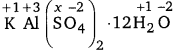
PSEB 11th Class Chemistry Solutions Chapter 8 Redox Reactions 7
2 (+1) + 2 (x) + 7 (-2) = 0
⇒ 2 + 2x -14 = 0
⇒ 2x = +12
x = +6
Hence, the oxidation number of S is + 6.

(h) Let the oxidation number of S be x.
PSEB 11th Class Chemistry Solutions Chapter 8 Redox Reactions 7
1 (+1) +1 (+ 3) + 2 (x) + 8 (-2) +12 (2 x 1 + (-2)) = 0
⇒ 1 + 3 + 2x -16 + 24 – 24 = 0
⇒ 2x = 12
x = + 6
Hence, the oxidation number of S is + 6.

Question 2.
What are the oxidation number of the underlined elements in each of the following and how do you rationalise your results?

PSEB 11th Class Chemistry Solutions Chapter 8 Redox Reactions 8
PSEB 11th Class Chemistry Solutions Chapter 8 Redox Reactions 9
Answer:
(a) In
PSEB 11th Class Chemistry Solutions Chapter 8 Redox Reactions 9-1
the oxidation number (O. N.) of K is +1. Hence, the average oxidation number of I is \(\frac{-1}{3}\). However, O.N. cannot be fractional.
Therefore, we will have to consider the structure of KI3 to find the oxidation states.
In a KI3 molecule, an atom of iodine forms a coordinate covalent bond with an iodine molecule.
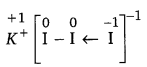
PSEB 11th Class Chemistry Solutions Chapter 8 Redox Reactions 10

PSEB 11th Class Chemistry Solutions Chapter 8 Redox Reactions

Hence, in a KI3 molecule, the O.N. of the two I atoms forming the I2 molecule is 0, whereas the O.N. of the I atom forming the coordinate bond is -1.

(b) Let the oxidation number of S be x.
PSEB 11th Class Chemistry Solutions Chapter 8 Redox Reactions 11

2 (+1) + 4 (x) + 6 (-2) = 0
=» 2 + 4x – 12 = 0
⇒ 4x = +10
⇒ x = + 2 \(\frac{1}{2}\)
However, O.N. cannot be fractional. Hence S must be present in different oxidation states in the molecule.
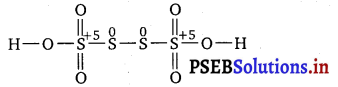
PSEB 11th Class Chemistry Solutions Chapter 8 Redox Reactions 12
The O.N. of two of the four S atoms is +5 and the O.N. of the other two S atoms is 0.

(c) Let the oxidation number of Fe be x.
PSEB 11th Class Chemistry Solutions Chapter 8 Redox Reactions 13
3(x) + 4(-2) = 0
3x – 8 = 0
x = \(+\frac{8}{3}\)
However O.N. cannot’be fractional. Here, one of the three Fe atoms exhibits the O.N. of +2 and the other two Fe atoms exhibit the O.N. of+3

(d) Let oxidation number of C be x.
PSEB 11th Class Chemistry Solutions Chapter 8 Redox Reactions 14
2 (x) + 6 (+1) + 1 (-2) = 0
2x + 4 = 0
x = -2
Hence, the O.N. of C is – 2

(e) Let the oxidation number of C be x.
PSEB 11th Class Chemistry Solutions Chapter 8 Redox Reactions 16
2 (x) + 4 (+1) + 2 (-2) = 0
2x = 0
x = 0
Therefore, the average oxidation number of C is zero.
Let us consider the structure of CH3COOH
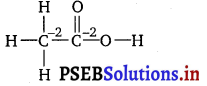
PSEB 11th Class Chemistry Solutions Chapter 8 Redox Reactions 16
Oxidation number of atom = 1(+1) + x+1(-2) +1(-1) = 0
x = +2
Similarly, oxidation number of C2 atom
3(+1) + x+ 1(-1) = 0
x = -2.

Question 3.
Justify that the following reactions are redox reactions:
(a) CuO (s) + H2(g) → Cu(s) + H2O(g)
(b) Fe2O3 (s) + 3CO(g) → 2Fe(s) + 3CO2(g)
(c) 4BCl3 (g) + 3LiAlH4 (s) → 2B2H6(g) + 3LiCl (s) + 3 AlCl3(S)
(d) 2K (s) + F2 (g) → 2K+F(s)
(e) 4NH3(g) + 5O2(g) → 4NO(g) + 6H2O (g)
Answer:
(a) CuO (s) + H2(g) → Cu(s) + H2O(g)
Let us write the oxidation number of each element involved in the given reaction as :

PSEB 11th Class Chemistry Solutions Chapter 8 Redox Reactions 17
Here, the oxidation number of Cu decreases from +2 in CuO to 0 in Cu i.e., CuO is reduced to Cu. Also, the oxidation number of H increases from 0 in H2 to +1 in H2O i.e., H2 is oxidized to H2O. Hence, this reaction is a redox reaction.

(b) Fe2O3 (s) + 3CO(g) → 2Fe(s) + 3CO2(g)
Let us write the oxidation number of each element in the given reaction as:

PSEB 11th Class Chemistry Solutions Chapter 8 Redox Reactions 18
Here, the oxidation number of Fe decreases from +3 in Fe2O3 to 0 in Fe i.e., Fe2O3 is reduced to Fe. On the other hand, the oxidation number of C increases from +2 in CO to +4 in CO2 i.e., CO is oxidized to CO2.
Hence, the given reaction is a redox reaction.

(c) 4BCl3 (g) + 3LiAlH4 (s) → 2B2H6(g) + 3LiCl (s) + 3 AlCl3(S)
The oxidation number of each elements in the given reaction can be represented as:

PSEB 11th Class Chemistry Solutions Chapter 8 Redox Reactions 19
In this reaction, the oxidation number of B decreases from +3 in BCl3 to -3 in B2H6- i.e., BCl3 is reduced to B2H6. Also, the oxidation number of H increases from -1 in LiAlH4 to +1 in B2H6 i.e., LiAlH4 is oxidized to B2H6. Hence, the given reaction is a redox reaction.

(d) 2K (s) + F2 (g) → 2K+F(s)
The oxidation number of each element in the given reaction can be represented as:

PSEB 11th Class Chemistry Solutions Chapter 8 Redox Reactions 20
In this reaction, the oxidation number of K increases from 0 in K to +1 in KF i.e., K is oxidized to KF. On the other hand, the oxidation number of F decreases from 0 in F2 to -1 in KF i.e., F2 is reduced to KF.
Hence, the above reaction is a redox reaction.

(e) 4NH3(g) + 5O2(g) → 4NO(g) + 6H2O (g)
The oxidation number of each elements in the given reaction can be represented as:

PSEB 11th Class Chemistry Solutions Chapter 8 Redox Reactions 21
Here, the oxidation number of N increases from -3 in NH3 to +2 in NO. On the other hand, the oxidation number of O2 decreases from 0 in O2 to -2 in NO and H2O i.e.,O2 is reduced. Hence, the given reaction is a redox reaction.

Question 4.
Fluorine reacts with ice and results in the change:
H2O(S) + F2(g) → HF(g) + HOF(g)
Justify that this reaction is a redox reaction.
Ans. Let us write the oxidation number of each atom involved in the given reaction above its symbol as:

PSEB 11th Class Chemistry Solutions Chapter 8 Redox Reactions 21-1

Here, we have observed that the oxidation number of F increases from 0 in F2 to +1 in HOF. Also, the oxidation number decreases from 0 in F2 to -1 in HF. Thus, in the above reaction, F is both oxidized and reduced. Hence, the given reaction is a redox reaction.

PSEB 11th Class Chemistry Solutions Chapter 8 Redox Reactions

Question 5.
Calculate the oxidation number of sulphur, chromium and nitrogen in H2SO5, \(\mathrm{Cr}_{2} \mathrm{O}_{7}^{2-}\) and \(\mathrm{NO}_{3}^{-}\). Suggest structure of these compounds. Count for the fallacy.
Answer:
PSEB 11th Class Chemistry Solutions Chapter 8 Redox Reactions 22
2 (+1) +1 (x) + 5 (-2) = 0
⇒ 2 + x -10 = 0
⇒ x = + 8
However, the O.N. of S cannot be +8. S has six valence electrons. Therefore, the O.N. of S cannot be more than +6. The structure of H2S05 is shown as follows :
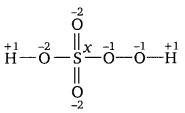
PSEB 11th Class Chemistry Solutions Chapter 8 Redox Reactions 25

Now, 2 (+1) +1 (x) + 3 (-2) + 2 (-1) – 0
⇒ 2 + x – 6 – 2 = 0
⇒ x = + 6
Therefore, the O.N. of S is +6.

PSEB 11th Class Chemistry Solutions Chapter 8 Redox Reactions 23
2 (x) + 7 (-2) = – 2 ⇒ 2x -14 = – 2
⇒ x = + 6
The structure of Cr2Oy is shown as follows:
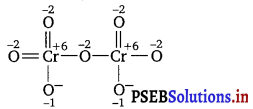
PSEB 11th Class Chemistry Solutions Chapter 8 Redox Reactions 26

Let the oxidation number of each Cr atom be
4(-2) + (-2) +1(-2) + 2x = 0
– 8 – 2 – 2 + 2x = 0
2x = +12
x = +6

Oxidation number of Cr in \(\mathrm{Cr}_{2} \mathrm{O}_{7}^{2-}\) is same.
Hence, there is no fallacy.

PSEB 11th Class Chemistry Solutions Chapter 8 Redox Reactions 27

1 (x) + 3(-2) = -1
= x – 6 = -1
x = +5
The structure of \(\mathrm{NO}_{3}^{-}\) is shown as follows:
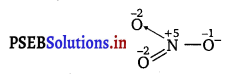
PSEB 11th Class Chemistry Solutions Chapter 8 Redox Reactions 27-1

Let the oxidation number of N be x.
1(-1) + x + 1(-2) + 1(-2) = 0
x = + 5
Oxidation number of N in \(\mathrm{NO}_{3}^{-}\) ion is same.
Hence, there is no fallacy.

Question 6.
Write formulas for the following compounds:
(a) Mercury (II) chloride
(b) Nickel (II) sulphate
(c) Tin (IV) oxide
(d) Thallium (I) sulphate
(e) Iron (III) sulphate
(f) Chromium (III) oxide
Answer:
(a) Mercury (II) chloride: Hg (II) Cl2
(b) Nickel (II) sulphate: Ni (II) SO4
(c) Tin (IV) oxide : Sn (IV) O2
(d) Thallium (I) sulphate: Tl2 (I) SO4
(e) Iron (III) sulphate: Fe2(III) (SO4)3
(f) Chromium (III) oxide: Cr2(III)O3

PSEB 11th Class Chemistry Solutions Chapter 8 Redox Reactions

Question 7.
Suggest a list of the substances where carbon can exhibit oxidation states from -4 to +4 and nitrogen from -3 to +5.
Answer:
The substances where carbon can exhibit oxidation states from -4 to +4 are listed in the following table :

Substance Formula Oxidation State of Carbon
Methane CH4 -4
Ethane C2H6 -3
Ethene C2H4 -2
Ethyne C2H2 -1
Dichloromethane CH2Cl2 0
Hexachlorobenzone C6Cl6 +1
Carbon monoxide CO +2
Oxalic acid (COOH)2 +3
Carbon dioxide CO2 +4

The substances where nitrogen can exhibit oxidation sates from -3 to +5 are listed in in the following table.

Substance Formula Oxidation State of Nitrogen
Ammonia NH3 -3
Hydrazine N2H4 -2
Hydride N2H2 -1
Dinitrogen gas N2 0
Nitrous oxide N2O +1
Nitric oxide NO +2
Dinitrogen trioxide N2O3 +3
Nitrogen dioxide NO2 +4
Nitrogen pentoxide N2O5 +5

Question 8.
While sulphur dioxide and hydrogen peroxide can act as oxidising as well as reducing agents in their reactions, ozone and nitric acid act only as oxidants. Why?
Answer:
(i) In sulphur dioxide (SO2), the oxidation number (O.N.) of S is +4 and the range of the O.N. that S can have is from +6 to -2.
Therefore, SO2 can act as an oxidising as well as reducing agent.
(ii) In hydrogen peroxide (H2O2), the O.N. of O is -1 and the range of the O.N. that O can have is from 0 to -2. O can sometimes also attain the oxidation numbers +1 and +2. Hence, H2O2 can act as an oxidising as well as reducing agent.
(iii) In ozone (O3) the O.N. of O is zero and the range of the O.N. that O can have is from 0 to -2. Therefore, the O.N. of O can only decrease in this case. Hence,O3 acts only as an oxidant.
(iv) In nitric acid (HNO3) the O.N. of N is +5 and the range of the O.N. that N can have is from +5 to -3. Therefore, the O.N. of N can only decrease in this case. Hence, HNO3 acts only as an oxidizing agent.

Question 9.
Consider the reactions:
(a) 6CO2(g) + 6H2O(l) → C6H12O6 (aq) + 6O2(g)
(b) O3(g) + H2O2(Z) → H2O(1) + 2O2(g)
Why it is more appropriate to write these reactions as:
(a) 6CO2 (g) + 12H2O(1) → C6H12O6 (aq) + 6H2O(l) + 6O2 (g)
(b) O3(g) + H2O2(Z) → + H2O(Z) + O2(g) + O2(g)
Also suggest a technique to investigate the path of the above (a) and (b) redox reactions.
Answer:
(a) The process of photosynthesis involves two steps :
Step 1: H2O decomposes to give H2 and O2.
2H2O(l) → 2H2(g) + O2(g)
Step 2: The H2 produced in step 1 reduces CO2 thereby producing glucose (C6H12O6) and H2O.
6CO2(g) + 12H2(g) → C6H12O6(S) + 6H2O(l)
Now, the net reaction of the process is given as:

PSEB 11th Class Chemistry Solutions Chapter 8 Redox Reactions 28

It is more appropriate to write the reaction as given above because water molecules are also produced in the process of photosynthesis.
The path of this reaction can be investigated by using radioactive H2O18 in place of H2O

PSEB 11th Class Chemistry Solutions Chapter 8 Redox Reactions

(b) O2 is produced from each of the two reactants O3 and H2O2. For this reason O2 is written twice.
The given reaction involves two steps. First O3 decomposes to form O2 and O. In the second step H2O2 reacts with the O produced in the first step thereby producing H2O and O2.

PSEB 11th Class Chemistry Solutions Chapter 8 Redox Reactions 29

The path of this reaction can be investigating by using \(\mathrm{H}_{2} \mathrm{O}_{2}^{18}\) or \(\mathrm{O}_{3}^{18}\).

Question 10.
The compound AgF2 is unstable compound. However, if formed, the compound acts as a very strong oxidizing agent. Why?
Answer:
AgF2 → Ag + F2
The oxidation state of Ag in Ag F2 is +2. But +2 is an unstable oxidation state of Ag. Therefore, whenever Ag F2 is formed, silver readily accepts an electron to form Ag+. This helps to bring the oxidation state of Ag down from +2 to a more stable state of +1. As a result, Ag F2 acts as a very strong oxidizing agent.

Question 11.
Whenever a reaction between an oxidising agent and a reducing agent is carried out, a compound of lower oxidation state is formed if the reducing agent is in excess and a compound of higher oxidation state is formed if the oxidising agent is in excess. Justify this statement giving two illustrations.
Answer:
Whenever a reaction between an oxidising agent and a reducing agent is carried out, a compound of lower oxidation state is formed if the reducing agent is in excess and a compound of higher oxidation state is formed if the oxidising agent is in excess. This can be illustrated as follows:
(i) P4 and F2 are reducing and oxidising agents respectively.
If an excess of P4 is treated with F2 then PF3 will be produced, where in the oxidation number (O.N.) of P is +3.

PSEB 11th Class Chemistry Solutions Chapter 8 Redox Reactions 30

However, if P4 is treated with an excess of F2, then PF5 will be produced, wherein the O.N. of P is +5.

PSEB 11th Class Chemistry Solutions Chapter 8 Redox Reactions 31

(ii) K acts as a reducing agent, whereas O2 is an oxidising agent.
If an excess of K reacts with O2, then K2O will be formed, wherein the O.N. of O is -2.
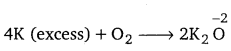
PSEB 11th Class Chemistry Solutions Chapter 8 Redox Reactions 32

However, if K reacts with an excess of O2, then K2O2 will be formed, wherein the O.N. of O is -1.

PSEB 11th Class Chemistry Solutions Chapter 8 Redox Reactions 33

Question 12.
How do you account for the following observations?
(a) Though alkaline potassium permanganate and acidic potassium permanganate both are used as oxidants, yet in the manufacture of benzoic acid from toluene we use alcoholic potassium permanganate as an oxidant. Why? Write a balanced redox equation for the reaction.
(b) When concentrated sulphuric acid is added to an inorganic mixture containing chloride, we get colourless pungent smelling gas HCl, but if the mixture contains bromide then we get red vapour of bromine. Why?
Answer:
(a) Oxidation of toluene to benzoic acid in acidic medium.

PSEB 11th Class Chemistry Solutions Chapter 8 Redox Reactions 34
Oxidation of toluene to benzoic acid in basic and neutral medium.

PSEB 11th Class Chemistry Solutions Chapter 8 Redox Reactions 35

On industrial scale, alcoholic potassium permanganate is preferred to acidic or alkaline potassium permanganate because in the presence of alcohol, both the reactants KMnO4 and C6H5CH3 are mixed very well and form homogeneous solution and in homogeneous medium reaction takes place faster than in heterogeneous medium. Further more in neutral medium, OH ions are produced in the reaction itself.

(b) PSEB 11th Class Chemistry Solutions Chapter 8 Redox Reactions 36

HCl is a weak reducing agent. k cannot reduce H2SO4 to SO2 that’s why pungent smelling gas HCl is obtained.
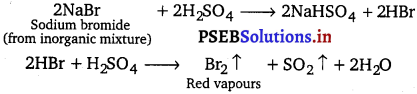
PSEB 11th Class Chemistry Solutions Chapter 8 Redox Reactions 37

HBr is a strong reducing agent, it reduces H2S04 to SO2 and is itselfoxidised to Br2. That’s why we get red vapours of bromine when conc.
H2SO4 reacts with inorganic mixture containing bromide salt.

Question 13.
Identify the substance oxidised, reduced, oxidising agent andreducing agent for each of the following reactions:
(a) 2AgBr(s) + C6H6O2(aq) → 2Ag(s) + 2HBr(aq) + C6H4O2(aq)
(b) HCHO(l) +2 [Ag (NH3)2]+ (aq) + 3OH(aq) → 2Ag(s) + HCOO(aq) + 4NH3(aq) + 2H2O (l)
(c) HCHO(l) + 2Cu2+ (aq) + 5 OH → Cu2O (s) +HCOO(aq) + 3H2O(l)
(d) N2H4 (Z) + 2H2O2 (1) → N2 (g) + 4H2O (l)
(e) Pb (s) +PbO2 (s) + 2H2SO4 (ag) → 2PbSO4(s) + 2H2O(l)
Answer:
(a) Oxidised substance -C6H6O2
Reduced substance – AgBr
Oxidising agent – AgBr
Reducing agent -C6H6O2

(b) Oxidised substance – HCHO
Reduced substance – [Ag (NH3)2]+
Oxidising agent – [Ag (NH3)2]+
Reducing agent – HCHO

(c) Oxidised substance – HCHO
Reduced substance -Cu2+
Oxidising agent – Cu2+
Reducing agent – HCHO

PSEB 11th Class Chemistry Solutions Chapter 8 Redox Reactions

(d) Oxidised substance – N2H4
Reduced substance -H2O2
Oxidising agent-H2O2
Reducing agent -N2H4

(e) Oxidised substance – Pb
Reduced substance – PbO2
Oxidising agent – Pb O2
Reducing agent – Pb

Question 14.
Consider the reactions:

PSEB 11th Class Chemistry Solutions Chapter 8 Redox Reactions 38
Why does the same reductant, thiosulphate react differently with iodine and bromine?
Answer:
The average oxidation number (O.N.) of S in \(\mathrm{S}_{2} \mathrm{O}_{3}^{2-}\) is +2. Being a stronger oxidising agent than I2, Br2 oxidises \(\mathrm{S}_{2} \mathrm{O}_{3}^{2-}\) to \(\mathrm{S}_{2} \mathrm{O}_{4}^{2-}\) in which the O.N. of S is +6. However I2 is a weak oxidising agent. Therefore, it oxidises \(\mathrm{S}_{2} \mathrm{O}_{3}^{2-}\) to \(\mathrm{S}_{4} \mathrm{O}_{6}^{2-}\) in which the average O.N. of S is only +2.5. As a result, \(\mathrm{S}_{2} \mathrm{O}_{3}^{2-}\) reacts differently with iodine and bromine. ,

Question 15.
Justify giving reactions that among halogens, fluorine is the best oxidant and among hydrohalic compounds, hydroiodic acid is the best reductant.
Answer:
(i) F2 can oxidize Cl to Cl2, Br to Br2 and I to I2 as:
F2(aq) + 2Cl(s) → 2F(aq) + Cl2(g)
F2(aq) + 2Br(aq) → 2F(aq) + Br2(7)
F2(aq) + 2I(aq) → 2F(aq) + I2(s)

On the other hand, Cl2, Br2 and I2 cannot oxidize F to F2. The oxidizing power of halogens increases in the order of I2 < Br2 < Cl2 < F2. Hence fluorine is the best oxidant among halogens.

(ii) HI and HBr can reduce H2SO4 to SO2, but HCl and HF cannot. Therefore HI and HBr are stronger reductants than HCl and HF.

2HI + H2SO4 → I2 + SO2 + 2H2O
2HBr + H2SO4 → Br2 + SO2 + 2H2O

Again, I- can reduce Cu2+ to Cu+ but Br cannot.

4I(aq) + 2Cu2+(aq) → Cu2I2(s) + I2(aq)

Hence, hydroiodic acid is the best reductant among hydrohalic compounds.
Thus, the reducing power of hydrohalic acids increases in the order of
HF < HCl < HBr < HI.

PSEB 11th Class Chemistry Solutions Chapter 8 Redox Reactions

Question 16.
Why does the following reaction occur?
\(\mathrm{XeO}_{6}^{4-}\)(aq) + 2F (aq) + 6H+(aq) → XeO3(g) +F2(g) + 3H2O(i)
What conclusion about the compound Na4XeO6 (of which \(\mathrm{XeO}_{6}^{4-}\) is a part) can be drawn from the reaction.
Answer:
The given reaction occurs because \(\mathrm{XeO}_{6}^{4-}\) oxidizes being an oxidizing agent and F reduces \(\mathrm{XeO}_{6}^{4-}\)

PSEB 11th Class Chemistry Solutions Chapter 8 Redox Reactions 38-1

In this reaction, the oxidation number (O.N.) of Xe decreases from +8 in \(\mathrm{XeO}_{6}^{4-}\) to +6 in XeO3 and the O.N. of F increases from -1 in F to 0 in F2.
Hence, we can conclude that Na4XeO6 is a strong oxidizing agent thanF.

Question17.
Consider the reactions:
(a) H3PO2 (aq) + 4 AgNO3 (aq) + 2H2O(l) → H3PO4 (aq) + 4Ag(s) + 4HNO3 (aq)
(b) H3PO2 (oqr) + 2CuSO4 (aq) + 2 H2O(0 → H3PO4 (aq) + 2Cu(s) +H2SO4 (aq)
(c) C6H5CHO(l) + 2[Ag (NH3)2]+ (aq) + 3OH (aq) → C6H5COO(aq) + 2Ag(s) + 4NH3 (aq) + 2H2O(l)
(d) C6H5CHO(l) + 2Cu2+(aq) + 5OH(aqf) → No change observed.
What inference do you draw about the behaviour of Ag+ and Cu2+ from these reactions?
Answer:
Ag+ and Cu2+ act as an oxidizing agents in reactions (a) and (b) respectively.
In reaction (c), Ag+ oxidizes C6H5CHO to C6H5COO, but in reaction (d) Cu2+ cannot oxidize C6H5CHO. Hence, we can say that Ag+ is a stronger oxidising agent than Cu2+.

Question 18.
Balance the following redox reactions by ion-electron method:

PSEB 11th Class Chemistry Solutions Chapter 8 Redox Reactions 39
PSEB 11th Class Chemistry Solutions Chapter 8 Redox Reactions 40
Answer:
(a) Step 1 : The two half reactions involved in the given reaction are:
Oxidation half reaction :
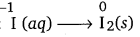
PSEB 11th Class Chemistry Solutions Chapter 8 Redox Reactions 41
Reduction half reaction:
PSEB 11th Class Chemistry Solutions Chapter 8 Redox Reactions 42

Step 2 : Balancing I in the oxidation half reaction, we have
2I (aq) → I2(s)
Now, to balance the charge, we add 2 e“ to the RHS of the reaction.
2I(aq) → I2(s) + 2e

Step 3 : In the reduction half reaction, the oxidation state of Mn has reduced from +7 to +4. Thus, 3 electrons are added to the LHS of the reaction.
\(\mathrm{MnO}_{4}^{-}\) + 3e → MnO2(aq)
Now, to balance the charge, we add 4 OH“ ions to the RHS of the reaction as the reaction is taking place in a basic medium.
\(\mathrm{MnO}_{4}^{-}(a q)^{-}\) + 3e → MnO2(aq) + 4OH

Step 4 : In this equation, there are 6 O atoms on the RHS and 4 O atoms on the LHS. Therefore, two water molecules are added to the LHS.
\(\mathrm{MnO}_{4}^{-}\) (aq) + 2H2O + 3e → MnO2(aq) + 4OH

Step 5 : Equalising the number of electrons by multiplying the oxidation half reaction by 3 and the reduction half reaction by 2, we have:
6I(aq) → 3I2(s) + 6e
2 \(\mathrm{MnO}_{4}^{-}\)(aq) + 4H2O + 6e → 2MnO2(s) + 8OH(aq)

Step 6 : Adding the two half reactions, we have the net balanced redox reaction as:
6I(aq) + 2\(\mathrm{MnO}_{4}^{-}\)(aq) + 4H2O(l) → 3I2(s) + 2MnO2(s) + 8OH(aq)

(b) Following the steps as in part (a) we have the oxidation half reaction as:
SO2(g) + 2H2O(Z) → \(\mathrm{HSO}_{4}^{-}\)(aq) + 3H+ (aq) + 2e (aq)
And the reduction half reaction as:
\(\mathrm{MnO}_{4}^{-}\)(aq) + 8H+(aq) + 5e → Mn2+(aq) + 4H2O(l)

Multiplying the oxidation half reaction by 5 and the reduction half reaction by 2, and then by adding them, we have the net balanced redox reaction as :

2Mno4(aq) + 5SO2(g) + 2H2O(Z) + H+(aq) → 2Mn(aq) + 5HSO4((aq)

(c) Following the steps as in part (a), we have the oxidation half reaction as:
Fe2+(aq) → Fe3+(aq) + e

And the reduction half reaction as:
H2O2(aq) + 2H+ (aq) + 2e → 2H2O(l)

Multiplying the oxidation half reaction by 2 and then adding it to the reduction half reaction, we have the net balanced redox reaction as:
H2O2(aq) + 2Fe2+(aq) + 2H+(aq) → 2Fe3+ (aq) + 2H2O(Z)

(d) Following the steps as in part (a), we have the oxidation half reaction as:
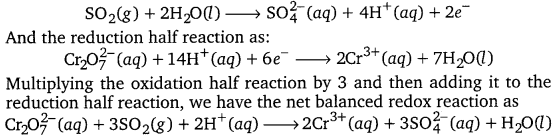
PSEB 11th Class Chemistry Solutions Chapter 8 Redox Reactions 43

PSEB 11th Class Chemistry Solutions Chapter 8 Redox Reactions

Question 19.
Balance the following equations in basic medium by ion-electron method and oxidation number methods and identify the oxidising agent and the reducing agent.
(a) P4(s) + OH(aq) → PH3(g) + H2PO2(aq)
(b) N2H4(l) + CIO3(aqr) → NO(g) + Cl(g)
(c) Cl2O7(g) + H2O2(aqr) → ClO2(aq) + O2(g) + H+
Answer:
PSEB 11th Class Chemistry Solutions Chapter 8 Redox Reactions 44
O.N. increases by 1 per P atom.
P4 acts both as an oxidising as well as a reducing agent.

Oxidation number method:
Total decrease in O.N. of P4 in PH3 = 3 x 4 = 12
Total increase in O.N. of P4 in H2PO2 = 1 x 4 = 4
Therefore, to balance increase/decrease in O.N. multiply PH3 by 1 and H2PO2 by 3, we have,

P4(s) + OH(aq) → PH3(g) + 3H2PO2(aq)

To balance O atoms, multiply OH- by 6, we have,

P4(s) + 6OH(aq) → PH3(g) + 3H2PO2(aq)

To balance H atoms, add 3H2O to L.H.S. and 3OH to the R.H.S. we have,

P4 (s) + 6OH(aq) + 3H2O(l) → PH3(g) + 3H2PO2(aq) + 3OH(aq)
or P4(s) + 3OH(aq) + 3H2O(l) → PH3(g) + 3H2PO2(aq) …(1)

Thus, Eq. (1) represents the correct balanced equation.

Ion-electron method : The two half reactions are:
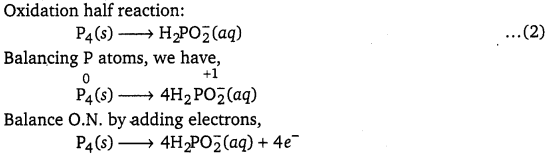
PSEB 11th Class Chemistry Solutions Chapter 8 Redox Reactions 45 PSEB 11th Class Chemistry Solutions Chapter 8 Redox Reactions 46

Oxidation number method :
Total increase in O.N. of N = 2 x 4 = 8
Total decrease in O.N. of Cl = 1 x 6 = 6
Therefore, to balance increase/decrease in O.N. multiply N2H2 by 3 and \(\mathrm{ClO}_{3}^{-}\) by 4, we have,

3N2H4(l) + 4ClO3 (aq) → NO(g) + Cl(aq)

To balance N and Cl atoms, multiply NO by 6 and Cl by 4, we have,

3N2H4(l) + 4ClO3(aq) → 6NO(g) + 4Cl(aq)

Balance O atoms by adding 6H2O, in R.H.S.

3N2H4(l) + 4ClO3(aq) → 6NO(g) + 4Cl(aq) + 6H2O (l) …(1)

H atoms get automatically balanced and thus Eq. (1) represents the correct balanced equation.

Ion electron method :
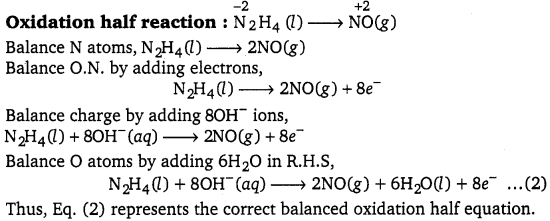
PSEB 11th Class Chemistry Solutions Chapter 8 Redox Reactions 47
PSEB 11th Class Chemistry Solutions Chapter 8 Redox Reactions 48

Oxidation number method :
Total decrease in O.N. of Cl2O7 = 4 x 2 = 8
Total increase in O.N. of H2O2 = 2 x 1 = 2
∴ To balance increase/decrease in O.N. multiply H2O2 and O2 by 4, we have,
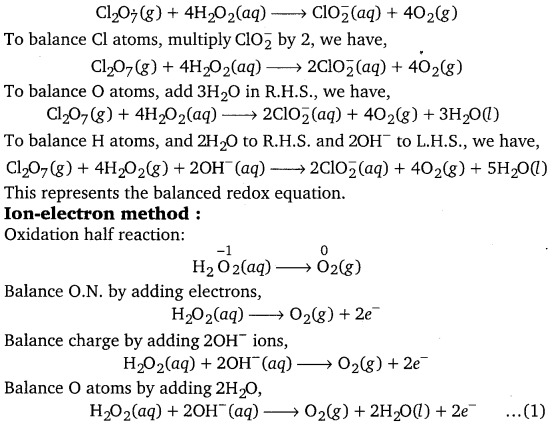
PSEB 11th Class Chemistry Solutions Chapter 8 Redox Reactions 49 PSEB 11th Class Chemistry Solutions Chapter 8 Redox Reactions 50

PSEB 11th Class Chemistry Solutions Chapter 8 Redox Reactions

Question 20.
What type of information can you draw from the following reaction?
(CN)2(g) + 2OH(aq) → CN(aq) + CNO(aq) + H2O(l)
Answer:
The oxidation number of carbon in (CN)2 CN and CNO is +3, +2 and +4 respectively. These are obtained as shown below:
Let the oxidation number of C be x.
(i) (CN)2
2 (x – 3) = 0
∴ x = +3

(ii) CN
x -3 = -1
∴ x = +2

(iii) CNO
x – 3 – 2 = -1
∴ x = + 4

The oxidation number of carbon in the various species is:

PSEB 11th Class Chemistry Solutions Chapter 8 Redox Reactions 51

The following information we can drawn from the above reaction :
(i) Decomposition of cyanogen in the cyanide ion (CN) and cyanate ion (CNO) occurs in basic medium.
(ii) Cyanogen (CN)2 acts as both reducing agent as well as oxidising agent.
(iii) The reaction is an example of disproportionation reaction.
(iv) Cyanogen (CN)2 is called pseudohalogen while CN, CNO ions are called pseudohalide ions.

Question 21.
The Mn3+ ion is unstable in solution and undergoes disproportionation to give Mn2+, MnO2 and H+ ion. Write a balanced ionic equation for the reaction.
Answer:
The given reaction can be represented as:

Mn3+ (aq) → Mn2+(aq) + MnO2(s) + H+(aq)

The oxidation half equation is:

PSEB 11th Class Chemistry Solutions Chapter 8 Redox Reactions 52

The oxidation number is balanced by adding one electron as:
Mn3+(aq) → MnO2(s) + e

The charge is balanced by adding 4H+ ion as :
Mn3+(aq) → MnO2(s) + 4H+ (aq) + e

The O atoms and H+ ions are balanced by adding 2H20 molecules as:
Mn3+(aq) + 2H2O(l) → MnO2(s) + 4H+ (aq) + e …(1)

The reduction half equation is:
Mn3+(aq) → Mn2+(aq)

The oxidation number is balanced by adding one electron as :
Mn3+ (aq) + e→ Mn2+ (aq) … (2)

The balanced chemical equation can be obtained by adding equation (1) and (2) as :
2Mn3+(aq) + 2H2O(l) → MnO2(s) + Mn2+(aq) + 4H+(aq)

Question 22.
Consider the elements: Cs, Ne, I and F
(a) Identify the element that exhibits only negative oxidation state.
(b) Identify the element that exhibits only positive oxidation state.
(c) Identify the element that exhibits both positive and negative oxidation states.
(d) Identify the element which exhibits neither the negative nor the positive oxidation state.
Answer:
(a) F exhibits only negative oxidation state of-1.
(b) Cs exhibits only positive oxidation state of +1
(c) I exhibits both positive and negative oxidation states. It exhibits oxidation states of-1, 0, +1, + 3, + 5, and + 7.
(d) The oxidation state of Ne is zero. It exhibits neither negative nor positive oxidation states.

Question 23.
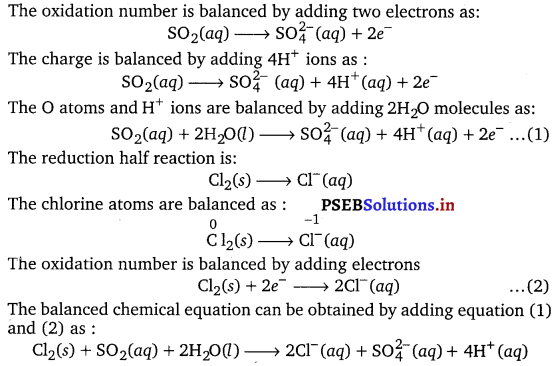
Chlorine is used to purify drinking water. Excess of chlorine is harmful. The excess of chlorine is removed by treating with sulphur dioxide. Present a balanced equation for this redox change taking place in water.
Answer:
The given redox reaction can be represented as:

PSEB 11th Class Chemistry Solutions Chapter 8 Redox Reactions 53 PSEB 11th Class Chemistry Solutions Chapter 8 Redox Reactions 54

Question 24.
Refer to the periodic table given in your book and now answer the following questions:
(a) Select the possible non-metals that can show disproportionation reaction.
(b) Select three metals that can show disproportionation reaction.
Answer:
In disproportionation reaction, one of the reacting substances always contains an element that can exist in at least three oxidation states.
PSEB 11th Class Chemistry Solutions Chapter 8 Redox Reactions 55

PSEB 11th Class Chemistry Solutions Chapter 8 Redox Reactions

Question 25.
In Ostwald’s process for the manufacture of nitric acid, the first step involves the oxidation of ammonia gas by oxygen gas to give nitric oxide gas and steam. What is the maximum weight of nitric oxide that can be obtained starting only with lO.OOg of ammonia and 20.00 g of oxygen?
Answer:
The balanced chemical equation for the given reaction is given as:
PSEB 11th Class Chemistry Solutions Chapter 8 Redox Reactions 56
68 g of NH3 reacts with 160 g of O2
Therefore 10 g of NH3 reacts with \(\frac{160 \times 10}{68}\). g of O2 or 23.53 g of O2
But the available amount of O2 is 20 g which is less than the amount required to react with 10 g NH3. So, O2 is the limiting reagent and it limits the amount of NO produced. From the above balanced equation.
160 g of O2; produces 120 g NO.
Therefore, 20 g of O2; produces = \(\frac{120 \times 20}{160}\) = 15 g NO

Question 26.
Using the standard electrode potentials given in the table 8.1,
predict if the reaction between the following is feasible: *
(a) Fe3+ (aq) and I (aq)
(b) Ag+ (aq) and Cu (s)
(c) Fe3+ (aq) and Cu(s)
(d) Ag (s) and Fe3+ (aq)
(e) Br2 (aq) and Fe2+(aqr)
Answer:
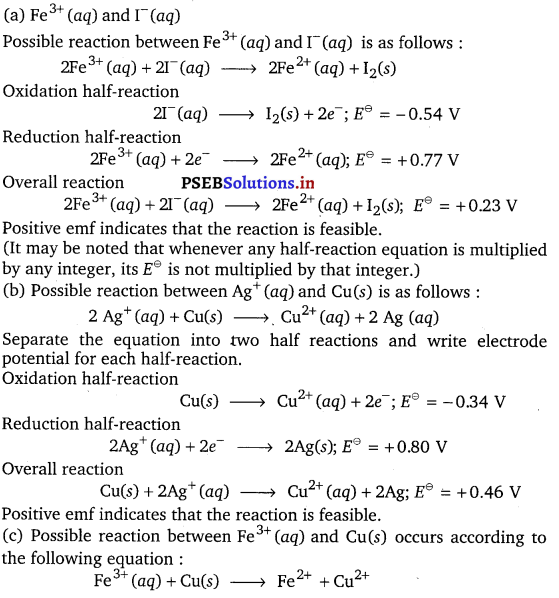
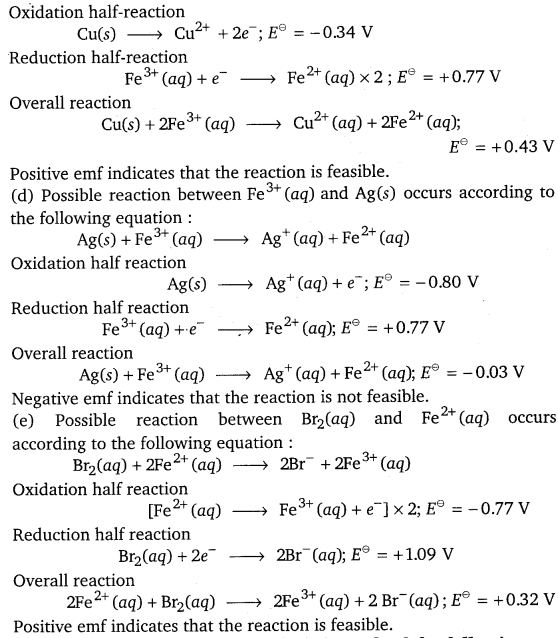
PSEB 11th Class Chemistry Solutions Chapter 8 Redox Reactions 57 PSEB 11th Class Chemistry Solutions Chapter 8 Redox Reactions 58

Question 27.
Predict the products of electrolysis in each of the following:
(i) An aqueous solution of AgNO3 with silver electrodes.
(ii) An aqueous solution of AgNO3 with platinum electrodes
(iii) A dilute solution of H2SO4 with platinum electrodes.
(iv) An aqueous solution of CuCl2 with platinum electrodes,
Answer:
(i) AgNO3 ionizes in aqueous solutions to form Ag+ and \(\mathrm{NO}_{3}^{-}\) ions.
On electrolysis, either Ag+ ions or H2O molecules can be reduced at the cathode. But the reduction potential of Ag+ ions is higher than that of H2O.

PSEB 11th Class Chemistry Solutions Chapter 8 Redox Reactions 43

Hence, Ag+ ions are reduced at the cathode. Similarly, Ag metal or H20 molecules can be oxidized at the anode. But the oxidation potential of Ag is higher than that of H20 molecules.

Ag(s) → Ag+(aq) + e ;\(E^{\ominus}\) = -0.80V

2H2O2(g) → O2(g) + 4H+(aq) + 4e ;\(E^{\ominus}\) = -1.23V
Therefore, Ag metal gets oxidized at the anode.

PSEB 11th Class Chemistry Solutions Chapter 8 Redox Reactions

(ii) Pt cannot be oxidized easily. Hence, at the anode, oxidation of water occurs to liberate O2. At the cathode, Ag+ ions are reduced and get deposited.

(iii) H2SO4 ionizes in aqueous solutions to give H+ and \(\mathrm{SO}_{4}^{2-}\) ions.

H2SO4 (aq) → 2H+(aq) + \(\mathrm{SO}_{4}^{2-}\) (aq)

On electrolysis, either of H+ ions or H2O molecules can get reduced at the cathode. But the reduction potential of H+ ions is higher than that of H2O molecules.

2H+(aq) + 2e → H2(g); \(E^{\ominus}\) = 0.0 V
2H2O(aq) + 2e → H2(g) + 2OH(aq): \(E^{\ominus}\) = – 0.83V

Hence, at the cathode, H+ ions are reduced to liberate H2 gas.
On the other hand, at the anode, either of \(\mathrm{SO}_{4}^{2-}\) ions or H2O molecules can get oxidized. But the oxidation of \(\mathrm{SO}_{4}^{2-}\) involves breaking of more bonds than that of H2O molecules. Hence, \(\mathrm{SO}_{4}^{2-}\) ions have a lower oxidation potential than H2O. Thus, H2O is oxidized at the anode to liberate O2 molecules.

(iv) In aqueous solutions, CuCl2 ionizes to give Cu2+ and Cl ions as
CuCl2 (aq) → Cu2+ (aq) + 2Cl (aq)

On electrolysis either of Cu2+ ions or H2O molecules can get reduced at the cathode. But the reduction potential of Cu2+ is more than that of H2O molecules.

Cu2+(aq) + 2e → Cu(aq) ;\(E^{\ominus}\) = + 0.34V ;
H2O(l) + 2e → H2(g) + 2OH ;\(E^{\ominus}\) = – 0.83V

Hence, Cu2+ ions are reduced at the cathode and get deposited.
Similarly, at the anode, either of Cl or H2O is oxidized. The oxidation , potential of H2O is higher than that of Cl

2Cl(aq) → Cl2(g) + 2e ;\(E^{\ominus}\) = -1.36V :K
2H2O(l) → O2(g) + 4H+(aq) + 4e ;\(E^{\ominus}\) = -1.23V

But oxidation of H2O molecules occurs at a lower electrode potential . than that of Cl ions because of over-voltage (extra voltage required to liberate gas). As a result, Cl ions are oxidized at the anode to liberate Cl2 gas. :

Question 28.
Arrange the following metals in the order in which they displace each other from the solution of their salts.
Al, Cu, Fe, Mg and Zn. ‘
Answer:
A metal of stronger reducing power displaces another metal of weaker reducing power from its solution of salt.
The order of the increasing reducing power of the given metals is
Cu < Fe < Zn < Al < Mg. Hence, we can say that Mg can displace Al from its salt solution, but Al cannot displace Mg. Thus, the order in which the given metals displace each other from the solution of their salts is given below:
Mg > Al > Zn > Fe > Cu

Question 29.
Given the standard electrode potentials:
K+ / K = – 2.93V, Ag+ / Ag = 0.80 V, Hg2+ /Hg = 0.79 V
Mg2+/ Mg = -2.37 V, Cr3+/Cr = -0.74 V Arrange these metals in their increasing order of reducing power.
Answer:
The lower the electrode potential, the stronger is the reducing agent. Therefore, the increasing order of the reducing power of the given metal is
Ag < Hg < Cr < Mg < K.

PSEB 11th Class Chemistry Solutions Chapter 8 Redox Reactions

Question 30.
Depict the galvanic cell in which the reaction Zn(s) + 2Ag+(aqr) → Zn2+(aqr) + 2Ag(s) takes place, further show:
(i) which of the electrode is negatively charged,
(ii) the carriers of the current in the cell, and
(iii) individual reaction at each electrode.
Answer:
The galvanic cell corresponding to the given redox reaction can be represented as:
Zn / Zn2+ (aq) | | Ag+(aq) / Ag
(i) Zn electrode is negatively charged because at this electrode, Zn oxidizes to Zn2+ and the leaving electrons accumulate on this electrode.
(ii) Ions are the carriers of current in the cell.
(iii) The reaction taking place at Zn electrode can be represented as:
Zn(s) → Zn2+ (aq) + 2e
and the reaction taking place at Ag electrode can be represented as:
Ag+(aq) + e → Ag(s)

PSEB 12th Class Maths Solutions Chapter 5 Continuity and Differentiability Miscellaneous Exercise

Punjab State Board PSEB 12th Class Maths Book Solutions Chapter 5 Continuity and Differentiability Miscellaneous Exercise Questions and Answers.

PSEB Solutions for Class 12 Maths Chapter 5 Continuity and Differentiability Miscellaneous Exercise

Direction (1 – 11) :
Differentiate the following functions with respect to x.
Question 1.
(3x2 – 9x + 5)9
Solution.
Let y = (3x2 – 9x + 5)9
Differentiating w.r.t. x, we get
\(\frac{d y}{d x}\) = \(\frac{d}{d x}\) (3x2 – 9x + 5)9
= 9(3x2 – 9x + 5)8 – (3x2 – 9x + 5) dx
= 9(3x2 – 9x + 5)8 . 8 (6x – 9)
= 9(3x2 – 9x + 5)8 . 3(2x – 3)
= 27(3x2 – 9x + 5)8 (2x – 3)

Question 2.
sin3 x + cos6 x
Solution.
Let y = sin3 x + cos6 x
Differentiating w.r.t. x, we get
\(\frac{d y}{d x}\) = \(\frac{d}{d x}\) (sin3 x) + \(\frac{d}{d x}\) (cos6 x)
= 3 sin2 x \(\frac{d}{d x}\) (sin x) + 6 cos5 x . \(\frac{d}{d x}\) (cos x)
= 3 sin2 x cos x + 6 cos5 x . (- sin x)
= 3 sin x cos x (sin x – 2 cos4 x).

PSEB 12th Class Maths Solutions Chapter 5 Continuity and Differentiability Miscellaneous Exercise

Question 3.
(5x)3 cos 2x
Solution.
Let y = (5x)3 cos 2x
Taking logarithm on both sides, we get
log y = 3 cos 2x log 5x
Differentiating on both sides w.r.t. x, we get
\(\frac{1}{y}\) \(\frac{d y}{d x}\) = 3 [log 5x . \(\frac{d}{d x}\) (cos 2x) + cos 2x . \(\frac{d}{d x}\) (log 5x)]

⇒ \(\frac{d y}{d x}\) = 3y [log 5x (- sin 2x) . \(\frac{d}{d x}\) (2x) + cos 2x . \(\frac{1}{5 x}\) . \(\frac{d}{d x}\) (5x)]

⇒ \(\frac{d y}{d x}\) = 3y [- 2 sin 2x log 5x + \(\frac{\cos 2 x}{x}\)]

⇒ \(\frac{d y}{d x}\) = y [\(\frac{3 \cos 2 x}{x}\) – 6 sin 2x log 5x]

∴ \(\frac{d y}{d x}\) = (5x)3 cos 2x [\(\frac{3 \cos 2 x}{x}\) – 6 sin 2x log 5x]

Question 4.
sin-1(x√x), 0 ≤ x ≤ 1
Solution.
Let y = sin-1 (x√x)
Differentiating w.r.t. x, we get
\(\frac{d y}{d x}\) = \(\frac{d}{d x}\) sin-1 (x√x)
= \(\frac{1}{\sqrt{1-(x \sqrt{x})^{2}}} \times \frac{d}{d x}(x \sqrt{x})\)

= \(\frac{1}{\sqrt{1-x^{3}}} \cdot \frac{d}{d x}\left(x^{\frac{3}{2}}\right)\)

= \(\frac{1}{\sqrt{1-x^{3}}} \times \frac{3}{2} \cdot x^{\frac{1}{2}}\)

= \(\frac{3 \sqrt{x}}{2 \sqrt{1-x^{3}}} \Rightarrow \frac{3}{2} \sqrt{\frac{x}{1-x^{3}}}\)

PSEB 12th Class Maths Solutions Chapter 5 Continuity and Differentiability Miscellaneous Exercise

Question 5.
\(\frac{\cos ^{-1} \frac{x}{2}}{\sqrt{2 x+7}}\), – 2 < x < 2
Solution.
Let y = \(\frac{\cos ^{-1} \frac{x}{2}}{\sqrt{2 x+7}}\)
Differentiating w.r.t. x, we get

PSEB 12th Class Maths Solutions Chapter 5 Continuity and Differentiability Miscellaneous Exercise 1

Question 6.
cot-1 \(\left[\frac{\sqrt{1+\sin x}+\sqrt{1-\sin x}}{\sqrt{1+\sin x}-\sqrt{1-\sin x}}\right]\), 0 < x < \(\frac{\pi}{2}\)
Solution.

PSEB 12th Class Maths Solutions Chapter 5 Continuity and Differentiability Miscellaneous Exercise 2

Therefore, Eq. (i) becomes
y = cot-1 (cot \(\frac{x}{2}\))
⇒ y = \(\frac{x}{2}\)
Differentiating w.r.t. x, we get
\(\frac{d y}{d x}\) = \(\frac{1}{2}\) \(\frac{d}{d x}\) (x)
⇒ \(\frac{d y}{d x}\) = \(\frac{1}{2}\).

PSEB 12th Class Maths Solutions Chapter 5 Continuity and Differentiability Miscellaneous Exercise

Question 7.
(log x)log x, x > 1
Solution.
Let y = (log x)log x
Taking logarithm on both sides, we get
log y = log (log x)log x
⇒ log y = log x . log(log x)
Differentiating both sides w.r.t. x, we get
\(\frac{1}{y}\) . \(\frac{d y}{d x}\) = \(\frac{d}{d x}\) [log x . log(log x)] y
⇒ \(\frac{1}{y}\) . \(\frac{d y}{d x}\) = log (log x) . \(\frac{d}{d x}\) (log x) + log x . \(\frac{d}{d x}\) [log (log x)]

⇒ \(\frac{d y}{d x}\) = y [log (log x) . \(\frac{1}{x}\) + log x . \(\frac{1}{\log x}\) . \(\frac{d}{d x}\) (log x)]

⇒ \(\frac{d y}{d x}\) = y [\(\frac{1}{x}\) log (log x) + \(\frac{1}{x}\)]

∴ \(\frac{d y}{d x}\) = (log x)log x [\(\frac{1}{x}\) log (log x) + \(\frac{1}{x}\)]

Question 8.
cos(a cos x + b sin x), for some constant a and b.
Solution.
Let y = cos(acosx + bsinx)
Differentiating w.r.t. x, we get
\(\frac{d y}{d x}\) = \(\frac{d}{d x}\) cos(a cos x + b sin x)
\(\frac{d y}{d x}\) = – sin(a cos x + b sin x) . \(\frac{d}{d x}\) (a cos x + b sin x)
= – sin(a cos x + b sin x) . [a (- sin x) + b cos x]
= (a sin x – b cos x) . sin (a cos x + b sin x).

PSEB 12th Class Maths Solutions Chapter 5 Continuity and Differentiability Miscellaneous Exercise

Question 9.
(sin x – cos x)(sin x – cos x), \(\frac{\pi}{4}<x<\frac{3 \pi}{4}\)
Solution.
Let y = (sin x – cos x) (sin x – cos x)
Taking logarithm on both sides, we get
log y = log (sin x – cos x)[(sin x – cos x)(sin x – cos x)]
⇒ log y = (sin x – cos x) . log(sin x – cos x)
Differentiating on both sides w.r.t. x, we get
\(\frac{1}{y}\) . \(\frac{d y}{d x}\) = \(\frac{d}{d x}\) [(sin x – cos x) log(sin x – cos x)]

⇒ \(\frac{1}{y}\) . \(\frac{d y}{d x}\) = log (sin x – cos x) . \(\frac{d}{d x}\) log (sin x – cos x) – (sin x – cos x) + (sin x – cos x) . \(\frac{d}{d x}\) log (sin x – cos x)

⇒ \(\frac{d y}{d x}\) = (sin x – cos x)(sin x – cos x) [(cos x + sin x) . log (sin x – cos x) + (cos x – sin x)]

∴ \(\frac{d y}{d x}\) = (sin x – cos x)(sin x – cos x) (cos x + sin x) [1 + log (sin x – cos x)]

Question 10.
xx + xa + ax + aa, for some fixed a > 0 and x > 0.
Solution.
Let y = xx + xa + ax + aa
Also, let xx = u, xa = v, ax = w, and aa = s
∴ y = u + v + w + s
Differentiating w.r.t. x, we get

\(\frac{d y}{d x}=\frac{d u}{d x}+\frac{d v}{d x}+\frac{d w}{d x}+\frac{d s}{d x}\) ……………(i)

Then, u = xx
⇒ log u = log xx (Taking log on both sides)
⇒ log u = x logx
Differentiating on both sides w.r.t. x, we get
\(\frac{1}{u}\) \(\frac{d u}{d x}\) = log x . \(\frac{d}{d x}\) (x) + x . \(\frac{d}{d x}\) (log x)
⇒ \(\frac{d u}{d x}\) = u [log x . 1 + x . \(\frac{1}{x}\)]

⇒ \(\frac{d u}{d x}\) = xx [log x + 1]
= xx (1 + log x) …………..(ii)

v = xa
Differentiating w.r.t. x, we get
\(\frac{d v}{d x}\) = \(\frac{d}{d x}\) (xa)

⇒ \(\frac{d v}{d x}\) = a xa – 1 ………….(iii)

w = ax
⇒ log w = log ax
⇒ log w = a log x
Differentiating on both sides w.r.t. x, we get
⇒ \(\frac{d w}{d x}\) = log a . \(\frac{d}{d x}\) (x)

⇒ \(\frac{d w}{d x}\) = ax log a ………………(iv)

s = aa
Since, a is constant, therefore aa is also a constant.
∴ \(\frac{d s}{d x}\) = 0 …………..(v)
From Eqs. (i), (ii), (iii), (iv) and (v), we get
\(\frac{d y}{d x}\) = xx (1 + log x) + a xa – 1 + ax log a + 0
= xxx (1 + log x) + a xa – 1 + ax log a.

PSEB 12th Class Maths Solutions Chapter 5 Continuity and Differentiability Miscellaneous Exercise

Question 11.
xx2 – 3 + (x – 3)x2, for x > 3.
Solution.
Let y = xx2 – 3 + (x – 3)x2
Also, let u = xx2 – 3 and v = (x – 3)x2
∴ y = u + v
Differentiating w.r.t. x, we get
\(\frac{d y}{d x}=\frac{d u}{d x}+\frac{d v}{d x}\)
Then, u = xx2 – 3
Taking log on both sides, we get
log u = log xx2 – 3
= (x2 – 3) log x
Differentiating w.r.t. x, we get
\(\frac{1}{u}\) \(\frac{d u}{d x}\) = 2x log x + (x2 – 3) log x × \(\frac{1}{x}\)

∴ \(\frac{d u}{d x}\) = u (2x log x + \(\frac{x^{2}-3}{x}\))
= xx2 – 3 (2x log x + \(\frac{x^{2}-3}{x}\)) …………….(ii)
Also, v = (x – 3)x2
Differentiating on both sides, we get
\(\frac{1}{v}\) \(\frac{d v}{d x}\) = \(\frac{d v}{d x}\) [2x log (x – 3) + \(\frac{x^{2}-3}{x}\)] ……………..(iii)
From Eqs. (i), (ii) and (iii), we get
\(\frac{d y}{d x}\) = xx2 – 3 \(\left(2 x \log x+\frac{x^{2}-3}{x}\right)+(x-3)^{x^{2}}\left[2 x \log (x-3)+\frac{x^{2}}{x-3}\right]\)

Question 12.
Find \(\frac{d y}{d x}\), if y = 12 (1 – cos t), x = 10 (t – sin t), \(-\frac{\pi}{2}<t<\frac{\pi}{2}\)
Solution.
Given, y = 12 (1 – cos t) and x = 10 (t – sin t)
Differentiating w.r.t t, we get
\(\frac{d x}{d t}\) = \(\frac{d}{d t}\) [10 (t – sin t)]
= 10 . \(\frac{d}{d t}\) (t – sin t)
= 10 (1 – cos t)

and \(\frac{d y}{d t}\) = \(\frac{d}{d t}\) [12 (1 – cos t)]
= 12 . \(\frac{d}{d t}\) (1 – cos t)
= 12 . [0 – (- sin t)] = 12 sin t

Now, \(\frac{d y}{d x}\) = \(\frac{\left(\frac{d y}{d t}\right)}{\left(\frac{d x}{d t}\right)}=\frac{12 \sin t}{10(1-\cos t)}\)

= \(\frac{12 \cdot 2 \sin \frac{t}{2} \cdot \cos \frac{t}{2}}{10 \cdot 2 \sin ^{2} \frac{t}{2}}=\frac{6}{5} \cot \frac{t}{2}\).

PSEB 12th Class Maths Solutions Chapter 5 Continuity and Differentiability Miscellaneous Exercise

Question 13.
Find \(\frac{d y}{d x}\), if y = sin-1 x + sin-1 \(\sqrt{1-x^{2}}\), – 1 ≤ x ≤ 1.
Solution.
Given, y = sin-1 x + sin-1 \(\sqrt{1-x^{2}}\)
putting x = sin θ in above eq., we get
y = sin-1 sin θ + sin-1 \(\sqrt{1-(\sin \theta)^{2}}\)
y = θ + sin-1 \(\sqrt{1-(\sin \theta)^{2}}\)
= θ + sin-1 (cos θ)
= θ + sin-1 sin (\(\frac{\pi}{2}\) – θ)
= θ + \(\frac{\pi}{2}\) – θ
Differentiating w.r.t x, we get
∴ \(\frac{d y}{d x}\) = 0

Question 14.
If x \(\sqrt{1+y}\) + y \(\sqrt{1+x}\) = 0, for – 1 < x < 1, prove that \(\frac{d y}{d x}=\frac{1}{(1+x)^{2}}\).
Solution.
Given, x \(\sqrt{1+y}\) + y \(\sqrt{1+x}\) = 0
⇒ x \(\sqrt{1+y}\) = – y \(\sqrt{1+x}\)
On squaring bothsides, we get
x2 (1 + y) = y2 (1 + x)
⇒ x2 + x2y = y2 + xy2
⇒ x2 – y2 = xy2 – x2y
⇒ x2 – y2 = xy (y – x)
⇒ (x + y) (x – y) = xy (y – x)
∴ x + y = -xy
⇒ (1 + x) y = – x
⇒ y = \(\frac{-x}{(1+x)}\)
Differentiating on bothsides w.r.t x, we get
\(\frac{d y}{d x}\) = \(\frac{(1+x) \frac{d}{d x}(x)-x \frac{d}{d x}(1+x)}{(1+x)^{2}}\)

= \(-\frac{(1+x)-x}{(1+x)^{2}}=-\frac{1}{(1+x)^{2}}\)

Hence proved.

PSEB 12th Class Maths Solutions Chapter 5 Continuity and Differentiability Miscellaneous Exercise

Question 15.
If (x – a)2 + (y – b)2 = c2, for some c > 0, prove that \(\frac{\left(1+\left(\begin{array}{l}
d y \\
d x
\end{array}\right)^{2}\right]^{3}}{d^{2} y} \frac{d x^{2}}{}\) is a constant independent of a and b.
Solution.
Given, (x – a)2 + (y – b)2 = c2
Differentiating on both sides w.r.t. x. we get
\(\frac{d}{d x}\) [(x – a)2] + \(\frac{d}{d x}\) [(y – b)2] = \(\frac{d}{d x}\) (c2)
⇒ 2 (x – a) . \(\frac{d}{d x}\) (x – a) + 2 (y – b) . \(\frac{d}{d x}\) (y – b) = 0
⇒ 2 (x – a) . 1 + 2(y – b) . \(\frac{d y}{d x}\) = 0
⇒ \(\frac{d y}{d x}\) = \(\frac{-(x-a)}{y-b}\) ………………(i)
Again, differentiating w.r.t. x, we get
∴ \(\frac{d^{2} y}{d x^{2}}\) = \(\frac{d}{d x}\left[\frac{-(x-a)}{y-b}\right]\)

= – \(\left[\frac{(y-b) \cdot \frac{d}{d x}(x-a)-(x-a) \cdot \frac{d}{d x}(y-b)}{(y-b)^{2}}\right]\)

PSEB 12th Class Maths Solutions Chapter 5 Continuity and Differentiability Miscellaneous Exercise 3

Hence proved.

PSEB 12th Class Maths Solutions Chapter 5 Continuity and Differentiability Miscellaneous Exercise

Question 16.
If cos y = x cos (a + y), with cos a ≠ ± 1, prove that \(\frac{d y}{d x}=\frac{\cos ^{2}(a+y)}{\sin a}\).
Solution.
Given, cos y = x cos(a + y)
Differentiating w.r.t. x, we get
\(\frac{d}{d x}\) [cos y] = \(\frac{d}{d x}\) [x cos (a + y)]
⇒ – sin y = cos (a + y) . \(\frac{d}{d x}\) (x) + x . \(\frac{d}{d x}\) [cos (a + y)]
⇒ – sin y \(\frac{d y}{d x}\) = cos (a + y) + x [- sin (a + y)]
⇒ [x sin (a + y) – sin y] \(\frac{d y}{d x}\) = cos (a + y) ……………(i)
∵ cos y = x cos (a + y), x = \(\frac{\cos y}{\cos (a+y)}\)
Then, Eq. (i) reduces to
[\(\frac{\cos y}{\cos (a+y)}\) . sin (a + y) – sin y] \(\frac{d y}{d x}\) = cos (a + y)
⇒ [cos y . sin (a + y)] – sin y . cos (a + y)] . \(\frac{d y}{d x}\) = cos 2 (a + y)
⇒ sin (a + y – y) \(\frac{d y}{d x}\) = cos2 (a + y)
⇒ \(\frac{d y}{d x}\) = \(\frac{\cos ^{2}(a+y)}{\sin a}\).
Hence proved.

Question 17.
If x = a(cos t + t sin t) and y = a(sin t – t cos t), find \(\frac{d^{2} y}{d x^{2}}\).
Solution.
Given, x = a (cos t + t sin t) and y = a (sin t – t cos t)
Differentiating both Eqs. w.r.t. t, we get
∴ \(\frac{d x}{d t}\) = a \(\frac{d}{d t}\) (cos t + t sin t)

= a [- sin t + sin t . \(\frac{d}{d x}\) (t) + t . \(\frac{d}{d t}\) (sin t)]

= a [- sin t + sin t + t cos t] = at cost
Also, \(\frac{d y}{d t}\) = a \(\frac{d}{d t}\) (sin t – t cost)

= a [cos t – {cos t . \(\frac{d}{d t}\) (t) + t . \(\frac{d}{d t}\) (cost)}]
= a [cos t – {cos t – t sin t}] = at sin t

\(\frac{d y}{d x}\) = \(\frac{\left(\frac{d y}{d t}\right)}{\left(\frac{d x}{d t}\right)}=\frac{a t \sin t}{a t \cos t}\) = tan t
Again, differentiating w.r.t. x, we get
\(\frac{d^{2} y}{d x^{2}}\) = \(\frac{d}{d x}\) (tan t)

= sec2 t . \(\frac{d t}{d x}\)

[∵ \(\frac{d x}{d t}\) = at cos t
⇒ \(\frac{d t}{d x}\) = \(\frac{1}{a t \cos t}\)]

= sec2 t . \(\frac{1}{a t \cos t}\)

= \(\frac{\sec ^{3} t}{a t}\), 0 < t < \(\frac{\pi}{2}\)

PSEB 12th Class Maths Solutions Chapter 5 Continuity and Differentiability Miscellaneous Exercise

Question 18.
If f(x) = |x|3, show that f”(x) exists for all real x and find it.
Solution.
Here, f(x) = | x |3
When x > 0, f(x) = |x|3 = x3
Differentiating both sides w.r.t. x, we get
\(\frac{d}{d x}\) [f(x)] = \(\frac{d}{d x}\) (x3)
⇒ f'(x) = 3x2
Again, differentiating both sides w.r.t. x, we get
\(\frac{d}{d x}\) [f'(x)] = \(\frac{d}{d x}\) (3x2)
⇒ f”(x) = 6x
When x < 0,
f(x) = |x|3 = – x3
Differentiating both sides w.r.t. x, we get
\(\frac{d}{d x}\) [f(x)] = \(\frac{d}{d x}\) (- x3)
⇒ f'(x) = – 3x2
Again, differentiating both sides w.r.t. x, we get
\(\frac{d}{d x}\) [f'(x)] = \(\frac{d}{d x}\) (- 3x2) = – 6x
f”(x) = – 6x
Hence,f”(x) = PSEB 12th Class Maths Solutions Chapter 5 Continuity and Differentiability Miscellaneous Exercise 4

Question 19.
Using mathematical induction, prove that \(\frac{d}{d x}\) (xn) = n xn – 1 for all positive integers n.
Solution.
Let P(n): \(\frac{d}{d x}\) (xn) = nxn – 1 for all positive integers n
For n = 1,
P(1): \(\frac{d}{d x}\)(x) = 1 = 1 . x1 – 1
∴ P(n) is true for n = 1.
Let P(k) is true for some positive integer k.
i.e., P(k): \(\frac{d}{d x}\) (xk) = k xk – 1
It has to be proved that P(k +1) is also true.
Consider \(\frac{d}{d x}\) (xk – 11) = \(\frac{d}{d x}\) (x . xk)
= xk . \(\frac{d}{d x}\) (x) + x . \(\frac{d}{d x}\) (xk) [Applying product rule]
= (k + 1) . xk
= (k + 1) . x(k+1) – 1
Thus, P(k + 1) is true whenever P(k) is true.
Therefore, by the principle of mathematical induction, the statement P(n) is true for every positive integer n. Hence proved.

PSEB 12th Class Maths Solutions Chapter 5 Continuity and Differentiability Miscellaneous Exercise

Question 20.
Using the fact that sin (A + B) = sin A cos B + cos A sin B and the differentiation, obtain the sum formula for cosines.
Solution.
We have, sin(A + B) = sin A cos B + cos A sin B
Differentiating on both sides w.r.t. x, we get
⇒ \(\frac{d}{d x}\) [sin(A + B)] = \(\frac{d}{d x}\) (sin A cos B) + \(\frac{d}{d x}\) (cos A sin B)

⇒ cos (A + B) . \(\frac{d}{d x}\) (A + B) = cos B . \(\frac{d}{d x}\) (sin A) + sin A . \(\frac{d}{d x}\) (cos B) + sin B . \(\frac{d}{d x}\) (cos A) + cos A . \(\frac{d}{d x}\) (sin B)
⇒ cos (A + B) . \(\frac{d}{d x}\) (A + B) = cos B cos A \(\frac{d A}{d x}\) + sin A(- sin B) \(\frac{d B}{d x}\) + sin B (- sin A) . \(\frac{d A}{d x}\) + cos A cos B \(\frac{d B}{d x}\)
cos (A + B) = cos A cos B – sin A sin B.

Question 21.
Does there exist a function which is continuous everywhere but not differentiable at exactly two points? Justify your answer.
Solution.
Yes, we have the continuous function f(x) = |x – 1| + |x – 2|, which is continuous at all x ∈ R but differentiable at all x except 1, 2.
Here, f(x) = |x – 1| + |x – 2|
= PSEB 12th Class Maths Solutions Chapter 5 Continuity and Differentiability Miscellaneous Exercise 5

i.e., f(x) = PSEB 12th Class Maths Solutions Chapter 5 Continuity and Differentiability Miscellaneous Exercise 6
Since, polynomial function is continuous, so it is clear that f is continuous at all except possible at 1, 2.
Now, we have to check the continuity at 1, 2
At x = 1 f(1) = 1,
LHL = \(\lim _{x \rightarrow 1^{-}}\) f(x) = \(\lim _{x \rightarrow 1^{-}}\) (- 2x + 3)
= – 2 + 3 = 1

RHL = \(\lim _{x \rightarrow 1^{+}}\) f(x) = \(\lim _{x \rightarrow 1^{+}}\) 1 = 1

⇒ f(1) = \(\lim _{x \rightarrow 1^{-}}\) f(x) = \(\lim _{x \rightarrow 1^{+}}\) f(x)
⇒ f is continuous at x = 1

At x = 2 f(2) = 1
⇒ LHL = \(\lim _{x \rightarrow 2^{-}}\) f(x) = \(\lim _{x \rightarrow 2^{-}}\) (1) = 1

RHL = \(\lim _{x \rightarrow 2^{+}}\) f(x) = \(\lim _{x \rightarrow 2^{+}}\) (2x – 3)
= 2 × 2 – 3 = 1

f(x) = \(\lim _{x \rightarrow 2^{-}}\) f(x) = \(\lim _{x \rightarrow 2^{+}}\) f(x)

So, f is continuous at x = 2. Thus, f is continuous at all x ∈ R. -2, if x < 1

PSEB 12th Class Maths Solutions Chapter 5 Continuity and Differentiability Miscellaneous Exercise 7
Lf'(2) ≠ Rf'(2)
⇒ f is not differentiale at 2.
Thus, we see that f(x) = |x – 1| + |x – 2| is continuous everywhere and differentiable also at all x ∈ R except at 1, 2.

PSEB 12th Class Maths Solutions Chapter 5 Continuity and Differentiability Miscellaneous Exercise

Question 22.
If y = \(\begin{array}{ccc}
\boldsymbol{f}(\boldsymbol{x}) & \boldsymbol{g}(\boldsymbol{x}) & \boldsymbol{h}(\boldsymbol{x}) \\
\boldsymbol{l} & \boldsymbol{m} & \boldsymbol{n} \\
\boldsymbol{a} & \boldsymbol{b} & \boldsymbol{c}
\end{array}\), prove that \(\frac{d y}{d x}=\left|\begin{array}{ccc}
f^{\prime}(x) & g^{\prime}(x) & h^{\prime}(x) \\
l & m & n \\
a & b & c
\end{array}\right|\).
Solution.

PSEB 12th Class Maths Solutions Chapter 5 Continuity and Differentiability Miscellaneous Exercise 8

PSEB 12th Class Maths Solutions Chapter 5 Continuity and Differentiability Miscellaneous Exercise

Question 23.
If y = ea cos-1 x ,- 1 ≤ x ≤ 1, show that (1 – x2) \(\frac{d^{2} y}{d x^{2}}\) – x \(\frac{d y}{d x}\) – a2 y = 0.
Solution.
Given, y = ea cos-1 x
Taking logarithm on bothsides, we get
⇒ log y = a cos-1 x log e
⇒ log y = a cos-1 x [∵ log e = 1]

PSEB 12th Class Maths Solutions Chapter 5 Continuity and Differentiability Miscellaneous Exercise 9

PSEB 5th Class Welcome Life Book Solutions | PSEB 5th Class Welcome Life Guide

Punjab State Board Syllabus PSEB 5th Class Welcome Life Book Solutions Guide Pdf in English Medium & Punjabi Medium & Hindi Medium is part of PSEB Solutions for Class 5.

PSEB 5th Class Welcome Life Guide | Welcome Life Guide for Class 5 PSEB

PSEB 5th Class Welcome Life Book Solutions in English Medium

PSEB 5th Class Welcome Life Book Solutions in Punjabi Medium

PSEB 5th Class Welcome Life Book Solutions in Hindi Medium

PSEB 10th Class Physical Education Solutions Chapter 2 ਸੰਤੁਲਿਤ ਭੋਜਨ

Punjab State Board PSEB 10th Class Physical Education Book Solutions Chapter 2 ਸੰਤੁਲਿਤ ਭੋਜਨTextbook Exercise Questions, and Answers.

PSEB Solutions for Class 10 Physical Education Chapter 2 ਸੰਤੁਲਿਤ ਭੋਜਨ

Physical Education Guide for Class 10 PSEB ਸੰਤੁਲਿਤ ਭੋਜਨ ਪ੍ਰਭਾਵTextbook Questions and Answers

ਬਹੁਤ ਛੋਟੇ ਉੱਤਰਾਂ ਵਾਲੇ ਪ੍ਰਸ਼ਨ (Very Short Answer Type Questions) 

ਪ੍ਰਸ਼ਨ 1.
ਪੋਟੀਨ ਕਿੰਨੇ ਪ੍ਰਕਾਰ ਦੇ ਹੁੰਦੇ ਹਨ, ਉਹਨਾਂ ਦੇ ਨਾਂ ਲਿਖੋ । (Name the types of Protein.)
ਉੱਤਰ-
ਪ੍ਰੋਟੀਨ ਦੋ ਪ੍ਰਕਾਰ ਦੇ ਹੁੰਦੇ ਹਨ-ਪਸ਼ੂ ਪ੍ਰੋਟੀਨ ਅਤੇ ਬਨਸਪਤੀ ਪ੍ਰੋਟੀਨ ।

ਪ੍ਰਸ਼ਨ 2.
ਕਾਰਬੋਹਾਈਡਰੇਟਸ ਕੀ ਹਨ ? (What is Carbohydrates ?)
ਉੱਤਰ-
ਕਾਰਬੋਹਾਈਡਰੇਟਸ ਕਾਰਬਨ, ਹਾਈਡਰੋਜਨ ਅਤੇ ਆਕਸੀਜਨ ਦਾ ਮਿਸ਼ਰਨ ਹਨ ।

ਪ੍ਰਸ਼ਨ 3.
ਵਿਟਾਮਿਨ ਕਿੰਨੀ ਪ੍ਰਕਾਰ ਦੇ ਹੁੰਦੇ ਹਨ ? (Mention the types of Vitamins ?)
ਉੱਤਰ-
ਵਿਟਾਮਿਨ ਛੇ ਪ੍ਰਕਾਰ ਦੇ ਹੁੰਦੇ ਹਨ ‘ਏ’, ‘ਬੀ’, ‘ਸੀ’, ‘ਡੀ’, ‘ਈ’ ਅਤੇ ‘ਕੇ’ ।

ਪ੍ਰਸ਼ਨ 4.
ਕਿਹੜੇ ਵਿਟਾਮਿਨ ਪਾਣੀ ਵਿਚ ਘੁਲਣਸ਼ੀਲ ਨਹੀਂ ਹੁੰਦੇ ? (Which Vitamins are not soluble in water ?)
ਉੱਤਰ-
ਵਿਟਾਮਿਨ ‘ਸੀ’, ‘ਡੀ’ ਅਤੇ ‘ਕੇ’|

PSEB 10th Class Physical Education Solutions Chapter 2 ਸੰਤੁਲਿਤ ਭੋਜਨ

ਪ੍ਰਸ਼ਨ 5.
ਛੋਟੇ ਬੱਚੇ ਲਈ ਕਿਹੜਾ ਦੁੱਧ ਚੰਗਾ ਹੁੰਦਾ ਹੈ ? (Which milk is better for a child ?)
ਉੱਤਰ-
ਮਾਂ ਦਾ ਦੁੱਧ ।

ਪ੍ਰਸ਼ਨ 6.
ਸਾਡੇ ਰੋਜ਼ਾਨਾ ਦੇ ਭੋਜਨ ਵਿਚ ਪ੍ਰੋਟੀਨ ਦੀ ਮਾਤਰਾ ਕਿੰਨੀ ਹੋਣੀ ਚਾਹੀਦੀ ਹੈ ? (How much proteins we should take in our daily meals ?)
ਉੱਤਰ-
700 ਤੋਂ 100 ਗ੍ਰਾਮ ।

ਪ੍ਰਸ਼ਨ 7.
ਕਾਰਬੋਹਾਈਡਰੇਟਸ ਕਿਹੜੇ ਦੋ ਰੂਪਾਂ ਵਿਚ ਮਿਲਦੇ ਹਨ ? (Name the Isomers of Carbohydrates ?)
ਉੱਤਰ-
ਸਟਾਰਚ ਅਤੇ ਸ਼ੱਕਰ ।

ਪ੍ਰਸ਼ਨ 8.
ਪ੍ਰੋਟੀਨ ਕਿਹੜੇ ਤੱਤਾਂ ਦਾ ਮਿਸ਼ਰਨ ਹਨ ? (Of what elements protein is a mixture ?)
ਉੱਤਰ-
ਕਾਰਬਨ, ਨਾਈਟਰੋਜਨ, ਹਾਈਡਰੋਜਨ ਤੇ ਗੰਧਕ |

ਪ੍ਰਸ਼ਨ 9.
ਜੀਵਨ ਤੱਤ ਕਿਨ੍ਹਾਂ ਨੂੰ ਕਹਿੰਦੇ ਹਨ ? (Which thing is known as life saving ?)
ਉੱਤਰ-
ਵਿਟਾਮਿਨਾਂ ਨੂੰ ।

ਪ੍ਰਸ਼ਨ 10.
ਸਾਡੇ ਭੋਜਨ ਵਿਚ ਚਰਬੀ ਦੀ ਮਾਤਰਾ ਕਿੰਨੀ ਹੋਣੀ ਚਾਹੀਦੀ ਹੈ ? (How much Fat one should take daily ?)
ਉੱਤਰ-
50 ਤੋਂ 70 ਗ੍ਰਾਮ ।

ਛੋਟੇ ਉੱਤਰਾਂ ਵਾਲੇ ਪ੍ਰਸ਼ਨ (Short Answer Type Questions)

ਪ੍ਰਸ਼ਨ 1.
ਭੋਜਨ ਦੇ ਕਿਹੜੇ-ਕਿਹੜੇ ਮੁੱਖ ਕੰਮ ਹਨ ? (What are the functions of food ?)
ਉੱਤਰ-
ਅਸੀਂ ਜਿਹੜਾ ਭੋਜਨ ਖਾਂਦੇ ਹਾਂ ਉਹ ਪਚਣ ਤੋਂ ਬਾਅਦ ਸਰੀਰ ਵਿਚ ਕਈ ਕੰਮ ਕਰਦਾ ਹੈ । ਉਹਨਾਂ ਕੰਮਾਂ ਦਾ ਵੇਰਵਾ ਹੇਠ ਦਿੱਤਾ ਗਿਆ ਹੈ
1. ਸਰੀਰਕ ਵਾਧੇ ਵਿਚ ਸਹਾਇਤਾ-ਭੋਜਨ ਸਰੀਰ ਦੇ ਵਾਧੇ ਵਿਚ ਸਹਾਇਤਾ ਕਰਦਾ ਹੈ । ਇਸ ਨਾਲ ਸਰੀਰ ਦੇ ਵੱਖ-ਵੱਖ ਅੰਗਾਂ ਦਾ ਨਿਰਮਾਣ ਅਤੇ ਵਾਧਾ ਹੁੰਦਾ ਹੈ ।

2. ਸਰੀਰ ਨੂੰ ਸ਼ਕਤੀ-ਭੋਜਨ ਸਰੀਰ ਨੂੰ ਸ਼ਕਤੀ ਦਿੰਦਾ ਹੈ ਸਾਡਾ ਸਰੀਰ ਕਈ ਤਰ੍ਹਾਂ ਦੀਆਂ ਕਿਰਿਆਵਾਂ ਕਰਦਾ ਹੈ । ਇਹਨਾਂ ਕਿਰਿਆਵਾਂ ਲਈ ਲੋੜੀਂਦੀ ਸ਼ਕਤੀ ਭੋਜਨ ਤੋਂ ਹੀ ਪ੍ਰਾਪਤ ਹੁੰਦੀ ਹੈ ।

3. ਸਰੀਰ ਵਿਚ ਗਰਮੀ ਪੈਦਾ ਕਰਨਾ-ਭੋਜਨ ਸਰੀਰ ਵਿਚ ਗਰਮੀ ਪੈਦਾ ਕਰਦਾ ਹੈ । ਜਦੋਂ ਖਾਧਾ ਹੋਇਆ ਭੋਜਨ ਹਜ਼ਮ ਹੋ ਕੇ ਸਾਹ ਰਾਹੀਂ ਆਈ ਆਕਸੀਜਨ ਵਿਚ ਮਿਲ ਕੇ ਖੂਨ ਵਿਚ ਉਬਲਦਾ ਹੈ ਤਾਂ ਗਰਮੀ ਪੈਦਾ ਹੁੰਦੀ ਹੈ । ਇਹ ਗਰਮੀ ਸਰੀਰ ਲਈ ਬਹੁਤ ਹੀ ਜ਼ਰੂਰੀ ਹੈ । ਇਸ ਦੇ ਬਿਨਾਂ ਅਸੀਂ ਜਿਉਂਦੇ ਨਹੀਂ ਰਹਿ ਸਕਦੇ ।

4. ਨਵੇਂ ਸੈੱਲਾਂ ਦਾ ਬਣਾਉਣਾ ਅਤੇ ਟੁੱਟੇ-ਭੱਜੇ ਸੈੱਲਾਂ ਦੀ ਮੁਰੰਮਤ ਕਰਨਾ-ਭੋਜਨ ਟੁੱਟੇ-ਭੱਜੇ ਸੈੱਲਾਂ ਦੀ ਮੁਰੰਮਤ ਕਰਦਾ ਹੈ, ਭੋਜਨ ਨਾਲ ਨਵੇਂ ਸੈੱਲ ਵੀ ਬਣਦੇ ਹਨ । ਸਰੀਰ ਵਿਚ ਚਲ ਰਹੀਆਂ ਕਿਰਿਆਵਾਂ ਦੇ ਕਾਰਨ ਕੁੱਝ ਕੀਟਾਣੂ ਨਸ਼ਟ ਹੋ ਜਾਂਦੇ ਹਨ ਤੇ ਕੁੱਝ ਟੁੱਟ ਜਾਂਦੇ ਹਨ । ਭੋਜਨ ਦਾ ਸਭ ਤੋਂ ਵੱਡਾ ਕੰਮ ਟੁੱਟੇ-ਫੁੱਟੇ ਸੈੱਲਾਂ ਦੀ ਮੁਰੰਮਤ ਕਰਨਾ ਹੁੰਦਾ ਹੈ । ਨਸ਼ਟ ਹੋਏ ਸੈੱਲਾਂ ਦੀ ਥਾਂ ਨਵੇਂ ਸੈੱਲ ਵੀ ਭੋਜਨ ਹੀ ਤਿਆਰ ਕਰਦੇ ਹਨ ।

5. ਬਿਮਾਰੀਆਂ ਤੋਂ ਰੱਖਿਆ-ਭੋਜਨ ਸਰੀਰ ਨੂੰ ਬਿਮਾਰੀਆਂ ਤੋਂ ਬਚਾਉਂਦਾ ਹੈ । ਭੋਜਨ ਖਾਣ ਨਾਲ ਸ਼ਕਤੀ ਪੈਦਾ ਹੁੰਦੀ ਹੈ । ਇਹ ਸ਼ਕਤੀ ਸਾਨੂੰ ਬਿਮਾਰੀਆਂ ਦਾ ਮੁਕਾਬਲਾ ਕਰਨ ਦੇ ਯੋਗ ਬਣਾ ਦਿੰਦੀ ਹੈ । ਇਸ ਤਰ੍ਹਾਂ ਅਸੀਂ ਕਈ ਤਰ੍ਹਾਂ ਦੀਆਂ ਬਿਮਾਰੀਆਂ ਤੋਂ ਬਚ ਸਕਦੇ ਹਾਂ ! ਉੱਪਰ ਦੱਸੇ ਸਾਰੇ ਕੰਮ ਭੋਜਨ ਦੇ ਮੁੱਖ ਕੰਮ ਹੁੰਦੇ ਹਨ ।

PSEB 10th Class Physical Education Solutions Chapter 2 ਸੰਤੁਲਿਤ ਭੋਜਨ

ਪ੍ਰਸ਼ਨ 2.
ਭੋਜਨ ਕੀ ਹੁੰਦਾ ਹੈ ? ਅਸੀਂ ਭੋਜਨ ਕਿਉਂ ਕਰਦੇ ਹਾਂ ? (What is Food ? Why we take it ?).
ਉੱਤਰ-
ਭੋਜਨ ਕੀ ਹੁੰਦਾ ਹੈ ? (What is Food ?)-ਭੋਜਨ ਇਕ ਅਜਿਹੀ ਵਸਤੁ ਦਾ ਨਾਂ ਹੈ ਜੋ ਸਾਡੇ ਸਰੀਰ ਵਿਚ ਜਾ ਕੇ ਲਹੂ ਪੈਦਾ ਕਰਦਾ ਹੈ, ਨਵੇਂ ਸੈੱਲਾਂ ਦਾ ਨਿਰਮਾਣ ਕਰਦਾ ਹੈ, ਅੰਦਰਲੀ ਟੁੱਟ-ਭੱਜ ਦੀ ਮੁਰੰਮਤ ਕਰਦਾ ਹੈ ਅਤੇ ਸਰੀਰ ਵਿਚ ਗਰਮੀ ਅਤੇ ਸ਼ਕਤੀ ਪੈਦਾ ਕਰਦਾ ਹੈ ।

ਇਸ ਦੇ ਹੇਠ ਲਿਖੇ ਕੰਮ ਹਨ –
1. ਹਾਨੀ ਪੂਰਤੀ ਜਾਂ ਨਵੇਂ ਸੈੱਲਾਂ ਦਾ ਬਣਾਉਣਾ (Formation of new cells) ਮਨੁੱਖੀ ਸਰੀਰ ਦੇ ਹਰ ਸਮੇਂ ਕਿਰਿਆਵਾਂ ਕਰਨ ਨਾਲ ਸਰੀਰ ਦੇ ਸੈੱਲ (Cells) ਟੁੱਟਦੇ-ਭੱਜਦੇ ਰਹਿੰਦੇ ਹਨ । ਉੱਚਿਤ ਭੋਜਨ ਦੁਆਰਾ ਸਰੀਰ ਦੇ ਪੁਰਾਣੇ ਸੈੱਲਾਂ ਦੀ ਮੁਰੰਮਤ ਹੁੰਦੀ ਹੈ ਅਤੇ ਨਵੇਂ ਸੈੱਲਾਂ ਦਾ ਨਿਰਮਾਣ ਹੁੰਦਾ ਹੈ ।

2. ਭੋਜਨ ਸਰੀਰ ਨੂੰ ਸ਼ਕਤੀ ਦਿੰਦਾ ਹੈ (Food supplies energy to body)-ਰੋਜ਼ਾਨਾ ਜੀਵਨ ਦੇ ਕੰਮਾਂ ਨੂੰ ਕਰਨ ਲਈ ਸਰੀਰ ਨੂੰ ਸ਼ਕਤੀ ਦੀ ਲੋੜ ਹੁੰਦੀ ਹੈ । ਭੋਜਨ ਦੇ ਜਲਣ (Combustion) ਨਾਲ ਤਾਪ ਪੈਦਾ ਹੁੰਦਾ ਹੈ ਜਿਸ ਨਾਲ ਸਰੀਰ ਵਿਚ ਕੰਮ ਕਰਨ ਲਈ ਸ਼ਕਤੀ ਪੈਦਾ ਹੁੰਦੀ ਹੈ ।

3. ਭੋਜਨ ਸਰੀਰ ਨੂੰ ਗਰਮੀ ਦਿੰਦਾ ਹੈ (Food supplies heat to body)-ਭੋਜਨ ਰਾਹੀਂ ਸਰੀਰ ਨੂੰ ਗਰਮੀ ਮਿਲਦੀ ਹੈ । ਜੇਕਰ ਸਰੀਰ ਵਿਚ ਗਰਮੀ ਦੀ ਮਾਤਰਾ ਘੱਟ ਹੋ ਜਾਂਦੀ ਹੈ ਤਾਂ ਜੀਵਨ ਅਸੰਭਵ ਹੋ ਜਾਂਦਾ ਹੈ ।

4. ਭੋਜਨ ਸਰੀਰ ਦੇ ਵਾਧੇ ਵਿਚ ਸਹਾਇਕ ਹੁੰਦਾ ਹੈ (Food helps growth of body)-ਭੋਜਨ ਰਾਹੀਂ ਸਰੀਰ ਦੇ ਅੰਗਾਂ ਵਿਚ ਵਿਕਾਸ ਹੁੰਦਾ ਹੈ । ਜੇ ਕਿਸੇ ਬੱਚੇ ਨੂੰ ਭੋਜਨ ਨਾ ਮਿਲੇ ਜਾਂ ਉੱਚਿਤ ਮਾਤਰਾ ਵਿਚ ਨਾ ਮਿਲੇ ਤਾਂ ਉਸ ਦੇ ਸਰੀਰ ਦੇ ਅੰਗਾਂ ਦਾ ਉੱਚਿਤ ਵਿਕਾਸ ਨਹੀਂ ਹੋ ਸਕਦਾ ।

ਪ੍ਰਸ਼ਨ 3.
ਵਿਟਾਮਿਨ ਕੀ ਹੁੰਦੇ ਹਨ ? ਇਹ ਸਾਡੇ ਸਰੀਰ ਲਈ ਕਿਉਂ ਜ਼ਰੂਰੀ ਹੁੰਦੇ ਹਨ ? (What are Vitamins ? Why these are needed for our body ?)
ਉੱਤਰ-
ਵਿਟਾਮਿਨ (Vitamins)-ਵਿਟਾਮਿਨ ਅਜਿਹੇ ਰਸਾਇਣਿਕ ਪਦਾਰਥ ਹਨ ਜਿਨ੍ਹਾਂ ਦੀ ਸਾਡੇ ਸਰੀਰ ਦੇ ਵਿਕਾਸ ਲਈ ਲੋੜ ਹੁੰਦੀ ਹੈ । ਹੁਣ ਤਕ ਕਈ ਤਰ੍ਹਾਂ ਦੇ ਵਿਟਾਮਿਨਾਂ ਦੀ ਖੋਜ ਕੀਤੀ ਜਾ ਚੁੱਕੀ ਹੈ ਪਰ ਮੁੱਖ ਵਿਟਾਮਿਨ ਛੇ ਹੀ ਮੰਨੇ ਜਾਂਦੇ ਹਨ ਜੋ ਇਸ ਪ੍ਰਕਾਰ ਹਨ : ‘ਏ’, ‘ਬੀ’, ‘ਸੀ’, ‘ਡੀ’, ‘ਬੀ’ ਅਤੇ ‘ਕੇ’ । ਇਹਨਾਂ ਵਿਚੋਂ ਵਿਟਾਮਿਨ ‘ਬੀ’ ਤੇ ‘ਸੀ ਪਾਣੀ ਵਿਚ ਘੁਲਣਸ਼ੀਲ ਹਨ ਤੇ ਬਾਕੀ ਵਿਟਾਮਿਨ ‘ਏ’ ‘ਡੀ’ ਤੇ ‘ਕੇ ਚਰਬੀ ਵਿਚ ਘੁਲਣਸ਼ੀਲ ਹੁੰਦੇ ਹਨ । ਵਿਟਾਮਿਨ ਕਈ ਤਰ੍ਹਾਂ ਦੇ ਖ਼ੁਰਾਕ ਪਦਾਰਥਾਂ ਵਿਚ ਪਾਏ ਜਾਂਦੇ ਹਨ । ਭੋਜਨ ਵਿਚ ਵਿਟਾਮਿਨਾਂ ਦੀ ਉੱਚਿਤ ਮਾਤਰਾ ਦਾ ਹੋਣਾ ਜ਼ਰੂਰੀ ਹੈ । ਭੋਜਨ ਦੀ ਜੀਵਨ ਲਈ ਬਹੁਤ ਜ਼ਿਆਦਾ ਮਹੱਤਤਾ ਨੂੰ ਅਨੁਭਵ ਕਰਦੇ ਹੋਏ ਇਹਨਾਂ ਨੂੰ ਜੀਵਨ-ਦਾਤਾ ਵੀ ਆਖਿਆ ਜਾਂਦਾ ਹੈ । ਵਿਟਾਮਿਨ ਡੀ ਧੁੱਪ ਤੋਂ ਮਿਲਦਾ ਹੈ । ਵਿਟਾਮਿਨ ਦੀ ਸਰੀਰ ਲਈ ਜ਼ਰੂਰਤ (Need of Vitamins) –

ਵਿਟਾਮਿਨ ਦੀ ਸਾਡੇ ਸਰੀਰ ਲਈ ਜ਼ਰੂਰਤ ਅੱਗੇ ਲਿਖੇ ਤੱਤਾਂ ਤੋਂ ਬਿਲਕੁਲ ਸਪੱਸ਼ਟ ਹੋ ਜਾਂਦੀ ਹੈ –

  • ਵਿਟਾਮਿਨ ਸਾਡੀ ਸਿਹਤ ਨੂੰ ਠੀਕ ਰੱਖਦੇ ਹਨ ।
  • ਇਹ ਸਾਡੇ ਸਰੀਰਕ ਵਾਧੇ ਵਿਚ ਸਹਾਇਤਾ ਕਰਦੇ ਹਨ ।
  • ਇਹ ਸਾਡੀ ਪਾਚਨ ਸ਼ਕਤੀ ਵਧਾਉਂਦੇ ਹਨ ।
  • ਇਹ ਸਾਡਾ ਖੂਨ ਸਾਫ ਕਰਦੇ ਹਨ ਅਤੇ ਖੂਨ ਦੀ ਮਾਤਰਾ ਵਿਚ ਵਾਧਾ ਕਰਦੇ ਹਨ ।
  • ਇਹ ਹੱਡੀਆਂ ਅਤੇ ਦੰਦਾਂ ਨੂੰ ਮਜ਼ਬੂਤ ਬਣਾਉਂਦੇ ਹਨ ।
  • ਇਹ ਸਾਨੂੰ ਬਿਮਾਰੀਆਂ ਦਾ ਮੁਕਾਬਲਾ ਕਰਨ ਦੇ ਯੋਗ ਬਣਾਉਂਦੇ ਹਨ ।
  • ਵਿਟਾਮਿਨ ਰਾਹੀਂ ਚਮੜੀ ਦੇ ਰੋਗ ਦੂਰ ਹੋ ਜਾਂਦੇ ਹਨ ।
  • ਵਿਟਾਮਿਨ ਸਰੀਰ ਦੀ ਸ਼ਕਤੀ ਵਿਚ ਵਾਧਾ ਕਰਦੇ ਹਨ ।

ਪ੍ਰਸ਼ਨ 4.
ਮੁੱਖ ਭੋਜਨ ਪਦਾਰਥ ਅਤੇ ਉਹਨਾਂ ਦੇ ਗੁਣਾਂ ਦਾ ਵਰਣਨ ਕਰੋ | (Discuss the main constituents of food and give their advantages.)
ਉੱਤਰ-
ਅਨਾਜ, ਦਾਲਾਂ, ਸਬਜ਼ੀਆਂ, ਫਲ, ਸੁੱਕੇ ਮੇਵੇ, ਦੁੱਧ, ਮੀਟ, ਮੱਛੀ ਆਦਿ ਮੁੱਖ ਭੋਜਨ ਪਦਾਰਥ ਹਨ । ਇਹਨਾਂ ਦੇ ਗੁਣ ਹੇਠਾਂ ਦਿੱਤੇ ਗਏ ਹਨ

1. ਅਨਾਜ (Cereals-ਕਣਕ, ਚੌਲ, ਛੋਲੇ, ਜੌ, ਮੱਕੀ ਤੇ ਬਾਜਰਾ ਆਦਿ ਅਨਾਜ ਆਮ ਖਾਧੇ ਜਾਂਦੇ ਹਨ ।

ਗੁਣ (Advantages)-ਅਨਾਜ ਦੇ ਗੁਣ ਹੇਠ ਲਿਖੇ ਦਿੱਤੇ ਗਏ ਹਨ –

  • ਇਹਨਾਂ ਨਾਲ ਸਾਡੇ ਸਰੀਰ ਦਾ ਨਿਰਮਾਣ ਹੁੰਦਾ ਹੈ ।
  • ਇਹ ਸਰੀਰ ਨੂੰ ਸ਼ਕਤੀ ਵੀ ਪ੍ਰਦਾਨ ਕਰਦੇ ਹਨ ।
  • ਇਹਨਾਂ ਵਿਚ ਕਾਰਬੋਹਾਈਡਰੇਟਸ ਬਹੁਤ ਹੁੰਦੇ ਹਨ ।
  • ਇਹਨਾਂ ਦੇ ਬਾਹਰਲਿਆਂ ਛਿਲਕਿਆਂ ਵਿਚ ਲੋਹਾ, ਚੂਨਾ, ਵਿਟਾਮਿਨ ਅਤੇ ਪ੍ਰੋਟੀਨ ਹੁੰਦੇ ਹਨ ।

2. ਦਾਲਾਂ (Pulses) -ਸੋਇਆਬੀਨ, ਮਾਂਹ, ਮਸਰ, ਅਰਹਰ, ਸੁੱਕੇ ਮਟਰ, ਰਾਜਮਾਂਹ ਆਦਿ ਦੀ ਗਿਣਤੀ ਮੁੱਖ ਦਾਲਾਂ ਵਿਚ ਹੁੰਦੀ ਹੈ ।
ਗੁਣ (Advantages)-ਦਾਲਾਂ ਦੇ ਹੇਠ ਲਿਖੇ ਗੁਣ ਹਨ –

  • ਇਹਨਾਂ ਦੀ ਵਰਤੋਂ ਕਰਨ ਨਾਲ ਸਰੀਰ ਨੂੰ ਸ਼ਕਤੀ ਮਿਲਦੀ ਹੈ ।
  • ਭੁੱਖ ਵਧਦੀ ਹੈ ।
  • ਪਾਚਨ ਸ਼ਕਤੀ ਤੇਜ਼ ਹੁੰਦੀ ਹੈ ।

ਇਹਨਾਂ ਵਿਚ ਵਿਟਾਮਿਨ ਏ, ਬੀ ਤੇ ਸੀ ਬਹੁਤ ਹੁੰਦੇ ਹਨ । ਇਸ ਤੋਂ ਬਿਨਾਂ ਇਹਨਾਂ ਵਿਚ ਪ੍ਰੋਟੀਨ, ਖਣਿਜ ਲੂਣ, ਲੋਹਾ ਤੇ ਫਾਸਫੋਰਸ ਵੀ ਮਿਲਦੇ ਹਨ !

3. ਸਬਜ਼ੀਆਂ (Vegitables)-ਬੰਦ ਗੋਭੀ, ਪਾਲਕ, ਸਰੋਂ ਦਾ ਸਾਗ, ਮੇਥੀ, ਗਾਜਰ, ਮੂਲੀ, ਸਲਾਦ, ਚੁਕੰਦਰ, ਟਮਾਟਰ, ਆਲੂ, ਮਟਰ, ਕਰੇਲਾ, ਬੈਂਗਣ, ਭਿੰਡੀ, ਫੁੱਲਗੋਭੀ ਅਤੇ ਸ਼ਲਗਮ ਆਦਿ ਮੁੱਖ ਸਬਜ਼ੀਆਂ ਹਨ ।

ਗੁਣ (Advantages)-ਸਬਜ਼ੀਆਂ ਦੇ ਗੁਣ ਇਸ ਪ੍ਰਕਾਰ ਹਨ-

  • ਇਹ ਸਰੀਰ ਦੀ ਰੱਖਿਆ ਕਰਦੀਆਂ ਹਨ ।
  • ਇਹ ਸਰੀਰ ਨੂੰ ਤੰਦਰੁਸਤ ਬਣਾਈ ਰੱਖਦੀਆਂ ਹਨ ।
  • ਇਹ ਲਹੂ ਸਾਫ਼ ਕਰਦੀਆਂ ਹਨ ।
  • ਇਹ ਸਰੀਰ ਨੂੰ ਕਮਜ਼ੋਰ ਨਹੀਂ ਹੋਣ ਦਿੰਦੀਆਂ ।

4, ਫਲ (Fruit)-ਅੰਗੂਰ, ਅਮਰੂਦ, ਔਲਾ, ਨਾਰੰਗੀ, ਸੰਤਰਾ, ਮਾਲਟਾ, ਅਨਾਰ, ਮੁਸੰਮੀ, ਨਿੰਬੂ, ਅੰਬ, ਕੇਲਾ, ਸੇਬ, ਨਾਸ਼ਪਤੀ ਅਤੇ ਆਲੂ-ਬੁਖਾਰਾ ਆਦਿ ਫਲਾਂ ਦੀ ਜ਼ਿਆਦਾ ਵਰਤੋਂ ਕਰਨੀ ਚਾਹੀਦੀ ਹੈ ।

ਗੁਣ (Advantages)-ਫਲਾਂ ਦੇ ਗੁਣ ਇਸ ਪ੍ਰਕਾਰ ਹਨ-

  • ਇਹ ਸਰੀਰ ਦੀ ਸਫ਼ਾਈ ਵਿਚ ਸਹਾਇਤਾ ਕਰਦੇ ਹਨ ।
  • ਇਹਨਾਂ ਵਿਚ ਲੋਹਾ, ਲੂਣ ਅਤੇ ਸਾਰੇ ਵਿਟਾਮਿਨ ਹੁੰਦੇ ਹਨ ।
  • ਇਹ ਸਰੀਰ ਨੂੰ ਰੋਗਾਂ ਤੋਂ ਬਚਾਉਂਦੇ ਹਨ ।

5. ਸੁੱਕੇ ਮੇਵੇ (Dry Fruits)-ਬਦਾਮ, ਅਖਰੋਟ, ਪਿਸਤਾ, ਕਾਜੂ, ਖਜੂਰ ਤੇ ਮੂੰਗਫਲੀ ਆਦਿ ਸੁੱਕੇ ਮੇਵੇ ਹੁੰਦੇ ਹਨ । ਇਹਨਾਂ ਵਿਚ ਕਾਰਬੋਹਾਈਡਰੇਟਸ, ਪ੍ਰੋਟੀਨ ਅਤੇ ਚਰਬੀ ਹੁੰਦੀ ਹੈ ।
ਗੁਣ-

  • ਇਹ ਸਰੀਰਕ ਵਾਧੇ ਵਿਚ ਸਹਾਇਕ ਹੁੰਦੇ ਹਨ ।
  • ਇਹ ਦਿਮਾਗੀ ਤਾਕਤ ਨੂੰ ਵਧਾਉਂਦੇ ਹਨ ।

6. ਦੁੱਧ ਅਤੇ ਉਸ ਤੋਂ ਬਣਨ ਵਾਲੇ ਪਦਾਰਥ (Milk)-ਮੱਖਣ, ਘਿਓ, ਦਹੀਂ, ਪਨੀਰ ਤੇ ਲੱਸੀ ਆਦਿ ਦੁੱਧ ਤੋਂ ਤਿਆਰ ਹੁੰਦੇ ਹਨ । ਇਹਨਾਂ ਵਿਚ ਭੋਜਨ ਦੇ ਸਾਰੇ ਤੱਤ ਹੁੰਦੇ ਹਨ । ਇਹ ਸਰੀਰ ਵਿਚ ਗਰਮੀ ਤੇ ਸ਼ਕਤੀ ਪੈਦਾ ਕਰਦੇ ਹਨ । ਇਹ ਸਰੀਰ ਦਾ ਵਾਧਾ ਕਰਦੇ ਹਨ ਅਤੇ ਟੁੱਟੇ-ਭੱਜੇ ਤੰਤੂਆਂ ਦੀ ਮੁਰੰਮਤ ਵੀ ਕਰਦੇ ਹਨ । ਇਹ ਸਾਫ਼ ਖ਼ੂਨ ਵੀ ਤਿਆਰ ਕਰਦੇ ਹਨ ।

7. ਮੀਟ, ਮੱਛੀ ਤੇ ਆਂਡੇ ਆਦਿ (Meat, Fish and Eggs)-ਮੀਟ, ਮੱਛੀ ਤੇ ਆਂਡਿਆਂ ਦੀ ਵਰਤੋਂ ਵੀ ਆਮ ਕੀਤੀ ਜਾਂਦੀ ਹੈ । ਇਹਨਾਂ ਵਿਚ ਪ੍ਰੋਟੀਨ, ਚਰਬੀ, ਕੈਲਸ਼ੀਅਮ, ਲੋਹਾ ਅਤੇ ਵਿਟਾਮਿਨ ‘ਏ’ ‘ਬੀ’ ਤੇ ‘ਡੀ’ ਬਹੁਤ ਮਾਤਰਾ ਵਿਚ ਹੁੰਦੇ ਹਨ । ਇਹ ਸਰੀਰ ਦੇ ਵਾਧੇ ਵਿਚ ਸਹਾਇਤਾ ਕਰਦੇ ਹਨ ਅਤੇ ਇਸ ਨੂੰ ਕਈ ਰੋਗਾਂ ਤੋਂ ਬਚਾਉਂਦੇ ਹਨ ।

ਪ੍ਰਸ਼ਨ 5.
ਕਾਰਬੋਹਾਈਡਰੇਟਸ ਅਤੇ ਚਰਬੀ ਸਾਡੇ ਲਈ ਕਿਉਂ ਜ਼ਰੂਰੀ ਹਨ ? (Why Carbohydrates and fats are necessary for us ?) .
ਉੱਤਰ-
ਕਾਰਬੋਹਾਈਡਰੇਟਸ (Carbohydrates)-ਇਹ ਸਾਨੂੰ ਸ਼ੱਕਰ ਦੇ ਰੂਪ ਵਿਚ ਮਿਲਣ ਵਾਲੇ ਅਤੇ ਸਟਾਰਚ ਦੇ ਰੂਪ ਵਿਚ ਮਿਲਣ ਵਾਲੇ ਤੱਤਾਂ ਤੋਂ ਪ੍ਰਾਪਤ ਹੁੰਦੇ ਹਨ, ਜਿਵੇਂਅੰਬ, ਗੰਨੇ ਦਾ ਰਸ, ਗੁੜ, ਸ਼ੱਕਰ, ਅੰਗੂਰ, ਖਜੂਰ, ਗਾਜਰ, ਸੁੱਕੇ ਮੇਵੇ ਅਤੇ ਕਣਕ, ਮੱਕੀ, ਜੋਂ, ਜੁਆਰ, ਸ਼ਕਰਕੰਦੀ, ਅਖਰੋਟ ਤੇ ਕੇਲੇ ਆਦਿ ਤੋਂ ਪ੍ਰਾਪਤ ਹੁੰਦੇ ਹਨ ।
ਜ਼ਰੂਰਤ (Need)-

  • ਕਾਰਬੋਹਾਈਡਰੇਟਸ ਸਾਡੇ ਸਰੀਰ ਨੂੰ ਗਰਮੀ ਤੇ ਸ਼ਕਤੀ ਦਿੰਦੇ ਹਨ ।
  • ਇਹ ਸਰੀਰ ਵਿਚ ਚਰਬੀ ਪੈਦਾ ਕਰਦੇ ਹਨ ।
  • ਇਹ ਚਰਬੀ ਨਾਲੋਂ ਸਸਤੇ ਹੁੰਦੇ ਹਨ ।
  • ਗ਼ਰੀਬ ਤੇ ਘੱਟ ਆਮਦਨੀ ਵਾਲੇ ਲੋਕ ਵੀ ਇਸ ਦੀ ਵਰਤੋਂ ਕਰ ਸਕਦੇ ਹਨ ।

ਚਿਕਨਾਈ (Fat) -ਇਹ ਸਾਨੂੰ ਬਨਸਪਤੀ ਅਤੇ ਪਸ਼ੂਆਂ ਤੋਂ ਪ੍ਰਾਪਤ ਹੋਣ ਵਾਲੀ ਚਰਬੀ ਤੋਂ ਮਿਲਦੀ ਹੈ । ਸਬਜ਼ੀਆਂ, ਸੁੱਕੇ ਮੇਵਿਆਂ, ਫਲਾਂ, ਅਖਰੋਟ, ਬਦਾਮ, ਮੂੰਗਫਲੀ, ਬੀਜਾਂ ਦੇ ਤੇਲ ਅਤੇ ਘਿਉ, ਦੁੱਧ, ਮੱਖਣ, ਮੱਛੀ ਦਾ ਤੇਲ, ਆਂਡੇ ਆਦਿ ਤੋਂ ਪ੍ਰਾਪਤ ਹੁੰਦੀ ਹੈ ।
ਜ਼ਰੂਰਤ (Need)-

  • ਚਰਬੀ ਸਰੀਰ ਵਿਚ ਸ਼ਕਤੀ ਪੈਦਾ ਕਰਦੀ ਹੈ ।
  • ਇਸ ਦੇ ਰਾਹੀਂ ਸਰੀਰ ਵਿਚ ਗਰਮੀ ਪੈਦਾ ਹੁੰਦੀ ਹੈ ।
  • ਇਹ ਸਰੀਰ ਵਿਚ ਬਾਲਣ ਦਾ ਕੰਮ ਕਰਦੀ ਹੈ ।
  • ਚਰਬੀ ਰਾਹੀਂ ਸਰੀਰ ਮੋਟਾ ਹੋ ਜਾਂਦਾ ਹੈ ।

ਪ੍ਰਸ਼ਨ 6.
ਵੱਖ-ਵੱਖ ਖਣਿਜ ਲੂਣ ਸਾਡੇ ਸਰੀਰ ਲਈ ਕਿਉਂ ਜ਼ਰੂਰੀ ਹਨ ? (Why the different Mineral Salts are useful for our body ?)
ਉੱਤਰ-
ਸਾਡੇ ਸਰੀਰ ਵਿਚ ਕੈਲਸ਼ੀਅਮ, ਫਾਸਫੋਰਸ, ਸੋਡੀਅਮ, ਲੋਹਾ, ਮੈਗਨੀਸ਼ੀਅਮ, ਪੋਟਾਸ਼ੀਅਮ, ਆਇਉਡੀਨ, ਕਲੋਰੀਨ ਅਤੇ ਗੰਧਕ ਜਿਹੇ ਤੱਤਾਂ ਦੀ ਬਹੁਤ ਜ਼ਰੂਰਤ ਹੈ । ਸਾਡੇ ਭੋਜਨ ਵਿਚ ਇਹਨਾਂ ਖਣਿਜ ਲੂਣਾਂ ਦਾ ਹੋਣਾ ਬਹੁਤ ਜ਼ਰੂਰੀ ਹੈ । ਇਹ ਖਣਿਜ ਲੂਣ ਸਾਡੀ ਤੰਦਰੁਸਤੀ ਲਈ ਬਹੁਤ ਹੀ ਜ਼ਰੂਰੀ ਹੈ ।

ਇਹਨਾਂ ਖਣਿਜ ਲੂਣਾਂ ਅਤੇ ਸਾਡੇ ਸਰੀਰ ਲਈ ਇਹਨਾਂ ਦੀ ਉਪਯੋਗਿਤਾ ਦਾ ਸੰਖੇਪ ਵਰਣਨ ਹੇਠਾਂ ਦਿੱਤਾ ਜਾਂਦਾ ਹੈ –
1. ਕੈਲਸ਼ੀਅਮ ਅਤੇ ਫ਼ਾਸਫ਼ੋਰਸ (Calcium and Phosphorus)-ਇਹ ਖਣਿਜ ਲੂਣ, ਦੁੱਧ, ਦਹੀਂ, ਪਨੀਰ, ਆਂਡੇ, ਮੱਛੀ, ਮੀਟ, ਹਰੀਆਂ ਸਬਜ਼ੀਆਂ, ਤਾਜ਼ੇ ਫਲ, ਦਲੀਏ, ਦਾਲਾਂ ਅਤੇ ਬਦਾਮਾਂ ਵਿਚ ਬਹੁਤ ਹੁੰਦੇ ਹਨ । ਇਹਨਾਂ ਨਾਲ ਸਰੀਰ ਦਾ ਵਿਕਾਸ ਹੁੰਦਾ ਹੈ, ਦੰਦ ਅਤੇ ਹੱਡੀਆਂ ਦਾ ਨਿਰਮਾਣ ਹੁੰਦਾ ਹੈ । ਇਹ ਦਿਲ ਤੇ ਦਿਮਾਗ਼ ਲਈ ਲਾਭਦਾਇਕ ਹੁੰਦੇ ਹਨ ।

2. ਲੋਹਾ (Iron)-ਲੋਹਾ ਹਰੀਆਂ ਸਬਜ਼ੀਆਂ, ਫਲਾਂ, ਅਨਾਜਾਂ, ਆਂਡਿਆਂ ਤੇ ਮੀਟ ਵਿਚ ਜ਼ਿਆਦਾ ਹੁੰਦਾ ਹੈ । ਇਹ ਨਵਾਂ ਖ਼ੂਨ ਪੈਦਾ ਕਰਦਾ ਹੈ ਤੇ ਭੁੱਖ ਵਧਾਉਂਦਾ ਹੈ । ਇਹ ਖੂਨ ਸਾਫ਼ ਕਰਦਾ ਹੈ ।

3. ਸੋਡੀਅਮ (Sodium-ਇਹ ਆਮ ਤੌਰ’ ਤੇ ਭਿੰਡੀ, ਅੰਜੀਰ, ਨਾਰੀਅਲ, ਆਲੂ-ਬੁਖਾਰਾ, ਲਸਣ, ਮੂਲੀ, ਗਾਜਰ ਅਤੇ ਸ਼ਲਗਮ ਆਦਿ ਵਿਚ ਮਿਲਦਾ ਹੈ । ਇਹ ਮਿਹਦੇ ਤੇ ਗੁਰਦੇ ਦੇ ਕਈ ਤਰ੍ਹਾਂ ਦੇ ਰੋਗਾਂ ਨੂੰ ਰੋਕਦਾ ਹੈ ।

4. ਪੋਟਾਸ਼ੀਅਮ (Potasium-ਇਹ ਨਾਸ਼ਪਾਤੀ, ਆਲੂ-ਬੁਖਾਰਾ, ਨਾਰੀਅਲ, ਨਿੰਬੂ, ਅੰਜੀਰ, ਬੰਦ ਗੋਭੀ, ਕਰੇਲੇ, ਮੂਲੀ, ਸ਼ਲਗਮ ਆਦਿ ਵਿਚ ਮਿਲਦਾ ਹੈ । ਇਹ ਜਿਗਰ ਤੇ ਦਿਲ ਨੂੰ ਤਾਕਤ ਦਿੰਦਾ ਹੈ ਤੇ ਕਬਜ਼ ਦੂਰ ਕਰਦਾ ਹੈ ।

5. ਆਇਓਡੀਨ (Iodean)-ਇਹ ਸਮੁੰਦਰੀ ਮੱਛੀ, ਸਮੁੰਦਰੀ ਲੂਣ, ਪਿਆਜ਼, ਲਸਣ, ਟਮਾਟਰ, ਸੇਬ, ਪਾਲਕ, ਗਾਜਰ ਅਤੇ ਦੁੱਧ ਆਦਿ ਤੋਂ ਪ੍ਰਾਪਤ ਹੁੰਦੀ ਹੈ ।
ਇਸ ਨਾਲ ਸਰੀਰ ਦਾ ਭਾਰ ਤੇ ਤਾਕਤ ਵਧਦੀ ਹੈ । ਇਸ ਦੀ ਕਮੀ ਨਾਲ ਗਿਲੜ ਦਾ ਰੋਗ ਹੋ ਜਾਂਦਾ ਹੈ ।

6. ਮੈਗਨੀਸ਼ੀਅਮ (Magnesium)-ਇਹ ਨਾਰੰਗੀ, ਸੰਤਰਾ, ਅੰਜੀਰ, ਆਲੂ-ਬੁਖਾਰਾ, ਕਣਕ, ਟਮਾਟਰ ਅਤੇ ਪਾਲਕ ਆਦਿ ਵਿਚ ਬਹੁਤ ਮਿਲਦਾ ਹੈ । ਇਹ ਚਮੜੀ ਦੇ ਰੋਗ ਰੋਕਦਾ ਹੈ ਅਤੇ ਪੱਠਿਆਂ ਨੂੰ ਮਜ਼ਬੂਤ ਬਣਾਉਂਦਾ ਹੈ ।

7. ਗੰਧਕ (Sulphur)-ਇਹ ਪਿਆਜ਼, ਮੂਲੀ, ਬੰਦ-ਗੋਭੀ ਆਦਿ ਵਿਚ ਬਹੁਤ ਹੁੰਦੀ ਹੈ । ਇਹ ਨਹੁੰਆਂ ਅਤੇ ਵਾਲਾਂ ਨੂੰ ਵਧਾਉਂਦੀ ਹੈ । ਚਮੜੀ ਨੂੰ ਸਾਫ਼ ਰੱਖਦੀ ਹੈ।

8. ਕਲੋਰੀਨ (Chlorine-ਇਹ ਪਿਆਜ਼, ਪਾਲਕ, ਮੂਲੀ, ਗਾਜਰ, ਬੰਦ ਗੋਭੀ ਅਤੇ ਟਮਾਟਰ ਵਿਚ ਬਹੁਤ ਹੁੰਦੀ ਹੈ । ਇਹ ਸਰੀਰ ਵਿਚੋਂ ਗੰਦੇ ਪਦਾਰਥ ਬਾਹਰ ਕੱਢਦੀ ਹੈ । ਇਹ ਸਰੀਰ ਦੀ ਸਫ਼ਾਈ ਕਰਦੀ ਹੈ ।

PSEB 10th Class Physical Education Solutions Chapter 2 ਸੰਤੁਲਿਤ ਭੋਜਨ

ਪ੍ਰਸ਼ਨ 7.
ਹੇਠ ਲਿਖਿਆਂ ‘ਤੇ ਨੋਟ ਲਿਖੋ
(ੳ) ਸੰਤੁਲਿਤ ਭੋਜਨ ਅਤੇ ਪ੍ਰੋਟੀਨ
(ੲ) ਕੈਲਸ਼ੀਅਮ
(ਸ) ਫ਼ਾਸਫੋਰਸ
(ਹ) ਵਿਟਾਮਿਨਾਂ ਦੀ ਕਮੀ ।
(ਅਭਿਆਸ ਦਾ ਪ੍ਰਸ਼ਨ-4) (Write down a brief note on the following
(a) Balance diet
(b) Proteins
(c) Calcium
(d) Phosphorus
(e) Lack of Vitamins.)
ਉੱਤਰ-
(ੳ) ਸੰਤੁਲਿਤ ਭੋਜਨ (Balance diet) -ਜਿਸ ਭੋਜਨ ਵਿਚ ਬਹੁਤ ਸਾਰੇ ਤੱਤ ਉੱਚਿਤ ਮਾਤਰਾ ਵਿਚ ਹੋਣ ਅਤੇ ਜਿਹੜਾ ਸਰੀਰ ਦੀਆਂ ਸਾਰੀਆਂ ਲੋੜਾਂ ਦੀ ਪੂਰਤੀ ਕਰਨ ਦੇ ਯੋਗ ਹੋਵੇ, ਉਸ ਨੂੰ ਸੰਤੁਲਿਤ ਭੋਜਨ ਕਿਹਾ ਜਾਂਦਾ ਹੈ । ਸੰਤੁਲਿਤ ਭੋਜਨ ਵਿਚ ਪ੍ਰੋਟੀਨ, ਕਾਰਬੋਹਾਈਡਰੇਟਸ, ਚਰਬੀ, ਖਣਿਜ ਲੂਣ, ਵਿਟਾਮਿਨ ਤੇ ਪਾਣੀ ਉੱਚਿਤ ਮਾਤਰਾ ਵਿਚ ਹੋਣੇ ਚਾਹੀਦੇ ਹਨ । ਸਰੀਰ ਦੇ ਪੂਰੇ ਵਿਕਾਸ ਲਈ, ਉਸ ਨੂੰ ਰੋਗਾਂ ਤੋਂ ਬਚਾਉਣ ਲਈ ਅਤੇ ਚੰਗੀ ਸਿਹਤ ਵਾਸਤੇ ਸਾਨੂੰ ਸੰਤੁਲਿਤ ਭੋਜਨ ਦੀ ਵਰਤੋਂ ਕਰਨੀ ਚਾਹੀਦੀ ਹੈ । ਕੋਈ ਵੀ ਇਕੱਲਾ ਭੋਜਨ ਪਦਾਰਥ ਸੰਤੁਲਿਤ ਭੋਜਨ ਨਹੀਂ । ਸਿਰਫ਼ ਦੁੱਧ ਹੀ ਇਕ ਅਜਿਹਾ ਪਦਾਰਥ ਹੈ ਜਿਸ ਵਿਚ ਸਾਰੇ ਪੌਸ਼ਟਿਕ ਤੱਤ ਮਿਲਦੇ ਹਨ ।

(ਅ) ਪ੍ਰੋਟੀਨ (Protein) -ਪ੍ਰੋਟੀਨ, ਕਾਰਬਨ, ਹਾਈਡਰੋਜਨ, ਆਕਸੀਜਨ ਅਤੇ ਗੰਧਕ ਤੇ ਰਸਾਇਣਿਕ ਮਿਸ਼ਰਨ ਤੋਂ ਬਣਦੇ ਹਨ । ਇਹ ਦੋ ਤਰ੍ਹਾਂ ਤੇ ਹੁੰਦੇ ਹਨ-ਪਸ਼ੂ ਪ੍ਰੋਟੀਨ ਅਤੇ ਬਨਸਪਤੀ ਪ੍ਰੋਟੀਨ | ਪਸ਼ੂ ਪ੍ਰੋਟੀਨ ਮੀਟ, ਮੱਛੀ, ਆਂਡੇ, ਦੁੱਧ ਅਤੇ ਪਨੀਰ ਆਦਿ ਤੋਂ ਪ੍ਰਾਪਤ ਹੁੰਦੇ ਹਨ | ਬਨਸਪਤੀ ਪ੍ਰੋਟੀਨ ਦਾਲਾਂ, ਮਟਰ, ਫੁੱਲ ਗੋਭੀ, ਸੋਇਆਬੀਨ, ਛੋਲੇ, ਪਾਲਕ, ਹਰੀ ਮਿਰਚ, ਪਿਆਜ਼ ਅਤੇ ਸੁੱਕੇ ਮੇਵਿਆਂ ਵਿਚ ਮਿਲਦੇ ਹਨ । ਪ੍ਰੋਟੀਨ ਸਰੀਰ ਵਿਚ ਸ਼ਕਤੀ ਪੈਦਾ ਕਰਦੇ ਹਨ । ਇਹ ਹੱਡੀਆਂ ਦੇ ਨਿਰਮਾਣ ਤੇ ਭੋਜਨ ਪਚਾਉਣ ਵਿਚ ਮਦਦ ਕਰਦੇ ਹਨ । ਇਹਨਾਂ ਦੀ ਘੱਟ ਵਰਤੋਂ ਨਾਲ ਸਰੀਰ ਕਮਜ਼ੋਰ ਹੋ ਜਾਂਦਾ ਹੈ ।

(ੲ) ਕੈਲਸ਼ੀਅਮ (Calcium)-ਕੈਲਸ਼ੀਅਮ ਦੁੱਧ, ਦਹੀਂ, ਪਨੀਰ, ਆਂਡੇ, ਮੱਛੀ, ਮੀਟ, ਹਰੀਆਂ ਸਬਜ਼ੀਆਂ, ਤਾਜ਼ੇ ਫਲਾਂ, ਲੂਣ, ਦਲੀਏ, ਦਾਲਾਂ ਅਤੇ ਬਦਾਮਾਂ ਵਿਚ ਬਹੁਤ ਹੁੰਦਾ ਹੈ । ਇਸ ਨਾਲ ਸਰੀਰ ਦਾ ਵਿਕਾਸ ਹੁੰਦਾ ਹੈ । ਦੰਦਾਂ ਤੇ ਹੱਡੀਆਂ ਲਈ ਇਹ ਬਹੁਤ ਜ਼ਰੂਰੀ ਹੈ । ਇਹ ਦਿਲ ਤੇ ਦਿਮਾਗ਼ ਲਈ ਬਹੁਤ ਲਾਭਦਾਇਕ ਹੁੰਦਾ ਹੈ । ਇਸ ਦੀ ਘਾਟ ਨਾਲ ਹੱਡੀਆਂ ਵਿੰਗੀਆਂ ਹੋ ਜਾਂਦੀਆਂ ਹਨ ਅਤੇ ਦੰਦ ਵੀ ਡਿੱਗ ਜਾਂਦੇ ਹਨ ।

(ਸ) ਫ਼ਾਸਫੋਰਸ (Phosphorus)-ਫ਼ਾਸਫੋਰਸ ਜ਼ਿਆਦਾਤਰ ਦੁੱਧ, ਦਹੀਂ, ਪਨੀਰ, ਆਂਡੇ, ਮੱਛੀ, ਮੀਟ, ਹਰੀਆਂ ਸਬਜ਼ੀਆਂ ਤੇ ਤਾਜ਼ੇ ਫਲਾਂ ਵਿਚ ਹੁੰਦੀ ਹੈ । ਇਸ ਨਾਲ ਵੀ ਹੱਡੀਆਂ ਤੇ ਦੰਦ ਮਜ਼ਬੂਤ ਹੁੰਦੇ ਹਨ । ਇਸ ਦੀ ਘਾਟ ਨਾਲ ਹੱਡੀਆਂ ਵਿੰਗੀਆਂ ਹੋ ਜਾਂਦੀਆਂ ਹਨ ।

(ਹ) ਵਿਟਾਮਿਨਾਂ ਦੀ ਕਮੀ (Lack of Vitamins)-ਮੁੱਖ ਵਿਟਾਮਿਨ ਛੇ ਹਨ-ਏ, ਬੀ, ਸੀ, ਡੀ, ਈ ਅਤੇ ਕੇ ! ਇਹਨਾਂ ਵਿਟਾਮਿਨਾਂ ਦੀ ਕਮੀ ਨਾਲ ਸਰੀਰ ਵਿਚ ਕਈ ਪ੍ਰਕਾਰ ਦੀਆਂ ਬਿਮਾਰੀਆਂ ਉਤਪੰਨ ਹੁੰਦੀਆਂ ਹਨ । ਇਸ ਦਾ ਵੇਰਵਾ ਹੇਠਾਂ ਕੂਮ ਅਨੁਸਾਰ ਦਿੱਤਾ ਗਿਆ ਹੈ –

1. ਵਿਟਾਮਿਨ ਏ (Vitamin A)

  • ਇਸਦੀ ਕਮੀ ਦੇ ਕਾਰਨ ਅੰਧਰਾਤਾ ਹੋ ਜਾਂਦਾ ਹੈ ।
  • ਗਲੇ ਅਤੇ ਨੱਕ ਦੇ ਰੋਗ ਲੱਗ ਜਾਂਦੇ ਹਨ ।
  • ਫੇਫੜੇ ਕਮਜ਼ੋਰ ਹੋ ਜਾਂਦੇ ਹਨ ।
  • ਚਮੜੀ ਦੇ ਰੋਗ ਲੱਗ ਜਾਂਦੇ ਹਨ ।
  • ਛੂਤ ਦੇ ਰੋਗ ਲੱਗ ਜਾਂਦੇ ਹਨ ।

2. ਵਿਟਾਮਿਨ ਬੀ (Vitamin B)

  • ਭੁੱਖ ਦਾ ਨਾ ਲੱਗਣਾ |
  • ਚਮੜੀ ਦੇ ਰੋਗਾਂ ਦਾ ਪੈਦਾ ਹੋਣਾ ।
  • ਵਾਲਾਂ ਦਾ ਝੜਨਾ ।
  • ਜੀਭ ਦੇ ਛਾਲਿਆਂ ਦਾ ਪੈ ਜਾਣਾ ।
  • ਖੂਨ ਦਾ ਘੱਟ ਹੋਣਾ ।

3. ਵਿਟਾਮਿਨ ਸੀ (Vitamin C)

  • ਹੱਡੀਆਂ ਕਮਜ਼ੋਰ ਹੋ ਜਾਂਦੀਆਂ ਹਨ ।
  • ਜ਼ਖ਼ਮਾਂ ਦਾ ਛੇਤੀ ਨਾ ਭਰਨਾ ।
  • ਅੱਖਾਂ ਵਿਚ ਮੋਤੀਆ ਉਤਰ ਆਉਣਾ ।
  • ਹੱਥ-ਪੈਰ ਸੁੱਜਣ ਲੱਗ ਪੈਂਦੇ ਹਨ ।
  • ਇਸ ਦੀ ਘਾਟ ਦੇ ਕਾਰਨ ਸਕਰਵੀ ਦਾ ਰੋਗ ਲੱਗ ਜਾਂਦਾ ਹੈ ।

4. ਵਿਟਾਮਿਨ ਡੀ (Vitamin D)

  • ਹੱਡੀਆਂ ਕਮਜ਼ੋਰ ਹੋ ਜਾਂਦੀਆਂ ਹਨ ।
  • ਮਿਰਗੀ ਤੇ ਸੋਕੜੇ ਦਾ ਰੋਗ ਵੱਧ ਜਾਂਦਾ ਹੈ ।
  • ਹੱਡੀਆਂ ਟੇਢੀਆਂ ਹੋ ਜਾਂਦੀਆਂ ਹਨ ।
  • ਮਾਸ-ਪੇਸ਼ੀਆਂ ਕਮਜ਼ੋਰ ਹੋ ਜਾਂਦੀਆਂ ਹਨ ।

5. ਵਿਟਾਮਿਨ ਈ (vitamin E)

  • ਇਸ ਦੀ ਘਾਟ ਕਾਰਨ ਨਾਮਰਦੀ ਅਤੇ ਬਾਂਝਪਨ ਦੇ ਰੋਗ ਲੱਗ ਜਾਂਦੇ ਹਨ ।
  • ਫੋੜੇ ਫਿਨਸੀਆਂ ਨਿਕਲ ਆਉਂਦੇ ਹਨ ।
  • ਸਰੀਰ ਕਮਜ਼ੋਰ ਹੋ ਜਾਂਦਾ ਹੈ ।

6. ਵਿਟਾਮਿਨ ਕੇ (Vitamin K)

  • ਚਮੜੀ ਦੇ ਰੋਗ ਲੱਗ ਜਾਂਦੇ ਹਨ ।
  • ਜ਼ਖ਼ਮਾਂ ਵਿਚ ਵਗਦਾ ਖੂਨ ਛੇਤੀ ਬੰਦ ਨਹੀਂ ਹੁੰਦਾ ਹੈ ।

ਪ੍ਰਸ਼ਨ 8.
ਪ੍ਰੋਟੀਨ, ਕਾਰਬੋਹਾਈਡਰੇਟਸ ਅਤੇ ਚਿਕਨਾਈ ਦੀ ਪ੍ਰਾਪਤੀ ਦੇ ਕੀ ਸਾਧਨ ਹਨ ਅਤੇ ਇਹਨਾਂ ਦੀ ਉੱਚਿਤ ਮਾਤਰਾ ਕਿੰਨੀ ਲੈਣੀ ਚਾਹੀਦੀ ਹੈ ?[ ਅਭਿਆਸ ਦਾ ਪ੍ਰਸ਼ਨ-2] (What are the main sources of Proteins, Carbohydrates and Fats. How much quantities we should take of these ?)
ਉੱਤਰ-
(ਉ) ਪ੍ਰੋਟੀਨ (Proteins)- ਪ੍ਰੋਟੀਨ, ਕਾਰਬਨ, ਹਾਈਡਰੋਜਨ, ਆਕਸੀਜਨ, ਨਾਈਟਰੋਜਨ, ਗੰਧਕ ਅਤੇ ਫਾਸਫੋਰਸ ਦੇ ਰਸਾਇਣਿਕ ਮੇਲ ਨਾਲ ਬਣਿਆ ਮਿਸ਼ਰਿਤ ਪਦਾਰਥ ਹੈ । ਪ੍ਰੋਟੀਨ ਦੋ ਪ੍ਰਕਾਰ ਦੇ ਹੁੰਦੇ ਹਨ-ਬਨਸਪਤੀ ਪ੍ਰੋਟੀਨ ਅਤੇ ਪਸ਼ੂ ਪ੍ਰੋਟੀਨ ਬਨਸਪਤੀ ਪ੍ਰੋਟੀਨ ਸੋਇਆਬੀਨ, ਮੂੰਗਫਲੀ, ਬਾਦਾਮ, ਅਖਰੋਟ, ਕਣਕ, ਬਾਜਰਾ, ਮੱਕੀ ਆਦਿ ਵਿਚ ਪਾਈ ਜਾਂਦੀ ਹੈ । ਪਸ਼ੂ ਪ੍ਰੋਟੀਨ ਮਾਸ, ਮੱਛੀ, ਆਂਡਾ, ਦੁੱਧ, ਪਨੀਰ ਆਦਿ ਵਿਚ ਪਾਈ ਜਾਂਦੀ ਹੈ। ਇਕ ਸਾਧਾਰਨ ਵਿਅਕਤੀ ਨੂੰ ਪ੍ਰਤੀ-ਦਿਨ 70 ਤੋਂ 100 ਗਰਾਮ ਤਕ ਪ੍ਰੋਟੀਨ ਦੀ ਮਾਤਰਾ ਲੈਣੀ ਚਾਹੀਦੀ ਹੈ ।

(ਅ) ਕਾਰਬੋਹਾਈਡਰੇਟਸ (Carbohydrates) ਕਾਰਬੋਹਾਈਡਰੇਟਸ ਸਰੀਰ ਨੂੰ ਗਰਮੀ ਅਤੇ ਸ਼ਕਤੀ ਪ੍ਰਦਾਨ ਕਰਦੇ ਹਨ | ਭਾਰਤੀਆਂ ਦੇ ਭੋਜਨ ਵਿਚ 70-80% ਤਕ ਇਹੀ ਤੱਤ ਪਾਇਆ ਜਾਂਦਾ ਹੈ । ਇਕ ਸਾਧਾਰਨ ਵਿਅਕਤੀ ਦੇ ਰੋਜ਼ਾਨਾ ਭੋਜਨ ਵਿਚ 400 ਤੋਂ 700 ਗਰਾਮ ਤਕ ਕਾਰਬੋਹਾਈਡਰੇਟ ਦੀ ਮਾਤਰਾ ਹੋਣੀ ਚਾਹੀਦੀ ਹੈ ।

(ਈ) ਚਰਬੀ ਜਾਂ ਚਿਕਨਾਈ (Fat) -ਚਰਬੀ ਸਰੀਰ ਨੂੰ ਸ਼ਕਤੀ ਦਿੰਦੀ ਹੈ। ਚਰਬੀ ਦੋ ਤਰ੍ਹਾਂ ਦੀ ਹੁੰਦੀ ਹੈ-ਬਨਸਪਤੀ ਚਰਬੀ ਤੇ ਪਸ਼ੂ ਚਰਬੀ | ਬਨਸਪਤੀ ਚਰਬੀ ਸਰੋਂ, ਮੁੰਗਫਲੀ, ਅਖਰੋਟ ਆਦਿ ਵਿਚ ਪਾਈ ਜਾਂਦੀ ਹੈ । ਓ, ਮੱਖਣ, ਦੁੱਧ, ਮੱਛੀ, ਮਾਸ, ਆਂਡੇ ਆਦਿ ਪਸ਼ੂ ਬਨਸਪਤੀ ਦੇ ਮੁੱਖ ਸੋਮੇ ਹਨ । ਇਕ ਸਾਧਾਰਨ ਵਿਅਕਤੀ ਦੇ ਭੋਜਨ ਵਿਚ ਪ੍ਰਤੀ ਦਿਨ ਲਗਭਗ 50 ਤੋਂ 75 ਗਰਾਮ ਤਕ ਚਰਬੀ ਦੀ ਮਾਤਰਾ ਹੋਣੀ ਚਾਹੀਦੀ ਹੈ ।

ਪ੍ਰਸ਼ਨ 9.
ਫੋਕਟ ਸਾਡੇ ਸਰੀਰ ਲਈ ਬੜੇ ਹੀ ਲਾਭਦਾਇਕ ਹਨ, ਕਿਵੇਂ ? (Waste Product are useful for us. How ?) ਅਭਿਆਸ ਦਾ ਪ੍ਰਸ਼ਨ-
ਉੱਤਰ-
ਫੋਕਟ- ਸਰੀਰਕ ਵਾਧੇ ਤੇ ਵਿਕਾਸ ਲਈ ਅਸੀਂ ਸੰਤੁਲਿਤ ਭੋਜਨ ਖਾਂਦੇ ਹਾਂ ਜਿਨ੍ਹਾਂ ਵਿਚ ਭੋਜਨ ਦੇ ਸਾਰੇ ਤੱਤ ਠੀਕ ਮਾਤਰਾ ਵਿਚ ਹੋਣ ਜਿਵੇਂ ਕਿ ਪ੍ਰੋਟੀਨ, ਕਾਰਬੋਹਾਈਡਰੇਟਸ, ਥੰਧਿਆਈ, ਖਣਿਜ ਲੂਣ, ਪਾਣੀ ਤੇ ਵਿਟਾਮਿਨਜ਼ | ਪਰ ਜੇ ਇਹ ਸਾਰੇ ਤੱਤ ਨਿਰੋਲ ਹੀ ਲਏ ਜਾਣ ਤਾਂ ਇਹਨਾਂ ਦਾ ਫਾਇਦਾ ਨਹੀਂ ਹੋ ਸਕਦਾ | ਸਰੀਰ ਵਿਚੋਂ ਜਿਸ ਗੰਦਗੀ ਨੇ ਬਾਹਰ ਨਿਕਲਣਾ ਹੈ, ਉਹ ਵੀ ਨਹੀਂ ਨਿਕਲ ਸਕੇਗੀ, ਮਿਹਦੇ ਤੇ ਅੰਤੜੀਆਂ ਦੀਆਂ ਅੰਦਰਲੀਆਂ ਝੱਲੀਆਂ ਨਾਲ ਜੰਮ ਜਾਵੇਗੀ ।

ਇਸ ਲਈ ਇਹਨਾਂ ਸਾਰੇ ਤੱਤਾਂ ਨੂੰ ਜਾਂ ਇਕੱਲੇ ਨੂੰ ਨਿਰੋਲ ਕਿਸਮ ਨਹੀਂ ਕਿਹਾ ਜਾ ਸਕਦਾ ਅਤੇ ਕੱਚੀਆਂ ਸਬਜ਼ੀਆਂ ਜਿਵੇਂ ਕਿ ਮੂਲੀ, ਸ਼ਲਗਮ, ਗਾਜਰ, ਟਮਾਟਰ, ਖੀਰਾ, ਸਲਾਦ, ਛਿਲਕੇ ਵਾਲੇ ਅਨਾਜ ਜਿਵੇਂ ਕਣਕ, ਛੋਲਿਆਂ ਦਾ ਆਟਾ, ਖਾਣ ਵੇਲੇ ਆਟਾ ਛਾਣ ਕੇ ਛਿਲਕੇ ਸੁੱਟਣੇ ਨਹੀਂ ਚਾਹੀਦੇ । ਮਿਹਦੇ ਤੇ ਅੰਤੜੀਆਂ ਵਿਚ ਜਾ ਕੇ ਇਹ ਛਿੱਲੜ ਸਫ਼ਾਈ ਵਾਲੇ ਬੁਰਸ਼ ਦੀ ਤਰ੍ਹਾਂ ਕੰਮ ਦਿੰਦੇ ਹਨ । ਸਰੀਰ ਤਾਜ਼ਾ ਦਮ ਰਹਿੰਦਾ ਹੈ । ਇਸ ਲਈ ਖਾਣ ਵਾਲੀਆਂ ਚੀਜ਼ਾਂ ਨਾਲ ਰੇਸ਼ੇ ਹੋਣੇ ਜ਼ਰੂਰੀ ਹਨ ।

ਪ੍ਰਸ਼ਨ 10.
ਕੈਲੋਰੀ ਕੀ ਹੈ ?
ਉੱਤਰ-
ਭੋਜਨ ਦਾ ਤੱਤ ਨਾਪਣ ਦੀ ਸਭ ਤੋਂ ਛੋਟੀ ਇਕਾਈ ਨੂੰ ਕੈਲੋਰੀ ਕਿਹਾ ਜਾਂਦਾ ਹੈ।

PSEB 10th Class Physical Education Solutions Chapter 2 ਸੰਤੁਲਿਤ ਭੋਜਨ

ਵੱਡੇ ਉੱਤਰਾਂ ਵਾਲੇ ਪ੍ਰਸ਼ਨ (Long Answer Type Questions)

ਪ੍ਰਸ਼ਨ 1.
ਵਿਟਾਮਿਨ ਕਿੰਨੀ ਤਰ੍ਹਾਂ ਦੇ ਹੁੰਦੇ ਹਨ ? ਇਹਨਾਂ ਦੇ ਮੁੱਖ ਕੰਮ ਦੱਸੋ । ਇਹ ਕਿਹੜੇ-ਕਿਹੜੇ ਭੋਜਨ ਪਦਾਰਥਾਂ ਵਿਚ ਮਿਲਦੇ ਹਨ ? (Give the types of Vitamins ? Describe their main functions and sources.)
ਜਾ
ਹੇਠ ਲਿਖੇ ਵਿਟਾਮਿਨਾਂ ਦੀ ਪ੍ਰਾਪਤੀ ਦੇ ਸੋਮੇ ਅਤੇ ਲਾਭ ਦੱਸੋ । ਵਿਟਾਮਿਨ ਏ, ਬੀ, ਸੀ, ਡੀ ਅਤੇ ਕੇ । (ਅਭਿਆਸ ਦਾ ਪ੍ਰਸ਼ਨ-6) (Write down the sources of the following Vitamins and their uses. Vitamins A, B, C, D and K.)
ਉੱਤਰ-
ਵਿਟਾਮਿਨ (Vitamins)-ਹੁਣ ਤਕ ਬਹੁਤ ਸਾਰੇ ਵਿਟਾਮਿਨਾਂ ਦੀ ਖੋਜ ਹੋ ਚੁੱਕੀ ਹੈ, ਪਰ ਪ੍ਰਸਿੱਧ ਵਿਟਾਮਿਨ ਏ, ਬੀ, ਸੀ, ਡੀ, ਈ ਅਤੇ ਕੇ ਹੀ ਮੰਨੇ ਜਾਂਦੇ ਹਨ।
ਇਹਨਾਂ ਵਿਚੋਂ ਹਰ ਵਿਟਾਮਿਨ ਦਾ ਮੁੱਖ ਕੰਮ ਅਤੇ ਇਹ ਕਿਹੜੇ ਭੌਜਨ ਪਦਾਰਥਾਂ ਵਿਚੋਂ ਮਿਲਦਾ ਹੈ, ਵਰਣਨ ਹੇਠਾਂ ਦਿੱਤਾ ਗਿਆ ਹੈ

1. ਵਿਟਾਮਿਨ ਏ (Vitamin A)ਵਿਟਾਮਿਨ ‘ਏ’ ਦੇ ਕੰਮ ਹੇਠ ਲਿਖੇ ਹਨ-

  • ਇਸ ਨਾਲ ਅੱਖਾਂ ਦੀ ਰੌਸ਼ਨੀ ਵਧਦੀ ਹੈ |
  • ਭੁੱਖ ਵਧਦੀ ਹੈ ।
  • ਪਾਚਨ ਸ਼ਕਤੀ ਠੀਕ ਰਹਿੰਦੀ ਹੈ ।
  • ਇਹ ਵਿਟਾਮਿਨ ਸਰੀਰ ਨੂੰ ਵਧਾਉਣ ਤੇ ਮਜ਼ਬੂਤ ਕਰਨ ਵਿਚ ਮੱਦਦੇ ਦਿੰਦਾ ਹੈ ।

PSEB 10th Class Physical Education Solutions Chapter 2 ਸੰਤੁਲਿਤ ਭੋਜਨ 1
ਘਾਟ ਨਾਲ ਹਾਨੀਆਂ (Abuses)-

  • ਇਸ ਦੀ ਘਾਟ ਦੇ ਕਾਰਨ ਅੰਧਰਾਤਾ ਹੋ ਜਾਂਦਾ ਹੈ ।
  • ਚਮੜੀ ਖੁਸ਼ਕ ਹੋ ਜਾਂਦੀ ਹੈ ।
  • ਗਲਾ, ਨੱਕ ਤੇ ਅੱਖਾਂ ਤੇ ਚਮੜੀ ਨੂੰ ਹਰ ਛੂਤ ਦੀ ਬਿਮਾਰੀ ਛੇਤੀ ਲੱਗਦੀ ਹੈ |
  • ਸਰੀਰ ਕਮਜ਼ੋਰ ਹੋ ਜਾਂਦਾ ਹੈ ਤੇ ਵਾਧਾ ਰੁਕ ਜਾਂਦਾ ਹੈ ।
  • ਫੇਫੜੇ ਕਮਜ਼ੋਰ ਹੋ ਜਾਂਦੇ ਹਨ ।

ਪ੍ਰਾਪਤੀ ਸੋਮਾ (Sources) -ਇਹ ਜ਼ਿਆਦਾ ਦੁੱਧ, ਦਹੀਂ, ਮੱਖਣ, ਪਨੀਰ, ਆਂਡੇ, ਮੱਛੀ, ਤਾਜ਼ੀਆਂ ਸਬਜ਼ੀਆਂ ਤੇ ਪੱਤਿਆਂ ਜਿਵੇਂ-ਪਾਲਕ, ਗਾਜਰ, ਬੰਦ-ਗੋਭੀ, ਟਮਾਟਰ, ਕੇਲਾ, ਸੰਤਰਾ, ਅੰਬ, ਪਪੀਤਾ, ਅਨਾਨਾਸ ਆਦਿ ਵਿਚੋਂ ਮਿਲਦਾ ਹੈ ।

2. ਵਿਟਾਮਿਨ ਬੀ (Vitamin B) ਵਿਟਾਮਿਨ ‘ਬੀ’ ਦੇ ਕੰਮ ਹੇਠ ਲਿਖੇ ਹਨ

  • ਇਸ ਵਿਟਾਮਿਨ ਨਾਲ ਨਾੜੀ ਸਿਸਟਮ (Nervous System) ਠੀਕ ਰਹਿੰਦਾ ਹੈ ।
  • ਇਹ ਨਾੜੀਆਂ, ਪੱਠਿਆਂ, ਦਿਲ ਤੇ ਦਿਮਾਗ਼ ਨੂੰ ਸ਼ਕਤੀ ਦਿੰਦਾ ਹੈ ।
  • ਭੁੱਖ ਤੇਜ਼ ਕਰਦਾ ਹੈ ।
  • ਚਮੜੀ ਦੇ ਰੋਗਾਂ ਤੋਂ ਰੱਖਿਆ ਕਰਦਾ ਹੈ।

PSEB 10th Class Physical Education Solutions Chapter 2 ਸੰਤੁਲਿਤ ਭੋਜਨ 2

ਘਾਟ ਨਾਲ ਹਾਨੀਆਂ (Abuses)-

  • ਭੁੱਖ ਘੱਟ ਲੱਗਦੀ ਹੈ ।
  • ਬੱਚਿਆਂ ਦਾ ਵਾਧਾ ਰੁਕ ਜਾਂਦਾ ਹੈ ।
  • ਬੇਰੀ-ਬੇਰੀ ਰੋਗ ਤੇ ਚਮੜੀ ਦੇ ਕਈ ਰੋਗ ਲੱਗ ਜਾਂਦੇ ਹਨ ।
  • ਜੀਭ ‘ਤੇ ਛਾਲੇ ਪੈ ਜਾਂਦੇ ਹਨ ।
  • ਵਾਲ ਡਿੱਗਣ ਲੱਗ ਪੈਂਦੇ ਹਨ ।

ਪ੍ਰਾਪਤੀ ਸੋਮਾ (Sources) – ਇਹ ਦੁੱਧ, ਦਹੀਂ, ਮੱਖਣ, ਪਨੀਰ, ਸਾਬਤ ਦਾਲਾਂ, ਅਨਾਜ, ਸੋਇਆਬੀਨ, ਮਟਰ, ਆਂਡੇ, ਹਰੀਆਂ ਸਬਜ਼ੀਆਂ ਤੇ ਪੱਤਿਆਂ ਜਿਵੇਂ ਬੰਦੇ-ਗੋਭੀ, ਪਿਆਜ, ਪਾਲਕ, ਟਮਾਟਰ, ਸ਼ਲਗਮ ਤੇ ਸਲਾਦ ਆਦਿ ਵਿਚ ਹੁੰਦਾ ਹੈ ।

3. ਵਿਟਾਮਿਨ ‘ਸੀ’ (Vitamin C) ਵਿਟਾਮਿਨ ‘ਸੀ’ ਦੇ ਕੰਮ ਹੇਠ ਲਿਖੇ ਹਨ

  • ਇਹ ਵਿਟਾਮਿਨ ਲਹੂ ਨੂੰ ਸਾਫ਼ ਰੱਖਦਾ ਹੈ ।
  • ਦੰਦਾਂ ਨੂੰ ਮਜ਼ਬੂਤ ਰੱਖਦਾ ਹੈ ।
  • ਜ਼ਖ਼ਮਾਂ ਤੇ ਟੁੱਟੀਆਂ ਹੱਡੀਆਂ ਨੂੰ ਵੀ ਜਲਦੀ ਠੀਕ ਕਰਦਾ ਹੈ ।
  • ਸਰੀਰ ਨੂੰ ਛੂਤ ਦੀਆਂ ਬਿਮਾਰੀਆਂ ਤੋਂ ਬਚਾਉਂਦਾ ਹੈ ।
  • ਗਲੇ ਨੂੰ ਠੀਕ ਰੱਖਦਾ ਹੈ ।
  • ਜ਼ੁਕਾਮ ਤੋਂ ਬਚਾਉਂਦਾ ਹੈ ।

ਘਾਟ ਨਾਲ ਹਾਨੀਆਂ (Abuses)

  • ਦੰਦਾਂ ਨੂੰ ਪਾਇਓਰੀਆ ਰੋਗ ਲੱਗ ਜਾਂਦਾ ਹੈ ।
  • ਹੱਡੀਆਂ ਕਮਜ਼ੋਰ ਹੋ ਜਾਂਦੀਆਂ ਹਨ ।
  • ਜ਼ਖ਼ਮ ਜਲਦੀ ਠੀਕ ਨਹੀਂ ਹੋ ਸਕਦੇ ।
  • ਅਨੀਮੀਆ ਹੋ ਜਾਂਦਾ ਹੈ ।
  • ਲਹੂ ਵਹਿਣਾ ਜਲਦੀ ਬੰਦ ਨਹੀਂ ਹੁੰਦਾ ।

PSEB 10th Class Physical Education Solutions Chapter 2 ਸੰਤੁਲਿਤ ਭੋਜਨ 3

ਪ੍ਰਾਪਤੀ ਸੋਮਾ (Sources) ਇਹ ਆਮ ਤੌਰ ‘ਤੇ ਰਸਦਾਰ ਖੱਟੇ ਫਲਾਂ ਵਿਚ ਹੁੰਦਾ ਹੈ, ਜਿਵੇਂ- ਸੰਤਰਾ, ਮਾਲਟਾ, ਮੁਸੰਮੀ, ਅੰਗੂਰ, ਅਨਾਰ, ਨਿੰਬੂ, ਅਮਰੂਦ ਅਤੇ ਔਲਾ ਆਦਿ । ਇਸ ਤੋਂ ਬਿਨਾਂ ਹਰੀਆਂ ਸਬਜ਼ੀਆਂ, ਟਮਾਟਰ, ਬੰਦਗੋਭੀ, ਗਾਜਰ, ਪਾਲਕ, ਸ਼ਲਗਮ ਆਦਿ ਵਿਚ ਵੀ ਮਿਲਦਾ ਹੈ ।

4. ਵਿਟਾਮਿਨ ‘ਡੀ’ (Vitamin D) –
ਵਿਟਾਮਿਨ ‘ਡੀ ਦੇ ਕੰਮ ਹੇਠ ਲਿਖੇ ਹਨ –

  • ਇਹ ਵਿਟਾਮਿਨ ਹੱਡੀਆਂ ਤੇ ਦੰਦ ਬਣਾਉਂਦਾ ਹੈ ।
  • ਉਹਨਾਂ ਨੂੰ ਮਜ਼ਬੂਤ ਵੀ ਕਰਦਾ ਹੈ ।
  • ਬੱਚਿਆਂ ਨੂੰ ਸਰੀਰਕ ਵਾਧੇ ਲਈ ਇਸ ਦੀ ਬਹੁਤ ਜ਼ਰੂਰਤ ਹੈ ।

PSEB 10th Class Physical Education Solutions Chapter 2 ਸੰਤੁਲਿਤ ਭੋਜਨ 4

ਧਰਪਤੀ ਸੋਸਾ (Sources) – ਇਹ ਦੁੱਧ, ਆਂਡੇ ਦੀ ਜ਼ਰਦੀ, ਮੱਖਣ, ਘਿਓ, ਮੱਛੀ ਦੇ ਤੇਲ ਆਦਿ ਵਿਚ ਬਹੁਤ ਹੁੰਦਾ ਹੈ । ਵਿਟਾਮਿਨ ਸੂਰਜ ਦੀਆਂ ਕਿਰਨਾਂ ਦੇ ਪ੍ਰਭਾਵ ਨਾਲ ਆਪਣੇ ਆਪ ਹੀ ਬਣਦਾ ਰਹਿੰਦਾ ਹੈ ।

ਘਾਟ ਨਾਲ ਹਾਨੀਆਂ (Abuses)

  • ਹੱਡੀਆਂ ਕਮਜ਼ੋਰ ਹੋ ਜਾਂਦੀਆਂ ਹਨ ।
  • ਦੰਦ ਠੀਕ ਸਮੇਂ ਤੇ ਨਹੀਂ ਨਿਕਲਦੇ ।
  • ਮਿਰਗੀ, ਹਿਸਟੀਰੀਆ ਤੇ ਸੋਕਾ ਹੋ ਜਾਂਦਾ ਹੈ ।
  • ਮਾਸ-ਪੇਸ਼ੀਆਂ ਕਮਜ਼ੋਰ ਹੋ ਜਾਂਦੀਆਂ ਹਨ ।

5. ਵਿਟਾਮਿਨ ‘ਈ (Vitamin E) – ਵਿਟਾਮਿਨ ‘ਈ’ ਦੇ ਕੰਮ ਹੇਠ ਲਿਖੇ ਹਨ

  • ਇਹ ਵਿਟਾਮਿਨ ਔਰਤਾਂ ਅਤੇ ਮਰਦਾਂ ਵਿਚ ਸੰਤਾਨ ਪੈਦਾ ਕਰਨ ਦੀ ਸ਼ਕਤੀ ਨੂੰ ਵਧਾਉਂਦਾ ਹੈ ।
  • ਇਹ ਨਾਮਰਦੀ ਤੇ ਬਾਂਝਪਣ ਨੂੰ ਰੋਕਦਾ ਹੈ ।

PSEB 10th Class Physical Education Solutions Chapter 2 ਸੰਤੁਲਿਤ ਭੋਜਨ 5

ਘਾਟ ਨਾਲ ਹਾਨੀਆਂ (Abuses)

  • ਫਿਨਸੀਆਂ ਨਿਕਲਦੀਆਂ ਹਨ ।
  • ਬਾਂਝਪਣ ਰੋਗ ਹੋ ਜਾਂਦਾ ਹੈ |

ਪ੍ਰਾਪਤੀ ਸੋਮਾ (Sources)-ਇਹ ਬੰਦਗੋਭੀ, ਗਾਜਰ, ਸਲਾਦ, ਮਟਰ, ਪਿਆਜ਼, ਟਮਾਟਰ, ਫੁੱਲ ਗੋਭੀ ਵਿਚ ਹੁੰਦਾ ਹੈ । ਇਸ ਤੋਂ ਬਿਨਾਂ ਸ਼ਹਿਦ, ਕਣਕ, ਚੌਲ, ਬੀਜਾਂ ਦੇ ਤੇਲ, ਆਂਡੇ ਦੀ ਜ਼ਰਦੀ, ਬਾਦਾਮ, ਪਿਸਤੇ, ਛੋਲਿਆਂ ਦੀ ਦਾਲ ਤੇ ਦਲੀਏ ਵਿਚ ਬਹੁਤ ਜ਼ਿਆਦਾ ਹੁੰਦਾ ਹੈ ।

6. ਵਿਟਾਮਿਨ ਕੇ (Vitamin K)-
ਵਿਟਾਮਿਨ ‘ਕੇ’ ਦੇ ਕੰਮ ਹੇਠ ਲਿਖੇ ਹਨ –

  • ਇਹ ਵਿਟਾਮਿਨ ਜ਼ਖ਼ਮਾਂ ਵਿਚੋਂ ਰਿਸਦੇ ਖੂਨ ਨੂੰ ਰੋਕਦਾ ਹੈ :
  • ਉਸ ਦੇ ਜਮਾਓ ਵਿਚ ਸਹਾਇਤਾ ਕਰਦਾ ਹੈ ।
  • ਇਹ ਚਮੜੀ ਤੇ ਰੋਗਾਂ ਤੋਂ ਰੱਖਿਆ ਕਰਦਾ ਹੈ ।

PSEB 10th Class Physical Education Solutions Chapter 2 ਸੰਤੁਲਿਤ ਭੋਜਨ 6

ਘਾਟ ਨਾਲ ਹਾਨੀਆਂ (Abuses)-

  • ਲਹੁ ਜੰਮਣ ਦੀ ਕਿਰਿਆ ਵਿਚ ਰੋਕ ਪੈਂਦੀ ਹੈ ।
  • ਚਮੜੀ ਦੇ ਰੋਗ ਲੱਗ ਜਾਂਦੇ ਹਨ ।

ਪਤੀ ਸੋਮਾ (Sources)-ਇਹ ਜ਼ਿਆਦਾਤਰ ਬੰਦਗੋਭੀ, ਪਾਲਕ, ਮੱਛੀ, ਸੋਇਆਬੀਨ, ਟਮਾਟਰ ਤੇ ਆਂਡੇ ਦੀ ਜ਼ਰਦੀ ਆਦਿ ਵਿਚ ਹੁੰਦਾ ਹੈ ।

PSEB 10th Class Physical Education Solutions Chapter 2 ਸੰਤੁਲਿਤ ਭੋਜਨ

ਪ੍ਰਸ਼ਨ 2.
ਸੰਤੁਲਿਤ ਭੋਜਨ ਦੇ ਵੱਖ-ਵੱਖ ਤੱਤ ਕਿਹੜੇ ਹਨ ? (ਅਭਿਆਸ ਦਾ ਪ੍ਰਸ਼ਨ-1) (What are the various constituents of Balanced Diet ?)
ਉੱਤਰ-
ਸੰਤੁਲਿਤ ਭੋਜਨ (Balanced Diet)-ਸੰਤੁਲਿਤ ਭੋਜਨ ਉਹ ਭੋਜਨ ਹੈ ਜਿਸ ਵਿਚ ਸਰੀਰ ਲਈ ਸਭ ਜ਼ਰੂਰੀ ਤੱਤ ਉੱਚਿਤ ਮਾਤਰਾ ਵਿਚ ਸ਼ਾਮਲ ਹਨ, ਜਿਵੇਂ-ਪ੍ਰੋਟੀਨ, ਚਰਬੀ, ਕਾਰਬੋਹਾਈਡਰੇਟਸ, ਖਣਿਜ ਲੂਣ, ਵਿਟਾਮਿਨ, ਪਾਣੀ ਆਦਿ । ਇਹਨਾਂ ਤੱਤਾਂ ਦੀ ਮਾਤਰਾ ਵਿਅਕਤੀ ਦੀ ਉਮਰ, ਸਿਹਤ ਅਤੇ ਕਾਰਜ ‘ਤੇ ਨਿਰਭਰ ਕਰਦੀ ਹੈ । ਸੰਤੁਲਿਤ ਭੋਜਨ ਦੇ ਤੱਤ (Constituents of Balanced Diet)-ਸੰਤੁਲਿਤ ਭੋਜਨ ਦੇ ਭਿੰਨ-ਭਿੰਨ ਤੱਤਾਂ ਦਾ ਸੰਖੇਪ ਵਰਣਨ ਇਸ ਤਰ੍ਹਾਂ ਹੈ
1. ਪ੍ਰੋਟੀਨ (Proteins) -ਪ੍ਰੋਟੀਨ ਕਾਰਬਨ, ਹਾਈਡਰੋਜਨ, ਆਕਸੀਜਨ, ਨਾਈਟਰੋਜਨ, ਗੰਧਕ ਅਤੇ ਫਾਸਫੋਰਸ ਦੇ ਰਸਾਇਣਿਕ ਮੇਲ ਨਾਲ ਬਣਿਆ ਇਕ ਮਿਸ਼ਚਿਤ ਪਦਾਰਥ ਹੈ। ਪ੍ਰੋਟੀਨ ਦੋ ਤਰ੍ਹਾਂ ਦੇ ਹੁੰਦੇ ਹਨ-ਬਨਸਪਤੀ ਪ੍ਰੋਟੀਨ ਅਤੇ ਪਸੂ ਪ੍ਰੋਟੀਨ |

ਪ੍ਰਾਪਤੀ ਦੇ ਸੋਮੇ (Sources)-

  • ਬਨਸਪਤੀ ਪ੍ਰੋਟੀਨ–ਇਹ ਸੋਇਆਬੀਨ, ਮੂੰਗਫਲੀ, ਕਾਜੂ, ਪਿਸਤਾ, ਅਖਰੋਟ, ਕਣਕ, ਬਾਜਰਾ, ਮੱਛੀ ਆਦਿ ਵਿਚ ਪਾਇਆ ਜਾਂਦਾ ਹੈ ।
  • ਪਸ਼ੂ ਪ੍ਰੋਟੀਨ -ਇਹ ਮਾਸ, ਮੱਛੀ, ਕਲੇਜੀ, ਆਂਡਾ, ਪਨੀਰ ਆਦਿ ਵਿਚ ਪਾਇਆ ਜਾਂਦਾ ਹੈ ।

ਪ੍ਰੋਟੀਨ ਦੇ ਲਾਭ (Advantages)-

  • ਇਸ ਨਾਲ ਸਰੀਰਕ ਵਾਧਾ ਅਤੇ ਵਿਕਾਸ ਹੁੰਦਾ ਹੈ ।
  • ਇਹ ਸਰੀਰ ਦੇ ਟੁੱਟੇ-ਫੁੱਟੇ ਸੈੱਲਾਂ ਦੀ ਮੁਰੰਮਤ ਕਰਦੇ ਹਨ |
  • ਇਹ ਸਰੀਰ ਦਾ ਤਾਪਮਾਨ ਠੀਕ ਰੱਖਦੇ ਹਨ ।
  • ਜਦੋਂ ਸਰੀਰ ਵਿਚ ਕਾਰਬੋਹਾਈਡਰੇਟਸ ਜਾਂ ਚਰਬੀ ਦੀ ਮਾਤਰਾ ਘੱਟ ਹੋ ਜਾਂਦੀ ਹੈ ਤਾਂ ਸ਼ਕਤੀ ਪੈਦਾ ਕਰਨ ਦਾ ਕੰਮ ਵੀ ਪ੍ਰੋਟੀਨ ਹੀ ਕਰਦੇ ਹਨ ।

ਪ੍ਰੋਟੀਨ ਦੀ ਘਾਟ ਨਾਲ ਹਾਨੀਆਂ (Abuses) –
ਪ੍ਰੋਟੀਨ ਦੀ ਘਾਟ ਨਾਲ ਹੇਠ ਲਿਖੇ ਰੋਗ ਲੱਗ ਜਾਂਦੇ ਹਨ

  1. ਕਵਾਸ਼ੀਓਰਕਰ (Kwashiorkar)-ਪ੍ਰੋਟੀਨ ਦੀ ਘਾਟ ਨਾਲ ਇਕ ਸਾਲ ਤੋਂ ਲੈ ਕੇ ਤਿੰਨ ਸਾਲ ਤਕ ਦੀ ਉਮਰ ਦੇ ਬੱਚਿਆਂ ਨੂੰ ਇਹ ਰੋਗ ਹੋ ਜਾਂਦਾ ਹੈ ।ਪਹਿਲਾਂ ਬੱਚੇ ਦੀਆਂ ਲੱਤਾਂ ਸੁੱਕ ਜਾਂਦੀਆਂ ਹਨ ਅਤੇ ਫੇਰ ਉਸ ਦੇ ਮੂੰਹ ਅਤੇ ਸਾਰੇ ਸਰੀਰ ਵਿਚ ਸੋਜ ਹੋ ਜਾਂਦੀ ਹੈ । ਚਮੜੀ ਖੁਰਦਰੀ ਅਤੇ ਲਾਲ ਹੋ ਜਾਂਦੀ ਹੈ । ਬੱਚਾ ਚਿੜਚਿੜਾ ਹੋ ਜਾਂਦਾ ਹੈ |
  2. ਸੋਕਾ-ਪ੍ਰੋਟੀਨ ਦੀ ਘਾਟ ਨਾਲ ਬੱਚਿਆਂ ਨੂੰ ਸੋਕਾ ਨਾਮੀ ਰੋਗ ਲੱਗ ਜਾਂਦਾ ਹੈ । ਬੱਚਾ ਪਤਲਾ ਅਤੇ ਕਮਜ਼ੋਰ ਹੋ ਜਾਂਦਾ ਹੈ। ਉਸਦੇ ਮਾਸ ਦੇ ਹੇਠਾਂ ਹੱਡੀਆਂ ਨਜ਼ਰ ਆਉਂਦੀਆਂ ਹਨ ।

PSEB 10th Class Physical Education Solutions Chapter 2 ਸੰਤੁਲਿਤ ਭੋਜਨ 7
3. ਭੁੱਖ ਨਾਲ ਸੋਜਾ (litige oedenaa)-ਭੁੱਖੇ ਰਹਿਣ ਨਾਲ ਪ੍ਰੋਟੀਨ ਦੀ ਕਮੀ ਕਾਰਨ ਮਨੁੱਖ ਦੇ ਸਰੀਰ ਵਿਚ ਘੱਟ ਖ਼ੁਰਾਕ ਪਹੁੰਚਦੀ ਹੈ, ਸੈੱਲਾਂ ਵਿਚ ਪਾਣੀ ਵਧੇਰੇ ਇਕੱਠਾ ਹੋ ਜਾਂਦਾ ਹੈ ਅਤੇ ਸਰੀਰ ਸੁੱਜਿਆ ਹੋਇਆ ਨਜ਼ਰ ਆਉਂਦਾ ਹੈ ।

4. ਪਲੈਗਰਾ (Pellagra) – ਇਸ ਰੋਗ ਦੇ ਕਾਰਨ ਚਮੜੀ ਖੁਰਦਰੀ ਅਤੇ ਖੁਸ਼ਕ ਹੋ ਜਾਂਦੀ ਹੈ ।

5. ਜਿਗਰ ਦੀ ਖ਼ਰਾਬੀ-ਪ੍ਰੋਟੀਨ ਦੀ ਘਾਟ ਨਾਲ ਜਿਗਰ ਖ਼ਰਾਬ ਹੋ ਜਾਂਦਾ ਹੈ ।

ਪ੍ਰੋਟੀਨ ਦੀ ਜ਼ਿਆਦਤੀ ਨਾਲ ਹਾਨੀਆਂ (Abuses)-ਪ੍ਰੋਟੀਨ ਦੀ ਜ਼ਿਆਦਾ ਮਾਤਰਾ ਲੈਣ ਨਾਲ ਗੁਰਦਿਆਂ ਦੀਆਂ ਕਈ ਬਿਮਾਰੀਆਂ ਲੱਗ ਜਾਂਦੀਆਂ ਹਨ ।
ਖੂਨ ਦੀਆਂ ਨਾੜੀਆਂ ਵਿਚ ਵੀ ਫ਼ਰਕ ਆਉਂਦਾ ਹੈ ਅਤੇ ਜੋੜਾਂ ਦੇ ਦਰਦ ਵੀ ਹੋ ਜਾਂਦੇ ਹਨ ।

ਪ੍ਰੋਟੀਨ ਦੀ ਉੱਚਿਤ ਮਾਤਰਾ (Proper Quantity)-ਇਕ ਸਾਲ ਤੋਂ ਲੈ ਕੇ ਛੇ ਸਾਲ ਤਕ ਦੀ ਉਮਰ ਦੇ ਬੱਚਿਆਂ ਨੂੰ ਪ੍ਰੋਟੀਨ ਦੀ ਬਹੁਤ ਜ਼ਿਆਦਾ ਜ਼ਰੂਰਤ ਹੁੰਦੀ ਹੈ । ਇਕ ਸਾਧਾਰਨ ਵਿਅਕਤੀ ਨੂੰ ਪ੍ਰਤੀਦਿਨ 10 ਤੋਂ 100 ਗ੍ਰਾਮ ਤਕ ਪ੍ਰੋਟੀਨ ਦੀ ਮਾਤਰਾ ਲੈਣੀ ਚਾਹੀਦੀ ਹੈ ।

2. ਕਾਰਬੋਹਾਈਡਰੇਟਸ (Carbohydrates)-ਕਾਰਬੋਹਾਈਡਰੇਟਸ ਸਰੀਰ ਨੂੰ ਸ਼ਕਤੀ ਅਤੇ ਗਰਮੀ ਪ੍ਰਦਾਨ ਕਰਦੇ ਹਨ | ਭਾਰਤੀਆਂ ਦੇ ਭੋਜਨ ਦਾ 70-80% ਭਾਗ ਇਸ ਤੱਤ ਨਾਲ ਪੂਰਾ ਕੀਤਾ ਜਾਂਦਾ ਹੈ ।

ਪ੍ਰਾਪਤੀ ਦੇ ਸੋਮੇ (Sources)-ਕਾਰਬੋਹਾਈਡਰੇਟਸ ਕਣਕ, ਚਾਵਲ, ਜਵਾਰ (ਜੋਂ, ਮੱਕੀ, ਬਾਜਰਾ, ਗੁੜ, ਖੰਡ, ਸ਼ਕਰਕੰਦੀ, ਆਲੂ ਆਦਿ ਵਸਤੂਆਂ ਵਿਚ ਪਾਏ ਜਾਂਦੇ ਹਨ ।

ਕਾਰਬੋਹਾਈਡਰੇਟਸ ਦੇ ਲਾਭ (Advantages)-

  • ਕਾਰਬੋਹਾਈਡਰੇਟਸ ਨਾਲ ਸਰੀਰ ਨੂੰ ਸ਼ਕਤੀ ਅਤੇ ਗਰਮੀ ਪ੍ਰਾਪਤ ਹੁੰਦੀ ਹੈ ।
  • ਉਹ ਚਰਬੀ ਪਚਾਉਣ ਵਿਚ ਮਦਦ ਕਰਦੇ ਹਨ ।
  • ਇਸ ਨਾਲ ਜਿਗਰ ਅਤੇ ਅੰਤੜੀਆਂ ਦੀ ਸਫ਼ਾਈ ਹੁੰਦੀ ਹੈ ।

ਘਾਟ ਅਤੇ ਹਾਨੀਆਂ (Abuses)-

  • ਕਾਰਬੋਹਾਈਡਰੇਟਸ ਦੀ ਉੱਚਿਤ ਮਾਤਰਾ ਨਾ ਮਿਲਣ ਨਾਲ ਖੂਨ ਵਿਚ ਐਲਕਲੀਨ ਘੱਟ ਹੋ ਜਾਂਦੀ ਹੈ ਅਤੇ ਤੇਜ਼ਾਬੀ ਮਾਦਾ (Acidity) ਵੱਧ ਜਾਂਦਾ ਹੈ ।ਇਸ ਦਸ਼ਾ ਵਿਚ ਵਿਅਕਤੀ ਬੇਹੋਸ਼ ਹੋ ਸਕਦਾ ਹੈ | ਅਜਿਹੀ ਦਸ਼ਾ ਵਿਚ ਜ਼ਿਆਦਾ ਭੁੱਖੇ ਰਹਿਣ ਨਾਲ ਸ਼ੱਕਰ (Diabetes) ਰੋਗ ਹੋ ਸਕਦਾ ਹੈ ।
  • ਅੰਤੜੀਆਂ ਦੀ ਪੂਰੀ ਤਰ੍ਹਾਂ ਸਫ਼ਾਈ ਨਹੀਂ ਹੁੰਦੀ ।
  • ਕਾਰਬੋਹਾਈਡਰੇਟਸ ਤੇ ਘੱਟ ਖਾਣ ਨਾਲ ਸਰੀਰ ਦੀ ਚਰਬੀ ਵੀ ਠੀਕ ਤਰ੍ਹਾਂ ਨਾਲ ਹਜ਼ਮ ਨਹੀਂ ਕੀਤੀ ਜਾ ਸਕਦੀ ਹੈ ।
  • ਕਾਰਬੋਹਾਈਡਰੇਟਸ ਦੇ ਘੱਟ ਖਾਣ ਨਾਲ ਜਿਗਰ ਵਿਚ ਤੇਜ਼ਾਬੀ ਤੱਤਾਂ ਦਾ ਵਾਧਾ ਹੋ ਜਾਂਦਾ ਹੈ ਜਿਸ ਨਾਲ ਸਰੀਰ ਨੂੰ ਹਾਨੀ ਪੁੱਜਦੀ ਹੈ ।
  • ਇਸ ਦੀ ਵਧੇਰੇ ਘਾਟ ਨਾਲ ਸਰੀਰ ਬਹੁਤ ਕਮਜ਼ੋਰ ਹੋ ਜਾਂਦਾ ਹੈ ਅਤੇ ਵਿਅਕਤੀ ਦੀ ਮੌਤ ਹੋ ਸਕਦੀ ਹੈ ।

ਜ਼ਿਆਦਤੀ ਨਾਲ ਹਾਨੀਆਂ (Abuses)-

  • ਕਾਰਬੋਹਾਈਡਰੇਟਸ ਦੀ ਜ਼ਿਆਦਤੀ ਨਾਲ ਸਰੀਰ ਵਿਚ ਮੋਟਾਪਾ ਆ ਜਾਂਦਾ ਹੈ :
  • ਉੱਚਾ ਰਕਤਚਾਪ |
  • ਸ਼ੱਕਰ ਅਤੇ ਜੋੜਾਂ ਦੇ ਦਰਦ ਆਦਿ ਰੋਗ ਲੱਗ ਜਾਂਦੇ ਹਨ ।

ਕਾਰਬੋਹਾਈਡਰੇਟਸ ਦੀ ਉੱਚਿਤ ਮਾਤਰਾ (Proper Qualtity) – ਸਾਡੇ ਭੋਜਨ ਵਿਚ 50-80% ਕਾਰਬੋਹਾਈਡਰੇਟਸ ਤੱਤ ਹੁੰਦੇ ਹਨ । ਸੰਤੁਲਿਤ ਭੋਜਨ ਦਾ 50-6% ਭਾਰ ਕਾਰਬੋਹਾਈਡਰੇਟਸ ਦਾ ਹੀ ਹੁੰਦਾ ਹੈ | ਇਹ ਸਾਧਾਰਨ ਵਿਅਕਤੀ ਦੇ ਭੋਜਨ ਵਿਚ ਪ੍ਰਤੀਦਿਨ 400 ਤੋਂ 70 ਗਰਾਮ ਕਾਰਬੋਹਾਈਡਰੇਟਸ ਦੀ ਮਾਤਰਾ ਹੋਣੀ ਚਾਹੀਦੀ ਹੈ ।
PSEB 10th Class Physical Education Solutions Chapter 2 ਸੰਤੁਲਿਤ ਭੋਜਨ 8
3. ਚਰਬੀ ਜਾਂ ਚਿਕਨਾਈ (Fats) – ਚਰਬੀ ਜਾਂ ਚਿਕਨਾਈ ਦੋ ਤਰ੍ਹਾਂ ਦੀ ਹੁੰਦੀ ਹੈ । ਬਨਸਪਤੀ ਚਰਬੀ ਤੇ ਪਸ਼ੂ ਚਰਬੀ ।
ਪ੍ਰਾਪਤੀ ਦੇ ਸੋਮੇ (Sources)-

  • ਬਨਸਪਤੀ ਚਰਬੀ-ਸਰੋਂ, ਮੁੰਗਫਲੀ ਅਤੇ ਨਾਰੀਅਲ ਦਾ ਤੇਲ, ਅਖ਼ਰੋਟ, ਬਾਦਾਮ, ਮੂੰਗਫਲੀ, ਸੋਇਆਬੀਨ ਆਦਿ ਵਿਚ ਪਾਈ ਜਾਂਦੀ ਹੈ ।
  • ਪਸ਼ੂ ਚਰਬੀ–ਇਹ ਘਿਓ, ਮੱਖਣ, ਦੁੱਧ, ਮਾਸ, ਮੱਛੀ, ਆਂਡਿਆਂ ਆਦਿ ਵਿਚ ਪਾਈ ਜਾਂਦੀ ਹੈ !

PSEB 10th Class Physical Education Solutions Chapter 2 ਸੰਤੁਲਿਤ ਭੋਜਨ 9
ਚਰਬੀ ਦੇ ਲਾਭ (Advantages)-

  • ਇਸ ਨਾਲ ਸਰੀਰ ਵਿਚ ਸ਼ਕਤੀ ਪੈਦਾ ਹੁੰਦੀ ਹੈ ।
  • ਇਹ ਸਰੀਰ ਦੇ ਤਾਪਮਾਨ ਨੂੰ ਸਥਿਰ ਰੱਖਦੀ ਹੈ ।
  • ਸਰੀਰ ਦੇ ਸਭ ਅੰਗਾਂ ਦੀ ਬਾਹਰੀ ਚੋਟ ਤੋਂ ਰੱਖਿਆ ਕਰਦੀ ਹੈ ।
  • ਇਹ ਵਿਟਾਮਿਨ ਏ, ਡੀ ਅਤੇ ਕੇ ਨੂੰ ਸਰੀਰਕ ਜ਼ਰੂਰਤ ਦੇ ਅਨੁਸਾਰ ਸੰਭਾਲ ਕੇ ਰੱਖ ਸਕਦੀ ਹੈ ।

ਘਾਟ ਨਾਲ ਹਾਨੀਆਂ (Disadvantages)-ਚਰਬੀ ਦੀ ਘਾਟ ਨਾਲ ਕਈ ਹਾਨੀਆਂ ਹੁੰਦੀਆਂ ਹਨ

  • ਚਮੜੀ (Skin) ਖ਼ੁਸ਼ਕ ਹੋ ਜਾਂਦੀ ਹੈ ।
  • ਵਿਟਾਮਿਨ ਏ, ਡੀ, ਈ ਅਤੇ ਕੇ ਦੀ ਘਾਟ ਹੋ ਜਾਂਦੀ ਹੈ |
  • ਚਰਬੀ ਤੇਜ਼ਾਬਾਂ ਦੀ ਘਾਟ ਨਾਲ ਚਮੜੀ ਖੁਸ਼ਕ ਹੋ ਜਾਂਦੀ ਹੈ ।

ਜ਼ਿਆਦਤੀ ਨਾਲ ਹਾਨੀਆਂ (Abuses)-ਭੋਜਨ ਵਿਚ ਚਰਬੀ ਦੀ ਵਧੇਰੇ ਮਾਤਰਾ ਵੀ ਹਾਨੀਕਾਰਕ ਹੁੰਦੀ ਹੈ

  • ਸਰੀਰ ਵਿਚ ਮੋਟਾਪਾ ਆ ਜਾਂਦਾ ਹੈ ।
  • ਦਿਲ ਦਾ ਰੋਗ ਲੱਗ ਜਾਂਦਾ ਹੈ ।
  • ਹਾਜ਼ਮਾ ਖ਼ਰਾਬ ਹੋ ਜਾਂਦਾ ਹੈ ।
  • ਸ਼ੱਕਰ (Diabetes) ਰੋਗ ਲੱਗ ਜਾਂਦਾ ਹੈ ।
  • ਪੇਟ ਵਿਚ ਪੱਥਰੀ (Stone) ਬਣ ਜਾਂਦੀ ਹੈ ।

ਚਰਬੀ ਦੀ ਉੱਚਿਤ ਮਾਤਰਾ (Proper Quantity)-ਇਕ ਸਾਧਾਰਨ ਵਿਅਕਤੀ ਦੇ ਝੋਜਨ ਵਿਚ ਪ੍ਰਤੀ-ਦਿਨ ਲਗਪਗ 50 ਗਰਾਮ ਤੋਂ 75 ਗਰਾਮ ਚਰਬੀ ਦੀ ਮਾਤਰਾ ਹੋਣੀ ਚਾਹੀਦੀ ਹੈ ।

4. ਖਣਿਜ ਲੂਣ (Mineral Salts)-ਸਾਡੇ ਸਰੀਰ ਵਿਚ ਖਣਿਜ ਲੂਣ 4% ਹੁੰਦੇ ਹਨ । ਫਾਸਫੋਰਸ, ਕੈਲਸ਼ੀਅਮ, ਸੋਡੀਅਮ, ਕਲੋਰੀਨ, ਪੋਟਾਸ਼ੀਅਮ, ਮੈਗਨੀਸ਼ੀਅਮ, ਮੈਂਗਨੀਜ਼, ਆਇਓਡੀਨ ਅਤੇ ਕੈਲਸ਼ੀਅਮ ਜ਼ਿੰਕ ਆਦਿ ਮੁੱਖ ਖਣਿਜ ਲੂਣ ਹਨ ।
PSEB 10th Class Physical Education Solutions Chapter 2 ਸੰਤੁਲਿਤ ਭੋਜਨ 10
ਪ੍ਰਾਪਤੀ ਦੇ ਸੋਮੇ (Sources)-ਇਹ ਖਣਿਜ ਹਰੇ ਪੱਤਿਆਂ ਵਾਲੇ ਸਾਗ ਅਤੇ ਹਰੇ ਫਲਾਂ, ਮਾਸ, ਮੱਛੀ, ਦੁੱਧ ਆਦਿ ਵਿਚ ਕਾਫ਼ੀ ਮਾਤਰਾ ਵਿਚ ਪਾਏ ਜਾਂਦੇ ਹਨ । ਦੁੱਧ ਵਿਚ ਲੋਹੇ ਦੀ ਮਾਤਰਾ ਘੱਟ ਹੈ, ਪਰ ਹੋਰ ਸਭ ਖਣਿਜ ਲੂਣ ਪ੍ਰਾਪਤ ਹੋ ਜਾਂਦੇ ਹਨ ।

ਲਾਭ (Advantages)

  • ਇਹ ਦੰਦਾਂ ਅਤੇ ਹੱਡੀਆਂ ਨੂੰ ਮਜ਼ਬੂਤ ਬਣਾਉਂਦੇ ਹਨ ।
  • ਇਹ ਮਾਸ-ਪੇਸ਼ੀਆਂ ਦੇ ਤੰਤੂਆਂ (Muscular Tissues) ਦਾ ਵਿਕਾਸ ਕਰਦੇ ਹਨ ।
  • ਇਹ ਖੂਨ ਦੇ ਰੰਗ ਨੂੰ ਲਾਲ ਬਣਾਉਂਦੇ ਹਨ ।
  • ਕੈਲਸ਼ੀਅਮ ਖ਼ੂਨ ਦੇ ਜਮਾ ਵਿਚ ਯੋਗਦਾਨ ਦਿੰਦੇ ਹਨ ।
  • ਖਣਿਜ ਲੂਣ ਸਰੀਰ ਦੇ ਸਭ ਕੰਮਾਂ ਨੂੰ ਠੀਕ ਤਰ੍ਹਾਂ ਚਲਾਉਂਦੇ ਹਨ ।

ਪਾਣੀ ਦੀ ਘਾਟ ਨਾਲ ਹਾਨੀਆਂ (Disadvantages) –

  • ਕੈਲਸ਼ੀਅਮ ਦੀ ਘਾਟ ਨਾਲ ਹੱਡੀਆਂ ਅਤੇ ਦੰਦ ਕਮਜ਼ੋਰ ਹੋ ਜਾਂਦੇ ਹਨ ।
  • ਸਰੀਰ ਹਰੇਕ ਰੋਗ ਦਾ ਜਲਦੀ ਸ਼ਿਕਾਰ ਹੋ ਜਾਂਦਾ ਹੈ ।
  • ਆਇਓਡੀਨ ਦੀ ਘਾਟ ਨਾਲ ਗਿੱਲ੍ਹੜ ਨਾਮੀ ਰੋਗ ਹੋ ਜਾਂਦਾ ਹੈ ।

5. ਪਾਣੀ (Water) -ਸਾਡੇ ਸਰੀਰ ਦਾ ਪੁਤ ਭਾਗ ਪਾਣੀ ਦਾ ਹੁੰਦਾ ਹੈ । ਇਹ ਆਕਸੀਜਨ ਅਤੇ ਹਾਈਡਰੋਜਨ ਦੇ ਮੇਲ ਨਾਲ ਬਣਦਾ ਹੈ ।
ਇਸ ਦਾ ਸਰੀਰ ਦੇ ਲਈ ਉੱਨਾ ਹੀ ਮਹੱਤਵ ਹੈ ਜਿੰਨਾ ਕਿ ਹਵਾ ਦਾ ।

ਸੋਮੇ (Sources)-ਪਾਣੀ ਸਾਨੂੰ ਕਈ ਕਿਸਮ ਦੇ ਭੋਜਨ ਦੇ ਤੱਤਾਂ ਦੁੱਧ, ਫਲ ਅਤੇ ਸਬਜ਼ੀਆਂ ਵਿਚ ਸ਼ੁੱਧ ਰੂਪ ਵਿਚ ਮਿਲਦਾ ਹੈ ।

ਪਾਣੀ ਦੇ ਲਾਭ (Advantages) –

  • ਪਾਣੀ ਸੈੱਲਾਂ ਦੇ ਨਿਰਮਾਣ ਵਿਚ ਸਹਾਇਤਾ ਦਿੰਦਾ ਹੈ ।
  • ਇਹ ਸੈਂਲਾਂ ਤਕ ਖ਼ੁਰਾਕ ਪਹੁੰਚਾਉਂਦਾ ਹੈ । ਇਹ ਸਰੀਰ ਵਿਚੋਂ ਗੰਦੇ ਪਦਾਰਥਾਂ ਦਾ ਨਿਕਾਸ ਕਰਦਾ ਹੈ ।
  • ਇਹ ਭੋਜਨ ਨੂੰ ਪਚਾਉਣ ਵਿਚ ਮਦਦ ਕਰਦਾ ਹੈ ।
  • ਇਹ ਸਾਡੇ ਸਰੀਰ ਦੀ ਗਰਮੀ ਨੂੰ ਨਿਯਮਬੱਧ ਕਰਦਾ ਹੈ ।
  • ਪਾਣੀ ਦੁਆਰਾ ਭੋਜਨ ਦੇ ਤੱਤ ਖੂਨ ਵਿਚ ਮਿਲਦੇ ਹਨ ।
  • ਇਹ ਸਰੀਰ ਦੇ ਜੋੜਾਂ ਅਤੇ ਅੰਗਾਂ ਨੂੰ ਨਰਮ ਰੱਖਦਾ ਹੈ ।
  • ਪਾਣੀ ਦੇ ਸਹਾਰੇ ਸਰੀਰ ਵਿਚ ਖੂਨ ਦਾ ਚੱਕਰ ਚਲਦਾ ਹੈ ।

ਪਾਣੀ ਦੀ ਘਾਟ ਨਾਲ ਹਾਨੀਆਂ (Disadvantages) ਪਾਣੀ ਘੱਟ ਪੀਣ ਨਾਲ ਬਹੁਤ ਸਾਰੀਆਂ ਹਾਨੀਆਂ ਹੁੰਦੀਆਂ ਹਨ ।

  • ਪਾਣੀ ਘੱਟ ਪੀਣ ਨਾਲ ਖਾਧਾ ਹੋਇਆ ਭੋਜਨ ਚੰਗੀ ਤਰ੍ਹਾਂ ਨਹੀਂ ਪਚਦਾ ।
  • ਜਿਗਰ ਭਾਰਾ ਰਹਿੰਦਾ ਹੈ ।
  • ਕਬਜ਼ ਹੋ ਜਾਂਦੀ ਹੈ ।
  • ਸਿਰ ਹਮੇਸ਼ਾਂ ਥੱਕਿਆ ਜਿਹਾ ਮਹਿਸੂਸ ਹੁੰਦਾ ਹੈ ।
  • ਸਰੀਰ ਕਮਜ਼ੋਰ ਹੋ ਜਾਂਦਾ ਹੈ ।
  • ਚਿਹਰਾ ਪੀਲਾ ਹੋ ਜਾਂਦਾ ਹੈ ।
  • ਸਰੀਰ ਵਿਚੋਂ ਗੰਦੇ ਪਦਾਰਥਾਂ ਦਾ ਘੱਟ ਨਿਕਾਸ ਹੁੰਦਾ ਹੈ ।
  • ਜੋੜਾਂ ਦਾ ਦਰਦ ਹੋ ਜਾਂਦਾ ਹੈ ।
  • ਗੁਰਦਿਆਂ ਵਿਚ ਪੱਥਰੀ ਬਣ ਜਾਂਦੀ ਹੈ ।

ਪਾਣੀ ਦੀ ਜ਼ਿਆਦਤੀ ਨਾਲ ਹਾਨੀਆਂ (Abuses) -ਪਾਣੀ ਹਮੇਸ਼ਾ ਉੱਚਿਤ ਮਾਤਰਾ ਵਿਚ ਹੀ ਪੀਣਾ ਚਾਹੀਦਾ ਹੈ। ਜ਼ਿਆਦਾ ਪਾਣੀ ਪੀਣ ਨਾਲ ਜਿਗਰ ਭਰਿਆ ਰਹਿੰਦਾ ਹੈ ਅਤੇ ਭੁੱਖ ਘੱਟ ਲੱਗਦੀ ਹੈ । ਭੋਜਨ ਕਰਦੇ ਸਮੇਂ ਨਾਲ-ਨਾਲ ਪਾਣੀ ਪੀਣ ਨਾਲ ਭੋਜਨ ਜਲਦੀ ਹਜ਼ਮ ਨਹੀਂ ਹੁੰਦਾ |

ਪਾਣੀ ਦੀ ਉੱਚਿਤ ਮਾਤਰਾ (Proper Quantity) -ਪਾਣੀ ਦੀ ਮਾਤਰਾ ਵਿਚ ਰੁੱਤ, ਕਸਰਤ ਜਾਂ ਖ਼ੁਰਾਕ ਦੇ ਅਨੁਸਾਰ ਪਰਿਵਰਤਨ ਹੁੰਦਾ ਰਹਿੰਦਾ ਹੈ ।
ਸਾਧਾਰਨ ਤੌਰ ‘ਤੇ ਦਿਨ ਵਿਚ 5-6 ਗਲਾਸ ਪਾਣੀ ਪੀਣਾ ਚਾਹੀਦਾ ਹੈ ।

PSEB 10th Class Physical Education Solutions Chapter 2 ਸੰਤੁਲਿਤ ਭੋਜਨ

6. ਵਿਟਾਮਿਨ (Vitamin) -ਭੋਜਨ ਵਿਚ ਵਿਟਾਮਿਨਾਂ ਦੀ ਉੱਚਿਤ ਮਾਤਰਾ ਹੋਣੀ ਚਾਹੀਦੀ ਹੈ । ਇਨ੍ਹਾਂ ਦਾ ਮਨੁੱਖੀ ਸਰੀਰ ਦੇ ਲਈ ਵਿਸ਼ੇਸ਼ ਮਹੱਤਵ ਹੈ । ਇਨ੍ਹਾਂ ਬਿਨਾਂ ਸਰੀਰ ਦਾ ਕੋਈ ਕੰਮ ਨਹੀਂ ਹੋ ਸਕਦਾ । ਵਿਟਾਮਿਨਾਂ ਤੋਂ ਰਹਿਤ ਭੋਜਨ ਸੰਤੁਲਿਤ ਭੋਜਨ ਨਹੀਂ ਕਿਹਾ ਜਾ ਸਕਦਾ । ਵਿਟਾਮਿਨ ਆਮ ਤੌਰ ‘ਤੇ ਤਾਜ਼ੇ ਫਲ, ਹਰੀਆਂ ਸਬਜ਼ੀਆਂ ਅਤੇ ਆਂਡਿਆਂ ਵਿਚ ਮਿਲਦੇ ਹਨ । ਇਹ 6 ਤਰ੍ਹਾਂ ਦੇ ਹੁੰਦੇ ਹਨ-ਵਿਟਾਮਿਨ ਏ, ਬੀ, ਸੀ, ਡੀ, ਈ ਅਤੇ ਕੇ ।

ਲਾਭ (Advantages)-

  • ਇਹ ਪਾਚਨ ਸ਼ਕਤੀ ਨੂੰ ਵਧਾਉਂਦੇ ਹਨ ।
  • ਭਿੰਨ-ਭਿੰਨ ਰੋਗਾਂ ਨੂੰ ਰੋਕਦੇ ਹਨ ।
  • ਸਾਡੇ ਸਰੀਰ ਦੀ ਚਮੜੀ ਦੇ ਰੋਗਾਂ ਤੋਂ ਰੱਖਿਆ ਕਰਦੇ ਹਨ ।
  • ਸਾਡੀਆਂ ਹੱਡੀਆਂ ਨੂੰ ਮਜ਼ਬੂਤ ਬਣਾਉਂਦੇ ਹਨ ।

ਪ੍ਰਸ਼ਨ 3.
ਖਣਿਜ ਲੂਣ ਅਤੇ ਵਿਟਾਮਿਨਾਂ ਦੇ ਲਾਭ ਦੱਸੋ । [ਅਭਿਆਸ ਪ੍ਰਸ਼ਨ-4] (Describe the advantages of Mineral Salt and Vitamins.)
ਉੱਤਰ-
ਖਣਿਜ ਲੂਣਾਂ ਦੇ ਲਾਭ (Advantages of Mineral Salts)- ਮਨੁੱਖੀ ਸਰੀਰ ਵਿਚ ਪ੍ਰੋਟੀਨ, ਕਾਰਬੋਹਾਈਡਰੇਟਸ, ਚਰਬੀ ਅਤੇ ਪਾਣੀ ਦੀ ਮਾਤਰਾ 96% ਹੁੰਦੀ ਹੈ ਅਤੇ ਬਾਕੀ 4% ਖਣਿਜ ਲੂਣ ਹੁੰਦੇ ਹਨ । ਕੈਲਸ਼ੀਅਮ, ਫਾਸਫੋਰਸ, ਸੋਡੀਅਮ, ਕਲੋਰੀਨ, ਸਲਫਰ, ਆਇਰਨ, ਆਇਓਡੀਨ ਆਦਿ ਪ੍ਰਮੁੱਖ ਲੂਣ ਹਨ |

ਖਣਿਜ ਲੂਣਾਂ ਦੇ ਅੱਗੇ ਲਿਖੇ ਲਾਭ ਹਨ –

  • ਇਹ ਦੰਦਾਂ ਅਤੇ ਹੱਡੀਆਂ ਦਾ ਵਾਧਾ ਕਰਦੇ ਹਨ ਅਤੇ ਉਨ੍ਹਾਂ ਨੂੰ ਮਜ਼ਬੂਤ ਬਣਾਉਂਦੇ ਹਨ ।
  • ਇਹ ਮਾਸ-ਪੇਸ਼ੀਆਂ ਦੇ ਟਿਸ਼ੂਆਂ (Muscular Tissues) ਦਾ ਵਾਧਾ ਕਰਦੇ ਹਨ |
  • ਇਹ ਖੂਨ ਦਾ ਰੰਗ ਲਾਲ ਬਣਾਉਂਦੇ ਹਨ ।
  • ਕੈਲਸ਼ੀਅਮ ਖ਼ੂਨ ਦੇ ਜਮਾਅ ਵਿਚ ਯੋਗਦਾਨ ਦਿੰਦੇ ਹਨ ।
  • ਇਹ ਸਰੀਰ ਦਾ ਸਾਰਾ ਕੰਮ ਠੀਕ ਢੰਗ ਨਾਲ ਚਲਾਉਣ ਲਈ ਜ਼ਰੂਰੀ ਹਨ ।

ਵਿਟਾਮਿਨਾਂ ਦੇ ਲਾਭ (Advantages of vitamins)-ਵਿਟਾਮਿਨ ਭੋਜਨ ਦੇ ਮਹੱਤਵਪੂਰਨ ਤੱਤ ਹਨ । ਇਹ ਸੰਖਿਆ ਵਿਚ ਛੇ ਹਨ-ਵਿਟਾਮਿਨ ਏ, ਬੀ, ਸੀ, ਡੀ, ਈ ਅਤੇ ਕੇ । ਇਨ੍ਹਾਂ ਦੇ ਮਵਾਰ ਲਾਭ ਇਸ ਤਰ੍ਹਾਂ ਹਨ –
ਵਿਟਾਮਿਨ ‘ਏ’ ਦੇ ਲਾਭ (Advantages of Vitamin A) –

  • ਇਹ ਅੱਖਾਂ ਦੀ ਰੋਸ਼ਨੀ ਤੇਜ਼ ਕਰਦਾ ਹੈ ।
  • ਇਹ ਅੱਖਾਂ, ਜਿਗਰ ਅਤੇ ਅੰਤੜੀਆਂ ਦੀਆਂ ਝਿੱਲੀਆਂ ਨੂੰ ਮਜ਼ਬੂਤ ਬਣਾਉਂਦਾ ਹੈ ।
  • ਛੂਤ ਦੇ ਰੋਗ ਤੋਂ ਰੱਖਿਆ ਕਰਦਾ ਹੈ ।
  • ਇਹ ਸਰੀਰ ਨੂੰ ਵਧਾਉਣ ਅਤੇ ਵਿਕਾਸ ਕਰਨ ਵਿਚ ਸਹਾਇਤਾ ਪ੍ਰਦਾਨ ਕਰਦਾ ਹੈ ।
  • ਇਹ ਭੁੱਖ ਵਧਾਉਂਦਾ ਹੈ ਅਤੇ ਪਾਚਨ ਕਿਰਿਆ ਨੂੰ ਠੀਕ ਰੱਖਦਾ ਹੈ ।

ਵਿਟਾਮਿਨ ‘‘ਬੀ’ ਦੇ ਲਾਭ (Advantages of Vitamin B)-

  • ਇਹ ਦਿਮਾਗ਼ ਨੂੰ ਸ਼ਕਤੀ ਪ੍ਰਦਾਨ ਕਰਦਾ ਹੈ ।
  • ਇਹ ਹੱਡੀਆਂ ਨੂੰ ਮਜ਼ਬੂਤ ਬਣਾਉਂਦਾ ਹੈ ।
  • ਇਸ ਨਾਲ ਪਾਚਨ ਸ਼ਕਤੀ ਠੀਕ ਹੁੰਦੀ ਹੈ ਅਤੇ ਭੁੱਖ ਲੱਗਦੀ ਹੈ ।
  • ਇਹ ਚਮੜੀ ਨੂੰ ਠੀਕ ਰੱਖਦਾ ਹੈ ।

ਵਿਟਾਮਿਨ ‘ਸੀ’ ਦੇ ਲਾਭ (Advantages of Vitamin C)-

  • ਸਰੀਰ ਦੀ ਛੂਤ ਦੇ ਰੋਗ ਤੋਂ ਰੱਖਿਆ ਕਰਦਾ ਹੈ ।
  • ਦੰਦਾਂ ਅਤੇ ਮਸੂੜਿਆਂ ਨੂੰ ਮਜ਼ਬੂਤ ਬਣਾਉਂਦਾ ਹੈ ।
  • ਜ਼ੁਕਾਮ ਨੂੰ ਰੋਕਦਾ ਹੈ |
  • ਜ਼ਖ਼ਮਾਂ ਨੂੰ ਭਰਨ ਅਤੇ ਟੁੱਟੀਆਂ ਹੱਡੀਆਂ ਨੂੰ ਠੀਕ ਕਰਨ ਵਿਚ ਸਹਾਇਤਾ ਕਰਦਾ ਹੈ ।

ਵਿਟਾਮਿਨ ‘ਡੀ’ ਦੇ ਲਾਭ (Advantages of Vitamin D)-ਹੱਡੀਆਂ ਨੂੰ ਮਜ਼ਬੂਤ ਕਰਦਾ ਹੈ । ਵਿਟਾਮਿਨ ‘ਈਂ’ ਦੇ ਲਾਭ (Advantages of Vitamin E)-ਇਹ ਜਨਣ ਸ਼ਕਤੀ ਨੂੰ ਵਧਾਉਂਦਾ ਹੈ । ਵਿਟਾਮਿਨ ‘ ਕੇ` ` ਦੇ ਲਾਭ (Advantages of Vitamin K)-ਇਹ ਖੂਨ ਨੂੰ ਜੰਮਣ ਦੀ ਕਿਰਿਆ ਵਿਚ ਸਹਾਇਤਾ ਪਹੁੰਚਾਉਂਦਾ ਹੈ ।

ਪ੍ਰਸ਼ਨ 4.
ਇਕ ਆਮ ਖਿਡਾਰੀ ਲਈ ਉੱਚਿਤ ਖ਼ੁਰਾਕ ਦੀ ਮਾਤਰਾ ਦੱਸੋ । [ਅਭਿਆਸ ਦਾ ਪ੍ਰਸ਼ਨ-5]. (Describe the balance diet of an ordinary sports person.)
ਉੱਤਰ-
ਇਕ ਆਮ ਸਾਧਾਰਨ ਖਿਡਾਰੀ ਲਈ ਉੱਚਿਤ ਖ਼ੁਰਾਕ ਦੀ ਮਾਤਰਾ ਹੇਠਾਂ ਦਿੱਤੀ ਜਾਂਦੀ ਹੈ –
PSEB 10th Class Physical Education Solutions Chapter 2 ਸੰਤੁਲਿਤ ਭੋਜਨ 11

PSEB 10th Class Physical Education Solutions Chapter 2 ਸੰਤੁਲਿਤ ਭੋਜਨ 12

PSEB 10th Class Physical Education Solutions Chapter 2 ਸੰਤੁਲਿਤ ਭੋਜਨ

PSEB 7th Class Physical Education Solutions Chapter 6 ਖੇਡਾਂ ਦੀ ਮਹੱਤਤਾ

Punjab State Board PSEB 7th Class Physical Education Book Solutions Chapter 6 ਖੇਡਾਂ ਦੀ ਮਹੱਤਤਾ Textbook Exercise Questions and Answers.

PSEB Solutions for Class 7 Physical Education Chapter 6 ਖੇਡਾਂ ਦੀ ਮਹੱਤਤਾ

Physical Education Guide for Class 7 PSEB ਖੇਡਾਂ ਦੀ ਮਹੱਤਤਾ Textbook Questions and Answers

ਅਭਿਆਸ ਦੇ ਪ੍ਰਸ਼ਨਾਂ ਦੇ ਉੱਤਰ

ਪ੍ਰਸ਼ਨ 1.
ਕੋਈ ਦਸ ਵੱਡੀਆਂ ਤੇ ਦਸ ਛੋਟੀਆਂ ਖੇਡਾਂ ਦੇ ਨਾਂ ਲਿਖੋ ।
ਉੱਤਰ-
ਵੱਡੀਆਂ ਖੇਡਾਂ (Major Games)-

  • ਫੁੱਟਬਾਲ
  • ਹਾਕੀ
  • ਕ੍ਰਿਕੇਟ
  • ਟੇਬਲ ਟੈਨਿਸ
  • ਖੋ-ਖੋ
  • ਬਾਸਕਟ ਬਾਲ
  • ਬੈਡਮਿੰਟਨ
  • ਕੁਸ਼ਤੀ
  • ਕਬੱਡੀ ।

ਛੋਟੀਆਂ ਖੇਡਾਂ (Minor Games)-

  1. ਰੁਮਾਲ ਚੁੱਕਣਾ
  2. ਕੋਟਲਾ ਛਪਾਕੀ
  3. ਗੁੱਲੀ ਡੰਡਾ
  4. ਲੀਡਰ ਲੱਭਣਾ
  5. ਬਿੱਲੀ ਚੂਹਾ
  6. ਤਿੰਨ-ਤਿੰਨ ਜਾਂ ਚਾਰ-ਚਾਰ
  7. ਜੰਗ ਪਲੰਗਾ
  8. ਰਾਜਾ ਰਾਣੀ
  9. ਮਮੋਲਾ ਘੋੜੀ
  10. ਦਾਇਰੇ ਵਿਚ ਖੋ-ਖੋ ।

ਪ੍ਰਸ਼ਨ 2.
ਮਨੁੱਖ ਦੀਆਂ ਮੁਲ ਕੁਸ਼ਲਤਾਵਾਂ ਕਿਹੜੀਆਂ ਹਨ ? ਇਹਨਾਂ ਮੁਲ ਕੁਸ਼ਲਤਾਵਾਂ ਤੋਂ ਅੱਜ-ਕਲ ਦੀਆਂ ਖੇਡਾਂ ਕਿਵੇਂ ਹੋਂਦ ਵਿਚ ਆਈਆਂ ?
ਉੱਤਰ-
ਤੁਰਨਾ, ਦੌੜਨਾ, ਕੁੱਦਣਾ, ਲੋਟਣੀਆਂ ਲੈਣੀਆਂ ਤੇ ਦਰੱਖ਼ਤ ‘ਤੇ ਚੜਨਾ ਆਦਿ ਮਨੁੱਖ ਦੀਆਂ ਮੂਲ ਕੁਸ਼ਲਤਾਵਾਂ ਹਨ । ਜਿਉਂ-ਜਿਉਂ ਮਨੁੱਖ ਦੇ ਕੰਮਾਂ ਧੰਦਿਆਂ ਵਿਚ ਉੱਨਤੀ ਹੋਈ ਉਸ ਦੇ ਨਾਲ-ਨਾਲ ਹੀ ਇਹਨਾਂ ਕੁਸ਼ਲਤਾਵਾਂ ਦੇ ਜੋੜ ਮੇਲ ਵਿਚ ਵੀ ਉੱਨਤੀ ਹੋਈ । ਮਨੁੱਖ ਨੇ ਇਹਨਾਂ ਕਿਰਿਆਵਾਂ ਨੂੰ ਜੋੜ ਕੇ ਖੇਡਾਂ ਵਿਚ ਬਦਲ ਦਿੱਤਾ | ਹੌਲੀ-ਹੌਲੀ ਖੇਡਾਂ ਦੇ ਉਹ ਰੂਪ ਸਾਰੇ ਸੰਸਾਰ ਵਿਚ ਫੈਲ ਗਏ ।

PSEB 7th Class Physical Education Solutions Chapter 6 ਖੇਡਾਂ ਦੀ ਮਹੱਤਤਾ

ਪ੍ਰਸ਼ਨ 3.
ਇਕ ਵਿਅਕਤੀ ਲਈ ਖੇਡਾਂ ਦੇ ਕੀ ਲਾਭ ਹਨ ?
ਉੱਤਰ-
ਇਕ ਵਿਅਕਤੀ ਲਈ ਖੇਡਾਂ ਦੇ ਹੇਠ ਲਿਖੇ ਲਾਭ ਹਨ

  • ਸਰੀਰ ਦਾ ਵਾਧਾ ਤੇ ਵਿਕਾਸ (Development and growth of Body)-ਖੇਡਾਂ ਇਕ ਵਿਅਕਤੀ ਦੇ ਸਰੀਰ ਨੂੰ ਮਜ਼ਬੂਤ ਬਣਾਉਂਦੀਆਂ ਹਨ ।ਉਹ ਉਸਦੇ ਸਰੀਰ ਅੰਦਰ ਫੁਰਤੀ ਤੇ ਚੁਸਤੀ ਲਿਆਉਂਦੀਆਂ ਹਨ । ਇਸ ਤਰ੍ਹਾਂ ਖੇਡਾਂ ਨਾਲ ਸਰੀਰ ਦਾ ਵਾਧਾ ਤੇ ਵਿਕਾਸ ਹੁੰਦਾ ਹੈ ।
  • ਵਿਹਲੇ ਸਮੇਂ ਦੀ ਉੱਚਿਤ ਵਰਤੋਂ (Proper use of Leisure Time-ਖੇਡਾਂ ਦੁਆਰਾ ਵਿਅਕਤੀ ਆਪਣੇ ਵਿਹਲੇ ਸਮੇਂ ਦੀ ਉੱਚਿਤ ਵਰਤੋਂ ਕਰ ਸਕਦਾ ਹੈ । ਖੇਡਾਂ ਦੇ ਕਾਰਨ ਇਕ ਵਿਅਕਤੀ ਬੁਰੇ ਕੰਮਾਂ ਤੋਂ ਬਚ ਜਾਂਦਾ ਹੈ । ਖੇਡਾਂ ਮਨ ਨੂੰ ਸ਼ੈਤਾਨ ਦਾ ਘਰ ਨਹੀਂ ਬਣਨ ਦਿੰਦੀਆਂ ।
  • ਭਾਵਨਾਵਾਂ ਉੱਪਰ ਕਾਬੁ (Full control over Emotions)-ਖੇਡਾਂ ਦੇ ਕਾਰਨ ਵਿਅਕਤੀ ਡਰ, ਕਰੋਧ, ਚਿੰਤਾ, ਉਦਾਸੀ ਆਦਿ ਦੀਆਂ ਭਾਵਨਾਵਾਂ ਉੱਪਰ ਕਾਬੂ ਪਾਉਣਾ ਸਿੱਖ ਲੈਂਦਾ ਹੈ |
  • ਕਹਿਣਾ ਮੰਨਣਾ (Obedience)-ਖੇਡਾਂ ਨਾਲ ਵਿਅਕਤੀ ਵਿਚ ਕਹਿਣਾ ਮੰਨਣ ਦਾ ਗੁਣ ਵਿਕਸਿਤ ਹੁੰਦਾ ਹੈ ।
  • ਸਹਿਯੋਗ ਦੀ ਭਾਵਨਾ (Spirit of Co-operation)-ਖੇਡਾਂ ਨਾਲ ਖਿਡਾਰੀਆਂ ਵਿਚ ਆਪਸੀ ਸਹਿਯੋਗ ਦੀ ਭਾਵਨਾ ਆਉਂਦੀ ਹੈ ।
  • ਸਮੇਂ ਦਾ ਪਾਲਣ (Punctuality)-ਖੇਡਾਂ ਵਿਅਕਤੀ ਨੂੰ ਸਮੇਂ ਦਾ ਪਾਲਣ ਕਰਨਾ ਸਿਖਾਉਂਦੀਆਂ ਹਨ ।
  • ਸਹਿਣਸ਼ੀਲਤਾ (Tolerance)-ਖੇਡਾਂ ਸਹਿਣਸ਼ੀਲਤਾ ਦੇ ਗੁਣ ਦਾ ਵਿਕਾਸ ਕਰਦੀਆਂ ਹਨ ।
  • ਸਵੈ-ਭਰੋਸਾ (Self-confidence-ਖੇਡਾਂ ਨਾਲ ਇਕ ਵਿਅਕਤੀ ਅੰਦਰ ਸਵੈ-ਭਰੋਸਾ ਪੈਦਾ ਹੁੰਦਾ ਹੈ ।
  • ਪੱਕਾ ਇਰਾਦਾ (Firm Determination)-ਖੇਡਾਂ ਵਿਅਕਤੀ ਅੰਦਰ ਵਿੜ ਇਰਾਦੇ ਦਾ ਵਿਕਾਸ ਕਰਦੀਆਂ ਹਨ ।
  • ਮੁਕਾਬਲੇ ਦੀ ਭਾਵਨਾ (Spirit of Competition)-ਖੇਡਾਂ ਨਾਲ ਖਿਡਾਰੀਆਂ ਵਿਚ ਮੁਕਾਬਲੇ ਦੀ ਭਾਵਨਾ ਵਿਕਸਿਤ ਹੁੰਦੀ ਹੈ ।
  • ਜ਼ਿੰਮੇਵਾਰੀ ਦੀ ਭਾਵਨਾ (Spirit of Responsibility-ਖੇਡਾਂ ਦੁਆਰਾ ਵਿਅਕਤੀ ਵਿਚ ਜ਼ਿੰਮੇਵਾਰੀ ਦੀ ਭਾਵਨਾ ਦਾ ਵਿਕਾਸ ਹੁੰਦਾ ਹੈ ।

ਪ੍ਰਸ਼ਨ 4.
ਖੇਡਾਂ ਖੇਡਣ ਨਾਲ ਇਕ ਵਿਅਕਤੀ ਵਿਚ ਕਿਹੜੇ-ਕਿਹੜੇ ਗੁਣ ਉੱਨਤ ਹੁੰਦੇ ਹਨ ?
ਉੱਤਰ-
ਖੇਡਾਂ ਦੇ ਗੁਣ-ਖੇਡਾਂ ਮਨੁੱਖ ਅੰਦਰ ਹੇਠ ਲਿਖੇ ਗੁਣਾਂ ਦਾ ਵਿਕਾਸ ਕਰਦੀਆਂ ਹਨ
1. ਸਿਹਤ (Good Health)-ਖੇਡਾਂ ਸਿਹਤ ਪ੍ਰਦਾਨ ਕਰਦੀਆਂ ਹਨ । ਖਿਡਾਰੀਆਂ ਦੇ ਭੱਜਣ, ਦੌੜਨ ਅਤੇ ਉਛਲਣ ਕੁੱਦਣ ਨਾਲ ਸਰੀਰ ਦੇ ਸਾਰੇ ਅੰਗ ਹਰਕਤ ਵਿਚ ਆ ਜਾਂਦੇ ਹਨ । ਦਿਲ, ਫੇਫੜੇ, ਪਾਚਣ ਅੰਗ ਆਦਿ ਸਾਰੇ ਹੀ ਅੰਗ ਠੀਕ ਪ੍ਰਕਾਰ ਨਾਲ ਕੰਮ ਕਰਨ ਲਗਦੇ ਹਨ | ਮਾਸ-ਪੇਸ਼ੀਆਂ ਵਿਚ ਤਾਕਤ ਤੇ ਲਚਕ ਵੱਧ ਜਾਂਦੀ ਹੈ । ਜੋੜ ਲਚਕਦਾਰ ਹੋ ਜਾਂਦੇ ਹਨ ਤੇ ਸਰੀਰ ਅੰਦਰ ਫੁਰਤੀ ਆ ਜਾਂਦੀ ਹੈ । ਇਸ ਤਰ੍ਹਾਂ ਖੇਡਾਂ ਨਾਲ ਸਿਹਤ ਵਿਚ ਸੁਧਾਰ ਹੁੰਦਾ ਹੈ ।

2. ਸੁਡੌਲ ਸਰੀਰ (Conditioned Body)-ਖੇਡਾਂ ਵਿਚ ਖਿਡਾਰੀ ਨੂੰ ਭੱਜਣਾ ਪੈਂਦਾ ਹੈ, ਜਿਸ ਨਾਲ ਉਸ ਦਾ ਸਰੀਰ ਸੁਡੌਲ ਹੋ ਜਾਂਦਾ ਹੈ । ਇਸ ਨਾਲ ਉਸ ਦੇ ਵਿਅਕਤਿੱਤਵ ਵਿਚ ਨਿਖਾਰ ਆ ਜਾਂਦਾ ਹੈ ।

3. ਸੰਵੇਗਾਂ ਦਾ ਸੰਤੁਲਨ ( Full control over Emotions)-ਸੰਵੇਗਾਂ ਦਾ ਸੰਤੁਲਨ ਸਫ਼ਲ ਜੀਵਨ ਲਈ ਜ਼ਰੂਰੀ ਹੈ । ਜੇ ਇਸ ਉੱਪਰ ਕੰਟਰੋਲ ਨਾ ਰੱਖਿਆ ਜਾਵੇ ਤਾਂ ਧ, ਉਦਾਸੀ ਅਤੇ ਘਮੰਡ ਮਨੁੱਖ ਨੂੰ ਚੱਕਰ ਵਿਚ ਪਾ ਕੇ ਉਸ ਦੀ ਸ਼ਖ਼ਸੀਅਤ ਨੂੰ ਨਸ਼ਟ ਕਰ ਦਿਆ ਕਰਦੇ ਹਨ | ਖੇਡਾਂ ਮਨੁੱਖ ਦੇ ਮਨ ਨੂੰ ਜ਼ਿੰਦਗੀ ਦੀਆਂ ਉਲਝਣਾਂ ਤੋਂ ਦੂਰ ਹਟਾਉਂਦੀਆਂ ਹਨ ਅਤੇ ਉਸ ਦਾ ਮਨ ਪ੍ਰਸੰਨ ਕਰਦੀਆਂ ਹਨ ਅਤੇ ਉਸ ਨੂੰ ਸੰਵੇਗਾਂ ਉੱਪਰ ਕਾਬੂ ਪਾਉਣ ਵਿਚ ਸਫਲ ਬਣਾਉਂਦੀਆਂ ਹਨ ।

4. ਤੇਜ਼ ਬੁੱਧੀ ਦਾ ਵਿਕਾਸ (Development of Intelligence)- ਖੇਡ ਸਮੇਂ ਖਿਡਾਰੀ ਨੂੰ ਹਰ ਇਕ ਪਲ ਕਿਸੇ ਨਾ ਕਿਸੇ ਸਮੱਸਿਆ ਦਾ ਸਾਹਮਣਾ ਕਰਨਾ ਪੈਂਦਾ ਹੈ । ਹੱਲ ਲੱਭਣ ਵਿਚ ਰਤਾ ਵੀ ਦੇਰੀ ਹੋ ਜਾਣ ਤੇ ਸਾਰੀ ਖੇਡ ਦਾ ਪਾਸਾ ਪਲਟ ਸਕਦਾ ਹੈ । ਇਸ ਤਰ੍ਹਾਂ ਦੇ ਵਾਤਾਵਰਨ ਵਿਚ ਹਰ ਇਕ ਖਿਡਾਰੀ ਹਰ ਸਮੇਂ ਕਿਸੇ ਨਾ ਕਿਸੇ ਸਮੱਸਿਆ ਦੇ ਹੱਲ ਵਿਚ ਲੱਗਿਆ ਰਹਿੰਦਾ ਹੈ । ਉਸ ਨੂੰ ਆਪਣੀਆਂ ਸਮੱਸਿਆਵਾਂ ਨੂੰ ਆਪ ਹੱਲ ਕਰਨ ਦਾ ਅਵਸਰ ਮਿਲਦਾ ਹੈ । ਸਿੱਟੇ ਵਜੋਂ ਉਸ ਦੀ ਤਿੱਖੀ ਬੁੱਧੀ ਦਾ ਵਿਕਾਸ ਹੁੰਦਾ ਹੈ ।

5. ਚਰਿੱਤਰ ਦਾ ਵਿਕਾਸ (Development of Character) – ਚਰਿੱਤਰਵਾਨ ਵਿਅਕਤੀ ਦਾ ਹਰ ਥਾਂ ਮਾਨ ਹੁੰਦਾ ਹੈ । ਖੇਡ ਸਮੇਂ ਜਿੱਤ ਹਾਰ ਲਈ ਖਿਡਾਰੀਆਂ ਨੂੰ ਕਈ ਵਾਰ ਲਾਲਚ ਦਿੱਤੇ ਜਾਂਦੇ ਹਨ । ਚੰਗੇ ਖਿਡਾਰੀ ਭੁੱਲ ਕੇ ਵੀ ਇਸ ਜਾਲ ਵਿਚ ਨਹੀਂ ਫਸਦੇ ਤੇ ਆਪਣੇ ਵਿਰੋਧੀ ਪੱਖ ਦੇ ਹੱਥਾਂ ਵਿਚ ਨਹੀਂ ਵਿਕਦੇ । ਇਕ ਚੰਗਾ ਖਿਡਾਰੀ ਕਿਸੇ ਵੀ ਛਲ ਕਪਟ ਦਾ ਸਹਾਰਾ ਨਹੀਂ ਲੈਂਦਾ । ਇਸ ਤਰ੍ਹਾਂ ਖੇਡਾਂ ਮਨੁੱਖ ਅੰਦਰ ਕਈ ਚਰਿਤਰਿਕ ਗੁਣਾਂ ਦਾ ਵਿਕਾਸ ਕਰਦੀਆਂ ਹਨ |

6. ਇੱਛਾ ਸ਼ਕਤੀ ਪ੍ਰਬਲ ਕਰਦੀਆਂ ਹਨ (Development of Will Power) -ਖੇਡਾਂ ਵਿਚ ਖਿਡਾਰੀ ਇਕ ਚਿੱਤ ਹੋ ਕੇ ਖੇਡਦਾ ਹੈ । ਜਿੱਤ ਦੀ ਪ੍ਰਾਪਤੀ ਲਈ ਉਹ ਆਪਣੀ ਸਾਰੀ ਸ਼ਕਤੀ ਲਗਾ ਦਿੰਦਾ ਹੈ ਤੇ ਆਮ ਤੌਰ ਤੇ ਸਫਲ ਹੋ ਜਾਂਦਾ ਹੈ । ਇਹ ਹੀ ਆਦਤ ਉਸ ਦੇ ਜੀਵਨ ਦੇ ਉਦੇਸ਼ਾਂ ਦੀ ਪ੍ਰਾਪਤੀ ਲਈ ਬਣ ਜਾਂਦੀ ਹੈ । ਇਸ ਤਰ੍ਹਾਂ ਖੇਡਾਂ ਇੱਛਾ ਸ਼ਕਤੀ ਪ੍ਰਬਲ ਕਰਦੀਆਂ ਹਨ ।

7. ਭਾਈਚਾਰੇ ਦੀ ਭਾਵਨਾ ਦਾ ਵਿਕਾਸ (Spirit of Brotherhood)-ਖੇਡਾਂ ਦੁਆਰਾ ਭਾਈਚਾਰੇ ਦੀ ਭਾਵਨਾ ਦਾ ਵਿਕਾਸ ਹੁੰਦਾ ਹੈ । ਇਸ ਦਾ ਕਾਰਨ ਇਹ ਹੈ ਕਿ ਖਿਡਾਰੀ ਹਮੇਸ਼ਾਂ ਗਰੁੱਪਾਂ ਵਿਚ ਖੇਡਦਾ ਹੈ ਅਤੇ ਗਰੁੱਪ ਦੇ ਨਿਯਮ ਅਨੁਸਾਰ ਵਿਵਹਾਰ ਕਰਦਾ ਹੈ । ਇਸ ਨਾਲ ਉਹਨਾਂ ਦਾ ਇਕ ਦੂਜੇ ਨਾਲ ਪਿਆਰ ਭਰਿਆ ਅਤੇ ਭਰਾਵਾਂ ਵਰਗਾ ਵਿਵਹਾਰ ਹੋ ਜਾਂਦਾ ਹੈ । ਇਸ ਤਰ੍ਹਾਂ ਉਹਨਾਂ ਦਾ ਜੀਵਨ ਭਾਈਚਾਰੇ ਦੇ ਆਦਰਸ਼ ਅਨੁਸਾਰ ਢਲ ਜਾਂਦਾ ਹੈ ।

8. ਅਗਵਾਈ (Leadership)-ਖੇਡਾਂ ਨਾਲ ਮਨੁੱਖ ਵਿਚ ਅਗਵਾਈ ਦੇ ਗੁਣਾਂ ਦਾ ਵਿਕਾਸ ਹੋ ਜਾਂਦਾ ਹੈ । ਖੇਡਾਂ ਦੇ ਮੈਦਾਨ ਤੋਂ ਸਾਨੂੰ ਅਨੁਸ਼ਾਸਨ, ਆਤਮ ਸੰਜਮੀ, ਆਤਮ ਤਿਆਗੀ ਤੇ ਮਿਲ-ਜੁਲ ਕੇ ਦੇਸ਼ ਲਈ ਸਭ ਕੁੱਝ ਬਲੀਦਾਨ ਕਰਨ ਵਾਲੇ ਫ਼ੌਜੀ ਤੇ ਅਫ਼ਸਰ ਪ੍ਰਾਪਤ ਹੁੰਦੇ ਹਨ । ਇਸੇ ਲਈ ਤਾਂ ਡੀਊਕ ਆਫ਼ ਵਲਿੰਗਟਨ ਨੇ ਨੈਪੋਲੀਅਨ ਨੂੰ ਵਾਟਰਲੂ (Waterloo) ਦੀ ਲੜਾਈ ਵਿਚ ਹਰਾਉਣ ਪਿੱਛੋਂ ਆਖਿਆ ਸੀ, “ਵਾਟਰਲੂ ਦੀ ਲੜਾਈ ਐਟਨ ਅਤੇ ਹੈਰੋ ਦੇ ਖੇਡ ਦੇ ਮੈਦਾਨਾਂ ਵਿਚੋਂ ਜਿੱਤੀ ਗਈ ।

9. ਅੰਤਰਰਾਸ਼ਟਰੀ ਸਹਿਯੋਗ ਦੀ ਭਾਵਨਾ (International Co-operation)-ਖੇਡਾਂ ਜਾਤੀ ਭੇਦ-ਭਾਵ ਨੂੰ ਮਿਟਾਉਂਦੀਆਂ ਹਨ । ਹਰ ਇਕ ਟੀਮ ਵਿਚ ਵੱਖ-ਵੱਖ ਜਾਤੀਆਂ ਦੇ ਖਿਡਾਰੀ ਹੁੰਦੇ ਹਨ ! ਉਹਨਾਂ ਦੇ ਇਕੱਠਿਆਂ ਮਿਲਣ-ਜੁਲਣ ਤੇ ਟੀਮ ਲਈ ਇਕ ਜਾਨ ਹੋ ਕੇ ਸੰਘਰਸ਼ ਕਰਨ ਦੀ ਭਾਵਨਾ ਦੇ ਕਾਰਨ ਜਾਤ-ਪਾਤ ਦੀਆਂ ਦੀਵਾਰਾਂ ਢਹਿ ਜਾਂਦੀਆਂ ਹਨ ਤੇ ਉਹ ਸਾਡੇ ਜੀਵਨ ਵਿਚ ਵਿਸ਼ਾਲ ਦ੍ਰਿਸ਼ਟੀਕੋਣ ਹੋ ਜਾਂਦਾ ਹੈ । ਅੰਤਰਰਾਸ਼ਟਰੀ ਮੁਕਾਬਲਿਆਂ ਵਿਚ ਇਕ ਦੇਸ਼ ਦੇ ਖਿਡਾਰੀ ਦੂਜੇ ਦੇਸ਼ ਦੇ ਖਿਡਾਰੀਆਂ ਨਾਲ ਖੇਡਦੇ ਹਨ ਅਤੇ ਉਹਨਾਂ ਨਾਲ ਮਿਲਦੇਜੁਲਦੇ ਹਨ । ਇਸ ਤਰ੍ਹਾਂ ਉਹਨਾਂ ਅੰਦਰ ਦੋਸਤੀ ਦੀ ਭਾਵਨਾ ਵੱਧ ਜਾਂਦੀ ਹੈ । ਉਸ ਲਈ ਖੇਡਾਂ ਅੰਤਰ-ਰਾਸ਼ਟਰੀ ਸਹਿਯੋਗ ਦੀ ਭਾਵਨਾ ਦਾ ਵਿਕਾਸ ਕਰਦੀਆਂ ਹਨ !

10. ਮੁਕਾਬਲਾ ਅਤੇ ਸਹਿਯੋਗ (Competition and Cooperation)–ਮੁਕਾਬਲਾ ਹੀ ਉੱਨਤੀ ਦਾ ਆਧਾਰ ਹੈ ਤੇ ਸਹਿਯੋਗ ਮਹਾਨ ਪ੍ਰਾਪਤੀਆਂ ਦਾ ਸਾਧਨ : ਜਿੱਤਣ ਲਈ ਟੀਮਾਂ ਅੱਡੀ ਚੋਟੀ ਦਾ ਜ਼ੋਰ ਲਗਾ ਦਿੰਦੀਆਂ ਹਨ ਪਰ ਮੈਚ ਜਿੱਤਣ ਲਈ ਸਾਰੇ ਖਿਡਾਰੀਆਂ ਦੇ ਸਹਿਯੋਗ ਦੀ ਲੋੜ ਹੁੰਦੀ ਹੈ । ਕਿਸੇ ਵੀ ਇਕ ਖਿਡਾਰੀ ਦੇ ਯਤਨਾਂ ਨਾਲ ਮੈਚ ਨਹੀਂ ਜਿੱਤਿਆ ਜਾ ਸਕਦਾ । ਇਸ ਲਈ ਪ੍ਰਤੀਯੋਗਤਾ ਮੁਕਾਬਲਾ ਅਤੇ ਸਹਿਯੋਗ ਦੀਆਂ ਭਾਵਨਾਵਾਂ ਦਾ ਵਿਕਾਸ ਕਰਨ ਲਈ ਖੇਡਾਂ ਬਹੁਤ ਉਪਯੋਗੀ ਹਨ । | ਇਸ ਤੋਂ ਇਲਾਵਾ ਖੇਡਾਂ ਰਾਹੀਂ ਮਨੁੱਖ ਵਿਚ ਆਤਮ-ਵਿਸ਼ਵਾਸ ਅਤੇ ਜ਼ਿੰਮੇਵਾਰੀ ਨਿਭਾਉਣ ਦੇ ਗੁਣਾਂ ਦਾ ਵਿਕਾਸ ਹੁੰਦਾ ਹੈ ।

PSEB 7th Class Physical Education Solutions Chapter 6 ਖੇਡਾਂ ਦੀ ਮਹੱਤਤਾ

ਪ੍ਰਸ਼ਨ 5.
ਇਕ ਰਾਸ਼ਟਰ ਨੂੰ ਖੇਡਾਂ ਦੇ ਕੀ ਲਾਭ ਹਨ ?
ਉੱਤਰ-
ਖੇਡਾਂ ਨਾਲ ਰਾਸ਼ਟਰ ਨੂੰ ਹੇਠ ਲਿਖੇ ਲਾਭ ਹਨ –
1. ਰਾਸ਼ਟਰੀ ਏਕਤਾ (National Unity)-ਖੇਡਾਂ ਦੁਆਰਾ ਰਾਸ਼ਟਰੀ ਏਕਤਾ ਦਾ ਵਿਕਾਸ ਹੁੰਦਾ ਹੈ । ਇਕ ਰਾਜ ਦੇ ਖਿਡਾਰੀ ਦੂਜੇ ਰਾਜ ਦੇ ਖਿਡਾਰੀਆਂ ਦੇ ਨਾਲ ਖੇਡਣ ਲਈ ਆਉਂਦੇ ਜਾਂਦੇ ਰਹਿੰਦੇ ਹਨ । ਉਹਨਾਂ ਦੇ ਆਪਸੀ ਮੇਲ ਮਿਲਾਪ ਨਾਲ ਰਾਸ਼ਟਰੀ ਭਾਵਨਾ ਉਤਪੰਨ ਹੁੰਦੀ ਹੈ ।

2. ਸੀਮਾਵਾਂ ਦੀ ਰੱਖਿਆ (Protection of the Border) – ਖੇਡਾਂ ਵਿਚ ਭਾਗ ਲੈਣ ਨਾਲ ਹਰ ਇਕ ਵਿਅਕਤੀ ਸਿਹਤਮੰਦ ਰਹਿੰਦਾ ਹੈ । ਇਸ ਤਰ੍ਹਾਂ ਸਿਹਤਮੰਦ ਜਾਤੀ ਦਾ ਨਿਰਮਾਣ ਹੁੰਦਾ ਹੈ । ਇਕ ਸਿਹਤਮੰਦ ਜਾਤੀ ਹੀ ਆਪਣੇ ਦੇਸ਼ ਦੀਆਂ ਹੱਦਾਂ ਦੀ ਚੰਗੀ ਤਰ੍ਹਾਂ ਰੱਖਿਆ ਕਰ ਸਕਦੀ ਹੈ ।

3. ਚੰਗੇ ਅਤੇ ਅਨੁਭਵੀ ਆਗੁ (Good and Experienced Leaders)-ਖੇਡਾਂ ਦੁਆਰਾ ਚੰਗੇ ਆਗੂ ਪੈਦਾ ਹੁੰਦੇ ਹਨ, ਕਿਉਂਕਿ ਖੇਡ ਦੇ ਮੈਦਾਨ ਵਿਚ ਬੱਚਿਆਂ ਨੂੰ ਅਗਵਾਈ ਦੇ ਬਹੁਤ ਸਾਰੇ ਮੌਕੇ ਮਿਲਦੇ ਹਨ । ਖੇਡਾਂ ਦੇ ਇਹ ਆਗੂ ਬਾਅਦ ਵਿਚ ਚੰਗੀ ਤਰ੍ਹਾਂ ਨਾਲ ਆਪਣੇ ਦੇਸ਼ ਦੀ ਵਾਗਡੋਰ ਸੰਭਾਲਦੇ ਹਨ ।

4. ਚੰਗੇ ਨਾਗਰਿਕ (Good Citizens)-ਖੇਡਾਂ ਬਾਲਾਂ ਅੰਦਰ ਆਗਿਆ ਪਾਲਣ, ਨਿਯਮ ਪਾਲਣ, ਜ਼ਿੰਮੇਵਾਰੀ ਨਿਭਾਉਣ, ਆਤਮ-ਵਿਸ਼ਵਾਸ, ਸਹਿਯੋਗ ਆਦਿ ਦੇ ਗੁਣਾਂ ਦਾ ਵਿਕਾਸ ਕਰਦੀਆਂ ਹਨ । ਇਹਨਾਂ ਗੁਣਾਂ ਨਾਲ ਭਰਿਆ ਵਿਅਕਤੀ ਉੱਤਮ ਨਾਗਰਿਕ ਬਣ ਜਾਂਦਾ ਹੈ। ਤੇ ਚੰਗੇ ਨਾਗਰਿਕ ਦੇਸ਼ ਦੀ ਕੀਮਤੀ ਸੰਪੱਤੀ ਹੁੰਦੇ ਹਨ ।

5. ਅੰਤਰਰਾਸ਼ਟਰੀ ਭਾਵਨਾ (International Brother-hood)–ਇਕ ਦੇਸ਼ ਦੀਆਂ ਟੀਮਾਂ ਦੂਜੇ ਦੇਸ਼ਾਂ ਵਿਚ ਮੈਚ ਖੇਡਣ ਜਾਂਦੀਆਂ ਹਨ । ਇਸ ਨਾਲ ਦੋਹਾਂ ਦੇਸ਼ਾਂ ਦੇ ਖਿਡਾਰੀਆਂ ਵਿਚ ਮਿੱਤਰਤਾ ਅਤੇ ਸੂਝ-ਬੁੱਝ ਵੱਧਦੀ ਹੈ ਅਤੇ ਆਪਸੀ ਭੇਦ-ਭਾਵ ਮਿਟ ਜਾਂਦੇ ਹਨ । ਇਸ ਤਰ੍ਹਾਂ ਉਹਨਾਂ ਵਿਚ ਅੰਤਰਰਾਸ਼ਟਰੀ ਭਾਵਨਾ ਵਿਕਸਿਤ ਹੁੰਦੀ ਹੈ । ਅੰਤਰਰਾਸ਼ਟਰੀ ਭਾਵਨਾ ਦੇ ਵਿਕਾਸ ਨਾਲ ਸੰਸਾਰ ਅੰਦਰ ਸ਼ਾਂਤੀ ਕਾਇਮ ਹੁੰਦੀ ਹੈ ।

ਪ੍ਰਸ਼ਨ 6.
ਖੇਡਾਂ ਦੀ ਰਾਸ਼ਟਰੀ ਵਿਸ਼ੇਸ਼ਤਾ ਕੀ ਹੈ ?
ਉੱਤਰ-
ਖੇਡਾਂ ਵਿਚ ਹਿੱਸਾ ਲੈਣ ਨਾਲ ਬੱਚਿਆਂ ਵਿਚ ਸਮੇਂ ਦਾ ਪਾਲਣ ਕਰਨ, ਨਿਯਮ ਨਾਲ ਕੰਮ ਕਰਨ, ਆਪਣੀ ਜ਼ਿੰਮੇਵਾਰੀ ਨਿਭਾਉਣ, ਦੂਸਰਿਆਂ ਦੀ ਸਹਾਇਤਾ ਕਰਨ ਅਤੇ ਆਪਣੀ ਰੱਖਿਆ ਆਪ ਕਰਨ ਆਦਿ ਚੰਗੇ ਕੰਮਾਂ ਦੀ ਸਿਖਲਾਈ ਮਿਲਦੀ ਹੈ । ਦੂਜੇ, ਬੱਚੇ ਸਵਸਥ ਤੇ ਤਾਕਤਵਰ ਹੁੰਦੇ ਹਨ ਅਤੇ ਖੁਸ਼ ਰਹਿੰਦੇ ਹਨ ।
ਇਸ ਨਾਲ ਸਾਰੇ ਰਾਸ਼ਟਰ ਨੂੰ ਤਾਕਤ ਮਿਲਦੀ ਹੈ ।

ਰਾਸ਼ਟਰ ਨਿਜੀ ਵਿਅਕਤੀਆਂ ਦੇ ਸਮੂਹ ਤੋਂ ਹੀ ਬਣਦਾ ਹੈ । ਖੇਡਾਂ ਕਿਸੇ ਰਾਸ਼ਟਰ ਨੂੰ ਸਵਸਥ ਤੇ ਚੰਗੇ ਨਾਗਰਿਕ ਦਿੰਦੀਆਂ ਹਨ। ਇਸ ਲਈ ਜੇ ਕਿਸੇ ਰਾਸ਼ਟਰ ਵਿਚ ਹਰੇਕ ਵਿਅਕਤੀ ਚੰਗਾ ਹੋਵੇ ਤਾਂ ਰਾਸ਼ਟਰ ਆਪਣੇ ਆਪ ਹੀ ਚੰਗਾ ਬਣ ਜਾਵੇਗਾ । ਇਸ ਤਰ੍ਹਾਂ ਖੇਡਾਂ ਕਿਸੇ ਰਾਸ਼ਟਰ ਲਈ ਵਿਸ਼ੇਸ਼ ਮਹੱਤਵ ਰੱਖਦੀਆਂ ਹਨ । ਖੇਡਾਂ ਰਾਹੀਂ ਰਾਸ਼ਟਰੀ ਏਕਤਾ ਦੀ ਭਾਵਨਾ ਮਜ਼ਬੂਤ ਹੁੰਦੀ ਹੈ ।

PSEB 7th Class Physical Education Guide ਖੇਡਾਂ ਦੀ ਮਹੱਤਤਾ Important Questions and Answers

ਪ੍ਰਸ਼ਨ 1.
ਵੱਡੀਆਂ ਖੇਡਾਂ :
(ਉ) ਫੁਟਬਾਲ, ਹਾਕੀ, ਕ੍ਰਿਕੇਟ, ਟੇਬਲ ਟੈਨਿਸ
(ਅ) ਖੋ-ਖੋ, ਬਾਸਕਟ ਬਾਲ
(ਇ) ਬੈਡਮਿੰਟਨ, ਕੁਸ਼ਤੀ, ਕਬੱਡੀ
(ਸ) ਉਪਰੋਕਤ ਸਾਰੇ ।
ਉੱਤਰ-
(ਸ) ਉਪਰੋਕਤ ਸਾਰੇ ।

ਪ੍ਰਸ਼ਨ 2.
ਛੋਟੀਆਂ ਖੇਡਾਂ ਦੇ ਨਾਂ :
(ੳ) ਰੁਮਾਲ ਚੁੱਕਣਾ, ਕੋਟਲਾ ਛਪਾਕੀ, ਗੁੱਲੀ ਡੰਡਾ
(ਅ) ਲੀਡਰ ਲੱਭਣਾ, ਬਿੱਲੀ-ਚੂਹਾ, ਤਿੰਨ-ਤਿੰਨ ਜਾਂ ਚਾਰ-ਚਾਰ, ਜੰਗ ਪਲੰਗਾ
(ਇ) ਰਾਜਾ ਰਾਣੀ, ਮਮੋਲਾ ਘੋੜੀ, ਦਾਇਰੇ ਵਿਚ ਖੋ-ਖੋ
(ਸ) ਉਪਰੋਕਤ ਸਾਰੇ ।
ਉੱਤਰ-
(ਸ) ਉਪਰੋਕਤ ਸਾਰੇ ।

ਪ੍ਰਸ਼ਨ 3.
ਮਨੁੱਖ ਦੀਆਂ ਮੂਲ ਕੁਸ਼ਲਤਾਵਾਂ :
(ਉ) ਤੁਰਨਾ ।
(ਅ) ਦੌੜਨਾ
(ਇ) ਕੁੱਦਣਾ ਅਤੇ ਸੁਟਣਾ
(ਸ) ਉਪਰੋਕਤ ਸਾਰੇ ।
ਉੱਤਰ-
(ਸ) ਉਪਰੋਕਤ ਸਾਰੇ ।

PSEB 7th Class Physical Education Solutions Chapter 6 ਖੇਡਾਂ ਦੀ ਮਹੱਤਤਾ

ਪ੍ਰਸ਼ਨ 4.
ਖੇਡਾਂ ਦੇ ਲਾਭ :
(ਓ) ਸਰੀਰ ਦਾ ਵਾਧਾ ਅਤੇ ਵਿਕਾਸ
(ਅ) ਵਿਹਲੇ ਸਮੇਂ ਦੀ ਉੱਚਿਤ ਵਰਤੋਂ
(ਇ) ਭਾਵਨਾਵਾਂ ਉੱਤੇ ਕਾਬੂ ਰੱਖਣਾ
(ਸ) ਉਪਰੋਕਤ ਸਾਰੇ ।
ਉੱਤਰ-
(ਸ) ਉਪਰੋਕਤ ਸਾਰੇ ।

ਪ੍ਰਸ਼ਨ 5.
ਖੇਡਾਂ ਨਾਲ ਵਿਅਕਤੀ ਵਿਚ ਕਿਹੜੇ ਗੁਣ ਵਿਕਸਿਤ ਹੁੰਦੇ ਹਨ ?
(ਉ) ਸਿਹਤ
(ਅ) ਸੁਡੌਲ ਸਰੀਰ
(ਇ) ਤੇਜ਼ ਬੁੱਧੀ ਦਾ ਵਿਕਾਸ
(ਸ) ਉਪਰੋਕਤ ਸਾਰੇ |
ਉੱਤਰ-
(ਸ) ਉਪਰੋਕਤ ਸਾਰੇ |

ਪ੍ਰਸ਼ਨ 6.
ਰਾਸ਼ਟਰ ਨੂੰ ਖੇਡਾਂ ਦੇ ਲਾਭ :
(ੳ) ਰਾਸ਼ਟਰੀ ਏਕਤਾ
(ਅ) ਸੀਮਾਵਾਂ ਦੀ ਰੱਖਿਆ
(ਇ) ਚੰਗੇ ਅਤੇ ਅਨੁਭਵੀ ਆਗੂ
(ਸ) ਉਪਰੋਕਤ ਸਾਰੇ ।
ਉੱਤਰ-
(ਸ) ਉਪਰੋਕਤ ਸਾਰੇ ।

ਬਹੁਤ ਛੋਟੇ ਉੱਤਰਾਂ ਵਾਲੇ ਪ੍ਰਸ਼ਨ

ਪ੍ਰਸ਼ਨ 1.
ਪਹਿਲਾਂ-ਪਹਿਲ ਮਨੁੱਖ ਕਿਸ ਤਰ੍ਹਾਂ ਦਾ ਜੀਵਨ ਬਤੀਤ ਕਰਦਾ ਸੀ ?
ਉੱਤਰ-
ਜੰਗਲੀ ।

ਪ੍ਰਸ਼ਨ 2.
ਖੇਡਾਂ ਨੂੰ ਕਿੰਨੇ ਭਾਗਾਂ ਵਿਚ ਵੰਡਿਆ ਜਾ ਸਕਦਾ ਹੈ ?
ਉੱਤਰ-
ਵੱਡੀਆਂ ਖੇਡਾਂ ਅਤੇ ਛੋਟੀਆਂ ਖੇਡਾਂ ।

ਪ੍ਰਸ਼ਨ 3.
ਭਾਰਤੀ ਜਾਂ ਦੇਸੀ ਖੇਡਾਂ ਕਿਹੜੀਆਂ ਹਨ ?
ਉੱਤਰ-
ਕੁਸ਼ਤੀ, ਕਬੱਡੀ ਤੇ ਖੋ-ਖੋ ।

ਪ੍ਰਸ਼ਨ 4.
ਬੱਚੇ ਦੀ ਕੁਦਰਤੀ ਤੇ ਮਨ-ਪਸੰਦ ਕਿਰਿਆ ਕੀ ਹੈ ?
ਉੱਤਰ-
ਖੇਡ |

PSEB 7th Class Physical Education Solutions Chapter 6 ਖੇਡਾਂ ਦੀ ਮਹੱਤਤਾ

ਪ੍ਰਸ਼ਨ 5.
ਸਾਡੇ ਵਿਚ ਜ਼ਿੰਮੇਵਾਰੀ ਦੀ ਭਾਵਨਾ, ਸਹਿਣਸ਼ੀਲਤਾ, ਪੱਕਾ ਇਰਾਦਾ, ਆਤਮਵਿਸ਼ਵਾਸ ਤੇ ਮੁਕਾਬਲੇ ਦੀ ਭਾਵਨਾ ਕਿਵੇਂ ਪੈਦਾ ਹੋ ਸਕਦੀ ਹੈ ?
ਉੱਤਰ-
ਖੇਡਾਂ ਦੁਆਰਾ ।

ਛੋਟੇ ਉੱਤਰਾਂ ਵਾਲੇ ਪ੍ਰਸ਼ਨ

ਪ੍ਰਸ਼ਨ 1.
ਖੇਡਾਂ ਦੀ ਅੰਤਰ-ਰਾਸ਼ਟਰੀ ਵਿਸ਼ੇਸ਼ਤਾ ਕੀ ਹੈ ?
ਉੱਤਰ-
ਇਕ ਰਾਸ਼ਟਰ ਦੀਆਂ ਟੀਮਾਂ ਦੂਸਰੇ ਰਾਸ਼ਟਰਾਂ ਵਿਚ ਖੇਡਣ ਜਾਂਦੀਆਂ ਹਨ । ਇਸ ਤਰ੍ਹਾਂ ਦੇਸ਼ਾਂ ਵਿਚ ਮਿੱਤਰਤਾ ਵਧਦੀ ਹੈ ਅਤੇ ਅੰਤਰ-ਰਾਸ਼ਟਰੀ ਭਾਵਨਾ ਪੈਦਾ ਹੁੰਦੀ ਹੈ । ਇਸ ਅੰਤਰ-ਰਾਸ਼ਟਰੀ ਭਾਵਨਾ ਦੁਆਰਾ ਦੇਸ਼ਾਂ ਦੇ ਆਪਸੀ ਵੈਰ ਮਿਟ ਕੇ ਸੰਸਾਰ ਵਿਚ ਸ਼ਾਂਤੀ ਕਾਇਮ ਹੁੰਦੀ ਜਾ ਰਹੀ ਹੈ । ਇਸ ਤਰ੍ਹਾਂ ਖੇਡਾਂ ਇਕ ਮਨੁੱਖ ਨੂੰ ਦੂਜੇ ਮਨੁੱਖ ਨਾਲ, ਇਕ ਪ੍ਰਾਂਤ ਨੂੰ ਦੂਜੇ ਪ੍ਰਾਂਤ ਨਾਲ ਅਤੇ ਇਕ ਦੇਸ਼ ਨੂੰ ਦੂਜੇ ਦੇਸ਼ ਨਾਲ ਮਿਲਾਉਂਦੀਆਂ ਹਨ ।

ਪ੍ਰਸ਼ਨ 2.
ਸਰੀਰਿਕ ਕਿਰਿਆਵਾਂ ਦੀ ਮਨੁੱਖ ਦੇ ਜੀਵਨ ਵਿਚ ਕੀ ਮਹੱਤਤਾ ਹੈ ?
ਉੱਤਰ-
ਹਰੇਕ ਮਨੁੱਖ ਬਚਪਨ ਤੋਂ ਹੀ ਕੋਈ ਨਾ ਕੋਈ ਸਰੀਰਿਕ ਕਿਰਿਆ ਸ਼ੁਰੂ ਕਰ ਲੈਂਦਾ ਹੈ | ਸਰੀਰਿਕ ਕਿਰਿਆ ਮਨੁੱਖ ਦੀ ਇਕ ਮੁੱਢਲੀ ਲੋੜ ਹੈ । ਜਿਉਂ-ਜਿਉਂ ਉਹ ਵੱਡਾ ਹੁੰਦਾ ਜਾਂਦਾ ਹੈ ਤਿਉਂ-ਤਿਉਂ ਉਸ ਦੀਆਂ ਸਰੀਰਿਕ ਕਿਰਿਆਵਾਂ ਦੀ ਗਿਣਤੀ ਵੀ ਵਧਦੀ ਜਾਂਦੀ ਹੈ । ਸਰੀਰਿਕ ਕਿਰਿਆਵਾਂ ਨੂੰ ਦੋ ਮੁੱਖ ਭਾਗਾਂ ਵਿਚ ਵੰਡਿਆ ਜਾਂਦਾ ਹੈ-ਕੁਦਰਤੀ ਕਿਰਿਆਵਾਂ ਅਤੇ ਰਸਮੀ ਕਿਰਿਆਵਾਂ | ਖੇਡਾਂ ਰਸਮੀ ਕਿਰਿਆਵਾਂ ਵਿਚ ਆਉਂਦੀਆਂ ਹਨ | ਖੇਡਾਂ ਨਾਲ ਮਨੁੱਖ ਸਰੀਰਿਕ ਅਤੇ ਮਾਨਸਿਕ ਤੌਰ ਤੇ ਨਰੋਆ ਰਹਿੰਦਾ ਹੈ ।

PSEB 8th Class Physical Education Solutions Chapter 4 ਕਿਲਾ ਰਾਏਪੁਰ ਦੀਆਂ ਖੇਡਾਂ

Punjab State Board PSEB 8th Class Physical Education Book Solutions Chapter 4 ਕਿਲਾ ਰਾਏਪੁਰ ਦੀਆਂ ਖੇਡਾਂ Textbook Exercise Questions and Answers.

PSEB Solutions for Class 8 Physical Education Chapter 4 ਕਿਲਾ ਰਾਏਪੁਰ ਦੀਆਂ ਖੇਡਾਂ

Physical Education Guide for Class 8 PSEB ਕਿਲਾ ਰਾਏਪੁਰ ਦੀਆਂ ਖੇਡਾਂ Textbook Questions and Answers

ਅਭਿਆਸ ਦੇ ਪ੍ਰਸ਼ਨਾਂ ਦੇ ਉੱਤਰ

ਹੇਠ ਦਿੱਤੇ ਪ੍ਰਸ਼ਨਾਂ ਦੇ ਉੱਤਰ ਦਿਓ :
ਪ੍ਰਸ਼ਨ 1.
ਕਿਲ੍ਹਾ ਰਾਏਪੁਰ ਦੀਆਂ ਖੇਡਾਂ ਦਾ ਜਨਮ ਕਦੋਂ ਹੋਇਆ ?
ਉੱਤਰ-
ਕਿਲ੍ਹਾ ਰਾਏਪੁਰ ਦੀਆਂ ਖੇਡਾਂ ਦਾ ਜਨਮ-ਕਿਲ੍ਹਾ ਰਾਏਪੁਰ ਦੀਆਂ ਖੇਡਾਂ ਦਾ ਜਨਮ 1933 ਈ: ਵਿਚ ਜਲੰਧਰ ਵਿਖੇ ਹੋਏ ਹਾਕੀ ਟੂਰਨਾਮੈਂਟ ਤੋਂ ਬਾਅਦ ਹੋਇਆ  ਹਾਕੀ ਦੇ ਮੈਚ ਵਿਚ ਕਿਲ੍ਹਾ ਰਾਏਪੁਰ ਦੀ ਹਾਕੀ ਟੀਮ ਨੇ ਦੂਜਾ ਸਥਾਨ ਪ੍ਰਾਪਤ ਕੀਤਾ । ਉਸ ਸਮੇਂ ਇਸ ਟੂਰਨਾਮੈਂਟ ਦਾ ਕੋਈ ਮਹੱਤਵ ਨਹੀਂ ਸੀ | ਪਰ ਇਸ ਜਿੱਤ ਨੇ ਕਿਲ੍ਹਾ ਰਾਏਪੁਰ ਦੀਆਂ ਖੇਡਾਂ ਆਰੰਭ ਕਰਨ ਲਈ ਪਿੰਡ ਵਿਚ ਖੇਡਾਂ ਦਾ ਵਾਤਾਵਰਨ ਤਿਆਰ ਕਰਨ ਦੀ ਸਹਾਇਤਾ ਕੀਤੀ । ਜੇਤੂ ਬੱਚਿਆਂ ਦੀ ਹੌਸਲਾ ਅਫਜਾਈ ਕਰਨ ਦੇ ਲਈ ਅਤੇ ਦੂਜੇ ਬੱਚਿਆਂ ਦਾ ਖੇਡਾਂ ਵਲ ਰੁਝਾਨ ਲਈ ਖੇਡ ਮੁਕਾਬਲਾ ਕਰਵਾਉਣ ਲਈ ਸੋਚਿਆ ਗਿਆ । ਪਿੰਡ ਕਿਲਾ ਰਾਏਪੁਰ ਦੇ ਵਾਸੀਆਂ ਨੇ 1933 ਈ: ਵਿਚ ਗਰੇਵਾਲ ਸਪੋਰਟਸ ਐਸੋਸੀਏਸ਼ਨ ਦਾ ਗਠਨ ਕੀਤਾ ਸ: ਇੰਦਰ ਸਿੰਘ ਗਰੇਵਾਲ, ਮਃ: ਹਰਚੰਦ ਸਿੰਘ ਅਤੇ ਹੋਰ ਸਾਥੀਆਂ ਦੀ ਰਹਿਨੁਮਾਈ ਹੇਠ ਪਹਿਲਾ ਖੇਡ ਮੇਲਾ ਕਰਵਾਇਆ, ਜਿਸ ਵਿਚ ਕਬੱਡੀ, ਵਾਲੀਬਾਲ ਅਤੇ ਐਥਲੈਟਿਕਸ ਦੇ ਮੁਕਾਬਲੇ ਕਰਵਾਏ ਗਏ ।

ਪ੍ਰਸ਼ਨ 2.
ਕਿਲ੍ਹਾ ਰਾਏਪੁਰ ਦੇ ਖੇਡ ਮੇਲੇ ਵਿਚ ਕਿਹੜੀਆਂ-ਕਿਹੜੀਆਂ ਪੁਰਾਤਨ ਖੇਡਾਂ ਖੇਡੀਆਂ ਜਾਂਦੀਆਂ ਹਨ ?
ਉੱਤਰ-
ਜਦੋਂ ਇਹ ਖੇਡ ਮੇਲਾ ਹੋਂਦ ਵਿਚ ਆਇਆ ਤਾਂ 1934 ਈ: ਵਿਚ ਬੈਲ-ਗੱਡੀਆਂ ਦੀਆਂ ਦੌੜਾਂ ਸ਼ੁਰੂ ਕਰਵਾਈਆਂ ਗਈਆਂ । ਬੈਲ-ਗੱਡੀਆਂ ਦੀਆਂ ਦੌੜਾਂ ਵਿਚ ਚਾਰ-ਚਾਰ ਬੈਲਗੱਡੀਆਂ ਇਕੱਠੀਆਂ ਭਜਾਉਣ ਦੀ ਪਿਰਤ ਕਿਲ੍ਹਾ ਰਾਏਪੁਰ ਦੇ ਖੇਡ ਮੈਦਾਨ ਤੋਂ ਬਾਬਾ ਬਖਸ਼ੀਸ਼ ਸਿੰਘ ਨੇ ਤੋਰੀ । ਇਸ ਖੇਡ ਮੇਲੇ ਵਿਚ ਪੁਰਾਤਨ ਖੇਡਾਂ ਜਿਵੇਂ ਕਿ ਉਨਾਂ ਦੀਆਂ ਦੌੜਾਂ, ਸੁਹਾਗਾ ਦੌੜ, ਮੂੰਗਲੀਆਂ ਫੇਰਨੀਆਂ, ਮਿੱਟੀ ਦੀਆਂ ਬੋਰੀਆਂ ਚੁੱਕਣਾ, ਵੱਛਾ ਚੁੱਕਣਾ, ਧਾ ਚੁੱਕਣਾ, ਲੇਟ ਕੇ ਸਰੀਰ ‘ਤੇ ਵੈਕਟਰ ਚੜਾਉਣਾ, ਦੰਦਾਂ ਨਾਲ ਟੈਕਟਰ ਖਿੱਚਣਾ, ਕੰਨਾਂ ਨਾਲ ਇਕ ਮਣ ਵਜ਼ਨ ਚੁੱਕਣਾ, ਬਜ਼ੁਰਗਾਂ ਦੀ ਦੌੜ, ਕੁੱਤਿਆਂ ਦੀ ਦੌੜ, ਘੋੜੀਆਂ ਦਾ ਨਾਚ, ਘੋੜਿਆਂ ਦੀ ਦੌੜ,
PSEB 8th Class Physical Education Solutions Chapter 4 ਕਿਲਾ ਰਾਏਪੁਰ ਦੀਆਂ ਖੇਡਾਂ 1
ਬਲਦਾਂ ਦਾ ਮੰਜੀਆਂ ਟੱਪਣਾ, ਨਿਹੰਗ ਸਿੰਘਾਂ ਦੇ ਜੌਹਰ, ਟਰਾਈ ਸਾਈਕਲ ਦੌੜ ਦਿਵਿਅੰਗ), ਪੱਥਰ ਚੁੱਕਣਾ, ਦੰਦਾਂ ਨਾਲ ਹਲ ਚੁੱਕਣਾ, ਕਬੂਤਰਾਂ ਦੀਆਂ ਉਡਾਣਾਂ, ਖੱਚਰ ਦੌੜਾਂ ਆਦਿ ਖੇਡਾਂ ਕਰਵਾਈਆਂ ਜਾਂਦੀਆਂ ਹਨ |

PSEB 8th Class Physical Education Solutions Chapter 4 ਕਿਲਾ ਰਾਏਪੁਰ ਦੀਆਂ ਖੇਡਾਂ

ਪ੍ਰਸ਼ਨ 3.
ਕਿਲ੍ਹਾ ਰਾਏਪੁਰ ਦੇ ਖੇਡ ਮੇਲੇ ਵਿਚ ਕਿਹੜੀਆਂ-ਕਿਹੜੀਆਂ ਨਵੀਨ ਖੇਡਾਂ ਖੇਡੀਆਂ ਜਾਂਦੀਆਂ ਹਨ ?
ਉੱਤਰ-
ਕਿਲ੍ਹਾ ਰਾਏਪੁਰ ਦੇ ਖੇਡ ਮੇਲੇ ਵਿਚ ਨਵੀਨ ਖੇਡਾਂ ਇਸ ਖੇਡ ਮੇਲੇ ਵਿਚ ਸੰਸਾਰ ਪੱਧਰ ਤੇ ਖੇਡੀਆਂ ਜਾਣ ਵਾਲੀਆਂ ਖੇਡਾਂ ਹਰ ਸਾਲ ਫਰਵਰੀ ਦੇ ਮਹੀਨੇ ਕਰਾਈਆਂ ਜਾਂਦੀਆਂ ਹਨ | ਐਥਲੈਟਿਕਸ, ਹਾਕੀ, ਕਬੱਡੀ, ਵਾਲੀਬਾਲ, ਨਿਸ਼ਾਨੇਬਾਜ਼ੀ, ਗੱਤਕਾ, ਜਿਮਨਾਸਟਿਕ ਮੁਕਾਬਲੇ ਅਤੇ ਪੈਰਾ ਗਲਾਈਡਿੰਗ ਸ਼ੋਅ ਇਸ ਖੇਡ ਮੇਲੇ ਵਿਚ ਕਰਵਾਏ ਜਾਂਦੇ ਹਨ । ਇਸ ਖੇਡ ਮੇਲੇ ਵਿਚ ਹਾਕੀ ਦੀ ਜੇਤੂ ਟੀਮ ਨੂੰ ‘ਭਗਵੰਤ ਸਿੰਘ ਮੈਮੋਰੀਅਲ ਟਰਾਫ਼ੀ ਦਿੱਤੀ ਜਾਂਦੀ ਹੈ, ਜੋ ਕਿ 1964 ਈ: ਵਿਚ ਸ: ਪ੍ਰਹਿਲਾਦ ਸਿੰਘ ਗਰੇਵਾਲ ਨੇ ਆਪਣੇ ਸਪੁੱਤਰ ਸ: ਭਗਵੰਤ ਸਿੰਘ ਦੀ ਯਾਦ ਨੂੰ ਸਮਰਪਿਤ 100 ਤੋਲੇ ਸ਼ੁੱਧ ਸੋਨੇ ਦਾ ਕੱਪ, ਹਾਕੀ ਟੂਰਨਾਮੈਂਟ ਲਈ ਦਿੱਤਾ ਸੀ ।

ਪ੍ਰਸ਼ਨ 4.
ਕਿਲ੍ਹਾ ਰਾਏਪੁਰ ਦੀਆਂ ਖੇਡਾਂ ਵਿਚ ਹੁਣ ਤੱਕ ਕਿਹੜੇ-ਕਿਹੜੇ ਦੇਸ਼ਾਂ ਨੇ ਹਿੱਸਾ ਲਿਆ ?
ਉੱਤਰ-
ਕਿਲ੍ਹਾ ਰਾਏਪੁਰ ਦੇ ਖੇਡ ਮੇਲੇ ਦੀਆਂ ਧੁੰਮਾਂ ਪੰਜਾਬ ਅਤੇ ਭਾਰਤ ਦੀਆਂ ਹੱਦਾਂ ਟੱਪ ਕੇ ਵਿਦੇਸ਼ਾਂ ਵਿਚ ਪੈਣ ਲੱਗੀਆਂ, ਜਿਸ ਦੇ ਸਿੱਟੇ ਵਜੋਂ 1954 ਈ: ਵਿਚ ਪਾਕਿਸਤਾਨ ਦੀ ਕਬੱਡੀ ਦੀ ਟੀਮ ਨੇ ਵਿਦੇਸ਼ੀ ਟੀਮ ਵਜੋਂ ਇਸ ਟੂਰਨਾਮੈਂਟ ਵਿਚ ਭਾਗ ਲਿਆ । ਇਸ ਤੋਂ ਬਾਅਦ ਕੈਨੇਡਾ, ਅਮਰੀਕਾ, ਮਲੇਸ਼ੀਆ, ਸਿੰਘਾਪੁਰ ਅਤੇ ਇੰਗਲੈਂਡ ਵਰਗੇ ਵਿਕਸਿਤ ਦੇਸ਼ਾਂ ਦੀਆਂ ਟੀਮਾਂ ਨੇ ਵੱਖ-ਵੱਖ ਸਮਿਆਂ ‘ਤੇ ਇਸ ਖੇਡ ਮੇਲੇ ਵਿਚ ਭਾਗ ਲਿਆ । ਇਸ ਖੇਡ ਮੇਲੇ ਵਿਚ ਖਿਡਾਰੀਆਂ ਦੇ ਨਾਲ-ਨਾਲ ਵਿਦੇਸ਼ੀ ਜਾਨਵਰ ਵੀ ਟੂਰਨਾਮੈਂਟ ਵਿਚ ਖਿੱਚ ਦਾ ਕੇਂਦਰ ਬਣਦੇ ਹਨ । ਕੁੱਤਿਆਂ ਦੀਆਂ ਦੌੜਾਂ ਵਿਚ ਭਾਗ ਲੈਣ ਲਈ ਸ: ਭੋਲਾ ਸਿੰਘ ਰੋਲੀ ਅਤੇ ਸ: ਚਰਨਜੀਤ ਸਿੰਘ ਸਿੱਧੂ ਆਪਣੇ ਗਰੇਹਾਉਂਡ ਨਸਲ ਦੇ ਪਾਵਰਮੈਂਟ ਕੁੱਤਿਆਂ ਨੂੰ ਵੈਨਕੂਵਰ (ਕੈਨੇਡਾ) ਤੋਂ ਵਿਸ਼ੇਸ਼ ਤੌਰ ‘ਤੇ ਇੱਥੇ ਲੈ ਕੇ ਆਏ । ਇਹਨਾਂ ਵਿਦੇਸ਼ੀ ਕੁੱਤਿਆਂ ਨੇ ਇਸ ਖੇਡ ਮੇਲੇ ਵਿਚ ਪਹਿਲਾ ਸਥਾਨ ਪ੍ਰਾਪਤ ਕੀਤਾ ।

ਪ੍ਰਸ਼ਨ 5.
ਕਿਲ੍ਹਾ ਰਾਏਪੁਰ ਦੇ ਖੇਡ ਮੇਲੇ ਵਿਚ ਕੁੜੀਆਂ ਦੇ ਮੁਕਾਬਲੇ ਪਹਿਲੀ ਵਾਰੀ ਕਦੋਂ ਕਰਵਾਏ ਗਏ ?
ਉੱਤਰ-
ਕੁੜੀਆਂ ਦੇ ਖੇਡ ਮੇਲੇ ਵਿਚ ਭਾਗ ਲੈਣ ਦੀ ਘਾਟ ਨੂੰ ਮਹਿਸੂਸ ਕਰਦਿਆਂ ਗਰੇਵਾਲ ਸਪੋਰਟਸ ਐਸੋਸੀਏਸ਼ਨ ਦੁਆਰਾ ਪਹਿਲੀ ਵਾਰੀ 1950 ਈ: ਵਿਚ ਲੁਧਿਆਣਾ ਬਨਾਮ ਸਿੱਧਵਾਂ ਵਿਚਕਾਰ ਕੁੜੀਆਂ ਦਾ ਹਾਕੀ ਮੈਚ ਕਰਵਾਇਆ ਗਿਆ । ਇਸ ਖੇਡ ਮੇਲੇ ਵਿਚ ਕੁੜੀਆਂ ਦੇ ਭਾਗ ਲੈਣ ‘ਤੇ ਕੁੜੀਆਂ ਦੀਆਂ ਖੇਡਾਂ ਸ਼ੁਰੂ ਕੀਤੀਆਂ ਗਈਆਂ । ਅੱਜ-ਕਲ੍ਹ ਇਸ ਖੇਡ ਮੇਲੇ ਵਿਚ ਕੁੜੀਆਂ ਦੇ ਐਥਲੈਟਿਕਸ ਮੁਕਾਬਲਿਆਂ ਦੇ ਨਾਲ-ਨਾਲ ਕਈ ਹੋਰ ਖੇਡਾਂ ਦਾ ਵੀ ਆਯੋਜਨ ਕੀਤਾ ਜਾਂਦਾ ਹੈ ।

ਪ੍ਰਸ਼ਨ 6.
ਕਿਲ੍ਹਾ ਰਾਏਪੁਰ ਦੇ ਖੇਡ ਮੇਲੇ ਦੀਆਂ ਕੀ ਵਿਸ਼ੇਸ਼ਤਾਵਾਂ ਹਨ ?
ਉੱਤਰ-
ਕਿਲ੍ਹਾ ਰਾਏਪੁਰ ਦੇ ਖੇਡ ਮੇਲੇ ਦੀ ਵਿਸ਼ੇਸ਼ਤਾ ਇਹ ਹੈ ਕਿ ਇਸ ਖੇਡ ਮੇਲੇ ਨੇ ਅਨੇਕ ਹੀ ਉਲੰਪੀਅਨ, ਅੰਤਰ-ਰਾਸ਼ਟਰੀ ਅਤੇ ਰਾਸ਼ਟਰੀ ਪੱਧਰ ਦੇ ਖਿਡਾਰੀ ਪੈਦਾ ਕੀਤੇ ਹਨ । ਜਿਵੇਂ ਕਿ ਸੁਖਵੀਰ ਸਿੰਘ ਗਰੇਵਾਲ (ਹਾਕੀ), ਜਗਨਿੰਦਰ ਸਿੰਘ ਹਾਕੀ), ਬਾਲ ਕ੍ਰਿਸ਼ਨ ਗਰੇਵਾਲ (ਹਾਕੀ), ਸੁਰਜੀਤ ਸਿੰਘ ਗਰੇਵਾਲ (ਹਾਕੀ), ਹਰਭਜਨ ਸਿੰਘ ਗਰੇਵਾਲ (ਐਥਲੈਟਿਕਸ) ਆਦਿ ਖਿਡਾਰੀ ਪੈਦਾ ਕੀਤੇ । ਇਹ ਖੇਡ ਮੇਲਾ ਅਨੇਕ ਹੀ ਖਿਡਾਰੀਆਂ ਦਾ ਮਾਰਗ ਦਰਸ਼ਨ ਕਰ ਰਿਹਾ ਹੈ ।

PSEB 8th Class Physical Education Solutions Chapter 4 ਕਿਲਾ ਰਾਏਪੁਰ ਦੀਆਂ ਖੇਡਾਂ

PSEB 8th Class Physical Education Guide ਕਿਲਾ ਰਾਏਪੁਰ ਦੀਆਂ ਖੇਡਾਂ Important Questions and Answers

ਪ੍ਰਸ਼ਨ 1.
ਕਿਲ੍ਹਾ ਰਾਏਪੁਰ ਦੀਆਂ ਖੇਡਾਂ ਦਾ ਜਨਮ
(ਉ) 1933
(ਅ) 1934
(ੲ) 1935
(ਸ) 1936.
ਉੱਤਰ-
(ਉ) 1933

ਪ੍ਰਸ਼ਨ 2.
ਬੈਲ ਗੱਡੀਆਂ ਦੀਆਂ ਦੌੜਾਂ ਕਿਸ ਨੇ ਸ਼ੁਰੂ ਕਰਵਾਈਆਂ ?
(ਉ) ਬਾਬਾ ਬਖਸ਼ੀਸ਼ ਸਿੰਘ ਨੇ
(ਆ) ਮਿ. ਗਰੇਵਾਲ ਨੇ
(ੲ) ਪੰਨੂ ਸਾਹਿਬ ਨੇ
(ਸ) ਉਪਰੋਕਤ ਕੋਈ ਨਹੀਂ ।
ਉੱਤਰ-
(ਉ) ਬਾਬਾ ਬਖਸ਼ੀਸ਼ ਸਿੰਘ ਨੇ

ਪ੍ਰਸ਼ਨ 3.
ਬੈਲ ਗੱਡੀਆਂ ਦੀ ਦੌੜ ਸ਼ੁਰੂ ਹੋਈ –
(ਉ) 1934
(ਅ) 1920
(ਇ) 1930
(ਸ) 1936.
ਉੱਤਰ-
(ਉ) 1934

ਪ੍ਰਸ਼ਨ 4.
ਕਿਲ੍ਹਾ ਰਾਏਪੁਰ ਵਿਚ ਕਿਹੜੀਆਂ ਨਵੀਨ ਖੇਡਾਂ ਹਨ ?
(ੳ) ਐਥਲੈਟਿਕਸ
(ਅ) ਹਾਕੀ, ਕਬੱਡੀ
(ਈ) ਨਿਸ਼ਾਨੇਬਾਜ਼ੀ, ਵਾਲੀਬਾਲ
(ਸ) ਗੱਤਕਾ, ਜਿਮਨਾਸਟਿਕ ।
ਉੱਤਰ-
(ੳ) ਐਥਲੈਟਿਕਸ
(ਅ) ਹਾਕੀ, ਕਬੱਡੀ
(ਈ) ਨਿਸ਼ਾਨੇਬਾਜ਼ੀ, ਵਾਲੀਬਾਲ
(ਸ) ਗੱਤਕਾ, ਜਿਮਨਾਸਟਿਕ ।

PSEB 8th Class Physical Education Solutions Chapter 4 ਕਿਲਾ ਰਾਏਪੁਰ ਦੀਆਂ ਖੇਡਾਂ

ਪ੍ਰਸ਼ਨ 5.
ਕਿਲ੍ਹਾ ਰਾਏਪੁਰ ਦੀਆਂ ਖੇਡਾਂ ਵਿਚ ਕਿਹੜੇ ਬਾਹਰਲੇ ਦੇਸ਼ਾਂ ਨੇ ਭਾਗ ਲਿਆ ?
(ਉ) ਅਮਰੀਕਾ
(ਅ) ਪਾਕਿਸਤਾਨ
(ਬ) ਕੈਨੇਡਾ
(ਸ) ਕੋਈ ਨਹੀਂ ।
ਉੱਤਰ-
(ਉ) ਅਮਰੀਕਾ
(ਅ) ਪਾਕਿਸਤਾਨ
(ੲ) ਕੈਨੇਡਾ

ਬਹੁਤ ਛੋਟੇ ਉੱਤਰਾਂ ਵਾਲੇ ਪ੍ਰਸ਼ਨ ਤੇ

ਪ੍ਰਸ਼ਨ 1.
ਕਿਲ੍ਹਾ ਰਾਏਪੁਰ ਦੀਆਂ ਖੇਡਾਂ ਕਿਹੜੇ ਸੰਨ ਵਿਚ ਸ਼ੁਰੂ ਹੋਈਆਂ ?
ਉੱਤਰ-
1933.

ਪ੍ਰਸ਼ਨ 2.
ਪਹਿਲੀਆਂ ਕਿਲ੍ਹਾ ਰਾਏਪੁਰ ਦੀਆਂ ਖੇਡਾਂ ਕਿਸ ਨੇ ਕਰਵਾਈਆਂ ?
ਉੱਤਰ-
ਇਹ ਖੇਡਾਂ ਗਰੇਵਾਲ ਸਪੋਰਟਸ ਐਸੋਸੀਏਸ਼ਨ ਦੇ ਨਾਂ ਹੇਠਾਂ ਕਰਵਾਈਆਂ ਗਈਆਂ, ਜਿਨ੍ਹਾਂ ਦੇ ਮੁਖੀ ਸਰਦਾਰ ਇੰਦਰ ਸਿੰਘ ਗਰੇਵਾਲ ਅਤੇ ਸਰਦਾਰ ਹਰਚੰਦ ਸਿੰਘ ਹਨ ।

ਪ੍ਰਸ਼ਨ 3.
ਕਿਲ੍ਹਾ ਰਾਏਪੁਰ ਦੇ ਖੇਡ ਮੇਲੇ ਵਿਚ ਦੋ ਪੁਰਾਣੀਆਂ ਖੇਡਾਂ ਦੇ ਨਾਂ ਲਿਖੋ ।
ਉੱਤਰ-

  • ਬੈਲਗੱਡੀਆਂ ਦੀਆਂ ਦੌੜਾਂ
  • ਸੁਹਾਗਾ ਦੌੜ ।

ਪ੍ਰਸ਼ਨ 4.
ਕੋਈ ਦੋ ਨਵੀਆਂ ਖੇਡਾਂ ਦੇ ਨਾਂ ਲਿਖੋ ਜੋ ਕਿਲ੍ਹਾ ਰਾਏਪੁਰ ਵਿਚ ਕਰਵਾਈਆਂ ਜਾਂਦੀਆਂ ਹਨ ?
ਉੱਤਰ-

  1. ਐਥਲੈਟਿਕਸ
  2. ਹਾਕੀ
  3. ਕਬੱਡੀ ।

ਪ੍ਰਸ਼ਨ 5.
ਕਿਲ੍ਹਾ ਰਾਏਪੁਰ ਦੀਆਂ ਖੇਡਾਂ ਵਿਚ ਭਾਗ ਲੈਣ ਵਾਲੇ ਕੋਈ ਦੋ ਬਾਹਰਲੇ ਦੇਸ਼ਾਂ ਦੇ ਨਾਂ ਲਿਖੋ ।
ਉੱਤਰ-

  1. ਪਾਕਿਸਤਾਨ
  2. ਅਮਰੀਕਾ
  3. ਕੈਨੇਡਾ ।

ਛੋਟ ਉੱਤਰਾਂ ਵਾਲੇ ਪ੍ਰਸ਼ਨ

ਪ੍ਰਸ਼ਨ 1.
ਕਿਲ੍ਹਾ ਰਾਏਪੁਰ ਦਾ ਇਤਿਹਾਸ ਲਿਖੋ ।
ਉੱਤਰ-
ਕਿਲ੍ਹਾ ਰਾਏਪੁਰ ਦਾ ਇਤਿਹਾਸ-ਰਾਏ ਲਾਲਾ ਨਾਂ ਦੇ ਇਕ ਵਿਅਕਤੀ ਨੇ 1560 ਈ: ਵਿਚ ਪਿੰਡ ਰਾਏਪੁਰ ‘ਤੇ ਕਬਜ਼ਾ ਕਰ ਲਿਆ ਸੀ । ਉਸ ਨੇ ਦੁਸ਼ਮਣਾਂ ਤੋਂ ਬਚਣ ਲਈ ਆਪਣੇ ਪੁੱਤਰਾਂ ਲਈ ਪੰਜ ਕਿਲ੍ਹਿਆਂ ਦਾ ਨਿਰਮਾਣ ਕਰਵਾਇਆ । ਪਿੰਡ ਰਾਏਪੁਰ ਜ਼ਿਲ੍ਹਾ ਲੁਧਿਆਣਾ ਦੇ ਦੱਖਣ ਵੱਲ ਨੂੰ ਗਿਆਰ੍ਹਾਂ ਕੁ ਮੀਲ ਦੀ ਦੂਰੀ ‘ਤੇ “ਡੇਹਲੋਂ (ਕਸਬੇ ਦਾ ਨਾਂ ਦੇ ਨੇੜੇ ਸਥਿਤ ਹੈ । ਪਿੰਡ ਕਿਲ੍ਹਾ ਰਾਏਪੁਰ ਰੇਲਵੇ ਲਾਈਨ ਅਤੇ ਸੜਕਾਂ ਨਾਲ ਜੁੜਿਆ ਹੋਇਆ ਹੈ ।

PSEB 8th Class Physical Education Solutions Chapter 4 ਕਿਲਾ ਰਾਏਪੁਰ ਦੀਆਂ ਖੇਡਾਂ

ਪ੍ਰਸ਼ਨ 2.
ਕਿਲ੍ਹਾ ਰਾਏਪੁਰ ਵਿਚ ਪੁਰਾਣੀਆਂ ਖੇਡਾਂ ਦੇ ਨਾਂ ਲਿਖੋ ।
ਉੱਤਰ-

  • ਬੈਲ ਗੱਡੀਆਂ ਦੀ ਦੌੜ
  • ਊਠਾਂ ਦੀ ਦੌੜ
  • ਸੁਹਾਗਾ ਦੌੜ
  • ਮੂੰਗਲੀਆਂ ਫੇਰਨੀਆਂ
  • ਮਿੱਟੀ ਦੀਆਂ ਬੋਰੀਆਂ ਚੁੱਕਣਾ
  • ਵੱਛਾ ਚੁੱਕਣਾ
  • ਗਧਾ ਚੁੱਕਣਾ
  • ਲੇਟ ਕੇ ਸਰੀਰ ਤੇ ਟਰੈਕਟਰ ਚੜ੍ਹਾਉਣਾ
  • ਦੰਦਾਂ ਨਾਲ ਟਰੈਕਟਰ ਖਿੱਚਣਾ
  • ਕੰਨਾਂ ਨਾਲ ਟਰੈਕਟਰ ਖਿੱਚਣਾ
  • ਦੰਦਾਂ ਨਾਲ ਇਕ ਮਣ ਵਜ਼ਨ ਚੁੱਕਣਾ
  • ਬਜ਼ੁਰਗਾਂ ਦੀ ਦੌੜ
  • ਕੁੱਤਿਆਂ ਦੀ ਦੌੜ
  • ਘੋੜੀਆਂ ਦਾ ਨਾਚ
  • ਘੋੜਿਆਂ ਦੀ ਦੌੜ
  • ਬਲਦਾਂ ਦਾ ਮੰਜੀਆਂ ਟੱਪਣਾ
  • ਨਿਹੰਗ ਸਿੰਘਾਂ ਦੇ ਜੌਹਰ
  • ਟਰਾਈ ਸਾਈਕਲ ਦੌੜ (ਦਿਵਿਅੰਗ)
  • ਪੱਥਰ ਚੁੱਕਣਾ
  • ਦੰਦਾਂ ਨਾਲ ਹਲ ਚੁੱਕਣਾ
  • ਕਬੂਤਰਾਂ ਦੀਆਂ ਉਡਾਣਾਂ
  • ਖੱਚਰ ਦੌੜ
  • ਹਾਥੀਆਂ ਦੀਆਂ ਦੌੜਾਂ ਆਦਿ ਖੇਡਾਂ ਖਿਡਾਈਆਂ ਜਾਂਦੀਆਂ ਹਨ ।

ਪ੍ਰਸ਼ਨ 3.
ਕਿਲਾ ਰਾਏਪੁਰ ਖੇਡ ਮੇਲੇ ਵਿਚ ਮਨੋਰੰਜਨ ਕਿਰਿਆਵਾਂ ਕਿਹੜੀਆਂ ਹੁੰਦੀਆਂ ਹਨ ?
ਉੱਤਰ-
ਇਸ ਖੇਡ ਮੇਲੇ ਵਿਚ ਖੇਡਾਂ ਦੇ ਨਾਲ-ਨਾਲ ਕੁਝ ਹੋਰ ਸਭਿਆਚਾਰਕ ਕਿਰਿਆਵਾਂ ਵੀ ਕਰਵਾਈਆਂ ਜਾਂਦੀਆਂ ਹਨ, ਜਿਸ ਵਿਚ ਪੰਜਾਬ ਦੇ ਲੋਕ-ਨਾਚ, ਗਿੱਧਾ, ਭੰਗੜਾ, ਹਰਿਆਣਵੀ ਨਾਚ, ਰਾਜਸਥਾਨੀ ਨਾਚ, ਮਲਵਈ ਗਿੱਧਾ ਆਦਿ ਖਿੱਚ ਦੇ ਕੇਂਦਰ ਹੁੰਦੇ ਹਨ । ਪੰਜਾਬ ਦੇ ਮਸ਼ਹੂਰ ਗਵੱਈਏ ਲੋਕ-ਗੀਤ ਗਾ ਕੇ ਦਰਸ਼ਕਾਂ ਦਾ ਭਰਪੂਰ ਮਨੋਰੰਜਨ ਕਰਦੇ ਹਨ ।

PSEB 8th Class Physical Education Solutions Chapter 4 ਕਿਲਾ ਰਾਏਪੁਰ ਦੀਆਂ ਖੇਡਾਂ

ਪ੍ਰਸ਼ਨ 4.
ਕਿਲ੍ਹਾ ਰਾਏਪੁਰ ਦੇ ਖੇਡ ਮੇਲੇ ਦੀਆਂ ਖੇਡਾਂ ਵਿਦੇਸ਼ਾਂ ਵਿਚ ਕਿਵੇਂ ਹਰਮਨ ਪਿਆਰੀਆਂ ਹੁੰਦੀਆਂ ਹਨ ?
ਉੱਤਰ-
ਭਾਰਤ ਦੀਆਂ ਹੱਦਾਂ ਟੱਪ ਕੇ ਵਿਦੇਸ਼ਾਂ ਵਿਚ ਪੈਣ ਲੱਗੀਆਂ ਜਿਸ ਦੇ ਸਿੱਟੇ ਵਜੋਂ 1954 ਈ: ਵਿਚ ਪਾਕਿਸਤਾਨ ਦੀ ਕਬੱਡੀ ਦੀ ਟੀਮ ਨੇ ਵਿਦੇਸ਼ੀ ਟੀਮ ਵਜੋਂ ਇਸ ਟੂਰਨਾਮੈਂਟ ਵਿਚ ਭਾਗ ਲਿਆ । ਇਸ ਤੋਂ ਬਾਅਦ ਕੈਨੇਡਾ, ਅਮਰੀਕਾ, ਮਲੇਸ਼ੀਆ, ਸਿੰਘਾਪੁਰ ਅਤੇ ਇੰਗਲੈਂਡ ਵਰਗੇ ਵਿਕਸਿਤ ਦੇਸ਼ਾਂ ਦੀਆਂ ਟੀਮਾਂ ਨੇ ਵੱਖ-ਵੱਖ ਸਮਿਆਂ ‘ਤੇ ਇਸ ਖੇਡ ਮੇਲੇ ਵਿਚ ਭਾਗ ਲਿਆ । ਇਸ ਖੇਡ ਮੇਲੇ ਵਿਚ ਖਿਡਾਰੀਆਂ ਦੇ ਨਾਲ-ਨਾਲ ਵਿਦੇਸ਼ੀ ਜਾਨਵਰ ਵੀ ਟੂਰਨਾਮੈਂਟ ਵਿਚ ਖਿੱਚ ਦਾ ਕੇਂਦਰ ਬਣਦੇ ਹਨ । ਕੁੱਤਿਆਂ ਦੀਆਂ ਦੌੜਾਂ ਵਿਚ ਭਾਗ ਲੈਣ ਲਈ ਸ: ਭੋਲਾ ਸਿੰਘ ਰੋਲੀ ਅਤੇ ਸ: ਚਰਨਜੀਤ ਸਿੰਘ ਸਿੱਧੂ ਆਪਣੇ ਗਰੇਹਾਉਂਡ ਨਸਲ ਦੇ ਪਾਵਰਨੈੱਟ ਕੁੱਤਿਆਂ ਨੂੰ ਵੈਨਕੂਵਰ (ਕੈਨੇਡਾ) ਤੋਂ ਵਿਸ਼ੇਸ਼ ਤੌਰ ‘ਤੇ ਲੈ ਕੇ ਆਏ । ਇਹਨਾਂ ਵਿਦੇਸ਼ੀ ਕੁੱਤਿਆਂ ਨੇ ਇਸ ਖੇਡ ਮੇਲੇ ਵਿਚ ਪਹਿਲਾ ਸਥਾਨ ਪ੍ਰਾਪਤ ਕੀਤਾ ।

PSEB 11th Class Chemistry Important Questions Chapter 9 Hydrogen Important Questions

Punjab State Board PSEB 11th Class Chemistry Important Questions Chapter 9 Hydrogen Important Questions and Answers.

PSEB 11th Class Chemistry Important Questions Chapter 9 Hydrogen Important Questions

Very Short Answer Type Questions

Question 1.
Name the isotope of hydrogen which contains equal number of protons and neutrons.
Answer:
Deuterium (\({ }_{1}^{2} \mathrm{H}\))
Number of protons (p) = number of electrons
= atomic number = 1
Number of neutrons (n) = mass number – atomic number
= 2 – 1 = 1 .

Question 2.
Why is the ionisation enthalpy of hydrogen higher than that of sodium?
Answer:
Both H and Na contain one electron in the valence shell. But the size of H is much smaller as compare to that of Na and hence, the ionisation enthalpy of hydrogen is much higher (1312 kJ mol-1) than that of Na (496 kJ mol-1).

PSEB 11th Class Chemistry Important Questions Chapter 9 Hydrogen Important Questions

Question 3.
What do you mean by 15 volume H2O2 solution?
Answer:
‘15 volume H2O2’ means 1 mL of a 15 volume H2O2 solution gives 15 mL of O2 at NTP.

Question 4.
Which isotope of hydrogen is radioactive?
Answer:
Tritium

Question 5.
Arrange H2, D2 and T2 in the decreasing order of their
(i) boiling points
(ii) heat of fusion
Answer:
(i) T2 > D2 > H2
(ii) T2 > D2 > H2

Question 6.
Write the Lewis structure of hydrogen peroxide.
Answer:
The Lewis structure of hydrogen peroxide is :
PSEB 11th Class Chemistry Important Questions Chapter 9 Hydrogen 1

Question 7.
Write one chemical reaction for the preparation of D2O2.
Answer:
D2O2 is prepared by distillation of potassium persulphate (K2S2O8) with D2O.
PSEB 11th Class Chemistry Important Questions Chapter 9 Hydrogen 2

Question 8.
Suggest a method to show the electronegative nature of hydrogen.
Answer:
When sodium hydride is electrolysed, hydrogen is evolved at anode, which shows its electronegative nature.

Question 9.
What type of bonds are broken when water evaporates.
Answer:
Intermolecular hydrogen bonds are broken when water evaporates.

Short Answer Type Questions

Question 1.
Describe the industrial applications of hydrogen dependent on
(i) the heat liberated when its atoms are made to combine on the surface of a metal.
(ii) its effect on the unsaturated organic systems in the presence of a catalyst.
(iii) its ability to combine with nitrogen under specific conditions.
Answer:
(i) Due to this property, hydrogen is used in atomic hydrogen welding/cutting torch.
(ii) Due to this property hydrogen is used for the manufacture of vanaspati ghee from edible oils such as cotton-seed oil, soyabean oil, corn oil etc.
PSEB 11th Class Chemistry Important Questions Chapter 9 Hydrogen 3
(iii) Due to this property dihydrogen is used for the manufacture of ammonia (Haber’s process).
PSEB 11th Class Chemistry Important Questions Chapter 9 Hydrogen 3 - 1

PSEB 11th Class Chemistry Important Questions Chapter 9 Hydrogen Important Questions

Question 2.
Why does water show high boiling point as compared to hydrogen sulphide? Give reasons for your answer.
Answer:
Water show high boiling point as compared to hydrogen sulphide due to high electronegativity of oxygen (EN = 3.5), water undergoes extensive H-bonding as a result of which water exists as associated molecule.

PSEB 11th Class Chemistry Important Questions Chapter 9 Hydrogen 4

For breaking these hydrogen bond, a large amount of energy is needed and hence the boiling point of H2O is high. In other words, due to lower electronegativity of S (EN =2.5), hydrogen sulphide do not undergo H-bonding. Consequently, H2S exists as discrete molecule and hence its boiling point is much lower than that of H2O. That is why H2S is a gas at room temperature.

Question 3.
If a given sample of water has degree of hardness equal to 46 ppm. If entire hardness is due to MgSO4, how much MgSO4 is present per kg of water?
Answer:
Given, degree of hardness = 46 ppm
Which means that 106 g of sample require 46 g of CaCO3
∴ CaCO3 present in 1000 g of water = \(\frac{46 \times 1000}{10^{6}}\) = 46 x 10-3 g
1 mol (or 100 g) of CaC03 = 1 mol (or 120 g) of MgSO4
∴ 46 x 10-3 g of CaCO3 = \(\frac{120 \times 46 \times 10^{-3}}{100}\)g = 0.055 g or 55 mg

Question 4.
What are the advantages in using hydrogen as a fuel?
Answer:
Hydrogen as a fuel has the following advantages :

  1. It has high calorific value.
  2. During combustion, it does not produce smoke or any unpleasant fumes.
  3. It leaves no ash after burning. The only product of combustion is water.
  4. It does not pollute the air because no pollutant is produced during its combustion.
  5. It can be used in a fuel cell to generate electricity.
  6. It can be used in the internal combustion engines with slight modifications.

Question 5.
Calculate the volume strength of a 3% solution of H2O2
Answer:
100 mL of H2O2 solution contains H2O2 = 3 g
∴ 1000 mL of H2O2 solution will contains
H2O2 = \(\frac{3}{100}\) x 1000 = 30 g
Consider the chemical equation,
PSEB 11th Class Chemistry Important Questions Chapter 9 Hydrogen 5
Now 68 g of H2O2 gives O2 at NTP = 22.7 L
∴ 30 g of H2O2 will give 02 at NTP = \(\frac{22.7}{68}\) x 30 = 10.014
But 30 g of H2O2 are present in 1000 mL of H2O2.
Hence, 1000 mL of H2O2 solution gives 02 at NTP = 1.0014 mL
∴ 1 mL of H2O2 solution will give O2 at NTP = \(\frac{10014}{1000}\)= 10.01 mL
Hence, the volume strength of 3% H202 solution = 10.01

PSEB 11th Class Chemistry Important Questions Chapter 9 Hydrogen Important Questions

Long Answer Type Questions

Question 1.
(i) (a) How would you prepare dihydrogen from water by using a reducing agent?
(b) How would you prepare dihydrogen from a substance other than water?
(c) How would you prepare very pure dihydrogen in the laboratory?
(ii) Write a short note on hydrogenation of vegetable oils.
Answer:
(i) (a) Sodium metal is a good reducing agent. It reduces water to hydrogen (or dihydrogen).
2H2O + 2Na → 2NaOH + H2(g)
(b) Dihydrogen can be obtained by treating zinc with dilute HCl
Zn(s) + 2HCl(aq) → ZnCl2(aq) + H2(g)
(c) Highly pure dihydrogen (hydrogen gas) can be prepared by the following methods :
I. Fairly pure hydrogen can be obtained by treating pure magnesium or pure aluminium with chemically pure H2SO4 or HCl diluted with distilled water. The gas is passed over P2O5 and is collected by the displacement of mercury.
Mg(s) + H2SO4(aq) > MgSO4(aq) + H2(g)

II. Highly pure hydrogen gas can be obtained by electrolysing a warm solution of Ba(OH)2 in a U-tube using nickel electrodes. The gas is purified by passing it over heated platinum gauze when traces of oxygen combine with hydrogen forming water. The gas is then dried by passing it over caustic potash sticks and phosphorus pentoxide. Hydrogen is finally adsorbed in palladium and the impurities remain unadsorbed. On heating palladium under reduced pressure pure hydrogen is liberated.

(ii) When oils like groundnut oil or cotton seed oil (which are unsaturated compound i.e., have double bond) are treated with hydrogen in the presence of nickel as catalyst, they get converted into edible fats like margarine and vanaspati ghee (which are saturated compounds). This reaction is called hydrogenation of vegetable oils or hardening of oils.

PSEB 11th Class Chemistry Important Questions Chapter 9 Hydrogen 5 - 1

PSEB 11th Class Chemistry Important Questions Chapter 9 Hydrogen Important Questions

Question 2.
Give ion electron equations for the following reactions :
(i) Oxidation of ferrous ions to ferric ions by hydrogen peroxide both in acidic and basic media.
(ii) Oxidation of iodide ion to iodine by hydrogen peroxide in acidic medium.
(iii) Reduction of acidified potassium dichromate solution.
(iv) Oxidation of sulphurous acid to sulphuric acid.
(v) Oxidation of ferrocyanide ions to ferricyanide ions in acidic medium.
Answer:
PSEB 11th Class Chemistry Important Questions Chapter 9 Hydrogen 6 PSEB 11th Class Chemistry Important Questions Chapter 9 Hydrogen 7

PSEB 12th Class Maths Solutions Chapter 5 Continuity and Differentiability Ex 5.7

Punjab State Board PSEB 12th Class Maths Book Solutions Chapter 5 Continuity and Differentiability Ex 5.7 Textbook Exercise Questions and Answers.

PSEB Solutions for Class 12 Maths Chapter 5 Continuity and Differentiability Ex 5.7

Direction (1 – 10) : Find the second order derivatives of the following functions.

Question 1.
x2 + 3x + 2
Solution.
Let y = x2 + 3x + 2
Differentiating w.r.t. r, we get
\(\frac{d y}{d x}\) = \(\frac{d}{d x}\) (x2) + \(\frac{d}{d x}\) (3x) + \(\frac{d}{d x}\) (2)
= 2x + 3 + 0
= 2x + 3
Again, differentiating w.r.t. x, we get
\(\frac{d^{2} y}{d x^{2}}\) = \(\frac{d}{d x}\) (2x + 3)
= \(\frac{d}{d x}\) (2x) + \(\frac{d}{d x}\) (3)
= 2 + 0 = 2.

PSEB 12th Class Maths Solutions Chapter 5 Continuity and Differentiability Ex 5.7

Question 2.
x20
Sol.
Let y = x20
Differentiating w.r.t. x, we get
\(\frac{d y}{d x}\) = \(\frac{d}{d x}\) (x20)
= 20 x19
Again, differentiating w.r.t. x, we get
\(\frac{d^{2} y}{d x^{2}}\) = \(\frac{d}{d x}\) (20 x19)
= 20 \(\frac{d}{d x}\) (x19)
= 20 × 19 × x18
= 380 × x18

Question 3.
x . cos x
Solution.
Let y = x cos x
Differentiating w.r.t. x, we get
\(\frac{d y}{d x}\) = \(\frac{d}{d x}\) (x . cos x)
= cos x . \(\frac{d}{d x}\) (x) + x \(\frac{d}{d x}\) (cos x)
= cos x . 1 + x (- sin x)
= cos x – x sin x
Again, differentiating w.r.t. x, we get
\(\frac{d^{2} y}{d x^{2}}\) = \(\frac{d}{d x}\) [cos x – x sin x]
= \(\frac{d}{d x}\) (cos x ) – \(\frac{d}{d x}\) (x sin x)
= – sin x – [sin x . \(\frac{d}{d x}\) (x) + x . \(\frac{d}{d x}\) (sin x)]
= – sin x – (sin x + x cos x)
= – (x cos x + 2 sin x)

PSEB 12th Class Maths Solutions Chapter 5 Continuity and Differentiability Ex 5.7

Question 4.
log x
Solution.
Let y = log x
Differentiating w.r.t. x, we get
\(\frac{d y}{d x}\) = \(\frac{d}{d x}\) (log x) = \(\frac{1}{x}\)
Again, differentiating w.r.t. x, we get
\(\frac{d^{2} y}{d x^{2}}\) = \(\frac{d}{d x}\) (\(\frac{1}{x}\))
= \(\frac{-1}{x^{2}}\)

Question 5.
x3 log x
Solution.
Let y = x3 log x
Differentiating w.r.t. x, we get
\(\frac{d y}{d x}\) = \(\frac{d}{d x}\) [x3 log x]
= log x . \(\frac{d}{d x}\) (x3) + x3 . \(\frac{d}{d x}\) (log x)
= log x . 3x2 + x3 . \(\frac{1}{x}\)
= log x . 3x2 + x2
= x2 (1 + 3 log x)
Again, differentiating w.r.t. x, we get
\(\frac{d^{2} y}{d x^{2}}\) = \(\frac{d}{d x}\) [x2 (1 + 3 log x)]
= (1 + 3 log x) . \(\frac{d}{d x}\) (x2) + x2 \(\frac{d}{d x}\) (1 +3 log x)
= (1 + 3 log x) . 2x + x2 . \(\frac{3}{x}\)
= 2x + 6x log x + 3x
= 5x + 6x log x
= x (5 + 6 log x)

PSEB 12th Class Maths Solutions Chapter 5 Continuity and Differentiability Ex 5.7

Question 6.
ex sin 5x
Solution.
Let y = ex sin 5x
Differentiating w.r.t. x, we get
\(\frac{d y}{d x}\) = \(\frac{d}{d x}\) (ex sin 5x)
= sin 5x . \(\frac{d}{d x}\) (ex) + ex . cos 5x . \(\frac{d}{d x}\) (5x)
= ex sin 5x + ex cos 5x . 5
Again, differentiating w.r.t. x, we get
\(\frac{d^{2} y}{d x^{2}}\) = \(\frac{d}{d x}\) [ex (sin 5x + 5 cos 5x)]
= (sin 5x + 5 cos 5x) . \(\frac{d}{d x}\) (ex) + ex . \(\frac{d}{d x}\) (sin 5x + 5 cos 5x)
= (sin 5x + 5 cos 5x) ex + ex [cos 5x . \(\frac{d}{d x}\) (5x) + 5 (- sin 5x) . \(\frac{d}{d x}\) (5x)]
= ex (sin 5x + 5 cos 5x) + ex (5 cos 5x – 25 sin 5x)
= ex (10 cos 5x – 24 sin 5x)
= 2 ex (5 cos 5x – 12 sin 5x)

Question 7.
e6x cos 3x
Solution.
Let y = e6x cos 3x
Differentiating w.r.t x, we get
\(\frac{d y}{d x}\) = \(\frac{d}{d x}\) (e6x . cos 3x)

= cos 3x . e6x \(\frac{d}{d x}\) (6x) + e6x . (- sin 3x) . \(\frac{d}{d x}\) (3x)

= 6 e6x cos 3x – 3 e6x sin 3x …………….(i)
Again, differentiating w.r.t. x, we get
\(\frac{d^{2} y}{d x^{2}}\) = \(\frac{d}{d x}\) (6 e6x cos 3x – 3 e6x sin 3x)

= 6 . \(\frac{d}{d x}\) (e6x cos 3x) – 3 \(\frac{d}{d x}\) (e6x sin 3x)

= 6 . [6e6x cos 3x – 3 e6x sin 3x] – 3 . [sin 3x . \(\frac{d}{d x}\) (e6x) + e6x \(\frac{d}{d x}\) (sin 3x)]

36e6x cos 3x – 18 e6x sin 3x – 3 [sin 3x . e6x . 6 + e6x . cos 3x . 3] = 36 e6x cos 3x – 18 e6x sin 3x – 18 e6x sin 3x – 9 e6x cos 3x
= 27 e6x cos 3x – 36 e6x sin 3x
= 9 e6x (3 cos 3x – 4 sin 3x)

PSEB 12th Class Maths Solutions Chapter 5 Continuity and Differentiability Ex 5.7

Question 8.
tan-1 x
Solution.
Let y = tan-1 x
Differentiating w.r.t x, we get
\(\frac{d y}{d x}\) = \(\frac{d}{d x}\) (tan-1 x)

= \(\frac{1}{1+x^{2}}\)

Again, differentiating w.r.t. x, we get
\(\frac{d^{2} y}{d x^{2}}\) = \(\frac{d}{d x}\) (\(\frac{1}{1+x^{2}}\))

= \(\frac{d}{d x}\) (1 + x2)-1

= (- 1) (1 + x2)-2 . \(\frac{d}{d x}\) (1 +x2)

= \(\frac{-1}{\left(1+x^{2}\right)^{2}}\) 2x

= \(\frac{-2 x}{\left(1+x^{2}\right)^{2}}\)

Question 9.
log (log x)
Solution.
Lety = log (log x)
Differentiating w.r.t x, we get
\(\frac{d y}{d x}\) = \(\frac{d}{d x}\) [log (log x)]

= \(\frac{1}{\log x}\) . \(\frac{d}{d x}\) (log x)

= \(\frac{1}{x \log x}\) = (x log x)-1

Again, differentiating w.r.t. x, we get
\(\frac{d^{2} y}{d x^{2}}\) = \(\frac{d}{d x}\) (x log x)-1

= (- 1) . (x log x)-2 . \(\frac{d}{d x}\) (x log x)

= \(\frac{-1}{(x \log x)^{2}} \cdot\left[\log x \cdot \frac{d}{d x}(x)+x \cdot \frac{d}{d x}(\log x)\right]\)

= \(\frac{-1}{(x \log x)^{2}} \cdot\left[\log x \cdot 1+x \cdot \frac{1}{x}\right]=\frac{-(1+\log x)}{(x \log x)^{2}}\)

PSEB 12th Class Maths Solutions Chapter 5 Continuity and Differentiability Ex 5.7

Question 10.
sin (log x)
Solution.
Let y = sin (log x)
Differentiating w.r.t x, we get
\(\frac{d y}{d x}\) = \(\frac{d}{d x}\) [sin (log x)]

= cos log x . \(\frac{d}{d x}\) (log x)

= \(\frac{\cos (\log x)}{x}\)

Again, differentiating w.r.t. x, we get
\(\frac{d^{2} y}{d x^{2}}\) = \(\frac{d}{d x}\) [latex]\frac{\cos (\log x)}{x}[/latex]

PSEB 12th Class Maths Solutions Chapter 5 Continuity and Differentiability Ex 5.7 1

Question 11.
If y = 5 cos x – 3 sin x, prove that \(\frac{d^{2} y}{d x^{2}}\) = 0.
Solution.
Given, y = 5 cos x – 3sin x
Differentiating w.r.t. x, we get
\(\frac{d y}{d x}\) = \(\frac{d}{d x}\) (5 cos x) – \(\frac{d}{d x}\) (3 sin x)
= 5 \(\frac{d}{d x}\) (cos x) – 3 \(\frac{d}{d x}\) (sin x)
= 5(- sin x) – 3 cos x
= – (5 sin x + 3 cos x)
Again, differentiating w.r.t. x, we get
\(\frac{d^{2} y}{d x^{2}}\) = \(\frac{d}{d x}\) [- (5 sin x + 3 cos x)]
= – [5 . \(\frac{d}{d x}\) (sin x) + 3 . \(\frac{d}{d x}\) (cos x)]
= – [5 cos x + 3 (- sin x)]
= – [5 cos x – 3 sin x] = – y
\(\frac{d^{2} y}{d x^{2}}\) + y = 0
∴ Hence proved.

PSEB 12th Class Maths Solutions Chapter 5 Continuity and Differentiability Ex 5.7

Question 12.
If y = cos-1 x, find \(\frac{d^{2} y}{d x^{2}}\) in terms of y alone.
Solution.
Given, y = cos-1 x
Differentiating w.r.t. x, we get
\(\frac{d y}{d x}\) = \(\frac{d}{d x}\) (cos-1 x)

= \(\frac{-1}{\sqrt{1-x^{2}}}=-\left(1-x^{2}\right)^{\frac{-1}{2}}\)

Again, differentiating w.r.t. x, we get

PSEB 12th Class Maths Solutions Chapter 5 Continuity and Differentiability Ex 5.7 2

Question 13.
If y = 3 cos (log x) + 4 sin (log x), show that x2y2 + xy1 + y = 0.
Solution.
Given, y = 3 cos (log x) + 4 sin (log x), show that x2y2 + xy1 + y = 0.
Differentiating w.r.t. x, we get
\(\frac{d x}{d y}\) = y1
= 3 . \(\frac{d}{d x}\) [cos (log x)] + 4 . \(\frac{d}{d x}\) [sin (log x)]

= 3 . [- sin(log x) . \(\frac{d}{d x}\) (log x)] + 4 . [cos (log x) . \(\frac{d}{d x}\) (log x)]

PSEB 12th Class Maths Solutions Chapter 5 Continuity and Differentiability Ex 5.7 3

PSEB 12th Class Maths Solutions Chapter 5 Continuity and Differentiability Ex 5.7 4

= – sin (log x) – 7 cos (log x) + 4 cos (log x) – 3 sin (log x) + 3 cos (log x) + 4 sin (log x)
= 0
Hence proved.

PSEB 12th Class Maths Solutions Chapter 5 Continuity and Differentiability Ex 5.7

Question 14.
If y = A emx + B enx, show that \(\frac{d^{2} y}{d x^{2}}\) – (m + n) \(\frac{d y}{d x}\) + mny = 0.
Solution.
\(\frac{d y}{d x}\) = A . \(\frac{d}{d x}\) (emx) + B . \(\frac{d}{d x}\) (enx)

= A . emx . \(\frac{d}{d x}\) (mx) + B . enx . \(\frac{d}{d x}\) (nx)

= Amemx + Bnenx

Again, differentiating w.r.t. x, we get
\(\frac{d^{2} y}{d x^{2}}\) = \(\frac{d}{d x}\) (Amemx + Bnenx)

= Am . \(\frac{d}{d x}\) (emx) + Bn . \(\frac{d}{d x}\) (enx)

Am . emx . \(\frac{d}{d x}\) (mx) + Bnenx \(\frac{d}{d x}\) (nx)

= Am2 emx + Bn2 enx

∴ \(\frac{d^{2} y}{d x^{2}}\) – (m + n) \(\frac{d y}{d x}\) + mny

= Am2 emx + Bn2 enx – (m + n) . (Amemx + Bnenx) + mn (Aemx + Benx)

= Am2 emx + Bn2 enx – Am2 emx – Bmnenx – Amnenx – Bn2 enx + Amnemx + Bmnenx = 0

Hence proved.

Question 15.
If y = 500 e7x + 600 e-7x, show that \(\frac{d^{2} y}{d x^{2}}\) = 49y.
Solution.
Given, y = 500 e7x + 600 e-7x
Differentiating w.r.t. x, we get
\(\frac{d^{2} y}{d x^{2}}\) = 500 . \(\frac{d}{d x}\) (e7x) + 600 . \(\frac{d}{d x}\) (e-7x)

= 500 . e7x \(\frac{d}{d x}\) (7x) + 600 . \(\frac{d}{d x}\) . (- 7x)

Again, differentiating w.r.t. x, we get

\(\frac{d^{2} y}{d x^{2}}\) = 3500 . \(\frac{d}{d x}\) (e7x) – 4200 \(\frac{d}{d x}\) (e-7x)

= 3500 . e7x \(\frac{d}{d x}\) (7x) – 4200 . e-7x \(\frac{d}{d x}\) (- 7x)

= 7 × 3500 . e7x + 7 × 4200 . e-7x
= 49 × 500 e7x + 49 × 600 -7x
= 49 (500 e7x + 600 e-7x) = 49 y
Hence proved.

PSEB 12th Class Maths Solutions Chapter 5 Continuity and Differentiability Ex 5.7

Question 16.
If ey (x + 1) = 1, show that \(\frac{d^{2} y}{d x^{2}}=\left(\frac{d y}{d x}\right)^{2}\).
Solution.
Given, ey (x + 1) = 1

ey = \(\frac{1}{x+1}\)

Taking logarithm on both sides, we get
y = log \(\frac{1}{x+1}\)
Differentiating w.r.t. x, we get
\(\frac{d y}{d x}\) = (x + 1) \(\frac{d}{d x}\) \(\frac{1}{x+1}\)

= (x + 1) . \(\frac{-1}{(x+1)^{2}}=\frac{-1}{x+1}\)

Again, differentiating w.r.t. x, we get
\(\frac{d^{2} y}{d x^{2}}=-\frac{d}{d x}\left(\frac{1}{x+1}\right)\) = \(-\left[\frac{-1}{(x+1)^{2}}\right]=\frac{1}{(x+1)^{2}}\)

⇒ \(\frac{d^{2} y}{d x^{2}}=\left(\frac{-1}{x+1}\right)^{2}\)

⇒ \(\frac{d^{2} y}{d x^{2}}=\left(\frac{d y}{d x}\right)^{2}\)
Hence proved.

PSEB 12th Class Maths Solutions Chapter 5 Continuity and Differentiability Ex 5.7

Question 17.
If y = (tan-1 x)2, show that (x2 + 1)2 y2 + 2x (x2 + 1) y1 = 2.
Solution.
Given, y = (tan x)2
Differentiating w.r.t. x, we get
y1 = 2 tan-1 x \(\frac{d}{d x}\) (tan-1 x)
⇒ y1 = 2 tan-1 . \(\frac{1}{1+x^{2}}\)

⇒ (1 + x2) y1 = 2 tan-1 x
Again, differentiating w.r.t. x, we get

(1 + x2) \(\frac{d y_{1}}{d x}\) + y1 \(\frac{d}{d x}\) (1 + x2) = \(\frac{2}{1+x^{2}}\)

⇒ (1 + x2) y2 + y1 (0 + 2x) = \(\frac{2}{1+x^{2}}\)
[∵ \(\frac{d}{d x}\) (y1) = y1]

⇒ (1 + x2)2 y2 + 2x (1 + x2) y1 = 2

Hence proved.

PSEB 7th Class Physical Education Solutions Chapter 5 ਯੋਗਾ

Punjab State Board PSEB 7th Class Physical Education Book Solutions Chapter 5 ਯੋਗਾ Textbook Exercise Questions and Answers.

PSEB Solutions for Class 7 Physical Education Chapter 5 ਯੋਗਾ

Physical Education Guide for Class 7 PSEB ਯੋਗਾ Textbook Questions and Answers

ਅਭਿਆਸ ਦੇ ਪ੍ਰਸ਼ਨਾਂ ਦੇ ਉੱਤਰ

ਪ੍ਰਸ਼ਨ 1.
‘ਯੋਗ` ਸ਼ਬਦ ਤੋਂ ਕੀ ਭਾਵ ਹੈ ?
ਉੱਤਰ-
‘ਯੋਗ ਸ਼ਬਦ ਸੰਸਕ੍ਰਿਤ ਦੇ ‘ਯੂਜ਼’ ਤੋਂ ਬਣਿਆ ਹੈ, ਜਿਸਦਾ ਭਾਵ ਹੈ ‘ਮਿਲਾਉਣਾ । ਸਾਧਾਰਨ ਸ਼ਬਦਾਂ ਵਿਚ ਯੋਗ ਦਾ ਅਰਥ ਵਿਅਕਤੀ ਨੂੰ ਪਰਮਾਤਮਾ ਨਾਲ ਮੇਲ ਕਰਨਾ ਹੈ | ਯੋਗ ਉਹ ਕਸਰਤ ਹੈ ਜਿਹੜੀ ਪ੍ਰਮਾਤਮਾ ਨਾਲ ਮਿਲਣ ਦਾ ਸਾਨੂੰ ਰਸਤਾ ਦਿਖਾਉਂਦੀ ਹੈ, ਉਸ ਨੂੰ ਯੋਗ ਕਹਿੰਦੇ ਹਨ । ਯੋਗ ਦਾ ਉਦੇਸ਼ ਏਕਤਾ, ਮਿਲਾਪ ਅਤੇ ਪੇਮ ਹੈ । ਮਨੁੱਖ ਦਾ ਮਨ ਚੰਚਲ ਹੋਣ ਦੇ ਕਾਰਨ ਇਹ ਹਰ ਸਮੇਂ ਭਟਕਦਾ ਰਹਿੰਦਾ ਹੈ ਜਿਹੜਾ ਕਦੇ ਵੀ ਰੁੱਕ ਨਹੀਂ ਸਕਦਾ | ਅਸੀਂ ਯੋਗ ਦੀ ਮੱਦਦ ਨਾਲ ਮਨ ਨੂੰ ਕੰਟਰੋਲ ਕਰ ਸਕਦੇ ਹਾਂ । ਮਹਾਂਰਿਸ਼ੀ ਪਤੰਜਲੀ ਦੇ ਅਨੁਸਾਰ ਅਲੱਗ-ਅਲੱਗ ਵਿਦਵਾਨਾਂ ਨੇ ਯੋਗ ਨੂੰ ਇਸ ਤਰ੍ਹਾਂ ਪਰਿਭਾਸ਼ਿਤ ਕੀਤਾ ਹੈ ।

ਪ੍ਰਸ਼ਨ 2.
ਰਿਸ਼ੀ ਪੰਤਾਲੀ ਦੇ ਅਨੁਸਾਰ ਯੋਗ ਕੀ ਹੈ ?
ਉੱਤਰ-
ਰਿਸ਼ੀ ਪੰਤਾਜਲੀ ਦੇ ਅਨੁਸਾਰ, “ਮਨ ਦੀਆਂ ਬਿਰਤੀਆਂ ਨੂੰ ਰੋਕਣਾ ਜਾਂ ਉਨ੍ਹਾਂ ਤੇ ਕੰਟਰੋਲ ਕਰਨਾ ਹੀ ਯੋਗ ਹੈ ।’’ .

ਪ੍ਰਸ਼ਨ 3.
ਯੋਗ ਦੀ ਕੋਈ ਇਕ ਪਰਿਭਾਸ਼ਾ ਲਿਖੋ ।
ਉੱਤਰ-
ਡਾ: ਰਾਧਾ ਕ੍ਰਿਸ਼ਨ ਦੇ ਅਨੁਸਾਰ, “ਯੋਗ ਉਹ ਮਾਰਗ ਹੈ ਜਿਹੜਾ ਵਿਅਕਤੀ ਨੂੰ ਅੰਧਕਾਰ ਤੋਂ ਪ੍ਰਕਾਸ਼ ਵੱਲ ਲੈ ਜਾਂਦਾ ਹੈ । ਸ੍ਰੀ ਰਾਮਚਰਣ ਦੇ ਅਨੁਸਾਰ, “ਯੋਗ ਵਿਅਕਤੀ ਨੂੰ ਤਨ ਤੋਂ ਸਿਹਤਮੰਦ, ਮਨ ਨੂੰ ਸ਼ਾਂਤੀ ਅਤੇ ਆਤਮਾ ਨੂੰ ਚੈਨ ਪ੍ਰਦਾਨ ਕਰਦਾ ਹੈ ।

ਪ੍ਰਸ਼ਨ 4.
ਆਸਣ’ ਸ਼ਬਦ ਤੋਂ ਕੀ ਭਾਵ ਹੈ ?
ਉੱਤਰ-
ਆਸਣ ਪ੍ਰਾਚੀਨ ਯੋਗਿਕ ਅਭਿਆਸ ਹੈ । ਜਿਸ ਵਿਚ ਪ੍ਰਾਣਾਯਾਮ, ਧਿਆਨ ਅਤੇ ਸਮਾਧੀ ਦਾ ਆਧਾਰ ਤਿਆਰ ਹੁੰਦਾ ਹੈ । ਆਸਣ ਸ਼ਬਦ ਸੰਸਕ੍ਰਿਤ ਭਾਸ਼ਾ ਦੇ ਸ਼ਬਦ “ਅਸ’ ਤੋਂ ਲਿਆ ਗਿਆ ਹੈ, ਜਿਸਦਾ ਮਤਲਬ ਹੈ ਬੈਠਣ ਦੀ ਕਲਾ । ਰਿਸ਼ੀ ਪੰਤਾਜਲੀ ਦੁਆਰਾ ਯੋਗਾਸਨ ਦਾ ਅਰਥ ਵਿਅਕਤੀ ਦੀ ਉਸ ਸਥਿਤੀ ਤੋਂ ਹੈ ਜਿਸ ਨਾਲ ਉਹ ਜ਼ਿਆਦਾ ਤੋਂ ਜ਼ਿਆਦਾ ਸਮੇਂ ਤਕ ਆਸਾਨੀ ਨਾਲ ਬੈਠ ਸਕੇ ।

PSEB 7th Class Physical Education Solutions Chapter 5 ਯੋਗਾ

ਪ੍ਰਸ਼ਨ 5.
ਆਸਣ ਕਿੰਨੀ ਪ੍ਰਕਾਰ ਦੇ ਹੁੰਦੇ ਹਨ ? ਵਿਸਥਾਰ ਪੂਰਵਕ ਲਿਖੋ !
ਉੱਤਰ-
ਆਸਣ ਦੀਆਂ ਕਿਸਮਾਂ-ਆਸਣ ਕਈ ਤਰ੍ਹਾਂ ਦੇ ਹੁੰਦੇ ਹਨ । ਯੋਗ ਵਿਚ ਆਸਣ ਬਹੁਤ ਮਹੱਤਵਪੂਰਨ ਹਨ | ਆਸਣ ਨੂੰ ਤਿੰਨ ਭਾਗਾਂ ਵਿਚ ਵੰਡਿਆ ਜਾ ਸਕਦਾ ਹੈ –
1. ਇਲਾਜ ਦੇ ਲਈ ਆਸਣ (Corrective Asana)- ਇਨ੍ਹਾਂ ਆਸਣਾਂ ਨਾਲ ਵਿਅਕਤੀ ਦੀਆਂ ਮਾਸਪੇਸ਼ੀਆਂ ਵਿਚ ਖਿਚਾਅ ਪੈਦਾ ਹੁੰਦਾ ਹੈ । ਉਪਚਾਰਕ ਆਸਣਾਂ ਨਾਲ ਸਰੀਰ ਦੀਆਂ ਕਈ ਤਰ੍ਹਾਂ ਦੀਆਂ ਕਰੂਪਤਾਵਾਂ ਨੂੰ ਠੀਕ ਕੀਤਾ ਜਾਂਦਾ ਹੈ । ਇਹ ਆਸਣ ਬੈਠ ਕੇ, ਲੇਟ ਕੇ ਅਤੇ ਖੜੇ ਹੋ ਕੇ ਕੀਤੇ ਜਾਂਦੇ ਹਨ । ਜਿਸ ਤਰ੍ਹਾਂ ਹਲ ਆਸਣ ਅਤੇ ਧਨੁਰ ਆਸਨ ।

2. ਸਾਧਨਾਂ ਦੇ ਲਈ ਆਸਣ (IMeditative Asara) – ਇਸ ਤਰ੍ਹਾਂ ਦੇ ਆਸਣਾਂ ਦਾ ਇਸਤੇਮਾਲ ਧਿਆਨ ਜਾਂ ਸਮਾਧੀ ਦੇ ਲਈ ਕੀਤਾ ਜਾਂਦਾ ਹੈ । ਇਨ੍ਹਾਂ ਆਸਣਾਂ ਵਿਚ ਸਰੀਰ ਨੂੰ ਉਸ ਸਥਿਤੀ ਵਿਚ ਰੱਖਿਆ ਜਾਂਦਾ ਹੈ ਜਿਸ ਵਿਚ ਬੈਠ ਕੇ ਆਪਣਾ ਧਿਆਨ ਕੇਂਦਰਿਤ ਕੀਤਾ ਜਾ ਸਕੇ । ਇਨ੍ਹਾਂ ਆਸਣਾਂ ਵਿਚ ਮਨ ਇਕਾਗਰ ਹੁੰਦਾ ਹੈ । ਉਦਾਹਰਨ ਦੇ ਤੌਰ ‘ਤੇ ਪਦਮ ਆਸਣ ਜਾਂ ਵਜਰ ਆਸਣ |

3. ਆਰਾਮ ਦੇ ਲਈ ਆਸਣ (Relaxative Asana)-ਇਸ ਤਰ੍ਹਾਂ ਦੇ ਆਸਣ ਜ਼ਮੀਨ ਉੱਤੇ ਲੇਟ ਕੇ ਕੀਤੇ ਜਾਂਦੇ ਹਨ । ਜਿਸਦਾ ਉਦੇਸ਼ ਸਰੀਰ ਨੂੰ ਆਰਾਮ ਪਹੁੰਚਾਉਣਾ ਹੁੰਦਾ ਹੈ । ਇਹ ਆਸਨ ਸਰੀਰਿਕ ਅਤੇ ਮਾਨਸਿਕ ਥਕਾਵਟ ਨੂੰ ਦੂਰ ਕਰਨ ਲਈ ਹੁੰਦੇ ਹਨ, ਜਿਸ ਨਾਲ ਸਰੀਰ ਤਰੋਤਾਜ਼ਾ ਹੋ ਜਾਂਦਾ ਹੈ; ਜਿਵੇਂ-ਸ਼ਵ ਆਸਣ ਅਤੇ ਮਕਰ ਆਸਣ ।

ਪ੍ਰਸ਼ਨ 6.
ਯੋਗ ਸਿਰਫ ਇੱਕ ਇਲਾਜ ਦੀ ਵਿਧੀ ਹੈ -ਇਸ ਧਾਰਨਾ ਸੰਬੰਧੀ ਆਪਣੇ ਵਿਚਾਰ ਦੱਸੋ |
ਉੱਤਰ-
ਯੋਗ ਕਰਨ ਨਾਲ ਕਈ ਤਰ੍ਹਾਂ ਦੀਆਂ ਬੀਮਾਰੀਆਂ ਠੀਕ ਹੋ ਜਾਂਦੀਆਂ ਹਨ । ਇਸ ਲਈ ਕਈ ਲੋਕ ਸੋਚਦੇ ਹਨ ਕਿ ਯੋਗ ਕੇਵਲ ਇਲਾਜ ਦੇ ਲਈ ਹੈ ਅਤੇ ਰੋਗੀਆਂ ਦੇ ਲਈ ਠੀਕ ਹੈ । ਇਹ ਧਾਰਨਾ ਵੀ ਗ਼ਲਤ ਹੈ ਕਿਉਂਕਿ ਕੋਈ ਵੀ ਸਿਹਤਮੰਦ ਮਨੁੱਖ ਯੋਗ ਕਰ ਸਕਦਾ ਹੈ ਅਤੇ ਸਰੀਰ ਦੇ ਰੋਗਾਂ ਤੋਂ ਬਚਿਆ ਜਾ ਸਕਦਾ ਹੈ ।

PSEB 7th Class Physical Education Solutions Chapter 5 ਯੋਗਾ

PSEB 7th Class Physical Education Guide ਯੋਗਾ Important Questions and Answers

ਪ੍ਰਸ਼ਨ 1.
ਆਸਨ ਦੀਆਂ ਕਿਸਮਾਂ :
(ਉ) ਤਿੰਨ
(ਅ) ਦੋ
(ਇ) ਇੱਕ
(ਸ) ਕੋਈ ਨਹੀਂ ।
ਉੱਤਰ-
(ਉ) ਤਿੰਨ

ਪ੍ਰਸ਼ਨ 2.
ਯੋਗ ਦਾ ਅਰਥ ਕੀ ਹੈ?
(ਉ) ਜੁੜਨਾ
(ਅ) ਜੋੜ
(ਈ) ਆਤਮਾ ਨੂੰ ਪਰਮਾਤਮਾ ਨਾਲ ਜੋੜਨਾ
(ਸ) ਉਪਰੋਕਤ ਸਾਰੇ ।
ਉੱਤਰ-
(ਸ) ਉਪਰੋਕਤ ਸਾਰੇ ।

ਪ੍ਰਸ਼ਨ 3.
ਆਸਨ ਦੇ ਸਿਧਾਂਤ :
(ੳ) ਆਸਨ ਕਰਨ ਲਈ ਉਮਰ ਅਤੇ ਲਿੰਗ ਦਾ ਧਿਆਨ ਰੱਖਣਾ
(ਅ) ਆਸਨ ਕਰਦੇ ਸਮੇਂ ਜ਼ੋਰ ਨਾ ਲਗਾਉਣਾ ।
(ਇ) ਆਸਨ ਕਰਦੇ ਸਮੇਂ ਸਰੀਰ ਨੂੰ ਹੌਲੀ-ਹੌਲੀ ਮੋੜਨਾ
(ਸ) ਉਪਰੋਕਤ ਸਾਰੇ ।
ਉੱਤਰ-
(ਸ) ਉਪਰੋਕਤ ਸਾਰੇ ।

ਪ੍ਰਸ਼ਨ 4.
ਯੋਗ ਦੀਆਂ ਗਲਤ ਧਾਰਨਾਵਾਂ :
(ਉ) ਯੋਗ ਕਿਸੇ ਖ਼ਾਸ ਧਰਮ ਨਾਲ ਜੁੜਿਆ ਹੈ।
(ਅ) ਯੋਗ ਕੇਵਲ ਮਨੁੱਖ ਲਈ ਹੈ।
(ਇ) ਯੋਗ ਕੇਵਲ ਬਿਮਾਰਾਂ ਲਈ ਹੈ।
(ਸ) ਉਪਰੋਕਤ ਸਾਰੇ ।
ਉੱਤਰ-
(ਸ) ਉਪਰੋਕਤ ਸਾਰੇ ।

ਪ੍ਰਸ਼ਨ 5.
ਆਸਨ ਕਰਨ ਦੇ ਸਿਧਾਂਤ :
(ੳ) ਆਸਨ ਕਰਦੇ ਸਮੇਂ ਮਾਸਪੇਸ਼ੀਆਂ ਵਿਚ ਤਨਾਓ ਜ਼ਰੂਰੀ ਹੈ।
(ਅ) ਗਰਭਵਤੀ ਇਸਤਰੀਆਂ ਨੂੰ ਅਤੇ ਦਿਲ ਦੇ ਮਰੀਜ਼ਾਂ ਨੂੰ ਕਠਿਨ ਆਸਨ ਨਹੀਂ ਕਰਨੇ ਚਾਹੀਦੇ
(ਇ) ਆਸਨ ਕੁਦਰਤ ਦੇ ਸਿਧਾਂਤ ਅਨੁਸਾਰ ਕਰਨੇ ਚਾਹੀਦੇ ਹਨ
(ਸ) ਉਪਰੋਕਤ ਸਾਰੇ ।
ਉੱਤਰ-
(ਸ) ਉਪਰੋਕਤ ਸਾਰੇ ।

ਬਹੁਤ ਛੋਟੇ ਉੱਤਰਾਂ ਵਾਲੇ ਪ੍ਰਸ਼ਨ

ਪ੍ਰਸ਼ਨ 1.
ਯੋਗ ਬਾਰੇ ਵਿਚਾਰ ਆਪਣੇ ਸ਼ਬਦਾਂ ਵਿਚ ਲਿਖੋ ।
ਉੱਤਰ-
ਯੋਗ ਸ਼ਬਦ ਸੰਸਕ੍ਰਿਤ ਸ਼ਬਦ “ਯੁਜ’ ਤੋਂ ਬਣਿਆ ਹੈ, ਜਿਸਦਾ ਅਰਥ ਹੈ ਮਿਲਣਾ, ਮਿਲਾਪ ਅਤੇ ਪ੍ਰੇਮ | ਯੋਗ ਨਾਲ ਵਿਅਕਤੀ ਦਾ ਪਰਮਾਤਮਾ ਨਾਲ ਮੇਲ :

ਪ੍ਰਸ਼ਨ 2.
ਯੋਗ ਦੀ ਕੋਈ ਪਰਿਭਾਸ਼ਾ ਲਿਖੋ ।
ਉੱਤਰ-
ਡਾ: ਰਾਧਾ ਕ੍ਰਿਸ਼ਨ ਦੇ ਅਨੁਸਾਰ, ਯੋਗ ਉਹ ਰਸਤਾ ਹੈ ਜੋ ਵਿਅਕਤੀ ਨੂੰ ਅੰਧਕਾਰ ਤੋਂ ਰੋਸ਼ਨੀ ਵੱਲ ਲੈ ਜਾਂਦਾ ਹੈ ।

ਪ੍ਰਸ਼ਨ 3.
ਯੋਗ ਸੰਬੰਧੀ ਕੋਈ ਇਕ ਗ਼ਲਤ ਧਾਰਨਾ ਲਿਖੋ ।
ਉੱਤਰ-
ਯੋਗ ਕਿਸੇ ਵਿਸ਼ੇਸ਼ ਧਰਮ ਨਾਲ ਸੰਬੰਧਿਤ ਨਹੀਂ ਹੈ ।

PSEB 7th Class Physical Education Solutions Chapter 5 ਯੋਗਾ

ਪ੍ਰਸ਼ਨ 4.
ਆਸਣ ਕੀ ਹਨ ?
ਉੱਤਰ-
ਰਿਸ਼ੀ ਪੰਤਾਜਲੀ ਅਨੁਸਾਰ, ਆਸਣ ਦਾ ਅਰਥ ਵਿਅਕਤੀ ਦੀ ਉਸ ਸਥਿਤੀ ਤੋਂ ਹੈ ਜਿਸ ਵਿਚ ਉਹ ਜ਼ਿਆਦਾ ਤੋਂ ਜ਼ਿਆਦਾ ਸਮੇਂ ਆਸਾਨੀ ਨਾਲ ਬੈਠ ਸਕੇ ।

ਛੋਟੇ ਉੱਤਰ ਵਾਲਾ ਪ੍ਰਸ਼ਨ

ਪ੍ਰਸ਼ਨ-ਆਸਣਾਂ ਦੇ ਕੋਈ ਤਿੰਨ ਸਿਧਾਂਤ ਲਿਖੋ ।
ਉੱਤਰ-

  • ਆਸਣ ਕਰਨ ਲਈ ਉਮਰ ਅਤੇ ਲਿੰਗ ਦਾ ਧਿਆਨ ਰੱਖਣਾ ਜ਼ਰੂਰੀ ਹੈ । ਬੱਚਿਆਂ ਨੂੰ ਜ਼ਿਆਦਾ ਕਠਿਨ ਆਸਣ ਨਹੀਂ ਕਰਨੇ ਚਾਹੀਦੇ ਜਿਸ ਨਾਲ ਉਨ੍ਹਾਂ ਦੇ ਸਰੀਰਿਕ ਵਾਧੇ ਤੇ ਅਸਰ ਪਵੇ !
  • ਆਸਣ ਕਰਦੇ ਸਮੇਂ ਜ਼ਿਆਦਾ ਜ਼ੋਰ ਨਹੀਂ ਲਗਾਉਣਾ ਚਾਹੀਦਾ | ਆਸਣ ਕਰਦੇ ਸਮੇਂ ਸਰੀਰ ਸਹਿਜ ਅਤੇ ਆਰਾਮਦਾਇਕ ਸਥਿਤੀ ਵਿਚ ਹੋਣਾ ਚਾਹੀਦਾ ਹੈ ।
  • ਆਸਣ ਦਾ ਅਭਿਆਸ ਕਰਦੇ ਸਮੇਂ ਸਰੀਰ ਨੂੰ ਹੌਲੀ-ਹੌਲੀ ਮੋੜਨਾ ਚਾਹੀਦਾ ਹੈ | ਆਸਣ ਕਰਦੇ ਸਮੇਂ ਇਕਦਮ ਝਟਕਾ ਨਹੀਂ ਦੇਣਾ ਚਾਹੀਦਾ ।

ਵੱਡੇ ਉੱਤਰਾਂ ਵਾਲੇ ਪ੍ਰਸ਼ਨ

ਪ੍ਰਸ਼ਨ 1.
ਯੋਗ ਸੰਬੰਧੀ ਗਲਤ ਧਾਰਨਾਵਾਂ ਬਾਰੇ ਲਿਖੋ ।
ਉੱਤਰ-
1. ਕੀ ਯੋਗ ਇਕ ਖ਼ਾਸ ਧਰਮ ਨਾਲ ਜੁੜਿਆ ਹੈ ? ਭਾਰਤ ਵਿਚ ਯੋਗ ਪ੍ਰਾਚੀਨ ਸਮੇਂ ਤੋਂ ਰਿਸ਼ੀਆਂ-ਮੁਨੀਆਂ ਦੁਆਰਾ ਸ਼ੁਰੂ ਕੀਤਾ ਗਿਆ ਹੈ । ਇਸ ਲਈ ਆਮ ਲੋਕ ਇਸਨੂੰ ਹਿੰਦੂ ਧਰਮ ਨਾਲ ਜੁੜਿਆ ਮੰਨਦੇ ਹਨ ਅਤੇ ਯੋਗ ਕੇਵਲ ਹਿੰਦੁਆਂ ਲਈ ਹੈ, ਇਹ ਧਾਰਨਾ ਬਿਲਕੁਲ ਗਲਤ ਹੈ । ਯੋਗ ਨੂੰ ਕੋਈ ਵੀ ਧਰਮ ਮੰਨਣ ਵਾਲਾ ਅਪਣਾ ਸਕਦਾ ਹੈ, ਕਿਉਂਕਿ ਯੋਗ ਤਾਂ ਇਕ ਕਿਸਮ ਦੀ ਸਰੀਰਿਕ ਕਸਰਤ ਹੈ ਜਿਸ ਦਾ ਕਿਸੇ ਧਰਮ ਨਾਲ ਲੈਣਾ ਦੇਣਾ ਨਹੀਂ ।

2. ਕੀ ਯੋਗ ਕੇਵਲ ਮਨੁੱਖਾਂ ਲਈ ਹੈ ?-ਕੁੱਝ ਲੋਕ ਮੰਨਦੇ ਹਨ ਕਿ ਯੋਗ ਕਰਨ ਵਾਲੇ ਵਿਅਕਤੀ ਨੂੰ ਮੁਸ਼ਕਿਲ ਨਿਯਮਾਂ ਦਾ ਪਾਲਨ ਕਰਨਾ ਪੈਂਦਾ ਹੈ ਅਤੇ ਯੋਗ ਕੇਵਲ ਆਦਮੀ ਹੀ ਕਰ ਸਕਦੇ ਹਨ | ਯੋਗ ਇਸਤਰੀਆਂ ਲਈ ਨਹੀਂ ਹੈ । ਇਹ ਸੱਚਾਈ ਹੈ ਕਿ ਯੋਗ ਦੇ ਲਈ ਕੋਈ ਮੁਸ਼ਕਿਲ ਨਿਯਮ ਨਹੀਂ ਹਨ ਅਤੇ ਯੋਗ ਇਸਤਰੀਆਂ ਦੇ ਲਈ ਵੀ ਓਨਾ ਹੀ ਲਾਭਦਾਇਕ ਹੈ। ਜਿੰਨਾ ਲਾਭਦਾਇਕ ਮਨੁੱਖਾਂ ਲਈ ਹੈ ।

3. ਕੀ ਯੋਗ ਕੇਵਲ ਬੀਮਾਰਾਂ ਲਈ ਹੈ ? ਯੋਗ ਕਰਨ ਨਾਲ ਕਈ ਤਰ੍ਹਾਂ ਦੀਆਂ ਬੀਮਾਰੀਆਂ ਠੀਕ ਹੋ ਜਾਂਦੀਆਂ ਹਨ । ਇਸ ਲਈ ਕਈ ਲੋਕ ਸੋਚਦੇ ਹਨ ਕਿ ਯੋਗ ਕੇਵਲ ਇਲਾਜ ਦੇ ਲਈ ਹੈ ਅਤੇ ਰੋਗੀਆਂ ਦੇ ਲਈ ਠੀਕ ਹੈ । ਇਹ ਧਾਰਨਾ ਵੀ ਗ਼ਲਤ ਹੈ ਕਿਉਂਕਿ ਕੋਈ ਵੀ ਸਿਹਤਮੰਦ ਮਨੁੱਖ ਯੋਗ ਕਰ ਸਕਦਾ ਹੈ ਅਤੇ ਸਰੀਰ ਦੇ ਰੋਗਾਂ ਤੋਂ ਬਚਿਆ ਜਾ ਸਕਦਾ ਹੈ ।

4. ਕੀ ਯੋਗ ਸਿਰਫ਼ ਸੰਨਿਆਸੀਆਂ ਦੇ ਲਈ ਹੈ ? ਰਿਸ਼ੀ-ਮੁਨੀ ਪ੍ਰਾਚੀਨ ਸਮੇਂ ਤੋਂ ਯੋਗ ਦਾ ਅਭਿਆਸ ਜੰਗਲਾਂ ਵਿਚ ਰਹਿ ਕੇ ਕਰਦੇ ਸਨ । ਹੁਣ ਵੀ ਕੁੱਝ ਲੋਕ ਸੋਚਦੇ ਹਨ ਯੋਗ ਕਰਨ ਲਈ ਮਨੁੱਖ ਨੂੰ ਘਰ ਛੱਡਣਾ ਪੈਂਦਾ ਹੈ । ਇਕ ਹਿਸਥੀ ਦੇ ਲਈ ਯੋਗ ਕਰਨਾ ਠੀਕ ਨਹੀਂ, ਇਹ ਬਿਲਕੁਲ ਗ਼ਲਤ ਹੈ । ਸੱਚ ਤਾਂ ਇਹ ਹੈ ਕਿ ਯੋਗ ਘਰ ਵਿਚ ਰਹਿ ਕੇ ਵੀ ਕਰ ਸਕਦੇ ਹਾਂ ।

ਪ੍ਰਸ਼ਨ 2.
ਆਸਣਾਂ ਦੇ ਸਿਧਾਂਤ ਵਿਸਤਾਰ ਨਾਲ ਲਿਖੋ ।
ਉੱਤਰ-
ਆਸਣ ਕਰਨ ਵਾਲੇ ਨੂੰ ਕੁੱਝ ਸਿਧਾਂਤਾਂ ਦਾ ਪਾਲਣ ਕਰਨਾ ਪੈਂਦਾ ਹੈ । ਇਨ੍ਹਾਂ ਸਿਧਾਂਤਾਂ ਦਾ ਪਾਲਣ ਕਰਨ ਨਾਲ ਸਾਨੂੰ ਆਸਣਾਂ ਦਾ ਪੂਰਾ ਲਾਭ ਮਿਲ ਸਕਦਾ ਹੈ । ਇਹ ਸਿਧਾਂਤ ਇਸ ਤਰ੍ਹਾਂ ਹਨ

  • ਆਸਣ ਕਰਦੇ ਸਮੇਂ ਮਾਸਪੇਸ਼ੀਆਂ ਵਿਚ ਤਨਾਅ ਪੈਦਾ ਹੋਣਾ ਜ਼ਰੂਰੀ ਹੈ । ਤਨਾਅ ਨਾਲ ਲਚਕ ਪੈਦਾ ਹੁੰਦੀ ਹੈ ।
  • ਆਸਣ ਕਰਦੇ ਸਮੇਂ ਉਮਰ ਅਤੇ ਲਿੰਗ ਦਾ ਧਿਆਨ ਰੱਖਣਾ ਜ਼ਰੂਰੀ ਹੈ । ਬੱਚਿਆਂ ਨੂੰ ਕਰ ਆਸਣ ਨਹੀਂ ਕਰਨੇ ਚਾਹੀਦੇ, ਜਿਸ ਨਾਲ ਉਨ੍ਹਾਂ ਦੇ ਸਰੀਰ ਦਾ ਵਾਧਾ ਰੁਕ ਜਾਵੇ । ਲੜਕਿਆਂ ਨੂੰ ਮਯੂਰ ਆਸਣ ਜ਼ਿਆਦਾ ਸਮੇਂ ਨਹੀਂ ਕਰਨਾ ਚਾਹੀਦਾ ।
  • ਆਸਣ ਕਰਦੇ ਸਮੇਂ ਜ਼ਿਆਦਾ ਜ਼ੋਰ ਨਹੀਂ ਲਾਉਣਾ ਚਾਹੀਦਾ | ਆਸਣ ਕਰਦੇ ਸਮੇਂ ਸਰੀਰ ਸਹਿਜ, ਸਥਿਰ ਅਤੇ ਆਰਾਮਦਾਇਕ ਸਥਿਤੀ ਵਿਚ ਰਹਿਣਾ ਚਾਹੀਦਾ ਹੈ ।
  • ਆਸਣ ਦਾ ਅਭਿਆਸ ਕਰਦੇ ਸਮੇਂ ਸਰੀਰ ਨੂੰ ਹੌਲੀ-ਹੌਲੀ ਮੋੜਨਾ ਚਾਹੀਦਾ ਹੈ | ਆਸਣ ਕਰਦੇ ਸਮੇਂ ਜਰਕ ਜਾਂ ਝਟਕਾ ਨਹੀਂ ਲੱਗਣਾ ਚਾਹੀਦਾ ।
  • ਆਸਣ ਹਮੇਸ਼ਾਂ ਕੁਦਰਤ ਦੇ ਸਿਧਾਂਤ ਅਨੁਸਾਰ ਕਰਨੇ ਹੁੰਦੇ ਹਨ । ਪਹਿਲਾਂ ਆਸਣ ਆਸਾਨ ਕਰਨੇ ਚਾਹੀਦੇ ਹਨ ਉਸਦੇ ਮਗਰੋਂ ਮੁਸ਼ਕਿਲ ਆਸਣਾਂ ਦਾ ਅਭਿਆਸ ਕਰਨਾ ਚਾਹੀਦਾ ਹੈ ।
  • ਗਰਭਵਤੀ ਇਸਤਰੀਆਂ ਨੂੰ ਅਤੇ ਦਿਲ ਦੇ ਰੋਗੀਆਂ ਨੂੰ ਕਠਿਨ ਆਸਣ ਨਹੀਂ ਕਰਨੇ ਚਾਹੀਦੇ ।
  • ਆਸਣ ਕਰਨ ਵਾਲੀ ਜਗ੍ਹਾ ਸਾਫ਼ ਅਤੇ ਸ਼ਾਂਤ ਹੋਣੀ ਚਾਹੀਦੀ ਹੈ । ਸਵੇਰੇ ਦਾ ਸਮਾਂ ਆਸਣ ਕਰਨ ਲਈ ਸਭ ਤੋਂ ਚੰਗਾ ਹੁੰਦਾ ਹੈ ।
  • ਆਸਣ ਖਾਣਾ ਖਾਣ ਤੋਂ ਚਾਰ ਘੰਟੇ ਮਗਰੋਂ ਖਾਲੀ ਪੇਟ ਕਰਨੇ ਚਾਹੀਦੇ ਹਨ ।